Key Takeaways & Executive Findings
- •• Proposes S3Det, a novel fast object detector for remote sensing images using ANN-to-SNN conversion. • Introduces a fast sparse model for pulse sequence perception and channel self-decaying weighted normalization (CSWN) to reduce conversion error. • Achieves accuracy comparable to the original ANN while consuming only 1.46 W, reducing power consumption by a factor of 122. • Achieves 24.32% sparsity relative to the benchmark, enabling energy-efficient real-time remote sensing detection.
Abstract
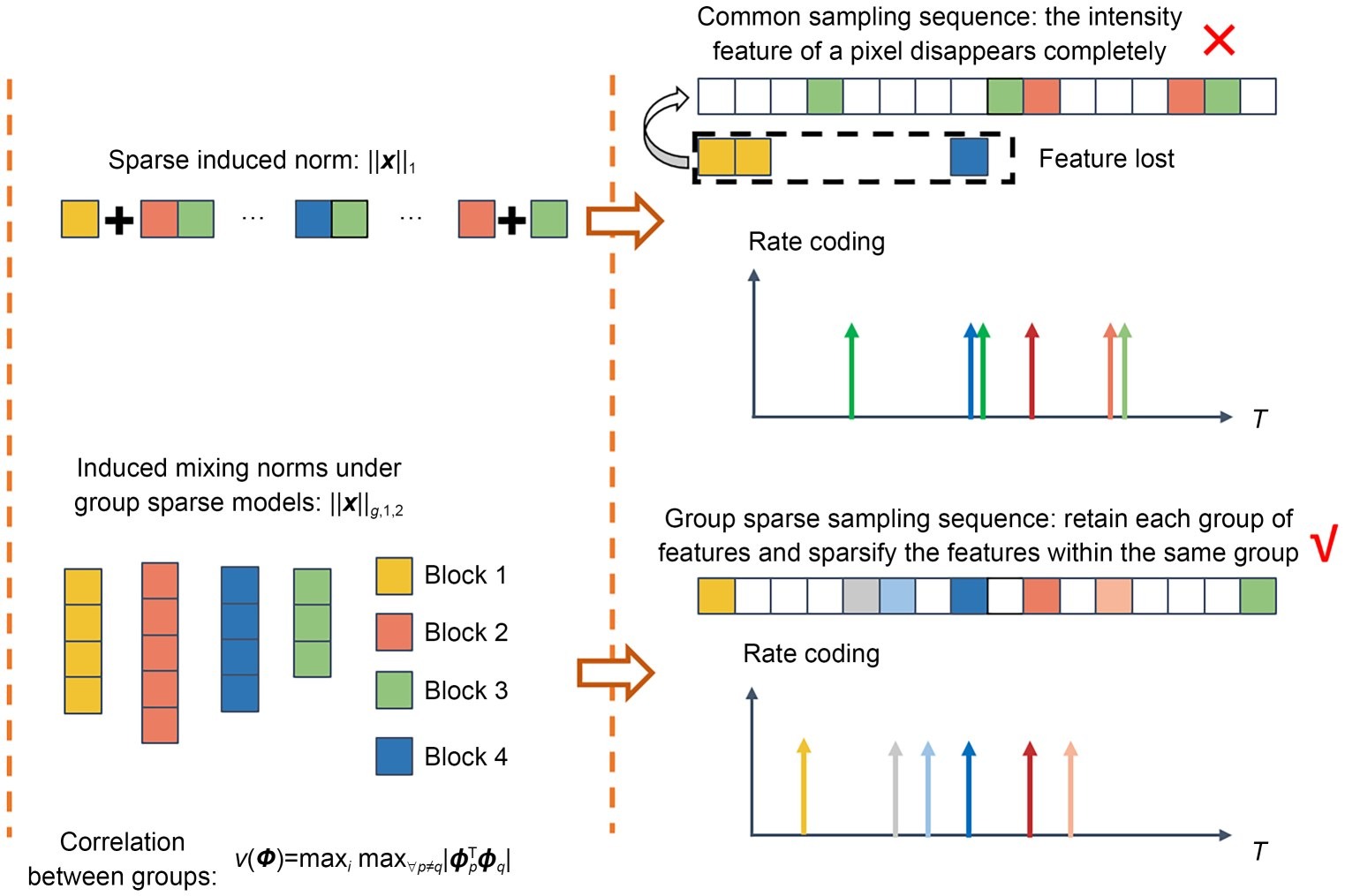
Artificial neural networks (ANNs) have made great strides in the field of remote sensing image object detection. However, low detection efficiency and high power consumption have always been significant bottlenecks in remote sensing. Spiking neural networks (SNNs) process information in the form of sparse spikes, creating the advantage of high energy efficiency for computer vision tasks. However, most studies have focused on simple classification tasks, and only a few researchers have applied SNNs to object detection in natural images. In this study, we consider the parsimonious nature of biological brains and propose a fast ANN-to-SNN conversion method for remote sensing image detection. We establish a fast sparse model for pulse sequence perception based on group sparse features and conduct transform-domain sparse resampling of the original images to enable fast perception of image features and encoded pulse sequences. In addition, to meet accuracy requirements in relevant remote sensing scenarios, we theoretically analyze the transformation error and propose channel self-decaying weighted normalization (CSWN) to eliminate neuron overactivation. We propose S3Det, a remote sensing image object detection model. Our experiments, based on a large publicly available remote sensing dataset, show that S3Det achieves an accuracy performance similar to that of the ANN. Meanwhile, our transformed network is only 24.32% as sparse as the benchmark and consumes only 1.46 W, which is 1/122 of the original algorithm’s power consumption.
1. Introduction
Due to the rapid development of remote sensing technology in recent years, the automatic analysis of massive remote sensing images with all-round intelligent technology has become urgently needed by academia and industry. Object detection, a fundamental task in this domain, finds extensive application in essential areas such as meteorological analysis, surface surveying, and transportation planning (Chen L et al., 2023).
Artificial neural networks (ANNs), represented by convolutional neural networks (CNNs) (LeCun et al., 1998) and Transformers (Vaswani et al., 2017), have developed rapidly over the past decade and continue to energize object detection tasks. However, ANNs often demand substantial computing resources, posing challenges for their deployment on resource-limited devices. In contrast, spiking neural networks (SNNs) (Maass, 1997) emulate the biological structure of the brain, encoding and transmitting information through 0 – 1 spikes, mimicking human biological systems. Because spiking neurons trigger calculations in response to only external stimuli, they have advantages of low power consumption and fast reasoning. At present, SNNs have achieved excellent performance on a variety of hardware platforms, which also validates the feasibility of exploring high-performance and highly efficient brain-inspired intelligence through SNNs.
Despite binary spiking enabling the extreme energy efficiency of SNNs, the complex dynamics involved and the non-differentiable mathematical characteristics of spiking neurons result in a scarcity of training algorithms. Therefore, researchers have tried to find the balance of the scales in the conversion method. ANN-to-SNN conversion (Kim et al., 2020; Li et al., 2022; Hu et al., 2023; Yao et al., 2023) has already yielded promising results on common object detection datasets, such as PASCAL VOC (Everingham et al., 2010) and COCO (Lin et al., 2014). However, as the number of network layers increases, the accuracy error caused by the conversion method further increases. While increasing the firing rate of discrete spikes can significantly mitigate these accuracy errors, it leads to a substantial increase in the time step, undermining the efficiency advantage of SNNs.
Loading authentic research manuscript (Pages 1–5)...
Li Chen, Fan Zhang, Guangwei Xie, Yanzhao Gao, Xiaofeng Qi, Mingqian Sun (2025). S3Det: a fast object detector for remote sensing images based on artificial to spiking neural network conversion. Frontiers of Information Technology & Electronic Engineering. https://doi.org/10.1631/FITEE_2400594
Research & Educational Purpose Only:The translations, structured abstracts, analytical annotations, and data reports provided by SinoTechIntel are intended exclusively for academic research, internal corporate R&D, and educational benchmarking. They do not constitute formal engineering, chemical safety, legal, or professional advice.
Copyright & Intellectual Property Notice: Original copyright of the underlying source articles and experimental data remains with the respective authors, institutions, and original publishing journals. SinoTechIntel claims intellectual property only over its proprietary translations, analytical syntheses, and AEO structured enhancements in accordance with international fair use and academic citation principles.
Frequently Asked Questions
What is S3Det?
S3Det is a fast object detector for remote sensing images that converts artificial neural networks (ANNs) to spiking neural networks (SNNs) to achieve low power consumption and high energy efficiency while maintaining detection accuracy.
How does S3Det achieve low power consumption?
S3Det leverages sparse spike-based computation inherent in SNNs and employs a fast ANN-to-SNN conversion method. This reduces power consumption to only 1.46 W, which is 1/122 of the original algorithm's power consumption, making it suitable for resource-limited devices.
What is channel self-decaying weighted normalization (CSWN)?
CSWN is a technique proposed in S3Det to eliminate neuron overactivation during ANN-to-SNN conversion. It theoretically analyzes transformation error and applies channel-wise weighting normalization to improve accuracy in remote sensing detection tasks.
What accuracy does S3Det achieve?
S3Det achieves accuracy performance similar to that of the original ANN on a large publicly available remote sensing dataset, demonstrating that the conversion does not significantly compromise detection quality.
Why use spiking neural networks for remote sensing object detection?
Spiking neural networks process information in sparse spikes, offering high energy efficiency and fast reasoning, which are critical for real-time remote sensing applications deployed on edge devices with limited power and computational resources.
Related Technical Papers & Translations
Design and optimization of a high-efficiency distillation process for cellulosic fuel ethanol integrated with thermal coupling and molecular sieve adsorption
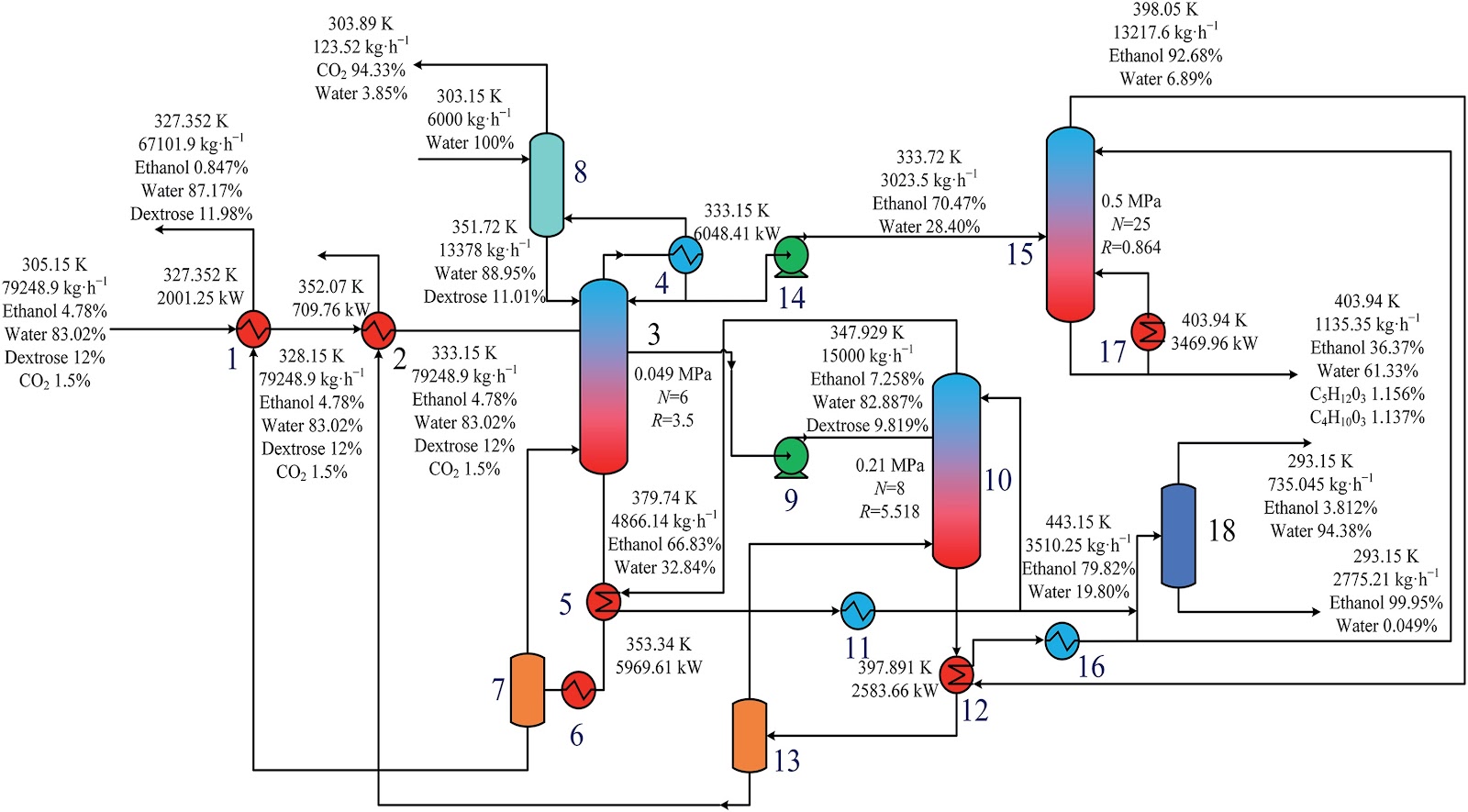
To address the challenges of high energy consumption and prominent costs in the traditional three-columns distillation process for cellulosic fuel ethanol, a distillation—molecular sieve coupling separation process is proposed. This process integrates a three-column (crude distillation column, first distillation column, second distillation column) system with a 3A molecular sieve adsorption deep dehydration unit. A thermal coupling network is constructed via differential pressure design (steam from medium/high-pressure columns as mutual heat sources, reboiler liquid waste heat for feed preheating), and molecular sieve adsorption conditions are optimized. The study first performs a thermodynamic consistency test on the ethanol—water system, determines optimal non-random two-liquid (NRTL) model binary interaction parameters via experimental data regression for Aspen Plus simulation. Aiming at minimum total annual cost (TAC), Aspen Plus is used to optimize process parameters (theoretical tray number, feed location, reflux ratio, side-draw position, etc.). Economic analysis shows this process reduces CO2 emission costs by 27.56%, TAC by 15.58% (to 5.123 × 10⁶ USD·a-1), and increases ethanol purity to >99.6%, providing an effective solution for green, efficient separation.
A cohesion loss model for determining residual strength of deep bedded sandstone
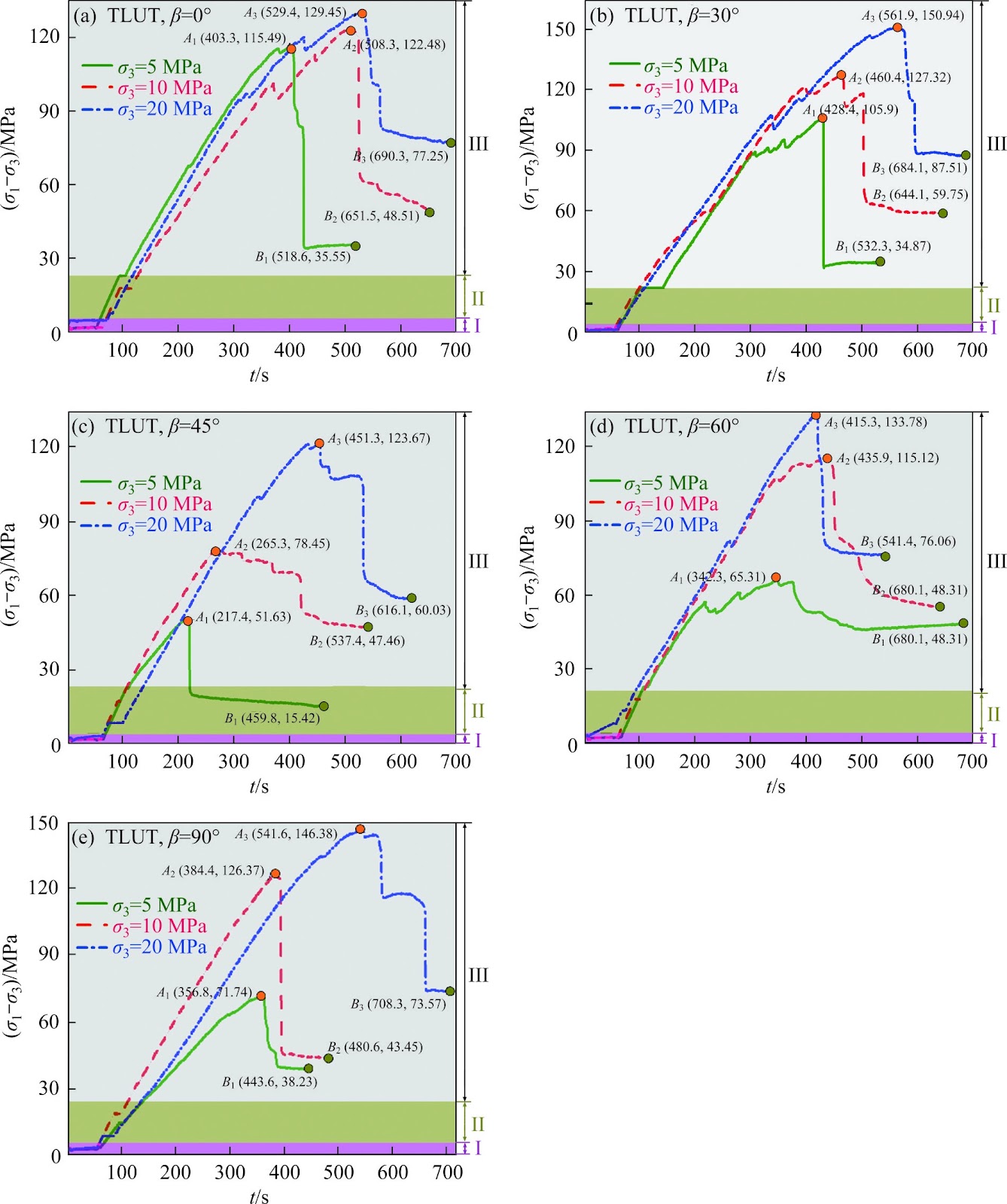
Rock residual strength, as an important input parameter, plays an indispensable role in proposing the reasonable and scientific scheme about stope design, underground tunnel excavation and stability evaluation of deep chambers. Therefore, previous residual strength models of rocks established were reviewed. And corresponding related problems were stated. Subsequently, starting from the effects of bedding and whole life-cycle evolution process, series of triaxial mechanical tests of deep bedded s
Federated model with contrastive learning and adaptive control variates for human activity recognition
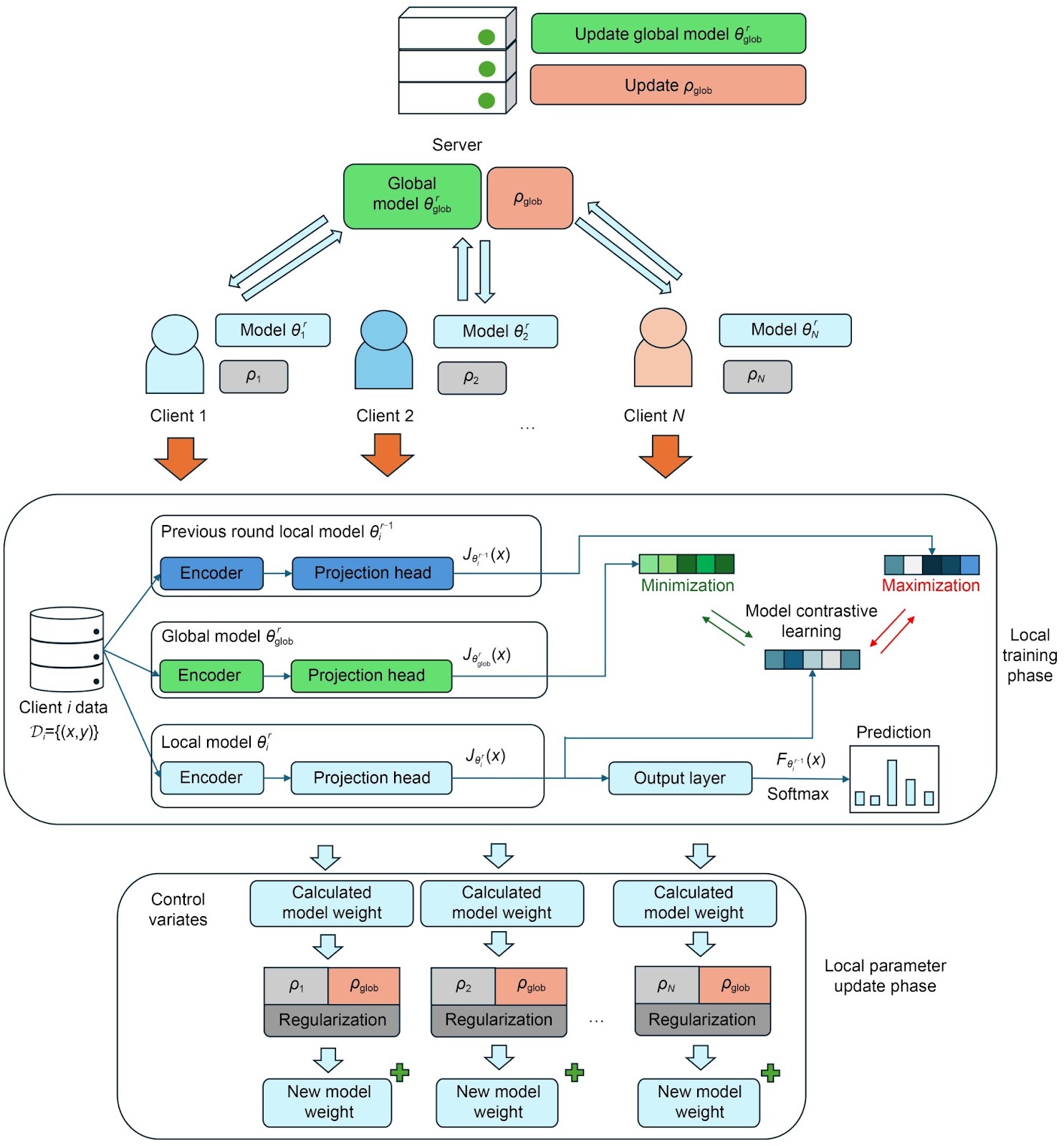
Recent attention to privacy issues demands a communication-safe method for training human activity recognition (HAR) models on client activity data. Federated learning (FL) has become a compelling technique to facilitate model training between the server and clients while preserving data privacy. However, classical FL methods often assume independent and identically distributed (IID) data among clients. This assumption does not hold true in practical scenarios. Human activity in real-world scena