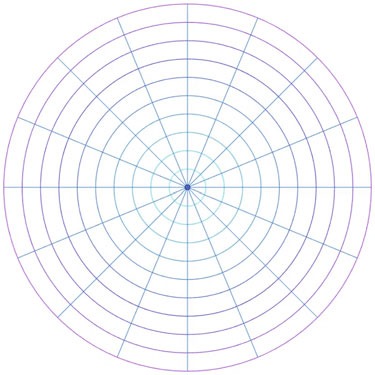
Key Takeaways & Executive Findings
- •• Optimized the two-point resistance formula for m×n cobweb resistance networks using Chebyshev polynomials and hyperbolic functions, significantly improving computational efficiency. • Simplified the derivation process while maintaining accuracy, making the method applicable to complex boundary conditions such as 2r boundaries. • Demonstrated through comparative analysis that the optimized formula outperforms traditional methods in computational efficiency. • Proposed a novel heuristic algorithm based on a cobweb potential function for robot path planning in obstacle-rich environments.
Abstract
In recent years, the exploration and application of resistance networks have expanded significantly, and solving the equivalent resistance between two points of a resistance network has been an important topic. In this paper, we focus on optimizing the formula for calculating the two-point resistance of an m × n cobweb resistance network with 2r boundary conditions. To improve the computational efficiency of the equivalent resistance between two points, the formula is optimized by using the optimal approximation property of Chebyshev polynomials in combination with hyperbolic functions, and the derivation process is simplified. We discuss the equivalent resistance formulas in several special cases and compare the computational efficiency of the equivalent resistance formulas before and after optimization. Finally, we make an innovative attempt at path planning through potential formulas and propose a heuristic algorithm based on cobweb potential function for robot path planning in a cobweb environment with obstacles.
1. Introduction
With the continuous progress of modern science, many fields are facing increasingly complex problems. Further exploration by the researchers found that building a resistance network model (Kirchhoff, 1847; Pennetta et al., 2004; Ferri and Antonini, 2007; Owaidat et al., 2012; Rhazaoui et al., 2013; Liu et al., 2016; Hadad et al., 2018; Xu et al., 2021; Zhang et al., 2021) can help solve some of these problems. Since Kirchhoff’s law (Kirchhoff, 1847) laid the foundation for the research of resistance networks, after more than 170 years of in-depth exploration, the research of resistance networks has made remarkable progress and researchers have proposed some new methods.
In the early days, the research of resistance networks focused on infinite network structures, and Cserti et al. (2002) opened a completely new path for the exploration of infinite resistance networks by introducing Green’s function technique. Subsequently, the equivalent resistance values between any two points in various infinite lattice resistance structures were accurately computed using this method (Cserti et al., 2011), and the method was extended to deal with perturbed lattice problems containing one missing bond (Giordano, 2007). Since then, Green’s function techniques have been gradually applied to the research of infinite networks, and some new theoretical results have been obtained (Giordano, 2007; Hijjawi et al., 2008; Guttmann, 2010; Kook, 2011; Asad, 2013a, 2013b; Asad et al., 2013). However, an infinite network is an ideal structure without considering boundary conditions, and Green’s function techniques are not applicable to finite networks. The initial exploration of finite networks can be traced back to the research of Klein and Randić (1993), which was subsequently explored in more depth by Klein (2010) and Yang and Klein (2013). Meanwhile, Wu FY (2004) proposed a Laplacian matrix method to calculate the resistance between arbitrary nodes in a finite resistance lattice, which has been widely used in subsequent studies (Tzeng and Wu, 2006; Essam et al., 2014, 2015; Izmailian and Kenna, 2014, 2015; Izmailian et al., 2014). Specifically, Essam and Wu (2009) used the method to successfully find the exact value of the site-to-site resistance and its asymptotic expansion under free boundary conditions, while Izmailian and Huang (2010) further extended it to compute the resistance values under many different boundary conditions. However, the resistance between arbitrary nodes with complex boundary conditions cannot be solved using the Laplacian method.
To overcome the shortcomings of previous theories, Tan et al. (2013) creatively introduced the recursive transformation (RT) method, which opened up a new path for the study of resistance networks. Compared with the traditional Laplacian method that relies on two direction matrices, this method requires only one direction matrix. This not only simplifies the solving process but also makes the solution more convenient. For instance, it can be used to solve the equivalent resistance between two points in a cobweb with complex boundary conditions (Tan and Fang, 2015). Subsequently, Tan utilized the RT method to explore the electrical characteristics of resistance networks and made significant contributions to the development of the field (Tan, 2017, 2022, 2023a, 2023b; Tan ZZ and Tan Z, 2020a, 202...).
Loading authentic research manuscript (Pages 1–5)...
Yu Guan, Xiaoyu Jiang, Yanpeng Zheng, Zhaolin Jiang (2025). An optimized formula for the two-point resistance of a cobweb resistance network and its potential application. Frontiers of Information Technology & Electronic Engineering. https://doi.org/10.1631/FITEE_2400613
Research & Educational Purpose Only:The translations, structured abstracts, analytical annotations, and data reports provided by SinoTechIntel are intended exclusively for academic research, internal corporate R&D, and educational benchmarking. They do not constitute formal engineering, chemical safety, legal, or professional advice.
Copyright & Intellectual Property Notice: Original copyright of the underlying source articles and experimental data remains with the respective authors, institutions, and original publishing journals. SinoTechIntel claims intellectual property only over its proprietary translations, analytical syntheses, and AEO structured enhancements in accordance with international fair use and academic citation principles.
Frequently Asked Questions
What is the primary contribution of this paper?
The paper optimizes the formula for calculating the two-point resistance in a cobweb resistance network by leveraging Chebyshev polynomials and hyperbolic functions, thereby improving computational efficiency and simplifying the derivation process.
How does the optimized formula improve computational efficiency?
The optimization reduces the complexity of the resistance calculation, making it faster and more efficient than traditional methods, as demonstrated by comparative analysis.
What role do Chebyshev polynomials play in the optimization?
Chebyshev polynomials provide an optimal approximation property that, combined with hyperbolic functions, leads to a more compact and efficient formula for the equivalent resistance.
How is the cobweb potential function applied to robot path planning?
The authors propose a heuristic algorithm based on a cobweb potential function for robot path planning in environments with obstacles, enabling efficient navigation by leveraging the properties of the resistance network.
What boundary conditions are addressed in the study?
The study focuses on cobweb resistance networks with 2r boundary conditions, which are complex and not easily solvable with traditional Laplacian methods.
Related Technical Papers & Translations

Design and optimization of a high-efficiency distillation process for cellulosic fuel ethanol integrated with thermal coupling and molecular sieve adsorption
To address the challenges of high energy consumption and prominent costs in the traditional three-columns distillation process for cellulosic fuel ethanol, a distillation—molecular sieve coupling separation process is proposed. This process integrates a three-column (crude distillation column, first distillation column, second distillation column) system with a 3A molecular sieve adsorption deep dehydration unit. A thermal coupling network is constructed via differential pressure design (steam from medium/high-pressure columns as mutual heat sources, reboiler liquid waste heat for feed preheating), and molecular sieve adsorption conditions are optimized. The study first performs a thermodynamic consistency test on the ethanol—water system, determines optimal non-random two-liquid (NRTL) model binary interaction parameters via experimental data regression for Aspen Plus simulation. Aiming at minimum total annual cost (TAC), Aspen Plus is used to optimize process parameters (theoretical tray number, feed location, reflux ratio, side-draw position, etc.). Economic analysis shows this process reduces CO2 emission costs by 27.56%, TAC by 15.58% (to 5.123 × 10⁶ USD·a-1), and increases ethanol purity to >99.6%, providing an effective solution for green, efficient separation.

A cohesion loss model for determining residual strength of deep bedded sandstone
Rock residual strength, as an important input parameter, plays an indispensable role in proposing the reasonable and scientific scheme about stope design, underground tunnel excavation and stability evaluation of deep chambers. Therefore, previous residual strength models of rocks established were reviewed. And corresponding related problems were stated. Subsequently, starting from the effects of bedding and whole life-cycle evolution process, series of triaxial mechanical tests of deep bedded s

Federated model with contrastive learning and adaptive control variates for human activity recognition
Recent attention to privacy issues demands a communication-safe method for training human activity recognition (HAR) models on client activity data. Federated learning (FL) has become a compelling technique to facilitate model training between the server and clients while preserving data privacy. However, classical FL methods often assume independent and identically distributed (IID) data among clients. This assumption does not hold true in practical scenarios. Human activity in real-world scena