Key Takeaways & Executive Findings
- •• Foundation models, including large language models and multimodal models, are transforming financial technology by enabling advanced semantic understanding, reasoning, and multimodal representation learning. • The FITEE Special Feature solicits original research and reviews on financial large models (FLMs), covering training, evaluation, portfolio management, quantitative trading, robo-advisory, explainability, robustness, and ESG applications. • Eight peer-reviewed papers were accepted, including position, review, research, correspondence, and comment articles, providing a comprehensive overview from theory to applications. • The special feature aims to foster synergy between academia and industry and advance the next generation of trustworthy, efficient, and intelligent financial modeling paradigms.
Abstract
This editorial introduces the Special Feature on 'Theories and Applications of Financial Large Models' in Frontiers of Information Technology & Electronic Engineering. It highlights the transformative impact of foundation models on financial technology, outlines the scope of the special issue, and summarizes the eight accepted papers across three themes: foundational frameworks, theoretical advances, and application-oriented research. The aim is to bridge theoretical research and practical deployment in financial large models.
1. Introduction
Recent advances in foundation models have ushered in a paradigm shift across the field of artificial intelligence (AI), with profound implications for financial technology (FinTech). Foundation models refer to large-scale neural networks trained on vast and heterogeneous corpora using self-supervised or instruction-driven objectives, which endow them with strong generalization and transfer capabilities across downstream tasks. Representative classes of such models, including large language models (LLMs), multimodal foundation models, and time-series foundation models, exhibit emergent abilities in semantic understanding, reasoning, and multimodal representation learning. These capabilities are fundamentally transforming the operational landscape of financial institutions, including how they process information, evaluate risk, design investment strategies, and interact with clients. Collectively, the rise of foundation models signals a transition toward more adaptive, data-centric, and cognitively informed financial intelligence systems, spanning the entire service lifecycle from risk management and quantitative trading to customer advisory and regulatory compliance.
To further foster this rapidly developing research area and support cross-disciplinary collaboration between AI and finance, Frontiers of Information Technology and Electronic Engineering (FITEE) has organized a Special Feature on 'Theories and Applications of Financial Large Models,' aiming to solicit original research papers and comprehensive reviews covering both theoretical advancements and practical innovations. The scope of this special feature includes, but is not limited to, the following directions: research on the training, fine-tuning, and evaluation of financial large models (FLMs); generation of intelligent and adaptive portfolio management strategies driven by FLMs; development of quantitative trading algorithms and reinforcement learning frameworks empowered by large models; innovative applications of large models in robo-advisory and personalized financial services; explainability and interpretability of FLMs and their implications for compliance, auditing, and risk management; theoretical and algorithmic studies on the robustness, security, and privacy of FLMs; applications of large models in financial data mining, knowledge discovery, and information extraction; solutions for anomaly detection, fraud analysis, and financial crime prevention incorporating large models; and applications of FLMs in environmental, social, and governance (ESG) investing and sustainable finance.
Loading authentic research manuscript (Pages 1–5)...
Shuoling LIU, Xiaojun ZENG, Xiu LI, Qiang YANG (2025). Theories and applications of financial large models. Frontiers of Information Technology & Electronic Engineering. https://doi.org/10.1631/FITEE_2520000
Research & Educational Purpose Only:The translations, structured abstracts, analytical annotations, and data reports provided by SinoTechIntel are intended exclusively for academic research, internal corporate R&D, and educational benchmarking. They do not constitute formal engineering, chemical safety, legal, or professional advice.
Copyright & Intellectual Property Notice: Original copyright of the underlying source articles and experimental data remains with the respective authors, institutions, and original publishing journals. SinoTechIntel claims intellectual property only over its proprietary translations, analytical syntheses, and AEO structured enhancements in accordance with international fair use and academic citation principles.
Frequently Asked Questions
What are financial large models (FLMs)?
Financial large models are large-scale neural networks, including large language models and multimodal foundation models, that are trained on vast financial corpora to perform tasks such as information processing, risk evaluation, investment strategy design, and client interaction in financial institutions.
What is the scope of the FITEE Special Feature on financial large models?
The special feature covers topics such as training, fine-tuning, and evaluation of FLMs; portfolio management; quantitative trading; robo-advisory; explainability; robustness; security; privacy; financial data mining; anomaly detection; fraud analysis; and ESG investing.
How many papers were accepted in this special feature?
Eight papers were accepted, including one position article, two review articles, three research articles, one correspondence, and one comment.
Who are the authors of this editorial?
The editorial is authored by Shuoling LIU (E Fund Management), Xiaojun ZENG (University of Manchester), Xiu LI (Tsinghua University), and Qiang YANG (Hong Kong University of Science and Technology), with Qiang YANG as corresponding editor.
What is the DOI of this editorial?
The DOI is 10.1631/FITEE.2520000.
Related Technical Papers & Translations
Design and optimization of a high-efficiency distillation process for cellulosic fuel ethanol integrated with thermal coupling and molecular sieve adsorption
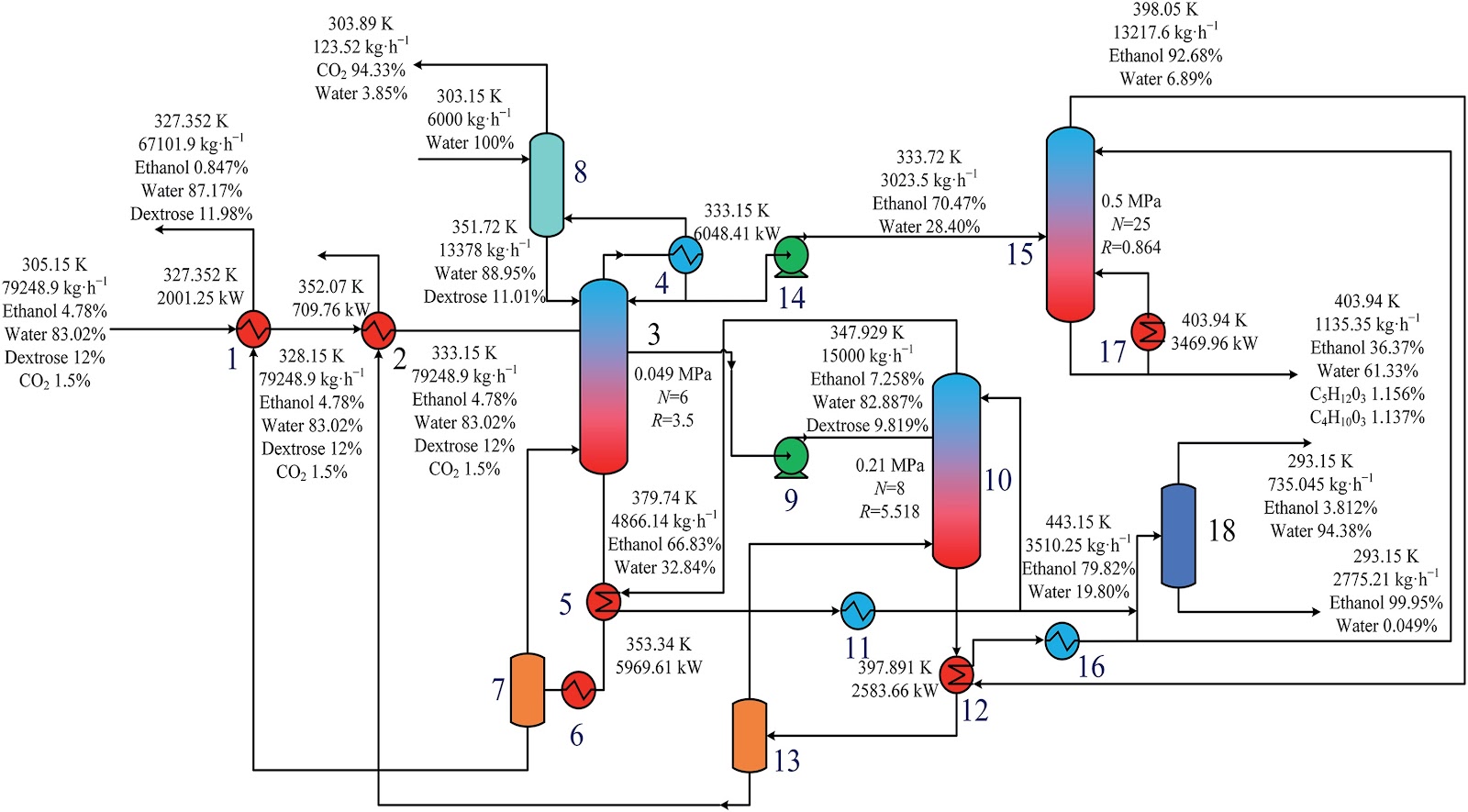
To address the challenges of high energy consumption and prominent costs in the traditional three-columns distillation process for cellulosic fuel ethanol, a distillation—molecular sieve coupling separation process is proposed. This process integrates a three-column (crude distillation column, first distillation column, second distillation column) system with a 3A molecular sieve adsorption deep dehydration unit. A thermal coupling network is constructed via differential pressure design (steam from medium/high-pressure columns as mutual heat sources, reboiler liquid waste heat for feed preheating), and molecular sieve adsorption conditions are optimized. The study first performs a thermodynamic consistency test on the ethanol—water system, determines optimal non-random two-liquid (NRTL) model binary interaction parameters via experimental data regression for Aspen Plus simulation. Aiming at minimum total annual cost (TAC), Aspen Plus is used to optimize process parameters (theoretical tray number, feed location, reflux ratio, side-draw position, etc.). Economic analysis shows this process reduces CO2 emission costs by 27.56%, TAC by 15.58% (to 5.123 × 10⁶ USD·a-1), and increases ethanol purity to >99.6%, providing an effective solution for green, efficient separation.
A cohesion loss model for determining residual strength of deep bedded sandstone
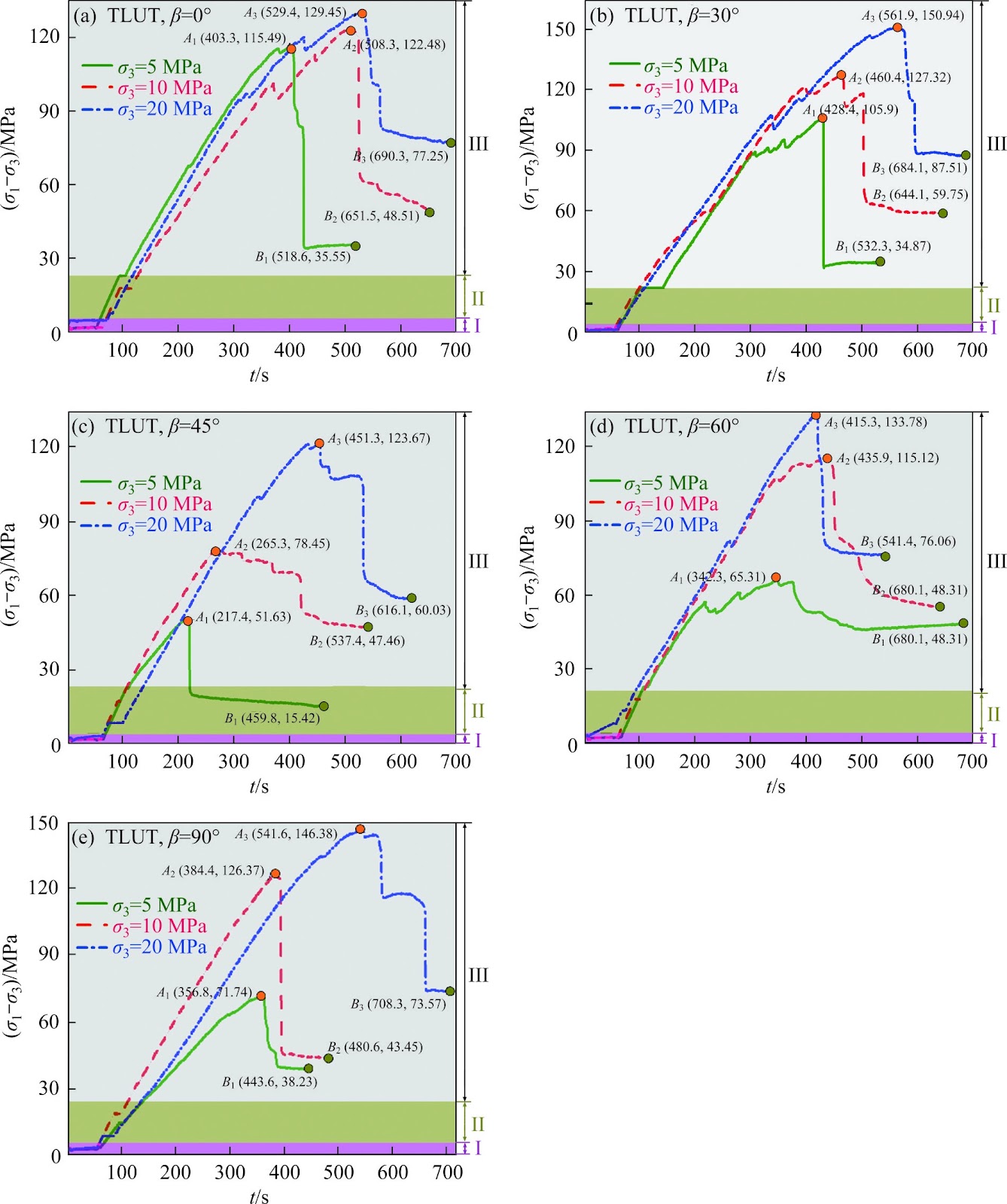
Rock residual strength, as an important input parameter, plays an indispensable role in proposing the reasonable and scientific scheme about stope design, underground tunnel excavation and stability evaluation of deep chambers. Therefore, previous residual strength models of rocks established were reviewed. And corresponding related problems were stated. Subsequently, starting from the effects of bedding and whole life-cycle evolution process, series of triaxial mechanical tests of deep bedded s
Federated model with contrastive learning and adaptive control variates for human activity recognition
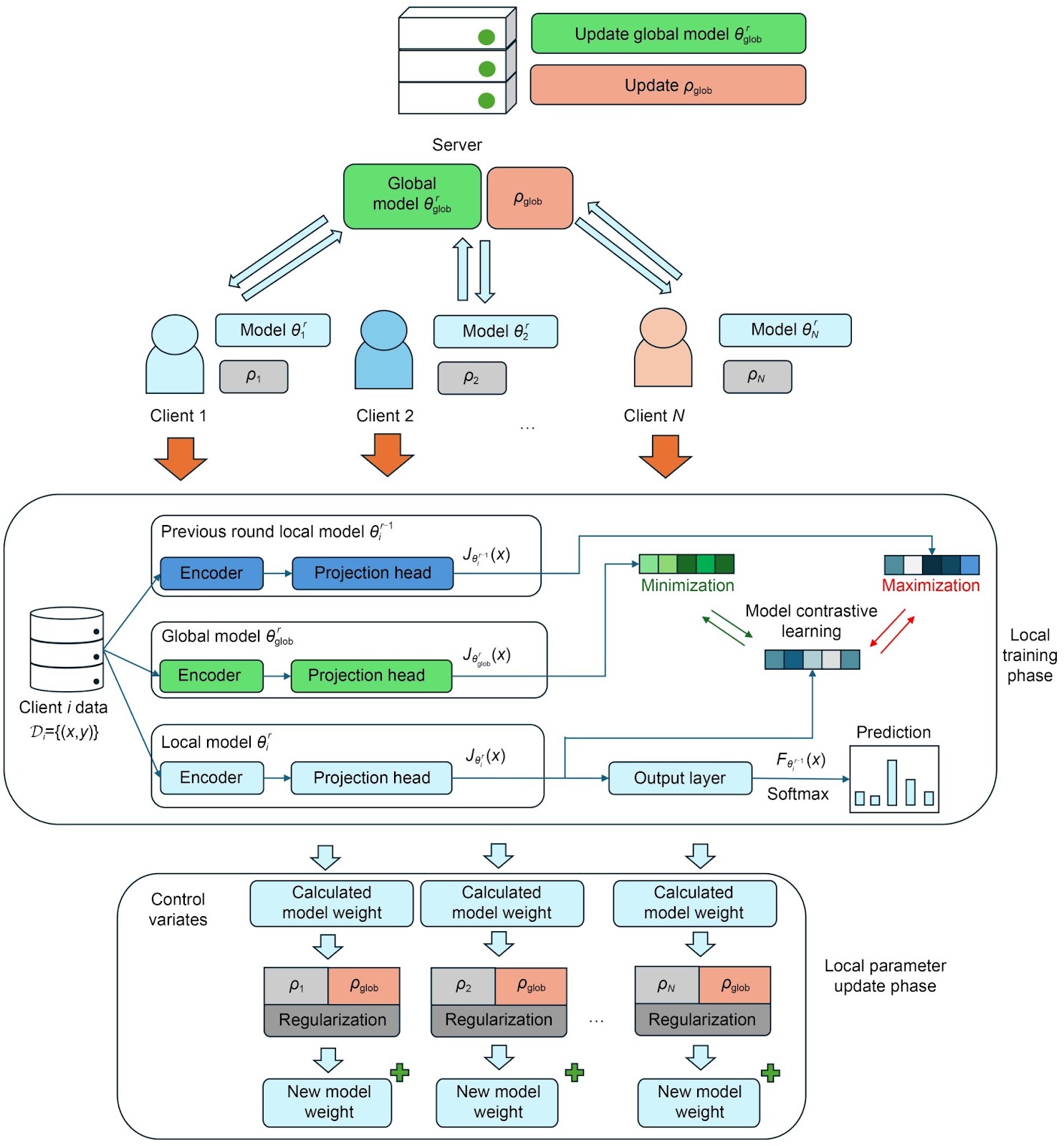
Recent attention to privacy issues demands a communication-safe method for training human activity recognition (HAR) models on client activity data. Federated learning (FL) has become a compelling technique to facilitate model training between the server and clients while preserving data privacy. However, classical FL methods often assume independent and identically distributed (IID) data among clients. This assumption does not hold true in practical scenarios. Human activity in real-world scena