SinoTechIntel Academic Portal
🏛️ Indexed Academic JournalImpact Factor: 3.8

Opto-Electronic Advances (光电进展)

Authoritative peer-reviewed journal in materials science, metallurgy, chemistry and engineering technologies: Opto-Electronic Advances (光电进展)

Total Research Papers: 148
Access: 100% Free Open Access
Browse by Publication Year & VolumeReset All Filters ✕
Select Specific Issue:

Published Research PapersFiltered: Year 2025 • Vol 40 • 1

Showing 120 of 148 peer-reviewed papers with full Graphical Abstracts.

Original ResearchVol 40, Issue 1 • pp. 100-112DOI: 10.1016/S1872-5805(NCM2026-41-03-13)Jan 15, 2025

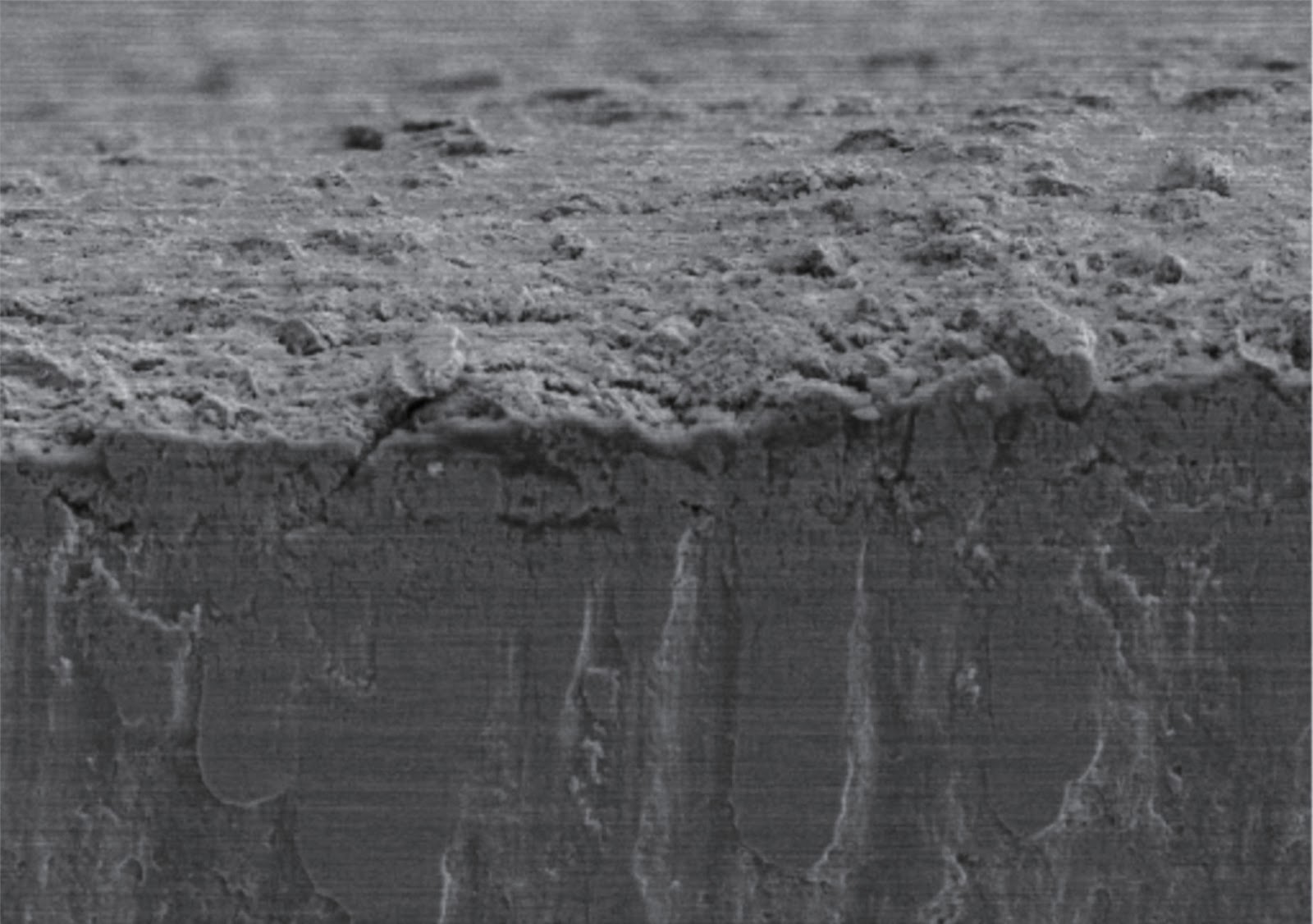
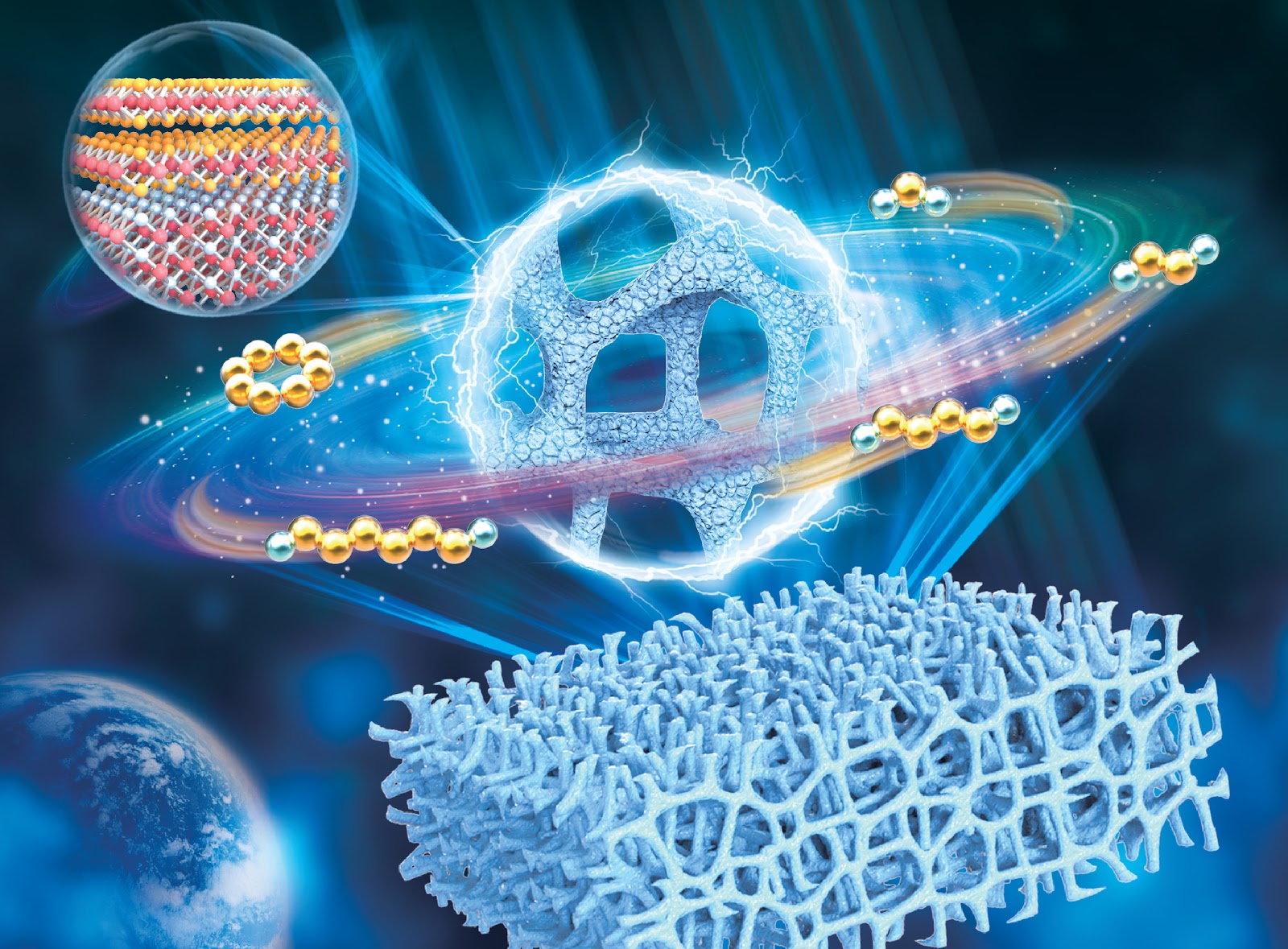
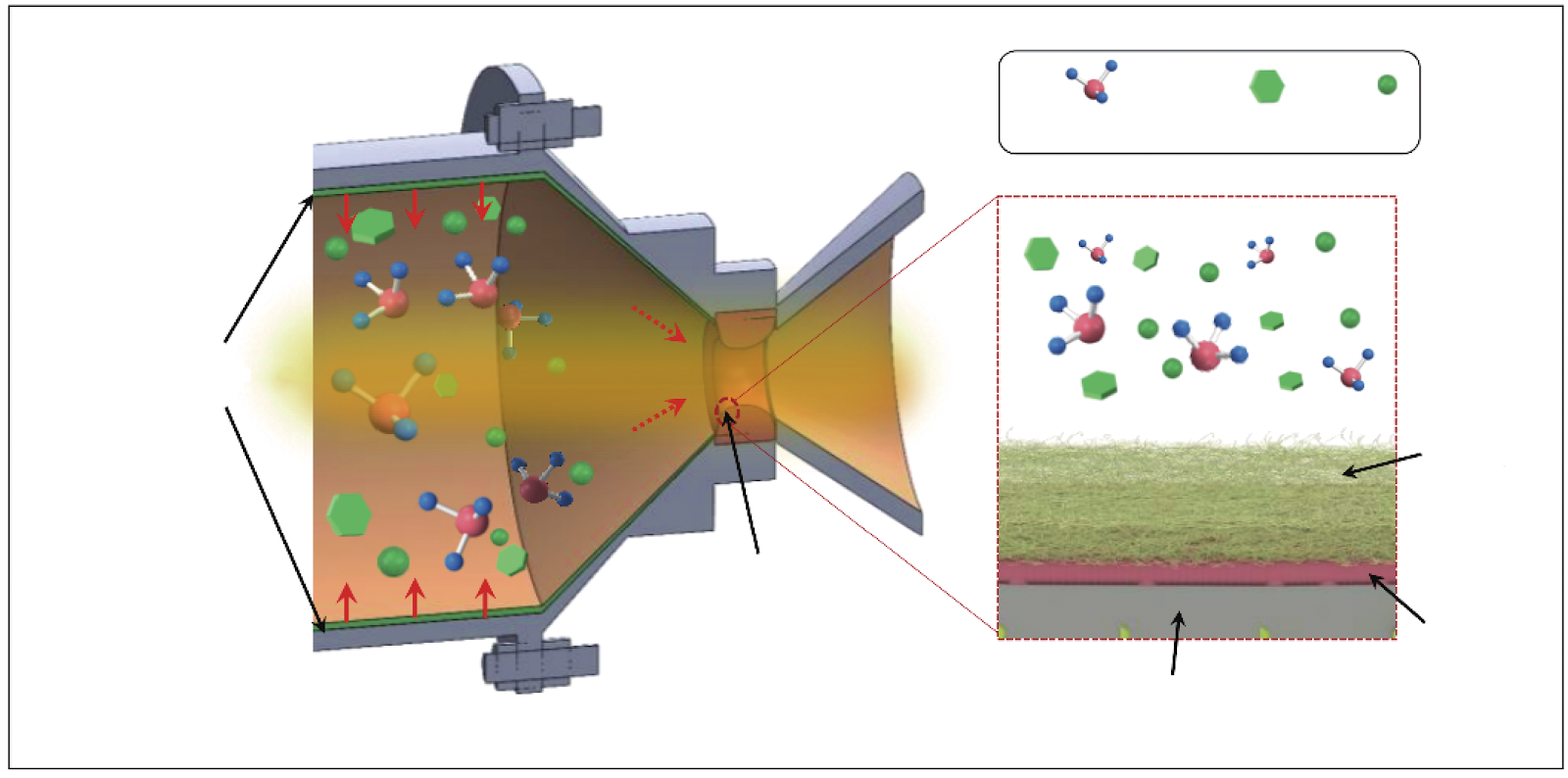
Discontinuous ablation behavior of four-directional dual-matrix C/C composites under dual-pulse solid rocket motors

Authors: WEI Lianfeng, WANG Running, ZHANG Jiaping, LI Kezhi, CUI Hong

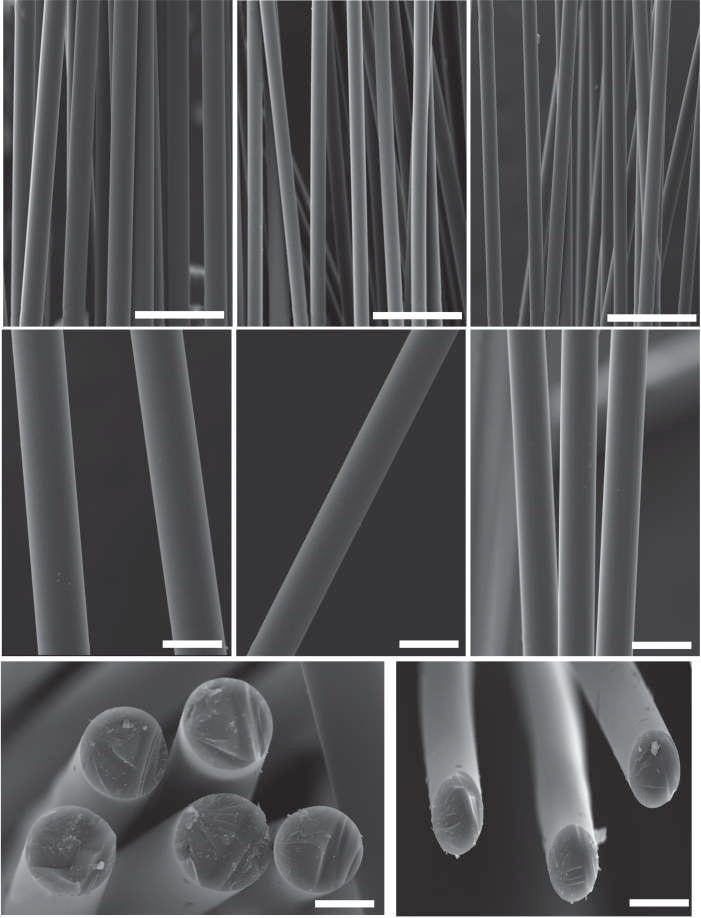
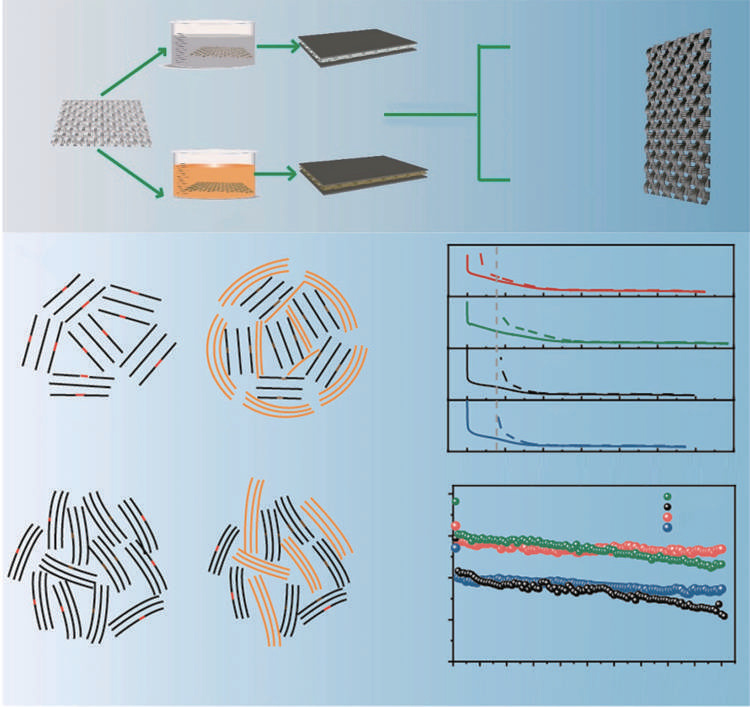
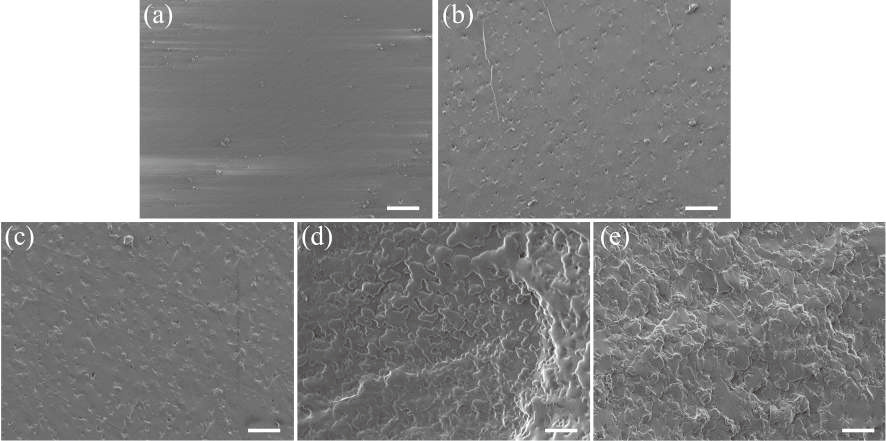
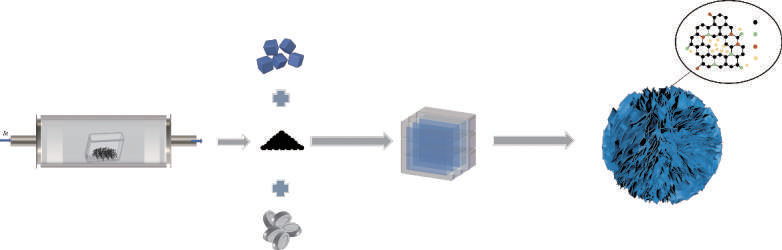
Four-directional dual-matrix C/C composites were fabricated from PAN-based carbon fibers using a combined approach of soft-hard hybrid weaving preform molding, chemical vapor infiltration (CVI) of pyrolytic carbon (PyC), high pressure impregnation and carbonization of pitch-derived carbon. The ablation resistance of the composites was evaluated by testing in a dual-pulse solid rocket motor, and their ablation behavior was investigated. The carbon rods formed by twisting and carbonizing fiber bundles, exhibited a hexagonal cross-section, surrounded by a dense PyC “wall” structure formed during the CVI process. The linear ablation rates of the composites after pulse I and pulse II were 0.068 mm/s and 0.113 mm/s, respectively. A cellular-like PyC layer and nanowire structures were deposited on the surface of the throat convergent section during the post-combustion cooling phase, while cracks and delamination occurred on and within the divergent section. The ablation of C/C composites under these conditions was a complex multi-mechanism process, including ultra-high temperatures, high-speed gas scouring, oxygen-containing thermochemical ablation, and thermal shock. This work elucidates the ablation behaviors of C/C composites under dual-pulse conditions and provides technical guidance and a theoretical basis for designing and fabricating C/C composites for extreme ablation environments.
Discontinuous ablation behavior of four-directional dual-matrix C/C composites under dual-pulse solid rocket motors
Graphical Abstract
Original ResearchVol 40, Issue 1 • pp. 100-112DOI: 10.1016/S1872-5805(NCM2026-41-03-09)Jan 15, 2025

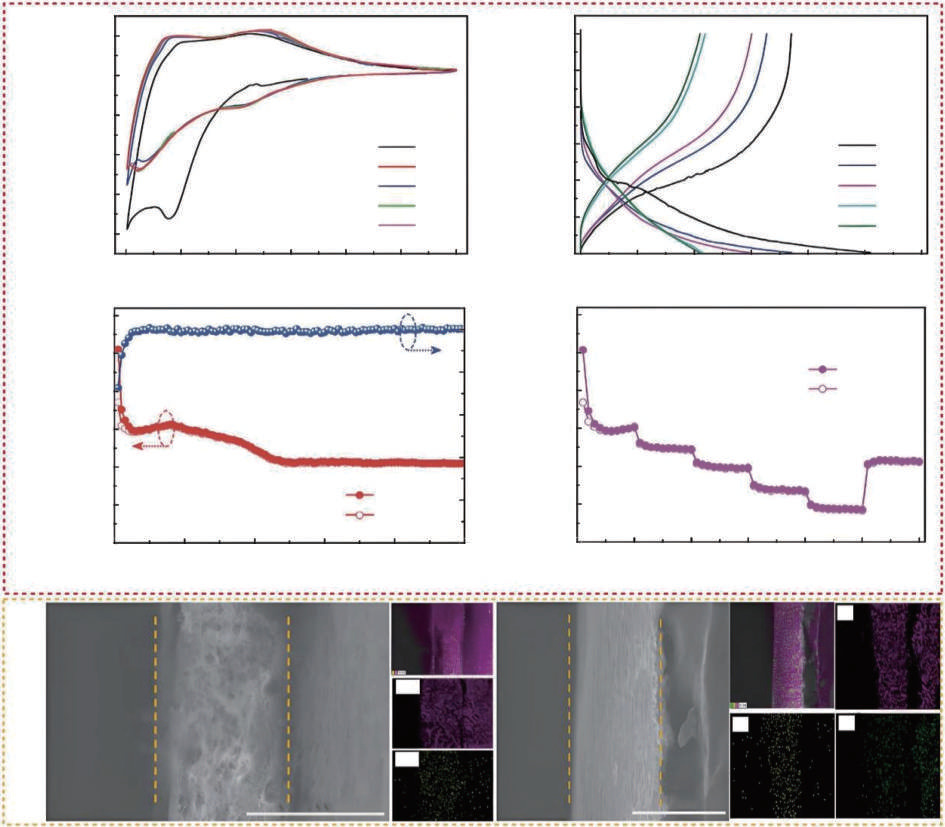
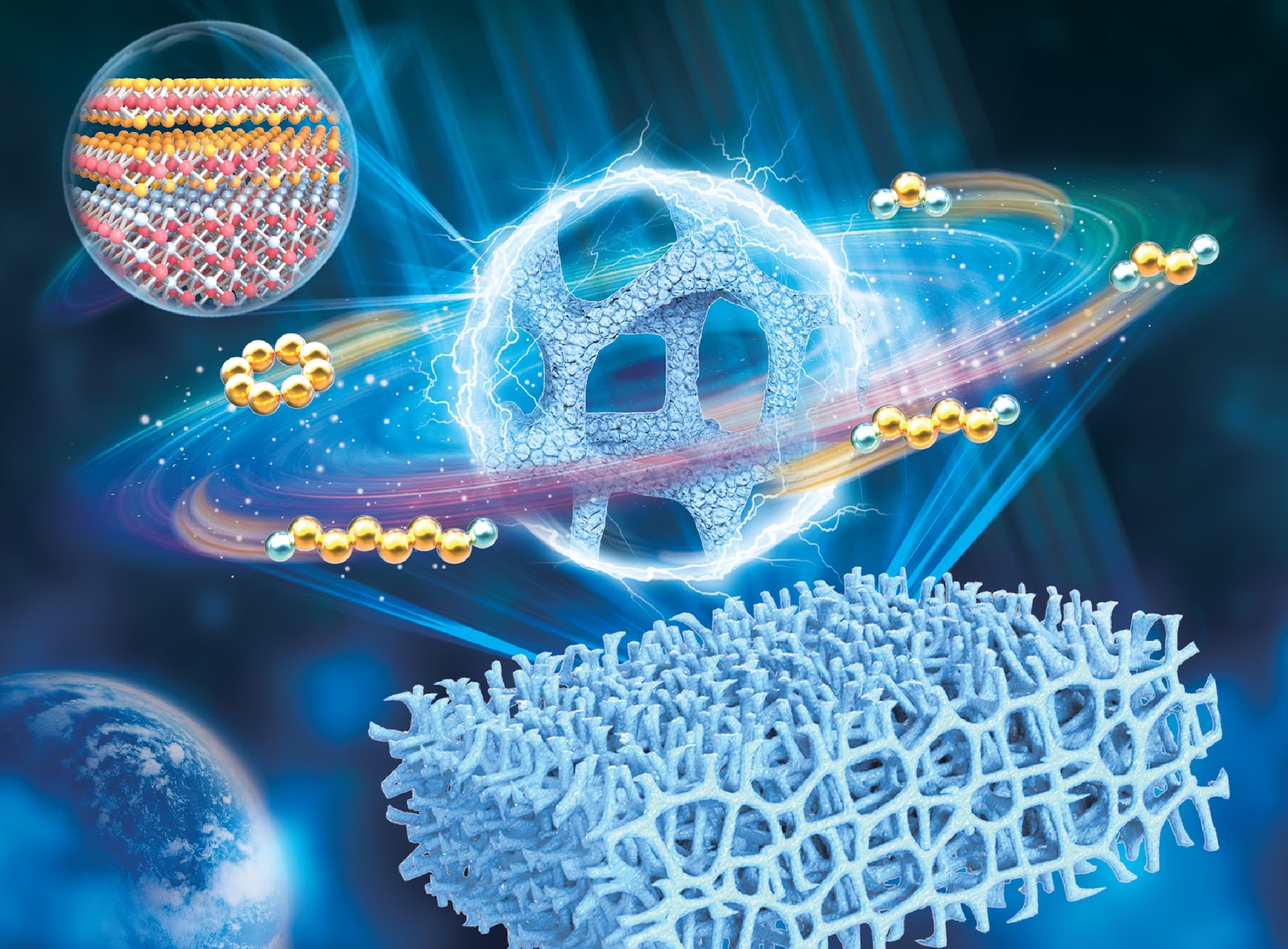
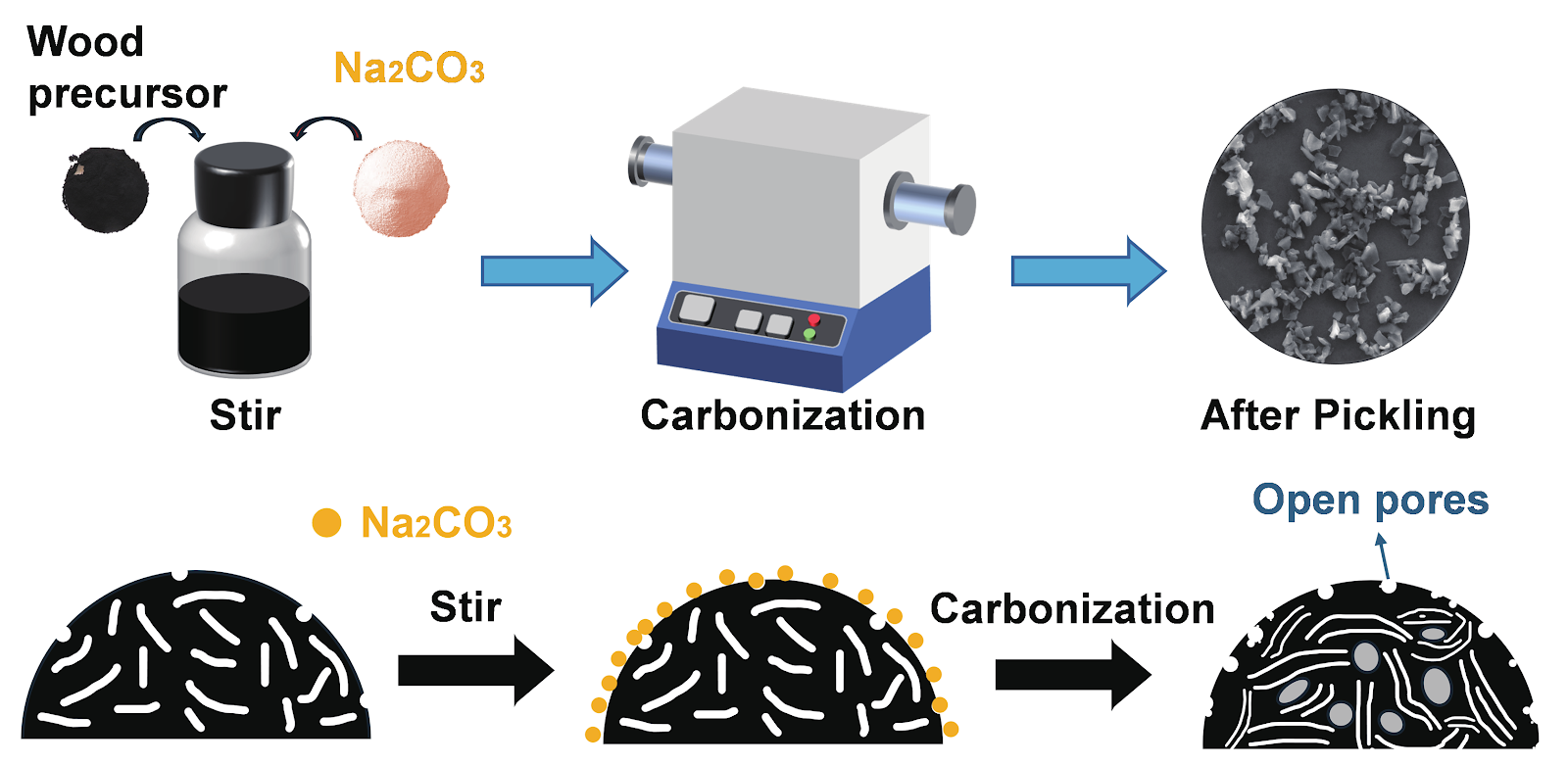
Modulating the open pore structure of hard carbons derived from wood for sodium-ion battery anodes

Authors: LI Menglong, GONG Jun, LI Jinming, XIE Haipeng, LI Yejun

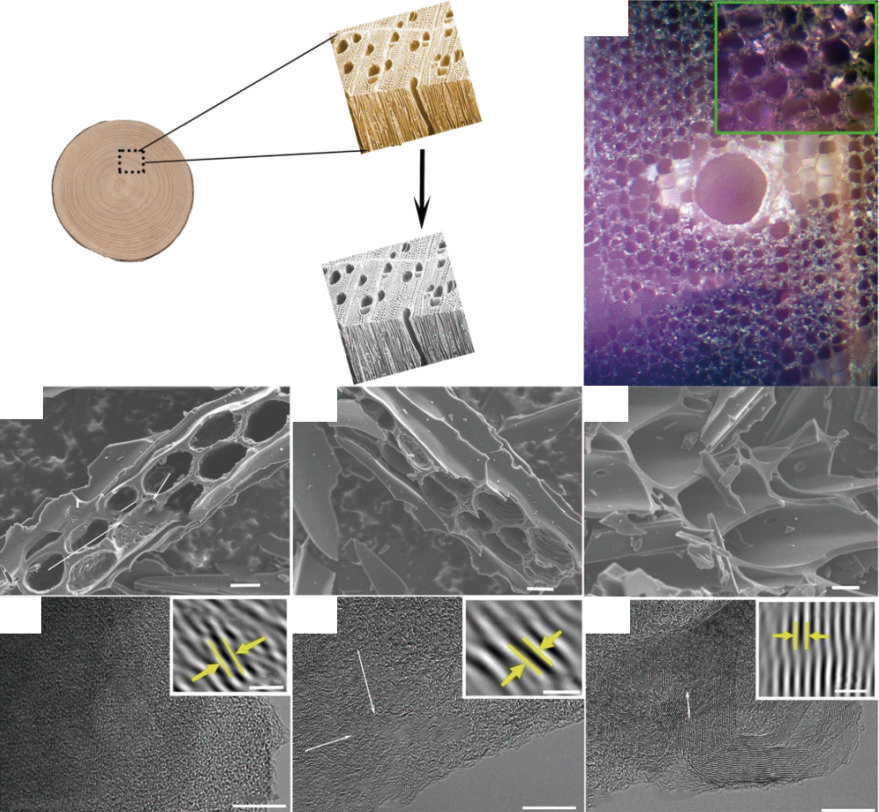
Hard carbon (HC) derived from renewable biomass is a promising anode material for sodium-ion batteries (SIBs). However, controlling the structure of hard carbon so that it has a high energy density, favorable rate performance, and cycling stability is still a challenge. We propose a strategy to control the open pore structure of hard carbon derived from wood for sodium-ion storage by the addition of sodium carbonate under carbonization at 1100 °C. The resulting HC has an increased interlayer spacing, and a more uniform open pore distribution (2–3 nm) with a high slope capacity, thereby enabling efficient sodium-ion transport and storage. The HC anode has a reversible capacity of 326 mAh g−1 at a current density of 30 mA g−1, and maintains a reversible capacity of 270 mAh g−1 at 1 A g−1 and a capacity of 68 mAh g−1 even at 10 A g−1 during rate performance tests. After 300 cycles, it retains 76.7% (207 mAh g−1) of its capacity at 1.0 A g−1. In situ Raman spectroscopy and the galvanostatic intermittent titration testing results reveal an adsorption-intercalation-filling sodium storage mechanism. This work provides a strategy to optimize the open pore structure of biomass derived hard carbon for high performance sodium ion storage.

Modulating the open pore structure of hard carbons derived from wood for sodium-ion battery anodes
Graphical Abstract
Original ResearchVol 40, Issue 1 • pp. 100-112DOI: 10.1016/S1872-5805(NCM2026-41-03-11)Jan 15, 2025

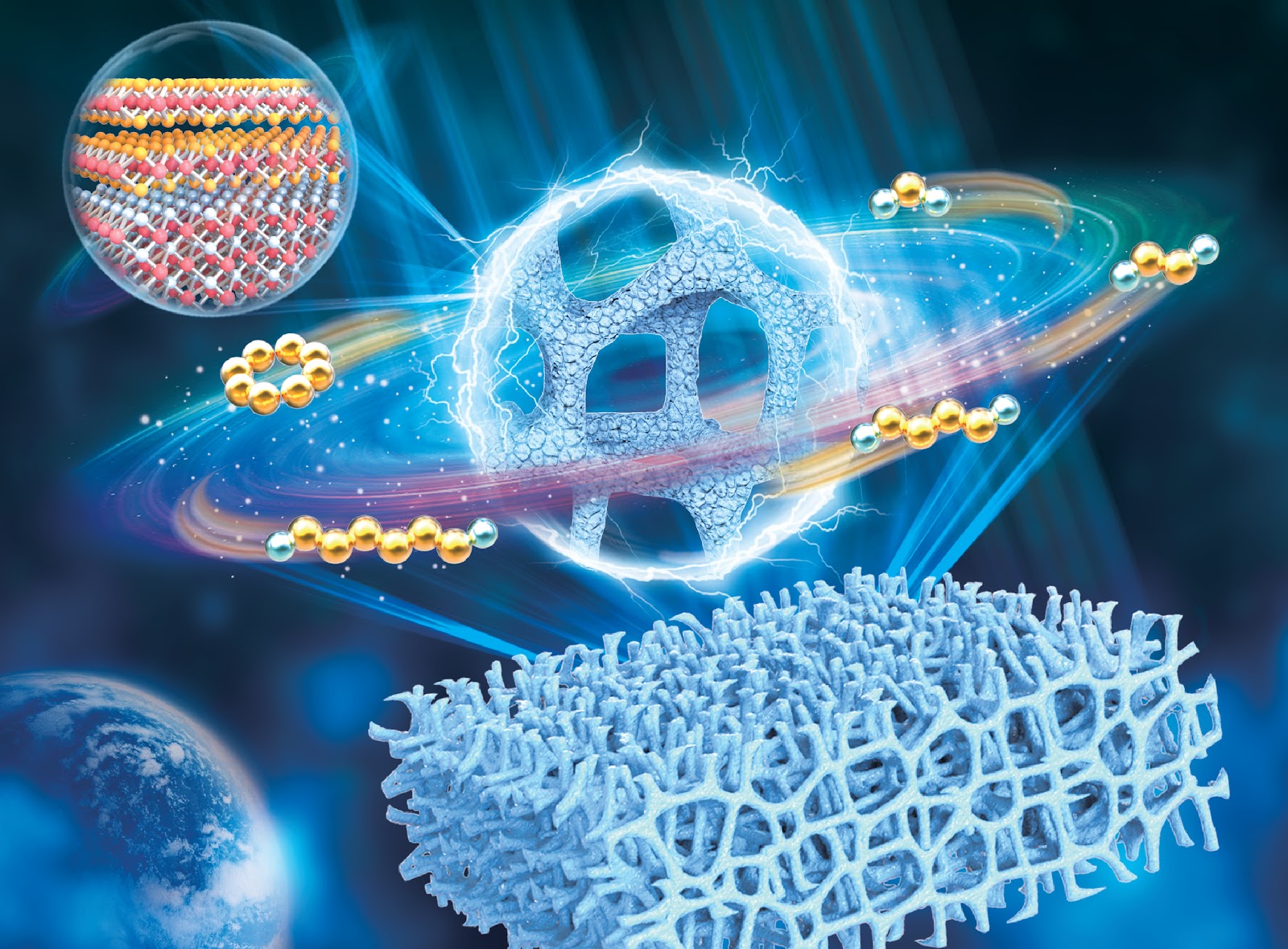
A multi-level porous MgO/biochar composite for the highly efficient adsorption of Pb(II) and Cd(II) from water

Authors: ZHANG Guojie, LIU Shiwei, SUN Qihua, SUN Jun, TIAN Ning, WU Zhaofeng, JIANG Li

A MgO/biochar composite (MBC) with a wide range of pore sizes was prepared by a MgCl2-NaOH co-impregnation method using lavender stalks as the biochar source, which can effectively remove Pb(II) and Cd(II) from wastewater. The co-impregnation treatment resulted in a specific surface area of the MBC that was approximately 54 times greater than that of the biochar derived from untreated stalks. The ion-exchange capacity of MBC was increased by the incorporation of MgO nanoparticles, which increased the alkali metal ion (Mg2+) content. These specific structures and compositions gave the MBC a high adsorption capacity for Pb(II) and Cd(II). The adsorption data followed a quasi second-order kinetic model. For Cd(II) and Pb(II), the maximum adsorption capacities of MBC-700 (treated at 700 ℃ for 2 h) reached 520 mg/g and 808 mg/g, respectively. The primary adsorption mechanisms were ion exchange, precipitation, electrostatic attraction and surface complexation. Furthermore, metallic lead was recovered by using the reducing properties of the biochar at high temperatures. This study provides a reference for developing inexpensive and efficient heavy metal adsorbents and the low-carbonization utilization of biomass waste.

A multi-level porous MgO/biochar composite for the highly efficient adsorption of Pb(II) and Cd(II) from water
Graphical Abstract
Original ResearchVol 40, Issue 1 • pp. 100-112DOI: 10.1016/S1872-5805(NCM2026-41-03-12)Jan 15, 2025

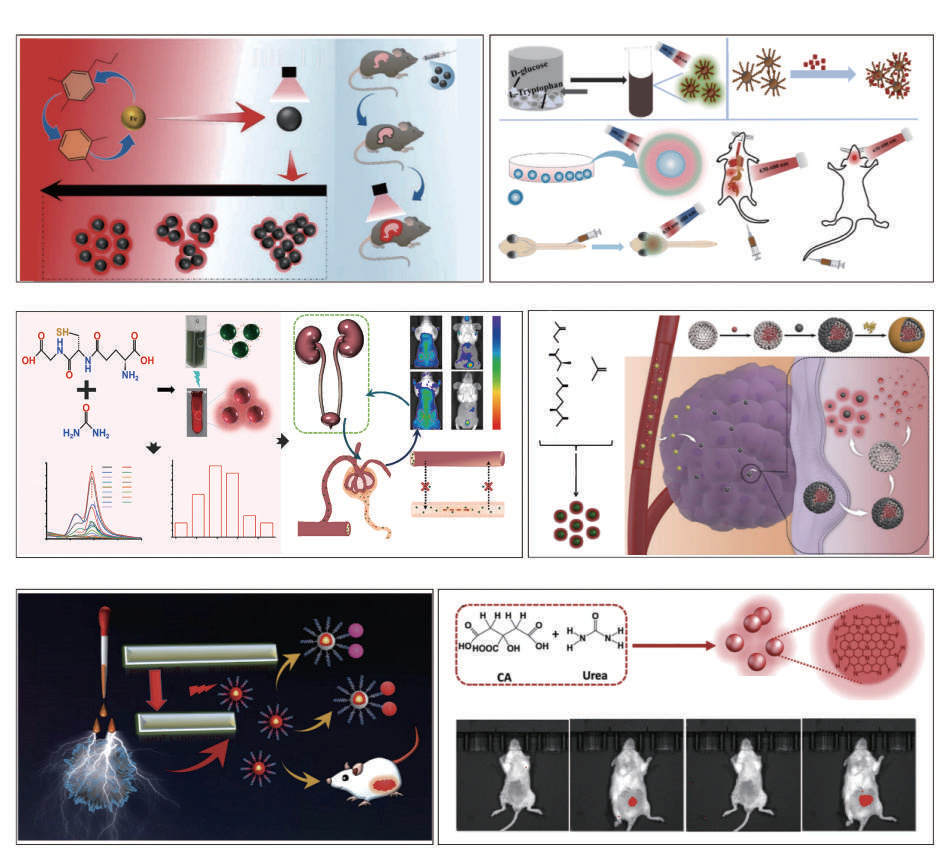
Construction of a superhydrophobic ZnO-rGO/CMF composite and its high-efficiency oil adsorption-separation performance

Authors: YANG Shifang, YU Peng

Oily wastewater discharge severely endangers the environment and hinders energy conservation efforts, necessitating the development of high-performance oil-water separation materials. We report the formation of a superhydrophobic and superoleophilic composite by integrating ZnO with reduced graphene oxide (rGO) on a carbonized melamine foam (CMF) using pristine melamine foam (MF) as the starting substrate. The fabrication involved two key steps: hydrothermal treatment and high-temperature pyrolysis. Characterization showed that the resultant ZnO-rGO/CMF composite had a water contact angle of 151.5°, indicating excellent superhydrophobicity. Both static adsorption and continuous dynamic separation tests verified the composite’s superior oil-water separation performance. It had remarkable adsorption capacities for various oils and organic solvents, with a maximum adsorption capacity of 120.2 g/g for soybean oil, surpassing the values for most previously reported MF-derived carbon-based adsorbents. After 20 consecutive separation cycles, the composite maintained a stable adsorption performance, demonstrating good recyclability. It also had an excellent compression resistance and good flame retardancy. It retained 70% of its original adsorption capacity for gasoline after five combustion cycles, confirming its reusability under high-temperature conditions. Hydrophobic carbon-based porous sponges were developed, providing valuable insights for the design and development of advanced carbon-based superhydrophobic materials for environmental remediation, particularly in oily wastewater treatment.

Construction of a superhydrophobic ZnO-rGO/CMF composite and its high-efficiency oil adsorption-separation performance
Graphical Abstract
Original ResearchVol 40, Issue 1 • pp. 100-112DOI: 10.1016/S1872-5805(NCM2026-41-03-10)Jan 15, 2025

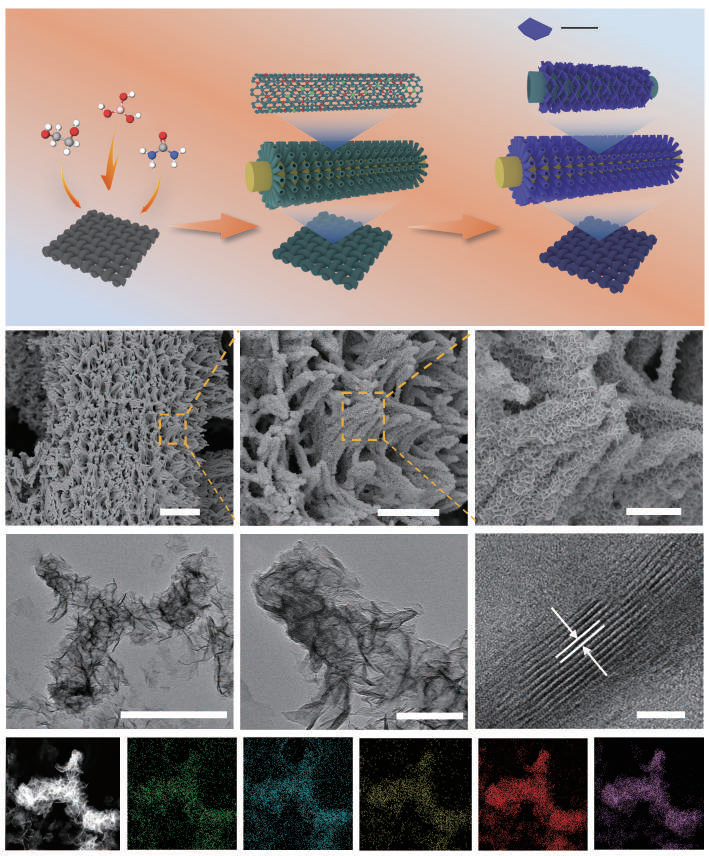
Electrochemically activated NiOOH/NiFeV-LDH@CC for a highly efficient oxygen evolution reaction

Authors: Song Yujie, Yue Yunfei, Shen Zhichao, Hou Ying, Song Yanhui, Liu Peizhi, Xu Bingshe, Zhang Haixia, Guo Junjie

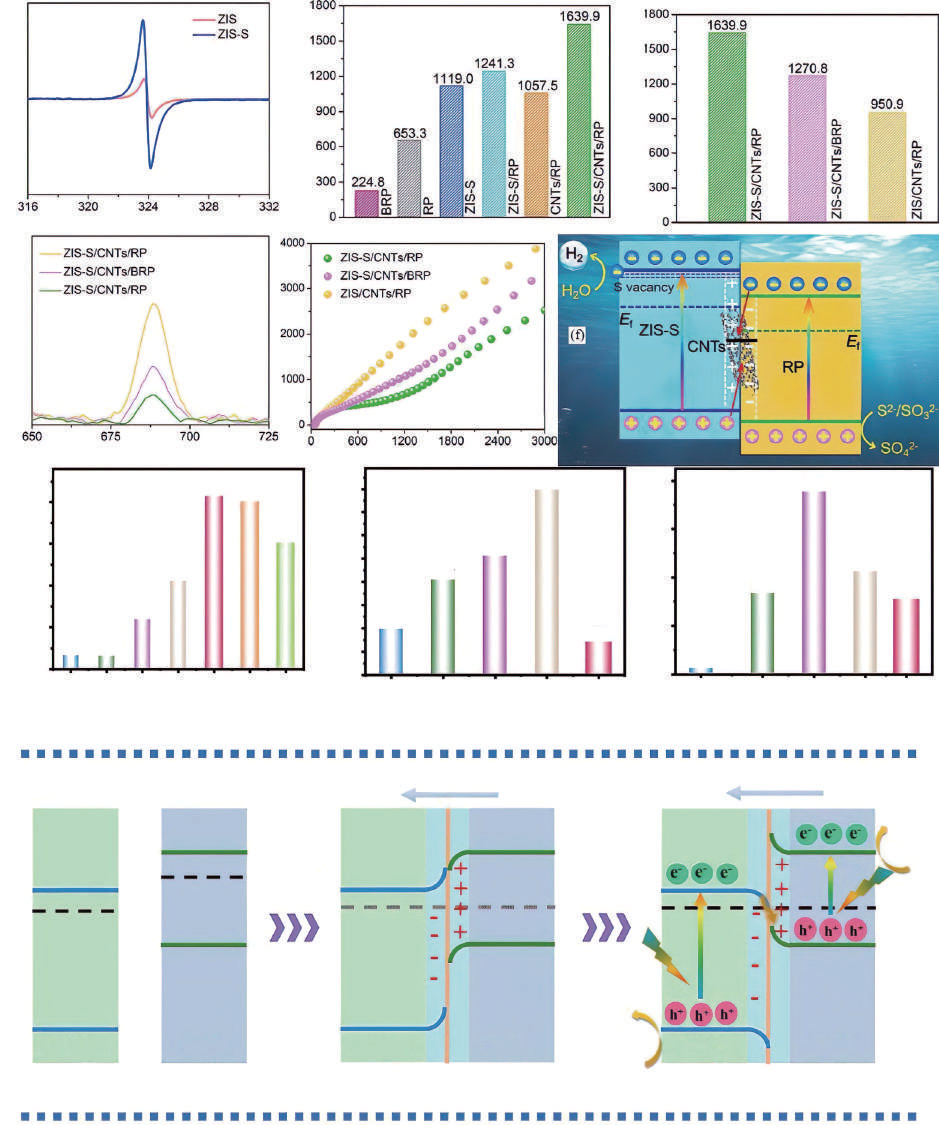
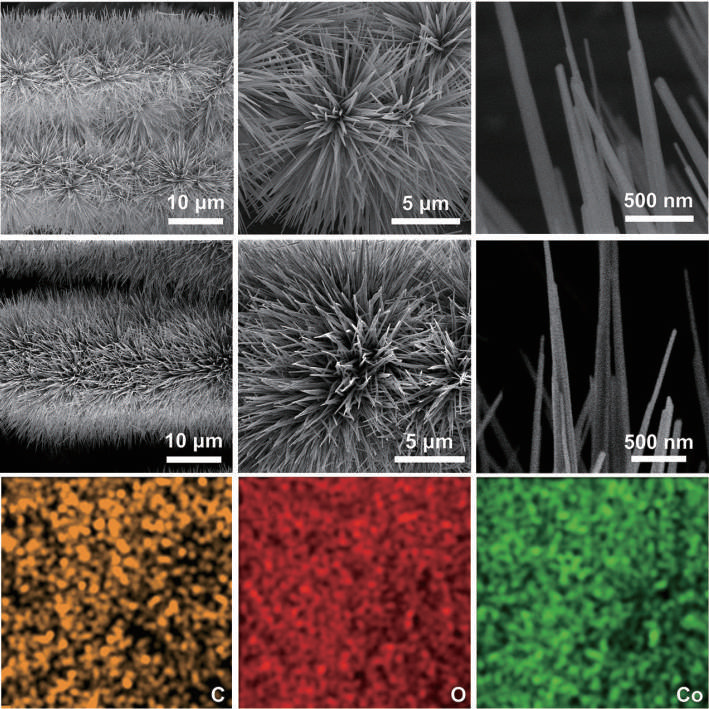
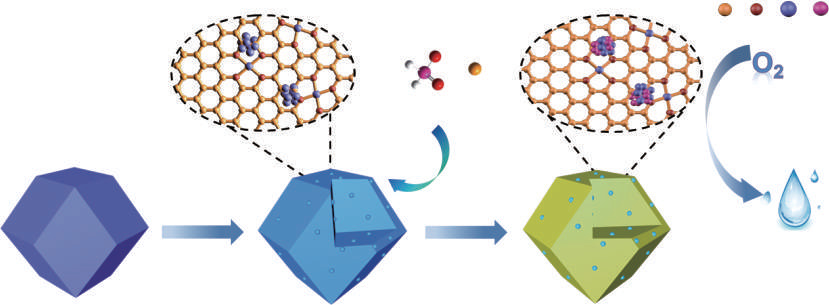
The surface reconstruction of NiFe-based layered double hydroxide (LDH) electrocatalysts has been widely studied. The reconstructed NiOOH phase plays a critical role in improving the oxygen evolution reaction (OER) performance of NiFe-based LDHs, but observing the NiOOH phase is difficult because of its instability and exploring the functional mechanism of NiOOH in NiFe-based LDHs remains a great challenge. A simple electrochemical activation was used to synthesize a NiOOH/NiFeV-LDH@CC catalyst consisting of an array of V-doped NiFe-LDH nanosheets on carbon cloth (CC), in which the reconstructed NiOOH phase is the active species. During electrochemical activation, the release of doped V leads to the formation of abundant vanadium vacancy (VV) and oxygen vacancy (VO) species, and thus the surface of the NiFe-LDH nanosheets is reconstructed to form NiOOH. Because of the improved intrinsic activity from the NiOOH active phase, and the increased electrical conductivity produced by the abundant VO, NiOOH/NiFeV-LDH@CC has an excellent OER performance in an alkaline solution, with low overpotentials of 209 mV and 241 mV at 20 mA cm−2 and 100 mA cm−2, respectively. It also has a long-term stability of 80,000 s at a constant current density of 10 mA cm−2. Using NiOOH/NiFeV-LDH@CC as the anode, an assembled over water splitting (OWS) battery can drive a current density of 20 mA cm−2 (without iR compensation) at a much lower voltage of 1.597 V. At the same time, the electrolytic cell can deliver a current density of 10 mA cm−2 at ~1.55V for more than 80,000 s without significant loss. This electrochemical activation method can be used in future designs of electrocatalysts for OER.

Electrochemically activated NiOOH/NiFeV-LDH@CC for a highly efficient oxygen evolution reaction
Graphical Abstract
Original ResearchVol 40, Issue 1 • pp. 100-112DOI: 10.1016/S1872-5805(NCM2026-41-03-07)Jan 15, 2025

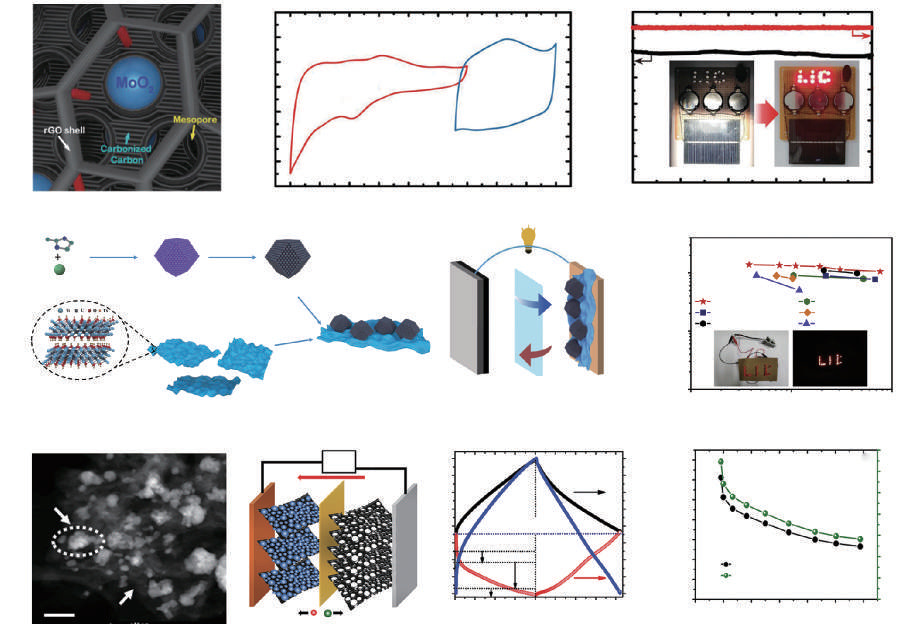
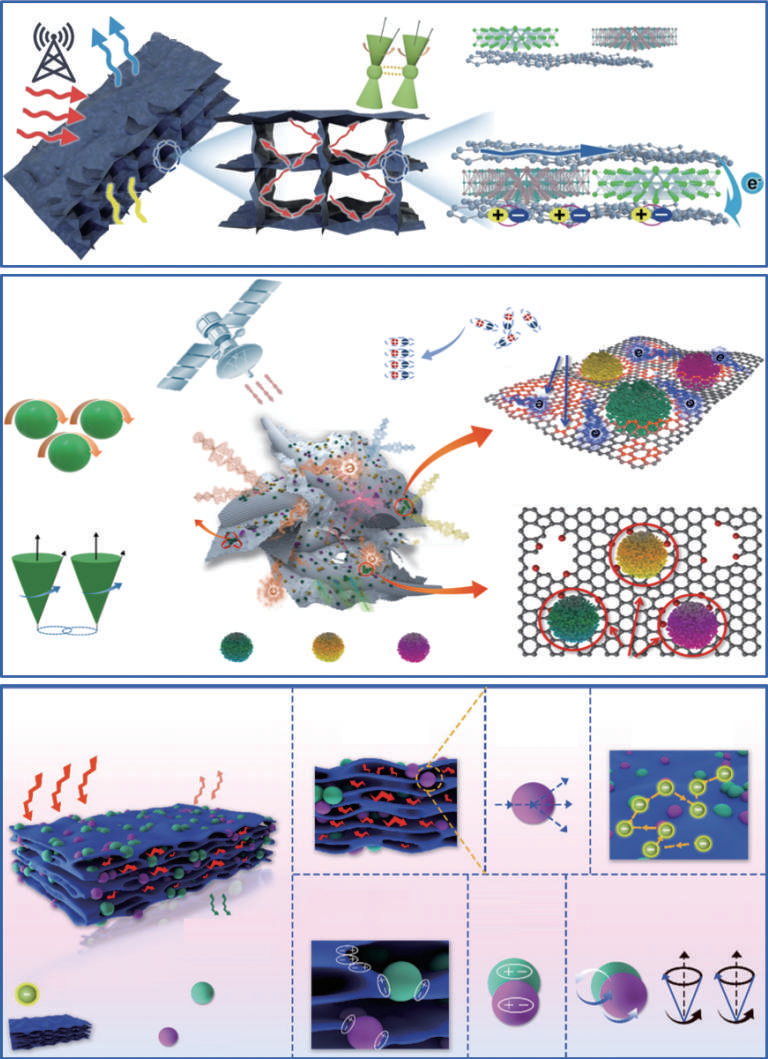
Construction of Moiré-like lignin based carbon electrodes to efficiently improve the performance of photo-assisted supercapacitors

Authors: WANG Yizhe, LI Cong, YUAN Meng, LIU Xing, HE Yanzhen, GUO Weimin, JIAO Haochen, LI Yudong, YANG Haiyue, WANG Chengyu

Conventional lignin-based carbons typically have sluggish ion transport and a limited number of active sites, which restrict their performance as electrodes in supercapacitors. A Moiré-like morphology was engineered by the in-situ deposition of lignin carbon onto DVD matrix onto lignin carbon for the fabrication of a photo-assisted supercapacitor (PASC). The Moiré-like structure modulates light propagation across different frequencies by dispersion effects, thereby increasing surface light absorption and improving the electrochemical performance of the PASC. Under illumination, the carbon has a specific capacitance of 253.5 F g−1 at 0.5 A g−1, corresponding to a 35.6% improvement over one without this grating surface (186.9 F g−1). A symmetrical capacitor using this material has an areal capacitance of 58.84 mF cm−2 and an energy density of 4.46 Wh kg−1 at a power density of 365.2 W kg−1, maintaining 85.2% of its initial capacitance after 5000 cycles, thus demonstrating excellent cycling stability. This work suggests a cost-effective strategy to simultaneously improve the light-harvesting ability and capacitive performance of PASCs.

Construction of Moiré-like lignin based carbon electrodes to efficiently improve the performance of photo-assisted supercapacitors
Graphical Abstract
Original ResearchVol 40, Issue 1 • pp. 100-112DOI: 10.1016/S1872-5805(NCM2026-41-03-08)Jan 15, 2025

3D-printed Ti/graphene composite current collectors for high-voltage aqueous zinc-ion batteries

Authors: YANG Zhiqiang, YANG Hao, WANG Rui, WAN Yi, ZHANG Yan, LIU Chenhao, ZHANG Zian, LI Yuqi, WU Mingbo, HU Han, CHEN De

Aqueous zinc-ion batteries (AZIBs) have significant promise as large-scale energy storage devices due to their high safety, low cost, and environmental friendliness. However, their application has been constrained by limited operational voltage windows. A high-voltage-resistant Ti-graphene-Ti cathode current collector (TGT) was designed and fabricated by three-dimensional (3D) printing. The surface of the TGT has a TixOy protective layer, which effectively suppresses electrolyte decomposition under high voltage conditions so that the voltage window of the battery is extended to 1.0–2.2 V without the obvious formation of by-products. Simultaneously, the graphene layer in the TGT structure significantly improves the adsorption and insertion/extraction kinetics of cations, resulting in a high specific capacity of 307.5 mAh g−1 and a prolonged cycling life of the battery. The resultant AZIBs have a stable charge/discharge performance over 400 cycles at a high voltage. Furthermore, the influence of the geometric arrangements of Ti and graphene in the 3D printing process on the energy storage mechanism was investigated and provided novel insight for the development of high-voltage-resistant composite cathode current collectors for AZIBs.

3D-printed Ti/graphene composite current collectors for high-voltage aqueous zinc-ion batteries
Graphical Abstract
Original ResearchVol 40, Issue 1 • pp. 100-112DOI: 10.1016/S1872-5805(NCM2026-41-03-14)Jan 15, 2025

The effect of the chemical structure of spinnable pitches on their rheological properties and spinnability and the properties of carbon fibers produced from them

Authors: LI Qian, ZHANG Bingfeng, YANG Yan, ZUO Pingping, QIN Fangfang, QU Shijie, SHEN Wenzhong

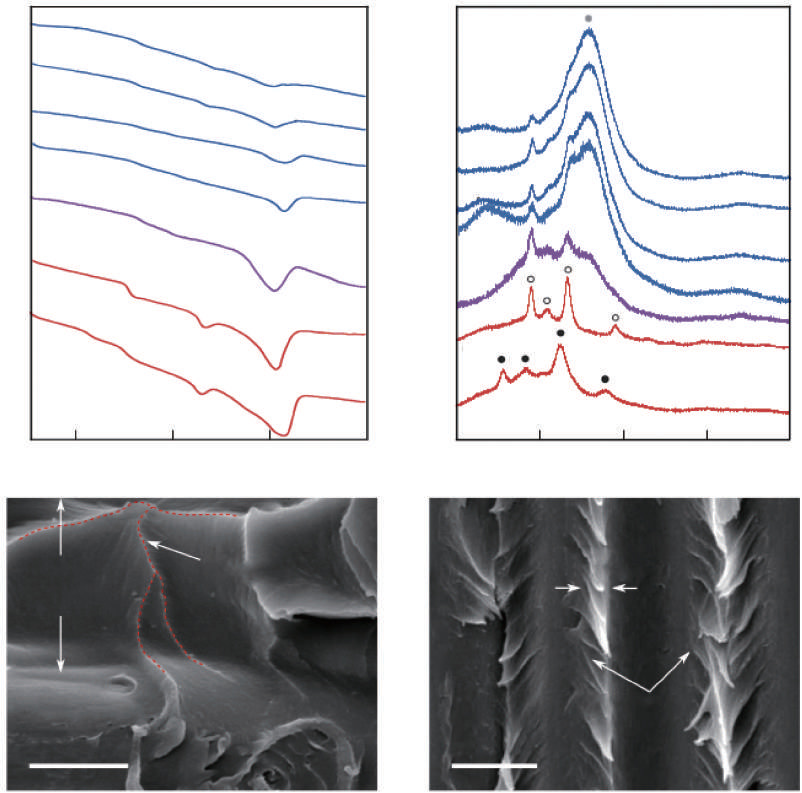
The structure and composition of a spinnable pitch determine the properties of the carbon fibers produced from it. Spinnable pitches with low and high softening points (L-SP and H-SP) were prepared by air-blowing thermal polymerization of coal tar pitch. The polymerization mechanism, structural composition, properties of the pitch, and the carbon fiber properties were investigated by fluorescence excitation-emission spectroscopy with parallel factor analysis, EPR, 13C-NMR, dynamic shear rheometry, XRD, Raman, etc. L-SP had the lower degree of polymerization, longer alkyl side chains, and a higher proportion of C―O―C groups. At its spinning temperature, the molten L-SP had viscous-dominant rheological characteristics. H-SP had larger polycyclic aromatic hydrocarbon rings, a higher degree of branching, and a higher polarity. The molten H-SP had a high storage and loss moduli, and a rheological behavior with nearly balanced viscous and elastic properties. Although carbon fibers prepared from H-SP had the better physical properties, their inferior rheological properties could lead to melt die swelling, the formation of surface particles and an increased number of irregularities. The superior viscoelasticity of L-SP promoted uniform stretching, maximizing the properties of carbon fibers. This ultimately resulted in similar tensile strengths and moduli of the carbon fibers prepared from the two pitches. The high-quality spinnable pitch had a high aromatic carbon content, a small size of its PAHs, and a low C=O/O―C=O content, which ensured viscosity-dominated rheological behavior, thereby reducing die swelling and melt fracture, and the spinning stability and properties of the carbon fibers produced were improved.

The effect of the chemical structure of spinnable pitches on their rheological properties and spinnability and the properties of carbon fibers produced from them
Graphical Abstract
Original ResearchVol 40, Issue 1 • pp. 100-112DOI: 10.1016/S1872-5805(NCM2026-41-03-06)Jan 15, 2025

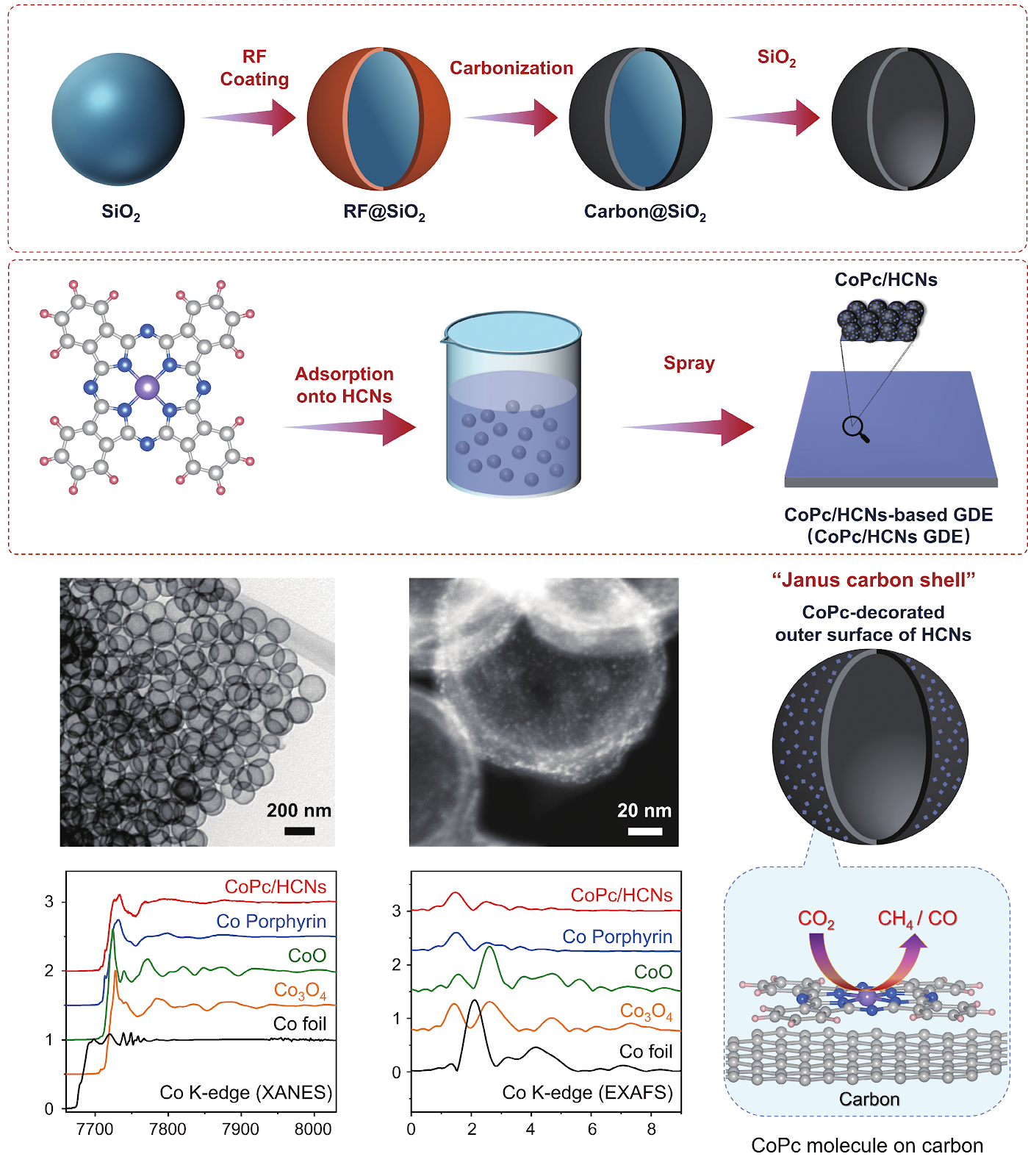
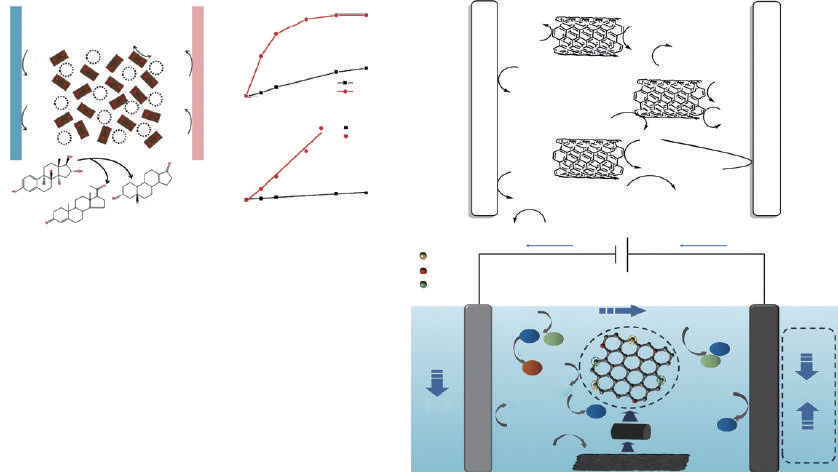
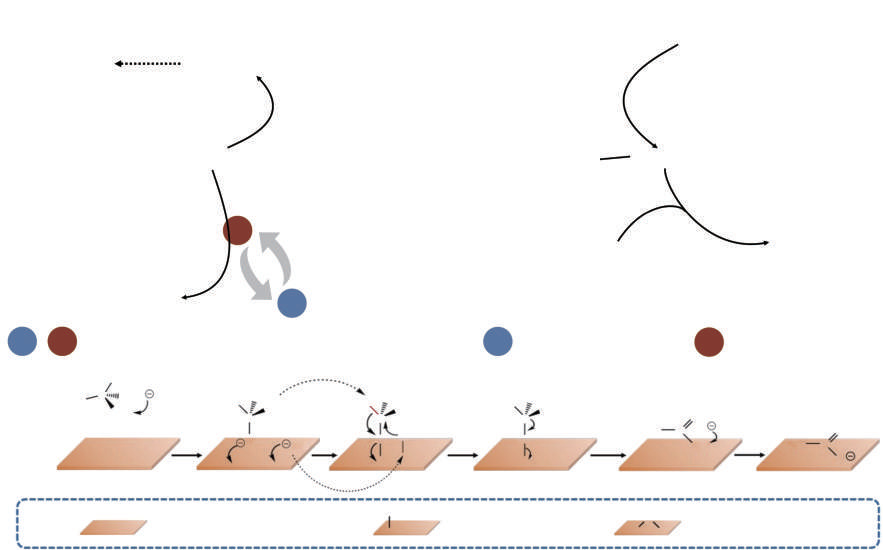
Janus carbon shells with inner–outer functional asymmetry enable local proton enrichment for promoting CO2 methanation

Authors: LIU Tengyi, HOU Xiaofan, Wijak Yospanya, YE Songbo, Yasutaka Matsuo, Shimpei Ono, Reiko Oda, LI Hao, Hiroshi Yabu

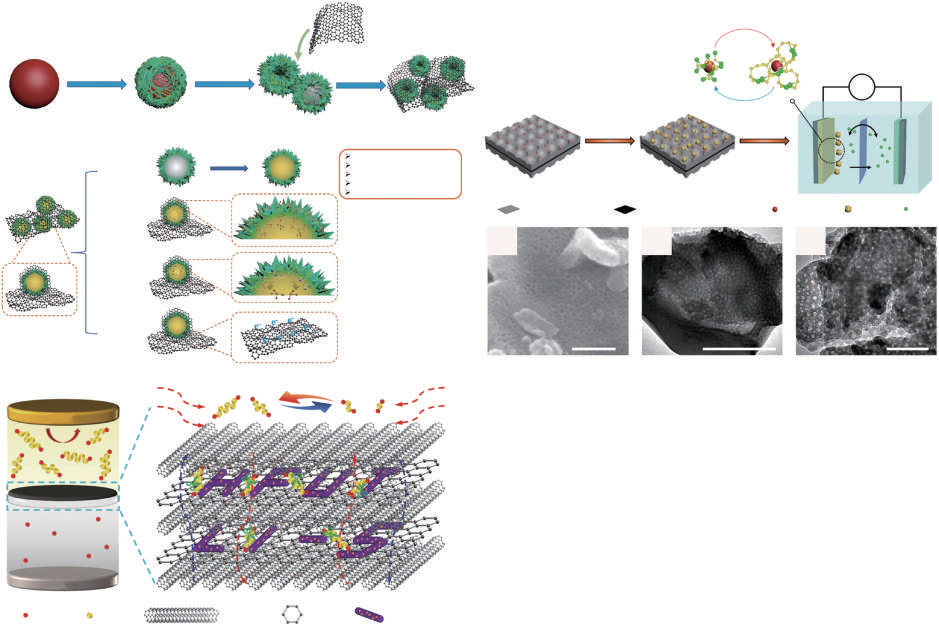
Exploring non-copper electrocatalysts for CO2-to-CH4 electrosynthesis is important for reducing overreliance on copper and broadening the catalyst landscape. We report a strategy that enables CH4 formation on cobalt phthalocyanine (CoPc) by regulating the local reaction microenvironment through the catalyst structure. Ultrathin hollow carbon nanospheres (HCNs) with a uniform size were synthesized and used as supports for CoPc, forming “Janus carbon shells” with inner–outer functional asymmetry. The resulting CoPc-HCN hybrid had a maximum CO2-to-CH4 selectivity of 15.1%, overcoming the conventional CO-selective behavior of CoPc. Mechanistic studies show that the hollow carbon structure induces a proton enrichment outside the shell through an inner–outer surface interaction. The inner carbon surface promotes the hydrogen evolution reaction (HER) and produces a proton-enriched environment near the CoPc-active outer surface, thereby enabling CO2 methanation. This work highlights the critical role of catalyst structure in overcoming intrinsic selectivity limits of molecular catalysts.

Janus carbon shells with inner–outer functional asymmetry enable local proton enrichment for promoting CO2 methanation
Graphical Abstract
Original ResearchVol 40, Issue 1 • pp. 100-112DOI: 10.1016/S1872-5805(NCM2025-3-7-1)Jan 15, 2025

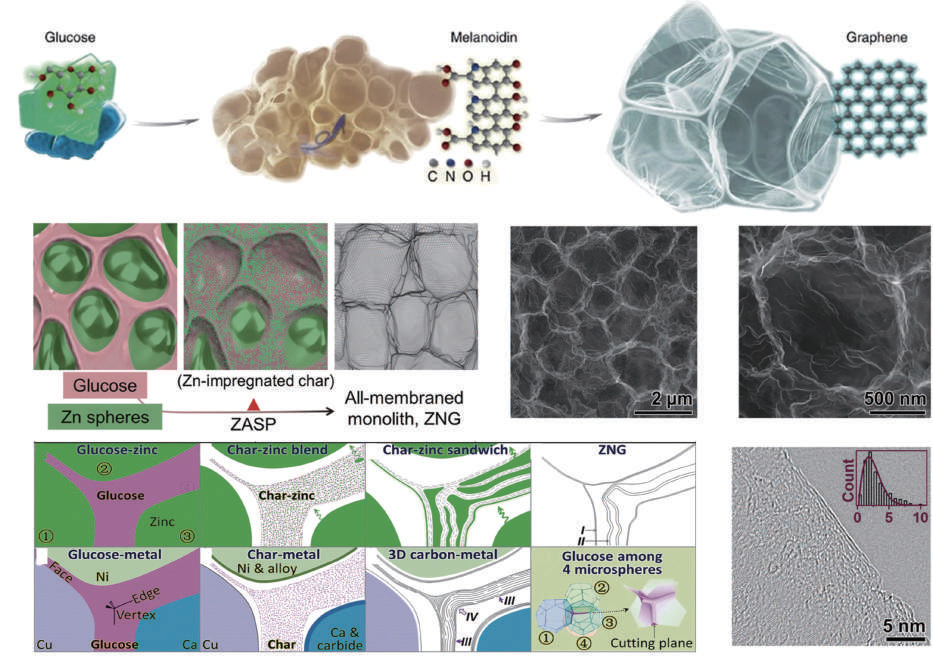
Green Synthesis of Graphene Oxide Flakes and Foams directly from Table Sugar

Authors: Majid S. Al-Ruqeishi, Tariq Mohiuddin, Noora Al-Ghafri

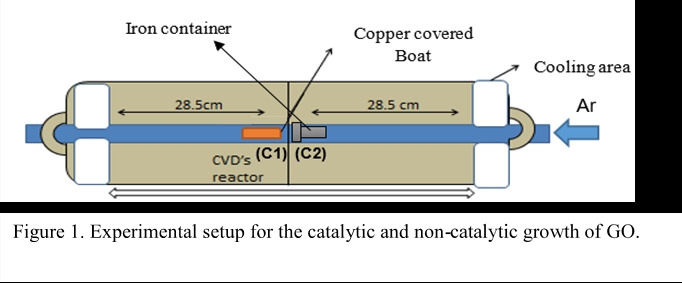
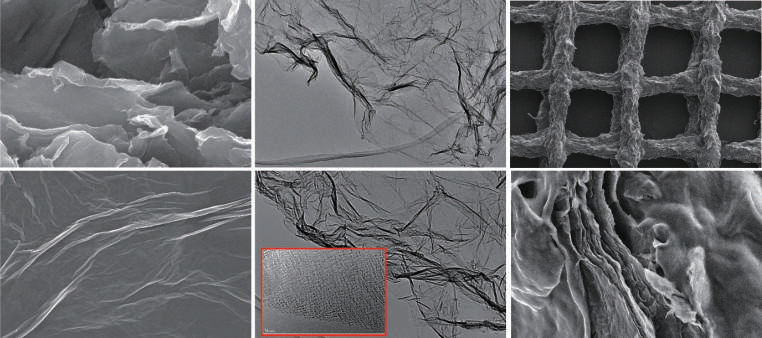
Large scale of graphene oxide (GO) sheets and three-dimensional foams were fabricated directly from table sugar solution (TS) without using blowing agents. Using table sugar or biomass-derived carbohydrates as precursors provides a green, safe, and potentially scalable route for graphene oxide synthesis. These carbohydrate-based methods minimize hazardous reagents and waste through simple thermal decomposition processes. Compared to conventional techniques, they offer lower costs, fewer chemical risks, and greater sustainability, making them suitable for industrial applications. The use of catalytic carbonization (CC) on copper foil as well as non-catalytic (NC) hydrothermal carbonization in a sealed container produces separate GO sheets with 2.5 ± 0.1 cm in size. Non-catalytic growth produced GO 3-D foams with surface area ~7.5 ± 0.1 cm² and average grain sizes (7.97 ± 0.01 µm) comprising of 75.7% and 24.3% of carbon and oxygen respectively. HRTEM and SAED confirmed its hexagonal structure formation. After synthesis by graphitization, foams showed diminished groups containing oxygenated functionalities and C/O ratio increased from 0.13 to 1.5 as per XPS and FTIR results. On the other hand, 3D conductivity of the reduced GO or rGO increased by 0.87Ωm⁻¹ compared to 0.04 Ωm⁻¹ for GO. The present eco-friendly method offers scalability towards high-quality production of both GO and rGO for various applications.

Green Synthesis of Graphene Oxide Flakes and Foams directly from Table Sugar
Graphical Abstract
Original ResearchVol 40, Issue 1 • pp. 100-112DOI: 10.1016/S1872-5805(NCM2025-6-2)Jan 15, 2025

A review of ways to improve the performance of hard carbon anodes in low-temperature sodium-ion batteries

Authors: CUI Zhe, LI Bing-yu, XIONG Hang, LI Tian, XIE Ming-xin, HU Jing-ying, QIU Xia, GUI Zhu-qin, ZHOU Rui, SHI Li-luo, JU Zhi-cheng, CHEN Ya-xin

Because of their excellent low-temperature (−15 to −40 °C) tolerance, sodium-ion batteries are emerging as a complement to lithium-ion batteries for use in extremely cold environments (e.g. high-latitude areas). Hard carbon has a high low-voltage sodium storage capacity and a good initial efficiency, making it one of the most promising anode materials for sodium-ion batteries. It has a complex structure, featuring closed pores, nano graphitic domains, and surface functional groups. The sodium storage sites in hard carbon are reviewed as are the widely accepted sodium storage mechanisms. The main factors contributing to the degradation of the good low-temperature performance in hard carbon anodes are considered, including sodium dendrite formation, low ion diffusion rates, and surface-side reactions. Finally, strategies to increase the low-temperature sodium storage performance of hard carbon anodes are summarized, including bulk structure design, and improvements in interfaces and cut-off voltage. Guidance is provided for improving the low-temperature performance of hard carbon anodes to accelerate the development of these batteries.

A review of ways to improve the performance of hard carbon anodes in low-temperature sodium-ion batteries
Graphical Abstract
Original ResearchVol 40, Issue 1 • pp. 100-112DOI: 10.1016/S1872-5805(NCM2026-41-03-03)Jan 15, 2025

Fabrication of CoFe/C@polypyrrole composites with efficient electromagnetic wave absorption properties

Authors: QU Lin, WANG Yajing, YUAN Wenpei, LIU Pengyu, ZHANG Yanlan, WANG Yongzhen

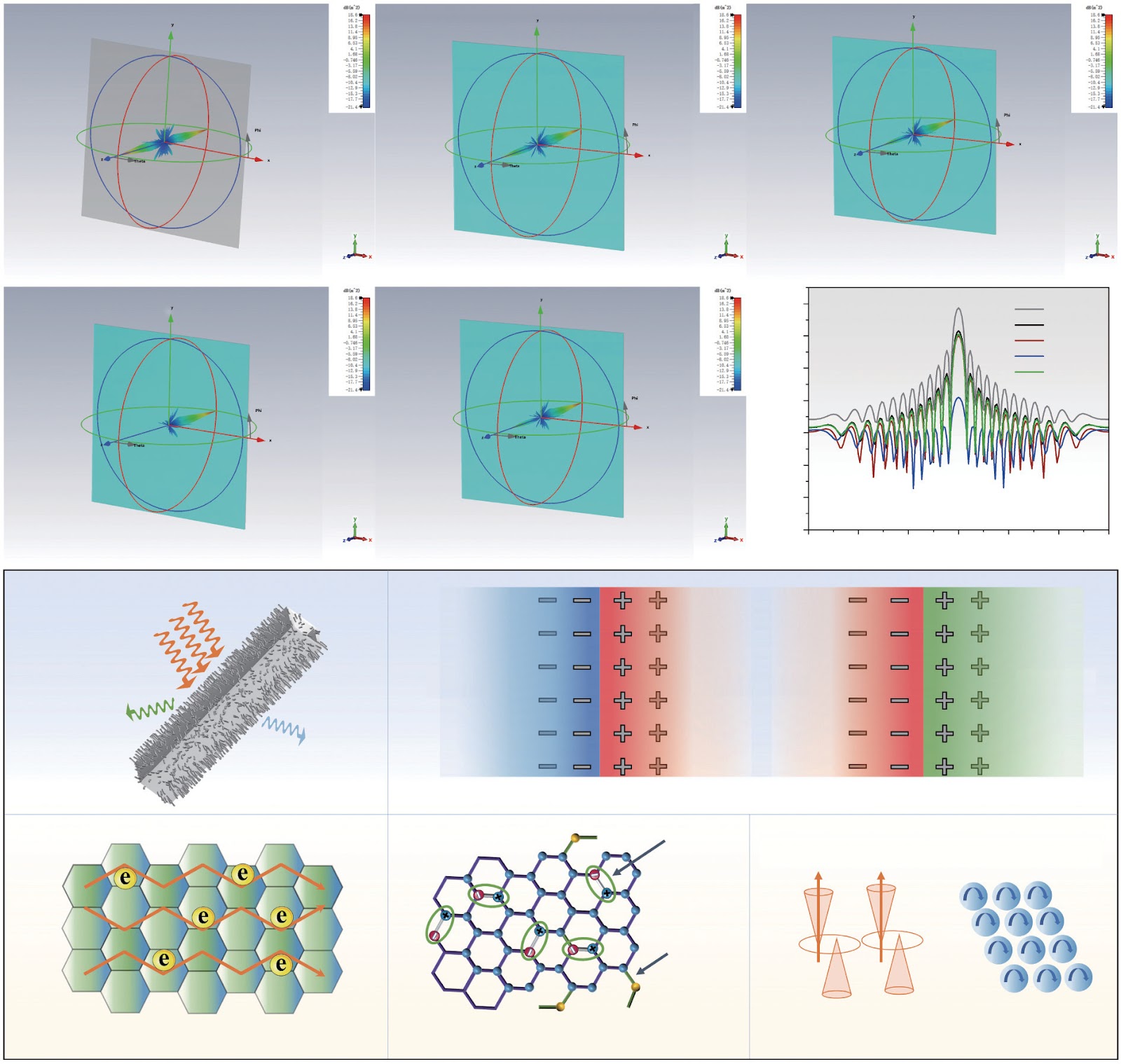
Recently, increasingly severe electromagnetic radiation has caused harm to precision equipment and human health, which requires the development of effective electromagnetic wave (EMW) absorption materials. These materials require both a strong absorption and a broad bandwidth at low filling rates and small thicknesses. To meet this requirement we have constructed a cobalt-iron/carbon@polypyrrole (CoFe/C@PPy) composite by a two-step synthesis process. The first is the fabrication of magnetic CoFe/C fibers, followed by their coating with a PPy layer with a controlled thickness. This combination of materials results in a magnetic loss from CoFe/C and a dielectric loss from PPy which improves both impedance matching and EMW dissipation. An optimized material has a PPy layer with a thickness of 2.0 mm and a loading of 10% and has a minimum reflection loss (RLmin) of −45.6 dB at 14.64 GHz, and the corresponding effective absorption bandwidth is 5.12 GHz. Furthermore, CST Studio simulations and far-field radar cross-section (RCS) analysis validate its practical use, showing a notable RCS reduction of up to 37.5 dBm2 for a perfect electric conductor.

Fabrication of CoFe/C@polypyrrole composites with efficient electromagnetic wave absorption properties
Graphical Abstract
Original ResearchVol 40, Issue 1 • pp. 100-112DOI: 10.1016/S1872-5805(NCM2025-6-3)Jan 15, 2025

The rapid preparation of porous carbon with an improved capacitance

Authors: JIA Ya-jun, HAN Zi-yue, LIU Hui-chao, CHANG Yun-zhen, ZHU Sheng, HOU Wen-jing, LIU Shu-jie, ZHANG Ying, ZHANG Jin-jiao, HAN Gao-yi

The typical method for preparing the porous carbon used in supercapacitors (SCs) is time-consuming and energy-intensive. We report a fast and efficient route to synthesize and tailor the structure of porous carbon by a Joule heating technique (JHT) using phenolic resin and precursors. During the JHT process, the time and energy needed are both significantly reduced because the precursor is heated to the target temperature at a rate of 1100 K/s, so the porous carbon is formed with the release of small molecules and the etching of the substrate by K2CO3. JHT has a higher energy efficiency than traditional carbonization methods in a tube furnace and allows for precise control of the pyrolysis process, thus achieving better control of the material's structure and properties. Samples obtained by JHT contain abundant pores and a large specific surface area (1652.7 m2/g), which give an excellent specific capacitance of 476.0 F/g and rate capability (75.1% capacitance retention at 64.0 A/g in an aqueous alkaline electrolyte). Furthermore, in electrolytes of 17.0 mol/kg NaClO4 (water-in-salt) and 1.0 mol/L TEABF4/AN, the symmetric SCs have a maximum energy density of 33.3 and 50.8 Wh/kg at power densities of 220.4 and 376.4 W/kg, respectively. The cells also have good long-term stability, with a nearly 100% Coulombic efficiency, and a capacitance retention of 93.1% in a water-in-salt electrolyte after 10000 cycles, and 88.9% in an organic electrolyte after 8000 cycles. This study shows that JHT has the potential to serve as an ultra-fast method to prepare porous carbons for energy storage.

The rapid preparation of porous carbon with an improved capacitance
Graphical Abstract
Original ResearchVol 40, Issue 1 • pp. 100-112DOI: 10.1016/S1872-5805(NCM2026-41-03-02)Jan 15, 2025

The controlled preparation and performance improvement of meso-carbon microbeads for energy storage

Authors: HUANG Junjie, YANG Jianxiao, DONG Silin, GOU Genchang, ZHANG Jingxian, SHUI Yuanyang, YIN Wenkun

Mesocarbon microbeads (MCMBs) are a high-performance carbon material that has been widely used in energy storage and as high-temperature structural materials due to their highly controllable microstructure and excellent electrical conductivity. However, with different energy storage mechanisms such as lithium-ion batteries, sodium-ion batteries, potassium-ion batteries, and supercapacitors, MCMBs with a single structure cannot fully meet the different material performance requirements. We review the basic characteristics, preparation methods, formation mechanism and modification strategies of MCMBs, focusing on the relationship between its microstructure and electrochemical performance in various energy storage systems, and its application in other fields. The opportunities and challenges of using MCMBs in different energy storage applications are considered.

The controlled preparation and performance improvement of meso-carbon microbeads for energy storage
Graphical Abstract
Original ResearchVol 40, Issue 1 • pp. 100-112DOI: 10.1016/S1872-5805(NCM2026-41-03-04)Jan 15, 2025

Synthesis of free-standing carbon nanotube buckypaper films decorated with Fe3O4 nanoparticles and polyaniline as highly effective electromagnetic shielding materials

Authors: HU Yunping, GONG Daixuan, QU Meijie, TANG Ping, BIN Yuezhen

A balance between electrical and magnetic properties is critical for electromagnetic shielding materials to achieve excellent electromagnetic interference (EMI) shielding and attenuation effectiveness across a broad frequency range. We have prepared free-standing buckypaper films (BPFP) decorated with Fe3O4 particles and polyaniline (PANI) by a simple two-step method to meet this requirement. First, buckypaper films decorated with Fe3O4 (BPF) were synthesized by the coprecipitation of Fe2+/Fe3+ ions on buckypaper (BP) which was then coated with a polyaniline layer by the in situ polymerization of aniline monomers. Magnetic characterization revealed that the BPF and BPFP films had saturation magnetization (Ms) values of 14.3 emu g−1 and 13.0 emu g−1, respectively, confirming retention of the magnetic phase. The addition of Fe3O4 nanoparticles and polyaniline to BP (30 μm) increased both the magnetic and dielectric losses due to the increased interfacial polarizations and anisotropy energy. 41 μm-thick BPF and BPFP films had an absorption-dominated shielding effectiveness of 35.1 dB and 36.4 dB, respectively, across the 5.85-18 GHz frequency band. These values are respectively 12.9% and 17.0% greater than that of pristine BP, highlighting the positive effect of Fe3O4-PANI heterostructures on electromagnetic wave dissipation. These films also had the tensile strength, flexibility, and lightness of BP, demonstrating exceptional promise for next-generation electromagnetic shielding materials.

Synthesis of free-standing carbon nanotube buckypaper films decorated with Fe3O4 nanoparticles and polyaniline as highly effective electromagnetic shielding materials
Graphical Abstract
Original ResearchVol 40, Issue 1 • pp. 100-112DOI: 10.1016/S1872-5805(NCM2026-41-03-01)Jan 15, 2025

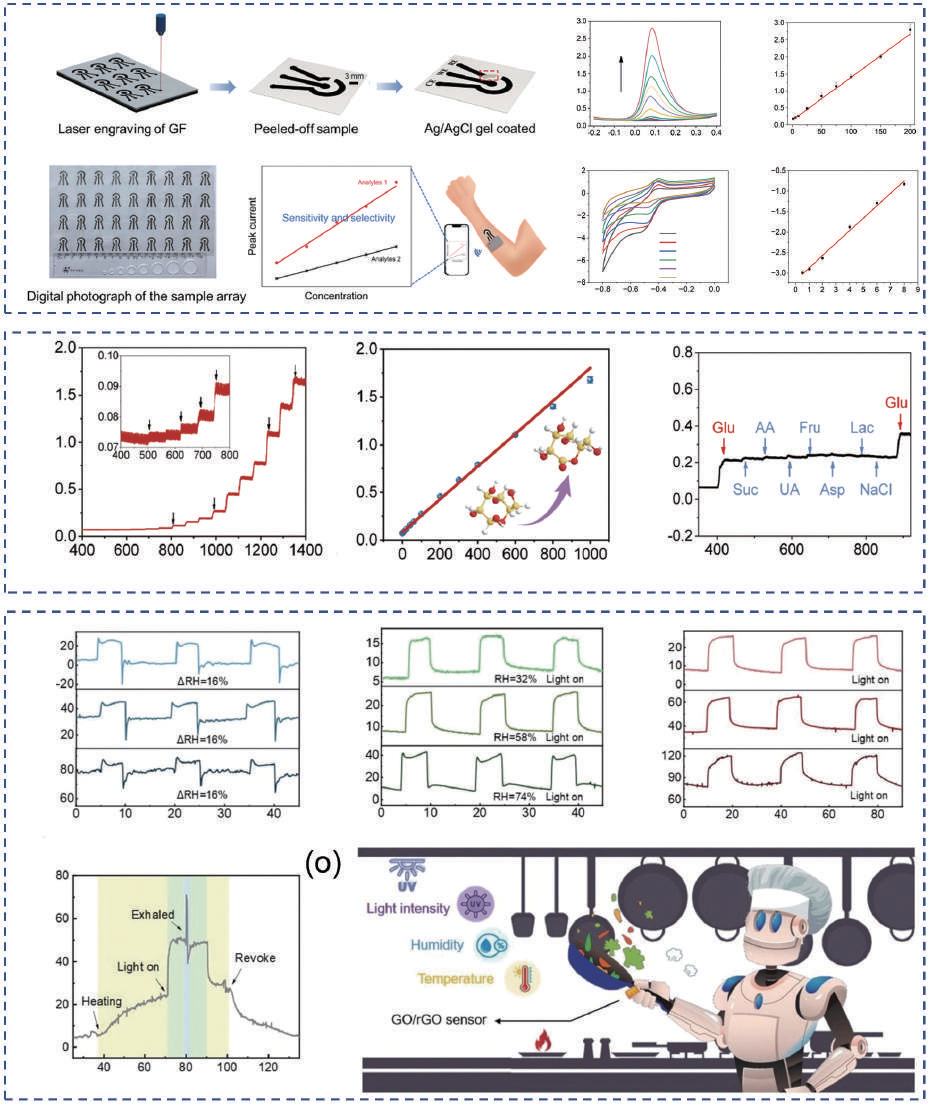
Wearable energy harvesters based on graphene fibers

Authors: Guang Tianlei, Cheng Huhu, Qu Liangti

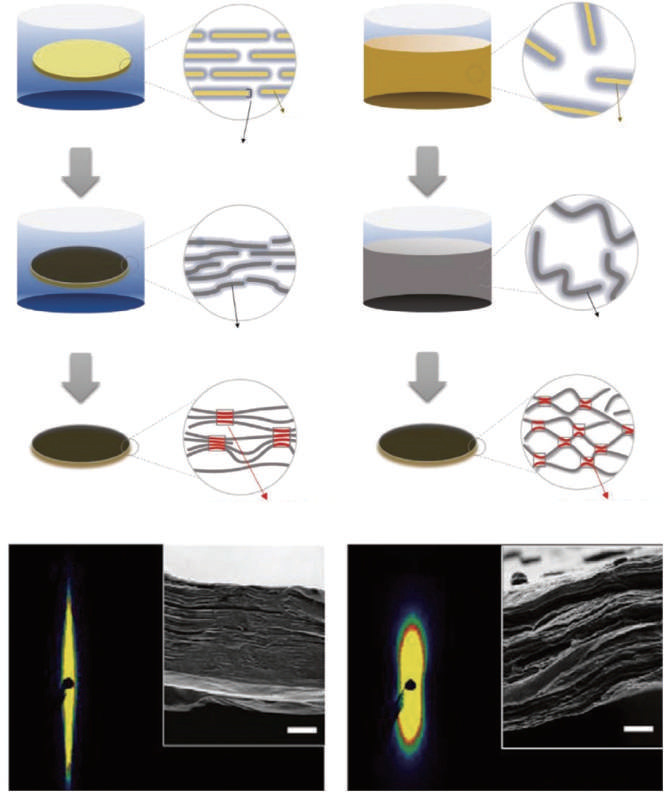
Graphene fibers (GFs) have demonstrated high strength, high electrical and thermal conductivity, mechanical flexibility, chemical stability, and good functionality, etc. at the macro-scale, and have been used in many different fields, particularly next-generation wearable and flexible devices. This review provides an overview of recent advances in the fabrication of GFs, including wet spinning, confined hydrothermal synthesis, chemical vapor deposition, and other emerging techniques. Special emphasis is placed on the development of GF-based devices that convert solar, thermal, or moisture energy from the environment into electrical energy. The working principles, structural design, and performance of these devices are summarized and current challenges and prospects for their use in wearable energy systems are detailed.

Wearable energy harvesters based on graphene fibers
Graphical Abstract
Original ResearchVol 40, Issue 1 • pp. 100-112DOI: 10.1016/S1872-5805(NCM2026-41-03-05)Jan 15, 2025

Rapidly fabricated carbon/carbon composites with a mesophase pitch binder and graphite flake filler with excellent EMI shielding and thermal conductivity

Authors: Luo Pengfei, Tian Shan, Guo Fengjun, Xiao Zhichao

Carbon/carbon (C/C) composites are ideal materials for electromagnetic interference (EMI) shielding and thermal management in the aerospace field because of their low density. However, traditional C/C composites primarily rely on repeated densification to increase their EMI shielding effectiveness (SE), which not only increases density but also involves lengthy preparation cycles. We have constructed a unidirectional (1D) C/C composite using a matrix of mesophase pitch-derived carbon and graphite flakes, reinforced with mesophase pitch-based carbon fibers. Using a one-step consolidation process produced by spontaneous assembly during heating, the open pores and a continuous conductive network give the composite an EMI SE of up to 83.97 dB in the 8.2–12.4 GHz (X-band). The material also has a thermal conductivity of 191.84 W·m−1·K−1 and an electrical conductivity of 6.50 × 10⁴ S·m−1 along the fiber direction, together with a flexural strength exceeding 100 MPa, while having a bulk density of only 1.01 g·cm−3. This work therefore presents a short-cycle fabrication strategy for low-density C/C composites that integrate high EMI SE, efficient thermal management, and good mechanical properties.

Rapidly fabricated carbon/carbon composites with a mesophase pitch binder and graphite flake filler with excellent EMI shielding and thermal conductivity
Graphical Abstract
Original ResearchVol 40, Issue 1 • pp. 100-112DOI: 10.1016/S1872-5805(NCM2025-5-4)Jan 15, 2025

Current problems in Li-air batteries and ways to solve them

Authors: Humaira Rashid Khan, Abdul Latif Ahmad, Asim Ali Yaqoob

The energy production system must be completely transformed to reach net zero emissions by 2050, and advanced battery technologies will play a pivotal role in helping downstream sectors transition to sustainable energy sources. Li-air batteries (LABs) provide a fascinating “beyond Li-ion” option because of their ultrahigh theoretical energy density, which far surpasses conventional lithium-ion batteries. However, LABs face significant hurdles in practical implementation, including electrolyte instability, irreversible electrodes, poor cycling performance, and low-rate capability. This review provides a detailed analysis of recent progress in LAB systems, highlighting innovative approaches such as electrolyte stabilization, electrode modification, and interfacial engineering to address these challenges. It evaluates current strategies for overcoming these problems and outlines targeted research directions aimed at resolving the remaining obstacles in LAB technology. The progress made so far indicates a way to realize practical LABs with a specific energy density potentially comparable to gasoline, which could revolutionize electric transportation.

Current problems in Li-air batteries and ways to solve them
Graphical Abstract
Original ResearchVol 40, Issue 1 • pp. 100-112DOI: 10.1016/S1872-5805(NCM2025-6-1)Jan 15, 2025

A review of recent progress on CO2 hydrogenation to methane by Ni-based catalysts supported on carbon materials

Authors: SUN Yu, HUO Kai-xuan, FANG Hai-qiu, WANG Yang, WU Ming-bo

Recent research progress on the use of Ni-based catalysts supported by various carbon materials, such as carbon nanotubes, graphene, and activated carbon, for the hydrogenation of CO2 to CH4 is summarized. The influence of additives and surface modification methods on improving their catalytic performance is discussed as is the reaction mechanism, especially the structure-function relationship produced by the carbon. The review provides a comprehensive directory for the rational design of carbon-supported Ni-based catalysts for the methanation of CO2.

A review of recent progress on CO2 hydrogenation to methane by Ni-based catalysts supported on carbon materials
Graphical Abstract
Original ResearchVol 40, Issue 1 • pp. 100-112DOI: 10.1016/S1872-5805(NCM2025-6-4-v1)Jan 15, 2025

Biharmonic Problems with Steklov-type and Farwig Boundary Conditions and their Applications

Authors: Hovik A. Matevossian

We study some properties of solutions of biharmonic problems with Steklov-type and Farwig boundary conditions and their application in technique and engineering. Using the scattering model, to solve these biharmonic problems, which have applications in particular in radar imaging, we need to solve the Dirichlet and Neumann boundary value problems for the Poisson equation.

Biharmonic Problems with Steklov-type and Farwig Boundary Conditions and their Applications
Graphical Abstract
Original ResearchVol 40, Issue 1 • pp. 100-112DOI: 10.1016/S1872-5805(NCM2025-5-2)Jan 15, 2025

A dataset for the structure and electrochemical performance of hard carbon as anodes for sodium-ion batteries

Authors: HOU Wei-yan, YI Zong-lin, JIA Wan-ru, YU Hong-tao, DAI Li-qin, YANG Jun-jie, CHEN Jing-peng, XIE Li-jing, SU Fang-yuan, CHEN Cheng-meng

This data set collects, compares and contrasts the capacities and structures of a series of hard carbon materials, and then searches for correlations between structure and electrochemical performance. The capacity data of the hard carbons were obtained by charge/discharge tests and the materials were characterized by XRD, gas adsorption, true density tests and SAXS. In particular, the fitting of SAXS gave a series of structural parameters which showed good characterization. The related test details are given with the structural data of the hard carbons and the electrochemical performance of the sodium-ion batteries.

A dataset for the structure and electrochemical performance of hard carbon as anodes for sodium-ion batteries
Graphical Abstract
Original ResearchVol 40, Issue 1 • pp. 100-112DOI: 10.1016/S1872-5805(NCM2025-5-3)Jan 15, 2025

Methods for the formation of M-Nx-C active sites on single-atom catalysts and their role in persulfate activation by non-radical paths

Authors: SI Wen-hao, SI Jin-xuan, WANG Kang-jun, QI Fei, CHEN Jia-bin, ZENG Ze-quan, HUANG Zhang-gen

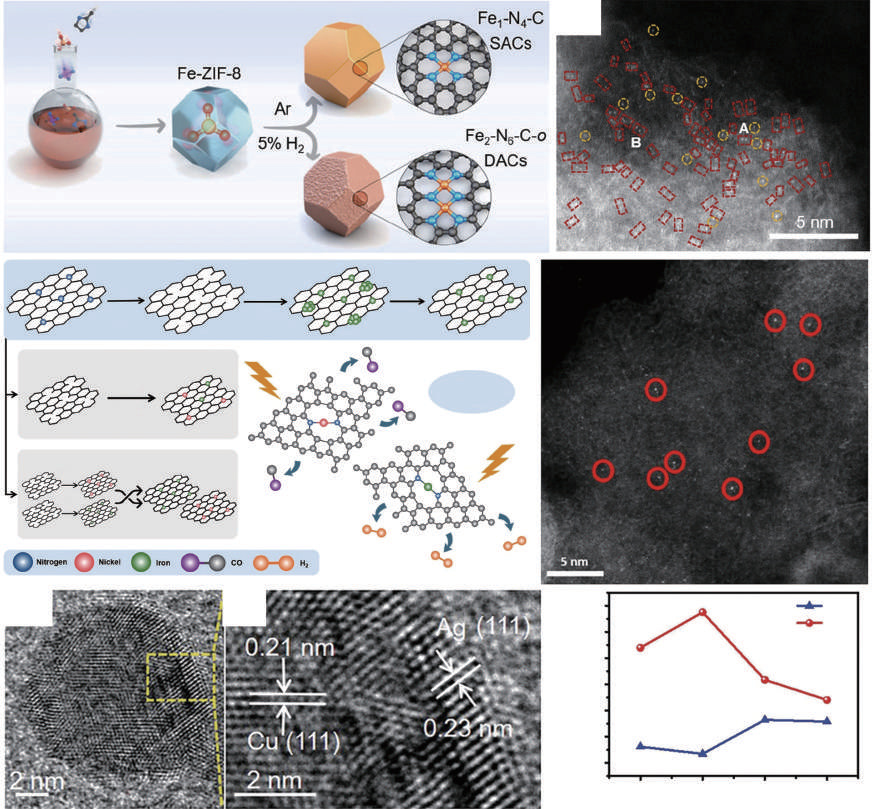
In recent years, numerous single-atom catalysts (SACs) have been synthesized to activate persulfate (PS) by a non-radical pathway because of its high selectivity, and activity for the catalyst. Metal-nitrogen-carbon (M-Nx-C) has been identified as the key active site in SACs. Although methods for preparing SACs have been extensively reported, a systematic summary of the direct construction of M-Nx-C, especially unconventional metal-nitrogen-carbon (UM-Nx-C, x≠4), on SACs for PS non-radical activation has still not been reported. The role of the M-Nx-C active sites on PS non-radical activation is discussed and methods for the formation of M-Nx-C and UM-Nx-C active sites in SACs and the effect of catalyst carriers such as carbon nitride (g-C3N4), MOFs, COFs, and other carbon materials are reviewed. Direct and indirect methods, especially for UM-Nx-C active site formation, are also elaborated. Factors affecting the formation of a M-Nx-C active site on SACs are also discussed. Prospects for the use of M-Nx-C active sites for the non-radical activation of PS by SACs to remove organic contaminants from wastewater are evaluated.

Methods for the formation of M-Nx-C active sites on single-atom catalysts and their role in persulfate activation by non-radical paths
Graphical Abstract
Original ResearchVol 40, Issue 1 • pp. 100-112DOI: 10.1016/S1872-5805(NCM2025-5-1)Jan 15, 2025

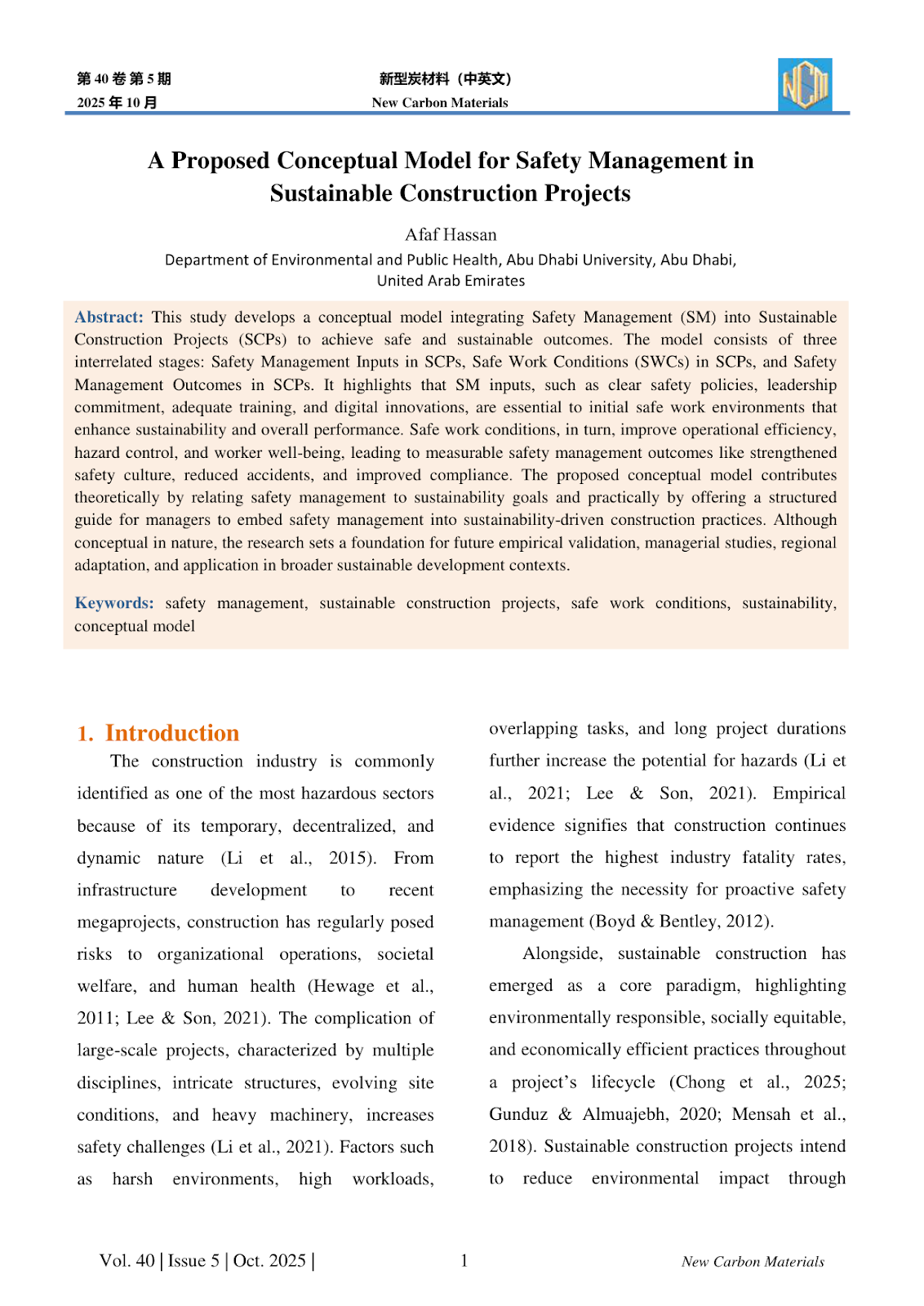
A Proposed Conceptual Model for Safety Management in Sustainable Construction Projects

Authors: Afaf Hassan

This study develops a conceptual model integrating Safety Management (SM) into Sustainable Construction Projects (SCPs) to achieve safe and sustainable outcomes. The model consists of three interrelated stages: Safety Management Inputs in SCPs, Safe Work Conditions (SWCs) in SCPs, and Safety Management Outcomes in SCPs. It highlights that SM inputs, such as clear safety policies, leadership commitment, adequate training, and digital innovations, are essential to initial safe work environments that enhance sustainability and overall performance. Safe work conditions, in turn, improve operational efficiency, hazard control, and worker well-being, leading to measurable safety management outcomes like strengthened safety culture, reduced accidents, and improved compliance. The proposed conceptual model contributes theoretically by relating safety management to sustainability goals and practically by offering a structured guide for managers to embed safety management into sustainability-driven construction practices. Although conceptual in nature, the research sets a foundation for future empirical validation, managerial studies, regional adaptation, and application in broader sustainable development contexts.

A Proposed Conceptual Model for Safety Management in Sustainable Construction Projects
Graphical Abstract
Original ResearchVol 40, Issue 1 • pp. 100-112DOI: 10.1016/S1872-5805(NCM2025-4-5)Jan 15, 2025

Synthesis and applications of polyaniline/zeolitic imidazolate framework composites: Implications on the electrochemical performance and perspective for enhanced functionality- Review

Authors: Gloria Mashao, Orpah Zinyemba

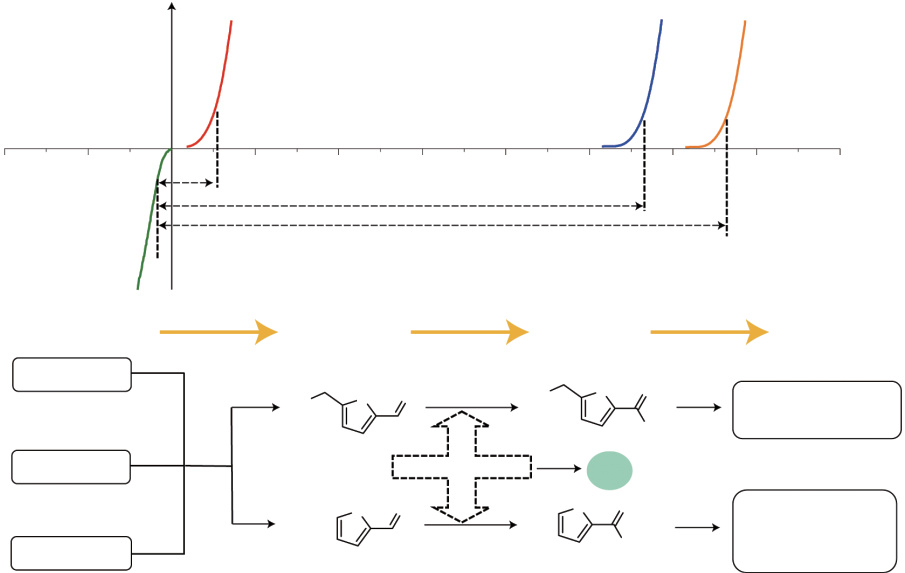
Polyaniline (PANI) has recently gained attention due to its cost-effectiveness, environmental stability, multiple oxidation and reduction reactions, ease of handling, and electrochemical performance. Conversely, zeolitic imidazolate frameworks have attracted interest because of their exceptional morphology, high surface area, tunable porosity, suitable functional linkers, and metal sites. This chapter explores recent advances in the synthesis of PANI doped with ZIF composites and their potential applications in batteries, conversion technologies, electrocatalysis, supercapacitors, and electrochemical sensing. Additionally, insights into the Tafel constant in HER analysis are discussed, along with its practical benefits. By reviewing current research developments, we aim to elucidate strategies to optimise the electrochemical performance of polyaniline doped with zeolitic imidazolate frameworks, known as PANI/ZIF composite.

Synthesis and applications of polyaniline/zeolitic imidazolate framework composites: Implications on the electrochemical performance and perspective for enhanced functionality- Review
Graphical Abstract
Original ResearchVol 40, Issue 1 • pp. 100-112DOI: 10.1016/S1872-5805(NCM2025-4-2)Jan 15, 2025

Carbon materials for smart batteries

Authors: ZHOU Jun-yi, DU Hong-hui, WANG Xue-tao, CAO Xin-ru, ZHI Lin-jie

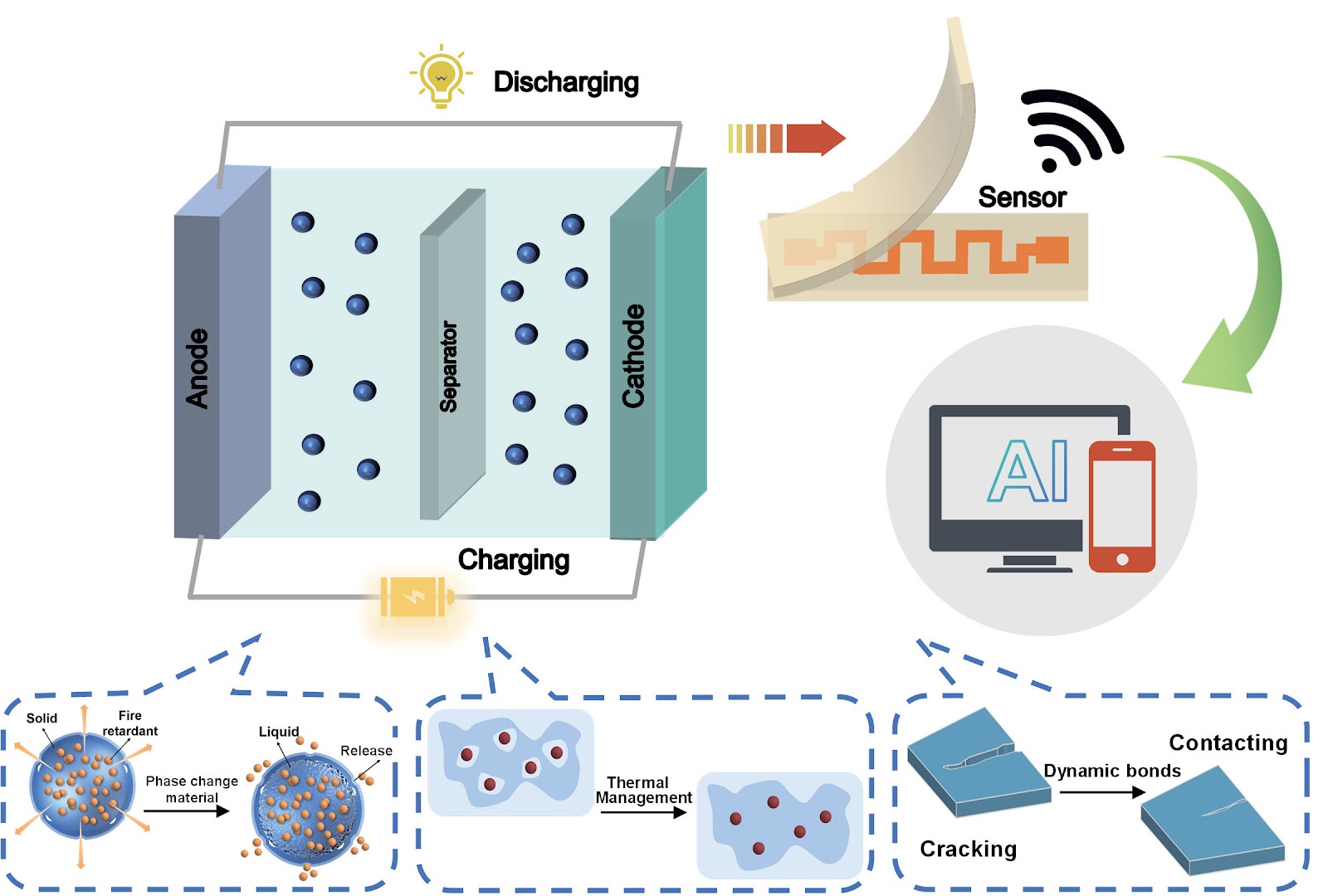
Smart batteries play a key role in upgrading energy storage systems. However, they require a well-balanced integration of material structure, functional properties, and electrochemical performance, and their development is limited by conventional material systems in terms of energy density, response time, and functional integration. Carbon materials have emerged as a key solution for overcoming these problems due to their structural adjustability and multifunctional compatibility. Strategies for improving their electrochemical performance by changing the pore structure and interlayer spacing, as well as chemical functionalization, and composite design are analyzed, and their impact on improving the specific capacity and cycling stability of batteries is demonstrated. The unique advantages of carbon materials in realizing smart functions such as power supply, real-time monitoring and energy management in smart batteries are also discussed. Based on current progress in related fields, the prospects for the use of carbon materials in smart batteries are evaluated.

Carbon materials for smart batteries
Graphical Abstract
Original ResearchVol 40, Issue 1 • pp. 100-112DOI: 10.1016/S1872-5805(NCM2025-4-1)Jan 15, 2025

The Key Attributes of Eco-friendly Housing

Authors: Afaf Hassan, Tania Tahtouh, Basmala Saleh

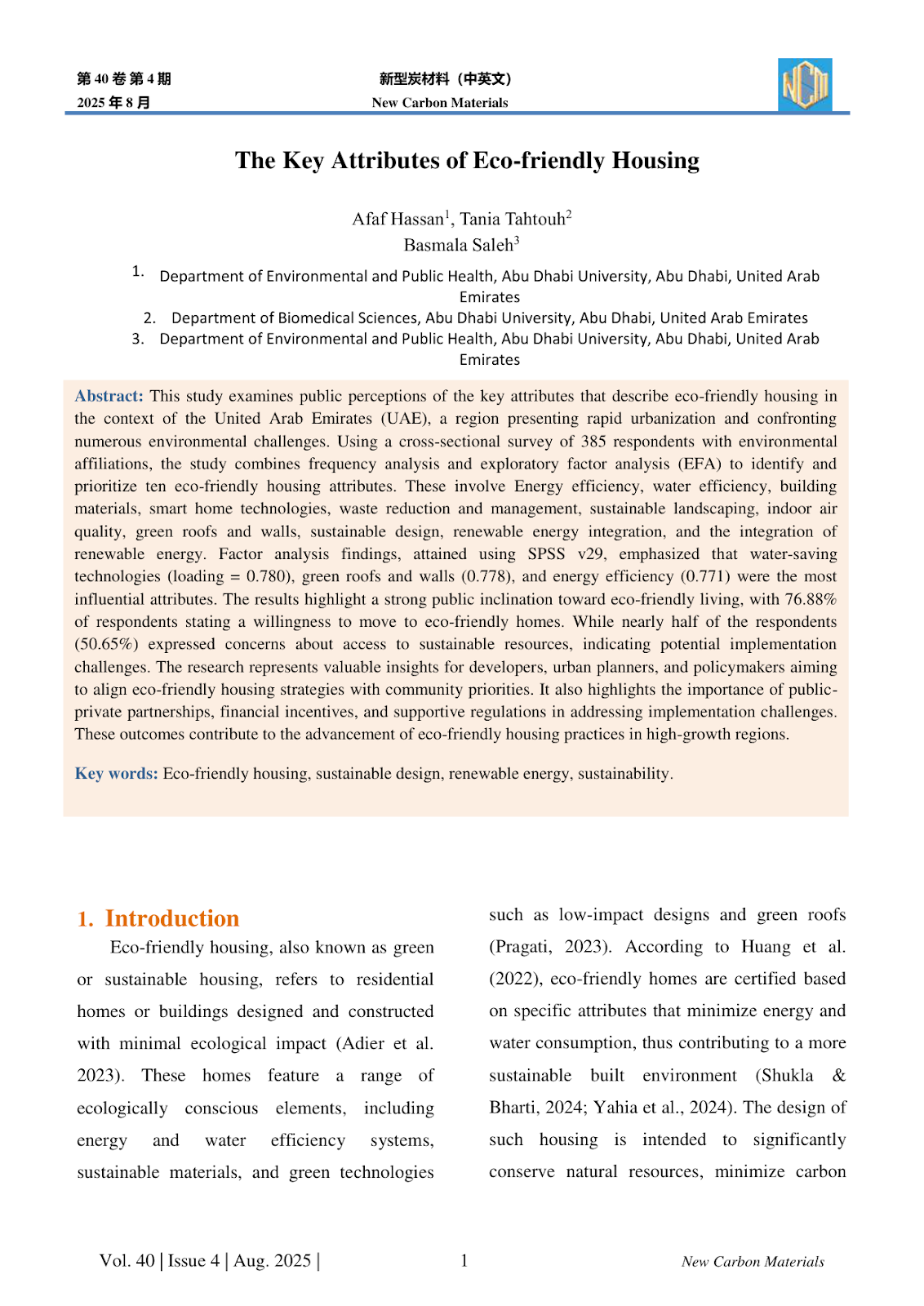
This study examines public perceptions of the key attributes that describe eco-friendly housing in the context of the United Arab Emirates (UAE), a region presenting rapid urbanization and confronting numerous environmental challenges. Using a cross-sectional survey of 385 respondents with environmental affiliations, the study combines frequency analysis and exploratory factor analysis (EFA) to identify and prioritize ten eco-friendly housing attributes. These involve Energy efficiency, water efficiency, building materials, smart home technologies, waste reduction and management, sustainable landscaping, indoor air quality, green roofs and walls, sustainable design, renewable energy integration, and the integration of renewable energy. Factor analysis findings, attained using SPSS v29, emphasized that water-saving technologies (loading = 0.780), green roofs and walls (0.778), and energy efficiency (0.771) were the most influential attributes. The results highlight a strong public inclination toward eco-friendly living, with 76.88% of respondents stating a willingness to move to eco-friendly homes. While nearly half of the respondents (50.65%) expressed concerns about access to sustainable resources, indicating potential implementation challenges. The research represents valuable insights for developers, urban planners, and policymakers aiming to align eco-friendly housing strategies with community priorities. It also highlights the importance of public-private partnerships, financial incentives, and supportive regulations in addressing implementation challenges. These outcomes contribute to the advancement of eco-friendly housing practices in high-growth regions.

The Key Attributes of Eco-friendly Housing
Graphical Abstract
Original ResearchVol 40, Issue 1 • pp. 100-112DOI: 10.1016/S1872-5805(NCM2025-4-3)Jan 15, 2025

Microstructure modulation strategies from pitch molecules to derived carbon materials for electrochemical energy storage

Authors: MENG Chao, ZHANG Yan, WANG Ning, ZHENG Xue-qing, KONG De-yu, HU Han, WU Ming-bo

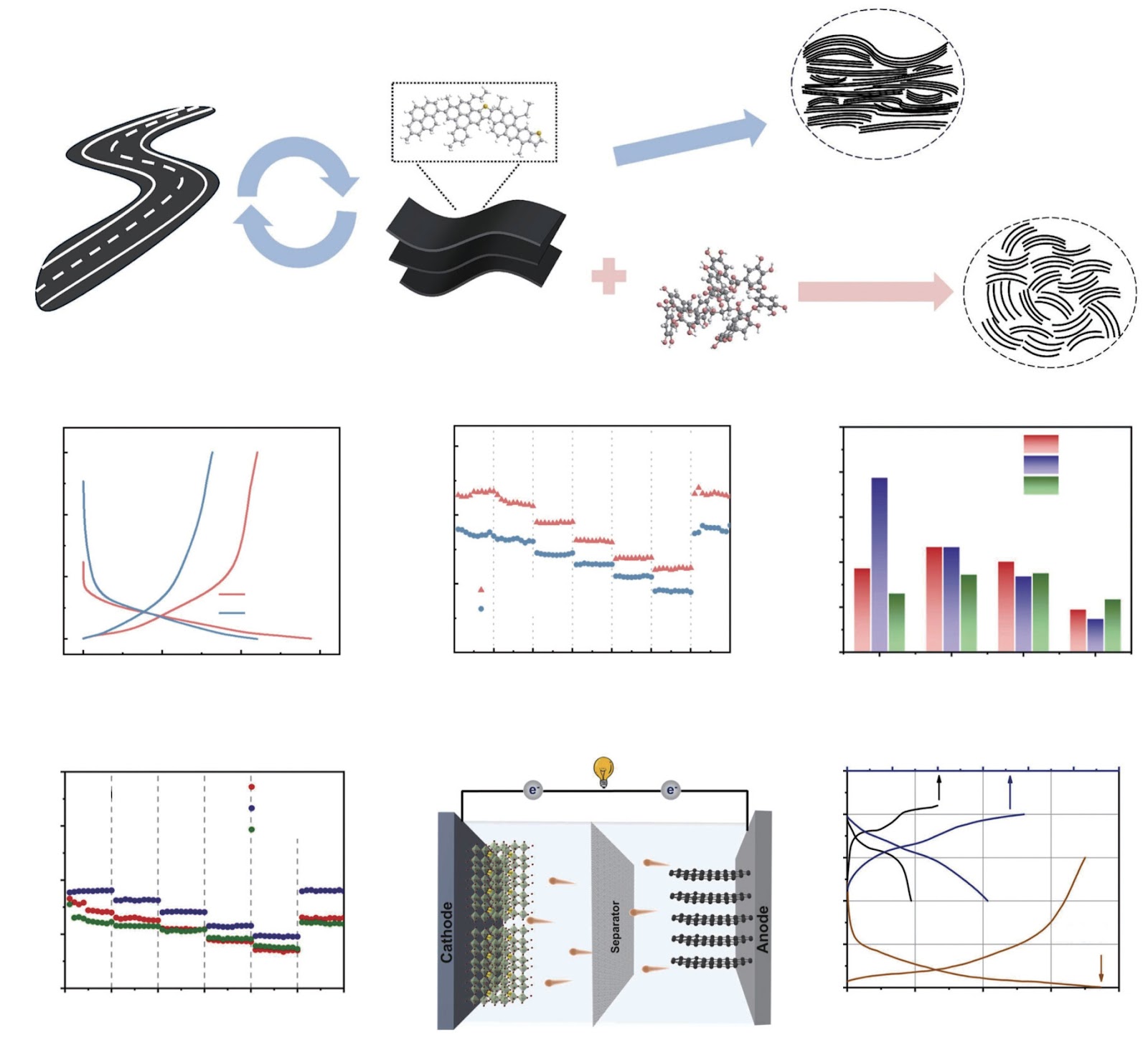
Pitch is a complex mixture of polycyclic aromatic hydrocarbons and their non-metal derivatives that has a high carbon content. Using pitch as a precursor for carbon materials in alkali metal ion (Li+/Na+/K+) batteries has become of great interest. However, its direct pyrolysis often leads to microstructures with a high orientation and small interlayer spacing due to uncontrolled liquid-phase carbonization, resulting in subpar electrochemical performance. It is therefore important to control the microstructures of pitch-derived carbon materials in order to improve their electrochemical properties. We evaluate the latest progress in the development of these materials using various microstructural engineering approaches, highlighting their use in metal-ion batteries and supercapacitors. The advantages and limitations of pitch molecules and their carbon derivatives are outlined, together with strategies for their modification in order to improve their properties for specific applications. Future research possibilities for structure optimization, scalable production, and waste pitch recycling are also considered.

Microstructure modulation strategies from pitch molecules to derived carbon materials for electrochemical energy storage
Graphical Abstract
Original ResearchVol 40, Issue 1 • pp. 100-112DOI: 10.1016/S1872-5805(NCM2025-4-4)Jan 15, 2025

Modifying the pore structure of biomass-derived porous carbon for use in energy storage systems

Authors: XIE Bin, ZHAO Xin-ya, MA Zheng-dong, ZHANG Yi-jian, DONG Jia-rong, WANG Yan, BAI Qiu-hong, SHEN Ye-hua

The development of sustainable electrode materials for energy storage systems has become very important and porous carbons derived from biomass have become an important candidate because of their tunable pore structure, environmental friendliness, and cost-effectiveness. Recent advances in controlling the pore structure of these carbons and its relationship between to is energy storage performance are discussed, emphasizing the critical role of a balanced distribution of micropores, mesopores and macropores in determining electrochemical behavior. Particular attention is given to how the intrinsic components of biomass precursors (lignin, cellulose, and hemicellulose) influence pore formation during carbonization. Carbonization and activation strategies to precisely control the pore structure are introduced. Finally, key challenges in the industrial production of these carbons are outlined, and future research directions are proposed. These include the establishment of a database of biomass intrinsic structures and machine learning-assisted pore structure engineering, aimed at providing guidance for the design of high-performance carbon materials for next-generation energy storage devices.

Modifying the pore structure of biomass-derived porous carbon for use in energy storage systems
Graphical Abstract
Original ResearchVol 40, Issue 1 • pp. 100-112DOI: 10.1016/S1872-5805(NCM2025-3-4)Jan 15, 2025

A review of 3D graphene materials for energy storage and conversion

Authors: WU Zi-yuan, XU Chi-wei, ZENG Jin-jue, JIANG Xiang-fen, WANG Xue-bin

Three-dimensional (3D) graphene monoliths are a new carbon material, that has tremendous potential in the fields of energy conversion and storage. They can solve the limitations of two-dimensional (2D) graphene sheets, including interlayer restacking, high contact resistance, and insufficient pore accessibility. By constructing interconnected porous networks, 3D graphenes not only retain the intrinsic advantages of 2D graphene sheets, such as high specific surface area, excellent electrical and thermal conductivities, good mechanical properties, and outstanding chemical stability, but also enable efficient mass transport of external fluid species. We summarize the fabrication methods for 3D graphenes, with a particular focus on their applications in energy-related systems. Techniques including chemical reduction assembly, chemical vapor deposition, 3D printing, chemical blowing, and zinc-tiered pyrolysis have been developed to change their pore structure and elemental composition, and ways in which they can be integrated with functional components. In terms of energy conversion and storage, they have found broad use in buffering mechanical impacts, suppressing noise, photothermal conversion, electromagnetic shielding and absorption. They have also been used in electrochemical energy systems such as supercapacitors, secondary batteries, and electrocatalysis. By reviewing recent progress in structural design and new applications, we also discuss the problems these materials face, including scalable fabrication and precise pore structure control, and possible new applications.
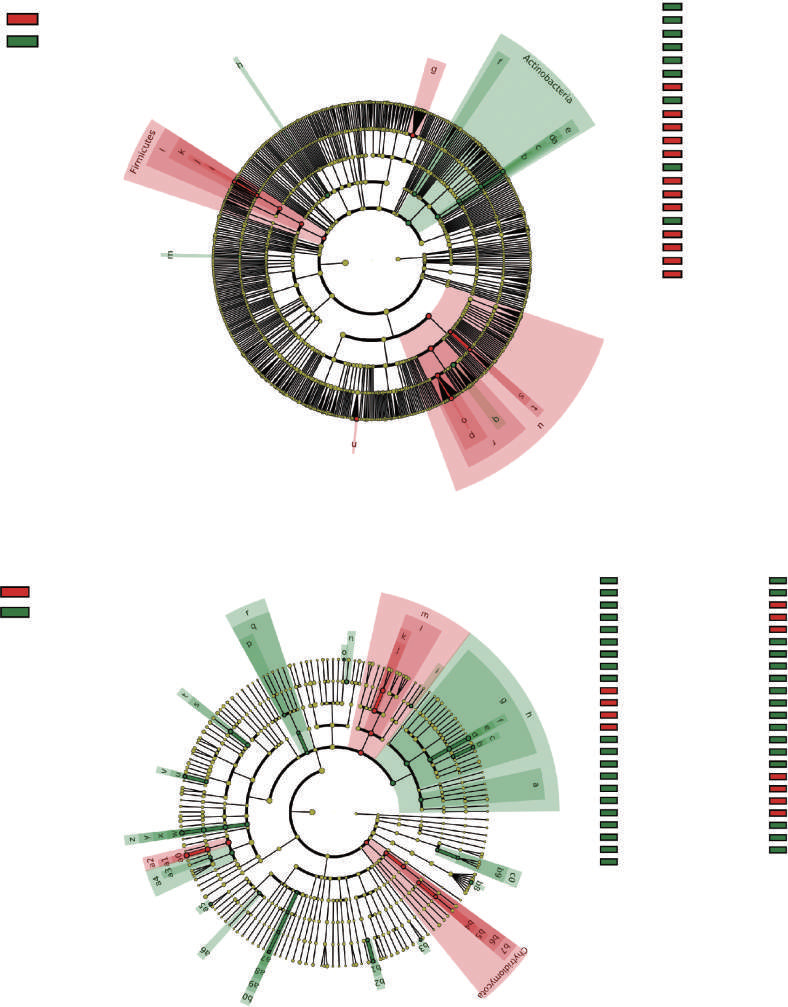
A review of 3D graphene materials for energy storage and conversion
Graphical Abstract
Original ResearchVol 40, Issue 1 • pp. 100-112DOI: 10.1016/S1872-5805(NCM2025-3-6)Jan 15, 2025

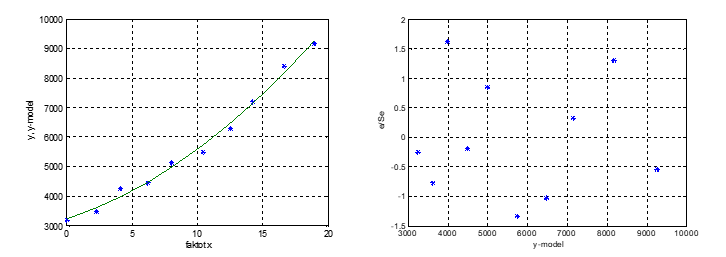
Results of an Experimental Statistical Study of the Influence of Hydrogen on the CO Release and the Fuel Consumption of a Marine Diesel Engine. Quantitative Analysis Part II

Authors: Ivaylo Bakalov, Rositsa Bakalova

The application of Regression Analysis and the results of the study and evaluation of the influence of Hydrogen 5.0 F50 P200 on fuel consumption under variable load operation of a marine diesel engine SKL 3NVD24 with two types of fuel are considered. A technology for quantitative analysis is proposed.

Results of an Experimental Statistical Study of the Influence of Hydrogen on the CO Release and the Fuel Consumption of a Marine Diesel Engine. Quantitative Analysis Part II
Graphical Abstract
Original ResearchVol 40, Issue 1 • pp. 100-112DOI: 10.1016/S1872-5805(NCM2025-3-3)Jan 15, 2025

A review of graphene assembled films as platforms for electrochemical reactions

Authors: ZHU Yong-fang, JI Xiao-dong, PAN Wen-kai, WU Geng, LI Peng, LIU Bo, HE Da-ping

Because of their low electrical conductivity, sluggish ion diffusion, and poor stability, conventional electrode materials are not able to meet the growing demands of energy storage and portable devices. Graphene assembled films (GAFs) formed from graphene nanosheets have an ultrahigh conductivity, a unique 2D network structure, and exceptional mechanical strength, which give them the potential to solve these problems. However, a systematic understanding of GAFs as an advanced electrode material is lacking. This review focuses on the use of GAFs in electrochemistry, providing a comprehensive analysis of their synthesis methods, surface/structural characteristics, and physical properties, and thus understand their structure-property relationships. Their advantages in batteries, supercapacitors, and electrochemical sensors are systematically evaluated, with an emphasis on their excellent electrical conductivity, ion transport kinetics, and interfacial stability. The existing problems in these devices, such as chemical inertness and mechanical brittleness, are discussed and potential solutions are proposed, including defect engineering and hybrid structures. This review should deepen our mechanistic understanding of the use of GAFs in electrochemical systems and provide actionable strategies for developing stable, high-performance electrode materials.

A review of graphene assembled films as platforms for electrochemical reactions
Graphical Abstract
Original ResearchVol 40, Issue 1 • pp. 100-112DOI: 10.1016/S1872-5805(NCM2025-3-2)Jan 15, 2025

Controlling interfacial adhesion during the transfer of large-area 2D materials: mechanisms, strategies, and research advances

Authors: HU Rong, SONG Jia, HUANG Wei, ZHOU An-na, LIN Jia-long, CAO Yang, HU Sheng

Large-area two-dimensional (2D) materials, such as graphene, MoS2, WS2, h-BN, black phosphorus, and MXenes, are a class of advanced materials with many possible applications. Different applications need different substrates, and each substrate may need a different way of transferring the 2D material onto it. Problems such as local stress concentrations, an uneven surface tension, inconsistent adhesion, mechanical damage and contamination during the transfer can adversely affect the quality and properties of the transferred material. Therefore, how to improve the integrity, flatness and cleanness of large area 2D materials is a challenge. In order to achieve high-quality transfer, the main concern is to control the interface adhesion between the substrate, the 2D material and the transfer medium. This review focuses on this topic, and finally, in order to promote the industrial use of large area 2D materials, provides a recipe for this transfer process based on the requirements of the application, and points out the current problems and directions for future development.

Controlling interfacial adhesion during the transfer of large-area 2D materials: mechanisms, strategies, and research advances
Graphical Abstract
Original ResearchVol 40, Issue 1 • pp. 100-112DOI: 10.1016/S1872-5805(NCM2025-3-5)Jan 15, 2025

Results of an experimental statistical study of the influence of hydrogen on the co release and on the fuel consumption of a marine diesel engine. Quantitative analysis Part I

Authors: Ivaylo Bakalov, Rositsa Bakalova

The application of the Regression Analysis and the results of the study and evaluation of the influence of Hydrogen 5.0 F50 P200 on the CO release and the fuel consumption under variable load operation of a marine diesel engine SKL 3NVD24 with two types of fuel are considered. A technology for quantitative analysis is proposed.

Results of an experimental statistical study of the influence of hydrogen on the co release and on the fuel consumption of a marine diesel engine. Quantitative analysis Part I
Graphical Abstract
Original ResearchVol 40, Issue 1 • pp. 100-112DOI: 10.1016/S1872-5805(NCM2024-39-06-11)Jan 15, 2025

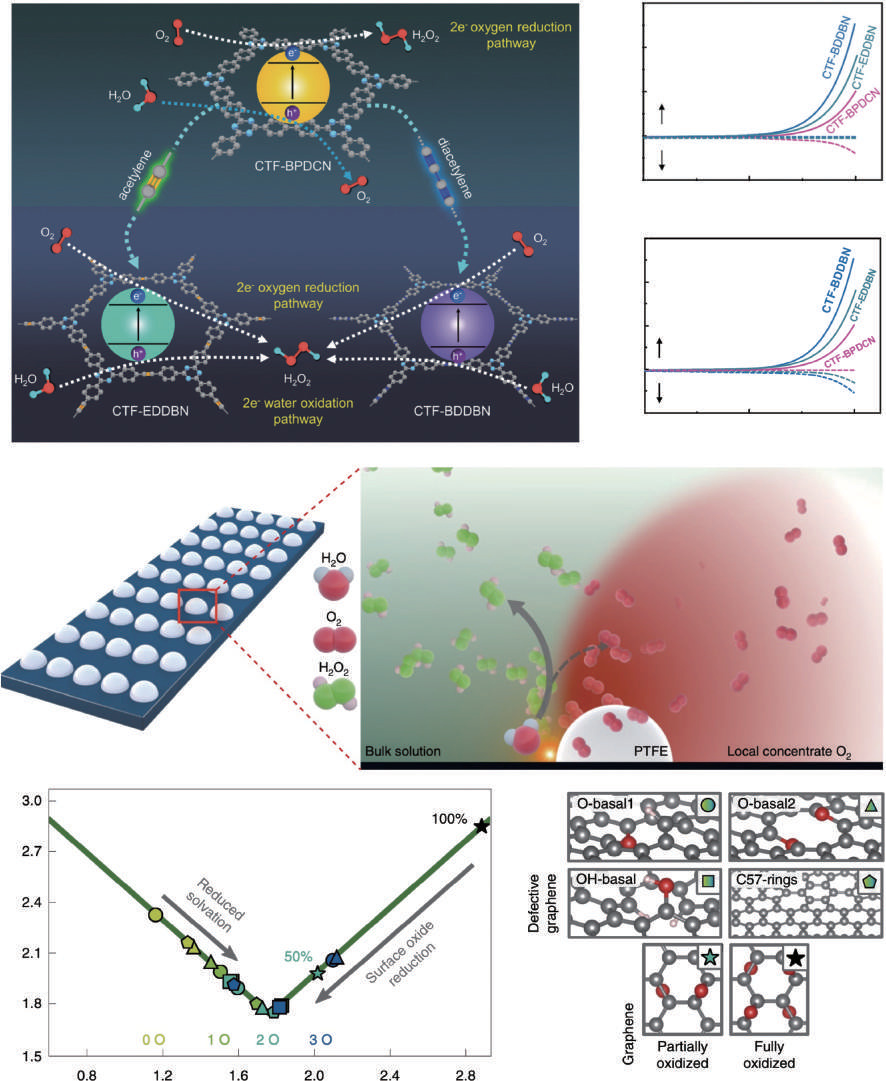
A carbon material doped with both porous FeOx and N as an efficient catalyst for oxygen reduction reactions

Authors: GAO Jian, WANG Xin-yao, MENG Ling-xin, YIN Zhen, MA Na, TAN Xiao-yao, ZHANG Peng

To replace precious metal oxygen reduction reaction (ORR) electrocatalysts, many transition metals and N-doped carbon composites have been proposed in the last decade resulting in their rapid development as promising non-precious metal catalysts. We used Ketjenblack carbon as the precursor and mixed it with a polymeric ionic liquid (PIL) of [Hvim]NO3 and Fe(NO3)3, which was thermally calcined at 900 °C to produce a porous FeOx, N co-doped carbon material denoted FeOx-N/C. Because the PIL of [Hvim]NO3 strongly combines with and disperses Fe3+ ions, and NO3− is thermally pyrolyzed to form the porous structure, the FeOx-N/C catalyst has a high electrocatalytic activity for the ORR in both 0.1 mol L−1 KOH and 0.5 mol L−1 H2SO4 electrolytes. It was used as the catalyst to assemble a zinc-air battery, which had a peak power density of 185 mW·cm−2. Its superior electrocatalytic activity, wide pH range, and easy preparation make FeOx-N/C a promising electrocatalyst for fuel cells and metal-air batteries.

A carbon material doped with both porous FeOx and N as an efficient catalyst for oxygen reduction reactions
Graphical Abstract
Original ResearchVol 40, Issue 1 • pp. 100-112DOI: 10.1016/S1872-5805(NCM2024-39-06-13)Jan 15, 2025

Influence of functionalized graphene on the bacterial and fungal diversity of Vicia faba rhizosphere soil

Authors: CHEN Zhi-wen, REN Jing, QIAO Jun, ZHAO Jian-guo, LI Jing-wei, LIU Ze-hui, LI Wei-jia, XING Bao-yan, ZHANG Jin, NIE Hui

The effect of functionalized graphene on the growth and development of Vicia faba L. was investigated by analyzing its impact on the composition and diversity of the microbial community in rhizosphere peat soil. Seedlings of V. faba planted in this peat soil were treated with either distilled water (CK) or 25 mg·L−1 (G25) of functionalized graphene solution. Results showed that the height and root length of V. faba seedlings in the G25 group were significantly larger than those in CK group. The microbial community was analyzed by amplifying and sequencing the 16S rRNA gene V3–V4 region of bacteria and internal transcribed spacer region of fungi in rhizosphere soil using Illumina MiSeq technology. Alpha and beta diversity analysis indicated that functionalized graphene increased the richness and diversity of bacteria and fungi in the V. faba rhizosphere peat soil. The abundances of three nitrogen cycling-related bacteria, Hydrogenophaga, Sphingomonas and Nitrosomonadaceae, were also altered after treatment with the functionalized graphene. The relative abundance of Basilicum, related to soil phosphorus solubilization, decreased in the fungal community, while the relative abundance of Clonostachys and Dimorphospora, which exhibited strong biological control over numerous fungal plant pathogens, nematodes and insects, increased in the soil after functionalized graphene treatment. Redundancy analysis revealed that the potential of hydrogen (pH), organic matter, and total phosphorus contributed the most to the changes in bacterial and fungal community composition in the rhizosphere soil. Overall, our findings suggested that the addition of functionalized graphene altered the relative abundances of nitrogen and phosphorus cycling-related microorganisms in peat soil, promoting changes in the physicochemical properties of the soil and ultimately leading to the improved growth of V. faba plants.
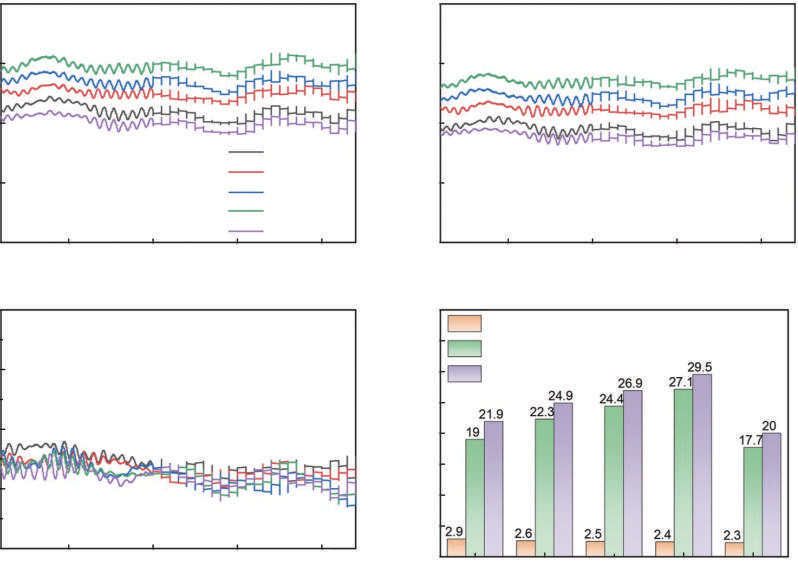
Influence of functionalized graphene on the bacterial and fungal diversity of Vicia faba rhizosphere soil
Graphical Abstract
Original ResearchVol 40, Issue 1 • pp. 100-112DOI: 10.1016/S1872-5805(NCM2024-39-06-10)Jan 15, 2025

Reduced graphene oxide porous films containing SiC whiskers for constructing multilayer electromagnetic shields

Authors: LI Jing, QI Yi-quan, ZHAO Shi-xiang, QIU Han-xun, YANG Jun-he, YANG Guang-zhi

Developing lightweight and flexible thin films for electromagnetic interference (EMI) shielding is of great importance. Porous thin films of reduced graphene oxide containing SiC whiskers (SiC@RGO) for EMI shielding were prepared by a two-step reduction of graphene oxide (GO), in which the two steps were chemical reduction by HI and the solid phase microwave irradiation. A significant increase of the film thickness from around 20 to 200 μm was achieved due to the formation of a porous structure by gases released during the 3 s of solid phase microwave irradiation. The total shielding effectiveness (SET) and the reflective SE (SER) of the SiC@RGO porous thin films depended on the GO/SiC mass ratio. The highest SET achieved was 35.6 dB while the SER was only 2.8 dB, when the GO/SiC mass ratio was 4∶1. The addition of SiC whiskers was critical for the multi-reflection, interfacial polarization and dielectric attenuation of EM waves. A multilayer film with a gradient change of SE values was constructed using SiC@RGO porous films and multi-walled carbon nanotubes buckypapers. The highest SET of the multilayer films reached 75.1 dB with a SER of 2.7 dB for a film thickness of about 1.5 mm. These porous SiC@RGO thin films should find use in multilayer or sandwich structures for EMI absorption in packaging or lining.

Reduced graphene oxide porous films containing SiC whiskers for constructing multilayer electromagnetic shields
Graphical Abstract
Original ResearchVol 40, Issue 1 • pp. 100-112DOI: 10.1016/S1872-5805(NCM2024-39-06-12)Jan 15, 2025

Fluorescence color tuning of dual-emission carbon quantum dots produced from biomass and their use in Fe3+ and Cu2+ detection

Authors: XUE Jia-jia, GAN Mei-heng, LU Yong-gen, WU Qi-lin

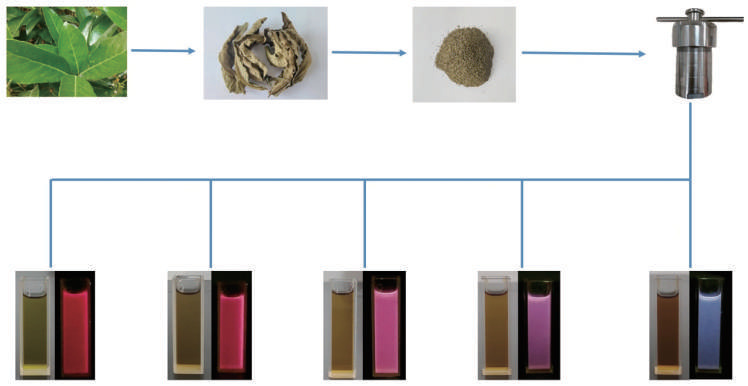
Using simple and eco-friendly ethanol solvothermal treatment, dual-emission biomass carbon quantum dots (D-BCQDs) were synthesized from biomass viburnum awabuki leaves. Under excitation with 413 nm wavelength light two emission peaks appeared at 490 and 675 nm and the dots could be tuned to emit crimson, red, purplish red, purple and blue-gray fluorescence by changing the solvothermal temperature from 140 °C to 160, 180, 200 and 240 °C, respectively. XPS and FTIR characterization indicated that the fluorescence color was mainly determined by surface oxidation defects, elemental nitrogen and sp2-C/sp3-C hybridized structural domains. The D-BCQDs could not only detect Fe3+ or Cu2+, but also quantify the concentration ratio of Fe3+ to Cu2+ in a solution containing both, demonstrating their potential applications in the simultaneous detection of Fe3+ and Cu2+ ions.

Fluorescence color tuning of dual-emission carbon quantum dots produced from biomass and their use in Fe3+ and Cu2+ detection
Graphical Abstract
Original ResearchVol 40, Issue 1 • pp. 100-112DOI: 10.1016/S1872-5805(NCM2024-39-06-05)Jan 15, 2025

Synthesis of pitch-derived carbon anodes for high-performance potassium-ion batteries

Authors: JIANG Ming-chi, SUN Ning, YU Jia-xu, WANG Ti-zheng, Razium Ali Somoro, JIA Meng-qiu, XU Bin

Potassium-ion batteries (PIBs) hold promise for large-scale energy storage, necessitating the development of high-performance anode materials. Carbons with the advantage of structural versatility, are recognized as the most promising anode materials for their commercialization, however the relationship between the carbon anode structure and its electrochemical performance remains unclear. A series of pitch-based soft carbons with different structures were fabricated using carbonization temperatures in the range 600–1400 °C, and their changes in carbon configuration and K-storage performance as a function of carbonization temperature were investigated. Correlations between the carbon crystal size and the low-potential plateau region capacity and between the degree of structural disorder of the carbons with their sloping region capacity were revealed. Among all samples, that obtained by carbonization at 700 °C had a relatively high degree of disorder and a large interlayer spacing, and had a high reversible capacity of 329.4 mAh g−1 with a high initial coulombic efficiency of 72.81%, and maintained a high capacity of 144.2 mAh g−1 at the current rate of 5 C. These findings improve our fundamental understanding of the K-storage process in carbon anodes, and thus facilitate the advance of PIBs.

Synthesis of pitch-derived carbon anodes for high-performance potassium-ion batteries
Graphical Abstract
Original ResearchVol 40, Issue 1 • pp. 100-112DOI: 10.1016/S1872-5805(NCM2024-39-06-08)Jan 15, 2025

Electromagnetic wave absorption performance of Fe3O4/activated carbon-natural resin nanocomposite

Authors: Mahsa Mahmoodi, Bagher Aslibeiki, Reza Peymanfar, Hamid Naghshara, Rajesh Kumar Rajagopal, Yue Zhao, Davide Peddis, Tapati Sarkar

There has recently been a fundamental need to develop high efficiency microwave absorbers to reduce electromagnetic pollution. It is often very difficult to obtain superior absorption with only one material, so we have explored composites using fillers of activated carbon derived from biological material (oleaster seeds) and resin (apricot tree gum) with Fe3O4 in a paraffin wax matrix to improve the dielectric properties and achieve a high specific surface area. A 1 mm thick layer of a Fe3O4 + resin (FEOR), with the magnetic nanoparticles anchored to the gum, resulted in a reflection loss of −71.09 dB. We compared this with the results for composites using a filler of Fe3O4 + activated carbon, and one with a three-component filler of Fe3O4 + activated carbon + resin which had a very porous structure that had a direct effect on the surface polarization. However, the FEOR sample had near-ideal impedance matching, close to 1, which resulted in high absorption performance. In addition, the presence of defects improves microwave attenuation by dipole polarization and charge carrier trapping. This work suggests the use of new types of biomaterials to increase microwave absorption.

Electromagnetic wave absorption performance of Fe3O4/activated carbon-natural resin nanocomposite
Graphical Abstract
Original ResearchVol 40, Issue 1 • pp. 100-112DOI: 10.1016/S1872-5805(NCM2024-39-06-09)Jan 15, 2025

Increasing both the electromagnetic shielding and thermal conductive properties of three-dimensional graphene-CNT-SiC hybrid materials

Authors: FENG Fan, HAN Zhi-dong, WEI Bing, WANG Yang, WANG Fei-zhou, JIAO Yan-yan, WANG Zhen-ting

During the operation of electronic devices, a considerable amount of heat and electromagnetic radiation is emitted. Therefore, the investigation of materials with electromagnetic shielding and thermal management abilities has significant importance. Hybrid materials of three-dimensional graphene networks containing both carbon nanotubes (CNTs) and SiC whiskers (3D graphene-CNT-SiC) were synthesized. Using an aqueous-phase reduction method for the self-assembly of the graphene oxide, a three-dimensional porous graphene structure was fabricated. SiC whiskers, inserted between the graphene layers, formed a framework for longitudinal thermal conduction, while CNTs attached to the SiC surface, created a dendritic structure that increased the bonding between the SiC whiskers and graphene, improving dielectric loss and thermal conductivity. It was found that the thermal conductivity of the hybrid material reached 123 W·m–1·K–1, with a shielding effectiveness of 29.3 dB when the SiC addition was 2%. This result indicates that 3D graphene-CNT-SiC has excellent thermal conductivity and electromagnetic shielding performance.

Increasing both the electromagnetic shielding and thermal conductive properties of three-dimensional graphene-CNT-SiC hybrid materials
Graphical Abstract
Original ResearchVol 40, Issue 1 • pp. 100-112DOI: 10.1016/S1872-5805(NCM2024-39-06-07)Jan 15, 2025

Defect-rich N/O-co-doped porous carbon frameworks as anodes for superior potassium and sodium-ion batteries

Authors: BAI Ling, LIU Qian, HONG Tao, LI Hao-ran, ZHU Fang-yuan, LIU Hai-gang, LI Zi-quan, HUANG Zhen-dong

Carbon with its high electrical conductivity, excellent chemical stability, and structure ability is the most promising anode material for sodium and potassium ion batteries. We developed a defect-rich porous carbon framework (DRPCF) built with N/O-co-doped mesoporous nanosheets and containing many defects using porous g-C3N4 (PCN) and dopamine (DA) as raw materials. We prepared samples with PCN/DA mass ratios of 1/1, 2/1 and 3/1 and found that the one with a mass ratio of 2/1 and a carbonization temperature of 700 °C in an Ar atmosphere (DRPCF-2/1-700), had a large specific surface area with an enormous pore volume and a large number of N/O heteroatom active defect sites. Because of this, it had the best pseudocapacitive sodium and potassium ion storage performance. A half battery of Na//DRPCF-2/1-700 maintained a capacity of 328.2 mAh g−1 after being cycled at 1 A g−1 for 900 cycles, and a half battery of K//DRPC-2/1-700 maintained a capacity of 321.5 mAh g−1 after being cycled at 1 A g−1 for 1200 cycles. The rate capability and cycling stability achieved by DRPCF-2/1-700 outperforms most reported carbon materials. Finally, ex-situ Raman spectroscopy analysis result confirms that the filling and removing of K+ and Na+ from the electrochemically active defects are responsible for the high capacity, superior rate and cycling performance of the DRPCF-2/1-700 sample.

Defect-rich N/O-co-doped porous carbon frameworks as anodes for superior potassium and sodium-ion batteries
Graphical Abstract
Original ResearchVol 40, Issue 1 • pp. 100-112DOI: 10.1016/S1872-5805(NCM2024-39-06-06)Jan 15, 2025

Electrochemical performance of a symmetric supercapacitor device designed using laser-produced multilayer graphene

Authors: Gargi Dhiman, Kavita Kumari, Bon-Heun Koo, Faheem Ahmed, Nagih M. Shaalan, Saurabh Dalela, Parvez A. Alvi, Ranjeet Kumar Brajpuriya, Shalendra Kumar

We report an economical approach for the fabrication of laser-produced graphene (LPG) electrodes, which results in an improved electrochemical performance. Polyimide polymer was used as the starting material for LPG synthesis and was irradiated under ambient conditions with a CO2 laser. The prepared LPG samples were characterized by Raman spectroscopy and FTIR, which validated the formation of multilayer graphene containing sp2 hybridized C=C bonds. FE-SEM revealed three-dimensional (3D) sheet-like structures, while HR-TEM images showed lattice planes with an interplanar spacing of approximately 0.33 nm, corresponding to the (002) plane of graphene. Their electrochemical performance showed a remarkable areal specific capacitance (CA) of 51 mF cm−2 (170 F g−1) at 1 mA cm−2 (3.3 A g−1) in a three-electrode configuration with 1 mol L−1 KOH as the aqueous electrolyte. The LPG electrodes produced an energy density of ~3.5 µWh cm−2 and a power density of ~350 µW cm−2, demonstrating significant energy storage ability. They also had an excellent cycling stability, retaining 87% of their specific capacitance after 3 000 cycles at 1 mA/cm2. A symmetric supercapacitor fabricated with LPG electrodes and the 1 mol L−1 KOH electrolyte had a specific capacitance of 23 mF cm−2 and showed excellent retention after 10 000 cycles, showing LPG’s potential for use in supercapacitors.

Electrochemical performance of a symmetric supercapacitor device designed using laser-produced multilayer graphene
Graphical Abstract
Original ResearchVol 40, Issue 1 • pp. 100-112DOI: 10.1016/S1872-5805(NCM2024-39-05-13)Jan 15, 2025

The potassium storage performance of carbon nanosheets derived from heavy oils

Authors: ZHAO Qing-shan, LIU Qin-lian, LI Yi-wen, JI Tian, YAO Yu-yue, ZHAO Yi-kun, DENG Wei, HU Han, WU Ming-bo

As by-products of petroleum refining, heavy oils are characterized by a high carbon content, low cost and great variability, making them competitive precursors for the anodes of potassium ion batteries (PIBs). However, the relationship between heavy oil composition and potassium storage performance remains unclear. Using heavy oils containing distinct chemical groups as the carbon source, namely fluid catalytic cracking slurry (FCCS), petroleum asphalt (PA) and deoiled asphalt (DOA), three carbon nanosheets (CNS) were prepared through a molten salt method, and used as the anodes for PIBs. The composition of the heavy oil determines the lamellar thicknesses, sp3-C/sp2-C ratio and defect concentration, thereby affecting the potassium storage performance. The high content of aromatic hydrocarbons and moderate amount of heavy component moieties in FCCS produce carbon nanosheets (CNS-FCCS) that have a smaller layer thickness, larger interlayer spacing (0.372 nm), and increased number of folds than in CNS derived from the other three precursors. These features give it faster charge/ion transfer, more potassium storage sites and better reaction kinetics. CNS-FCCS has a remarkable K+ storage capacity (248.7 mAh g−1 after 100 cycles at 0.1 A g−1), long cycle lifespan (190.8 mAh g−1 after 800 cycles at 1.0 A g−1) and excellent rate capability, ranking it among the best materials for this application. This work sheds light on the influence of heavy oil composition on carbon structure and electrochemical performance, and provides guidance for the design and development of advanced heavy oil-derived carbon electrodes for PIBs.

The potassium storage performance of carbon nanosheets derived from heavy oils
Graphical Abstract
Original ResearchVol 40, Issue 1 • pp. 100-112DOI: 10.1016/S1872-5805(NCM2024-39-06-03)Jan 15, 2025

A review of petroleum asphalt-based carbon materials in electrochemical energy storage

Authors: DU Shao-xiong, KONG Ling-yu, LIU Lu, CAO Zi-yang, WU Xi, SUN Bo, LI Zheng-xuan, YANG Wang, LI Yong-feng

Petroleum asphalt, an important by-product of the petrochemical industry, has diverse applications but often suffers from low industrial added value. Because of its low cost, high carbon content, and high polycyclic aromatic hydrocarbon content, appropriate modification can increase its value and expand its energy storage applications. Current research progress on the common preparation methods of petroleum asphalt-based carbon materials, including template-assisted pyrolysis, molten salt treatment, activation, heteroatom doping, and pre-oxidation is reviewed, and its use in supercapacitors and alkali metal ion batteries, is also elaborated. Feasible solutions for the current problems with petroleum asphalt are proposed, with the aim of providing insights into its high value-added utilization.

A review of petroleum asphalt-based carbon materials in electrochemical energy storage
Graphical Abstract
Original ResearchVol 40, Issue 1 • pp. 100-112DOI: 10.1016/S1872-5805(NCM2024-39-06-01)Jan 15, 2025

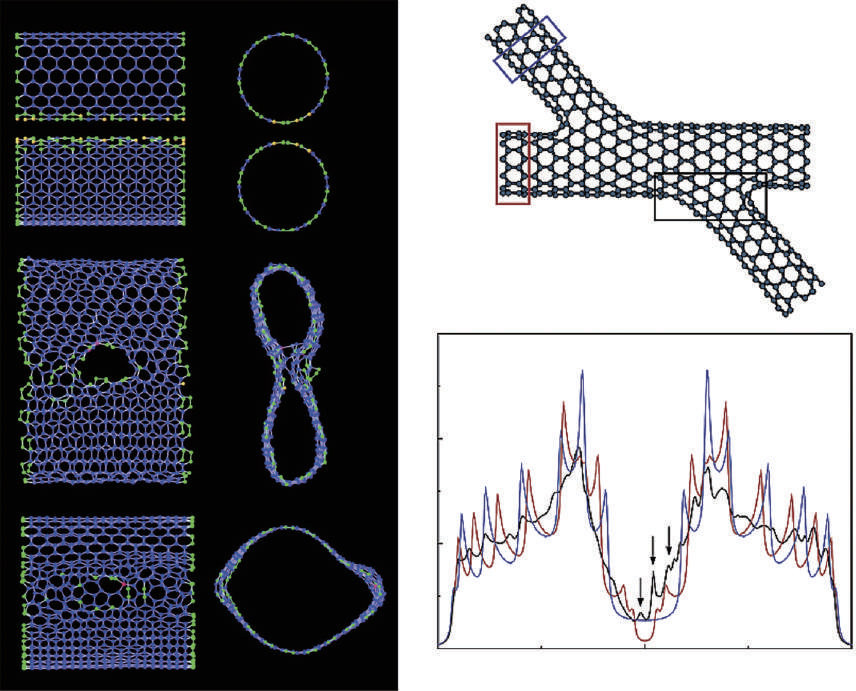
A review of carbon nanotubes in modern electrochemical energy storage

Authors: SONG Yao-ming, QIU Shi-xin, FENG Shu-xin, ZUO Rui, ZHANG Ya-ting, JIA Ke, XIA Xue, CHEN Ming-ming, JI Ke-meng, WANG Cheng-yang

The quest for sustainable energy storage solutions is more critical than ever, with the rise in global energy demand and the urgency of transition from fossil fuels to renewable sources. Carbon nanotubes (CNTs), with their exceptional electrical conductivity and structural integrity, are at the forefront of this endeavor, offering promising ways for the advance of electrochemical energy storage (EES) devices. This review provides an analysis of the synthesis, properties, and applications of CNTs in the context of EES. We explore the evolution of CNT synthesis methods, including arc discharge, laser ablation, and chemical vapor deposition, and highlight the recent developments in metal-organic framework-derived CNTs and a novel CNT aggregate with a three-dimensional ordered macroporous structure. We also examine the role of CNTs in improving the performance of various EES devices such as lithium-ion, lithium-metal, lithium-sulfur, sodium, and flexible batteries as well as supercapacitors. We underscore the challenges that remain, including the scalability of CNT synthesis and the integration of CNTs in electrode materials, and propose potential solutions and future research directions. The review presents a forward-looking perspective on the pivotal role of CNTs in shaping the future of sustainable EES technologies.

A review of carbon nanotubes in modern electrochemical energy storage
Graphical Abstract
Original ResearchVol 40, Issue 1 • pp. 100-112DOI: 10.1016/S1872-5805(NCM2024-39-05-10)Jan 15, 2025

The effect of the carbon components on the performance of carbon-based transition metal electrocatalysts for the hydrogen evolution reaction

Authors: LI Guo-hua, WANG Jing, REN Jin-tian, LIU Hong-chen, QIAN Jin-xiu, CHENG Jia-ting, ZHAO Mei-tong, YANG Fan, LI Yong-feng

The hydrogen evolution reaction (HER) is a promising way to produce hydrogen, and the use of non-precious metals with an excellent electrochemical performance is vital for this. Carbon-based transition metal catalysts have high activity and stability, which are important in reducing the cost of hydrogen production and promoting the development of the hydrogen production industry. However, there is a lack of discussion regarding the effect of carbon components on the performance of these electrocatalysts. This review of the literature discusses the choice of the carbon components in these catalysts and their impact on catalytic performance, including electronic structure control by heteroatom doping, morphology adjustment, and the influence of self-supporting materials. It not only analyzes the progress in HER, but also provides guidance for synthesizing high-performance carbon-based transition metal catalysts.
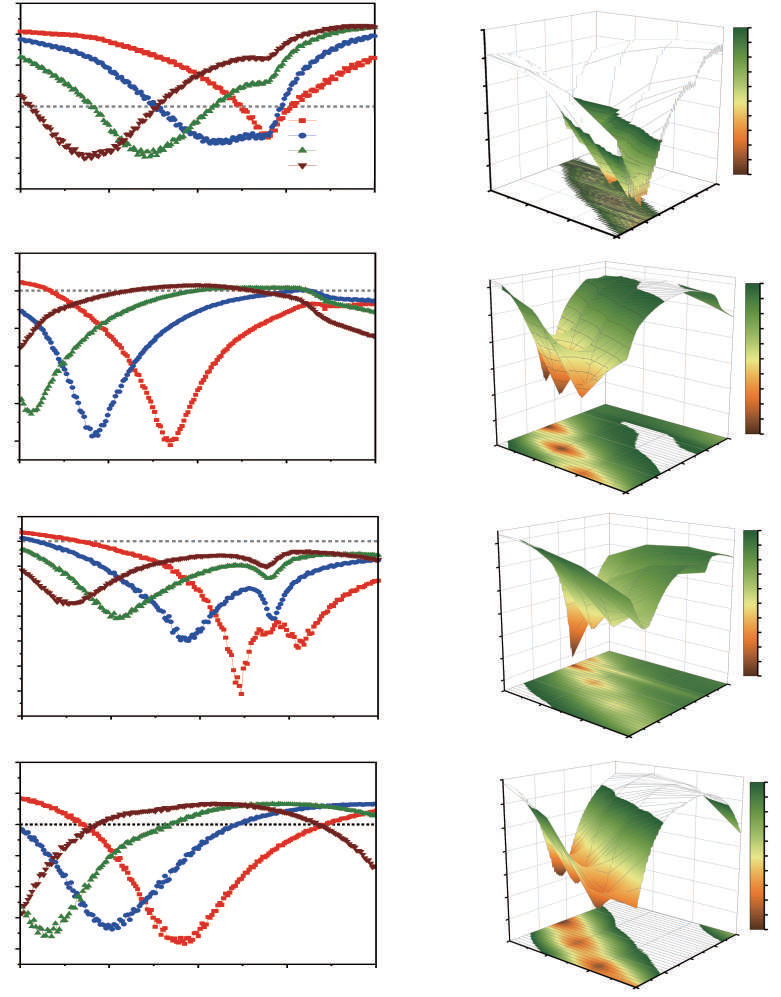
The effect of the carbon components on the performance of carbon-based transition metal electrocatalysts for the hydrogen evolution reaction
Graphical Abstract
Original ResearchVol 40, Issue 1 • pp. 100-112DOI: 10.1016/S1872-5805(NCM2024-39-05-14)Jan 15, 2025

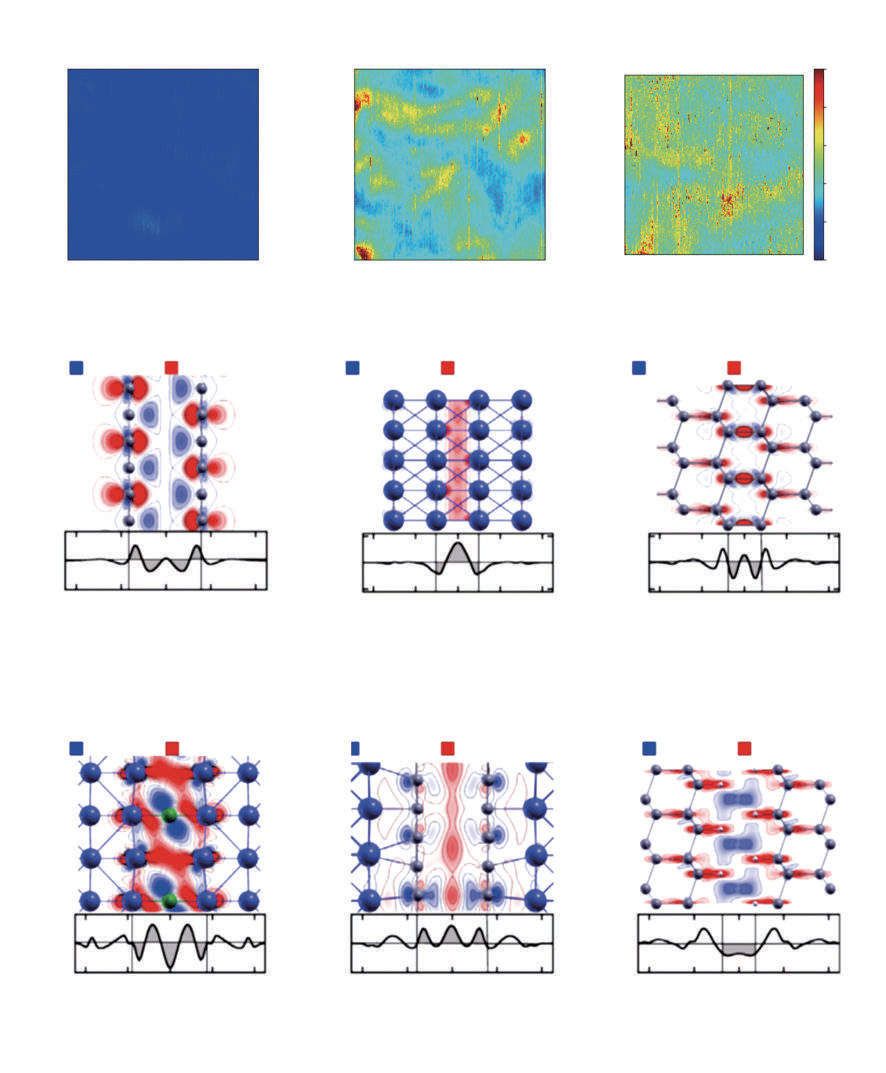
The relationship between the high-frequency performance of supercapacitors and the type of doped nitrogen in the carbon electrode

Authors: FAN Ya-feng, YI Zong-lin, ZHOU Yi, XIE Li-jing, SUN Guo-hua, WANG Zhen-bing, Huang Xian-hong, SU Fang-yuan, CHEN Cheng-meng

Nitrogen doping has been widely used to improve the performance of carbon electrodes in supercapacitors, particularly in terms of their high-frequency response. However, the charge storage and electrolyte ion response mechanisms of different nitrogen dopants at high frequencies are still unclear. In this study, melamine foam carbons with different configurations of surface-doped N were formed by gradient carbonization, and the effects of the configurations on the high-frequency response behavior of the supercapacitors were analyzed. Using a combination of experiments and first-principle calculations, we found that pyrrolic N, characterized by a higher adsorption energy, increases the charge storage capacity of the electrode at high frequencies. On the other hand, graphitic N, with a lower adsorption energy, increases the speed of ion response. We propose the use of adsorption energy as a practical descriptor for electrode/electrolyte design in high-frequency applications, offering a more universal approach for improving the performance of N-doped carbon materials in supercapacitors.

The relationship between the high-frequency performance of supercapacitors and the type of doped nitrogen in the carbon electrode
Graphical Abstract
Original ResearchVol 40, Issue 1 • pp. 100-112DOI: 10.1016/S1872-5805(NCM2024-39-05-08)Jan 15, 2025

A review of the carbon coating of the silicon anode in high-performance lithium-ion batteries

Authors: XU Ze-yu, SHAO Hai-bo, WANG Jian-ming

In the development of rechargeable lithium ion batteries (LIBs), silicon anodes have attracted much attention because of their extremely high theoretical capacity, relatively low Li-insertion voltage and the availability of silicon resources. However, their large volume expansion and fragile solid electrolyte interface (SEI) film hinder their commercial application. To solve these problems, Si has been combined with various carbon materials to increase their structural stability and improve their interface properties. The use of different carbon materials, such as amorphous carbon and graphite, as three-dimensional (3D) protective anode coatings that help buffer mechanical strain and isolate the electrolyte is detailed, and novel methods for applying the coatings are outlined. However, carbon materials used as a protective layer still have some disadvantages, necessitating their modification. Recent developments have focused on modifying the protective carbon shells, and substitutes for the carbon have been suggested.

A review of the carbon coating of the silicon anode in high-performance lithium-ion batteries
Graphical Abstract
Original ResearchVol 40, Issue 1 • pp. 100-112DOI: 10.1016/S1872-5805(NCM2024-39-05-12)Jan 15, 2025

Porous silicon/carbon composites as anodes for high-performance lithium-ion batteries

Authors: TIAN Zhen-yu, WANG Ya-fei, QIN Xin, Shaislamov Ulugbek, Hojamberdiev Mirabbos, ZHENG Tong-hui, DONG Shuo, ZHANG Xing-hao, KONG De-bin, ZHI Lin-jie

Silicon anodes are promising for use in lithium-ion batteries. However, their practical application is severely limited by their large volume expansion leading to irreversible material fracture and electrical disconnects. This study proposes a new top-down strategy for preparing microsize porous silicon and introduces polyacrylonitrile (PAN) for a nitrogen-doped carbon coating, which is designed to maintain the internal pore volume and lower the expansion of the anode during lithiation and delithiation. We then explore the effect of temperature on the evolution of the structure of PAN and the electrochemical behavior of the composite electrode. After treatment at 400 °C, the PAN coating retains a high nitrogen content of 11.35 at%, confirming the presence of C―N and C―O bonds that improve the ionic-electronic transport properties. This treatment not only results in a more intact carbon layer structure, but also introduces carbon defects, and produces a material that has remarkable stable cycling even at high rates. When cycled at 4 A g−1, the anode had a specific capacity of 857.6 mAh g−1 even after 200 cycles, demonstrating great potential for high-capacity energy storage applications.

Porous silicon/carbon composites as anodes for high-performance lithium-ion batteries
Graphical Abstract
Original ResearchVol 40, Issue 1 • pp. 100-112DOI: 10.1016/S1872-5805(NCM2024-39-05-09)Jan 15, 2025

Research progress on carbon-based zinc-ion capacitors

Authors: LUO Jun-hui, XIAO Hao-ming, PENG Jun, WANG Fu-jian, LUO Xian-you, CHEN Yong

Zinc-ion capacitors (ZICs), which consist of a capacitor-type electrode and a battery-type electrode, not only possess the high power density of supercapacitors and the high energy density of batteries, but also have other advantages such as abundant resources, high safety and environmental friendliness. However, they still face problems such as insufficient specific capacitance, a short cycling life, and narrow operating voltage and temperature ranges, which are hindering their practical use. We provide a comprehensive overview of the fundamental theory of carbon-based ZICs and summarize recent research progress from three perspectives: the carbon cathode, electrolyte and zinc anode. The influence of the structure and surface chemical properties of the carbon materials on the capacitive performance of ZICs is considered together with theoretical guidance for advancing their development and practical use.

Research progress on carbon-based zinc-ion capacitors
Graphical Abstract
Original ResearchVol 40, Issue 1 • pp. 100-112DOI: 10.1016/S1872-5805(NCM2024-39-05-07)Jan 15, 2025

The application of metal–organic frameworks and their derivatives for lithium-ion capacitors

Authors: ZHAO Sha-sha, ZHANG Xiong, LI Chen, AN Ya-bin, HU Tao, WANG Kai, SUN Xian-zhong, MA Yan-wei

There is an urgent need for lithium-ion capacitors (LICs) that have both high energy and high power densities to meet the continuously growing energy storage demands. LICs effectively balance the high energy density of traditional rechargeable batteries with the superior power density and long life of supercapacitors (SCs). Nevertheless, the development of LICs is still hampered by limited kinetic processes and capacity mismatch between the cathode and anode. Metal-organic frameworks (MOFs) and their derivatives have received significant attention because of their extensive specific surface area, different pore structures and topologies, and customizable functional sites, making them compelling candidate materials for achieving high-performance LICs. MOF-derived carbons, known for their exceptional electronic conductivity and large surface area, provide improved charge storage and rapid ion transport. MOF-derived transition metal oxides contribute to high specific capacities and improved electrochemical stability. Additionally, MOF-derived metal compounds/carbons provide combined effects that increase both the capacitive and Faradaic reactions, leading to a superior overall performance. The review begins with an overview of the fundamental principles of LICs, followed by an exploration of synthesis strategies and ligand selection for MOF-based composite materials. It then analyzes the advantages of original MOFs and their derived materials, such as carbon materials and metal compounds, in enhancing LIC performance. Finally, the review discusses the major challenges faced by MOFs and their derivatives in LIC applications and offers future research directions and recommendations.

The application of metal–organic frameworks and their derivatives for lithium-ion capacitors
Graphical Abstract
Original ResearchVol 40, Issue 1 • pp. 100-112DOI: 10.1016/S1872-5805(NCM2024-39-05-11)Jan 15, 2025

The use of carbon-based particle electrodes in three-dimensional electrode reactors for wastewater treatment

Authors: LU Hua-yu, LIU Wei-feng, QIN Lei, LIU Xu-guang

The use of three-dimensional (3D) electrodes in water treatment is competitive because of their high catalytic efficiency, low energy consumption and promising development. The use of particle electrodes is a key research focus in this technology. They are usually in the form of particles that fill the space between the cathode and anode, and the selection of materials used is important. Carbon-based materials are widely used because of their large specific surface area, good adsorption performance, high chemical stability and low cost. The principles of 3D electrode technology are introduced and recent research on its use for degrading organic pollutants using carbon-based particle electrodes is summarized. The classification of particle electrodes is introduced and the challenges for the future development of carbon-based particle electrodes in wastewater treatment are discussed.

The use of carbon-based particle electrodes in three-dimensional electrode reactors for wastewater treatment
Graphical Abstract
Original ResearchVol 40, Issue 1 • pp. 100-112DOI: 10.1016/S1872-5805(NCM2024-39-05-06)Jan 15, 2025

Design, progress and challenges of 3D carbon-based thermally conductive networks

Authors: JING Yuan, LIU Han-qing, ZHOU Feng, DAI Fang-na, WU Zhong-shuai

The advent of the 5G era has stimulated the rapid development of high power electronics with dense integration. Three-dimensional (3D) thermally conductive networks, possessing high thermal and electrical conductivities and many different structures, are regarded as key materials to improve the performance of electronic devices. We provide a critical overview of carbon-based 3D thermally conductive networks, emphasizing their preparation-structure-property relationships and their applications in different scenarios. A detailed discussion of the microscopic principles of thermal conductivity is provided, which is crucial for increasing it. This is followed by an in-depth account of the construction of 3D networks using different carbon materials, such as graphene, carbon foam, and carbon nanotubes. Techniques for the assembly of two-dimensional graphene into 3D networks and their effects on thermal conductivity are emphasized. Finally, the existing challenges and future prospects for 3D carbon-based thermally conductive networks are discussed.

Design, progress and challenges of 3D carbon-based thermally conductive networks
Graphical Abstract
Original ResearchVol 40, Issue 1 • pp. 100-112DOI: 10.1016/S1872-5805(NCM2024-39-04-06)Jan 15, 2025

Semi-quantitative analysis of the structural evolution of mesophase pitch-based carbon foams by Raman and FTIR spectroscopy

Authors: LIU Yue, CHANG Sheng-kai, SU Zhan-peng, HUANG Zu-jian, QIN Ji, YANG Jian-xiao

Graphitized carbon foams (GFms) were prepared using mesophase pitch (MP) as a raw material by foaming (450 °C), pre-oxidation (320 °C), carbonization (1 000 °C) and graphitization (2 800 °C). The differences in structure and properties of GFms prepared from different MP precursors pretreated by ball milling or liquid phase extraction were investigated and compared, and semi-quantitative calculations were conducted on the Raman and FTIR spectra of samples at each preparation stage. Semi-quantitative spectroscopic analysis provided detailed information on the structure and chemical composition changes of the MP and GFm derived from it. Combined with microscopic observations, the change from precursor to GFm was analyzed. The results showed that ball milling concentrated the distribution of aromatic molecules in the pitch, which contributed to uniform foaming to give a GFm with a uniform pore distribution and good properties. Liquid phase extraction helped remove light components while retaining large aromatics to form graphitic planes with the largest average size during post-treatment to produce a GFm with the highest degree of graphitization and the fewest open pores, giving the best compression resistance (2.47 MPa), the highest thermal conductivity (64.47 W/(m·K)) and the lowest electrical resistance (13.02 μΩ·m). Characterization combining semi-quantitative spectroscopic analysis with microscopic observations allowed us to control the preparation of the MP-derived GFms.

Semi-quantitative analysis of the structural evolution of mesophase pitch-based carbon foams by Raman and FTIR spectroscopy
Graphical Abstract
Original ResearchVol 40, Issue 1 • pp. 100-112DOI: 10.1016/S1872-5805(NCM2024-39-04-05)Jan 15, 2025

Preparation of a high-performance synthetic pitch from aromatic hydrocarbons containing N/Cl

Authors: ZHANG Yu-kun, LIN Xiong-chao, GAO Hong-feng, XI Wen-shuai, WANG Cai-hong, WANG Yong-gang

The preparation of a synthetic pitch from aromatic monomers could easily regulate structure orientation at the molecular level, which would be useful in fabrication. An isotropic synthetic pitch was prepared by a chlorine- and/or nitrogen-induced substitution polymerization reaction method using aromatic hydrocarbon precursors containing Cl and N, which for this study were chloromethyl naphthalene and quinoline. This method was verified by investigating the structural changes under different synthesis conditions, and the synthesis mechanism induced by aromatics containing Cl was also probed. The result shows that the pyridinic N in quinoline contains a lone pair of electrons, and is an effective active site to induce the polymerization reaction by coupling with aromatic hydrocarbons containing Cl. The reaction between such free radicals causes strong homopolymerization and oligomerization. A higher reaction temperature and longer reaction time significantly increased the degree of polymerization and thus increased the softening point of the pitch. A linear molecular structure was formed by the Cl substitution reaction, which produced a highly spinnable pitch with a softening point of 258.6 °C, and carbon fibers with a tensile strength of 1 163.82 MPa were obtained. This study provides a relatively simple and safe method for the preparation of high-quality spinnable pitch.

Preparation of a high-performance synthetic pitch from aromatic hydrocarbons containing N/Cl
Graphical Abstract
Original ResearchVol 40, Issue 1 • pp. 100-112DOI: 10.1016/S1872-5805(NCM2024-39-05-04)Jan 15, 2025

A review of hard carbon anodes for rechargeable sodium-ion batteries

Authors: MU Bao-yi, CHI Chun-lei, YANG Xin-hou, HUANGFU Chao, QI Bin, WANG Guan-wen, LI Zhi-yuan, SONG Lei, WEI Tong, FAN Zhuang-jun

Hard carbons (HCs) are recognized as potential anode materials for sodium-ion batteries (SIBs) because of their low cost, environmental friendliness, and the abundance of their precursors. The presence of graphitic domains, numerous pores, and disordered carbon layers in HCs plays a significant role in determining their sodium storage ability, but these structural features depend on the precursor used. The influence of functional groups, including heteroatoms and oxygen-containing groups, and the microstructure of the precursor on the physical and electrochemical properties of the HC produced are evaluated, and the effects of carbonization conditions (carbonization temperature, heating rate and atmosphere) are also discussed.

A review of hard carbon anodes for rechargeable sodium-ion batteries
Graphical Abstract
Original ResearchVol 40, Issue 1 • pp. 100-112DOI: 10.1016/S1872-5805(NCM2024-39-04-08)Jan 15, 2025

Polyetherketoneketone/carbon fiber composites with an amorphous interface prepared by solution impregnation

Authors: ZHANG Feng, LI Bo-lan, JIAO Meng-xiao, LI Yan-bo, WANG Xin, YANG Yu, YANG Yu-qiu, ZHANG Xiao-hua

Interfacial adhesion between carbon fibers (CF) and polyetherketoneketone (PEKK) is a key factor that affects the mechanical performances of their composites. It is therefore of great importance to impregnate the CF bundles with PEKK as efficiently as possible. We report that PEKK with a good dispersion in a mixed solution of 4-chlorophenol and 1,2-dichloroethane can be introduced onto CF surfaces by solution impregnation and curing at 280, 320, 340 and 360 °C. The excellent wettability or infiltration of the PEKK solution guarantees a full covering and its tight binding to CFs, making it possible to evaluate the interfacial shear strength (IFSS) with the microdroplet method. The interior of the CF bundles is completely and uniformly filled with PEKK by solution impregnation, leading to a high interlaminar shear strength (ILSS). The maximum IFSS and ILSS reached 107.8 and 99.3 MPa, respectively. Such superior shear properties are ascribed to the formation of amorphous PEKK in the small spaces between CFs.

Polyetherketoneketone/carbon fiber composites with an amorphous interface prepared by solution impregnation
Graphical Abstract
Original ResearchVol 40, Issue 1 • pp. 100-112DOI: 10.1016/S1872-5805(NCM2024-39-05-02)Jan 15, 2025

A review of anode materials for sodium ion batteries

Authors: Syed Ali Riza, XU Ri-gan, LIU Qi, Muhammad Hassan, YANG Qiang, MU Dao-bin, LI Li, WU Feng, CHEN Ren-jie

Lithium-ion batteries (LIBs) are used in electric vehicles and portable smart devices, but lithium resources are dwindling and there is an increasing demand which has to be catered for. Sodium ion batteries (SIBs), which are less costly, are a promising replacement for LIBs because of the abundant natural reserves of sodium. The anode of a SIB is a necessary component of the battery but is less understood than the cathode. This review outlines the development of various types of anodes, including carbon-based, metallic and organic, which operate using different reaction mechanisms such as intercalation, alloying and conversion, and considers their challenges and prospects. Strategies for modifying their structures by doping and coating, and also modifying the solid electrolyte interface are discussed. In addition, this review also discusses the challenges encountered by the anode of SIBs and the solutions.

A review of anode materials for sodium ion batteries
Graphical Abstract
Original ResearchVol 40, Issue 1 • pp. 100-112DOI: 10.1016/S1872-5805(NCM2024-39-04-01)Jan 15, 2025

A review of the catalytic preparation of mesophase pitch

Authors: MA Zi-hui, YANG Tao, SONG Yan, CHEN Wen-sheng, DUAN Chun-feng, SONG Huai-he, TIAN Xiao-dong, GONG Xiang-jie, LIU Zheng-yang, LIU Zhan-jun

Because of its high purity and excellent orientation, mesophase pitch is a superior precursor for high-performance carbon materials. However, the preparation of top-notch mesophase pitch faces challenges. Catalytic polycondensation at low temperatures is more favorable for synthesizing mesophase pitch, because it circumvents the high-temperature free radical reaction of other thermal polycondensation approaches. The reaction is gentle and can be easily controlled. It has the potential to significantly improve the yield of mesophase pitch and easily introduce naphthenic characteristics into the molecules, catalytic polycondensation is therefore a preferred method of synthesizing highly spinnable mesophase pitch. This review provides a synopsis of the selective pretreatment of the raw materials to prepare different mesophase pitches, and explains the reaction mechanism and associated research advances for different catalytic systems in recent years. Finally, how to manufacture high-quality mesophase pitch by using a catalyst-promoter system is summarized and proposed, which may provide a theoretical basis for the future design of high-quality pitch molecules.

A review of the catalytic preparation of mesophase pitch
Graphical Abstract
Original ResearchVol 40, Issue 1 • pp. 100-112DOI: 10.1016/S1872-5805(NCM2024-39-05-03)Jan 15, 2025

The preparation and properties of N-doped carbon materials and their use for sodium storage

Authors: YUAN Ren-lu, HOU Ruo-yang, SHANG Lei, LIU Xue-wei, LI Ang, CHEN Xiao-hong, SONG Huai-he

Defect engineering by heteroatom doping gives carbon materials some new characteristics such as a different electronic structure and a high electrochemical activity, making them suitable for high-performance applications. N-doping has been widely investigated because of its similar atom radius to carbon, high electronegativity as well as many different configurations. We summarize the preparation methods and properties of N-doped carbon materials, and discuss their possible use in sodium ion storage. The relationships between N content/configuration and crystallinity, electronic conductivity, wettability, chemical reactivity as well as sodium ion storage performance are discussed.

The preparation and properties of N-doped carbon materials and their use for sodium storage
Graphical Abstract
Original ResearchVol 40, Issue 1 • pp. 100-112DOI: 10.1016/S1872-5805(NCM2024-39-04-09)Jan 15, 2025

In-situ thermal Raman mapping and stress analysis of CNT/CF/epoxy interfaces

Authors: HE Jing-zong, CHEN Shi, MA Zheng-kun, LU Yong-gen, WU Qi-lin

A study of the interfacial behavior and internal thermal stress distribution in fiber-reinforced composites is essential to assess their performance and reliability. CNT/carbon fiber (CF) hybrid fibers were constructed using electrophoretic deposition. The interfacial properties of CF/epoxy and CNT/CF/epoxy composites were statistically investigated and compared using in-situ thermal Raman mapping by dispersing CNTs as a Raman sensing medium (CNTR) in a resin. The associated local thermal stress changes can be simulated by capturing the G' band position distribution of CNTR in the epoxy at different temperatures. It was found that the G' band shifted to lower positions with increasing temperature, reaching a maximum difference of 2.43 cm−1 at 100 °C. The interfacial bonding between CNT/CF and the matrix and the stress distribution and changes during heat treatment (20–100 °C) were investigated in detail. This work is important for studying thermal stress in fiber-reinforced composites by in-situ thermal Raman mapping technology.

In-situ thermal Raman mapping and stress analysis of CNT/CF/epoxy interfaces
Graphical Abstract
Original ResearchVol 40, Issue 1 • pp. 100-112DOI: 10.1016/S1872-5805(NCM2024-39-05-05)Jan 15, 2025

Recent advances in producing hollow carbon spheres for use in sodium−sulfur and potassium−sulfur batteries

Authors: QI Zi-xin, LUO Sai-nan, RUAN Jia-feng, YUAN Tao, PANG Yue-peng, YANG Jun-he, ZHENG Shi-you

Sodium-sulfur (Na-S) and potassium-sulfur (K-S) batteries for use at room temperature have received widespread attention because of the abundance and low cost of their raw materials and their high energy density. However, their development is restricted by the shuttling of polysulfides, large volume expansion and poor conductivity. To overcome these obstacles, an effective approach is to use carbon-based materials with abundant space for the sulfur that has sulfiphilic sites to immobilize it, and a high electrical conductivity. Hollow carbon spheres (HCSs) with a controllable structure and composition are promising for this purpose. We consider recent progress in optimizing the electrochemical performance of Na-/K-S batteries by using these materials. First, the advantages of HCSs, their synthesis methods, and strategies for preparing HCSs/sulfur composite materials are reviewed. Second, the use of HCSs in Na-/K-S batteries, along with mechanisms underlying the resulting performance improvement, are discussed. Finally, prospects for the further development of HCSs for metal−S batteries are presented.

Recent advances in producing hollow carbon spheres for use in sodium−sulfur and potassium−sulfur batteries
Graphical Abstract
Original ResearchVol 40, Issue 1 • pp. 100-112DOI: 10.1016/S1872-5805(NCM2024-39-03-10)Jan 15, 2025

Increasing the interlayer spacing and generating closed pores to produce petroleum coke-based carbon materials for sodium ion storage

Authors: ZHUANG Hong-kun, LI Wen-cui, HE Bin, LV Jia-he, WANG Jing-song, SHEN Ming-yuan, LU An-hui

Petroleum coke (PC) is a valuable precursor for sodium-ion battery (SIB) anodes due to its high carbon content and low cost. The regulation of the microcrystalline state and pore structure of the easily-graphitized PC-based carbon is crucial for creating abundant Na+ storage sites. Here we used a precursor transformation strategy to increase the carbon interlayer spacing and generate abundant closed pores in PC-based carbon, significantly increasing its Na+ storage capacity in the plateau region. This was achieved by introducing a large number of oxygen functional groups through mixed acid treatment and then using high-temperature carbonization to decompose the oxygen functional groups and rearrange the carbon microcrystallites, resulting in a transition from open to closed pores. The optimized samples provide a large reversible capacity of 356.0 mAh g−1 at 0.02 A g−1, of which approximately 93% is below 1.0 V. Galvanostatic intermittent titration (GITT) and in-situ X-ray diffraction (XRD) analysis indicate that the sodium storage capacity in the low voltage plateau region involves a joint contribution of interlayer insertion and closed pore filling processes. This study presents a comprehensive method for the development of high-performance carbon anodes using low-cost and highly aromatic precursors.

Increasing the interlayer spacing and generating closed pores to produce petroleum coke-based carbon materials for sodium ion storage
Graphical Abstract
Original ResearchVol 40, Issue 1 • pp. 100-112DOI: 10.1016/S1872-5805(NCM2024-39-04-03)Jan 15, 2025

Ablation behaviour and mechanical performance of ZrB2-ZrC-SiC modified carbon/carbon composites prepared by vacuum infiltration combined with reactive melt infiltration

Authors: ZHANG Jia-ping, SU Xiao-xuan, LI Xin-gang, WANG Run-ning, FU Qian-gang

The development of advanced aircraft relies on high performance thermal-structural materials, and carbon/carbon composites (C/C) composited with ultrahigh-temperature ceramics are ideal candidates. However, the traditional routes of compositing are either inefficient and expensive or lead to a non-uniform distribution of ceramics in the matrix. Compared with the traditional C/C-ZrC-SiC composites prepared by the reactive melt infiltration of ZrSi2, C/C-ZrB2-ZrC-SiC composites prepared by the vacuum infiltration of ZrB2 combined with reactive melt infiltration have the higher content and more uniform distribution of the introduced ceramic phases. The mass and linear ablation rates of the C/C-ZrB2-ZrC-SiC composites were respectively 68.9% and 29.7% lower than those of C/C-ZrC-SiC composites prepared by reactive melt infiltration. The ablation performance was improved because the volatilization of B2O3, removes some of the heat, and the more uniformly distributed ZrO2, that helps produce a ZrO2-SiO2 continuous protective layer, hinders oxygen infiltration and decreases ablation.

Ablation behaviour and mechanical performance of ZrB2-ZrC-SiC modified carbon/carbon composites prepared by vacuum infiltration combined with reactive melt infiltration
Graphical Abstract
Original ResearchVol 40, Issue 1 • pp. 100-112DOI: 10.1016/S1872-5805(NCM2024-39-04-10)Jan 15, 2025

Increasing the toughness while reducing the viscosity of carbon nanotube/polyether imide/polyether ether ketone nanocomposites

Authors: SONG Jiu-peng, ZHAO Yan, LI Xue-kuan, XIONG Shu, LI Shuang, WANG Kai

Polyether ether ketone (PEEK) has good mechanical properties. However, its high viscosity when molten limits its use because it is hard to process. PEEK nanocomposites containing both carbon nanotubes (CNTs) and polyether imide (PEI) were prepared by a direct wet powder blending method using a vertical injection molding machine. The addition of an optimum amount of PEI lowered the viscosity of the molten PEEK by approximately 50% while producing an increase in the toughness of the nanocomposites, whose strain to failure increased by 129%, and fracture energy increased by 97%. The uniformly dispersed CNT/PEI powder reduced the processing difficulty of PEEK nanocomposites without affecting the thermal resistance. This improvement of the strength and viscosity of PEEK facilitate its use in the preparation of thermoplastic composites.

Increasing the toughness while reducing the viscosity of carbon nanotube/polyether imide/polyether ether ketone nanocomposites
Graphical Abstract
Original ResearchVol 40, Issue 1 • pp. 100-112DOI: 10.1016/S1872-5805(NCM2024-39-04-04)Jan 15, 2025

Formation of mesophase microbeads from bulk mesophase pitch induced by fullerene

Authors: CHEN Wen-sheng, LIU Lan-tao, WANG Zheng, DUAN Chun-feng, ZHANG Xing-wei, MA Zhao-kun, CHEN Xiao-hong, SONG Huai-he

A transformation of naphthalene-based coalescenced mesophase pitch (NMP) to mesophase microbeads was achieved by heating a mixture of NMP and fullerene (C60). This is different from the conventional process of the liquid-phase carbonization of isotropic pitch to the emergence of carbon microbeads in the matrix and finally their growth to form a 100% anisotropic bulk mesophase, but rather a reverse transformation. The effects of C60 loading and reaction temperature on the morphological transformation of mesophase were investigated by polarizing optical and scanning electron microscopies. The physical changes in the NMP induced by C60 were characterized by thermogravimetric analysis, Fourier transform infrared spectroscopy, X-ray diffractometry and Raman spectroscopy. The results show that the coalesced NMP can be converted to a spherical type at 300–320 °C with the addition of 5% C60, and the size of the mesophase microbeads increases with increasing temperature. Furthermore, a model is established to explain the unique induction effect of C60 in the transformation process. This work makes the morphological transformation of MP controllable, and provides a new idea for the understanding and research of mesophase pitch.

Formation of mesophase microbeads from bulk mesophase pitch induced by fullerene
Graphical Abstract
Original ResearchVol 40, Issue 1 • pp. 100-112DOI: 10.1016/S1872-5805(NCM2024-39-04-07)Jan 15, 2025

Cardo poly (ether sulfone) toughened E51/DETDA epoxy resin and its carbon fiber composites

Authors: WU Rong-peng, ZHANG Xing-hua, WEI Xing-hai, JING De-qi, SU Wei-guo, ZHANG Shou-chun

A toughener that can effectively improve the interlaminar toughness in carbon fiber composites is crucial for various applications. We investigated, the toughening effects of phenolphthalein-based cardo poly (ether sulfone) (PES-C) on E51/ DETDA epoxy and its carbon fiber composites (CFCs). Scanning electron microscopy showed that the phase structures of PES-C/epoxy blends change from island (of dispersed phase) structures to bi-continuous structures (of the matrix) as the PES-C content increased, which is associated with reaction-induced phase separation. After adding 15 phr PES-C, the glass transition temperature (Tg) of the blends increased by 51.5 °C, and the flexural strength, impact strength and fracture toughness of the blends were improved by 41.1%, 186.2% and 42.7%, respectively. These improvements could be attributed to the phase separation structure of the PES-C/epoxy system. A PES-C film was used to improve the mode-II fracture toughness (GIIC) of CFCs. The GIIC value of the 7 μm PES-C film toughened laminate was improved by 80.3% compared to that of the control laminate. The increase in GIIC was attributed to cohesive failure and plastic deformation in the interleaving region.

Cardo poly (ether sulfone) toughened E51/DETDA epoxy resin and its carbon fiber composites
Graphical Abstract
Original ResearchVol 40, Issue 1 • pp. 100-112DOI: 10.1016/S1872-5805(NCM2024-39-03-06)Jan 15, 2025

Boron and nitrogen co-doped sodium alginate-based porous carbons for durable and fast Zn-ion hybrid capacitors

Authors: LU Ya-ping, WANG Hong-xing, LIU Lan-tao, PANG Wei-wei, CHEN Xiao-hong

In recent years, zinc-ion hybrid capacitors (ZIHCs) have attracted increasing attention due to their environmental friendliness and excellent electrochemical properties. However, their performance is mainly limited by the electrochemical performance of the cathode, so it is necessary to develop an advanced cathode material. N, B co-doped sodium alginate-based porous carbon (NBSPC) was prepared by one-step co-carbonization using sodium alginate as the matrix and NH4B5O8 as the N and B source. This N, B co-doping strategy improves the pore structure of the carbon materials and increases the number of surface functional groups, greatly improving the capacitive behavior of the raw materials and thus improving their electrochemical performance. When used as the cathode in ZIHCs, the NBSPC had an excellent rate performance (85.4 mA h g−1 even at ultra-high current density of 40 A g−1) and good cycling stability (15 000 cycles at 20 A g−1 with a capacity retention rate of 94.5%).

Boron and nitrogen co-doped sodium alginate-based porous carbons for durable and fast Zn-ion hybrid capacitors
Graphical Abstract
Original ResearchVol 40, Issue 1 • pp. 100-112DOI: 10.1016/S1872-5805(NCM2024-39-02-13)Jan 15, 2025

The oxidation reaction mechanism and its kinetics for a carbonaceous precursor prepared from ethylene tar for use as an anode material for lithium-ion batteries

Authors: GUO Tian-rui, CHEN Rong-qi, GAO Wei, WANG Yan-li, ZHAN Liang

The oxidation reaction mechanism and its kinetics for ethylene tar were investigated in order to obtain a suitable anode material for Li-ion batteries. The oxidation of ethylene tar was divided into 3 stages (350–550, 550–700 and 700–900 K) according to the thermogravimetric curve. To reveal the oxidation reaction mechanism, the components of the gases evolved at different stages were analyzed by mass spectrometry and infrared technology. Based on these results the reaction was divided into 4 stages (323–400, 400–605, 605–750 and 750–860 K) to perform simulation calculations of the kinetics. Using the iso-conversion method (Coats-Redfern) to analyze the linear regression rates (R2) between 17 common reaction kinetics models and experimental data, an optimum reaction kinetics model for expressing the oxidation of ethylene tar was determined and the results were as follows. (1) During oxidation, the side chains of aromatic compounds first react with oxygen to form alcohols and aldehydes, leaving peroxy-radicals on aromatic rings. Subsequently, the aromatic compounds with peroxy-radicals undergo polymerization/condensation reactions to form larger molecules. (2) A fourth-order reaction model was used to describe the first 3 stages in the oxidation process, and the activation energies are 47.33, 18.69 and 9.00 kJ·mol−1 at 323–400, 400–605, 605–750 K, respectively. A three-dimensional diffusion model was applied to the fourth stage of the oxidation process, and the activation energy is 88.37 kJ·mol−1 at 750–860 K. A high softening point pitch was also produced for use as a coating of the graphite anode, and after it had been applied the capacity retention after 300 cycles increased from 51.54% to 79.07%.

The oxidation reaction mechanism and its kinetics for a carbonaceous precursor prepared from ethylene tar for use as an anode material for lithium-ion batteries
Graphical Abstract
Original ResearchVol 40, Issue 1 • pp. 100-112DOI: 10.1016/S1872-5805(NCM2024-39-03-03)Jan 15, 2025

Advances in graphene/molybdenum dichalcogenide-based van der Waals heterostructure photodetectors

Authors: ZHANG Xin-hua, LIU Wei-di, GONG You-pin, LIU Qing-feng, CHEN Zhi-gang

Graphene is widely used in photodetection because of its high carrier mobility and wide spectral absorption range. However, its high dark current caused by its low light absorption severely limits its performance. Molybdenum dihalide (MoX2, X=S, Se and Te) has a high absorption coefficient, which can compensate for the high dark current in graphene-based photodetectors and result in outstanding photoelectronic properties of those based on a graphene/MoX2 van der Waals heterostructure (vdWH). In this review, we firstly review working principles, performance indicators, and structures of photodetectors. After that, the significance of graphene/MoX2 vdWH photodetectors is highlighted from the fundamental perspective. Preparation methodologies and performance enhancement strategies of graphene/MoX2 vdWH photodetectors are correspondingly summarized. In the end, we highlight the current challenges and future directions of the graphene/MoX2 vdWH photodetectors. This review will guide the design of high-performance vdWH photodetectors.

Advances in graphene/molybdenum dichalcogenide-based van der Waals heterostructure photodetectors
Graphical Abstract
Original ResearchVol 40, Issue 1 • pp. 100-112DOI: 10.1016/S1872-5805(NCM2024-39-02-08)Jan 15, 2025

N, S co-doped coal-based hard carbon prepared by two-step carbonization and a molten salt template method for sodium storage

Authors: NIU Hui-zhu, WANG Hai-hua, SUN Li-yu, YANG Chen-rong, WANG Yu, CAO Rui, YANG Cun-guo, WANG Jie, SHU Ke-wei

Hard carbon, known for its abundant resources, stable structure and high safety, has emerged as the most popular anode material for sodium-ion batteries (SIBs). Among various sources, coal-derived hard carbon has attracted extensive attention. In this work, N and S co-doped coal-based carbon material (NSPC1200) was synthesized through a combination of two-step carbonization process and heteroatom doping using long-flame coal as a carbon source, thiourea as a nitrogen and sulfur source, and NaCl as a template. The two-step carbonization process played a crucial role in adjusting the structure of carbon microcrystals and expanding the interlayer spacing. The N and S co-doping regulated the electronic structure of carbon materials, endowing more active sites. Additionally, the introduction of NaCl as a template contributed to the construction of pore structure, which facilitates better contact between electrodes and electrolytes, enabling more efficient transport of Na+ and electrons. Under the synergistic effect, NSPC1200 exhibited exceptional sodium storage capacity, reaching 314.2 mAh g−1 at 20 mA g−1. Furthermore, NSPC1200 demonstrated commendable cycling stability, maintaining a capacity of 224.4 mAh g−1 even after 200 cycles. This work successfully achieves the strategic tuning of the microstructure of coal-based carbon materials, ultimately obtaining hard carbon anode with excellent electrochemical performance.

N, S co-doped coal-based hard carbon prepared by two-step carbonization and a molten salt template method for sodium storage
Graphical Abstract
Original ResearchVol 40, Issue 1 • pp. 100-112DOI: 10.1016/S1872-5805(NCM2024-39-03-04)Jan 15, 2025

A review of carbon material-based Z-scheme and S-scheme heterojunctions for photocatalytic clean energy generation

Authors: Sahil Rana, Amit Kumar, WANG Tong-tong, Gaurav Sharma, Pooja Dhiman, Alberto García-Penas

Carbon materials, including carbon nanotubes/nanofibers, graphene, graphene oxide, reduced graphene oxide, graphyne, graphdiyne, carbon quantum dots and fullerenes, have received considerable attention in recent years because of their unique properties such as high conductivity, excellent stability and biocompatibility. The integration of these materials into Z-scheme and S-scheme heterojunctions has emerged as a transformative strategy to increase their photocatalytic efficiency for energy conversion applications. We first consider the fundamental principles of clean energy generation such as photocatalytic H2 generation and CO2 reduction, elucidating their respective mechanisms and advantages. Various types of carbon materials, their synthesis and construction of Z-scheme and S-scheme heterojunctions are then discussed, emphasizing their role in promoting charge separation, reducing recombination losses and extending the spectral response range. With a focus on solar energy production, recent advances in carbon-based Z-scheme and S-scheme heterojunctions are discussed and summarized for photocatalytic H2 generation and CO2 reduction. Lastly, the current problems in the field of carbon-based photocatalysts are discussed with insights for the future development of this field.

A review of carbon material-based Z-scheme and S-scheme heterojunctions for photocatalytic clean energy generation
Graphical Abstract
Original ResearchVol 40, Issue 1 • pp. 100-112DOI: 10.1016/S1872-5805(NCM2024-39-03-07)Jan 15, 2025

Controlled growth of a graphdiyne/cobalt hydroxide heterointerface for efficient chlorine production

Authors: LIU Hui-min, LUAN Xiao-yu, YAN Jia-yu, BU Fan-le, XUE Yu-rui, LI Yu-liang

The chlor-alkali process plays a key and irreplaceable role in the chemical industry because of its use in various industrial processes. However, the low selectivity and efficiency of the reported chlorine evolution reaction (CER) electrocatalysts obviously hinder its practical use. We report a simple method for the controlled growth of high-performance CER electrocatalysts by first growing cobalt hydroxide on the surface of carbon cloth, followed by the in-situ growth of graphdiyne (GDY/Co(OH)2). As expected, the as-synthesized catalyst has a small overpotential of only 83 mV at 10 mA cm−2, a maximum Faradaic Efficiency (FE) of 91.54%, and a high chlorine yield of 157.11 mg h−1 cm−2 in acidic simulated seawater. Experimental results demonstrate that the in-situ growth of GDY on the Co(OH)2 surface leads to the formation of heterointerfaces with strong electron transfer between GDY and Co atoms, resulting in a higher conductivity, larger active specific surface area and more active sites, thereby improving the overall electrocatalytic selectivity and efficiency.

Controlled growth of a graphdiyne/cobalt hydroxide heterointerface for efficient chlorine production
Graphical Abstract
Original ResearchVol 40, Issue 1 • pp. 100-112DOI: 10.1016/S1872-5805(NCM2024-39-03-01)Jan 15, 2025

A review of the synthesis, characterization, and mechanism of bimetallic catalysts for electrocatalytic CO2 reduction

Authors: LIAO Yin-li, HUANG Heng-bo, ZOU Ru-yu, SHEN Shu-ling, LIU Xin-juan, TANG Zhi-hong

The electrocatalytic CO2 reduction reaction (CO2RR) is an environmentally friendly way to convert CO2 into valuable chemicals. However, CO2 conversion is a complex process, which contains 2, 4, 6, 8, and 12 electron transfer processes. It is very important to develop efficient catalysts to precisely control the number of electron transfers for the chemicals required. Single-metal catalysts have some deficiencies, including slow reaction kinetics, low product selectivity and inadequate stability. In response to these challenges, bimetallic catalysts have received significant attention owing to their unique structure and improved performance. The introduction of secondary metals alters the catalyst’s electronic structure, and creates novel active sites, as well as optimizing their interaction with the intermediates. This review provides a comprehensive account of atomically distributed bimetals based on carbon materials and non-atomic distributed bimetals such as alloys and heterostructures, including their synthesis methods, characterization, and the outcomes of different catalysts. Catalytic mechanisms of different bimetallic catalysts are proposed and challenges encountered in the CO2RR are considered.

A review of the synthesis, characterization, and mechanism of bimetallic catalysts for electrocatalytic CO2 reduction
Graphical Abstract
Original ResearchVol 40, Issue 1 • pp. 100-112DOI: 10.1016/S1872-5805(NCM2024-39-03-09)Jan 15, 2025

Sulfonyl chloride-intensified metal chloride intercalation of graphite for efficient sodium storage

Authors: LAN Shu-qin, REN Wei-cheng, WANG Zhao, YU Chang, YU Jin-he, LIU Ying-bin, XIE Yuan-yang, ZHANG Xiu-bo, WANG Jian-jian, QIU Jie-shan

Metal chloride-intercalated graphite with excellent conductivity and a large interlayer spacing is highly desired for use in sodium ion batteries. However, halogen vapor is usually indispensable in initiating the intercalation process, which makes equipment design and experiments challenging. In this work, SO2Cl2 was used as a chlorine generator to intensify the intercalation of BiCl3 into graphite (BiCl3-GICs), which avoided the potential risks, such as Cl2 leakage, in traditional methods. The operational efficiency in the experiment was also improved. After the reaction of SO2Cl2, BiCl3, and graphite at 200 °C for 20 h, the synthesized BiCl3-GICs had a large interlayer spacing (1.26 nm) and a high amount of BiCl3 intercalation (42%), which gave SIBs a high specific capacity of 213 mAh g−1 at 1 A g−1 and an excellent rate performance (170 mAh g−1 at 5 A g−1). In-situ Raman spectra revealed that the electronic interaction between graphite and intercalated BiCl3 is weakened during the first discharge, which is favorable for sodium storage. This work broadly enables the increased intercalation of other metal chloride-intercalated graphites, offering possibilities for developing advanced energy storage devices.

Sulfonyl chloride-intensified metal chloride intercalation of graphite for efficient sodium storage
Graphical Abstract
Original ResearchVol 40, Issue 1 • pp. 100-112DOI: 10.1016/S1872-5805(NCM2024-39-02-06)Jan 15, 2025

Polyimide-assisted fabrication of highly oriented graphene-based all-carbon foams for increasing the thermal conductivity of polymer composites

Authors: XIONG Ke, SUN Zhi-peng, HU Ji-chen, MA Cheng, WANG Ji-tong, GE Xiang, QIAO Wen-ming, LING Li-cheng

Graphene and its derivatives are often preferentially oriented horizontally during processing because of their two-dimensional (2D) layer structure. As a result, thermal interface materials (TIMs) composed of a polymer matrix and graphene-derived fillers often have a high in-plane (IP) thermal conductivity (K), however, the low through-plane (TP) K makes them unsuitable for practical use. We report the development of high-quality polyimide/graphite nanosheets (PG) perpendicular to the plane using a directional freezing technique that increase the TP K of polymer-based composites. Graphene-derived nanosheets (GNs) were obtained by the crushing of scraps of highly thermally conductive graphene films. A water-soluble polyamic acid salt solution was used to disperse the hydrophobic GNs filler to achieve directional freezing. The polyimide, which facilitated the directional alignment of the GNs, was then graphitized. The introduction of the GNs increases the order and density of the PG, thus improving the strength and heat transfer performance of its polydimethylsiloxane (PDMS) composite. The obtained PG/PDMS composite (21.1% PG, mass fraction) has an impressive TP K of 14.56 W·m−1·K−1, 81 times that of pure PDMS. This simple polyimide-assisted 2D hydrophobic fillers alignment method provides ideas for the widespread fabrication of anisotropic TIMs and enables the reuse of scraps of graphene films.

Polyimide-assisted fabrication of highly oriented graphene-based all-carbon foams for increasing the thermal conductivity of polymer composites
Graphical Abstract
Original ResearchVol 40, Issue 1 • pp. 100-112DOI: 10.1016/S1872-5805(NCM2024-39-02-10)Jan 15, 2025

N-doped hollow carbon nanospheres embedded in N-doped graphene loaded with palladium nanoparticles as an efficient electrocatalyst for formic acid oxidation

Authors: FANG Yue, YANG Fu-kai, QU Wei-li, DENG Chao, WANG Zhen-bo

Efficient electrocatalysts with a low cost, high activity and good durability play a crucial role in the use of direct formic acid fuel cells. Pd nanoparticles supported on N-doped hollow carbon nanospheres (NHCNs) embedded in an assembly of N-doped graphene (NG) with a three-dimensional (3D) porous structure by a simple and economical method were investigated as direct formic acid fuel cell catalysts. Because of the unique porous configuration of interconnected layers doped with nitrogen atoms, the Pd/NHCN@NG catalyst with Pd nanoparticles has a large catalytic active surface area, superior electrocatalytic activity, a high steady-state current density, and a strong resistance to CO poisoning, far surpassing those of conventional Pd/C, Pd/NG, and Pd/NHCN catalysts for formic acid electrooxidation. When the HCN/GO mass ratio was 1∶1, the Pd/NHCN@NG catalyst had an outstanding performance in the catalytic oxidation of formic acid, with an activity 4.21 times that of Pd/C. This work indicates a way to produce superior carbon-based support materials for electrocatalysts, which will be beneficial for the development of fuel cells.

N-doped hollow carbon nanospheres embedded in N-doped graphene loaded with palladium nanoparticles as an efficient electrocatalyst for formic acid oxidation
Graphical Abstract
Original ResearchVol 40, Issue 1 • pp. 100-112DOI: 10.1016/S1872-5805(NCM2024-39-02-11)Jan 15, 2025

Improving the mechanical properties and thermal conductivity of mesophase-pitch-based carbon fibers by controlling the temperature in industrial spinning equipment

Authors: YE Gao-ming, SHI Kui, WU Huang, HUANG Dong, YE Chong, OUYANG Ting, ZHU Shi-peng, FAN Zhen, LIU Hong-bo, LIU Jin-shui

Mesophase-pitch-based carbon fibers (MPCFs) were prepared using industrial equipment with a constant extrusion rate of pitch while controlling the spinning temperature. The influence of spinning temperature on their microstructures, mechanical properties and thermal conductivities was investigated. SEM images of the fractured surface of MPCFs show that the graphite layers have a radiating structure at all spinning temperatures, but change from the fine-and-folded to the large-and-flat morphology when increasing the spinning temperature from 309 to 320 °C. At the same time the thermal conductivity and tensile strength of the MPCFs respectively increase from 704 W·m−1·K−1 and 2.16 GPa at 309 °C to 1 078 W·m−1·K−1 and 3.23 GPa at 320 °C. The lower viscosity and the weaker die-swell effect of mesophase pitch at the outlets of the spinnerets at the higher spinning temperature contribute to the improved orientation of mesophase pitch molecules in the pitch fibers, which improves the crystallite size and orientation of the MPCFs.

Improving the mechanical properties and thermal conductivity of mesophase-pitch-based carbon fibers by controlling the temperature in industrial spinning equipment
Graphical Abstract
Original ResearchVol 40, Issue 1 • pp. 100-112DOI: 10.1016/S1872-5805(NCM2024-39-02-09)Jan 15, 2025

A new anode material for high rate and long life lithium/sodium storage

Authors: ZHANG Chun-hui, ZHANG Jia-yuan, ZHAN Jie-yang, YU Jian, FAN Lin-lin, YANG An-ping, LIU hong, GAO Guang-gang

It is imperative to design suitable anode materials for both lithium-ion (LIBs) and sodium-ion batteries (SIBs) with a high-rate performance and ultralong cycling life. We fabricated a MoO2/MoS2 heterostructure that was then homogeneously distributed in N,S-doped carbon nanofibers (MoO2/MoS2@NSC) by electrospinning and sulfurization. The one-dimensional carbon fiber skeleton serves as a conductive frame to decrease the diffusion pathway of Li+/Na+, while the N/S doping creates abundant active sites and significantly improves the ion diffusion kinetics. Moreover, the deposition of MoS2 nanosheets on the MoO2 bulk phase produces an interface that enables fast Li+/Na+ transport, which is crucial for achieving high efficiency energy storage. Consequently, as the anode for LIBs, MoO2/MoS2@NSC gives an excellent cycling stability of 640 mAh g−1 for 2000 cycles under 5.0 A g−1 with an ultralow average capacity drop of 0.002% per cycle and an exceptional rate capability of 614 mAh g−1 at 10.0 A g−1. In SIBs, it also produces a significantly better electrochemical performance (reversible capacity of 242 mAh g−1 under 2.0 A g−1 for 2000 cycles and 261 mAh g−1 under 5.0 A g−1). This work shows how introducing a novel interface in the anode can produce rapid Li+/Na+ storage kinetics and a long cycling performance.

A new anode material for high rate and long life lithium/sodium storage
Graphical Abstract
Original ResearchVol 40, Issue 1 • pp. 100-112DOI: 10.1016/S1872-5805(NCM2024-39-03-05)Jan 15, 2025

A review of the high-concentration processing, densification, and applications of graphene oxide and graphene

Authors: WANG Yue, LUO Jia-liang, LU Zhe-hong, DI Jun, WANG Su-wei, JIANG Wei

Dense graphene assemblies, composed of tightly stacked graphene sheets, have outstanding chemical stability and excellent mechanical, thermal, and electrical properties. They also do not have the problems of low density, low mechanical strength, poor electrical conductivity, or poor thermal conductivity found in porous graphene aerogels, making them ideal materials for future portable electronic and smart devices. We summarize work on high-concentration graphene oxide (GO) and graphene dispersions prepared by mechanical dispersion, evaporation concentration, centrifugal concentration, and liquid phase exfoliation, as well as two-dimensional (2D) dense graphene-based films and three-dimensional (3D) dense graphene-based structures prepared by vacuum-assisted filtration, interfacial self-assembly, and press-forming, and evaluate the advantages and disadvantages of each method. The applications of dense graphene-based assemblies in energy storage, thermal management, and electromagnetic interference (EMI) shielding are summarized. Finally, their challenges and prospects in future research are outlined. This review provides a reference for exploring and developing their large-scale, cost-effective manufacture and use.

A review of the high-concentration processing, densification, and applications of graphene oxide and graphene
Graphical Abstract
Original ResearchVol 40, Issue 1 • pp. 100-112DOI: 10.1016/S1872-5805(NCM2024-39-02-07)Jan 15, 2025

The production of electrodes for microsupercapacitors based on MoS2-modified reduced graphene oxide aerogels by 3D printing

Authors: WANG Meng-ya, LI Shi-you, GAO Can-kun, FAN Xiao-qi, QUAN Yin, LI Xiao-hua, LI Chun-lei, ZHANG Ning-shuang

Micro-supercapacitors (MSCs) are of interest because of their high power density and excellent cycling performance, offering a broad array of potential applications. However, preparing electrodes for the MSCs with an extremely high areal capacitance and energy density remains a challenge. We constructed MSC electrodes with an ultra-high area capacitance and a high energy density, using reduced graphene oxide aerogel (GA) and MoS2 as the active materials, combined with 3D printing and surface modification. Using 3D printing, we obtained electrodes with a stable macrostructure and a GA-crosslinked micropore structure. We also used a solution method to load the surface of the printed electrode with molybdenum disulfide nanosheets, further improving the electrochemical performance. The surface capacitance of the electrode reached 3.99 F cm−2, the power density was 194 μW cm−2, and the energy density was 1 997 mWh cm−2, confirming its excellent electrochemical performance and cycling stability. This work provides a simple and efficient method for preparing MSC electrodes with a high areal capacitance and energy density, making them ideal for portable electronic devices.

The production of electrodes for microsupercapacitors based on MoS2-modified reduced graphene oxide aerogels by 3D printing
Graphical Abstract
Original ResearchVol 40, Issue 1 • pp. 100-112DOI: 10.1016/S1872-5805(NCM2024-39-03-08)Jan 15, 2025

Controllable construction of CoP nanoparticles anchored on a nitrogen-doped porous carbon as an electrocatalyst for highly efficient oxygen reduction in Zn-air batteries

Authors: YAN Xiao-li, WANG Kui, HAO Shu-wei, ZHOU Guang-da, YANG Hao-wei, ZHANG Hua, GUO Jun-jie

Exploring cost-efficient and highly-efficient noble metal-free catalysts for the oxygen reduction reactions (ORRs) involved in sustainable energy devices remains a great challenge. Transition-metal phosphides supported on heteroatom-doped carbons have shown potential as alternative candidates for precious metals because of their tunable electronic structures and higher catalytic performance. Phosphating was used to construct CoP nanoparticles (NPs) anchored on a nitrogen-doped porous carbon framework (CoP@NC) from Co NPs loaded on NC, using PH3 gas released from NaH2PO2 during heat treatment. The dodecahedral structure of Co NPs was retained in their transformation to CoP NPs. The CoP@NC electrocatalyst shows a remarkable ORR activity with a half-wave potential up to 0.92 V under alkaline conditions, which is attributed to the combined coupling between the well dispersed CoP nanoparticles on the nitrogen-doped carbon and the efficient mass transport in the porous structure. Zinc-air batteries assembled with the CoP@NC electrocatalyst as a cathode have a high open-circuit voltage of 1.51 V and power density of 210.1 mW cm−2. This work provides a novel strategy to develop low-cost catalysts with an excellent ORR performance to promote their practical use in metal-air batteries.

Controllable construction of CoP nanoparticles anchored on a nitrogen-doped porous carbon as an electrocatalyst for highly efficient oxygen reduction in Zn-air batteries
Graphical Abstract
Original ResearchVol 40, Issue 1 • pp. 100-112DOI: 10.1016/S1872-5805(NCM2024-39-02-02)Jan 15, 2025

A review of the use of metal oxide/carbon composite materials to inhibit the shuttle effect in lithium-sulfur batteries

Authors: ZHOU Zhi-qiang, WANG Hui-min, YANG Lu-bin, MA Cheng, WANG Ji-tong, QIAO Wen-ming, LING Li-cheng

Lithium-sulfur (Li-S) batteries are among the most promising next-generation electrochemical energy-storage systems due to their exceptional theoretical specific capacity, inexpensive production cost and environmental friendliness. However, the poor conductivity of S and Li2S, severe lithium polysulfide (LiPS) shuttling and the sluggish redox kinetics of the phase transformation greatly hinder their commercialization. Carbonaceous materials could be potentially useful in Li-S batteries to tackle these problems with their high specific surface area to host LiPSs and sulfur and excellent electrical conductivity to increase electron transfer rate. However, non-polar carbon materials are unable to interact closely with the highly polar polysulfides, resulting in a low sulfur utilization and a serious shuttle effect. Because of their advantages of strong polarity and a large number of adsorption sites, integrating transition metal oxides (TMOs) with carbon-based materials (CMs) increases the chemical adsorption of LiPSs and electrochemical reaction activity for LiPSs. The working principles and main challenges of Li-S batteries are discussed followed by a review of recent research on the ex-situ and in-situ synthesis of TMO/CM composites. The formation of TMO/CMs with the dimensionalities of CMs from 1D to 3D are then reviewed together with ways of changing their structure, including heterostructure design, vacancy engineering and facet manipulation. Finally, the outlook for using TMO/CMs in Li-S batteries is considered.

A review of the use of metal oxide/carbon composite materials to inhibit the shuttle effect in lithium-sulfur batteries
Graphical Abstract
Original ResearchVol 40, Issue 1 • pp. 100-112DOI: 10.1016/S1872-5805(NCM2024-39-01-09)Jan 15, 2025

Cactus-like NC/CoxP electrode enables efficient and stable hydrogen evolution for saline water splitting

Authors: CHEN Xu, ZHAO Jin-yu, ZHANG Wen-sheng, WANG Xiao-min

Designing efficient and robust catalysts for hydrogen evolution reaction (HER) is imperative for saline water electrolysis technology. A catalyst composed of CoxP nanowires array with N-doped carbon nanosheets (NC) was fabricated on Ni foam (NF) by an in-situ growth strategy. The material is designated as NC/CoxP@NF. In the preparation process, Co(OH)2 nanowires were transformed into a metal organic framework of cobalt (ZIF-67) on NF by the dissolution-coordination of endogenous Co2+ and 2-methylimidazole. The resulting cactus-like microstructure gives NC/CoxP@NF abundant exposed active sites and ion transport channels, which improve the HER catalytic reaction kinetics. Furthermore, the interconnected alternating nanowires and free-standing nanosheets in NC/CoxP@NF improve its structural stability, and the formation of surface polyanions (phosphate) and a NC nanosheet protective layer improve the anti-corrosive properties of catalysts. Thus, the NC/CoxP@NF has an excellent performance, requiring overpotentials of 107 and 133 mV for HER to achieve 10 mA cm−2 in 1.0 mol L−1 KOH and 1.0 mol L−1 KOH + 0.5 mol L−1 NaCl, respectively. This in-situ transformation strategy is a new way of constructing highly-efficient HER catalysts for saline water electrolysis.

Cactus-like NC/CoxP electrode enables efficient and stable hydrogen evolution for saline water splitting
Graphical Abstract
Original ResearchVol 40, Issue 1 • pp. 100-112DOI: 10.1016/S1872-5805(NCM2024-39-01-05)Jan 15, 2025

MOF-derived nanocarbon materials for electrochemical catalysis and their advanced characterization

Authors: CHEN Xi, LI Ming-xuan, Yan Jin-lun, Zhang Long-li

Because of the demand for clean and sustainable energy sources, nanocarbons, modified carbons and their composite materials derived from metal-organic frameworks (MOFs) are emerging as distinct catalysts for electrocatalytic energy conversion. These materials not only inherit the advantages of MOFs, like customizable dopants and structural diversity, but also effectively prevent the aggregation of nanoparticles of metals and metal oxides during pyrolysis. Consequently, they increase the electrocatalytic efficiency, improve electrical conductivity, and may play a pivotal role in green energy technologies such as fuel cells and metal-air batteries. This review first explores the carbonization mechanism of the MOF-derived carbon-based materials, and then considers 3 key aspects: intrinsic carbon defects, metal and non-metal atom doping, and the synthesis strategies for these materials. We also provide a comprehensive introduction to advanced characterization techniques to better understand the basic electrochemical catalysis processes, including mapping techniques for detecting localized active sites on electrocatalyst surfaces at the micro- to nano-scale and in-situ spectroscopy. Finally, we offer insights into future research concerning their use as electrocatalysts. Our primary objective is to provide a clearer perspective on the current status of MOF-derived carbon-based electrocatalysts and encourage the development of more efficient materials.

MOF-derived nanocarbon materials for electrochemical catalysis and their advanced characterization
Graphical Abstract
Original ResearchVol 40, Issue 1 • pp. 100-112DOI: 10.1016/S1872-5805(NCM2024-39-02-05)Jan 15, 2025

Carbon electrodes for the electrocatalytic synthesis of hydrogen peroxide: A review

Authors: HUANG Xian-huai, YANG Xin-ke, GUI Ling, LIU Shao-gen, WANG Kun, RONG Hong-wei, WEI Wei

Electrocatalytic oxygen reduction by a 2e− pathway enables the instantaneous synthesis of H2O2, a process that is far superior to the conventional anthraquinone process. In recent years, the electrocatalytic synthesis of H2O2 using carbon electrodes has attracted more and more attention because of its excellent catalytic performance and superior stability. The relationship between material modification, wettability and the rate of H2O2 synthesis and service life is considered together with the three-phase interface. The structure of the carbon electrodes and the principles of electrocatalytic H2O2 synthesis are first introduced, and four major catalysts are reviewed, namely, monolithic carbon materials, metal-free catalysts, noble metal catalysts and non-precious metal catalysts. The effects of the metal anode and the electrolyte on the three-phase interface are described. The relationship between carbon electrode wettability and the three-phase interface is described, pointing out that modification focusing on improving the selectivity of the 2e− pathway can also impact electrode wettability. In addition, the relationship between the design of the components in the electrochemical system and their effect on the efficiency of H2O2 synthesis is discussed for carbon electrodes. Finally, we present our analysis of the current problems in the electrocatalytic synthesis of H2O2 for carbon electrodes and future research directions.

Carbon electrodes for the electrocatalytic synthesis of hydrogen peroxide: A review
Graphical Abstract
Original ResearchVol 40, Issue 1 • pp. 100-112DOI: 10.1016/S1872-5805(NCM2024-39-01-10)Jan 15, 2025

Ir nanoclusters on ZIF-8-derived nitrogen-doped carbon frameworks to give a highly efficient hydrogen evolution reaction

Authors: WANG Xi-ao, GONG Yan-shang, LIU Zhi-kun, WU Pei-shan, ZHANG Li-xue, SUN Jian-kun

The precise change of the electronic structure of active metals using low-active supports is an effective way of developing high-performance electrocatalysts. The electronic interaction of the metal and support provides a flexible way of optimizing the catalytic performance. We have fabricated an efficient hydrogen evolution reaction (HER) electrocatalyst, in which Ir nanoclusters are uniformly loaded on a nitrogen-doped carbon framework (Ir@NC). The synthesis process entails immersing an annealed zeolitic imidazolate framework-8 (ZIF-8), prepared at 900 °C as a carbon source, into an IrCl3 solution, followed by a calcination-reduction treatment at 400 °C under a H2/Ar atmosphere. The three-dimensional porous structure of the nitrogen-doped carbon framework exposes more active metal sites, and the combined effect of the Ir clusters and the N-doped carbon support efficiently changes the electronic structure of Ir, optimizing the HER process. In acidic media, Ir@NC has a remarkable HER electrocatalytic activity, with an overpotential of only 23 mV at 10 mA cm−2, an ultra-low Tafel slope (25.8 mV dec−1) and good stability for over 24 h at 10 mA cm−2. The high activity of the electrocatalyst with a simple and scalable synthesis method makes it a highly promising candidate for the industrial production of hydrogen by splitting acidic water.

Ir nanoclusters on ZIF-8-derived nitrogen-doped carbon frameworks to give a highly efficient hydrogen evolution reaction
Graphical Abstract
Original ResearchVol 40, Issue 1 • pp. 100-112DOI: 10.1016/S1872-5805(NCM2024-39-01-07)Jan 15, 2025

Bismuth nanoparticles anchored on N-doped graphite felts to give stable and efficient iron-chromium redox flow batteries

Authors: CHE Hang-xin, GAO Yu-fei, YANG Jia-hui, HONG Song, HAO Lei-duan, XU Liang, Sana Taimoor, Alex W. Robertson, SUN Zhen-yu

Iron-chromium redox flow batteries (ICRFBs) use abundant and inexpensive chromium and iron as the active substances in the electrolyte and have great potential as a cost-effective and large-scale energy storage system. However, they are still plagued by several issues, such as the low electrochemical activity of Cr3+/Cr2+ and the occurrence of the undesired hydrogen evolution reaction (HER). We report the synthesis of amorphous bismuth (Bi) nanoparticles (NPs) immobilized on N-doped graphite felts (GFs) by a combined self-polymerization and wet-chemistry reduction strategy followed by annealing, which are used as the negative electrodes for ICRFBs. The resulting Bi NPs react with H+ to form intermediates and greatly inhibit the parasitic HER. In addition, the combined effect of Bi and N dopants on the surface of GF dramatically increases the electrochemical activity of Fe2+/Fe3+ and Cr3+/Cr2+, reduces the charge transfer resistance, and increases the mass transfer rate compared to plain GF. At the optimum Bi/N ratio of 2, a high coulombic efficiency of up to 97.7% is maintained even for 25 cycles at different current densities, the energy efficiency reaches 85.8% at 60.0 mA cm−2, exceeding many other reported materials, and the capacity reaches 862.7 mAh L−1 after 100 cycles, which is about 5.3 times that of bare GF.

Bismuth nanoparticles anchored on N-doped graphite felts to give stable and efficient iron-chromium redox flow batteries
Graphical Abstract
Original ResearchVol 40, Issue 1 • pp. 100-112DOI: 10.1016/S1872-5805(NCM2024-39-01-08)Jan 15, 2025

A Co3O4/graphdiyne heterointerface for efficient ammonia production from nitrates

Authors: CHEN Zhao-yang, ZHAO Shu-ya, LUAN Xiao-yu, ZHENG Zhi-qiang, YAN Jia-yu, XUE Yu-rui

The nitrate reduction reaction (NtRR) has been demonstrated to be a promising way for obtaining ammonia (NH3) by converting NO3− to NH3. Here we report the controlled synthesis of cobalt tetroxide/graphdiyne heterostructured nanowires (Co3O4/GDY NWs) by a simple two-step process including the synthesis of Co3O4 NWs and the following growth of GDY using hexaethynylbenzene as the precursor at 110 °C for 10 h. Detailed scanning electron microscopy, high resolution transmission electron microscopy, X-ray photoelectron spectroscopy, and Raman characterization confirmed the synthesis of a Co3O4/GDY heterointerface with the formation of sp-C―Co bonds at the interface and incomplete charge transfer between GDY and Co, which provide a continuous supply of electrons for the catalytic reaction and ensure a rapid NtRR. Because of these advantages, Co3O4/GDY NWs had an excellent NtRR performance with a high NH3 yield rate (YNH3) of 0.78 mmol h−1 cm−2 and a Faraday efficiency (FE) of 92.45% at −1.05 V (vs. RHE). This work provides a general approach for synthesizing heterostructures that can drive high-performance ammonia production from wastewater under ambient conditions.

A Co3O4/graphdiyne heterointerface for efficient ammonia production from nitrates
Graphical Abstract
Original ResearchVol 40, Issue 1 • pp. 100-112DOI: 10.1016/S1872-5805(NCM2024-39-02-01)Jan 15, 2025

A review of graphdiyne: A new material for synthesizing effective adsorbents for aqueous contaminants

Authors: Gaurav Sharma, Yaksha Verma, Amit Kumar, Pooja Dhiman, WANG Tong-tong, Florian J. Stadler

Graphdiyne (GDY), a new two-dimensional (2D) carbon molecule, is expected to have applications in the removal of contaminants from aqueous media. It has superior conjugation, unusual and varied electronic properties, and exceptional chemical and thermal stability because of its framework of sp and sp2 hybridized carbon bonds that are combined to produce benzene rings and diacetylenic bonds in a two-dimensional symmetrical network. Its molecular chemistry is the result of it having carbon-carbon triple bonds, with a regular distribution of triangular pores in its structure, which provide reaction sites and various reaction pathways. GDY is an adsorbent with an excellent efficiency for the removal of oil, organic pollutants, dyes, and metals from contaminated water, but there is limited evidence of it being used as an adsorbent in the literature. This review discusses its synthesis and its use as an adsorbent together with its prospects for pollutant removal.

A review of graphdiyne: A new material for synthesizing effective adsorbents for aqueous contaminants
Graphical Abstract
Original ResearchVol 40, Issue 1 • pp. 100-112DOI: 10.1016/S1872-5805(NCM2024-39-01-02)Jan 15, 2025

Defect engineering of carbon-based electrocatalysts for the CO2 reduction reaction: A review

Authors: LU Yan-kun, CHENG Bai-xue, ZHAN Hao-yu, ZHOU Peng

Electrocatalytic carbon dioxide (CO2) reduction is an important way to achieve carbon neutrality by converting CO2 into high-value-added chemicals using electric energy. Carbon-based materials are widely used in various electrochemical reactions, including electrocatalytic CO2 reduction, due to their low cost and high activity. In recent years, defect engineering has attracted wide attention by constructing asymmetric defect centers in the materials, which can optimize the physicochemical properties of the material and improve its electrocatalytic activity. This review summarizes the types, methods of formation and defect characterization techniques of defective carbon-based materials. The advantages of defect engineering and the advantages and disadvantages of various defect formation methods and characterization techniques are also evaluated. Finally, the challenges of using defective carbon-based materials in electrocatalytic CO2 reduction are investigated and opportunities for their use are discussed. It is believed that this review will provide suggestions and guidance for developing defective carbon-based materials for CO2 reduction.

Defect engineering of carbon-based electrocatalysts for the CO2 reduction reaction: A review
Graphical Abstract
Original ResearchVol 40, Issue 1 • pp. 100-112DOI: 10.1016/S1872-5805(NCM2024-39-01-03)Jan 15, 2025

Carbon-based metal-free nanomaterials for the electrosynthesis of small-molecule chemicals: A review

Authors: SHI Lei, LI Yan-zhe, YIN Hua-jie, ZHAO Shen-long

Electrocatalysis is a key component of many clean energy technologies that has the potential to store renewable electricity in chemical form. Currently, noble metal-based catalysts are most widely used for improving the conversion efficiency of reactants during the electrocatalytic process. However, drawbacks such as high cost and poor stability seriously hinder their large-scale use in this process and in sustainable energy devices. Carbon-based metal-free catalysts (CMFCs) have received growing attention due to their enormous potential for improving the catalytic performance. This review gives a concise comprehensive overview of recent developments in CMFCs for electrosynthesis. First, the fundamental catalytic mechanisms and design strategies of CMFCs are presented and discussed. Then, a brief overview of various electrosynthesis processes, including the synthesis of hydrogen peroxide, ammonia, chlorine, as well as various carbon- and nitrogen-based compounds is given. Finally, current challenges and prospects for CMFCs are highlighted.

Carbon-based metal-free nanomaterials for the electrosynthesis of small-molecule chemicals: A review
Graphical Abstract
Original ResearchVol 40, Issue 1 • pp. 100-112DOI: 10.1016/S1872-5805(NCM2024-39-01-01)Jan 15, 2025

Carbon-based electrocatalysts for water splitting at high-current-densities: A review

Authors: CHEN Yu-xiang, ZHAO Xiu-hui, DONG Peng, ZHANG Ying-jie, ZOU Yu-qin, WANG Shuang-yin

Electrocatalytic water splitting is a promising strategy to generate hydrogen using renewable energy under mild conditions. Carbon-based materials have attracted attention in electrocatalytic water splitting because of their distinctive features such as high specific area, high electron mobility and abundant natural resources. Hydrogen produced by industrial electrocatalytic water splitting in a large quantity requires electrocatalysis at a low overpotential at a large current density. Substantial efforts focused on fundamental research have been made, while much less attention has been paid to the high-current-density test. There are many distinct differences in electrocatalysis to split water using low and high current densities such as the bubble phenomenon, local environment around active sites, and stability. Recent research progress on carbon-based electrocatalysts for water splitting at low and high current densities is summarized, significant challenges and prospects for carbon-based electrocatalysts are discussed, and promising strategies are proposed.

Carbon-based electrocatalysts for water splitting at high-current-densities: A review
Graphical Abstract
Original ResearchVol 40, Issue 1 • pp. 100-112DOI: 10.1016/S1872-5805(NCM2026-41-02-03)Jan 15, 2025

Carbon nanotube-based materials as capacitive deionization electrodes

Authors: WANG Xiaomei

Capacitive deionization (CDI) is an emerging desalination technology that uses ion electrosorption at electrically charged electrode interfaces and has gained increasing recognition as a sustainable and cost-effective solution for water purification. Among the various electrode materials, carbon nanotube (CNT)-based structures have attracted considerable research interest because of their outstanding physicochemical properties, including high specific surface area, superior electrical conductivity, and excellent electrochemical stability. Significant efforts have been devoted to improving the CDI performance of CNT-based electrodes using material engineering and structural design. A comprehensive analysis of recent advances in performance optimization strategies for CNT-based CDI electrodes is provided, and their pivotal role in driving technological progress in CDI is evaluated. Persistent challenges and promising research to overcome current limitations are also considered.

Carbon nanotube-based materials as capacitive deionization electrodes
Graphical Abstract
Original ResearchVol 40, Issue 1 • pp. 100-112DOI: 10.1016/S1872-5805(NCM2026-41-02-08)Jan 15, 2025

A fast bismuth-carbon composite anode for achieving kinetic matching between the anode and cathode of sodium-ion capacitors

Authors: Man Xiaoge, Huang Xinli, Min Xinyue, Yan Yijie, Shi Yuanchang, Li Tao, Wang Chengxiang, Zhang Zhiwei, Yin Longwei, Wang Rutao

Sodium-ion capacitors (SICs) typically feature a hybrid design, incorporating a battery-type anode that operates by faradaic redox reactions and an activated carbon cathode that functions through electrical double-layer (EDL) adsorption/desorption. However, the kinetics of faradaic processes are inherently slower than those of EDL processes, leading to a fundamental problem known as kinetic imbalance between the electrodes, which hinders the development of high-performance SICs. To address this, we synthesized composites of bismuth nanoparticles in N-doped carbon (Bi@NC) by a high-temperature sintering method. The resulting Bi@NC anode has a specific capacity of 300 mAh g−1 at 0.5 A g−1, an exceptional rate capability (maintaining performance at currents exceeding 75 A g−1), and outstanding cycling stability over 12,000 cycles. Three-electrode Swagelok cell tests revealed that this high-rate Bi@NC composite effectively decreases the kinetic gap with the activated carbon cathode, as shown by an analysis of their respective potential swing windows (vs. Na/Na+). This enables the fabricated SIC to achieve a maximum energy density of 115 Wh kg−1, a peak power density of 45,535 W kg−1, and a long cycle life exceeding 8,000 cycles.

A fast bismuth-carbon composite anode for achieving kinetic matching between the anode and cathode of sodium-ion capacitors
Graphical Abstract
Original ResearchVol 40, Issue 1 • pp. 100-112DOI: 10.1016/S1872-5805(NCM2024-39-01-04)Jan 15, 2025

A review of carbon-based catalysts and catalyst supports for simultaneous organic electro-oxidation and hydrogen evolution reactions

Authors: WANG Zhi-dong, XIA Tian, LI Zhen-hua, SHAO Ming-fei

Producing organic electro-oxidation and hydrogen evolution reactions (HER) simultaneously in an electrolytic cell is an appealing method for generating valuable chemicals at the anode while also producing H2 at the cathode. Within this framework, the task of designing energy-saving electrocatalysts with high selectivity and stability is a considerable challenge. Carbon-based catalysts, along with their supports, have emerged as promising candidates due to their diverse sources, large specific surface area, high porosity and multidimensional characteristics. This review summarizes progress from 2012 to 2022, in the use of carbon-based catalysts and their supports for organic electrooxidation and HER. It delves into outer-sphere electrooxidation mechanisms involving molecule-mediated oxidation and oxidative radical coupling reactions, as well as inner-sphere electrooxidation mechanisms, encompassing both acidic and alkaline electrolytes. The review also explores prospective research directions within this domain, addressing various aspects such as the design of electrocatalytic materials, the study of the relationship between the structure and properties of electrocatalysts, as well as examining their potential industrial applications.

A review of carbon-based catalysts and catalyst supports for simultaneous organic electro-oxidation and hydrogen evolution reactions
Graphical Abstract
Original ResearchVol 40, Issue 1 • pp. 100-112DOI: 10.1016/S1872-5805(NCM2026-41-02-04)Jan 15, 2025

Low-cost synthesis of large graphene oxide flakes by the total oxidation of large natural graphite flakes

Authors: ZHANG Yuanyuan, MAI Jianbin, CHEN Wei, ZHANG Wenlong, LIU Jing, LIAO Huaping, AN Junwei, WANG Jionghui, HUANG Dongmei, LV Wei, DU Hongda, KANG Feiyu

Large graphene oxide (LGO) sheets have significant advantages over smaller ones in various applications. However, producing them by the Hummers-type oxidation of large natural graphite flakes is challenging. The inherent limiting factors are generally believed to be that large graphite flakes are both difficult to oxidize fully and prone to fragmentation during the process. By in-situ monitoring the graphite oxidation, we observed that, given sufficient time, large graphite flakes may be fully oxidized while still remaining largely intact. Graphite oxidation is governed by diffusion of the oxidizer between the layers, and is described by Fick’s law, where a high oxidizer concentration gradient increases the diffusion rate. We therefore increased the oxidizer concentration by minimizing the amount of solvent (concentrated H2SO4), achieving full oxidation of gram-scale large graphite flakes in a semi-solid state with significantly reduced reagent consumption. In addition, the reaction temperature was adjusted to balance graphite oxidation and Mn(VII) self-decomposition. Using this approach, gram-scale 200-, 100-, and 50-mesh natural graphite were all fully oxidized with a significantly reduced consumption of both H2SO4 and KMnO4. A reduction in size occurs during exfoliation, yielding LGO with average sizes of 27.3, 58.7, 116.2 μm, respectively. This study not only provides a scalable and cost-effective strategy for LGO production but also advances the understanding of Hummers-type methods.

Low-cost synthesis of large graphene oxide flakes by the total oxidation of large natural graphite flakes
Graphical Abstract
Original ResearchVol 40, Issue 1 • pp. 100-112DOI: 10.1016/S1872-5805(NCM2026-41-02-02)Jan 15, 2025

Recent advances in the characterization and applications of biochar and hydrochar

Authors: Bruna Rijo, Ana Paula Soares Dias

The conversion of biomass into carbon-rich materials, biochar and hydrochar, has emerged as a promising strategy to solve pressing environmental challenges while supporting sustainable industrial development. A comprehensive analysis of recent advances in the characterization and application of these materials is provided, emphasizing their distinct production methods, physicochemical properties, and functional versatility. Biochar, typically obtained by pyrolysis at high temperatures, has a high porosity, aromaticity, and thermal stability, making it well-suited for applications such as CO2 capture, electrochemical energy storage, catalysis, and soil improvement. In contrast, hydrochar, produced by hydrothermal carbonization in aqueous media at moderate temperatures, retains a higher number of surface functional groups and heteroatoms, offering advantages in aqueous-phase catalysis, pollutant adsorption, and bioremediation. The critical role of physicochemical characterization in optimizing material performance is outlined, and analytical techniques including liquid nitrogen adsorption, scanning electron microscopy, X-ray diffraction, X-ray photoelectron spectroscopy, Raman spectroscopy, infrared spectroscopy, Boehm titration, and thermogravimetric analysis are discussed. These show how physical-chemical characteristics such as surface area, functional group chemistry, and degree of graphitization govern the materials’ suitability for specific applications. Emerging uses in wastewater treatment, biofuel production, animal feed, and advanced oxidation processes are examined, alongside their relevance to multiple UN Sustainable Development Goals, particularly in climate action, clean energy, and responsible production. The materials are versatile and can be produced on a large scale. Their performance can be fine-tuned using different production and post-treatment processes, making them key enablers in the transition to a circular, carbon-conscious economy.

Recent advances in the characterization and applications of biochar and hydrochar
Graphical Abstract
Original ResearchVol 40, Issue 1 • pp. 100-112DOI: 10.1016/S1872-5805(NCM2026-41-02-07)Jan 15, 2025

The doping of coal-based activated carbon with both B and N for use as the cathode of high performance aqueous zinc-ion hybrid capacitors

Authors: LIU Shuyuan, TIAN Zhen, WANG Yanzhong, ZHOU Rui, ZHENG Zhichao

Aqueous zinc-ion capacitors (ZICs) have significant potential as energy storage systems because of their high specific capacity and superior reliability. Heteroatom-doped carbon materials were known to substantially increase the capacitance of ZICs, however the mechanism remains poorly understood. Coal-based activated carbon was functionalized with B and N to serve as the cathode material in ZICs. This modification gave the material a high specific capacity of 371.4 mAh g−1 at 1 A g−1 and it retained 74% of its initial capacity after 10 000 cycles. Experimental results and density functional theory calculations revealed that pyridinic N plays a crucial role in increasing Zn2+ storage, demonstrating superior electrochemical reversibility. This work gives valuable insight into the design of high-capacity and ultrafast pseudocapacitive carbon cathodes for ZICs.

The doping of coal-based activated carbon with both B and N for use as the cathode of high performance aqueous zinc-ion hybrid capacitors
Graphical Abstract
Original ResearchVol 40, Issue 1 • pp. 100-112DOI: 10.1016/S1872-5805(NCM2026-41-02-06)Jan 15, 2025

Laser-synthesized metastable bismuth nanocrystals chemically bonded to reduced graphene oxide for excellent lithium storage

Authors: SU Yanxia, ZHANG Xiuhai, QIU Yuqian, BAN Miaohan, ZHANG Jinbo, LI Chong, XU Fei, WANG Hongqiang

The poor interface contact between Bi nanoparticles and reduced graphene oxide (rGO) hinders the transfer of ions/electrons for lithium-ion batteries. We propose an innovative approach for fabricating ultrafine bismuth nanocrystals chemically bonded to reduced graphene oxide (Bi-rGO) by liquid-phase pulsed laser irradiation followed by a solvothermal reaction with graphene oxide. Metastable Bi nanocrystals synthesized by a laser (5.5 nm) are then combined with graphene oxide in a solvothermal process, undergoing lattice restructuring and shrinking to a record-small size of 2 nm, which is the smallest reported for Bi/C composites as far as we know. The Bi nanocrystals are uniformly anchored onto rGO nanosheets by strong Bi—O—C bonds, which not only suppress particle aggregation but also establish efficient ion/electron transport channels and alleviate volume expansion during lithiation. As a result, the Bi-rGO-2 anode consisting of 2 nm Bi nanocrystals has an exceptional reversible capacity of 586.7 mAh g−1 over 500 cycles under a current density of 100 mA·g−1, nearly doubling that of a Bulk Bi/rGO composite anode (318 mAh·g−1). Theoretical calculations confirm a higher binding energy between Bi and rGO at small particle sizes, while kinetic analysis reveals accelerated Li+ diffusion. This work provides a scalable way to design high-performance alloy anodes through metastable nanocrystal engineering and covalent interface coupling.

Laser-synthesized metastable bismuth nanocrystals chemically bonded to reduced graphene oxide for excellent lithium storage
Graphical Abstract
Original ResearchVol 40, Issue 1 • pp. 100-112DOI: 10.1016/S1872-5805(NCM2026-41-02-01)Jan 15, 2025

Functionalized carbon dots from natural precursors for environmental remediation and renewable energy technologies

Authors: Habtamu F Etefa, Francis B. Dejene

The green synthesis of functionalized carbon dots (C-dots) from natural precursors is reviewed, providing a sustainable and versatile platform for environmental remediation and renewable energy technologies. The focus is on methods such as hydrothermal, microwave-assisted, pyrolytic, solvent-based, and ultrasonic routes, with an emphasis on biomass-derived precursors and green solvents. Strategies are given for surface passivation, hybridization, and composite formation to tailor their optical properties and their applications in sustainable technologies are examined. In environmental remediation, they act as efficient photocatalysts for degrading organic pollutants and reducing carbon dioxide (CO2). For renewable energy, they improve light-harvesting in solar cells and dye-sensitized solar cells. Their notable stability and efficiency are highlighted, alongside persistent challenges in controlling their size, uniformity, and scalability of quantum yield. Future work must clarify the structure-activity relationships for multifunctional compounds, facilitating commercial deployment.
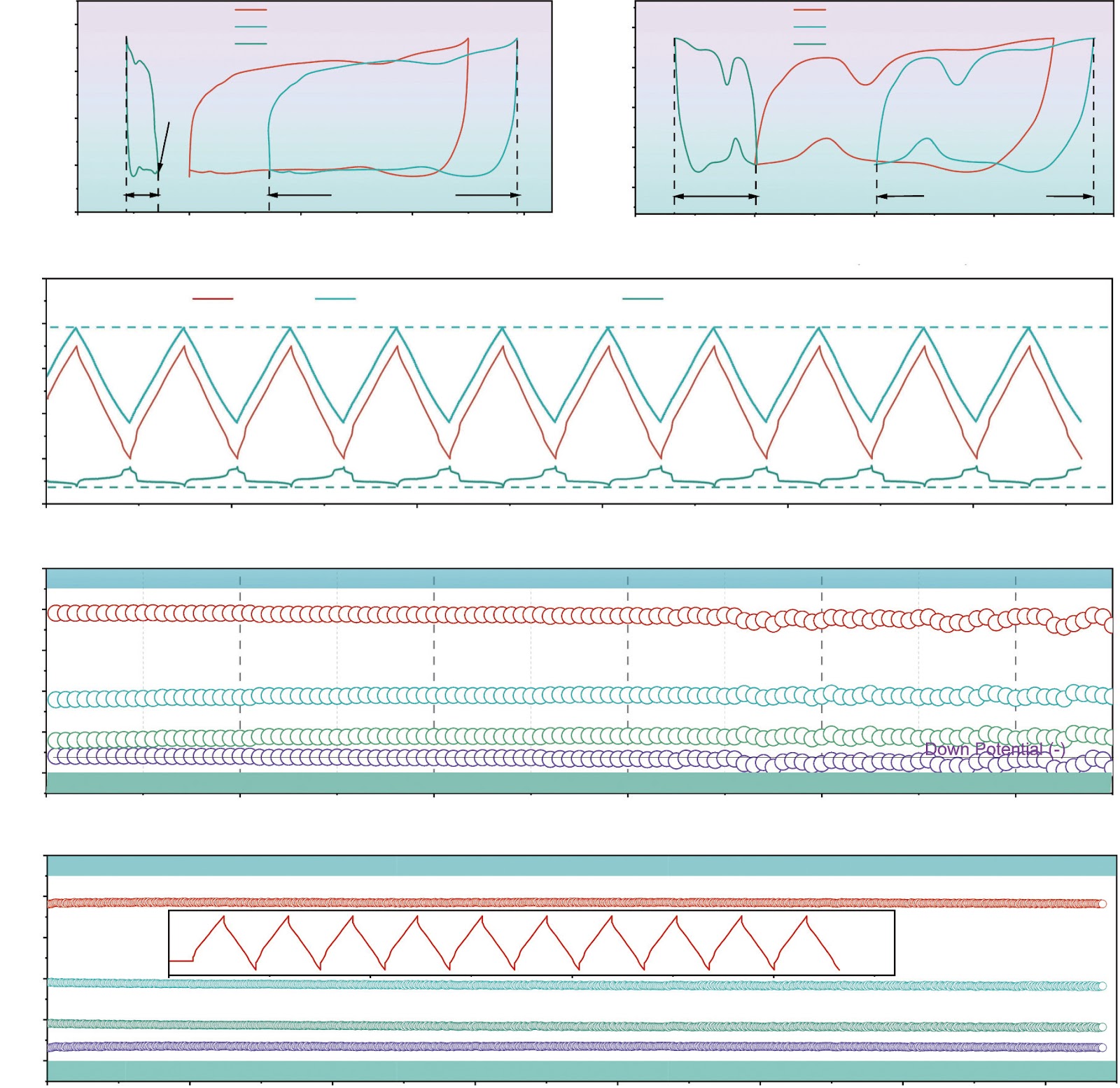
Functionalized carbon dots from natural precursors for environmental remediation and renewable energy technologies
Graphical Abstract
Original ResearchVol 40, Issue 1 • pp. 100-112DOI: 10.1016/S1872-5805(NCM2026-41-02-05)Jan 15, 2025

Fe3C-coated nitrogen-doped CNT/cattail-derived carbon microtube composites for efficient microwave absorption

Authors: HUANG Fei, WU Peikun, WANG Chang, ZHANG Min, WANG Zhongliao, LIU Qiangchun, KONG Xiangkai

Due to the inherent limited dielectric loss of carbon materials, their attenuation ability and impedance matching are often unsatisfactory. To overcome these problems, hierarchical structures and combined microwave loss mechanisms have attracted considerable attention in the development of high performance microwave absorbers. In this work, biomass cattail was used as a sustainable precursor to synthesize nitrogen-doped carbon nanotube arrays decorated with Fe3C nanoparticles by chemical vapor deposition. The resulting cattail-derived carbon-based tubular composites (Fe3C@NCNTs/CMTs) feature a unique Fe3C-coated, nitrogen-doped carbon nanotube structure. The influence of crystallinity, tuned by calcination at different temperatures, on microwave absorption was investigated. Remarkably, at 800 °C, Fe3C@NCNTs/CMTs achieved a minimum reflection loss of –35.8 dB and an effective absorption bandwidth of 7.02 GHz at a thickness of only 1.7 mm, even at an ultralow filler loading of 10%, effectively covering the entire Ku band and part of the X band. The excellent microwave absorption performance is attributed to the combined contribution of increased magnetic loss and multiple dielectric polarization mechanisms. This study shows a promising strategy for designing biomass-derived carbon-based broadband microwave absorbing materials.

Fe3C-coated nitrogen-doped CNT/cattail-derived carbon microtube composites for efficient microwave absorption
Graphical Abstract
Original ResearchVol 40, Issue 1 • pp. 100-112DOI: 10.1016/S1872-5805(NCM2025-2-1)Jan 15, 2025

A review of ultrafast supercapacitors for AC-line filtering

Authors: SUN Qian, FAN Ya-feng, XIE Li-jing, WANG Zhen-bing, HUANG Xian-hong, SU Fang-yuan, CHEN Cheng-meng

Filter capacitors play an important role in alternating current (AC)-line filtering for stabilizing voltage, suppressing harmonics, and improving power quality. However, traditional aluminum electrolytic capacitors (AECs) suffer from a large size, short lifespan, low power density, and poor reliability, which limits their use. In contrast, ultrafast supercapacitors (SCs) are ideal for replacing commercial AECs because of their extremely high power densities, fast charging and discharging, and excellent high-frequency response. We review the design principles and key parameters for ultrafast supercapacitors and summarize research progress in recent years from the aspects of electrode materials, electrolytes, and device configurations. The preparation, structures, and frequency response performance of electrode materials mainly consisting of carbon materials such as graphene and carbon nanotubes, conductive polymers, and transition metal compounds, are focused on. Finally, future research directions for ultrafast SCs are suggested.

A review of ultrafast supercapacitors for AC-line filtering
Graphical Abstract
Original ResearchVol 40, Issue 1 • pp. 100-112DOI: 10.1016/S1872-5805(NCM2025-2-3)Jan 15, 2025

A review of the use of electrospinning in the preparation of flexible lithium-ion batteries

Authors: XING Jia-yi, ZHANG Yu-zhuo, FENG Shu-xin, JI Ke-meng

Electrospinning technology has emerged as a promising method for fabricating flexible lithium-ion batteries (FLIBs) due to its ability to create materials with desirable properties for energy storage applications. FLIBs, which are foldable and have high energy densities, are becoming increasingly important as power sources for wearable devices, flexible electronics, and mobile energy applications. Carbon materials, especially carbon nanofibers, are pivotal in improving the performance of FLIBs by increasing electrical conductivity, chemical stability, and surface area, as well as reducing costs. These materials also play a significant role in establishing conducting networks and improving structural integrity, which are essential for extending the cycle life and enhancing the safety of the batteries. This review considers the role of electrospinning in the fabrication of critical FLIB components, with a particular emphasis on the integration of carbon materials. It explores strategies to optimize FLIB performance by fine-tuning the electrospinning parameters, such as electric field strength, spinning rate, solution concentration, and carbonization process. Precise control over fiber properties is crucial for enhancing battery reliability and stability during folding and bending. It also highlights the latest research findings in carbon-based electrode materials, high-performance electrolytes, and separator structures, discussing the practical challenges and opportunities these materials present. It underscores the significant impact of carbon materials on the evolution of FLIBs and their potential to shape future energy storage technologies.
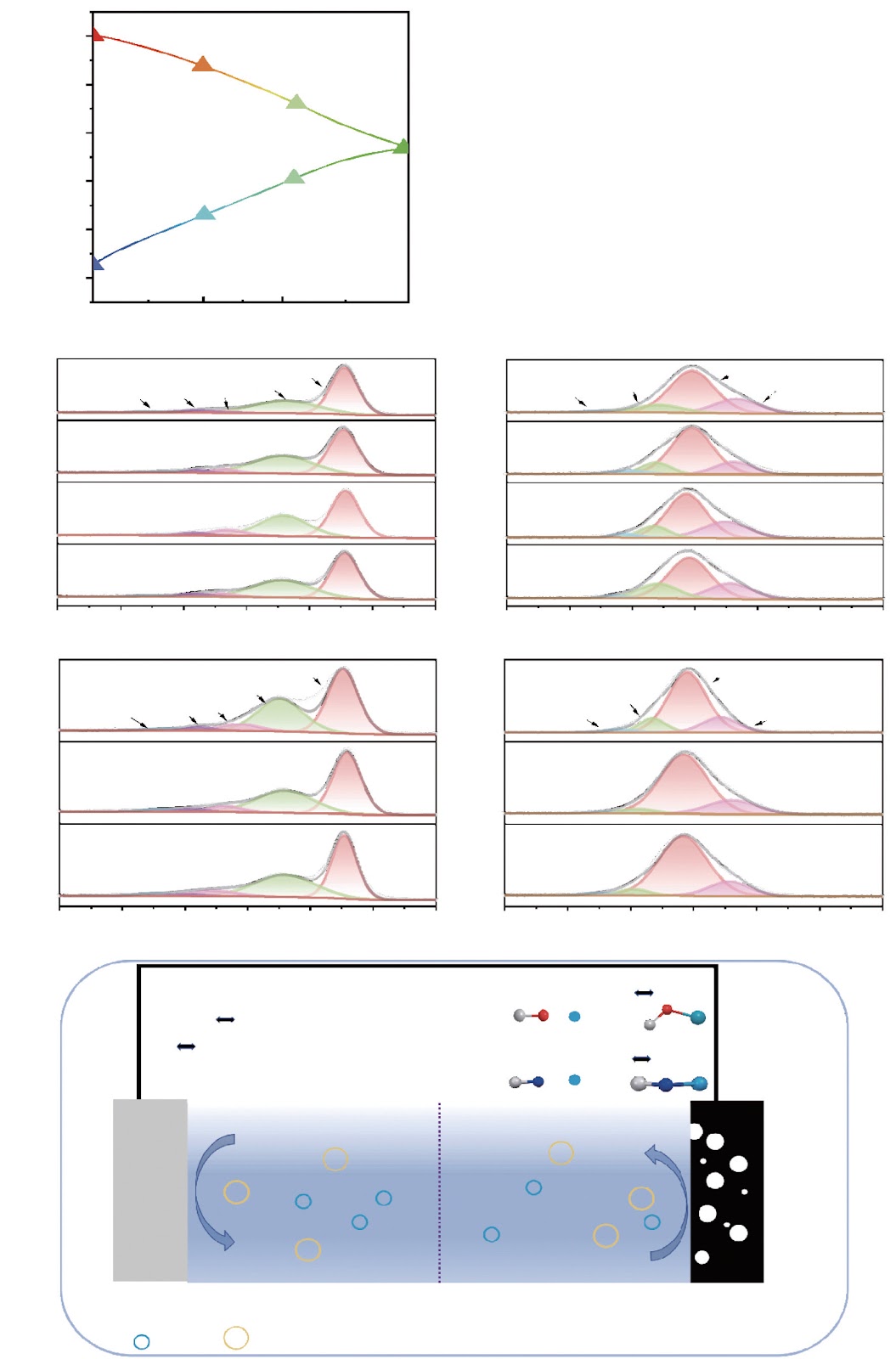
A review of the use of electrospinning in the preparation of flexible lithium-ion batteries
Graphical Abstract
Original ResearchVol 40, Issue 1 • pp. 100-112DOI: 10.1016/S1872-5805(NCM2025-2-2)Jan 15, 2025

Low-value biomass-derived carbon composites for electromagnetic wave absorption and shielding: A review

Authors: Sumanta Sahoo, Rajesh Kumar, Sung Soo Han

The rising concern over electromagnetic (EM) pollution is responsible for the rapid progress in EM interference (EMI) shielding and EM wave absorption in the last few years, and carbon materials with a large surface area and high porosity have been investigated. Compared to other carbon materials, biomass-derived carbon (BC) are considered efficient and eco-friendly materials for this purpose. We summarize the recent advances in BC materials for both EMI shielding and EM wave absorption. After a brief overview of the synthesis strategies of BC materials and a precise outline of EM wave interference, strategies for improving their EMI shielding and EM wave absorption are discussed. Finally, the existing challenges and the future prospects for such materials are briefly summarized.

Low-value biomass-derived carbon composites for electromagnetic wave absorption and shielding: A review
Graphical Abstract
Original ResearchVol 40, Issue 1 • pp. 100-112DOI: 10.1016/S1872-5805(NCM2025-40-01-13)Jan 15, 2025

N/O co-doped microporous carbon as a high-performance electrode for supercapacitors

Authors: YAN Jing-jing, FANG Xiao-hao, YAO De-zhou, ZHU Cheng-wei, SHI Jian-jun, QIAN Shan-shan

Carbon materials with adjustable porosity, controllable heteroatom doping and low-cost have been received considerable attention as supercapacitor electrodes. However, using carbon materials with abundant micropores, a high surface area and a high-dopant content for an aqueous supercapacitor with a high energy output still remains a challenge. We report the easy synthesis of interconnected carbon spheres by a polymerization reaction between p-benzaldehyde and 2,6-diaminopyridine. The synthesis involves adjusting the mass ratio of the copolymer and KOH activator to achieve increased charge storage ability and high energy output, which are attributed to the high ion-accessible area provided by the large number of micropores, high N/O contents and rapid ion diffusion channels in the porous structure. At a PMEC∶KOH mass ratio of 1∶1, the high electrolyte ion-adsorption area (2599.76 m2 g−1) and the N/O dopant atoms of the conductive framework of a typical carbon electrode produce a superior specific capacity (303.2 F g−[email protected] A g−1) giving an assembled symmetric capacitor a high energy delivery of 11.3 Wh kg−1@250 W kg−1. This study presents a simple strategy for synthesizing microporous carbon and highlights its potential use in KOH-based supercapacitors.

N/O co-doped microporous carbon as a high-performance electrode for supercapacitors
Graphical Abstract
Original ResearchVol 40, Issue 1 • pp. 100-112DOI: 10.1016/S1872-5805(NCM2025-40-01-08)Jan 15, 2025

The low-temperature deposition of a zincophilic carbon layer on the Zn foil for long-life zinc metal batteries

Authors: LI Chun-yu, ZHANG Ming-hui, LANG Xin-yue, CHEN Ye, DONG Yan-feng

Aqueous zinc metal batteries (ZMBs) which are environmentally benign and cheap can be used for grid-scale energy storage, but have a short cycling life mainly due to the poor reversibility of zinc metal anodes in mild aqueous electrolytes. A zincophilic carbon (ZC) layer was deposited on a Zn metal foil at 450 °C by the up-stream pyrolysis of a hydrogen-bonded supramolecular substance framework, assembled from melamine (ME) and cyanuric acid (CA). The zincophilic groups (C=O and C=N) in the ZC layer guide uniform zinc plating/stripping and eliminate dendrites and side reactions. so that assembled symmetrical batteries (ZC@Zn//ZC@Zn) have a long-term service life of 2500 h at 1 mA cm−2 and 1 mAh cm−2, which is much longer than that of bare Zn anodes (180 h). In addition, ZC@Zn//V2O5 full batteries have a higher capacity of 174 mAh g−1 after 1200 cycles at 2 A g−1 than a Zn//V2O5 counterpart (100 mAh g−1). The strategy developed for the low-temperature deposition of the ZC layer is a new way to construct advanced zinc metal anodes for ZMBs.

The low-temperature deposition of a zincophilic carbon layer on the Zn foil for long-life zinc metal batteries
Graphical Abstract
Original ResearchVol 40, Issue 1 • pp. 100-112DOI: 10.1016/S1872-5805(NCM2025-40-01-06)Jan 15, 2025

The use of an oxidized carbon nanotube film to control Zn deposition and eliminate dendrite formation in a Zn ion battery

Authors: LI Pin-xiang, YI Zhe-han, WANG Ye-xing, HE Chang, LIANG Ji, HOU Feng

Aqueous zinc ion batteries are regarded as one of the most promising candidates for large-scale energy storage due to their high safety, cost-effectiveness, and environmental friendliness. However, uncontrolled zinc dendrite growth and side reactions of the zinc anode decrease the stability of Zn batteries. We report the synthesis of an air-oxidized carbon nanotube (O-CNT) film by chemical vapor deposition followed by heat treatment in air which is used as a protective layer on the Zn foil to suppress zinc dendrite growth. The increase in the hydrophilicity of the O-CNT film caused by air oxidation facilitates zinc deposition between the film and the anode instead of deposition on the film surface. The porous structure of the O-CNT film homogenizes the Zn2+ ion flux and the electric field on the surface of the Zn foil, leading to the uniform deposition of Zn. As a result, a O-CNT@Zn symmetric cell has a much better cycling stability with a life of more than 3000 h at 1 mA cm−2 with a capacity of 1 mAh cm−2, and values of more than 2000 h and 1 mAh cm−2 at 5 mA cm−2. In addition, a O-CNT@Zn || Mn2+ inserted hydrated vanadium pentoxide (MnVOH) full cell has a better rate performance than a Zn || MnVOH cell, achieving a high discharge capacity of 194 mAh g−1 at a high current density of 8 A g−1. In a long-term cycling test, the O-CNT@Zn || MnVOH full cell has a capacity retention of 58.8% after 2000 cycles at a current density of 5 A·g−1.

The use of an oxidized carbon nanotube film to control Zn deposition and eliminate dendrite formation in a Zn ion battery
Graphical Abstract
Original ResearchVol 40, Issue 1 • pp. 100-112DOI: 10.1016/S1872-5805(NCM2025-40-01-10)Jan 15, 2025

A B,N co-doped carbon nanotube array with anchored MnO2 nanosheets as a flexible cathode for aqueous zinc-ion batteries

Authors: YUAN Yan-bing, ZHAO Zong-bin, BI Hong-hui, ZHANG Run-meng, WANG Xu-zhen, QIU Jie-shan

For rechargeable aqueous zinc-ion batteries (ZIBs), the design of nanocomposites comprised of electrochemically active materials and carbon materials with novel structures has great promise in addressing the issue of electrical conductivity and structural stability in the electrode materials during electrochemical cycling. We report the production of a novel flexible electrode material, by anchoring MnO2 nanosheets on a B,N co-doped carbon nanotube array (BNCNTs) grown on carbon cloth (BNCNTs@MnO2), which was fabricated by in-situ pyrolysis and hydrothermal growth. The generated BNCNTs were strongly bonded to the surface of the carbon fibers in the carbon cloth which provides both excellent electron transport and ion diffusion, and improves the stability and durability of the cathode. Importantly, the BNCNTs offer more active sites for the hydrothermal growth of MnO2, ensuring a uniform distribution. Electrochemical tests show that BNCNTs@MnO2 delivers a high specific capacity of 310.7 mAh g−1 at 0.1 A g−1, along with excellent rate capability and outstanding cycling stability, with a 79.7% capacity retention after 8000 cycles at 3 A g−1.

A B,N co-doped carbon nanotube array with anchored MnO2 nanosheets as a flexible cathode for aqueous zinc-ion batteries
Graphical Abstract
Original ResearchVol 40, Issue 1 • pp. 100-112DOI: 10.1016/S1872-5805(NCM2025-40-01-01)Jan 15, 2025

Advances in the use of biomass-derived carbons for sodium-ion batteries

Authors: SUN Mei-ci, QI Shuo-lin, ZHAO Yun-he, CHEN Chun-xia, TAN Li-chao, HU Zhong-li, WU Xiao-liang, ZHANG Wen-li

Sodium-ion batteries (SIBs) have emerged as a promising alternative to commercial lithium-ion batteries because of the similar properties of Li and Na as well as the abundance and accessibility of sodium resources. The development of anode materials with a high capacity, excellent rate performance, and long cycle life is the key to the industrialization of SIBs. Biomass-derived carbon (BDC) anode materials synthesized from resource-rich, low-cost, and renewable biomass have been extensively researched and their excellent sodium storage performance has been proven, making them the most promising new low-cost and high-performance anode material for SIBs. This review first introduces the sources of BDCs, including waste biomass such as plants, animals, and microorganisms, and then describes several methods for preparing BDC anode materials, including carbonization, chemical activation, and template methods. The storage mechanism and kinetic process of Na+ in BDCs are then considered as well as their structure control. The electrochemical properties of sodium-ion storage in BDCs with different structures are examined, and suggestions for future research are made.

Advances in the use of biomass-derived carbons for sodium-ion batteries
Graphical Abstract
Original ResearchVol 40, Issue 1 • pp. 100-112DOI: 10.1016/S1872-5805(NCM2025-40-01-11)Jan 15, 2025

P, N co-doped hollow carbon nanospheres prepared by micellar co-polymerization for increased hydrogen evolution in alkaline water

Authors: HAN Yi-meng, XIONG Hao, YANG Jia-ying, WANG Jian-gan, XU Fei

The design of cost-effective and efficient metal-free carbon-based catalysts for the hydrogen evolution reaction (HER) is of great significance for increasing the production of clean hydrogen by the electrolysis of alkaline water. Precise control of the electronic structure by heteroatom doping has proven to be efficient for increasing catalytic activity. Nevertheless, both the structural characteristics and the underlying mechanism are not well understood, especially for doping with two different atoms, thus limiting the use of these catalysts. We report the production of phosphorus and nitrogen co-doped hollow carbon nanospheres (HCNs) by the copolymerization of pyrrole and aniline at a Triton X-100 micelle-interface, followed by doping with phytic acid and carbonization. The unique pore structure and defect-rich framework of the HCNs expose numerous active sites. Crucially, the combined effect of graphitic nitrogen and phosphorus-carbon bonds modulate the local electronic structure of adjacent C atoms and facilitates electron transfer. As a result, the HCN carbonized at 1100 °C exhibited superior HER activity and an outstanding stability (70 h at a current density of 10 mA cm−2) in alkaline water, because of the large number of graphitic nitrogen and phosphorus-carbon bonds.

P, N co-doped hollow carbon nanospheres prepared by micellar co-polymerization for increased hydrogen evolution in alkaline water
Graphical Abstract
Original ResearchVol 40, Issue 1 • pp. 100-112DOI: 10.1016/S1872-5805(NCM2025-40-01-07)Jan 15, 2025

The use of a ternary metal sulfide loading on carbon fibers as the sulfur host for high performance low-temperature lithium sulfur batteries

Authors: HE Xin, ZUO Huai-yang, XIAO Ru, QU Zhuo-yan, SUN Zhen-hua, WANG Bao, Li Feng

The use of lithium-sulfur (Li-S) batteries is limited by sulfur redox reactions involving multi-phase transformations, especially at low temperatures. To address this issue, we report a material (FCNS@NCFs) consisting of nitrogen-doped carbon fibers loaded with a ternary metal sulfide ((Fe, Co, Ni)9S8) for use as the sulfur host in Li-S batteries. This material was prepared using transfer blot filter paper as the carbon precursor, thiourea as the source of nitrogen and sulfur, and FeCl3·6H2O, CoCl2·6H2O and NiCl2·6H2O as the metal ion sources. It was synthesized by an impregnation method followed by calcination. The nitrogen doping significantly increased the conductivity of the host, and the metal sulfides have excellent catalytic activities. Theoretical calculations, and adsorption and deposition experiments show that active sites on the surface of FCNS@NCFs selectively adsorb polysulfides, facilitate rapid adsorption and conversion, prevent cathode passivation and inhibit the polysulfide shuttling. The FCNS@NCFs used as the sulfur host has excellent electrochemical properties. Its initial discharge capacity is 1639.0 mAh g−1 at 0.2 C and room temperature, and it remains a capacity of 1255.1 mAh g−1 after 100 cycles. At −20 °C, it has an initial discharge capacity of 1578.5 mAh g−1 at 0.2 C, with a capacity of 867.5 mAh g−1 after 100 cycles. Its excellent performance at both ambient and low temperatures suggests a new way to produce high-performance low-temperature Li-S batteries.

The use of a ternary metal sulfide loading on carbon fibers as the sulfur host for high performance low-temperature lithium sulfur batteries
Graphical Abstract
Original ResearchVol 40, Issue 1 • pp. 100-112DOI: 10.1016/S1872-5805(NCM2025-40-01-09)Jan 15, 2025

Ultra-stable lithium-sulfur batteries using nitrogen-doped porous carbon nanosheets implanted with both Fe and Ni

Authors: Reddeppa Nadimicherla, TANG You-chen, LU Yu-heng, LIU Ru-liang

The major problem with lithium-sulfur (Li-S) batteries is their poor cycling stability because of slow redox kinetics in the cathode and the growth of lithium dendrites on the anode. We report the production of 2D porous carbon nanosheets doped with both Fe and Ni (Fe/Ni-N-PCNSs) by an easy and template-free approach that solve this problem. Because of their ultrathin porous 2D structure and uniform distribution of Fe and Ni dopants, they capture polysulfides, speed up the sulfur redox reaction, and improve the material's lithiophilicity, greatly suppressing the shuttling of polysulfides and dendrite growth on the lithium anode. As a result, it has an exceptional performance as a stable host for elemental sulfur and metallic lithium, producing a record long life of 1000 cycles with a very small capacity decay of 0.00025% per cycle in a Li-S battery and an excellent cycling stability of over 850 h with a small overpotential of >72 mV in a lithium metal battery. This work suggests the use of multifunctional-based 2D porous carbon nanosheets as a stable host for both elemental sulfur and metallic lithium to improve the Li-S battery performance.

Ultra-stable lithium-sulfur batteries using nitrogen-doped porous carbon nanosheets implanted with both Fe and Ni
Graphical Abstract
Original ResearchVol 40, Issue 1 • pp. 100-112DOI: 10.1016/S1872-5805(NCM2026-41-01-02)Jan 15, 2025

A review of nanodiamond-based photocatalysts for solar energy conversion

Authors: ZHANG Wan, CHENG Xiangxiang, GUO Kesheng, ZHANG Hansong, LI Lanxiao, ZHAO Yongbing, ZHU Jiaqi, WANG Yongjie

Photocatalysis is an important technology for using solar energy to produce hydrogen, convert CO2 to synthetic fuels, and decrease persistent pollutant. However, conventional photocatalysts have limitations, including poor spectral absorption, inefficient charge separation, and structural instability under operational stress, which demand innovative durable materials with tailored electronic properties. Nanodiamond (ND) has recently been recognized as a suitable material because of its exceptional chemical stability, superior charge carrier mobility, and possible surface functionalization. While its intrinsic wide bandgap limits its response to visible-light, different methods have been demonstrated to activate its catalytic potential. Here, several emerging strategies for improving the catalytic performance of ND-based photocatalytic systems are summarized, including surface functionalization, plasmonic hybridization, heteroatom doping, and heterostructure design. And the structure-activity relationship and design principle are proposed to improve the light harvesting, charge transport, and redox kinetics for constructing high efficiency ND-based photocatalysts used in the renewable energy and environmental industries.

A review of nanodiamond-based photocatalysts for solar energy conversion
Graphical Abstract
Original ResearchVol 40, Issue 1 • pp. 100-112DOI: 10.1016/S1872-5805(NCM2026-41-01-04)Jan 15, 2025

Selecting the molecular components of a pitch to produce a hard carbon anode with a high sodium storage capacity

Authors: WANG Peixiang, WANG Bin, LI Yuqi, WANG Wanli, SUN Yi, SONG Longsen, LIU Chenhao, P. Iamprasertkun, HU Han, WU Mingbo

Pitch is an excellent precursor for the production of hard carbon, with pre-oxidation a crucial process in the fabrication. The structural changes in the different molecular components of pitch during thermochemical treatment are a key factor in determining the sodium-ion storage of pitch-based hard carbon anodes. We investigated the effects of the different molecular structures in the asphaltene precursor, including aromatic rings and aliphatic chains, on the sodium-ion storage behavior of the resulting carbon. We found that polar oxygen functional groups limit the steric hindrance caused by the aromatic rings in pitch, and thus facilitate the introduction of cross-linked structures. During high-temperature carbonization, aromatic rings form a rigid carbon framework that prevents the rearrangement of ordered carbon layers, leading to a short-range disordered carbon structure and promotes the production of closed pores. For example, a material prepared from asphaltene, which contains a large number of oxygen-containing functional groups and macromolecular aromatic rings, using pre-oxidation at 300 °C and carbonization at 1200 °C had a reversible capacity of 316.7 mAh g−1 when used as the anode for sodium ion batteries. Our research provides a theoretical basis for the selection of raw materials for the development of high-quality pitch-based hard carbons.

Selecting the molecular components of a pitch to produce a hard carbon anode with a high sodium storage capacity
Graphical Abstract
Original ResearchVol 40, Issue 1 • pp. 100-112DOI: 10.1016/S1872-5805(NCM2026-41-01-03)Jan 15, 2025

A review of the standardized measurement of the characteristics of graphene-based materials

Authors: ZHANG Donghui, LI Wan, OU Bingxian, WANG Liangwang, GE Guanglu

Standardization is necessary for the early industrialization of the new materials and technology. It is achieved by having agreed practices for the measurement of properties and other characteristics. The promising use of graphene-based materials in fields like electronics, energy, and composites has resulted in standards for their nomenclature, the measurement of key characteristics, and their specification, etc. Among these, standards for measuring the key characteristics are crucial. The critical parameters are the number of layers, the type and concentration of defects and functional groups, elemental composition, sheet resistance, and carrier mobility. Standards for characterizing these have been analyzed by the International Organization for Standardization Technical Committee in ISO/TC229 and the International Electrotechnical Commission Technical Committee in IEC/TC113. These give details of applicable or preferred samples, the fundamental principles of the techniques, specific precautions, and points for attention in the relevant standards. The pivotal role of the ISO/TC229 and IEC/TC113 standards is considered and challenges and future trends are outlined.

A review of the standardized measurement of the characteristics of graphene-based materials
Graphical Abstract
Original ResearchVol 40, Issue 1 • pp. 100-112DOI: 10.1016/S1872-5805(NCM2025-40-01-05)Jan 15, 2025

Near-infrared carbon dots: pioneering emerging frontiers in biomedical applications

Authors: HE Qian, YANG Yan-li, LI Rui-jiao, MA Dan, ZHANG Li-yun

Carbon dots (CDs) are fluorescent carbon-based nanomaterials with sizes smaller than 10 nm, that are renowned for their exceptional properties, including superior anti-photobleaching, excellent biocompatibility, and minimal toxicity, which have received significant interest. Near-infrared (NIR) light has emerged as an ideal light source in the biological field due to its advantages of minimal scattering and absorption, long wavelength emission, increased tissue penetration, and reduced interference from biological backgrounds. CDs with efficient absorption and/or emission characteristics in the NIR spectrum have shown remarkable promise in biomedical uses. This study provides a comprehensive overview of the preparation methods and wavelength modulation strategies for near-infrared CDs and reviews research progress in their use in the areas of biosensing, bioimaging, and therapy. It also discusses current challenges and clinical prospects, aimed at deepening our understanding of the subject and promoting further advances in this field.

Near-infrared carbon dots: pioneering emerging frontiers in biomedical applications
Graphical Abstract
Original ResearchVol 40, Issue 1 • pp. 100-112DOI: 10.1016/S1872-5805(NCM2025-40-01-03)Jan 15, 2025

A review of carbon-based hybrid materials for supercapacitors

Authors: Theodore Azemtsop Manfo, Hannu Laaksonen

Supercapacitors are gaining popularity due to their high cycling stability, power density, and fast charge and discharge rates. Researchers are exploring electrode materials, electrolytes, and separators for cost-effective energy storage systems. Advances in materials science have led to the development of hybrid nanomaterials, such as combining filamentous carbon forms with inorganic nanoparticles, to create new charge and energy transfer processes. Notable materials for electrochemical energy-storage applications include MXenes, 2D transition metal carbides, and nitrides, carbon black, carbon aerogels, activated carbon, carbon nanotubes, conducting polymers, carbon fibers, and nanofibers, and graphene, because of their thermal, electrical, and mechanical properties. Carbon materials mixed with conducting polymers, ceramics, metal oxides, transition metal oxides, metal hydroxides, transition metal sulfides, transition metal dichalcogenide, metal sulfides, carbides, nitrides, and biomass materials have received widespread attention due to their remarkable performance, eco-friendliness, cost-effectiveness, and renewability. This article explores the development of carbon-based hybrid materials for future supercapacitors, including electric double-layer capacitors, pseudocapacitors, and hybrid supercapacitors. It investigates the difficulties that influence structural design, manufacturing (electrospinning, hydrothermal/solvothermal, template-assisted synthesis, electrodeposition, electrospray, 3D printing) techniques and the latest carbon-based hybrid materials research offer practical solutions for producing high-performance, next-generation supercapacitors.

A review of carbon-based hybrid materials for supercapacitors
Graphical Abstract
Original ResearchVol 40, Issue 1 • pp. 100-112DOI: 10.1016/S1872-5805(NCM2025-40-01-02)Jan 15, 2025

Recent progress on the use of lignin-based porous carbon in supercapacitors

Authors: ZHA Ding-chen, WANG Jia-heng, Hao Rui-xiang, Wu Yun-feng, LI Xiu-he, ZHAO Jia-wen, LI Wen, PIAO Wen-xiang, JIANG Nan-zhe

With the development of electronics and portable devices, there is a significant drive to develop electrode materials for supercapacitors that are lightweight, economical, and provide high energy and power densities. Lignin-based porous carbons have recently been extensively studied for energy storage applications because of their characteristics of large specific surface area, easy doping, and high conductivity. Significant progress in the synthesis of porous carbons derived from lignin, using different strategies for their preparation and modification with heteroatoms, metal oxides, metal sulfides, and conductive polymers is considered and their electrochemical performances and ion storage mechanisms are discussed. Considerable focus is directed towards the challenges encountered in using lignin-based porous carbons and the ways to optimize specific capacity and energy density for supercapacitor applications. Finally, the limitations of existing technologies and research directions for improving the performance of lignin-based carbons are discussed.

Recent progress on the use of lignin-based porous carbon in supercapacitors
Graphical Abstract
Original ResearchVol 40, Issue 1 • pp. 100-112DOI: 10.1016/S1872-5805(NCM2025-40-01-04)Jan 15, 2025

A review of high thermal conductivity carbon-based materials for microwave absorption materials

Authors: LI Zheng-xuan, WU Xi, JIANG Bo, YANG Wang, DONG Jun-yan, DING Zhong-zhen, ZHANG Chen, DU Shao-xiong, LI Si-yuan, FENG Ruo-yao, LI Yong-feng

The ever-increasing integration of electronic devices has inevitably caused electromagnetic interference and heat accumulation problems, and dual-function materials with both a high thermal conductivity and high electromagnetic wave absorption (EWA) are regarded as an effective strategy for solving these problems. Carbon materials are widely used as thermal and EWA fillers due to their excellent conductivity and outstanding thermal conduction properties, and have become a research hotspot in the field of high thermal conductivity, microwave absorbing materials in recent years. The status of current research progress on carbon-based high thermal-conduction microwave absorption materials, including carbon fibers, carbon nanotubes, graphene and amorphous carbon, is reviewed, and the influence of the structure of the materials on their absorption and thermal conductivity properties, such as core-shell structure, three-dimensional network structure, and heteroatom doping, is also elaborated. Feasible solutions for the current problems with these materials are proposed, with the aim of providing valuable guidance for the future design of carbon-based high thermal conduction microwave absorbing materials.

A review of high thermal conductivity carbon-based materials for microwave absorption materials
Graphical Abstract