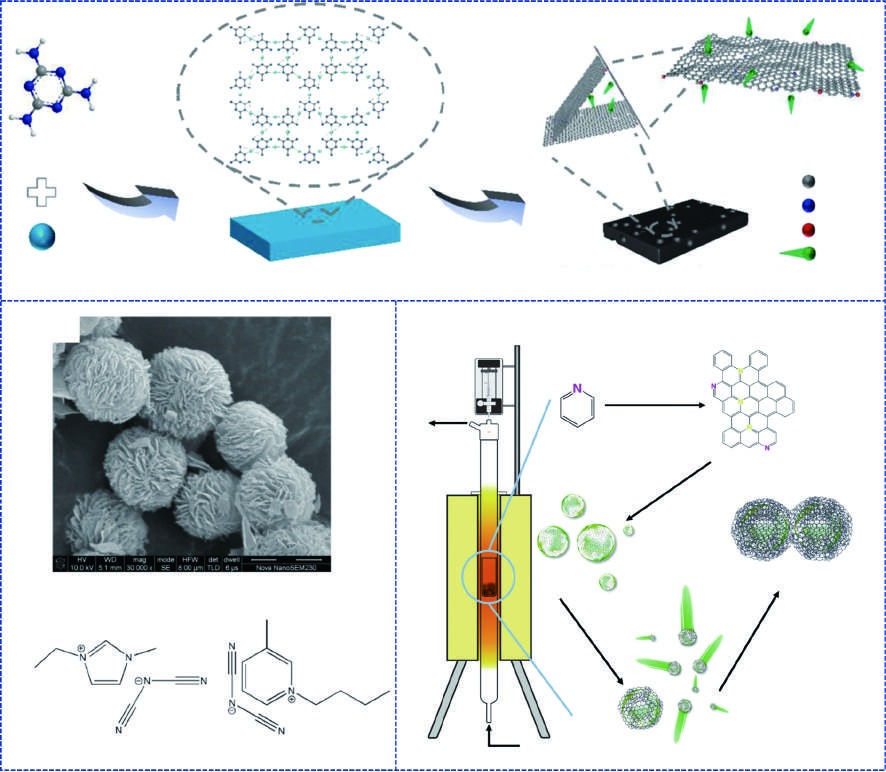
Key Takeaways & Executive Findings
- •• N-doping introduces defects that alter the electronic structure and electrochemical activity of carbon materials, enhancing their suitability for high-performance applications. • Various preparation methods, including in-situ techniques (direct pyrolysis, CVD, solvothermal, arc discharge) and post-treatment processes (heat treatment, plasma, ball-milling, chemical oxidation), enable tunable N content and configuration. • N content and configuration critically influence crystallinity, electronic conductivity, wettability, and chemical reactivity, which in turn determine sodium storage performance. • The review provides a comprehensive framework for optimizing N-doped carbon materials for sodium-ion batteries, highlighting current challenges and future research directions.
Abstract
Defect engineering by heteroatom doping gives carbon materials some new characteristics such as a different electronic structure and a high electrochemical activity, making them suitable for high-performance applications. N-doping has been widely investigated because of its similar atom radius to carbon, high electronegativity as well as many different configurations. We summarize the preparation methods and properties of N-doped carbon materials, and discuss their possible use in sodium ion storage. The relationships between N content/configuration and crystallinity, electronic conductivity, wettability, chemical reactivity as well as sodium ion storage performance are discussed.
1. Introduction
Carbon materials are widely used in many fields including optical components, electronic communication, biomedicine, water purification, gas separation, catalysts carriers, electrochemical devices, as well as composite materials owing to their abundant sources, diverse morphologies and stable physicochemical properties[1–3]. In particular, the consecutive discovery and application of nanocarbon materials such as fullerenes, carbon nanotubes, graphene propel carbon material science into a prominent research domain[4–6]. Recently, the rapid transformation of social energy structure from fossil fuels to clean energy (e.g., wind, solar and hydrogen energy) has promoted the development of energy conversion and storage devices. Due to the advantages of high electrochemical performance and low-cost, carbon materials have witnessed a resurgence in laboratory research and industrial production[7–9]. The microcrystalline structure of carbon materials (e.g., crystallite size, defects) determines their basic properties including pore structure, conductivity, mechanical properties, and chemical activity, which further significantly affects their practical application[10–12]. As the demand for enhanced performance of carbon materials, structure regulation has attracted more and more attention and becomes a research hotspot.
Defect engineering is a promising strategy for the structural design of carbon materials, encompassing the deliberate introduction of intrinsic (e.g., edges, vacancies, and Stone-Wales defects) and extrinsic defects (non-carbon components)[13–16]. Among them, heteroatom (e.g., N, B, S, P, O) doping and functional group modification are commonly used, which provide an opportunity for the controllable structure and performance optimization of carbon materials towards their diverse applications[17–21]. Especially, N possesses particular prominence for some main reasons[22–27]: (1) The similar atomic radius with C facilitates its substitution into the carbon skeleton; (2) Its high electronegativity provides n-type charge carriers and modulates the charge density of the around C, thereby influencing the electronic properties of carbon materials; (3) Multiplex N configurations can selectively endow carbon materials with some structure properties. Therefore, the structure and performance modification of carbon materials by N-doping have been extensively investigated, which need to be reviewed to provide a reference for the further research.
Loading authentic research manuscript (Pages 1–5)...
YUAN Ren-lu, HOU Ruo-yang, SHANG Lei, LIU Xue-wei, LI Ang, CHEN Xiao-hong, SONG Huai-he (2024). The preparation and properties of N-doped carbon materials and their use for sodium storage. New Carbon Materials. https://doi.org/10.1016/S1872-5805_N
Research & Educational Purpose Only:The translations, structured abstracts, analytical annotations, and data reports provided by SinoTechIntel are intended exclusively for academic research, internal corporate R&D, and educational benchmarking. They do not constitute formal engineering, chemical safety, legal, or professional advice.
Copyright & Intellectual Property Notice: Original copyright of the underlying source articles and experimental data remains with the respective authors, institutions, and original publishing journals. SinoTechIntel claims intellectual property only over its proprietary translations, analytical syntheses, and AEO structured enhancements in accordance with international fair use and academic citation principles.
Frequently Asked Questions
What are the main preparation methods for N-doped carbon materials?
The main preparation methods include in-situ techniques such as direct pyrolysis, chemical vapor deposition, solvothermal, and arc discharge, as well as post-treatment processes like heat treatment, plasma treatment, ball-milling, and chemical oxidation.
How does N-doping affect the properties of carbon materials?
N-doping introduces defects and alters the electronic structure, enhancing electrochemical activity. It also influences crystallinity, electronic conductivity, wettability, and chemical reactivity, which are crucial for applications like sodium storage.
Why is N-doping particularly suitable for sodium-ion storage?
N-doping creates active sites and improves the electronic conductivity and wettability of carbon materials, which enhances sodium ion adsorption and diffusion, leading to improved sodium storage performance.
What is the significance of N configuration in carbon materials?
Different N configurations (e.g., pyridinic, pyrrolic, graphitic) have distinct effects on the electronic properties and reactivity of carbon materials, allowing for tailored performance in various applications.
What are the current challenges in the research of N-doped carbon materials?
Challenges include precise control of N content and configuration, scalability of preparation methods, and understanding the structure-property relationships to optimize performance for practical applications.
Related Technical Papers & Translations
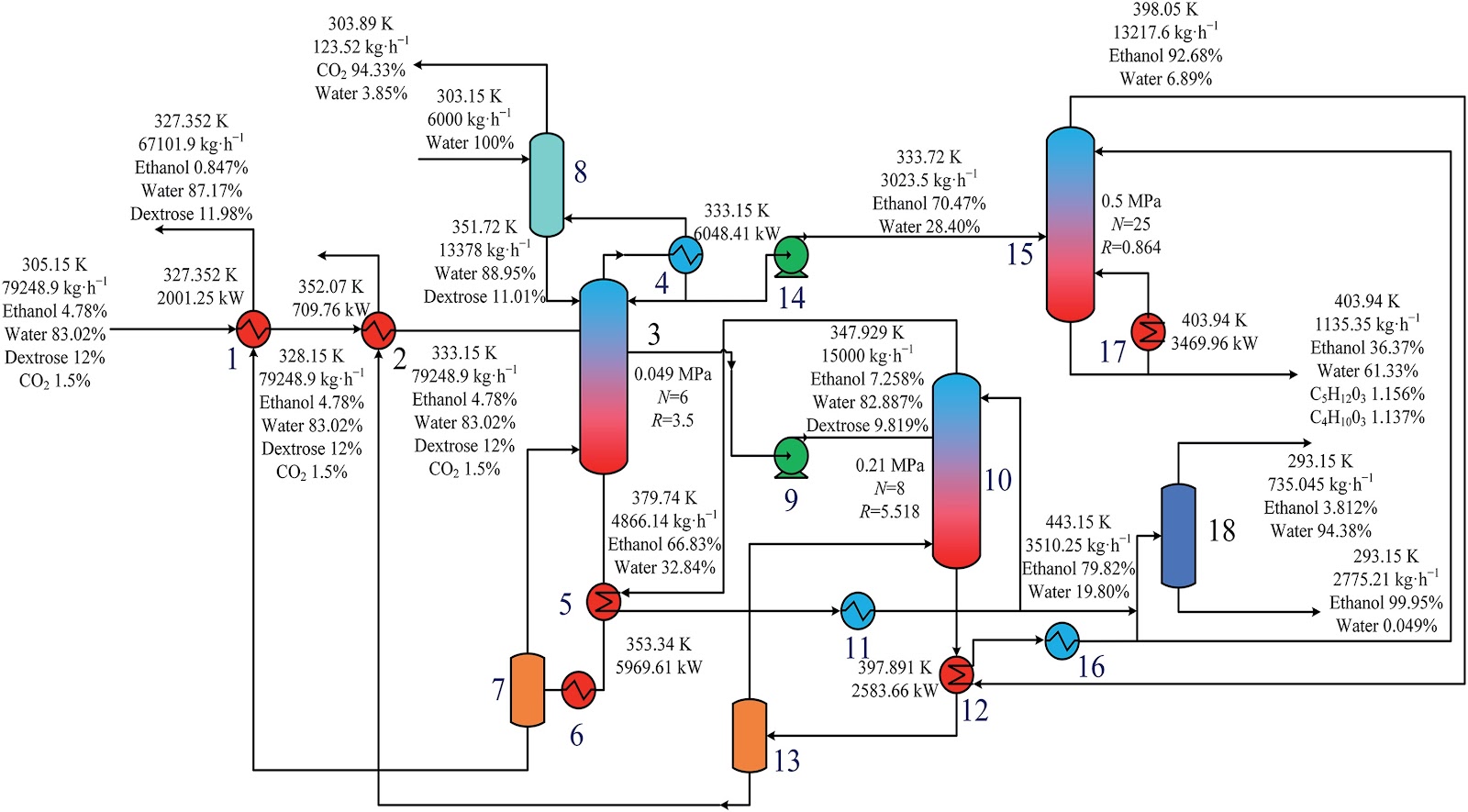
Design and optimization of a high-efficiency distillation process for cellulosic fuel ethanol integrated with thermal coupling and molecular sieve adsorption
To address the challenges of high energy consumption and prominent costs in the traditional three-columns distillation process for cellulosic fuel ethanol, a distillation—molecular sieve coupling separation process is proposed. This process integrates a three-column (crude distillation column, first distillation column, second distillation column) system with a 3A molecular sieve adsorption deep dehydration unit. A thermal coupling network is constructed via differential pressure design (steam from medium/high-pressure columns as mutual heat sources, reboiler liquid waste heat for feed preheating), and molecular sieve adsorption conditions are optimized. The study first performs a thermodynamic consistency test on the ethanol—water system, determines optimal non-random two-liquid (NRTL) model binary interaction parameters via experimental data regression for Aspen Plus simulation. Aiming at minimum total annual cost (TAC), Aspen Plus is used to optimize process parameters (theoretical tray number, feed location, reflux ratio, side-draw position, etc.). Economic analysis shows this process reduces CO2 emission costs by 27.56%, TAC by 15.58% (to 5.123 × 10⁶ USD·a-1), and increases ethanol purity to >99.6%, providing an effective solution for green, efficient separation.
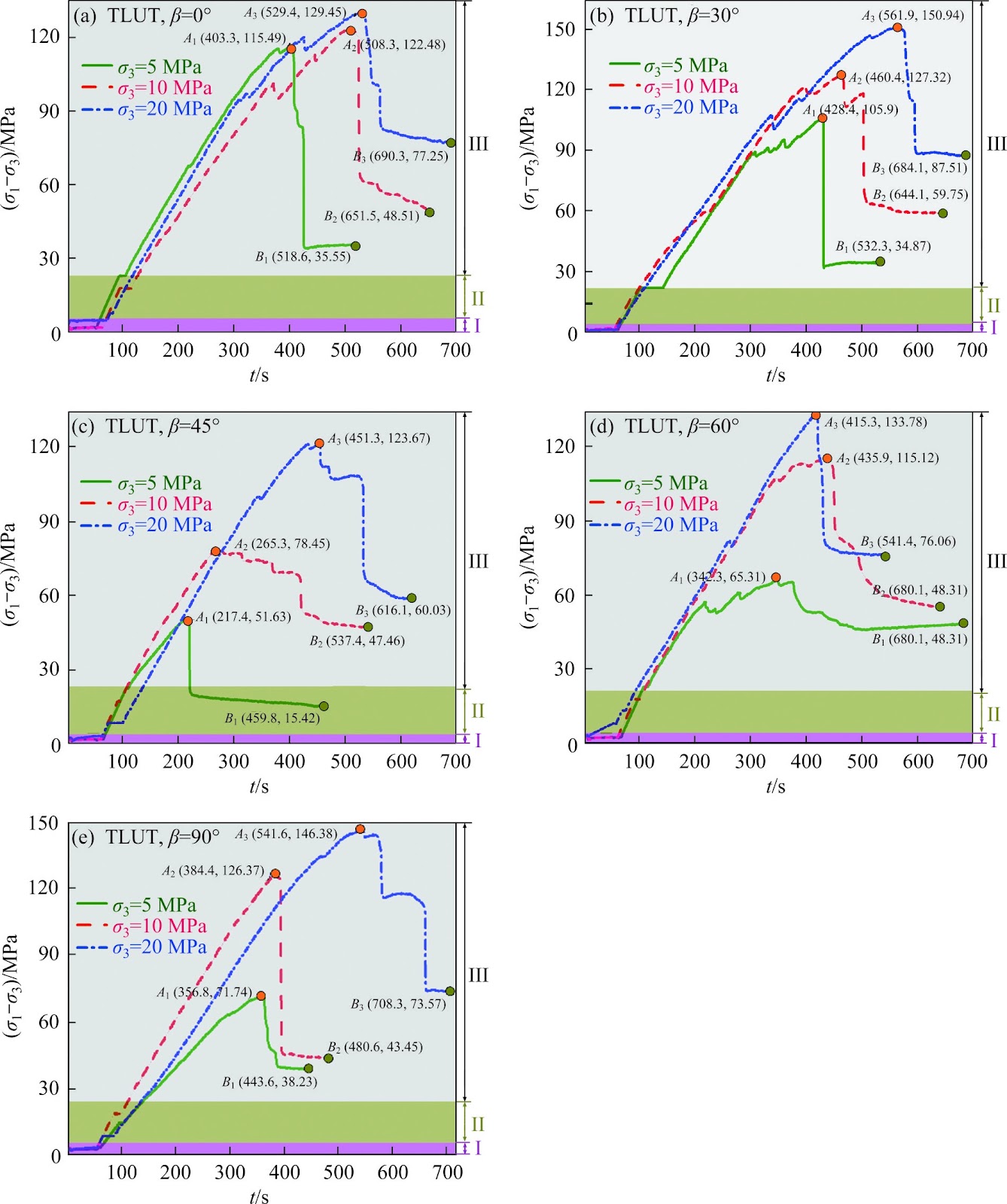
A cohesion loss model for determining residual strength of deep bedded sandstone
Rock residual strength, as an important input parameter, plays an indispensable role in proposing the reasonable and scientific scheme about stope design, underground tunnel excavation and stability evaluation of deep chambers. Therefore, previous residual strength models of rocks established were reviewed. And corresponding related problems were stated. Subsequently, starting from the effects of bedding and whole life-cycle evolution process, series of triaxial mechanical tests of deep bedded s
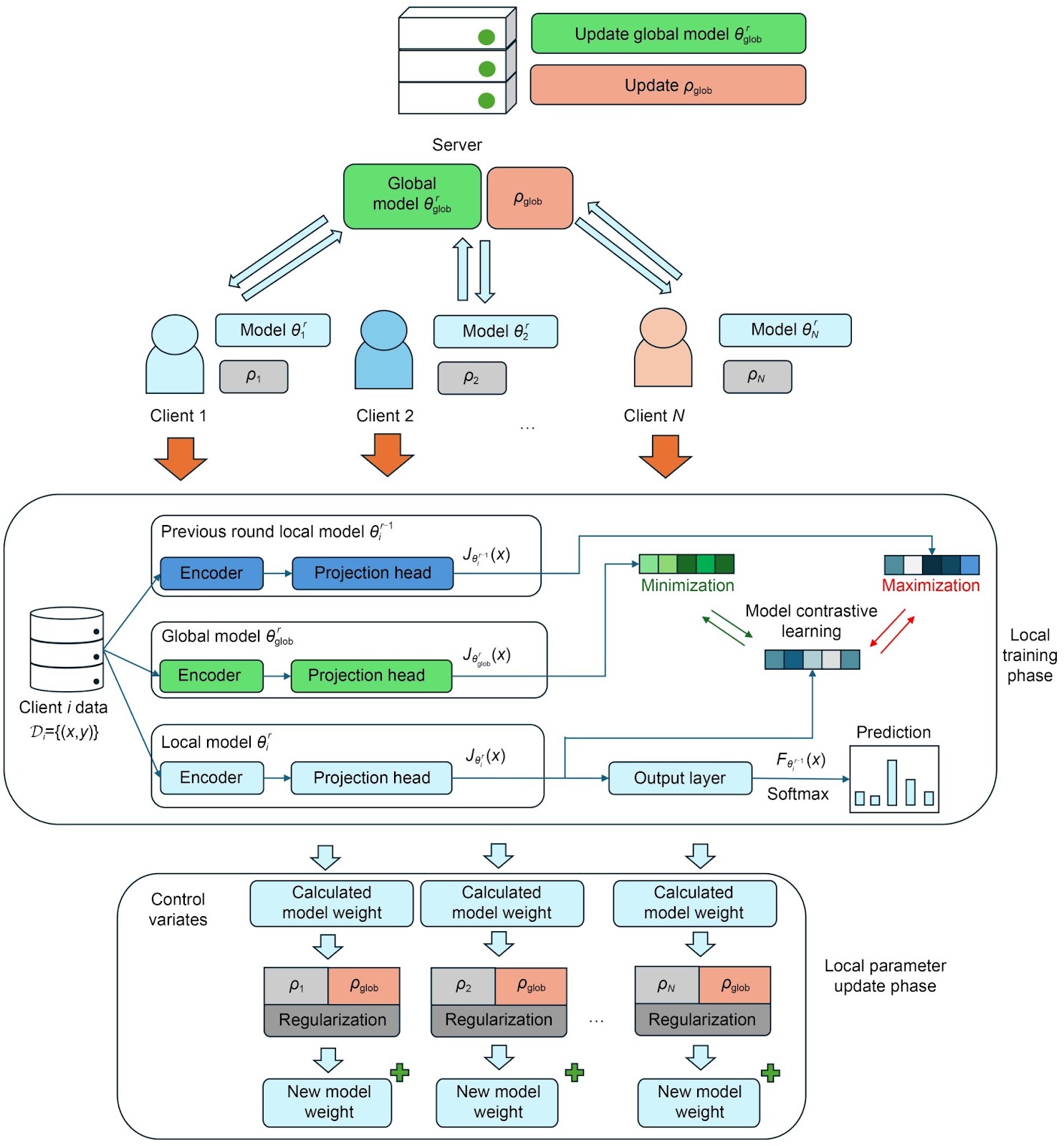
Federated model with contrastive learning and adaptive control variates for human activity recognition
Recent attention to privacy issues demands a communication-safe method for training human activity recognition (HAR) models on client activity data. Federated learning (FL) has become a compelling technique to facilitate model training between the server and clients while preserving data privacy. However, classical FL methods often assume independent and identically distributed (IID) data among clients. This assumption does not hold true in practical scenarios. Human activity in real-world scena