Key Takeaways & Executive Findings
- •• SO2Cl2 serves as a safe and efficient chlorine generator, eliminating the need for hazardous Cl2 gas in the synthesis of metal chloride-intercalated graphite. • The BiCl3-GICs synthesized at 200 °C for 20 h exhibit a large interlayer spacing of 1.26 nm and a high BiCl3 loading of 42%, enabling high specific capacity and excellent rate performance in sodium-ion batteries. • In-situ Raman spectroscopy reveals weakened electronic interaction between graphite and intercalated BiCl3 during first discharge, which is favorable for sodium storage. • The method is broadly applicable to other metal chlorides, offering a scalable and safer route for advanced energy storage materials.
Abstract
Metal chloride-intercalated graphite with excellent conductivity and a large interlayer spacing is highly desired for use in sodium ion batteries. However, halogen vapor is usually indispensable in initiating the intercalation process, which makes equipment design and experiments challenging. In this work, SO2Cl2 was used as a chlorine generator to intensify the intercalation of BiCl3 into graphite (BiCl3-GICs), which avoided the potential risks, such as Cl2 leakage, in traditional methods. The operational efficiency in the experiment was also improved. After the reaction of SO2Cl2, BiCl3, and graphite at 200 °C for 20 h, the synthesized BiCl3-GICs had a large interlayer spacing (1.26 nm) and a high amount of BiCl3 intercalation (42%), which gave SIBs a high specific capacity of 213 mAh g−1 at 1 A g−1 and an excellent rate performance (170 mAh g−1 at 5 A g−1). In-situ Raman spectra revealed that the electronic interaction between graphite and intercalated BiCl3 is weakened during the first discharge, which is favorable for sodium storage. This work broadly enables the increased intercalation of other metal chloride-intercalated graphites, offering possibilities for developing advanced energy storage devices.
1. Introduction
Sodium-ion batteries (SIBs) have garnered significant interest from researchers due to the practically abundant sodium supplies, good reversibility, and respectable energy density[1–4]. Therefore, significant research has been conducted to explore advanced anode materials for SIBs such as phosphorus[5], metal oxides[6], and carbon-based materials[7–12]. Among these materials, carbon materials have been proposed as prospective anode materials since carbon is abundantly available, and exhibits high specific capacity, low redox potential and excellent chemical stability[13–15]. Benefiting from the weak interlayer interaction and the distinctive layered structure, graphite with excellent conductivity and satisfactory stability, has been extensively employed as the common natural carbon material in energy storage devices[16]. However, due to the mismatch of graphite lattices and sodium ions, graphite can only deliver a low capacity of 35 mAh g−1[17]. As such, the development of high-performance carbon-based electrode materials require critical attention to boost the energy storage capacity of SIBs[18].
As a typical example of graphite-based materials, metal chloride-intercalated graphite possesses exceptional physical and chemical properties[19]. First, the conductivity of metal chloride-intercalated graphite is improved due to the hole-doping effect of metal chloride towards graphite layers. Furthermore, the energy barrier of sodium ions diffusion can be reduced due to the enlarged interlayer spacing and the adjusted ion migration path. In addition, the dense structure of original graphite is maintained, which can be of great benefit to improve the volumetric performance. Especially, some metal chlorides, such as those based on Mo, Sn, Bi and Ge metal chlorides, usually possess high theoretical capacities due to the multi-electron conversion or conversion-alloying reaction with the sodium ions. Intercalating graphite with these metal chlorides is an effective method to produce advanced carbon-based materials for SIBs[20,21]. Li et al. demonstrated that the molybdenum pentachloride-graphite intercalation compounds (MoCl5–GICs), used as the anode material for SIB, delivered a capacity retention of 27%. Specifically, they achieved a specific capacity of 271 at 0.2 A g−1, while at a higher current density of 5 A g−1, the specific capacity decreased to 72 mAh g−1[21]. Li et al. proposed that an AlCl3-GICs as the anode material of SIB exhibited a capacity retention of 32% upon increasing the current density; 259 mAh g−1 at 0.2 A g−1 quickly reduced to 83 mAh g−1 at 5 A g−1[22]. Therefore, the rate performance of these metal chloride-intercalated graphite need further improvement. Moreover, the pressure threshold of halogen vapor always is a crucial factor to determine the operational efficiency in experiment[23,24]. Consequently, the synthesis of metal chloride-intercalated graphite is restricted by th
Loading authentic research manuscript (Pages 1–5)...
LAN Shu-qin, REN Wei-cheng, WANG Zhao, YU Chang, YU Jin-he, LIU Ying-bin, XIE Yuan-yang, ZHANG Xiu-bo, WANG Jian-jian, QIU Jie-shan (2024). Sulfonyl chloride-intensified metal chloride intercalation of graphite for efficient sodium storage. New Carbon Materials. https://doi.org/10.1016/S1872-5805_N
Research & Educational Purpose Only:The translations, structured abstracts, analytical annotations, and data reports provided by SinoTechIntel are intended exclusively for academic research, internal corporate R&D, and educational benchmarking. They do not constitute formal engineering, chemical safety, legal, or professional advice.
Copyright & Intellectual Property Notice: Original copyright of the underlying source articles and experimental data remains with the respective authors, institutions, and original publishing journals. SinoTechIntel claims intellectual property only over its proprietary translations, analytical syntheses, and AEO structured enhancements in accordance with international fair use and academic citation principles.
Frequently Asked Questions
What is the main innovation of this paper?
The paper introduces a safer and more efficient method for synthesizing metal chloride-intercalated graphite using SO2Cl2 as a chlorine generator, avoiding the need for hazardous Cl2 gas and improving operational efficiency.
What are the key performance metrics of the synthesized BiCl3-GICs?
The BiCl3-GICs exhibit a large interlayer spacing of 1.26 nm, a high BiCl3 intercalation amount of 42%, a specific capacity of 213 mAh g−1 at 1 A g−1, and excellent rate performance with 170 mAh g−1 at 5 A g−1.
How does the intercalation of BiCl3 improve sodium storage?
The intercalation enlarges the interlayer spacing, reduces the energy barrier for sodium ion diffusion, and enhances electronic conductivity via hole-doping, leading to improved sodium storage capacity and rate performance.
What is the significance of in-situ Raman spectroscopy in this study?
In-situ Raman spectroscopy reveals that the electronic interaction between graphite and intercalated BiCl3 weakens during the first discharge, which is favorable for sodium storage, providing mechanistic insights into the electrochemical process.
Is this method applicable to other metal chlorides?
Yes, the authors state that this work broadly enables the increased intercalation of other metal chloride-intercalated graphites, offering possibilities for developing advanced energy storage devices.
Related Technical Papers & Translations
Design and optimization of a high-efficiency distillation process for cellulosic fuel ethanol integrated with thermal coupling and molecular sieve adsorption
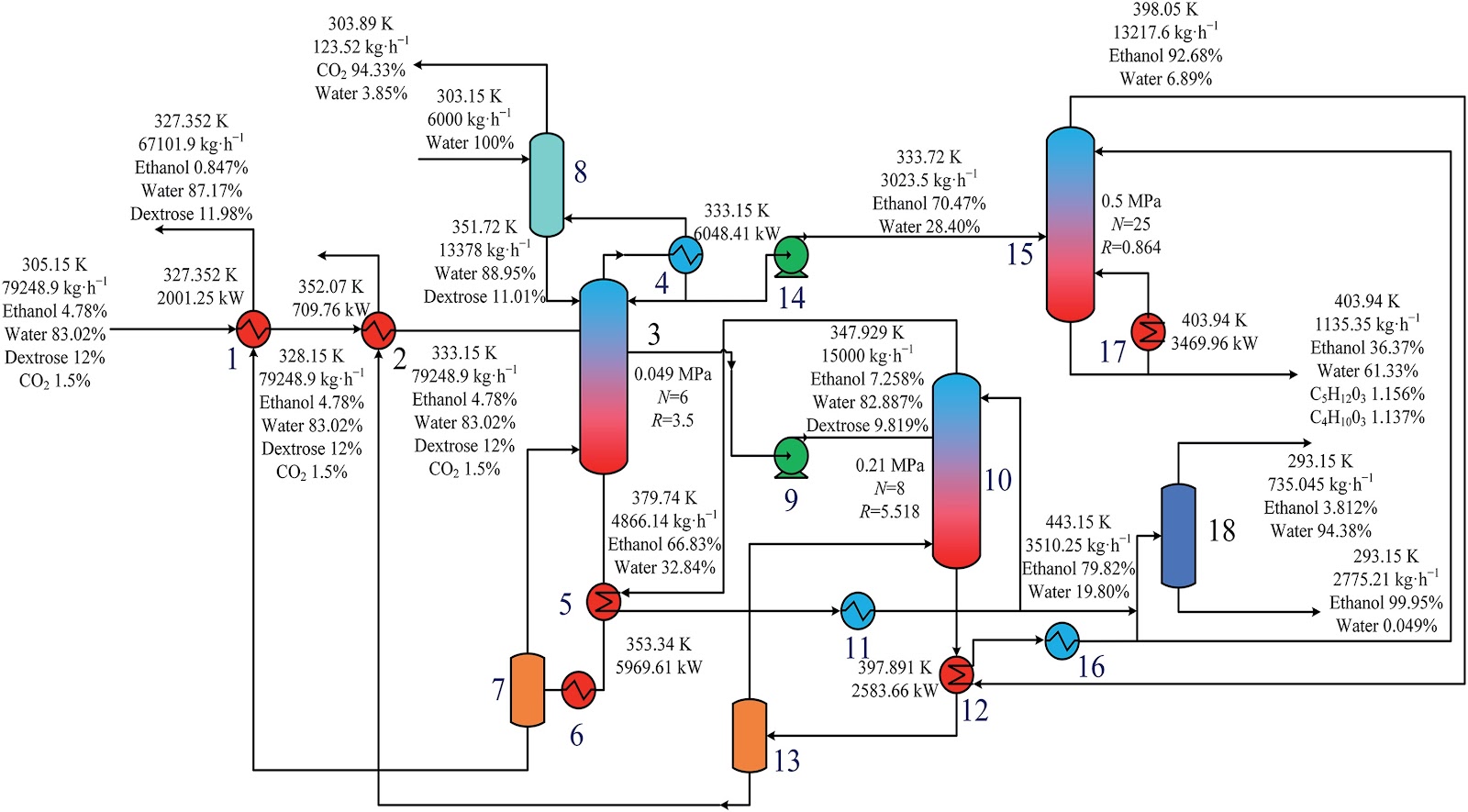
To address the challenges of high energy consumption and prominent costs in the traditional three-columns distillation process for cellulosic fuel ethanol, a distillation—molecular sieve coupling separation process is proposed. This process integrates a three-column (crude distillation column, first distillation column, second distillation column) system with a 3A molecular sieve adsorption deep dehydration unit. A thermal coupling network is constructed via differential pressure design (steam from medium/high-pressure columns as mutual heat sources, reboiler liquid waste heat for feed preheating), and molecular sieve adsorption conditions are optimized. The study first performs a thermodynamic consistency test on the ethanol—water system, determines optimal non-random two-liquid (NRTL) model binary interaction parameters via experimental data regression for Aspen Plus simulation. Aiming at minimum total annual cost (TAC), Aspen Plus is used to optimize process parameters (theoretical tray number, feed location, reflux ratio, side-draw position, etc.). Economic analysis shows this process reduces CO2 emission costs by 27.56%, TAC by 15.58% (to 5.123 × 10⁶ USD·a-1), and increases ethanol purity to >99.6%, providing an effective solution for green, efficient separation.
A cohesion loss model for determining residual strength of deep bedded sandstone
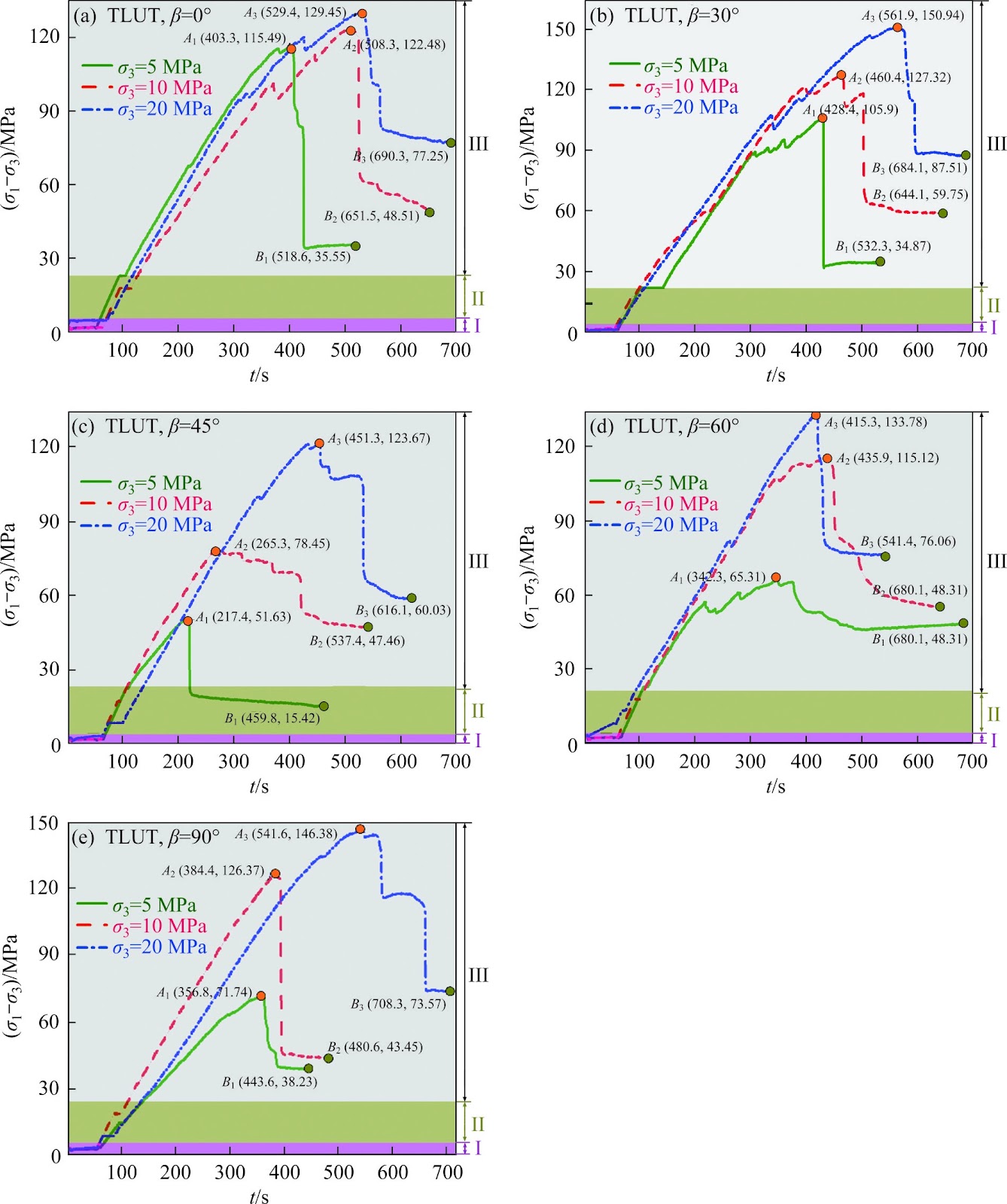
Rock residual strength, as an important input parameter, plays an indispensable role in proposing the reasonable and scientific scheme about stope design, underground tunnel excavation and stability evaluation of deep chambers. Therefore, previous residual strength models of rocks established were reviewed. And corresponding related problems were stated. Subsequently, starting from the effects of bedding and whole life-cycle evolution process, series of triaxial mechanical tests of deep bedded s
Federated model with contrastive learning and adaptive control variates for human activity recognition
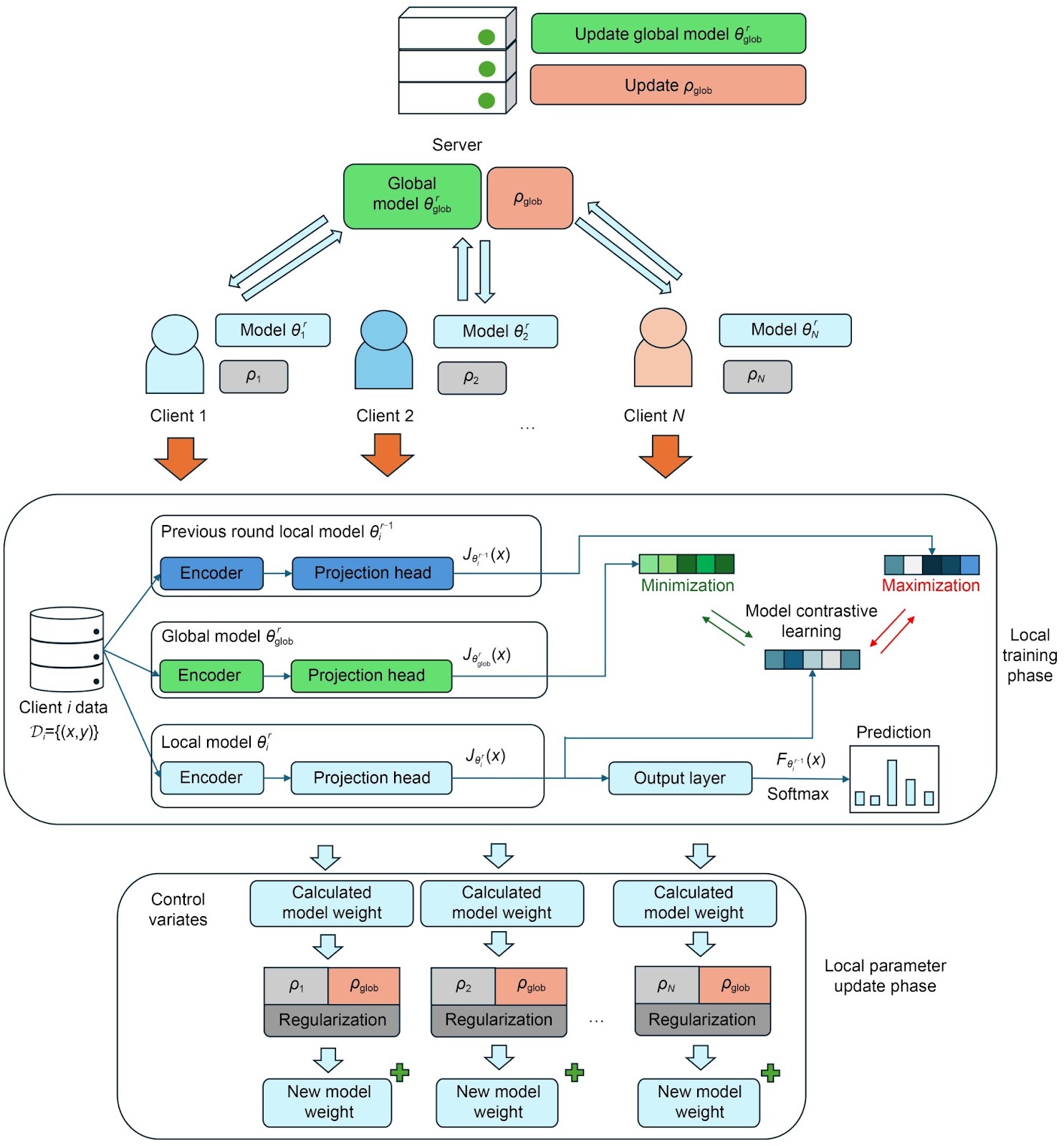
Recent attention to privacy issues demands a communication-safe method for training human activity recognition (HAR) models on client activity data. Federated learning (FL) has become a compelling technique to facilitate model training between the server and clients while preserving data privacy. However, classical FL methods often assume independent and identically distributed (IID) data among clients. This assumption does not hold true in practical scenarios. Human activity in real-world scena