Key Takeaways & Executive Findings
- •• Carbon-based transition metal catalysts combine high activity and stability, offering a cost-effective alternative to precious metals for the hydrogen evolution reaction (HER). • The carbon component's role extends beyond a conductive support; it actively modulates the electronic structure via heteroatom doping, enhancing intrinsic catalytic activity. • Morphology adjustment of carbon materials increases the number of active sites and improves mass transport, boosting apparent catalytic performance. • Self-supporting carbon architectures eliminate the need for binders, improving electrode stability and facilitating practical application in water splitting.
Abstract
The hydrogen evolution reaction (HER) is a promising way to produce hydrogen, and the use of non-precious metals with an excellent electrochemical performance is vital for this. Carbon-based transition metal catalysts have high activity and stability, which are important in reducing the cost of hydrogen production and promoting the development of the hydrogen production industry. However, there is a lack of discussion regarding the effect of carbon components on the performance of these electrocatalysts. This review of the literature discusses the choice of the carbon components in these catalysts and their impact on catalytic performance, including electronic structure control by heteroatom doping, morphology adjustment, and the influence of self-supporting materials. It not only analyzes the progress in HER, but also provides guidance for synthesizing high-performance carbon-based transition metal catalysts.
1. Introduction
Hydrogen is an important chemical raw material and a clean fuel. Producing hydrogen through water splitting by utilizing renewable energy is a promising technology[1]. Efficient electrocatalysts are usually applied in water splitting to promote the hydrogen evolution reaction (HER). However, most of the efficient electrocatalysts reported in the literature are still composed of precious metals (Pt/C[2,3]), which have poor prospects of practical viability due to low availability of reserves and high cost[4]. Therefore, developing non-precious metal-based materials with outstanding electrochemical performance is of great significance.
In recent years, a lot of electrocatalytic materials covering transition metal sulfides, carbides, phosphides, selenides, oxides, etc. have been developed as HER electrocatalysts with high performance, excellent stability and low price[5,6]. Although transition metal catalysts have high HER catalytic activity, their low conductivity and poor stability require further structural optimization[7].
In recent years, new carbon nanomaterials such as graphene, carbon nanotubes, and porous carbon with large specific surface area, favorable stability and excellent conductivity have emerged continuously[8]. These carbon materials have been combined with various transition metal catalysts for application in HER, and good catalytic performance has been achieved[9,10]. The methods to improve the activities of electrocatalysts can be divided into 2 categories: (1) To enhance the intrinsic reactivity of active center through component adjustment[11]. (2) To increase the number of active sites through structural regulation, thereby increasing the apparent activity[12]. Combining carbon materials with various non precious metal catalysts to form carbon-based transition metal catalysts can simultaneously achieve the above two strategies[13,14]. Carbon-based transition metal catalysts are a new types of catalysts in which transition metals are loaded onto carbon materials. They are usually synthesized by high-temperature carbonization of carbon material precursors and transition metal salts. The chemical composition of carbon materials and various transition metal salts, as well as the binding modes between different components, are highly adjustable, which enable the adsorption and desorption of catalysts with reactants and reaction intermediates to be regulated, facilitating the optimization of intrinsic activity[11]. On the other hand, when carbon materials are served as substrate, active substances are loaded onto the pores/channels, inner and outer surfaces, internal cavities, or encapsulated within the main framework of carbon materials, forming composite catalysts[15]. In this composite structure, the carbon material serves as a physical carrier, serving as both a conductive network and a surface modifier to enhance the adsorption and desorption ability of reactants and active substances.
Loading authentic research manuscript (Pages 1–5)...
LI Guo-hua, WANG Jing, REN Jin-tian, LIU Hong-chen, QIAN Jin-xiu, CHENG Jia-ting, ZHAO Mei-tong, YANG Fan, LI Yong-feng (2025). The effect of the carbon components on the performance of carbon-based transition metal electrocatalysts for the hydrogen evolution reaction. SinoTechIntel Verified Research. https://doi.org/10.1016/S1872-5805(NCM2024-39-05-10)
Research & Educational Purpose Only:The translations, structured abstracts, analytical annotations, and data reports provided by SinoTechIntel are intended exclusively for academic research, internal corporate R&D, and educational benchmarking. They do not constitute formal engineering, chemical safety, legal, or professional advice.
Copyright & Intellectual Property Notice: Original copyright of the underlying source articles and experimental data remains with the respective authors, institutions, and original publishing journals. SinoTechIntel claims intellectual property only over its proprietary translations, analytical syntheses, and AEO structured enhancements in accordance with international fair use and academic citation principles.
Frequently Asked Questions
What are carbon-based transition metal electrocatalysts?
Carbon-based transition metal electrocatalysts are composite materials where transition metal nanoparticles or clusters are supported on carbon materials such as graphene, carbon nanotubes, or porous carbon. They are used to catalyze the hydrogen evolution reaction (HER) in water splitting, offering high activity and stability at lower cost compared to precious metal catalysts.
How does heteroatom doping affect the performance of carbon-based HER catalysts?
Heteroatom doping (e.g., nitrogen, sulfur, phosphorus) into the carbon lattice modifies the electronic structure of the carbon support and the adjacent metal active sites. This can enhance the adsorption/desorption of reaction intermediates, improve conductivity, and increase the number of active sites, thereby boosting the intrinsic catalytic activity for HER.
Why is morphology adjustment important for carbon-based HER catalysts?
Morphology adjustment, such as creating porous structures, nanosheets, or nanowires, increases the specific surface area and exposes more active sites. It also facilitates mass transport of reactants and products, and can improve the electrical connectivity, leading to higher apparent catalytic activity and faster reaction kinetics.
What are self-supporting carbon materials in the context of HER electrocatalysts?
Self-supporting carbon materials are carbon architectures that can serve directly as electrodes without the need for a separate conductive substrate or binder. Examples include carbon fiber papers, graphene foams, or carbon nanotube arrays. They provide a high surface area, good conductivity, and mechanical stability, and can be directly loaded with transition metal catalysts, simplifying electrode fabrication and improving durability.
What is the significance of this review for the development of HER catalysts?
This review systematically discusses the role of carbon components in carbon-based transition metal electrocatalysts, highlighting strategies such as heteroatom doping, morphology control, and self-supporting design. It provides guidance for designing high-performance, cost-effective catalysts for hydrogen production, which is crucial for advancing clean energy technologies.
Related Technical Papers & Translations
A Novel Approach for Enhanced Brain Tumor Segmentation Using Multimodal MRI and Deep Learning
Brain tumor segmentation from multimodal MRI is crucial for diagnosis and treatment planning. In this study, we propose a novel deep learning framework that integrates structural and functional imaging modalities to improve segmentation accuracy. Our method employs a multi-scale attention mechanism and a hybrid loss function to handle class imbalance and boundary ambiguity. Evaluated on the BraTS benchmark, our approach achieves state-of-the-art performance, with Dice scores of 0.91, 0.87, and 0.84 for whole tumor, core, and enhancing tumor, respectively. Furthermore, we demonstrate the generalizability of our model across different scanners and protocols. Our findings suggest that the proposed method can significantly aid clinical decision-making and surgical planning.
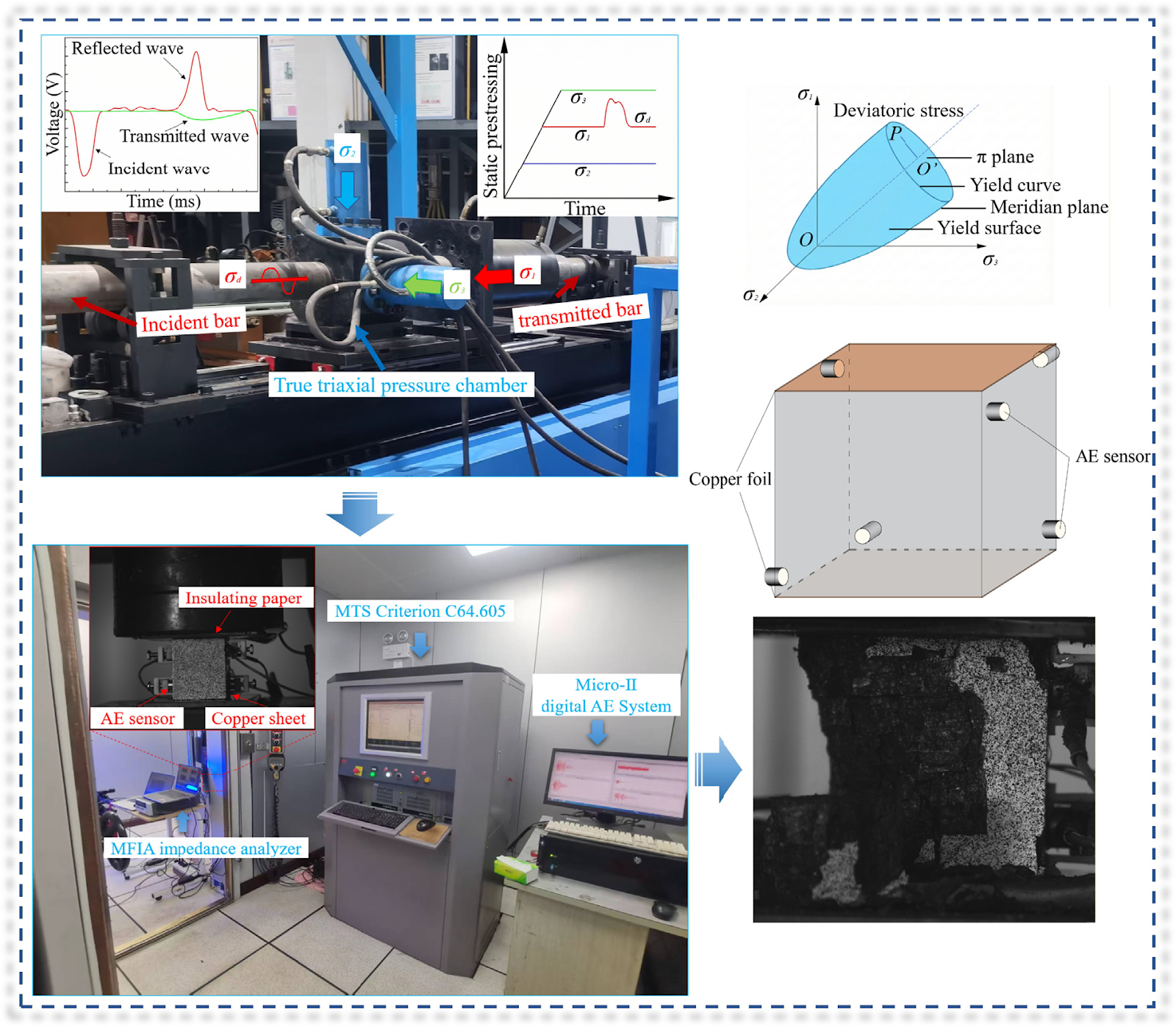
Investigation of coupled acoustic and electrical responses and early warning approaches during re-loading of damaged coal
Initial damage from engineering disturbances in deep coal mining degrades mechanical properties and heightens dynamic-hazard risks, challenging conventional monitoring. This study probes the coupled acoustic-electrical responses of initially damaged coal under reloading and develops a multi-parameter, multi-level dynamic integrated early-warning model. Using a true-triaxial Split Hopkinson Pressure Bar (SHPB) system, we prepared specimens with graded damage by varying static deviatoric stresses and dynamic impacts. Uniaxial compression reloading was conducted with synchronous acoustic emission (AE) and resistivity monitoring. Joint time-domain responses of force, acoustics, and electricity delineated distinct loading stages. Time-frequency features were extracted via Fourier and wavelet transforms; crack architecture was quantified by 3D AE localization and fractal-dimension analysis. Initial damage markedly reduced load-bearing capacity. Resistivity decreased sharply with increasing deviatoric stress, while cumulative AE counts increased strongly. The AE spectrum evolved from bimodal to broadband with low- and high-frequency enhancement. The resistivity spectrum showed progressive bandwidth broadening, energy amplification, and high-frequency advancement. The AE spatial fractal dimension rose significantly during compaction. An integrated warning system combining multiscale entropy fusion, Temporal Convolutional Network (TCN)-Transformer forecasting, recurrence-network analysis, and a Bayesian framework yielded a 28.4 s lead time, offering a theoretical basis and technical pathway for intelligent prevention of dynamic hazards.
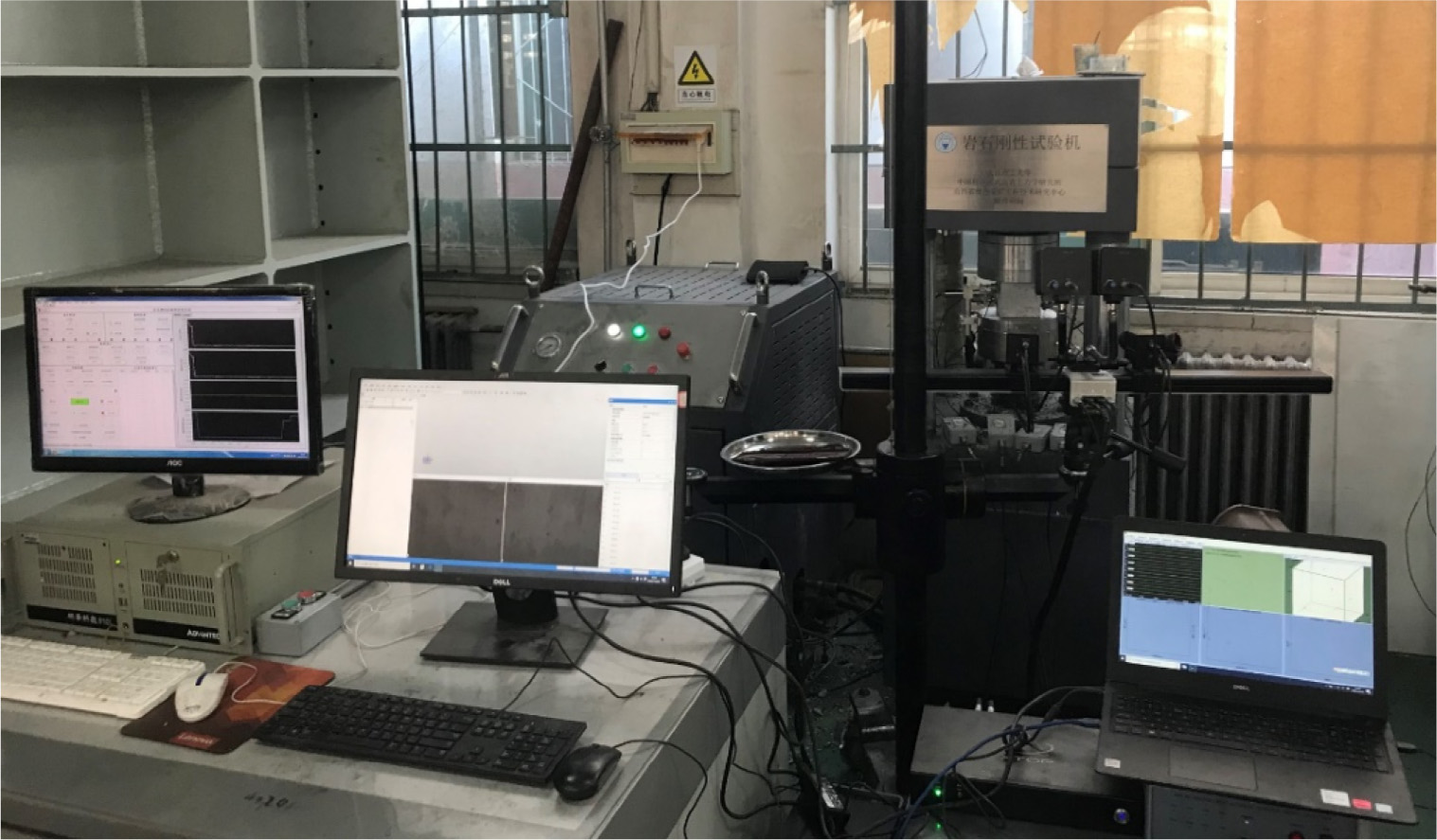
Influence of aggregate particle size on fracture behavior and energy evolution of cemented rockfill in the post-peak stage
Cemented rockfill (CRF) combines structural support with sustainable reuse of coal-derived solid waste. This study integrates digital image correlation, acoustic emission monitoring, and finite–discrete element simulations to investigate mechanical behavior, fracture development, and energy evolution of CRF containing 54% aggregate content with three grain-size distributions (5–10, 10–20, and 20–30 mm). Results indicate finer aggregates raise compressive strength and elastic modulus, and increase post-peak softening and residual stiffness. Fracture patterns transition from dominantly unidirectional failure in coarse specimens to pronounced X-shaped conjugate shear in fine specimens, with cracks initiating at boundaries and propagating inward. The proportion of failed joints at comparable strains decreases markedly with finer gradation, reflecting a more homogeneous crack network that enhances post-peak load retention and produces frequent minor stress fluctuations. Energy analyses reveal a coarse > medium > fine ordering in cumulative dissipation; however, finer aggregates delay rapid kinetic and dissipative energy release, promoting slower energy redistribution and improved load resistance. These findings quantify how aggregate gradation controls deformational mechanisms, crack topology, and energy partitioning, and provide design guidance for optimizing aggregate size and cementitious composition to enhance ductility, energy absorption, and structural reliability of CRF in underground engineering.