Key Takeaways & Executive Findings
- •• A novel synthetic pitch was prepared via chlorine- and nitrogen-induced substitution polymerization using chloromethyl naphthalene and quinoline, enabling molecular-level structure control. • Pyridinic nitrogen in quinoline acts as an effective active site, coupling with chlorine-containing aromatics to drive polymerization and oligomerization. • Optimizing reaction temperature and time increases polymerization degree, raising the softening point to 258.6 °C, yielding a highly spinnable pitch. • Carbon fibers derived from this pitch achieved a tensile strength of 1163.82 MPa, demonstrating a simple, safe route to high-performance isotropic pitch-based carbon fibers.
Abstract
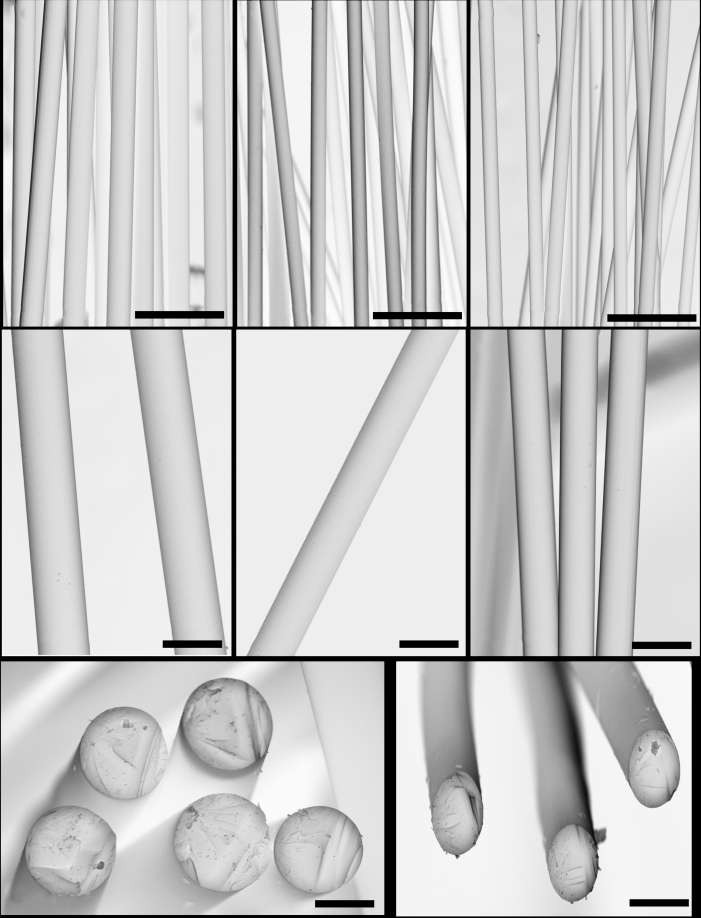
The preparation of a synthetic pitch from aromatic monomers could easily regulate structure orientation at the molecular level, which would be useful in fabrication. An isotropic synthetic pitch was prepared by a chlorine- and/or nitrogen-induced substitution polymerization reaction method using aromatic hydrocarbon precursors containing Cl and N, which for this study were chloromethyl naphthalene and quinoline. This method was verified by investigating the structural changes under different synthesis conditions, and the synthesis mechanism induced by aromatics containing Cl was also probed. The result shows that the pyridinic N in quinoline contains a lone pair of electrons, and is an effective active site to induce the polymerization reaction by coupling with aromatic hydrocarbons containing Cl. The reaction between such free radicals causes strong homopolymerization and oligomerization. A higher reaction temperature and longer reaction time significantly increased the degree of polymerization and thus increased the softening point of the pitch. A linear molecular structure was formed by the Cl substitution reaction, which produced a highly spinnable pitch with a softening point of 258.6 °C, and carbon fibers with a tensile strength of 1 163.82 MPa were obtained. This study provides a relatively simple and safe method for the preparation of high-quality spinnable pitch.
1. Introduction
At present, preparation of carbon fibers with excellent mechanical properties and facile production is still a hot topic[1–4]. Specifically, the isotropic pitch-based carbon fiber (IP-CF) is a favorable candidate offering high performance and low cost[5–7]. The IP-CF is mainly produced from coal tar pitch, petroleum asphalt or ethylene base oil[8,9]. However, such carbonaceous materials contain large quantity of organic compounds requiring extremely complicated regulation issues[10]. Besides, the impurity and molecular polymerization degree in the raw material will also produce strong impact on the performance of pitch-based carbon fiber[11–13].
The aromatic monomers can reasonably reconstruct the pitch structure at the molecular level to avoid the influence of impurities and molecular polymerization degree on the properties of IP-CFs[12,14]. Generally, aromatic compounds, such as naphthalene, methylnaphthalene, anthracene, and other condensed aromatic compounds can be used as raw materials to synthesize pitch[15,16]. However, most of the aromatic compounds have relatively low reactivity, making it hard to obtain well assembled molecular structures with specific requirement[17,18]. Proton acid catalyst HF/BF3 was used to catalyze the polymerization reaction of naphthalene/ methylnaphthalene by decreasing the electron cloud density of the aromatic ring[19,20]. Nevertheless, the large scale preparation of synthetic pitch using super acidic catalyst usually causes very strong corrosion, limiting the production efficiency[15]. Alternatively, halogen elements, such as Br[21,22], I and Cl[23,24], with relatively mild reaction conditions, have been employed to enhance the polymerization reaction of aromatic hydrocarbons[25]. High performance synthetic pitch was successfully prepared through bromination of methylnaphthalene[23]. Based on this idea, development of novel synthesis routes by combing halogenation reaction is expected to be a promising approach for obtaining excellent pitch precursors in an easier way[26].
On the other hand, quinoline is a good precursor for preparation of synthetic pitch. The quinoline-based pitch as a nitrogen-rich carbon material has shown excellent performance in energy storage, catalysis, and functional materials[27–29]. The preparation of quinoline pitch usually needs the AlCl3 catalyst[30,31]. Unfortunately, such a catalyst leaves significant residue in the pitch, leading to the high impurity content. It would seriously affect the subsequent processing and application of quinoline pitch[32,33]. The synthesis of quinoline pitch by combining the halogenated reaction using aromatic side chain chloride can realize the regulation of synthesis process at molecular level. Moreover, it would avoid the influence of ash residue. The halogenation-induced synthesis of quinoline is of great significance for the development of new carbon materials.
Loading authentic research manuscript (Pages 1–5)...
ZHANG Yu-kun, LIN Xiong-chao, GAO Hong-feng, XI Wen-shuai, WANG Cai-hong, WANG Yong-gang (2024). Preparation of a high-performance synthetic pitch from aromatic hydrocarbons containing N/Cl. New Carbon Materials. https://doi.org/10.1016/S1872-5805_N
Research & Educational Purpose Only:The translations, structured abstracts, analytical annotations, and data reports provided by SinoTechIntel are intended exclusively for academic research, internal corporate R&D, and educational benchmarking. They do not constitute formal engineering, chemical safety, legal, or professional advice.
Copyright & Intellectual Property Notice: Original copyright of the underlying source articles and experimental data remains with the respective authors, institutions, and original publishing journals. SinoTechIntel claims intellectual property only over its proprietary translations, analytical syntheses, and AEO structured enhancements in accordance with international fair use and academic citation principles.
Frequently Asked Questions
What is the main innovation of this study?
The study introduces a novel method for preparing high-performance synthetic pitch using aromatic hydrocarbons containing nitrogen and chlorine, specifically quinoline and chloromethyl naphthalene, via a chlorine- and nitrogen-induced substitution polymerization. This approach allows molecular-level structure control and avoids the use of corrosive catalysts like HF/BF3 or AlCl3, resulting in a simpler and safer process.
How does quinoline contribute to the polymerization reaction?
Quinoline contains pyridinic nitrogen with a lone pair of electrons, which acts as an effective active site. It couples with chlorine-containing aromatic hydrocarbons, such as chloromethyl naphthalene, to induce polymerization through free radical reactions, leading to homopolymerization and oligomerization.
What are the key properties of the synthetic pitch produced?
The synthetic pitch exhibits a softening point of 258.6 °C and is highly spinnable, enabling the production of carbon fibers with a tensile strength of 1163.82 MPa. The pitch has a linear molecular structure formed by Cl substitution reactions.
What is the significance of this research for carbon fiber production?
This research provides a relatively simple and safe method for producing high-quality spinnable pitch, which is a crucial precursor for isotropic pitch-based carbon fibers. The method allows better control over the pitch structure, potentially leading to carbon fibers with improved mechanical properties and lower production costs.
How do reaction conditions affect the pitch properties?
Higher reaction temperatures and longer reaction times increase the degree of polymerization, which in turn raises the softening point of the pitch. This allows tuning of the pitch properties to achieve desired spinnability and final carbon fiber performance.
Related Technical Papers & Translations

Design and optimization of a high-efficiency distillation process for cellulosic fuel ethanol integrated with thermal coupling and molecular sieve adsorption
To address the challenges of high energy consumption and prominent costs in the traditional three-columns distillation process for cellulosic fuel ethanol, a distillation—molecular sieve coupling separation process is proposed. This process integrates a three-column (crude distillation column, first distillation column, second distillation column) system with a 3A molecular sieve adsorption deep dehydration unit. A thermal coupling network is constructed via differential pressure design (steam from medium/high-pressure columns as mutual heat sources, reboiler liquid waste heat for feed preheating), and molecular sieve adsorption conditions are optimized. The study first performs a thermodynamic consistency test on the ethanol—water system, determines optimal non-random two-liquid (NRTL) model binary interaction parameters via experimental data regression for Aspen Plus simulation. Aiming at minimum total annual cost (TAC), Aspen Plus is used to optimize process parameters (theoretical tray number, feed location, reflux ratio, side-draw position, etc.). Economic analysis shows this process reduces CO2 emission costs by 27.56%, TAC by 15.58% (to 5.123 × 10⁶ USD·a-1), and increases ethanol purity to >99.6%, providing an effective solution for green, efficient separation.

A cohesion loss model for determining residual strength of deep bedded sandstone
Rock residual strength, as an important input parameter, plays an indispensable role in proposing the reasonable and scientific scheme about stope design, underground tunnel excavation and stability evaluation of deep chambers. Therefore, previous residual strength models of rocks established were reviewed. And corresponding related problems were stated. Subsequently, starting from the effects of bedding and whole life-cycle evolution process, series of triaxial mechanical tests of deep bedded s

Federated model with contrastive learning and adaptive control variates for human activity recognition
Recent attention to privacy issues demands a communication-safe method for training human activity recognition (HAR) models on client activity data. Federated learning (FL) has become a compelling technique to facilitate model training between the server and clients while preserving data privacy. However, classical FL methods often assume independent and identically distributed (IID) data among clients. This assumption does not hold true in practical scenarios. Human activity in real-world scena