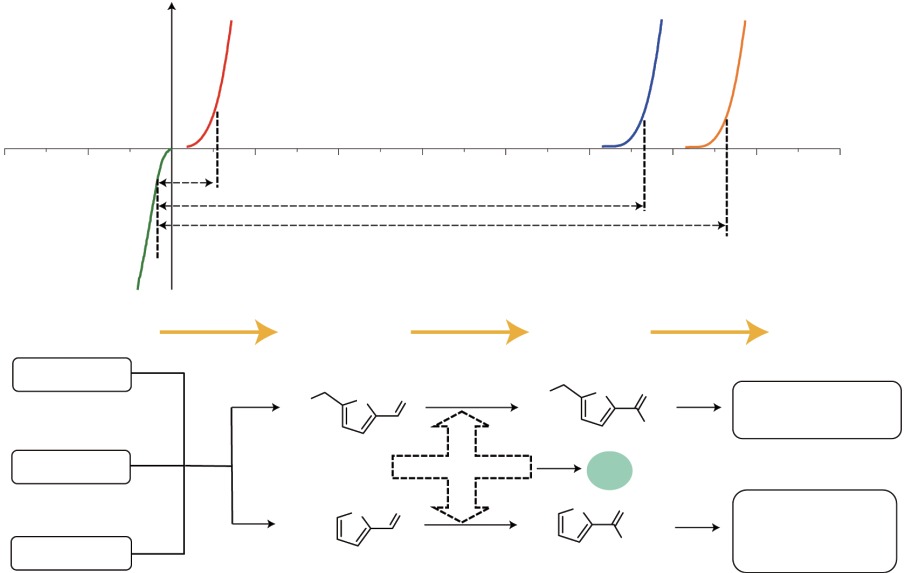
Key Takeaways & Executive Findings
- •• Carbon-based electrocatalysts show promise for water splitting but face distinct challenges at high current densities, including bubble effects and stability issues. • The review highlights the need for testing catalysts under industrial-relevant high current densities, not just low laboratory conditions. • Strategies such as defect engineering, heteroatom doping, and metal modification are discussed to enhance performance at high current densities. • Decoupling HER and OER processes is proposed as a promising approach to overcome high-current-density limitations.
Abstract
Electrocatalytic water splitting is a promising strategy to generate hydrogen using renewable energy under mild conditions. Carbon-based materials have attracted attention in electrocatalytic water splitting because of their distinctive features such as high specific area, high electron mobility and abundant natural resources. Hydrogen produced by industrial electrocatalytic water splitting in a large quantity requires electrocatalysis at a low overpotential at a large current density. Substantial efforts focused on fundamental research have been made, while much less attention has been paid to the high-current-density test. There are many distinct differences in electrocatalysis to split water using low and high current densities such as the bubble phenomenon, local environment around active sites, and stability. Recent research progress on carbon-based electrocatalysts for water splitting at low and high current densities is summarized, significant challenges and prospects for carbon-based electrocatalysts are discussed, and promising strategies are proposed.
1. Introduction
Hydrogen emerges global wide applications in petroleum refining, industrial production of ammonia and methanol, fuel cells, and metallurgical industry[1–2]. Compared with steam reforming of methanol and coal gasification that produce hydrogen, electrochemical water splitting has various advantages[3], such as high purity carbon-free hydrogen, use of renewable sources, nontoxic reagent and scale flexibility[4–6]. Typically, hydrogen evolution reaction (HER) and oxygen evolution reaction (OER) are the two steps in electrocatalytic water splitting[7]. OER requires 4 electrons during the process, while 2 electrons are needed in HER[8]. Besides, a larger than the thermodynamic potential should be required in electrolysis due to the intrinsic barriers[9]. Reducing the overpotential and enhancing the stability is of enormous economic benefit to realize industrial applications[10–11].
In fundamental laboratory research at low current densities[12], the charge state of carbon-based catalysts can be easily regulated through engineering structure defects, heteroatom engineering, heterojunction engineering, and structure regulation[13]. For example, defective carbon materials and carbon-based noble/non-noble metal materials are potential substitutes for noble metal catalysts due to their multiple superiorities[14], such as excellent electronic conductivity, high surface area, excellent resistance to corrosion, low cost and structural flexibility. Breaking the sp2 carbon lattice with electroneutrality can lead to uneven charge distribution in the carbon matrix that serve as new electrocatalytic active sites. A series of defective carbon electrocatalysts exhibiting superior HER or OER performance have been synthesized by plasma etching, oxidation, irradiation, heteroatom removal[10], etc. The carbon-based catalysts are able to achieve more excellent electrocatalytic performance by the modification with metal species. Besides, the charge transfer between the carbon host and metal or metal compounds can regulate the electronic structure of each component[15–16]. Owing to the modification by metal species, carbon-based catalysts can achieve increased electrocatalytic performance.
The interconnection of the charge transfer path on carbon-based materials and the electrocatalytic water splitting behavior have been reviewed previously[12]. Although great progress in advanced electrocatalysts under laboratory conditions has been achieved[17–19], the laboratory research is usually carried out in dilute solution at a low current density[20]. Actually, the optimized electrocatalysts, exhibiting an excellent HER and OER performance at a low current density usually, do not display an expected performance at a high current density[21]. Because current density greatly impacts the electron transfer at the interface.
Loading authentic research manuscript (Pages 1–5)...
CHEN Yu-xiang, ZHAO Xiu-hui, DONG Peng, ZHANG Ying-jie, ZOU Yu-qin, WANG Shuang-yin (2024). Carbon-based electrocatalysts for water splitting at high-current-densities: A review. New Carbon Materials. https://doi.org/10.1016/S1872-5805_N
Research & Educational Purpose Only:The translations, structured abstracts, analytical annotations, and data reports provided by SinoTechIntel are intended exclusively for academic research, internal corporate R&D, and educational benchmarking. They do not constitute formal engineering, chemical safety, legal, or professional advice.
Copyright & Intellectual Property Notice: Original copyright of the underlying source articles and experimental data remains with the respective authors, institutions, and original publishing journals. SinoTechIntel claims intellectual property only over its proprietary translations, analytical syntheses, and AEO structured enhancements in accordance with international fair use and academic citation principles.
Frequently Asked Questions
What are the main challenges for carbon-based electrocatalysts at high current densities?
At high current densities, carbon-based electrocatalysts face challenges such as bubble-induced mass transport limitations, local pH changes, and reduced stability due to accelerated corrosion and mechanical stress.
Why is high current density testing important for water splitting electrocatalysts?
Industrial water electrolysis operates at high current densities to produce hydrogen at scale. Testing at these conditions is crucial to evaluate real-world performance, as catalysts optimized at low current densities often fail to maintain efficiency and stability at high current densities.
What strategies are proposed to improve carbon-based electrocatalysts for high current density water splitting?
Strategies include engineering the catalyst structure to facilitate bubble detachment, enhancing active site density and intrinsic activity, improving mass transport through porous architectures, and decoupling HER and OER to mitigate competing reactions.
How does bubble formation affect electrocatalytic water splitting at high current densities?
Bubble formation at high current densities can block active sites, increase ohmic resistance, and cause mechanical stress on the catalyst, leading to performance degradation and reduced stability.
What is the significance of decoupling HER and OER in water splitting?
Decoupling HER and OER allows each reaction to be optimized separately, potentially improving overall efficiency and stability by avoiding the mixing of gases and reducing the risk of explosive hydrogen-oxygen mixtures, as well as enabling the use of different electrolytes for each half-reaction.
Related Technical Papers & Translations
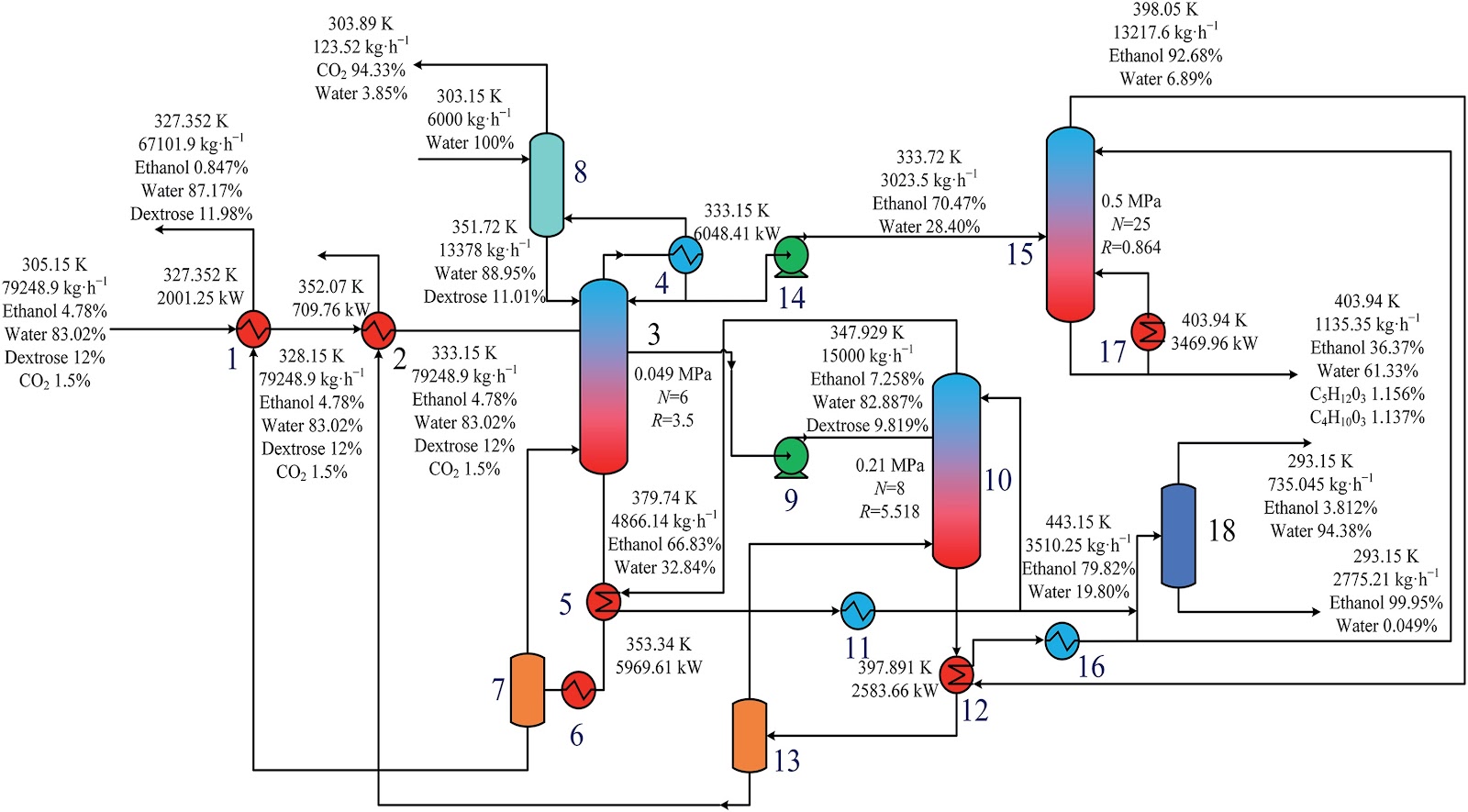
Design and optimization of a high-efficiency distillation process for cellulosic fuel ethanol integrated with thermal coupling and molecular sieve adsorption
To address the challenges of high energy consumption and prominent costs in the traditional three-columns distillation process for cellulosic fuel ethanol, a distillation—molecular sieve coupling separation process is proposed. This process integrates a three-column (crude distillation column, first distillation column, second distillation column) system with a 3A molecular sieve adsorption deep dehydration unit. A thermal coupling network is constructed via differential pressure design (steam from medium/high-pressure columns as mutual heat sources, reboiler liquid waste heat for feed preheating), and molecular sieve adsorption conditions are optimized. The study first performs a thermodynamic consistency test on the ethanol—water system, determines optimal non-random two-liquid (NRTL) model binary interaction parameters via experimental data regression for Aspen Plus simulation. Aiming at minimum total annual cost (TAC), Aspen Plus is used to optimize process parameters (theoretical tray number, feed location, reflux ratio, side-draw position, etc.). Economic analysis shows this process reduces CO2 emission costs by 27.56%, TAC by 15.58% (to 5.123 × 10⁶ USD·a-1), and increases ethanol purity to >99.6%, providing an effective solution for green, efficient separation.
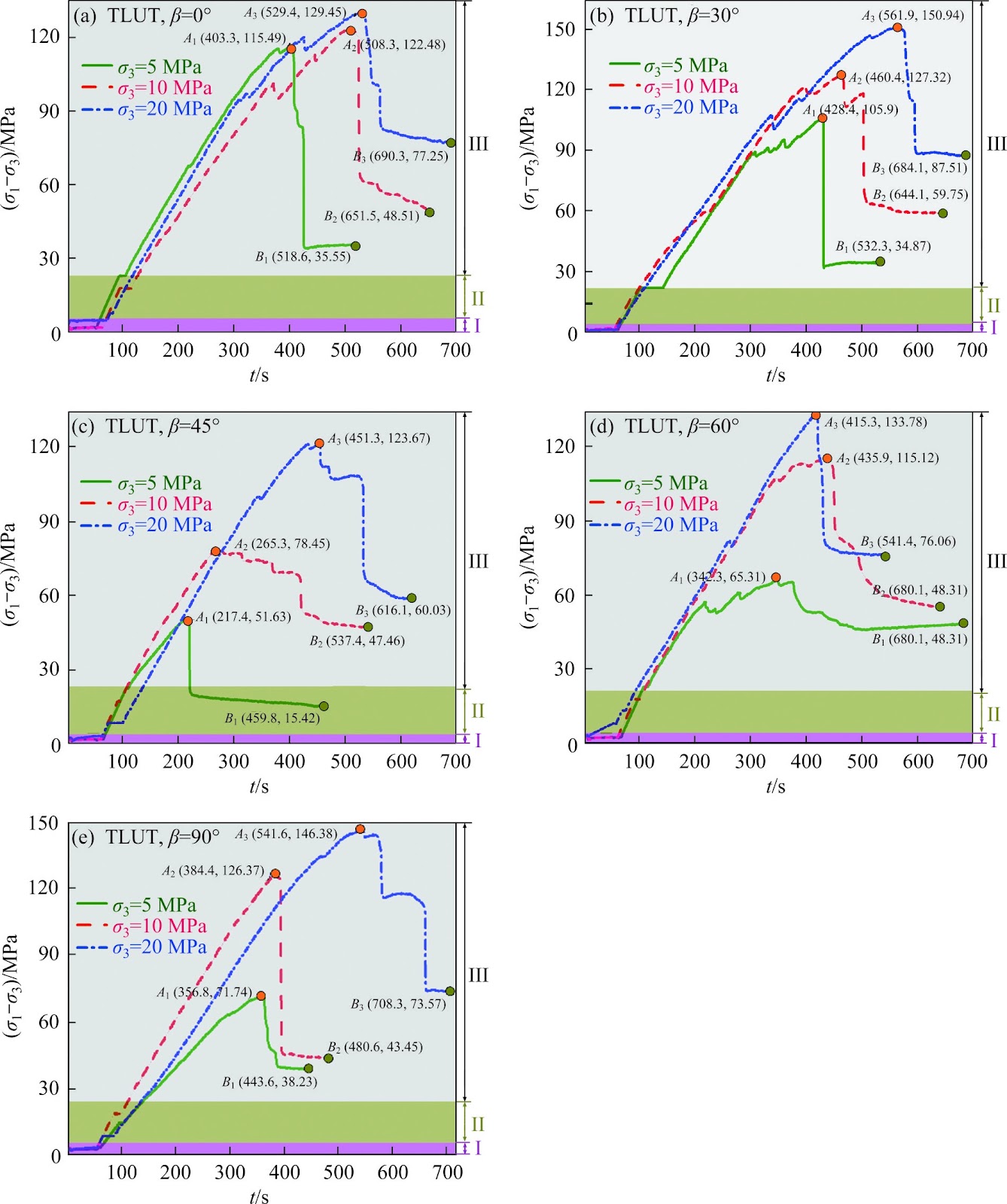
A cohesion loss model for determining residual strength of deep bedded sandstone
Rock residual strength, as an important input parameter, plays an indispensable role in proposing the reasonable and scientific scheme about stope design, underground tunnel excavation and stability evaluation of deep chambers. Therefore, previous residual strength models of rocks established were reviewed. And corresponding related problems were stated. Subsequently, starting from the effects of bedding and whole life-cycle evolution process, series of triaxial mechanical tests of deep bedded s
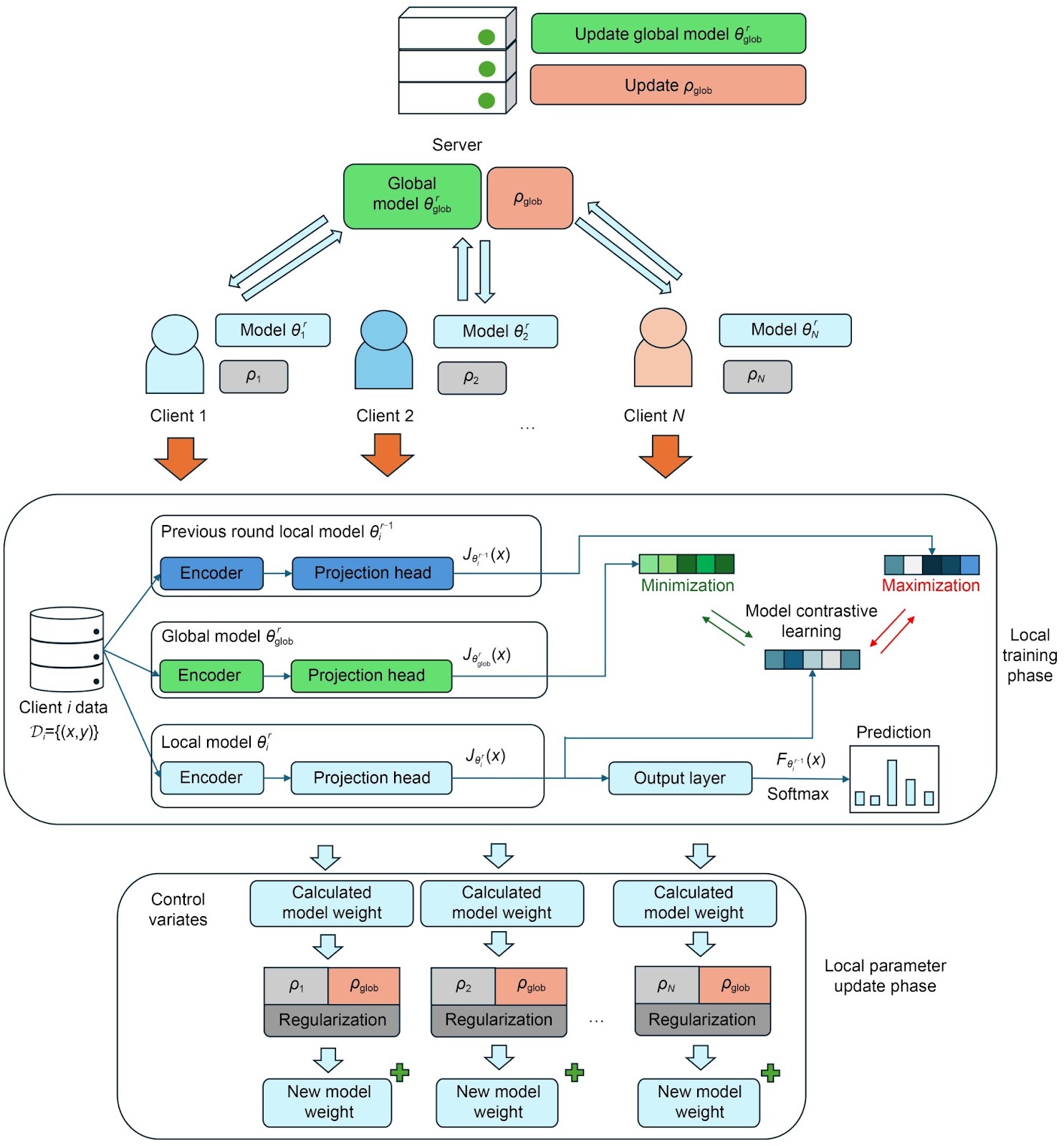
Federated model with contrastive learning and adaptive control variates for human activity recognition
Recent attention to privacy issues demands a communication-safe method for training human activity recognition (HAR) models on client activity data. Federated learning (FL) has become a compelling technique to facilitate model training between the server and clients while preserving data privacy. However, classical FL methods often assume independent and identically distributed (IID) data among clients. This assumption does not hold true in practical scenarios. Human activity in real-world scena