Key Takeaways & Executive Findings
- •• CNTs enhance electrochemical energy storage devices due to their exceptional electrical conductivity and structural integrity. • Recent synthesis advances include metal-organic framework-derived CNTs and three-dimensional ordered macroporous structures. • CNTs improve performance in lithium-ion, lithium-metal, lithium-sulfur, sodium, and flexible batteries, as well as supercapacitors. • Challenges remain in scalability and integration, with proposed solutions and future research directions outlined.
Abstract
The quest for sustainable energy storage solutions is more critical than ever, with the rise in global energy demand and the urgency of transition from fossil fuels to renewable sources. Carbon nanotubes (CNTs), with their exceptional electrical conductivity and structural integrity, are at the forefront of this endeavor, offering promising ways for the advance of electrochemical energy storage (EES) devices. This review provides an analysis of the synthesis, properties, and applications of CNTs in the context of EES. We explore the evolution of CNT synthesis methods, including arc discharge, laser ablation, and chemical vapor deposition, and highlight the recent developments in metal-organic framework-derived CNTs and a novel CNT aggregate with a three-dimensional ordered macroporous structure. We also examine the role of CNTs in improving the performance of various EES devices such as lithium-ion, lithium-metal, lithium-sulfur, sodium, and flexible batteries as well as supercapacitors. We underscore the challenges that remain, including the scalability of CNT synthesis and the integration of CNTs in electrode materials, and propose potential solutions and future research directions. The review presents a forward-looking perspective on the pivotal role of CNTs in shaping the future of sustainable EES technologies.
1. Introduction
The extensive use of traditional chemical energy sources, such as coal, petroleum, and natural gas, has significantly contributed to industrialization and urbanization. However, this overuse has also led to numerous serious issues. Non-renewable resources face the risk of depletion, and there is a concomitant rise in environmental pollution, including the annual increase in global CO2 emissions and the melting of glaciers[1]. Consequently, the development of green, efficient, and safe new renewable energy technologies is quite urgent. Electrochemical energy storage (EES) technology has garnered extensive interest from researchers due to its convenience, high efficiency, and environmental friendliness[2].
Since their commercialization in the 1990s, lithium-ion batteries (LIBs) have been favored for their excellent cycle stability and mature technology, leading to widespread use in electronic products[3]. However, the escalating global demand for sustainable energy solutions, driven by the burgeoning sectors of mobile electronics and electric vehicles, has intensified the quest for more efficient and economical energy storage technologies[4]. Despite their prevalence, LIBs have limitations in energy density and resource availability, necessitating the exploration of alternative EES systems[5].
Lithium metal batteries (LMBs) are regarded as one of the most promising EES technologies of the future due to their lowest electrochemical potential of ‒3.04 V (compared to standard hydrogen electrodes, SHE) and an ultra-high theoretical specific capacity of 3 860 mAh g−1[6]. Despite these advantages, the high reactivity of lithium metal (Li) can lead to side reactions with the electrolyte, resulting in the formation of an unstable solid electrolyte interfacial (SEI) film. This instability leads to non-uniform current density during Li deposition and causes the growth of Li dendrites, which seriously destabilizes battery operation and present significant safety hazards[6]. Among various LMBs, lithium-sulfur batteries (LSBs) stand out as a particularly typical example. Capitalizing on the Earth’s abundant sulfur (S) content, LSBs offer a high theoretical specific capacity of 1 675 mAh g−1 and have thus become a popular research focus[7]. However, the insulating nature of sulfur and the shuttling effect of lithium polysulfides (LiPSs) duri...
Loading authentic research manuscript (Pages 1–5)...
SONG Yao-ming, QIU Shi-xin, FENG Shu-xin, ZUO Rui, ZHANG Ya-ting, JIA Ke, XIA Xue, CHEN Ming-ming, JI Ke-meng, WANG Cheng-yang (2025). A review of carbon nanotubes in modern electrochemical energy storage. SinoTechIntel Verified Research. https://doi.org/10.1016/S1872-5805(NCM2024-39-06-01)
Research & Educational Purpose Only:The translations, structured abstracts, analytical annotations, and data reports provided by SinoTechIntel are intended exclusively for academic research, internal corporate R&D, and educational benchmarking. They do not constitute formal engineering, chemical safety, legal, or professional advice.
Copyright & Intellectual Property Notice: Original copyright of the underlying source articles and experimental data remains with the respective authors, institutions, and original publishing journals. SinoTechIntel claims intellectual property only over its proprietary translations, analytical syntheses, and AEO structured enhancements in accordance with international fair use and academic citation principles.
Frequently Asked Questions
What are the main applications of carbon nanotubes in electrochemical energy storage?
Carbon nanotubes are used to improve the performance of various electrochemical energy storage devices, including lithium-ion, lithium-metal, lithium-sulfur, sodium, and flexible batteries, as well as supercapacitors.
What are the recent developments in CNT synthesis mentioned in the review?
Recent developments include metal-organic framework-derived CNTs and a novel CNT aggregate with a three-dimensional ordered macroporous structure.
What challenges remain for the use of CNTs in energy storage?
Challenges include the scalability of CNT synthesis and the integration of CNTs in electrode materials. The review proposes potential solutions and future research directions.
Why are lithium-sulfur batteries considered promising?
Lithium-sulfur batteries are promising due to the Earth's abundant sulfur content and a high theoretical specific capacity of 1,675 mAh g−1, but they face issues like the insulating nature of sulfur and the shuttling effect of lithium polysulfides.
What is the significance of carbon nanotubes in addressing energy storage challenges?
Carbon nanotubes offer exceptional electrical conductivity and structural integrity, which can enhance the performance and stability of energy storage devices, contributing to the development of sustainable energy technologies.
Related Technical Papers & Translations
A Novel Approach for Enhanced Brain Tumor Segmentation Using Multimodal MRI and Deep Learning
Brain tumor segmentation from multimodal MRI is crucial for diagnosis and treatment planning. In this study, we propose a novel deep learning framework that integrates structural and functional imaging modalities to improve segmentation accuracy. Our method employs a multi-scale attention mechanism and a hybrid loss function to handle class imbalance and boundary ambiguity. Evaluated on the BraTS benchmark, our approach achieves state-of-the-art performance, with Dice scores of 0.91, 0.87, and 0.84 for whole tumor, core, and enhancing tumor, respectively. Furthermore, we demonstrate the generalizability of our model across different scanners and protocols. Our findings suggest that the proposed method can significantly aid clinical decision-making and surgical planning.
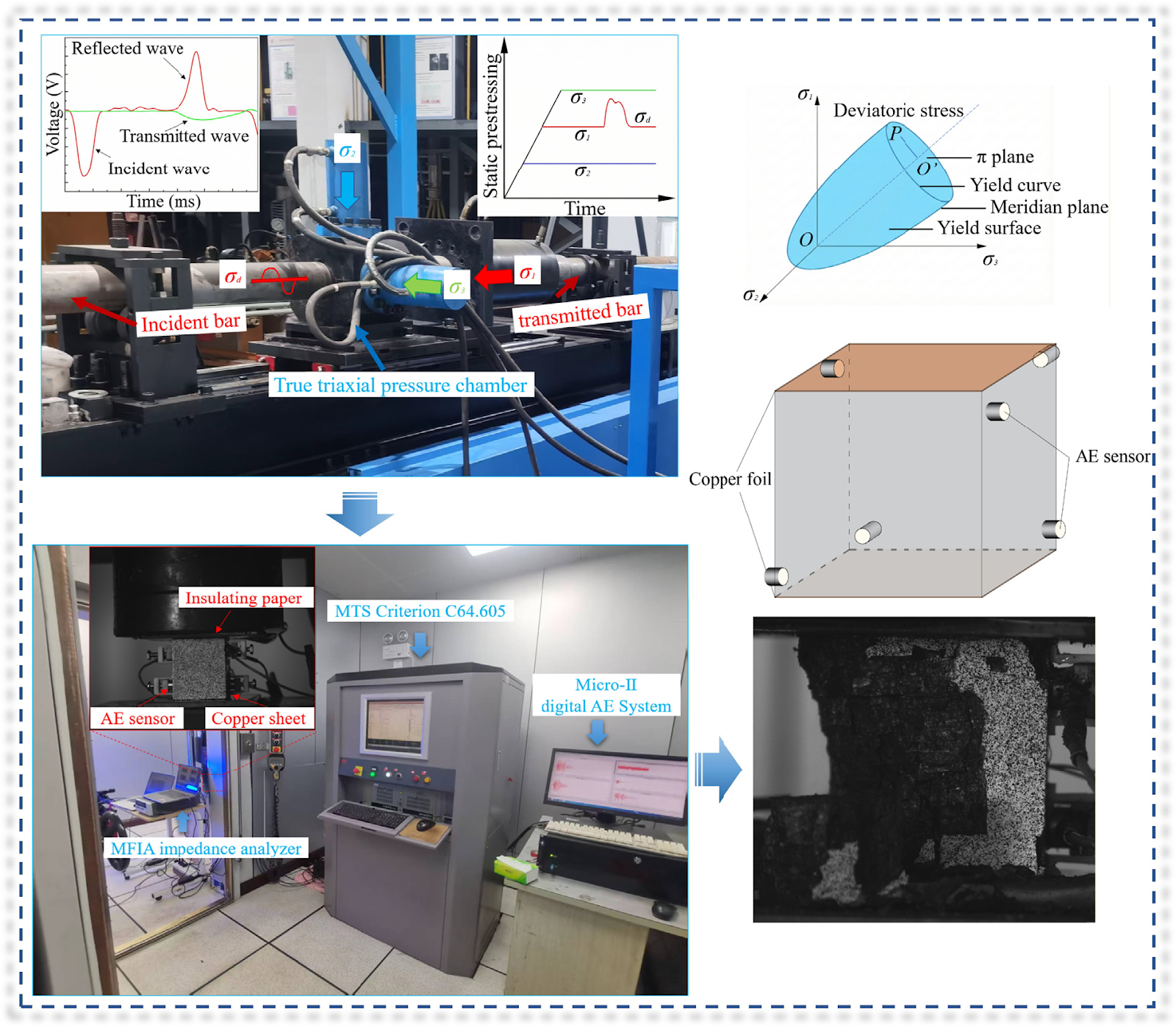
Investigation of coupled acoustic and electrical responses and early warning approaches during re-loading of damaged coal
Initial damage from engineering disturbances in deep coal mining degrades mechanical properties and heightens dynamic-hazard risks, challenging conventional monitoring. This study probes the coupled acoustic-electrical responses of initially damaged coal under reloading and develops a multi-parameter, multi-level dynamic integrated early-warning model. Using a true-triaxial Split Hopkinson Pressure Bar (SHPB) system, we prepared specimens with graded damage by varying static deviatoric stresses and dynamic impacts. Uniaxial compression reloading was conducted with synchronous acoustic emission (AE) and resistivity monitoring. Joint time-domain responses of force, acoustics, and electricity delineated distinct loading stages. Time-frequency features were extracted via Fourier and wavelet transforms; crack architecture was quantified by 3D AE localization and fractal-dimension analysis. Initial damage markedly reduced load-bearing capacity. Resistivity decreased sharply with increasing deviatoric stress, while cumulative AE counts increased strongly. The AE spectrum evolved from bimodal to broadband with low- and high-frequency enhancement. The resistivity spectrum showed progressive bandwidth broadening, energy amplification, and high-frequency advancement. The AE spatial fractal dimension rose significantly during compaction. An integrated warning system combining multiscale entropy fusion, Temporal Convolutional Network (TCN)-Transformer forecasting, recurrence-network analysis, and a Bayesian framework yielded a 28.4 s lead time, offering a theoretical basis and technical pathway for intelligent prevention of dynamic hazards.
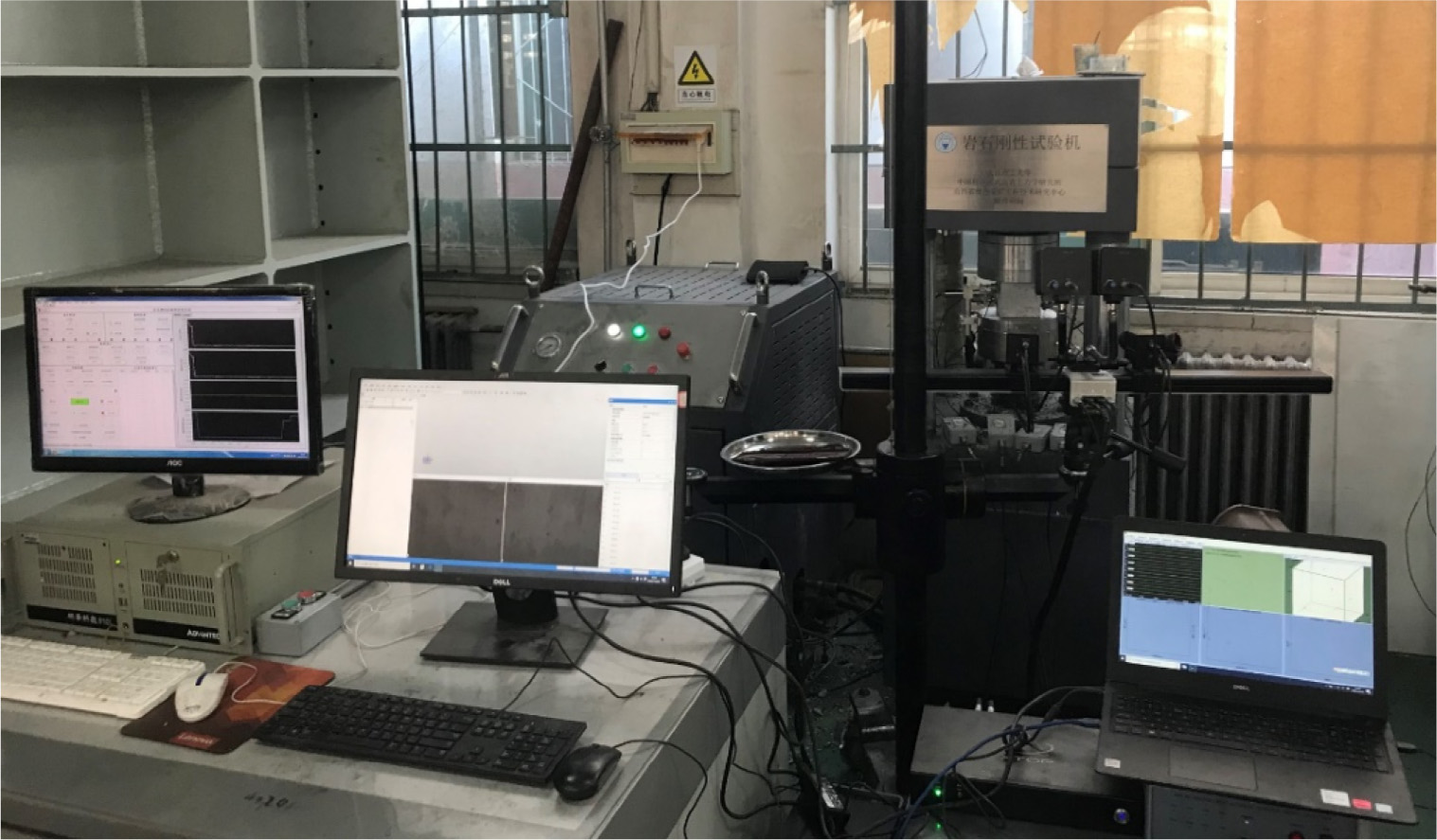
Influence of aggregate particle size on fracture behavior and energy evolution of cemented rockfill in the post-peak stage
Cemented rockfill (CRF) combines structural support with sustainable reuse of coal-derived solid waste. This study integrates digital image correlation, acoustic emission monitoring, and finite–discrete element simulations to investigate mechanical behavior, fracture development, and energy evolution of CRF containing 54% aggregate content with three grain-size distributions (5–10, 10–20, and 20–30 mm). Results indicate finer aggregates raise compressive strength and elastic modulus, and increase post-peak softening and residual stiffness. Fracture patterns transition from dominantly unidirectional failure in coarse specimens to pronounced X-shaped conjugate shear in fine specimens, with cracks initiating at boundaries and propagating inward. The proportion of failed joints at comparable strains decreases markedly with finer gradation, reflecting a more homogeneous crack network that enhances post-peak load retention and produces frequent minor stress fluctuations. Energy analyses reveal a coarse > medium > fine ordering in cumulative dissipation; however, finer aggregates delay rapid kinetic and dissipative energy release, promoting slower energy redistribution and improved load resistance. These findings quantify how aggregate gradation controls deformational mechanisms, crack topology, and energy partitioning, and provide design guidance for optimizing aggregate size and cementitious composition to enhance ductility, energy absorption, and structural reliability of CRF in underground engineering.