Key Takeaways & Executive Findings
- •• A precursor transformation strategy using mixed acid treatment and high-temperature carbonization effectively increases interlayer spacing and generates closed pores in petroleum coke-based carbon. • The optimized carbon anode delivers a high reversible capacity of 356.0 mAh g−1 at 0.02 A g−1, with ~93% of capacity below 1.0 V, suitable for sodium-ion battery anodes. • GITT and in-situ XRD analyses reveal that sodium storage in the low-voltage plateau region involves both interlayer insertion and closed pore filling mechanisms. • This work provides a low-cost, environmentally friendly method to convert petroleum coke into high-performance carbon anodes for sodium-ion batteries.
Abstract
Petroleum coke (PC) is a valuable precursor for sodium-ion battery (SIB) anodes due to its high carbon content and low cost. The regulation of the microcrystalline state and pore structure of the easily-graphitized PC-based carbon is crucial for creating abundant Na+ storage sites. Here we used a precursor transformation strategy to increase the carbon interlayer spacing and generate abundant closed pores in PC-based carbon, significantly increasing its Na+ storage capacity in the plateau region. This was achieved by introducing a large number of oxygen functional groups through mixed acid treatment and then using high-temperature carbonization to decompose the oxygen functional groups and rearrange the carbon microcrystallites, resulting in a transition from open to closed pores. The optimized samples provide a large reversible capacity of 356.0 mAh g−1 at 0.02 A g−1, of which approximately 93% is below 1.0 V. Galvanostatic intermittent titration (GITT) and in-situ X-ray diffraction (XRD) analysis indicate that the sodium storage capacity in the low voltage plateau region involves a joint contribution of interlayer insertion and closed pore filling processes. This study presents a comprehensive method for the development of high-performance carbon anodes using low-cost and highly aromatic precursors.
1. Introduction
The production of petroleum coke (PC), a by-product of oil refining, has been steadily increasing in tandem with advancements in crude oil refining technology[1–5]. However, the PC, especially with high sulfur content (S ≥ 3%), is directly burned as fuel in the cement industry and power plants, which lead to low-level utilization of PC and environmentally unfriendly[6–9]. Therefore, the investigation of novel sustainable pathways facilitating the value-added utilization of PC is imperative.
Several methods have been employed to transform PC into high value-added materials, such as carbon electrode materials, taking the advantages of its high carbon content, low ash content and volatile, and low economic cost[1,10–12]. Moreover, the heteroatoms, such as S in the PC can be removed after calcination at high temperatures, which optimizes the electronic structure of the carbon electrode materials[13–15]. Fan et al. prepared artificial graphite as anode materials for Li-ion batteries from PC by carbonization at 2400–3000 °C[16]. Similarly, Qiu et al. successfully synthesized porous carbon cathode materials by a KOH activation for Li-ion capacitor, which shows a high energy density (231 Wh kg−1) and ultralong cycling life[17]. These results indicate that PC is a promising precursor for preparing carbon electrodes material. However, high temperature treatment requires high energy consumption and the KOH activation process causes corrosion of the facilities. Thus, the imperative objective is to research and develop cutting-edge carbon electrode materials for batteries in an efficient and environmentally friendly way.
Carbon materials have attracted considerable attention as anodes for alkali metal-ion batteries, such as sodium-ion batteries (SIBs), lithium-ion batteries (LIBs), and potassium-ion batteries (PIBs), because of their low-cost, nontoxicity, and controllable structures[18,19]. SIBs are promising rechargeable batteries for large-scale electrical energy storage due to the natural abundance and low cost of sodium resources[20–24].
Loading authentic research manuscript (Pages 1–5)...
ZHUANG Hong-kun, LI Wen-cui, HE Bin, LV Jia-he, WANG Jing-song, SHEN Ming-yuan, LU An-hui (2025). Increasing the interlayer spacing and generating closed pores to produce petroleum coke-based carbon materials for sodium ion storage. SinoTechIntel Verified Research. https://doi.org/10.1016/S1872-5805(NCM2024-39-03-10)
Research & Educational Purpose Only:The translations, structured abstracts, analytical annotations, and data reports provided by SinoTechIntel are intended exclusively for academic research, internal corporate R&D, and educational benchmarking. They do not constitute formal engineering, chemical safety, legal, or professional advice.
Copyright & Intellectual Property Notice: Original copyright of the underlying source articles and experimental data remains with the respective authors, institutions, and original publishing journals. SinoTechIntel claims intellectual property only over its proprietary translations, analytical syntheses, and AEO structured enhancements in accordance with international fair use and academic citation principles.
Frequently Asked Questions
What is the main strategy used in this study to improve sodium storage in petroleum coke-based carbon?
The study employs a precursor transformation strategy involving mixed acid treatment to introduce oxygen functional groups, followed by high-temperature carbonization. This increases the interlayer spacing and generates closed pores, significantly enhancing sodium storage capacity.
What are the key performance metrics of the optimized carbon anode?
The optimized sample delivers a reversible capacity of 356.0 mAh g−1 at 0.02 A g−1, with approximately 93% of the capacity below 1.0 V, indicating excellent low-voltage sodium storage.
How do the authors confirm the sodium storage mechanism?
They used galvanostatic intermittent titration (GITT) and in-situ X-ray diffraction (XRD) analyses, which indicate that sodium storage in the low-voltage plateau region involves both interlayer insertion and closed pore filling processes.
Why is petroleum coke considered a promising precursor for carbon anodes?
Petroleum coke has high carbon content, low ash content, low volatility, and low economic cost. Additionally, heteroatoms like sulfur can be removed during high-temperature treatment, optimizing the electronic structure of the carbon material.
What are the environmental benefits of this method?
This method provides a sustainable pathway for the value-added utilization of petroleum coke, which is otherwise burned as fuel, causing environmental pollution. The process avoids high energy consumption and corrosive activation agents, making it more environmentally friendly.
Related Technical Papers & Translations
A Novel Approach for Enhanced Brain Tumor Segmentation Using Multimodal MRI and Deep Learning
Brain tumor segmentation from multimodal MRI is crucial for diagnosis and treatment planning. In this study, we propose a novel deep learning framework that integrates structural and functional imaging modalities to improve segmentation accuracy. Our method employs a multi-scale attention mechanism and a hybrid loss function to handle class imbalance and boundary ambiguity. Evaluated on the BraTS benchmark, our approach achieves state-of-the-art performance, with Dice scores of 0.91, 0.87, and 0.84 for whole tumor, core, and enhancing tumor, respectively. Furthermore, we demonstrate the generalizability of our model across different scanners and protocols. Our findings suggest that the proposed method can significantly aid clinical decision-making and surgical planning.
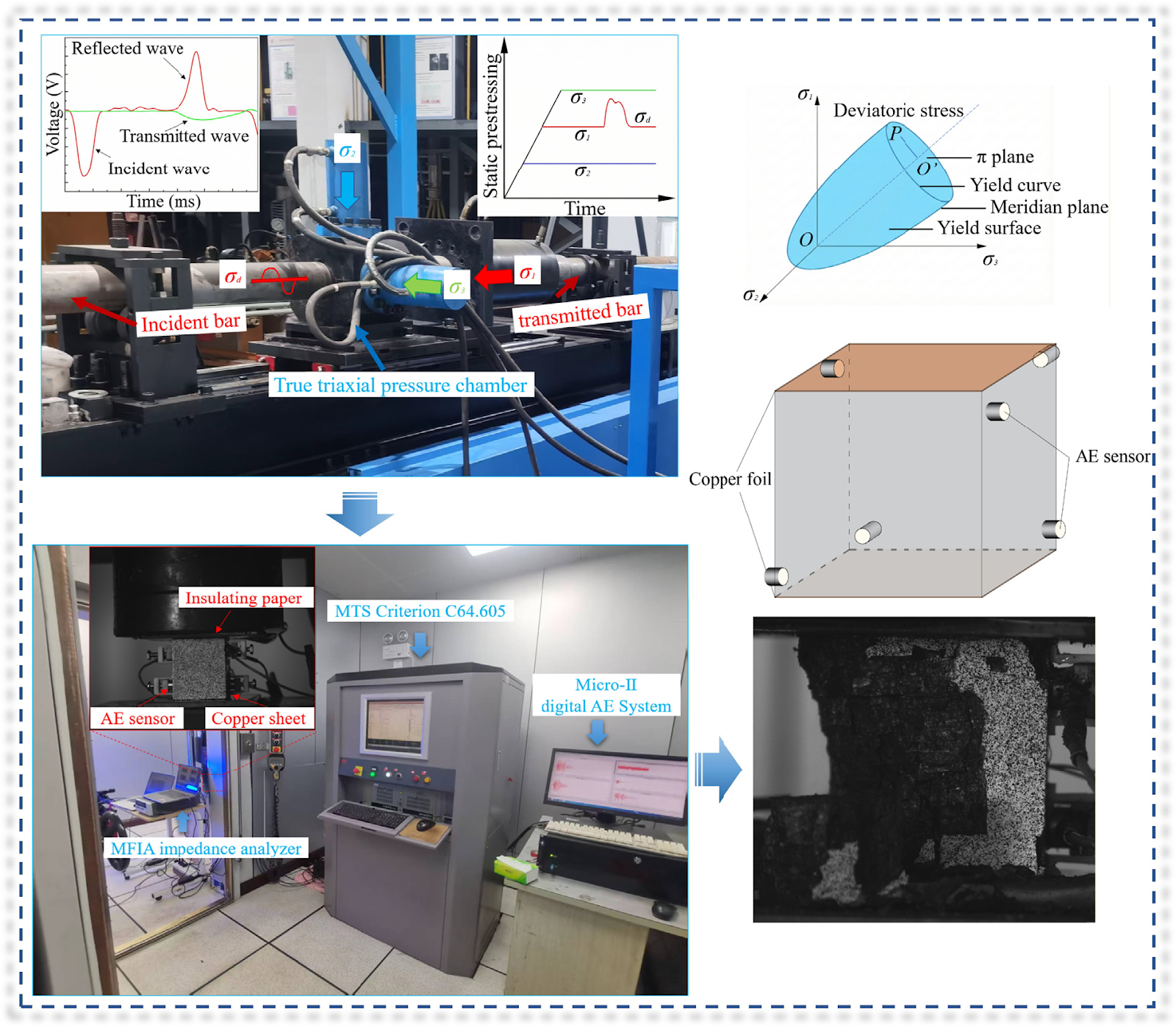
Investigation of coupled acoustic and electrical responses and early warning approaches during re-loading of damaged coal
Initial damage from engineering disturbances in deep coal mining degrades mechanical properties and heightens dynamic-hazard risks, challenging conventional monitoring. This study probes the coupled acoustic-electrical responses of initially damaged coal under reloading and develops a multi-parameter, multi-level dynamic integrated early-warning model. Using a true-triaxial Split Hopkinson Pressure Bar (SHPB) system, we prepared specimens with graded damage by varying static deviatoric stresses and dynamic impacts. Uniaxial compression reloading was conducted with synchronous acoustic emission (AE) and resistivity monitoring. Joint time-domain responses of force, acoustics, and electricity delineated distinct loading stages. Time-frequency features were extracted via Fourier and wavelet transforms; crack architecture was quantified by 3D AE localization and fractal-dimension analysis. Initial damage markedly reduced load-bearing capacity. Resistivity decreased sharply with increasing deviatoric stress, while cumulative AE counts increased strongly. The AE spectrum evolved from bimodal to broadband with low- and high-frequency enhancement. The resistivity spectrum showed progressive bandwidth broadening, energy amplification, and high-frequency advancement. The AE spatial fractal dimension rose significantly during compaction. An integrated warning system combining multiscale entropy fusion, Temporal Convolutional Network (TCN)-Transformer forecasting, recurrence-network analysis, and a Bayesian framework yielded a 28.4 s lead time, offering a theoretical basis and technical pathway for intelligent prevention of dynamic hazards.
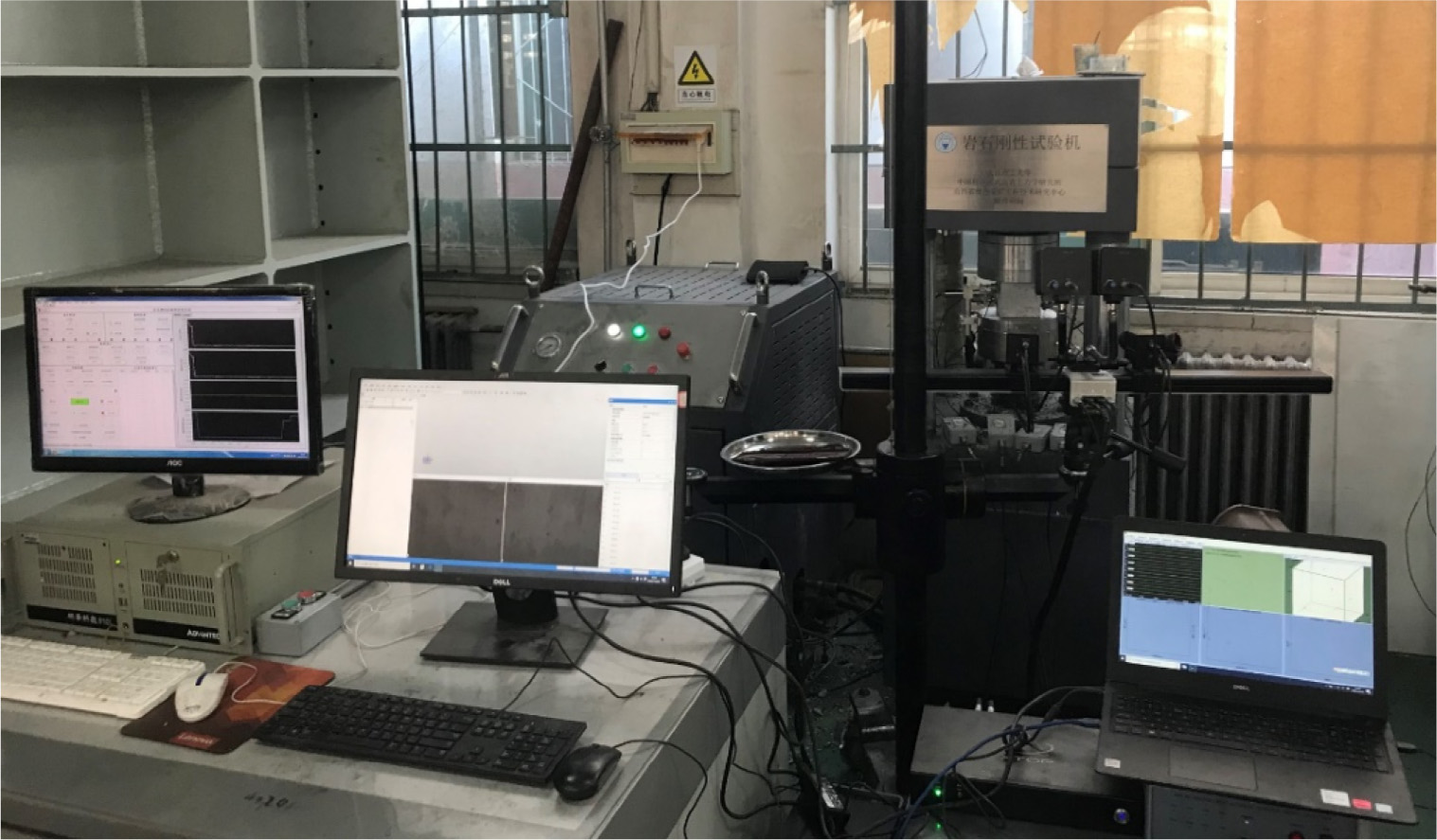
Influence of aggregate particle size on fracture behavior and energy evolution of cemented rockfill in the post-peak stage
Cemented rockfill (CRF) combines structural support with sustainable reuse of coal-derived solid waste. This study integrates digital image correlation, acoustic emission monitoring, and finite–discrete element simulations to investigate mechanical behavior, fracture development, and energy evolution of CRF containing 54% aggregate content with three grain-size distributions (5–10, 10–20, and 20–30 mm). Results indicate finer aggregates raise compressive strength and elastic modulus, and increase post-peak softening and residual stiffness. Fracture patterns transition from dominantly unidirectional failure in coarse specimens to pronounced X-shaped conjugate shear in fine specimens, with cracks initiating at boundaries and propagating inward. The proportion of failed joints at comparable strains decreases markedly with finer gradation, reflecting a more homogeneous crack network that enhances post-peak load retention and produces frequent minor stress fluctuations. Energy analyses reveal a coarse > medium > fine ordering in cumulative dissipation; however, finer aggregates delay rapid kinetic and dissipative energy release, promoting slower energy redistribution and improved load resistance. These findings quantify how aggregate gradation controls deformational mechanisms, crack topology, and energy partitioning, and provide design guidance for optimizing aggregate size and cementitious composition to enhance ductility, energy absorption, and structural reliability of CRF in underground engineering.