SinoTechIntel Academic Portal
🏛️ Indexed Academic JournalImpact Factor: 3.8

Int. Journal of Mining Science and Technology (采矿与安全工程)

Authoritative peer-reviewed journal in materials science, metallurgy, chemistry and engineering technologies: Int. Journal of Mining Science and Technology (采矿与安全工程)

Total Research Papers: 147
Access: 100% Free Open Access
Browse by Publication Year & VolumeReset All Filters ✕

Published Research PapersFiltered: Year 2026 • Vol. 32

Showing 146 of 147 peer-reviewed papers with full Graphical Abstracts.

Original ResearchVol. 32, Issue 1 • pp. 100-112DOI: 10.1016/j.ijmst.2026.01.004Jan 15, 2026

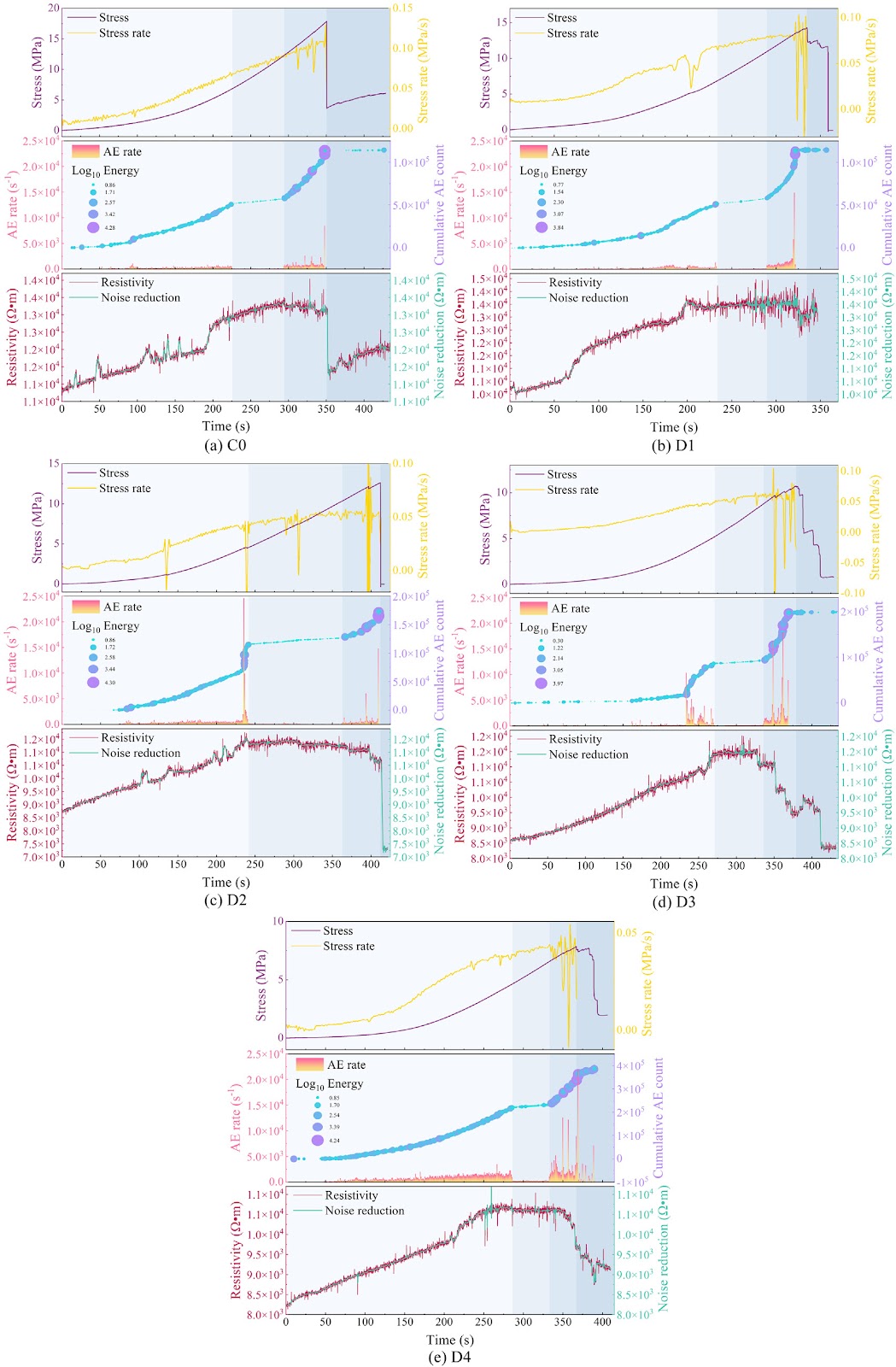
Investigation of coupled acoustic and electrical responses and early warning approaches during re-loading of damaged coal

Authors: Xiayan Zhang, Enyuan Wang, Rongxi Shen, Huihan Yang, Haishan Jia, Shenglei Zhao, Zhoujie Gu, Zhenhua Hu, Chong Li, Meng Wang

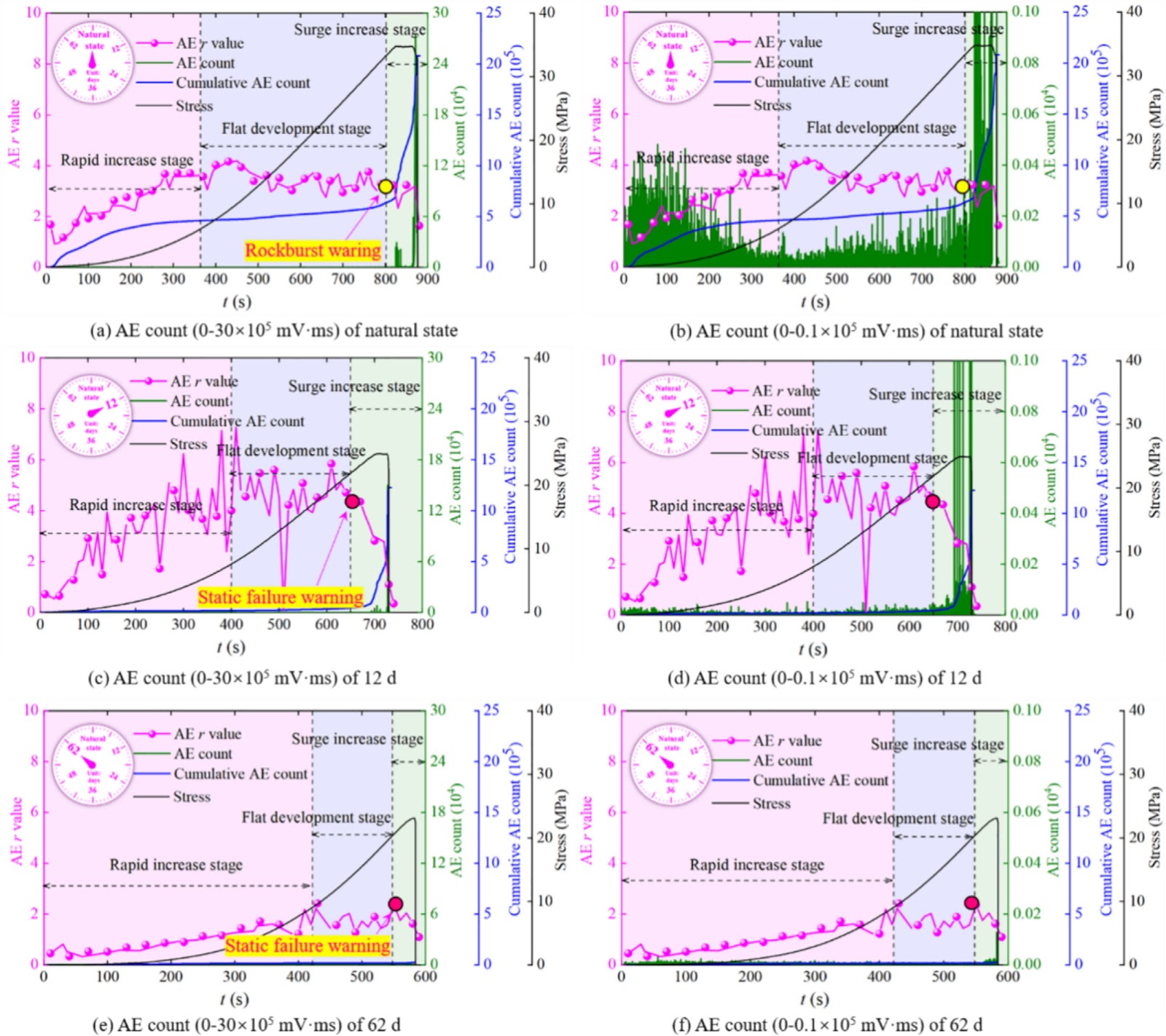
Initial damage from engineering disturbances in deep coal mining degrades mechanical properties and heightens dynamic-hazard risks, challenging conventional monitoring. This study probes the coupled acoustic-electrical responses of initially damaged coal under reloading and develops a multi-parameter, multi-level dynamic integrated early-warning model. Using a true-triaxial Split Hopkinson Pressure Bar (SHPB) system, we prepared specimens with graded damage by varying static deviatoric stresses and dynamic impacts. Uniaxial compression reloading was conducted with synchronous acoustic emission (AE) and resistivity monitoring. Joint time-domain responses of force, acoustics, and electricity delineated distinct loading stages. Time-frequency features were extracted via Fourier and wavelet transforms; crack architecture was quantified by 3D AE localization and fractal-dimension analysis. Initial damage markedly reduced load-bearing capacity. Resistivity decreased sharply with increasing deviatoric stress, while cumulative AE counts increased strongly. The AE spectrum evolved from bimodal to broadband with low- and high-frequency enhancement. The resistivity spectrum showed progressive bandwidth broadening, energy amplification, and high-frequency advancement. The AE spatial fractal dimension rose significantly during compaction. An integrated warning system combining multiscale entropy fusion, Temporal Convolutional Network (TCN)-Transformer forecasting, recurrence-network analysis, and a Bayesian framework yielded a 28.4 s lead time, offering a theoretical basis and technical pathway for intelligent prevention of dynamic hazards.
Investigation of coupled acoustic and electrical responses and early warning approaches during re-loading of damaged coal
Graphical Abstract
Original ResearchVol. 32, Issue 1 • pp. 100-112DOI: 10.1016/j.ijmst.2026.01.003Jan 15, 2026

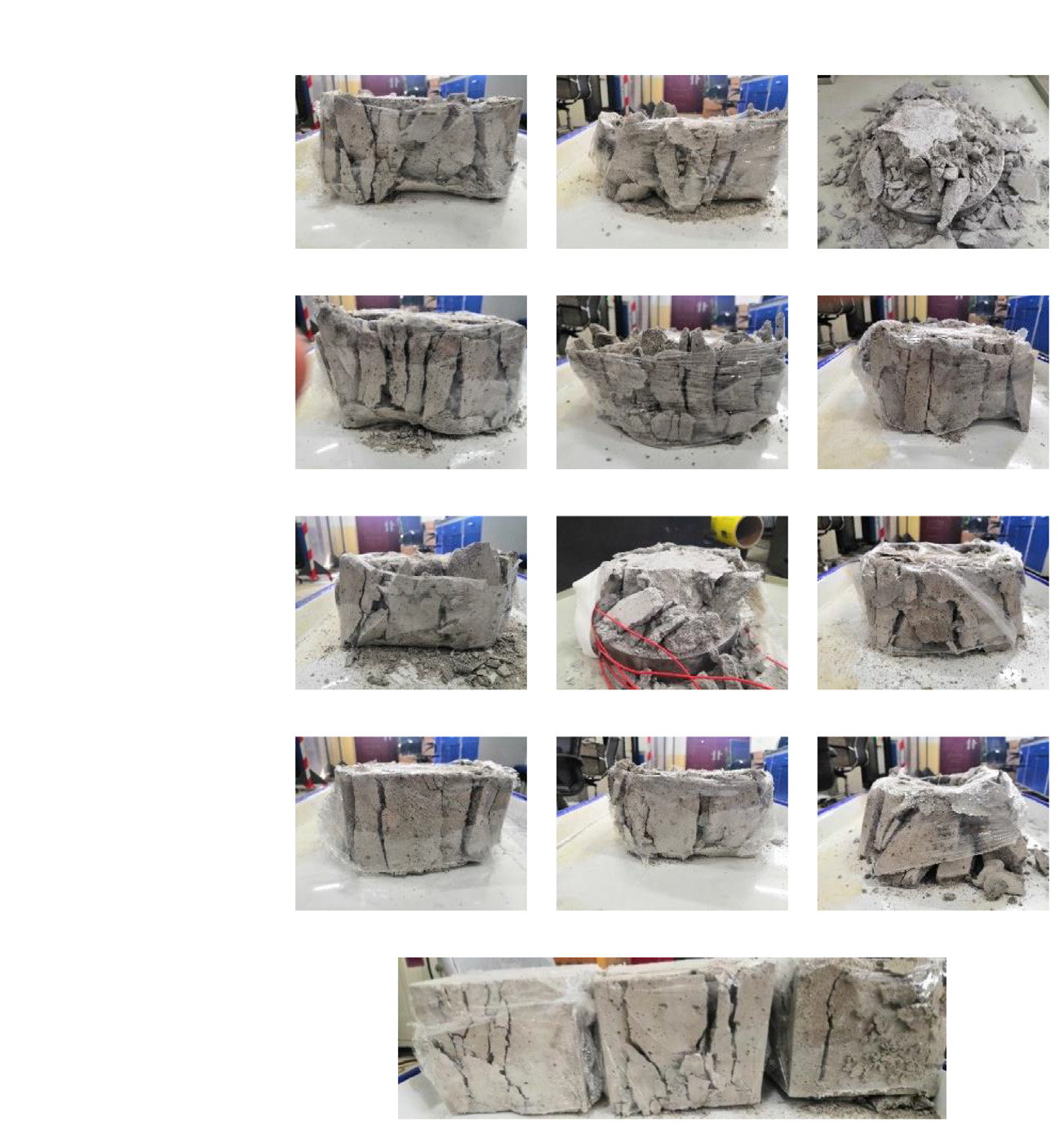
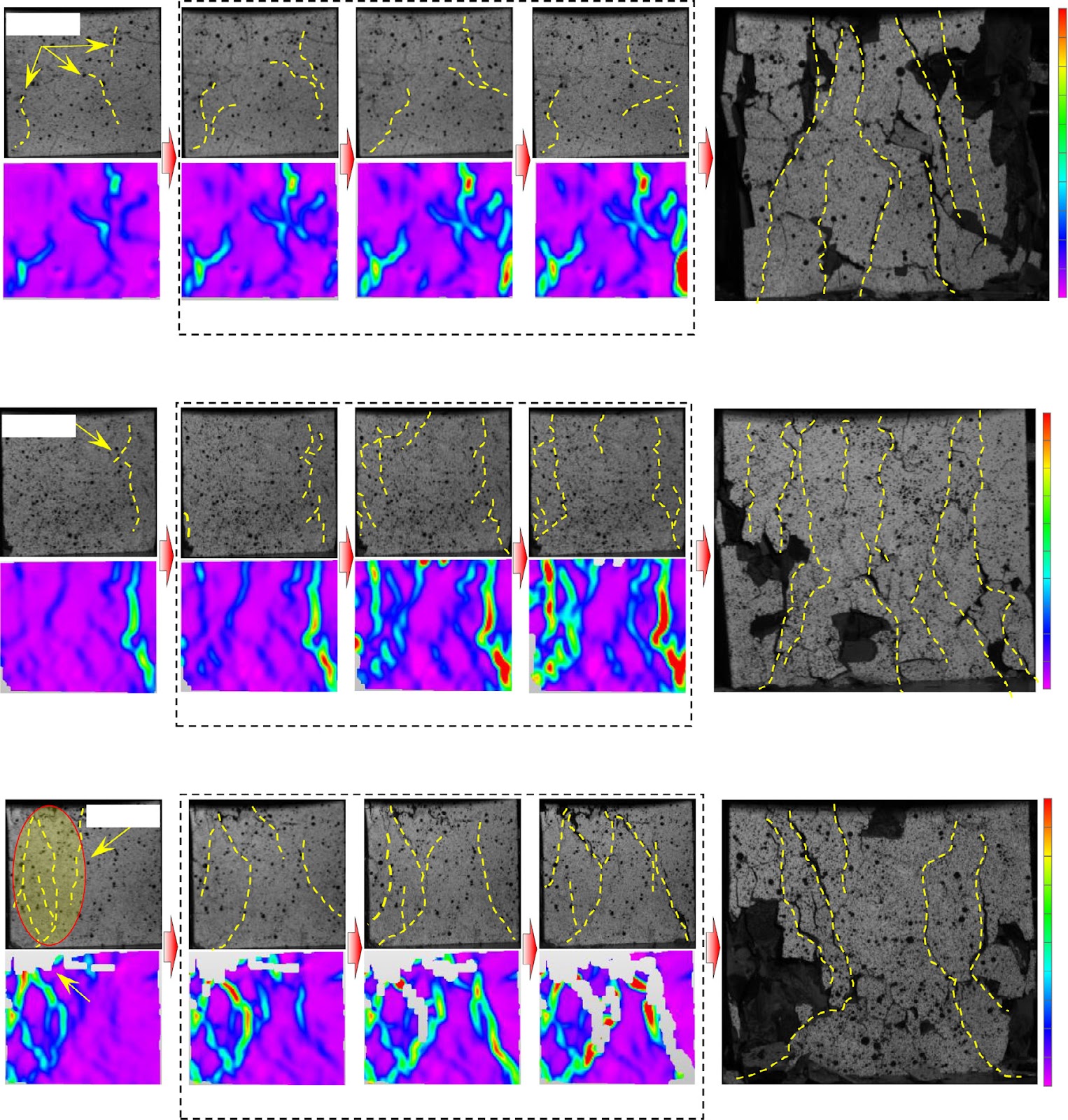
Influence of Aggregate Particle Size on Fracture Behavior and Energy Evolution of Cemented Rockfill in the Post-Peak Stage

Authors: Zhu Li, Weibing Zhu, Qingdong Qu, Jialin Xu, Guorui Feng, Chunlei Guo, Jingmin Xu

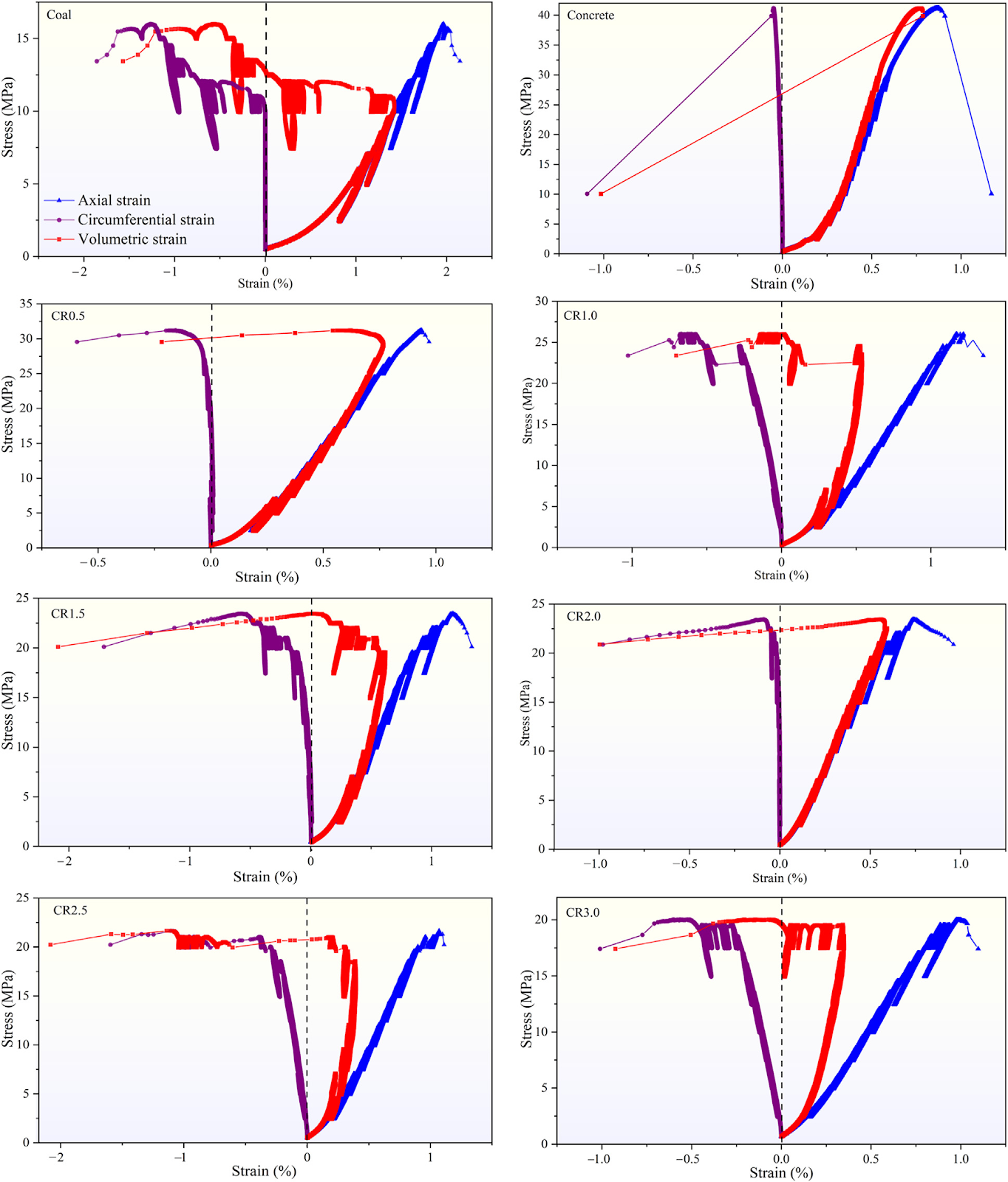
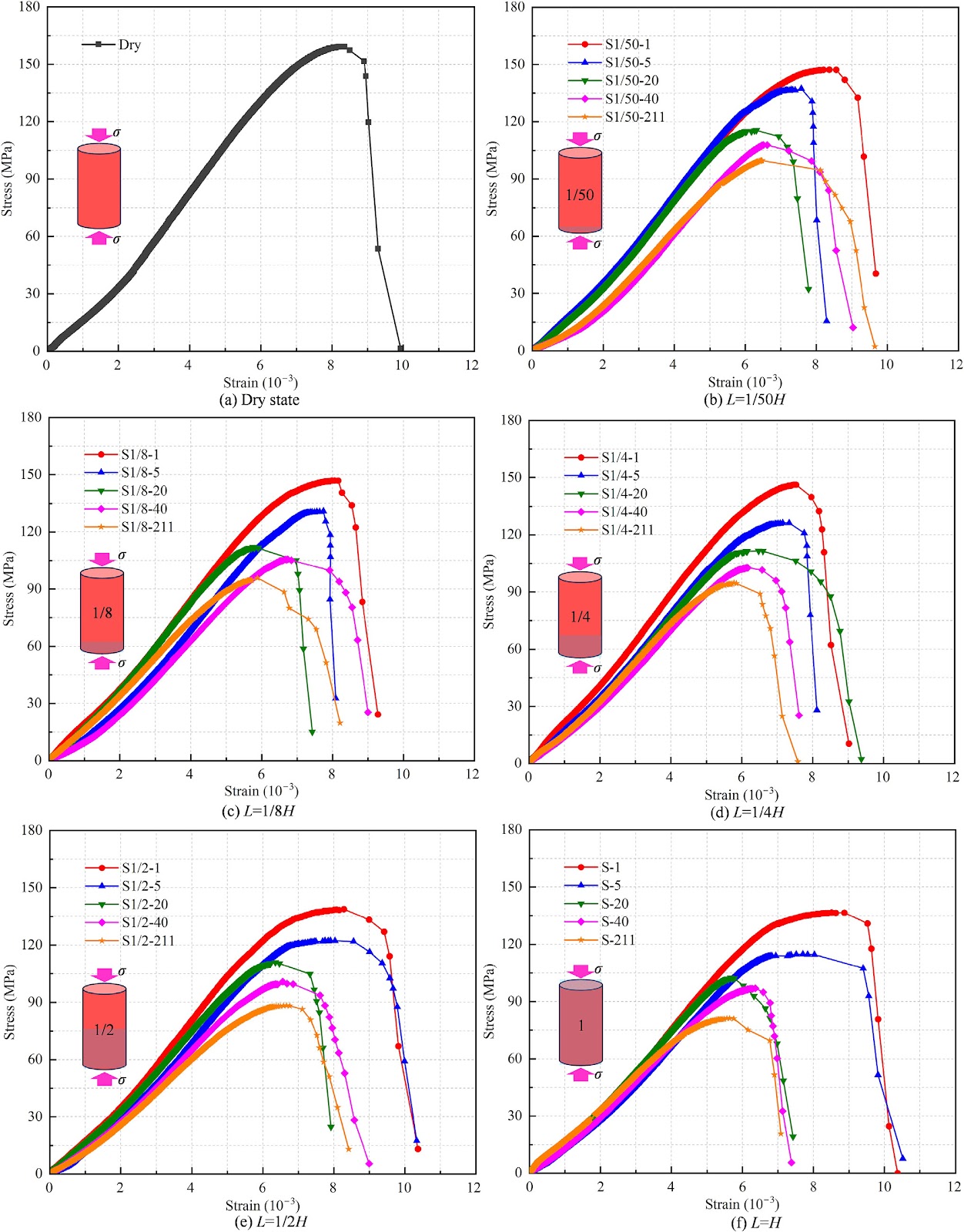
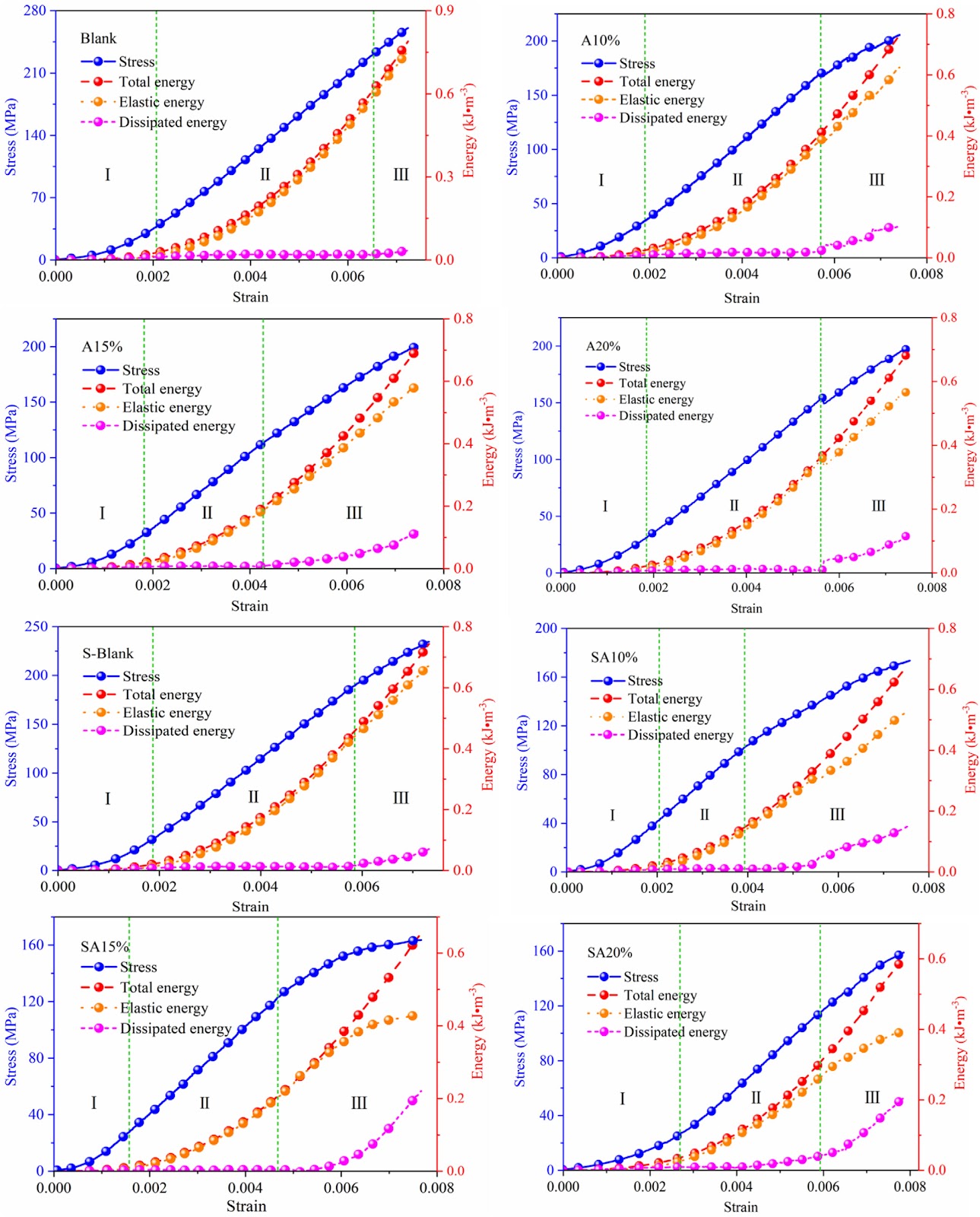
Cemented rockfill (CRF) combines structural support with sustainable reuse of coal-derived solid waste. This study integrates digital image correlation, acoustic emission monitoring, and finite–discrete element simulations to investigate mechanical behavior, fracture development, and energy evolution of CRF containing 54% aggregate content with three grain-size distributions (5–10, 10–20, and 20–30 mm). Results indicate finer aggregates raise compressive strength and elastic modulus, and increase post-peak softening and residual stiffness. Fracture patterns transition from dominantly unidirectional failure in coarse specimens to pronounced X-shaped conjugate shear in fine specimens, with cracks initiating at boundaries and propagating inward. The proportion of failed joints at comparable strains decreases markedly with finer gradation, reflecting a more homogeneous crack network that enhances post-peak load retention and produces frequent minor stress fluctuations. Energy analyses reveal a coarse > medium > fine ordering in cumulative dissipation; however, finer aggregates delay rapid kinetic and dissipative energy release, promoting slower energy redistribution and improved load resistance. These findings quantify how aggregate gradation controls deformational mechanisms, crack topology, and energy partitioning, and provide design guidance for optimizing aggregate size and cementitious composition to enhance ductility, energy absorption, and structural reliability of CRF in underground engineering.

Influence of Aggregate Particle Size on Fracture Behavior and Energy Evolution of Cemented Rockfill in the Post-Peak Stage
Graphical Abstract
Original ResearchVol. 32, Issue 1 • pp. 100-112DOI: 10.1016/j.ijmst.2026.01.002Jan 15, 2026

Load-bearing characteristics of backfilling solids in deep mining under flexible passive confining pressure: An experimental study

Authors: JU Minghe, ZHANG Bo, YU Liyuan, HU Chaohan, LI Baiyi, GU Wenzhe, DOU Linming, ZHANG Qiang, JI Hao, CHENG Ruyi

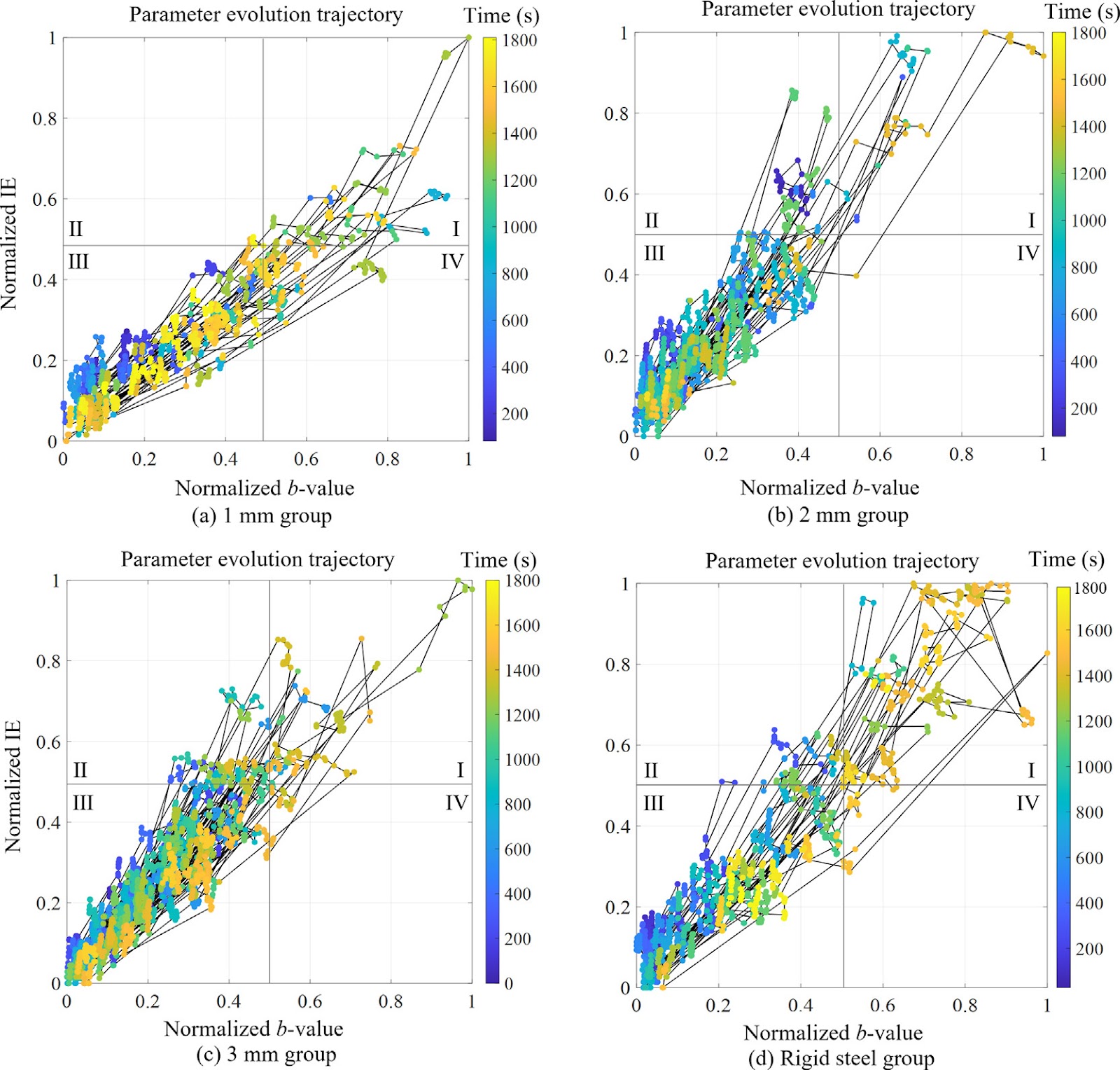
To address the deviation between rigid confining pressure experiments and actual engineering conditions of deep backfill mining, where backfill near the working face has less confining pressure, while that in deep goaf areas is under high confining pressure, this study investigates the load-bearing characteristics of rock granular materials under flexible passive confining pressure. Customized PC molds with varying wall thicknesses and rigid steel molds were used to construct a gradient confining pressure environment. Compression tests were conducted, combined with the characterization of acoustic emission (AE) monitoring, strain measurement, particle sieving, and scanning electron microscopy (SEM) observation. The results show that flexible passive confining pressure divides the particle compression process into three stages that are different from those under traditional rigid constraints, namely the initial compaction stage, the crushing failure stage, and the lateral confinement-dominated stage. AE signals exhibit a bimodal energy distribution, and the time interval between the two can vary by more than 4 times with changes. The failure modes transition from shear to tension. Compared with intact materials, granular materials under lateral confinement maintain continuous volume contraction, and can even maintain a continuous volume contraction trend at least when the strain reaches 8%. And lateral confinement stiffness significantly enhances axial bearing capacity: when the axial strain reaches 30%, the axial stress in the rigid confinement group is nearly 5 times that in the flexible confinement group. Fractal dimension increases from 1.94 to 2.39 as the confinement stiffness rises. This study clarifies the influence mechanism of lateral confinement stiffness on granular mechanics, providing fundamental support for optimizing backfill design based on goaf locations and improving surrounding rock control in deep green mining.

Load-bearing characteristics of backfilling solids in deep mining under flexible passive confining pressure: An experimental study
Graphical Abstract
Original ResearchVol. 32, Issue 1 • pp. 100-112DOI: 10.1016/j.ijmst.2026.01.001Jan 15, 2026

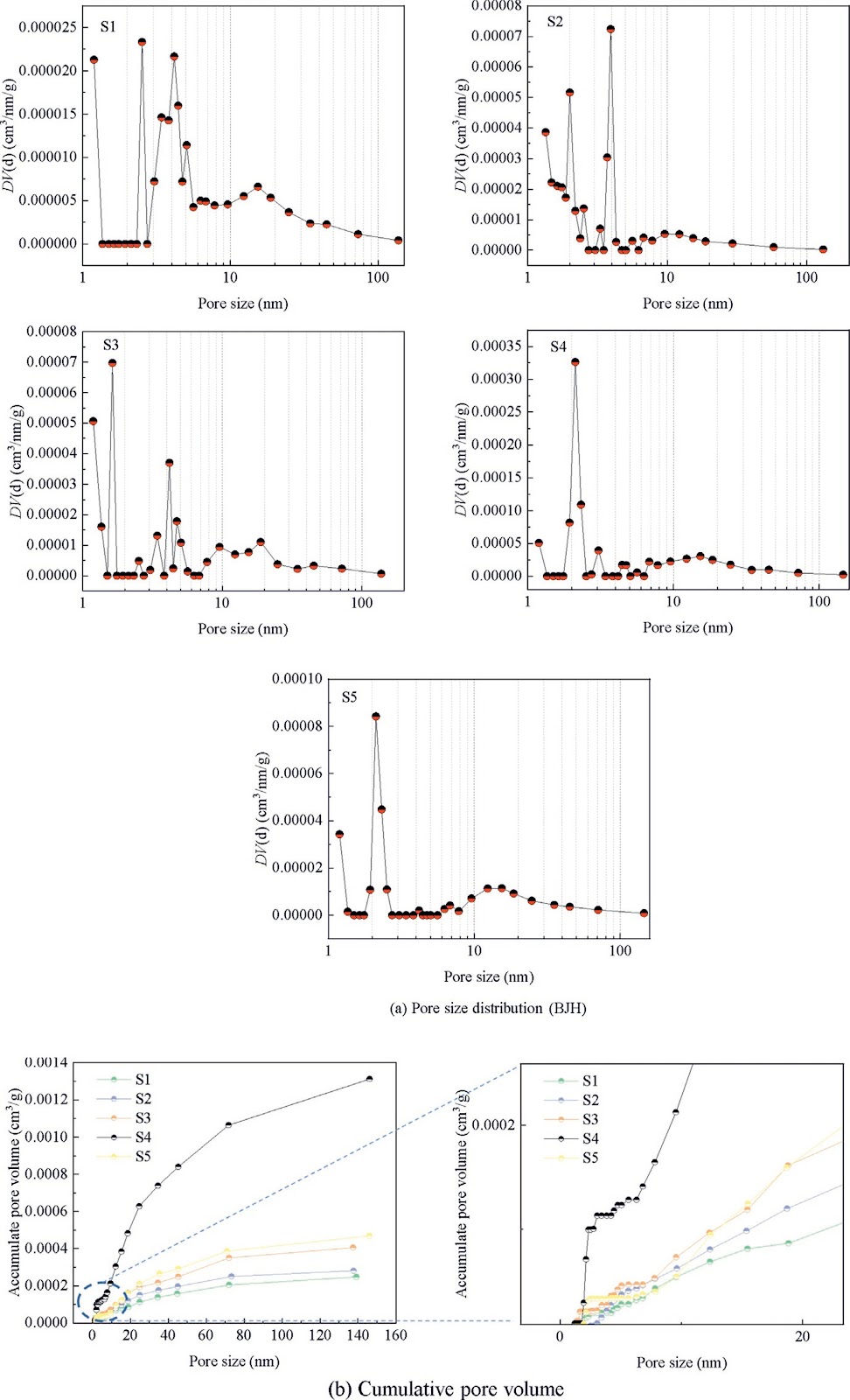
Influence mechanism of pore structure evolution on oxygen consumption dynamics during low-temperature oxidation of igneous metamorphic coal

Authors: Xu Shao, Botao Qin, Quanlin Shi, Ziwei Li, Bao Qu, Shibo Xu, Junyu Wang, Mingyue Weng

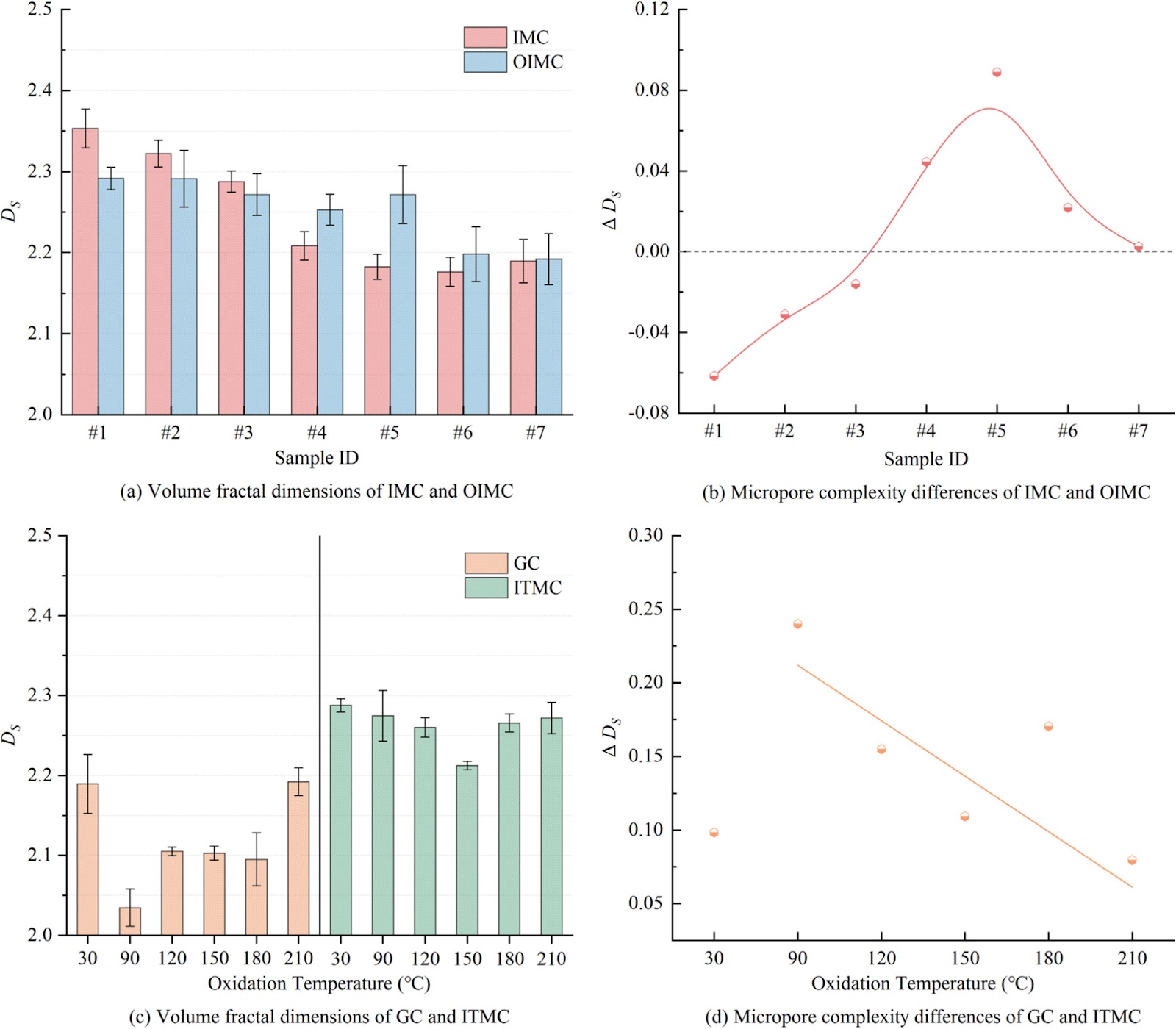
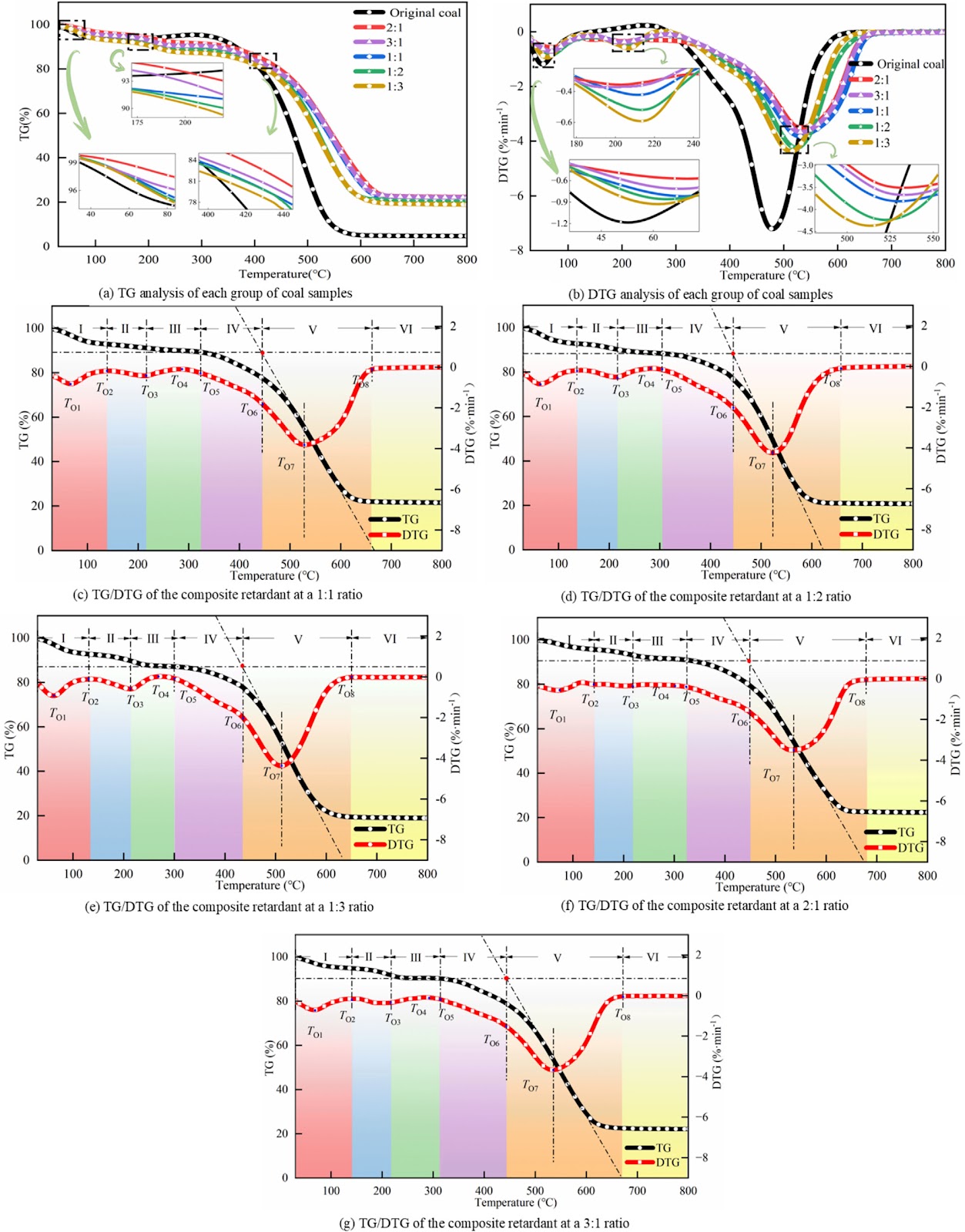
In igneous-intruded coal seams, coal undergoes significant metamorphism, which critically alters its pore structure and oxygen consumption dynamics, thereby elevating its spontaneous combustion tendency. This study investigates the specific surface area, pore volume, structure complexity/connectivity, heterogeneity/local features of pore size distribution, and oxygen consumption dynamics of igneous metamorphic coal through N2/CO2 isothermal adsorption tests and low-temperature oxidation experiments, and elucidates the influence mechanisms of pore structure evolution on oxygen consumption dynamics during low-temperature oxidation. With increasing metamorphic degree, igneous metamorphic coal exhibits a more pronounced reduction in specific surface area during oxidation, while the increase in structure complexity due to coal-oxygen reactions is suppressed. Thermally metamorphic coal demonstrates accelerated oxygen consumption, with oxidation amplifying the difference in reaction rates compared to raw coal. Key mechanisms include oxidation-induced reduction in mesopore complexity and micropore volume, decreased dominance of small-pore-volume apertures, and increased heterogeneity, collectively leading to a lower half-oxygen-consuming temperature and steeper oxygen consumption curves. Simultaneously, increased pore volume/complexity and reduced uniformity/connectivity act synergistically to enhance oxygen consumption capacity, highlighting the coupling between pore structure evolution and oxidation behavior in igneous metamorphic coal. This study provides theoretical insights into the pore-oxygen coupling mechanisms governing coal spontaneous combustion in igneous intrusion areas.

Influence mechanism of pore structure evolution on oxygen consumption dynamics during low-temperature oxidation of igneous metamorphic coal
Graphical Abstract
Original ResearchVol. 32, Issue 1 • pp. 100-112DOI: 10.1016/j.ijmst.2026.01.008Jan 15, 2026

Coupled TM-damage modeling and global sensitivity analysis of thermal spalling in heterogeneous rocks

Authors: LIU Liyuan, SHI Mingshan, ELSWORTH Derek, WANG Tao, JI Hongguang, ZHANG Le, LI Yaohui

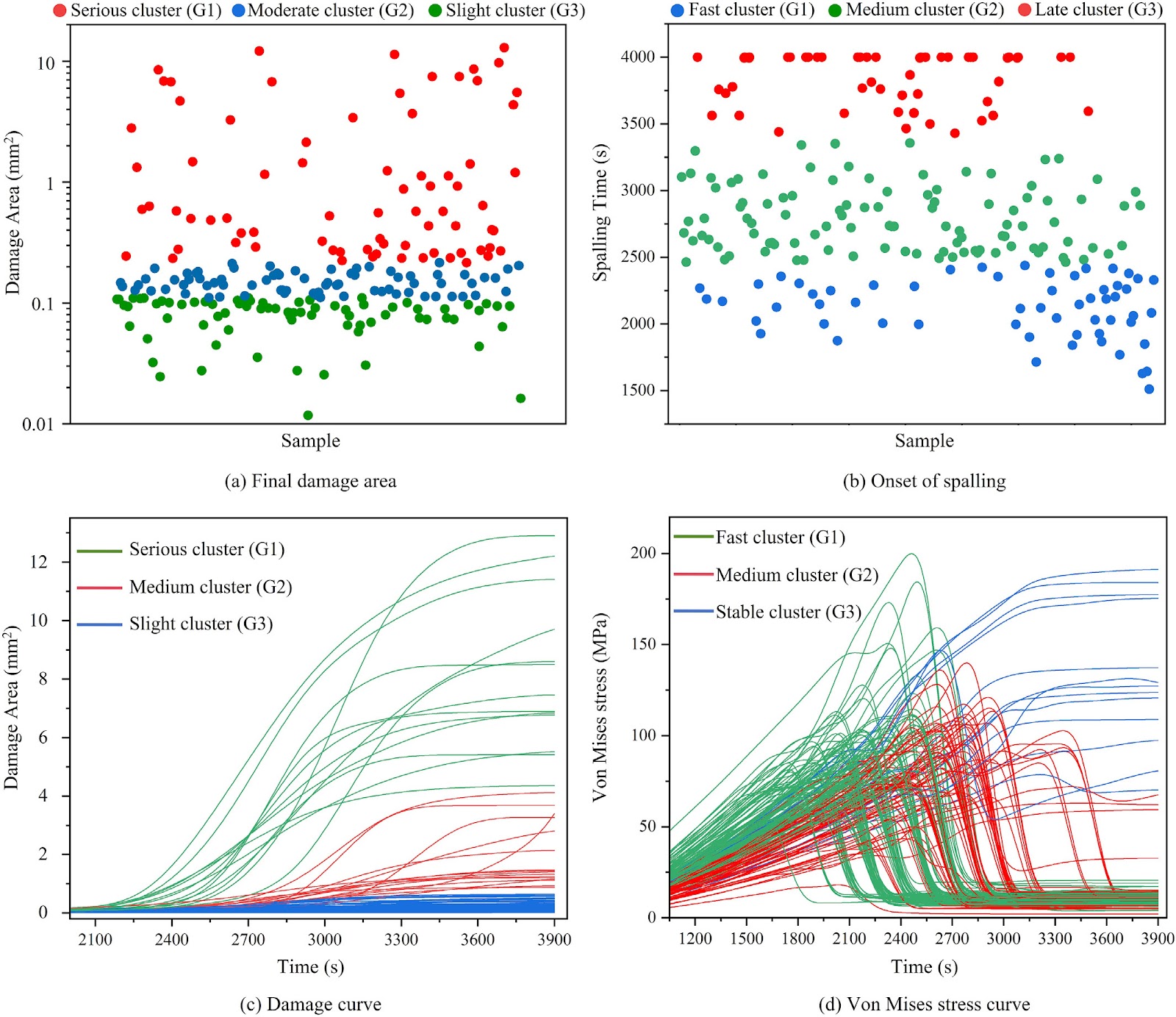
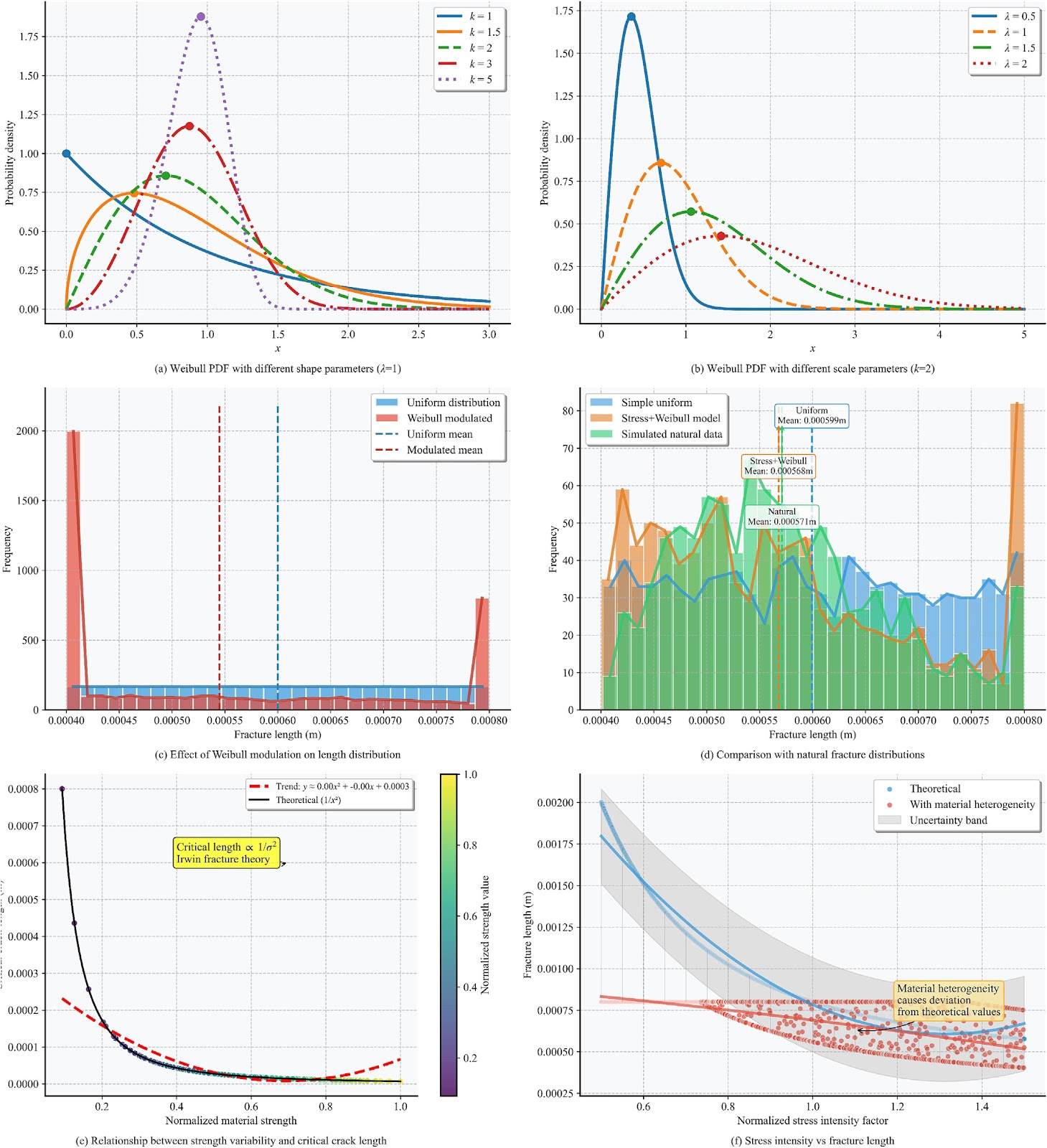
Thermal spalling in heterogeneous rocks under rapid heating poses critical risks to deep mining and geothermal operations. In this study, we develop a coupled thermal–mechanical–damage (TM-D) model that explicitly incorporates Weibull distributed heterogeneity to a single fracture in rock, and validate it against ceramic quenching and granite acoustic emission experiments. Distance based generalized sensitivity analysis (DGSA) is applied to quantify the influence and interactions of key parameters, revealing the dominant controls on spalling onset, severity, and damage morphology. The results demonstrate that thermal stress dominates crack initiation and propagation, that lateral constraints can significantly delay and suppress spalling, and that material heterogeneity markedly influences peak stress and damage modes within a certain range of thermal expansion coefficient and has multiple effects on thermal spalling. This study provides a theoretical basis for quantitative assessment and parameter optimization of thermal spalling processes in rock masses.

Coupled TM-damage modeling and global sensitivity analysis of thermal spalling in heterogeneous rocks
Graphical Abstract
Original ResearchVol. 32, Issue 1 • pp. 100-112DOI: 10.1016/j.ijmst.2026.01.006Jan 15, 2026

Investigation of Multiphase Fluid Seepage Behaviour in Abandoned Mines: Insights from Single Fracture to Network Scale

Authors: Kangsheng Xue, Hai Pu, Ming Li, Lulu Liu, Xiaoyan Liu, Dejun Liu

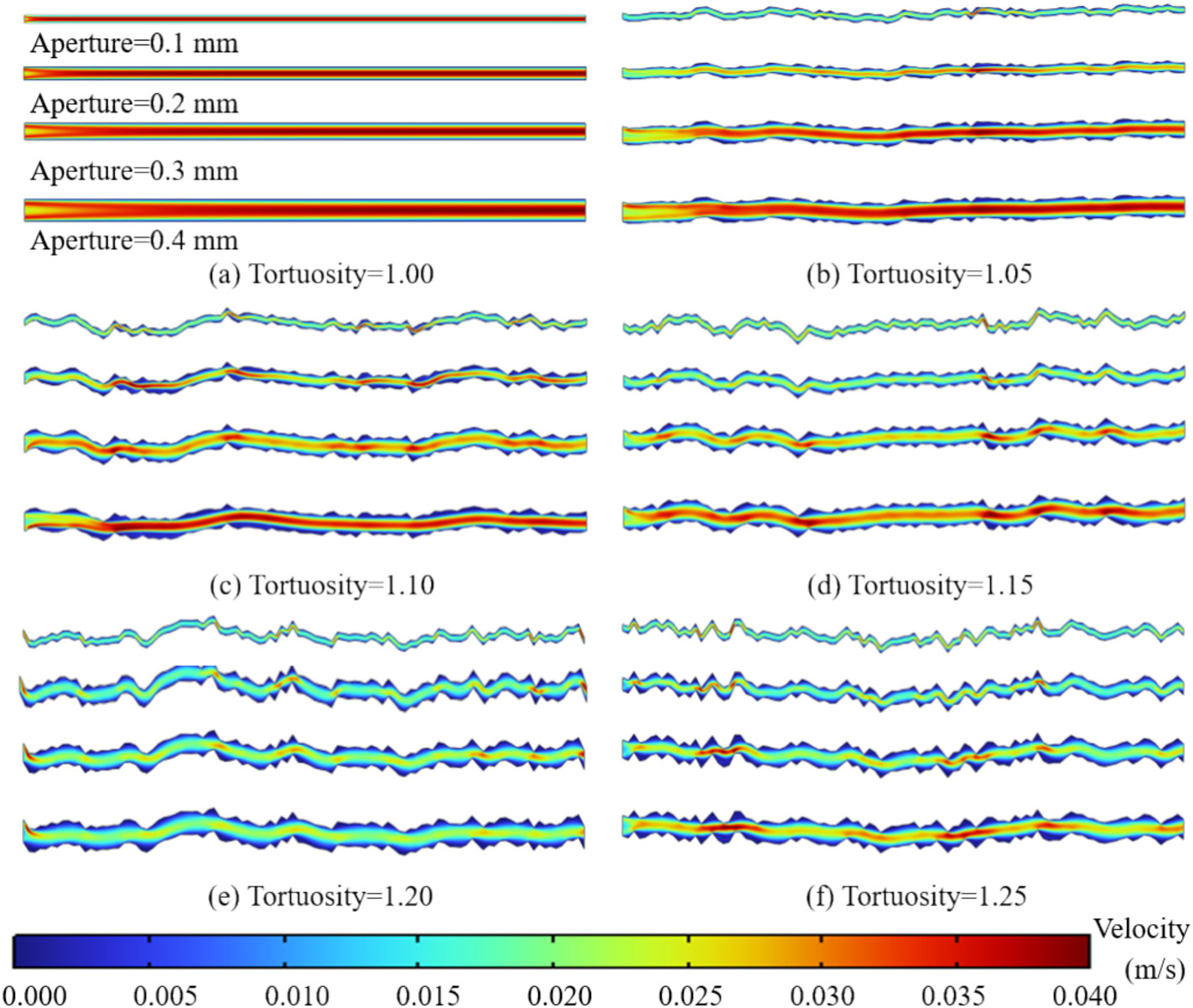
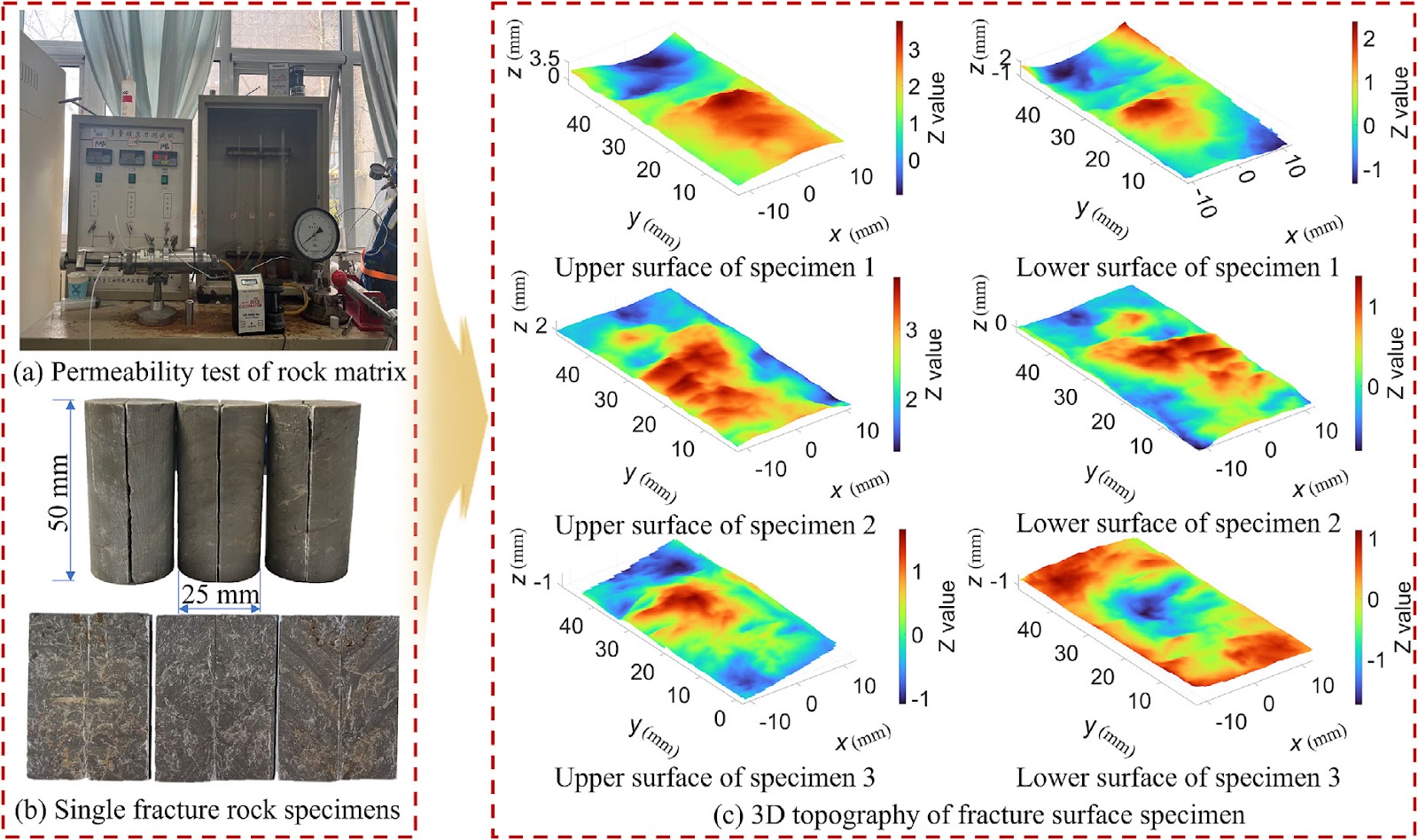
Quantifying two-phase fluid flow in fractured rocks is essential for resource reutilization in abandoned mines, subsurface energy recovery and underground waste isolation. This study develops a mathematical framework for predicting the permeability of rough fracture networks by integrating fractal geometry with single-phase and two-phase seepage theory. A permeability model for rough fracture networks is first established, and its sensitivity to key geometric parameters is analyzed. A second model is then formulated to relate water-phase saturation to measurable variables, enabling the estimation of two-phase permeability from Reynolds number and aperture. Model predictions show deviations of less than 10% from numerical simulations for both single-phase and two-phase flow, demonstrating the accuracy and robustness of the proposed approach. The results highlight the dominant roles of fracture number, tortuosity and aperture in controlling permeability, as well as the influence of flow regimes on relative permeability. The proposed framework provides a practical and physically based method for analyzing multiphase seepage in fractured rock and offers a foundation for further applications to field-scale fractured systems.

Investigation of Multiphase Fluid Seepage Behaviour in Abandoned Mines: Insights from Single Fracture to Network Scale
Graphical Abstract
Original ResearchVol. 32, Issue 2 • pp. 100-112DOI: 10.1016/j.ijmst.2026.02.008Jan 15, 2026

Tensile-Shear Collaborative Fracturing in Hard Rock Induced by a Controllable Free Surface: Mechanism and Application

Authors: Chenliang Hao, Longjun Dong, Fangzhen Fan, Xuewei Li, Ju Ma, Yihan Zhang

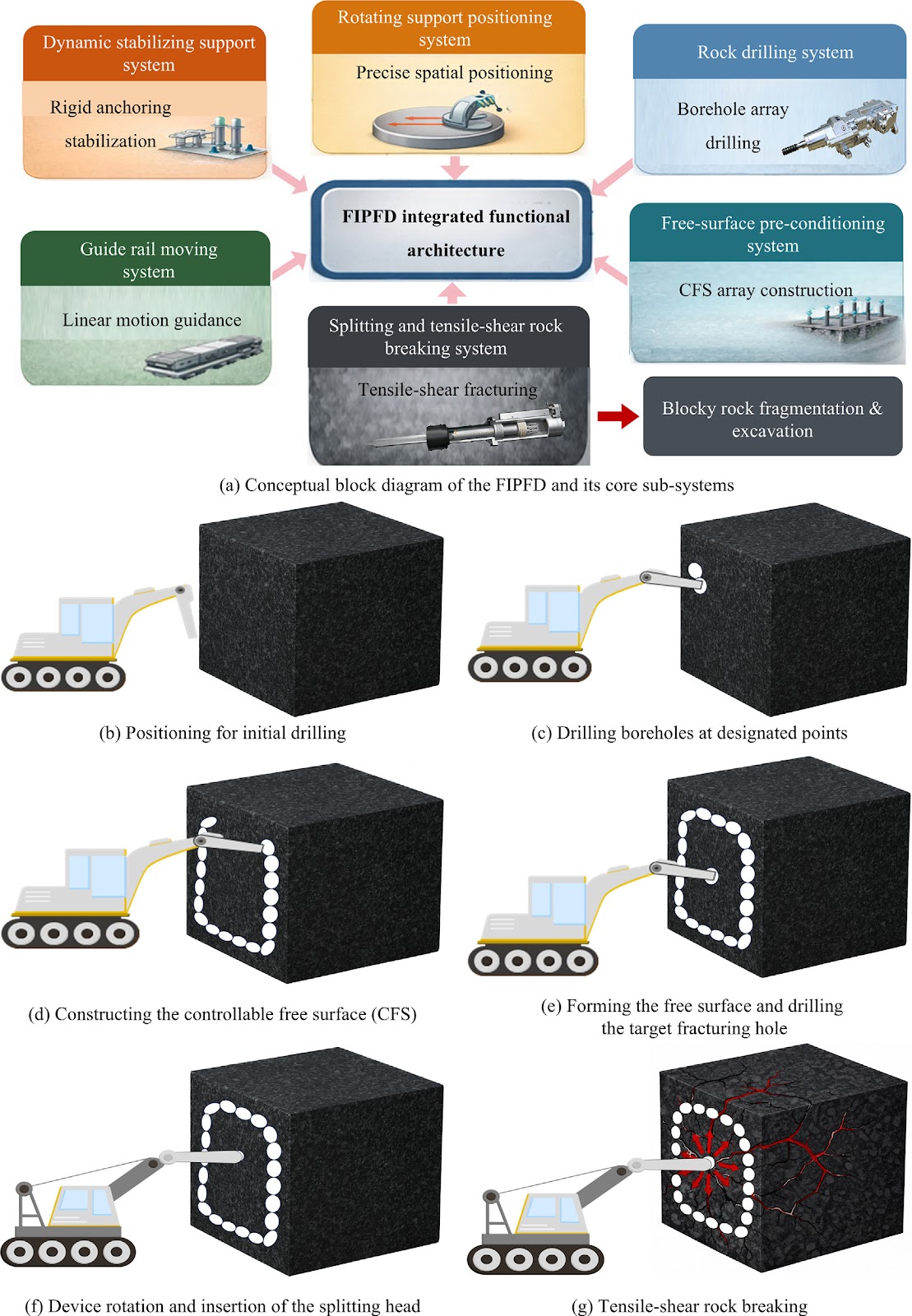
In deep hard rock mining, high confining pressure inhibits tensile failure, leading to low efficiency and severe tool wear in conventional mechanical rock breaking methods. To solve this problem, we propose a Controllable Free Surface Induced Tensile-Shear Collaborative Fracturing (CFS-TSCF) method. The method pre-forms an engineered controllable free surface (CFS) to reconfigure the local stress field, enabling a specialized device (FIPFD) to apply directional tensile-shear loads for low-energy breaking. A multi-scale approach integrating lab AE tests, DEM simulations, and field verification investigated the fracture mechanism and performance. Results revealed a predominantly tensile-driven (>50%) process. The CFS transforms the rock's triaxial compression into a specific stress path. This path, dominated by directional tension and constrained by lateral compression, guides the fracture along a low-energy channel. This also dictates the micro-mechanism's evolution from central quasi-tensile to peripheral tensile-shear failure. Field trials in hard rock (>200 MPa UCS) validated the method, demonstrating controllable, blocky spalling and achieving an average mining efficiency of 52.03 t/h. This research validates the CFS-TSCF method, offering a new technical paradigm for safe, efficient, continuous hard rock mining.
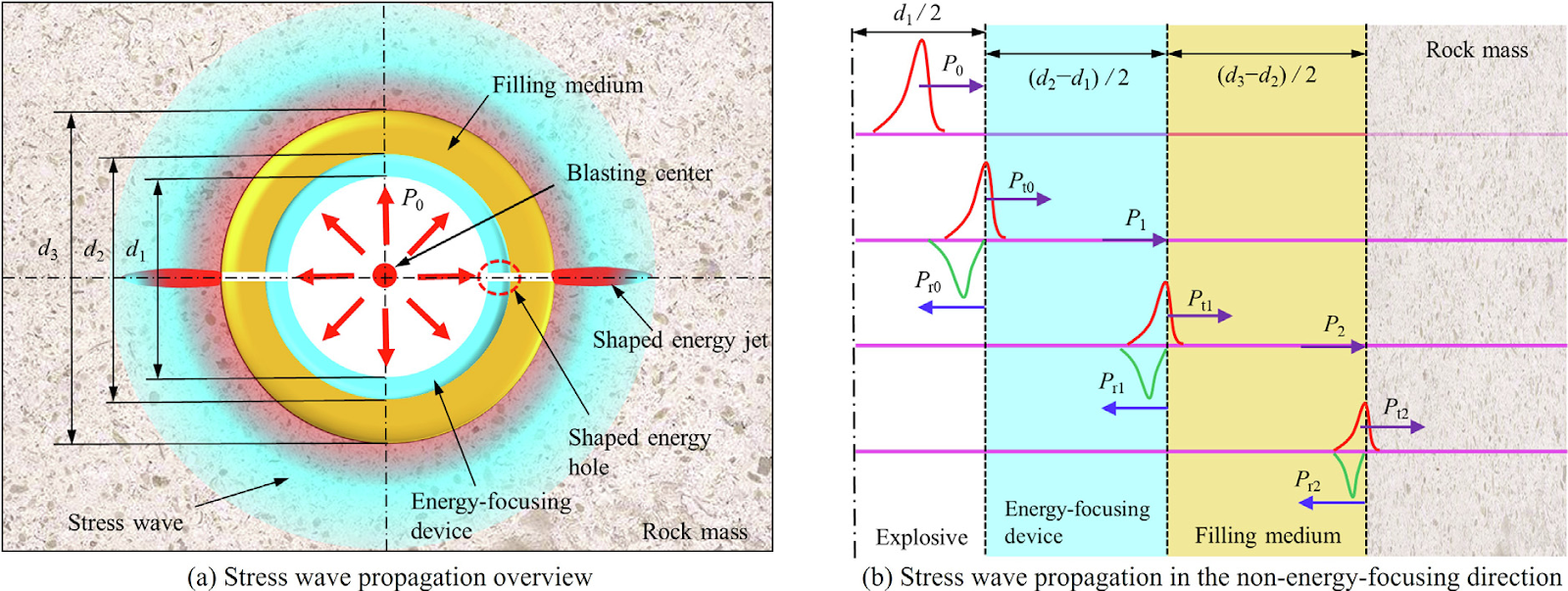
Tensile-Shear Collaborative Fracturing in Hard Rock Induced by a Controllable Free Surface: Mechanism and Application
Graphical Abstract
Original ResearchVol. 32, Issue 3 • pp. 100-112DOI: 10.1016/j.ijmst.2026.03.001Jan 15, 2026

Mechanisms of enhanced wettability and nanomechanical strength in soft coal seams modified by acidic SiO2 nanofluids

Authors: Linfan Qi, Xianfeng Liu, Baisheng Nie, Jialiang Li, Peng Chen, Han Han, Zhongbei Li, Shanyang Wei, Bozhi Deng

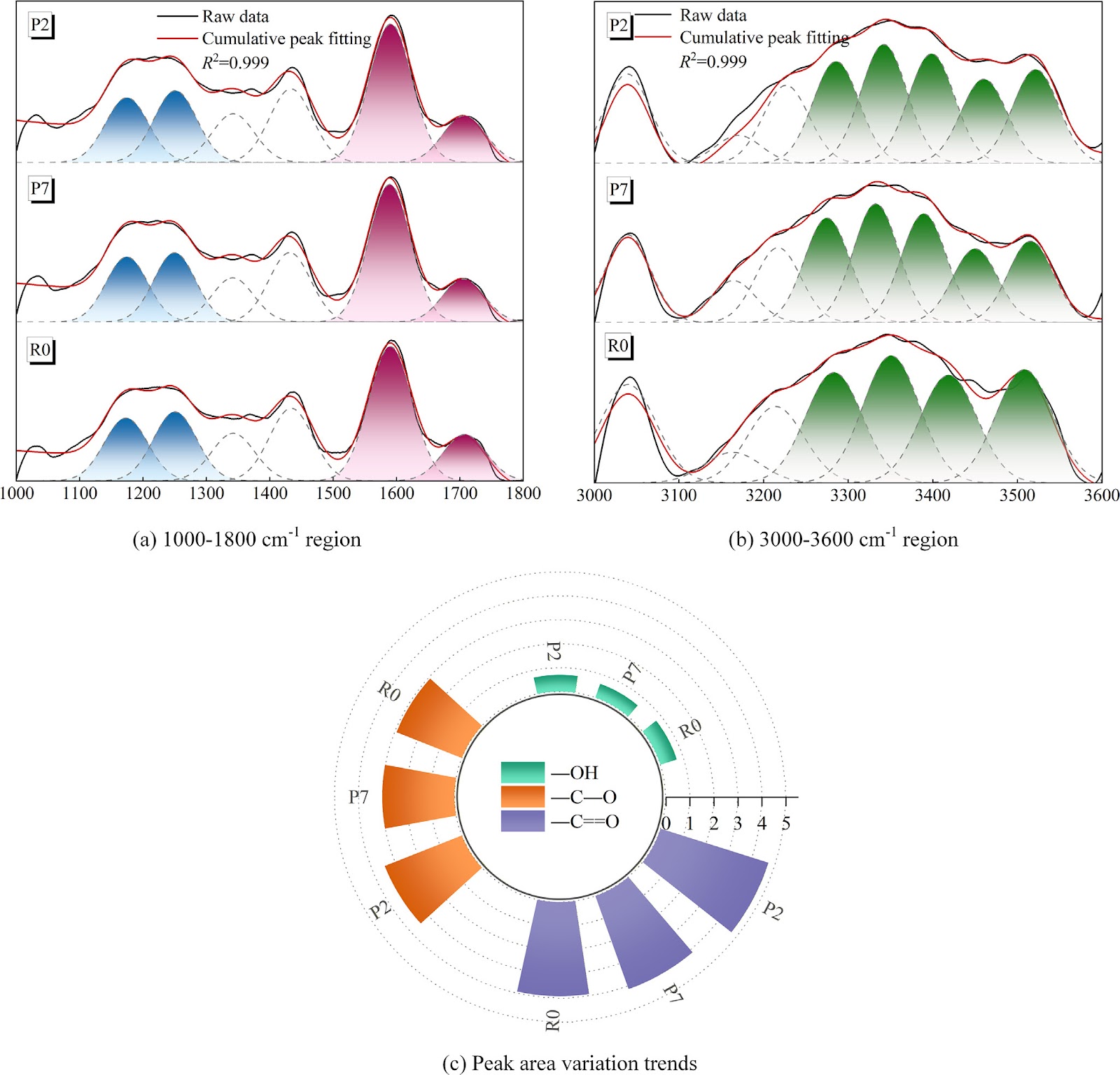
Conventional hydraulic fracturing is widely used for underground gas control in coal mines; however, in deep, soft coal seams, poor wettability and low mechanical strength can cause rapid energy release under gas pressure and mining-induced disturbances. These conditions increase the risk of coal and gas outbursts, complicate rapid outburst elimination, and pose serious threats to safe mine operations. In this study, SiO2 nanofluid solutions with varying acidity were prepared, and molecular dynamics simulations, contact angle measurements, Fourier transform infrared spectroscopy, nanoindentation tests, and three-dimensional super-depth microscopy were employed to systematically investigate the mechanisms by which acidic SiO2 nanofluids enhance the wettability and nanomechanical strength of soft coal seams. The results show that SiO2 nanoparticles act as bridging agents between water molecules and the coal matrix. In the high-mass fraction H2O/SiO2/coal system, the adsorption layer thickness increases from 15.44 Å in the pure water system to 20.51 Å. Acidic SiO2 nanofluids substantially reduce the coal-water contact angle; at pH 2, the contact angle decreases to 47.9°, representing a 43.86% reduction relative to raw coal. The total absorption peak area of oxygen-containing functional groups increased accordingly, promoting a transition of the coal surface from hydrophobic to hydrophilic. SiO2 nanofluids with varying acidity also induce pronounced changes in the mechanical properties of coal samples. Under mildly acidic conditions (pH 5), the elastic modulus and hardness increase by 17.880% and 18.794%, respectively, while the peak displacement and contact displacement decrease by 8.056% and 8.117%. Mild acidity promotes the formation of local micropores and facilitates the embedding of SiO2 nanoparticles, enhancing structural support and improving nanomechanical performance. In contrast, under strong acidic conditions, the corrosion effect outweighs the supporting role of the nanoparticles, resulting in mechanical degradation. Overall, the synergistic effects of acidic environments and SiO2 nanofluids significantly influence the wettability and mechanical behavior of coal. By elucidating their combined modification mechanisms, this study provides theoretical support and new perspectives for fluid-injection enhancement and dynamic disaster prevention in deep, soft coal seams.

Mechanisms of enhanced wettability and nanomechanical strength in soft coal seams modified by acidic SiO2 nanofluids
Graphical Abstract
Original ResearchVol. 32, Issue 2 • pp. 100-112DOI: 10.1016/j.ijmst.2026.02.006Jan 15, 2026

NaNO2-loaded mesoporous MgO for high-efficiency CO2 capture: Synthesis, characterization and novel mechanistic insights

Authors: Yulian Wang, Jiayi Liu, Jinze Song, Junze Gu, Binyan Wang, Rui Guan, Keqing Li, Wanzhong Yin, Haoran Sun, Huili Han

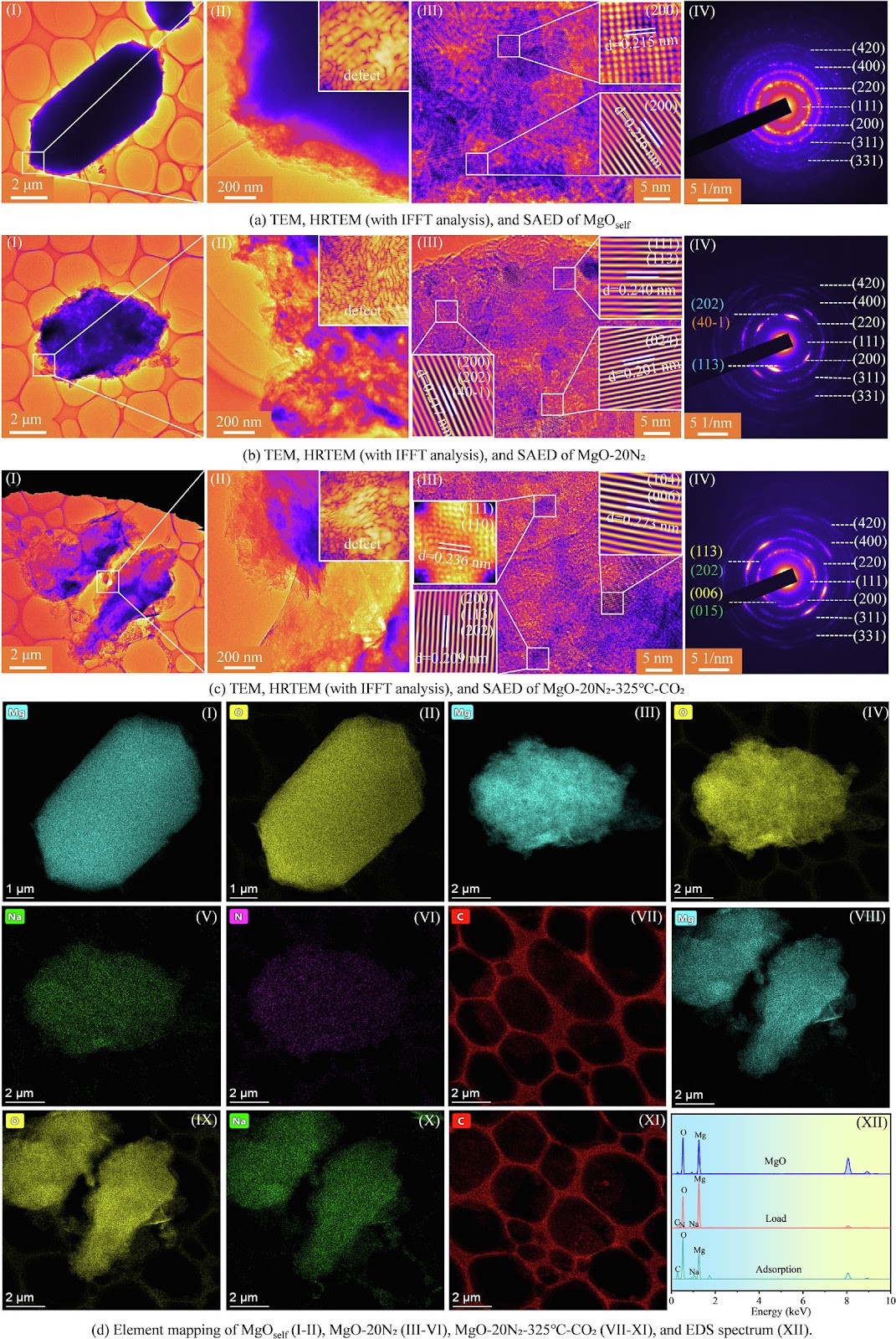
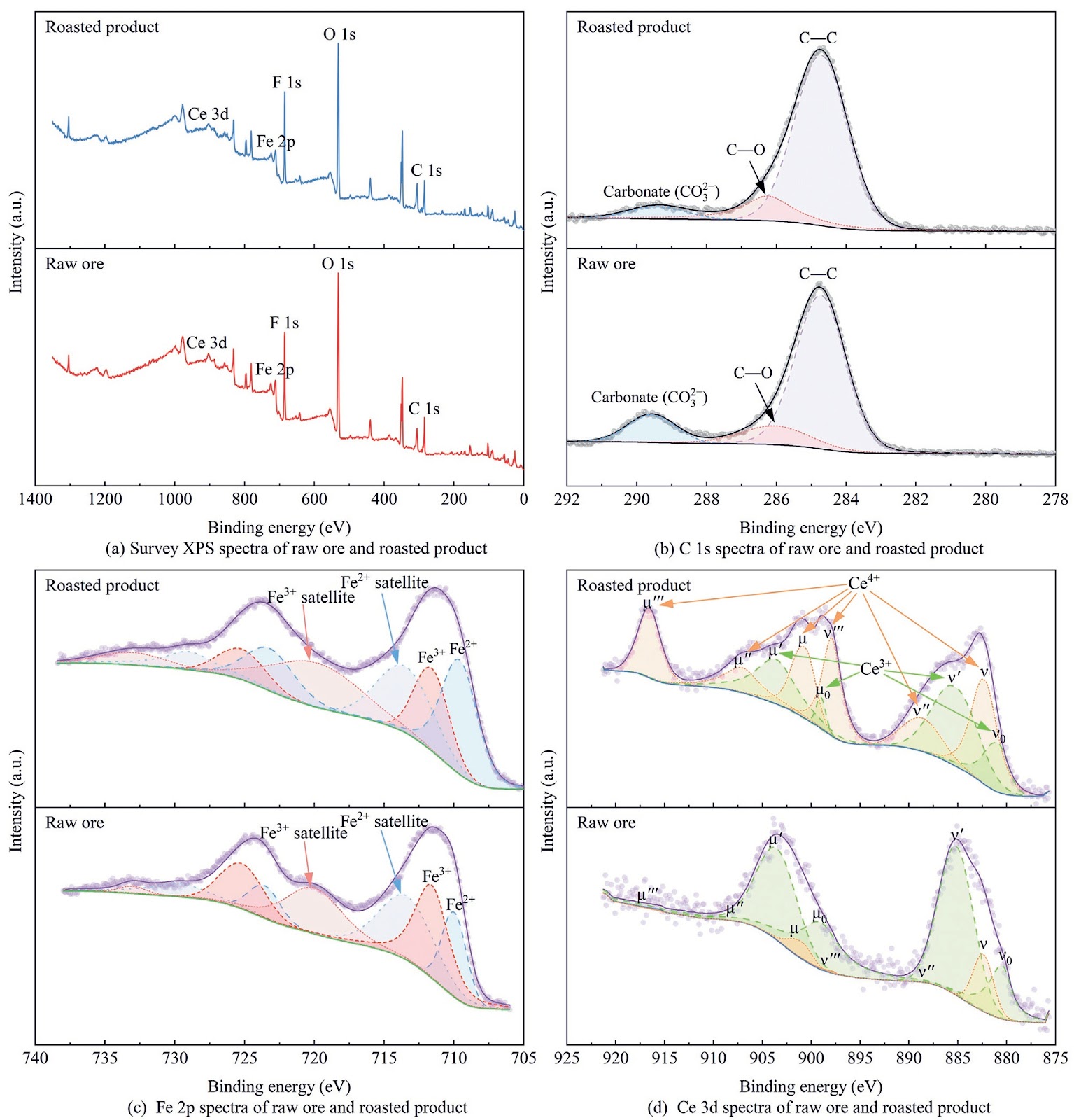
The development of efficient CO2 adsorbents is critical for achieving net-zero targets. MgO represents a promising solid adsorbent for CO2 capture, yet its limited specific surface area and insufficient active sites restrict its adsorption capacity under moderate temperature conditions. A rod-like anhydrous MgCO3 precursor was hydrothermally synthesized and calcined at 500 °C for 3 h to obtain porous MgO (184.9 m2 g−1, 0.38 cm3/g), which was then modified with 20% NaNO2 (by mole) via impregnation. This adsorbent achieved an adsorption capacity of 12.6 mmol g−1 after 120 min under a pure CO2 atmosphere at 325 °C. Comprehensive characterization reveals that NaNO2 modification leads to the NaNO3 and Na2CO3 formation on the MgO surface during calcination. The introduced NaNO3 effectively promotes oxygen vacancy formation, while the generated Na2CO3 serves as heterogeneous nucleation sites, collectively reducing the reaction energy barrier and enhancing interfacial mass transfer. This synergistic effect facilitates the MgCO3 formation followed by its conversion to the thermodynamically more stable Na2Mg(CO3)2. Kinetic studies elucidate that adsorption is dominated by surface chemical reactions and diffusion mechanisms at different stages. These fundamental insights into the adsorption mechanisms of nitrite-modified MgO provide valuable guidance for the rational design of advanced MgO-based CO2 adsorbents with enhanced performance.

NaNO2-loaded mesoporous MgO for high-efficiency CO2 capture: Synthesis, characterization and novel mechanistic insights
Graphical Abstract
Original ResearchVol. 32, Issue 3 • pp. 100-112DOI: 10.1016/j.ijmst.2026.03.004Jan 15, 2026

Energy characteristics during the progressive shear failure of rock joints and brittleness evaluation

Authors: Jianan Yang, Pengxian Fan, Junhui Wang, Haozhe Xing, Mingyang Wang, Qihu Qian

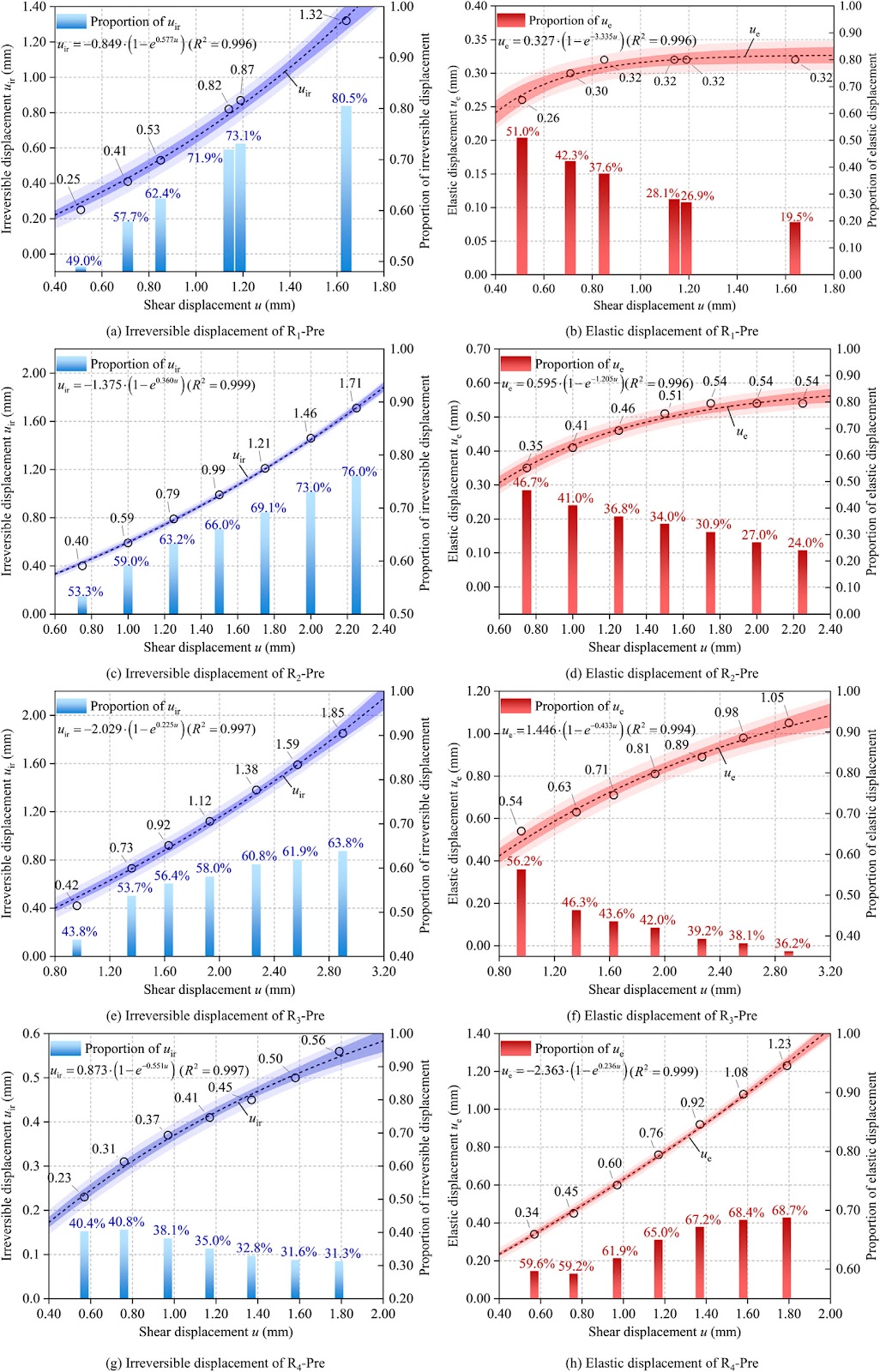
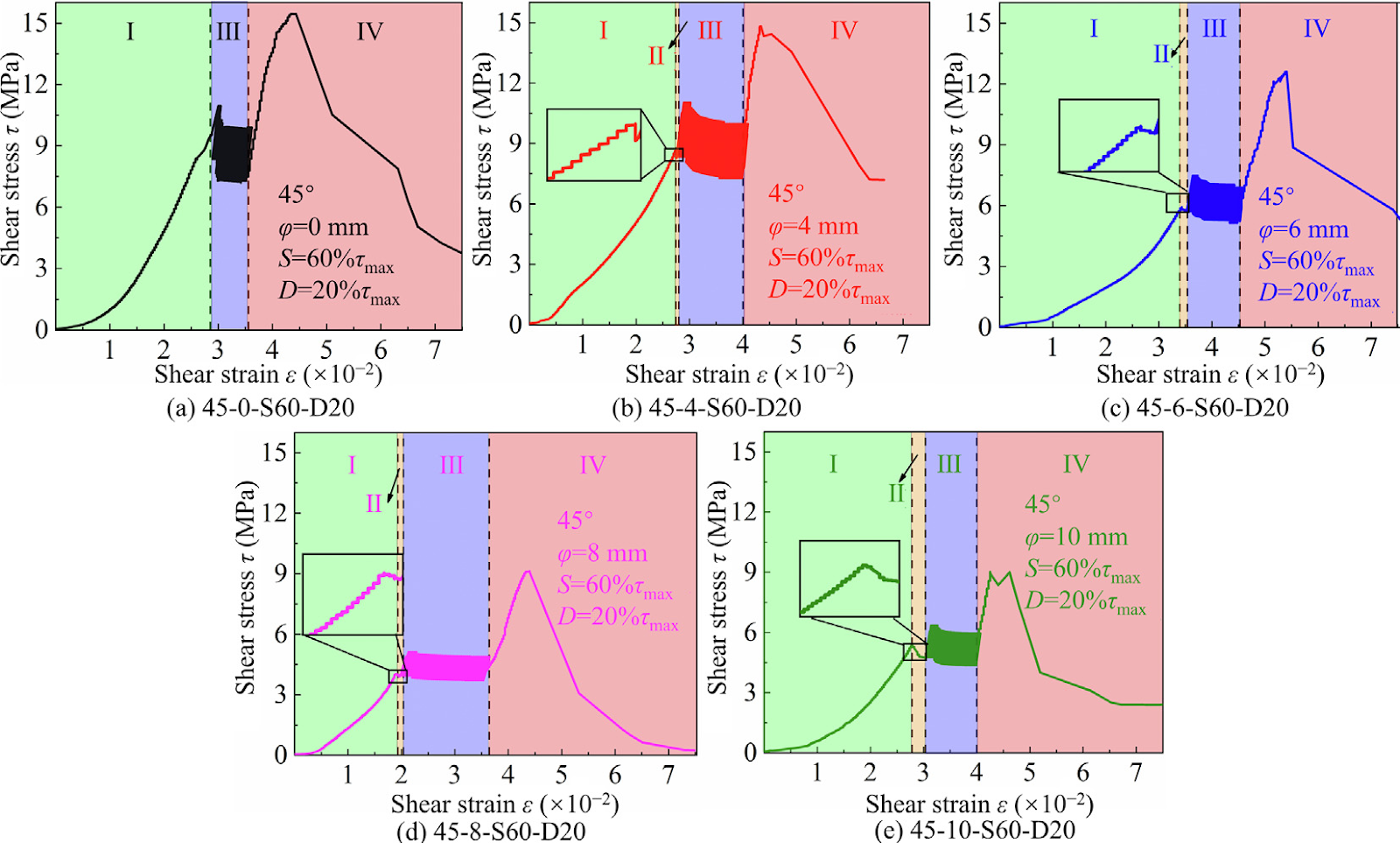
The energy-driven progressive brittle shear failure of rock joints is a key mechanism behind deep engineering disasters such as joint-induced rockbursts and engineering earthquakes. To investigate the energy evolution mechanisms and disaster proneness, monotonic and stepwise loading-unloading tests were performed on regular dentate joints under constant normal stiffness boundary conditions. Results indicate a transition in damage mechanism from climbing wear of low-inclination asperities to brittle rupture of high-inclination ones, accompanied by a marked decrease in irreversible displacement. Energy analysis reveals a strong linear relationship between pre-peak elastic energy density and both input energy density and shear stress squared. The post-peak elastic energy release rate (g) and the self-sustaining instability coefficient (l) increase with joint undulation. A dimensionless brittleness index (BI) integrating the complete energy conversion and release process was proposed to quantify the energy balanced budget. The highly undulated joint R4 showed the most pronounced brittleness and instability intensity with the highest BI value of 0.697, along with g = 0.774 and l = 0.611. This study provides deeper insight into the understanding of the disaster-inducing proneness and stability assessment in jointed rock mass.

Energy characteristics during the progressive shear failure of rock joints and brittleness evaluation
Graphical Abstract
Original ResearchVol. 32, Issue 2 • pp. 100-112DOI: 10.1016/j.ijmst.2026.02.003Jan 15, 2026

Unravelling the pH-Driven Multiscale Cascade of Hematite Flocculation: From Interfacial Tuning to Structural Assembly and Sedimentation Dynamics

Authors: ZHANG Ke Kang, SHEN Yan Bai, CUI Bao Yu, GAO Shu Ling, LIU Wen Gang, ZHAO Qiang

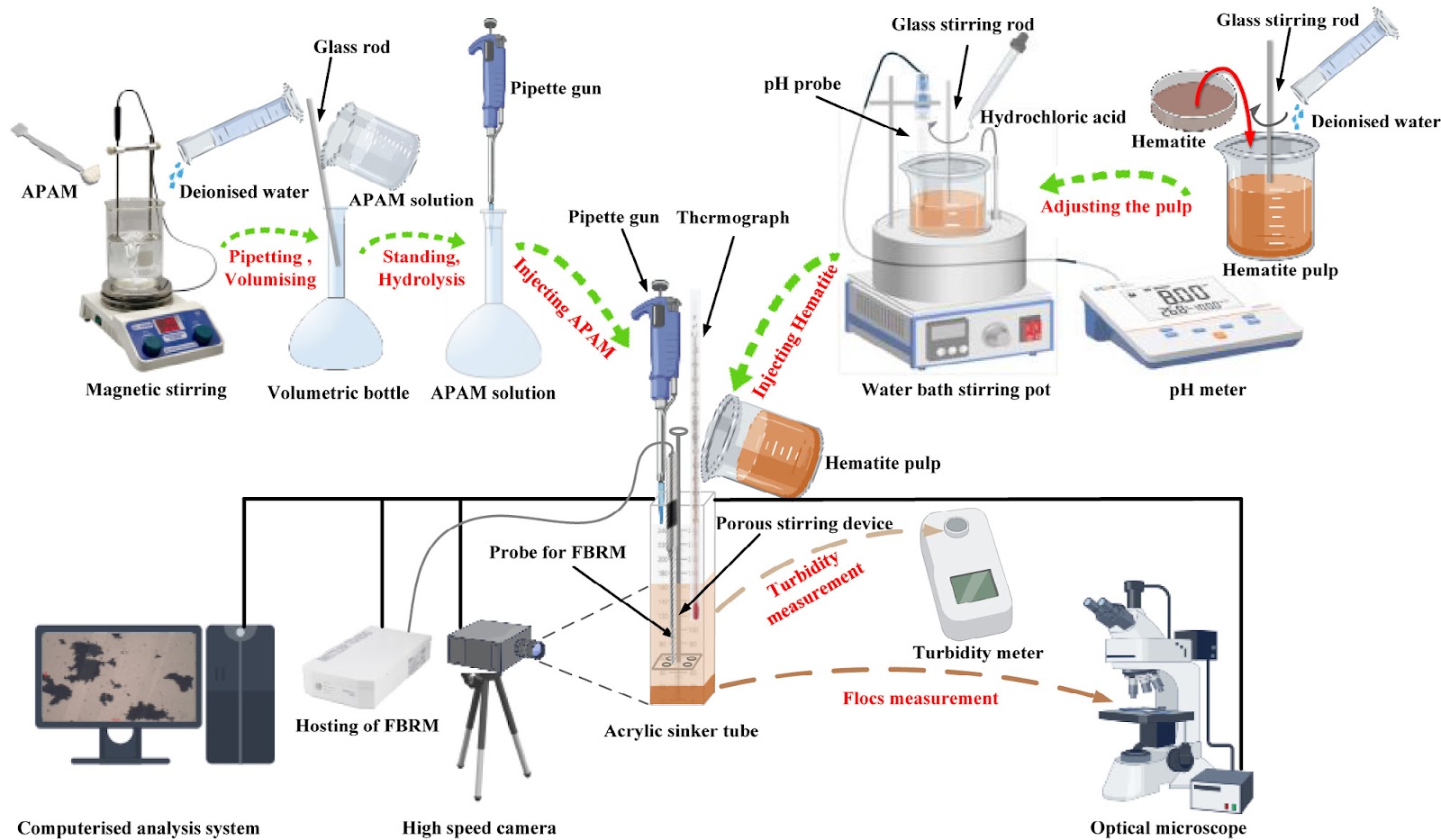
Efficient flocculation and sedimentation of ultrafine hematite remain a key challenge in mineral processing. This study elucidates the pH-dependent flocculation behaviour of hematite with anionic polyacrylamide (APAM) using a multi-scale correlation framework integrating interfacial analysis, structural characterization, and sedimentation evaluation. Increasing pH induces progressive surface deprotonation, yielding a more negative hematite surface and enhanced APAM adsorption from 0.106 to 0.186 mg/m2. FTIR, XPS, and molecular dynamics simulations consistently reveal strengthened Fe–OOC coordination, intensified hydrogen bonding, and more stabilised polymer conformations under alkaline conditions. Microscopy, SEM, and FBRM show that alkaline conditions facilitate the formation of larger and denser flocs, with size increasing from 56 to 982 μm and fractal dimension from 1.44 to 1.87. These structural changes markedly improve sedimentation performance, reducing turbidity from 436.8 to 76.7 NTU and increasing settled solids from 35.94 to 52.43 percent. The proposed multi-scale correlation model quantitatively links interfacial chemistry, floc structural evolution, and settling behaviour, providing a unified mechanistic basis for pH-regulated hematite flocculation. This framework not only advances understanding of polymer–mineral interactions but also offers practical guidance for optimising solid–liquid separation and tailings-water recycling in fine mineral beneficiation.

Unravelling the pH-Driven Multiscale Cascade of Hematite Flocculation: From Interfacial Tuning to Structural Assembly and Sedimentation Dynamics
Graphical Abstract
Original ResearchVol. 32, Issue 2 • pp. 100-112DOI: 10.1016/j.ijmst.2026.02.007Jan 15, 2026

Consolidation-Sealing of In-Situ Internal Stress in Deep Rocks: Device Development and Mechanical Behavior Characterization

Authors: Mingzhong Gao, Chuo Zhang, Fei Li, Bengao Yang, Jing Xie, Zundong Yang, Kunchen He

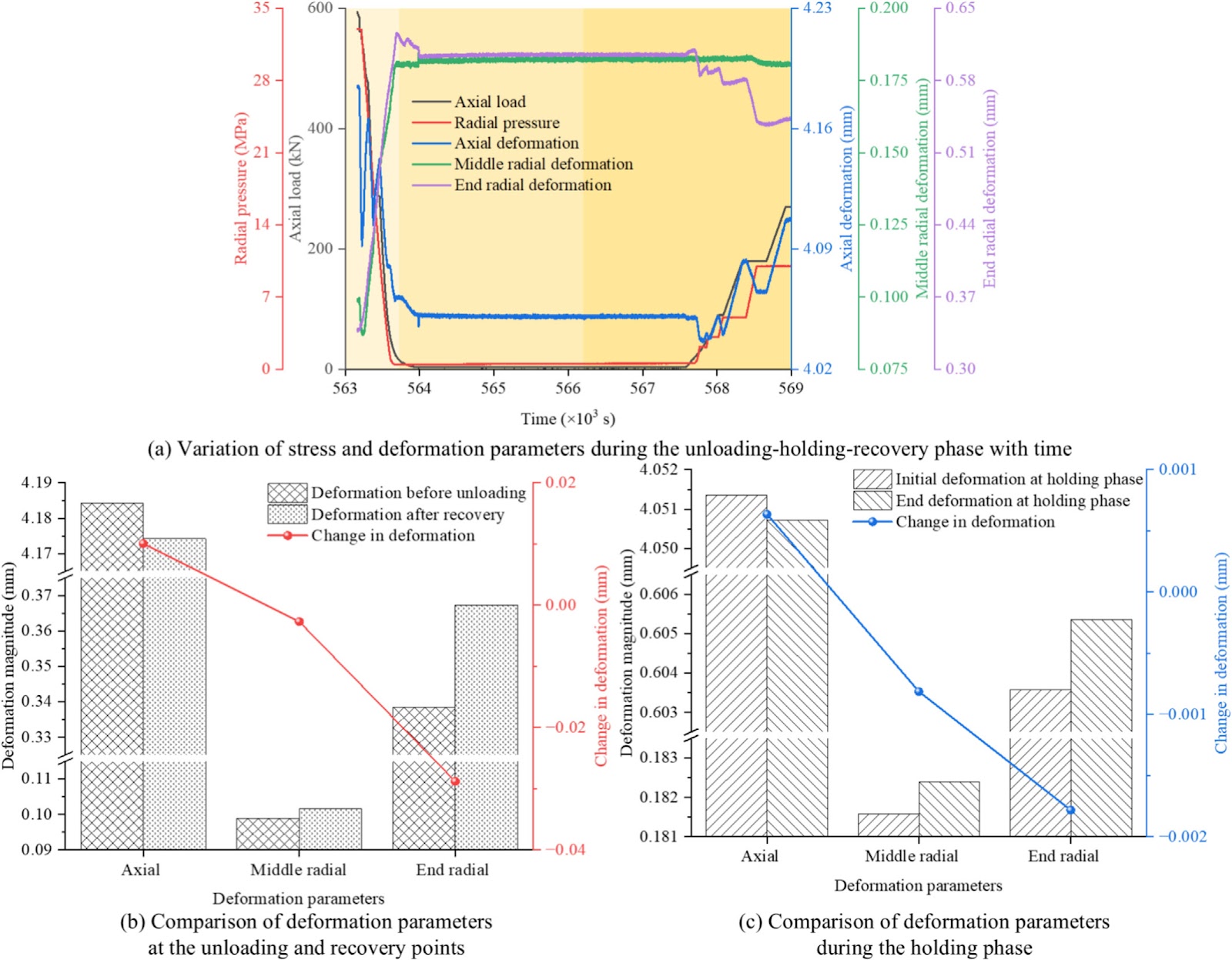
Addressing the scientific problem of unclear understanding of in-situ internal stress and its evolution in deep rock masses, a scientific definition and implementation path for the concept of in-situ internal stress consolidation-sealing in deep rock masses are proposed, and a set of in-situ internal stress consolidation-sealing test device for deep rock masses has been independently developed. The device consists of a material consolidation cultivation module, an in-situ internal stress environment simulation module, and a multi-source information capture module. And the three mechanical tests of internal stress preservation, internal stress release and conventional were carried out with the device. The evolution law of the deformation parameters in the internal stress consolidation-sealing stage was studied, and the difference characteristics of the deformation parameters before and after the internal stress releasing were compared and analyzed. The results show that the internal stress consolidation-sealing significantly affects the mechanical properties of the simulated rock material, while the internal stress release leads to the damage of the material properties, suggesting that the presence and influence of internal stress should not be overlooked. This study could provide a new research direction and scientific devices for the expansion and deepening of the field of deep in-situ rock mechanics.

Consolidation-Sealing of In-Situ Internal Stress in Deep Rocks: Device Development and Mechanical Behavior Characterization
Graphical Abstract
Original ResearchVol. 32, Issue 2 • pp. 100-112DOI: 10.1016/j.ijmst.2026.02.001Jan 15, 2026

Estimation of characteristic stresses in granite through acoustic emission monitoring of microcrack fracture mode evolution

Authors: Yunge Zhao, Linqi Huang, Longjun Dong, Xibing Li

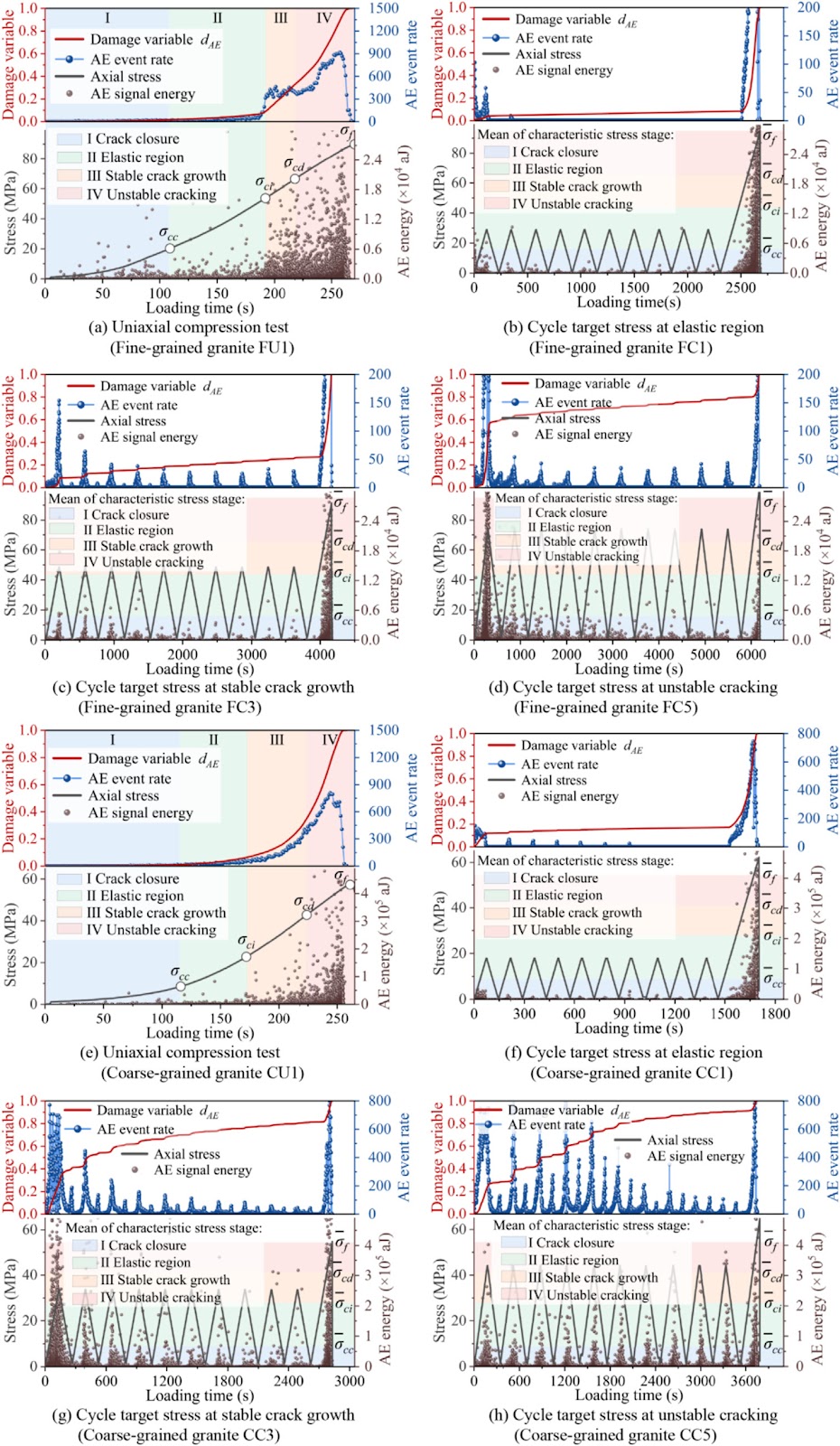
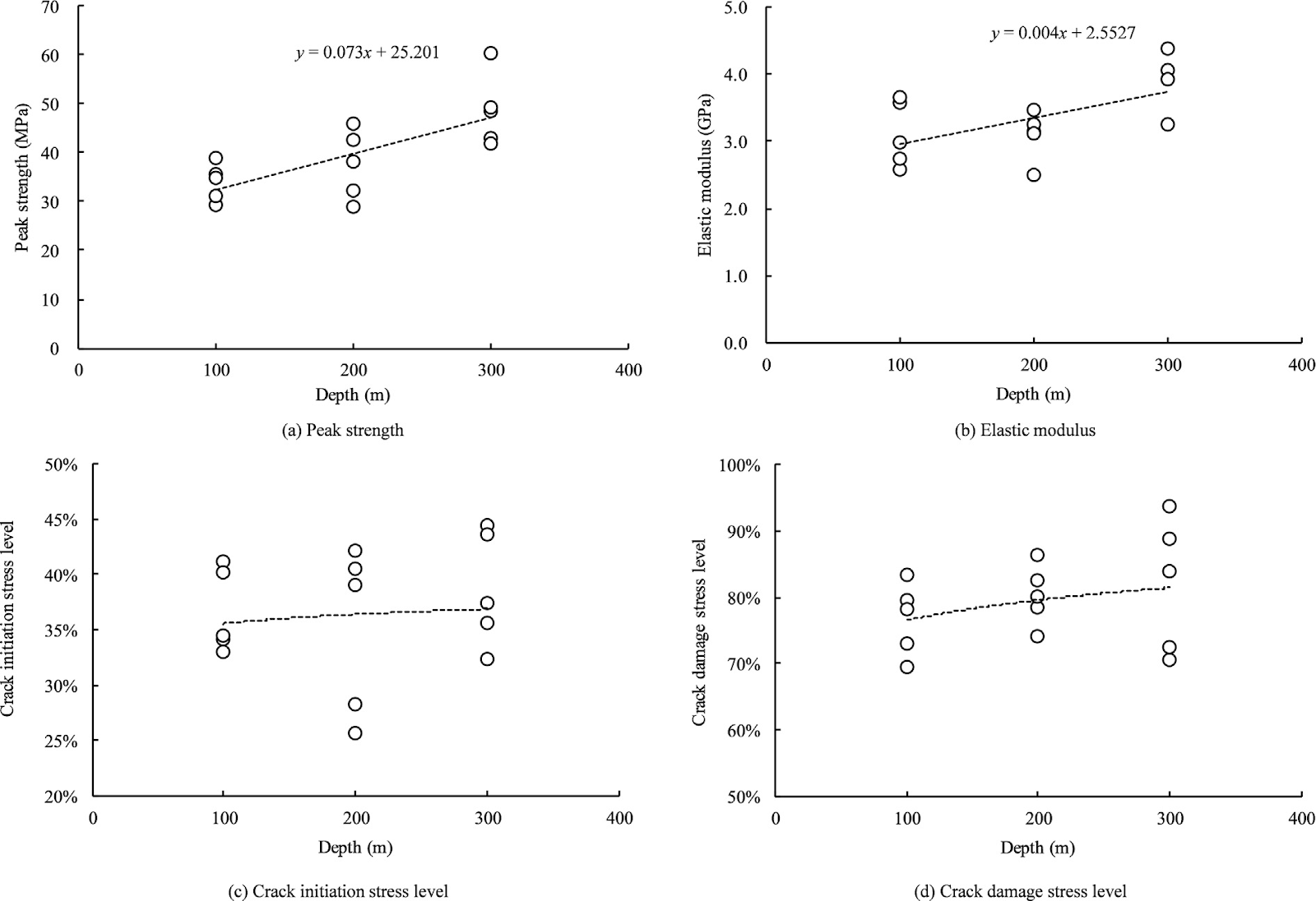
Characteristic stresses are critical indicators for microcrack initiation and propagation in rock, a process intrinsically linked to fracture mode. To investigate fracture mode evolution and its feasibility for estimating characteristic stresses, this study conducted uniaxial compression and cyclic loading-unloading tests on fine- and coarse-grained granite with acoustic emission (AE) monitoring. Cyclic target stresses were set within intervals determined by characteristic stresses. Analysis using the AE parameters AF-RA revealed that fracture mode evolution correlates with damage level, and shear microcrack propagation primarily governs macroscopic failure. A characteristic stress estimation method was developed by mapping key points on the shear crack proportion curve: crack closure stress (transition between fluctuating and stable segments), crack initiation stress (inflection point of curve rise), and crack damage stress (slope change point in ascending segment). Comparative analysis with the crack volumetric strain method validated the proposed method. The influences of fracture mode dividing line and statistical interval were discussed, with practical recommendations provided. Compared to conventional AE parameters, the fracture mode proportion exhibits lower sensitivity to AE parameter variations, enabling more reliable identification of characteristic stress points. Furthermore, it directly reflects microcrack evolution behavior, enhancing interpretability and providing a novel perspective for AE-based characteristic stress determination.

Estimation of characteristic stresses in granite through acoustic emission monitoring of microcrack fracture mode evolution
Graphical Abstract
Original ResearchVol. 32, Issue 2 • pp. 100-112DOI: 10.1016/j.ijmst.2026.02.004Jan 15, 2026

Heating Rate Effect of Thermal Expansion in Granite and Implications for Rock Breaking

Authors: Yubo Li, Lei He, Yueyang Li, Weiqiang Zhu, Huaiguang Xiao, Tienan Wang

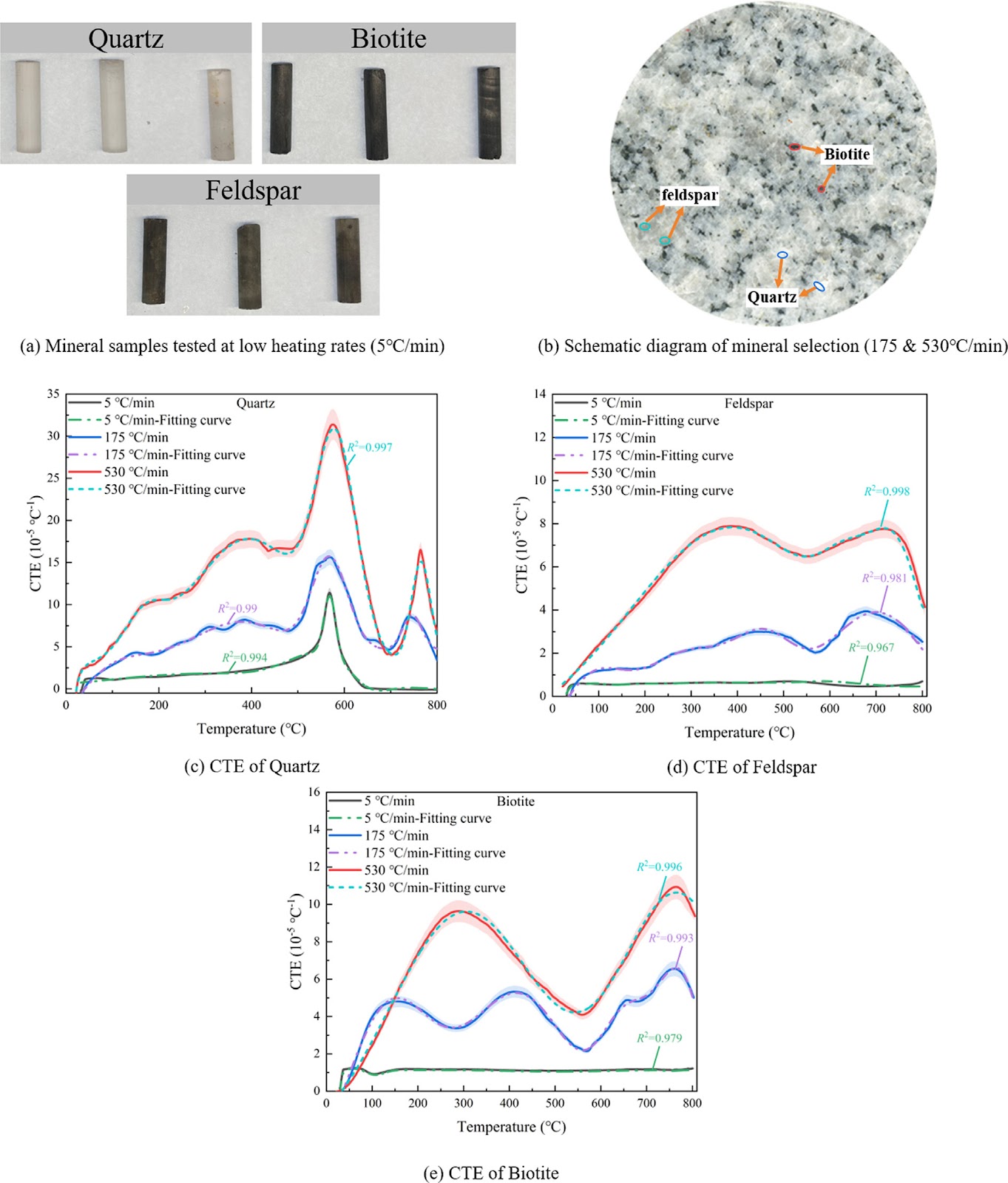
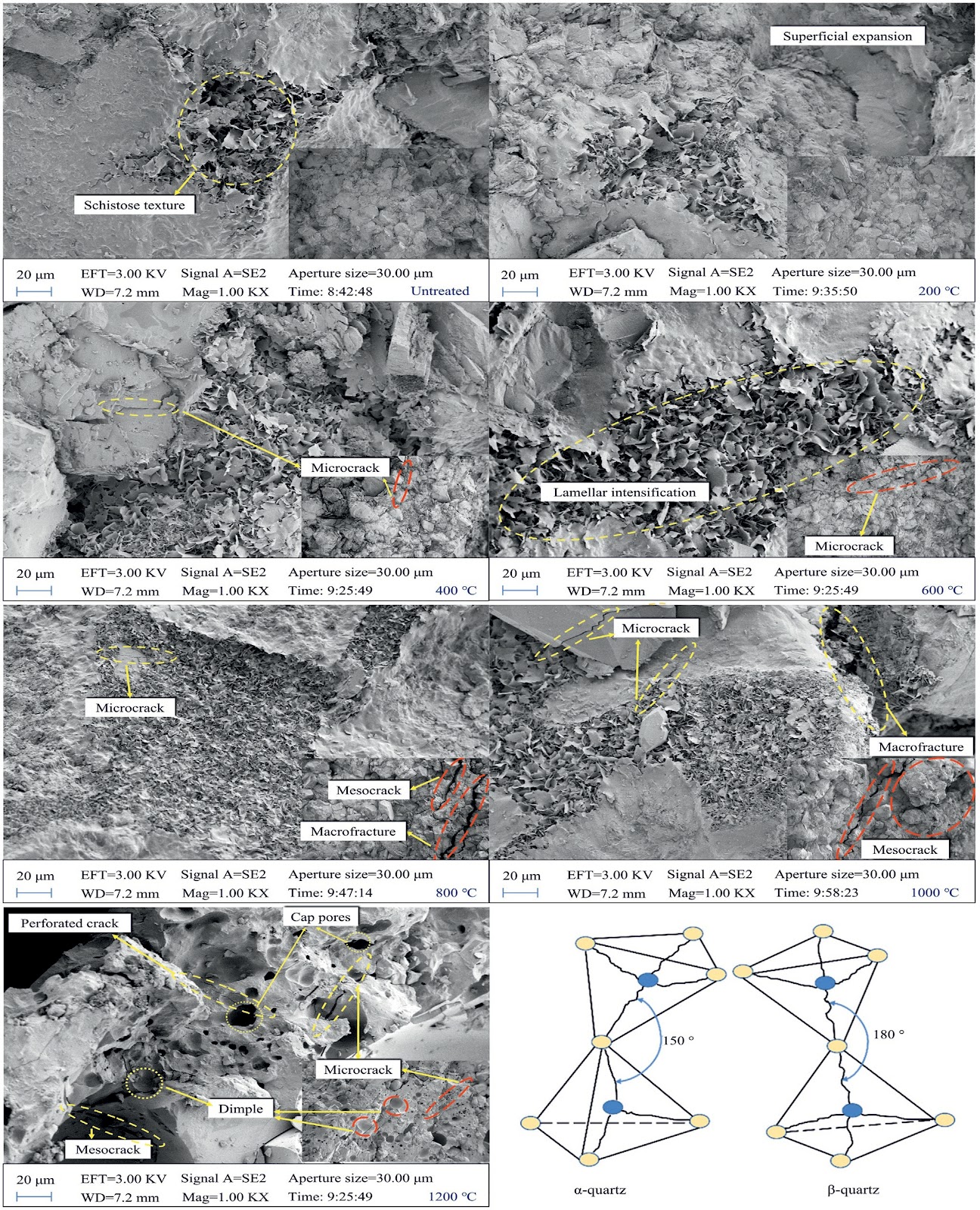
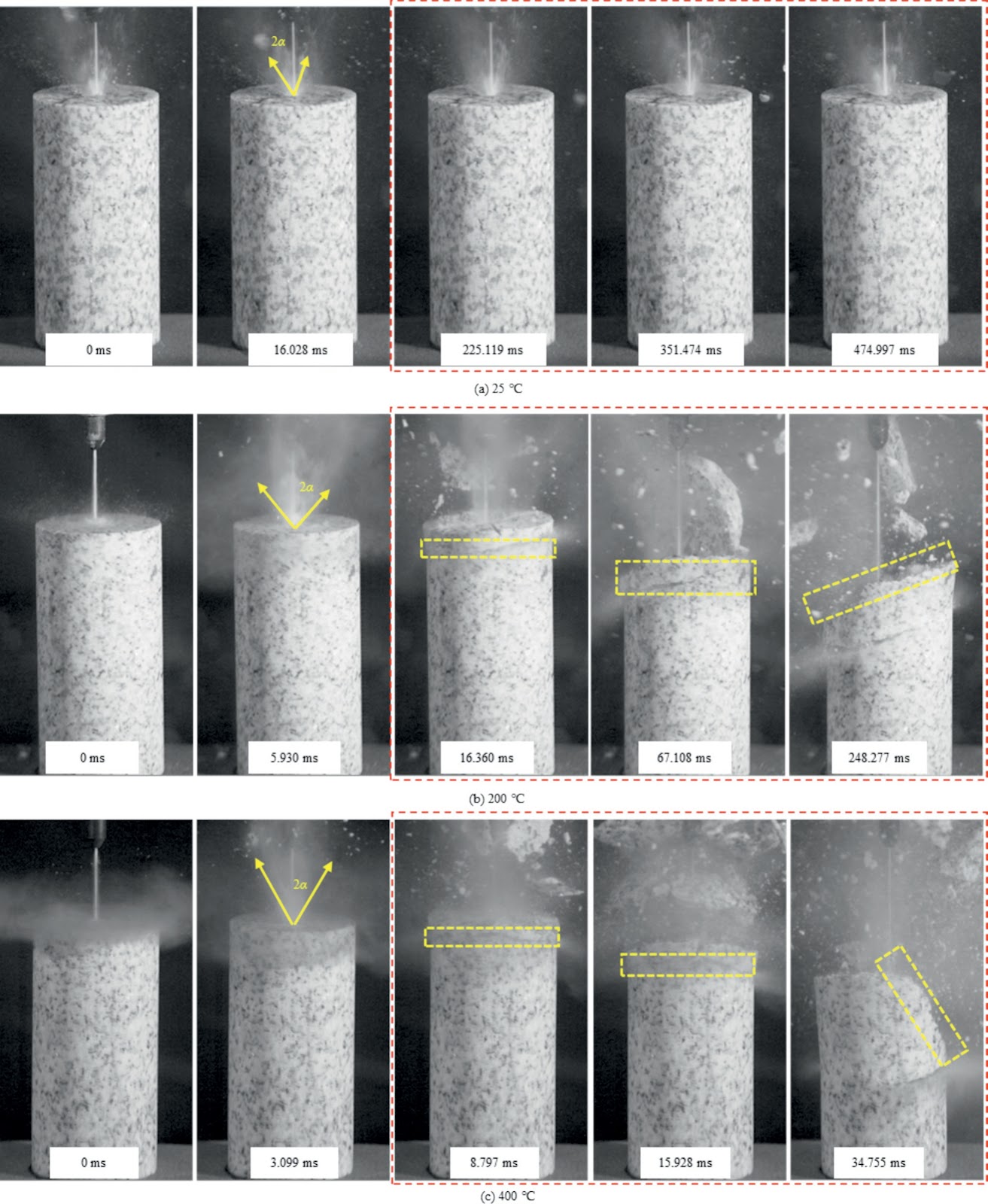
The influence of the heating rate on the thermo-mechanical response and damage evolution of rock is a critical factor limiting the safety and efficiency of engineering applications. Conventional models are limited, however, as they assume a static coefficient of thermal expansion (CTE) and ignore its dynamic nature under rapid thermal loading. This study confronts this knowledge gap using a synergistic experimental–numerical approach. A custom system combining induction heating and Digital Image Correlation was employed to measure the rate-dependent CTE of both bulk granite and its constituent minerals over various heating rates. These dynamic coefficients were then integrated into a high-fidelity numerical model to simulate microwave-assisted rock breaking. Results definitively show the CTE is strongly rate-dependent. While the quartz phase transition at ~573 °C triggers critical damage, faster heating significantly amplifies strain localization and damage accumulation. Crucially, simulations revealed that under identical microwave loading, the model using dynamic CTE (530 °C/min) reached a 1000 mm² failure area 11 times faster than the model using quasi-static CTE (5 °C/min). This study fundamentally establishes rock's CTE as a dynamic, rate-dependent property, providing a key scientific basis for advancing such thermal fracturing technologies.

Heating Rate Effect of Thermal Expansion in Granite and Implications for Rock Breaking
Graphical Abstract
Original ResearchVol. 32, Issue 9 • pp. 100-112DOI: 10.1016/j.ijmst.2025.09.009Jan 15, 2025

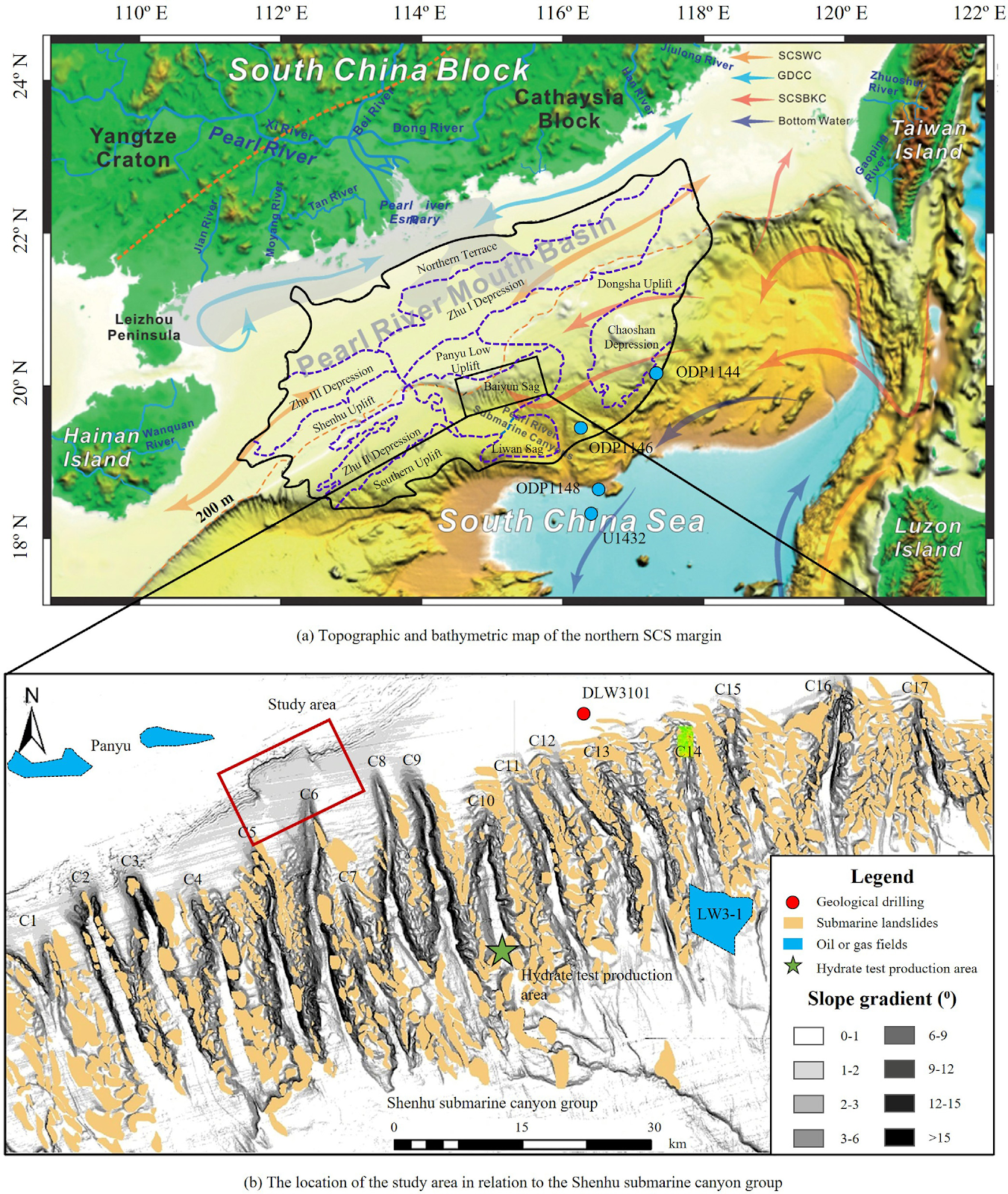
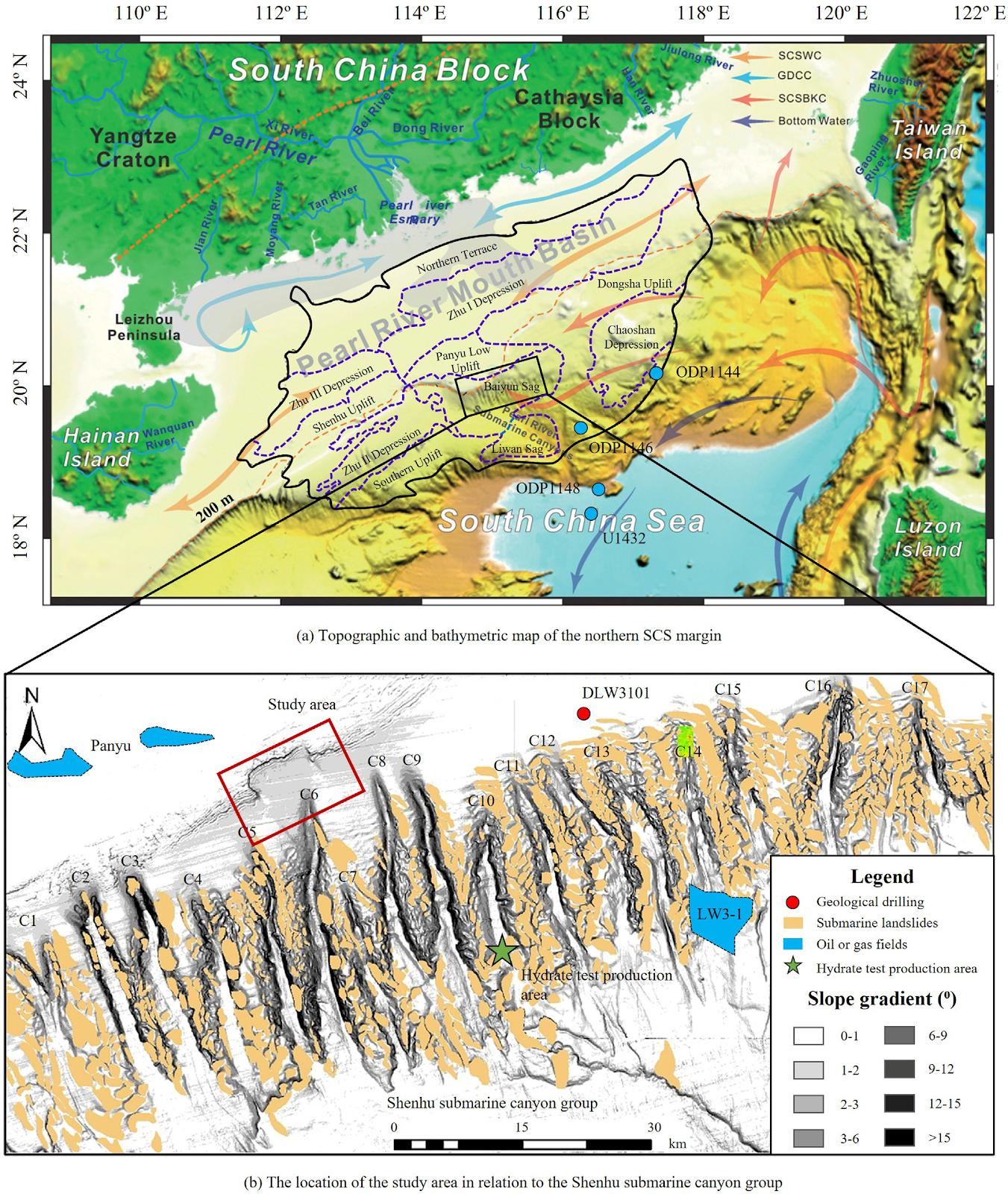
Potential failure mechanism of low-angle submarine landslides in shelf-slope break of Pearl River Mouth Basin, South China Sea

Authors: Zhenghui Li, Cong Hu, Geetanjali Kishan Lohar, Xiujuan Wang, Duanxin Chen, Hanlu Liu, Devendra Narain Singh, Chaoqi Zhu, Yonggang Jia

Low-angle submarine landslides pose a greater threat to offshore infrastructure compared to those with steep sliding angles. Understanding the preparation and triggering mechanism of these low-angle submarine landslides remains a significant challenge. This study focuses on a deformed low-angle submarine landslide in the shelf-slope break of the Pearl River Mouth Basin, South China Sea, integrating sedimentology, geophysics, and geotechnology to investigate potential failure mechanisms. The architecture and deformation characteristics of the submarine landslide were elucidated by analyzing multibeam and seismic data. Within the context of the regional geological history and tectonic framework, this study focuses on the factors (e.g., rapid sedimentation, fluid activity, and earthquakes) that potentially contributed to the submarine slope failure. Furthermore, a series of stability evaluations considering the effects of rapid sedimentation and earthquakes was conducted. Our findings indicate that the most probable triggering mechanism involves the combined effects of sedimentation controlled by sea-level fluctuations, high-pressure gas activity, and seismic events. The high-pressure gas, which acts as a long-term preconditioning factor by elevating pore pressures and reducing shear resistance within the sediment, accumulated beneath the upper and middle sections of the low-permeability stratum that was formed during sea-level rise and ultimately evolved into the sliding mass. The overpressure generated by gas accumulation predisposed the submarine slope to instability, and a frequent or moderate earthquake ultimately initiated local failure. This study enhances the mechanistic understanding of low-angle slope failures in the shelf-slope break zone and provides critical insights for assessing marine hazard risks.

Potential failure mechanism of low-angle submarine landslides in shelf-slope break of Pearl River Mouth Basin, South China Sea
Graphical Abstract
Original ResearchVol. 32, Issue 10 • pp. 100-112DOI: 10.1016/j.ijmst.2025.10.003Jan 15, 2025

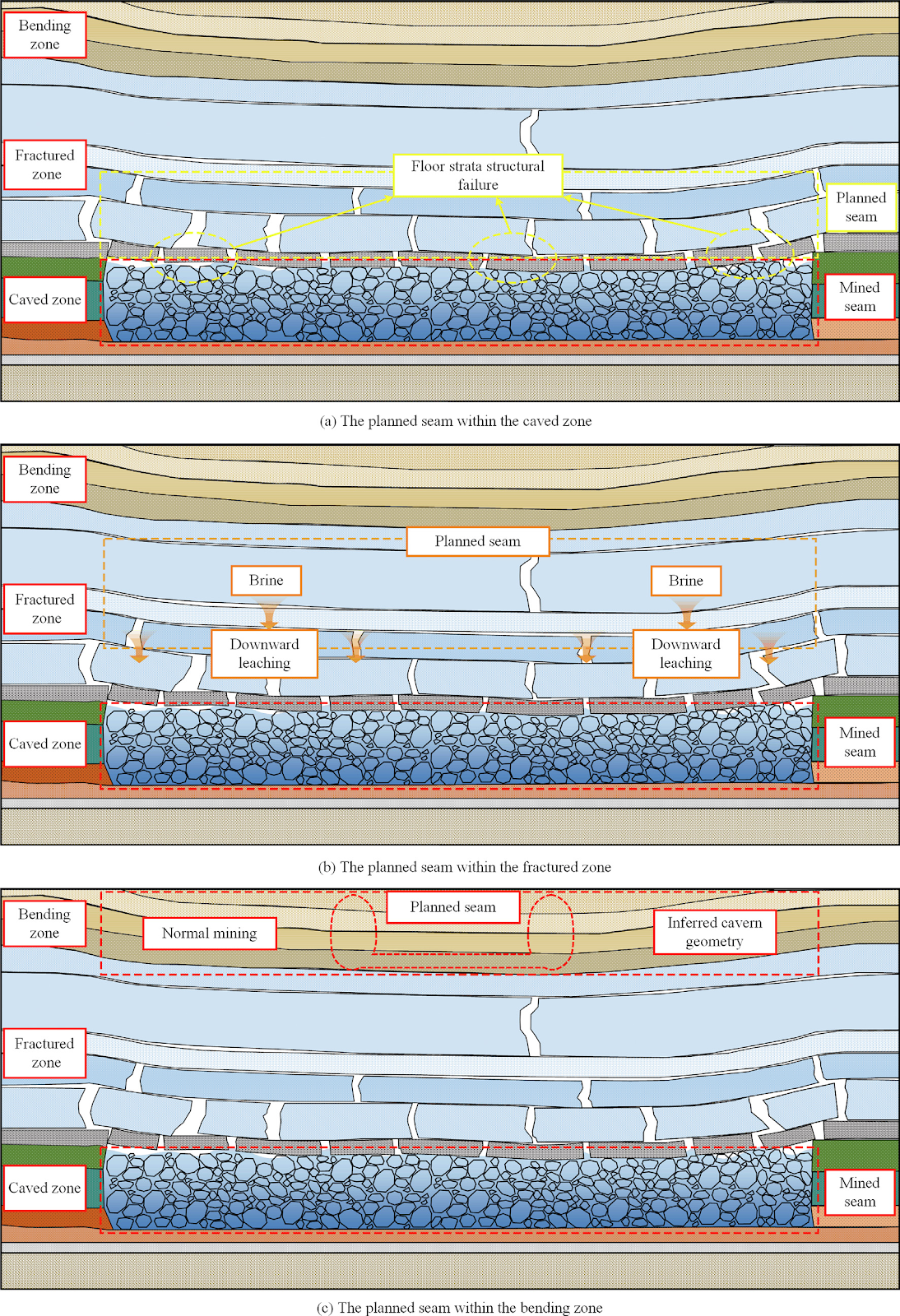
Comparative Analysis of Layered and Continuous Solution Mining Schemes in Bedded Salt Formations Using Horizontal Interconnected Wells

Authors: Hao Zhang, Guimin Zhang, Kai Liu, Xinghui Fu, Yinping Li, Yuxuan Liu

Salt deposits in China predominantly originate from lake deposits, characterized by thin salt beds interspersed with numerous interlayers, collectively termed bedded salt formations. Historically, solution mining practices have adopted the layered solution mining approach, inspired by coal mining techniques. However, this approach fails to account for the unique challenges of salt solution mining. Practical implementation is inefficient, costs escalate post-construction, and cavern geometry is constrained by salt bed thickness. Additionally, resource loss in abandoned beds and stability risks in adjacent mining zones remain unresolved. This study investigates mining scheme selection for low-grade salt deposits in Huai'an Salt Basin, introducing a continuous solution mining method that traverses multiple interlayers. Through comprehensive analysis of plastic deformation in caverns and surrounding rock, volume shrinkage rates, and economic costs comparing continuous and layered solution mining approaches, the results demonstrate that: (1) In the layered solution mining with horizontal interconnected wells scheme, plastic deformation zones propagate unevenly, posing interlayer connectivity risks. Concurrently, roof subsidence and floor heave destabilize the structure; (2) the continuous solution mining with horizontal interconnected wells scheme reduces plastic deformation zones to 3.4% of cavern volume, with volumetric shrinkage below 17%, markedly improving stability; (3) Economically, the continuous solution mining scheme generates caverns 2.43 times larger than the layered solution mining, slashing unit volume costs to 41.1% while enhancing resource recovery and long-term viability. The continuous method demonstrates distinct economic advantages and achieves higher resource utilization efficiency in solution mining compared to layered mining. Furthermore, its superior cavern stability presents strong potential for large-scale implementation.

Comparative Analysis of Layered and Continuous Solution Mining Schemes in Bedded Salt Formations Using Horizontal Interconnected Wells
Graphical Abstract
Original ResearchVol. 32, Issue 1 • pp. 100-112DOI: 10.1016/j.ijmst.2025.01.008Jan 15, 2025

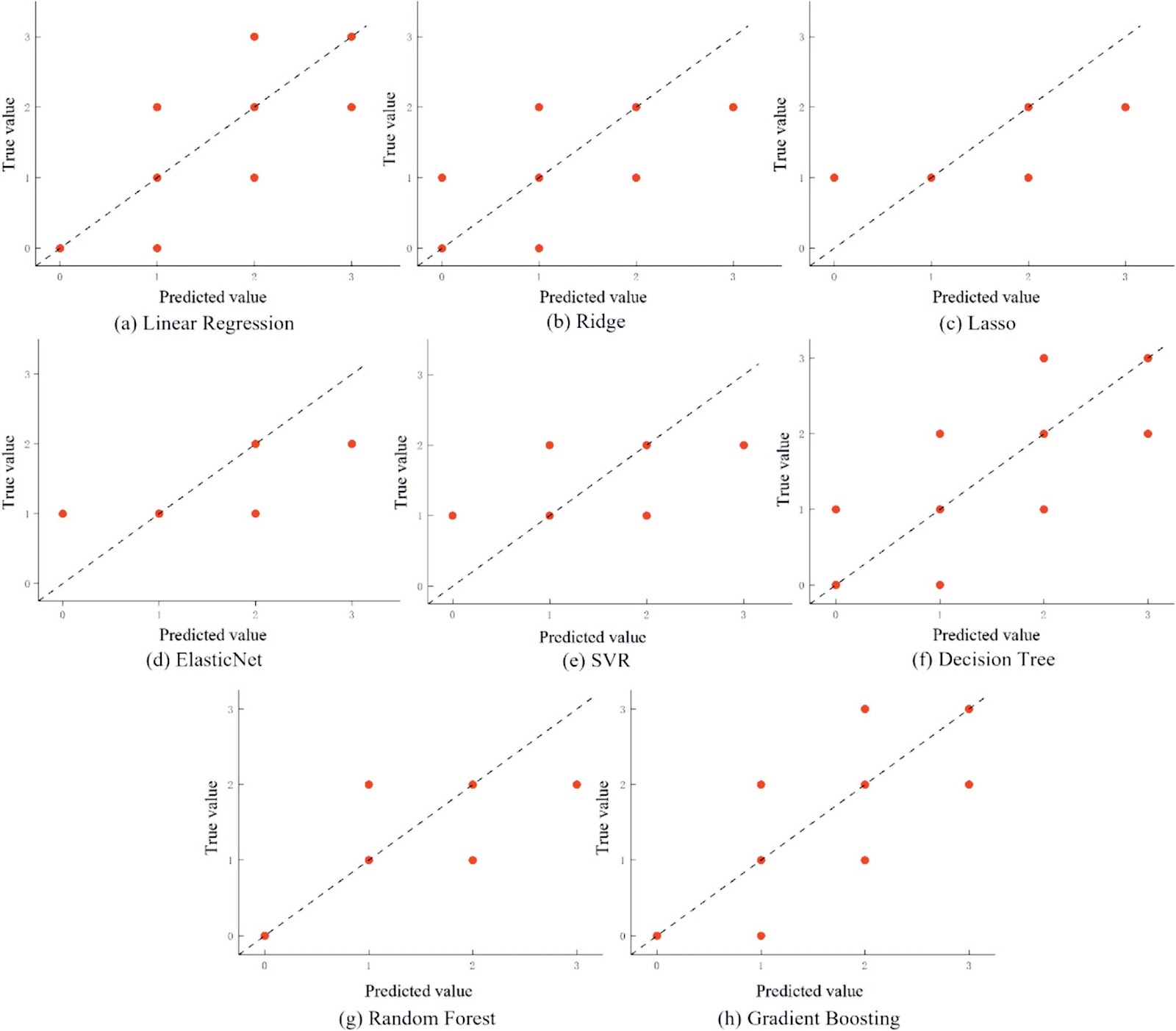
Applicability of existing criteria of rockburst tendency of sandstone in coal mines

Authors: Tianqi Nan, Linming Dou, Piotr Małkowski, Wu Cai, Haobing Li, Shun Liu

To evaluate the accuracy of rockburst tendency classification in coal-bearing sandstone strata, this study conducted uniaxial compression loading and unloading tests on sandstone samples with four distinct grain sizes. The tests involved loading the samples to 60%, 70%, and 80% of their uniaxial compressive strength, followed by unloading and reloading until failure. Key parameters such as the elastic energy index and linear elasticity criteria were derived from these tests. Additionally, rock fragments were collected to calculate their initial ejection kinetic energy, serving as a measure of rockburst tendency. The classification of rockburst tendency was conducted using grading methods based on burst energy index (WET), pre-peak stored elastic energy (PES) and experimental observations. Multi-class classification and regression analyses were applied to machine learning models using experimental data to predict rockburst tendency levels. A comparative analysis of models from two libraries revealed that the Random Forest model achieved the highest accuracy in classification, while the AdaBoost Regressor model excelled in regression predictions. This study highlights that on a laboratory scale, integrating ejection kinetic energy with the unloading ratio, failure load, WET and PES through machine learning offers a highly accurate and reliable approach for determining rockburst tendency levels.

Applicability of existing criteria of rockburst tendency of sandstone in coal mines
Graphical Abstract
Original ResearchVol. 32, Issue 1 • pp. 100-112DOI: 10.1016/j.ijmst.2025.01.003Jan 15, 2025

Response properties of geometries of coal penetrating fracture on seepage behavior

Authors: Research Collaborative Group

The fracture surfaces of coal-rock masses formed under mining-induced stress generally exhibit complex geometries, and the fracture geometry is one of the primary factors affecting the seepage characteristics of coal-rock penetrating fracture. This paper investigates the seepage characteristics of 5 groups of coal penetrating fracture (CPF) with different joint roughness coefficients (JRCs). Based on 3D morphology scanner tests and hydraulic coupling tests, a characterization method of effective geometric parameters in fracture surfaces under various confining pressures was improved, and a relationship between effective geometric parameters and the confining pressure is established. The results indicate that the nonlinear flow behavior in a CPF primarily includes three types: non-Newtonian fluid seepage under high confining pressure and low JRC, non-Darcy seepage under low confining pressure and high JRC, and the whole process of seepage characteristics between these two conditions. Among them, non-Newtonian fluid seepage is caused by significant fracture expansion, while non-Darcy seepage can be attributed to turbulence effects. During the seepage process, the geometric parameters with different JRC fracture samples all exhibit exponential changes with the increase of confining pressure. In addition, under high confining pressure, the effective contact ratio, effective fracture aperture, and void deviation ratio with high JRC fracture samples under high confining pressure increase by 93.5%, 67.4%, and 24.9%, respectively, compared with those of low JRC fracture samples. According to the variation of geometric parameters in a CPF with external stress, a seepage model considering geometric parameters in a CPF is proposed. By introducing the root mean square error (RMSE) and coefficient of determination (R2) to evaluate the error and goodness of fit between model curves and experimental data, it is found that the theoretical curves of model in this paper have the best matching with the experimental data. The average values of RMSE and R2 for model in this paper are 0.002 and 0.70, respectively, which are better than models in the existing literature.

Response properties of geometries of coal penetrating fracture on seepage behavior
Graphical Abstract
Original ResearchVol. 32, Issue 1 • pp. 100-112DOI: 10.1016/j.ijmst.2025.01.001Jan 15, 2025

Bond length and interface failure mechanism of anchor cable under continuous radial pressure conditions

Authors: Jian Ouyang, Xiuzhi Shi, Xianyang Qiu, Zongguo Zhang, Zeyu Li

The anchoring capacity of the anchor cable is closely related to the bonding length and radial pressure conditions. Through field pull-out tests, theoretical analysis, numerical simulation, and industrial tests, this study clarifies the relationship between radial pressure and bonding length for the ultimate pull-out force and reveals the microscopic failure process of the resin-rock interface in the anchoring system. The results show that the ultimate load increases with the increase of bonding length in three different stages: rapid, slow, and uniform growth. The new mechanical model developed considering radial pressure describes the inverse relationship between radial pressure and the plastic zone on the bonding section, and quantifies the reinforcing effect of confining pressure on the anchoring force. During the pull-out process of the anchor cable, the generation of failure cracks is in the order of orifice, bottom, and middle of the hole. Radial pressure can effectively enhance the ultimate pull-out force, alleviate the oscillation increase of pull-out force, and inhibit resin cracking, but will produce an external crushing zone. It also reveals the synergistic effect between bonding length and radial pressure, and successfully carries out industrial tests of anchor cable support, which ensures the stability of the stope roof and provides an important reference for the design of anchor cable support in deep high-stress mines.

Bond length and interface failure mechanism of anchor cable under continuous radial pressure conditions
Graphical Abstract
Original ResearchVol. 32, Issue 1 • pp. 100-112DOI: 10.1016/j.ijmst.2025.01.006Jan 15, 2025

Propagation criterion of hydraulic fracture in rock based on the rock micro-cracking mechanism

Authors: CAI Qingwang, HUANG Bingxiang, ZHAO Xinglong, XING Yuekun

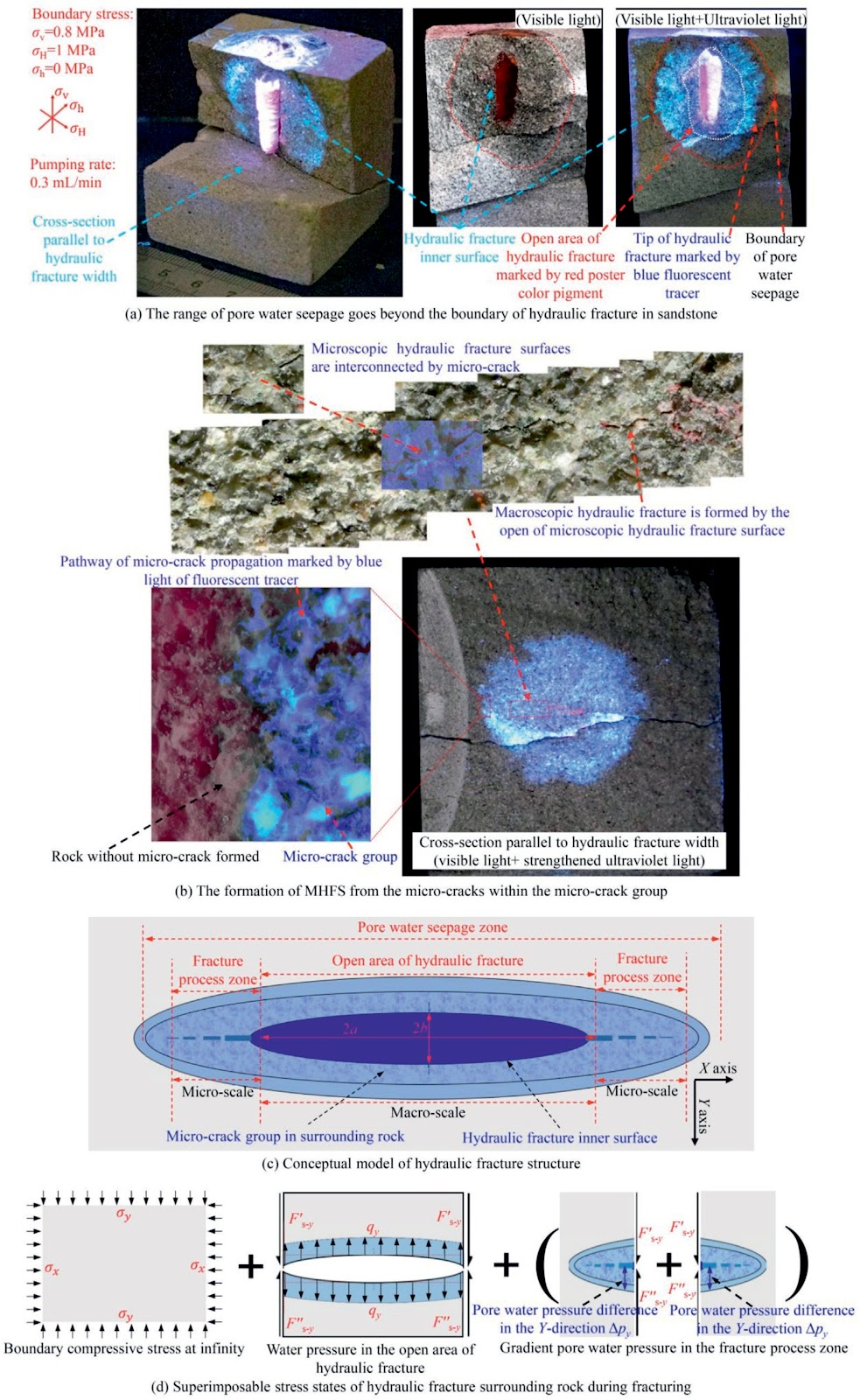
Hydraulic fracture (HF) formed in rock significantly helps with the development of geo-energy and geo-resources. The HF formation condition was challenging to understand, with obscure rock micro-cracking mechanisms being a key factor. The rock micro-cracking mechanism under gradient pore water pressure was analyzed on the scale of mineral particles and it was combined with macroscopic boundary conditions of rock hydraulic fracturing, obtaining the propagation criterion of HF in rock based on the rock micro-cracking mechanism which was verified by experiment. The results show that the disturbed skeleton stress induced by the disturbance of gradient pore water pressure in rock equals the pore water pressure difference. The overall range of the defined mechanical shape factor a/b is around 1, but greater than 0.5. Under the combined influence of pore water pressure differences and macroscopic boundary stresses on the rock micro-cracking, micro-cracks form among rock mineral particles, micro-cracks connect to form micro-hydraulic fracture surfaces, and micro-hydraulic fracture surfaces open to form macro-hydraulic fractures. HF begins to form at the micro-cracking initiation pressure (MCIP), which was tested by keeping the HF tip near the initiation point. The theoretical value of MCIP calculated by the proposed propagation criterion is close to MCIP tested.

Propagation criterion of hydraulic fracture in rock based on the rock micro-cracking mechanism
Graphical Abstract
Original ResearchVol. 32, Issue 1 • pp. 100-112DOI: 10.1016/j.ijmst.2025.01.007Jan 15, 2025

Upgrading of 6–0 mm low rank high sulfur lignite by a compound dry cascade separation bed

Authors: Xiaodong Yu, Deqing Gan

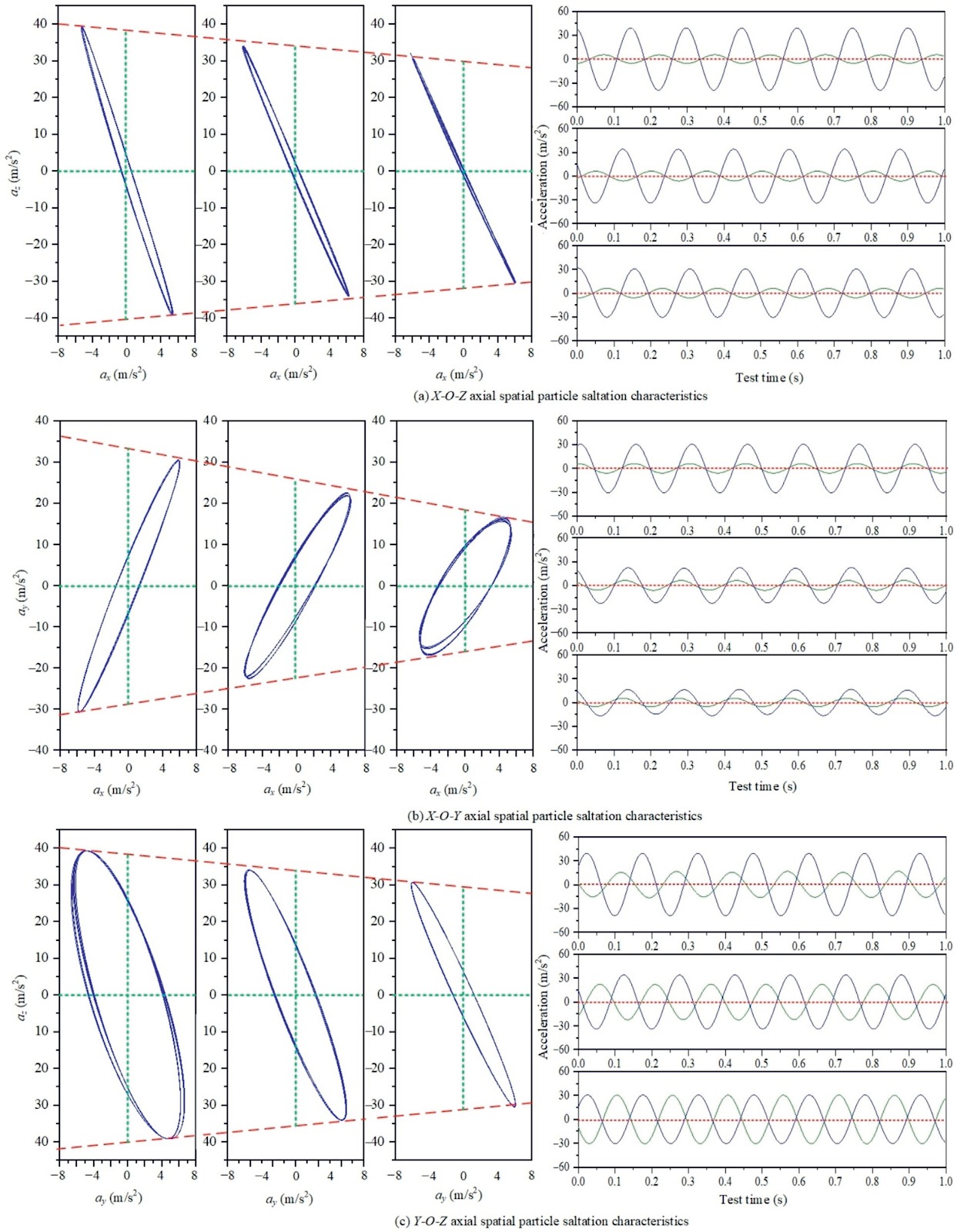
In this paper, the effect of vibration intensity on the spatial distribution of sulfur content in bed particles was studied. The effects of vibration and airflow on the mechanical characteristics of particles were studied, the collision behavior mode of particles was determined, the spatial saltation law of particles was investigated, the spatial functional axis of beds was determined, and the saltation separation period of particles was determined. The test results show that: When separation bed provides inlet airflow velocity (Uin) is 2.55 m/s, the airflow distribution interval of I, II and III areas were UI=2.55–2.57 m/s, UII=1.33–1.35 m/s, UIII=0.35–0.38 m/s, respectively; when separation bed vibration amplitude (A) A=2.4–2.5 mm, separation bed vibration frequency (f) f=23–24 Hz, the desulfurization effect is the best. When vibration intensity (C) C=1.22, Uin=1.05 m/s, the particles have disordered contact and collision behavior. When C=14.89, Uin=3.18 m/s, the particles have a transition cataclastic collision. When C=5.80, Uin=2.55 m/s, the particles have directional collision behavior. It is determined that the OX axis is the transverse stable diffusion axis of the material, the OY axis is the longitudinal gradient transport axis of the material, and the OZ axis is the vertical density cascade distribution axis of the material. When separation time (T) T=0–10 s was the period of disorderly diffusion and mixing of particles, T=10–20 s was the period of directional migration and stratification of particles, and T=20–30 s was the period of cascade distribution and separation of particles. Finally, separation experiments conducted under optimal operating parameters demonstrated that the clean coal yield was 72.02% with a sulfur content of 0.98%.

Upgrading of 6–0 mm low rank high sulfur lignite by a compound dry cascade separation bed
Graphical Abstract
Original ResearchVol. 32, Issue 1 • pp. 100-112DOI: 10.1016/j.ijmst.2025.01.010Jan 15, 2025

Dual-scale insights of two-phase flow in inter-cleats based on microfluidics: Interface jumps and energy dissipation

Authors: ZHANG Jicheng, LV Dawei, ZHANG Jon Jincai, WANG Feng, YIN Dawei, YU Haiyang

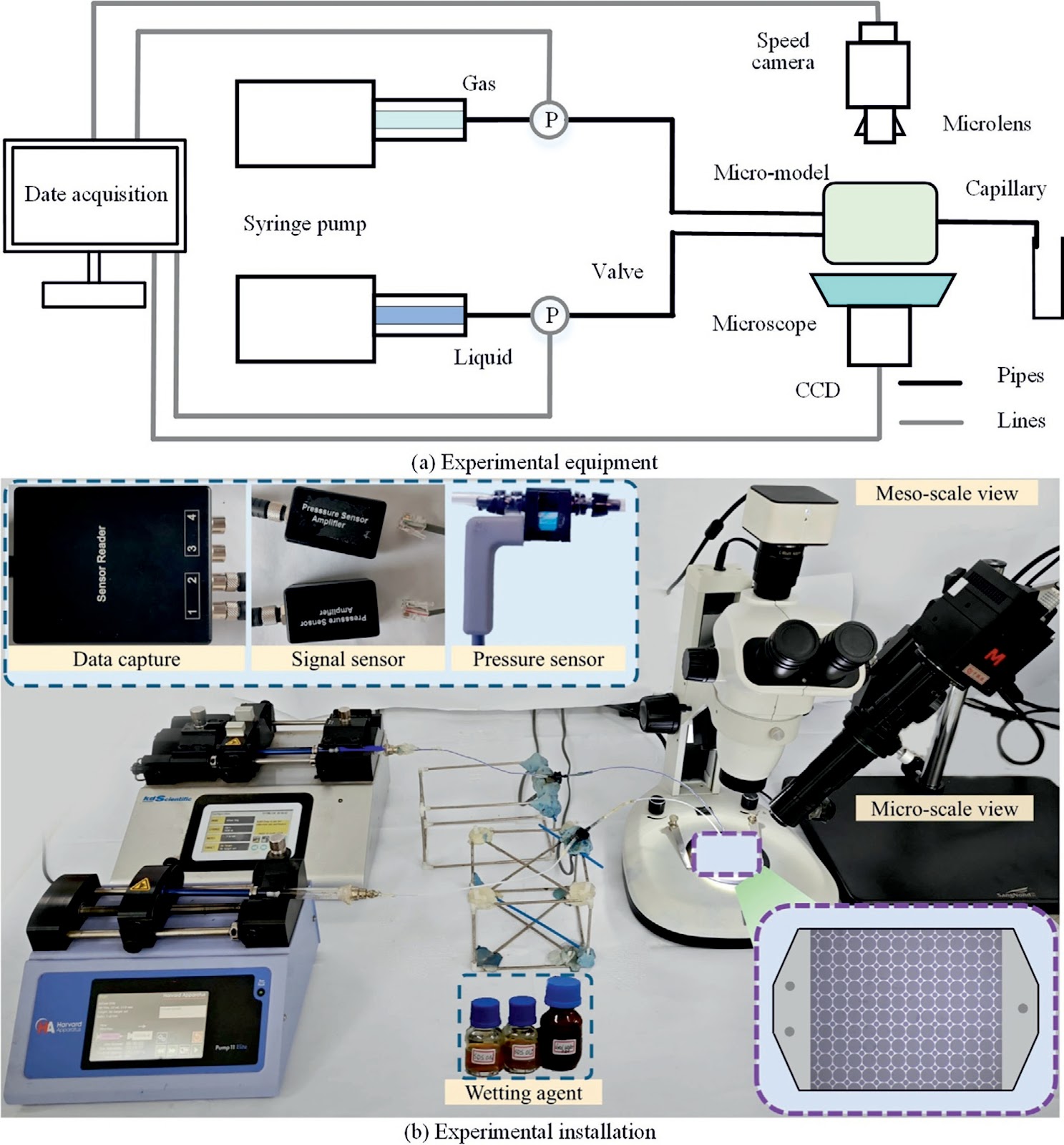
Cleat serves as the primary flow pathway for coalbed methane (CBM) and water. However, few studies consider the impact of local contact on two-phase flow within cleats. A visual generalized model of endogenous cleats was constructed based on microfluidics. A microscopic and mesoscopic observation technique was proposed to simultaneously capture gas–liquid interface morphology of pores and throat and the two-phase flow characteristics in entire cleat system. The local contact characteristics of cleats reduced absolute permeability, which resulted in a sharp increase in the starting pressure. The reduced gas flow capacity narrowed the co-infiltration area and decreased water saturation at the isotonic point in a hydrophilic environment. The increased local contact area of cleats weakened gas phase flow capacity and narrowed the co-infiltration area. Jumping events occurred in methane-water flow due to altered porosity caused by local contact in cleats. The distribution of residual phases changed the jumping direction on the micro-scale as well as the dominant channel on the mesoscale. Besides, jumping events caused additional energy dissipation, which was ignored in traditional two-phase flow models. This might contribute to the overestimation of relative permeability. The work provides new methods and insights for investigating unsaturated flow in complex porous media.

Dual-scale insights of two-phase flow in inter-cleats based on microfluidics: Interface jumps and energy dissipation
Graphical Abstract
Original ResearchVol. 32, Issue 1 • pp. 100-112DOI: 10.1016/j.ijmst.2025.01.005Jan 15, 2025

Effect of acid fracturing fluid modifying coal microstructure stimulated by ultrasonic

Authors: ZUO Shaojie, GAN Rui, WEN Zhijie, ZHANG Liang, JIANG Zhizhong, ZHAO Fuping, LIU Chengwei, LI Kun, XU Zhiyuan

The combination of ultrasonic and acid fracturing fluid can strengthen the modification effect on the micropore structure of the coal matrix, thereby enhancing the efficiency of the acid fracturing process. In this research, acetic acid was utilized to formulate acid fracturing fluids with varying concentrations, and the evolutionary traits of both the acid fracturing fluids and ultrasonic waves in relation to coal samples were investigated. The functional group structure, mineral composition, micropore structure and surface morphology of coal samples were characterized by FTIR, XRD, N2 adsorption at low temperature and SEM-EDS. The results showed that aromatics (I) and branching parameters (CH2/CH3) were reduced by 81.58% and 88.67%, respectively, after 9% acetic acid treatment. Acetic acid can dissolve carbonates and clay minerals in coal, create new pores, and increase porosity, pore volume and pore fractal dimension. After modification by 7% acetic acid, the pore volume increased by 5.7 times. SEM observation shows that the diameter of coal surface holes increases, EDS scanning shows that the content of mineral elements in coal decreases, the connectivity of coal holes increases, and the holes expand. The findings of this research offer theoretical direction for optimizing ultrasonic-enhanced acid fracturing fluid modification.

Effect of acid fracturing fluid modifying coal microstructure stimulated by ultrasonic
Graphical Abstract
Original ResearchVol. 32, Issue 1 • pp. 100-112DOI: 10.1016/j.ijmst.2025.01.004Jan 15, 2025

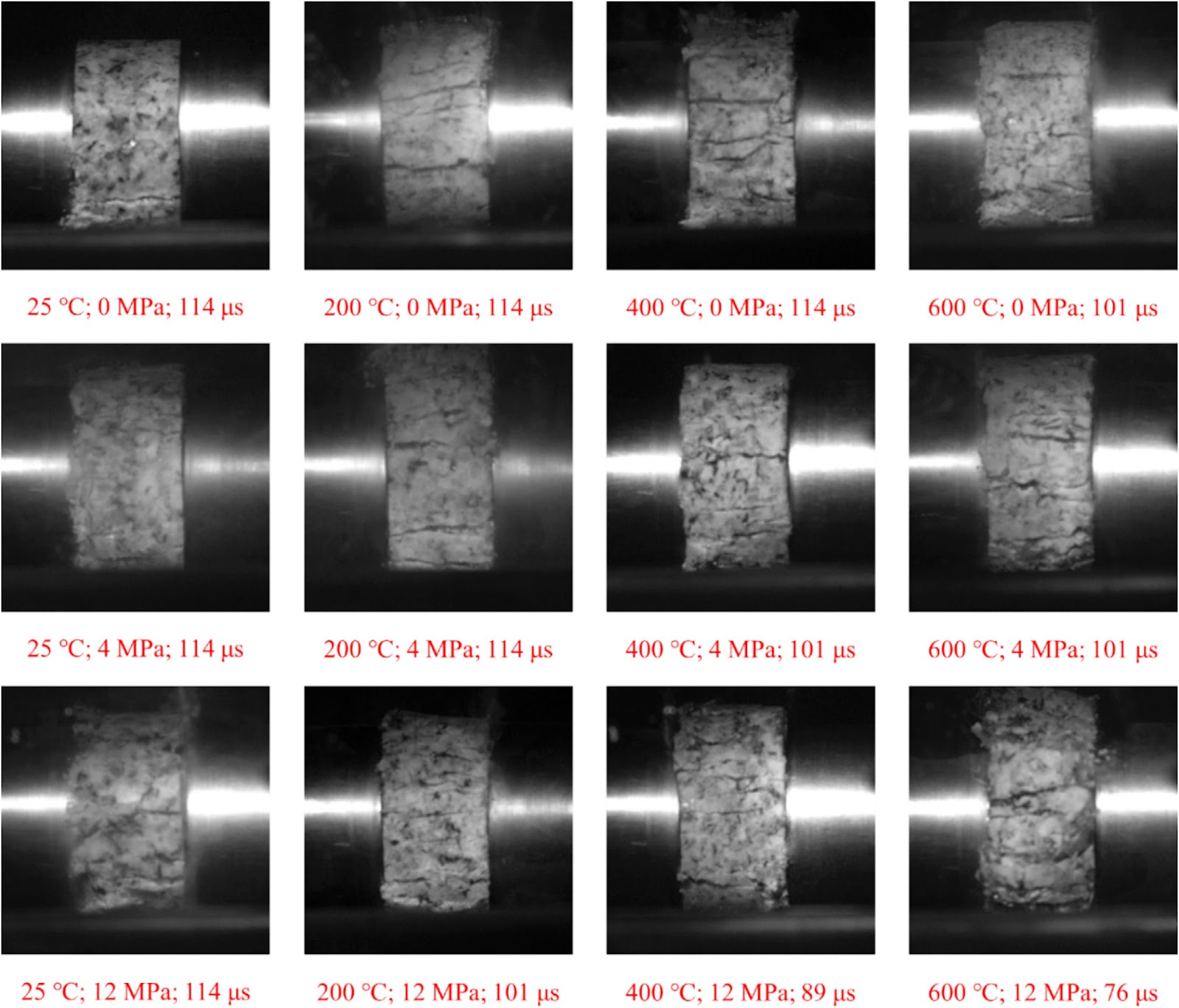
Macro- and micro-mechanical response and damage mechanism of sandstone under high-temperature conditions

Authors: Laiwei Wu, Yanli Huang, Junmeng Li, Guiyuan Wang, Yingshun Li, Xiaotong Li, Junzhi Chen, Chuning Ji

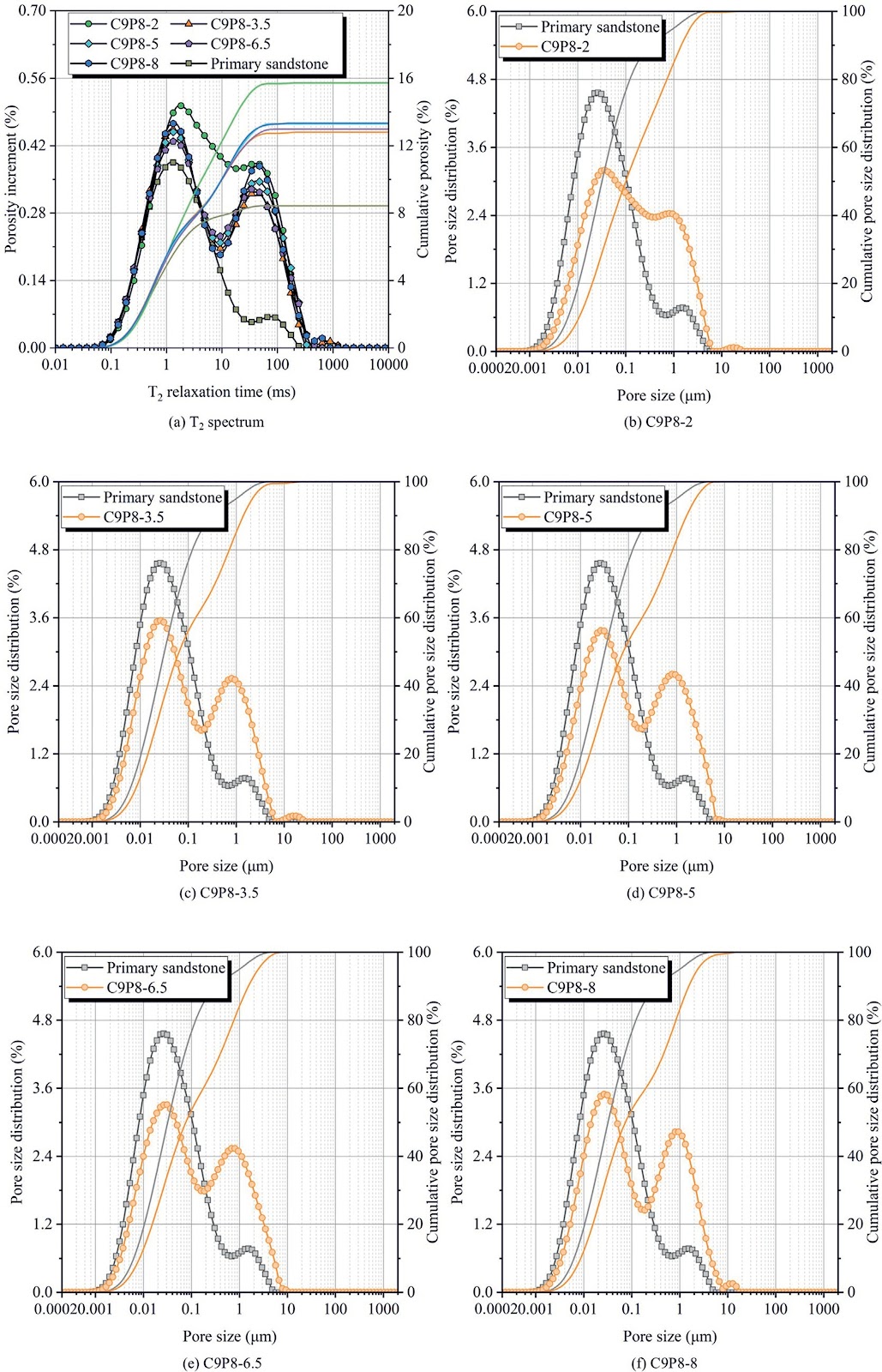
The thermal effects of coal combustion considerably influence the physical and chemical properties, structural characteristics, and stability of rocks, posing a serious threat to the safety of coal mining operations. In this study, the impacts of temperature on the physical and chemical characteristics (i.e., mineral phase, microstructure, and mechanical strength) of sandstone were investigated by employing experimental methods, including microstructural analysis, uniaxial acoustic emission (AE), and nuclear magnetic resonance (NMR). The results indicate that temperature alters the mineral phase and the pore characteristics, and these two factors jointly affect the mechanical properties of sandstone. The influence of temperature on the mechanical strength of sandstone is categorized into low-temperature strengthening and high-temperature damage, with a threshold temperature identified at 600 °C. The low-temperature strengthening effect encompasses both pore strengthening and mineral phase strengthening, while the high-temperature damage effect primarily results from pore damage. As the experimental temperature rises, both the number of AE events and the AE energy transition from a surge in the post-peak failure stage to a stepwise increase during the loading process. This transition implies that the failure mode of the sandstone sample evolves from brittle failure to tensile failure.

Macro- and micro-mechanical response and damage mechanism of sandstone under high-temperature conditions
Graphical Abstract
Original ResearchVol. 32, Issue 1 • pp. 100-112DOI: 10.1016/j.ijmst.2025.01.002Jan 15, 2025

Multi-frequency formation mechanism and modulation strategy of self-priming enhanced submerged pulsed waterjet

Authors: Haojie Jia, Yanwei Liu, Weiqin Zuo, Hongkai Han, Ping Chang, Mohammad Waqar Ali Asad, Guozhong Hu, Jian Miao, Hani S. Mitri

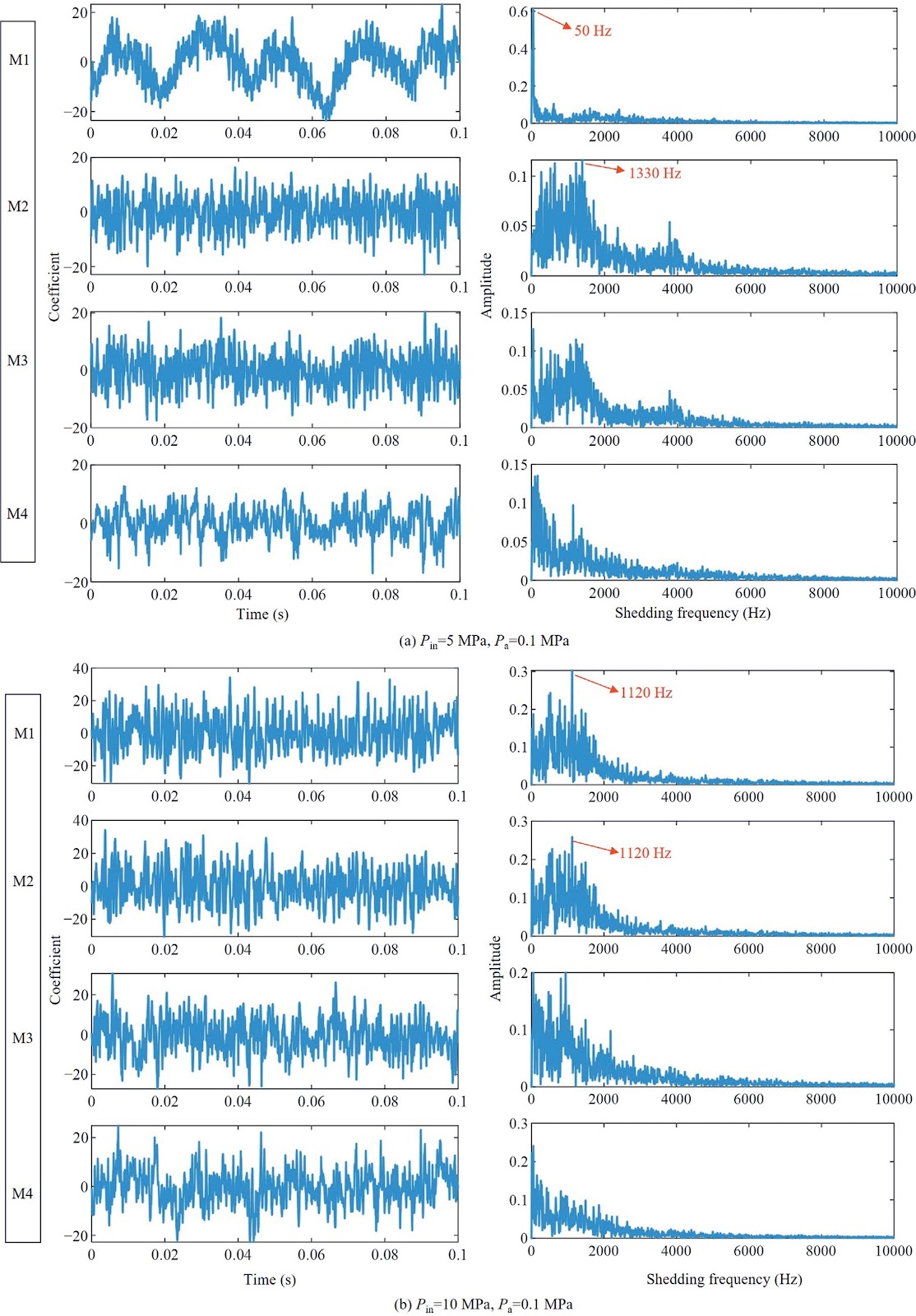
Under submerged conditions, compared with traditional self-excited oscillating pulsed waterjets (SOPWs), annular fluid-enhanced self-excited oscillating pulsed waterjets (AFESOPWs) exhibit a higher surge pressure through self-priming. However, their pressure frequency and cavitation characteristics remain unclear, resulting in an inability to fully utilize resonance and cavitation erosion to break coal and rock. In this study, high-frequency pressure testing, high-speed photography, and large eddy simulation (LES) are used to investigate the distribution of the pressure frequency band, evolution law of the cavitation cloud, and its regulation mechanism of a continuous waterjet, SOPW, and AFESOPW. The results indicated that the excitation of the plunger pump, shearing layer vortex, and bubble collapse corresponded to the three high-amplitude frequency bands of the waterjet pressure. AFESOPWs have an additional self-priming frequency that can produce a larger amplitude under a synergistic effect with the second high-amplitude frequency band. A better cavitation effect was produced after self-priming the annulus fluid, and the shedding frequency of the cavitation clouds of the three types of waterjets was linearly related to the cavitation number. The peak pressure of the waterjet and cavitation erosion effect can be improved by modulating the waterjet pressure oscillation frequency and cavitation shedding frequency.

Multi-frequency formation mechanism and modulation strategy of self-priming enhanced submerged pulsed waterjet
Graphical Abstract
Original ResearchVol. 32, Issue 2 • pp. 100-112DOI: 10.1016/j.ijmst.2025.02.002Jan 15, 2025

Development and application of rock rheological constitutive model considering dynamic stress field and seepage field

Authors: CHEN Yian, ZHAO Guangming, XU Wensong, PENG Shoujian, XU Jiang

The generalized rheological tests on sandstone were conducted under both dynamic stress and seepage fields. The results demonstrate that the rheological strain of the specimen under increased stress conditions is greater than that under creep conditions, indicating that the dynamic stress field significantly influences the rheological behaviours of sandstone. Following the rheological tests, the number of small pores in the sandstone decreased, while the number of medium-sized pores increased, forming new seepage channels. The high initial rheological stress accelerated fracture compression and the closure of seepage channels, resulting in reduction in the permeability of sandstone. Based on the principles of generalized rheology and the experimental findings, a novel rock rheological constitutive model incorporating both the dynamic stress field and seepage properties has been developed. Numerical simulations of surrounding rock deformation in geotechnical engineering were carried out using a secondary development version of this model, which confirmed the applicability of the generalized rheological numerical simulation method. These results provide theoretical support for the long-term stability evaluation of engineering rock masses and for predicting the deformation of surrounding rock.
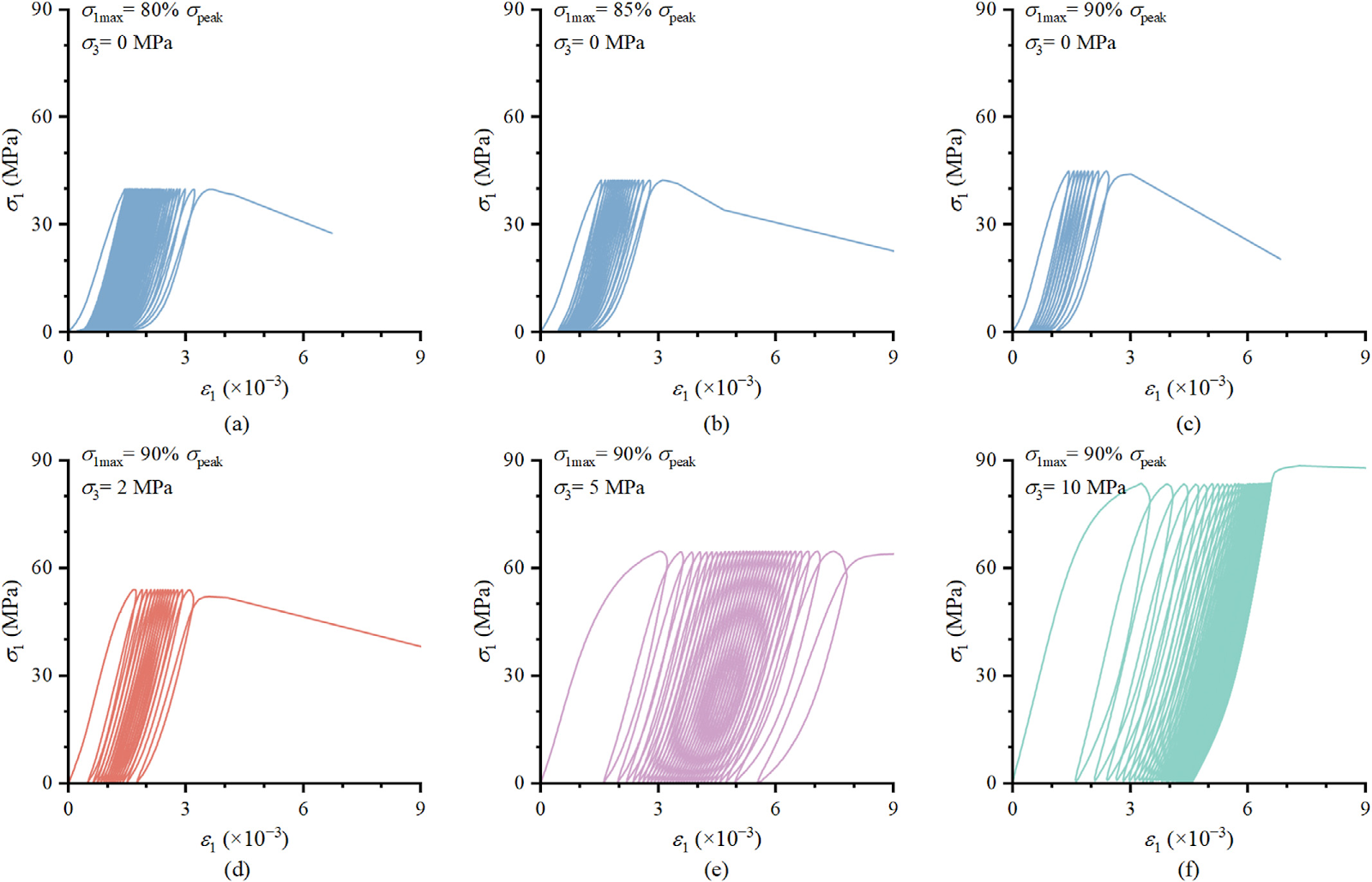
Development and application of rock rheological constitutive model considering dynamic stress field and seepage field
Graphical Abstract
Original ResearchVol. 32, Issue 2 • pp. 100-112DOI: 10.1016/j.ijmst.2025.02.011Jan 15, 2025

Reorientation of hydraulic fractures and stress-shadow effect in double-well fracturing of hydrocarbon reservoirs: 3D numerical model and analysis

Authors: JU Yang, LI Yang, YANG Yongming, WANG Yongliang

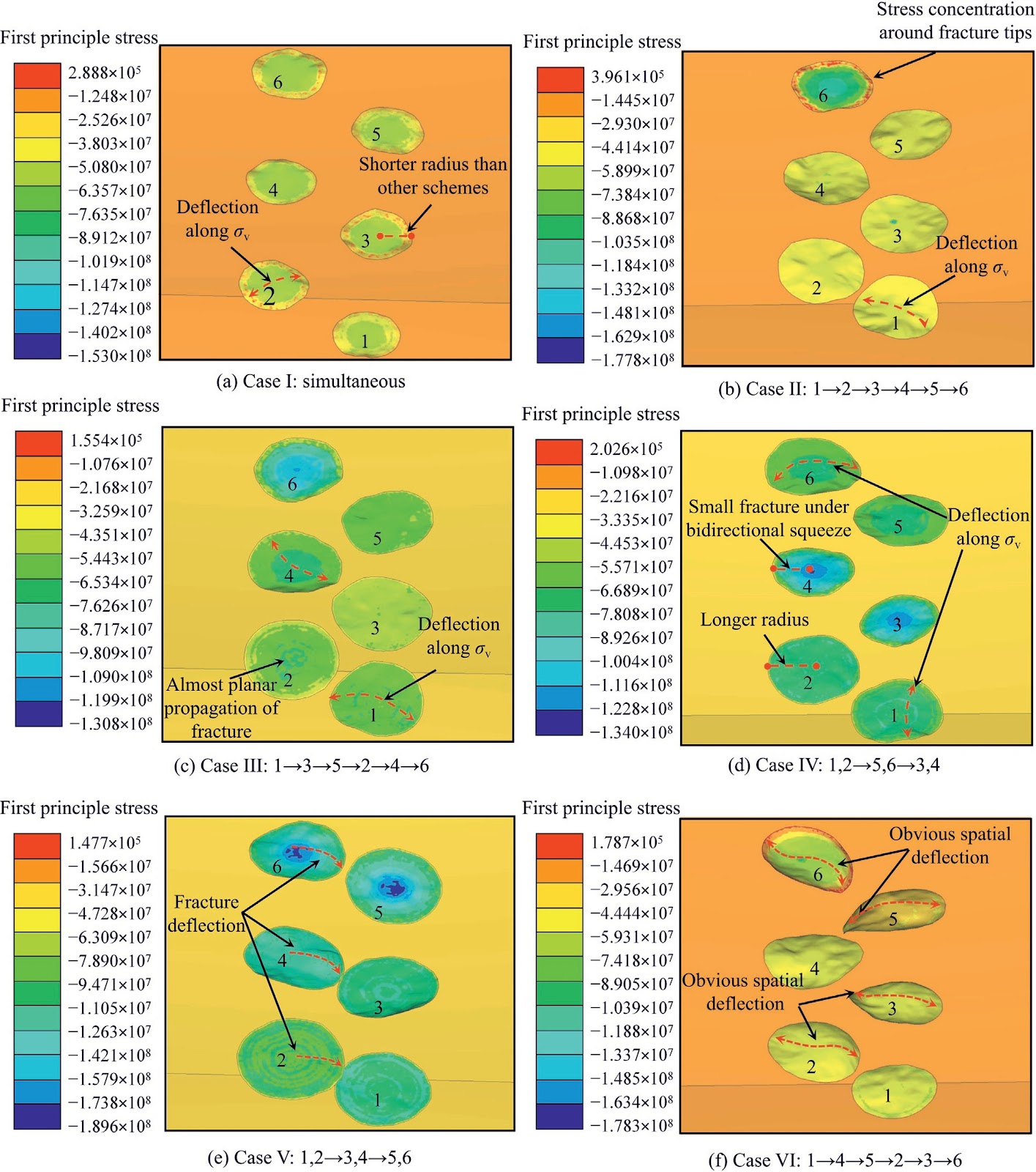
Multistage fracturing technology has been used to enhance tight hydrocarbon resource recovery. Determining the proper well spacing and fracturing strategy is crucial for generating a complex fracture network that facilitates oil and gas flow in reservoirs. The stress-shadow effect that occurs between multiple wells significantly affects the development of fracture networks in reservoirs. However, the quantification of the stress-shadow effect and its influence on fracture networks has not been satisfactorily resolved because of the difficulties in detecting and identifying fracture propagation and reorientation in reservoirs. In this study, based on the geological information from the Shengli oilfield, we applied a hybrid finite element-discrete element method to analyze engineering-scale three-dimensional fracture propagation and reorientation by altering well spacings and fracturing strategies. The results indicate that the fracturing area generated by the synchronous fracturing scheme is much smaller than those generated by the sequential and alternative schemes. An alternative hydrofracturing scheme is optimal with respect to fracturing area. The stress-blind area was defined to quantify the mechanical disturbance between adjacent wells. Our study improves the understanding of the effect of fracturing schemes on fracture networks and the impact of independent factors contributing to stress-shadow effects.

Reorientation of hydraulic fractures and stress-shadow effect in double-well fracturing of hydrocarbon reservoirs: 3D numerical model and analysis
Graphical Abstract
Original ResearchVol. 32, Issue 2 • pp. 100-112DOI: 10.1016/j.ijmst.2025.02.007Jan 15, 2025

Research on rock crack contact model considering linked substances based on particle flow method

Authors: XIAO Fukun, XIE Kai, SHAN Lei, LIU Gang, LI Lianchong, FEDOTOVA Iuliia

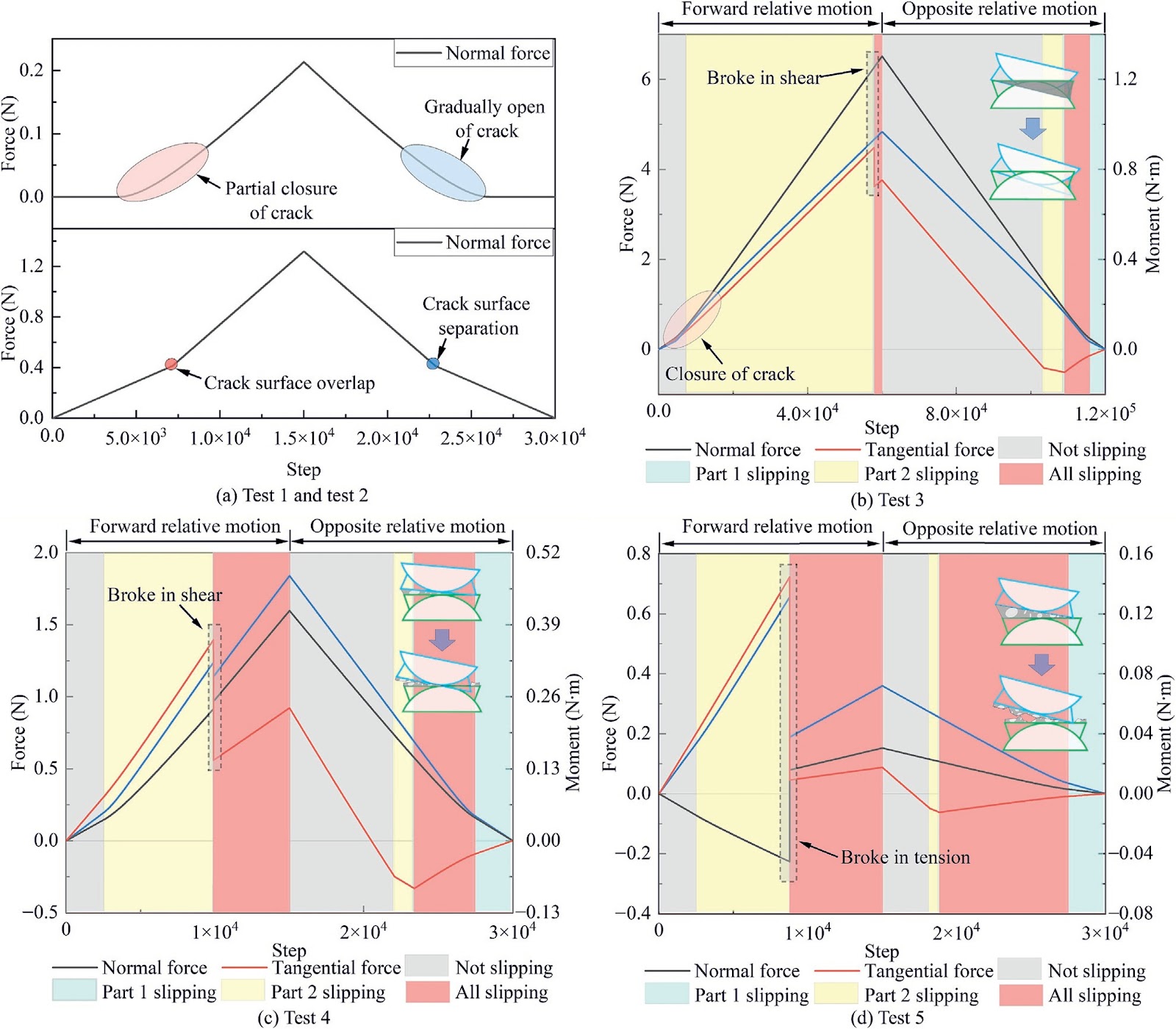
The models constructed by particle flow simulation method can effectively simulate the heterogeneous substance characteristics and failure behaviors of rocks. However, existing contact models overlook the rock cracks, and the various simulation methods that do consider cracks still exhibit certain limitations. In this paper, based on Flat-Joint model and Linear Parallel Bond model, a crack contact model considering linked substance in the crack is proposed by splitting the crack contact into two portions: linked portion and unlinked portion for calculation. The new contact model considers the influence of crack closure on the contact force-displacement law. And a better compressive tensile strength ratio (UCS/T) was obtained by limiting the failure of the contact bond to be solely controlled by the contact force and moment of the linked portion. Then, by employing the FISH Model tool within the Particle Flow Code, the contact model was constructed and verified through contact force–displacement experiments and loading-unloading tests with cracked model. Finally, the contact model was tested through simulations of rock mechanics experiments. The results indicate that the contact model can effectively simulate the axial and lateral strain laws of rocks simultaneously and has a relatively good reproduction of the bi-modularity of rocks.

Research on rock crack contact model considering linked substances based on particle flow method
Graphical Abstract
Original ResearchVol. 32, Issue 2 • pp. 100-112DOI: 10.1016/j.ijmst.2025.02.001Jan 15, 2025

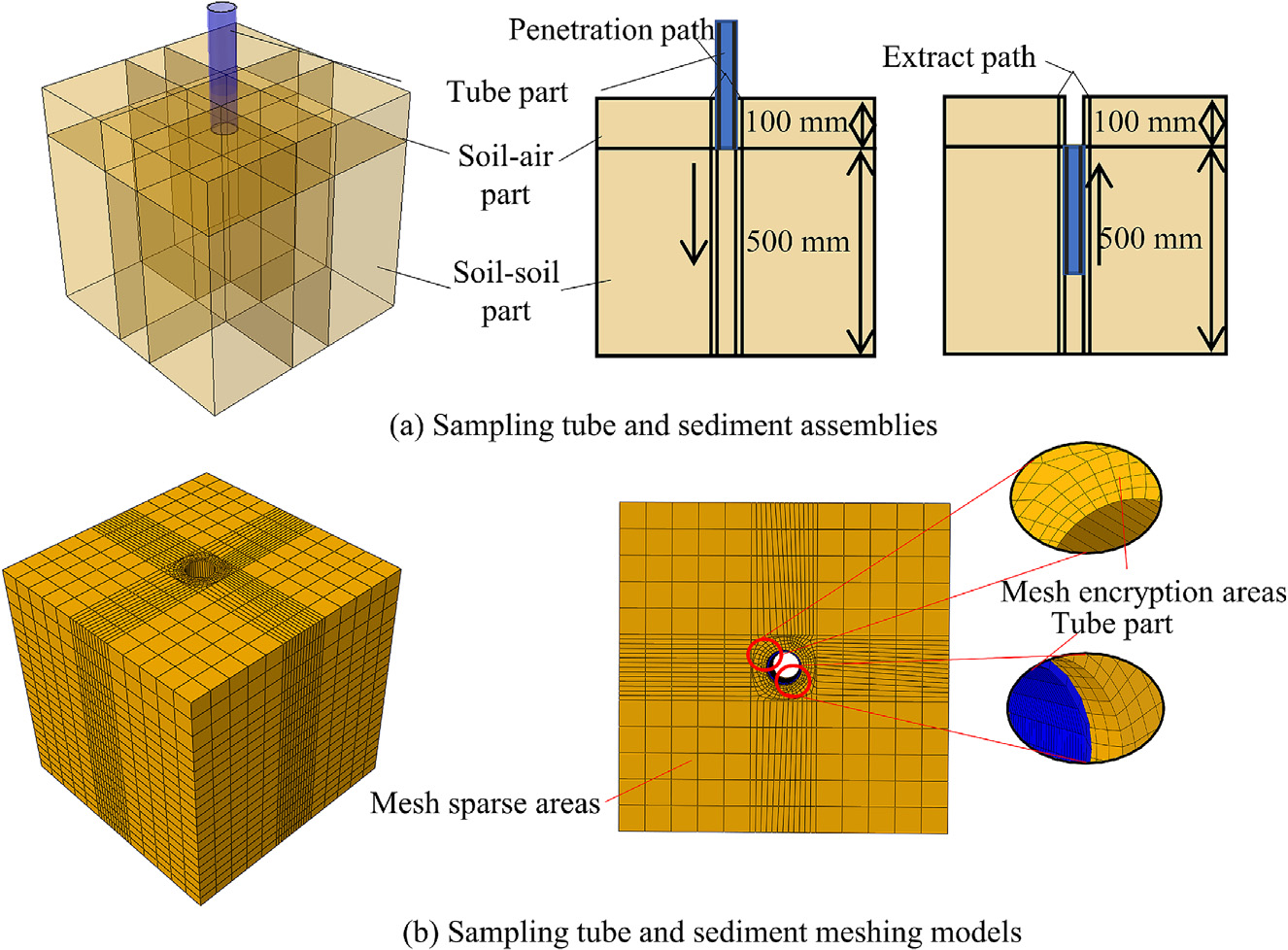
Borehole reinforcement based on polymer materials induced by liquid-gas phase transition in simulating lunar coring

Authors: Dingqiang Mo, Tao Liu, Zhiyu Zhao, Liangyu Zhu, Dongsheng Yang, Yifan Wu, Cheng Lan, Wenchuan Jiang, Heping Xie

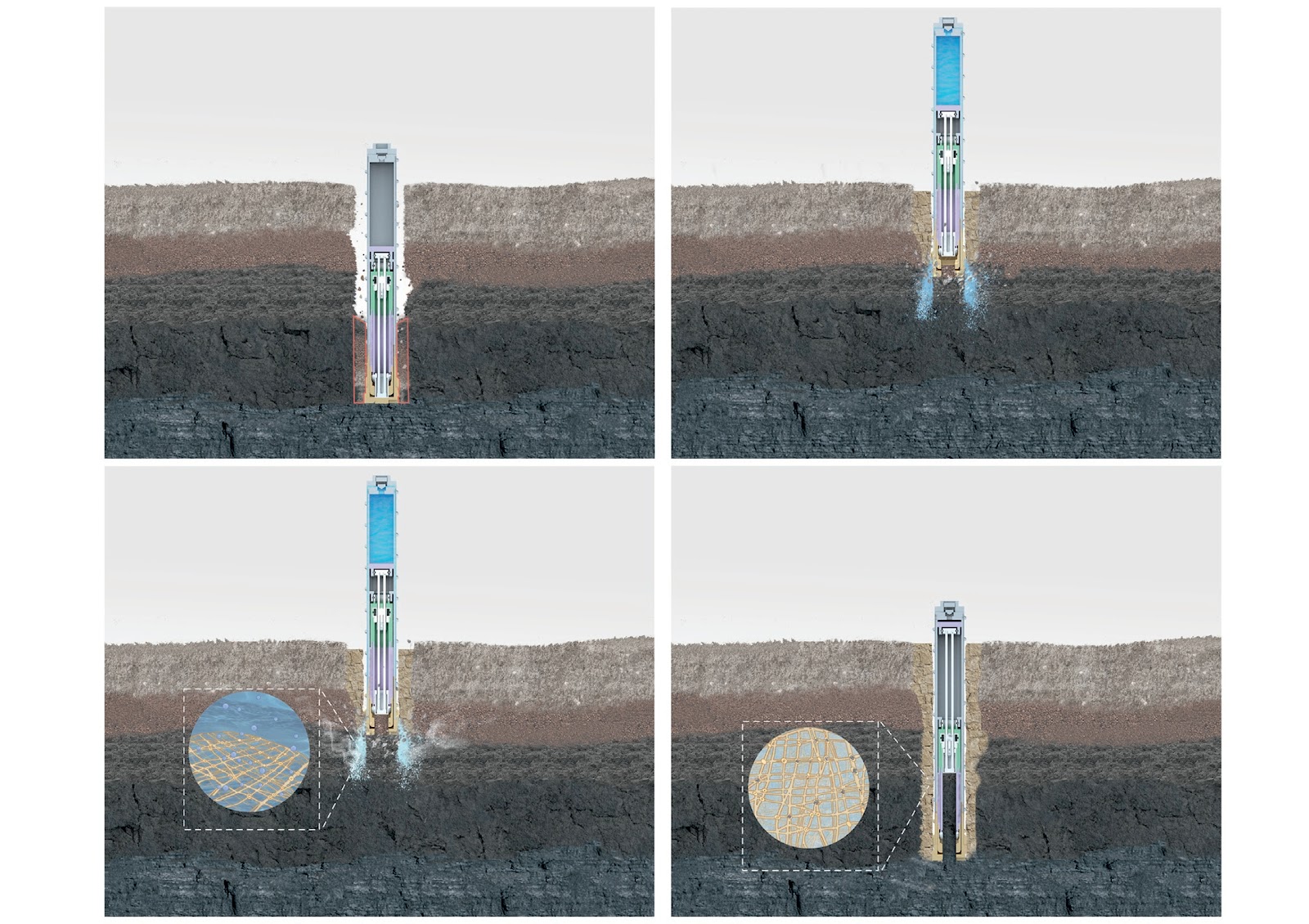
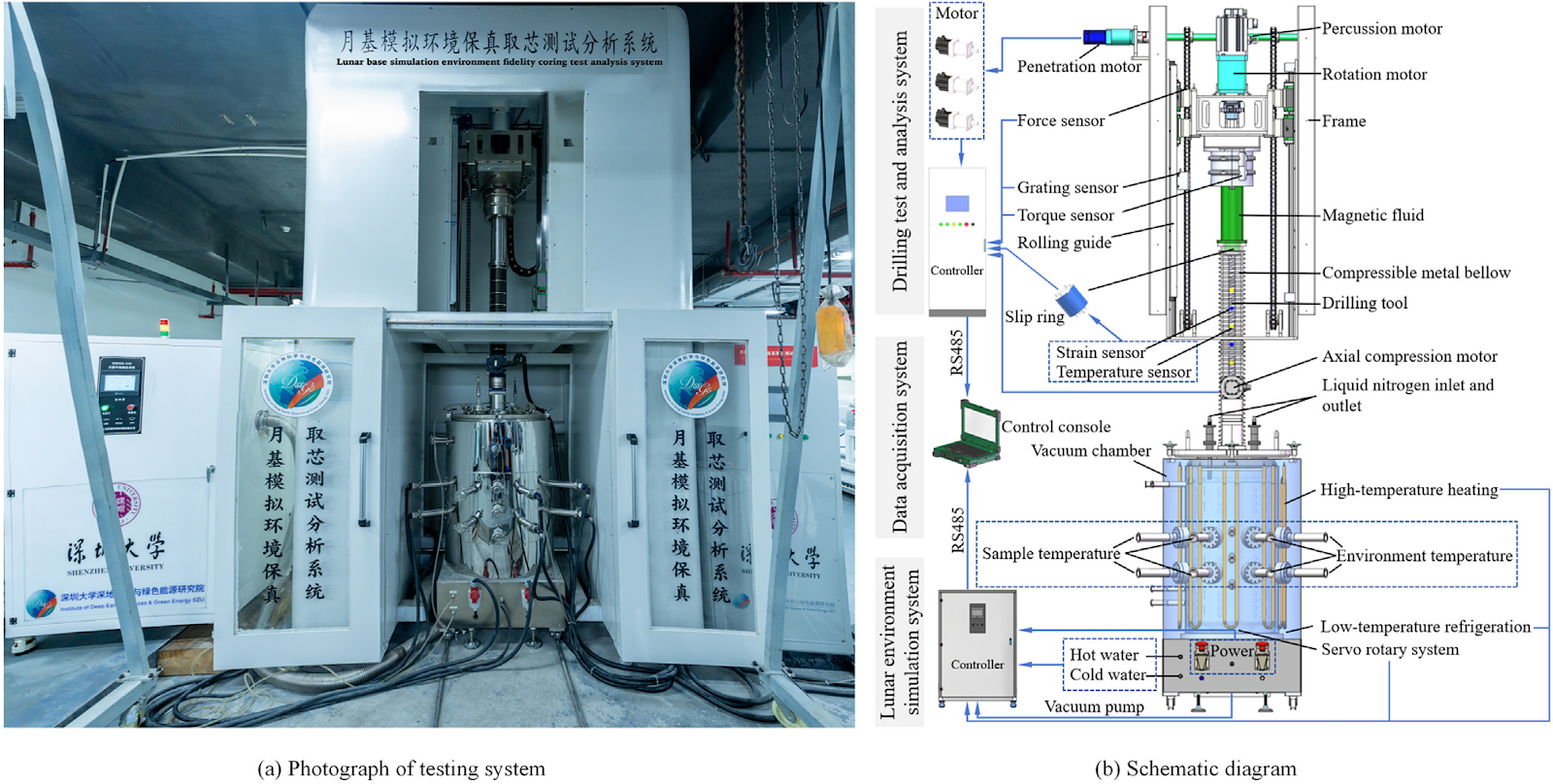
Lunar core samples are the key materials for accurately assessing and developing lunar resources. However, the difficulty of maintaining borehole stability in the lunar coring process limits the depth of lunar coring. Here, a strategy of using a reinforcement fluid that undergoes a phase transition spontaneously in a vacuum environment to reinforce the borehole is proposed. Based on this strategy, a reinforcement liquid suitable for a wide temperature range and a high vacuum environment was developed. A feasibility study on reinforcing the borehole with the reinforcement liquid was carried out, and it is found that the cohesion of the simulated lunar soil can be increased from 2 to 800 kPa after using the reinforcement liquid. Further, a series of coring experiments are conducted using a self-developed high vacuum (vacuum degree of 5 Pa) and low-temperature (between −30 and 50 ℃) simulation platform. It is confirmed that the high-boiling-point reinforcement liquid pre-placed in the drill pipe can be released spontaneously during the drilling process and finally complete the reinforcement of the borehole. The reinforcement effect of the borehole is better when the solute concentration is between 0.15 and 0.25 g/mL.

Borehole reinforcement based on polymer materials induced by liquid-gas phase transition in simulating lunar coring
Graphical Abstract
Original ResearchVol. 32, Issue 2 • pp. 100-112DOI: 10.1016/j.ijmst.2025.02.009Jan 15, 2025

Real-time monitoring and analysis of hydraulic fracturing in surface well using microseismic technology: Case insights and methodological advances

Authors: Yanan Qian, Ting Liu, Cheng Zhai, Hongda Wen, Yuebing Zhang, Menghao Zheng, Hexiang Xu, Dongyong Xing, Xinke Gan

Through a case analysis, this study examines the spatiotemporal evolution of microseismic (MS) events, energy characteristics, volumetric features, and fracture network development in surface well hydraulic fracturing. A total of 349 MS events were analyzed across different fracturing sections, revealing significant heterogeneity in fracture propagation. Energy scanning results showed that cumulative energy values ranged from 240 to 1060 J across the sections, indicating notable differences. Stimulated reservoir volume (SRV) analysis demonstrated well-developed fracture networks in certain sections, with a total SRV exceeding 1540000 m3. The hydraulic fracture network analysis revealed that during the mid-fracturing stage, the density and spatial extent of MS events significantly increased, indicating rapid fracture propagation and the formation of complex networks. In the later stage, the number of secondary fractures near fracture edges decreased, and the fracture network stabilized. By comparing the branching index, fracture length, width, height, and SRV values across different fracturing sections, Sections No. 1 and No. 8 showed the best performance, with high MS event densities, extensive fracture networks, and significant energy release. However, Sections No. 4 and No. 5 exhibited sparse MS activity and poor fracture connectivity, indicating suboptimal stimulation effectiveness.

Original ResearchVol. 32, Issue 2 • pp. 100-112DOI: 10.1016/j.ijmst.2025.02.004Jan 15, 2025

Fluid evolution and fragmentation characteristics under high pressure water jet impact on thermal rock

Authors: Jianming Shangguan, Zhaolong Ge, Qinglin Deng, Yuhuai Cui, Zhi Yao

In the application of high-pressure water jet assisted breaking of deep underground rock engineering, the influence mechanism of rock temperature on the rock fragmentation process under jet action is still unclear. Therefore, the fluid evolution characteristics and rock fracture behavior during jet impingement were studied. The results indicate that the breaking process of high-temperature rock by jet impact can be divided into four stages: initial fluid-solid contact stage, intense thermal exchange stage, perforation and fracturing stage, and crack propagation and penetration stage. With the increase of rock temperature, the jet reflection angles and the time required for complete cooling of the impact surface significantly decrease, while the number of cracks and crack propagation rate significantly increase, and the rock breaking critical time is shortened by up to 34.5%. Based on numerical simulation results, it was found that the center temperature of granite at 400 °C rapidly decreased from 390 to 260 °C within 0.7 s under jet impact. In addition, a critical temperature and critical heat flux prediction model considering the staged breaking of hot rocks was established. These findings provide valuable insights to guide the water jet technology assisted deep ground hot rock excavation project.

Fluid evolution and fragmentation characteristics under high pressure water jet impact on thermal rock
Graphical Abstract
Original ResearchVol. 32, Issue 2 • pp. 100-112DOI: 10.1016/j.ijmst.2025.02.006Jan 15, 2025

Experimental insights into anchorage performance of en-echelon joints under cyclic shear loading

Authors: Bin Wang, Qiangyong Zhang, Yujing Jiang, Kang Duan, Hongbin Chen

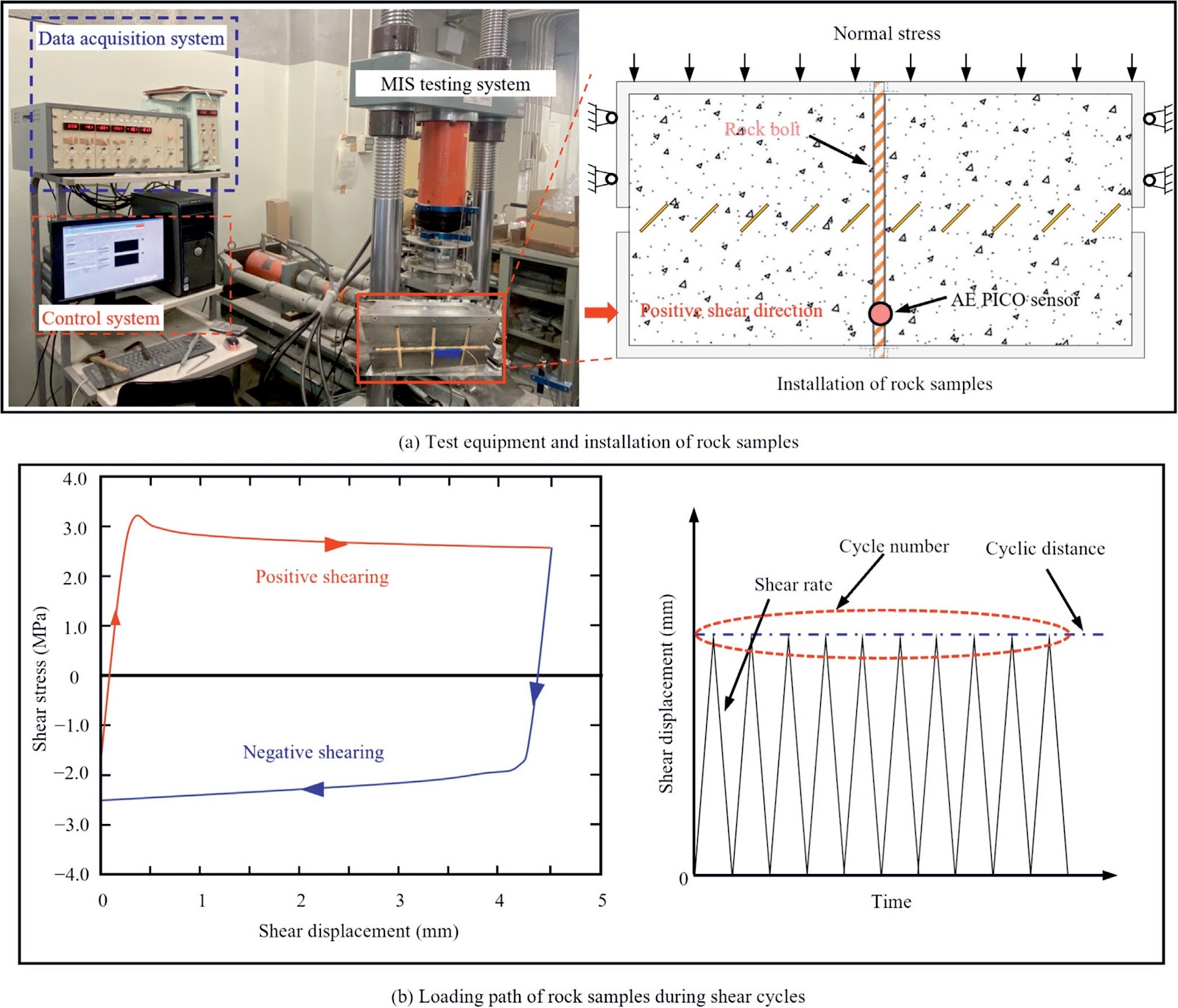
Understanding the anchorage performance of en-echelon joints under cyclic shear loading is crucial for optimizing support strategies in jointed rock masses. This study examines the anchorage effects on en-echelon joints with various orientations using laboratory cyclic shear tests. By comparing unbolted and bolted en-echelon joints, we analyze shear zone damage, shear properties, dilatancy, energy absorption, and acoustic emission characteristics to evaluate anchoring effects across shear cycles and joint orientations. Results reveal that bolted en-echelon joints experience more severe shear zone damage after cycles, with bolt deformation correlating to shear zone width. Bolted en-echelon joints exhibit faster shear strength deterioration and higher cumulative strength loss compared to unbolted ones, with losses ranging from 20.04% to 72.76%. The compressibility of en-echelon joints reduces the anchoring effect during shear cycles, leading to lower shear strength of bolted en-echelon joints in later stages of shear cycles compared to unbolted ones. Bolts reinforce en-echelon joints more effectively at non-positive angles, with the best performance observed at 0° and –60°. Anchorage accelerates the transition from rolling friction to sliding friction in the shear zone, enhancing energy absorption, which is crucial for rock projects under dynamic shear loading. Additionally, rock bolts expedite the transition of the cumulative AE hits and cumulative AE energy curves from rapid to steady growth, indicating that strong bolt-rock interactions accelerate crack initiation, propagation, and energy release.

Experimental insights into anchorage performance of en-echelon joints under cyclic shear loading
Graphical Abstract
Original ResearchVol. 32, Issue 2 • pp. 100-112DOI: 10.1016/j.ijmst.2025.02.010Jan 15, 2025

Eco-friendly collectors in apatite froth flotation: A review

Authors: Gabriela Budemberg, Rickard Jolsterå, Saeed Chehreh Chelgani

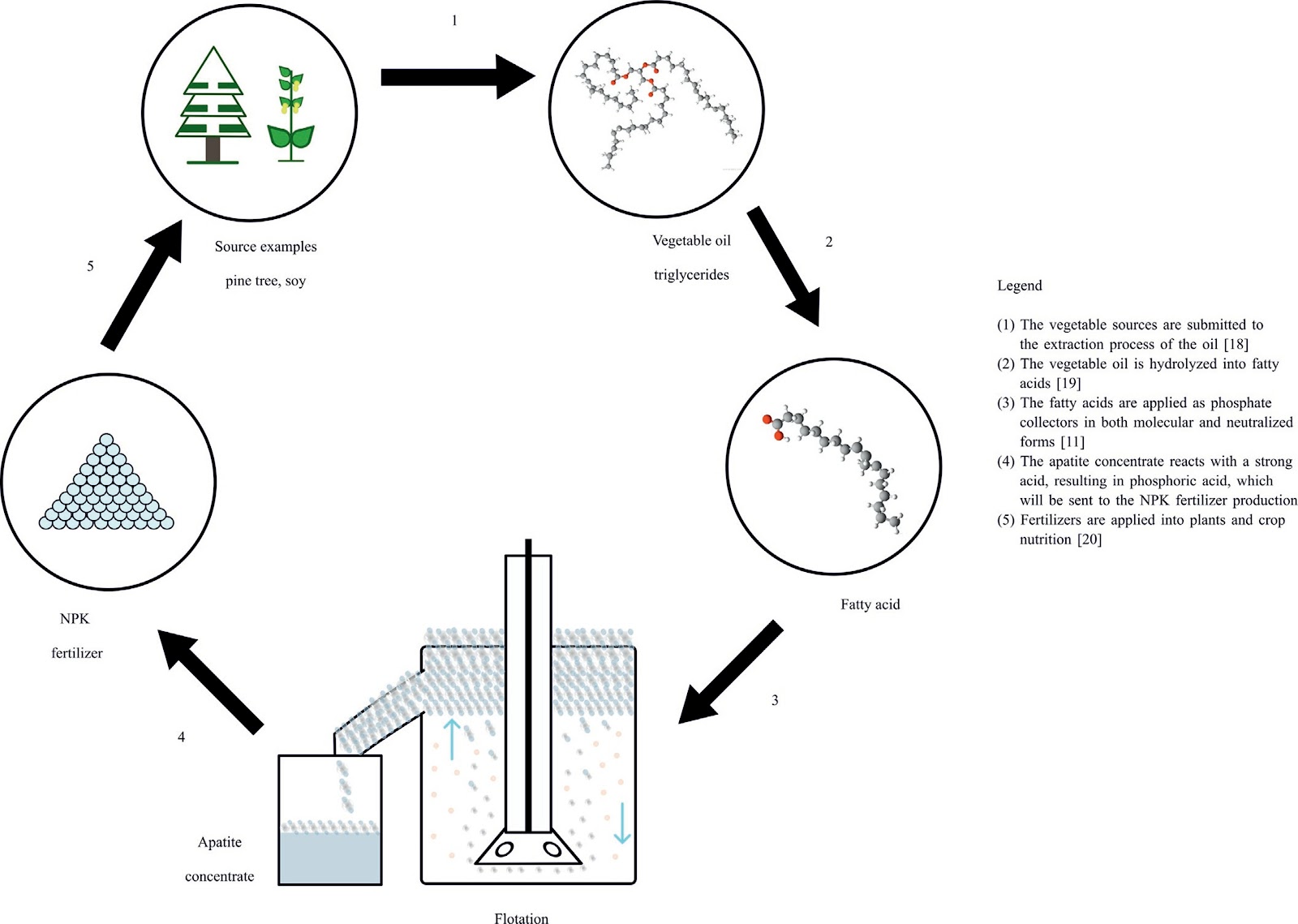
The global reliance on phosphate rock for agriculture and other industries, coupled with chemical regulations in developed countries, has driven the search for green alternatives in apatite flotation. This review investigates eco-friendly collectors’ effectiveness in promoting sustainable mineral processing, guiding future alternatives to traditional reagents. The manuscript discussed the surface properties of apatite and its interaction with eco-friendly collectors, assessing existing fundamental studies. This study sought to: (1) define, organize, and classify “eco-friendly” collectors; (2) evaluate their effect in IEP and contact angle; (3) provide a better understanding of the adsorption behavior of the different fatty acid chains into apatite surface; (4) assess their ability to reversely and directly float apatite; (5) address gaps to achieve selectivity and process optimization. Outcomes demonstrated that fatty acids are largely applied, but other renewable sources of these reagents have been promisingly evaluated. In addition, other natural reagents have been tested, and new green synthetics have demonstrated synergistic effects when combined with fatty acids, yielding significant improvements in grade and recovery. However, collector effectiveness varies with ore characteristics, like particle size and surface properties, which remain underexplored. Future research should design tailored collectors that align with mineralogical differences to enhance selectivity.

Eco-friendly collectors in apatite froth flotation: A review
Graphical Abstract
Original ResearchVol. 32, Issue 2 • pp. 100-112DOI: 10.1016/j.ijmst.2025.02.003Jan 15, 2025

A surrogate model for estimating rock stress by a hollow inclusion strain cell in a three-layer medium

Authors: Changkun Qin, Wusheng Zhao, Weizhong Chen, Peiyao Xie, Shuai Zhou

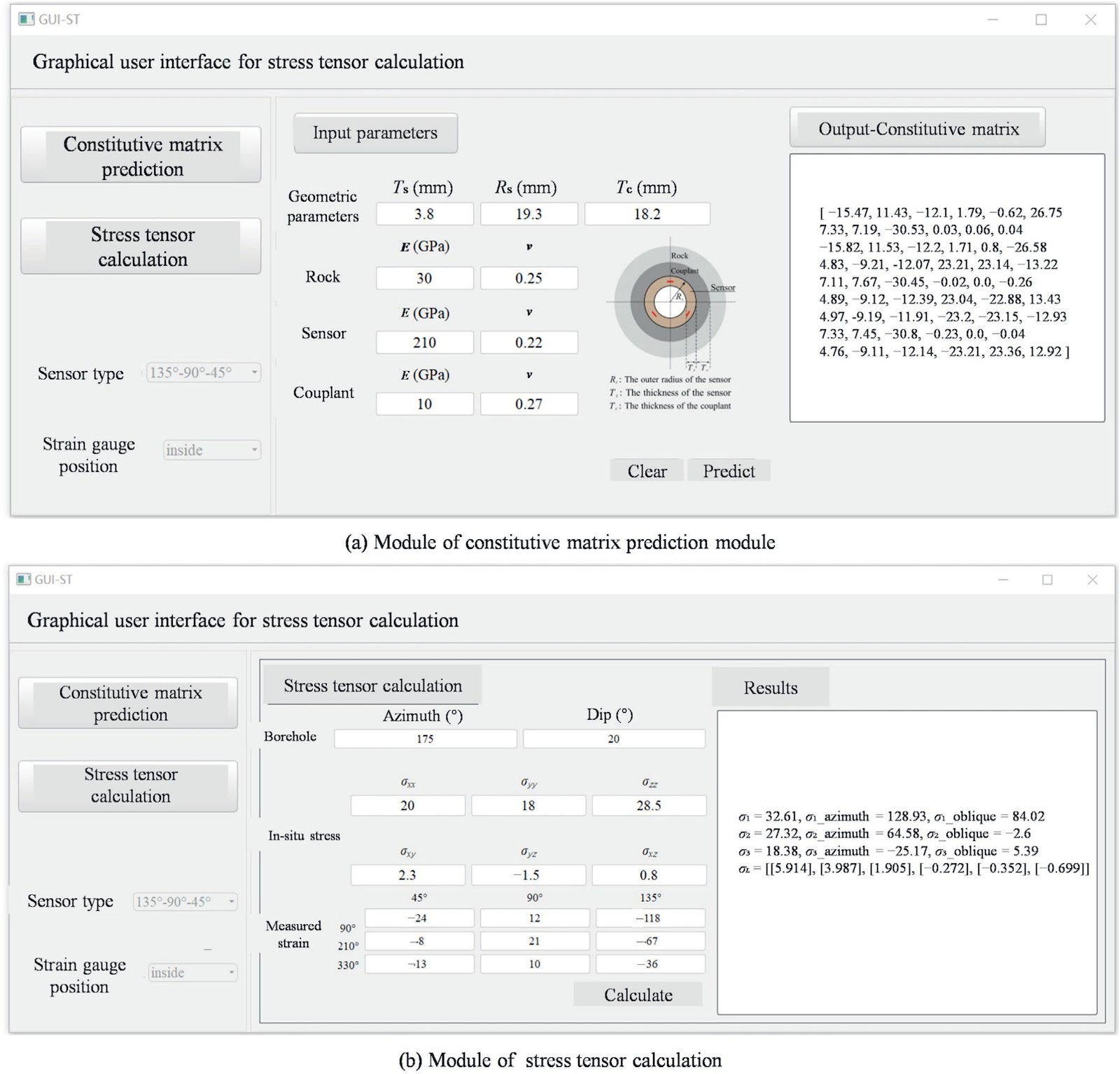
Accurate acquisition of the rock stress is crucial for various rock engineering applications. The hollow inclusion (HI) technique is widely used for measuring in-situ rock stress. This technique calculates the stress tensor by measuring strain using an HI strain cell. However, existing analytical solutions for stress calculation based on an HI strain cell in a double-layer medium are not applicable when an HI strain cell is used in a three-layer medium, leading to erroneous stress calculations. To address this issue, this paper presents a method for calculating stress tensors in a three-layer medium using numerical simulations, specifically by obtaining a constitutive matrix that relates strain measurements to stress tensors in a three-layer medium. Furthermore, using Latin hypercube sampling (LHS) and orthogonal experimental design strategies, 764 groups of numerical models encompassing various stress measurement scenarios have been established and calculated using FLAC3D software. Finally, a surrogate model based on artificial neural network (ANN) was developed to predict constitutive matrices, achieving a goodness of fit (R2) of 0.999 and a mean squared error (MSE) of 1.254. A software program has been developed from this surrogate model for ease of use in practical engineering applications. The method's accuracy was verified through numerical simulations, analytical solution and laboratory experiment, demonstrating its effectiveness in calculating stress in a three-layer medium. The surrogate model was applied to calculate mining-induced stress in the roadway roof rock of a coal mine, a typical case for stress measurement in a three-layer medium. Errors in stress calculations arising from the use of existing analytical solutions were corrected. The study also highlights the significant errors associated with using double-layer analytical solutions in a three-layer medium, which could lead to inappropriate engineering design.

A surrogate model for estimating rock stress by a hollow inclusion strain cell in a three-layer medium
Graphical Abstract
Original ResearchVol. 32, Issue 2 • pp. 100-112DOI: 10.1016/j.ijmst.2025.02.005Jan 15, 2025

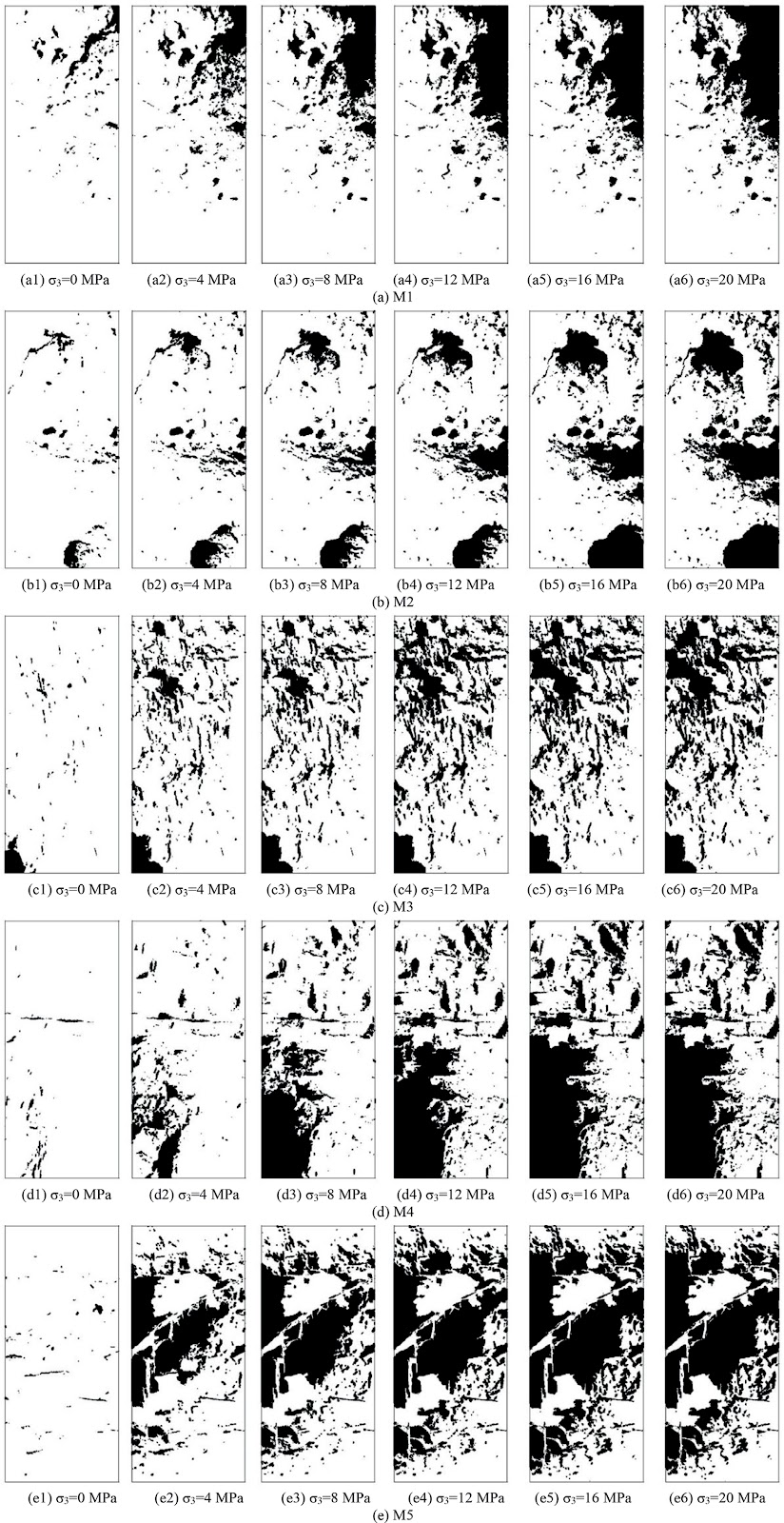
Microstructural evolution and hydraulic response of shale self-propped fracture using X-ray computed tomography and digital volume correlation

Authors: HUANG Ting, ZHAI Cheng, LIU Ting, SUN Yong, XU Hexiang, WANG Yu, HUANG Jing

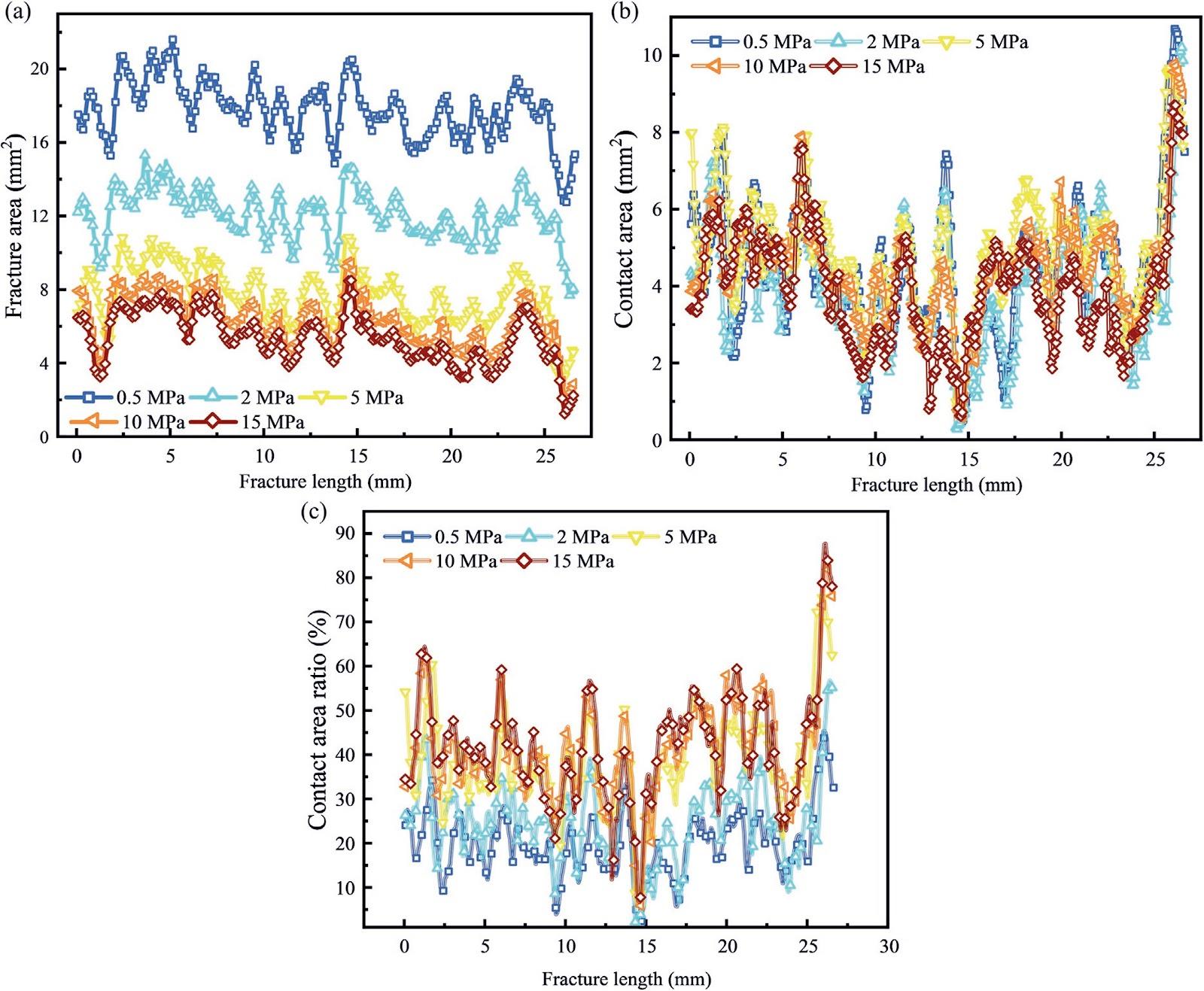
Methane in-situ explosive fracturing technology produces shale debris particles within fracture channels, enabling a self-propping effect that enhances the fracture network conductivity and long-term stability. This study employs X-ray computed tomography (CT) and digital volume correlation (DVC) to investigate the microstructural evolution and hydromechanical responses of shale self-propped fracture under varying confining pressures, highlighting the critical role of shale particles in maintaining fracture conductivity. Results indicate that the fracture aperture in the self-propped sample is significantly larger than in the unpropped sample throughout the loading process, with shale particles tending to crush rather than embedded into the matrix, thus maintaining flow pathways. As confining pressure increases, contact areas between fracture surfaces and particles expand, enhancing the system’s stability and compressive resistance. Geometric analyses show flow paths becoming increasingly concentrated and branched under high stress. This resulted in a significant reduction in connectivity, restricting fracture permeability and amplifying the nonlinear gas flow behavior. This study introduces a permeability-strain recovery zone and a novel sensitivity parameter m, delineating stress sensitivity boundaries for permeability and normal strain, with m-value increasing with stress, revealing four characteristic regions. These findings offer theoretical support for optimizing fracturing techniques to enhance resource extraction efficiency.

Microstructural evolution and hydraulic response of shale self-propped fracture using X-ray computed tomography and digital volume correlation
Graphical Abstract
Original ResearchVol. 32, Issue 3 • pp. 100-112DOI: 10.1016/j.ijmst.2025.03.009Jan 15, 2025

The failure process of high stress rock with through-water disturbance based on acoustic emission

Authors: LI Jiaming, TANG Shibin, ZHANG Shuguang, TANG Beichang, HUANG Xiang, LIU Wenbo

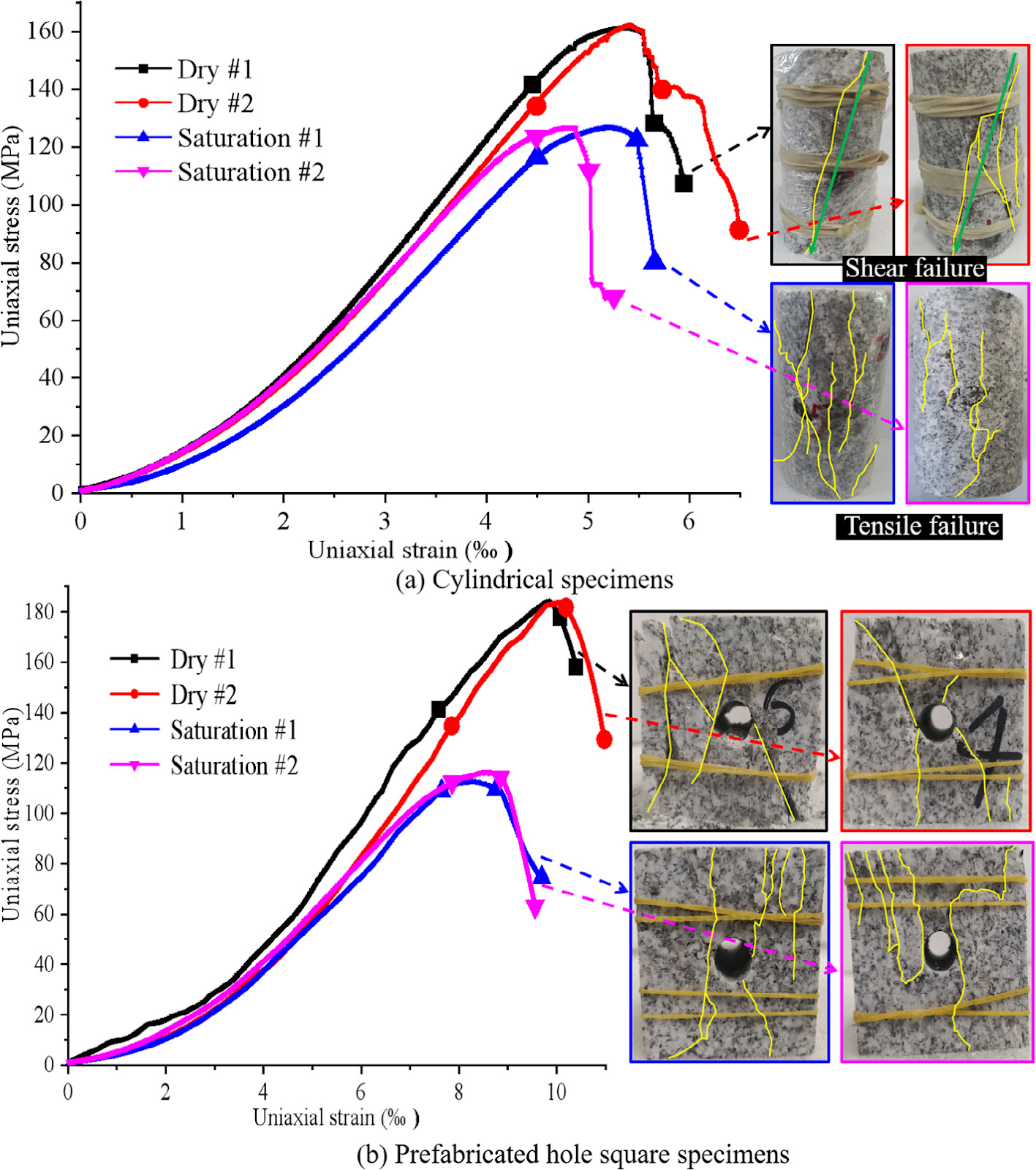
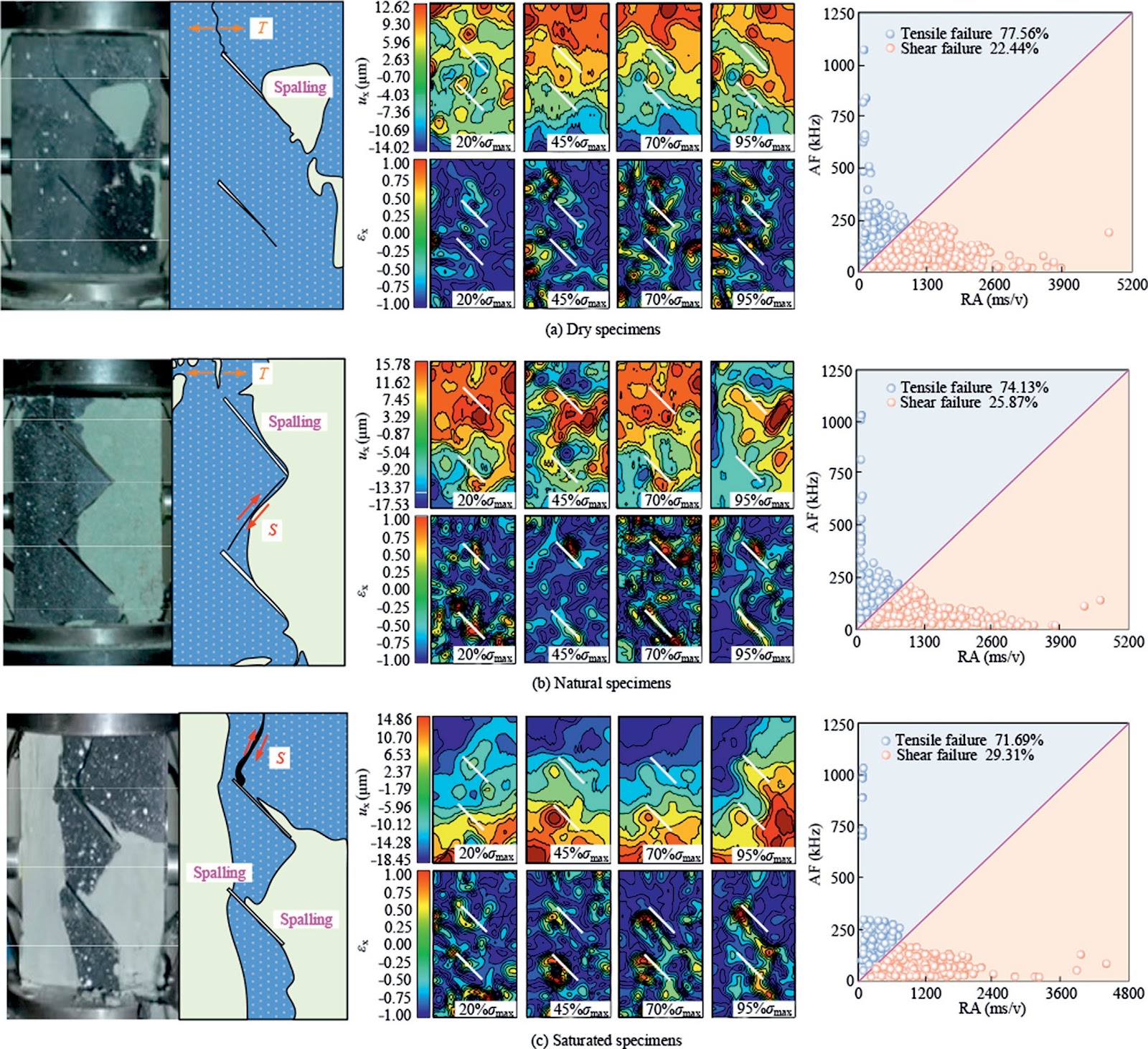
In the process of deep engineering excavation, the mechanical properties of rock are significantly influenced by the coupled effects of water and high stress, which greatly increase construction difficulty. To more accurately investigate the impact of water disturbance on the failure process of dry rock under high stress and the failure mechanisms of saturated rock in underwater environments, a water environment test chamber and a prefabricated borehole specimen through-water device were designed. A series of experiments were conducted, including uniaxial tests, water-disturbed granite cylinder tests, and through-water disturbance tests on prefabricated hole square specimens. The results showed that the acoustic emission (AE) hits and accumulated energy after the through-water disturbance at the same time were 8.77 and 12.08 times higher than before the disturbance, respectively. And water disturbance increased the proportion of tensile failure and reduced the proportion of shear failure. A key observation was that AE events were mainly generated in the permeation areas near the borehole. The main reason was that under high stress, the weakening effect of water led to the failure of the local mineral structure of the rock, promoting crack extension and triggering overall instability. Notably, failure of the saturated specimens underwater was only observed when the applied load approached the saturation strength of the prefabricated hole square specimens. The study results provide an important theoretical basis for understanding the damage mechanism of water-disturbed rocks in deep engineering, and have significant implications for the design and construction of engineering.

The failure process of high stress rock with through-water disturbance based on acoustic emission
Graphical Abstract
Original ResearchVol. 32, Issue 3 • pp. 100-112DOI: 10.1016/j.ijmst.2025.03.008Jan 15, 2025

Coal pitch-based nanosheets enhance the electronic and ionic transport of flow electrode capacitive deionization

Authors: Jincai Ran, Zhaoyang Song, Qiongqiong He, Zhenyong Miao

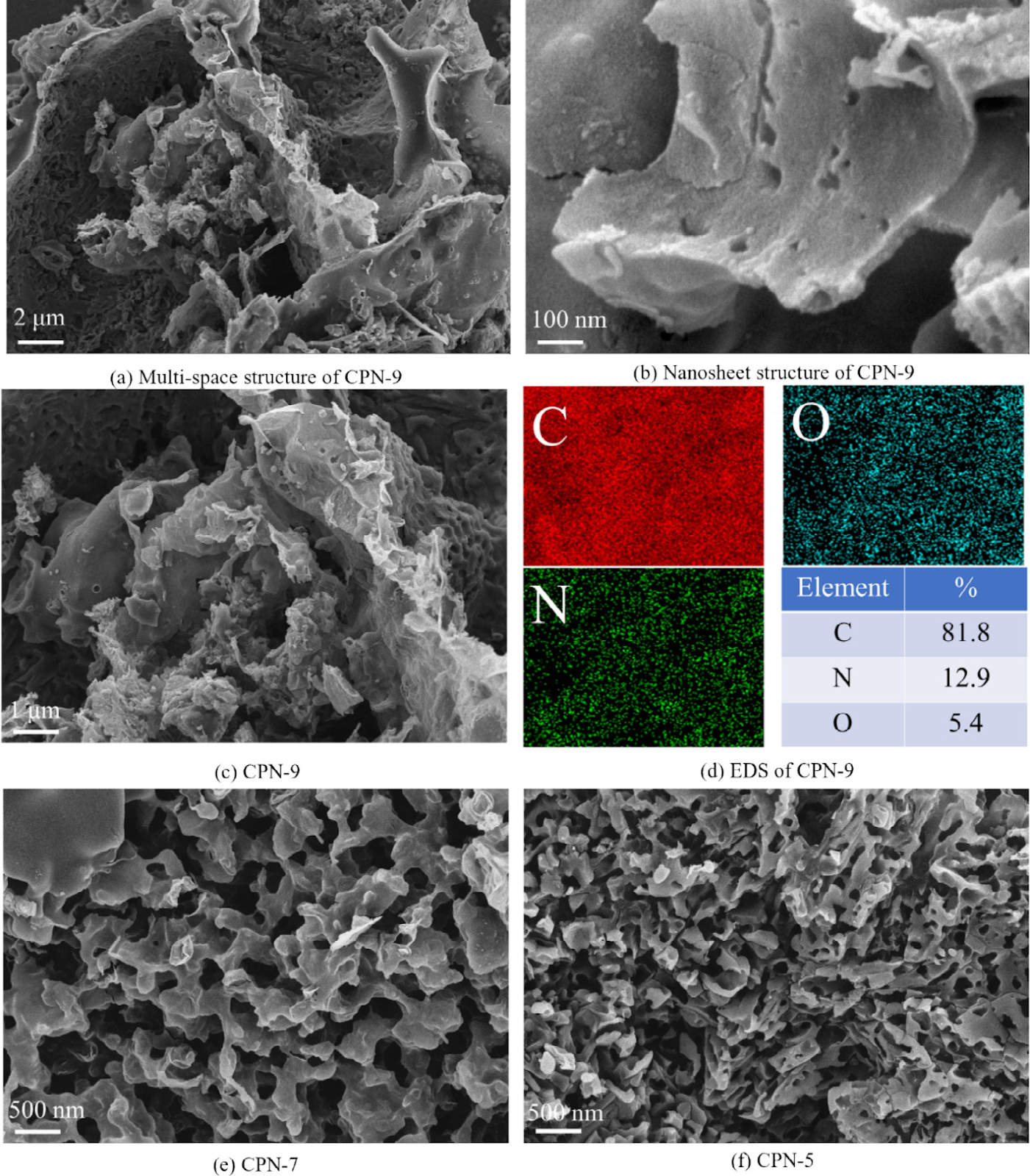
High-salinity wastewater treatment has always been a challenging issue. In this study, coal tar pitch was used as the carbon source and melamine as the nitrogen source to prepare coal tar pitch-based nanosheets (CPN-9) using a salt-template method. The desalination performance of CPN-9 was evaluated using flow-electrode capacitive deionization technology. The results showed that CPN-9 has a high specific surface area (466.34 m2/g), a rich pore structure (micro-/meso-pore volume was 0.28), excellent rheological properties, and hydrophilicity (contact angle of 20.44°), thereby accelerating ion transport. Electrochemical results indicated that CPN-9 exhibits a significant double-layer ion storage mechanism, with a specific capacitance of 176.66 F/g at a current density of 0.5 A/g. CPN-9 has a very low charge transfer resistance. The synergistic effect of aromatic carbon and nitrogen doping (the content of pyrrole and pyridine nitrogen was 36.40% and 35.83%, respectively) in coal tar pitch accelerates electron transfer in CPN-9. The good ion diffusion performance and low impedance of CPN-9 accelerate the ion exchange rate, resulting in outstanding desalination performance. At 1.2 V and 3% mass loading, with a CPN-9 to conductive carbon black ratio of 4:1, the average desalination rate, charge efficiency, and energy consumption reached 0.039 mg/(cm2 min), 48.47%, and 0.012 kWh/mol, respectively. In summary, this study optimized the structure of CPN-9 from the perspective of electronic and ionic transport, enhancing its desalination performance and providing theoretical support for the deionization of high-salinity wastewater.

Coal pitch-based nanosheets enhance the electronic and ionic transport of flow electrode capacitive deionization
Graphical Abstract
Original ResearchVol. 32, Issue 3 • pp. 100-112DOI: 10.1016/j.ijmst.2025.03.004Jan 15, 2025

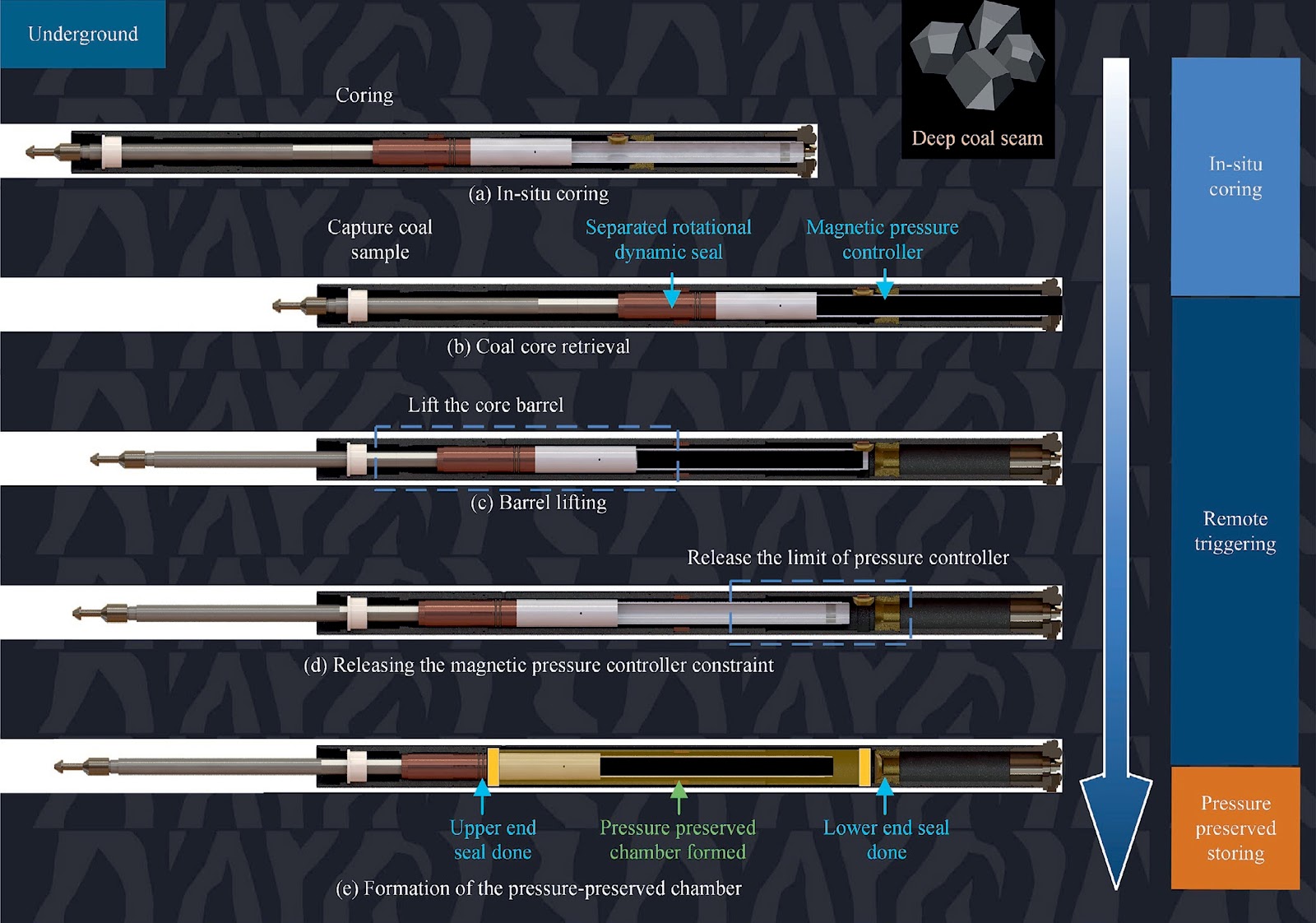
Key techniques for precise measuring gas content in deep coal mine: In-situ pressure- and gas-preserved coring

Authors: LI Ju, LI Jianan, WANG Tianyu, LIU Guikang, HE Zhiqiang, LI Cong, XIE Heping

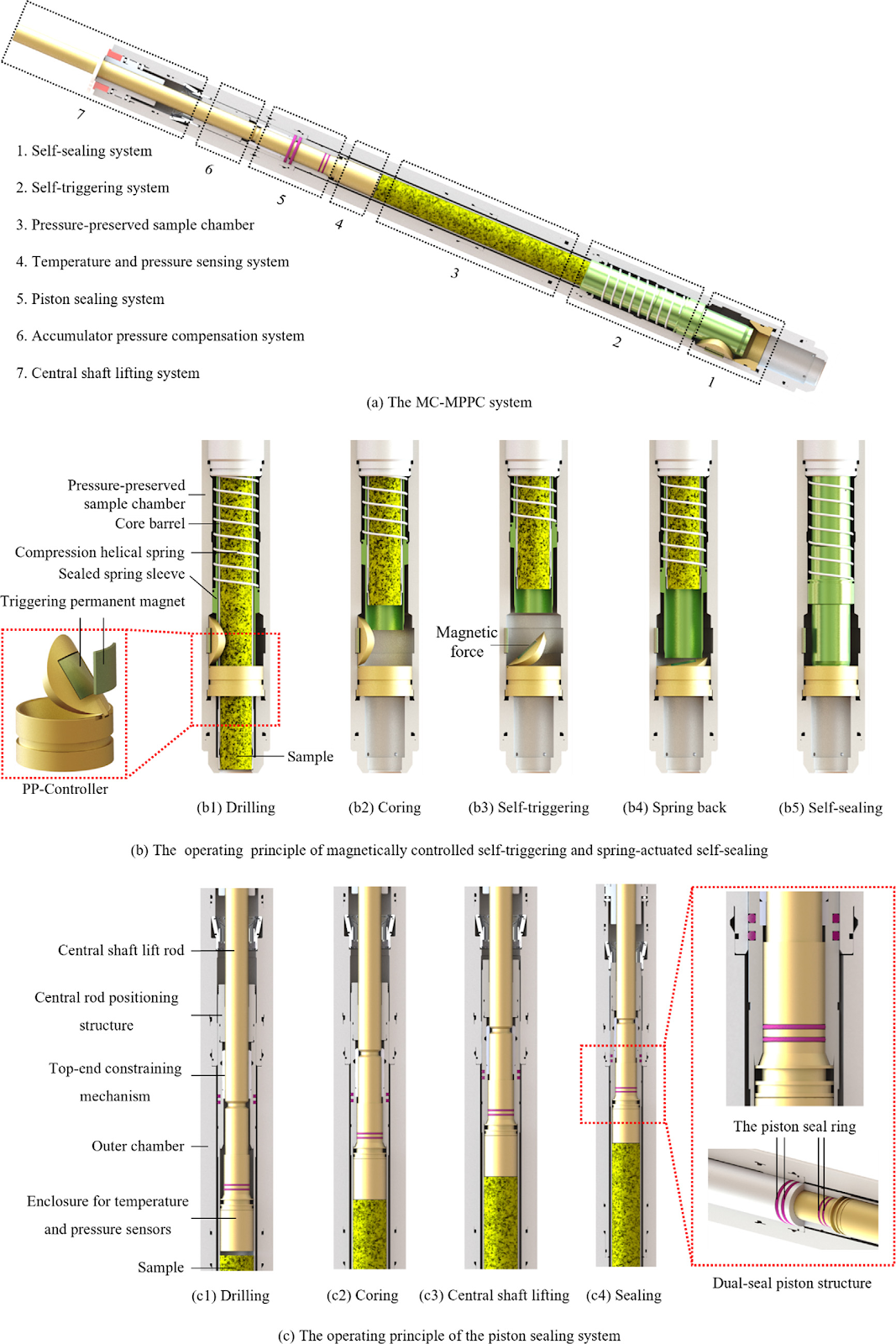
Gas content serves as a critical indicator for assessing the resource potential of deep coal mines and forecasting coal mine gas outburst risks. However, existing sampling technologies face challenges in maintaining the integrity of gas content within samples and are often constrained by estimation errors inherent in empirical formulas, which results in inaccurate gas content measurements. This study introduces a lightweight, in-situ pressure- and gas-preserved corer designed to collect coal samples under the pressure conditions at the sampling point, effectively preventing gas loss during transfer and significantly improving measurement accuracy. Additionally, a gas migration model for deep coal mines was developed to elucidate gas migration characteristics under pressure-preserved coring conditions. The model offers valuable insights for optimizing coring parameters, demonstrating that both minimizing the coring hole diameter and reducing the pressure difference between the coring-point pressure and the original pore pressure can effectively improve the precision of gas content measurements. Coring tests conducted at an experimental base validated the performance of the corer and its effectiveness in sample collection. Furthermore, successful horizontal coring tests conducted in an underground coal mine roadway demonstrated that the measured gas content using pressure-preserved coring was 34% higher than that obtained through open sampling methods.

Key techniques for precise measuring gas content in deep coal mine: In-situ pressure- and gas-preserved coring
Graphical Abstract
Original ResearchVol. 32, Issue 3 • pp. 100-112DOI: 10.1016/j.ijmst.2025.03.010Jan 15, 2025

Energy regulation mechanism and medium-filling effect of energy-focusing blast

Authors: GUO Pengfei, ZHANG Xingyu, YE Kengkeng, WANG Xu, HUANG Man, HU Jinzhu, HE Manchao

The energy-focusing blast is an innovative and ingenious method to achieve directional fracturing. Understanding its energy regulation mechanism is critical to enhancing its practical effectiveness. This study investigates the energy regulation mechanism and explores the medium-filling effects within the energy-focusing blast by employing theoretical analysis, numerical simulations, and model tests. The findings by theoretical and numerical analysis first reveal that two stages of the fracturing and tensile stage govern the directionally crack propagation, in which the explosion energy in the non-energy-focusing direction is suppressed, compressing the borehole wall, while redirected energy produces tensile stress in the energy-focusing direction, driving the formation of directional cracks. The choice of filling medium significantly affects directional cracking due to its impact on energy distribution and regulation, and key properties such as wave impedance and compressibility of the filling medium are critical. Experimental comparisons using air, sand, and water as filling media further disclose the distinct effects of the medium on energy regulation and directional crack growth of the energy-focusing blast. The maximum shaped-energy coefficients for air, sand, and water are 1.30, 4.41, and 6.12 in the energy-focusing direction, respectively. Meanwhile, the stress attenuation rate of air, sand, and water increases in that order. The higher wave impedance and lower compressibility of water support efficient and uniform energy propagation, which subtly enhances the tensile actions in the focusing direction and intensifies the overall stress impact of the energy-focusing blast. In addition, the stresses in the non-energy-focusing directions decrease as the angle from the energy-focusing direction increases, while the stresses are relatively uniform for both air and water but noticeably uneven for sand; meanwhile, the fractal dimensions of blasting cracks in the case of air, water, and sand are 1.076, 1.068, and 1.112, respectively. Sand as a filling medium leads to increased crack irregularities due to its granularity and heterogeneity. The water medium strikes an optimal balance by promoting the blasting energy transition and optimizing the energy distribution, maintaining the least flatness of the directional crack during energy-focusing blasts.

Energy regulation mechanism and medium-filling effect of energy-focusing blast
Graphical Abstract
Original ResearchVol. 32, Issue 3 • pp. 100-112DOI: 10.1016/j.ijmst.2025.03.007Jan 15, 2025

Fatigue behaviour characteristics and life prediction of rock under low-cycle loading

Authors: Zehan Liu, Jin Yu, Chonghong Ren, Khalid Elbaz, Defu Zhu, Yanyan Cai

The fatigue characteristics of rock materials significantly impact the economy and safety of underground structures during construction. Hence, it is essential to conduct further investigation into the progressive damage processes of rocks under cyclic loading conditions. This research utilised both laboratory experiments and discrete element simulations to investigate how confining pressure and fatigue upper limit stress influence the mechanical behaviour and crack development of marble under low-cycle fatigue conditions. By introducing synthetic displacement and reasonable assumptions, the classical damage evolution law was updated, resulting in a fatigue life prediction formula applicable to various rock materials and loading conditions. The results indicate that lower fatigue upper limit stress can delay the accumulation of damage and extend the fatigue life of the rock, but it results in more severe ultimate failure. The damage variable’s correlation with the relative number of loading cycles for different fatigue load upper limits under the same confining pressure can be approximated by the same functional relationship. The modified damage evolution model provides an effective characterisation of this trend. The proposed fatigue life prediction method comprehensively accounts for different rock materials, confining pressures, loading frequencies, and initial damage, showing a close match with actual results.

Fatigue behaviour characteristics and life prediction of rock under low-cycle loading
Graphical Abstract
Original ResearchVol. 32, Issue 3 • pp. 100-112DOI: 10.1016/j.ijmst.2025.03.006Jan 15, 2025

Calculation model for kinetic energy and rock burst risk evaluation method during roadway excavation

Authors: TAN Yunliang, TAN Yan, GUO Weiyao, LI Bo, HE Shudong, ZHANG Lei, ZHANG Qiuyuan

The accumulation and release of deformation energy within the rock mass of a roadway are primary contributors to the occurrence of rock bursts. This study introduces a calculation model for the kinetic energy generated during roadway excavation, which is based on the fracture and energy states of the rock mass. The relationships among the mining depth, width of the plastic zone, rebound range of the roof and floor, stress concentration factor, and the induced kinetic energy are systematically explored. Furthermore, a rock burst risk evaluation method is proposed. The findings indicate that the energy evolution of the rock mass can be categorized into four stages: energy accumulation due to in-situ stress, energy accumulation resulting from coal compression, energy dissipation through coal plastic deformation, and energy consumption due to coal failure. The energy release from the rock mass is influenced by several factors, including mining depth, stress concentration factor, the width of the plastic zone, and the rebound range of the roof and floor. Within the plastic zone of coal, the energy released per unit volume of coal and the induced kinetic energy exhibit a nonlinear increase with mining depth and stress concentration factor, while they decrease linearly as the width of the plastic zone increases. Similarly, the driving energy per unit volume of the roof and floor shows a nonlinear increase with mining depth and stress concentration factor, a linear increase with the rebound range of the roof and floor, and a linear decrease with the width of the plastic zone. A rock burst risk evaluation method is developed based on the kinetic energy model. Field observations demonstrate that this method aligns with the drilling cuttings rock burst risk assessment method, thereby confirming its validity.

Calculation model for kinetic energy and rock burst risk evaluation method during roadway excavation
Graphical Abstract
Original ResearchVol. 32, Issue 3 • pp. 100-112DOI: 10.1016/j.ijmst.2025.03.005Jan 15, 2025

Dynamic impact simulation tests of deep roadways affected by high stress and fault slip

Authors: Qi Wang, Yuncai Wang, Zhenhua Jiang, Hongpu Kang, Chong Zhang, Bei Jiang

As coal mining depth increases, the combined effects of high stress, mining stress, and fault structures make dynamic impact hazards more frequent. The reproduction of dynamic impact phenomena is basis for studying their occurrence patterns and control mechanisms. Physical simulation test represents an efficacious methodology. However, there is currently a lack of simulation devices that can effectively simulate two types of dynamic impact phenomena, including high stress and fault slip dynamic impact. To solve aforementioned issues, the physical simulation test system for dynamic impact in deep roadways developed by authors is employed to carry out comparative tests of high stress and fault slip dynamic impact. The phenomena of high stress and fault slip dynamic impact are reproduced successfully. A comparative analysis is conducted on dynamic phenomena, stress evolution, roadway deformation, and support force. The high stress dynamic impact roadway instability mode, which is characterized by the release of high energy accompanied by symmetric damage, and the fault slip dynamic impact roadway instability mode, which is characterized by the propagation of unilateral stress waves accompanied by asymmetric damage, are clarified. On the basis, the differentiated control concepts for different types of dynamic impact in deep roadways are proposed.

Dynamic impact simulation tests of deep roadways affected by high stress and fault slip
Graphical Abstract
Original ResearchVol. 32, Issue 4 • pp. 100-112DOI: 10.1016/j.ijmst.2025.04.008Jan 15, 2025

Multi-directional disturbance effect of shear mechanical behaviors and fracturing mechanisms of rockmass intermittent structural plane under true triaxial shear test

Authors: Zhi Zheng, Zhanpeng Ma, Jinghua Qi, Guoshao Su, Gaoming Lu, Shufeng Pei, Quan Jiang

After the excavation of deep mining tunnels and underground caverns, the stability of surrounding rock controlled by structural planes is prone to structural damage and even engineering disasters due to three-dimensional stress redistribution and multi-directional dynamic construction interference. However, the shear mechanical behavior, fracture evolution mechanism and precursor characteristics of rockmass under true triaxial stress and multi-directional coupling disturbance are not unclear. Therefore, this study carried out true triaxial shear tests on limestone intermittent structural planes under uni-, bi- and tri-directional coupling disturbances to analyze its mechanical behavior, fracture evolution mechanism and precursor characteristics. The results show that as the disturbance direction increase, the shear strength of limestone generally decreases, while the roughness of structural planes and the degree of anisotropy generally exhibit an increasing trend. The proportion of shear cracks on the structural plane increases with the increase of shear stress. The disturbance strain rate before failure shows a U-shaped trend. Near to disturbance failure, there were more high-energy and high-amplitude acoustic emission events near the structural plane, and b-value drops rapidly below 1, while lgN/b ratio increased to above 3. These findings provide experimental recognition and theoretical support for assessing the stability of rockmass under blasting excavation.

Multi-directional disturbance effect of shear mechanical behaviors and fracturing mechanisms of rockmass intermittent structural plane under true triaxial shear test
Graphical Abstract
Original ResearchVol. 32, Issue 4 • pp. 100-112DOI: 10.1016/j.ijmst.2025.04.006Jan 15, 2025

Deterioration mechanism and dynamic constitutive model of coal-rock assemblages considering chemical corrosion and impact damage

Authors: Jianhang Chen, Banquan Zeng, Wuyan Xu, Kun Wang, Peng Liu, Songsong Hu, Shiji Wang, Zhixiang Song, Shaokang Wu, Xuyang Bai

To reveal the deterioration mechanism of coal-rock assemblages under chemical corrosion and dynamic loading, chemical corrosion and dynamic impact experiments were conducted. Under different chemical corrosion conditions, the weakening characteristics, observable characteristics, softening characteristics of the dynamic parameters, dynamic failure characteristics, dynamic failure forms and dynamic microscopic characteristics were analyzed. Under each corrosion condition, the dynamic elastic modulus, dynamic deformation modulus and dynamic peak intensity tended to decrease with immersing time. The dynamic elastic modulus, dynamic deformation modulus and dynamic peak intensity exhibited an inverted U-shaped trend. Under dynamic impact, the failure process of acidly corroded samples can be divided into the following stages: the initial stage, elastic energy accumulation stage, local failure of coal and secondary rock crack expansion stage, coal fragment ejection stage, rock spalling stage and complete instability stage. Under dynamic impact, failure modes exist: coal crushing failure, rock fragmenting failure, rock splitting failure and full splitting failure. After impact failure, sample fragments are distributed in powder, granular, cone and block forms. Based on Zhu-Wang-Tang nonlinear viscoelastic properties, a model considering chemical corrosion and impact damage was proposed. The combined effects of chemical and impact-induced damage on the dynamic mechanical properties of coal-rock assemblages were systematically analyzed.

Deterioration mechanism and dynamic constitutive model of coal-rock assemblages considering chemical corrosion and impact damage
Graphical Abstract
Original ResearchVol. 32, Issue 4 • pp. 100-112DOI: 10.1016/j.ijmst.2025.04.007Jan 15, 2025

Homogeneity-dependent fracture behavior and instability mechanism of composite coal-rock: Insights from three-point bending tests

Authors: YUE Weitao, WANG Enyuan, FENG Xiaojun, TAN Tingjiang, ZHANG Li, CHEN Dong, ZHANG Qiming, DING Zeng

To investigate the instability mechanisms of heterogeneous geological structures in goaf area roofs, three-point bending tests (TPBT) and numerical simulations are performed on composite coal-rock (CCR). Acoustic emission (AE) monitoring is employed to analyze key parameters, establishing a multi-parameter quantitative system for CCR fracture processes. The impact of lithological homogeneity on fracture evolution and energy migration is examined. Results show that CCR exhibits a three-stage mechanical response: weak contact, strong contact, and post-peak stages, each with distinct crack evolution patterns. A positive correlation is found between lithological homogeneity and tensile crack proportion. No significant correlation is observed between AE average frequency (AF) and AE counts across different lithological CCR; however, peak frequency (PF) displays clear lithology-dependent characteristics. The regulatory effect of the rock homogeneity coefficient (u) on crack derivation mechanisms is quantified, yielding mathematical relationships between fracture strength (f), crack propagation path angle (b), crack fractal dimension (D), and u. The study highlights how different fracture modes alter energy migration pathways, confirming the coupling effect of grain distribution on mechanical response and crack propagation, and the influence of parameter u on critical energy release zones. These findings offer new insights into CCR failure mechanisms for mining safety.

Homogeneity-dependent fracture behavior and instability mechanism of composite coal-rock: Insights from three-point bending tests
Graphical Abstract
Original ResearchVol. 32, Issue 4 • pp. 100-112DOI: 10.1016/j.ijmst.2025.04.005Jan 15, 2025

Deformation and damage mechanisms of Y-intersecting jointed rocks under uniaxial compression

Authors: MA Qingshan, ZHANG Penghai, YANG Tianhong, LIU Xige, MU Wenqiang, ZHONG Jian

This study systematically analyzes the influence of different combined joint dip angles on rock mass failure modes and damage mechanisms through uniaxial compression tests on granite specimens with prefabricated Y-shaped discontinuities, combined with digital speckle and acoustic emission (AE) monitoring. The results show that as the dip angle of the primary joint increases, the failure mode transitions from overall failure to wedge block ejection and shear failure. A failure mode identification model was established based on main crack dip angle thresholds (40°, 45°), uniaxial compressive strength thresholds (40, 90 MPa), and energy core zone proportion thresholds (20%, 10%), achieving an accuracy of 93.3%. In the overall failure and wedge block ejection modes, a sharp increase in shear crack ratio and a sudden drop in the acoustic emission b-value occur in the high-stress phase (>0.6σc), while in the shear failure mode, significant fluctuations are observed due to the shear-tension alternation, making it difficult to identify a single critical point. Additionally, joint slip in the overall failure and wedge block ejection modes primarily occurs during the failure instability phase (>0.8σc). These findings provide theoretical support for stability evaluation of complex fractured rock masses and practical guidance for engineering safety construction.

Deformation and damage mechanisms of Y-intersecting jointed rocks under uniaxial compression
Graphical Abstract
Original ResearchVol. 32, Issue 5 • pp. 100-112DOI: 10.1016/j.ijmst.2025.05.008Jan 15, 2025

Investigation of crack propagation and acoustic emission characteristics in jointed rock under freeze–thaw cycles based on DEM

Authors: ZHAO Yong, ZHAO Qianbai, YANG Tianhong, CHEN Yanlong, ZHANG Penghai, LIU Honglei

In cold-region environments, where complex stresses and mining disturbances occur, rock masses are frequently segmented into discontinuous bodies by fractured structural planes, leading to anisotropic physical and mechanical properties. To explore the evolution of microcracks, degradation characteristics, and failure modes of fractured rocks in cold regions under the influence of freeze–thaw cycles, integrating laboratory experiments with the damage mechanics of freeze–thaw cycles. A numerical model for freeze–thaw cycle damage in rocks with various fracture dip angles was developed. The study revealed that the freeze–thaw expansion force generated during the pore water–ice phase transition is the primary driving factor behind freeze–thaw cycle damage. The initiation and propagation of microcracks and micropores, the detachment of matrix particles, and the loosening of clay mineral structures result in the transformation of the rock from a dense to a porous state, causing significant degradation in macroscopic mechanical properties. As freeze–thaw cycles increase, both the uniaxial compressive strength and the deformation modulus of the rock decrease significantly, with the failure mode gradually shifting from brittle instability to brittle-plastic or plastic failure. The findings of this study offer a practical approach to uncovering the mechanical response mechanisms between freeze–thaw damage in fractured rocks and structural planes.

Investigation of crack propagation and acoustic emission characteristics in jointed rock under freeze–thaw cycles based on DEM
Graphical Abstract
Original ResearchVol. 32, Issue 4 • pp. 100-112DOI: 10.1016/j.ijmst.2025.04.004Jan 15, 2025

Dynamic interpretation of stress adjustment types in high geostress hard rock tunnels based on microseismic monitoring

Authors: XU Weihao, MA Chunchi, LI Tianbin, SHI Shoudong, PENG Feng, CHEN Ziquan, ZHANG Hang

Dynamic stress adjustment in deep-buried high geostress hard rock tunnels frequently triggers catastrophic failures such as rockbursts and collapses. While a comprehensive understanding of this process is critical for evaluating surrounding rock stability, its dynamic evolution are often overlooked in engineering practice. This study systematically summarizes a novel classification framework for stress adjustment types—stabilizing (two-zoned), shallow failure (three-zoned), and deep failure (four-zoned)—characterized by distinct stress adjustment stages. A dynamic interpretation technology system is developed based on microseismic monitoring, integrating key microseismic parameters (energy index EI, apparent stress ra, microseismic activity S), seismic source parameter space clustering, and microseismic paths. This approach enables precise identification of evolutionary stages, stress adjustment types, and failure precursors, thereby elucidating the intrinsic linkage between geomechanical processes (stress redistribution) and failure risks. The study establishes criteria and procedures for identifying stress adjustment types and their associated failure risks, which were successfully applied in the Grand Canyon Tunnel of the E-han Highway to detect 50 instances of disaster risks. The findings offer invaluable insights into understanding the evolution process of stress adjustment and pinpointing the disaster risks linked to hard rock in comparable high geostress tunnels.

Dynamic interpretation of stress adjustment types in high geostress hard rock tunnels based on microseismic monitoring
Graphical Abstract
Original ResearchVol. 32, Issue 4 • pp. 100-112DOI: 10.1016/j.ijmst.2025.04.003Jan 15, 2025

Mechanical and microstructural properties of schist exposed to freeze-thaw cycles, dry-wet cycles, and alternating actions

Authors: Jiajia Gao, Jiajian Jin, Daguo Wang, Shaogang Lei, Jianguo Lu, Huan Xiao, Jinhe Li, Huadong Li

In cold regions, slope rocks are inevitably impacted by freeze-thaw, dry-wet cycles and their alternating actions, leading to strength weakening and pore degradation. In this study, the mechanical and microstructural properties of schist subjected to four conditions were investigated: freeze-thaw cycles in air (FTA), freeze-thaw cycles in water (FTW), dry-wet cycles (DW), and dry-wet-freeze-thaw cycles (DWFT). Uniaxial compressive strength (UCS), water absorption, ultrasonication, low-field nuclear magnetic resonance, and scanning electron microscopy analyses were conducted. The integrity attenuation characteristics of the longitudinal wave velocity, UCS, and elastic modulus were analyzed. The results showed that liquid water emerged as a critical factor in reducing the brittleness of schist. The attenuation function model accurately described the peak stress and static elastic modulus of schist in various media (R2>0.97). Different media affected the schist deterioration and half-life, with the FTW-immersed samples having a half-life of 28 cycles. Furthermore, the longitudinal wave velocity decreased as the number of cycles increased, with the FTW showing the most significant reduction and having the shortest half-life of 208 cycles. Moreover, the damage variables of compressive strength and elastic modulus increased with the number of cycles. After 40 cycles, the schist exposed to FTW exhibited the highest damage variables and saturated water content.

Mechanical and microstructural properties of schist exposed to freeze-thaw cycles, dry-wet cycles, and alternating actions
Graphical Abstract
Original ResearchVol. 32, Issue 4 • pp. 100-112DOI: 10.1016/j.ijmst.2025.04.002Jan 15, 2025

Multivariate acoustic emissions precursors of rockburst from the perspective of early warning

Authors: Chun Zhu, Ming Huang, Fuqiang Ren, Xiaoshuang Li, Jinze Gu, Haibo Li, Manchao He

Rockburst precursors are critical for disaster warning, yet the complexity of rockburst has hindered the identification of a unified precursor. Furthermore, the influence of loading rates (LRs) on acoustic emission (AE) precursors in different rock types remains poorly understood. This study investigates the AE characteristics and early warning times of rockburst in slate and mica-schist under four LRs (0.05, 0.15, 0.25, and 0.5 MPa/s) using true triaxial unloading tests. The micro-crack state of the samples was evaluated using entropy, while critical slowing down (CSD) theory was applied to interpret AE precursors. The results reveal that as the LR increases, the rockburst stress of both rocks initially rises and then declines, with mica-schist exhibiting more severe damage and a higher dominance of tensile cracks. Notably, identifying rockburst precursors in mica-schist proved more challenging compared to slate. Among the methods tested, AE amplitude variance outperformed entropy in precursor identification. Additionally, the rockburst early warning time was found to be negatively correlated with the LR, with mica-schist consistently showing shorter warning times than slate. The CSD-derived precursor, due to its enhanced sensitivity, is recommended for early warning systems. These findings provide new insights into the role of LRs in rockburst dynamics and offer practical guidance for improving precursor identification and disaster mitigation strategies.

Multivariate acoustic emissions precursors of rockburst from the perspective of early warning
Graphical Abstract
Original ResearchVol. 32, Issue 4 • pp. 100-112DOI: 10.1016/j.ijmst.2025.04.001Jan 15, 2025

Design and mechanical optimization of multidirectional pressure-preserved coring system for deep-earth resource exploration

Authors: Guikang Liu, Yachen Xie, Cong Li

Pressure-preserved coring technologies are critical for deep-earth resource exploration but are constrained by the inability to achieve multidirectional coring, restricting exploration range while escalating costs and environmental impacts. We developed a multidirectional pressure-preserved coring system based on magnetic control for deep-earth environments up to 5000 m. The system integrates a magnetically controlled method and key pressure-preserved components to ensure precise self-triggering and self-sealing. It is supported by geometric control equations for optimizing structural stability. Their structure was verified and optimized through theoretical and numerical calculations to meet design objectives. To clarify the self-triggering mechanism in complex environments, a dynamic interference model was established, verifying stability during multidirectional coring. The prototype was fabricated, and functional tests confirmed that it met its design objectives. In a 300-meter-deep test inclined well, 10 coring operations were completed with a 100% pressure-preserved success rate, confirming the accuracy of the dynamic interference model analysis. Field trials in a 1970-meter-deep inclined petroleum well, representative of complex environments, demonstrated an in-situ pressure preservation efficiency of 92.18% at 22 MPa. This system innovatively expands the application scope of pressure-preserved coring, providing technical support for efficient and sustainable deep resources exploration and mining.

Design and mechanical optimization of multidirectional pressure-preserved coring system for deep-earth resource exploration
Graphical Abstract
Original ResearchVol. 32, Issue 5 • pp. 100-112DOI: 10.1016/j.ijmst.2025.05.007Jan 15, 2025

Synergistic mechanisms of steel slag, granulated blast furnace slag, and desulfurization gypsum in high-content steel slag-based cementitious backfill materials

Authors: Jianshuai Hao, Zihan Zhou, Zhonghui Chen, Yanjun Shen, Kuizhen Fang, Fei Tang, Lingfei Zhang

In the steel slag-based mine backfill cementitious material systems, the hydration reaction mechanisms and synergistic effects of steel slag (SS), granulated blast furnace slag (GBFS), and desulfurization gypsum (DG) are crucial for performance optimization and regulation. However, existing studies have yet to fully reveal the underlying synergistic mechanisms, which limits the application and promotion of high SS content in mine backfill and low-carbon building materials. This study systematically explores the synergistic effects between various solid wastes and their regulation of the hydration process in the SS-based cementitious system through multi-scale characterization techniques. The results show that GBFS, by releasing active Si4+ and Al3+, triggers a synergistic activation effect with Ca2+ provided by SS, promoting the formation of C-S-H gel and ettringite, significantly optimizing the hardened paste microstructure. When the GBFS content reaches 30%, the C-S-H content increases by 40.8%, the pore size distribution improves, the proportion of large pores decreases by 68.7%, and the 90-day compressive strength increases to 5 times that of the baseline group. The sulfate activation effect of DG accelerates the hydration of silicate minerals, but excessive incorporation (>16%) can lead to microcracks caused by the expansion of AFt crystals, resulting in a strength reduction. Under the synergistic effect of 8% DG and 30% GBFS, the hydration reaction is most intense, with the peak heat release rate reaching 0.92 mW/g and the cumulative heat release amount being 240 J/g. By constructing a “SS-GBFS-DG-cement” quaternary synergistic system (mass ratio range: SS:GBFS:cement:DG=(50–62):(20–40):10:(8–12)), the matching of active components in high-content SS systems was optimized, significantly improving microstructural defects and meeting engineering application requirements. This study provides a theoretical basis for the component design and performance regulation of high-content SS-based cementitious materials.

Synergistic mechanisms of steel slag, granulated blast furnace slag, and desulfurization gypsum in high-content steel slag-based cementitious backfill materials
Graphical Abstract
Original ResearchVol. 32, Issue 5 • pp. 100-112DOI: 10.1016/j.ijmst.2025.05.003Jan 15, 2025

Deterministic cascade evolution in coal and gas outbursts: From early acoustic signatures to system-wide failure

Authors: YANG Lei, WEN Zhijie, WANG Liang, REN Ting, ZUO Yujun

Coal and gas outbursts constitute a critical hazard in underground mining operations, characterized by rapid transitions from localized instability to catastrophic failure. Understanding the relationship between initial characteristics and final outburst scale remains a fundamental challenge in geomechanics. This study conceptualizes outbursts as deterministic cascade systems through integrated physical simulations combining high-sensitivity infrasound monitoring with energy analysis under controlled gas pressure (0.5–1.0 MPa) and confining stress (5–10 MPa) conditions. Our complementary analytical algorithms—the absolute amplitude integral and predominant period function—revealed characteristic step-wise patterns in outburst development. Quantitative analysis established a robust correlation (R2=0.91) between initial acoustic response and final outburst intensity. Energy analysis demonstrated that gas expansion dominates the outburst process (91.81%–99.09% of total energy), with desorption gas contributing 59.1%–77.7%. Time-frequency analysis showed systematic frequency migration from high (12–15 Hz) to low (4–8 Hz) bands during outburst progression, reflecting hierarchical spatial scale expansion. The concentrated energy release (>20% of total) within initial 0.2 s provides a mechanistic basis for the deterministic nature of outburst evolution. These mechanistic insights establish a quantitative framework for developing physics-based monitoring protocols and risk assessment methodologies applicable to underground coal mining operations.

Deterministic cascade evolution in coal and gas outbursts: From early acoustic signatures to system-wide failure
Graphical Abstract
Original ResearchVol. 32, Issue 5 • pp. 100-112DOI: 10.1016/j.ijmst.2025.05.002Jan 15, 2025

Degradation mechanism of coal pillars in an underground coal gasification environment: Bearing capacity, pyrolysis behaviour and pore structure

Authors: Jian Li, Jinwen Bai, Guorui Feng, Erol Yilmaz, Yanna Han, Zhe Wang, Shanyong Wang

Coal pillars are critical supporting structures between underground coal gasification gasifiers. Its bearing capacity and structural stability are severely threatened by high-temperature environments. To elucidate the high-temperature deterioration mechanism of coal pillars at multiple scales, coal strength features as a function of temperature were investigated via uniaxial compression and acoustic emission equipment. The pyrolysis reaction process and microstructure evolution were characterized via X-ray diffractometer (XRD), scanning electron microscope (SEM), thermogravimetric (TG), Fourier transform infrared spectroscopy (FTIR), and computed tomography (CT) tests. Experimental results reveal a critical temperature threshold of 500 °C for severe degradation of the coal bearing capacity. Specifically, both the strength and elastic modulus exhibit accelerated degradation above this temperature, with maximum reductions of 45.53% and 61.34%, respectively. Above 500 °C, coal essentially undergoes a pyrolysis reaction under N2 and CO2 atmospheres. High temperatures decrease the quantity of O2-based functional groups, growing aromaticity and the degree of graphitization. These changes induce dislocation and slip inside the coal crystal nucleus and then lead to deformation of the coal molecular structural units and strain energy generation. This process results in a great increase in porosity. Consequently, the stress deformation of coal increases, transforming the type of failure from brittle to ductile failure. These findings are expected to provide scientific support for UCG rock strata control.

Degradation mechanism of coal pillars in an underground coal gasification environment: Bearing capacity, pyrolysis behaviour and pore structure
Graphical Abstract
Original ResearchVol. 32, Issue 5 • pp. 100-112DOI: 10.1016/j.ijmst.2025.05.009Jan 15, 2025

A novel coal-rock recognition method in coal mining face based on fusing laser point cloud and images

Authors: LIU Yang, SI Lei, WANG Zhongbin, CHEN Miao, LI Xin, WEI Dong, GU Jinheng

Rapid and accurate recognition of coal and rock is an important prerequisite for safe and efficient coal mining. In this paper, a novel coal-rock recognition method is proposed based on fusing laser point cloud and images, named Multi-Modal Frustum PointNet (MMFP). Firstly, MobileNetV3 is used as the backbone network of Mask R-CNN to reduce the network parameters and compress the model volume. The dilated convolutional block attention mechanism (Dilated CBAM) and inception structure are combined with MobileNetV3 to further enhance the detection accuracy. Subsequently, the 2D target candidate box is calculated through the improved Mask R-CNN, and the frustum point cloud in the 2D target candidate box is extracted to reduce the calculation scale and spatial search range. Then, the self-attention PointNet is constructed to segment the fused point cloud within the frustum range, and the bounding box regression network is used to predict the bounding box parameters. Finally, an experimental platform of shearer coal wall cutting is established, and multiple comparative experiments are conducted. Experimental results indicate that the proposed coal-rock recognition method is superior to other advanced models.

A novel coal-rock recognition method in coal mining face based on fusing laser point cloud and images
Graphical Abstract
Original ResearchVol. 32, Issue 5 • pp. 100-112DOI: 10.1016/j.ijmst.2025.05.004Jan 15, 2025

Investigation into failure mechanisms of lunar regolith simulant under thin-walled drilling tool with critical parameters

Authors: GAO Zheng, GAO Mingzhong, HAO Haichun, WU Yan, CAO Jinfeng, SUN Qichen, GONG Junshan, ZHOU Lang, ZHOU Xuemin

Acquiring pristine deep lunar regolith cores with appropriate drilling tools is crucial for deciphering the lunar geological history. Conventional thick-walled drill bits are inherently limited in obtaining deep lunar regolith samples, whereas thin-walled coring bits offer a promising solution for lunar deep drilling. To support future lunar deep exploration missions, this study systematically investigates the failure mechanisms of lunar regolith induced by thin-walled drilling tools. Firstly, five thin-walled bit configurations were designed and evaluated based on drilling load, coring efficiency, and disturbance minimization, with Bit D demonstrating optimal overall performance. And the interaction mechanisms between differently configured coring bits and large-particle lunar regolith were elucidated. Coring experiments under critical drilling parameters revealed an operational window for the feed-to-rotation ratio (FRR of 2.0–2.5), effectively balancing drilling load and core recovery rate. Furthermore, a novel theoretical framework was developed to characterize dynamic drilling load parameters, supported by experimental validation. Based on these findings, practical strategies are proposed to mitigate drilling-induced disturbances, including parameter optimization and bit structural improvements. This research could provide valuable insights for designing advanced lunar deep drilling tools and developing drilling procedures.

Investigation into failure mechanisms of lunar regolith simulant under thin-walled drilling tool with critical parameters
Graphical Abstract
Original ResearchVol. 32, Issue 5 • pp. 100-112DOI: 10.1016/j.ijmst.2025.05.001Jan 15, 2025

Shear damage constitutive model of rock-like joint surface considering the coupling effect of cyclic water intrusion and loading

Authors: Zhe Qin, Runchang Zhang, Ke Wang, Lixue Cao, Yushui Yan

Prolonged cyclic water intrusion has progressively developed joints in the hydro-fluctuation belt, elevating the instability risk of reservoir bank slopes. To investigate its impact on joint shear damage evolution, joint samples were prepared using three representative roughness curves and subjected to direct shear testing following cyclic water intrusion. A shear damage constitutive model considering the coupling effect of cyclic water intrusion and load was developed based on macroscopic phenomenological damage mechanics and micro-statistical theory. Results indicate: (1) All critical shear mechanical parameters (including peak shear strength, shear stiffness, basic friction angle, and joint compressive strength) exhibit progressive deterioration with increasing water intrusion cycles; (2) Model validation through experimental curve comparisons confirms its reliability. The model demonstrates that intensified water intrusion cycles reduce key mechanical indices, inducing a brittle-to-ductile transition in joint surface deformation — a behavior consistent with experimental observations; (3) Damage under cyclic water intrusion and load coupling follows an S-shaped trend, divided into stabilization (water-dominated stage), development (load-dominated stage), and completion stages. The research provides valuable insights for stability studies, such as similar model experiments for reservoir bank slopes and other water-related projects.

Shear damage constitutive model of rock-like joint surface considering the coupling effect of cyclic water intrusion and loading
Graphical Abstract
Original ResearchVol. 32, Issue 5 • pp. 100-112DOI: 10.1016/j.ijmst.2025.05.005Jan 15, 2025

A novel viscoplastic model for salt rock deformation under internal cyclic gas pressure loading

Authors: Jinyang Fan, Luxuan Tang, Marion Fourmeau, Zongze Li, Wenhao Liu, Yang Zou, Deyi Jiang

Salt caverns are widely used for energy storage. During gas storage, the internal gas pressure fluctuates cyclically in response to energy demand, making it essential to assess how these pressure variations affect rock deformation. In this study, experiments were conducted under different cyclic gas pressure conditions to investigate this effect. The findings indicate that (1) the deformation process of salt rock can be segmented into three stages: the deceleration stage, the steady-state stage, and the acceleration stage. (2) When the axial pressure remains constant, both axial and radial deformations exhibit a stepwise increasing trend in response to cyclic gas pressure variations. Similarly, under axial graded loading, the deformations also demonstrate a progressive rise. By analyzing the deformation differences and model coefficient fluctuations within a single gas pressure cycle, it is found that radial deformation is higher sensitive to changes in cyclic gas pressure. (3) The axial deformation shows a stepwise increase, and the radial deformation showed a cyclic change with changing gas pressure. Therefore, the cyclic gas pressure influence factor a, axial loading influence factor b, and state variable r are introduced to develop a viscoplastic ontological model that accounts for the impacts of cyclic gas pressure, confining pressure and axial stress. Validated by the deformation data, the new model can better fit both the axial deformation and the radial deformation of the three stages and has strong applicability and accuracy by changing only fewer parameters. The state variable rate shows the same stage as the deformation rate and residual strain of salt rock, which can better reflect the internal hardening of salt rock.

A novel viscoplastic model for salt rock deformation under internal cyclic gas pressure loading
Graphical Abstract
Original ResearchVol. 32, Issue 6 • pp. 100-112DOI: 10.1016/j.ijmst.2025.06.010Jan 15, 2025

Multi-scale damage and fracture analysis and statistical damage constitutive model of shallow coral reef limestone based on digital core

Authors: Yingwei Zhu, Xinping Li, Zhengrong Zhou, Dengxing Qu, Fei Meng, Shaohua Hu, Wenjie Li

Coral reef limestone (CRL) constitutes a distinctive marine carbonate formation with complex mechanical properties. This study investigates the multiscale damage and fracture mechanisms of CRL through integrated experimental testing, digital core technology, and theoretical modelling. Two CRL types with contrasting mesostructures were characterized across three scales. Macroscopically, CRL-I and CRL-II exhibited mean compressive strengths of 8.46 and 5.17 MPa, respectively. Mesoscopically, CRL-I featured small-scale highly interconnected pores, whilst CRL-II developed larger stratified pores with diminished connectivity. Microscopically, both CRL matrices demonstrated remarkable similarity in mineral composition and mechanical properties. A novel voxel average-based digital core scaling methodology was developed to facilitate numerical simulation of cross-scale damage processes, revealing network-progressive failure in CRL-I versus directional-brittle failure in CRL-II. Furthermore, a damage statistical constitutive model based on digital core technology and mesoscopic homogenisation theory established quantitative relationships between microelement strength distribution and macroscopic mechanical behavior. These findings illuminate the fundamental mechanisms through which mesoscopic structure governs the macroscopic mechanical properties of CRL.

Multi-scale damage and fracture analysis and statistical damage constitutive model of shallow coral reef limestone based on digital core
Graphical Abstract
Original ResearchVol. 32, Issue 6 • pp. 100-112DOI: 10.1016/j.ijmst.2025.06.005Jan 15, 2025

Fault reactivation and seismic risks induced by deep reservoir fracturing: Mechanisms, prediction and perspectives

Authors: JU Yang, FU Guoming, ZHOU Hongwei, GE Shirong, PENG Suping

With the advancement of fracturing technologies in deeper and more geologically complex formations, fault reactivation and induced seismicity have attracted increasing attention. The increasing frequency and magnitude of these events underscore the need for a robust understanding of the governing physical mechanisms. Elevated pore pressure, modified fault-loading conditions, and aseismic slip are widely acknowledged as the primary drivers. Recent studies have explored these mechanisms under varying factors, including fluid properties, rock ductility, poroelastic responses, and evolving fault stress states, thereby offering critical insights into model refinement. Probabilistic forecasting approaches, which combine statistical analyses of historical data with real-time monitoring, are being increasingly adopted in seismic risk assessments. In parallel, machine learning techniques are employed to process large seismic datasets and identify key patterns. However, their predictive capabilities remain limited by geological heterogeneity, subsurface complexity, and scarce observational data. Moreover, fluid–rock interactions further complicate the development of universally applicable models, thereby constraining the generalizability of mitigation strategies. This review synthesizes the current understanding of induced seismicity mechanisms, evaluates the prevailing prediction and mitigation methods, and identifies major challenges and future research directions. Advancements in these areas are essential to enhancing seismic risk management and ensuring the safe, sustainable development of deep-subsurface energy resources.

Fault reactivation and seismic risks induced by deep reservoir fracturing: Mechanisms, prediction and perspectives
Graphical Abstract
Original ResearchVol. 32, Issue 6 • pp. 100-112DOI: 10.1016/j.ijmst.2025.06.012Jan 15, 2025

An approach to quantify the true flotation recovery of floatable minerals using natural entrainment tracers and particle-based separation modeling

Authors: Ali Hassan, Martin Rudolph, Luis Vinnett, Kerstin Eckert, Lucas Pereira

In froth flotation, overall recovery of the floatable particles consists of true recovery and recovery by entrainment, where entrainment refers to the non-selective recovery of particles in the concentrate. To understand and optimize the flotation process with regard to process conditions, it is essential to distinguish true flotation recovery from overall recovery. The established methods rely on tailored flotation experiments, unrealistic flotation conditions, or using external tracers which can be different in density and crystal structure to the mineral(s) of interest. This study presents an approach to utilize naturally occurring suitable tracers to estimate the entrainment component from overall recovery of individual particles by establishing a relationship between their settling velocity coefficient and recovery probability. Recovery probabilities of individual particles are computed using particle-based separation modelling. The approach is demonstrated for a copper ore, where naturally occurring rutile was used as the tracer to determine the entrained component of the overall recovery of chalcopyrite particles. Laboratory flotation experiments revealed that entrainment accounted for up to 6% of the overall recovery probability of fully liberated chalcopyrite particles in the fine size fractions. This approach provides a practical method for entrainment correction enabling a more accurate evaluation of true flotation recovery.

An approach to quantify the true flotation recovery of floatable minerals using natural entrainment tracers and particle-based separation modeling
Graphical Abstract
Original ResearchVol. 32, Issue 6 • pp. 100-112DOI: 10.1016/j.ijmst.2025.06.001Jan 15, 2025

Mechanism of low-disturbance and high-pressure-retaining sampling of seafloor sediments at 10000-meter depth and its laboratory experiment and on-site sea trials

Authors: Guangping Liu, Shanqiang Jiang, Yongping Jin, Buyan Wan, Liang Liu, Youduo Peng

Obtaining high-quality 10000-meter-deep seafloor sediment samples is the prerequisite and foundation for conducting deep-sea geological and environmental scientific research. The bottom structure of the deep seafloor is complex, and the physical and mechanical properties and disturbance resistance of sediments of different lithologies vary greatly, so the sediment sampler inevitably disturbs the sediments during the sampling process and affects the quality of the sediment samples. A new type of deep-sea sediment pressure retaining sampler is introduced, the force state and elastic–plastic state of the sampler destroying sediments are analyzed, the radial disturbance model of sediment coring based on the spherical cavity expansion theory is established, and the radius of sediments undergoing plastic deformation around the spherical holes is used as an index for evaluating the radial disturbance of sediments. The distribution of stress and strain fields in the sediments during the expansion of the spherical cavity and the influencing factors of the radius of the radially disturbed region (plastic region) are analyzed using an arithmetic example, and the influence law is analyzed. A sediment disturbance experimental platform was built indoors to simulate the sediment coring process. The radial stress field and pore water pressure of the sediment during the coring process were monitored by sensors arranged inside the sediment, and the results of indoor tests verified the correctness of the perturbation theory model. The sampler was carried aboard the deep-sea manned submersible FENDOUZHE and conducted on-site tests at depths of 9298.4 and 9142.8 m in the Kuril-Kamchatka Trench. Pressure-preserved sediment samples were retrieved, with preservation rates of 94.21% and 92.02%, respectively, which are much higher than the current technical indicator of 80% of pressure-holding ratio for deep-sea sediments. The retrieved sediments have obvious stratification characteristics and little disturbance.

Mechanism of low-disturbance and high-pressure-retaining sampling of seafloor sediments at 10000-meter depth and its laboratory experiment and on-site sea trials
Graphical Abstract
Original ResearchVol. 32, Issue 6 • pp. 100-112DOI: 10.1016/j.ijmst.2025.06.003Jan 15, 2025

Geothermal energy production potential of karst geothermal reservoir considering mining-induced stress

Authors: Jinghong Yan, Dan Ma, Xuefeng Gao, Hongyu Duan, Qiang Li, Wentao Hou

Developing hydrothermal resources in highly conductive karst aquifers at deep mine floors is regarded as a potential approach to achieving the co-development of coal and geothermal resources. However, the heat transfer potential of the fracture system in the target reservoir under mining activities remains in suspense. Hence, a coupled thermal–hydraulic-mechanical model was developed for the karst reservoir of Anju coal mine in China, considering non-isothermal convective heat transfer in fractures. This model examined the influence of stress redistribution due to different mining distances (MD) on the effective flow channel length/density and the high/low-aperture fracture distribution. The dynamic heat generation characteristics of the geothermal reservoir were evaluated. Key findings include: Mining-induced stress creates interlaced high-aperture and low-aperture fracture zones below the goaf. Within these interlaced zones, the combined effect of high- and low-aperture fractures restricts the effective flow channel length/density of the fracture network. This contraction of the flow field leads to a significant decline in production flow rate, which consequently reduces both the production flow rate and power as MD increases. This work represents the study of mining disturbances on geothermal production, providing a theoretical foundation for the co-development of coal and geothermal resources.

Geothermal energy production potential of karst geothermal reservoir considering mining-induced stress
Graphical Abstract
Original ResearchVol. 32, Issue 6 • pp. 100-112DOI: 10.1016/j.ijmst.2025.06.008Jan 15, 2025

Enhancing performance of mining phenolic filling materials by tailoring closed cell morphology with fly ash geopolymer

Authors: Yi Zhang, Xiaotian Nan, Sitong Zhang, Lan Jia, Fengbo Zhu, Wenwen Yu, Qiang Zheng

Phenolic foam (PF) has attracted growing attention in plugging areas due to its lightweight, flame retardancy and high fillability, yet its friable character and high reaction temperature severely weaken its potentials toward practical coal mining applications. Herein, a novel phenolic composite material filled with modified fly ash (MFA) geopolymer has been proposed to address the above issues. By modifying fly ash (FA) particles with siloxanes, robust interfacial bonding between the organic PF polymer and inorganic geopolymer network has been established, which enables modulation of their micro-morphologies to optimize their macro performances. The foam structure of PF evolves from an open-cell to a closed-cell morphology with the incorporation of MFA, leading to a decreased pulverization ratio (41%) while enhanced mechanical properties (15%). Compared with neat PF, the composite exhibits faster gelation dynamics during curing, with a maximum reaction temperature as low as only 40 °C. PF/MFA composite show high reliability against gas leakage during a laboratory designed coal mine plugging test. Furthermore, the formation of a silica hybrid char layer with higher graphitization degree and a multiple continuous closed-cell structure following the combustion of PF/MFA effectively inhibits the release of combustible volatiles and toxic gases. It is provided that this strategy of geopolymer filled polymer cross-linking networks with tunable morphology opens up an avenue for advanced mining phenolic filling materials.

Enhancing performance of mining phenolic filling materials by tailoring closed cell morphology with fly ash geopolymer
Graphical Abstract
Original ResearchVol. 32, Issue 6 • pp. 100-112DOI: 10.1016/j.ijmst.2025.06.007Jan 15, 2025

Microscopic phase evolution mechanism of lithium slag and fiber synergistically enhancing concrete toughness: Perspective of preventing coal-rock dynamic disasters through energy absorption

Authors: Xuyang Bai, Junwen Zhang, Yulin Li, Zeyu Liu, Zhixiang Song, Yang Zhang, Xukai Dong, Weizheng Xu, Xian Li, Shaokang Wu

Coal and rock dynamic disasters are always major hidden dangers threatening mine safety production. Many researchers use cement concrete material as filling and energy-absorption materials. However, the current material toughness is not sufficient to meet the requirements of mine disaster prevention. Based on this, in order to find the optimal-ratio material that combines strength and toughness, the synergistic mechanism of lithium slag (LS), ethylene–vinyl acetate (EVA) copolymer, and polyvinyl alcohol (PVA) fiber mixtures in improving the mechanical properties of cement concrete, as well as the mechanism of microscopic phase evolution, was analyzed through macroscopic experiments, mesoscopic characterization, microscopic analysis, theoretical calculations, and comprehensive evaluation. The stress-strain curves obtained from the uniaxial compressive strength tests of specimens with different admixtures and fibers were investigated, and the characteristics of different stages were analyzed. The mechanical properties of different admixtures and fiber-reinforced materials, including their advantages and disadvantages, were compared through weighted comprehensive evaluation. The entire process of material failure, ranging from pore compaction, crack initiation, crack propagation, specimen instability to crack penetration, was explained via macroscopic fracture morphology, and the mechanical mechanism of how different admixtures affect the mechanical properties of concrete materials was revealed. The microscopic mechanism and the phase-evolution process of how the admixture affects concrete properties were elucidated using X-ray diffraction (XRD), hydration reaction theory, and Fourier transform infrared spectroscopy (FTIR). Furthermore, scanning electron microscopy-energy dispersive spectroscopy (SEM-EDS) was used to reveal the interfacial pore state and element distribution of the internal microstructure of concrete. The results show that PVA fiber bars can play the role of a ''skeleton bridge'' to improve the toughness of materials. LS can effectively promote the hydration process and cooperate with PVA fiber bars to enhance the mechanical properties of the material. EVA will inhibit the hydration reaction and degrade the material's mechanical properties through the ''organic isolation'' effect. In addition, the on-site application has proven that the R3-group materials in this study can effectively inhibit the deformation of the roadway and possess strong reliability. Finally, the advantages and feasibility of LS-and-fiber-reinforced concrete were discussed from four perspectives: environmental protection, economy, disaster prevention, and development. This paper is expected to provide technical reference for the large-scale disposal of solid waste LS, the performance-optimization direction of concrete materials, and the prevention and control of coal and rock dynamic disasters.

Microscopic phase evolution mechanism of lithium slag and fiber synergistically enhancing concrete toughness: Perspective of preventing coal-rock dynamic disasters through energy absorption
Graphical Abstract
Original ResearchVol. 32, Issue 6 • pp. 100-112DOI: 10.1016/j.ijmst.2025.06.002Jan 15, 2025

Failure mechanisms and mechanical behavior of wedge-containing tunnel roof rock mass under biaxial loading

Authors: Ruiyang Bi, Chaoshui Xu, Minghui Liu, Kun Du

The stability of underground tunnel roofs is strongly influenced by wedge blocks formed by complex joint networks. The mechanical behavior and failure mechanisms of different roof wedge blocks in arched holes were investigated under biaxial stress conditions. The crack evolution and failure modes of the specimens were analyzed through acoustic emission (AE), digital image correlation (DIC), and discrete element method (DEM). Results show significant variations in mechanical properties: specimens T1 (extremely unstable triangular) and T2 (extremely unstable quadrilateral) exhibited higher strength than T3 (extremely stable triangular) and T4 (extremely stable quadrilateral), while support more effectively enhanced the strength of T3 and T4. Failure modes were classified as rock-dominated, wedge-dominated, or co-dominated. Cracks typically initiated near the wedge and propagated outward. Unsupported specimens developed tensile cracks at the hole bottom, shear cracks at the sides, and mixed cracks along wedge boundaries, whereas supported specimens mainly exhibited cracks at the roof and sides. Stress analysis indicated that unsupported conditions induced high stress differences, promoting localized shear failure. Wedge geometry significantly affected shear stress redistribution at the roof. These findings highlight the critical role of support and wedge block geometry in controlling stress distribution and failure mechanisms in arched tunnels.

Failure mechanisms and mechanical behavior of wedge-containing tunnel roof rock mass under biaxial loading
Graphical Abstract
Original ResearchVol. 32, Issue 6 • pp. 100-112DOI: 10.1016/j.ijmst.2025.06.011Jan 15, 2025

Impact of surface irregularities on coal wall stability and support mechanisms: Insights from physical and numerical experiments

Authors: Jiachen Wang, Xiang Yu, Zhong Huang, Lianghui Li, Yubing Wang

Coal wall stability is a critical factor influencing coal mining efficiency and threatens the safety of working faces, where irregular coal wall surfaces significantly affect the contact and support effectiveness of the support plate, thereby impacting stability. Through a combination of theoretical analysis, mechanical testing, and numerical simulations, this study establishes a mechanical model of irregular coal wall surfaces to investigate the effects of the undulation period and undulation height on coal wall failure characteristics. This research reveals the mechanical response mechanisms of irregular coal wall surfaces and proposes an innovative method to enhance coal wall stability by improving the supporting cushion material of the support plate, which was validated through numerical simulations. The results show that the undulation height and undulation period significantly influence the macroscopic mechanical parameters of the samples, with the undulation height exerting a more pronounced effect. The strength of the samples with undulating surfaces is approximately 50%–60% that of the samples with flat surfaces. The failure mode under uniaxial compression is predominantly tensile, resulting in long and slender block fragments with a characteristic ''III''-shaped tensile fracture pattern. During the loading process, samples with undulating surfaces dissipate energy at all stages, with a greater proportion of energy dissipation occurring during the early loading stage because of structural damage and the formation of internal cracks. The surface compressive and tensile stresses are correlated with the curvature radius of the convex surface and the elastic modulus of the supporting plate. Reducing the elastic modulus of the supporting plate material can effectively alleviate the stress concentration at convex locations and increase the peak strength. This study provides theoretical foundations and technical references for the prevention and control of coal wall spalling in deep thick coal seam mining.

Impact of surface irregularities on coal wall stability and support mechanisms: Insights from physical and numerical experiments
Graphical Abstract
Original ResearchVol. 32, Issue 6 • pp. 100-112DOI: 10.1016/j.ijmst.2025.06.009Jan 15, 2025

Shear mechanical properties of loaded rock under drilling and dynamic load and its influence on the plastic zone of roadway

Authors: Yujiang Zhang, Bingyuan Cui, Guorui Feng, Chunwang Zhang, Yuxia Guo, Shuai Zhang, Zhengjun Zhang

Borehole pressure relief helps prevent rock bursts. However, this may change the physical and mechanical properties of the surrounding rock, affect the variation of the plastic zone of the roadway, and lead to the failure of roadway support, thus threatening the safety of the roadway. In this paper, the variable angle shear test of drilled specimens under the action of static and dynamic loads is used to study the evolution of mechanical parameters of the specimens and their influence on the plastic zone of the surrounding rock. The shear strength decreases linearly with the increase of drilling diameter. With the increase of pre-static load level and dynamic load amplitude, the cohesion first increases and then decreases, and the internal friction angle decreases. Moreover, the shear failure surface changes from rough to smooth. The reasons include that the static load enhances the tooth cutting effect and the repeated friction of cracks caused by the dynamic load. Borehole pressure relief leads to an increase in the radius of the plastic zone of the surrounding rock following a quadratic function. The research results of this paper provide a theoretical basis for designing drilling unloading parameters and supporting parameters for rock burst roadways.

Shear mechanical properties of loaded rock under drilling and dynamic load and its influence on the plastic zone of roadway
Graphical Abstract
Original ResearchVol. 32, Issue 6 • pp. 100-112DOI: 10.1016/j.ijmst.2025.06.006Jan 15, 2025

Damage evolution and failure modes of coal-concrete composites with varying height ratios under cyclic loading

Authors: Renbo Gao, Fei Wu, Cunbao Li, Chunfeng Ye, Qingchuan He, Heping Xie

To ensure the safe implementation of underground reservoirs in abandoned coal mines, this study explores the mechanical behavior and failure mechanisms of coal-concrete composite structures under staged cyclic loading. Specimens with coal-to-concrete height ratios ranging from 0.5:1 to 3:1 were tested, with damage evolution continuously monitored using acoustic emission techniques. Results indicate that while the peak strength of pure materials decreases by approximately 1 MPa under cyclic stress compared to uniaxial compression, composite specimens exhibit strength enhancements exceeding 5 MPa. However, the peak strength of composite specimens decreases with increasing coal height, from 30 MPa at CR0.5 to 20 MPa at CR3.0. The damage state was assessed using the dynamic elastic strain energy index and Felicity ratio, which revealed that composite specimens are more prone to early damage accumulation. Spatial acoustic emission localization further reveals distinct failure modes across specimens with varying height ratios. To elucidate these differences, interfacial effects were incorporated into a modified twin-shear unified strength theory. The refined model accurately predicts the internal strength distribution and failure characteristics of the composite structures. These findings provide a theoretical basis for the structural design and safe operation of underground reservoir dams.

Damage evolution and failure modes of coal-concrete composites with varying height ratios under cyclic loading
Graphical Abstract
Original ResearchVol. 32, Issue 6 • pp. 100-112DOI: 10.1016/j.ijmst.2025.06.004Jan 15, 2025

Large system study of chalcopyrite and pyrite flotation surfaces based on SCC-DFTB parameterization method

Authors: Jianhua Chen, Yibing Zhang

In recent years, the study of chalcopyrite and pyrite flotation surfaces using computational chemistry methods has made significant progress. However, current computational methods are limited by the small size of their systems and insufficient consideration of hydration and temperature effects, making it difficult to fully replicate the real flotation environment of chalcopyrite and pyrite. In this study, we employed the self-consistent charge density functional tight-binding (SCC-DFTB) parameterization method to develop a parameter set, CuFeOrg, which includes the interactions between Cu-Fe-C-H-O-N-S-P-Zn elements, to investigate the surface interactions in large-scale flotation systems of chalcopyrite and pyrite. The results of bulk modulus, atomic displacement, band structure, surface relaxation, surface Mulliken charge distribution, and adsorption tests of typical flotation reagents on mineral surfaces demonstrate that CuFeOrg achieves DFT-level accuracy while significantly outperforming DFT in computational efficiency. By constructing large-scale hydration systems of mineral surfaces, as well as large-scale systems incorporating the combined interactions of mineral surfaces, flotation reagents, and hydration, we more realistically reproduce the actual flotation environment. Furthermore, the dynamic analysis results are consistent with mineral surface contact angle experiments. Additionally, CuFeOrg lays the foundation for future studies of more complex and diverse chalcopyrite and pyrite flotation surface systems.

Large system study of chalcopyrite and pyrite flotation surfaces based on SCC-DFTB parameterization method
Graphical Abstract
Original ResearchVol. 32, Issue 7 • pp. 100-112DOI: 10.1016/j.ijmst.2025.07.012Jan 15, 2025

Theory and simulation investigations on stability control of gob-side entry retaining with coal pillar-backfill body system

Authors: ZHANG Dong, ZHU Qiancheng, BAI Jianbiao, WANG Rui, ZHANG Zizheng, FU Hao, LIU Shuaigang, YAN Shuai, GUO Yonghong, TIAN Zhijun, WU Wenda

Gob-side entry retaining (GER) is widely applied in China. Nevertheless, the stability mechanism of the GER with coal pillar-backfill body (CPBB) under dynamic overburden load remains unexplored. A voussoir beam structure (VBS) model is established to analyze roof structure stability during panel advancement, introducing a VBS stability criterion. Reducing block B length l and immediate roof damage variable D, and increasing coal pillar width xc, lowers the GER structure instability risk. Reducing l and the GER width w leads to a CPBB system stability upswing. A UDEC model was established to systematically reveal how the l, backfill body width xb, and strength affect the stability and coupling performance of the CPPB system by monitoring the crack damage DC. Simulation results indicate that at l=14 m, xb=2.0 m, water-cement ratio 1.5:1, the coal pillar and backfill body have similar DC but maintain stability, resulting in CPPB system coupling degree Ϗ, better. A novel GER method supported by the CPBB was implemented on-site. Monitoring results indicated that the coal pillar peak stresses were 19.17 MPa (ahead), 16.14 MPa (behind), and the backfill body peak stress was 12.27 MPa (maximum). The floor heave was 380 mm, with a 103 mm backfill body rib.

Theory and simulation investigations on stability control of gob-side entry retaining with coal pillar-backfill body system
Graphical Abstract
Original ResearchVol. 32, Issue 7 • pp. 100-112DOI: 10.1016/j.ijmst.2025.07.009Jan 15, 2025

Coupling effect of size and strain rate on uniaxial compressive properties of coral reef limestone

Authors: Hongya Li, Linjian Ma, Mingyang Wang, Jiawen Wu, Jiajun Deng, Zeng Li

As the main geomaterials for coral reefs oil or gas extraction and underground infrastructure construction, coral reef limestone demonstrates significantly distinct mechanical responses compared to terrigenous rocks. To investigate the mechanical behaviour of coral reef limestone under the coupling impact of size and strain rate, the uniaxial compression tests were conducted on reef limestone samples with length-to-diameter (L/D) ratio ranging from 0.5 to 2.0 at strain rate ranging from 10−5 s−1 to 10−2 s−1. It is revealed that the uniaxial compressive strength (UCS) and residual compressive strength (RCS) of coral reef limestone exhibits a decreasing trend with L/D ratio increasing. The dynamic increase factor (DIF) of UCS is linearly correlated with the logarithm of strain rate, while increasing the L/D ratio further enhances the DIF. The elastic modulus increases with strain rate or L/D ratio increasing, whereas the Poisson’s ratio approximates to a constant value of 0.24. The failure strain increases with strain rate increasing or L/D ratio decreasing, while the increase in L/D ratio will inhibit the enhancing effect of the strain rate. The high porosity and low mineral strength are the primary factors contributing to a high RCS of 16.7%–64.9% of UCS, a lower brittleness index and multiple irregular fracture planes. The failure pattern of coral reef limestone transits from the shear-dominated to the splitting-dominated failure with strain rate increasing or L/D ratio decreasing, which is mainly governed by the constrained zones induced by end friction and the strain rate-dependent crack propagation. Moreover, a predictive formula incorporating coupling effect of size and strain rate for the UCS of reef limestone was established and verified to effectively capture the trend of UCS.

Coupling effect of size and strain rate on uniaxial compressive properties of coral reef limestone
Graphical Abstract
Original ResearchVol. 32, Issue 7 • pp. 100-112DOI: 10.1016/j.ijmst.2025.07.011Jan 15, 2025

Sparse pipeline wall information-based data-driven reconstruction for solid–liquid two-phase flow in flexible vibrating pipelines

Authors: Shengpeng Xiao, Chuyi Wan, Hongbo Zhu, Dai Zhou, Juxi Hu, Mengmeng Zhang, Yuankun Sun, Yan Bao, Ke Zhao

Environmental factors induce vibrations in flexible pipelines, thereby affecting the internal flow characteristics. Therefore, real-time monitoring of solid–liquid two-phase flow in pipelines is crucial for system maintenance. This study develops an autoencoder-based deep learning framework to reconstruct three-dimensional solid–liquid two-phase flow within flexible vibrating pipelines utilizing sparse wall information from sensors. Within this framework, separate X-model and F-model with distinct hidden-layer structures are established to reconstruct the coordinates and flow field information on the computational domain grid of the pipeline under traveling wave vibration. Following hyperparameter optimization, the models achieved high reconstruction accuracy, demonstrating R2 values of 0.990 and 0.945, respectively. The models’ robustness is evaluated across three aspects: vibration parameters, physical fields, and vibration modes, demonstrating good reconstruction performance. Results concerning sensors show that 20 sensors (0.06% of total grids) achieve a balance between accuracy and cost, with superior accuracy obtained when arranged along the full length of the pipe compared to a dense arrangement at the front end. The models exhibited a signal-to-noise ratio tolerance of approximately 27 dB, with reconstruction accuracy being more affected by sensor failures at both ends of the pipeline. Deep-sea mineral resource transportation predominantly utilizes hydraulic pipeline methodology.

Sparse pipeline wall information-based data-driven reconstruction for solid–liquid two-phase flow in flexible vibrating pipelines
Graphical Abstract
Original ResearchVol. 32, Issue 7 • pp. 100-112DOI: 10.1016/j.ijmst.2025.07.008Jan 15, 2025

Influence law of pore water storage characteristics on the gas adsorption characteristics of coal

Authors: CHEN Aikun, ZHAI Cheng, CAI Yuliang, SUN Yong, YU Xu, XU Jizhao, CONG Yuzhou, ZHENG Yangfeng, TANG Wei

This study mainly investigates the influence of pore water characteristics on the adsorption properties of coalbed methane through integrated low field nuclear magnetic resonance (LF-NMR), adsorption experiments, and molecular dynamics (MD) simulations. Pore water states in three coal ranks were characterized during progressive hydration. Multi-scale analysis revealed how pore water evolution regulates methane adsorption processes. During the diffusion-dominated stage (M2–M3), adsorbed water penetrates into the micropores. In the highly wettable brown coal (L1), the adsorbed water content reaches 2.12 g while in the anthracite (A1), it is only 0.29 g. During the active water injection stage (M4–M6), non-adsorbed water dominates in anthracite (over 85% of the total water content of 4.01 g), while adsorbed water remains dominant in lignite (over 60% of the total water content of 3.52 g). Water content plays a key role in methane adsorption in coal. During the water addition phase, the influence of methane adsorption on medium-to-low-rank coal is relatively weak, while the methane adsorption capacity of high-rank coal A1 shows a significant decrease during both the water diffusion and water addition phases, corresponding to a reduction in Langmuir volume of 21.22 cm3/g. Molecular dynamics (MD) results further show that the free energy between molecules on the surface of hydroxyl-modified coal increases, with hydroxyl groups driving electrostatic interactions between coal and water molecules. Increased steric hindrance inhibits hydrogen bond formation and reduces the rate of hydrogen bond growth. There is a significant correlation between pore water content and coal-water molecular interaction energy, which cross-scale validates the results of LF-NMR testing and MD simulations.

Influence law of pore water storage characteristics on the gas adsorption characteristics of coal
Graphical Abstract
Original ResearchVol. 32, Issue 7 • pp. 100-112DOI: 10.1016/j.ijmst.2025.07.007Jan 15, 2025

Identification of regionalized multiscale microseismic characteristics and rock failure mechanisms under deep mining conditions

Authors: Yihan Zhang, Chenliang Hao, Longjun Dong, Zhongwei Pei, Fangzhen Fan, Marc Bascompta

The rock mass failure induced by deep mining exhibits pronounced spatial heterogeneity and diverse mechanisms, with its microseismic responses serving as effective indicators of regional failure evolution and instability mechanisms. Focusing on the Level VI stope sublayers in the Jinchuan #2 mining area, this study constructs a 24-parameter index system encompassing time-domain features, frequency-domain features, and multifractal characteristics. Through manifold learning, clustering analysis, and hybrid feature selection, 15 key indicators were extracted to construct a classification framework for failure responses. Integrated with focal mechanism inversion and numerical simulation, the failure patterns and corresponding instability mechanisms across different structural zones were further identified. The results reveal that multiscale microseismic characteristics exhibit clear regional similarities. Based on the morphological features of radar plots derived from the 15 indicators, acoustic responses were classified into four typical types, each reflecting distinct local failure mechanisms, stress conditions, and plastic zone evolution. Moreover, considering dominant instability factors and rupture modes, four representative rock mass instability models were proposed for typical failure zones within the stope. These findings provide theoretical guidance and methodological support for hazard prediction, structural optimization, and disturbance control in deep metal mining areas.

Identification of regionalized multiscale microseismic characteristics and rock failure mechanisms under deep mining conditions
Graphical Abstract
Original ResearchVol. 32, Issue 7 • pp. 100-112DOI: 10.1016/j.ijmst.2025.07.001Jan 15, 2025

Harnessing sediment voids of low-grade salt mines for compressed air energy storage: Experimental and theoretical insights

Authors: Qihang Li, Wei Liu, Liangliang Jiang, Yiwen Ju, Aliakbar Hassanpouryouzband, Guimin Zhang, Xiangzhao Kong, Jun Xu

Renewable energy storage technologies are critical for transitioning to sustainable energy systems, with salt caverns playing a significant role in large-scale solutions. In water-soluble mining of low-grade salt formations, insoluble impurities and interlayers detach during salt dissolution and accumulate as sediment at the cavern base, thereby reducing the storage capacity and economic viability of salt cavern gas storage (SCGS). This study investigates sediment formation mechanisms, void distribution, and voidage in the Huai’an low-grade salt mine, introducing a novel self-developed physical simulation device for two butted-well horizontal (TWH) caverns that replicates compressed air injection and brine discharge. Experiments comparing “one injection and one discharge” and “two injections and one discharge” modes revealed that (1) compressed air effectively displaces brine from sediment voids, (2) a 0.5 MPa injection pressure corresponds to a 10.3 MPa operational lower limit in practice, aligning with field data, and (3) sediment voidage is approximately 46%, validated via air-brine interface theory. The “two injections and one discharge” mode outperformed in both discharge volume and rate. Additionally, a mathematical model for brine displacement via compressed air was established. These results provide foundational insights for optimizing compressed air energy storage (CAES) in low-grade salt mines, advancing their role in renewable energy integration.

Harnessing sediment voids of low-grade salt mines for compressed air energy storage: Experimental and theoretical insights
Graphical Abstract
Original ResearchVol. 32, Issue 7 • pp. 100-112DOI: 10.1016/j.ijmst.2025.07.010Jan 15, 2025

Advances in thermo-hydro-mechanical-chemical modelling for CO2 geological storage and utilization

Authors: Nanlin Zhang, Liangliang Jiang, Fushen Liu, Yuhao Luo, Lele Feng, Yiwen Ju, Allegra Hosford Scheirer, Jiansheng Zhang, Birol Dindoruk, S.M. Farouq Ali, Zhangxin Chen

Geological storage and utilization of CO2 involve complex interactions among Thermo-hydro-mechanical-chemical (THMC) coupling processes, which significantly affect storage integrity and efficiency. To address the challenges in accurately simulating these coupled phenomena, this paper systematically reviews recent advances in the mathematical modeling and numerical solution of THMC coupling in CO2 geological storage. The study focuses on the derivation and structure of governing and constitutive equations, the classification and comparative performance of fully coupled, iteratively coupled, and explicitly coupled solution methods, and the modeling of dynamic changes in porosity, permeability, and fracture evolution induced by multi-field interactions. Furthermore, the paper evaluates the capabilities, application scenarios, and limitations of major simulation platforms, including TOUGH, CMG-GEM, and COMSOL. By establishing a comparative framework integrating model formulations and solver strategies, this work clarifies the strengths and gaps of current approaches and contributes to the development of robust, scalable, and mechanism-oriented numerical models for long-term prediction of CO2 behavior in geological formations.

Advances in thermo-hydro-mechanical-chemical modelling for CO2 geological storage and utilization
Graphical Abstract
Original ResearchVol. 32, Issue 7 • pp. 100-112DOI: 10.1016/j.ijmst.2025.07.003Jan 15, 2025

A new technical approach for real-time tensile strength testing of high-temperature granite based on micro-tensile testing technology

Authors: LI Xianzhong, TIAN Yinnan, LI Zhenhua, HENG Shuai, ZHANG Xiaodong, LIU Bing

The tensile strength of rocks under real-time high-temperatures is essential for enhanced geothermal system development. However, the complex occurrence and deep burial of hot dry rocks limit the quantity and quality of standard samples for mechanical testing. This paper compared the tensile strengths obtained from Brazilian splitting tests on standard samples (with a diameter of 50 mm and a thickness of 25 mm) and micro-tensile samples (with a diameter of 50 mm and a thickness of 25 mm) of two types of granites. A power-law size effect model was established between the two sets of data, validating the reliability of the testing method. Then, miniature Brazilian splitting under real-time high-temperature, combined with X-ray diffraction (XRD) revealed temperature-dependent strength variations and microstructural damage mechanisms. The results show that: (1) The comparison error between the tensile strength obtained by the fitting model and that of the measured standard samples was less than 6%. (2) In real-time high-temperature conditions, tensile strength of granite exhibited non-monotonic behavior, increasing below 300 °C before decreasing, with sharp declines at 400–500 °C and 600–700 °C. (3) Thermal damage stems from the differences in the high-temperature behavior of minerals, including dehydration, phase transformation, and differential expansion.

A new technical approach for real-time tensile strength testing of high-temperature granite based on micro-tensile testing technology
Graphical Abstract
Original ResearchVol. 32, Issue 7 • pp. 100-112DOI: 10.1016/j.ijmst.2025.07.006Jan 15, 2025

Depth-dependent mechanical-seepage behavior and safety mining distance of the steeply inclined coal mine underground reservoir

Authors: Ersheng Zha, Hongfei Duan, Mingbo Chi, Jiulin Fan, Jianjun Hu, Baoyang Wu, Cong Yu, Jiancheng Tong

Coal mine underground reservoir (CMUR) technology mitigates water scarcity in China’s coal-rich western regions but lacks tailored solutions for steeply inclined coal seams. This study develops a novel framework of steeply inclined coal mine underground reservoirs (SICMUR), which is a paradigm shift from conventional CMUR that the coal seam itself serves as the reservoir floor, challenging conventional designs due to depth-dependent permeability and mechanical constraints. Triaxial mechanical-seepage tests on Xinjiang Wudong coal samples (100, 200, 300 m depths) revealed a 3.5 MPa triaxial strength increase per 100 m depth and a 58-fold post-peak permeability surge at 300 versus 100 m. Similar model simulations revealed mining-induced stress redistribution and significant deformation effects, particularly subsidence and water-conducting fractures during lower coal seam mining. Results indicate a minimum 40 m safety distance between reservoirs and lower coal seams. Critical construction parameters were investigated for Wudong mine SICMUR as collapse zone heights (9.9–12.31 m) and water-conducting fracture zone heights (31.96–37.40 m). This work systematically bridges SICMUR concepts to field implementation, offering a framework for water preservation in steeply inclined mining while addressing safety concerns, providing a new approach for water reservation in steeply inclined coal mining.

Depth-dependent mechanical-seepage behavior and safety mining distance of the steeply inclined coal mine underground reservoir
Graphical Abstract
Original ResearchVol. 32, Issue 7 • pp. 100-112DOI: 10.1016/j.ijmst.2025.07.005Jan 15, 2025

A multi-dimensional percussion method for efficient drilling in HDR formations: Rock fragmentation mechanism, drilling energy analysis, and performance optimization

Authors: Zhaowei Sun, Xiaoguang Wu, Zhongwei Huang, Gensheng Li, Xianzhi Song, Zongjie Mu, Huaizhong Shi, Wenhao He, Berdiev Alisher

Percussion drilling is a promising approach for hot dry rock (HDR) fragmentation. However, understanding of HDR fragmentation mechanism under multi-dimensional percussion remains limited and hinders the corresponding drilling performance. Herein, an innovative true triaxial multi-dimensional percussion device was developed for the study of HDR fragmentation mechanism under in-situ temperature and stress conditions. Multi-dimensional percussion, involving both axial and torsional components, was applied to drilling in granite and carbonatite rocks sampled from the typical HDR target areas. Multi-scale visualization techniques and a whale optimization-variational mode decomposition algorithm were employed to investigate the rock failure patterns and drilling energy characteristics. Results indicated that multi-dimensional percussion enhances brittle-ductile mixed failure in granite, characterized by transgranular, intergranular, and combined fracture patterns that promote rock cracking. In contrast, carbonatite drillhole displays enhanced brittle fragmentation and tortuous failure surface dominated by transgranular fracture pattern. Frequency-domain characteristics of penetration force signals for multi-dimensional percussion, especially the significant dominant frequency, amplitude, and high-frequency dissipation, indicate an increase in net energy for drilling into HDR and intensified rock fragmentation. Further, the effect of impact frequency on rock fragmentation performance was emphasized to maximize drilling efficiency. The optimal regulation schemes between axial and torsional impact frequencies are identified as 15 Hz + 15 Hz for granite and 30 Hz + 15 Hz for carbonatite. The reliability of the optimization approach was validated through a field test that employed a novel impactor in the geothermal well Fushen-1.

A multi-dimensional percussion method for efficient drilling in HDR formations: Rock fragmentation mechanism, drilling energy analysis, and performance optimization
Graphical Abstract
Original ResearchVol. 32, Issue 7 • pp. 100-112DOI: 10.1016/j.ijmst.2025.07.004Jan 15, 2025

Research on a dynamic early warning model for gas outbursts using adaptive fractal dimension characterization

Authors: Jie Chen, Wenhao Shi, Yichao Rui, Junsheng Du, Xiaokang Pan, Xiang Peng, Xusheng Zhao, Qingfeng Wang, Deping Guo, Yulin Zou, Dafa Yin, Yuanbin Luo

To address the issues of single warning indicators, fixed thresholds, and insufficient adaptability in coal and gas outburst early warning models, this study proposes a dynamic early warning model for gas outbursts based on adaptive fractal dimension characterization. By analyzing the nonlinear characteristics of gas concentration data, an adaptive window fractal analysis method is introduced. Combined with box-counting dimension and variation of box dimension metrics, a cross-scale dynamic warning model for disaster prevention is established. The implementation involves three key phases: First, wavelet denoising and interpolation methods are employed for raw data preprocessing, followed by validation of fractal characteristics. Second, an adaptive window cross-scale fractal dimension method is proposed to calculate the box-counting dimension of gas concentration, enabling effective capture of multi-scale complex features. Finally, dynamic threshold partitioning is achieved through membership functions and the 3r principle, establishing a graded classification standard for the mine gas disaster (MGD) index. Validated through engineering applications at Shoushan #1 Coal Mine in Henan Province, the results demonstrate that the adaptive window fractal dimension curve exhibits significantly enhanced fluctuation characteristics compared to fixed window methods, with local feature detection capability improved and warning accuracy reaching 86.9%. The research reveals that this model effectively resolves the limitations of traditional methods in capturing local features and dependency on subjective thresholds through multi-indicator fusion and threshold optimization, providing both theoretical foundation and practical tool for coal mine gas outburst early warning.

Research on a dynamic early warning model for gas outbursts using adaptive fractal dimension characterization
Graphical Abstract
Original ResearchVol. 32, Issue 7 • pp. 100-112DOI: 10.1016/j.ijmst.2025.07.002Jan 15, 2025

Depression of pyrrhotite superstructures in copper flotation: A synchrotron X-ray powder diffraction and DFT study

Authors: Alireza Rezvani, Foad Raji, Rong Fan, R. Kappes, Zhiyong Gao, Yongjun Peng

Pyrrhotite naturally occurs in various superstructures including magnetic (4C) and non-magnetic (5C, 6C) types, each with distinct physicochemical properties and flotation behaviors. Challenges in accurately identifying and quantifying these superstructures hinder the optimization of pyrrhotite depression in flotation processes. To address this critical issue, synchrotron X-ray powder diffraction (S-XRPD) with Rietveld refinement was employed to quantify the distribution of superstructures in the feed and flotation concentrates of a copper–gold ore. To elucidate the mechanisms influencing depression, density functional theory (DFT) calculations were conducted to explore the electronic structures and surface reactivity of the pyrrhotite superstructures toward the adsorption of water, oxygen and hydroxyl ions (OH−) as dominant species present in the flotation process. S-XRPD analysis revealed that flotation recovery rates of pyrrhotite followed the order of 4C<6C<5C. DFT calculations indicated that the Fe 3d and S 3p orbital band centers exhibited a similar trend relative to the Fermi level with 4C being the closest. The Fe 3d band center suggested that the 4C structure possessed a more reactive surface toward the oxygen reduction reaction, promoting the formation of hydrophilic Fe-OH sites. The S 3p band center order also implied that xanthate on the non-magnetic 5C and 6C surfaces could oxidize to dixanthogen, increasing hydrophobicity and floatability, while 4C formed less hydrophobic metal-xanthate complexes. Adsorption energy and charge transfer analyses of water, hydroxyl ions and molecular oxygen further supported the high reactivity and hydrophilic nature of 4C pyrrhotite. The strong bonding with hydroxyl ions indicated enhanced surface passivation by hydrophilic Fe–OOH complexes, aligning with the experimentally observed flotation order (4C<6C<5C). These findings provide a compelling correlation between experimental flotation results and electronic structure calculations, delivering crucial insights for optimizing flotation processes and improving pyrrhotite depression. This breakthrough opens up new opportunities to enhance the efficiency of flotation processes in the mining industry.

Depression of pyrrhotite superstructures in copper flotation: A synchrotron X-ray powder diffraction and DFT study
Graphical Abstract
Original ResearchVol. 32, Issue 8 • pp. 100-112DOI: 10.1016/j.ijmst.2025.08.010Jan 15, 2025

A sediment sampling system for monitoring plume redeposition from deep-sea polymetallic nodule mining

Authors: Jiale Wu, Jiawang Chen, Xinghui Tan, Kaichuang Wang, Jianling Zhou, Zhangyong Jin, Congchi Huang, Yuan Lin, Chunsheng Wang, Junyi Yang, Shiquan Lin

The spatiotemporal characterization of plume sedimentation and microorganisms is critical for developing plume ecological monitoring model. To address the limitations of traditional methods in obtaining high-quality sediment, a novel sampling system with 6000 m operational capability and three-month endurance was developed. It is equipped with three sediment samplers, a set of formaldehyde preservation solution injection devices. The system is controlled by a low-power, timing-triggered controllers. To investigate low-disturbance rheological mechanisms, gap controlled rheological tests were conducted to optimize the structural design of the sampling and sealing assembly. Stress-controlled shear rheological tests were employed to investigate the mechanisms governing yield stress in sediments under varying temperature conditions and boundary roughness. Additionally, the coupled Eulerian-Lagrangian (CEL) method and sediment rheological constitutive models were employed to simulate tube-soil interaction dynamics and sediment disturbance. The radial heterogeneity of sediment disturbance and friction variation of the sampling tube were revealed. The tube was completely ''plugged'' at a penetration depth of 261 mm, providing critical data support to the penetration depth parameters. The deep-sea pressure test and South China Sea field trials demonstrated the system's capability to collect and preserve quantitative time-series sediment samples with high fidelity.

A sediment sampling system for monitoring plume redeposition from deep-sea polymetallic nodule mining
Graphical Abstract
Original ResearchVol. 32, Issue 8 • pp. 100-112DOI: 10.1016/j.ijmst.2025.08.008Jan 15, 2025

Prediction of lost circulation risk in fractured formations based on 3D geomechanical modeling

Authors: Jinfa Zhang, Yongcun Feng, Sijia Ma, Zhijuan Hao, Bing He, Jingyi Wei, Jingen Deng

Due to complex geological structures and a narrow safe mud density window, offshore fractured formations frequently encounter severe lost circulation (LC) during drilling, significantly hindering oil and gas exploration and development. Predicting LC risks enables the targeted implementation of mitigation strategies, thereby reducing the frequency of such incidents. To address the limitations of existing 3D geomechanical modeling in predicting LC, such as arbitrary factor selection, subjective weight assignment, and the inability to achieve pre-drilling prediction along the entire well section, an improved prediction method is proposed. This method integrates multi-source data and incorporates three LC-related sensitivity factors: fracture characteristics, rock brittleness, and in-situ stress conditions. A quantitative risk assessment model for LC is developed by combining the subjective analytic hierarchy process with the objective entropy weight method (EWM) to assign weights. Subsequently, 3D geomechanical modeling is applied to identify regional risk zones, enabling digital visualization for pre-drilling risk prediction. The developed 3D LC risk prediction model was validated using actual LC incidents from drilled wells. Results were generally consistent with field-identified LC zones, with an average relative error of 19.08%, confirming its reliability. This method provides practical guidance for mitigating potential LC risks and optimizing drilling program designs in fractured formations.

Prediction of lost circulation risk in fractured formations based on 3D geomechanical modeling
Graphical Abstract
Original ResearchVol. 32, Issue 8 • pp. 100-112DOI: 10.1016/j.ijmst.2025.08.018Jan 15, 2025

Study on mechanical properties and mesoscopic damage mechanism of composite jointed rock masses

Authors: Yao Bai, Zhibo Xu, Haoyu Dou, Nianzeng Liu, Ziyue Zhao, Sihao Qiu, Renliang Shan

Joints are widely distributed structural defects in rock masses, and their geometric characteristics play a decisive role in the overall stability of rocks under complex stress conditions. To clarify the influence of joint geometry on the mechanical behavior of jointed rock under such conditions, this study investigated the mechanical properties and failure mechanisms of composite jointed rock specimens with varying joint roughness and joint dip angles. Three typical failure modes under triaxial loading were identified, and a mechanical analysis model incorporating joint roughness and dip angle was established. The failure mechanism was revealed, and a discrete element model was developed to analyze the micro-damage evolution process of the specimens. The results show that the mechanical parameters of the specimens exhibit pronounced anisotropy. Both the elastic modulus and peak strength reach their minimum values at a joint dip angle of 60°. Increasing joint roughness significantly reduces the degree of anisotropy and enhances the energy storage capacity of the specimens. A strong linear relationship is observed between the elastic strain energy and the peak deviatoric stress, confirming the applicability of the linear energy storage law in composite jointed rocks. Discrete element simulations revealed the evolution path and dominant types of microcracks between the joint and matrix. The joint dip angle governs the transition of dominant crack types from tensile to shear and then back to tensile. Increased joint roughness significantly suppresses damage localization along the joint and results in an approximately 20% increase in the proportion of shear microcracks within the matrix. These findings clarify the regulatory role of joint geometrical parameters in the damage evolution process.

Study on mechanical properties and mesoscopic damage mechanism of composite jointed rock masses
Graphical Abstract
Original ResearchVol. 32, Issue 8 • pp. 100-112DOI: 10.1016/j.ijmst.2025.08.016Jan 15, 2025

Reverse floc-flotation of talc from chalcopyrite by using polyvinyl acetate as a flocculant: Adsorption and bubble capture studies

Authors: XIE Yu, YIN Wanzhong, LIU Qi, WANG Daowei, SUN Wenju

Chalcopyrite is often intergrown with talc, which, after grinding, forms ultrafine particles (<10 lm) that readily coat chalcopyrite surfaces, hindering flotation and causing significant losses in tailings. This study evaluates polyvinyl acetate (PVAc), a thermoplastic polymer, as a selective flocculant to enhance reverse flotation separation of chalcopyrite from ultrafine talc. Flotation tests showed that at a PVAc dosage of 40 mg/L, talc can be effectively and selectively removed, enabling efficient separation. Laser particle size analysis and scanning electron microscopy-energy dispersive spectrometry (SEM-EDS) confirmed that PVAc promotes selective talc aggregation without affecting chalcopyrite. X-ray photoelectron spectroscopy (XPS) and density functional theory (DFT) calculations revealed that hydrogen bonding between PVAc ester groups and surface hydroxyls on talc drives the flocculation, while chalcopyrite lacks suitable binding sites. PVAc adsorption also enhances talc hydrophobicity. Furthermore, particle-bubble coverage angle measurements and extended Derjaguin-Landau-Verwey-Overbeek (DLVO) theory theoretical calculations demonstrated that PVAc-induced flocculation increases attractive interactions between talc and bubbles, shifting the total interaction energy from repulsive to attractive and promoting bubble-particle attachment. This study clarifies the selective adsorption and flocculation mechanisms of PVAc and reveals the coupling of flocculation and flotation of ultrafine talc from a particle-bubble capture perspective, while expanding the potential of ester-based polymers for ultrafine mineral recovery.

Reverse floc-flotation of talc from chalcopyrite by using polyvinyl acetate as a flocculant: Adsorption and bubble capture studies
Graphical Abstract
Original ResearchVol. 32, Issue 8 • pp. 100-112DOI: 10.1016/j.ijmst.2025.08.007Jan 15, 2025

A quantitative fracability evaluation method and its application to deep shale gas development in Sichuan Basin, China

Authors: Guokai Zhao, Yintong Guo, Chunhe Yang, Mingyang Wu, Junchuan Gui, Shilong Teng, Lei Wang, Xinao Zhang

Fracability evaluation is critical for efficiently extracting deep shale gas using hydraulic fracturing to avoid blind drilling and fracking. However, existing fracability indices often fail to systematically consider the mechanical behavior of rocks at high temperatures and high pressures (HTHP), coupled with geostress distributions and heterogeneous reservoir characteristics. This critical omission limits their effectiveness in accurately identifying the optimal fracability sweet spots within deep reservoirs. In this work, a fracability evaluation model was proposed based on the combined weighting method, integrating the improved brittleness index, rock strength, geostresses and natural weakness characteristics. A fracability grading evaluation was carried out to determine the potential fracture characteristics corresponding to shales with different fracability levels. Additionally, the fracability index was used for field validation and applications. Results show that rock brittleness and fracability are not equivalent for deep reservoirs. The fracability index is closely related to the pay zones and actual gas production, with a correlation as high as 84%, implying that the proposed method has practical significance in both experimental and field applications. The above findings can provide theoretical guidance for the selection of fracturing candidates and the optimal design of fracturing in deep resource development.

A quantitative fracability evaluation method and its application to deep shale gas development in Sichuan Basin, China
Graphical Abstract
Original ResearchVol. 32, Issue 8 • pp. 100-112DOI: 10.1016/j.ijmst.2025.08.011Jan 15, 2025

Experimental and numerical studies on rock damage law in straight-hole cut blasting under biaxial confining pressure

Authors: Xiantang Zhang, Zhaobin Li, Hui Yu, Hongmin Zhou, Hongli Wang, Xiangtuan Jiao, Fuzhi Wang

To study the relationships between rock mass crack propagation and damage and confining pressure under blast impact loading during straight-hole cut blasting, tests were performed under different confining pressures. Then, the characteristics of rock mass crack development were analyzed, and the pressure resistance values of core samples before and after blasting were compared to study the trends of rock mass damage. Moreover, a three-dimensional numerical simulation model was established by LS-DYNA to analyze the stress wave propagation, cavity shape and crack propagation characteristics under different confining pressures. The propagation of rock blasting cracks is negatively correlated with the confining pressure. The greater the confining pressure, the shorter the crack development time. Additionally, the crack width is reduced from 0.4–1.7 to 0.04–1.4 mm, and the length is shortened from 280 to 120 mm. A comparison of the compressive strength revealed that blasting reduces the compressive strength of the rock mass. The greater the distance from the explosion source, the lower the degree of strength attenuation. An increase in the confining pressure can inhibit strength attenuation. Numerical simulations revealed that under the same confining pressure, the stress first peaks at the bottom of the blast hole. The greater the confining pressure, the longer the stress peak duration, the smaller the cavity volume, and the shorter the crack propagation length and depth. Under a confining pressure of 4 MPa, the longest crack was only 154.5 mm in length and 102 mm in depth. The research results provide a scientific basis for controlling rock damage and optimizing design in the excavation of deep rock roadways by blasting.

Experimental and numerical studies on rock damage law in straight-hole cut blasting under biaxial confining pressure
Graphical Abstract
Original ResearchVol. 32, Issue 8 • pp. 100-112DOI: 10.1016/j.ijmst.2025.08.017Jan 15, 2025

Quantitative Characterization of Fracture Surface Undulations and Gas-Guiding Patterns in Fractured Rocks under Steady Loading

Authors: Zihan Chen, Quanle Zou, Feixiang Lv, Qican Ran, Xiaoyan Sun, Xianwei Heng

Fractures in rock strata serve as flow pathways for gas flow. The undulation of fracture channels can influence the guidance of gas flow. In this context, four-point bending experiments on prefabricated fractured rocks at different angles under stable stepped loading stress were conducted. The experiment results clarified the evolutionary law that the undulation degree of the rock tensile fracture surface is separated by an initial fracture angle of 45°. The high undulation intervals were less than 45°, whereas the low undulation intervals were more than 45°. Furthermore, the relative undulation degree, undulation frequency, and matching degree of the fracture surface were quantified. The relationship between the change in fracture surface undulation and gas flow guidance was established. Based on this, the stability, tortuosity, and uniformity of the gas flow in the fracture channel were quantitatively characterized. Subsequently, numerical models of the fracture channels were constructed to validate the indices proposed in this study. The results of the study clarified the influence of different initial fracture angles on the undulation changes of fracture surfaces, and established the relationship between these changes and gas flow, which is conducive to understanding the role of internal fracture channels in rocks in guiding the gas flow process.

Quantitative Characterization of Fracture Surface Undulations and Gas-Guiding Patterns in Fractured Rocks under Steady Loading
Graphical Abstract
Original ResearchVol. 32, Issue 8 • pp. 100-112DOI: 10.1016/j.ijmst.2025.08.012Jan 15, 2025

A PCM-based active temperature-preserved coring method for deep sea natural gas hydrate

Authors: WU Han, HU Yunqi, FU Chenghang, CHEN Ling, HE Zhiqiang, XU Meng, XIE Heping

Natural gas hydrate (NGH) has a bright future as a clean energy source with huge reserves. Coring is one of the most direct methods for NGH exploration and research. Preserving the in-situ properties of the core as much as possible during the coring process is crucial for the assessment of NGH resources. However, most existing NGH coring techniques cannot preserve the in-situ temperature of NGH, leading to distortion of the physical properties of the obtained core, which makes it difficult to effectively guide NGH exploration and development. To overcome this limitation, this study introduces an innovative active temperature-preserved coring method for NGH utilizing phase change materials (PCM). An active temperature-preserved corer (ATPC) is designed and developed, and an indoor experimental system is established to investigate the heat transfer during the coring process. Based on the experimental results under different environment temperatures, a heat transfer model for the entire ATPC coring process has been established. The indoor experimental results are consistent with the theoretical predictions of the heat transfer model, confirming its validity. This model has reconstructed the temperature changes of the NGH core during the coring process, demonstrating that compared to the traditional coring method with only passive temperature-preserved measures, ATPC can effectively reduce the core temperature by more than 5.25 °C. With ATPC, at environment temperatures of 15, 20, 25, and 30 °C, the duration of low-temperature state for the NGH core is 53.85, 32.87, 20.32, and 11.83 min, respectively. These findings provide new perspectives on temperature-preserving core sampling in NGH and provide technical support for exploration and development in NGH.

A PCM-based active temperature-preserved coring method for deep sea natural gas hydrate
Graphical Abstract
Original ResearchVol. 32, Issue 8 • pp. 100-112DOI: 10.1016/j.ijmst.2025.08.003Jan 15, 2025

Synergistic exploitation of gas hydrates through surface seawater injection coupled with depressurization: Application and optimization in the South China Sea

Authors: LI Yuxuan, ZHANG Zhaobin, CHALATURNYK Rick, LI Shouding, HE Jianming, BIAN Hang, LI Xiao, LU Cheng, QIN Xuwen

This study proposes and systematically evaluates an optimized integration of warm surface seawater injection with depressurization for the long-term exploitation of marine natural gas hydrates. By employing comprehensive multiphysics simulations guided by field data from hydrate production tests in the South China Sea, we pinpoint key operational parameters—such as injection rates, depths, and timings—that notably enhance production efficiency. The results indicate that a 3-phase hydrate reservoir transitions from a free-gas-dominated production stage to a hydrate-decomposition-dominated stage. Moderate warm seawater injection supplies additional heat during the hydrate decomposition phase, thereby enhancing stable production; however, excessively high injection rates can impede the depressurization process. Only injection at an appropriate depth simultaneously balances thermal supplementation and the pressure gradient, leading to higher overall productivity. A “depressurization-driven sensible-heat supply window” is introduced, highlighting that timely seawater injection following initial depressurization prolongs reservoir dissociation dynamics. In this study area, commencing seawater injection at 170 d of depressurization proved optimal. This optimized integration leverages clean and renewable thermal energy, providing essential insights into thermal supplementation strategies with significant implications for sustainable, economically feasible, and efficient commercial-scale hydrate production.

Synergistic exploitation of gas hydrates through surface seawater injection coupled with depressurization: Application and optimization in the South China Sea
Graphical Abstract
Original ResearchVol. 32, Issue 8 • pp. 100-112DOI: 10.1016/j.ijmst.2025.08.013Jan 15, 2025

PFC-FDEM Multi-Scale Cross-Platform Numerical Simulation of Thermal Crack Network Evolution and SHTB Dynamic Mechanical Response of Rocks

Authors: Yue Zhai, Shaoxu Hao, Shi Liu, Yu Jia

Underground engineering in extreme environments necessitates understanding rock mechanical behavior under coupled high-temperature and dynamic loading conditions. This study presents an innovative multi-scale cross-platform PFC-FDEM coupling methodology that bridges microscopic thermal damage mechanisms with macroscopic dynamic fracture responses. The breakthrough coupling framework introduces: (1) bidirectional information transfer protocols enabling seamless integration between PFC’s particle-scale thermal damage characterization and FDEM’s continuum-scale fracture propagation, (2) multi-physics mapping algorithms that preserve crack network geometric invariants during scale transitions, and (3) cross-platform cohesive zone implementations for accurate SHTB dynamic loading simulation. The coupled approach reveals distinct three-stage crack evolution characteristics with temperature-dependent density following an exponential model. High-temperature exposure significantly reduces dynamic strength ratio (60% at 800 °C) and diminishes strain-rate sensitivity, with dynamic increase factor decreasing from 1.0 to 2.2 (25 °C) to 1.0–1.3 (800 °C). Critically, the coupling methodology captures fundamental energy redistribution mechanisms: thermal crack networks alter elastic energy proportion from 75% to 35% while increasing fracture energy from 5% to 30%. Numerical predictions demonstrate excellent experimental agreement (±8% peak stress–strain errors), validating the PFC-FDEM coupling accuracy. This integrated framework provides essential computational tools for predicting complex thermal–mechanical rock behavior in underground engineering applications.

PFC-FDEM Multi-Scale Cross-Platform Numerical Simulation of Thermal Crack Network Evolution and SHTB Dynamic Mechanical Response of Rocks
Graphical Abstract
Original ResearchVol. 32, Issue 9 • pp. 100-112DOI: 10.1016/j.ijmst.2025.09.011Jan 15, 2025

High-gravity assisted coal mine gas separation based on clathrate hydrates: Implication for methane recovery

Authors: ZHANG Qiang, PENG Yalan, LI Xiang, LI Yuanji, YIN Zhenyuan

Hydrate-based gas separation offers a promising approach for coalbed methane recovery, reaching energy conservation and emissions reduction. This study innovatively applied high-gravity technology to enhance hydrate formation in separating 25%CH4/67%N2/8% O2 for achieving rapid and efficient methane recovery. Systematic investigations were conducted at 283.2 K and 3.0 MPa with tetrahydrofuran at a molar concentration of 5.56% and L-tryptophan at a mass concentration of 0.5% additives, first evaluating liquid flow rate effects (0–20 mL/min) on mixed hydrate kinetic performance and separation efficiency, followed by rotating speed optimization (0–1200 r min−1) under the optimal liquid flow rate. The high-gravity system amplified the gas–liquid contact area by ∼1155 times through cascaded liquid supply and secondary shear effects, methane molecules entered the hydrate phase rapidly under the highest driving force with the significantly intensified mass transfer. Optimal conditions (20 mL/min, 600 r min−1) yielded an exceptional initial hydrate growth rate of 58.59 mmol/(mol h) and methane recovery of 50.76%, about 71.33 and 0.58 times higher than the static system, respectively. Gas chromatography and Raman spectrometer analyses revealed superior methane enrichment in hydrate phase at 90% gas uptake completion, with a concurrent 41.17% reduction in process duration. These findings demonstrate the efficacy of high-gravity-enhanced hydrate technology for coalbed methane separation, offering valuable insights for optimizing clean energy utilization.

High-gravity assisted coal mine gas separation based on clathrate hydrates: Implication for methane recovery
Graphical Abstract
Original ResearchVol. 32, Issue 9 • pp. 100-112DOI: 10.1016/j.ijmst.2025.09.001Jan 15, 2025

Flow behavior of a rough single rock fracture under high-temperature, high-stress, and high-seepage pressure coupling conditions

Authors: Bingqi Wang, Wendong Yang, Xiang Zhang, Yongfei Yang, Lei Zhang, Jun Yao

Understanding the complex flow behavior along a rough rock fracture under high-temperature, high-stress, and high-seepage pressure (HTHM) coupling conditions is of great significance for optimizing deep resource extraction. This study investigates the complex flow behavior of a single rock fracture under coupled HTHM conditions using a self-developed multi-field coupling experimental system, considering real-time high temperatures (20–90 °C), confining pressures (30–120 MPa), and seepage pressures (5–60 MPa). Experimental results show that as confining pressure increases, two typical nonlinear flow behaviors are observed, which are Forchheimer flow and low-velocity nonlinear flow. The increase in temperature and decrease in roughness significantly promote the fluid flow and enhance the nonlinear relationship between the volumetric flow rate and the hydraulic gradient at lower confining pressures (30 MPa). However, the change in temperature and fracture surface roughness does not affect the nonlinear type of fluid flow. Under a given hydraulic gradient, the influence of temperature and fracture roughness on the volumetric flow rate varies with changes in confining pressure. Additionally, this study considers both the viscous and inertial terms, and a modified Forchheimer equation is proposed using two parameters: the contact area ratio and the thermal expansion coefficient of the rock. The proposed model can effectively predict the nonlinear flow behavior of fluid along rough fractured rocks under varying temperatures and surface roughness. The experimental results and the proposed model provide valuable data and theoretical guidance for deep oil and gas exploration as well as hydraulic fracturing design.

Flow behavior of a rough single rock fracture under high-temperature, high-stress, and high-seepage pressure coupling conditions
Graphical Abstract
Original ResearchVol. 32, Issue 8 • pp. 100-112DOI: 10.1016/j.ijmst.2025.08.015Jan 15, 2025

Anisotropy of laser-induced electro-response in shale: Modelling and experimental validation

Authors: Xuecong Liu, Zhengchun Hong, Yuqi Jiao, Kun Zhao, Xinyang Miao

Laser-induced electro-response (LIER), as a new method that complements conventional rock physics testing techniques, is expected to address issues such as unclear mechanisms, model deficiency, inconsistent evaluation parameters, and difficulty in separating multiple coupling factors in shale anisotropy evaluation, and establish a more complete and reliable shale physical property evaluation system. A testing strategy for out-of-plane anisotropy (OPA) was proposed for characterising anisotropy by LIER, where near-infrared (NIR) continuous laser (CL) and nanosecond pulsed laser (PL) were used to irradiate the surface of oblique cut shale, and the transverse LIER of the surface was measured. A LIER detection model is constructed from the laser-thermal effect, residual transverse polarization electric field and thermionic emission transport mechanism, which is strongly relying on laser power, bias voltage, and inclination angle of the measurement direction relative to the bedding plane of shale. For OPA test on the slice of oblique cut shale under CL irradiation, the relationship between the product of LIER simulation parameters and the tilting angle can be described by a cubic function and an impulse function with a maximum value at the threshold angle. In addition, the thermal accumulation and transient thermal effects are induced in the shale under a high-energy short laser pulse irradiation, and the simulation results indicate that there is an exponential relationship between the product of parameters in the LIER model and the tilt angle. Thus, for OPA test under CL and PL irradiations, it is recommended to use the product of parameters as an evaluation index for shale anisotropy. Furthermore, to solve the problem of multiple influencing factors entangled in the exponential term of the LIER model, the tangential LIER measurement was performed on the side of cylindrical shale core, where the provided LIER model effectively presented the anisotropy of tight shale plug, especially the effects of bias voltage and laser power on LIER were relatively separated as independent variables. Finally, the LIER at the end of laser drilling is presented well using the optimized model under a focused ns NIR PL irradiation, indicating that LIER is expected to be a real-time means for characterizing shale anisotropy during laser drilling processes. These results show that the present work is fundamental for the precise evaluation and effective development of anisotropic shale reservoirs, and will drive the advances of LIER in the exploration for shale oil and gas.

Anisotropy of laser-induced electro-response in shale: Modelling and experimental validation
Graphical Abstract
Original ResearchVol. 32, Issue 8 • pp. 100-112DOI: 10.1016/j.ijmst.2025.08.005Jan 15, 2025

Shear mechanical responses and debonding failure mechanisms of bolt-resin-rock anchoring system under dynamic normal load boundary

Authors: Xinxin Nie, Qian Yin, Zhigang Tao, Manchao He, Gang Wang, Wenhua Zha, Zhaobo Li

Under external disturbances, the shear mechanical responses and debonding failure mechanisms at anisotropic interfaces of anchoring system composed of multiphase media are inherently difficult to characterize due to the concealment nature of interfacial interactions. This study establishes an equivalent shear model for a bolt-resin-rock anchoring system and conducts direct shear tests under dynamic normal load (DNL) boundary from both laboratory experiments and discrete element method (DEM) simulations. The research investigates the influence of normal dynamic load amplitude (An) and rock type on shear strength parameters, elucidating the evolutionary characteristics and underlying mechanisms of shear load and normal displacement fluctuations induced by cyclic normal loading, with maximum shear load decreasing by 36.81% to 46.94% as An increases from 10% to 70% when rock type varies from coal to limestone. Through analysis of strain field evolution, the critical impact of rock type on localization of shear failure surface is revealed, with systematic summarization of differentiated wear characteristics, failure modes, and key controlling factors associated with shear failure surface. Mesoscopic investigations enabled by DEM simulations uncover the nonuniform distribution of contact force chains within the material matrix and across the anisotropic interfaces under various DNL boundaries, clarify rock type dependent crack propagation pathways, and quantitatively assess the damage extent of shear failure surface, with the anisotropic interface damage factor increasing from 34.9% to 56.6% as An rises from 10% to 70%, and decreasing from 49.6% to 23.4% as rock type varies from coal to limestone.

Shear mechanical responses and debonding failure mechanisms of bolt-resin-rock anchoring system under dynamic normal load boundary
Graphical Abstract
Original ResearchVol. 32, Issue 8 • pp. 100-112DOI: 10.1016/j.ijmst.2025.08.006Jan 15, 2025

Controlling magnetic agglomeration in superconducting high gradient magnetic separation processing of iron ore tailings for high-grade silica recovery

Authors: Yongkui Li, Suqin Li, Zekun Zhao

The superconducting high gradient magnetic separation (S-HGMS) technology can be used to effectively extract silica from iron ore tailings (IOTs). However, particle agglomeration in strong magnetic fields poses a challenge in achieving optimal performance. In this study, we investigated the agglomeration of IOT particles and the mechanisms for its inhibition through surface analysis, density functional theory (DFT), and extended Derjaguin-Landau-Verwey-Overbeek (EDLVO) theory. Hematite was found to exhibit the highest magnetic moment among the minerals present in IOTs, making it particularly prone to magnetic agglomeration. The addition of the dispersant SDSH into the slurry was essential in promoting the dispersion of IOT particles during the S-HGMS process. This dispersant hydrolyzed to form HPO4 2− and RSO3 − groups in the solution, which then chemically adsorbed onto the metal ions exposed on the surfaces of non-quartz particles, increasing interparticle electrostatic repulsion. Furthermore, the RSO3 − groups physically adsorbed onto the surface of quartz particles, resulting in strong steric repulsion and enhancing the hydrophilicity of the particle surfaces, thereby inhibiting magnetic agglomeration between the particles. Under optimal conditions, the SiO2 grade of the obtained high-grade silica powder increased from an initial value of 76.32% in IOTs to 97.42%, achieving a SiO2 recovery rate of 54.81%, which meets the requirements for quartz sand used in glass preparation. This study provides valuable insights into the magnetic agglomeration of IOT particles and its inhibition while providing a foundation for regulating S-HGMS processes.

Controlling magnetic agglomeration in superconducting high gradient magnetic separation processing of iron ore tailings for high-grade silica recovery
Graphical Abstract
Original ResearchVol. 32, Issue 8 • pp. 100-112DOI: 10.1016/j.ijmst.2025.08.001Jan 15, 2025

Fracturing Mechanism of Pre-Damaged Granite Induced by Multi-Source Dynamic Disturbances in Tunnels

Authors: Biao Wang, Benguo He, Xiating Feng, Hongpu Li

To elucidate the fracturing mechanism of deep hard rock under complex disturbance environments, this study investigates the dynamic failure behavior of pre-damaged granite subjected to multi-source dynamic disturbances. Blasting vibration monitoring was conducted in a deep-buried drill-and-blast tunnel to characterize in-situ dynamic loading conditions. Subsequently, true triaxial compression tests incorporating multi-source disturbances were performed using a self-developed wide-low-frequency true triaxial system to simulate disturbance accumulation and damage evolution in granite. The results demonstrate that combined dynamic disturbances and unloading damage significantly accelerate strength degradation and trigger shear-slip failure along preferentially oriented blast-induced fractures, with strength reductions up to 16.7%. Layered failure was observed on the free surface of pre-damaged granite under biaxial loading, indicating a disturbance-induced fracture localization mechanism. Time–stress–fracture–energy coupling fields were constructed to reveal the spatiotemporal characteristics of fracture evolution. Critical precursor frequency bands (105–150, 185–225, and 300–325 kHz) were identified, which serve as diagnostic signatures of impending failure. A dynamic instability mechanism driven by multi-source disturbance superposition and pre-damage evolution was established. Furthermore, a grouting-based wave-absorption control strategy was proposed to mitigate deep dynamic disasters by attenuating disturbance amplitude and reducing excitation frequency.

Fracturing Mechanism of Pre-Damaged Granite Induced by Multi-Source Dynamic Disturbances in Tunnels
Graphical Abstract
Original ResearchVol. 32, Issue 8 • pp. 100-112DOI: 10.1016/j.ijmst.2025.08.004Jan 15, 2025

Dynamic failure analysis and support optimization for web pillars under static and dynamic loading using catastrophe theory

Authors: Juyu Jiang, Yulong Zhang, Laigui Wang, Changbo Du, Jun Xu

Web pillars enduring complex coupled loads are critical for stability in high-wall mining. This study develops a dynamic failure criterion for web pillars under non-uniform loading using catastrophe theory. Through the analysis of the web pillar-overburden system’s dynamic stress and deformation, a total potential energy function and dynamic failure criterion were established for web pillars. An optimizing method for web pillar parameters was developed in highwall mining. The dynamic criterion established was used to evaluate the dynamic failure and stability of web pillars under static and dynamic loading. Key findings reveal that vertical displacements exhibit exponential-trigonometric variation under static loads and multi-variable power-law behavior under dynamic blasting. Instability risks arise when the roof’s tensile strength-to-stress ratio drops below 1. Using catastrophe theory, the bifurcation set D<0 signals sudden instability. The criterion defines failure as when the unstable web pillar section length l1 exceeds the roof’s critical collapse distance l2. Case studies and simulations determine an optimal web pillar width of 4.6 m. This research enhances safety and resource recovery, providing a theoretical framework for advancing highwall mining technology.

Dynamic failure analysis and support optimization for web pillars under static and dynamic loading using catastrophe theory
Graphical Abstract
Original ResearchVol. 32, Issue 8 • pp. 100-112DOI: 10.1016/j.ijmst.2025.08.002Jan 15, 2025

Damage and fracture law of outburst coal bodies in tectonic zones under impact disturbances

Authors: Lingran Ren, Liping Li, Jupeng Tang, Yishan Pan, Song Yang, Xin Zhang

The geological tectonic zone is closely related to outburst. Taking the outburst coal bodies in tectonic zones as the research object, combined with DIC and AE monitoring technologies and discrete element simulation, the mechanical response, crack evolution and energy characteristics of coal bodies under different loading rates (impact disturbances) were studied. The results show that both the uniaxial compressive strength and elastic modulus are positively correlated with the loading rate, with a maximum increase in compressive strength of 25.15%. The uniaxial compressive strength is more sensitive to impact disturbances. The failure modes of coal bodies can be divided into the ''slip-crack synchronization (S & C) type'' and the ''crack-first-then-slip (C & S) type''. The slip in tectonic zones is more severe at high loading rates. At low loading rates, shear cracks dominate (60.01%), while the proportion of tensile cracks increases significantly (70.52%) at high loading rates. Additionally, the rate of axial crack growth decreases as the loading rate increases. The peak values of total energy and dissipated energy increase significantly with the loading rate, and the peak energy of the C & S type is greater than that of the S & C type. Energy is preferentially released through the slip of tectonic zones and the propagation of radial cracks.

Damage and fracture law of outburst coal bodies in tectonic zones under impact disturbances
Graphical Abstract
Original ResearchVol. 32, Issue 8 • pp. 100-112DOI: 10.1016/j.ijmst.2025.08.014Jan 15, 2025

An experimental and theoretical study on the influence of stress gradients on the propagation of hydraulic fractures

Authors: Junchi Liu, Yuping Sun, Pingping Liang, Yintong Guo, Yuting He, Wenjie Xu, Duanyang Zhuang, Jinlong Li, Liangtong Zhan, Jianfu Shao, Yunmin Chen

Hydraulic fracture growth is significantly influenced by the minimum horizontal principal stress gradient and the fracturing fluid pressure gradient. However, these gradients are often neglected in scaled physical modeling experiments due to difficulties in reproducing them. This study uses centrifugal hypergravity to simulate both gradients and investigate their effects on fracture propagation. Artificial mortar specimens (φ200 mm × 400 mm) are fractured under 1g (normal gravity), 50g, and 100g. Results show that compared to 1g, fractures under 50g and 100g exhibit increasingly uneven propagation, with higher g-values leading to greater asymmetry. To interpret this, a theoretical analysis based on fracture mechanics is conducted. When the fluid pressure gradient exceeds the stress gradient, a positive net gradient is generated, increasing net pressure at the lower fracture tip. This raises the stress intensity factor at the lower tip, promoting downward growth. As g increases, the disparity becomes more significant, resulting in greater fracture deviation. In conclusion, this study, for the first time, has verified and explained that the net gradient can change the propagation of hydraulic fractures, providing important guidance for wellbore placement under stress gradients.

An experimental and theoretical study on the influence of stress gradients on the propagation of hydraulic fractures
Graphical Abstract
Original ResearchVol. 32, Issue 10 • pp. 100-112DOI: 10.1016/j.ijmst.2025.10.005Jan 15, 2025

Rockburst Failure Characteristics and Energy Evolution Law of Cross-Layer Anchored Rock Mass Based on Optical-Thermal-Acoustic Combinative Monitoring

Authors: Yunhao Wu, Hanpeng Wang, Wei Wang, Jianguo Fan, Chunming Li, Bing Zhang, Dekang Sun, Fubin Hou

Weak structural planes commonly exist in underground engineering, making anchor structures more prone to failure and threatening rock stability. This study applied Optical-Thermal-Acoustic (OTA) monitoring during uniaxial compression tests on cross-layer anchored rock masses to reveal mechanical properties, failure characteristics, and energy evolution under different anchoring methods and bedding angles. Key findings include: anchoring suppresses transverse deformation and tensile crack propagation, increasing elastic modulus and bearing capacity; anchored rock shows more intense acoustic emission but smaller infrared temperature changes; the structural plane angle controls crack extension direction and strain evolution, with rock prone to instantaneous slip failure at 45°–75°, exhibiting lower strength and significant IR changes. Distinct OTA characteristics during rupture validate the method's reliability for rockburst early warning and intensity assessment. Based on failure characteristics, a shear failure criterion for anchored structural planes is established, enabling prediction of failure modes, analysis of bolt support resistance, and providing reference for support design and construction in complex strata.

Rockburst Failure Characteristics and Energy Evolution Law of Cross-Layer Anchored Rock Mass Based on Optical-Thermal-Acoustic Combinative Monitoring
Graphical Abstract
Original ResearchVol. 32, Issue 8 • pp. 100-112DOI: 10.1016/j.ijmst.2025.08.009Jan 15, 2025

Micromechanical properties of granite with insights into mineral interface mechanics

Authors: Pengli Zhou, Cunbao Li, Heping Xie

Understanding the mechanical behavior of diagenetic mineral granules and interfaces in granite provides essential experimental references for constructing micromechanical models of granite. The micromechanical behavior of Yanshanian granite is investigated using scanning electron microscopy–energy dispersive spectroscopy (SEM-EDS) and nanoindentation tests. The results demonstrate transitional mechanical properties at mineral interfaces. The elastic modulus and hardness exhibit intermediate values between adjacent mineral phases. The higher plasticity indices at the interfaces suggest higher plastic deformation capacity of hard-phase minerals in these regions. Additionally, fracture toughness measurements of minerals and interfaces were obtained, with interfacial values ranging from 0.90 to 1.63 MPa m0.5. The analysis of mechanical property relationships shows a significant positive linear correlation between rock-scale elastic modulus and fracture toughness. However, this correlation is substantially lower at the mineral scale, demonstrating a scale effect in the relationship of different mechanical properties.

Micromechanical properties of granite with insights into mineral interface mechanics
Graphical Abstract
Original ResearchVol. 32, Issue 10 • pp. 100-112DOI: 10.1016/j.ijmst.2025.10.010Jan 15, 2025

Water storage in underground mined-out space as a geothermal reservoir: Heat extraction performance and temperature evolution

Authors: Cunli Zhu, Yuejin Zhou, Jixiong Zhang, Meng Li, Zhen Li

As mining depth increases, the temperature of the surrounding rock rises, drawing global attention to the potential for geothermal energy extraction from high-temperature water stored in collapsed rock masses—a prospect that offers both promise and challenges. In response, this study proposes a functional backfilling method using mining solid waste to construct a high-porosity heat extraction space. The research integrates experiments, theoretical analysis, and simulations to examine the mechanical and permeability properties of solid waste backfill materials. It further aims to elucidate how flow velocity and initial temperature influence the evolution of the temperature field and the thermal performance. Results indicate that the backfill material achieves optimal mechanical strength with a glass fiber content of 10‰ and a length of 6 mm. Furthermore, the permeability of the solid waste backfill demonstrates a quadratic relationship with both axial and confining pressure. During the recovery stage, the temperature in the heat extraction space remains lower than that of the surrounding rock, with geothermal energy being extracted via convective heat transfer between the water medium and the rock. The amount of heat extracted shows a positive correlation with the flow velocity of the water medium and a negative correlation with its initial temperature.

Water storage in underground mined-out space as a geothermal reservoir: Heat extraction performance and temperature evolution
Graphical Abstract
Original ResearchVol. 32, Issue 9 • pp. 100-112DOI: 10.1016/j.ijmst.2025.09.012Jan 15, 2025

Dynamic multifractal characteristics and damage evolution of granite pegmatite with varying biotite content based on acoustic emission monitoring

Authors: Shuowei Liu, Jianjun Zhao, Bin Shi, Qiyi Lai, Qingmiao Li, Jianxian He, Xiao Zhao, Jie Deng, Xuejin Ying

Biotite content critically influences rock mechanical behavior and threatens underground engineering stability. Uniaxial compression tests with acoustic emission (AE) monitoring were conducted on granite pegmatite samples having varying biotite content. Peak frequency distribution analysis, rise angle-average frequency (RA-AF) analysis, multifractal theory, and a dynamic multifractal algorithm were applied to explore the relationship between damage evolution and AE characteristics. Results indicate that increased biotite content reduces uniaxial compressive strength and elastic modulus, enhances plastic deformation, and increases the proportion of shear cracks. The segmented evolution of the dynamic multifractal parameter Dam is biotite-dependent. Oscillations during the elastic phase signify localized shear crack initiation and propagation; their attenuation in the plastic phase reflects frictional closure along biotite cleavage planes, promoting elastic energy storage and delaying release. AE-based damage models and time-varying signals characterize rock damage progression. Stress concentrations around biotite minerals foster localized shear band formation, leading to concentrated shear failure at lower damage levels. Higher biotite content accelerates crack propagation, while smooth cleavage planes lower the fracture energy threshold, reducing strength and stiffness. These findings enhance understanding of biotite-influenced progressive rock damage and underpin stability monitoring and early-warning systems for underground engineering.

Dynamic multifractal characteristics and damage evolution of granite pegmatite with varying biotite content based on acoustic emission monitoring
Graphical Abstract
Original ResearchVol. 32, Issue 9 • pp. 100-112DOI: 10.1016/j.ijmst.2025.09.009Jan 15, 2025

Potential failure mechanism of low–angle submarine landslides in shelf–slope break of Pearl River Mouth Basin, South China Sea

Authors: Zhenghui Li, Cong Hu, Geetanjali Kishan Lohar, Xiujuan Wang, Duanxin Chen, Hanlu Liu, Devendra Narain Singh, Chaoqi Zhu, Yonggang Jia

Low–angle submarine landslides pose a greater threat to offshore infrastructure compared to those with steep sliding angles. Understanding the preparation and triggering mechanism of these low–angle submarine landslides remains a significant challenge. This study focuses on a deformed low–angle submarine landslide in the shelf–slope break of the Pearl River Mouth Basin, South China Sea, integrating sedimentology, geophysics, and geotechnology to investigate potential failure mechanisms. The architecture and deformation characteristics of the submarine landslide were elucidated by analyzing multibeam and seismic data. Within the context of the regional geological history and tectonic framework, this study focuses on the factors (e.g., rapid sedimentation, fluid activity, and earthquakes) that potentially contributed to the submarine slope failure. Furthermore, a series of stability evaluations considering the effects of rapid sedimentation and earthquakes was conducted. Our findings indicate that the most probable triggering mechanism involves the combined effects of sedimentation controlled by sea–level fluctuations, high–pressure gas activity, and seismic events. The high–pressure gas, which acts as a long–term preconditioning factor by elevating pore pressures and reducing shear resistance within the sediment, accumulated beneath the upper and middle sections of the low–permeability stratum that was formed during sea–level rise and ultimately evolved into the sliding mass. The overpressure generated by gas accumulation predisposed the submarine slope to instability, and a frequent or moderate earthquake ultimately initiated local failure. This study enhances the mechanistic understanding of low–angle slope failures in the shelf–slope break zone and provides critical insights for assessing marine hazard risks.

Potential failure mechanism of low–angle submarine landslides in shelf–slope break of Pearl River Mouth Basin, South China Sea
Graphical Abstract
Original ResearchVol. 32, Issue 9 • pp. 100-112DOI: 10.1016/j.ijmst.2025.09.004Jan 15, 2025

Effect of reservoir temperature and water driving pressure on dynamic behavior of geothermal reservoirs under production loads

Authors: Yide Guo, Cheng Zhai, Xibing Li, Ming Tao, Linqi Huang, Yangchun Wu

The safe and efficient development of geothermal energy is a key driver of the energy revolution and environmental governance in this century. To understand the effect of water driving pressure on drilling safety and hydraulic fracturing efficiency during the development of geothermal energy under varying reservoir temperatures, dynamic compression tests were conducted on granite samples subjected to thermal treatment (25, 100, 200, 300, 400 and 600 °C) and subsequent forced water absorption (0, 4, 8, 12 MPa) using a split Hopkinson pressure bar system. The results indicate that a higher water driving pressure exacerbates the deterioration of dynamic compressive strength with increasing temperature, while it enhances the rate dependence of dynamic compressive strength, except at 600 °C. The dynamic increase factor (DIF) of dynamic compressive strength vs. strain rate is determined by both temperature and water driving pressure. A prediction model for the deterioration of dynamic compressive strength considering reservoir temperature and water driving pressure is proposed for geothermal reservoirs. While the splitting failure of samples remains unchanged, crack density increases with increasing temperature and water driving pressure, exhibiting multiscale failure cracks parallel to the loading direction. The structure effective strength model, the wing-crack propagation model, the effect of pore water pressure on dynamic stress intensity factor, and the dynamic response of forced absorbed water can collectively reveal the response mechanisms of dynamic strength. Based on the experimental findings, implications for safe and productive geothermal energy development are discussed, with particular attention to the effect of drilling fluid leakage on wellbore stability and the impact of residual fracturing fluid after backflow on repeated fracturing. This study has important reference value for understanding dynamic wellbore stability under drilling disturbance loads and for the design of repeated dynamic hydraulic fracturing schemes in geothermal energy development.

Effect of reservoir temperature and water driving pressure on dynamic behavior of geothermal reservoirs under production loads
Graphical Abstract
Original ResearchVol. 32, Issue 9 • pp. 100-112DOI: 10.1016/j.ijmst.2025.09.002Jan 15, 2025

In-situ temperature- and pressure-preserved sampler for marine natural gas hydrates: Principles, techniques, and field application

Authors: Chenghang Fu, Le Zhao, Ling Chen, Guikang Liu, Han Wu, Mingzhu Qi, Ming Zhang, Heping Xie

Marine gas hydrates are highly sensitive to temperature and pressure fluctuations, and deviations from in-situ conditions may cause irreversible changes in phase state, microstructure, and mechanical properties. However, conventional samplers often fail to maintain sealing and thermal stability, resulting in low sampling success rates. To address these challenges, an in-situ temperature- and pressure-preserved sampler for marine applications has been developed. The experimental results indicate that the self-developed magnetically controlled pressure-preserved controller reliably achieves autonomous triggering and self-sealing, provides an initial sealing force of 83 N, and is capable of maintaining pressures up to 40 MPa. Additionally, a custom-designed intelligent temperature control chip and high-precision sensors were integrated into the sampler. Through the design of an optimized heat transfer structure, a temperature-preserved system was developed, achieving no more than a 0.3 °C rise in temperature within 2 h. The performance evaluation and sampling operations of the sampler were conducted at the Haima Cold Seep in the South China Sea, resulting in the successful recovery of hydrate maintained under in-situ pressure of 13.8 MPa and a temperature of 6.5 °C. This advancement enables the acquisition of high-fidelity hydrate samples, providing critical support for the safe exploitation and scientific analysis of marine gas hydrate resources.

In-situ temperature- and pressure-preserved sampler for marine natural gas hydrates: Principles, techniques, and field application
Graphical Abstract
Original ResearchVol. 32, Issue 11 • pp. 100-112DOI: 10.1016/j.ijmst.2025.11.001Jan 15, 2025

Mechanical mechanism of unconventional asymmetric failure in mining roadways: A joint research on crack propagation and engineering fracture

Authors: Zongyu Ma, Jianping Zuo, Chengyi Xu, Yiming Jiang

It is of great significance to study the failure mode of mining roadways for safe coal mining. The unconventional asymmetric failure (UAF) phenomenon was discovered in the 9106 ventilation roadway of Wangzhuang coal mine in Shanxi Province. The main manifestation is that the deformation of the roadway on the coal side is much greater than that on the coal pillar side. A comprehensive study was conducted on on-site detection, theoretical analysis, laboratory tests and numerical simulation of the UAF phenomenon. On-site detection shows that the deformation of the coal sidewall can reach 50–80 cm, and the failure zone depth can reach 3 m. The deformation and fracture depth on the coal pillar side are much smaller than those on the coal side. A calculation model for the principal stress of surrounding rock when the axial direction of the roadway is inconsistent with the in-situ stress field was established. The distribution of the failure zone on both sides of the roadway has been defined by the combined mining induced stress. The true triaxial test studied the mechanical mechanism of rock mass fracture and crack propagation on both sides of the roadway. The research results indicate that the axial direction, stress field distribution, and mining induced stress field distribution of the roadway jointly affect the asymmetric failure mode of the roadway. The angle between the axis direction of the roadway and the maximum horizontal stress field leads to uneven distribution of the principal stress field on both sides. The differential distribution of mining induced stress exacerbates the asymmetric distribution of principal stress in the surrounding rock. The uneven stress distribution on both sides of the roadway is the main cause of UAF formation. The research results can provide mechanical explanations and theoretical support for the control of surrounding rock in roadways with similar failure characteristics.

Mechanical mechanism of unconventional asymmetric failure in mining roadways: A joint research on crack propagation and engineering fracture
Graphical Abstract
Original ResearchVol. 32, Issue 9 • pp. 100-112DOI: 10.1016/j.ijmst.2025.09.010Jan 15, 2025

Slurry infiltration characteristics of coral reef limestone based on infiltration column tests and CT scanning

Authors: Jiahe Bai, Xin Huang

Reef limestone is buried in the continental shelf and marine environment. Understanding the mechanisms governing filter cake formation in coral reef limestone strata is essential for various engineering activities in coastal areas, including slurry pressure balanced (SPB) shield tunneling, which are currently not well understood. This study systematically investigates the slurry infiltration characteristics of different coral reef limestone types with inherent anisotropy, identified by growth line orientations, through a series of micro-infiltration column tests. Multiple slurry concentrations and pressures were used to analyze their effects on slurry infiltration dynamics and filter cake formation. Pre- and post-infiltration CT scanning was conducted to examine skeletal morphology and reconstruct the pore network structure of coral reef limestone samples. The results show that while increased slurry concentrations and pressures generally improve filter cake formation, excessive pressure can compromise filter cake integrity. By employing Dijkstra’s algorithm in a pore network model, the study identified primary seepage pathways, highlighting the significant role of near-vertical throat clusters in the infiltration process. A comprehensive analysis of pore structure and connectivity indices before and after infiltration revealed that the orientation of growth lines in coral reef limestone is the primary factor influencing macroscopic slurry infiltration behavior. These findings offer valuable insights for the design and execution of tunneling projects through coral reef limestone formations, especially in coastal regions.

Slurry infiltration characteristics of coral reef limestone based on infiltration column tests and CT scanning
Graphical Abstract
Original ResearchVol. 32, Issue 9 • pp. 100-112DOI: 10.1016/j.ijmst.2025.09.008Jan 15, 2025

Failure characteristics and mechanisms of uniaxial compressed red sandstone in non-uniform water distribution environment: Effects of immersion height and duration

Authors: HUANG Jiancheng, LUO Yong, SI Xuefeng, LIN Feng, WANG Kun, QIU Jiadong, FENG Fan, DU Qing

To investigate the influence of non-uniform water distribution on the mechanical properties and failure behavior of red sandstone, we designed five immersion heights and durations to achieve varying non-uniform water distribution states. Uniaxial compression tests were conducted on red sandstone under these conditions. The effects of non-uniform water distribution on deformation, failure, strength, and energy characteristics of red sandstone were analyzed. The impact of non-uniform water distribution on the intensity of rock failure was discussed, and the failure mechanism under non-uniform water distribution was revealed. The hazards of low immersion heights on underground rock structures were analyzed. The results demonstrate that peak strength and elastic modulus of red sandstone exhibit high sensitivity to immersion height, with reductions of 38% and 23% respectively even at L=1/50H. Water immersion reduces both energy storage capacity and energy dissipation capability of red sandstone. The immersion height and duration influence the failure mode of red sandstone by controlling the migration and separation of dry-wet interfaces. Low immersion height poses significant risks to underground rock structures (e.g., a 38% strength reduction when L=1/50H), and the concentration degree of water non-uniform distribution is the key factor in assessing the weakening effect of water on rocks.

Failure characteristics and mechanisms of uniaxial compressed red sandstone in non-uniform water distribution environment: Effects of immersion height and duration
Graphical Abstract
Original ResearchVol. 32, Issue 9 • pp. 100-112DOI: 10.1016/j.ijmst.2025.09.007Jan 15, 2025

A nonlinear hydraulic fracture propagation criterion considering the fracture process zone

Authors: Senlin Luo, Guangqing Zhang, Yansen Ling, Jinmiao Tan, Renyi Qiu, Bin Sun

The linear elastic hydraulic fracture criterion is not applicable to deep reservoirs when nonlinear behavior is present over an extensive zone at the fracture tip. This study aims to develop a criterion for nonlinear hydraulic fracture considering the fracture process zone (FPZ) and seeks to reveal the causes of nonlinearity during fracture propagation in deep reservoirs. A closing stress profile considering the in-situ stress was established by using the cohesive zone model (CZM) to describe the FPZ at the fracture tip. An analytical model for the FPZ length was derived, while the criterion for nonlinear fracture propagation was proposed. The FPZ fully developed and the fracture began to propagate when the apparent stress intensity at the fracture tip reached the apparent fracture toughness or when the in-situ stress intensity reached the in-situ fracture toughness. The proposed criterion can clearly determine the length of the FPZ, accurately predict the breakdown pressure during fracturing operations, and establish a relationship between these two parameters. It addresses the inherent limitations of conventional linear elastic fracture mechanics (LEFM), which often underestimates fracture toughness and neglects the effects of the FPZ. This research is expected to enhance the fracturing design in deep reservoirs.

A nonlinear hydraulic fracture propagation criterion considering the fracture process zone
Graphical Abstract
Original ResearchVol. 32, Issue 9 • pp. 100-112DOI: 10.1016/j.ijmst.2025.09.005Jan 15, 2025

An interactive framework integrating segment anything model and structure-from-motion for three-dimensional discontinuity identification in rock masses

Authors: Jiawei Wang, Jun Zheng, Jie Hu, Xiaojin Gong, Qing Lü, Ju Han, Jialiang Sun

The identification of rock mass discontinuities is critical for rock mass characterization. While high-resolution digital outcrop models (DOMs) are widely used, current digital methods struggle to generalize across diverse geological settings. Large-scale models (LSMs), with vast parameter spaces and extensive training datasets, excel in solving complex visual problems. This study explores the potential of using one such LSM, Segment anything model (SAM), to identify facet-type discontinuities across several outcrops via interactive prompting. The findings demonstrate that SAM effectively segments two-dimensional (2D) discontinuities, with its generalization capability validated on a dataset of 2426 identified discontinuities across 170 outcrops. The model achieves 0.78 mean IoU and 0.86 average precision using 11-point prompts. To extend to three dimensions (3D), a framework integrating SAM with Structure-from-Motion (SfM) was proposed. By utilizing the inherent but often overlooked relationship between image pixels and point clouds in SfM, the identification process was simplified and generalized across photogrammetric devices. Benchmark studies showed that the framework achieved 0.91 average precision, identifying 87 discontinuities in Dataset-3D. The results confirm its high precision and efficiency, making it a valuable tool for data annotation. The proposed method offers a practical solution for geological investigations.

An interactive framework integrating segment anything model and structure-from-motion for three-dimensional discontinuity identification in rock masses
Graphical Abstract
Original ResearchVol. 32, Issue 9 • pp. 100-112DOI: 10.1016/j.ijmst.2025.09.013Jan 15, 2025

Mechanical response and pore pressure evolution of cemented paste backfill under deep mine-like multiaxial stress and temperature conditions

Authors: Hongbin Liu, Mamadou Fall

As underground mining advances to greater depths, cemented paste backfill (CPB) is increasingly subjected to complex thermo-mechanical loading conditions, including multiaxial stress states and elevated temperatures. This study investigates the coupled effects of field-representative vertical self-weight and horizontal rockwall closure stresses, along with in-situ temperatures, on the mechanical behavior and pore water pressure (PWP) evolution of CPB. Experiments were conducted using a novel apparatus capable of controlling multiaxial stress and temperature during curing, replicating in-situ stress paths and thermal profiles typical of deep mine environments. Results show that multiaxial stress enhances CPB strength and stiffness by promoting denser particle packing, reducing porosity, and increasing frictional resistance. Elevated temperatures independently accelerate early-age cement hydration, further improving bond strength and stiffness. When combined, multiaxial stress and elevated temperature produce a synergistic enhancement in unconfined compressive strength (UCS) and elastic modulus, as confirmed by two-way ANOVA and synergy index analysis. PWP responses were also highly sensitive to thermo-mechanical conditions. The evolution of positive and negative PWP was governed by the interplay of thermal expansion, hydration-induced desaturation, and mechanical compaction. Multiaxial stress amplified early positive PWP and delayed its dissipation, whereas elevated temperature accelerated hydration and reduced pore pressure, leading to enhanced suction at later ages. A transient “stress-induced resaturation” effect was observed under late-stage excessive horizontal stress but was mitigated by elevated temperatures. These findings provide critical insights into the coupled mechanical and hydraulic behavior of CPB under realistic field conditions and offer guidance for optimizing backfill design, binder content, and barricade stability in deep mining applications.

Mechanical response and pore pressure evolution of cemented paste backfill under deep mine-like multiaxial stress and temperature conditions
Graphical Abstract
Original ResearchVol. 32, Issue 12 • pp. 100-112DOI: 10.1016/j.ijmst.2025.12.016Jan 15, 2025

Distinct gas production characteristics from laboratory-synthesized Class I, II, and III hydrate reservoirs: A novel thermally-segmented rotatable approach

Authors: Hongyu Ye, Jie Li, Yuanxin Yao, Daoyi Chen, Jun Duan, Xuezhen Wu, Dayong Li, Mucong Zi

Natural gas hydrate in Class I reservoirs holds significant commercial potential, as demonstrated by production trials in the South China Sea. However, experimental studies have focused largely on Class III systems, with Class I/II reservoirs remaining underrepresented due to the difficulties in simulating the geothermal gradient and interlayer interactions. This study investigates depressurization performance across all three classes using a novel 360° rotatable reactor with segmented temperature control, enabling precise simulation of reservoir conditions. Results reveal: (i) Class I shows two-stage gas production, with 50% from early free gas enabling rapid depressurization, followed by dissociated gas dominance. They achieve 38.4%–78.3% higher cumulative production and superior gas-to-water ratios due to efficient energy use. (ii) The free gas layer in Class I accelerates pressure and heat transfer. Class II’s water layer provides sensible heat but causes water blocking, impairing heat flow. Class III exhibits rapid initial dissociation but a quick decline without fluid support. (iii) Low temperature, low hydrate saturation, and high production pressure collectively reduce efficiency by increasing flow resistance, limiting gas supply, and reducing dissociation drive. Over-depressurization risks hydrate reformation and ice blockage. This work bridges experimental gaps for Class I/II reservoirs, offering key insights for optimizing recovery.

Distinct gas production characteristics from laboratory-synthesized Class I, II, and III hydrate reservoirs: A novel thermally-segmented rotatable approach
Graphical Abstract
Original ResearchVol. 32, Issue 12 • pp. 100-112DOI: 10.1016/j.ijmst.2025.12.014Jan 15, 2025

Coupled Numerical Modelling of High-Voltage Electric Pulse (HVEP) Rock Fracturing Using COMSOL and 4D-LSM

Authors: Chenghui Liu, Qin Li, Fuxin Rui, Tubing Yin, Yang Zou, Gaofeng Zhao

High-voltage electric pulse (HVEP) rock fragmentation has demonstrated substantial potential for sustainable fracturing of hard rocks owing to its energy efficiency. The transient nature and highly disruptive characteristics of its physical fracturing process render experimental investigation of the underlying rock-breaking mechanisms challenging. However, existing numerical studies lack comprehensive models that precisely link electrical breakdown phenomena with mechanical disintegration processes. This study combines COMSOL electrical breakdown simulations with four-dimension lattice spring model (4D-LSM) mechanical analysis to establish a coupled HVEP rock fragmentation model. The core concept of the model construction is to import the temperature field of the plasma channel obtained from the electrical breakdown into the mechanical solver to realize the precise connection between the two stages. The validated numerical model elucidates the full process of HVEP-induced fragmentation under varying electrical parameters. Furthermore, the effects of confining pressure and mineral grain size on fragmentation behavior have been investigated. Finally, parametric simulations across 25 electrical parameter combinations demonstrate the critical role of electrode spacing optimization in achieving energy-efficient rock fragmentation. These findings provide a predictive tool for designing efficient HVEP systems in deep resource extraction and mineral processing engineering.

Coupled Numerical Modelling of High-Voltage Electric Pulse (HVEP) Rock Fracturing Using COMSOL and 4D-LSM
Graphical Abstract
Original ResearchVol. 32, Issue 10 • pp. 100-112DOI: 10.1016/j.ijmst.2025.10.011Jan 15, 2025

Failure mechanism and damage constitutive model of rectangular tunnels under water-rich condition

Authors: Banquan Zeng, Jianhang Chen, Wuyan Xu, Xiaoyong An, Shiji Wang, Songsong Hu, Kun Wang, Yu Chen

To investigate groundwater influence on stability and rockburst mechanism of deep hard-rock rectangular tunnels, water-immersed treatment and uniaxial compressive acoustic emission (AE) experiments were conducted on rectangular tunnel specimens. Energy dissipation characteristics, AE evolution characteristics and damage evolution characteristics of rectangular tunnels were analysed under water-immersed condition. Under water-immersed condition, tunnel specimens were quite sensitive to water. Average peak stress and average peak strain energy exhibited negative exponential decay with water-immersed time. Among them, after 12 d of water immersion, average peak stress of specimens decreased by 28%. Average total strain energy decreased by 70%. Average elastic strain energy decreased by 71% and average dissipated strain energy decreased by 68%. After 62 d of water immersion, average peak stress of specimens decreased by 34%. Average total strain energy decreased by 78%. Average elastic strain energy decreased by 79% and average dissipated strain energy decreased by 75%. Water weakened bonding among mineral particles. Moreover, it undermined load-bearing capacity and diminished energy-storage properties. Under high stress, massive releasable elastic strain energy stored in natural specimens within pre-peak stage may abruptly release after peak stress. This caused rapid crack development and connection in specimens. During accumulation and release of elastic strain energy, initial failure typically occurred at sidewalls. This failure location was not affected by water. Compared with natural specimens, specimens immersed in water for 62 d had the lowest peak values of cumulative amplitude, cumulative AE energy and cumulative AE count. After 62 d of water immersion, peak values of cumulative amplitude, cumulative AE energy and cumulative AE count of specimens decreased by 84%, 97% and 99%. Compared with AE damage model, fitting degree of energy damage model was higher. For natural specimens, fitting degree of energy damage model was 0.96. For specimens immersed in water for 12 d, fitting degree of energy damage model was 0.96. For specimens immersed in water for 62 d, fitting degree of energy damage model was 0.72. Therefore, an energy damage model had more remarkable applicability and reliability. By establishing dynamic mapping relationship between energy and damage in the model, accuracy of rockburst early warning has been significantly improved. This provided scientific basis for support structure design of rectangular tunnels and regulation of high strain energy.

Failure mechanism and damage constitutive model of rectangular tunnels under water-rich condition
Graphical Abstract
Original ResearchVol. 32, Issue 11 • pp. 100-112DOI: 10.1016/j.ijmst.2025.11.002Jan 15, 2025

Theoretical investigation on the initiation and propagation behavior of dominant cracks in valley slopes

Authors: Xianlun Leng, Chuan Wang, Chengtang Wang, Zhanrong Zhang, Haibin Wang, Lan Cui, Kun Fang

The stability of rock slopes is frequently controlled by the initiation and propagation of inherent dominant cracks. This study systematically investigated these processes in valley slopes by combining fracture-mechanics analysis with transparent soil model tests. An analytical expression for the stress field at the dominant crack tip was derived from the slope stress distribution by superposing the corresponding stress intensity factors (SIFs). The theoretical predictions were then validated against observations from transparent soil model tests. The influences of slope angle (β), crack inclination angle (α), crack position parameter (b), and crack length parameter (l) on crack initiation and propagation were quantified. The results indicated that: (1) cracks at the slope crest tended to propagate in shear mode, and the shear crack initiation angle (θs) was approximately 8°. Cracks at the slope toe might propagate in either tensile or shear mode. (2) θs at the slope crest increased with β, b, and l, and decreased with α. The maximum change in θs induced by the considered parameters was approximately 30°. (3) The tensile crack initiation angle (θt) at the slope toe decreased with β, α, and l, while the influence of b was comparatively minor. The maximum change in θt caused by individual parameters ranged approximately from 25° to 60°. Predicted crack propagation modes and directions showed good agreement with experimental results. These findings provide theoretical guidance for stability assessments of valley slopes controlled by dominant crack propagation.

Theoretical investigation on the initiation and propagation behavior of dominant cracks in valley slopes
Graphical Abstract
Original ResearchVol. 32, Issue 10 • pp. 100-112DOI: 10.1016/j.ijmst.2025.10.008Jan 15, 2025

Tensile failure mechanism enhanced by uncovering coal area during coal and gas outburst

Authors: Yunfu Li, Chaolin Zhang, Bobo Li, Enyuan Wang, Jiawei Chen, Xianhe Yang, Chong Li

Deep mining is imperative, and the consequent coal and gas outburst disasters triggered during coal uncovering are becoming increasingly severe. Therefore, this study investigated the mechanical mechanisms of outburst instability from three dimensions: experiment, numerical simulation, and field application. Based on physical simulation tests with different outburst pore diameter, it was found that the gas pressure relief rate, gas emission volume, and outburst dynamic phenomena increase with outburst pore diameter. The migration patterns of the gas-solid two-phase flow evolved over time approximately into suspension flow, plug flow, dune flow, and stratified flow. The dominant influence of gas-driven tensile failure was amplified by uncovering coal area. The employment of the “fluid-solid-damage” coupling model revealed that coal damage, gas emission volume, deflection angle of outburst hole, roof displacement, maximum horizontal tensile stress, the horizontal tensile stress zone, the peak seepage force, and the damage zone all increased with uncovering coal areas. At the gas pressure of 0.74 MPa, when the uncovering coal areas were 3.189, 4.754 and 6.225 m, the total gas emission volumes were 4.72×10⁻⁴, 16.83×10⁻⁴, and 17.67 m2/s, deflection angles of outburst hole were 150.79°, 152.89° and 158.66°, the maximum roof displacements were 0.044, 0.046, and 0.325 m, and the peak seepage force were 0.85, 1.27, and 1.46 MPa/m, respectively. The regions of coal failure calculated by tensile failure criterion largely coincided with those calculated by the mixed failure criterion, far greater than those calculated by the shear failure criterion. As the increase of uncovering coal area, tensile weights of 80.72%, 89.78%, and 93.01%, respectively. Comparisons with field outburst cases showed that both gas emission volume and outburst hole deflection angle reflected the tensile failure of coal. The mechanical instability process of outbursts under the influence of uncovering coal area and gas pressure was analyzed, developing the progressive cyclical method of coal uncovering, which provided a novel approach for the achievement of safe coal mining.

Tensile failure mechanism enhanced by uncovering coal area during coal and gas outburst
Graphical Abstract
Original ResearchVol. 32, Issue 10 • pp. 100-112DOI: 10.1016/j.ijmst.2025.10.003Jan 15, 2025

Schemes comparation of layered and continuous solution mining in bedded salt formations by horizontal interconnected wells

Authors: ZHANG Hao, ZHANG Guimin, LIU Kai, FU Xinghui, LI Yinping, LIU Yuxuan

Salt deposits in China predominantly originate from lake deposits, characterized by thin salt beds interspersed with numerous interlayers, collectively termed bedded salt formations. Historically, the solution mining practices have adopted the layered solution mining approach, inspired by coal mining techniques. However, this approach fails to account for the unique challenges of salt solution mining. Practical implementation is inefficient, costs escalate post-construction, and cavern geometry is constrained by salt beds thickness. Additionally, resource loss in abandoned beds and stability risks in adjacent mining zones remain unresolved. This study investigates mining scheme selection for low-grade salt deposits in Huai’an Salt Basin, introducing a continuous solution mining method that traverses multiple interlayers. Through comprehensive analysis of plastic deformation in caverns and surrounding rock, volume shrinkage rates, and economic costs comparing continuous and layered solution mining approaches, the results demonstrate that: (1) In the layered solution mining with horizontal interconnected wells scheme, plastic deformation zones propagate unevenly, posing interlayer connectivity risks. Concurrently, roof subsidence and floor heave destabilize the structure; (2) the continuous solution mining with horizontal interconnected wells scheme reduces plastic deformation zones to 3.4% of cavern volume, with volumetric shrinkage below 17%, markedly improving stability; (3) Economically, the continuous solution mining scheme generates caverns 2.43 times larger than the layered solution mining, slashing unit volume costs to 41.1% while enhancing resource recovery and long-term viability. The continuous method demonstrates distinct economic advantages and achieves higher resource utilization efficiency in solution mining compared to layered mining. Furthermore, its superior cavern stability presents strong potential for large-scale implementation.

Schemes comparation of layered and continuous solution mining in bedded salt formations by horizontal interconnected wells
Graphical Abstract
Original ResearchVol. 32, Issue 10 • pp. 100-112DOI: 10.1016/j.ijmst.2025.10.006Jan 15, 2025

Effect of Depositional Environment Differences on Micro-Macro Rheological Behavior of Sedimentary Soft Rocks

Authors: LIU Mengnan, QIAO Wei, CHENG Xianggang, LV Ruijie, MENG Xiangsheng

Although significant progress has been made in micromechanical characterization and upscaling of homogeneous materials, systematic investigations into deposition-controlled micro–macro rheological relationships in heterogeneous sedimentary soft rocks remain limited, particularly concerning time-dependent viscous parameter upscaling. This study investigates six typical fluvial and lacustrine microfacies from the Ordos Basin, China, including riverbed lag, natural levee, floodplain lake, point bar, sheet sand, and shallow lake mud. Mineral composition and microstructure are characterized, and nanoindentation creep tests quantify viscoelastic properties. A micro–macro upscaling method that transforms the time-domain Burger model into the frequency domain and utilizes three traditional homogenization schemes: dilute approximation, Mori-Tanaka, and self-consistent methods, for comparative estimation of macroscopic rheological parameters is proposed. Microstructural analysis demonstrates distinct fabric patterns controlled by depositional energy. Floodplain lake and sheet sand microfacies show superior rheological stability due to dense quartz skeletons, whereas riverbed lag and shallow lake mud perform poorly, caused by skeleton relaxation and clay-dominated slip, respectively. The point bar microfacies exhibits a “rigid-soft hybrid” behavior, with high long-term stability but reduced transient stability. Comparatively, the frequency-domain upscaling framework developed in this study, incorporating the Mori-Tanaka scheme, demonstrates satisfactory agreement with experimental data, validating its capability to predict macroscopic viscoelastic properties from microstructural features.

Effect of Depositional Environment Differences on Micro-Macro Rheological Behavior of Sedimentary Soft Rocks
Graphical Abstract
Original ResearchVol. 32, Issue 12 • pp. 100-112DOI: 10.1016/j.ijmst.2025.12.013Jan 15, 2025

Quantitative calibration method for the evolution of mechanical properties of gas-containing coal under mining-induced stress and microscopic failure evaluation

Authors: Zeqi Wang, Liang Yuan, Bin Hu, Bo Li, Laisheng Huang

Current quantitative characterization methods for the mechanical response and damage evolution of coal seams at different burial depths under mining-induced stress remain insufficient. To address this, this study establishes a quantitative characterization model for the evolution of mechanical properties in gas-bearing coal masses at varying burial depths. It innovatively introduces a dual damage quantification technique and develops a coupled damage evolution model that comprehensively considers energy evolution, effective mining-induced stress, permeability, and a damage sensitivity coefficient, followed by extensive analysis. Key findings include: coal damage exhibits heterogeneous evolutionary characteristics under mining-induced stress; based on the theory of irreversible deformation, the proposed damage characterization equation can effectively determine the critical damage threshold of coal; the three-parameter EXP function model is more suitable for characterizing the time-dependent damage process of coal under mining-induced stress; a new characterization method for the coal brittleness evaluation index is proposed, revealing an 800 m burial depth boundary for the coal brittleness index; at the microscopic level, achieving quantitative characterization of the correlation between peak stress and the average reduction in functional groups during mining-induced failure of coal at different burial depths. Finally, the mapping relationship between laboratory experimental parameters and field monitoring indicators for early warning of coal mine dynamic disasters is established.

Quantitative calibration method for the evolution of mechanical properties of gas-containing coal under mining-induced stress and microscopic failure evaluation
Graphical Abstract
Original ResearchVol. 32, Issue 10 • pp. 100-112DOI: 10.1016/j.ijmst.2025.10.002Jan 15, 2025

Comparative modelling of retrogressive landslide runout: 2D and 3D random large-deformation analyses using coupled Eulerian-Lagrangian method

Authors: Xuejian Chen, Shunping Ren, Xingsen Guo, Yueying Wang, Fei Liu, Hoang Nguyen, Rita Leal Sousa

Retrogressive landslides in sensitive clays pose significant risks to nearby infrastructure, as natural toe erosion or localized disturbances can trigger progressive block failures. While prior studies have largely relied on two-dimensional (2D) large-deformation analyses, such models overlook key three-dimensional (3D) failure mechanisms and variability effects. This study develops a 3D probabilistic framework by integrating the Coupled Eulerian–Lagrangian (CEL) method with random field theory to simulate retrogressive landslides in spatially variable clay. Using Monte Carlo simulations, we compare 2D and 3D random large-deformation models to evaluate failure modes, runout distances, sliding velocities, and influence zones. The 3D analyses captured more complex failure modes—such as lateral retrogression and asynchronous block mobilization across slope width. Additionally, the 3D analyses predict longer mean runout distances (13.76 vs. 11.92 m), wider mean influence distance (11.35 vs. 8.73 m), and higher mean sliding velocities (4.66 vs. 3.94 m/s) than their 2D counterparts. Moreover, 3D models exhibit lower coefficients of variation (e.g., 0.10 for runout distance) due to spatial averaging across slope width. Probabilistic hazard assessment shows that 2D models significantly underpredict near-field failure probabilities (e.g., 48.8% vs. 89.9% at 12 m from the slope toe). These findings highlight the limitations of 2D analyses and the importance of multi-directional spatial variability for robust geohazard assessments. The proposed 3D framework enables more realistic prediction of landslide mobility and supports the design of safer, risk-informed infrastructure.

Comparative modelling of retrogressive landslide runout: 2D and 3D random large-deformation analyses using coupled Eulerian-Lagrangian method
Graphical Abstract
Original ResearchVol. 32, Issue 10 • pp. 100-112DOI: 10.1016/j.ijmst.2025.10.001Jan 15, 2025

Experimental investigation on failure mode and fracture characteristic of rock samples induced by laser irradiation

Authors: Dongxu Yu, Yijiang Wang, Shuchen Li, Zongheng Jiang, Jianzhou Wang

For hard rock cracking induced by laser irradiation, the failure modes and fracture characteristics among rocks of different types and sizes are still unclear. Therefore, the experiments on laser-induced fracturing of limestone, sandstone, and various-sized granite specimens were conducted. Real-time acoustic emission monitoring and laser scanning were employed to capture acoustic emission signals inside rocks during laser irradiation and to reconstruct the fracture surfaces after laser irradiation. Results indicate that abundant melts in sandstone and granite dissipated laser energy, leading to lower acoustic emission peak energy compared to limestone. Larger-sized specimen delayed the occurrence of peak energy. Crystal thermal expansion and changes in pore pressure induced tensile-shear composite failure in limestone, whereas thermal expansion of minerals in sandstone and granite promoted tensile failure. Fracture surface morphology was influenced by sampling interval, anisotropy, and size effects. The joint roughness coefficient and fractal dimension of sandstone exceed granite and limestone. Asperity heights and slope angles ranged from 1–14 mm and 0–40°, respectively, with the average aspect angles exceeding 110°. Granite exhibited the highest proportion of macropores after laser irradiation, approximately 4.8%. These findings provide valuable insights for the application of laser-assisted fracturing in hard rock excavation.

Experimental investigation on failure mode and fracture characteristic of rock samples induced by laser irradiation
Graphical Abstract
Original ResearchVol. 32, Issue 10 • pp. 100-112DOI: 10.1016/j.ijmst.2025.10.007Jan 15, 2025

Multiscale Track-Seabed Dynamic Interaction During Deep-Sea Seabed Mining Across Operational Modes

Authors: ZHU Bin, XIU Xianhao, LAI Ying, CHEN Yunmin, KAMCHOOM Viroon, GUNAWAN Anthony, ZHANG Ruishi, XIONG Shusen

Deep-sea mining has emerged as a critical solution to address global resource shortages; however, the mechanical interaction between tracked mining vehicles (TMVs) and soft seabed sediments presents fundamental engineering challenges. This study establishes a multiscale modelling framework coupling the discrete element method (DEM) with multi-body dynamics (MBD) to investigate track-seabed dynamic interactions across three operational modes: flat terrain, slope climbing, and ditch surmounting. The simulation framework, validated against laboratory experiments, systematically evaluates the influence of grouser geometry (involute, triangular, and pin-type) and traveling speed (0.2–1.0 m/s) on traction performance, slip rate, and ground pressure distribution. Results reveal rate-dependent traction mechanisms governed by soil microstructural responses: higher speeds enhance peak traction but exacerbate slip instability on complex terrain. Critical operational thresholds are established—0.7 m/s for flat terrain, ≤0.5 m/s for slopes and ditches—with distinct grouser optimization strategies: involute grousers achieve 35%–40% slip reduction on slopes through progressive soil engagement, while triangular grousers provide optimal impact resistance during ditch crossing with 30%–35% performance improvement. These findings provide quantitative design criteria and operational guidelines for optimizing TMV structural parameters and control strategies, offering a robust theoretical foundation for enhancing the performance, safety, and reliability of deep-sea mining equipment in complex submarine environments.

Multiscale Track-Seabed Dynamic Interaction During Deep-Sea Seabed Mining Across Operational Modes
Graphical Abstract
Original ResearchVol. 32, Issue 11 • pp. 100-112DOI: 10.1016/j.ijmst.2025.11.006Jan 15, 2025

Experimental study on damage evolution and failure precursor characteristics of granite under thermal shock cycles

Authors: Zhenjiang Huang, Mingxuan Shen, Yu Zhao, Chaolin Wang, Jing Bi, Yongfa Zhang, Shuang Dang, Yuhang Zhao

Investigating the damage evolution of surrounding rock under thermal shock cycles is crucial for ensuring the stability of engineering rock masses. This study performed Brazilian splitting tests on granite specimens under varying temperature and cycle conditions, employing acoustic emission monitoring, digital image correlation, and three-dimensional scanning technology. A systematic analysis was conducted on the patterns of damage evolution, failure precursor, and response mechanisms under combined thermal and cyclic loading. Experimental results show that both P-wave velocity and tensile strength degrade significantly with increasing temperature and cycle count, with temperature having a more pronounced effect than cycle count. Notably, damage evolution exhibits a dual-threshold behavior in which degradation accelerates markedly above 400 °C and stabilizes after 5 thermal cycles. Fracture surfaces evolve from initially planar to rugged morphologies, with peak-valley height differences at 600 °C being approximately three times greater than those at 200 °C. Furthermore, based on acoustic emission energy entropy analysis, we introduce a novel failure precursor indicator where the sustained increase and critical surge in average entropy serve as reliable early-warning signals for impending rock failure. These findings establish a solid theoretical basis and practical methodology for damage assessment and instability early-warning systems in high-temperature rock engineering.

Experimental study on damage evolution and failure precursor characteristics of granite under thermal shock cycles
Graphical Abstract
Original ResearchVol. 32, Issue 11 • pp. 100-112DOI: 10.1016/j.ijmst.2025.11.009Jan 15, 2025

Spatial Response and Prediction Model for Blasting-Induced Vibration in a Deep Double-Line Tunnel

Authors: Chong Yu, Yongan Ma, Haibo Li, Changjian Wang, Haibin Wang, Linghao Meng

Excessive blasting-induced vibration during drilling-and-blasting excavation of deep tunnels can trigger geological hazards and compromise the stability of both the rock mass and support structures. This study focused on the deep double-line Sejila Mountain tunnel to systematically analyze the spatial response of blasting-induced vibration and to develop a prediction model through field tests and numerical simulations. The results revealed that the presence of a cross passage significantly altered propagation paths and the spatial distribution of blasting-induced vibration velocity. The peak particle velocity (PPV) at the cross-passage corner was amplified by approximately 1.92 times due to wave reflection and geometric focusing. Blasting-induced vibration waves attenuated non-uniformly across the tunnel cross-section, where PPV on the blast-face side was 1.54–6.56 times higher than that on the opposite side. We propose an improved PPV attenuation model that accounts for the propagation path effect. This model significantly improved fitting accuracy and resolved anomalous parameter (k and a) estimates in traditional equations, thereby improving prediction reliability. Furthermore, based on the observed spatial distribution of blasting-induced vibration, optimal monitoring point placement and targeted vibration control measures for tunnel blasting were discussed. These findings provide a scientific basis for designing blasting schemes and vibration mitigation strategies in deep tunnels.

Spatial Response and Prediction Model for Blasting-Induced Vibration in a Deep Double-Line Tunnel
Graphical Abstract
Original ResearchVol. 32, Issue 11 • pp. 100-112DOI: 10.1016/j.ijmst.2025.11.005Jan 15, 2025

Guest Editorial to the Special Issue Deep-Sea Mining and Environmental Protection

Authors: Xingsen Guo, Xiaolei Liu, Yonggang Jia, Rita Leal Sousa, Dongfang Liang, Thorsten Stoesser, Eckart Meiburg

The global transition to green energy has created an unprecedented demand for critical metals and energy resources such as cobalt, nickel, copper, manganese, rare earth elements, and gas hydrates. Deep-sea mineral and energy resources are increasingly viewed as essential supplements to terrestrial supply bottlenecks and as strategic safeguards for the future low-carbon economy. However, deep-sea mining, as a frontier industry characterized by high technology, high investment, and high risk, faces multiple challenges, including technological complexity, substantial capital requirements, and potentially irreversible environmental impacts on unique and fragile deep-sea ecosystems. This Special Issue of the International Journal of Mining Science and Technology, titled Deep-Sea Mining and Environmental Protection, presents research on high-fidelity sediment sampling and sediment dynamics; technological innovations in deep-sea mining and equipment development; and environmental monitoring systems and geo-hazard assessment. Contributions from China, Canada, the UAE, Thailand, the UK, Vietnam, Germany, India, and Indonesia highlight the global, interdisciplinary nature of deep-sea resource and environmental studies. The issue provides engineers, geoscientists, and policy-makers with theoretical insights and practical tools to promote sustainable ocean resource development while protecting marine environments.

Guest Editorial to the Special Issue Deep-Sea Mining and Environmental Protection
Graphical Abstract
Original ResearchVol. 32, Issue 11 • pp. 100-112DOI: 10.1016/j.ijmst.2025.11.004Jan 15, 2025

Characterization of the Susceptibility of Ore Particles to Breakdown in High Voltage Pulse Breakage and the Influencing Factors

Authors: Rui Sun, Yang Hong, Daqian Wang, Liang Si, Jianguo Yang, Wei Huang, Liefeng Huang, Weiran Zuo

The susceptibility of ore particles to electrical breakdown plays a critical role for high voltage pulse (HVP) breakage, yet its quantitative characterization still lacks deep understanding. Two indicators, namely breakdown delay time (Td) and breakdown strength (Eb) were compared, based on analysis on the two breakdown modes namely wavefront mode and post-wave mode. It was found that Td is more suitable to characterize the susceptibility of ore particles to electrical breakdown in HVP breakage than Eb. A probabilistic model based on the Weibull distribution is developed to describe the relation of breakdown probability to Td. Regression analyses were conducted to investigate how operating parameters and particle properties influence Td and size reduction degree of ore particles in HVP breakage. The regressed models demonstrate potential capability to predict metallic minerals content and HVP breakage degree based on operating parameters and particle properties.

Characterization of the Susceptibility of Ore Particles to Breakdown in High Voltage Pulse Breakage and the Influencing Factors
Graphical Abstract
Original ResearchVol. 32, Issue 12 • pp. 100-112DOI: 10.1016/j.ijmst.2025.12.011Jan 15, 2025

Fragmentation characteristics and mechanical response of hard rock indented by cutting picks: Effects of confinement, spacing, and pre-grooving

Authors: Pingkuang Luo, Diyuan Li, Hiroyuki Noda, Ruiyuan Li

Efficient hard-rock fragmentation remains a critical challenge in mechanized mining. This study designed an adjustable-spacing mold and conducted double cutting pick indentation tests on granite. Mechanical responses and fragmentation characteristics under varying horizontal stresses, pick spacings, and groove depths were systematically analyzed. Unidirectional stress concentration altered the rock fragmentation modes, exhibiting a dual effect on the fragmentation process. The maximum indentation force (Fmax), indentation hardness index (IHI), indentation modulus (IM), and indentation energy (W) initially increased and then decreased with rising horizontal stress. Appropriate spacing promoted radial crack coalescence, whereas too small a spacing (20 mm) caused repetitive re-fragmentation of rock chips, and too large a spacing (50 mm) resulted in unbroken ridges. Pre-cut grooves weakened the rock, reducing Fmax and specific energy (SE), thus improving fragmentation efficiency, although the improvement slowed beyond a 10-mm groove depth. Based on the results and rock-mass conditioning assisted fragmentation mechanism, a “stress-structure dual control” assisted fragmentation mechanism was proposed, and a “pre-drilling unloading −alternate stopping” mining scheme was exploratorily designed. This approach creates favorable conditions for rock fragmentation by reducing stress levels and rock mass integrity in target zones, providing theoretical support and an engineering paradigm for mechanized mining of deep resources.

Fragmentation characteristics and mechanical response of hard rock indented by cutting picks: Effects of confinement, spacing, and pre-grooving
Graphical Abstract
Original ResearchVol. 32, Issue 12 • pp. 100-112DOI: 10.1016/j.ijmst.2025.12.008Jan 15, 2025

An attention module integrated hybrid model for recognizing microseismic signals induced by high-pressure grouting in deep rock layers

Authors: Yongshu Zhang, Lianchong Li, Wenqiang Mu, Jian Chen, Peng Chen

Microseismic (MS) monitoring is an effective technique to detect mining-induced rock fractures. However, recognizing grouting-induced signals is challenging due to complex geological conditions in deep rock plates. Therefore, a hybrid model (WM-ResNet50) integrating data enhancement, a deep convolutional neural network (CNN), and convolutional block attention modules (CBAM) was proposed. Firstly, an MS system was established at the Xieqiao coal mine in Anhui Province, China. MS waveforms and injection parameters were acquired during grouting. Secondly, signals were categorized based on time–frequency characteristics to build a dataset, which was divided into training, validation, and test sets at a ratio of 4:1:1. Subsequently, the performance of WM-ResNet50 was evaluated based on indices such as individual precision, total accuracy, recall, and loss function. The results indicated that WM-ResNet50 achieved an average recognition accuracy of 94.38%, surpassing that of a simple CNN (90.04%), ResNet18 (91.72%), and ResNet50 (92.48%). Finally, WM-ResNet50 was applied to monitor the whole process at laboratory tests and field cases. Both results affirmed the feasibility and effectiveness of MS inversion in predicting actual slurry diffusion ranges within deep rock layers. By comparison, it was revealed that the MS sources classified by WM-ResNet50 matched grouting records well. A solution to address insufficient diffusion under long-borehole grouting has been proposed. WM-ResNet50's accuracy was validated through in-situ coring and XRD analysis for cement-based hydration products. This study provides a beneficial reference for similar rock signal processing and in-field grouting practices.

An attention module integrated hybrid model for recognizing microseismic signals induced by high-pressure grouting in deep rock layers
Graphical Abstract
Original ResearchVol. 32, Issue 12 • pp. 100-112DOI: 10.1016/j.ijmst.2025.12.012Jan 15, 2025

Effects of Combined Dynamic-Static Loading and Acidic Corrosion Treatment on the Mechanical Properties and Microstructure of Shale

Authors: Kang Peng, Hankuo Zhang, Mao Jing, Yunge Zhao

A critical scientific gap exists in quantifying the intrinsic mechanisms of shale mechanical property degradation induced by the combined effects of perforation (impact) and acidization—two core techniques for shale reservoir permeability enhancement. To address this gap, this study proposed an innovative coupled experimental framework integrating dynamic-static cyclic loading (to simulate perforation impact) and acid erosion. Static uniaxial compression tests were performed on treated damaged shale samples, with microstructural characterization via X-ray diffraction (XRD) and scanning electron microscopy (SEM). Key findings include: (1) The damage factor (characterized by longitudinal wave velocity) showed a significant positive correlation with acid concentration; (2) Combined damage (impact + acidization) caused far more severe mechanical deterioration than single damage modes—for instance, samples under combined damage with 20% hydrochloric acid exhibited a strength reduction to 158.97 MPa, with sharp decreases in peak strength and elastic modulus; (3) Damage reduced total energy and elastic strain energy of samples while increasing dissipated energy proportion, leading to more developed internal fractures and severe failure in combined damage samples; (4) Acidization promoted sample fragmentation into smaller debris, resulting in significantly higher fractal dimensions of acidized shale than other damage types under the same acid concentration; (5) XRD and SEM analyses confirmed that high-concentration acid erosion reduced shale carbonate content, and the synergy of mechanical pre-damage and chemical dissolution in combined damage accelerated acid-rock reactions, significantly increasing micro-interfacial pores and degrading shale structural integrity. This study’s innovation lies in establishing a coupled experimental framework that reproduces the actual “perforation-acidization” sequence, quantitatively revealing the synergistic degradation mechanism of shale mechanical properties under combined damage—providing a novel theoretical basis for optimizing shale reservoir stimulation parameters.

Effects of Combined Dynamic-Static Loading and Acidic Corrosion Treatment on the Mechanical Properties and Microstructure of Shale
Graphical Abstract
Original ResearchVol. 32, Issue 12 • pp. 100-112DOI: 10.1016/j.ijmst.2025.12.017Jan 15, 2025

Reconstruction of pore structure and transformation of failure mode in reef limestone under MICP grouting

Authors: Wenxi Zhu, Huafeng Deng, Linjian Ma, Mingyang Wang, Yao Xiao, Hongya Li, Lei Cheng

Given the high porosity, strong connectivity, and low strength of reef limestone, microbial-induced carbonate precipitation (MICP) reinforcement tests were performed under different grouting cycles. CT-based three-dimensional reconstruction, uniaxial compression, and acoustic emission analyses were employed to elucidate the coupling mechanism between microstructural evolution and macroscopic mechanical behavior. MICP-induced calcium carbonate deposition exhibited distinct scale selectivity, initially occurring in large pores and highly coordinated nodes, which reduced the average pore diameter from 221.26 μm to 75.36 μm and transformed the pore network from a highly connected loose type to a dense isolated one. The elastic modulus increased from 3.27 GPa to 6.21 GPa, and the peak strength approximately doubled, while the failure mode evolved from brittle to brittle–ductile. Acoustic emission analysis revealed a greater proportion of post-peak high-energy events and a frequency shift from high to mid–low ranges, indicating a multi-stage energy dissipation process. A reinforcement variable was introduced to quantify the MICP-induced strengthening, and a structural densification factor was incorporated to establish a constitutive model governed by densification. The study clarifies the coupling mechanism from microscopic densification to macroscopic enhancement, providing theoretical support for the green reinforcement of highly porous rock masses.

Reconstruction of pore structure and transformation of failure mode in reef limestone under MICP grouting
Graphical Abstract
Original ResearchVol. 32, Issue 12 • pp. 100-112DOI: 10.1016/j.ijmst.2025.12.015Jan 15, 2025

Study on the mechanism of temperature-responsive composite inhibitors in suppressing coal spontaneous combustion at different reaction stages

Authors: Yumo Wu, Dan Zhao, Jinzhang Jia

Temperature is one of the main causes of spontaneous coal combustion. To improve the flame retardant performance, CaCl2, ammonium polyphosphate (APP), and calcium phosphate (CaHP) were compounded to control the temperature response of different stages of coal spontaneous combustion through physical and chemical synergy. Simultaneous thermal analysis, thermogravimetric-Fourier infrared spectroscopy (TG-FTIR), in-situ FTIR and electron paramagnetic resonance (EPR) were used to study the multi-temperature stage synergistic inhibition of coal spontaneous combustion. The results show that the proposed method is effective. By obtaining the characteristics of the spontaneous combustion reaction stage of coal in advance, the method of configuring an appropriate composite inhibitor can effectively realize the intelligent control of the temperature response of coal spontaneous combustion. The ignition point of long-flame coal increased by 37.15 °C. The inhibition rate of the gas phase products was more than 20%, and the inhibition rate of the functional groups was more than 30%. It has a good quenching effect on free radicals and can effectively inhibit the oxidation activity of active free radicals such as H, HO, and O. The results provide experimental and theoretical support for the study of temperature-responsive composite flame retardants for coal with different metamorphic degrees.

Study on the mechanism of temperature-responsive composite inhibitors in suppressing coal spontaneous combustion at different reaction stages
Graphical Abstract
Original ResearchVol. 32, Issue 12 • pp. 100-112DOI: 10.1016/j.ijmst.2025.12.006Jan 15, 2025

Time-dependent behavior of deep roadway surrounding rock considering damage induced by excavation and mining disturbances: Experiments, modeling, and simulation

Authors: Qingzhe Cui, Rongbin Hou, Zhenhua Li, Feng Du, Xu Chen, Boyang Zhang, Lielie Li

In deep coal mining, surrounding rock is subjected to both high in-situ stress and intense mining disturbances, leading to significant time-dependent behavior. Accurately capturing this behavior is essential for predicting long-term roadway stability, necessitating the development of a reliable constitutive creep model and numerical simulation approach. In this study, creep experiments were conducted on pre-damaged rock with varying initial damage levels to investigate the time-dependent mechanical properties. Based on the experimental results, an accelerated-creep criterion was proposed, and an elastic-viscoplastic creep damage model (EVPCD) was established that simultaneously considers the effects of time-dependent damage and instantaneous damage caused by stress disturbances on rock creep behavior. Subsequently, the effectiveness of the proposed creep model was verified using experimental data, and the secondary development of the EVPCD model was completed based on the FLAC3D platform. Following this, a long-term stability analysis method of deep surrounding rock that accounts for excavation-and mining-induced disturbances was proposed. Using the main roadway of Xutuan Coal Mine as a case study, numerical simulations were carried out to investigate the time-dependent deformation and failure characteristics of the surrounding rock following excavation and mining disturbance. Combined with on-site monitoring of the surrounding rock damage areas, the results indicate that the EVPCD outperforms the CVISC and Nishihara models in predicting the time-dependent behavior of deep surrounding rock.

Time-dependent behavior of deep roadway surrounding rock considering damage induced by excavation and mining disturbances: Experiments, modeling, and simulation
Graphical Abstract
Original ResearchVol. 32, Issue 12 • pp. 100-112DOI: 10.1016/j.ijmst.2024.12.014Jan 15, 2024

Experimental study on failure precursory characteristics and moisture content effect of pre-cracked rocks under graded cyclic loading and unloading

Authors: ZHANG Wei, ZHANG Dongxiao, GUO Weiyao, ZHANG Baoliang

It is important to analyze the damage evolution process of surrounding rock under different water content for the stability of engineering rock mass. Based on digital speckle correlation (DSCM), acoustic emission (AE) and electromagnetic radiation (EMR), uniaxial hierarchical cyclic loading and unloading tests were carried out on sandstones with different fracture numbers under dry, natural and saturated water content, to explore the fracture propagation, failure precursor characteristics and damage response mechanism under the influence of water content effect. The results show that with the increase of water content, the peak stress and crack initiation stress decrease gradually, and the decreases are 15.28%–21.11% and 17.64%–23.04%, respectively. The peak strain and crack initiation strain increase gradually, and the increases are 19.85%–44.53% and 19.15%–41.94%, respectively. The precracked rock with different water content is mainly characterized by tensile failure at different loading stages. However, with the increase of water content, the proportion of shear cracks gradually increases, while acoustic emission events gradually decrease, the dissipative energy and energy storage limits of the rock under peak load gradually decrease, and the charge signal increases significantly, which is because the lubrication effect of water reduces the friction coefficient between crack surfaces.

Experimental study on failure precursory characteristics and moisture content effect of pre-cracked rocks under graded cyclic loading and unloading
Graphical Abstract
Original ResearchVol. 32, Issue 12 • pp. 100-112DOI: 10.1016/j.ijmst.2024.12.006Jan 15, 2024

Advancing the recovery of iron and rare earth elements from the solid waste at Bayan Obo

Authors: ZHAO Na, ZHANG Qiang, MA Hongwei, SUN Yongsheng, GAO Peng, CAO Zhao, ZHANG Zhenyue

The storage of solid waste in Bayan Obo has resulted in significant resource wastage and environmental concerns. In this study, an efficient process was developed to recover iron and rare earth elements (REEs) from this waste by processes of hydrogen-based mineral phase transformation (HMPT), magnetic separation, and flotation. Under optimal HMPT conditions (525 °C, 12.5 min, and 30% H2 concentration), an iron concentrate with a TFe grade of 64.09% and a recovery of 95.33% was obtained. The magnetic properties of the solid waste were greatly enhanced by HMPT, allowing the effective magnetic separation of iron minerals. Further optimization of the flotation process resulted in a REEs concentrate with a rare earth oxide (REO) grade of 65%–70% and a REEs recovery of 60%–65%. Hematite was reduced to magnetite during HMPT, and bastnaesite was decomposed to REEs oxides and fluorides, and the particle structure was significantly destroyed. However, changes in monazite, fluorite, and barite were minimal.

Advancing the recovery of iron and rare earth elements from the solid waste at Bayan Obo
Graphical Abstract
Original ResearchVol. 32, Issue 12 • pp. 100-112DOI: 10.1016/j.ijmst.2024.12.013Jan 15, 2024

Investigation on coal damage and fracture extension law of liquid nitrogen injection pre-cooling and fracturing under true triaxial stress

Authors: LI Botao, LIN Haifei, WEI Jianping, ZHANG Hongtu, LI Shugang, WEI Zongyong, QIN Lei, WANG Pei, LUO Rongwei, LIU Zeran

To more accurately describe the coal damage and fracture evolution law during liquid nitrogen (LN2) fracturing under true triaxial stress, a thermal–hydraulic-mechanical-damage (THMD) coupling model for LN2 fracturing coal was developed, considering the coal heterogeneity and thermophysical parameters of nitrogen. The accuracy and applicability of model were verified by comparing with LN2 injection pre-cooling and fracturing experimental data. The effects of different pre-cooling times and horizontal stress ratios on coal damage evolution, permeability, temperature distribution, and fracture characteristics were analyzed. The results show that the permeability and damage of the coal increase exponentially, while the temperature decreases exponentially during the fracturing process. As the pre-cooling time increases, the damage range of the coal expands, and the fracture propagation becomes more pronounced. The initiation pressure and rupture pressure decrease and tend to stabilize with longer pre-cooling times. As the horizontal stress ratio increases, fractures preferentially extend along the direction of maximum horizontal principal stress, leading to a significant decrease in both initiation and rupture pressures. At a horizontal stress ratio of 3, the initiation pressure drops by 48.07%, and the rupture pressure decreases by 41.36%. The results provide a theoretical basis for optimizing LN2 fracturing techniques and improving coal seam modification.

Investigation on coal damage and fracture extension law of liquid nitrogen injection pre-cooling and fracturing under true triaxial stress
Graphical Abstract
Original ResearchVol. 32, Issue 12 • pp. 100-112DOI: 10.1016/j.ijmst.2024.12.008Jan 15, 2024

Yielding performance of compact yielding anchor cable in working state: Analytical theory and experimental evaluation of yielding resistance enhancement effect

Authors: WANG Zhenyu, WANG Bo, GUO Xinxin, LI Jinjin, MA Zhenwang

To elucidate the yielding performance of compact yielding anchor cables in working state, a yielding mechanical model incorporating extrusion friction and fastening rotation under confining pressure is constructed. The yielding resistance enhancement effect (x) caused by working environment constraints is evaluated through multi-layer composite sleeve hole expansion analysis, forming a theoretical framework for calculating the working yielding force. Laboratory and in-situ pull-out tests are conducted to determine the yielding performance and validate the analytical theory. The main conclusions are: (1) Yielding force and energy-release capacity increase with x, significantly outperforming the unconfined state. (2) In-situ tests under varying rockmass and geostress conditions (F1–F3) determine the yielding force increases to 183.4–290.1, 204.0–290.8, and 235.0–327.1 kN. (3) The slight deviation (–12.5% to 6.2%) between the theoretical and measured yielding force confirms that the analytical theory effectively describes the working yielding performance. (4) x increases with higher geostress and improved rock mechanical properties, with initial geostress (r0) and elastic modulus of surrounding rock (E3) identified as critical parameters.

Yielding performance of compact yielding anchor cable in working state: Analytical theory and experimental evaluation of yielding resistance enhancement effect
Graphical Abstract
Original ResearchVol. 32, Issue 12 • pp. 100-112DOI: 10.1016/j.ijmst.2024.12.007Jan 15, 2024

Fatigue properties and constitutive model of Jintan salt rock subjected to complex cyclic loading

Authors: HE Qingchuan, LIU Jianfeng, WU Fei, LI Cunbao, CHEN Jie, GAO Renbo, YE Chunfeng, ZHU Shijie

Salt cavern energy storage technology contributes to energy reserves and renewable energy scale-up. This study focuses on salt cavern gas storage in Jintan to assess the long-term stability of its surrounding rock under frequent operation. The fatigue test results indicate that stress holding significantly reduces fatigue life, with the magnitude of stress level outweighing the duration of holding time in determining peak strain. Employing a machine learning approach, the impact of various factors on fatigue life and peak strain was quantified, revealing that higher stress limits and stress holding adversely impact the fatigue index, whereas lower stress limits and rate exhibit a positive effect. A novel fatigue-creep composite damage constitutive model is constructed, which is able to consider stress magnitude, rate, and stress holding. The model, validated through multi-path tests, accurately captures the elasto-viscous behavior of salt rock during loading, unloading, and stress holding. Sensitivity analysis further reveals the time- and stress-dependent behavior of model parameters, clarifying that strain changes stem not only from stress variations but are also influenced by alterations in elasto-viscous parameters. This study provides a new method for the mechanical assessment of salt cavern gas storage surrounding rocks.

Fatigue properties and constitutive model of Jintan salt rock subjected to complex cyclic loading
Graphical Abstract
Original ResearchVol. 32, Issue 12 • pp. 100-112DOI: 10.1016/j.ijmst.2024.12.015Jan 15, 2024

Cyclic loading of marble: Correlating the attenuation of the electric and acoustic activities and highlighting criticality indices in terms of natural time

Authors: Dimos Triantis, Ilias Stavrakas, Ermioni D. Pasiou, Stavros K. Kourkoulis

The attenuation of the acoustic activity in marble specimens under uniaxial compressive loading-unloading loops is quantified in juxtaposition to that of the electric activity. In parallel, the existence of ''pre-failure indices'' warning about entrance into a critical stage, that of impending fracture, is explored. The acoustic activity is quantified in terms of the normalized number of acoustic hits, their average rate of production and their cumulative energy, and, the cumulative counts and their average rate of change. The electric activity is studied in terms of the pressure stimulated currents and the electric charge released. The analysis revealed that the acoustic and electric activities are linearly correlated to each other, suggesting that they are different manifestations of the same damage mechanisms. In addition, Kaiser's effect, governing the acoustic activity, is found to govern, also, the electric activity. Moreover, it is concluded that entrance into the critical stage is safely predicted by means of a simple criterion, based on the evolution of the average rate of change of the normalized cumulative counts in the natural time domain. These predictions are almost identical with those of the criterion based on the ''variance'' and the ''entropies'' of the time series of acoustic events in this domain.

Cyclic loading of marble: Correlating the attenuation of the electric and acoustic activities and highlighting criticality indices in terms of natural time
Graphical Abstract
Original ResearchVol. 32, Issue 12 • pp. 100-112DOI: 10.1016/j.ijmst.2024.12.003Jan 15, 2024

Study and application of the influence of inclination angle on the cross-fusion mechanism of high gas thick coal seam

Authors: Pengxiang Zhao, Zechen Chang, Shugang Li, Risheng Zhuo, Yongyong Jia, Qiudong Shao, Wen Lei

In this study, to better decide the effect of coal seam dip angle upon the dynamic change of the cross-fusion in gas transport and storage areas during the progress of working face in the high gas thick coal seam, a two-dimensional physical simulation experiment regarded as the theoretical research was conducted to properly explore the variation law of overburden fracture. The results demonstrated that the boundary of the gas transport zone was located in the region of fracture separation. The boundary of the gas storage area was located in the abrupt penetration zone. Also, according to the information theory, the state of the gas transport and storage areas was determined by the changing trend of the fracture rate and fracture entropy. The mathematical representation model of the dip effect in gas transport and storage areas was established. The criteria upon which the regional location of the gas transport area and gas storage area can be based were put forward. The cross-fusion evolution process of the dip effect in gas transport and storage areas was revealed as well. The research results could provide guidance for realising directional and accurate gas extraction.

Study and application of the influence of inclination angle on the cross-fusion mechanism of high gas thick coal seam
Graphical Abstract
Original ResearchVol. 32, Issue 12 • pp. 100-112DOI: 10.1016/j.ijmst.2024.12.010Jan 15, 2024

Deformation energy of tectonic coal under hydrostatic conditions: A new calculation model based on critical state theory

Authors: Chenghao Wang, Haisong Liu, Yuanping Cheng, Liang Wang, Jingyu Jiang

The deformation energy (Wd) of soil-like tectonic coal is crucial for investigating the mechanism of coal and gas outbursts. Tectonic coal has a significant nonlinear constitutive relationship, which makes traditional elastic-based models for computing Wd unsuitable. Inspired by critical state soil mechanics, this study theoretically established a new calculation model of Wd suitable for the coal with nonlinear deformation characteristics. In the new model, the relationship between energy and stress no longer follows the square law (observed in traditional linear elastic models) but exhibits a power function, with the theoretical value of the power exponent ranging between 1 and 2. Hydrostatic cyclic loading and unloading experiments were conducted on four groups of tectonic coal samples and one group of intact coal samples. The results indicated that the relationship between Wd and stress for both intact and tectonic coal follows a power law. The exponents for intact and tectonic coal are close to 2 and 1, respectively. The stress-strain curve of intact coal exhibits small deformation and linear characteristics, whereas the stress-strain curves of tectonic coal show large deformation and nonlinear characteristics. The study specifically investigates the role of coal viscosity in the cyclic loading/unloading process. The downward bending in the unloading curves can be attributed to the time-dependent characteristics of coal, particularly its viscoelastic behavior. Based on experimental statistics, the calculation model of Wd was further simplified. The simplified model involves only one unknown parameter, which is the power exponent between Wd and stress. The measured Wd of the coal samples increases with the number of load cycles. This phenomenon is attributed to coal’s viscoelastic deformation. Within the same stress, the Wd of tectonic coal is an order of magnitude greater than that of intact coal. The calculation model of Wd proposed in this paper provides a new tool for studying the energy principle of coal and gas outbursts.

Deformation energy of tectonic coal under hydrostatic conditions: A new calculation model based on critical state theory
Graphical Abstract
Original ResearchVol. 32, Issue 12 • pp. 100-112DOI: 10.1016/j.ijmst.2024.12.011Jan 15, 2024

Life cycle dynamic formation temperature response and thermal energy extraction of mine geothermal system considering groundwater flow

Authors: LI Xibing, CHEN Zhiying, HUANG Linqi, LI Botao, YAN Jingyi, ZHANG Peilei, LIU Zhixiang

As mining activities expand deeper, deep high-temperature formations seriously threaten the future safe exploitation, while deep geothermal energy has great potential for development. Combining the formation cooling and geothermal mining in mines to establish a thermos-hydraulic coupling numerical model for fractured formation. The study investigates the formation heat transfer behaviour, heat recovery performance and thermal economic benefits influenced during the life cycle. The results show that the accumulation of cold energy during the cold storage phase induces a decline in formation temperature. The heat recovery phase is determined by the extent of the initial cold domain, which contracts inward from the edge and decelerates the heat recovery rate gradually. With groundwater velocity increases, the thermal regulation efficiency gradually increases, the production temperature decreases, while the effective radius and thermal power increase first and then decrease. The injected volume and temperature significantly affect, with higher injection temperatures slowing thermal recovery, and the thermal regulation efficiency is more sensitive to changes in formation permeability and thermal conductivity. The heat extraction performance is positively correlated with all factors. The levelized cost of electricity is estimated at 0.1203 $/(kW h) during the cold storage. During the heat recovery, annual profit is primarily driven by cooling benefits.

Life cycle dynamic formation temperature response and thermal energy extraction of mine geothermal system considering groundwater flow
Graphical Abstract
Original ResearchVol. 32, Issue 12 • pp. 100-112DOI: 10.1016/j.ijmst.2024.12.005Jan 15, 2024

Dynamic damage characteristics and control mechanism of rocks anchored by constant resistance and energy absorption material

Authors: Bei Jiang, Kunbo Wu, Qi Wang, Yetai Wang, Wenrui Wu, Yaoxia Feng, Yanbo Zhang

With resource exploitation and engineering construction gradually going deeper, the surrounding rock dynamic disaster becomes frequent and violent. The anchorage support is a common control method of surrounding rock in underground engineering. To study the dynamic damage characteristics of anchored rock and the energy absorption control mechanism of dynamic disasters, a new type of constant resistance and energy absorption (CREA) material with high strength, high elongation and high energy absorption characteristics is developed. A contrast test of rockbursts in anchored rock with different support materials is conducted. The test results show that the surface damage rates and energy release degree of anchored rock with common bolt (CB) and CREA are lower than those of unanchored rock, respectively. The total energy, average energy and maximum energy released by CREA anchored rock are 30.9%, 94.3% and 84.4% lower than those of CB anchored rock. Compared with unanchored rock, the rockburst peak stress in the CREA anchored rock is increased by 39.9%, and the rockburst time is delayed by 53.2%. Based on the rockburst energy calculation model, the evolution law of rockburst peak stress and energy release is investigated. The control mechanism of CREA support units on rock dynamic failure is clarified.

Dynamic damage characteristics and control mechanism of rocks anchored by constant resistance and energy absorption material
Graphical Abstract
Original ResearchVol. 32, Issue 12 • pp. 100-112DOI: 10.1016/j.ijmst.2024.12.009Jan 15, 2024

Quantitative principles of dynamic interaction between rock support and surrounding rock in rockburst roadways

Authors: DAI Lianpeng, FENG Dingjie, PAN Yishan, WANG Aiwen, MA Ying, XIAO Yonghui, ZHANG Jianzhuo

Rockbursts, which mainly affect mining roadways, are dynamic disasters arising from the surrounding rock under high stress. Understanding the interaction between supports and the surrounding rock is necessary for effective rockburst control. In this study, the squeezing behavior of the surrounding rock is analyzed in rockburst roadways, and a mechanical model of rockbursts is established considering the dynamic support stress, thus deriving formulas and providing characteristic curves for describing the interaction between the support and surrounding rock. Design principles and parameters of supports for rockburst control are proposed. The results show that only when the geostress magnitude exceeds a critical value can it drive the formation of rockburst conditions. The main factors influencing the convergence response and rockburst occurrence around roadways are geostress, rock brittleness, uniaxial compressive strength, and roadway excavation size. Roadway support devices can play a role in controlling rockburst by suppressing the squeezing evolution of the surrounding rock towards instability points of rockburst. Further, the higher the strength and the longer the impact stroke of support devices with constant resistance, the more easily multiple balance points can be formed with the surrounding rock to control rockburst occurrence. Supports with long impact stroke allow adaptation to varying geostress levels around the roadway, aiding in rockburst control. The results offer a quantitative method for designing support systems for rockburst-prone roadways. The design criterion of supports is determined by the intersection between the convergence curve of the surrounding rock and the squeezing deformation curve of the support devices.

Quantitative principles of dynamic interaction between rock support and surrounding rock in rockburst roadways
Graphical Abstract
Int. Journal of Mining Science and Technology (采矿与安全工程) | SinoTechIntel Research Archive | SinoTechIntel