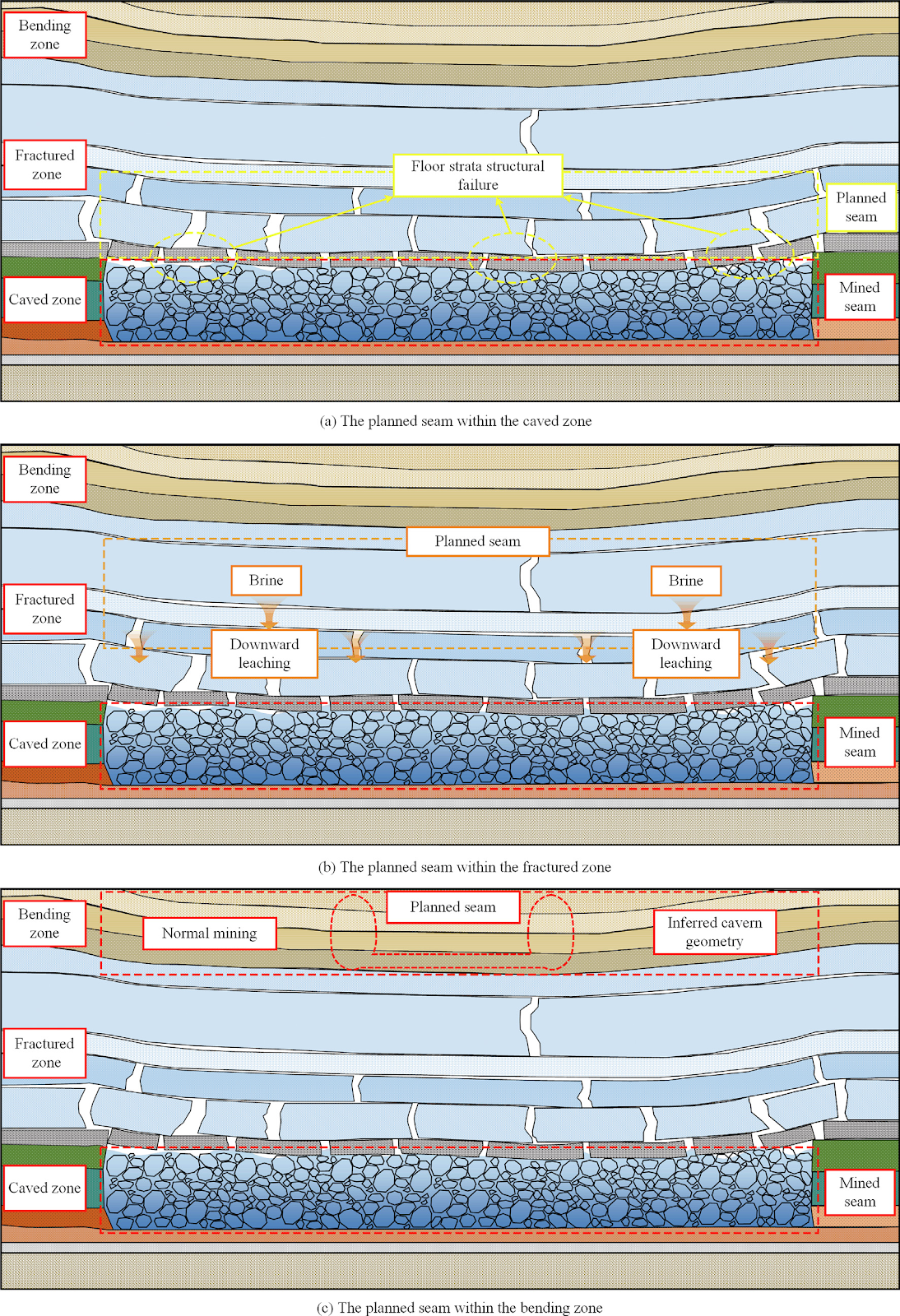
Key Takeaways & Executive Findings
- •• Continuous solution mining reduces plastic deformation zones to 3.4% of cavern volume, significantly improving stability compared to layered mining. • The continuous method achieves volumetric shrinkage below 17%, ensuring long-term cavern integrity. • Continuous solution mining produces caverns 2.43 times larger, reducing unit volume costs to 41.1% of layered mining. • The continuous approach enhances resource recovery and offers superior economic viability for low-grade bedded salt deposits.
Abstract
Salt deposits in China predominantly originate from lake deposits, characterized by thin salt beds interspersed with numerous interlayers, collectively termed bedded salt formations. Historically, solution mining practices have adopted the layered solution mining approach, inspired by coal mining techniques. However, this approach fails to account for the unique challenges of salt solution mining. Practical implementation is inefficient, costs escalate post-construction, and cavern geometry is constrained by salt bed thickness. Additionally, resource loss in abandoned beds and stability risks in adjacent mining zones remain unresolved. This study investigates mining scheme selection for low-grade salt deposits in Huai'an Salt Basin, introducing a continuous solution mining method that traverses multiple interlayers. Through comprehensive analysis of plastic deformation in caverns and surrounding rock, volume shrinkage rates, and economic costs comparing continuous and layered solution mining approaches, the results demonstrate that: (1) In the layered solution mining with horizontal interconnected wells scheme, plastic deformation zones propagate unevenly, posing interlayer connectivity risks. Concurrently, roof subsidence and floor heave destabilize the structure; (2) the continuous solution mining with horizontal interconnected wells scheme reduces plastic deformation zones to 3.4% of cavern volume, with volumetric shrinkage below 17%, markedly improving stability; (3) Economically, the continuous solution mining scheme generates caverns 2.43 times larger than the layered solution mining, slashing unit volume costs to 41.1% while enhancing resource recovery and long-term viability. The continuous method demonstrates distinct economic advantages and achieves higher resource utilization efficiency in solution mining compared to layered mining. Furthermore, its superior cavern stability presents strong potential for large-scale implementation.
1. Introduction
Salt rock resources hold significant strategic value for energy storage globally. Current estimates suggest total global reserves of approximately 2.1 trillion tons [1,2], primarily distributed in the United States, Germany, Canada, and China. Marine sedimentary salt domes in Europe and North America exhibit simple structures, extensive distribution (thickness exceeding 3000 m), and high salt purity. These formations are not only suitable for traditional mining but also ideal for large-scale underground storage facilities, such as compressed air energy storage (CAES) [3–5], hydrogen storage [6–8] and oil storage, due to their superior sealing capability, plastic deformation capability and stability. The slender vertical caverns formed by single-well convection with oil/gas blanket solution mining in these regions have proven effective for long-term storage stability.
The salt deposits of China exhibit complex geological features: multilayered interbedded structures dominate in eastern terrestrial basins, while marine sedimentary characteristics persist in western regions like the Tarim Basin. This geological diversity enables underground energy storage development: within bedded salt formations, interlayers serve as natural impermeable barriers, while thick salt beds allow construction of million-cubic-meter-scale storage caverns. However, these conditions demand advanced mining-storage integration. In eastern mines, salt beds lie at depths of 200–1500 m, with thicknesses of 200–250 m and interlayers comprising 10%–30% of the strata, complicating cavern volume optimization and geometry control [9,10].
Loading authentic research manuscript (Pages 1–5)...
Hao Zhang, Guimin Zhang, Kai Liu, Xinghui Fu, Yinping Li, Yuxuan Liu (2025). Comparative Analysis of Layered and Continuous Solution Mining Schemes in Bedded Salt Formations Using Horizontal Interconnected Wells. Int. Journal of Mining Science and Technology (采矿与安全工程). https://doi.org/10.1016/j.ijmst.2025.10.003
Research & Educational Purpose Only:The translations, structured abstracts, analytical annotations, and data reports provided by SinoTechIntel are intended exclusively for academic research, internal corporate R&D, and educational benchmarking. They do not constitute formal engineering, chemical safety, legal, or professional advice.
Copyright & Intellectual Property Notice: Original copyright of the underlying source articles and experimental data remains with the respective authors, institutions, and original publishing journals. SinoTechIntel claims intellectual property only over its proprietary translations, analytical syntheses, and AEO structured enhancements in accordance with international fair use and academic citation principles.
Frequently Asked Questions
What are the main differences between layered and continuous solution mining?
Layered solution mining targets specific salt beds and is limited by bed thickness, while continuous solution mining traverses multiple interlayers from bottom-up, improving resource recovery and cavern stability.
How does continuous solution mining improve cavern stability?
Continuous solution mining reduces plastic deformation zones to 3.4% of cavern volume and keeps volumetric shrinkage below 17%, preventing uneven deformation and roof collapse.
What are the economic benefits of continuous solution mining?
Continuous solution mining creates caverns 2.43 times larger and reduces unit volume costs to 41.1% of layered mining, enhancing cost-effectiveness and resource utilization.
Why is the Huai'an Salt Basin used as a case study?
The Huai'an Salt Basin features low-grade, bedded salt deposits typical of eastern China, making it an ideal representative for evaluating the feasibility of continuous solution mining.
What is the significance of horizontal interconnected wells in this study?
Horizontal interconnected wells enable efficient brine extraction and cavern growth, and are used in both layered and continuous methods, but continuous mining leverages them to access multiple layers.
Related Technical Papers & Translations
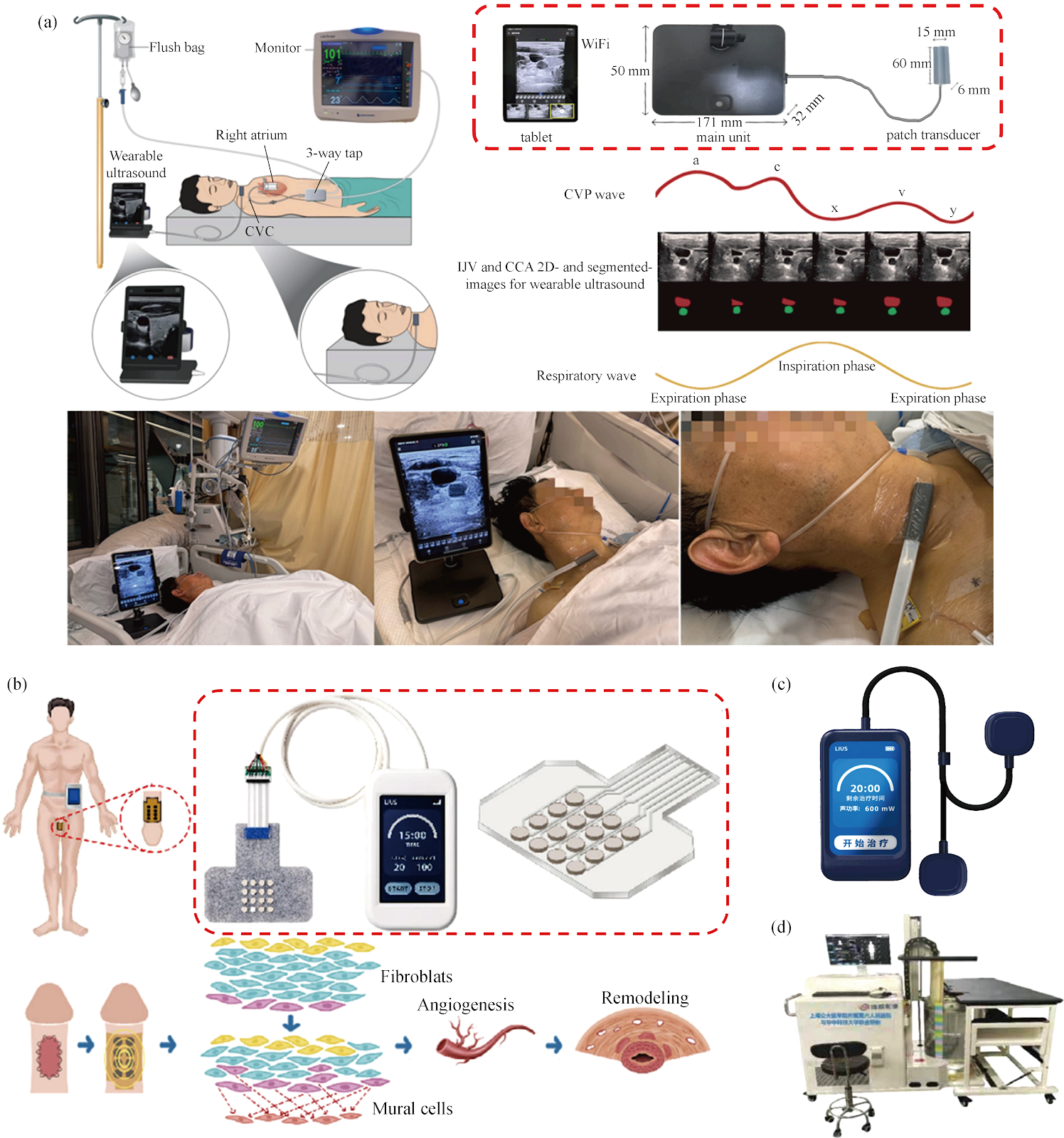
Advances in Brain-Computer Interface Technology: A Comprehensive Review of Neural Signal Processing and Applications
Brain-computer interfaces (BCIs) have emerged as a transformative technology enabling direct communication between the brain and external devices, offering unprecedented opportunities for restoring motor function in paralyzed individuals and enhancing human-computer interaction. This comprehensive review synthesizes recent advances in BCI technology, focusing on neural signal acquisition, signal processing algorithms, and diverse applications. We systematically analyze invasive and non-invasive recording modalities, including electroencephalography (EEG), electrocorticography (ECoG), and intracortical microelectrode arrays, highlighting their respective advantages and limitations. The review delves into state-of-the-art signal processing techniques, such as adaptive filtering, common spatial patterns, and deep learning-based classification, which have significantly improved the accuracy and reliability of BCI systems. Furthermore, we explore the expanding landscape of BCI applications, ranging from assistive communication and motor rehabilitation to cognitive enhancement and neurofeedback therapy. Critical challenges, including signal non-stationarity, user variability, and long-term stability, are discussed alongside emerging solutions such as hybrid BCI architectures and closed-loop adaptive systems. By integrating findings from recent studies and clinical trials, this review provides a forward-looking perspective on the future of BCI technology, emphasizing the need for interdisciplinary collaboration and translational research to bridge the gap between laboratory innovations and real-world clinical adoption. Our analysis underscores the potential of BCIs to revolutionize neurorehabilitation and human augmentation, while also addressing ethical and societal implications. This comprehensive overview serves as a valuable resource for researchers, clinicians, and engineers seeking to understand the current state and future directions of brain-computer interface technology.
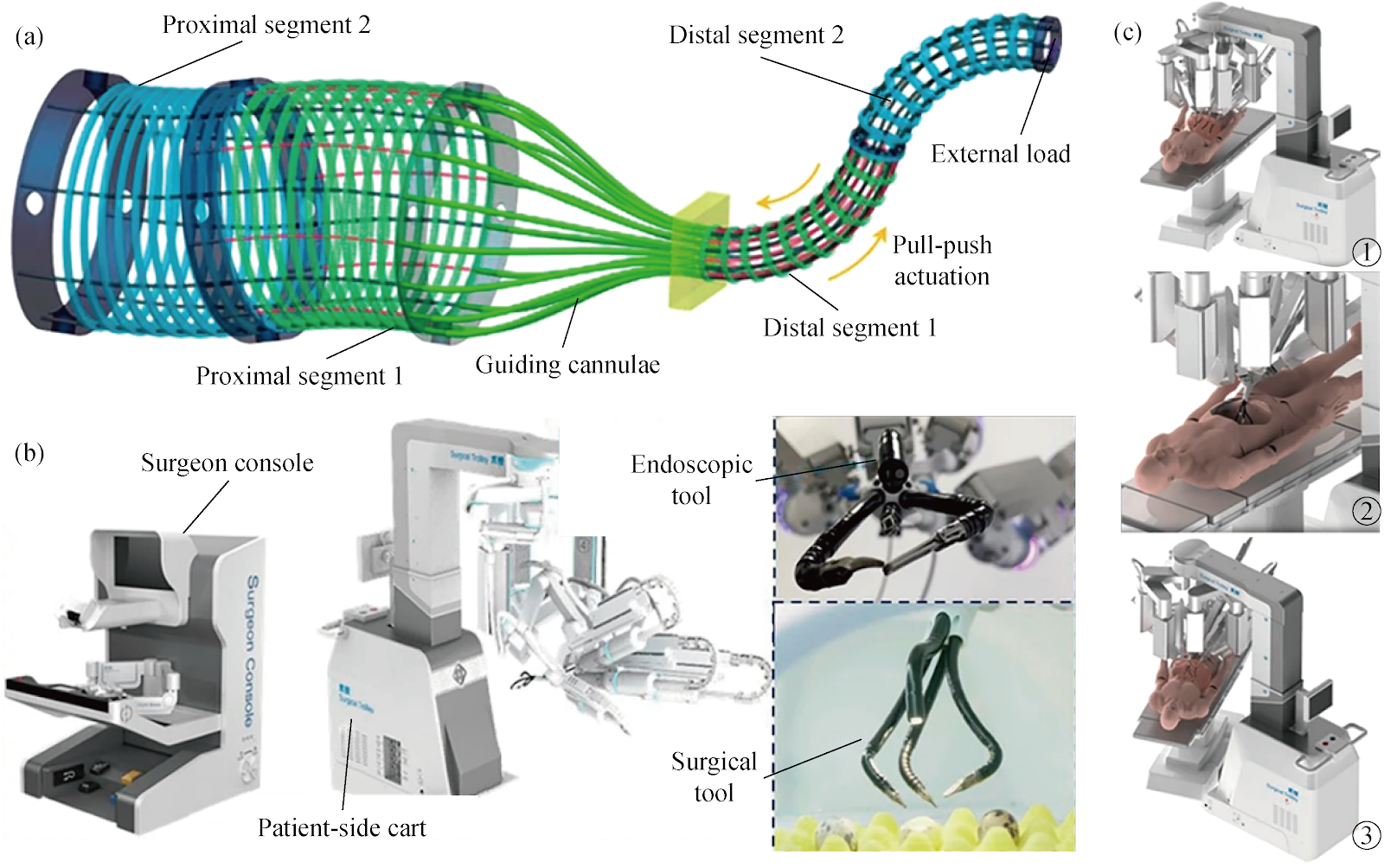
A Novel Multi-Scale Robotic System for Enhanced Surgical Precision and Autonomy in Minimally Invasive Procedures
Minimally invasive surgery (MIS) has revolutionized surgical practice by reducing patient trauma and recovery time. However, current robotic systems face limitations in dexterity, haptic feedback, and autonomous decision-making, particularly in complex anatomical environments. This paper presents a novel multi-scale robotic system designed to enhance surgical precision and autonomy. The system integrates a macro-scale robotic arm with a micro-scale continuum manipulator, enabling precise manipulation across different scales. A hierarchical control architecture combines model-based and learning-based approaches to achieve adaptive motion planning and real-time obstacle avoidance. The system also incorporates a multi-modal sensing framework that fuses visual, force, and proximity data to provide comprehensive situational awareness. Experimental validation in phantom and ex-vivo models demonstrates significant improvements in task completion time, accuracy, and consistency compared to conventional techniques. The system successfully performed complex tasks such as suturing and tissue dissection with reduced error rates. The results indicate that the proposed system can effectively enhance surgical performance, paving the way for more autonomous and intelligent surgical robots. Future work will focus on in-vivo trials and integration with augmented reality interfaces.
Integrated Multi-Omics Analysis of Tumor Microenvironment and Immune Infiltration in Hepatocellular Carcinoma: Implications for Prognosis and Immunotherapy
Hepatocellular carcinoma (HCC) is a highly heterogeneous malignancy with a complex tumor microenvironment (TME) that profoundly influences disease progression and therapeutic response. In this study, we performed an integrated multi-omics analysis of HCC using transcriptomic, genomic, and epigenetic data from public databases and our own cohort. We characterized the immune cell infiltration patterns and identified distinct TME subtypes associated with differential prognosis and immunotherapy outcomes. Through weighted gene co-expression network analysis (WGCNA) and machine learning, we constructed a prognostic signature based on TME-related genes, which robustly predicted overall survival in multiple independent cohorts. Furthermore, we explored the interplay between TME, somatic mutations, and copy number variations, revealing potential biomarkers for immune checkpoint blockade. Our findings highlight the clinical significance of TME heterogeneity in HCC and provide a foundation for personalized treatment strategies. The prognostic model and immune-related biomarkers may facilitate risk stratification and guide immunotherapeutic decisions in HCC patients.