SinoTechIntel Academic Portal
🏛️ Indexed Academic JournalImpact Factor: 2.7 (Q2 - Springer)Original: 信息与电子工程前沿 (英文版)

Frontiers of Information Technology & Electronic Engineering

2.7 (Q2 - Springer)

Total Research Papers: 153
Access: 100% Free Open Access
Browse by Publication Year & VolumeReset All Filters ✕

Published Research PapersFiltered: Year 2025 • Vol. 32 • Issue 11

Showing 13 of 153 peer-reviewed papers with full Graphical Abstracts.

Original ResearchVol. 32, Issue 11 • pp. 286-298DOI: 10.1631/FITEE_2300532Nov 25, 2025

Reinforcement learning based privacy-preserving consensus tracking control of nonstrict-feedback discrete-time multi-agent systems

Authors: Yang Yang, Fanming Huang, Dong Yue

This paper investigates a privacy-preserving consensus tracking problem for a class of nonstrict-feedback discrete-time multi-agent systems (MASs). An improved Liu cryptosystem is developed to alleviate the errors between encryption and decryption on the plaintext, which ensures satisfactory recovery of the plaintext information. A reinforcement learning (RL) technique is then employed to compensate for unknown dynamics and errors between true signals and decrypted ones. Based on the backsteppin
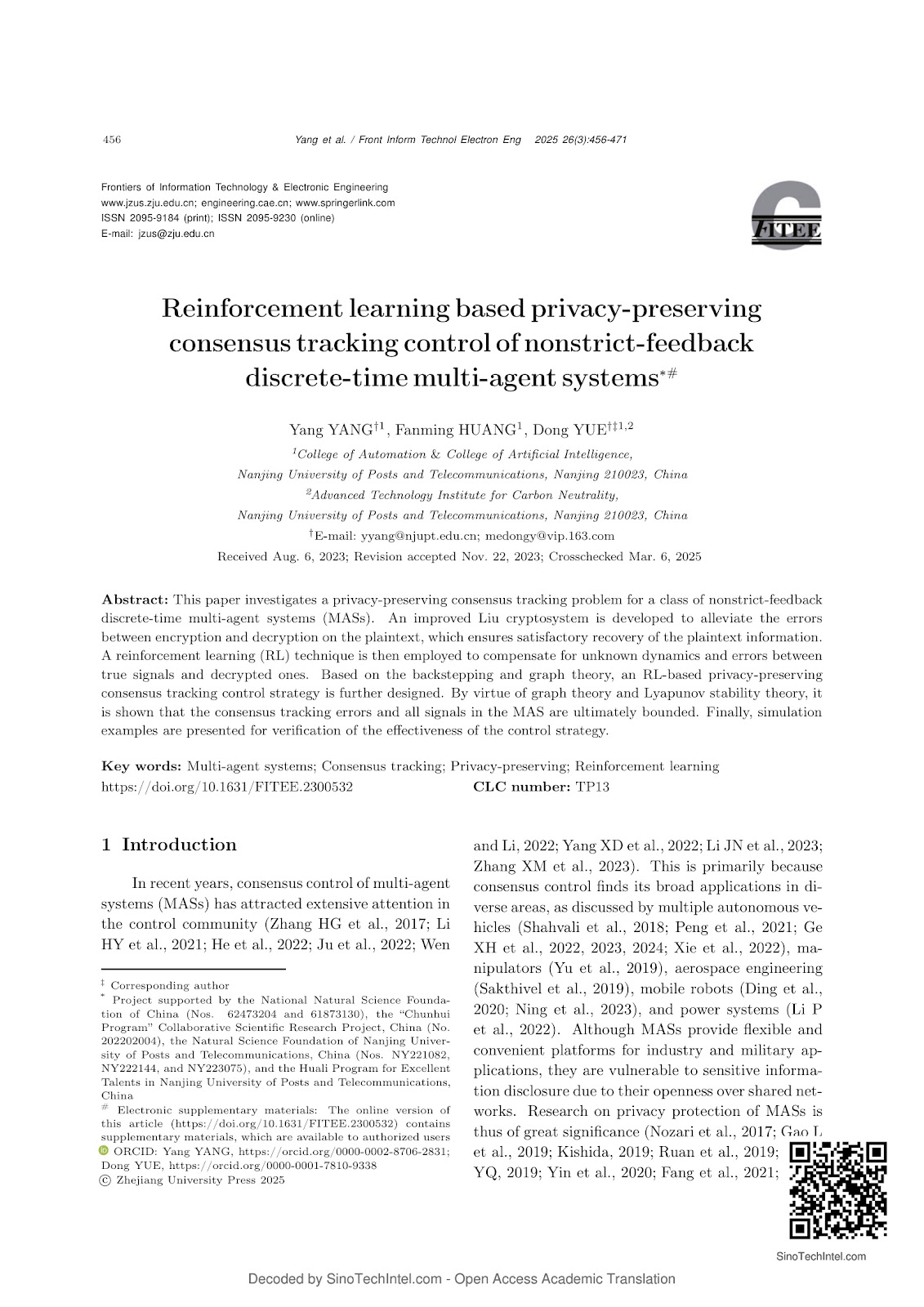
Reinforcement learning based privacy-preserving consensus tracking control of nonstrict-feedback discrete-time multi-agent systems
Graphical Abstract
Original ResearchVol. 32, Issue 11 • pp. 694-706DOI: 10.1631/FITEE_2400091Nov 22, 2025

CUSMART: effective parallelization of string matching algorithms using GPGPU accelerators

Authors: Adnan OZSOY, Mengu NAZLI, Onur CANKUR, Cagri SAHIN

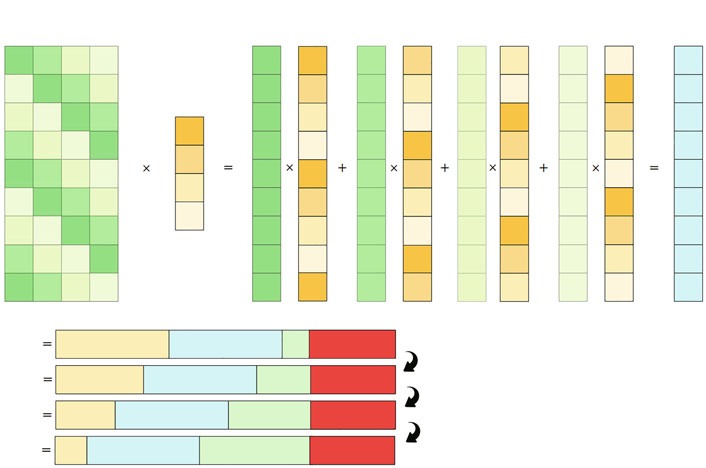
This study presents a parallel version of the string matching algorithms research tool (SMART) library, implemented on NVIDIA’s compute unified device architecture (CUDA) platform, and uses general-purpose computing on graphics processing unit (GPGPU) programming concepts to enhance performance and gain insight into the parallel versions of these algorithms. We have developed the CUDA-enhanced SMART (CUSMART) library, which incorporates parallelized iterations of 64 string matching algorithms, l

CUSMART: effective parallelization of string matching algorithms using GPGPU accelerators
Graphical Abstract
Original ResearchVol. 32, Issue 11 • pp. 302-314DOI: 10.1631/FITEE_2400458Nov 19, 2025

Building accurate translation-tailored large language models with language-aware instruction tuning

Authors: Changtong ZAN, Liang DING, Li SHEN, Yibing ZHAN, Xinghao YANG, Weifeng LIU

Large language models (LLMs) exhibit remarkable capabilities in various natural language processing tasks, such as machine translation. However, the large number of LLM parameters incurs significant costs during inference. Previous studies have attempted to train translation-tailored LLMs with moderately sized models by fine-tuning them on the translation data. Nevertheless, when performing translations in zero-shot directions that are absent from the fine-tuning data, the problem of ignoring in

Building accurate translation-tailored large language models with language-aware instruction tuning
Graphical Abstract
Original ResearchVol. 32, Issue 11 • pp. 474-486DOI: 10.1631/ENG_ITEE_2025_0152Nov 17, 2025

GC bypass: decoupling GC from the flash translation layer to eliminate GC-induced long-tail latency inside SSD

Authors: Shiqiang NIE, Jie NIU, Yingzhao SHAO, Xiaobo LI, Mingming ZHANG, Weiguo WU

NAND flash-based solid-state drives (SSDs) have been adopted by many data centers due to their high performance and low power consumption. However, the physical characteristics of the underlying flash memory necessitate garbage collection (GC) operations. Valid page migration during GC contributes significantly to latency overhead while competing for flash channel bandwidth and controller resources with user I/O requests through shared physical paths, leading to path conflicts and elevated long-

GC bypass: decoupling GC from the flash translation layer to eliminate GC-induced long-tail latency inside SSD
Graphical Abstract
Original ResearchVol. 32, Issue 11 • pp. 710-722DOI: 10.1631/FITEE_2500386Nov 16, 2025

A survey on large language model-based alpha mining

Authors: Junjie ZHANG, Shuoling LIU, Tongzhe ZHANG, Yuchen SHI

Alpha mining, which refers to the systematic discovery of data-driven signals predictive of future cross-sectional returns, is a central task in quantitative research. Recent progress in large language models (LLMs) has sparked interest in LLM-based alpha mining frameworks, which offer a promising middle ground between human-guided and fully automated alpha mining approaches and deliver both speed and semantic depth. This study presents a structured review of emerging LLM-based alpha mining syst

A survey on large language model-based alpha mining
Graphical Abstract
Original ResearchVol. 32, Issue 11 • pp. 882-894DOI: 10.1631/FITEE_2400360Nov 14, 2025

Algorithm for 3D point cloud steganalysis based on composite operator feature enhancement

Authors: Shuai Ren, Hao Gong, Suya Zheng

Three-dimensional (3D) point cloud information hiding algorithms are mainly concentrated in the spatial domain. Existing spatial domain steganalysis algorithms are subject to more disturbing factors during the analysis and detection process, and can only be applied to 3D mesh objects, so there is a lack of steganalysis algorithms for 3D point cloud objects. To change the fact that steganalysis is limited to 3D mesh and eliminate the redundant features in the 3D mesh steganalysis feature set, we

Algorithm for 3D point cloud steganalysis based on composite operator feature enhancement
Graphical Abstract
Original ResearchVol. 32, Issue 11 • pp. 318-330DOI: 10.1631/FITEE_2400939Nov 13, 2025

A focused crawling strategy based on comprehensive priority evaluation of hyperlinks and improved Bayesian classifier

Authors: Jingfa Liu, Yongchuang Wu, Zhaoxia Liu

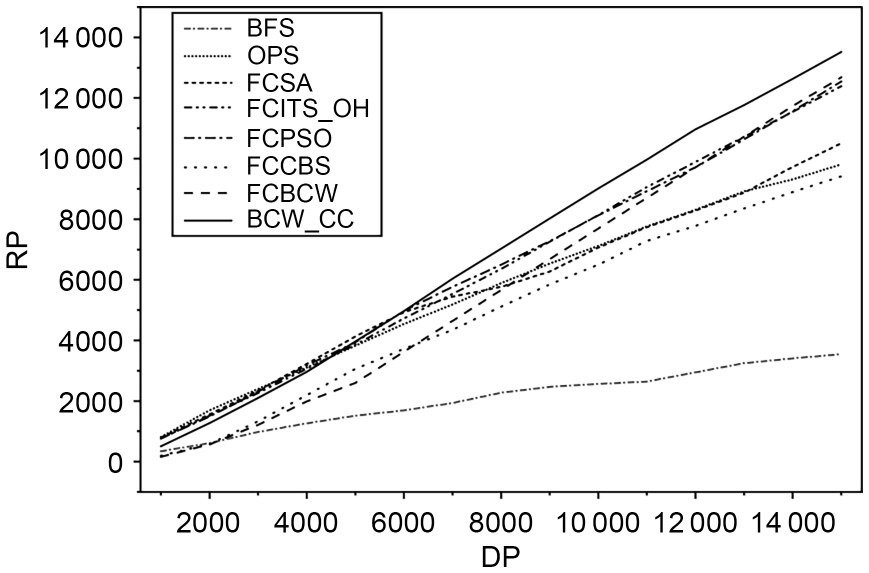
Avoidance of topic drift and enabling crossing tunnels are two main difficulties in focused crawling. To overcome the problem of topic drift, we design a comprehensive priority evaluation (CPE) method based on the web text, anchor text, and context of hyperlinks, which improves the topic-relevance evaluation of unvisited hyperlinks. Subsequently, we propose an improved Bayesian classifier with weights (BCW), which adds label weights to the feature words of the Bayesian classifier to enhance the

A focused crawling strategy based on comprehensive priority evaluation of hyperlinks and improved Bayesian classifier
Graphical Abstract
Original ResearchVol. 32, Issue 11 • pp. 490-502DOI: 10.1631/FITEE_2300742Nov 11, 2025

A parasitic coupling network concept for mutual coupling utilization in wideband multielement antenna arrays

Authors: Xiaojun ZOU, Guangming WANG, Yawei WANG, Wei SONG, Hang ZHU, Ming TAN, Xuguang XU, Guoqin KANG, Binfeng ZONG

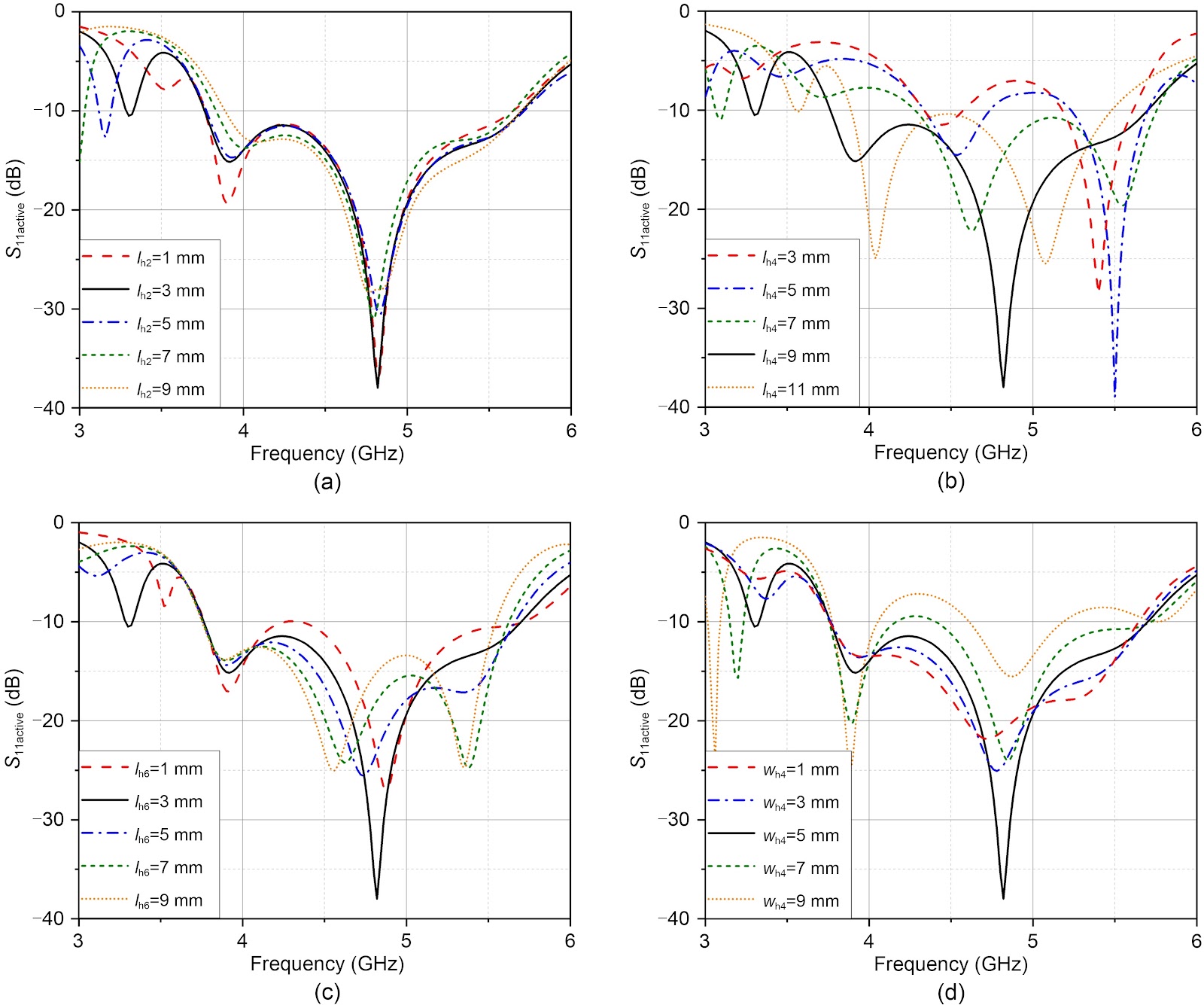
A novel approach to widening the active reflection coefficient (ARC) bandwidth of an antenna array, employing a parasitic coupling network (PCN), is investigated in this article. Different from traditional tightly coupled arrays adopting space structures for enhancing the coupling in balanced-excitation antennas, a PCN derived from rigorous formulas is employed in the feeding lines of unbalanced-excitation ones. Based on network analysis, the mutual coupling utilization condition for an (M×N)-el

A parasitic coupling network concept for mutual coupling utilization in wideband multielement antenna arrays
Graphical Abstract
Original ResearchVol. 32, Issue 11 • pp. 898-910DOI: 10.1631/FITEE_2500053Nov 8, 2025

Active cybersecurity: vision, model, and key technologies

Authors: Xiaosong Zhang, Yukun Zhu, Xiong Li, Yongzhao Zhang, Weina Niu, Fenghua Xu, Junpeng He, Ran Yan, Shiping Huang

Noncooperative computer systems and network confrontation present a core challenge in cyberspace security. Traditional cybersecurity technologies predominantly rely on passive response mechanisms, which exhibit significant limitations when addressing real-world complex and unknown threats. This paper introduces the concept of “active cybersecurity,” aiming to enhance network security not only through technical measures but also by leveraging strategy-level defenses. The core assumption of this c

Active cybersecurity: vision, model, and key technologies
Graphical Abstract
Original ResearchVol. 32, Issue 11 • pp. 270-282DOI: 10.1631/ENG_ITEE_2026_0030Nov 6, 2025

Low-altitude UAV swarm ISAC: new opportunities and challenges

Authors: Hongqi MIN, Dingbang YANG, Chenhao QI, Yong ZENG

With the rapid development of the low-altitude economy, low-altitude unmanned aerial vehicle (UAV) swarms are emerging as important components of sixth-generation (6G) mobile communication networks, facilitating “full coverage” and “Internet of Intelligence.” Integrated sensing and communication (ISAC) deeply integrates sensing functionality into wireless communication networks by sharing wireless infrastructures and resources such as base stations, antennas, radio frequency chains, and signal w

Low-altitude UAV swarm ISAC: new opportunities and challenges
Graphical Abstract
Original ResearchVol. 32, Issue 11 • pp. 506-518DOI: 10.1631/FITEE_2400371Nov 5, 2025

Efficient privacy-preserving scheme for secure neural network inference

Authors: Liquan CHEN, Zixuan YANG, Peng ZHANG, Yang MA

The increasing adoption of smart devices and cloud services, coupled with limitations in local computing and storage resources, prompts numerous users to transmit private data to cloud servers for processing. However, the transmission of sensitive data in plaintext form raises concerns regarding users' privacy and security. To address these concerns, this study proposes an efficient privacy-preserving secure neural network inference scheme based on homomorphic encryption and secure multi-party c

Efficient privacy-preserving scheme for secure neural network inference
Graphical Abstract
Original ResearchVol. 32, Issue 11 • pp. 678-690DOI: 10.1631/ENG_ITEE_2025_0008Nov 3, 2025

WSC optimizer: an optimization tool for wafer-scale chip architecture exploration

Authors: Wenbo ZHANG, Bo DING, Shuai WEI, Qinrang LIU, Hong YU, Ke SONG, Wei GUO, Bo MEI, Rui ZHENG

In recent years, mature advanced packaging technologies have increasingly enabled the integration of multiple small dies into larger chips, while retaining chip-scale density and high-bandwidth interconnects. To address the inefficiencies of manual design and the challenges of heterogeneous optimization in wafer-scale chip (WSC) development, we systematically explore key factors in WSC architecture design. We integrate chip layout, operator mapping, and hardware–software co-design, and formulate

WSC optimizer: an optimization tool for wafer-scale chip architecture exploration
Graphical Abstract
Original ResearchVol. 32, Issue 11 • pp. 114-126DOI: 10.1631/FITEE_2400941Nov 2, 2025

Vina-FPGA2: a high-level parallelized hardware-accelerated molecular docking tool based on the inter-module pipeline

Authors: Ming LING, Shidi TANG, Ruiqi CHEN, Xin LI, Yanxiang ZHU

AutoDock Vina (Vina) is a widely adopted molecular docking tool, often regarded as a standard or used as a baseline in numerous studies. However, its computational process is highly time-consuming. The pioneering field-programmable gate array (FPGA)-based accelerator of Vina, known as Vina-FPGA, offers a high energy-efficiency approach to speed up the docking process. However, the computation modules in the Vina-FPGA design are not efficiently used. This is due to Vina exhibiting irregular behaviors i

Vina-FPGA2: a high-level parallelized hardware-accelerated molecular docking tool based on the inter-module pipeline
Graphical Abstract