SinoTechIntel Academic Portal
🏛️ Indexed Academic JournalImpact Factor: 2.7 (Q2 - Springer)

Engineering Information Technology and Electronic Engineering

2.7 (Q2 - Springer)

Total Research Papers: 153
Access: 100% Free Open Access
Browse by Publication Year & VolumeReset All Filters ✕

Published Research PapersFiltered: Year 2025 • Vol. 32 • Issue 3

Showing 14 of 153 peer-reviewed papers with full Graphical Abstracts.

Original ResearchVol. 32, Issue 3 • pp. 386-398DOI: 10.1631/FITEE_2500522Mar 25, 2025

Integrating the cat’s eye effect and deep learning for low-altitude target detection

Authors: Bin Zhou, Weiming Wang, Ning Yan, Linlin Zhao, Chuanzhen Li

This paper addresses the urgent need to detect low, slow, and small (LSS) unmanned aerial vehicles (UAVs) in complex and critical environments, proposing an active low-altitude target detection method based on the cat’s eye effect. The detection system incorporates a control module, a laser emission component, a co-optical path panoramic scanning optical mechanism structure, an echo reception component, target detection, and visualization processing to achieve small target detection. The light s
Integrating the cat’s eye effect and deep learning for low-altitude target detection
Graphical Abstract
Original ResearchVol. 32, Issue 3 • pp. 558-570DOI: 10.1631/FITEE_2400443Mar 23, 2025

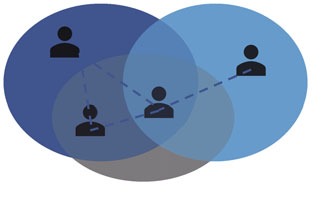
Anti-quantum cross-chain identity authentication approach using dynamic group signature

Authors: Huifang YU, Mengjie HUANG

To solve the privacy leakage and identity island problems in cross-chain interaction, we propose an anti-quantum cross-chain identity authentication approach based on dynamic group signature (DGS-AQCCIDAA) for smart education. The relay-based cross-chain model promotes interconnection in heterogeneous consortium blockchains. DGS is used as the endorsement strategy for cross-chain identity authentication. Our approach can ensure quantum security under the learning with error (LWE) and inhomogeneo

Anti-quantum cross-chain identity authentication approach using dynamic group signature
Graphical Abstract
Original ResearchVol. 32, Issue 3 • pp. 166-178DOI: 10.1631/FITEE_2400945Mar 20, 2025

Analysis of the Pareto equilibrium in multi-objective games using semi-tensor product

Authors: Fanyueyang ZHANG, Jun’e FENG

Multi-objective games (MOGs) have received much attention in recent years as a class of games with vector payoffs. Based on the semi-tensor product (STP), this paper discusses the MOG, including the existence, finite-step reachability, and finite-step controllability of Pareto equilibrium of this model, from both static and dynamic perspectives. First, the MOG concept is presented using multi-layer graphs, and STP is used to convert the payoff function into its algebraic form. Then, from the sta

Analysis of the Pareto equilibrium in multi-objective games using semi-tensor product
Graphical Abstract
Original ResearchVol. 32, Issue 3 • pp. 338-350DOI: 10.1631/ENG_ITEE_2025_0127Mar 18, 2025

A review of UAV positioning in LAIN: toward a 5G-core “space−air−ground” integrated and cooperative architecture

Authors: Yao JIN, Zhongliang DENG, He ZHANG, Zhenke DING, Xiongyan TANG, Zelin WANG

The rapid expansion of the low-altitude economy is driving strong demand for highly accurate and reliable positioning technologies to support diverse aerial operations. This review examines core positioning methodologies within the low-altitude intelligent network (LAIN) framework, beginning with an analysis of positioning requirements and performance metrics for low-altitude flight scenarios. It systematically assesses the principles, strengths, and limitations of mainstream positioning systems

A review of UAV positioning in LAIN: toward a 5G-core “space−air−ground” integrated and cooperative architecture
Graphical Abstract
Original ResearchVol. 32, Issue 3 • pp. 574-586DOI: 10.1631/FITEE_2500015Mar 17, 2025

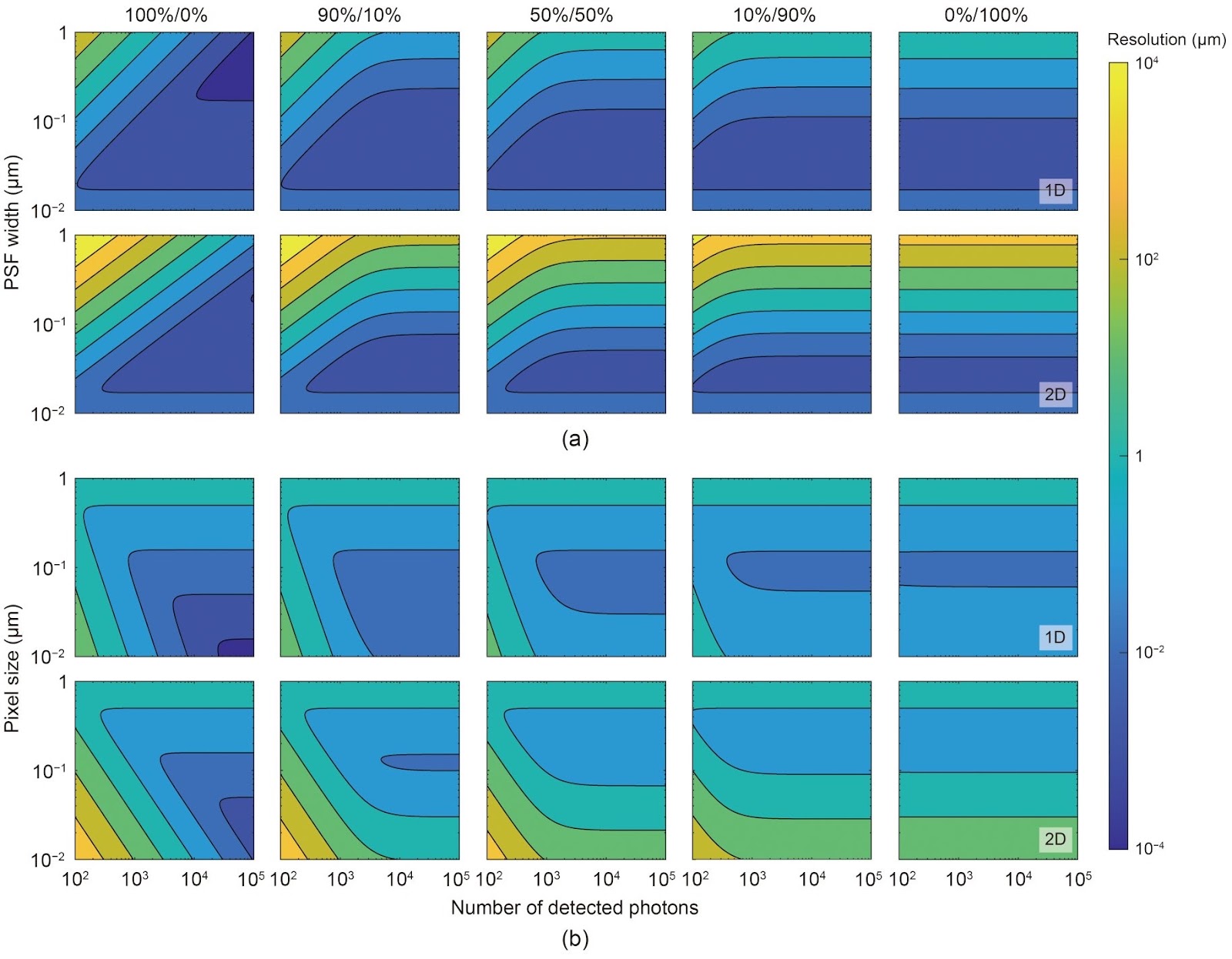
Numerical investigation of resolution in single emitter localization-based imaging systems

Authors: Yueying WANG, Yiwen HU, Yuehan ZHAO, Cuifang KUANG, Xiang HAO

In this paper, we numerically analyze the factors determining localization precision and resolution in single emitter localization-based imaging systems. While previous studies have considered a limited set of parameters, our numerical approach incorporates additional parameters with significant reference values, yielding a more comprehensive analysis of the results. We differentiate between the effects of additive and multiplicative noise on localization precision using numerical modeling and t

Numerical investigation of resolution in single emitter localization-based imaging systems
Graphical Abstract
Original ResearchVol. 32, Issue 3 • pp. 746-758DOI: 10.1631/ENG_ITEE_2025_0043Mar 15, 2025

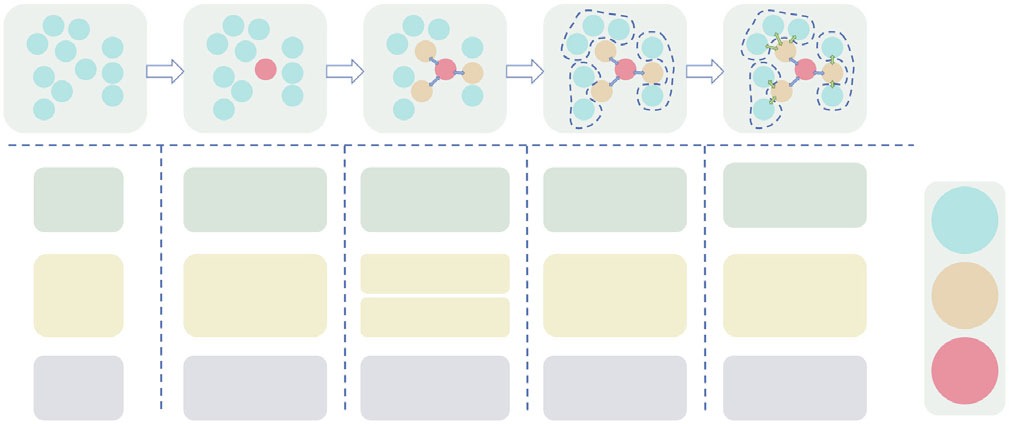
MH-Raft: an efficient and low-latency consensus algorithm for distributed systems via MOEA/D and hybrid hierarchical clustering

Authors: Fei ZHAO, Guilong PENG, Tianyi ZANG

Raft is a foundational consensus protocol for distributed systems, architected to ensure state machine replication and data consistency across machine clusters. However, traditional Raft faces significant performance bottlenecks, particularly regarding suboptimal election efficiency and substantial consensus latency in large-scale deployments. To address these challenges, this study presents MH-Raft, an enhanced consensus variant designed for high efficiency and minimal latency. We propose a hie

MH-Raft: an efficient and low-latency consensus algorithm for distributed systems via MOEA/D and hybrid hierarchical clustering
Graphical Abstract
Original ResearchVol. 32, Issue 3 • pp. 182-194DOI: 10.1631/FITEE_2500411Mar 14, 2025

Multi-talker audio–visual speech recognition towards diverse scenarios

Authors: Yuxiao LIN, Tao JIN, Xize CHENG, Zhou ZHAO, Fei WU

Recently, audio–visual speech recognition (AVSR) has attracted increasing attention. However, most existing works simplify the complex challenges in real-world applications and only focus on scenarios with two speakers and perfectly aligned audio-video clips. In this work, we study the effect of speaker number and modal misalignment in the AVSR task, and propose an end-to-end AVSR framework under a more realistic condition. Specifically, we propose a speaker-number-aware mixture-of-experts (SA-M

Multi-talker audio–visual speech recognition towards diverse scenarios
Graphical Abstract
Original ResearchVol. 32, Issue 3 • pp. 354-366DOI: 10.1631/FITEE_2400220Mar 12, 2025

Handling polysemous triggers and arguments in event extraction: an adaptive semantics learning strategy with reward–penalty mechanism

Authors: Haili LI, Zhiliang TIAN, Xiaodong WANG, Yunyan ZHOU, Shilong PAN, Jie ZHOU, Qiubo XU, Dongsheng LI

Event extraction (EE) is a complex natural language processing (NLP) task that aims at identifying and classifying triggers and arguments in raw text. The polysemy of triggers and arguments stands out as one of the key challenges affecting the precise extraction of events. Existing approaches commonly consider the semantic distribution of triggers and arguments to be balanced. However, the sample quantities of different semantics in the same trigger or argument vary in real-world scenarios, lead

Handling polysemous triggers and arguments in event extraction: an adaptive semantics learning strategy with reward–penalty mechanism
Graphical Abstract
Original ResearchVol. 32, Issue 3 • pp. 762-774DOI: 10.1631/FITEE_2400753Mar 9, 2025

Multisensor contrast neural network for remaining useful life prediction of rolling bearings under scarce labeled data

Authors: Binkun Liu, Zhenyi Xu, Yu Kang, Yang Cao, Yunbo Zhao

Predicting remaining useful life (RUL) of bearings under scarce labeled data is significant for intelligent manufacturing. Current approaches typically encounter the challenge that different degradation stages have similar behaviors in multisensor scenarios. Given that cross-sensor similarity improves the discrimination of degradation features, we propose a multisensor contrast method for RUL prediction under scarce RUL-labeled data, in which we use cross-sensor similarity to mine multisensor si

Multisensor contrast neural network for remaining useful life prediction of rolling bearings under scarce labeled data
Graphical Abstract
Original ResearchVol. 32, Issue 3 • pp. 370-382DOI: 10.1631/FITEE_2400869Mar 6, 2025

Joint target tracking using an autonomous underwater vehicle and underwater sensor networks for underwater applications

Authors: Zhaohong LV, Zhenkai ZHANG, Boon-Chong SEET, Yi YANG

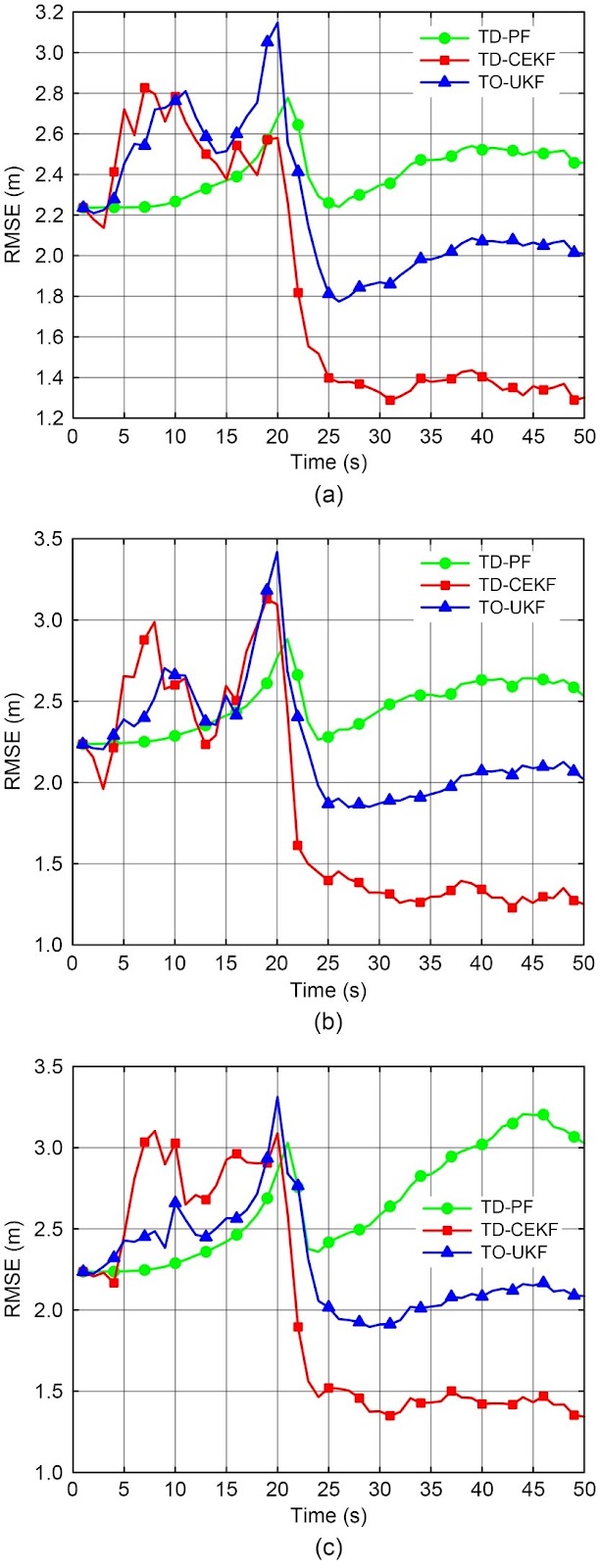
Because underwater sensor networks (USNs) have limited energy resources due to environmental constraints, it is essential to improve energy utilization. For this purpose, an autonomous underwater vehicle (AUV) with greater onboard computation power is used to process measurement data, and the mobility of the AUV is leveraged to optimize the USN topology, enhancing tracking accuracy. First, to address the transmission delay of underwater acoustic signals, a time-delay compensated centralized exte

Joint target tracking using an autonomous underwater vehicle and underwater sensor networks for underwater applications
Graphical Abstract
Original ResearchVol. 32, Issue 3 • pp. 606-618DOI: 10.1631/FITEE_2400967Mar 5, 2025

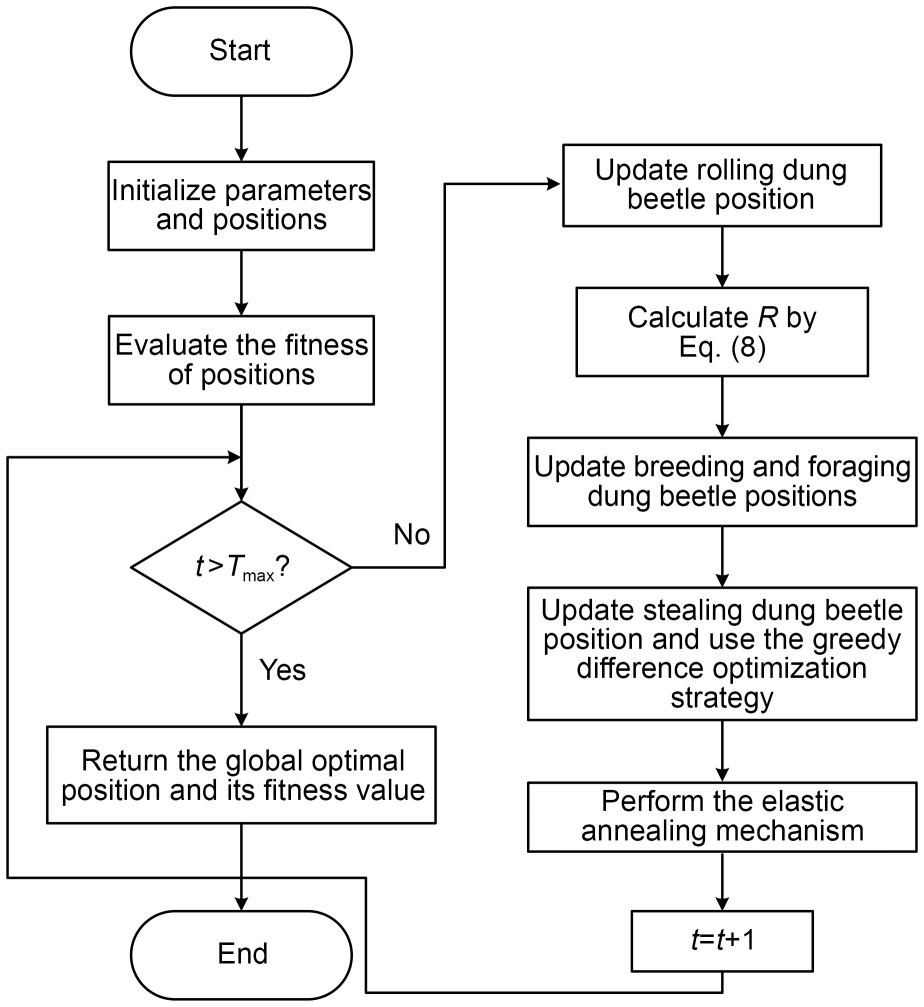
An adaptive dung beetle optimizer based on an elastic annealing mechanism and its application to numerical problems and optimization of Reed–Muller logic circuits

Authors: Lixin MIAO, Zhenxue HE, Xiaojun ZHAO, Yijin WANG, Xiaodan ZHANG, Kui YU, Limin XIAO, Zhisheng HUO

The dung beetle optimizer (DBO) is a metaheuristic algorithm with fast convergence and powerful search capabilities, which has shown excellent performance in solving various optimization problems. However, it suffers from the problems of easily falling into local optimal solutions and poor convergence accuracy when dealing with large-scale complex optimization problems. Therefore, we propose an adaptive DBO (ADBO) based on an elastic annealing mechanism to address these issues. First, the conver

An adaptive dung beetle optimizer based on an elastic annealing mechanism and its application to numerical problems and optimization of Reed–Muller logic circuits
Graphical Abstract
Original ResearchVol. 32, Issue 3 • pp. 542-554DOI: 10.1631/ENG_ITEE_2025_0180Mar 4, 2025

De-blocking adaptive feedback control design for shared-buffer CIOQ switching architecture

Authors: Rui Zheng, Jianliang Shen, Fan Zhang, Ping Lv, Peijie Li, Yu Shao, Zhengbin Zhu

To address the issues of head-of-line (HOL) blocking at the virtual output queue (VOQ) level, packet loss, and congestion spreading caused by buffer overflow in the shared-buffer-based combined input and output queued (CIOQ) switching architecture, while enhancing its performance and stability, we propose a de-blocking adaptive feedback control (AFC) design in this study. The introduction of the credit timeout detection mechanism (CTDM) enables the CIOQ to achieve theoretical 100% non-blocking s

De-blocking adaptive feedback control design for shared-buffer CIOQ switching architecture
Graphical Abstract
Original ResearchVol. 32, Issue 3 • pp. 778-790DOI: 10.1631/FITEE_2500169Mar 3, 2025

MltAuxTSPP: a unified benchmark for deep learning-based traffic state prediction with multi-source auxiliary data

Authors: Yusong ZHOU, Xiaoyu JIANG, Shu SUN, Xinmin ZHANG, Yuanqiu MO, Zhihuan SONG

Deep learning has empowered traffic prediction models to integrate diverse auxiliary data sources, such as weather and temporal features, for enhanced forecasting accuracy. However, existing approaches often suffer from limited generality and scalability, and the field lacks a unified benchmark for fair model comparison. This absence hinders consistent performance evaluation, slows the development of robust and adaptable models, and makes it challenging to quantify the incremental benefits of di

MltAuxTSPP: a unified benchmark for deep learning-based traffic state prediction with multi-source auxiliary data
Graphical Abstract
Original ResearchVol. 32, Issue 3 • pp. 150-162DOI: 10.1631/FITEE_2400285Mar 1, 2025

Robust wideband waveform design with constant modulus and discrete phase constraints for distributed precision jamming

Authors: Qingsong Zhou, Jialong Qian, Zhongping Yang, Chao Huang, Qinxian Chen, Yibo Xu, Zhengkai Wei

Distributed precision jamming (DPJ) is a novel blanket jamming concept in electronic warfare, which delivers the jamming resource to the opponent equipment precisely and ensures that friendly devices are not affected. Robust jamming performance and low hardware burden on the jammers are crucial for practical DPJ implementation. To achieve these goals, we study the robust design of wideband constant modulus (CM) discrete phase waveform for DPJ, where the worst-case combined power spectrum (CPS) o

Robust wideband waveform design with constant modulus and discrete phase constraints for distributed precision jamming
Graphical Abstract