Mitigating Phosphonic Acid–Perovskite Interfacial Degradation via Molecular Engineering for Ultra-Stable Solar Cells
Authors: LI Xu, GUO Yuxiao, LUO Xin, YAN Haoyuan, XU Bo
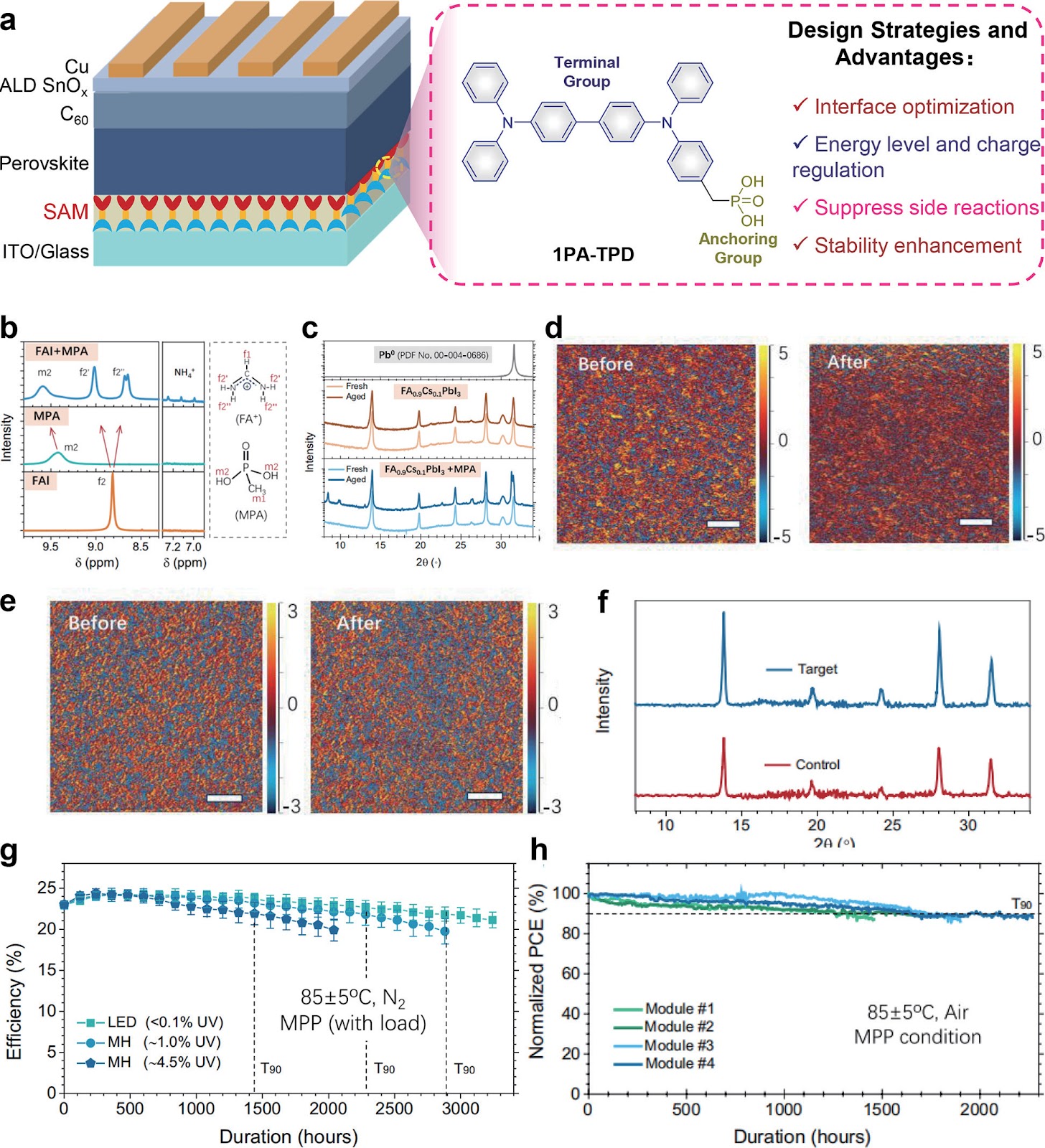
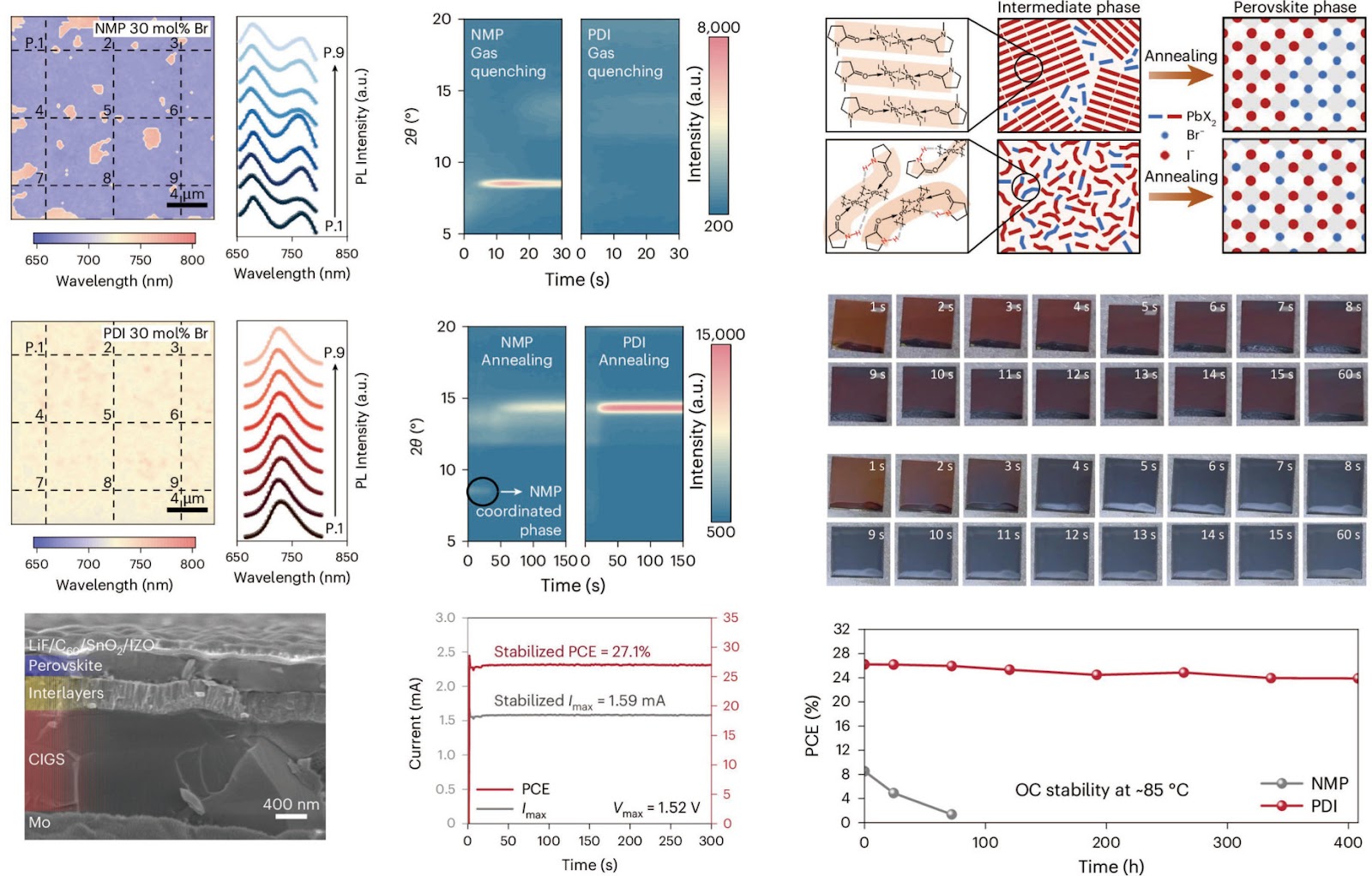
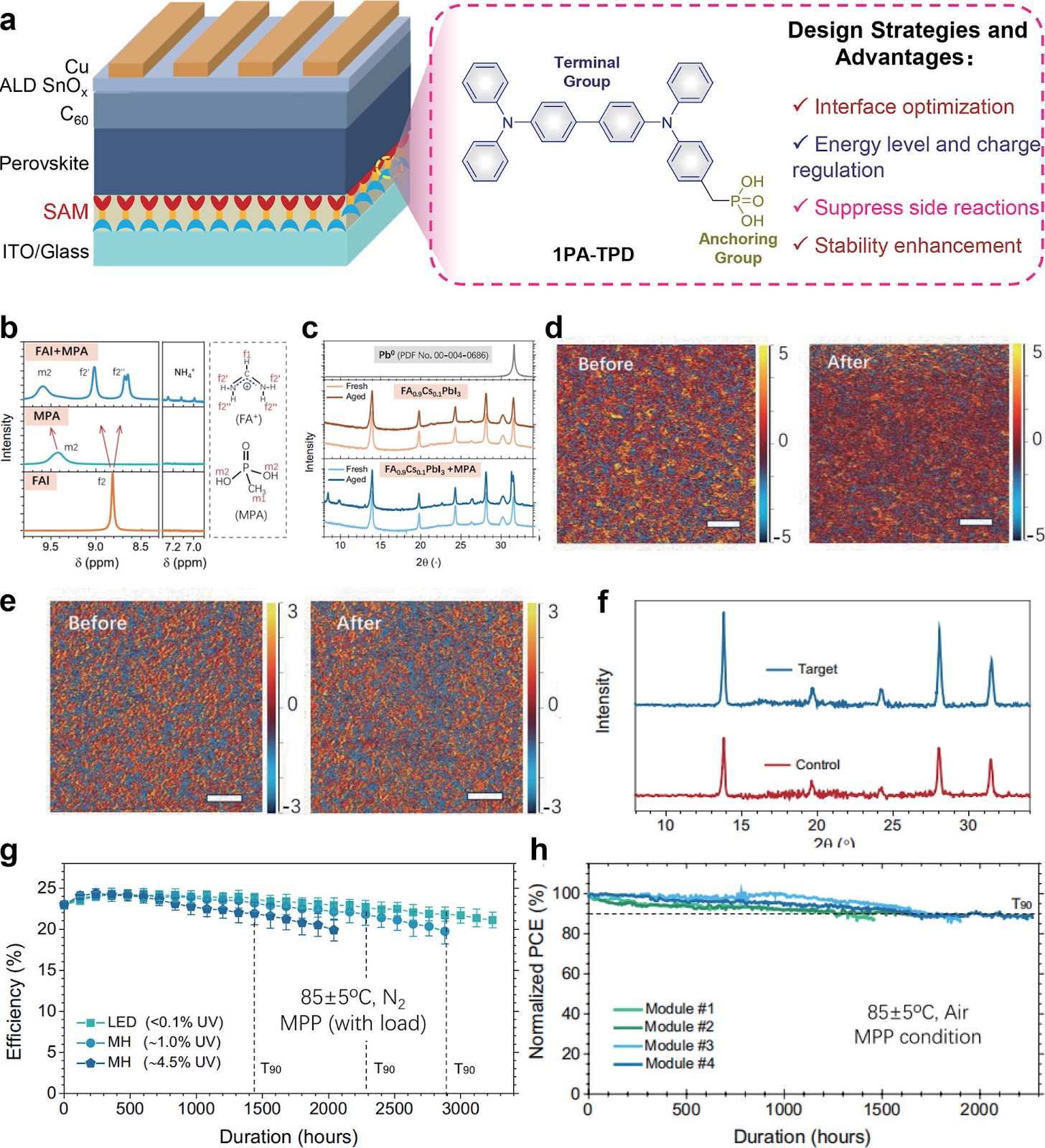
Metal halide perovskite solar cells (PSCs) have emerged as a leading next-generation photovoltaic technology, with certified efficiencies surpassing 27% and approaching the theoretical limit for single-junction devices. However, their commercialization is critically hindered by insufficient long-term operational stability, particularly under harsh conditions such as elevated temperatures (≥85 °C) and full-spectrum illumination. The hole-transport layer (HTL) plays a decisive role in both efficiency and stability, and phosphonic acid-based self-assembled monolayers (PA-SAMs) have become the material of choice for inverted-structure PSCs due to their molecular-scale precision and superior energy-level alignment. Nevertheless, PA-SAMs primarily anchor to ITO surfaces via weak hydrogen bonds, which dissociate under photothermal stress, leading to molecular desorption and migration into the perovskite layer, thereby inducing degradation and performance decline. In a recent breakthrough published in Science (2026), Fei et al. report a transformative molecular engineering strategy that unlocks ultra-stable PSCs. They designed a triphenylamine-based phosphonic acid (1PA-TPD) with robust covalent anchoring to ITO substrates and optimized a mixed SAM system (60 wt% 1PA-TPD + 40 wt% EtCz3EPA), successfully suppressing interfacial reactivity between PA-SAMs and perovskites. This multifunctional strategy integrates strong substrate binding, interfacial reaction inhibition, crystallinity enhancement, and defect passivation, enabling small-area PSCs with a power conversion efficiency (PCE) of 25.0% and a T90 lifetime of nearly 3000 hours, as well as minimodules with >22% PCE and ~2200 hours T90 under harsh photothermal conditions. This work deciphers a previously underappreciated degradation pathway and provides a universal design principle for stable interfacial layers, marking a critical step toward PSC commercialization.