Key Takeaways & Executive Findings
- •• A wafer-scale, ultrathin van der Waals ferroelectric oxide platform is developed via a controlled oxidation strategy, enabling atomically smooth and chemically coherent interfaces. • The ferroelectric oxide retains robust and switchable polarization down to the monolayer limit, as demonstrated by domain writing and erasing. • This approach addresses critical challenges of depolarization fields, interfacial charge trapping, and structural non-uniformity in conventional ferroelectric oxides at atomic thicknesses. • The platform bridges the gap between atomic-scale ferroelectric physics and practical, manufacturable device architectures for low-power memory and computing-in-memory applications.
Abstract
With the continuous scaling of ferroelectric memories to below 5 nm, material and integration challenges that were previously manageable are now becoming increasingly prominent. At atomic thicknesses, conventional ferroelectric oxides suffer from depolarization fields, interfacial charge trapping and structural non-uniformity, leading to rapid performance degradation and poor device-to-device consistency. These issues have become a critical bottleneck for ferroelectric field-effect transistors (FeFETs), which are widely regarded as promising building blocks for low-power embedded non-volatile memory and computing-in-memory architectures. In the broader context of post-Moore electronics, where energy efficiency, three-dimensional integration and heterogeneous material platforms are increasingly demanded, the scalability of ferroelectric gate stacks has emerged as a central challenge. Although van der Waals ferroelectrics offer an appealing route to bypass dangling-bond-induced interface problems and critical-thickness limits, the lack of wafer-scale, CMOS-compatible ultrathin ferroelectric materials with robust polarization and high dielectric constants has so far limited their practical deployment. In a recent study published in Science (2026), Peng and colleagues report a wafer-scale, ultrathin van der Waals ferroelectric oxide platform that directly addresses several of these long-standing challenges. By leveraging a controlled oxidation strategy to transform a two-dimensional semiconductor precursor into a layered ferroelectric oxide, the authors establish a native-oxide route for constructing ferroelectric-semiconductor heterostructures with atomically smooth and chemically coherent interfaces. This materials-by-design approach departs from conventional top-down deposition of ferroelectric oxides onto semiconducting channels, a process that often introduces interfacial disorder, dangling-bond-related trap states and severe depolarization fields at nanometre thicknesses. Crucially, the resulting van der Waals ferroelectric oxide retains robust and switchable polarization down to the monolayer limit, as visualized by well-defined out-of-plane and in-plane domain writing and erasing processes. The coexistence of wafer-scale uniformity and atomic-scale ferroelectricity is particularly noteworthy: while two-dimensional ferroelectrics have previously been explored as model systems for studying polarization physics at the ultimate thickness limit, their limited lateral dimensions and poor integration compatibility have hindered device-level translation. In this work, the proposed platform helps close the long-standing gap between atomic-scale ferroelectric physics and practical, manufacturable device architectures.
1. Introduction
With the continuous scaling of ferroelectric memories to below 5 nm, material and integration challenges that were previously manageable are now becoming increasingly prominent. At atomic thicknesses, conventional ferroelectric oxides suffer from depolarization fields, interfacial charge trapping and structural non-uniformity, leading to rapid performance degradation and poor device-to-device consistency. These issues have become a critical bottleneck for ferroelectric field-effect transistors (FeFETs), which are widely regarded as promising building blocks for low-power embedded non-volatile memory and computing-in-memory architectures.
In the broader context of post-Moore electronics, where energy efficiency, three-dimensional integration and heterogeneous material platforms are increasingly demanded, the scalability of ferroelectric gate stacks has emerged as a central challenge. Although van der Waals ferroelectrics offer an appealing route to bypass dangling-bond-induced interface problems and critical-thickness limits, the lack of wafer-scale, CMOS-compatible ultrathin ferroelectric materials with robust polarization and high dielectric constants has so far limited their practical deployment.
Loading authentic research manuscript (Pages 1–5)...
Xiaokun Qin, Bowen Zhong, Zheng Lou, Lili Wang (2026). Ultrathin van der Waals ferroelectric oxides for scalable low-power memory. SinoTechIntel Verified Research. https://doi.org/10.1088/1674-4926/26020015
Research & Educational Purpose Only:The translations, structured abstracts, analytical annotations, and data reports provided by SinoTechIntel are intended exclusively for academic research, internal corporate R&D, and educational benchmarking. They do not constitute formal engineering, chemical safety, legal, or professional advice.
Copyright & Intellectual Property Notice: Original copyright of the underlying source articles and experimental data remains with the respective authors, institutions, and original publishing journals. SinoTechIntel claims intellectual property only over its proprietary translations, analytical syntheses, and AEO structured enhancements in accordance with international fair use and academic citation principles.
Frequently Asked Questions
What are the main challenges for ferroelectric memories at atomic thicknesses?
At atomic thicknesses, conventional ferroelectric oxides suffer from depolarization fields, interfacial charge trapping, and structural non-uniformity, leading to rapid performance degradation and poor device-to-device consistency.
How does the new van der Waals ferroelectric oxide platform address these challenges?
The platform uses a controlled oxidation strategy to transform a two-dimensional semiconductor precursor into a layered ferroelectric oxide, creating atomically smooth and chemically coherent interfaces that mitigate depolarization fields and interfacial defects.
What is the significance of achieving ferroelectricity down to the monolayer limit?
Retaining robust and switchable polarization at the monolayer limit is crucial for scaling ferroelectric memories to below 5 nm, enabling higher density and lower power consumption in memory devices.
How does this work bridge the gap between fundamental physics and practical devices?
By demonstrating wafer-scale uniformity and atomic-scale ferroelectricity, the platform provides a manufacturable route for integrating ferroelectric oxides into CMOS-compatible device architectures, moving beyond model systems.
What are the potential applications of this technology?
The technology is promising for low-power embedded non-volatile memory, ferroelectric field-effect transistors (FeFETs), and computing-in-memory architectures, which are key for energy-efficient post-Moore electronics.
Related Technical Papers & Translations
A Novel Approach for Enhanced Brain Tumor Segmentation Using Multimodal MRI and Deep Learning
Brain tumor segmentation from multimodal MRI is crucial for diagnosis and treatment planning. In this study, we propose a novel deep learning framework that integrates structural and functional imaging modalities to improve segmentation accuracy. Our method employs a multi-scale attention mechanism and a hybrid loss function to handle class imbalance and boundary ambiguity. Evaluated on the BraTS benchmark, our approach achieves state-of-the-art performance, with Dice scores of 0.91, 0.87, and 0.84 for whole tumor, core, and enhancing tumor, respectively. Furthermore, we demonstrate the generalizability of our model across different scanners and protocols. Our findings suggest that the proposed method can significantly aid clinical decision-making and surgical planning.
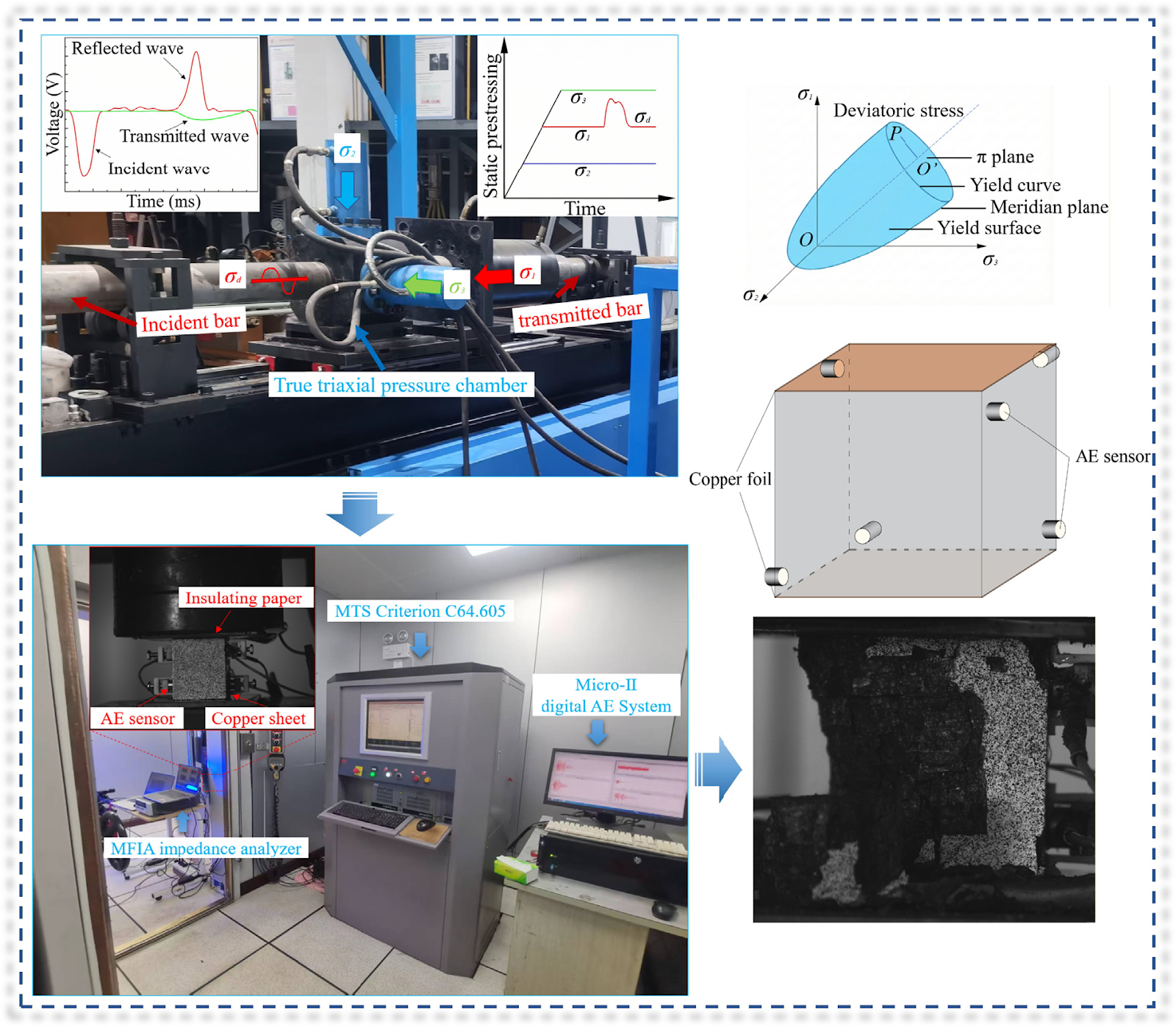
Investigation of coupled acoustic and electrical responses and early warning approaches during re-loading of damaged coal
Initial damage from engineering disturbances in deep coal mining degrades mechanical properties and heightens dynamic-hazard risks, challenging conventional monitoring. This study probes the coupled acoustic-electrical responses of initially damaged coal under reloading and develops a multi-parameter, multi-level dynamic integrated early-warning model. Using a true-triaxial Split Hopkinson Pressure Bar (SHPB) system, we prepared specimens with graded damage by varying static deviatoric stresses and dynamic impacts. Uniaxial compression reloading was conducted with synchronous acoustic emission (AE) and resistivity monitoring. Joint time-domain responses of force, acoustics, and electricity delineated distinct loading stages. Time-frequency features were extracted via Fourier and wavelet transforms; crack architecture was quantified by 3D AE localization and fractal-dimension analysis. Initial damage markedly reduced load-bearing capacity. Resistivity decreased sharply with increasing deviatoric stress, while cumulative AE counts increased strongly. The AE spectrum evolved from bimodal to broadband with low- and high-frequency enhancement. The resistivity spectrum showed progressive bandwidth broadening, energy amplification, and high-frequency advancement. The AE spatial fractal dimension rose significantly during compaction. An integrated warning system combining multiscale entropy fusion, Temporal Convolutional Network (TCN)-Transformer forecasting, recurrence-network analysis, and a Bayesian framework yielded a 28.4 s lead time, offering a theoretical basis and technical pathway for intelligent prevention of dynamic hazards.
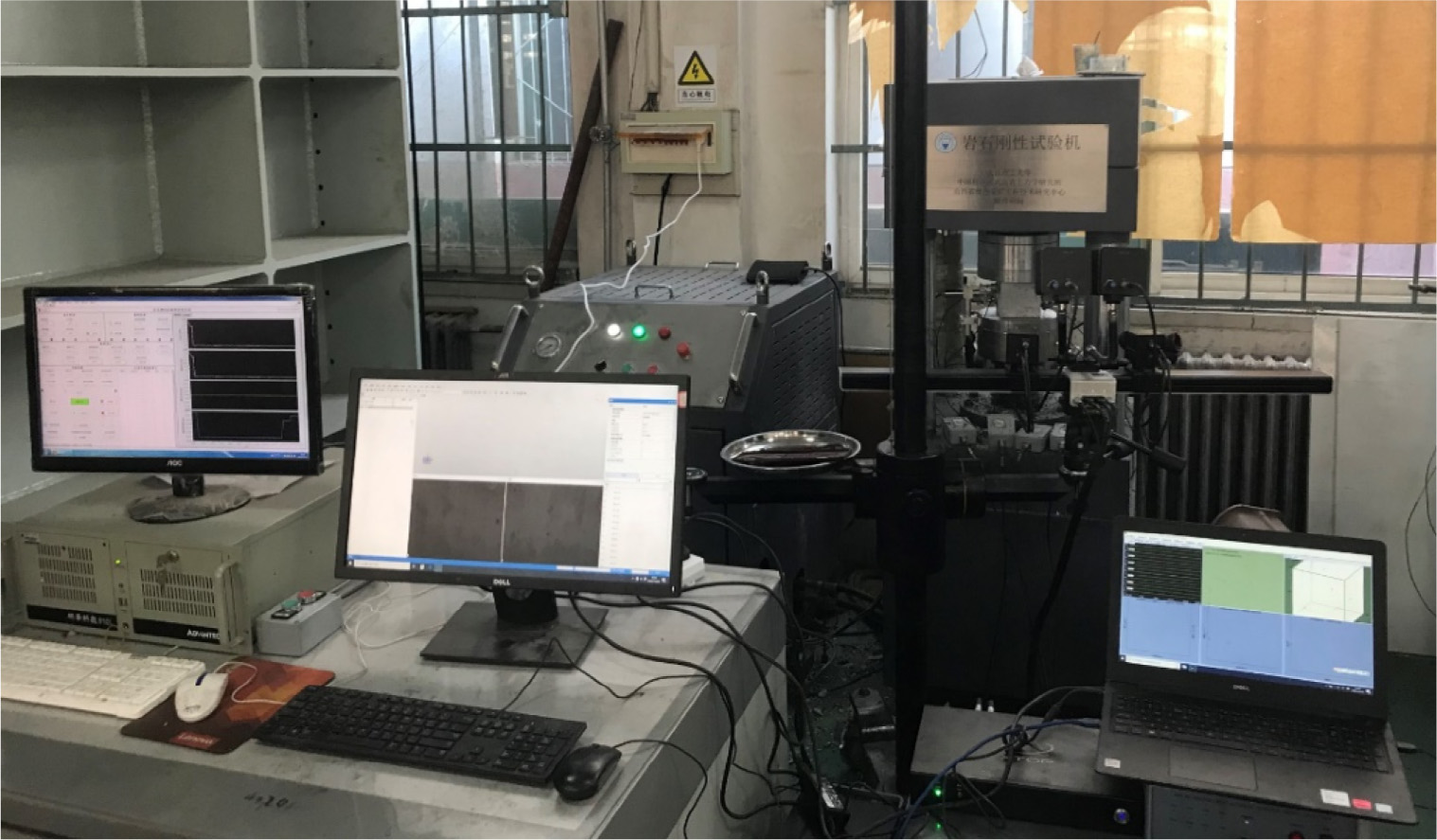
Influence of aggregate particle size on fracture behavior and energy evolution of cemented rockfill in the post-peak stage
Cemented rockfill (CRF) combines structural support with sustainable reuse of coal-derived solid waste. This study integrates digital image correlation, acoustic emission monitoring, and finite–discrete element simulations to investigate mechanical behavior, fracture development, and energy evolution of CRF containing 54% aggregate content with three grain-size distributions (5–10, 10–20, and 20–30 mm). Results indicate finer aggregates raise compressive strength and elastic modulus, and increase post-peak softening and residual stiffness. Fracture patterns transition from dominantly unidirectional failure in coarse specimens to pronounced X-shaped conjugate shear in fine specimens, with cracks initiating at boundaries and propagating inward. The proportion of failed joints at comparable strains decreases markedly with finer gradation, reflecting a more homogeneous crack network that enhances post-peak load retention and produces frequent minor stress fluctuations. Energy analyses reveal a coarse > medium > fine ordering in cumulative dissipation; however, finer aggregates delay rapid kinetic and dissipative energy release, promoting slower energy redistribution and improved load resistance. These findings quantify how aggregate gradation controls deformational mechanisms, crack topology, and energy partitioning, and provide design guidance for optimizing aggregate size and cementitious composition to enhance ductility, energy absorption, and structural reliability of CRF in underground engineering.