SinoTechIntel Academic Portal
🏛️ Indexed Academic JournalImpact Factor: 2.7 (Q2 - Springer)

ENGINEERING Information Technology & Electronic Engineering

2.7 (Q2 - Springer)

Total Research Papers: 153
Access: 100% Free Open Access
Browse by Publication Year & VolumeReset All Filters ✕

Published Research PapersFiltered: Year 2025 • Vol. 32 • Issue 6

Showing 14 of 153 peer-reviewed papers with full Graphical Abstracts.

Original ResearchVol. 32, Issue 6 • pp. 797-809DOI: 10.1631/ENG_ITEE_2025_0021Jun 24, 2025

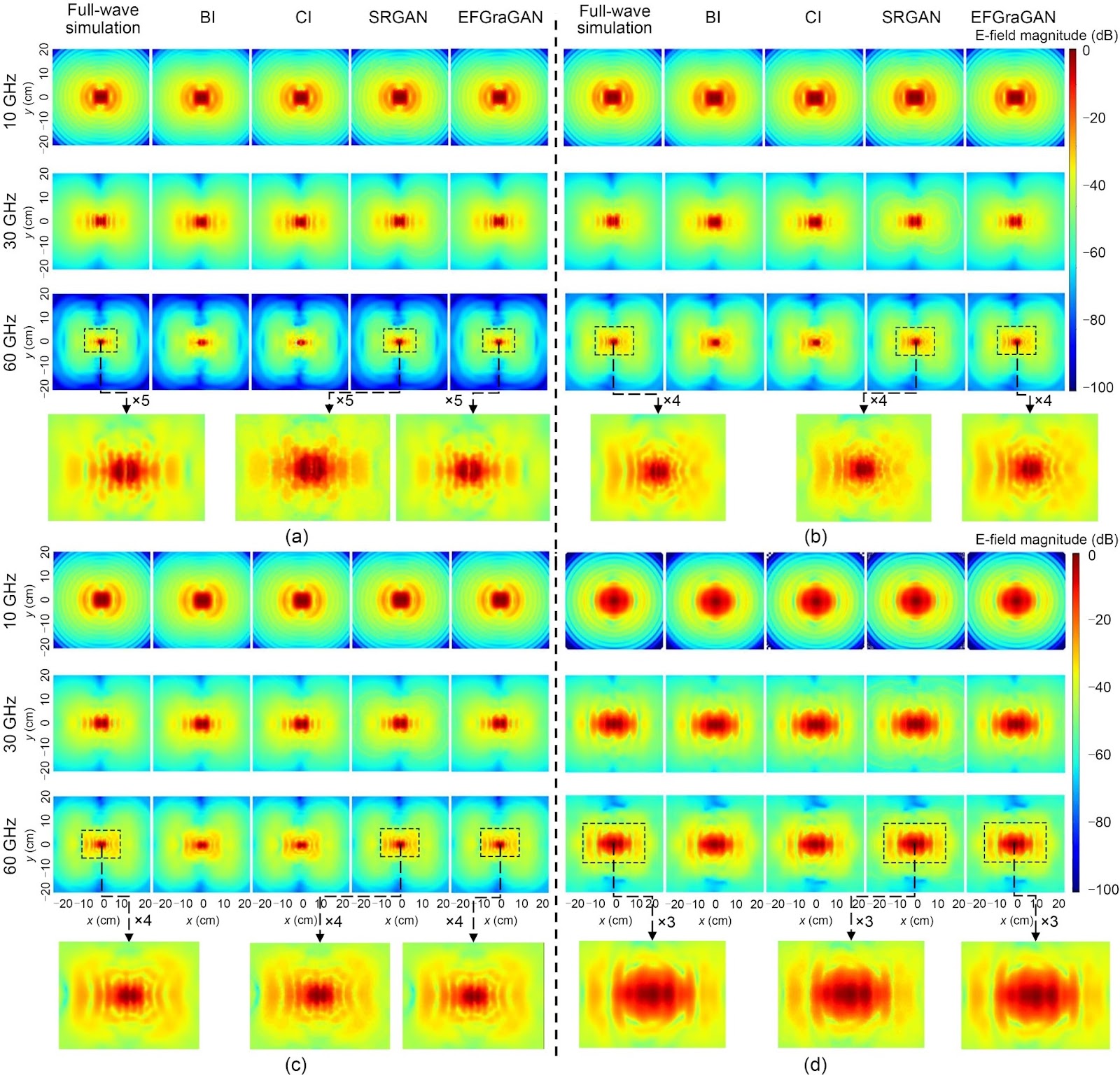
Superresolution reconstruction of E-field for assessing millimeter-wave exposure based on gradient-informed generative adversarial networks with plane-wave integral representation

Authors: Shiwei YI, Congsheng LI, Tongning WU

Accurate assessment of human exposure to millimeter-wave (mmWave) electric fields (E-fields) has recently become critical for public health and safety. High-spatial-resolution E-field distribution is required for assessment of mmWave electromagnetic exposure according to the International Electrotechnical Commission (IEC) and the Institute of Electrical and Electronics Engineers (IEEE) (IEC/IEEE 63195-2 standard). This study proposes a generative adversarial network (GAN) integrated with field g
Superresolution reconstruction of E-field for assessing millimeter-wave exposure based on gradient-informed generative adversarial networks with plane-wave integral representation
Graphical Abstract
Original ResearchVol. 32, Issue 6 • pp. 233-245DOI: 10.1631/FITEE_2500173Jun 23, 2025

Uplink puncturing for mixed URLLC and eMBB services in 5G-based IWNs: a model-aided DRL method

Authors: Jingfang DING, Meng ZHENG, Haibin YU, Yitian WANG, Chi XU

The coexistence of ultra-reliable low-latency communication (URLLC) and enhanced mobile broadband (eMBB) services in 5G-based industrial wireless networks (IWNs) poses significant resource slicing challenges due to their inherent performance requirement conflicts. To address this challenge, this paper proposes a puncturing method that uses a model-aided deep reinforcement learning (DRL) algorithm for URLLC over eMBB services in uplink 5G networks. First, a puncturing-based optimization problem i

Uplink puncturing for mixed URLLC and eMBB services in 5G-based IWNs: a model-aided DRL method
Graphical Abstract
Original ResearchVol. 32, Issue 6 • pp. 405-417DOI: 10.1631/FITEE_2400035Jun 21, 2025

Joint active user detection and channel estimation for massive machine-type communications: a difference-of-convex optimization perspective

Authors: Lijun Zhu, Kaihui Liu, Liangtian Wan, Lu Sun, Yifeng Xiong

Sparsity-based joint active user detection and channel estimation (JADCE) algorithms are crucial in grant-free massive machine-type communication (mMTC) systems. The conventional compressed sensing algorithms are tailored for noncoherent communication systems, where the correlation between any two measurements is as minimal as possible. However, existing sparsity-based JADCE approaches may not achieve optimal performance in strongly coherent systems, especially with a small number of pilot subca

Joint active user detection and channel estimation for massive machine-type communications: a difference-of-convex optimization perspective
Graphical Abstract
Original ResearchVol. 32, Issue 6 • pp. 813-825DOI: 10.1631/FITEE_2400944Jun 18, 2025

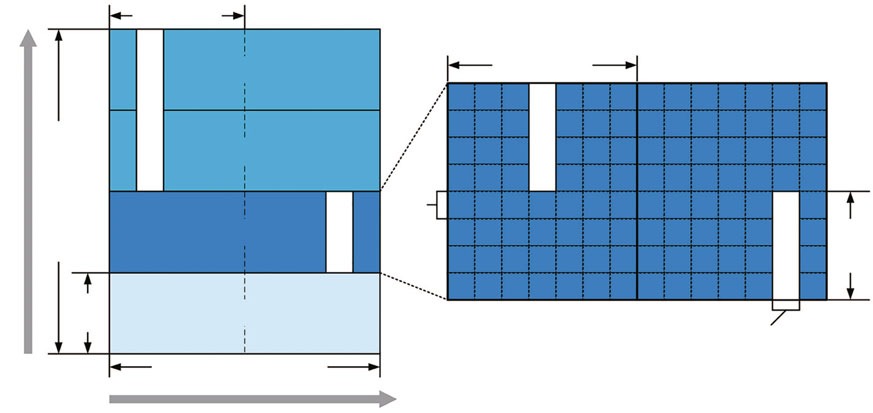
Miniaturized diplexer with wide-stopband based on half-mode substrate integrated waveguide

Authors: Ziyu Zhou, Gang Dong, Xinqing Lei, Zhangming Zhu

A miniaturized diplexer with a wide-stopband based on half-mode substrate integrated waveguide (HMSIW) is proposed. The diplexer combines a dual-mode resonator (DMR) with single-mode resonators (SMRs). The employment of HMSIW technology breaks through the limitations of SMRs on miniaturization, while effectively addressing the limitation on wide-stopband performance that is typically encountered with the TE202 mode in the SMRs. A second-order prototype, centered at 10.34 GHz and 13.90 GHz, has b

Miniaturized diplexer with wide-stopband based on half-mode substrate integrated waveguide
Graphical Abstract
Original ResearchVol. 32, Issue 6 • pp. 421-433DOI: 10.1631/FITEE_2500118Jun 15, 2025

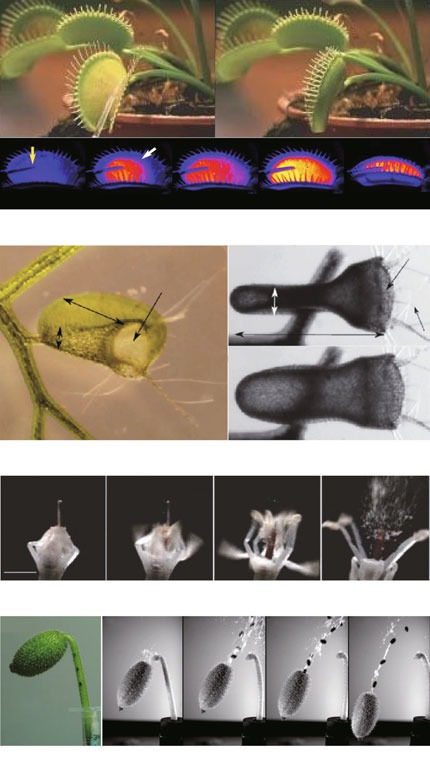
Design of plant-inspired shape-changing interfaces: a review

Authors: Junzhe JI, Chuang CHEN, Boyu FENG, Ye TAO, Guanyun WANG

Shape-changing interfaces use physical changes of shape as input or output to convey information, and interact with users. Plants are natural shape-changing interfaces, expert in adjusting their shape or modality to adapt to the environment. In this paper, plant-derived natural shape-changing phenomena are systematically analyzed. Then, several corresponding plant-inspired design strategies for shape-changing interfaces are summarized with recent advancements including material selections and sy

Design of plant-inspired shape-changing interfaces: a review
Graphical Abstract
Original ResearchVol. 32, Issue 6 • pp. 593-605DOI: 10.1631/ENG_ITEE_2025_0159Jun 13, 2025

Leveraging peripheral interactions to improve drivers’ situation awareness and NDRT efficiency

Authors: Hanfei ZHU, Wei XIANG, Yifu ZHANG, Ziyue LEI, Lingyun SUN

L3 automated driving has introduced a trend of drivers engaging in non-driving-related tasks (NDRTs), but it also poses safety challenges for reconstructing drivers’ situation awareness (SA). Two consecutive empirical studies in a driving simulator were conducted to investigate the effect of two peripheral interactions (airflow conveying the intended behaviors of vehicles and surround sound conveying the information of road users) on drivers’ SA performance, NDRT efficiency, workload, and user e

Leveraging peripheral interactions to improve drivers’ situation awareness and NDRT efficiency
Graphical Abstract
Original ResearchVol. 32, Issue 6 • pp. 829-841DOI: 10.1631/FITEE_2500119Jun 12, 2025

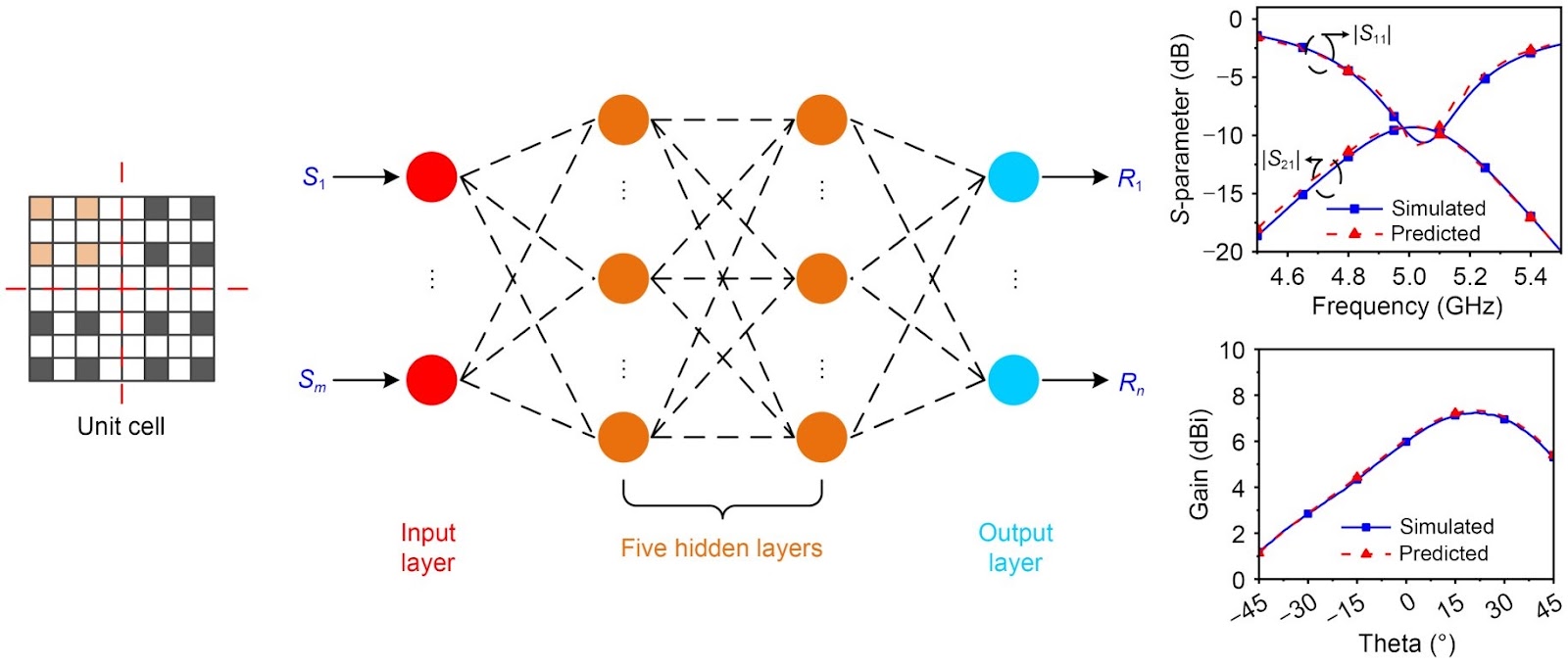
Port and radiation pattern decoupled metasurface-loaded patch antenna using deep-learning-assisted optimization for MIMO applications

Authors: Gu LIU, Jiajiang SHEN, Lei MA, Wei QIN, Wenwen YANG, Lei GUO, Jianxin CHEN

A metasurface-loaded 1×2 patch array antenna assisted by a deep-learning optimization method is proposed to realize port and radiation pattern decoupling simultaneously to enhance the isolation among elements in multi-input multi-output (MIMO) systems. The deep-learning-assisted optimization method uses an artificial neural network (ANN) and a particle swarm optimization (PSO) algorithm to seek the optimal structure of the antenna to achieve port decoupling with undistorted radiation patterns. T

Port and radiation pattern decoupled metasurface-loaded patch antenna using deep-learning-assisted optimization for MIMO applications
Graphical Abstract
Original ResearchVol. 32, Issue 6 • pp. 201-213DOI: 10.1631/FITEE_2300816Jun 10, 2025

DRMSpell: dynamically reweighting multimodality for Chinese spelling correction

Authors: Yinghao LI, Heyan HUANG, Baojun WANG, Yang GAO

Chinese spelling correction (CSC) is a task that aims to detect and correct the spelling errors that may occur in Chinese texts. However, the Chinese language exhibits a high degree of complexity, characterized by the presence of multiple phonetic representations known as pinyin, which possess distinct tonal variations that can correspond to various characters. Given the complexity inherent in the Chinese language, the CSC task becomes imperative for ensuring the accuracy and clarity of written

DRMSpell: dynamically reweighting multimodality for Chinese spelling correction
Graphical Abstract
Original ResearchVol. 32, Issue 6 • pp. 437-449DOI: 10.1631/FITEE_2500007Jun 9, 2025

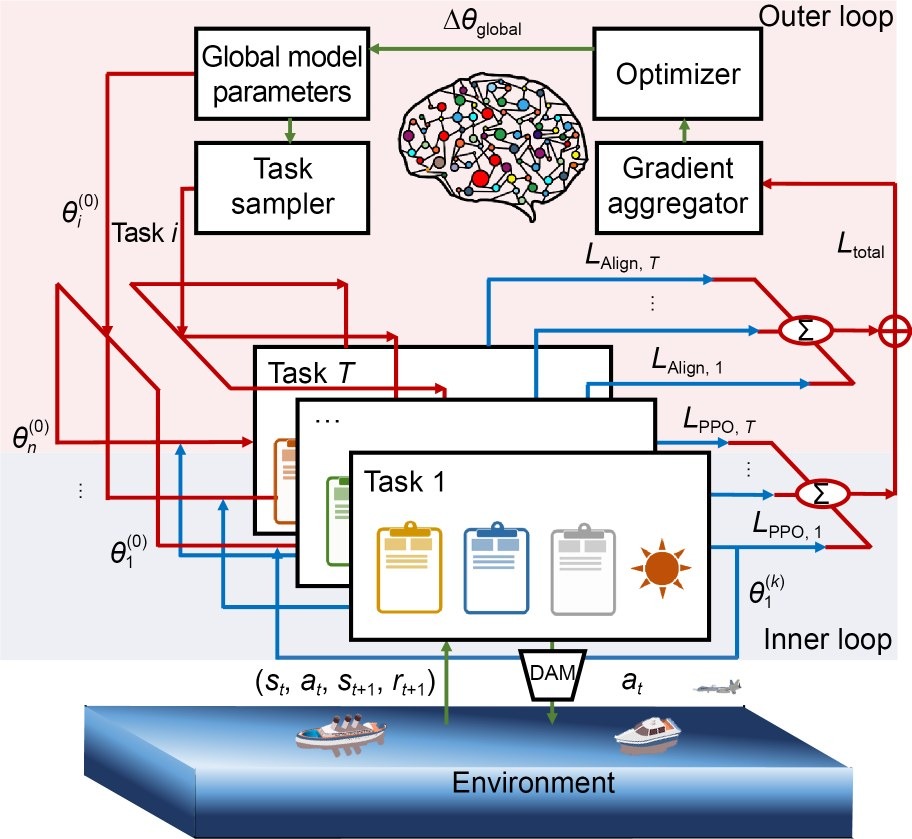
Dynamic joint resource allocation in maritime wireless communication networks: a meta-reinforcement learning approach based on knowledge embedding

Authors: Zhongyang MAO, Zhilin ZHANG, Faping LU, Xiguo LIU, Zhichao XU, Yaozong PAN, Jiafang KANG, Yang YOU

As human exploration of the ocean expands, the demand for continuous, high-quality, and ubiquitous maritime communication is steadily increasing. However, the dynamic nature of the marine environment and resource constraints present significant challenges for traditional heuristic resource allocation methods, complicating the balance between high-quality communication and limited network resources. This results in suboptimal system throughput and an over-reliance on specific problem structures.

Dynamic joint resource allocation in maritime wireless communication networks: a meta-reinforcement learning approach based on knowledge embedding
Graphical Abstract
Original ResearchVol. 32, Issue 6 • pp. 609-621DOI: 10.1631/FITEE_2300873Jun 7, 2025

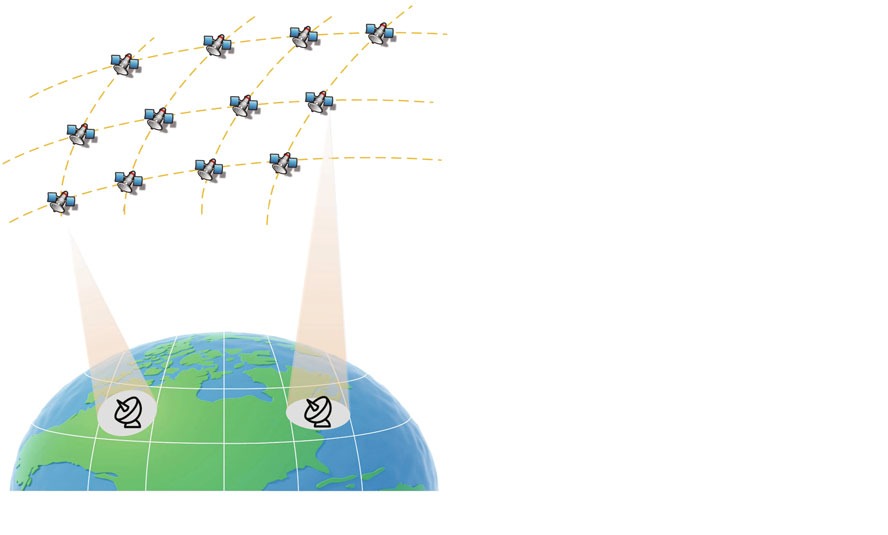
Spatio-temporal correlation-based incomplete time-series traffic prediction for LEO satellite networks

Authors: Liang Peng, Jie Yan, Peng Wei, Xiaoxiang Wang

Accurate short-term traffic prediction is essential for improving the efficiency of data transmission in low Earth orbit (LEO) satellite networks. However, traffic values may be missing due to collector failures, transmission errors, and memory failures in complex space environments. Incomplete traffic time series prevent the efficient utilization of data, which can significantly reduce the traffic prediction accuracy. To overcome this problem, we propose a novel spatio-temporal correlation-base

Spatio-temporal correlation-based incomplete time-series traffic prediction for LEO satellite networks
Graphical Abstract
Original ResearchVol. 32, Issue 6 • pp. 217-229DOI: 10.1631/FITEE_2400069Jun 4, 2025

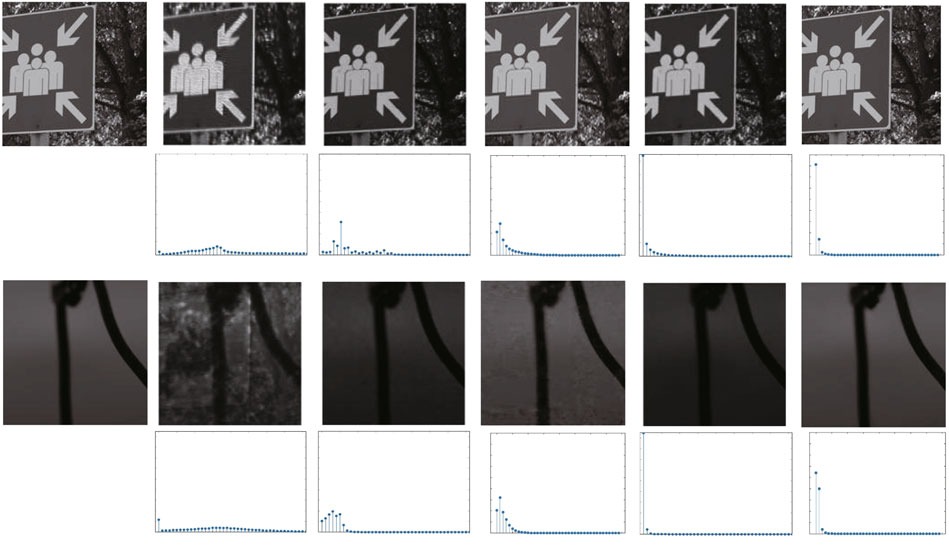
SRIS-Net: a robust image steganography algorithm based on feature score maps

Authors: Ai XIAO, Zhi LI, Guomei WANG, Long ZHENG, Haoyuan SUN

Image steganography algorithms based on deep learning are often trained using either spatial- or frequency-domain features. It is difficult for features from a single domain to comprehensively express the content of an entire image, which usually leads to poor performance because steganography is commonly multi-task. To solve this problem, this paper proposes a robust image steganography algorithm based on feature score maps, called the secure and robust image steganography network (SRIS-Net). F

SRIS-Net: a robust image steganography algorithm based on feature score maps
Graphical Abstract
Original ResearchVol. 32, Issue 6 • pp. 453-465DOI: 10.1631/FITEE_2400932Jun 3, 2025

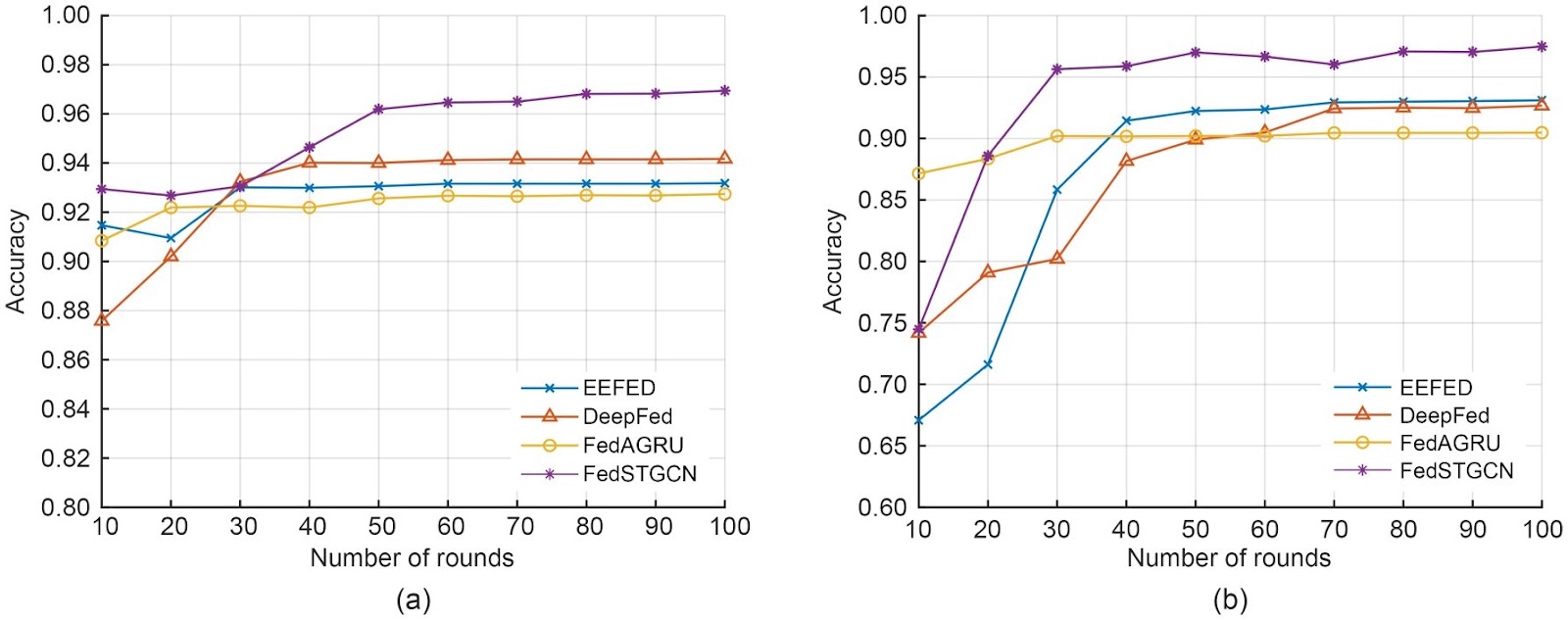
FedSTGCN: a novel federated spatiotemporal graph learning-based network intrusion detection method for the Internet of Things

Authors: Yalu WANG, Jie LI, Zhijie HAN, Pu CHENG, Roshan KUMAR

The rapid growth and increasing complexity of Internet of Things (IoT) devices have made network intrusion detection a critical challenge, especially in edge computing environments where data privacy is a primary concern. Machine learning-based intrusion detection techniques enhance IoT network security but often require centralized network data, posing significant risks to data privacy and security. Although federated learning (FL)-based network intrusion detection methods have emerged in recen

FedSTGCN: a novel federated spatiotemporal graph learning-based network intrusion detection method for the Internet of Things
Graphical Abstract
Original ResearchVol. 32, Issue 6 • pp. 389-401DOI: 10.1631/ENG_ITEE_2025_0024Jun 2, 2025

Energy dynamics and circuit implementation for a neuron with a memcapacitive membrane

Authors: Binchi WANG, Yitong GUO, Guodong REN, Jun MA

The output voltages for the capacitive elements of a neural circuit model can be mapped into dimensionless capacitive variables, which present firing patterns similar to the membrane potentials detected in biological neurons. The inclusion of a memcapacitor also enables consideration of membrane deformation effects, enhancing the model’s capacity to simulate neuronal behavior across varying physiological and environmental conditions. In this study, a capacitor and a memcapacitor are connected th

Energy dynamics and circuit implementation for a neuron with a memcapacitive membrane
Graphical Abstract
Original ResearchVol. 32, Issue 6 • pp. 625-637DOI: 10.1631/FITEE_2400236Jun 1, 2025

Effect of terminal boundary protection on the spread of computer viruses: modeling and simulation

Authors: Kai Gao, Lixin Zhang, Yabing Yao, Yang Yang, Fuzhong Nian

The diversity and complexity of the user population on the campus network increase the risk of computer virus infection during terminal information interactions. Therefore, it is crucial to explore how computer viruses propagate between terminals in such a network. In this study, we establish a novel computer virus spreading model based on the characteristics of the basic network structure and a classical epidemic-spreading dynamics model, adapted to real-world university scenarios. The proposed

Effect of terminal boundary protection on the spread of computer viruses: modeling and simulation
Graphical Abstract