SinoTechIntel Academic Portal
🏛️ Indexed Academic Journal

Chinese Journal of Mechanical Engineering

Access authentic peer-reviewed engineering methodologies, experimental datasets, and scientific literature published in this journal on SinoTechIntel.

Total Research Papers: 101
Access: 100% Free Open Access
Browse by Publication Year & VolumeReset All Filters ✕

Published Research PapersFiltered: Year 2025 • 38 • 1

Showing 53 of 101 peer-reviewed papers with full Graphical Abstracts.

Original ResearchVol. 38, Issue 1 • pp. 186DOI: 10.1186/s10033-025-01328-1Jan 15, 2025

Research on the Coupling Force between the Grinding Wheel and Rail in Grinding Train System

Authors: Tao Liu, Dabin Cui, Xinyi Li, Zhanghong Liu, Li Li

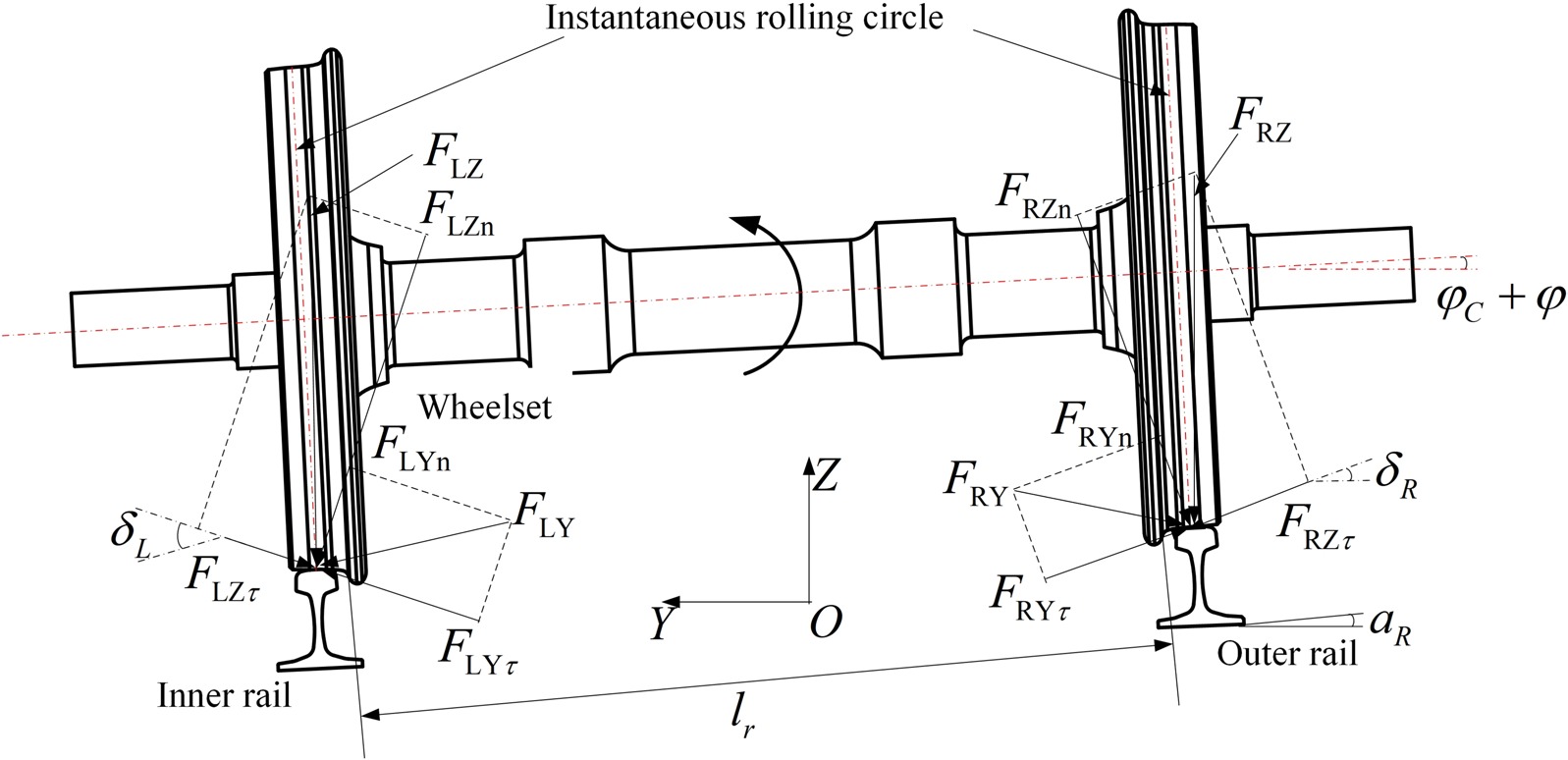
During the grinding train operation process, the grinding force between the grinding wheel and the rail is critical in ensuring the grinding quality and efficiency. The coupling vibration among the frame, the grinding wheels, and the wheelsets will seriously affect the stability of the grinding force. In this paper, the coupled mechanical model of the grinding wheel/rail is established based on the contact mechanics theory, which is embedded as a sub-model into the dynamic model of the multi-rigid buggy. The interaction among the frame, the grinding wheels and the wheelsets is analysed by setting the convex irregularity on the rail. The grinding effect is evaluated in combination with the subway’s long wave corrugation grinding conditions. The results show that when the grinding buggy passes the convex irregularity, the vibration excited by the wheelset system has a significant impact on the dynamic behavior of the grinding wheels. The vibration of the grinding wheel is mainly transmitted between the grinding wheel and the frame, less affecting the wheelset. For the long wave corrugation of the subway, the grinding effect of the grinding wheel has a certain correlation with the phase angle of the wheelset through the corrugation. The research results provide an important reference for the setting of the grinding pattern.
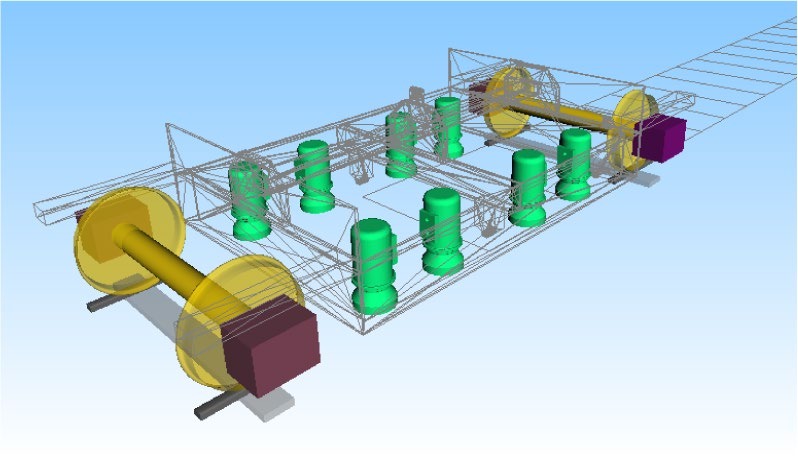
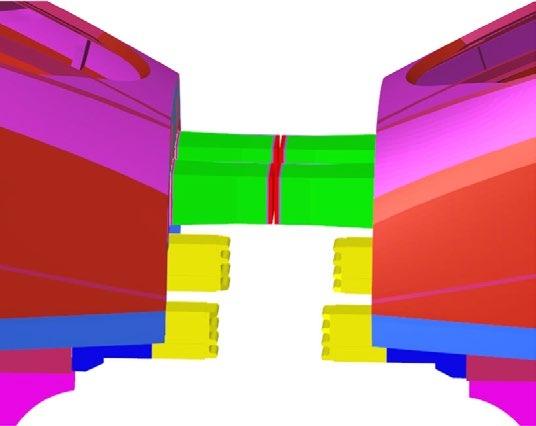
Research on the Coupling Force between the Grinding Wheel and Rail in Grinding Train System
Graphical Abstract
Original ResearchVol. 38, Issue 1 • pp. 192DOI: 10.1186/s10033-025-01353-0Jan 15, 2025

A Multi-Layer Progressive Analysis Method for Collision Energy Flow in Rail Trains

Authors: Jingke Zhang, Tao Zhu, Xiaorui Wang, Bing Yang, Shoune Xiao, Guangwu Yang, Yuru Li

The huge impact kinetic energy cannot be quickly dissipated by the energy-absorbing structure and transferred to the other vehicle through the car body structure, which will cause structural damage and threaten the lives of the occupants. Therefore, it is necessary to understand the laws of energy conversion, dissipation and transfer during train collisions. This study proposes a multi-layer progressive analysis method of energy flow during train collisions, considering the characteristics of the train. In this method, the train collision system is divided into conversion, dissipation, and transfer layers from the perspective of the train, collision interface, and car body structure to analyze the energy conversion, dissipation and transfer characteristics. Taking the collision process of a rail train as an example, a train collision energy transfer path analysis model was established based on power flow theory. The results show that when the maximum mean acceleration of the vehicle meets the standard requirements, the jerk may exceed the allowable limit of the human body, and there is a risk of injury to the occupants of a secondary collision. The decay rate of the collision energy along the direction of train operation reaches 79%. As the collision progresses, the collision energy gradually converges in the structure with holes, and the structure deforms when the gathered energy is greater than the maximum energy the structure can withstand. The proposed method helps to understand the train collision energy flow law and provides theoretical support for the train crashworthiness design in the future.
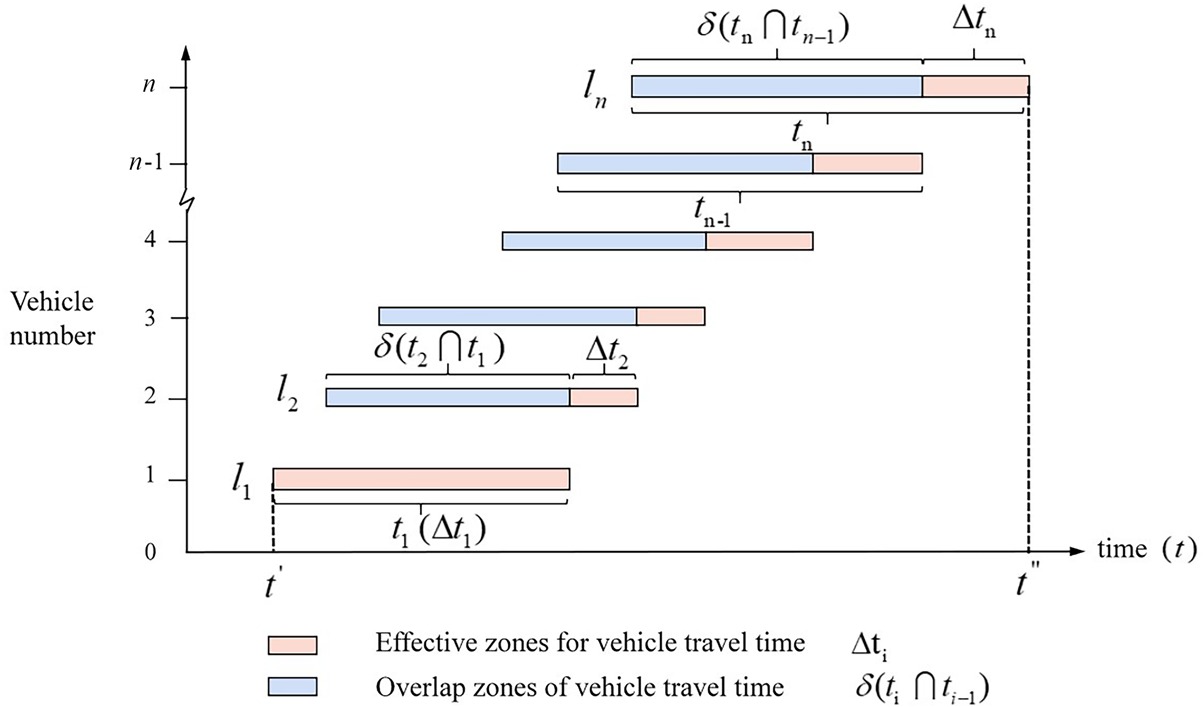
A Multi-Layer Progressive Analysis Method for Collision Energy Flow in Rail Trains
Graphical Abstract
Original ResearchVol. 38, Issue 1 • pp. 108DOI: 10.1186/s10033-025-01257-zJan 15, 2025

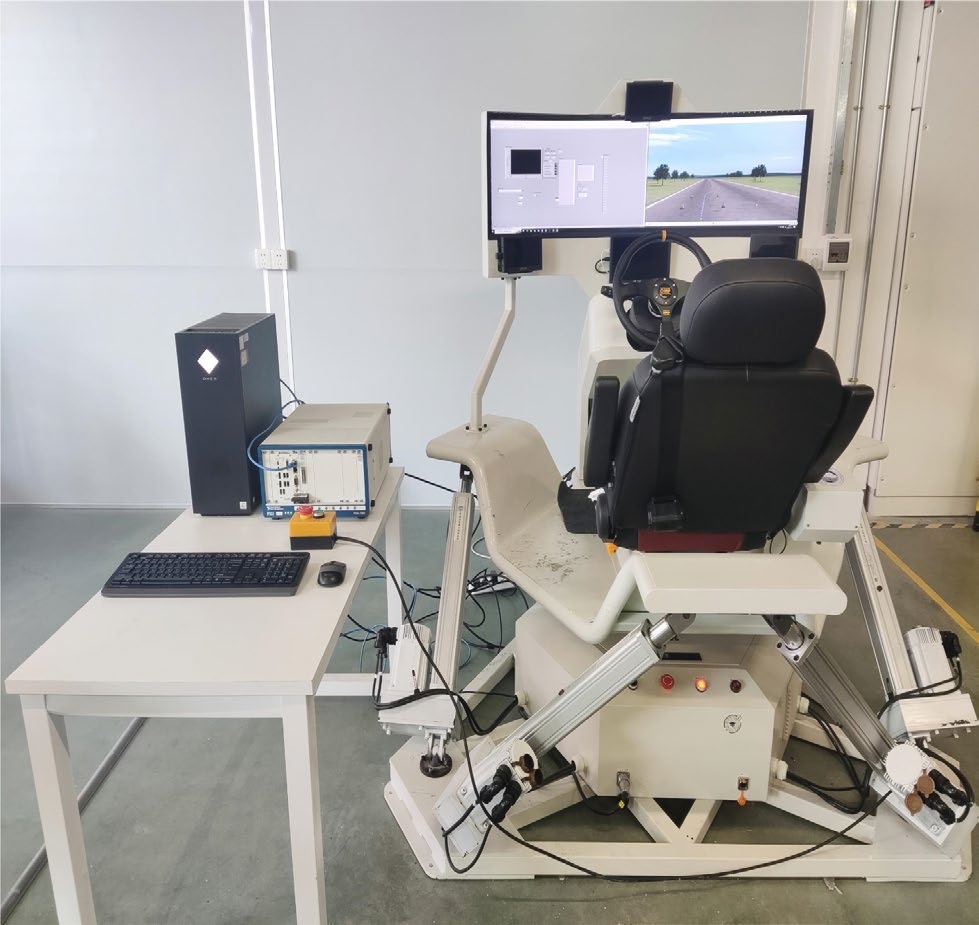
Observer-Based Robust Explicit Model Predictive Control for Path Following of Autonomous Electric Vehicles with Communication Delay

Authors: Jing Zhao, Renbin Li, Mingze Lv, Wenfeng Li, Zhengchao Xie, Pak Kin Wong

The existing research on the path following of the autonomous electric vehicle (AEV) mainly focuses on the path planning and the kinematic control. However, the dynamic control with the state observation and the communication delay is usually ignored, so the path following performance of the AEV cannot be ensured. This article studies the observer-based path following control strategy for the AEV with the communication delay via a robust explicit model predictive control approach. Firstly, a projected interval unscented Kalman filter is proposed to observe the vehicle sideslip angle and yaw rate. The observer considers the state constraints during the observation process, and the robustness of the observer is also considered. Secondly, an explicit model predictive control is designed to reduce the computational complexity. Thirdly, considering the efficiency of the information transmission, the influence of the communication delay is considered when designing the observer-based path following control strategy. Finally, the numerical simulation and the hardware-in-the-loop test are conducted to examine the effectiveness and practicability of the proposed strategy.

Observer-Based Robust Explicit Model Predictive Control for Path Following of Autonomous Electric Vehicles with Communication Delay
Graphical Abstract
Original ResearchVol. 38, Issue 1 • pp. 143DOI: 10.1186/s10033-025-01316-5Jan 15, 2025

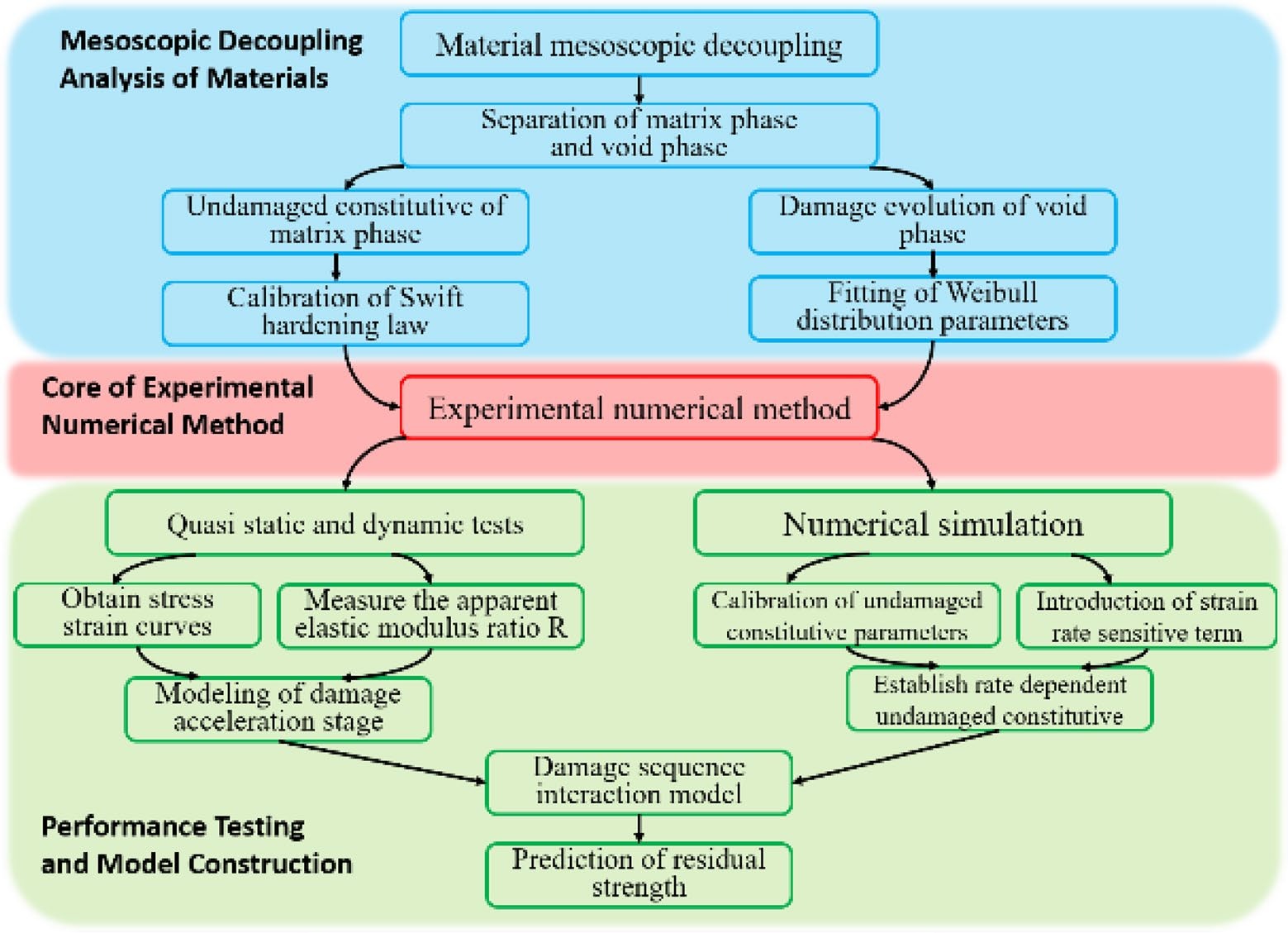
Influence of Fatigue Damage on Collision Response of Metro Vehicles: Simulation and Experimental Study Based on Damage Sequence Interaction Model

Authors: Wenyue Yuan, Tao Zhu, Bing Yang, Haoxu Ding, Xiaorui Wang, Quanwei Che, Jingke Zhang, Shoune Xiao, Cheng Lei

This study decouples the material microstructure into matrix and void phases. The undamaged constitutive is derived from the matrix phase, while the void phase contributes to damage evolution. A constitutive model is established by coupling the two. According to the void-phase evolution during damage, a damage sequence interaction model is proposed. Tests on new vehicles and vehicles in service materials yield stress-strain curves of materials without and with fatigue damage and measure the apparent elastic modulus. The damage sequence interaction model accurately predicts the residual mechanical properties of undamaged materials. A trolley collision test validates the constitutive model. Collision simulations at 25, 36, and 48 km/h reveal that compared with undamaged models, the maximum vertical lift heights of moving vehicles with fatigue damage are 4.54%, 3.74%, and 9.17% lower, respectively, and the maximum longitudinal compressions of stationary vehicles are 4.76%, 14.53%, and 33.15% higher respectively. This research emphasizes the importance of considering fatigue damage in vehicle design and maintenance. The damage sequence interaction model has high engineering application value, applicable to vehicle safety checks and design, and provides a reference for improving relevant standards.

Influence of Fatigue Damage on Collision Response of Metro Vehicles: Simulation and Experimental Study Based on Damage Sequence Interaction Model
Graphical Abstract
Original ResearchVol. 38, Issue 1 • pp. 174DOI: 10.1186/s10033-025-01336-1Jan 15, 2025

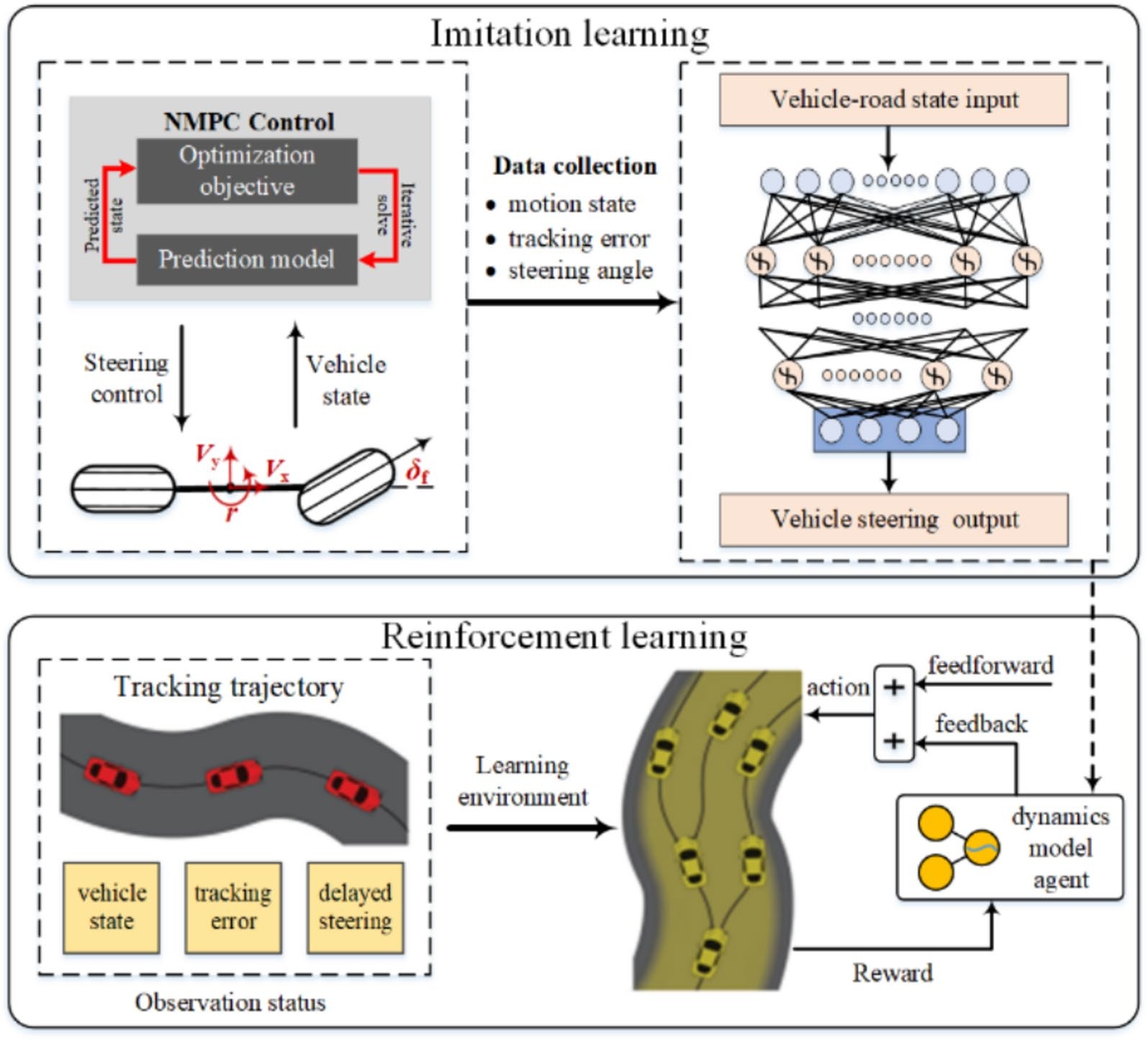
A DDPG-based Path Following Control Strategy for Autonomous Vehicles by Integrated Imitation Learning and Feedforward Exploration

Authors: Qianjie Liu, Peixiang Xiong, Qingyuan Zhu, Wei Xiao, Kejie Wang, Guoliang Hu, Gang Li

Autonomous driving technology is constantly developing to a higher level of complex scenes, and there is a growing demand for the utilization of end-to-end data-driven control. However, the end-to-end path tracking process often encounters challenges in learning efficiency and generalization. To address this issue, this paper designs a deep deterministic policy gradient (DDPG)-based reinforcement learning strategy that integrates imitation learning and feedforward exploration in the path following process. In imitation learning, the path tracking control data generated by the model predictive control (MPC) method is used to train an end-to-end steering control model of a deep neural network. Another feedforward exploration behavior is predicted by road curvature and vehicle speed, and adds it and imitation learning to the DDPG reinforcement learning to obtain decision-making experience and action prediction behavior of the path tracking process. In the reinforcement learning process, imitation learning is used to update the pre-training parameters of the actor network, and a feedforward steering technique with random noise is adopted for strategy exploration. In the reward function, a hierarchical progressive reward form and a constrained objective reward function referring to MPC are designed, and the actor-critic network architecture is determined. Finally, the path tracking performance of the designed method is verified by comparing various training results, simulations, and HIL tests. The results show that the designed method can effectively utilize pre-training and feedforward prior experience to obtain optimal path tracking performance of an autonomous vehicle, and has better generalization ability than other methods. This study provides an efficient control scheme for improving the end-to-end control performance of autonomous vehicles.

A DDPG-based Path Following Control Strategy for Autonomous Vehicles by Integrated Imitation Learning and Feedforward Exploration
Graphical Abstract
Original ResearchVol. 38, Issue 1 • pp. 162DOI: 10.1186/s10033-025-01339-yJan 15, 2025

Advanced Modeling and Stability Analysis of Electro-Hydraulic Control Modules for Intelligent Chassis Systems

Authors: Fei Meng, Yanfei Ren, Junqiang Xi

This research presents an advanced study on the modeling and stability analysis of electro-hydraulic control modules used in intelligent chassis systems. Firstly, a comprehensive nonlinear mathematical model of the electro-hydraulic power-shift system is developed, incorporating pipeline characteristics through impedance analysis and examining coupling effects between the pilot solenoid valve, main valve, and pipeline. Then, the model's accuracy is validated through experimental testing, demonstrating high precision and minimal model errors. A comparative analysis between simulation data (both with and without pipeline characteristics) and experimental results reveals that the model considering pipeline parameters aligns more closely with experimental data, highlighting its superior accuracy. The research further explores the influence of key factors on system stability, including damping coefficient, feedback cavity orifice diameter, spring stiffness, pipeline length, and pipeline diameter. Significant findings include the critical impact of damping coefficient, orifice diameter, and pipeline length on stability, while spring stiffness has a minimal effect. These findings provide valuable insights for optimizing electro-hydraulic control modules in intelligent chassis systems, with practical implications for automotive and construction machinery applications.

Advanced Modeling and Stability Analysis of Electro-Hydraulic Control Modules for Intelligent Chassis Systems
Graphical Abstract
Original ResearchVol. 38, Issue 1 • pp. 88DOI: 10.1186/s10033-025-01237-3Jan 15, 2025

SOTIF-Based Analysis and Design of Control Strategies for Controllable Suspension Systems of Automobiles

Authors: Xianxu Bai, Kehe Nie, Haowei Sun, Anding Zhu, Haoxuan Dong, Di Wu

Electronic control suspension (ECS) systems are of significance to ride comfort and handling stability of ground vehicles. However, ECS systems may pose unreasonable safety risks due to performance inadequacies or improper use by drivers, which are referred to as safety of the intended functionality (SOTIF) issues. Aiming to address the inadequate performance of the ECS system, this study proposes a model predictive control (MPC) method, with a particular focus on ensuring SOTIF. First, Systems theoretic process analysis (STPA) is utilized to assess the SOTIF of the ECS system and the ECS system control architecture is built. Then, Models including the input model, lateral and vertical coupled dynamics model, and nonlinear actuator model are established. In addition, an MPC strategy with explicit dynamic constraints is designed, incorporating the dynamic mechanical performance boundaries of ECS actuators into the constraints of the controller. Subsequently, a hardware-in-the-loop testing platform is constructed for the ECS system to conduct simulation experiments under various operating conditions. Results demonstrate that the designed control strategy effectively mitigates performance inadequacies of the suspension system, significantly enhancing its overall functionality and safety.

SOTIF-Based Analysis and Design of Control Strategies for Controllable Suspension Systems of Automobiles
Graphical Abstract
Original ResearchVol. 38, Issue 1 • pp. 27DOI: 10.1186/s10033-024-01170-xJan 15, 2025

Mechanical Response and Superelastic Properties of Cu-11.85Al-3.2Mn-0.1Ti TPMS Structures Printed by Laser Powder Bed Fusion

Authors: Mingzhu Dang, Honghao Xiang, Jingjing Li, Chunsheng Ye, Chao Cai, Qingsong Wei

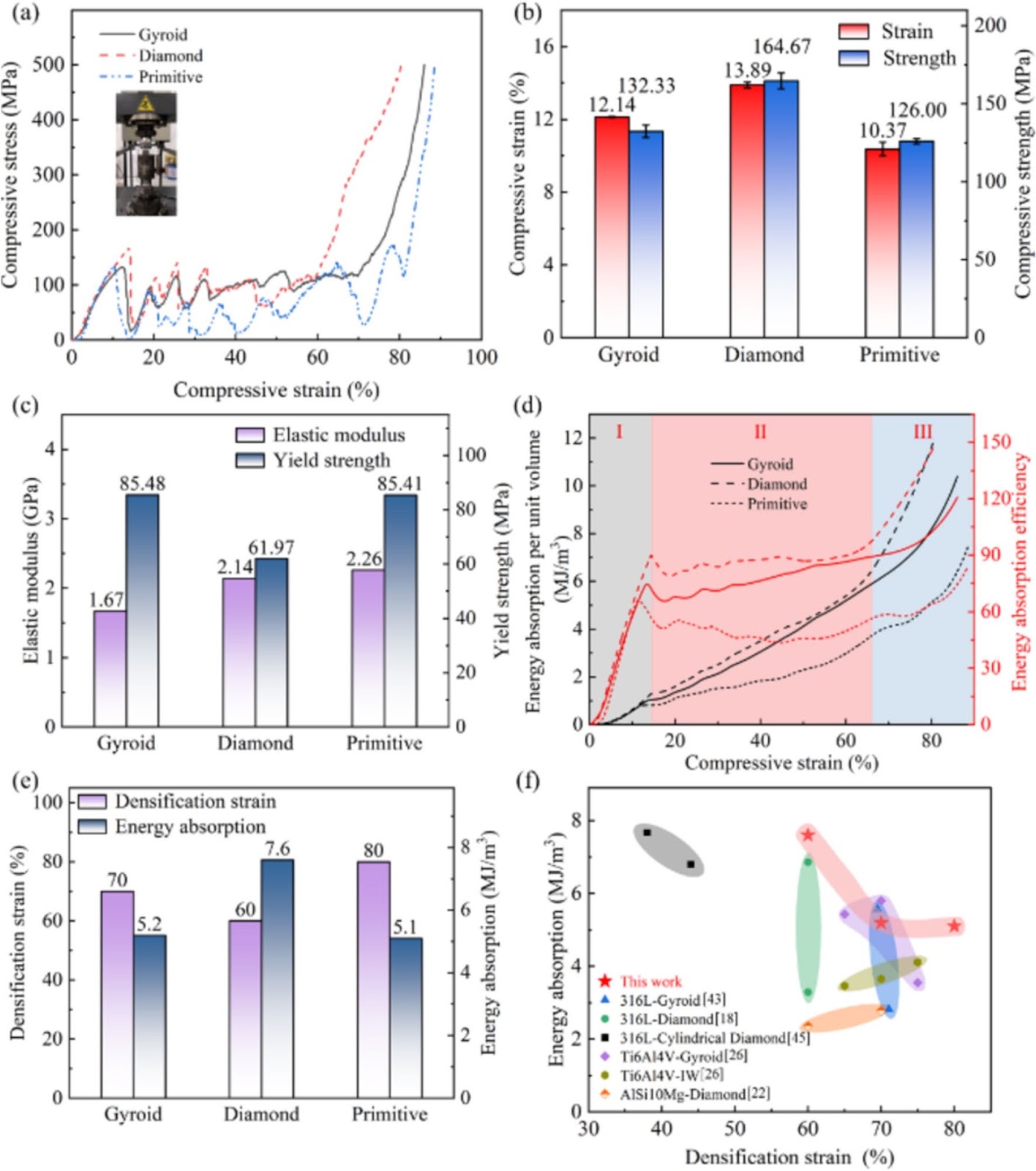
Triply periodic minimal surfaces (TPMS) are structures with smooth surfaces and excellent energy absorption properties. Combining new functional materials, such as shape memory alloys, with TPMS structures provides a novel and promising research field. In this study, three TPMS structures (Gyroid, Diamond, and Primitive) of Cu-11.85Al-3.2Mn-0.1Ti alloy were printed by laser powder bed fusion, which is favorable for the fabrication of complex structures. The manufacturing fidelity, mechanical response, and superelastic properties of the three structures were investigated. Stress distributions in the three structures during compression were analyzed by finite element (FE) simulation. The three structures were equipped with high-quality, glossy surfaces and uniform pores. However, due to powder adhesion and forming steps, there were volumetric errors and dimensional deviations between the samples and the CAD models. The errors were within 1.6% for the Gyroid and Diamond structures. The dimensional deviations at the nodes in the three structures were less than 0.09 mm. The microstructures of all structures were β1´ martensite, consistent with the cubic sample. Experimental results of compression showed that the structures underwent a layer-by-layer compression failure mode, and the Primitive structures exhibited a more pronounced oscillatory process. The Diamond structures showed the highest first fracture stress and strain of 164.67 MPa and 13.89%, respectively. It also possessed the lowest yield strength (61.97 MPa) and the best energy absorption properties (7.6 MJ/m3). Through the deformation analysis, the Gyroid and Diamond structures were found to fracture at a 45° direction, while the Primitive structures fractured horizontally. These findings were consistent with the results obtained from the FE simulation, which showed equivalent stress distributions. After applying various pre-strains, the Diamond structures displayed the highest superelastic strain of up to 3.53%. The superelastic recovery of all samples ranged from 63.5% to 71.5%.

Mechanical Response and Superelastic Properties of Cu-11.85Al-3.2Mn-0.1Ti TPMS Structures Printed by Laser Powder Bed Fusion
Graphical Abstract
Original ResearchVol. 38, Issue 1 • pp. 15DOI: 10.1186/s10033-024-01171-wJan 15, 2025

Cutting Force and State Identification in High-Speed Milling: a Semi-Analytical Multi-Dimensional Approach

Authors: Yu Zhang, Xianyin Duan, Kunpeng Zhu

High-speed milling (HSM) is advantageous for machining high-quality complex-structure surface components with various materials. Identifying and estimating cutting force signals for characterizing HSM is of high significance. However, considering the tool runout and size effects, many proposed models focus on the material and mechanical characteristics. This study presents a novel approach for predicting micromilling cutting forces using a semi-analytical multidimensional model that integrates experimental empirical data and a mechanical theoretical force model. A novel analytical optimization approach is provided to identify the cutting forces, classify the cutting states, and determine the tool runout using an adaptive algorithm that simplifies modeling and calculation. The instantaneous un-deformed chip thickness (IUCT) is determined from the trochoidal trajectories of each tool flute and optimized using the bisection method. Herein, the computational efficiency is improved, and the errors are clarified. The tool runout parameters are identified from the processed displacement signals and determined from the pre-processed vibration signals using an adaptive signal processing method. It is reliable and stable for determining tool runout and is an effective foundation for the force model. This approach is verified using HSM tests. Herein, the determination coefficients are stable above 0.9. It is convenient and efficient for achieving the key intermediate parameters (IUCT and tool runout), which can be generalized to various machining conditions and operations.

Cutting Force and State Identification in High-Speed Milling: a Semi-Analytical Multi-Dimensional Approach
Graphical Abstract
Original ResearchVol. 38, Issue 1 • pp. 36DOI: 10.1186/s10033-025-01197-8Jan 15, 2025

Lubricant Transport Mechanism and Dynamics Model for Nepenthes-shaped Biomimetic Microtexture

Authors: Xiaoming Wang, Min Yang, Teng Gao, Lan Dong, Yusuf Suleiman Dambatta, Xin Liu, Yuying Yang, Qinglong An, Yanbin Zhang, Changhe Li

During the metal cutting process, especially in continuous contact conditions like turning, the challenge of lubricants failing to effectively reach the cutting point remains unresolved. Micro-textured cutting tools offer a potential solution for tool-chip contact challenges. Inspired by the evolutionary achievements of the biosphere, micro-textures are expected to overcome lubrication limitations in cutting zones. Drawing on the anti-gravity water transport seen at the mouth edge of the Nepenthes plant, an innovative microchannel with Nepenthes-shaped contours was designed on the rake face to enable controlled lubricant transport. However, the dynamics of lubricant delivery on textured surfaces are not fully understood. This study first analyzed the microstructure and water transport mechanism of Nepenthes to reconstruct a micro-textured surface for controlled lubricant transport. A dynamic model was then developed to describe lubricant transport within open microchannels, with mathematical simulations predicting transport speed and flow distance. To validate this model, diffusion experiments of alumina soybean oil nanolubricant on polycrystalline diamond (PCD) cutting tool surfaces were conducted, showing an average prediction deviation of 5.01%. Compared with the classical Lucas-Washburn model, the new model improved prediction accuracy by 4.72%. Additionally, comparisons were made to examine droplet spreading and non-uniform diffusion on textured surfaces, revealing that the T2 surface exhibited the strongest unidirectional diffusion characteristics. The contact angle ratio, droplet unidirectional spreading ratio, and droplet spreading aspect ratio were 0.48, 1.75, and 3.99, respectively. Finally, the anti-wear, friction-reducing, and efficiency-enhancing mechanisms of micro-textured surfaces in minimum quantity lubrication turning were analyzed. This approach may support continuous cutting of difficult-to-machine materials.

Lubricant Transport Mechanism and Dynamics Model for Nepenthes-shaped Biomimetic Microtexture
Graphical Abstract
Original ResearchVol. 38, Issue 1 • pp. 148DOI: 10.1186/s10033-025-01241-7Jan 15, 2025

An Optimization Method for Five-axis Plunge Milling Tool Path Considering SIRD

Authors: Xueqin Wang, Zhaocheng Wei, Dong Wang, Debao Zhang, Minjie Wang

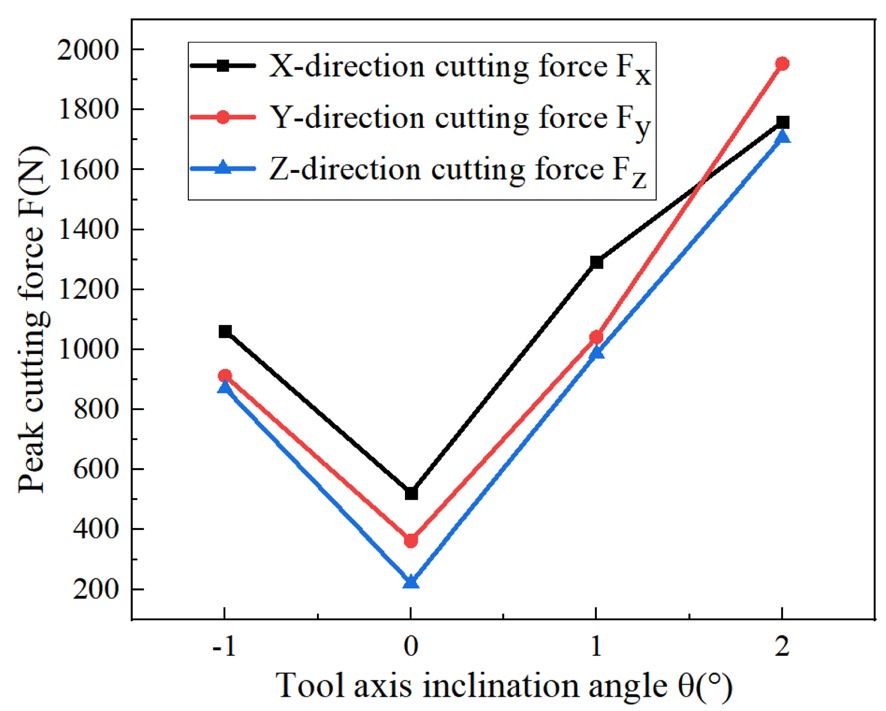
A sudden increase in the radial depth (SIRD) is a distinctive phenomenon in plunge milling. It is typically characterized by a sharp increase in cutting force at the end of the axial feed of the tool, accompanied by harsh machine vibration sounds, which can negatively impact the reliability of plunge milling. This paper proposes an optimization method to eliminate SIRD in five-axis plunge milling. Initially, a five-axis plunge milling experiment and an analysis of the spatial position relationship between the plunge tools and the workpiece revealed that the cause of SIRD is unreasonable tool path planning. Subsequently, using the cutter position and cutter axis vector as variables, an SIRD discrimination model was developed for adjacent cutter positions and extended to multiple cutter positions. Optimizing the plunge milling tool path is considered a multivariate optimization problem that involves determining the cutter point and cutter axis vector. The SIRD discrimination model was used as a constraint function to aid in solving for the variables. The simulation and experimental results indicate that with the remaining volume of material as the optimization target, the optimized plunge milling tool path results in a residual material volume that is less than 60% of the gradually decreasing plunge depth. This optimization decreases the subsequent semi-finishing time of the workpiece and enhances machining efficiency. Additionally, it does not rely on operator experience and facilitates efficient automated optimization of the tool path to exclude SIRD.

An Optimization Method for Five-axis Plunge Milling Tool Path Considering SIRD
Graphical Abstract
Original ResearchVol. 38, Issue 1 • pp. 154DOI: 10.1186/s10033-025-01323-6Jan 15, 2025

Data-Driven Human-in-the-Loop Iterative Learning Fault Estimation Method

Authors: Fei Wang, Jie Sun, Junwei Zhu, Ruofeng Wei

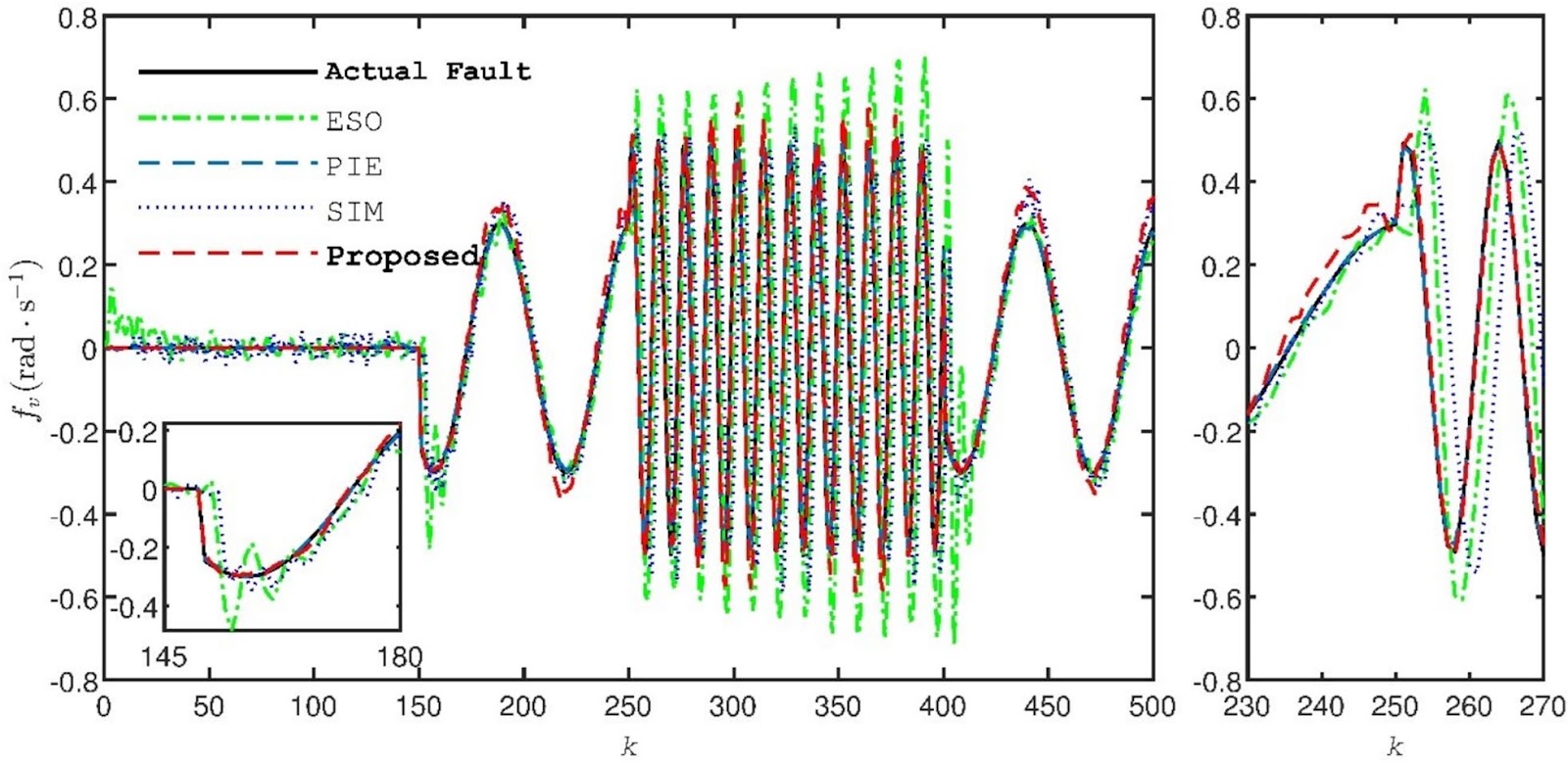
For control systems with unknown model parameters, this paper proposes a data-driven iterative learning method for fault estimation. First, input and output data from the system under fault-free conditions are collected. By applying orthogonal triangular decomposition and singular value decomposition, a data-driven realization of the system's kernel representation is derived, based on this representation, a residual generator is constructed. Then, the actuator fault signal is estimated online by analyzing the system's dynamic residual, and an iterative learning algorithm is introduced to continuously optimize the residual-based performance function, thereby enhancing estimation accuracy. The proposed method achieves actuator fault estimation without requiring knowledge of model parameters, eliminating the time-consuming system modeling process, and allowing operators to focus on system optimization and decision-making. Compared with existing fault estimation methods, the proposed method demonstrates superior transient performance, steady-state performance, and real-time capability, reduces the need for manual intervention and lowers operational complexity. Finally, experimental results on a mobile robot verify the effectiveness and advantages of the method.

Data-Driven Human-in-the-Loop Iterative Learning Fault Estimation Method
Graphical Abstract
Original ResearchVol. 38, Issue 1 • pp. 47DOI: 10.1186/s10033-025-01222-wJan 15, 2025

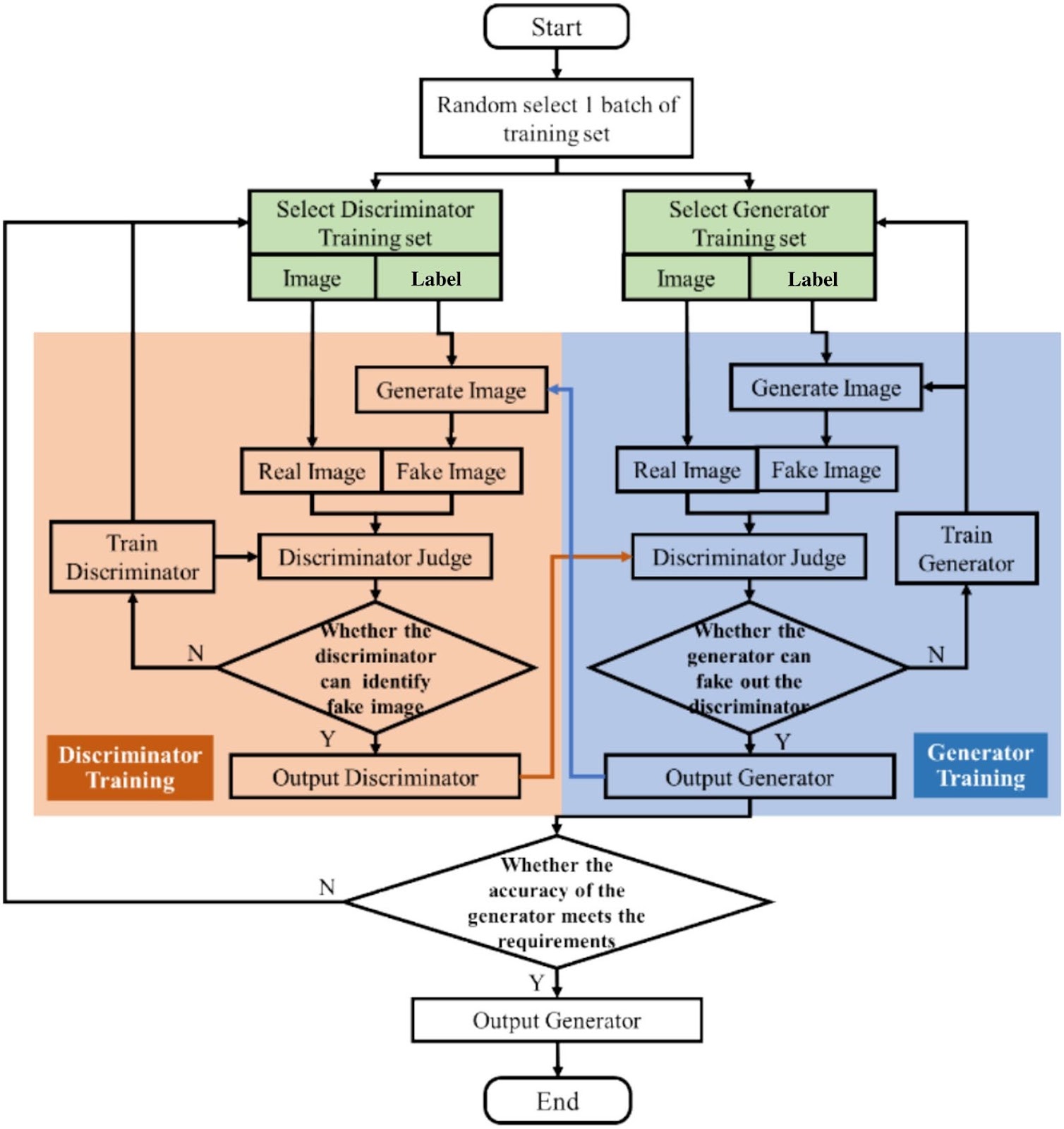
Intelligent Design Method for Thermal Conductivity Topology Based on a Deep Generative Network

Authors: Qiyin Lin, Feiyu Gu, Chen Wang, Hao Guan, Tao Wang, Kaiyi Zhou, Lian Liu, Desheng Yao

Heat dissipation performance is critical to the design of high-end equipment, such as integrated chips and high-precision machine tools. Owing to the advantages of artificial intelligence in solving complex tasks involving a large number of variables, researchers have exploited deep learning to expedite the optimization of material properties, such as the heat dissipation of solid isotropic materials with penalization (SIMP). However, because the approach is limited by discrete datasets and labeled training forms, ensuring the continuous adaptation of the condition domain and maintaining the stability of the design structure remain major challenges in the current intelligent design methodology for thermally conductive structures. In this study, we propose an innovative intelligent design framework integrating Conditional Deep Convolutional Generative Adversarial Networks (CDCGAN) with SIMP, capable of creating topology structures that meet prescribed thermal conduction performance. This proposed design strategy significantly reduces the computational time required to solve symmetric and random heat sink problems compared with existing design approaches and is approximately 98% faster than standard SIMP methods and 55.5% faster than conventional deep-learning-based methods. In addition, we benchmarked the design performance of the proposed framework against theoretical structural designs via experimental measurements. We observed a 50.1% reduction in the average temperature and a 28.2% reduction in the highest temperature in our designed topology compared with those theoretical structure designs.

Intelligent Design Method for Thermal Conductivity Topology Based on a Deep Generative Network
Graphical Abstract
Original ResearchVol. 38, Issue 1 • pp. 171DOI: 10.1186/s10033-025-01346-zJan 15, 2025

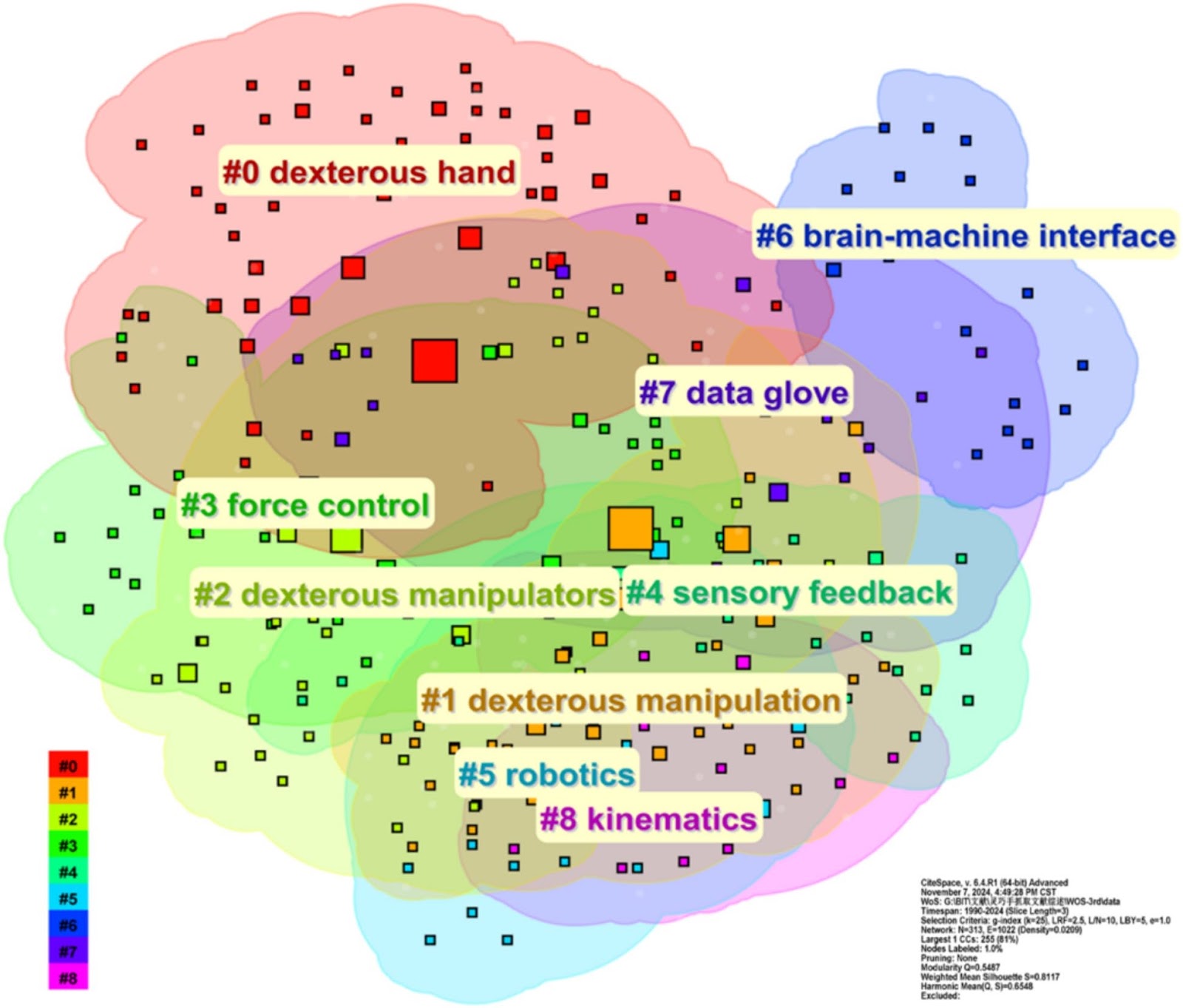
Grasp Control of Dexterous Hands Based on Bibliometric Analysis: A Survey

Authors: Zhe Xu, Sihan Huang, Liya Yao, Jiahao Zhu, Guoxin Wang, Yan Yan

Recent years have witnessed unprecedented development in humanoid robotics, with dexterous hand grasping emerging as a focal research area across industrial and academic sectors. To track the state-of-the-art dexterous hand grasp, a review of dexterous hand grasp based on bibliometric analysis is executed. The related studies on dexterous hand grasp are collected from the Web of Science for analysis, where the publication details and cooperation situations from the perspectives of country, institute, etc. are discussed. The keywords cluster is adopted to find the hot research topic of dexterous hand grasp. The development trend of dexterous hand grasp is explored based on the top 25 keywords with the strongest citation bursts. The review findings indicate that precision control via multimodal fusion, autonomous task understanding and intelligent decision, and in-hand dexterous manipulation are top three hotspots in future.

Grasp Control of Dexterous Hands Based on Bibliometric Analysis: A Survey
Graphical Abstract
Original ResearchVol. 38, Issue 1 • pp. 190DOI: 10.1186/s10033-025-01283-xJan 15, 2025

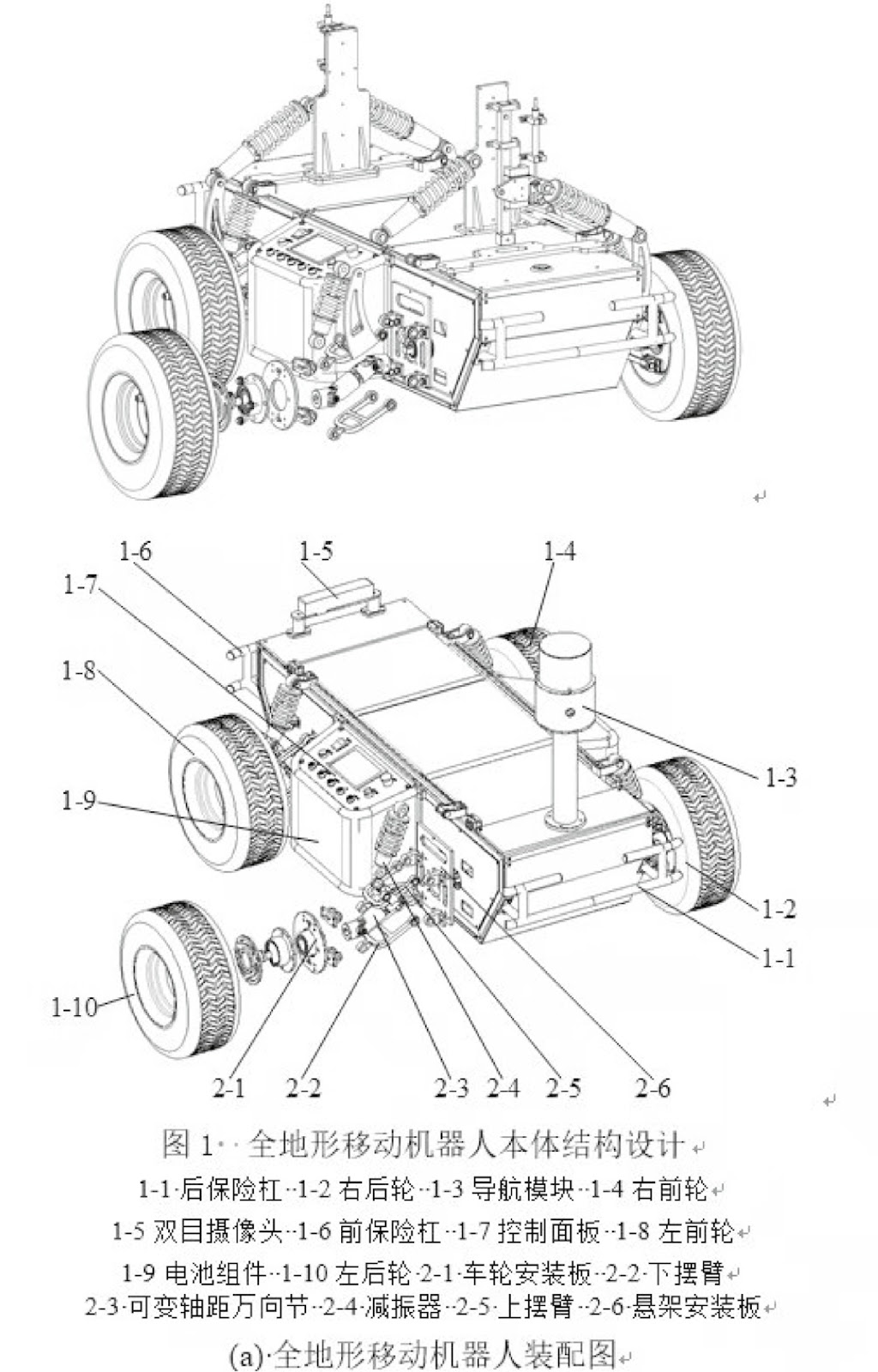
Study of a Moment Suspension Mechanism for Off-Road Operation of a Multi-Terrain Mobile Robot

Authors: Buyun Wang, Menglong Jiang, Bing Zhao, Wen Peng, Yi Liang, Jun Cheng, Hanchun Hu

To effectively improve the adaptability and traversal abilities of a multi-terrain mobile robot under the dynamic excitation of multiple roads, we explore the mobile robot’s vibration and joint driving output stall caused by the dynamic excitation of the road spectrum function and analyze techniques for reducing the vibration and enhancing the driving moment of a four-wheel differential-speed mobile robot. A double-wishbone vibration reduction suspension and a moment compensator were designed for a multi-terrain mobile robot by theoretically describing its suspension-wheel-road dynamics. Also, the mobile robot’s road adaptability and traversal abilities were mathematically characterized under dynamic excitation. Co-simulation in ADAMS-MATLAB/Simulink is performed such as the harsh condition of in situ rotation and outdoor experimental schemes are implemented in which the experimental data are analyzed. The experimental result verifies the correctness of the theoretical analysis, as well as the effectiveness of the vibration reduction suspension and the moment compensator. The compatibility of the mobile robot’s driving mechanisms with road traversal abilities has been improved under various terrain conditions in complex field operation scenarios.

Study of a Moment Suspension Mechanism for Off-Road Operation of a Multi-Terrain Mobile Robot
Graphical Abstract
Original ResearchVol. 38, Issue 1 • pp. 98DOI: 10.1186/s10033-025-01267-xJan 15, 2025

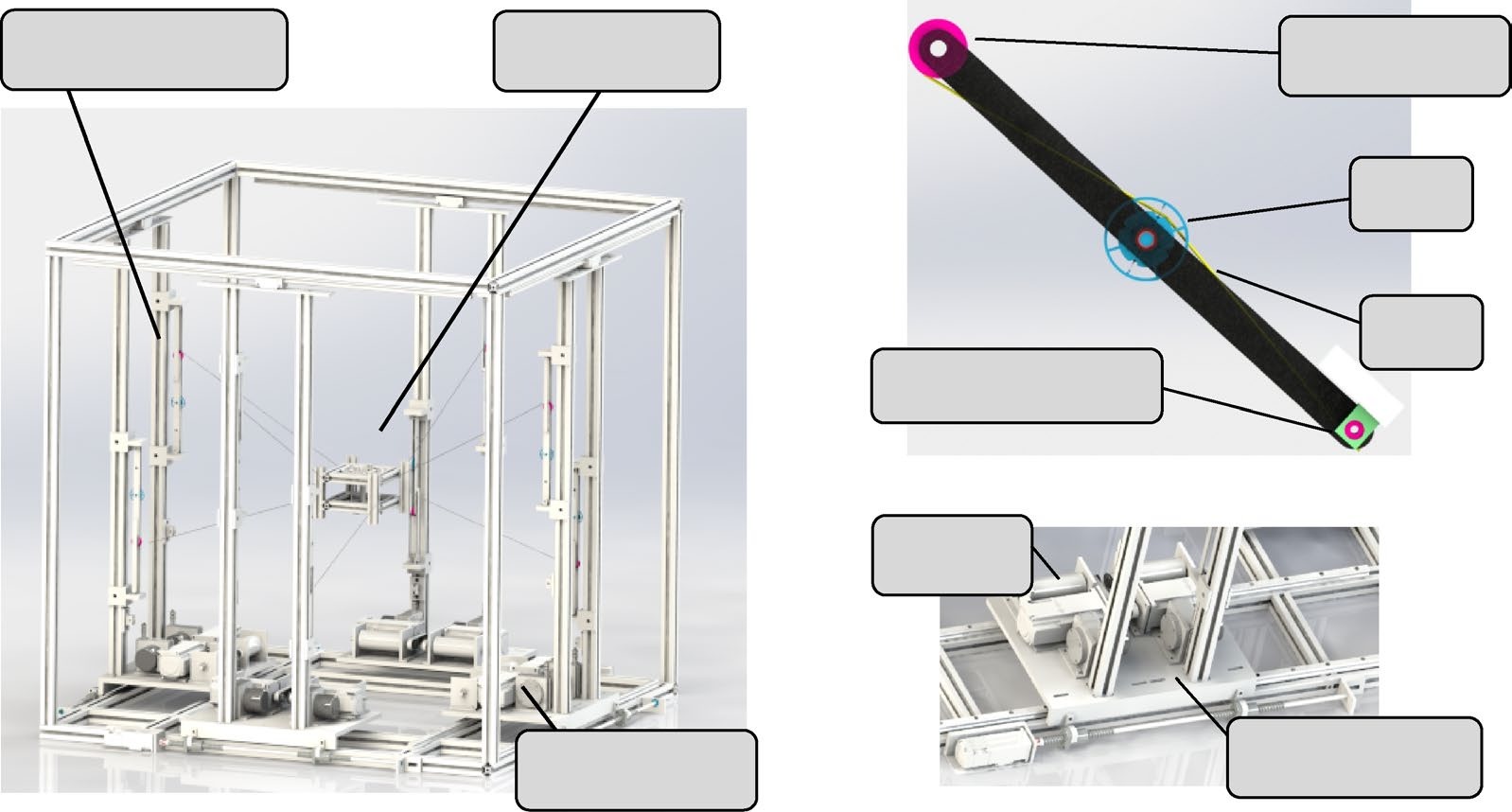
Design, Kinematics and Stiffness Analysis of a Reconfigurable Cable-Driven Parallel Robot

Authors: Qingjun Wu, Bin Zi, Bo Hu, Yuan Li

Cable-driven parallel robots (CDPRs) have advantages of larger workspace and load capacity than conventional parallel robots while existing interference problems among cables, workpieces and the end-effector. In order to avoid collision and improve the flexibility of the robots, this study proposes a reconfigurable cable-driven parallel robot (RCDPR) having characteristics of large load-to-weight ratio, easy modularity and variable stiffness. Adjustable brackets are connected to the moving platform to adjust the position of the pull-out point with the movement of the end-effector. In addition, a variable stiffness actuator (VSA) accompanied by finite element analysis is designed to optimize the cable tension to adapt different task requirements. Firstly, a new idea of reconfiguration is given, and an inverse kinematic model is established using the vector closure principle to derive its inverse kinematic expressions focusing on one of the configurations. Second, the VSA is attached to each cable to achieve stiffness adjustment, and the system stiffness is derived in detail. Finally, the rationality and accuracy of the robot are verified through numerical analysis, providing a reference for subsequent trajectory planning with implications.

Design, Kinematics and Stiffness Analysis of a Reconfigurable Cable-Driven Parallel Robot
Graphical Abstract
Original ResearchVol. 38, Issue 1 • pp. 75DOI: 10.1186/s10033-025-01224-8Jan 15, 2025

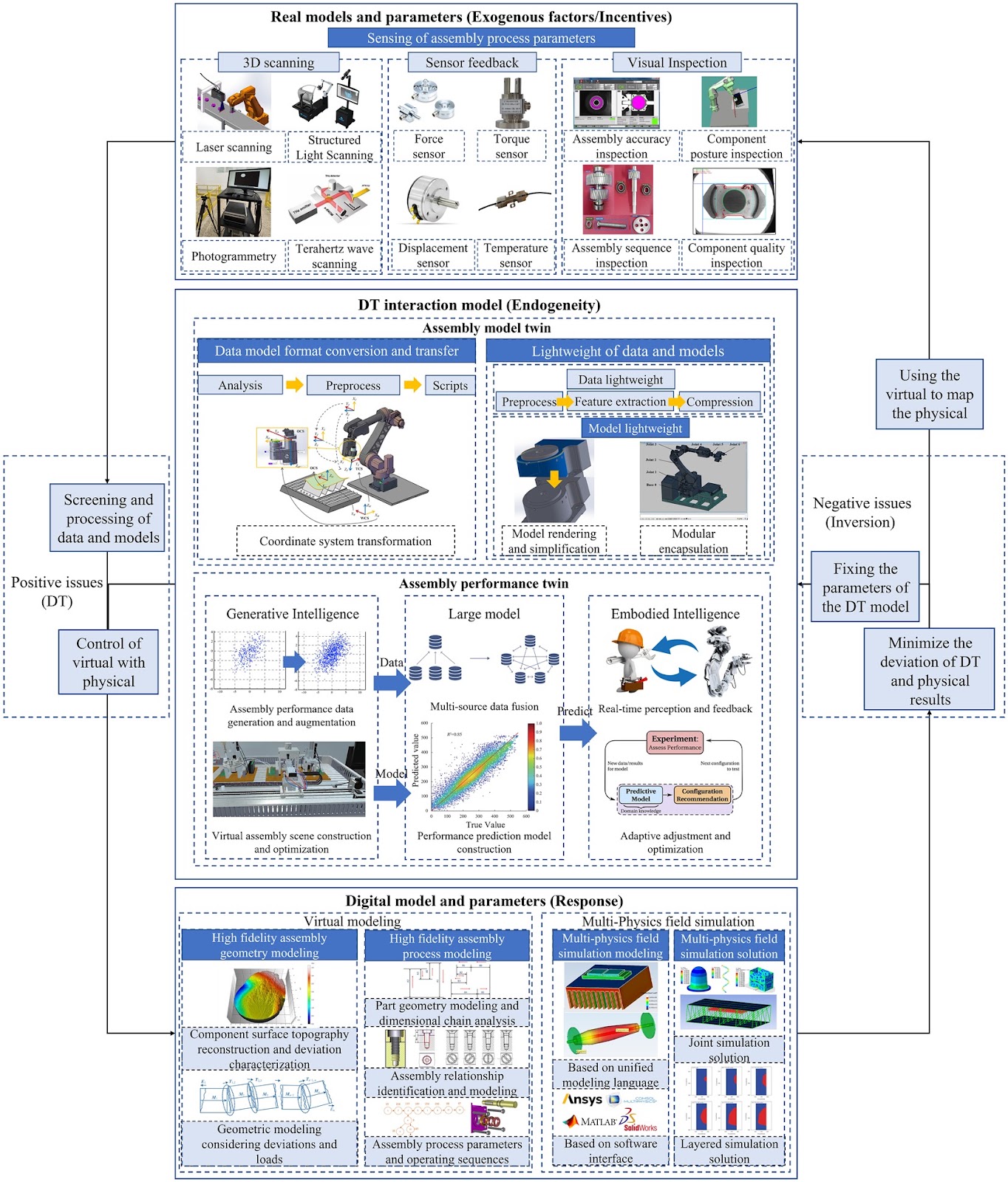
Digital Twin-driven Inversion of Assembly Precision for Industrial Equipment: Challenges, Progress and Perspectives

Authors: Dinghao Cheng, Bingtao Hu, Yixiong Feng, Jiangxin Yang, Ruirui Zhong, Tianyue Wang, Jianrong Tan

Assembly precision greatly influences the performance of complex high-end equipment. The traditional industrial assembly process and deviation transfer are implicit and uncertain, causing problems like poor component fit and hard-to-trace assembly stress concentration. Assemblers can only check whether the dimensional tolerance of the component design is exceeded step by step in combination with prior knowledge. Inversion in industrial assembly optimizes assembly and design by comparing real and theoretical results and doing inversion analysis to reduce assembly deviation. The digital twin (DT) technology visualizes and predicts the assembly process by mapping real and virtual model parameters and states simultaneously, expanding parameter range for inversion analysis and improving inversion result accuracy. Problems in improving industrial assembly precision and the significance and research status of DT-driven parametric inversion of assembly tools, processes and object precision are summarized. It analyzes vital technologies for assembly precision inversion such as multi-attribute assembly process parameter sensing, virtual modeling of high-fidelity assembly systems, twin synchronization of assembly process data models, multi-physical field simulation, and performance twin model construction of the assembly process. Combined with human-cyber-physical system, augmented reality, and generative intelligence, the outlook of DT-driven assembly precision inversion is proposed, providing support for DT’s use in industrial assembly and precision improvement.

Digital Twin-driven Inversion of Assembly Precision for Industrial Equipment: Challenges, Progress and Perspectives
Graphical Abstract
Original ResearchVol. 38, Issue 1 • pp. 141DOI: 10.1186/s10033-025-01296-6Jan 15, 2025

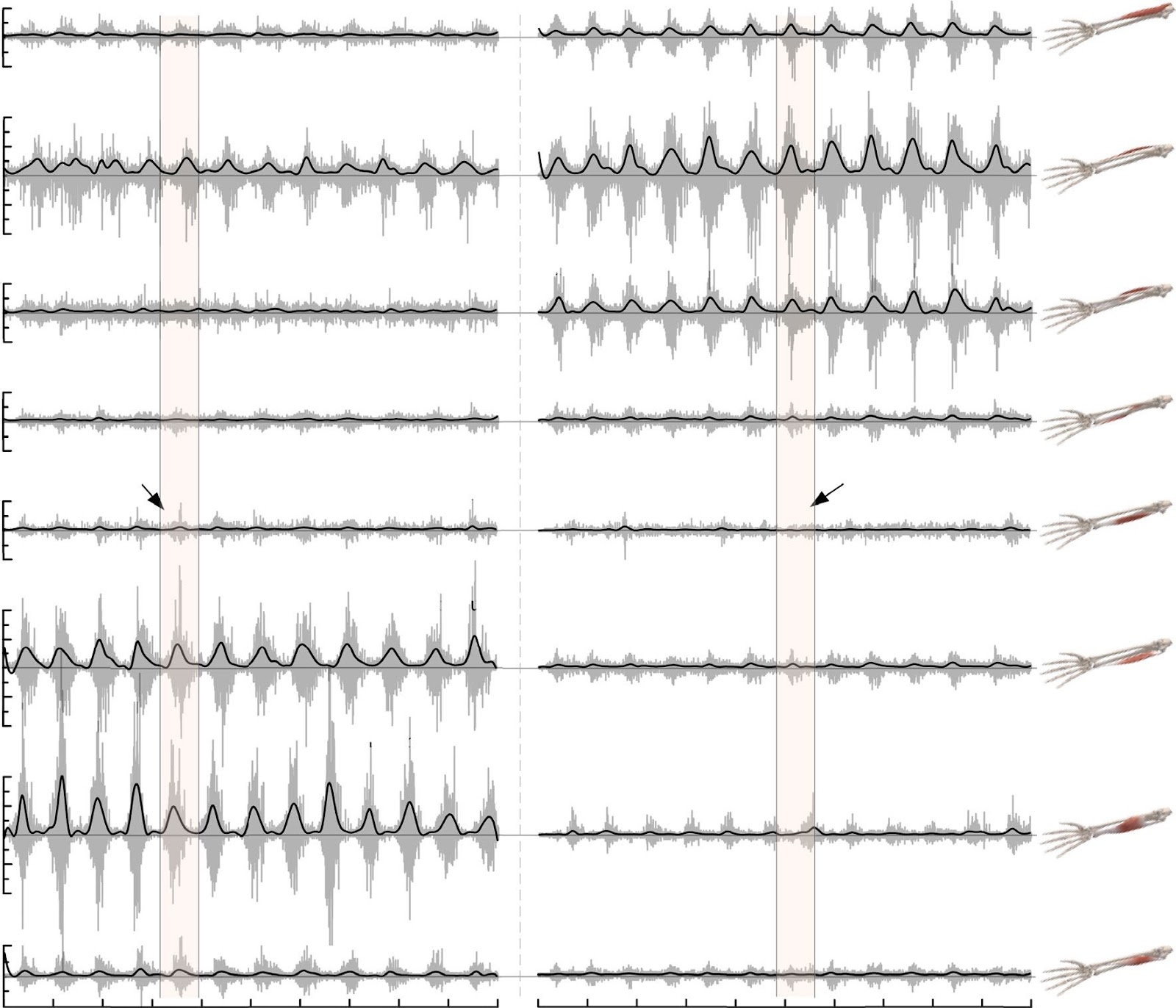
Physiological Characteristics of Forearm Muscles During Different Movement Patterns of Wrist

Authors: Leiyu Zhang, Xu Sun, Peng Su, Jianfeng Li, Yawei Chang, Yongjian Gao, Li Zhang

The abundant muscle tissues of the forearm determine the movements of the wrist, hand and fingers together. However, linking wrist kinematics and forearm muscle activation is still a challenging. There may exist blindness in the rehabilitation therapy of forearm muscles, due to the lack of the physiological characteristics of muscle activation and sequences. An armband with eight channels was used to collect surface electromyographic signals (sEMGs) of a specific section of the forearm under the different wrist movements, palm postures, and external loads, based on the image of magnetic resonance imaging (MRI). The collected cross-sectional muscles covered almost all surface muscles. The muscle activation could be expressed clearly by enveloping the sEMG signals of 8 muscles within a single cycle. The root mean square (RMS) and the average peak value VP were used to evaluate the activation intensities of dominant muscles. The activation sequences and the absolute times of dominant muscles were obtained from the envelopes of their raw sEMGs, and not influenced by the palm postures and external loads. In addition, their RMS and VP under each wrist movement increased approximate linearly with external loads. The corresponding contribution ratios were first calculated to evaluate the role played by each muscle. The well-defined data of forearm muscles could provide standard references for the rehabilitation therapy of forearm muscles.

Physiological Characteristics of Forearm Muscles During Different Movement Patterns of Wrist
Graphical Abstract
Original ResearchVol. 38, Issue 1 • pp. 181DOI: 10.1186/s10033-025-01347-yJan 15, 2025

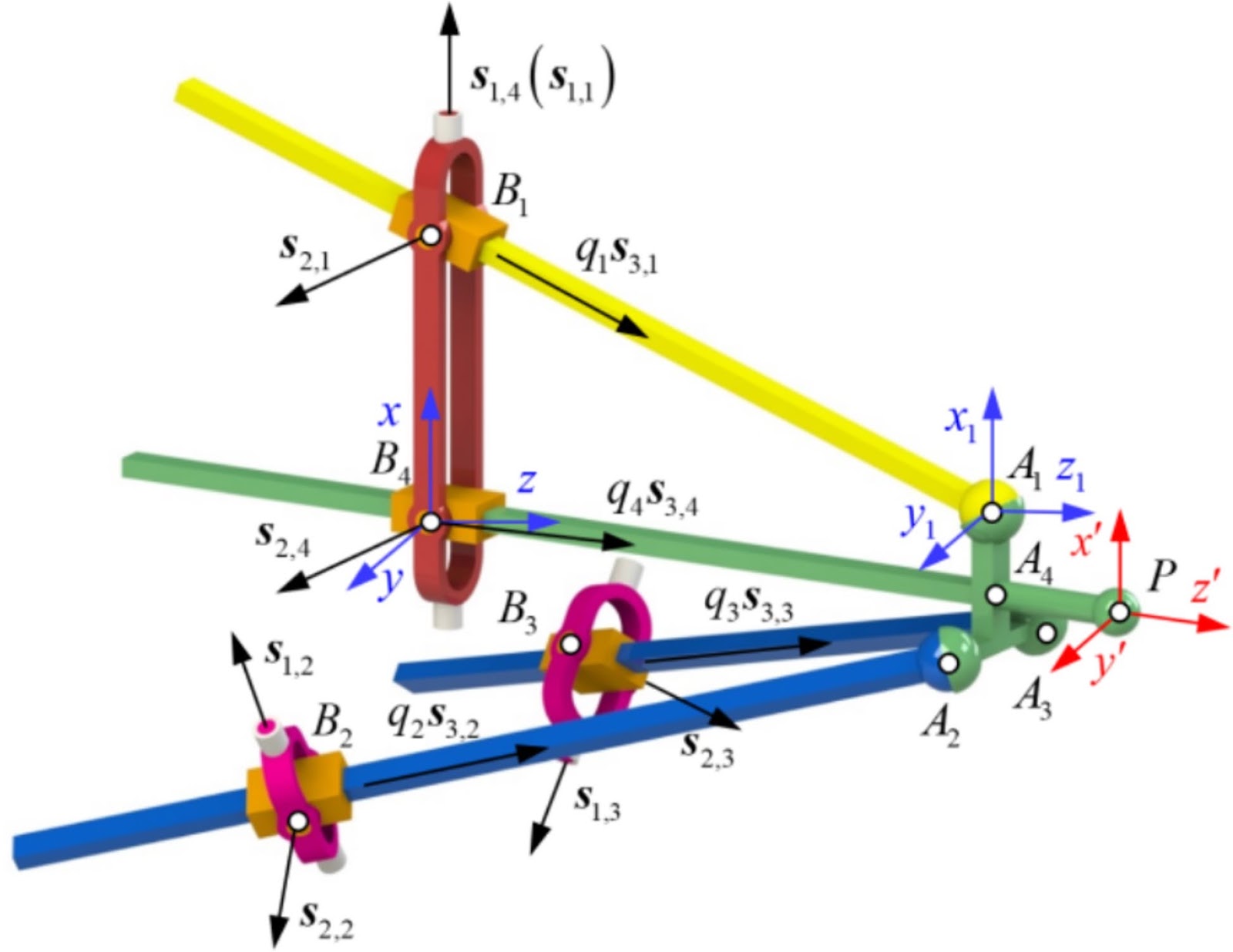
Stiffness Modeling and Performance Evaluation of a (R(RPS&RP))&2-UPS Parallel Mechanism

Authors: Minghao Wang, Manxin Wang, Hutian Feng, Chuhan Wu

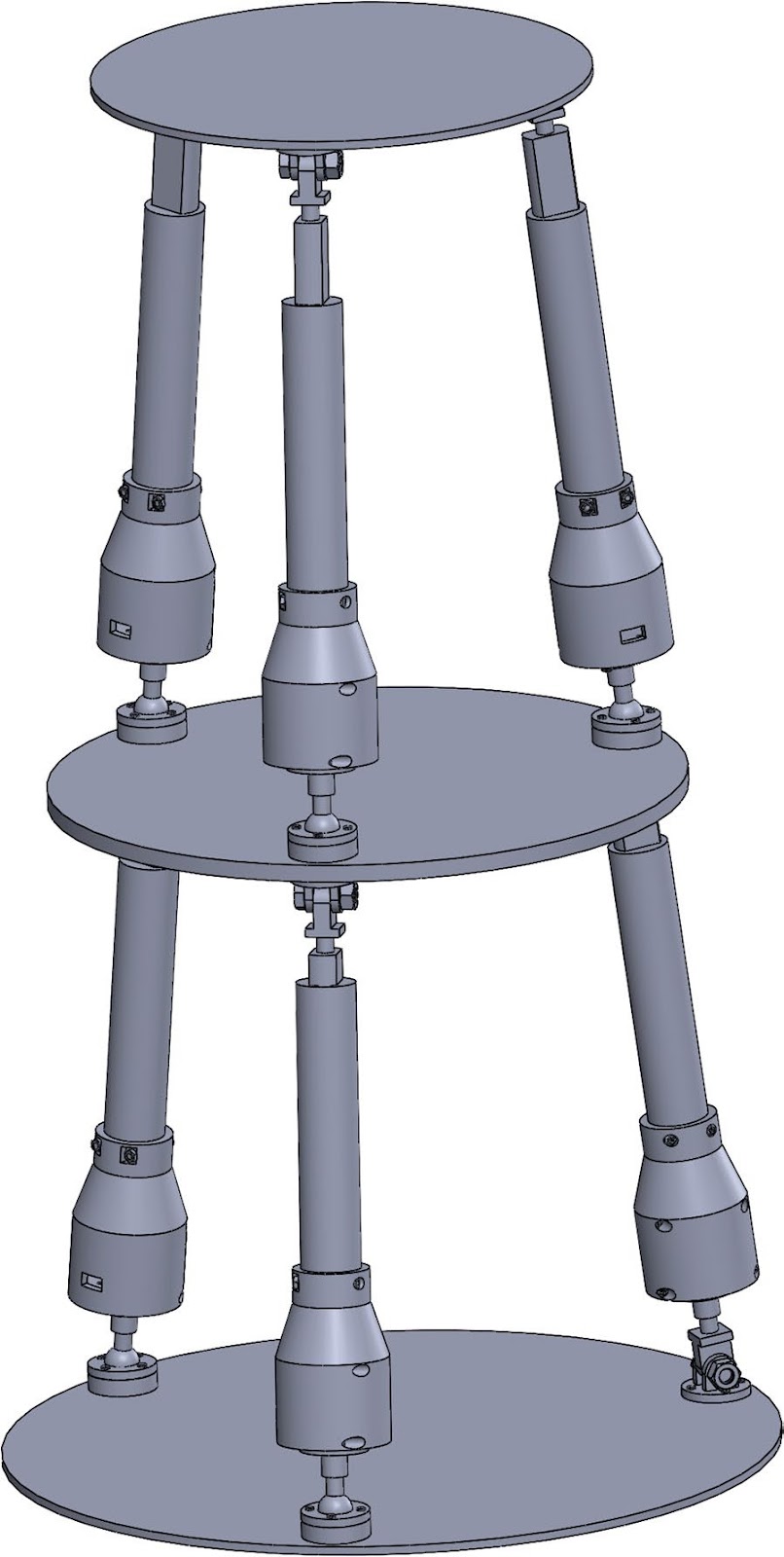
The average stiffness performance indices throughout the workspace are commonly used as global stiffness performance indices to evaluate the overall stiffness performance of parallel mechanisms, which involves an analysis of the stiffness performance of numerous discrete points in the workspace. This necessitates time-consuming and inefficient calculation, which is particularly pronounced in the optimization design stage of the mechanism, where the variations in the global stiffness performance indices versus various dimensional and structural parameters need to be analyzed. This paper presents a semi-analytical approach for stiffness modeling of the novel (R(RPS&RP))&2-UPS parallel mechanism (referred to as the Trifree mechanism) and proposes “local” stiffness performance indices as alternatives to global indices. Drawing on the screw theory, the Cartesian stiffness matrix of the Trifree mechanism is formulated explicitly by considering the compliances of all elastic elements and the over-constraint characteristics inherent in the mechanism. Based on the spherical motion pattern of the Trifree mechanism, four special reference configurations are extracted within the workspace. This yields “local” stiffness performance indices capable of accurately evaluating the overall stiffness performance of the mechanism and effectively improving the computational efficiency. The variations in global and “local” stiffness performance indices versus key design parameters are investigated. Furthermore, the proposed indices are applied to the Tricept and Trimule mechanisms. The results demonstrate that the proposed indices exhibit excellent computational accuracy and efficiency in evaluating the overall stiffness performance of these spherical parallel mechanisms. Moreover, the stiffness performance of the novel parallel mechanism investigated in this study closely resembles that of the well-known Tricept and Trimule mechanisms. This research proposes a semi-analytic stiffness model of the Trifree mechanism and “local” stiffness performance indices to evaluate the overall stiffness performance, thereby substantially improving the computational efficiency without sacrificing accuracy.

Stiffness Modeling and Performance Evaluation of a (R(RPS&RP))&2-UPS Parallel Mechanism
Graphical Abstract
Original ResearchVol. 38, Issue 1 • pp. 182DOI: 10.1186/s10033-025-01341-4Jan 15, 2025

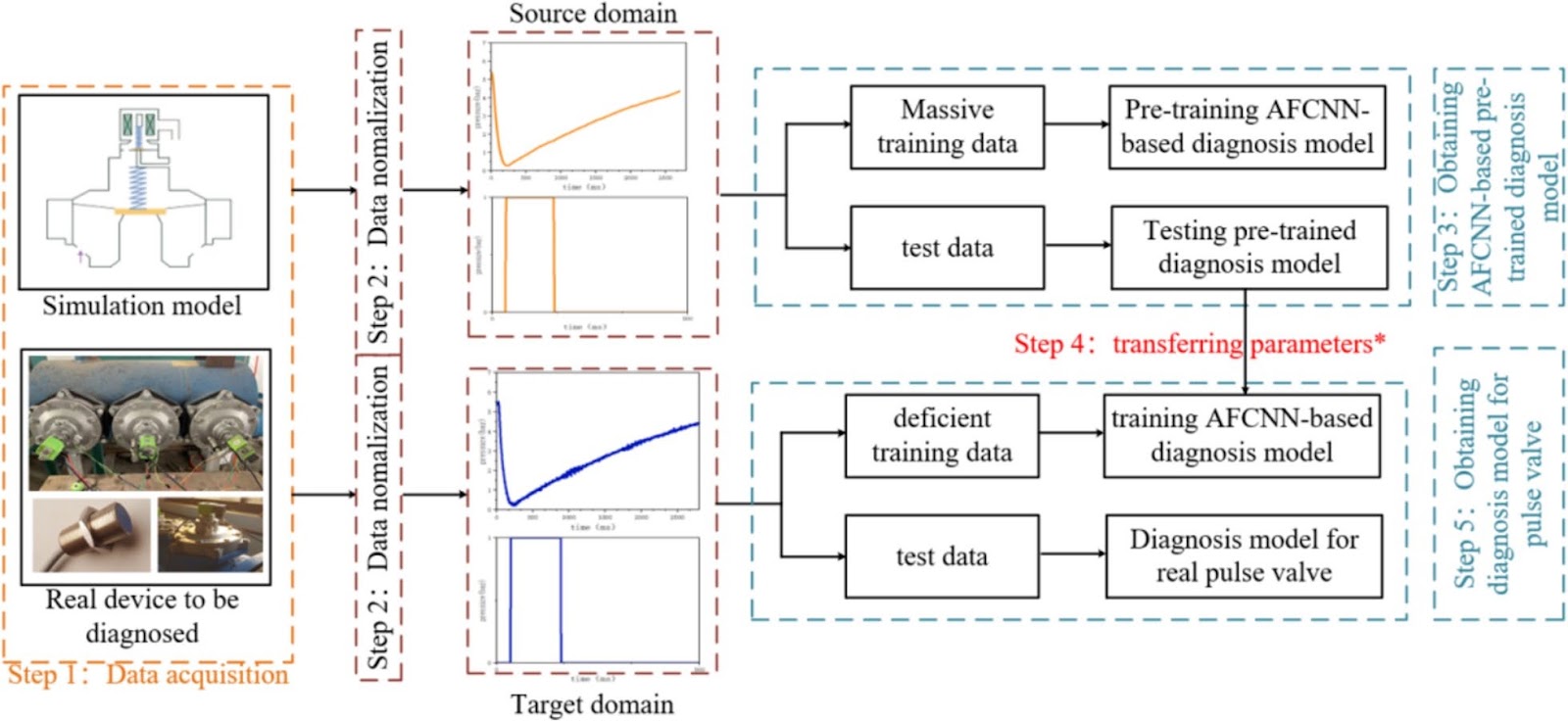
Deep Transfer Learning Based Fault Diagnosis for Electromagnetic Pulse Valve Faults Under Small Sample

Authors: Tao Wang, Min Wang, Bo Wang, Lianghao Ma

The electromagnetic pulse valve, as a key component in baghouse dust removal systems, plays a crucial role in the performance of the system. However, despite the promising results of intelligent fault diagnosis methods based on extensive data in diagnosing electromagnetic valves, real-world diagnostic scenarios still face numerous challenges. Collecting fault data for electromagnetic pulse valves is not only time-consuming but also costly, making it difficult to obtain sufficient fault data in advance, which poses challenges for small sample fault diagnosis. To address this issue, this paper proposes a fault diagnosis method for electromagnetic pulse valves based on deep transfer learning and simulated data. This method achieves effective transfer from simulated data to real data through four parameter transfer strategies, which combine parameter freezing and fine-tuning operations. Furthermore, this paper identifies a parameter transfer strategy that simultaneously fine-tunes the feature extractor and classifier, and introduces an attention mechanism to integrate fault features, thereby enhancing the correlation and information complementarity among multi-sensor data. The effectiveness of the proposed method is evaluated through two fault diagnosis cases under different operating conditions. In this study, small sample data accounted for 7.9% and 8.2% of the total dataset, and the experimental results showed transfer accuracies of 93.5% and 94.2%, respectively, validating the reliability and effectiveness of the method under small sample conditions.

Deep Transfer Learning Based Fault Diagnosis for Electromagnetic Pulse Valve Faults Under Small Sample
Graphical Abstract
Original ResearchVol. 38, Issue 1 • pp. 199DOI: 10.1186/s10033-025-01352-1Jan 15, 2025

A CFD-MBD Co-Simulation Approach for Studying Aerodynamic Characteristics and Dynamic Performance of High-Speed Trains

Authors: Yanlin Hu, Qinghua Chen, Xin Ge, Wentao He, Haowei Yu, Liang Ling, Kaiyun Wang

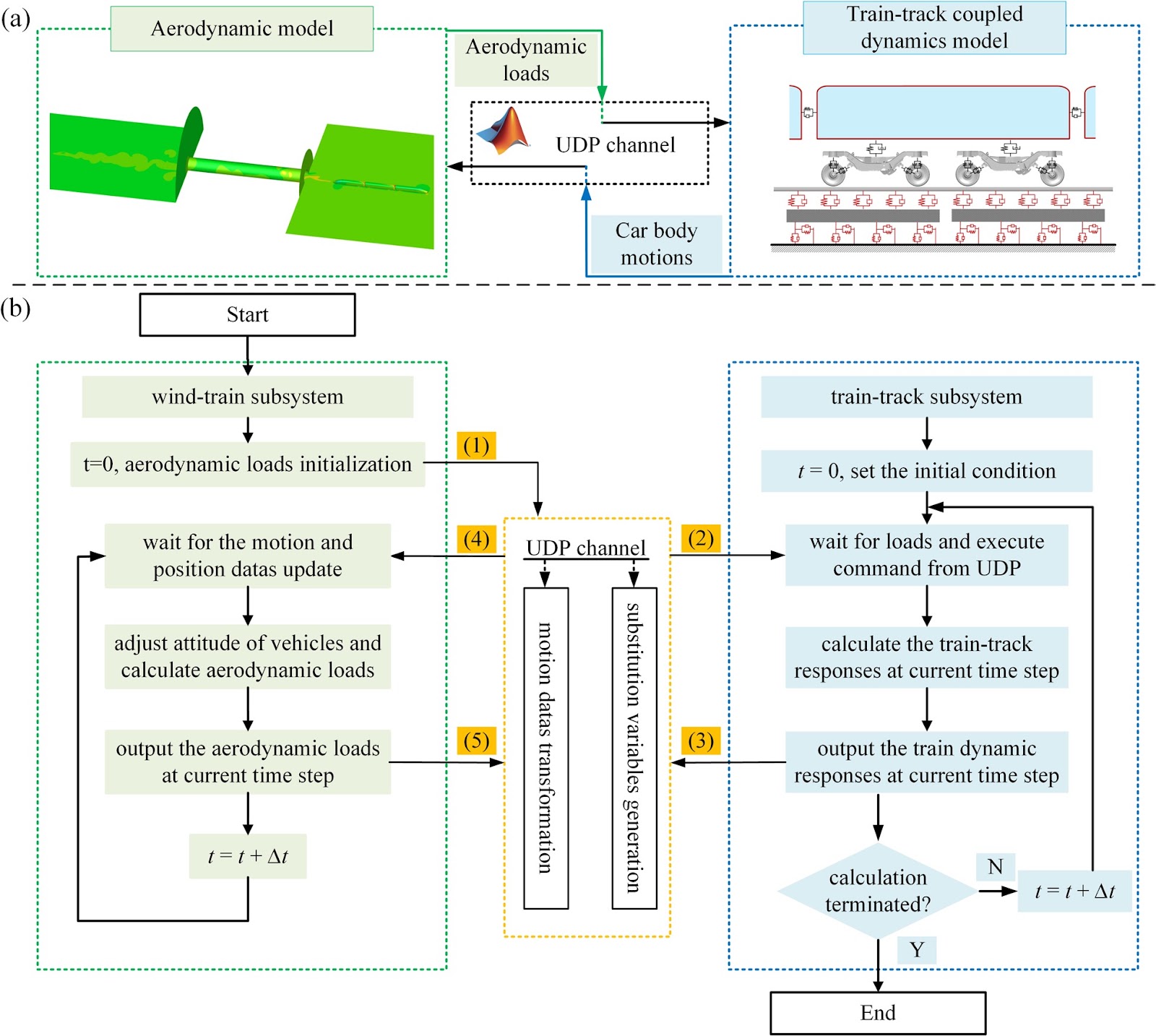
The interaction between the airflow and train influences the aerodynamic characteristics and dynamic performance of high-speed trains. This study focused on the fluid-solid coupling effect of airflow and HST, and proposed a co-simulation (CS) approach between computational fluid dynamics and multi-body dynamics. Firstly, the aerodynamic model was developed by employing overset mesh technology and the finite volume method, and the detailed train-track coupled dynamic model was established. Then the User Data Protocol was adopted to build data communication channels. Moreover, the proposed CS method was validated by comparison with a reported field test result. Finally, a case study of the HST exiting a tunnel subjected to crosswind was conducted to compare differences between CS and offline simulation (OS) methods. In terms of the presented case, the changing trends of aerodynamic forces and car-body displacements calculated by the two methods were similar. Differences mainly lie in aerodynamic moments and transient wheel-rail impacts. Maximum pitching and yawing moments on the head vehicle in the two methods differ by 21.1 kN∙m and 29.6 kN∙m, respectively. And wheel-rail impacts caused by sudden changes in aerodynamic loads are significantly severer in CS. Wheel-rail safety indices obtained by CS are slightly greater than those by OS. This research proposes a CS method for aerodynamic characteristics and dynamic performance of the HST in complex scenarios, which has superiority in computational efficiency and stability.

A CFD-MBD Co-Simulation Approach for Studying Aerodynamic Characteristics and Dynamic Performance of High-Speed Trains
Graphical Abstract
Original ResearchVol. 38, Issue 1 • pp. 193DOI: 10.1186/s10033-025-01205-xJan 15, 2025

Dynamic Modeling of the Three-Dimensional Seated Human Body for High-Speed Train Ride Comfort Analysis

Authors: Hanwen Xu, Xinbiao Xiao, Xiaoqing Dong, Jian Han, Peng Chen, Qin Hu, Xuesong Jin

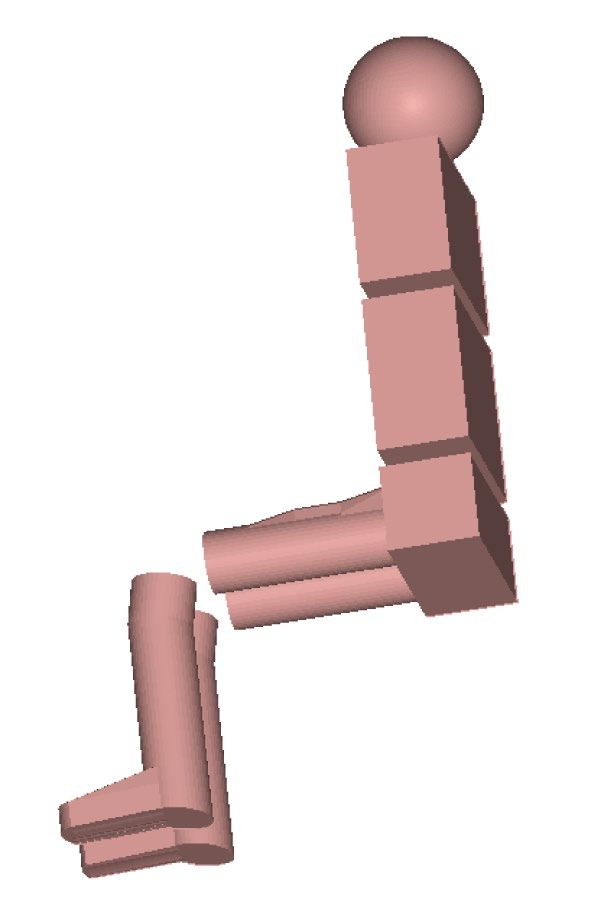
Typically, seat or floor acceleration is used to evaluate the ride comfort of a high-speed train. However, the dynamic performance of the human body significantly differs from that of the floor. Therefore, using the car body floor and seat accelerations to calculate the ride comfort index of a high-speed train may not reflect the true feelings of passengers. In this study, a 3D human-seat-vehicle-track coupling model was established to investigate the ride comfort of high-speed train passengers. The seated human model, which considers the longitudinal, lateral, vertical, pitching, yawing, and rolling motions, comprises the head, upper torso, lower torso, pelvis, thighs, and shanks. The model parameters were determined using multi-axis excitation measurement data based on a genetic algorithm. Subsequently, the applicability of the small-angle assumption and natural modes of the human model is analyzed. Using the coupling system model, the vibration characteristics of the human-seat interaction surface were analyzed. The ride comfort of the high-speed train and human body dynamic performance were analyzed under normal conditions, track geometric irregularities and train meeting conditions. The results showed that the passenger seats in the front and rear rows adjacent to the window had a higher acceleration value than the others. The human backrest and seat pad connection points have higher vibration amplitudes than the car body floor in the human-sensitive frequency range, indicating that using the acceleration values on the floor may underestimate the discomfort of passengers. The ride comfort of high-speed trains diminishes in the presence of track geometric irregularities and when trains pass each other. When the excitation frequency of track geometry irregularities approached the natural frequency of the human-seat-vehicle system, ride comfort in high-speed trains decreased significantly. Moreover, using seat acceleration to evaluate passenger ride comfort overlooks the vibration characteristics of the human body. The transient aerodynamic force generated when the train meets can cause a larger car body roll and lateral motion at 2 Hz, which, in turn, decreases the passenger ride comfort. This study presents a detailed human-seat-vehicle-track coupling system that can reflect a passenger’s dynamic performance under complex operating conditions.

Dynamic Modeling of the Three-Dimensional Seated Human Body for High-Speed Train Ride Comfort Analysis
Graphical Abstract
Original ResearchVol. 38, Issue 1 • pp. 95DOI: 10.1186/s10033-025-01264-0Jan 15, 2025

Trajectory Tracking Control of Parking Automated Guided Vehicles Using Nonlinear Disturbance Observer-based Sliding Mode

Authors: Xudong Hu, Bo Zhu, Dongkui Tan, Nong Zhang

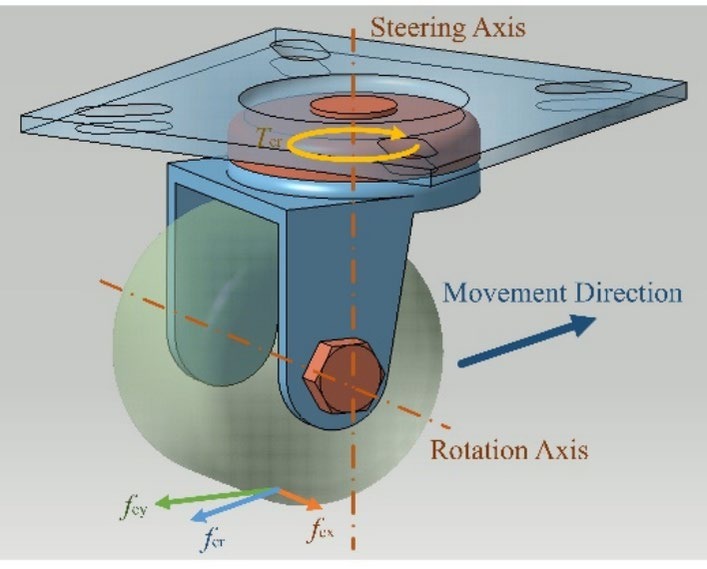
Automated valet parking systems based on parking automated guided vehicles (P-AGVs) are effective for improving parking convenience and increasing parking density. The ability of P-AGVs to move towards any position and attain any orientation simultaneously due to their mecanum wheels makes it convenient to transport vehicles in a parking lot. In this study, a nonlinear disturbance observer-based sliding mode controller for the trajectory tracking problem of a P-AGV is proposed. The kinematic and dynamic models for a P-AGV tracking trajectory are first analyzed in sequence and the influences of disturbing forces considered. Subsequently, a nonlinear disturbance observer (NDO) is designed to estimate the disturbing forces and torques generated by the caster wheels. Based on the designed NDO, a robust nonsingular terminal sliding-mode (NTSM) controller is used to track reference trajectories. The stabilities of the NDO and NDO-NTSM control systems are theoretically verified using their Lyapunov functions. Finally, simulations and experiments are performed to verify the effectiveness of the proposed control scheme. The experimental results show that the proposed NDO-NTSM controller can improve the trajectory tracking stability by 42–68% compared to a traditional NTSM controller. The NDO-based sliding mode controller for trajectory tracking proposed in this study can effectively reduce the impact of disturbances on trajectory tracking accuracy.

Trajectory Tracking Control of Parking Automated Guided Vehicles Using Nonlinear Disturbance Observer-based Sliding Mode
Graphical Abstract
Original ResearchVol. 38, Issue 1 • pp. 150DOI: 10.1186/s10033-025-01292-wJan 15, 2025

T-S Fuzzy Based Model Predictive Control Method for the Direct Yaw Moment Control System Design

Authors: Faan Wang, Xinqi Liu, Guodong Yin, Liwei Xu, Jinhao Liang, Yanbo Lu

Distributed drive electric vehicles (DDEVs) endow the ability to improve vehicle stability performance through direct yaw-moment control (DYC). However, the nonlinear characteristics pose a great challenge to vehicle dynamics control. For this purpose, this paper studies the DYC through the Takagi-Sugeno (T-S) fuzzy-based model predictive control to deal with the nonlinear challenge. First, a T-S fuzzy-based vehicle dynamics model is established to describe the time-varying tire cornering stiffness and vehicle speeds, and thus the uncertain parameters can be represented by the norm-bounded uncertainties. Then, a robust model predictive control (MPC) is developed to guarantee vehicle handling stability. A feasible solution can be obtained through a set of linear matrix inequalities (LMIs). Finally, the tests are conducted by the Carsim/Simulink joint platform to verify the proposed method. The comparative results show that the proposed strategy can effectively guarantee the vehicle’s lateral stability while handling the nonlinear challenge.

T-S Fuzzy Based Model Predictive Control Method for the Direct Yaw Moment Control System Design
Graphical Abstract
Original ResearchVol. 38, Issue 1 • pp. 66DOI: 10.1186/s10033-024-01143-0Jan 15, 2025

Reinforcement Learning Based Energy Management Strategy for Fuel Cell Hybrid Electric Vehicles

Authors: Ruoyan Han, Hongwen He, Yaxiong Wang, Yong Wang

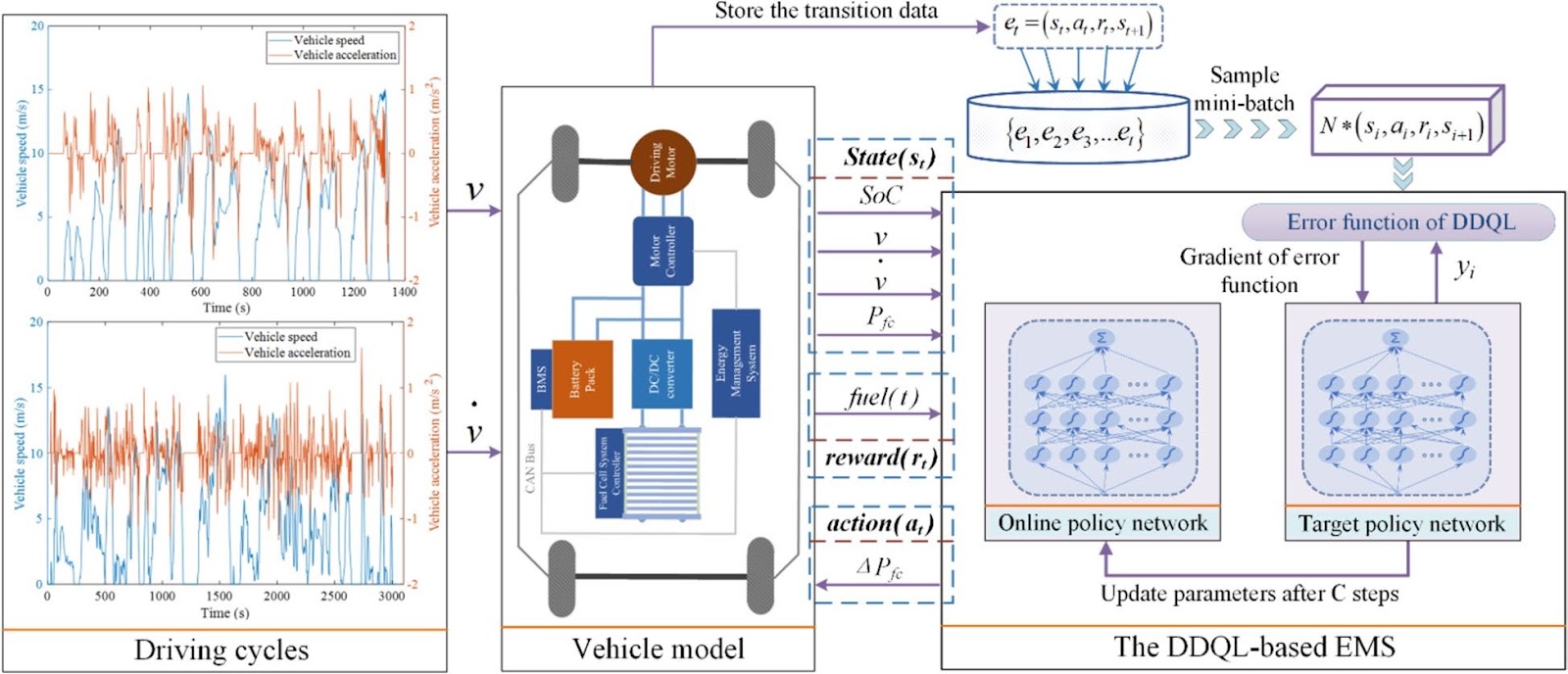
With increasingly serious environmental pollution and the energy crisis, fuel cell hybrid electric vehicles have been considered as an ideal alternative to traditional hybrid electric vehicles. Nevertheless, the total costs of fuel cell systems are still too high, thus limiting the further development of fuel cell hybrid electric vehicles. This paper presents an energy management strategy (EMS) based on deep reinforcement learning for the energy management of fuel cell hybrid electric vehicles. The energy management model of a fuel cell hybrid electric bus and its main components are established. Considering the power response characteristics of the fuel cell system, the power change rate of the fuel cell system is reasonably limited and introduced as action variables into the network of Double Deep Q-Learning (DDQL), and a novel DDQL-based EMS is developed for the fuel cell hybrid electric bus. Subsequently, a comparative test is conducted with the DP-based and the Rule-based EMS to analyze the performance of the DDQL-based EMS. The results indicate that the proposed EMS achieves good fuel economy performance, with an improvement of 15.4% compared to the Rule-based EMS under the training scenarios. In terms of generalization performance, the proposed EMS also achieves good fuel economy performance, which improves by 13.3% compared to the Rule-based energy management strategy under the testing scenario.

Reinforcement Learning Based Energy Management Strategy for Fuel Cell Hybrid Electric Vehicles
Graphical Abstract
Original ResearchVol. 38, Issue 1 • pp. 97DOI: 10.1186/s10033-025-01206-wJan 15, 2025

Method Design and Field Experiment Validation of Predictive Fuel-saving Cruise Control Based on Cloud Control Platform

Authors: Keke Wan, Shuyan Li, Bolin Gao, Fachao Jiang, Yanbin Liu

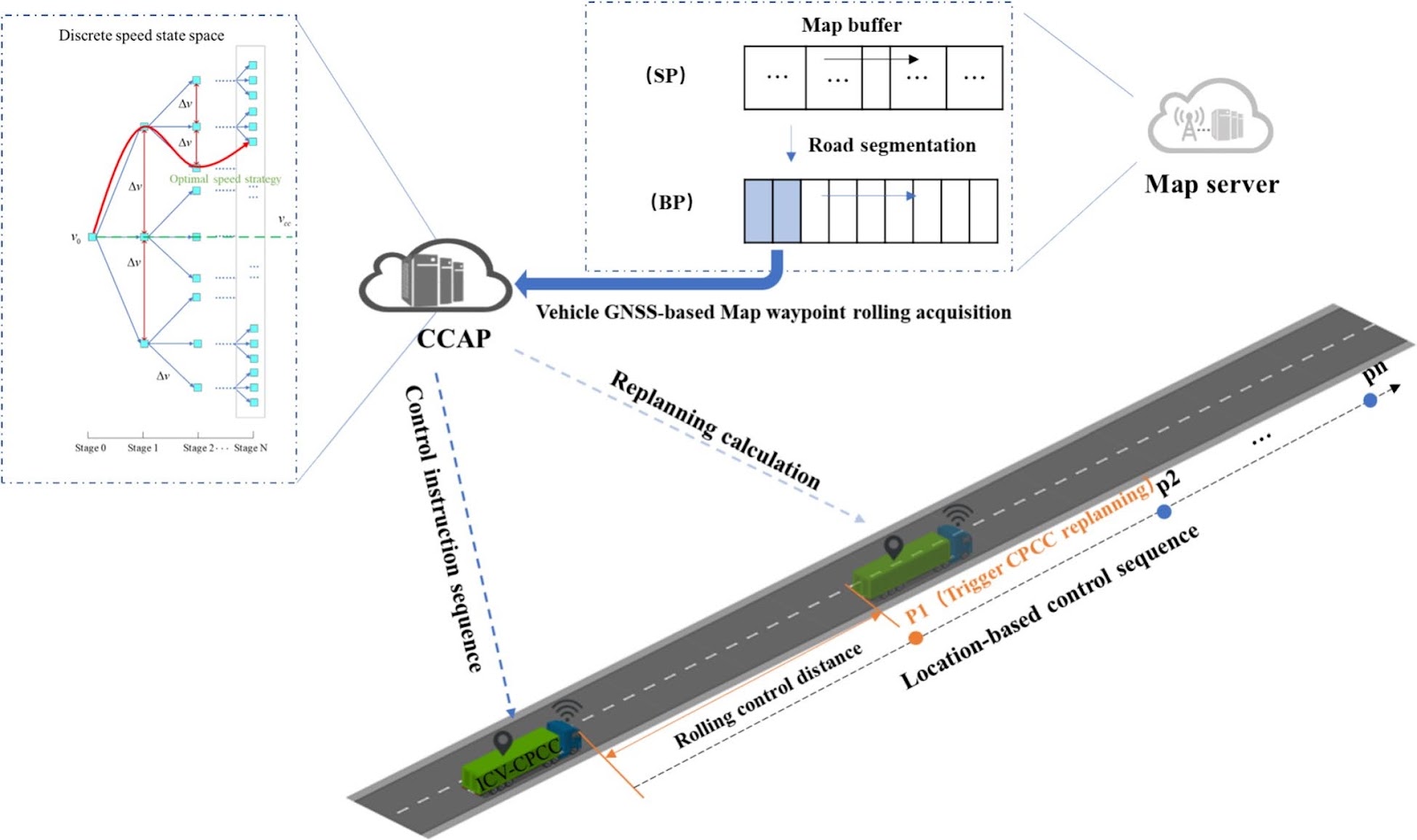
Predictive cruise control (PCC) is an intelligence-assisted control technology that can significantly improve the overall performance of a vehicle by using road and traffic information in advance. With the continuous development of cloud control platforms (CCPs) and telematics boxes (T-boxes), cloud-based predictive cruise control (CPCC) systems are considered an effective solution to the problems of map update difficulties and insufficient computing power on the vehicle side. In this study, a vehicle-cloud hierarchical control architecture for PCC is designed based on a CCP and T-box. This architecture utilizes waypoint structures for hierarchical and dynamic cooperative inter-triggering, enabling rolling optimization of the system and commanding parsing at the vehicle end. This approach significantly improves the anti-interference capability and resolution efficiency of the system. On the CCP side, a predictive fuel-saving speed-planning (PFSP) algorithm that considers the throttle input, speed variations, and time efficiency based on the waypoint structure is proposed. It features a forward optimization search without requiring weight adjustments, demonstrating robust applicability to various road conditions and vehicles equipped with constant cruise (CC) system. On the vehicle-side T-box, based on the reference control sequence with the global navigation satellite system position, the recommended speed is analyzed and controlled using the acute angle principle. Through analyzing the differences of the PFSP algorithm compared to dynamic programming (DP) and Model predictive control (MPC) algorithms under uphill and downhill conditions, the results show that the PFSP achieves good energy-saving performance compared to CC without exhibiting significant speed fluctuations, demonstrating strong adaptability to the CC system. Finally, by building an experimental platform and running field tests over a total of 2000 km, we verified the effectiveness and stability of the CPCC system and proved the fuel-saving performance of the proposed PFSP algorithm. The results showed that the CPCC system equipped with the PFSP algorithm achieved an average fuel-saving rate of 2.05%–4.39% compared to CC.

Method Design and Field Experiment Validation of Predictive Fuel-saving Cruise Control Based on Cloud Control Platform
Graphical Abstract
Original ResearchVol. 38, Issue 1 • pp. 185DOI: 10.1186/s10033-025-01191-0Jan 15, 2025

Multi-agent System Cooperative Control of Autonomous Vehicle Chassis Based on Scenario-driven Hybrid-DMPC with Variable Topology

Authors: Yuxing Li, Yingfeng Cai, Yubo Lian, Xiaoqiang Sun, Long Chen

The development of chassis active safety control technology has improved vehicle stability under extreme conditions. However, its cross-system and multi-functional characteristics make the controller difficult to achieve cooperative goals. In addition, the chassis system, which has high complexity, numerous subsystems, and strong coupling, will also lead to low computing efficiency and poor control effect of the controller. Therefore, this paper proposes a scenario-driven hybrid distributed model predictive control algorithm with variable control topology. This algorithm divides multiple stability regions based on the vehicle's β −γ phase plane, forming a mapping relationship between the control structure and the vehicle's state. A control input fusion mechanism within the transition domain is designed to mitigate the problems of system state oscillation and control input jitter caused by switching control structures. Then, a distributed state-space equation with state coupling and input coupling characteristics is constructed, and a weighted local agent cost function in quadratic programming is derived. Through cost coupling, local agents can coordinate global performance goals. Finally, through Simulink/CarSim joint simulation and hardware-in-the-loop (HIL) test, the proposed algorithm is validated to improve vehicle stability while ensuring trajectory tracking accuracy and has good applicability for multi-objective coordinated control. This paper combines the advantages of distributed MPC and decentralized MPC, achieving a balance between approximating the global optimal results and the solution's efficiency.

Multi-agent System Cooperative Control of Autonomous Vehicle Chassis Based on Scenario-driven Hybrid-DMPC with Variable Topology
Graphical Abstract
Original ResearchVol. 38, Issue 1 • pp. 166DOI: 10.1186/s10033-025-01340-5Jan 15, 2025

Multi-model Switching Control Study of a Full-Car Suspension System for Balancing Ride Comfort and Handling Stability

Authors: Fubao Xu, Xiangjun Xia, Jing Cao, Pengfei Liu, Donghong Ning, Haiping Du

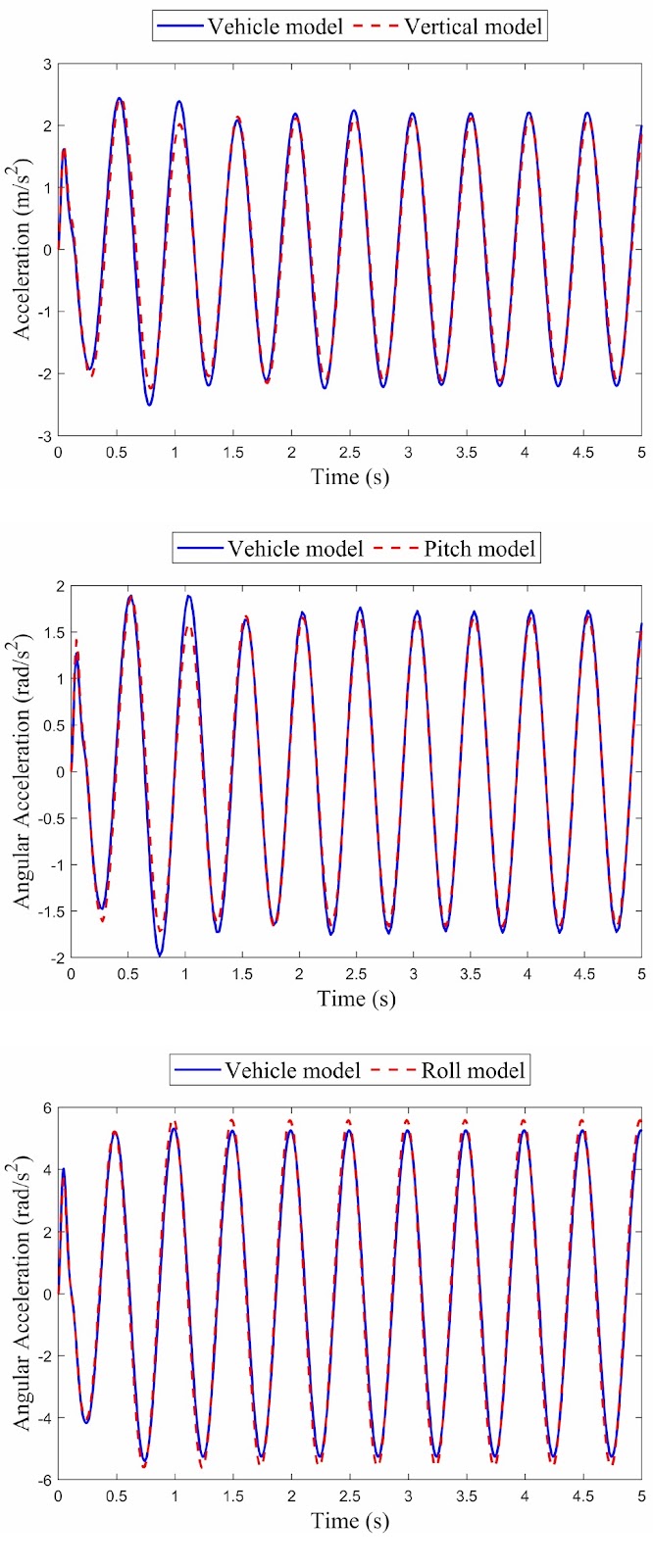
The cooperative control of ride comfort and handling stability in automobile suspension systems presents a significant challenge in intelligent chassis system design. This complexity arises from the high degrees of freedom, diverse operating conditions, and inherent trade-offs between performance metrics in full-car suspension systems. In this paper, a novel switching control strategy is proposed to better balance ride comfort and handling stability for a full-car suspension system. The system integrates a ride comfort controller and an anti-rollover controller, guided by a new rollover risk assessment indicator that requires fewer state variables. First, a vehicle suspension simplification model approach is introduced, reducing the fourteen-degree-of-freedom full-car suspension model to three two-degree-of-freedom models: vertical, pitch and roll. Based on these simplified models, vertical, roll, and pitch controllers are designed, simplifying the controller design process for full-car suspension systems. The ride comfort controller is constructed using the modal energy method in conjunction with the simplified model controllers, while the roll controller functions as the anti-rollover controller. The proposed rollover risk assessment indicator serves as the switching criterion between handling stability and ride comfort control. Experimental results demonstrate that the proposed switching control strategy effectively adapts to various road conditions, enabling the semi-active variable damping suspension system to perform multi-modal switching. Compared to a well-tuned passive suspension, vertical, roll, and pitch accelerations are reduced by 14.13%, 13.02% and 13.08%, respectively, significantly improving ride comfort. Additionally, the system effectively mitigates rollover risk, achieving reductions in roll angle, roll speed, and roll acceleration by 19.69%, 16.40%, and 29.96%, respectively, thereby greatly enhancing vehicle safety. Overall, the proposed switching control strategy achieves a successful balance between ride comfort and handling stability, enhancing overall driving performance.

Multi-model Switching Control Study of a Full-Car Suspension System for Balancing Ride Comfort and Handling Stability
Graphical Abstract
Original ResearchVol. 38, Issue 1 • pp. 136DOI: 10.1186/s10033-025-01314-7Jan 15, 2025

Dynamics of Generalized Space-Deployable Mechanisms Based on the Local Frame of the SE(3) Group

Authors: Zijie Zeng, Tuanjie Li, Hangjia Dong

As space equipment become larger in size and more flexible, generalized mechanisms are being widely used in space-deployable structures. Dynamic modeling of large-scale generalized space-deployable mechanisms is challenging owing to the coupling between the deformation of flexible links and rigid body motion. This study develops a dynamic modeling method for generalized mechanisms using the local frame of the SE(3) Lie group. The model represents both rigid and flexible links within a unified Lie group setting. The expressions for the velocities of rigid links and deformation of flexible links are derived using the Lie algebra framework. The nonuniqueness of the degrees of freedom of generalized kinematic pairs is considered, and the velocity fields of kinematic pairs in different situations are expressed. The equations of motion are derived using Hamilton’s principle. Because the velocities are expressed in the local frame, the mass matrix in the equation is constant, which yields a compact and unified expression for the dynamic equation. A Lie group generalized-α time integration method is adopted to ensure numerical stability and efficiency in simulating multibody systems with large rotations and deformations. Two numerical examples are studied to demonstrate a formulation that reflects the motion responses under varying configurations and loading conditions. This study broadens the application of the local frame of the Lie group formulation in space mechanisms and provides a new concept for dynamic modeling of generalized mechanisms.

Dynamics of Generalized Space-Deployable Mechanisms Based on the Local Frame of the SE(3) Group
Graphical Abstract
Original ResearchVol. 38, Issue 1 • pp. 128DOI: 10.1186/s10033-025-01297-5Jan 15, 2025

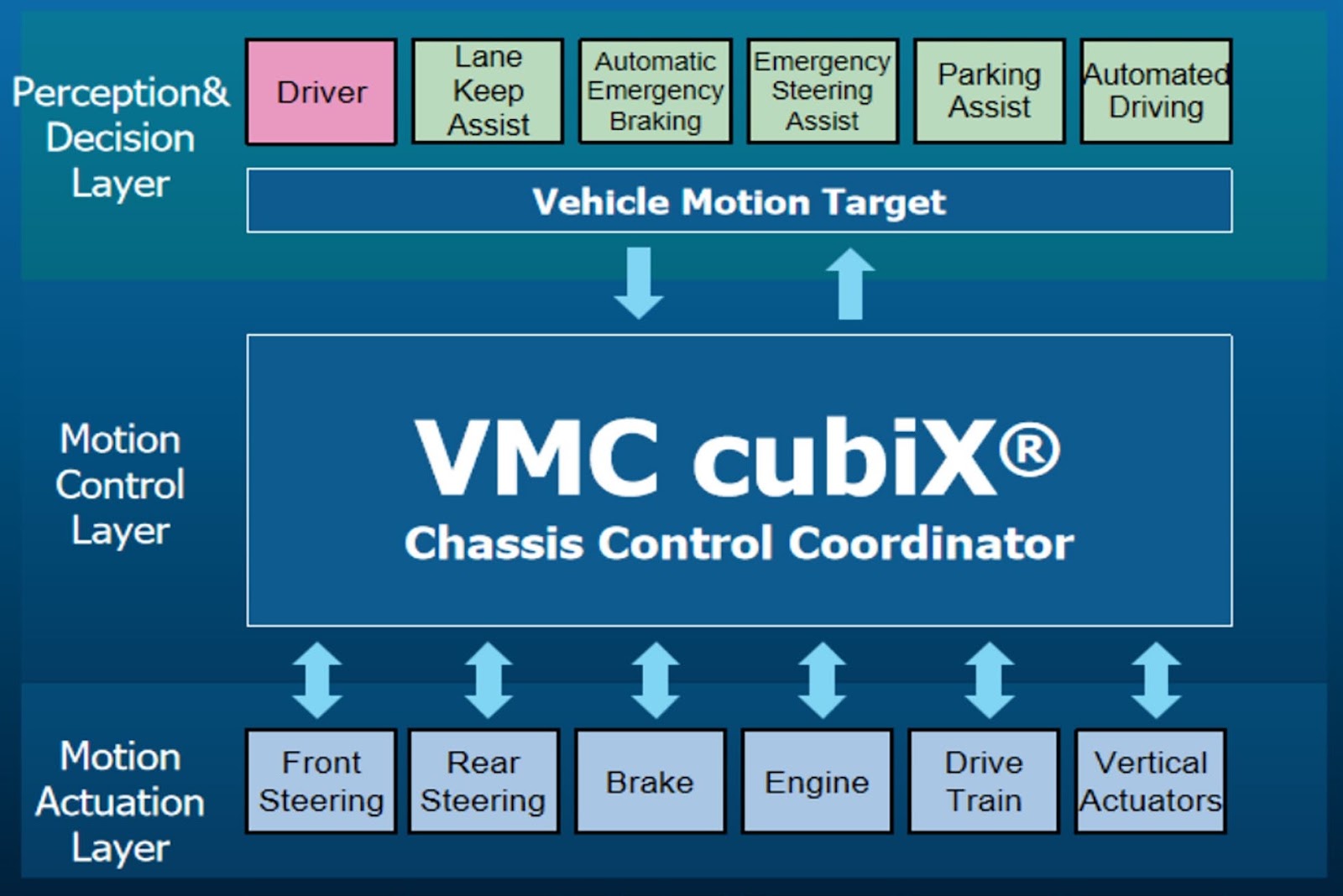
A State-of-the-Art Review on the Revolution of Structure and Control of Vehicle Chassis System: from Tradition to Distributed Chassis System

Authors: Ning Zhang, Zihong Li, Cheng Wang, Jinxiang Wang, Weichao Zhuang, Wenpeng Wei, Guodong Yin

With the advent of in-wheel motors and corner modules, the structure of vehicle chassis subsystems has shifted from traditionally centralized to distributed. This review focuses on the distributed chassis system (DCS) equipped with corner modules. It first provides a comprehensive summary and description of the revolution of the structure and control methods of vehicle chassis systems (including driving, braking, suspension, and steering systems). Given that DCS integrates various chassis subsystems, this review moves beyond individual subsystem analysis and delves into the coordination of these subsystems at the vehicle level. It provides a detailed summary of the methods and architectures used for integrated coordination and control, ensuring that multiple subsystems can function seamlessly as an integrated whole. Finally, this review summarizes the latest distributed control architecture for DCS. It also examines current control theories in the fields of control and information technology for distributed systems, such as multi-agent systems and cyber-physical systems. Based on these two control approaches, a multi-domain cooperative control framework for DCS is proposed.

A State-of-the-Art Review on the Revolution of Structure and Control of Vehicle Chassis System: from Tradition to Distributed Chassis System
Graphical Abstract
Original ResearchVol. 38, Issue 1 • pp. 105DOI: 10.1186/s10033-025-01273-zJan 15, 2025

Modeling and Control of the Linear Motor Active Suspension with Quasi-zero Stiffness Air Spring System Using Polynomial Chaos Expansion

Authors: Pai Li, Xing Xu, Cong Liang, Te Chen, Jiachen Jiang, Vincent Akolbire Atindana

As a crucial component of intelligent chassis systems, air suspension significantly enhances driver comfort and vehicle stability. To further improve the adaptability of commercial vehicles to complex and variable road conditions, this paper proposes a linear motor active suspension with quasi-zero stiffness (QZS) air spring system. Firstly, a dynamic model of the linear motor active suspension with QZS air spring system is established. Secondly, considering the random uncertainties in the linear motor parameters due to manufacturing and environmental factors, a dynamic model and state equations incorporating these uncertainties are constructed using the polynomial chaos expansion (PCE) method. Then, based on H2 robust control theory and the Kalman filter, a state feedback control law is derived, accounting for the random parameter uncertainties. Finally, simulation and hardware-in-the-loop (HIL) experimental results demonstrate that the PCE-H2 robust controller not only provides better performance in terms of vehicle ride comfort compared to general H2 robust controller but also exhibits higher robustness to the effects of random uncertain parameters, resulting in more stable control performance.

Modeling and Control of the Linear Motor Active Suspension with Quasi-zero Stiffness Air Spring System Using Polynomial Chaos Expansion
Graphical Abstract
Original ResearchVol. 38, Issue 1 • pp. 195DOI: 10.1186/s10033-025-01354-zJan 15, 2025

Estimation of Road Friction Coefficient via the Data Enforced Unscented Kalman Filter

Authors: Jinheng Han, Junzhi Zhang, Chen Lv, Ruihai Ma, Henglai Wei

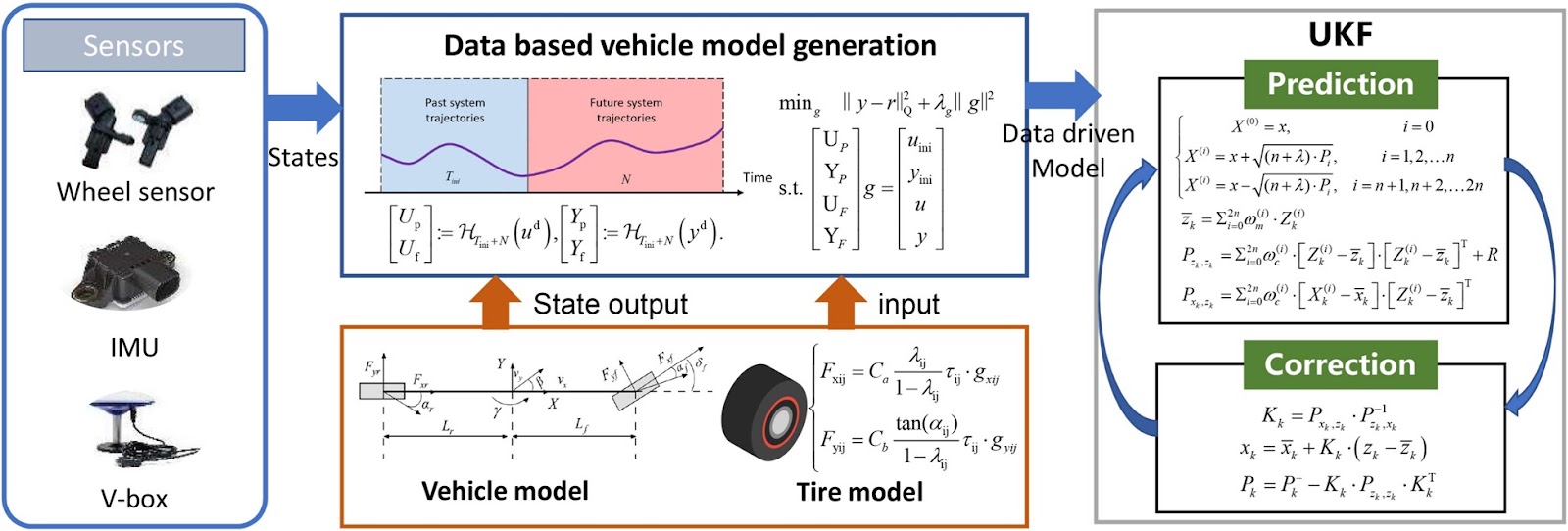
The tire-road friction coefficient (TRFC) plays a critical role in vehicle safety and dynamic stability, with model-based approaches being the primary method for TRFC estimation. However, the accuracy of these methods is often constrained by the complexity of tire force expressions and uncertainties in tire model parameters, particularly under diverse and complex driving conditions. To address these challenges, this paper proposes a novel data-enforced unscented Kalman filter (DeUKF) approach for precise TRFC estimation in intelligent chassis systems. First, an Unscented Kalman Filter is constructed using a nominal tire model-based vehicle dynamics formulation. Then, leveraging Willems’ Fundamental Lemma and historical real-world driving data, the vehicle dynamics model is adaptively corrected within the Unscented Kalman Filter framework. This correction effectively mitigates the adverse effects of tire model uncertainties, thereby enhancing TRFC estimation accuracy. Finally, real vehicle experiments are conducted to validate the effectiveness and superiority of the proposed method.

Estimation of Road Friction Coefficient via the Data Enforced Unscented Kalman Filter
Graphical Abstract
Original ResearchVol. 38, Issue 1 • pp. 187DOI: 10.1186/s10033-025-01345-0Jan 15, 2025

Modeling, Analysis and Control on Vehicle Lateral Dynamics with Chassis Heterogeneous Actuators

Authors: Bo Leng, Wei Han, Selim Solmaz, Reiner John, Lu Xiong

Chassis-by-wire technology has gained significant attention, with the scope of chassis domain control expanding from traditional two-dimensional plane motion control to encompass three-dimensional space motion control. Modern chassis-by-wire systems manage an increasing number of heterogeneous chassis execution systems, including distributed drive, all-wheel drive (AWD), brake-by-wire (BBW), steer-by-wire(SBW), rear-wheel steering (RWS), active stabilizer bar (ASB) and active suspension system (ASS), greatly enhancing the controllable degrees of freedom compared to conventional chassis configurations. To advance research in chassis domain control, it is essential to understand how these heterogeneous execution systems influence vehicle dynamics. This paper focuses on the modeling and analysis of the lateral, longitudinal, and vertical chassis control and execution systems, as well as their impact on vehicle lateral motion. Using a vehicle simulation platform, both the vehicle dynamics model and the individual dynamics models of each execution system were developed to analyze the influence of these systems on lateral dynamics. Additionally, a hierarchical control architecture was designed to control the vehicle’s lateral stability. The effectiveness of the proposed control scheme was demonstrated and validated through hardware-in-the-loop (HIL) tests and real-world vehicle testing.

Modeling, Analysis and Control on Vehicle Lateral Dynamics with Chassis Heterogeneous Actuators
Graphical Abstract
Original ResearchVol. 38, Issue 1 • pp. 140DOI: 10.1186/s10033-025-01325-4Jan 15, 2025

Conformal Geometric Algebra-based Forward Kinematics Analysis Method for the (2-SPR+RPS)+(3-SPR) Serial-Parallel Hybrid Mechanism

Authors: Zhonghai Zhang, Dongyang Zhu, Duanling Li

Parallel mechanisms with fewer degrees of freedom that incorporate two or more SPR limbs have been widely adopted in industrial applications in recent years. However, notable theoretical gaps persist, particularly in the field of analytical solutions for forward kinematics. To address this, this paper proposes an innovative forward kinematics analysis method based on Conformal Geometric Algebra (CGA) for complex hybrid mechanisms formed by serial concatenation of such parallel mechanisms. The method efficiently represents geometric elements and their operational relationships by defining appropriate unknown parameters. It constructs fundamental geometric objects such as spheres and planes, derives vertex expressions through intersection and dual operations, and establishes univariate high-order equations via inner product operations, ultimately obtaining complete analytical solutions for the forward kinematics of hybrid mechanisms. Using the (2-SPR+RPS) + (3-SPR) serial-parallel hybrid mechanism as a validation case, three configuration tests implemented in Mathematica demonstrate that: for each configuration, the upper 3-SPR mechanism yields 15 mathematical solutions, while the lower 2-SPR+RPS mechanism yields 4 mathematical solutions. After geometric constraint filtering, a unique physically valid solution is obtained for each mechanism. SolidWorks simulations further verify the correctness and reliability of the model. This research provides a reliable analytical method for forward kinematics of hybrid mechanisms, holding significant implications for advancing their applications in high-precision scenarios.

Conformal Geometric Algebra-based Forward Kinematics Analysis Method for the (2-SPR+RPS)+(3-SPR) Serial-Parallel Hybrid Mechanism
Graphical Abstract
Original ResearchVol. 38, Issue 1 • pp. 59DOI: 10.1186/s10033-025-01227-5Jan 15, 2025

Investigation of a Low-Power-Consumption and Self-Retaining Micro Solenoid Valve for Thermal Management Systems

Authors: Jing Yao, Shuai Yang, Liu Yang, Qingxin Meng, Chao Ai, Xiangdong Kong

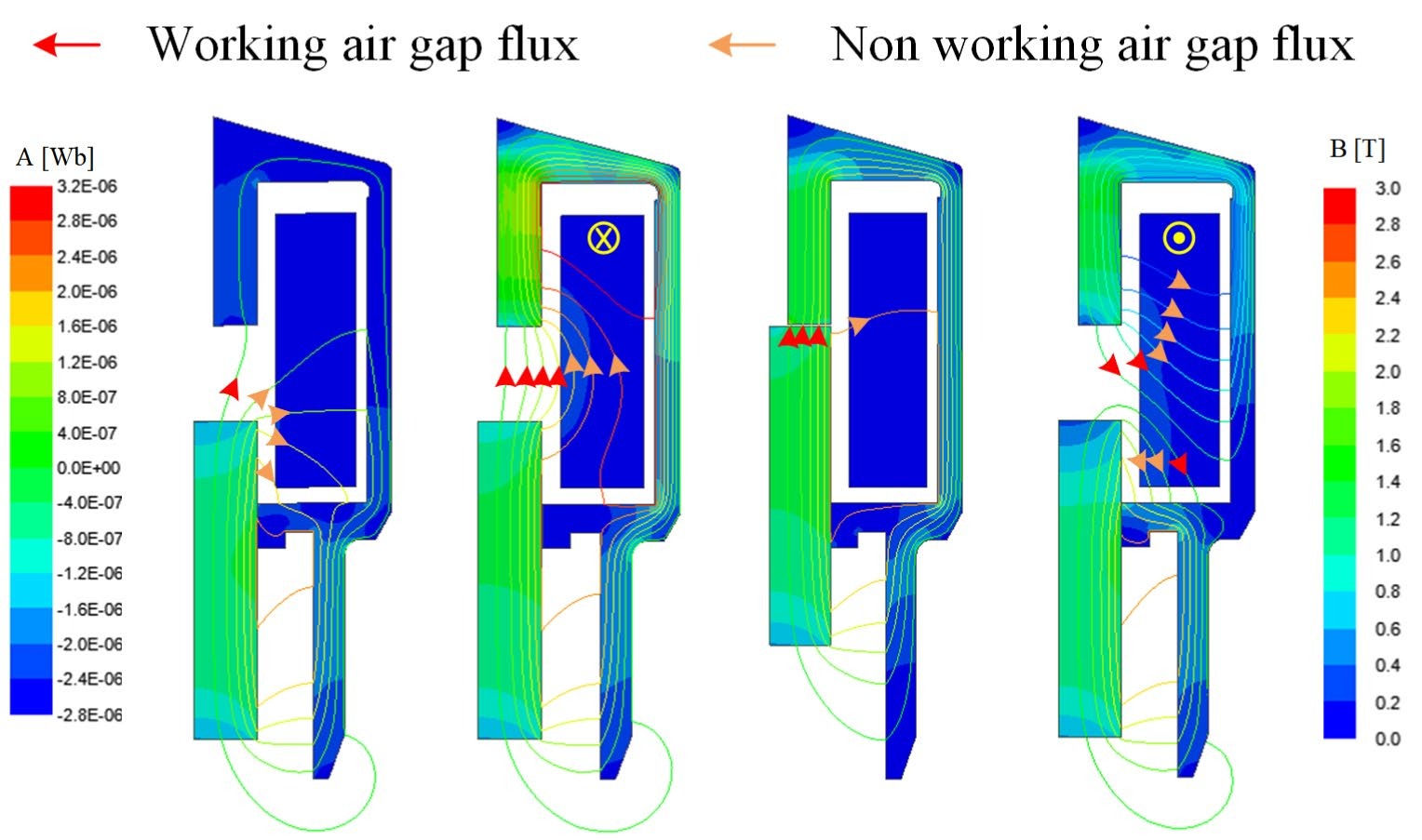
Thermosyphon loops are widely used in cooling systems. However, such distributed thermal management systems lack the ability to actively control the coolant flow in each parallel branch. An effective method for addressing this is to control the coolant flow in each branch using a solenoid valve. However, the existing valves do not satisfy the requirements for fast switching, low power, low pressure loss, and miniaturization. Therefore, in this study, a low-power-consumption miniature solenoid valve (LMSV) is proposed for use in thermal management systems. The key novelty is that the valve is designed with a suitably sized permanent magnet (PM) to allow the spool to continue working without consuming electrical energy. To achieve low flow resistance, a straight-through design is employed in the valve with the electromagnetic actuator located inside the valve shell. Multiphysical coupling analysis is performed to investigate its performance. The influence of the PM dimensions and current on the magnetic field distribution and electromagnetic force is studied. The effects of these key parameters on the flow field and pressure loss are also analyzed. Because the LMSV is sensitive to temperature, the switching time and energy consumption at different working temperatures are investigated. Experimental test platforms are constructed. A valve switching time of as short as 3 ms, pressure loss of 200 Pa at 0.92 L/min, and energy consumption of approximately 1.55 J during the opening and closing processes are achieved. The novel solenoid valve proposed in this study offers fast switching, low power consumption, low pressure loss, and miniaturization to meet the requirements of thermal management systems.

Investigation of a Low-Power-Consumption and Self-Retaining Micro Solenoid Valve for Thermal Management Systems
Graphical Abstract
Original ResearchVol. 38, Issue 1 • pp. 60DOI: 10.1186/s10033-025-01208-8Jan 15, 2025

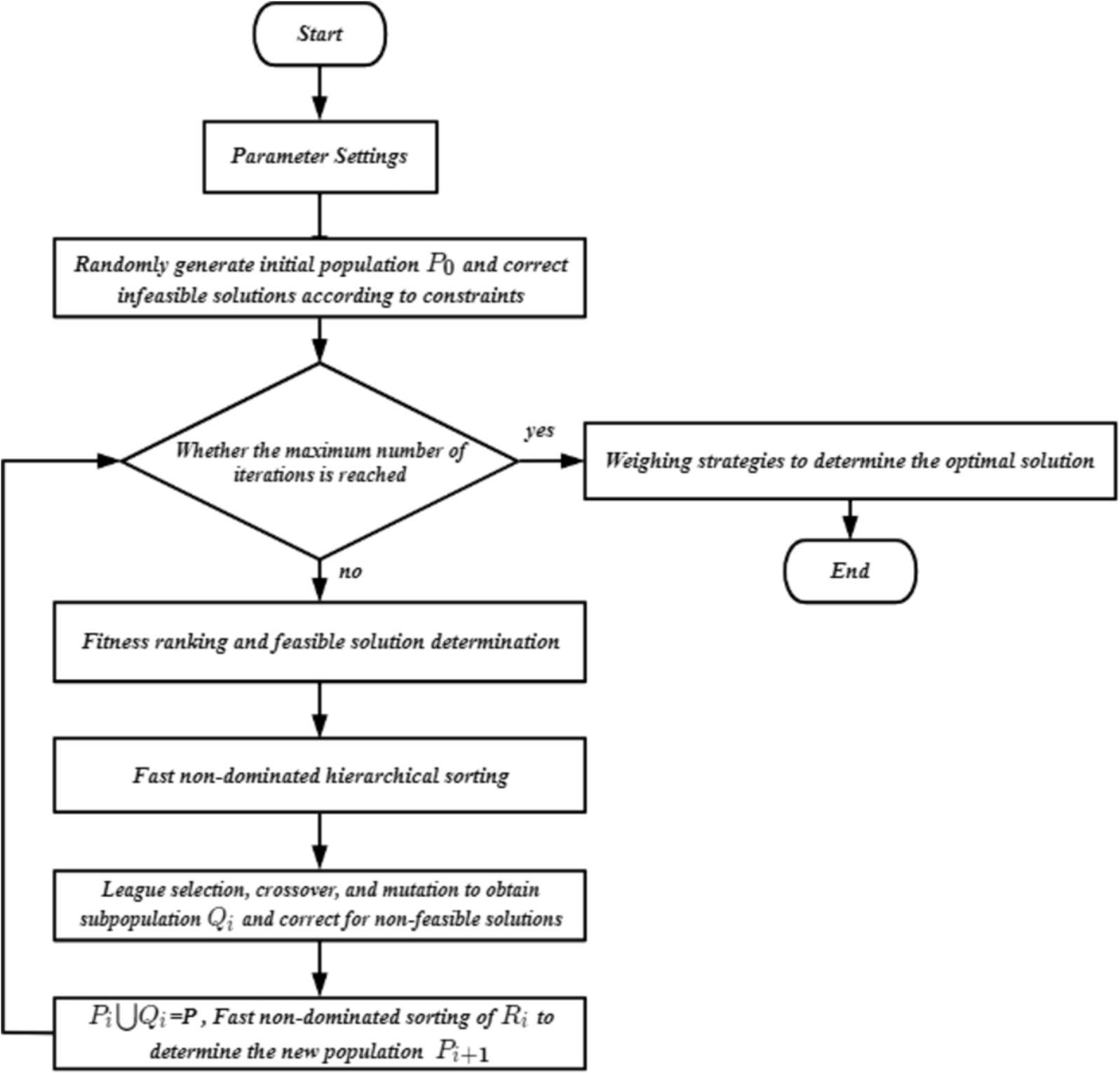
Multi-Objective Optimization Approach for Achieving Target Profile in Rail Grinding of Worn Rails

Authors: Zhiwei Wu, Wengang Fan, Jiang Li, Zhiao Liu, Jiating Yang

This research aimed to overcome challenges such as high costs, lengthy optimization time, and low efficiency in resolving issues related to wheel-rail contact, rail wear, and vehicle dynamics. Based on the wheel-rail contact parameters, an optimal design method for rail grinding target profile is proposed from wear profile measurement to grinding profile design according to the actual railway track and vehicle operating conditions. We utilized Isight to create a simulation test and developed an RBF proxy model that incorporated both mechanical and geometric aspects of wheel-rail contact. By integrating rail modeling, wheel-rail contact analysis, and multi-objective optimization, we established a rail grinding optimization model that was solved using the NSGA-II algorithm. After optimization, the study achieved a 31.863% reduction in average contact stress, a 70.5% reduction in matching wear work, and a 100.391% increase in the difference in rolling radius between the wheel and rail.

Multi-Objective Optimization Approach for Achieving Target Profile in Rail Grinding of Worn Rails
Graphical Abstract
Original ResearchVol. 38, Issue 1 • pp. 72DOI: 10.1186/s10033-025-01229-3Jan 15, 2025

Revolutionizing Rail Transportation: Unleashing Titanium Alloys for Enhanced Performance, Safety, and Sustainability

Authors: Zhe Zhang, Bing Yang, Shoune Xiao

The exploration of titanium alloy applications in railway transportation aims to meet the newly emerged demand for vehicles that are lighter and more efficient. This research focuses on the potential of these materials to concurrently reduce vehicle weight and enhance efficiency, sustainability, and safety. Challenges faced include high production and processing costs, durability issues in harsh railway environments, and environmental impacts associated with alloy production. Research findings indicate that innovative alloy design and advanced processing techniques, such as powder metallurgy, additive manufacturing, and surface treatment, significantly improve the applicability of titanium alloys in railway applications. These methods substantially increase energy efficiency and safety. Additionally, advancements in environmentally sustainable practices in the production of titanium alloys address ecological concerns. As research progresses, the study and development of low-cost, high-performance titanium alloys highlight the need for more efficient and environmentally friendly manufacturing processes. Exploring new alloy compositions and applying emerging technologies in processing and manufacturing are key areas for future research. These advancements are expected to enhance the role of titanium alloys in revolutionizing railway transportation, aligning with global trends towards sustainability and performance improvement. This research underscores the significant potential contribution of titanium alloys to future efficient and eco-friendly rail travel.

Revolutionizing Rail Transportation: Unleashing Titanium Alloys for Enhanced Performance, Safety, and Sustainability
Graphical Abstract
Original ResearchVol. 38, Issue 1 • pp. 63DOI: 10.1186/s10033-025-01207-9Jan 15, 2025

Multi-Objective Parallel Human-machine Steering Coordination Control Strategy of Intelligent Vehicles Path Tracking Based on Deep Reinforcement Learning

Authors: Hongbo Wang, Lizhao Feng, Shaohua Li, Wuwei Chen, Juntao Zhou

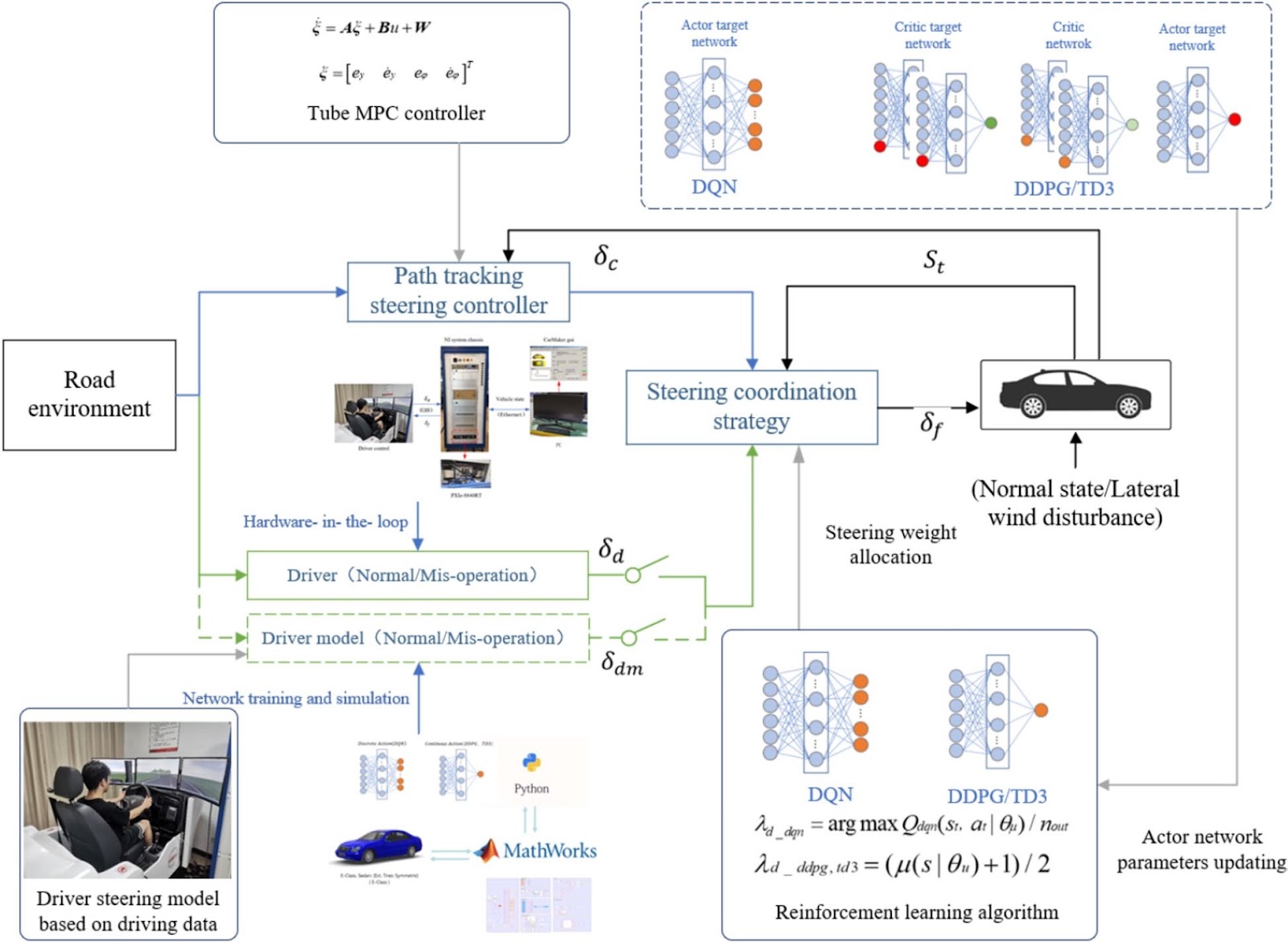
In the parallel steering coordination control strategy for path tracking, it is difficult to match the current driver steering model using the fixed parameters with the actual driver, and the designed steering coordination control strategy under a single objective and simple conditions is difficult to adapt to the multi-dimensional state variables’ input. In this paper, we propose a deep reinforcement learning algorithm-based multi-objective parallel human-machine steering coordination strategy for path tracking considering driver misoperation and external disturbance. Firstly, the driver steering mathematical model is constructed based on the driver preview characteristics and steering delay response, and the driver characteristic parameters are fitted after collecting the actual driver driving data. Secondly, considering that the vehicle is susceptible to the influence of external disturbances during the driving process, the Tube MPC (Tube Model Predictive Control) based path tracking steering controller is designed based on the vehicle system dynamics error model. After verifying that the driver steering model meets the driver steering operation characteristics, DQN (Deep Q-network), DDPG (Deep Deterministic Policy Gradient) and TD3 (Twin Delayed Deep Deterministic Policy Gradient) deep reinforcement learning algorithms are utilized to design a multi-objective parallel steering coordination strategy which satisfies the multi-dimensional state variables’ input of the vehicle. Finally, the tracking accuracy, lateral safety, human-machine conflict and driver steering load evaluation index are designed in different driver operation states and different road environments, and the performance of the parallel steering coordination control strategies with different deep reinforcement learning algorithms and fuzzy algorithms are compared by simulations and hardware in the loop experiments. The results show that the parallel steering collaborative strategy based on a deep reinforcement learning algorithm can more effectively assist the driver in tracking the target path under lateral wind interference and driver misoperation, and the TD3-based coordination control strategy has better overall performance.

Multi-Objective Parallel Human-machine Steering Coordination Control Strategy of Intelligent Vehicles Path Tracking Based on Deep Reinforcement Learning
Graphical Abstract
Original ResearchVol. 38, Issue 1 • pp. 71DOI: 10.1186/s10033-025-01203-zJan 15, 2025

FS-DRL: Fine-Grained Scheduling of Autonomous Vehicles at Non-Signalized Intersections via Dual Reinforced Learning

Authors: Ning Sun, Weihao Wu, Guangbing Xiao, Guodong Yin

Complex road conditions without signalized intersections when the traffic flow is nearly saturated result in high traffic congestion and accidents, reducing the traffic efficiency of intelligent vehicles. The complex road traffic environment of smart vehicles and other vehicles frequently experiences conflicting start and stop motion. The fine-grained scheduling of autonomous vehicles (AVs) at non-signalized intersections, which is a promising technique for exploring optimal driving paths for both assisted driving nowadays and driverless cars in the near future, has attracted significant attention owing to its high potential for improving road safety and traffic efficiency. Fine-grained scheduling primarily focuses on signalized intersection scenarios, as applying it directly to non-signalized intersections is challenging because each AV can move freely without traffic signal control. This may cause frequent driving collisions and low road traffic efficiency. Therefore, this study proposes a novel algorithm to address this issue. Our work focuses on the fine-grained scheduling of automated vehicles at non-signal intersections via dual reinforced training (FS-DRL). For FS-DRL, we first use a grid to describe the non-signalized intersection and propose a convolutional neural network (CNN)-based fast decision model that can rapidly yield a coarse-grained scheduling decision for each AV in a distributed manner. We then load these coarse-grained scheduling decisions onto a deep Q-learning network (DQN) for further evaluation. We use an adaptive learning rate to maximize the reward function and employ parameter ε to tradeoff the fast speed of coarse-grained scheduling in the CNN and optimal fine-grained scheduling in the DQN. In addition, we prove that using this adaptive learning rate leads to a converged loss rate with an extremely small number of training loops. The simulation results show that compared with Dijkstra, RNN, and ant colony-based scheduling, FS-DRL yields a high accuracy of 96.5% on the sample, with improved performance of approximately 61.54%–85.37% in terms of the average conflict and traffic efficiency.

FS-DRL: Fine-Grained Scheduling of Autonomous Vehicles at Non-Signalized Intersections via Dual Reinforced Learning
Graphical Abstract
Original ResearchVol. 38, Issue 1 • pp. 62DOI: 10.1186/s10033-025-01223-9Jan 15, 2025

CGA-Based Approach to Forward Kinematics of Parallel Mechanisms with the 3-RE Structure

Authors: Duanling Li, Yuankai Zhang, Ying Zhang, Zhonghai Zhang, Longjie Fan, Xiao Su, Shuaimin Gao

To investigate the forward kinematics problem of parallel mechanisms with complex limbs and to expand the applicability of the powerful tool of Conformal Geometric Algebra (CGA), a CGA-based modeling and solution method for a class of parallel platforms with 3-RE structure after locking the actuated joints is proposed in this paper. Given that the angle between specific joint axes of limbs remains constant, a set of geometric constraints for the forward kinematics of parallel mechanisms (PM) are determined. After translating unit direction vectors of these joint axes to the common starting point, the geometric constraints of the angle between the vectors are transformed into the distances between the endpoints of the vectors, making them easier to handle. Under the framework of CGA, the positions of key points that determine the position and orientation of the moving platform can be intuitively determined by the intersection, division, and duality of basic geometric entities. By employing the tangent half-angle substitution, the forward kinematic analysis of the parallel mechanisms leads to a high-order univariate polynomial equation without the need for any complex algebraic elimination operations. After solving this equation and back substitution, the position and pose of the MP can be obtained indirectly. A numerical case is utilized to confirm the effectiveness of the proposed method.

CGA-Based Approach to Forward Kinematics of Parallel Mechanisms with the 3-RE Structure
Graphical Abstract
Original ResearchVol. 38, Issue 1 • pp. 56DOI: 10.1186/s10033-025-01216-8Jan 15, 2025

Fast, Safe and Robust Motion Planning for Autonomous Vehicles Based on Robust Control Invariant Tubes

Authors: Mingzhuo Zhao, Tong Shen, Fanxun Wang, Guodong Yin

This paper tackles uncertainties between planning and actual models. It extends the concept of RCI (robust control invariant) tubes, originally a parameterized representation of closed-loop control robustness in traditional feedback control, to the domain of motion planning for autonomous vehicles. Thus, closed-loop system uncertainty can be preemptively addressed during vehicle motion planning. This involves selecting collision-free trajectories to minimize the volume of robust invariant tubes. Furthermore, constraints on state and control variables are translated into constraints on the RCI tubes of the closed-loop system, ensuring that motion planning produces a safe and optimal trajectory while maintaining flexibility, rather than solely optimizing for the open-loop nominal model. Additionally, to expedite the solving process, we were inspired by L2 gain to parameterize the RCI tubes and developed a parameterized explicit iterative expression for propagating ellipsoidal uncertainty sets within closed-loop systems. Furthermore, we applied the pseudospectral orthogonal collocation method to parameterize the optimization problem of transcribing trajectories using high-order Lagrangian polynomials. Finally, under various operating conditions, we incorporate both the kinematic and dynamic models of the vehicle and also conduct simulations and analyses of uncertainties such as heading angle measurement, chassis response, and steering hysteresis. Our proposed robust motion planning framework has been validated to effectively address nearly all bounded uncertainties while anticipating potential tracking errors in control during the planning phase. This ensures fast, closed-loop safety and robustness in vehicle motion planning.

Fast, Safe and Robust Motion Planning for Autonomous Vehicles Based on Robust Control Invariant Tubes
Graphical Abstract
Original ResearchVol. 38, Issue 1 • pp. 16DOI: 10.1186/s10033-025-01177-yJan 15, 2025

Understanding the Machining Process of Hierarchical Micro/Nanograting Structures Used for Optical Variable Device

Authors: Yanquan Geng, Wenhan Zhu, Xiaosong Zhang, Aoxiang Zhang, Yongda Yan, Hailong Cui, Bo Xue, Jiqiang Wang

Hierarchical micro/nanograting structures have attracted increasing attention owing to their significant applications in the fields of structural coloring, anti-counterfeiting, and decoration. Thus, the fabrication of hierarchical micro/nanograting structures is important for these applications. In this study, a strategy for machining hierarchical micro/nanograting structures is developed by controlling the tool movement trajectory. A coupling Euler-Lagrange finite element model is established to simulate the machining process. The effect of the machining methods on the nanograting formation is demonstrated, and a suitable machining method for reducing the cutting force is obtained. The height of the nanograting decreases with an increase in the tool edge radius. Furthermore, optical variable devices (OVDs) are machined using an array overlap machining approach. Coding schemes for the parallel column unit crossover and column unit in the groove crossover are designed to achieve high-quality machining of OVDs. The coloring of the logo of the Harbin Institute of Technology and the logo of the centennial anniversary of the Harbin Institute of Technology on the surface of metal samples, such as aluminum alloys, is realized. The findings of this study provide a method for the fabrication of hierarchical micro/nanograting structures that can be used to prepare OVDs.

Understanding the Machining Process of Hierarchical Micro/Nanograting Structures Used for Optical Variable Device
Graphical Abstract
Original ResearchVol. 38, Issue 1 • pp. 31DOI: 10.1186/s10033-025-01179-wJan 15, 2025

Kinematic Calibration of a 5-DoF Parallel Machining Robot with a Novel Adaptive and Weighted Identification Method Based on Generalized Cross Validation

Authors: Lefeng Gu, Fugui Xie

Accurate kinematic calibration is the very foundation for robots’ application in industry demanding high precision such as machining. Considering the complex error characteristic and severe ill-posed identification issues of a 5-DoF parallel machining robot, this paper proposes an adaptive and weighted identification method to achieve high-precision kinematic calibration while maintaining reliable stability. First, a kinematic error propagation mechanism model considering the non-ideal constraints and the screw self-rotation is formulated by incorporating the intricate structure of multiple chains and a unique driven screw arrangement of the robot. To address the challenge of accurately identifying such a sophisticated error model, a novel adaptive and weighted identification method based on generalized cross validation (GCV) is proposed. Specifically, this approach innovatively introduces Gauss-Markov estimation into the GCV algorithm and utilizes prior physical information to construct both a weighted identification model and a weighted cross-validation function, thus eliminating the inaccuracy caused by significant differences in dimensional magnitudes of pose errors and achieving accurate identification with flexible numerical stability. Finally, the kinematic calibration experiment is conducted. The comparative experimental results demonstrate that the presented approach is effective and has enhanced accuracy performance over typical least squares methods, with maximum position and orientation errors reduced from 2.279 mm to 0.028 mm and from 0.206° to 0.017°, respectively.

Kinematic Calibration of a 5-DoF Parallel Machining Robot with a Novel Adaptive and Weighted Identification Method Based on Generalized Cross Validation
Graphical Abstract
Original ResearchVol. 38, Issue 1 • pp. 30DOI: 10.1186/s10033-024-01160-zJan 15, 2025

Rule-Guidance Reinforcement Learning for Lane Change Decision-making: A Risk Assessment Approach

Authors: Lu Xiong, Zhuoren Li, Danyang Zhong, Puhang Xu, Chen Tang

To solve problems of poor security guarantee and insufficient training efficiency in the conventional reinforcement learning methods for decision-making, this study proposes a hybrid framework to combine deep reinforcement learning with rule-based decision-making methods. A risk assessment model for lane-change maneuvers considering uncertain predictions of surrounding vehicles is established as a safety filter to improve learning efficiency while correcting dangerous actions for safety enhancement. On this basis, a Risk-fused DDQN is constructed utilizing the model-based risk assessment and supervision mechanism. The proposed reinforcement learning algorithm sets up a separate experience buffer for dangerous trials and punishes such actions, which is shown to improve the sampling efficiency and training outcomes. Compared with conventional DDQN methods, the proposed algorithm improves the convergence value of cumulated reward by 7.6% and 2.2% in the two constructed scenarios in the simulation study and reduces the number of training episodes by 52.2% and 66.8% respectively. The success rate of lane change is improved by 57.3% while the time headway is increased at least by 16.5% in real vehicle tests, which confirms the higher training efficiency, scenario adaptability, and security of the proposed Risk-fused DDQN.

Rule-Guidance Reinforcement Learning for Lane Change Decision-making: A Risk Assessment Approach
Graphical Abstract
Original ResearchVol. 38, Issue 1 • pp. 18DOI: 10.1186/s10033-024-01172-9Jan 15, 2025

Neural Network Adaptive Hierarchical Sliding Mode Control for the Trajectory Tracking of a Tendon-Driven Manipulator

Authors: Yudong Zhang, Leiying He, Jianneng Chen, Bo Yan, Chuanyu Wu

Tracking control of tendon-driven manipulators has become a prevalent research area. However, the existence of flexible elastic tendons generates substantial residual vibrations, resulting in difficulties for trajectory tracking control of the manipulator. This paper proposes the radial basis function neural network adaptive hierarchical sliding mode control (RBFNNA-HSMC) method, which combines the dynamic model of the elastic tendon-driven manipulator (ETDM) with radial basis neural network adaptive control and hierarchical sliding mode control technology. The aim is to achieve trajectory tracking control of ETDM even under conditions of model inaccuracy and disturbance. The Lyapunov stability theory demonstrates the stability of the proposed RBFNNA-HSM controller. In order to assess the effectiveness and adaptability of the proposed control method, simulations and experiments were performed on a two-DOF ETDM. The RBFNNA-HSM method shows superior tracking accuracy compared to traditional model-based HSM control. The experiment shows that the maximum tracking error for ETDM double-joint trajectory tracking is below 2.593×10⁻³ rad and 1.624×10⁻³ rad, respectively.

Neural Network Adaptive Hierarchical Sliding Mode Control for the Trajectory Tracking of a Tendon-Driven Manipulator
Graphical Abstract
Original ResearchVol. 38, Issue 1 • pp. 54DOI: 10.1186/s10033-025-01215-9Jan 15, 2025

An Approach to Welding Penetration Control with Neighborhood Rough Set and ANFIS

Authors: Xiaohong Xiang, Zhiqiang Feng, Naiwen Fang, Daidi Zhao, Yuefei Wang

Owing to process conditions such as uneven clearance of base metal assembly and welding deformation, it is difficult to obtain well-formed structural welds with robot constant specification parameters welding. Determining how to extract a structured, anti-interference, concise, and dynamic knowledge model from measurable data, and then adjust the welding parameters with corresponding control methods in real time is a central problem to be solved in welding formation control. Hence, this paper proposes a welding penetration control method based on a Neighborhood Rough Set-Adaptive Neuro-Fuzzy Inference System (NRS-ANFIS) to achieve effective penetration control for the GMAW welding process. In orthogonal experiments, the NRS algorithm, which is based on visual sensing to obtain the properties of the weld pool and gap changes, is used to reduce the established frontal weld pool feature information decision table, and the minimum feature set of the weld pool tail width WT and the tail area coefficient CTS is obtained. The minimum feature set of the effective frontal weld pool, real-time line laser distance change, and real-time current information are used as the input for the ANFIS control system. The experimental results for the two groups of time-varying gaps demonstrate that under the condition of no preheating of the base metal, the complete welding penetration rate of the adjusted welding process parameters output by the trained ANFIS model reaches 87%, and the backside melting width is uniform and consistent, which meets the welding specification requirements.

An Approach to Welding Penetration Control with Neighborhood Rough Set and ANFIS
Graphical Abstract
Original ResearchVol. 38, Issue 1 • pp. 8DOI: 10.1186/s10033-024-01169-4Jan 15, 2025

Designing Load-Bearing Bio-Inspired Materials for Simultaneous Static Properties and Dynamic Damping: Multi-Objective Optimization for Micro-Structure

Authors: Bo Dong, Yunfei Jia, Wei Wang

Biological load-bearing materials, like the nacre in shells, have a unique staggered structure that supports their superior mechanical properties. Engineers have been encouraged to imitate it to create load-bearing bio-inspired materials which have excellent properties not present in conventional composites. To create such materials with desirable mechanical properties, the optimum structural parameters combination must be selected. Moreover, the optimal design of bio-inspired composites needs to take into account the trade-offs between various mechanical properties. In this paper, multi-objective optimization models were developed using structural parameters as design variables and mechanical properties as optimization objectives, including stiffness, strength, toughness, and dynamic damping. Using the NSGA-II optimization algorithm, a set of optimal solutions were solved. Additionally, three different structures in natural nacre were introduced in order to utilize the better structure when design bio-inspired materials. The range of optimal solutions that obtained using results from previous research were examined and explained why this collection of optimal solution ranges is better. Also, optimal solutions were compared with the structural features and mechanical properties of real nacre and artificial biomimetic composites to validate our models. Finally, the optimum design strategies can be obtained for nacre-like composites. Our research methodically proposes an optimization method for achieving load-bearing bio-inspired materials with excellent properties and creates a set of optimal solutions from which designers can select the one that best suits their preferences, allowing the fabricated materials to demonstrate preferred performance.

Designing Load-Bearing Bio-Inspired Materials for Simultaneous Static Properties and Dynamic Damping: Multi-Objective Optimization for Micro-Structure
Graphical Abstract
Original ResearchVol. 38, Issue 1 • pp. 20DOI: 10.1186/s10033-024-01163-wJan 15, 2025

Active Control Method for Frequency Domain Error of Aerostatic Spindle Based on Acoustic Levitation

Authors: Guoda Chen, Zhaoshou Chen, Yifan Ge

In the machining of high-end optical components, the aerostatic spindle error of an ultra-precision machine tool has a significant impact on the surface quality of the machined surfaces. The surfaces of many high-end optical components need to meet the extremely stringent requirements of the full-frequency band error, which poses significant challenge to the control of the aerostatic spindle error. In this research, we put forward an active control method for the frequency domain error of the aerostatic spindle based on acoustic levitation, in which the acoustic-magnetism-fluid-solid multi-field coupling rotor dynamics modeling method of the aerostatic spindle was proposed and the corresponding multi-field coupling model was established. Through the numerical simulation and preliminary experiments, the influence law of acoustic levitation on the frequency domain error of the aerostatic spindle is obtained. The results showed that acoustic levitation can be used to control the frequency domain error of the aerostatic spindle to some extent, which verified the effectiveness of the proposed method.

Active Control Method for Frequency Domain Error of Aerostatic Spindle Based on Acoustic Levitation
Graphical Abstract
Original ResearchVol. 38, Issue 1 • pp. 14DOI: 10.1186/s10033-024-01164-9Jan 15, 2025

Collaborative Improvement of Structure Shape and Surface Integrity in Titanium Alloy Hole Burnishing

Authors: Jiahui Liu, Pingfa Feng, Zibiao Wang, Jianfu Zhang, Feng Feng, Xiangyu Zhang

In the aerospace field, hole burnishing enhancement plays an essential role in improving the service performance of load-bearing holes. To satisfy the assembly accuracy and strength requirements, the structure shape and surface integrity must be considered simultaneously during the enhancement process. The current manufacturing process of hole burnishing has a relatively weak balance between the structure shape and surface integrity; therefore, it is necessary to analyze the mechanism and optimize the parameters to improve the strengthening effect of the holes. In this study, a two-dimensional longitudinal simplified model for the hole burnishing process was established, and the reasons for the surface roughness improvement of the hole wall and material accumulation on the upper surface were analyzed. Experiments were conducted to determine the influence of the burnishing parameters on the structure shape (material accumulation, shape contour, and roundness) and surface integrity (surface roughness, residual stress, and surface hardness), based on the opposite requirements of improving the structure shape and surface integrity for the burnishing depth (BD). The results showed that with an increase in the BD, the structure shape deteriorated, whereas the surface integrity improved. Fatigue behavior verification experiments were conducted, and parameter selection schemes for the collaborative improvement of the structure shape and surface integrity were discussed. For the holes of titanium alloy TB6 (Ti-10V-2Fe-3Al), the fatigue life can be increased by 162% when the BD, spindle speed, and feed rate were 0.20 mm, 200 r/min, and 0.2 mm/r, respectively.

Collaborative Improvement of Structure Shape and Surface Integrity in Titanium Alloy Hole Burnishing
Graphical Abstract
Original ResearchVol. 38, Issue 1 • pp. 11DOI: 10.1186/s10033-025-01185-yJan 15, 2025

Study on Dry Electrical Discharge Assisted Grinding of SiCp/Al Composite

Authors: Yanjun Lu, Yuming Huang, Xiaobu Liu, Rong Cheng, Shunda Zhan

SiC-reinforced aluminum matrix (SiCp/Al) composite is widely utilized in the aerospace, automotive, and electronics industries due to the combination of ceramic hardness and metal toughness. However, the significant disparity in properties between SiC particles and the aluminum matrix results in severe tool wear and diminished surface quality during conventional machining. This study proposes an environmentally friendly and clean dry electrical discharge assisted grinding process as an efficient and low-damage machining method for SiCp/Al. An experimental platform was set up to study the impact of grinding and discharge process parameters on surface quality. The study compared the chip formation mechanism and surface quality between dry electrical discharge assisted grinding and conventional grinding, revealing relationships between surface roughness, grinding force, grinding temperature, and related parameters. The results indicate that the proposed grinding method leads to smaller chip sizes, lower grinding forces and temperatures, and an average reduction of 19.2% in surface roughness compared to conventional grinding. The axial, tangential, and normal grinding forces were reduced by roughly 10.5%, 37.8%, and 23.0%, respectively. The optimized process parameters were determined to be N = 2500 r/min, vf = 30 mm/min, a = 10 µm, E = 15 V, f = 5000 Hz, dc = 80%, resulting in a surface roughness of 0.161 μm.

Study on Dry Electrical Discharge Assisted Grinding of SiCp/Al Composite
Graphical Abstract
Original ResearchVol. 38, Issue 1 • pp. 2DOI: 10.1186/s10033-024-01145-yJan 15, 2025

Application of Fuzzy Inference System in Gas Turbine Engine Fault Diagnosis Against Measurement Uncertainties

Authors: Shuai Ma, Yafeng Wu, Zheng Hua, Linfeng Gou

Robustness against measurement uncertainties is crucial for gas turbine engine diagnosis. While current research focuses mainly on measurement noise, measurement bias remains challenging. This study proposes a novel performance-based fault detection and identification (FDI) strategy for twin-shaft turbofan gas turbine engines and addresses these uncertainties through a first-order Takagi-Sugeno-Kang fuzzy inference system. To handle ambient condition changes, we use parameter correction to preprocess the raw measurement data, which reduces the FDI’s system complexity. Additionally, the power-level angle is set as a scheduling parameter to reduce the number of rules in the TSK-based FDI system. The data for designing, training, and testing the proposed FDI strategy are generated using a component-level turbofan engine model. The antecedent and consequent parameters of the TSK-based FDI system are optimized using the particle swarm optimization algorithm and ridge regression. A robust structure combining a specialized fuzzy inference system with the TSK-based FDI system is proposed to handle measurement biases. The performance of the first-order TSK-based FDI system and robust FDI structure are evaluated through comprehensive simulation studies. Comparative studies confirm the superior accuracy of the first-order TSK-based FDI system in fault detection, isolation, and identification. The robust structure demonstrates a 2%–8% improvement in the success rate index under relatively large measurement bias conditions, thereby indicating excellent robustness. Accuracy against significant bias values and computation time are also evaluated, suggesting that the proposed robust structure has desirable online performance. This study proposes a novel FDI strategy that effectively addresses measurement uncertainties.

Application of Fuzzy Inference System in Gas Turbine Engine Fault Diagnosis Against Measurement Uncertainties
Graphical Abstract
Original ResearchVol. 38, Issue 1 • pp. 21DOI: 10.1186/s10033-025-01188-9Jan 15, 2025

State-of-the-art Review of Metallic Microneedles: Structure, Fabrication, and Application

Authors: Zhishan Yuan, Hongzhao Zhang, Wentao Hu, Xiao Yu, Si Qin, Chengyong Wang, Fenglin Zhang

Microneedle (MN) is a medical device containing an array of needles with a micrometer-scale. It can penetrate the human stratum corneum painlessly and efficiently for treatment and diagnosis purposes. Currently, the materials commonly used to manufacture MNs include silicon, polymers, ceramics and metals. Metallic MNs (MMNs) have drawn significant attention owing to its superior mechanical properties, machinability, and biocompatibility. This paper is a state-of-the-art review of the structure, fabrication technologies, and applications of MMNs. According to the relative position of the axis of MN and the plane of the substrate, MMNs can be divided into in-plane and out-of-plane. Solid, hollow, coated and porous MMNs are also employed to characterize their internal and surface structures. Until now, numerous fabrication technologies, including cutting tool machining, non-traditional machining, etching, hot-forming, and additive manufacturing, have been used to fabricate MMNs. The recent advances in the application of MMNs in drug delivery, disease diagnosis, and cosmetology are also discussed in-depth. Finally, the shortcomings in the fabrication and application of MMNs and future directions for development are highlighted.

State-of-the-art Review of Metallic Microneedles: Structure, Fabrication, and Application
Graphical Abstract
Original ResearchVol. 38, Issue 1 • pp. 5DOI: 10.1186/s10033-024-01173-8Jan 15, 2025

Knowledge Driven Machine Learning Towards Interpretable Intelligent Prognostics and Health Management: Review and Case Study

Authors: Ruqiang Yan, Zheng Zhou, Zuogang Shang, Zhiying Wang, Chenye Hu, Yasong Li, Yuangui Yang, Xuefeng Chen, Robert X. Gao

Despite significant progress in the Prognostics and Health Management (PHM) domain using pattern learning systems from data, machine learning (ML) still faces challenges related to limited generalization and weak interpretability. A promising approach to overcoming these challenges is to embed domain knowledge into the ML pipeline, enhancing the model with additional pattern information. In this paper, we review the latest developments in PHM, encapsulated under the concept of Knowledge Driven Machine Learning (KDML). We propose a hierarchical framework to define KDML in PHM, which includes scientific paradigms, knowledge sources, knowledge representations, and knowledge embedding methods. Using this framework, we examine current research to demonstrate how various forms of knowledge can be integrated into the ML pipeline and provide roadmap to specific usage. Furthermore, we present several case studies that illustrate specific implementations of KDML in the PHM domain, including inductive experience, physical model, and signal processing. We analyze the improvements in generalization capability and interpretability that KDML can achieve. Finally, we discuss the challenges, potential applications, and usage recommendations of KDML in PHM, with a particular focus on the critical need for interpretability to ensure trustworthy deployment of artificial intelligence in PHM.

Knowledge Driven Machine Learning Towards Interpretable Intelligent Prognostics and Health Management: Review and Case Study
Graphical Abstract