Key Takeaways & Executive Findings
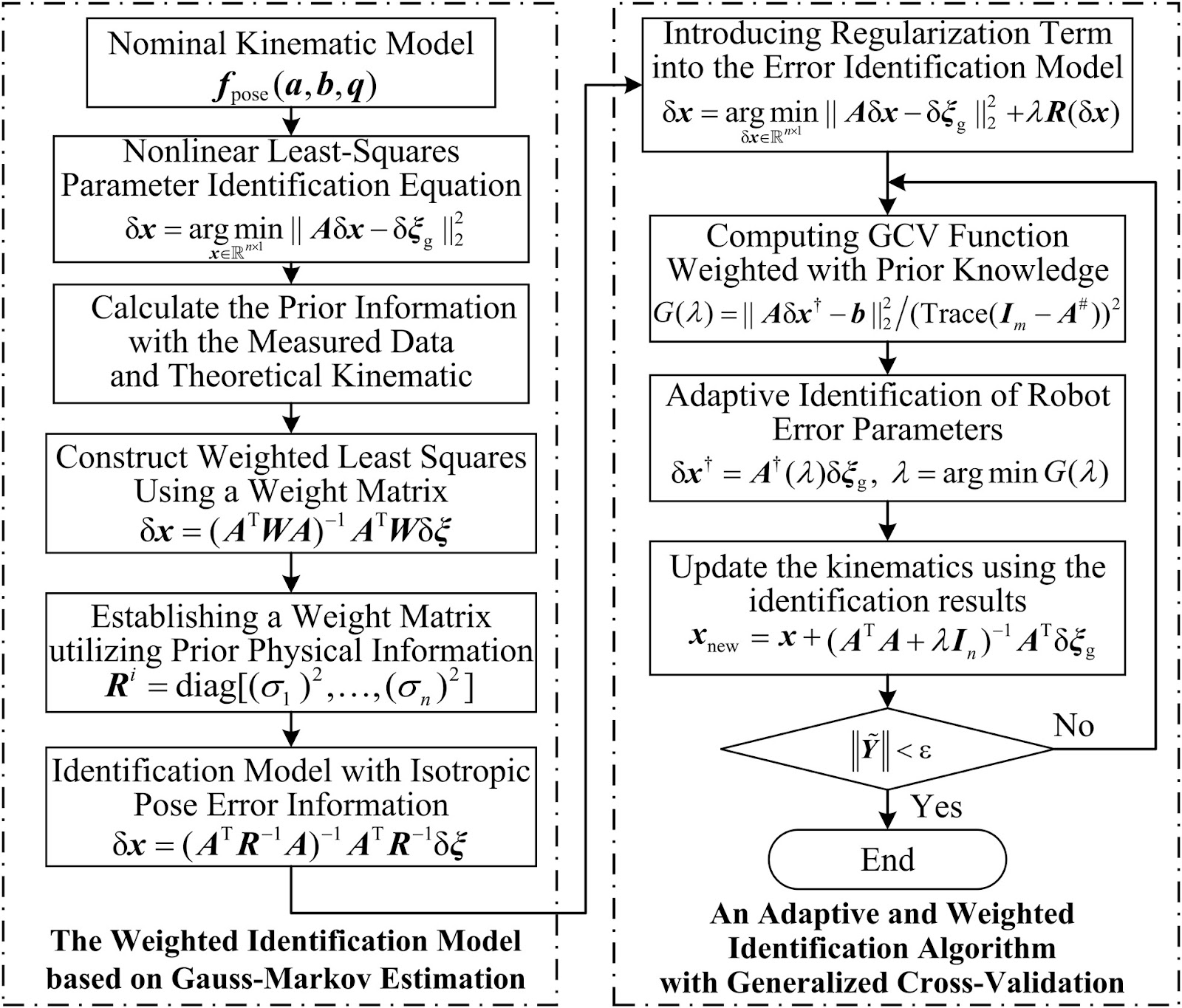
- •• A novel adaptive and weighted identification method based on generalized cross validation (GCV) is proposed for kinematic calibration of a 5-DoF parallel machining robot, addressing ill-posed identification issues. • The method incorporates Gauss-Markov estimation and prior physical information to construct a weighted identification model and cross-validation function, improving numerical stability and accuracy. • Experimental results show significant error reduction: maximum position error from 2.279 mm to 0.028 mm and orientation error from 0.206° to 0.017°, outperforming typical least squares methods. • The kinematic error model considers non-ideal constraints and screw self-rotation, capturing the complex error characteristics of the parallel robot.
Abstract
Accurate kinematic calibration is the very foundation for robots’ application in industry demanding high precision such as machining. Considering the complex error characteristic and severe ill-posed identification issues of a 5-DoF parallel machining robot, this paper proposes an adaptive and weighted identification method to achieve high-precision kinematic calibration while maintaining reliable stability. First, a kinematic error propagation mechanism model considering the non-ideal constraints and the screw self-rotation is formulated by incorporating the intricate structure of multiple chains and a unique driven screw arrangement of the robot. To address the challenge of accurately identifying such a sophisticated error model, a novel adaptive and weighted identification method based on generalized cross validation (GCV) is proposed. Specifically, this approach innovatively introduces Gauss-Markov estimation into the GCV algorithm and utilizes prior physical information to construct both a weighted identification model and a weighted cross-validation function, thus eliminating the inaccuracy caused by significant differences in dimensional magnitudes of pose errors and achieving accurate identification with flexible numerical stability. Finally, the kinematic calibration experiment is conducted. The comparative experimental results demonstrate that the presented approach is effective and has enhanced accuracy performance over typical least squares methods, with maximum position and orientation errors reduced from 2.279 mm to 0.028 mm and from 0.206° to 0.017°, respectively.
1. Introduction
Over the past years, the landscape of robotic applications in precision-demanding fields such as manufacturing and medical tasks has witnessed significant evolution [1–5]. One of the notable examples is the promotion of parallel robots in machining fields [6–9]. Characterized by the unique architectures involving multiple sub-chains and closed loops, the parallel robots are usually featured with larger stiffness-to-mass and payload-to-weight ratios, faster dynamic response, and much higher repeatability compared with traditional serial-type robots [10]. These properties enable parallel robots to have the potential of achieving exceptional absolute positioning accuracy. On this account, modeling and enhancing the positioning accuracy of parallel robots is critically important for optimally exploiting their performance advantages and further expanding their applications in precision engineering.
Generally, geometric errors arising from manufacturing, assembly, and wear are the primary sources of robot positioning errors [11]. To address this issue, the robot’s pose accuracy can be improved by increasing its manufacturing and assembly accuracy during the design phase, but the cost is high, and residual errors may still exist after assembly [12]. Kinematic calibration serves as an economical and effective technique to enhance the positioning accuracy of robots in the post-assembly phase by identifying and compensating for these geometric errors. The main sequential steps of kinematic calibration include error modeling, error measurement, parameter identification, and compensation.
Initially, the error model describes the mechanisms through which geometric errors in a robot affect its positioning errors, forming the theoretical foundation for establishing calibration algorithms. Accurate error modeling of parallel robots is often difficult due to their complex geometries and nonlinear coupled kinematics [13]. In past studies, researchers have proposed effective error modeling methods around the goals of solving computational singularities and achieving completeness. Among the methods, the D-H method [14–16] is widely used for its intuitive modeling, though it necessitates careful handling of parameter singularities. The CPC and POE methods [17–20] introduce redundant parameters to maintain error model integrity and continuity, showing its advantages for serial robots. For parallel robots, target poses need to be modified suitably fo
Loading authentic research manuscript (Pages 1–5)...
Lefeng Gu, Fugui Xie (2025). Kinematic Calibration of a 5-DoF Parallel Machining Robot with a Novel Adaptive and Weighted Identification Method Based on Generalized Cross Validation. Chinese Journal of Mechanical Engineering. https://doi.org/10.1186/s10033-025-01179-w
Research & Educational Purpose Only:The translations, structured abstracts, analytical annotations, and data reports provided by SinoTechIntel are intended exclusively for academic research, internal corporate R&D, and educational benchmarking. They do not constitute formal engineering, chemical safety, legal, or professional advice.
Copyright & Intellectual Property Notice: Original copyright of the underlying source articles and experimental data remains with the respective authors, institutions, and original publishing journals. SinoTechIntel claims intellectual property only over its proprietary translations, analytical syntheses, and AEO structured enhancements in accordance with international fair use and academic citation principles.
Frequently Asked Questions
What is the main contribution of this paper?
The paper proposes a novel adaptive and weighted identification method based on generalized cross validation (GCV) for kinematic calibration of a 5-DoF parallel machining robot, which addresses ill-posed identification issues and improves calibration accuracy and stability.
How does the proposed method improve calibration accuracy?
The method introduces Gauss-Markov estimation into the GCV algorithm and uses prior physical information to construct a weighted identification model and cross-validation function, which reduces the impact of dimensional magnitude differences in pose errors and enhances numerical stability, leading to significant error reduction.
What are the experimental results?
Experimental results show that the proposed method reduces maximum position error from 2.279 mm to 0.028 mm and orientation error from 0.206° to 0.017°, outperforming typical least squares methods.
What is the significance of considering non-ideal constraints and screw self-rotation in the error model?
Incorporating these factors makes the error model more accurate for the specific parallel robot architecture, capturing complex error characteristics that are often neglected, which is crucial for effective calibration.
What are the potential applications of this research?
The research is applicable to precision-demanding fields such as machining and manufacturing, where high absolute positioning accuracy of parallel robots is required, potentially improving productivity and quality.
Related Technical Papers & Translations
Direct Repair of the Crystal Structure and Coating Surface of Spent LiFePO4 Materials Enables Superfast Li-Ion Migration
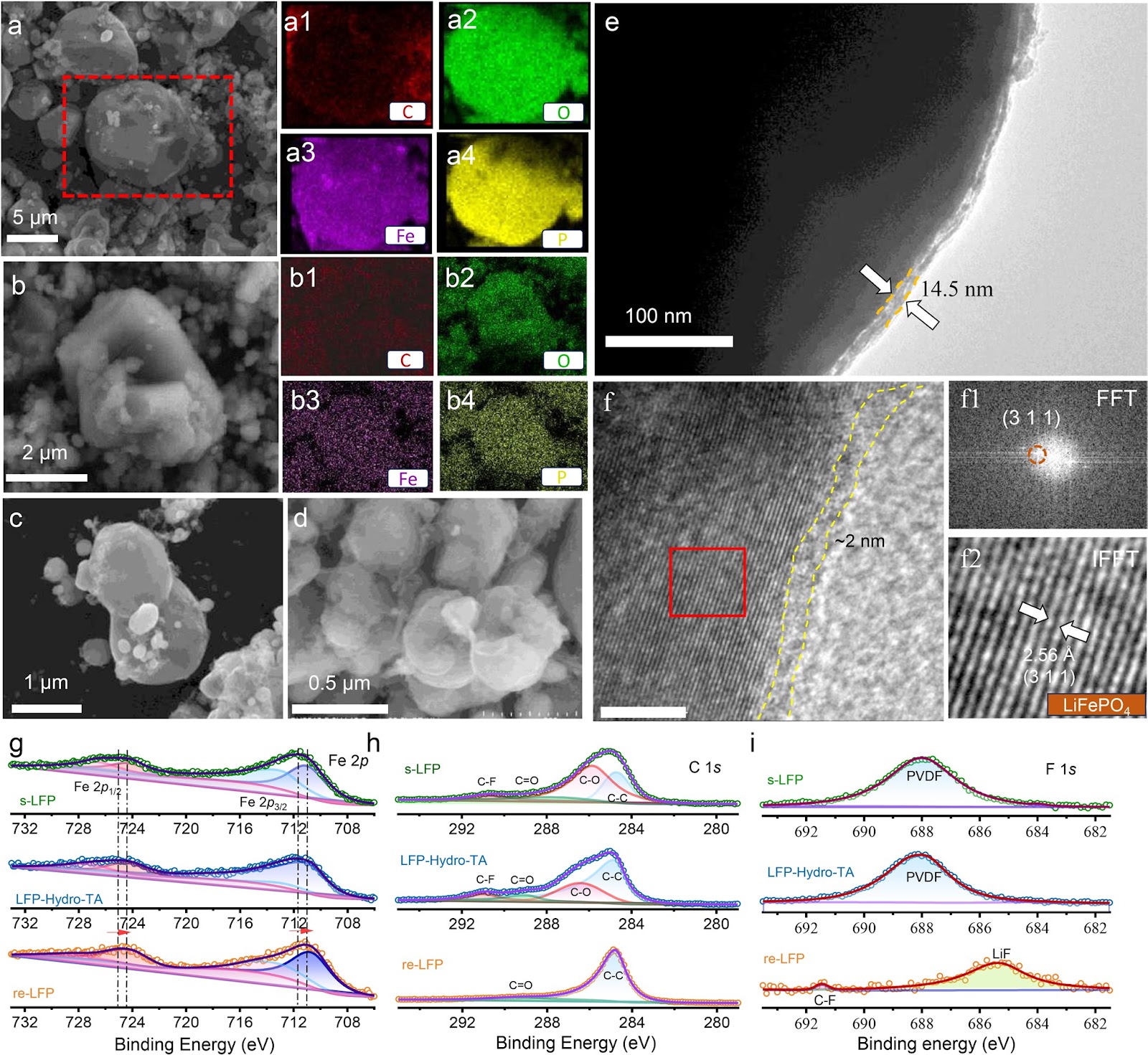
The rapid accumulation of spent LiFePO4 (LFP) cathodes from retired lithium-ion batteries necessitates the development of effective and environmental-friendly recycling strategies. In this context, direct regeneration has emerged as a promising approach for reclaiming LFP cathode materials, offering a streamlined pathway to restore their electrochemical functionality. We report an integrated regeneration protocol that simultaneously repairs the degraded crystal structure and reconstructs the damaged carbon coating in spent LFP. The regenerated cathode material had superfast lithium-ion diffusion kinetics and a stable cathode–electrolyte interface, giving a remarkable rate capability with specific capacities of 122 mAh g−1 at 5C and 106 mAh g−1 at 10C (1C = 170 mA g−1). It also maintained capacities of 110.7 mAh g−1 (5C) and 84.1 mAh g−1 (10C) after 400 cycles. It could be used in harsh environments and could be stably cycled at subzero temperatures (−10 and −20 °C) and in solid-state electrolyte batteries. Life cycle assessment combined with economic evaluation using the EverBatt model reveals that this direct regeneration approach has high economic and environmental benefits.
Oxide Semiconductor for Advanced Memory Architectures: Atomic Layer Deposition, Key Requirement and Challenges
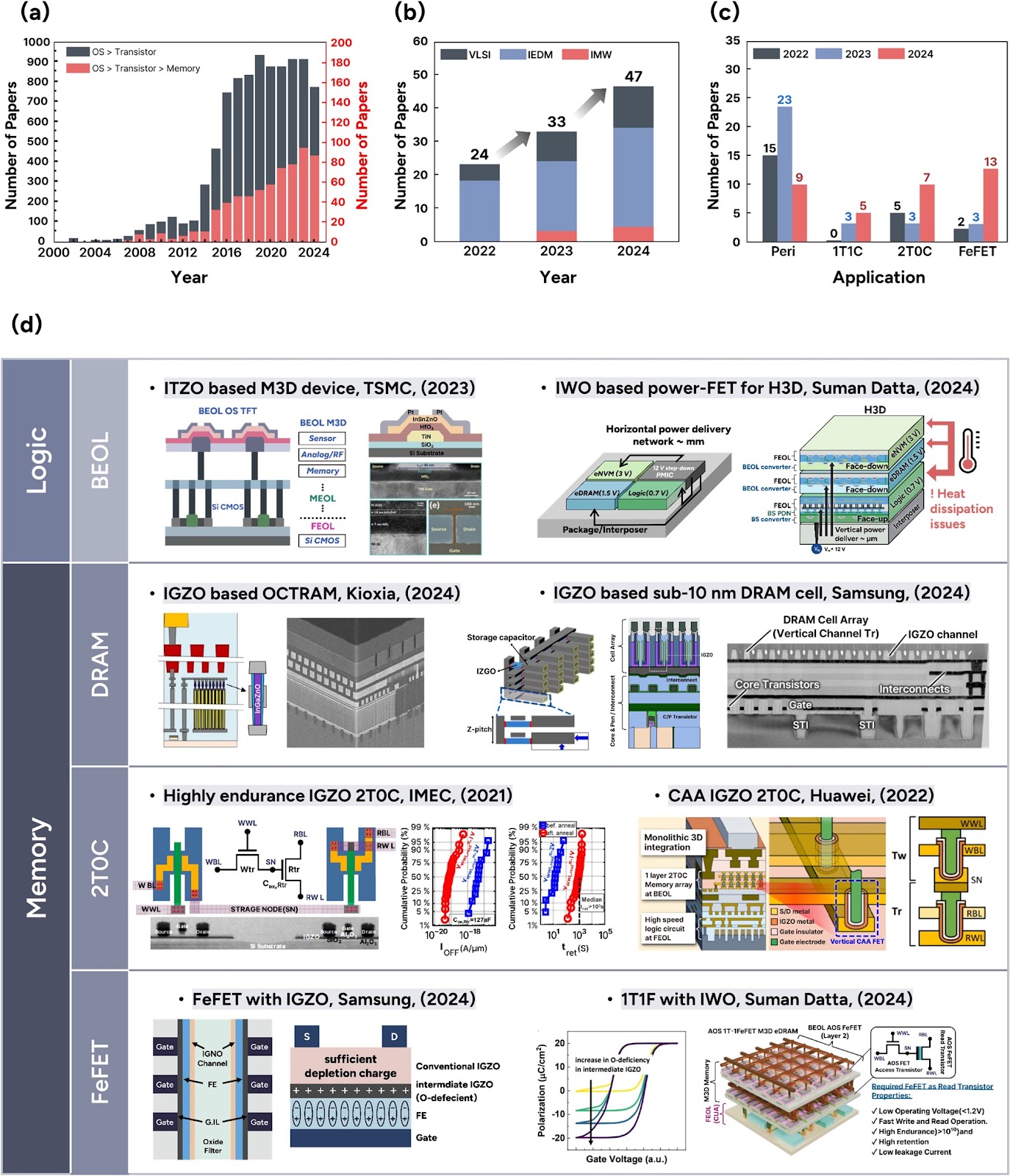
Oxide semiconductors (OSs), introduced by the Hosono group in the early 2000s, have evolved from display backplane materials to promising candidates for advanced memory and logic devices. The exceptionally low leakage current of OSs and compatibility with three-dimensional (3D) architectures have recently sparked renewed interest in their use in semiconductor applications. This review begins by exploring the unique material properties of OSs, which fundamentally originate from their distinct electronic band structure. Subsequently, we focus on atomic layer deposition (ALD), a core technique for growing excellent OS films, covering both basic and advanced processes compatible with 3D scaling. The basic surface reaction mechanisms—adsorption and reaction—and their roles in film growth are introduced. Furthermore, material design strategies, such as cation selection, crystallinity control, anion doping, and heterostructure engineering, are discussed. We also highlight challenges in memory applications, including contact resistance, hydrogen instability, and lack of p-type materials, and discuss the feasibility of ALD-grown OSs as potential solutions. Lastly, we provide an outlook on the role of ALD-grown OSs in memory technologies. This review bridges material fundamentals and device-level requirements, offering a comprehensive perspective on the potential of ALD-driven OSs for next-generation semiconductor memory devices.
Laser powder bed fusion of biodegradable Zn-4Cu alloy: Processing, microstructure and properties
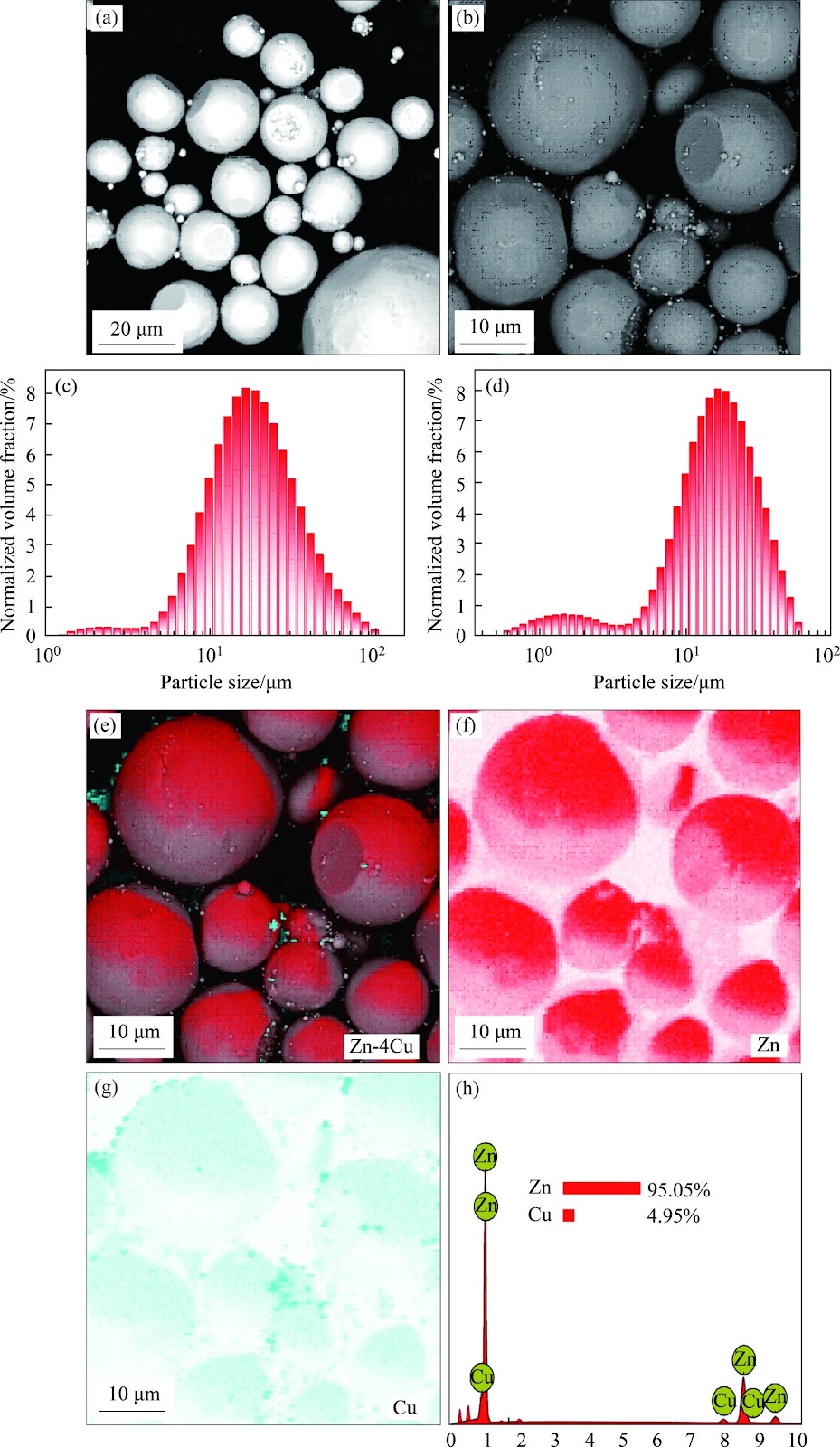
Zn's natural degradability and biocompatibility make it a promising candidate for implants, however, its mechanical properties remain insufficient for bone applications. In this study, the performance of Zn was enhanced by developing Zn-Cu alloys via laser powder bed fusion (LPBF). Optimal LPBF parameters for forming stable tracks were achieved by adjusting laser power and scanning speed. Under optimized conditions of 100 W and 100 mm/s, high-density (99.58%) Zn-Cu alloys with improved hardness (68.2HV) and yield strength (160 MPa) were achieved. These improvements are attributed to solid solution strengthening, segregation strengthening, and grain refinement. The Zn-Cu alloys also demonstrated favorable degradation behavior, with a rate of 0.16 mm/year. This degradation is primarily driven by micro-galvanic corrosion between the CuZn5 phase and Zn matrix, along with refined grains and increased grain boundary density. This work demonstrates a viable strategy for fabricating Zn-based implants with enhanced structural integrity and mechanical performance via LPBF.