Key Takeaways & Executive Findings
- •• Proposes a hierarchical framework for Knowledge Driven Machine Learning (KDML) in PHM, integrating scientific paradigms, knowledge sources, representations, and embedding methods. • Demonstrates through case studies that embedding domain knowledge (inductive experience, physical models, signal processing) enhances generalization and interpretability of ML models in PHM. • Highlights the critical need for interpretability to ensure trustworthy deployment of AI in PHM, addressing challenges of limited generalization and weak interpretability in current ML approaches. • Provides a roadmap and usage recommendations for KDML, discussing challenges and potential applications in the PHM domain.
Abstract
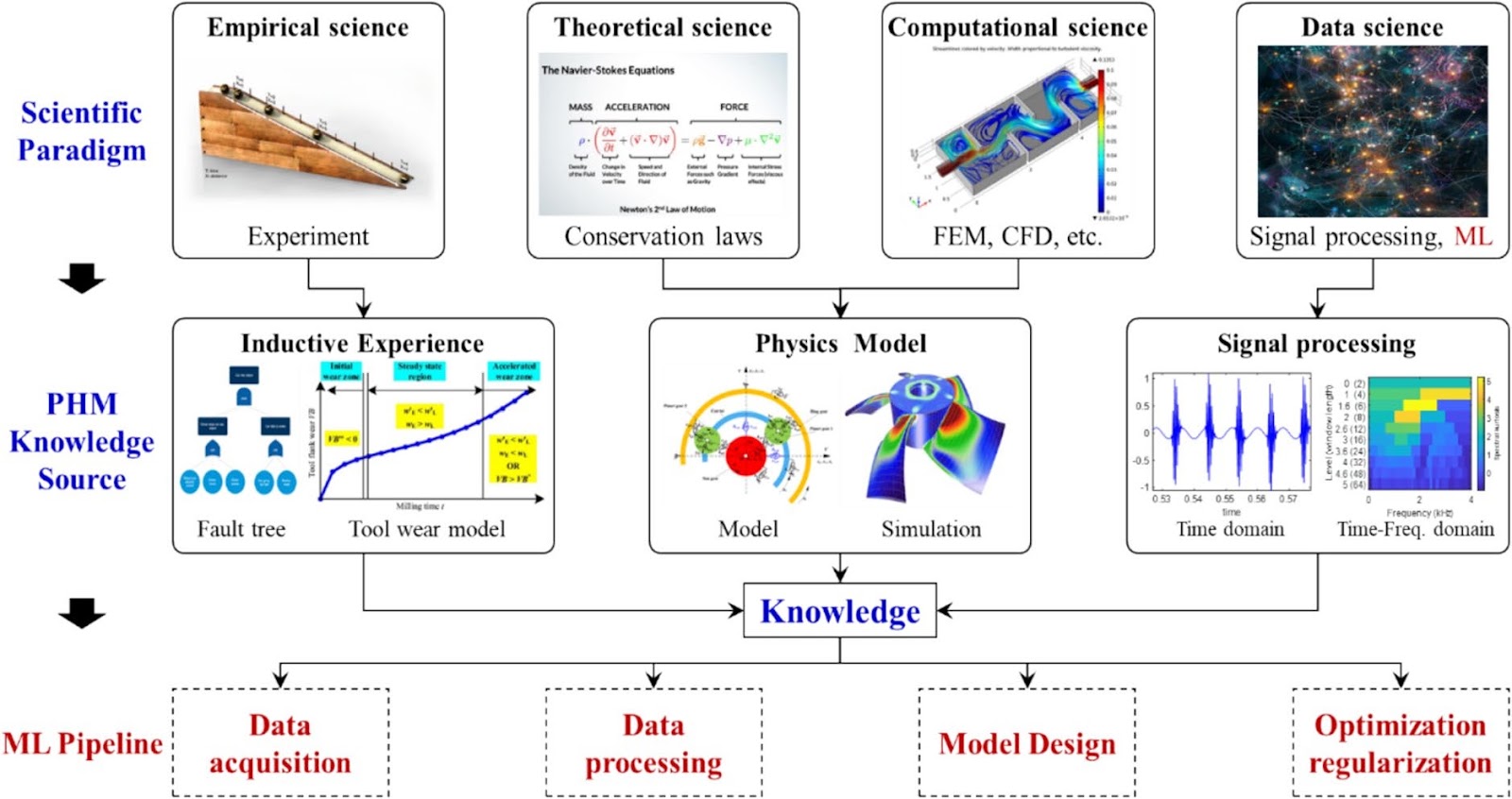
Despite significant progress in the Prognostics and Health Management (PHM) domain using pattern learning systems from data, machine learning (ML) still faces challenges related to limited generalization and weak interpretability. A promising approach to overcoming these challenges is to embed domain knowledge into the ML pipeline, enhancing the model with additional pattern information. In this paper, we review the latest developments in PHM, encapsulated under the concept of Knowledge Driven Machine Learning (KDML). We propose a hierarchical framework to define KDML in PHM, which includes scientific paradigms, knowledge sources, knowledge representations, and knowledge embedding methods. Using this framework, we examine current research to demonstrate how various forms of knowledge can be integrated into the ML pipeline and provide roadmap to specific usage. Furthermore, we present several case studies that illustrate specific implementations of KDML in the PHM domain, including inductive experience, physical model, and signal processing. We analyze the improvements in generalization capability and interpretability that KDML can achieve. Finally, we discuss the challenges, potential applications, and usage recommendations of KDML in PHM, with a particular focus on the critical need for interpretability to ensure trustworthy deployment of artificial intelligence in PHM.
1. Introduction
Prognostics and health management (PHM) is an engineering discipline to extend life cycle of physical systems in service, including anomaly detection to identify binary health state, fault diagnosis to isolate the fault location, fault prognosis to predict remaining useful life, and condition-based maintenance to optimize maintenance schedule. A general workflow is composed of sensor data acquisition, feature extraction, and decision making, where feature extraction is a cornerstone to convert high dimensional sensor reading to low dimensional states and the changes in these states can be detected using pattern recognition approaches.
To understand the degradation process of physical systems, there are mainly two distinguishable kinds of approaches to extract feature for PHM, i.e., physics-based and data-driven. For the former, degradation process is represented by concrete physical variables, like crack length [1] or stiffness [2]. The development of physics-based methods has led to various advances in PHM knowledge, like degradation patterns in life-cycle period [3] or performance model between damage variables with responsible variables [4]. For the latter, measurement data is expected to contain information about the degradation process of the physical systems, like changes in frequency components [5]. Signal processing [5] and machine learning are two mainly approaches to extract such pattern from data. In the last decades, signal processing has developed a variety of transformation methods to analyze data for PHM, like Fourier transformation or wavelet transformation. These transformation methods map data from original representation space to another, making patterns discriminative. Compared with implicit mathematical modeling evolution of system state variables through physics-based approaches or signal processing methods, machine learning (ML) provides a powerful learning system for feature extraction in PHM [6]. This powerful learning system shows strong flexibility and generalization ability in PHM with support of various types of models, like classical multilayer perception (MLP) or currently popular Transformer. These success scenarios are grounded in the different inductive bias of different ML models. For example, (1) MLP is a universal approximation function and can approximate any desired functions or operators in pattern recognition. (2) Convolution neural network has symmetry property of translation, and this inductive bias can improve its generalization ability with respect to period feature, like impulses in vibration signal. (3) Recurrent neural networ
Loading authentic research manuscript (Pages 1–5)...
Ruqiang Yan, Zheng Zhou, Zuogang Shang, Zhiying Wang, Chenye Hu, Yasong Li, Yuangui Yang, Xuefeng Chen, Robert X. Gao (2025). Knowledge Driven Machine Learning Towards Interpretable Intelligent Prognostics and Health Management: Review and Case Study. Chinese Journal of Mechanical Engineering. https://doi.org/10.1186/s10033-024-01173-8
Research & Educational Purpose Only:The translations, structured abstracts, analytical annotations, and data reports provided by SinoTechIntel are intended exclusively for academic research, internal corporate R&D, and educational benchmarking. They do not constitute formal engineering, chemical safety, legal, or professional advice.
Copyright & Intellectual Property Notice: Original copyright of the underlying source articles and experimental data remains with the respective authors, institutions, and original publishing journals. SinoTechIntel claims intellectual property only over its proprietary translations, analytical syntheses, and AEO structured enhancements in accordance with international fair use and academic citation principles.
Frequently Asked Questions
What is Knowledge Driven Machine Learning (KDML) in the context of PHM?
KDML is a paradigm that integrates domain knowledge (e.g., physical models, signal processing techniques, and inductive experience) into the machine learning pipeline to enhance model generalization and interpretability for Prognostics and Health Management applications.
What are the main challenges in traditional machine learning for PHM?
Traditional ML approaches in PHM often face limited generalization to unseen conditions and weak interpretability, making it difficult to trust and deploy models in critical engineering systems.
How does KDML improve interpretability in PHM?
By embedding domain knowledge, KDML provides additional structure and constraints to the learning process, which helps in producing more transparent and explainable models that align with physical principles and engineering insights.
What are the key components of the proposed KDML framework?
The framework includes scientific paradigms, knowledge sources, knowledge representations, and knowledge embedding methods, providing a systematic way to categorize and implement KDML in PHM.
What are the potential applications of KDML in PHM?
KDML can be applied to various PHM tasks such as anomaly detection, fault diagnosis, remaining useful life prediction, and condition-based maintenance, particularly in industries like manufacturing, aerospace, and energy systems.
Related Technical Papers & Translations
Direct Repair of the Crystal Structure and Coating Surface of Spent LiFePO4 Materials Enables Superfast Li-Ion Migration
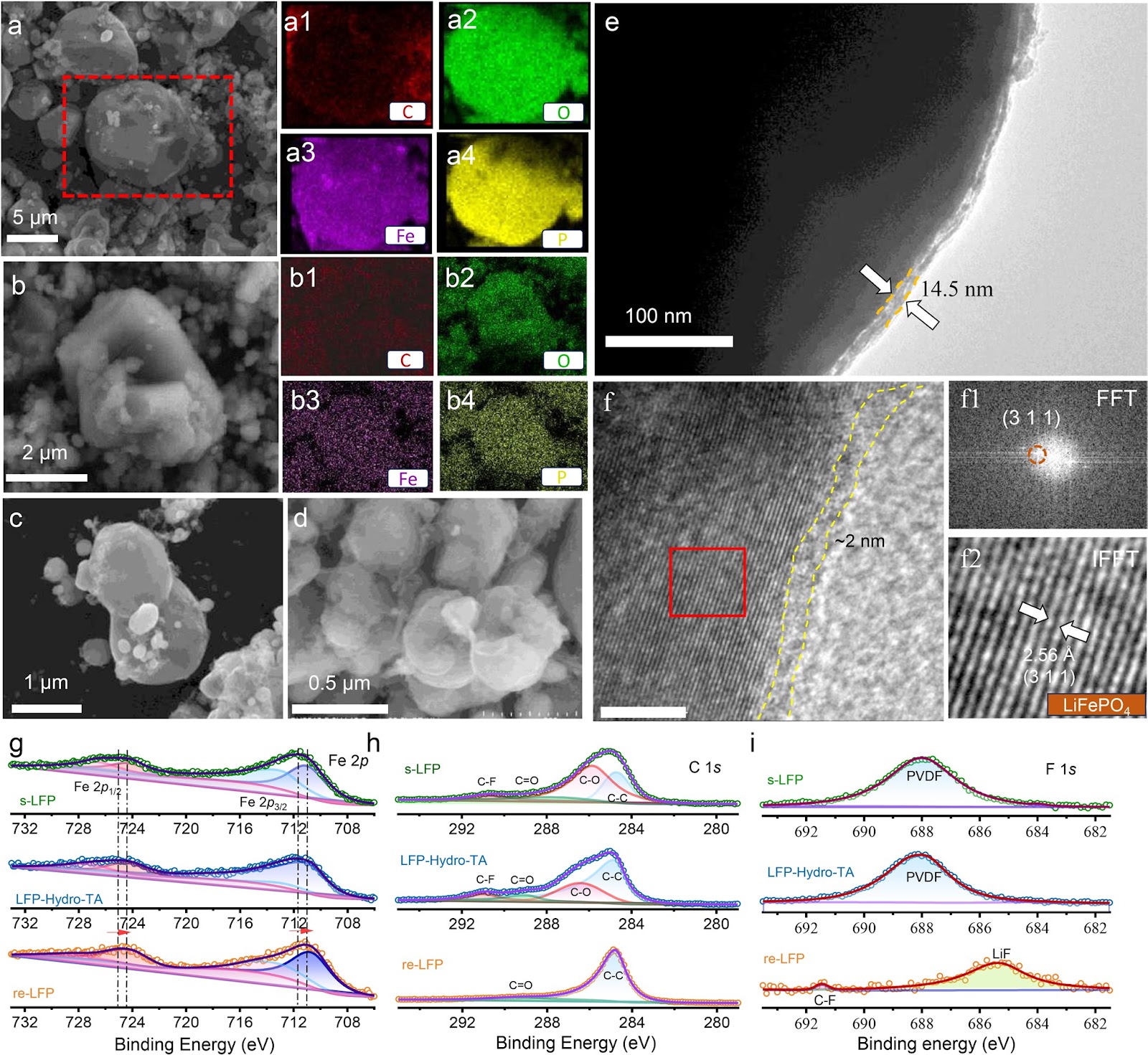
The rapid accumulation of spent LiFePO4 (LFP) cathodes from retired lithium-ion batteries necessitates the development of effective and environmental-friendly recycling strategies. In this context, direct regeneration has emerged as a promising approach for reclaiming LFP cathode materials, offering a streamlined pathway to restore their electrochemical functionality. We report an integrated regeneration protocol that simultaneously repairs the degraded crystal structure and reconstructs the damaged carbon coating in spent LFP. The regenerated cathode material had superfast lithium-ion diffusion kinetics and a stable cathode–electrolyte interface, giving a remarkable rate capability with specific capacities of 122 mAh g−1 at 5C and 106 mAh g−1 at 10C (1C = 170 mA g−1). It also maintained capacities of 110.7 mAh g−1 (5C) and 84.1 mAh g−1 (10C) after 400 cycles. It could be used in harsh environments and could be stably cycled at subzero temperatures (−10 and −20 °C) and in solid-state electrolyte batteries. Life cycle assessment combined with economic evaluation using the EverBatt model reveals that this direct regeneration approach has high economic and environmental benefits.
Oxide Semiconductor for Advanced Memory Architectures: Atomic Layer Deposition, Key Requirement and Challenges
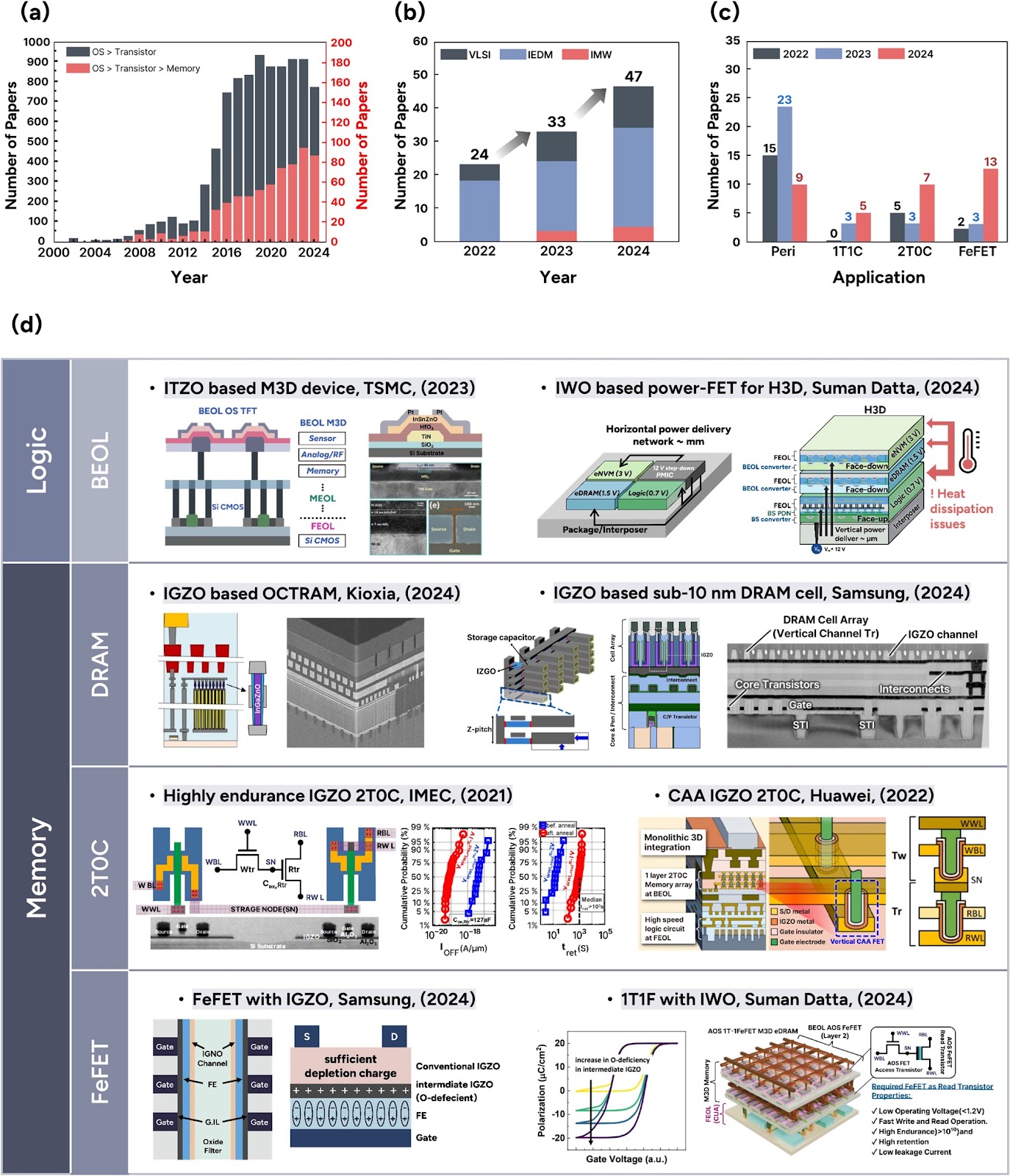
Oxide semiconductors (OSs), introduced by the Hosono group in the early 2000s, have evolved from display backplane materials to promising candidates for advanced memory and logic devices. The exceptionally low leakage current of OSs and compatibility with three-dimensional (3D) architectures have recently sparked renewed interest in their use in semiconductor applications. This review begins by exploring the unique material properties of OSs, which fundamentally originate from their distinct electronic band structure. Subsequently, we focus on atomic layer deposition (ALD), a core technique for growing excellent OS films, covering both basic and advanced processes compatible with 3D scaling. The basic surface reaction mechanisms—adsorption and reaction—and their roles in film growth are introduced. Furthermore, material design strategies, such as cation selection, crystallinity control, anion doping, and heterostructure engineering, are discussed. We also highlight challenges in memory applications, including contact resistance, hydrogen instability, and lack of p-type materials, and discuss the feasibility of ALD-grown OSs as potential solutions. Lastly, we provide an outlook on the role of ALD-grown OSs in memory technologies. This review bridges material fundamentals and device-level requirements, offering a comprehensive perspective on the potential of ALD-driven OSs for next-generation semiconductor memory devices.
Laser powder bed fusion of biodegradable Zn-4Cu alloy: Processing, microstructure and properties
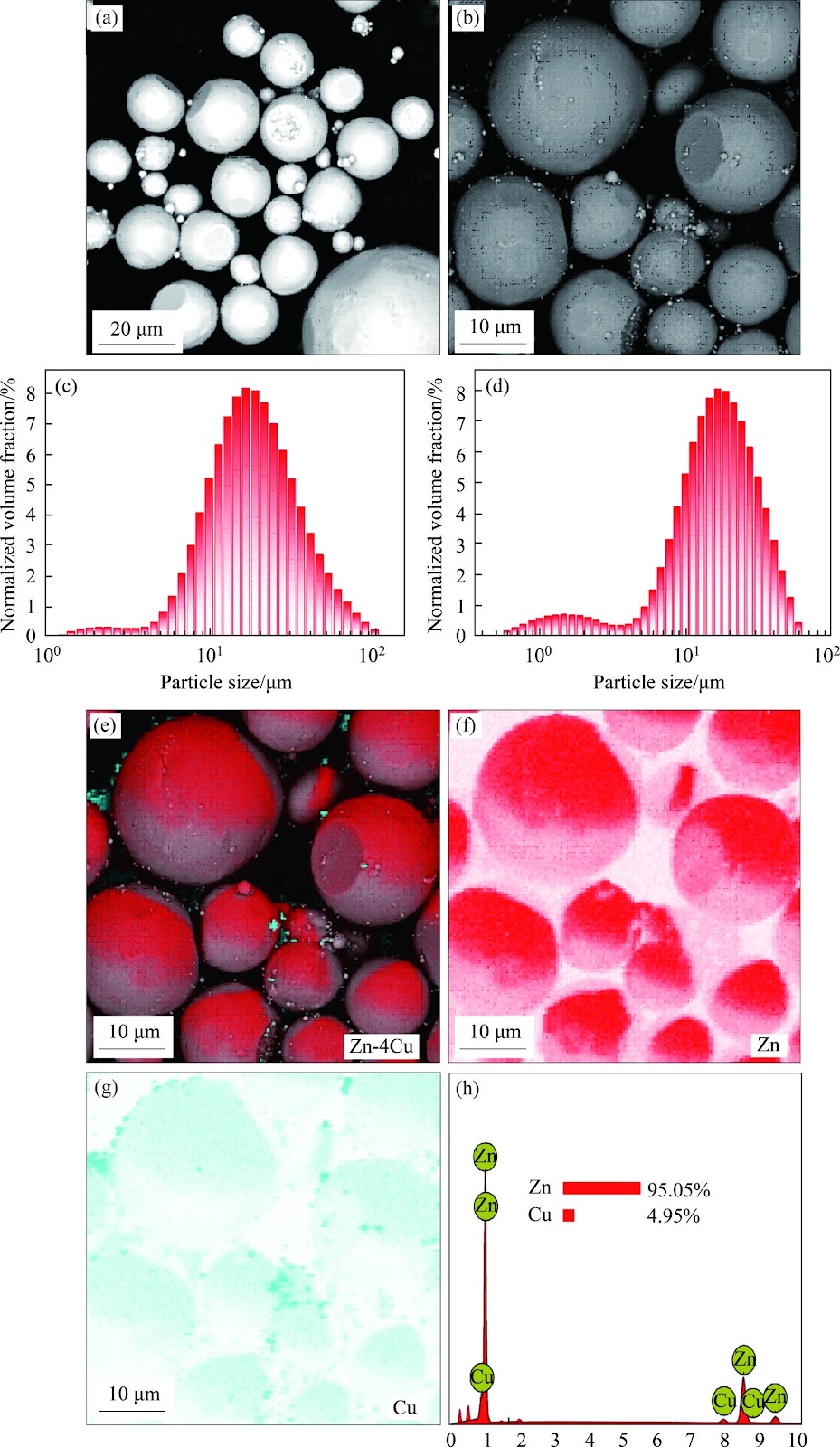
Zn's natural degradability and biocompatibility make it a promising candidate for implants, however, its mechanical properties remain insufficient for bone applications. In this study, the performance of Zn was enhanced by developing Zn-Cu alloys via laser powder bed fusion (LPBF). Optimal LPBF parameters for forming stable tracks were achieved by adjusting laser power and scanning speed. Under optimized conditions of 100 W and 100 mm/s, high-density (99.58%) Zn-Cu alloys with improved hardness (68.2HV) and yield strength (160 MPa) were achieved. These improvements are attributed to solid solution strengthening, segregation strengthening, and grain refinement. The Zn-Cu alloys also demonstrated favorable degradation behavior, with a rate of 0.16 mm/year. This degradation is primarily driven by micro-galvanic corrosion between the CuZn5 phase and Zn matrix, along with refined grains and increased grain boundary density. This work demonstrates a viable strategy for fabricating Zn-based implants with enhanced structural integrity and mechanical performance via LPBF.