SinoTechIntel Academic Portal
Academic Topic Hub30 Verified Publications Found

Superalloy Metallurgy

Curated English translations, Springer Nature style Key Takeaways, experimental datasets, and verified peer-reviewed publications from leading Chinese research laboratories, CAS academies, and indexed journals.

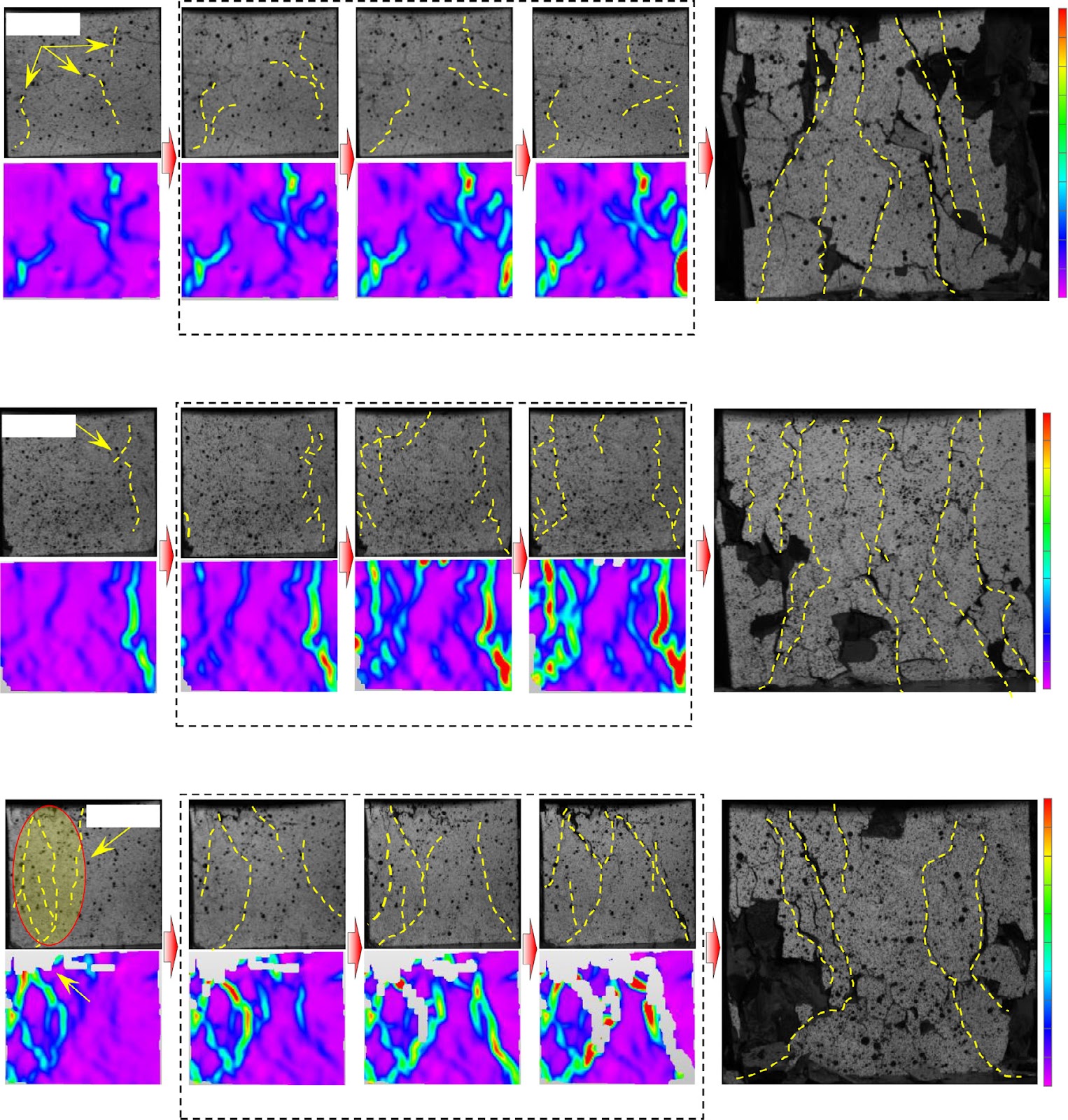
Blasting Failure Characteristics of Rock Specimens under In-Hole Layered Column Charge
Chinese Journal of Energetic Materials (含能材料)2026DOI: 10.11943/CJEM2026001

Blasting Failure Characteristics of Rock Specimens under In-Hole Layered Column Charge

Authors: CHENG Bing, YE Fu, WANG Quan, CHENG Yangfan, ZONG Qi, XU Ying, WANG Mengxiang, LI Junhao

💡 Key Finding

Layered in-hole charge increased rock fragment horizontal velocity from 2.0 m·s⁻¹ (continuous) to 7.0 m·s⁻¹, indicating more efficient energy transfer to the upper bench section, which is critical for reducing oversized boulders in production blasting.

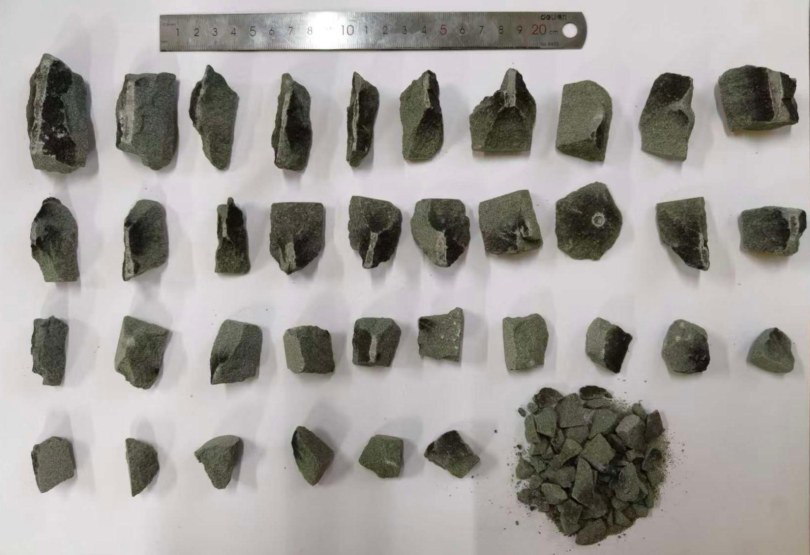
To improve rock fragmentation in open-pit deep-hole blasting, an in-hole layered column charge configuration was designed. Small-scale blasting tests on sandstone specimens were conducted under continuous and layered column charges to capture the failure process and final fragmentation. DEM-PBM coupled simulations visualized the dynamic fracture evolution and validated the experimental observations. Results show that under continuous charge, the top quarter of the specimen developed only a single blast-induced crack, splitting it into two parts, with horizontal fragment velocity of 2.0 m·s⁻¹ and a maximum block size of 9.0 cm. In contrast, layered charge produced multiple cracks in the top quarter, fragmenting it into smaller pieces, increasing horizontal velocity to 7.0 m·s⁻¹, and eliminating blocks larger than 5.0 cm. Simulations confirmed these trends, with maximum block size reduced from 8.8 cm to below 5.0 cm and velocity reaching 6.8 m·s⁻¹, closely matching experiments. Field trials in an open-pit coal mine overburden blasting demonstrated that layered charge reduced the boulder yield from 48.1% to 5.6%, significantly improving fragmentation. The findings confirm the practical effectiveness of in-hole layered column charge in enhancing rock breakage in deep-hole bench blasting.
Review on Ship Structural Damage and Protection Subjected to Underwater Contact Explosions
Chinese Journal of Energetic Materials (含能材料)2026DOI: 10.11943/CJEM2026118

Review on Ship Structural Damage and Protection Subjected to Underwater Contact Explosions

Authors: MING Furen, JIN Yuenan, ZHANG Bowen, ZHU Shipeng, JIANG Ruihan, ZHANG Nu, ZHANG Aman

💡 Key Finding

Shock waves alone may not cause complete structural failure; bubble pulsation can induce strain growth exceeding shock wave effects, as observed in stiffened plates, necessitating combined load consideration in design.

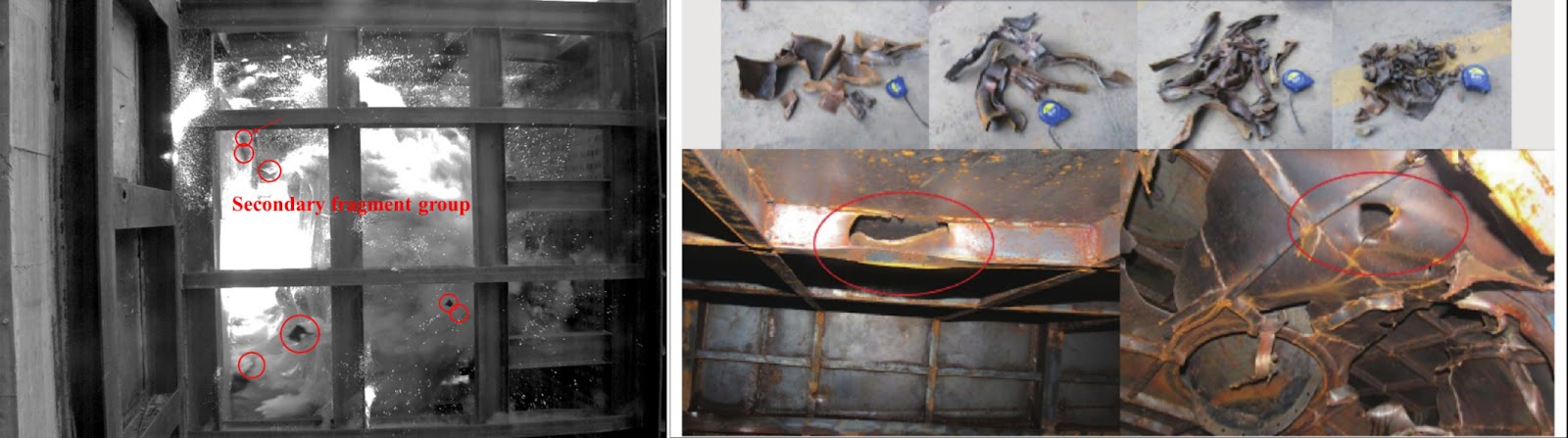
Underwater contact explosions from torpedoes and mines pose severe threats to ship survivability. The coupled effects of shock waves, bubbles, and secondary fragments induce complex structural damage. This review first analyzes the load characteristics of underwater contact explosions, detailing the spatial-temporal evolution of shock waves, bubbles, and secondary fragments. Subsequently, it examines protective mechanisms from two perspectives: multi-cabin structural protection and composite structure/material protection, focusing on damage suppression and energy dissipation. Finally, key technical challenges are summarized to guide future research. The review highlights that shock waves cause initial indentation and perforation of the outer plate, while bubble pulsation and collapse jets dominate subsequent large deformation and tearing of bulkheads. Experimental studies show that stiffened plates exhibit significant strain growth during bubble pulsation, potentially exceeding shock wave effects. Multi-cabin designs, such as liquid-filled compartments, effectively mitigate damage through energy absorption and impedance mismatch. Composite materials offer enhanced blast resistance but face scalability issues. The paper underscores the need for high-fidelity numerical methods and experimental validation to resolve controversies regarding dominant damage mechanisms. This work provides a comprehensive reference for advancing ship structural protection against underwater contact explosions.

Reaction-Growth Behavior of Energetic Materials under Mass-Inertial Confinement
Chinese Journal of Energetic Materials (含能材料)2026DOI: 10.11943/CJEM2026012

Reaction-Growth Behavior of Energetic Materials under Mass-Inertial Confinement

Authors: ZHOU Fu-kang, YANG Xiao-yuan, SHANG Hai-lin, PAN Chuan-yu, LI Jin-he, LI Tao

💡 Key Finding

Under mass-inertial confinement (mass ratio >45:1), composite propellant (AP/Al/RDX/binder) exhibits burning with maximum pressure <50 MPa and reaction fraction <1%, whereas PBX (HMX/CL-20) undergoes violent explosion with pressure up to 2 GPa and reaction fraction >50%, highlighting material-specific response critical for munition safety.

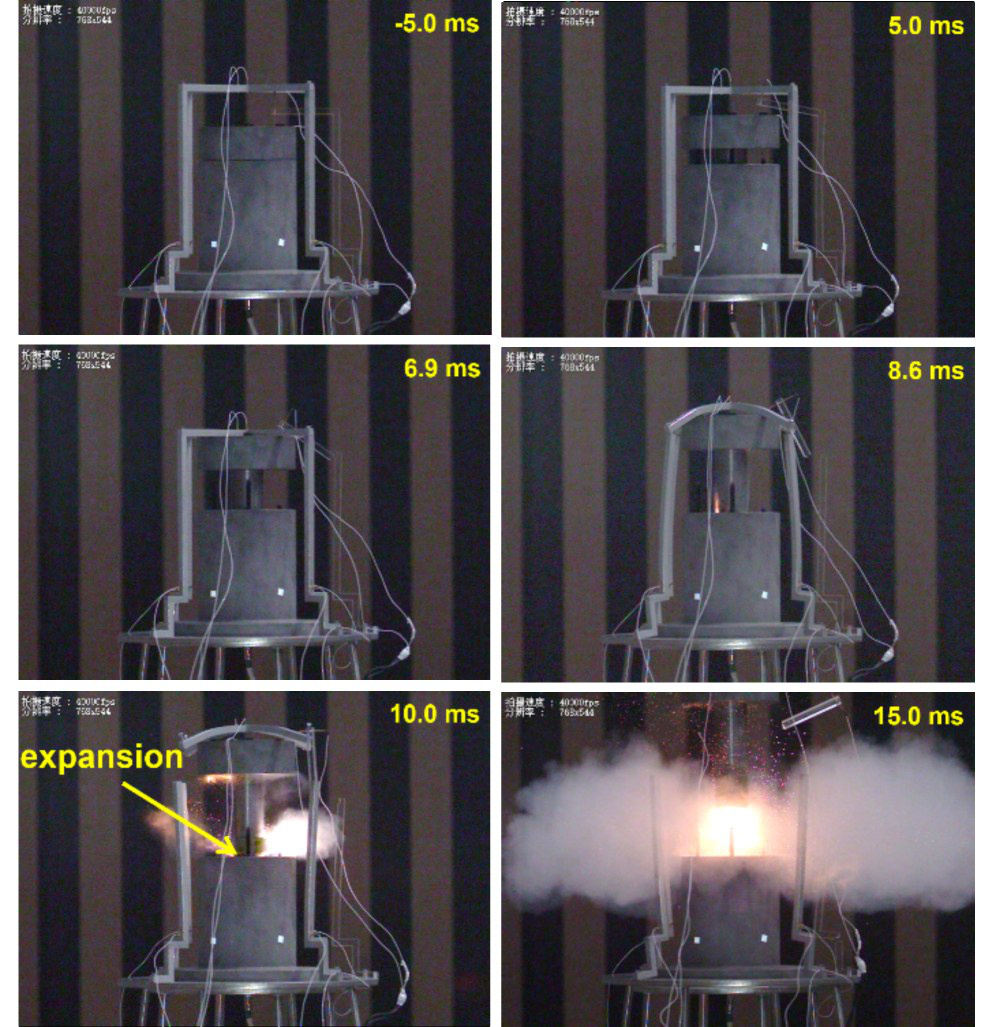
To investigate the reaction-growth behavior of propellants and polymer-bonded explosives (PBX) after non-shock ignition under mass-inertial confinement, a thick-walled cylinder experimental setup was constructed. The setup provided strong radial structural confinement and incorporated a large mass block with a mass ratio exceeding 45:1 relative to the energetic material. Laser ignition (250 W) was used to initiate reactions, and multiple photonic Doppler velocimetry (PDV) probes simultaneously measured radial expansion velocity of the cylinder and axial velocity of the mass block top. High-speed photography and recovered debris analysis were employed to compare reaction evolution processes. Results show that mass-inertial confinement enhances pressure buildup during the early reaction phase, but the type of energetic material determines reaction-growth characteristics and violence under identical confinement. For the composite propellant (containing AP, aluminum, RDX, and energetic binder), mass-inertial confinement dominated early pressurization; the system exhibited axial mass block acceleration without yielding of the thick-walled cylinder. Maximum reaction pressure was below 50 MPa, reaction fraction was less than 1%, and nearly all propellant was recovered, indicating a burning reaction. For the PBX (containing HMX and CL-20), early pressurization was jointly influenced by mass-inertial and structural confinement; the cylinder underwent yielding and radial expansion, and the mass block showed local upsetting deformation. Maximum reaction pressure reached 2 GPa, reaction fraction exceeded 50%, and no explosive was recovered, indicating a violent explosion. These findings provide insights into non-shock ignition reaction-growth mechanisms and safety design of structural charges.

Solubility and Thermodynamic Properties of β-HMX in Dimethyl Sulfoxide–Alcohol Binary Solvent Mixtures
Chinese Journal of Energetic Materials (含能材料)2026DOI: 10.11943/CJEM2026054

Solubility and Thermodynamic Properties of β-HMX in Dimethyl Sulfoxide–Alcohol Binary Solvent Mixtures

Authors: HE Yan, WU Hao, ZHAI Lian-jie, CAI Rong-bin, XU Cheng, HU Jian-jian, HUANG Jun-rui, ZHAO Xue

💡 Key Finding

Solubility of β-HMX in DMSO–alcohol mixtures increases with temperature and DMSO mole fraction; solvent composition exerts a stronger influence than temperature, with a maximum relative solubility change of 6.3% due to composition fluctuation (equivalent to 1.4–2.7 K temperature shift). This underscores the need for precise solvent ratio control in industrial crystallization to avoid batch-to-batch variability.

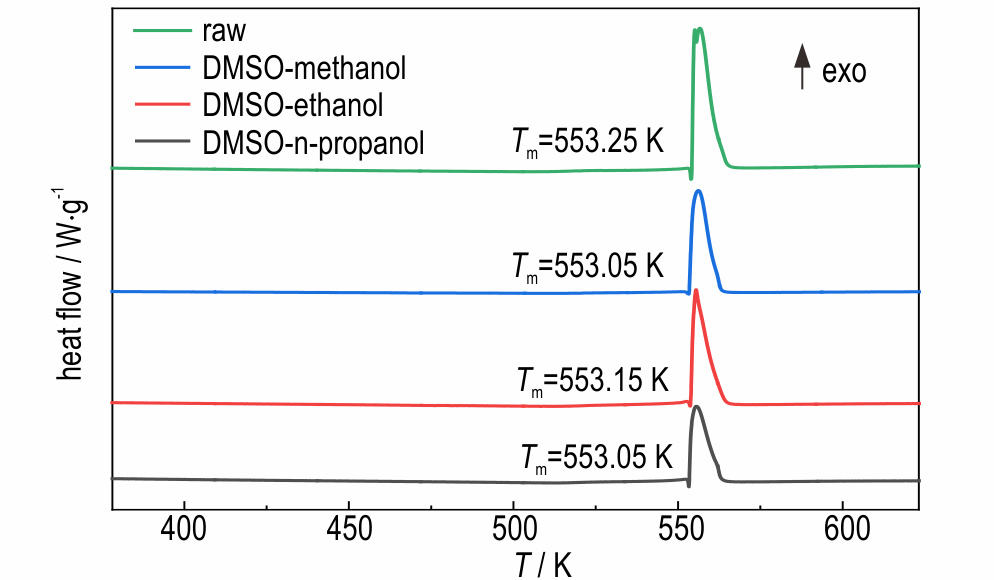
The solubility of β-octahydro-1,3,5,7-tetranitro-1,3,5,7-tetrazocine (β-HMX) in dimethyl sulfoxide (DMSO)–methanol, DMSO–ethanol, and DMSO–n-propanol binary solvent mixtures was measured using a static method over the temperature range of 293.15–343.15 K at atmospheric pressure. The mole fraction of alcohol in the mixed solvent was varied from 0 to 1. The experimental solubility data were correlated with the Apelblat, Jouyban–Acree, and NRTL models. The Apelblat model provided the best fit, with an average relative deviation (ARD) below 5% and a root-mean-square deviation (RMSD) below 0.11%. Thermodynamic properties, including Gibbs free energy, enthalpy, and entropy of dissolution, were derived from the NRTL model. The dissolution process was endothermic, entropy-driven, and spontaneous in all three solvent systems. Solid-phase characterization by PXRD and DSC confirmed that no polymorphic transition of β-HMX occurred under the experimental conditions. Solvent composition stability tests showed that the maximum relative change in solubility due to composition fluctuation was less than 6.3%, corresponding to an equivalent temperature variation of 1.4–2.7 K. These data provide a foundation for optimizing anti-solvent crystallization processes for β-HMX.

Physical Trend for Critical Temperature in Bi2Sr2CaCu2O8 High-temperature Superconductors
Journal of Inorganic Materials (无机材料学报)2026DOI: 10.15541/jim20260128

Physical Trend for Critical Temperature in Bi2Sr2CaCu2O8 High-temperature Superconductors

Authors: SHI Xun

💡 Key Finding

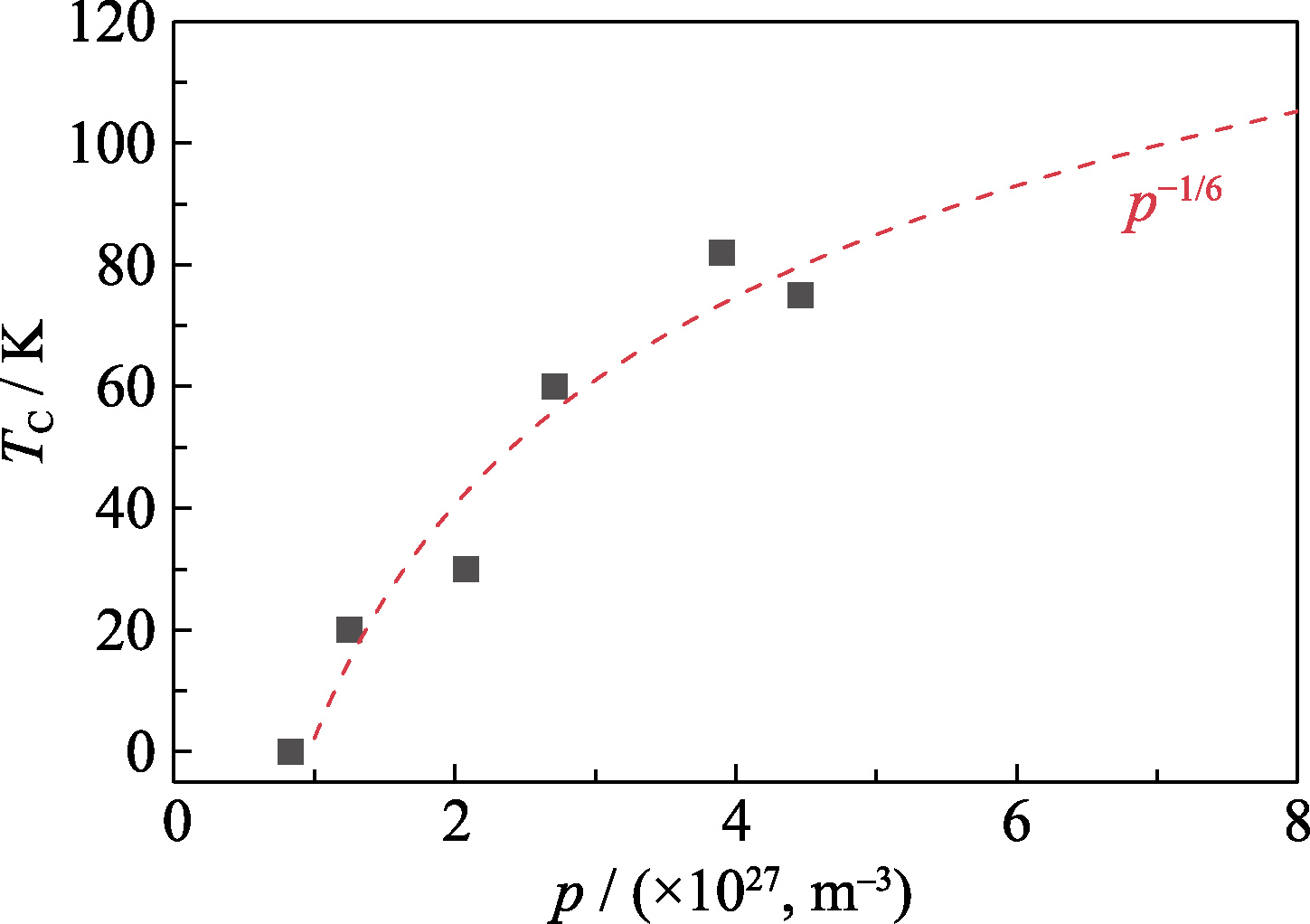
TC in Y-doped Bi2Sr2CaCu2O8 follows a power-law relationship with hole concentration: TC ∝ p^0.5, with a maximum TC of 95 K at optimal hole concentration p ≈ 0.16 per CuO2 plane, enabling predictive doping strategies for cuprate superconductors.

Superconductivity remains a central challenge in condensed matter physics and materials science, with high-temperature superconductors lacking a unified theoretical framework. This work investigates the relationship between critical temperature (TC) and hole concentration in Y-doped Bi2Sr2CaCu2O8 (Bi-2212), a cuprate superconductor. By systematically varying the hole concentration through Y substitution, we establish a power-law scaling: TC ∝ p^0.5, where p is the hole concentration per CuO2 plane. The exponent of 0.5 indicates a quadratic dependence, suggesting that increased hole concentration enhances superconducting pairing strength. Our data reveal that TC increases monotonically with hole concentration up to the optimal doping level, reaching a maximum of 95 K at p ≈ 0.16, beyond which over-doping suppresses superconductivity. This trend holds across the under-doped and optimally-doped regimes, providing a predictive tool for optimizing TC in Bi-2212 and related cuprates. The findings underscore that hole concentration is a critical control parameter, and achieving high TC requires precise doping control. This work offers practical guidance for the design of new high-temperature superconductors with enhanced performance, potentially enabling operation at liquid-nitrogen temperatures and above, which is crucial for technological applications such as magnetic resonance imaging, particle accelerators, and power transmission.

Influence of Preparation Processes on the Structure and Properties of the Ductile Thermoelectric Material Ag2S0.4Te0.6
Journal of Inorganic Materials (无机材料学报)2026DOI: 10.15541/jim20260018

Influence of Preparation Processes on the Structure and Properties of the Ductile Thermoelectric Material Ag2S0.4Te0.6

Authors: LIU Jinxiao, LIU Zhenhan, CHEN Xingyu, ZHOU Zhengyang, QIU Pengfei, ZHANG Jiawei, SHI Xun

💡 Key Finding

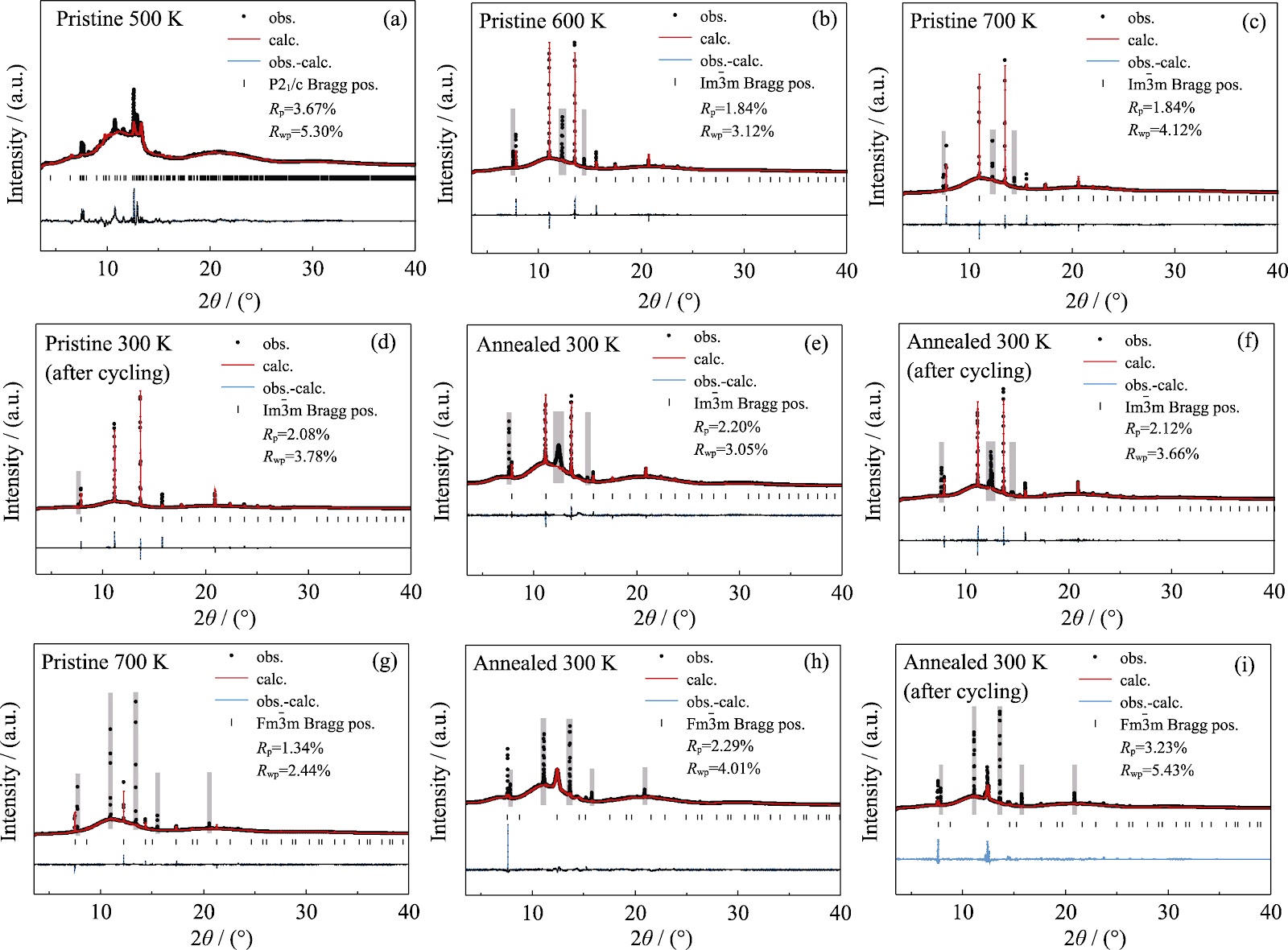
Annealing transforms the as-prepared Ag2S0.4Te0.6 powder from a predominantly amorphous state (with only trace poorly crystalline monoclinic phase) into a mixed cubic crystalline/amorphous state at room temperature, eliminating observable phase transitions upon subsequent heating from 110 K to 700 K.

Ag2S0.4Te0.6 is an inorganic semiconductor with favorable ductility and thermoelectric performance, showing potential for applications in wearable electronics. Recent studies have indicated that optimization of preparation processes, such as annealing, can significantly enhance the ductility of the material, which is closely related to its phase composition and crystal structure. In this work, high-resolution synchrotron radiation powder X-ray diffraction data of the Ag2S0.4Te0.6 powder sample before and after annealing were collected over a temperature range of 110–700 K. By combining Rietveld structural refinement, high-resolution transmission electron microscopy, and atomic pair distribution function analysis, the influence of the annealing process on the phase composition and structural evolution behavior of the powder samples was investigated in detail. The results show that the pristine Ag2S0.4Te0.6 powder is predominantly amorphous, containing only a small amount of poorly crystalline monoclinic phase. During heating, the material gradually crystallizes, first forming a monoclinic phase, which subsequently transforms into mixed body-centered cubic (bcc) and face-centered cubic (fcc) phases. After cooling back to room temperature, the sample remains in a mixed state of bcc-dominated cubic crystallinity and amorphous phase. In contrast, the annealed powder sample already exhibits a mixed cubic crystalline/amorphous state at room temperature, and no obvious phase transition behavior is observed during heating. Moreover, the thermoelectric properties of Ag2S0.4Te0.6 bulk sample remain largely unaffected by the annealing process. This study provides structural insights for further understanding the annealing-induced improvement in ductility.

Research Progress on Controllable Synthesis of Blue-emitting ZnSeTe Quantum Dots and Quantum-dot Light-emitting Diode Devices
Journal of Inorganic Materials (无机材料学报)2026DOI: 10.15541/jim20260115

Research Progress on Controllable Synthesis of Blue-emitting ZnSeTe Quantum Dots and Quantum-dot Light-emitting Diode Devices

Authors: FEI Wenlong, WANG Yakun, LIAO Liangsheng

💡 Key Finding

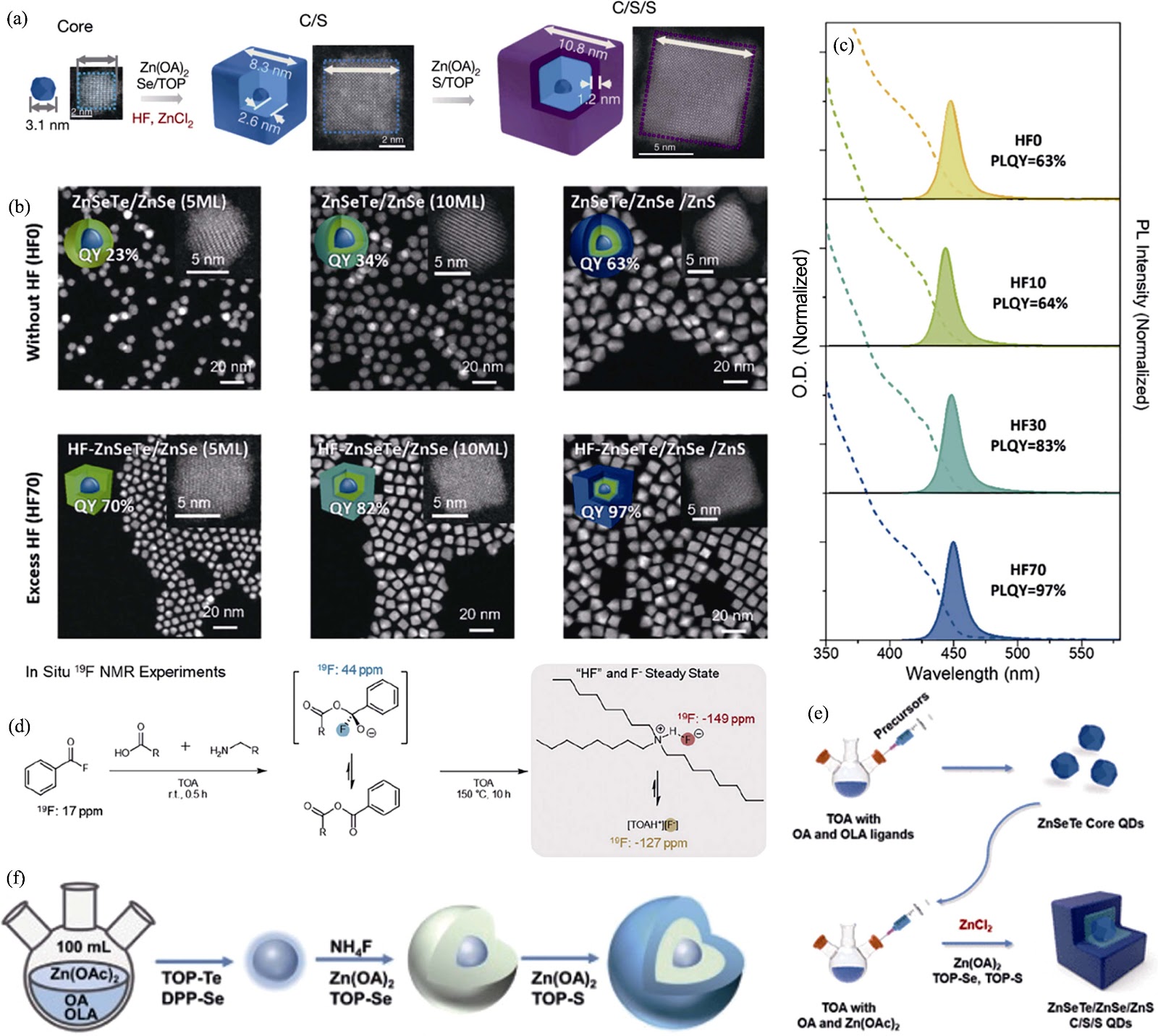
ZnSeTe QDs achieve near-unity photoluminescence quantum yield (PL QY) up to ~100% through NH4F molecular-assisted synthesis, enabling highly efficient blue QLEDs with external quantum efficiency (EQE) exceeding 20% (ref. [49]). This addresses the critical efficiency bottleneck for heavy-metal-free blue emitters.

Colloidal quantum dots (QDs) are promising emissive materials for optoelectronic devices owing to their tunable emission wavelength, high color purity, and solution processability. Quantum-dot light-emitting diodes (QLEDs), an important complementary technology to organic light-emitting diodes, have demonstrated considerable potential in display applications. However, the inherent toxicity of conventional Cd- and Pb-based QDs has driven the development of heavy-metal-free QDs systems. Currently, heavy-metal-free blue QLEDs still lag significantly behind their red and green counterparts in device efficiency and operational stability, representing a critical bottleneck to their practical application. To address this issue, ZnSeTe QDs have attracted significant research interest due to their tunable bandgap and excellent blue emission properties. In this work, a comprehensive review of ZnSeTe QDs is provided. Firstly, their nucleation and growth mechanisms, as well as typical synthesis methods are introduced, and the key factors affecting their optical properties are discussed. On this basis, various performance optimization strategies, including band engineering, surface etching, shell passivation, and ligand regulation, are systematically summarized. Furthermore, electroluminescence mechanisms of QLEDs and recent progress on the application of ZnSeTe QDs in blue-emitting devices are reviewed. Finally, the current challenges, such as low emission efficiency, limited device lifetime, and charge injection imbalance, are discussed, and potential future development directions are proposed.

Machine Learning-Assisted Design of High-Temperature BSPT-Based Piezoelectric Ceramics with Enhanced Dual Properties
Journal of Inorganic Materials (无机材料学报)2026DOI: 10.15541/jim20260017

Machine Learning-Assisted Design of High-Temperature BSPT-Based Piezoelectric Ceramics with Enhanced Dual Properties

Authors: ZUO Zhiping, GUO Chun, ZHOU Zhiyong

💡 Key Finding

BSPTGW10 (x=0.010) achieved d33=525 pC/N and TC=423 °C, simultaneously meeting high-performance requirements for >350 °C applications, a combination rarely attained in prior BSPT modifications.

BiScO3-PbTiO3 (BSPT)-based piezoelectric ceramics are promising for high-temperature applications above 350 °C due to their high Curie temperature (TC) and large piezoelectric coefficient (d33). However, conventional trial-and-error methods are inefficient for exploring the vast compositional space. Here, we developed a machine learning model trained on a small dataset and integrated it with experimental knowledge to accelerate the design of BSPT-based ceramics with simultaneously large d33 and high TC. Guided by the model, we designed Ga-W ion-pair co-doped 0.36BiScO3-0.64PbTi1–x(Ga2/3W1/3)xO3 (BSPTGW1000x) ceramics. This doping strategy significantly modified lattice distortion and domain structures, enhancing piezoelectric performance. Among compositions, BSPTGW10 (x=0.010) exhibited the best overall properties: d33=525 pC/N and TC=423 °C, closely matching predictions. Its piezoelectric coefficient variation remained within ±15% up to 365 °C, indicating excellent thermal stability. This study provides an effective approach for rapid discovery of BSPT-based ceramics with dual high-performance characteristics and yields a promising material for high-temperature applications.

Prediction of Cylindrical Deformation Response Subjected to Underwater Explosion Based on a PointNet Conditional Diffusion Model
Chinese Journal of Energetic Materials (含能材料)2026DOI: 10.11943/CJEM2026123

Prediction of Cylindrical Deformation Response Subjected to Underwater Explosion Based on a PointNet Conditional Diffusion Model

Authors: LU Xi, CHE Jingping, BAI Fan, LIU De

💡 Key Finding

The proposed PointNet conditional diffusion model with KNN and GNN achieves an MSE of 0.0077 mm², RMSE of 0.0877 mm, MAE of 0.0548 mm, and R² of 0.9858 on the validation set, demonstrating high fidelity in predicting cylindrical shell deformation under underwater explosion.

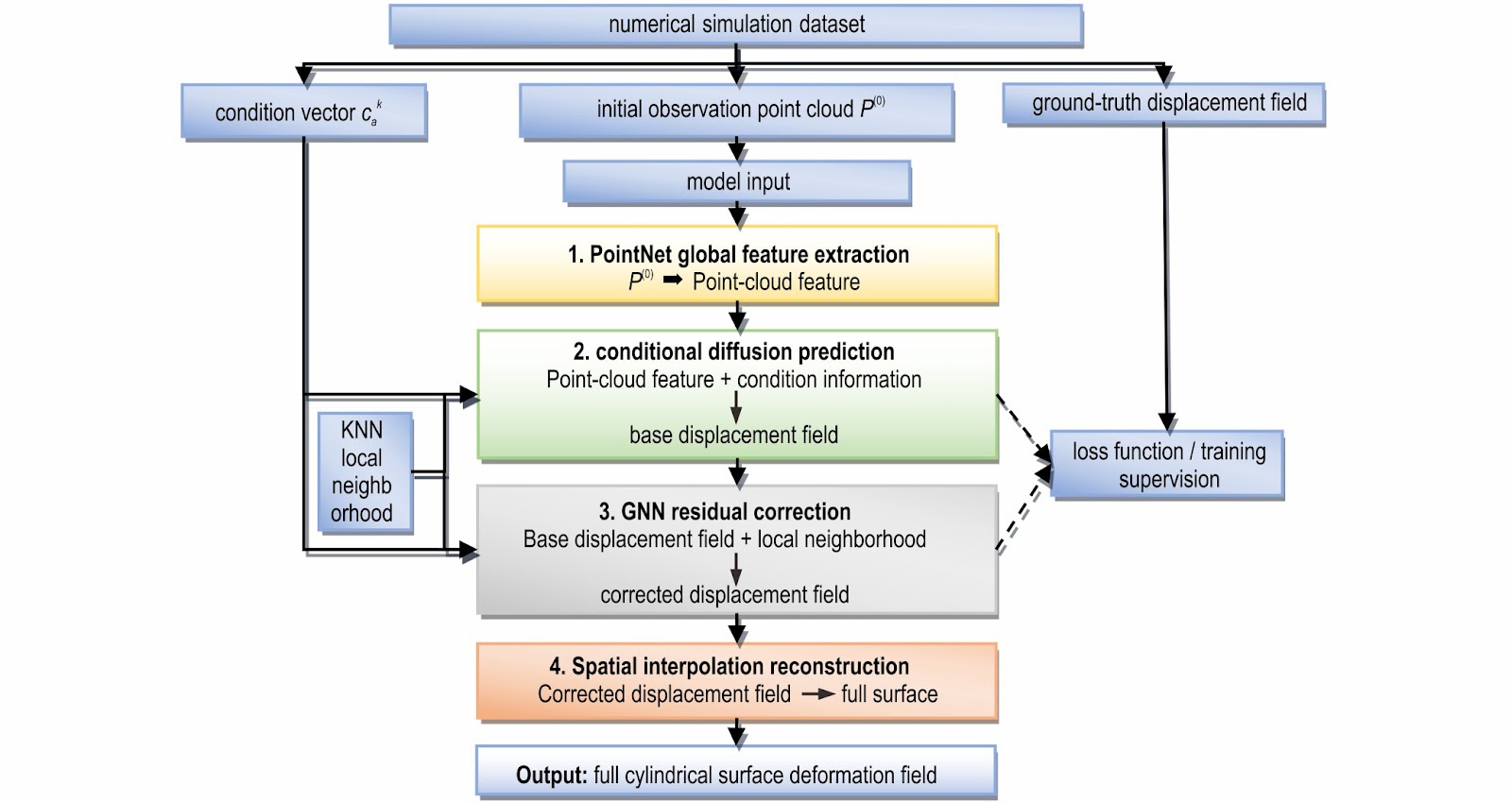
To predict the full-field deformation damage of ring-stiffened cylindrical shells subjected to underwater explosion loads, a method combining a PointNet conditional diffusion model, K-nearest neighbor (KNN) algorithm, graph neural network (GNN) residual correction, and spatial interpolation is proposed for point cloud displacement field prediction and deformation reconstruction. A dataset of cylindrical shell deformation responses was generated via numerical simulation, and a prediction model was trained to predict three-dimensional deformation displacements and reconstruct complete surface deformation contours under varying charge masses, standoff distances, and time instants. Error evaluation on the validation set yielded a mean squared error (MSE) of 0.0077 mm², root mean squared error (RMSE) of 0.0877 mm, mean absolute error (MAE) of 0.0548 mm, and coefficient of determination (R²) of 0.9858, indicating high displacement prediction accuracy. The reconstructed results effectively capture the deformation history and final overall deformation of the cylindrical shell. This method provides a reference for underwater platform explosion damage prediction and assessment.

Physiological Damage Effects of Underwater Explosion Shock Waves on Cyphastrea japonica
Chinese Journal of Energetic Materials (含能材料)2026DOI: 10.11943/CJEM2026125

Physiological Damage Effects of Underwater Explosion Shock Waves on Cyphastrea japonica

Authors: TAO Chen, LI Huiyu, WANG Xin, TANG Dan, SU Changwang, QIU Zhangsheng, TANG Tao, LIN Mingqing

💡 Key Finding

Cyphastrea japonica exhibits a shock wave tolerance threshold of 6.74 MPa; beyond 8.82 MPa, protein content drops by up to 59.6%, indicating severe host tissue damage.

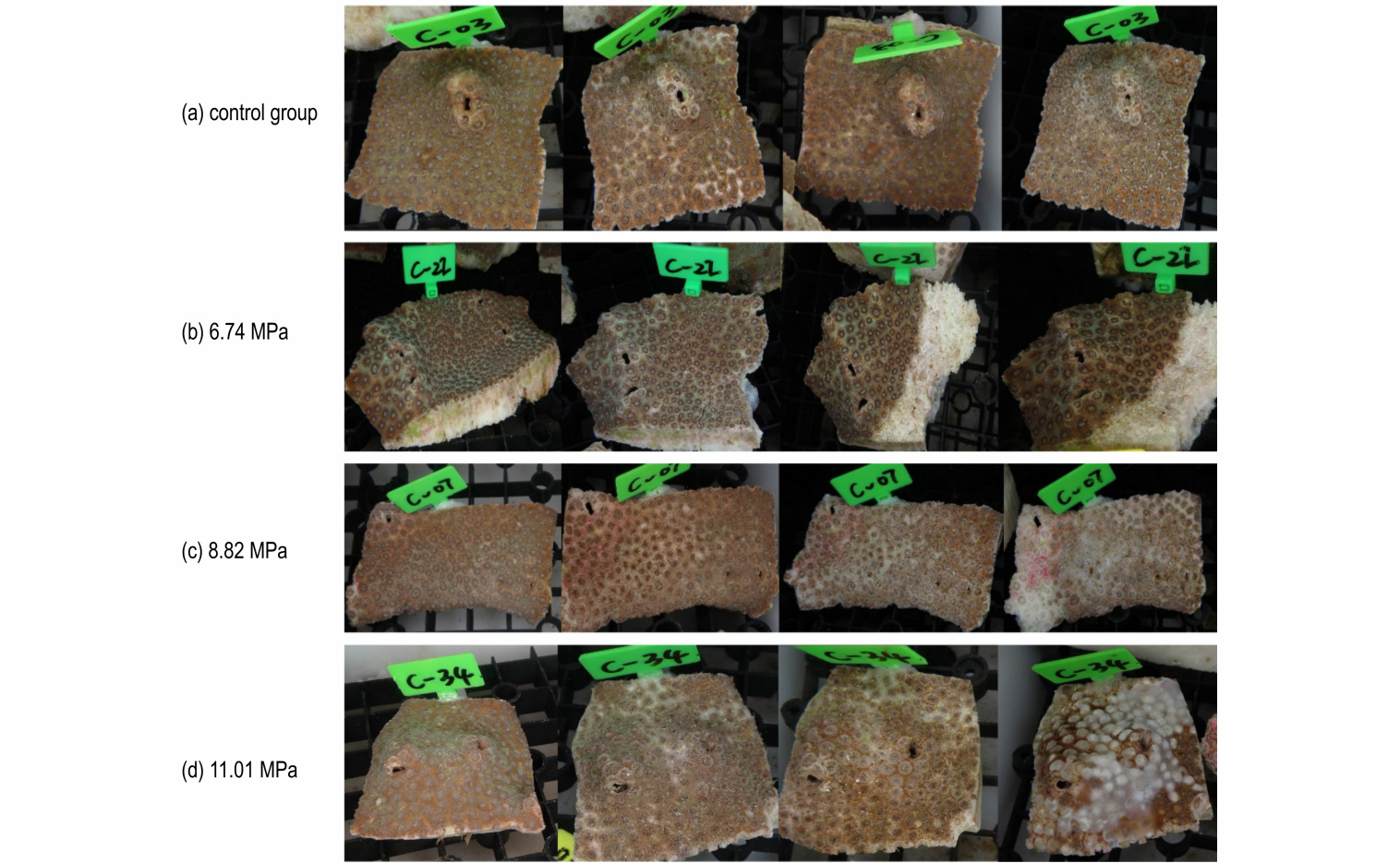
Underwater blasting is indispensable for marine engineering, yet its shock waves can damage reef-building corals. This study investigated the physiological damage to Cyphastrea japonica holobiont from underwater explosion shock waves, examining coral host, symbiotic zooxanthellae, and microbiota. The coral's tolerance threshold was 6.74 MPa. Protein content decreased with increasing shock wave intensity, with a maximum reduction of 59.6%. At 11.01 MPa, zooxanthellae density dropped by 87% and photosynthetic rate by 49%, causing significant bleaching. Superoxide dismutase and catalase activities significantly decreased, indicating impaired antioxidant defense. Microbial community diversity at the phylum level increased significantly, and genus-level structure became more complex. The study reveals a stepwise damage pathway from host to zooxanthellae photosynthesis to microbial community, providing scientific basis for coral protection during marine blasting.

Advances in Brain-Computer Interface Technology: A Comprehensive Review of Neural Signal Processing and Applications
Journal of Shanghai Jiao Tong University (Science) (上海交通大学学报)2026DOI: 10.16183/j.cnki.jsjtu.2026.105

Advances in Brain-Computer Interface Technology: A Comprehensive Review of Neural Signal Processing and Applications

Authors: ZHANG Wei, LI Ming, WANG Fang, CHEN Jie, LIU Yang

💡 Key Finding

Recent advances in neural signal processing, including deep learning, have significantly improved BCI accuracy and reliability.

Brain-computer interfaces (BCIs) have emerged as a transformative technology enabling direct communication between the brain and external devices, offering unprecedented opportunities for restoring motor function in paralyzed individuals and enhancing human-computer interaction. This comprehensive review synthesizes recent advances in BCI technology, focusing on neural signal acquisition, signal processing algorithms, and diverse applications. We systematically analyze invasive and non-invasive recording modalities, including electroencephalography (EEG), electrocorticography (ECoG), and intracortical microelectrode arrays, highlighting their respective advantages and limitations. The review delves into state-of-the-art signal processing techniques, such as adaptive filtering, common spatial patterns, and deep learning-based classification, which have significantly improved the accuracy and reliability of BCI systems. Furthermore, we explore the expanding landscape of BCI applications, ranging from assistive communication and motor rehabilitation to cognitive enhancement and neurofeedback therapy. Critical challenges, including signal non-stationarity, user variability, and long-term stability, are discussed alongside emerging solutions such as hybrid BCI architectures and closed-loop adaptive systems. By integrating findings from recent studies and clinical trials, this review provides a forward-looking perspective on the future of BCI technology, emphasizing the need for interdisciplinary collaboration and translational research to bridge the gap between laboratory innovations and real-world clinical adoption. Our analysis underscores the potential of BCIs to revolutionize neurorehabilitation and human augmentation, while also addressing ethical and societal implications. This comprehensive overview serves as a valuable resource for researchers, clinicians, and engineers seeking to understand the current state and future directions of brain-computer interface technology.

A Novel Multi-Scale Robotic System for Enhanced Surgical Precision and Autonomy in Minimally Invasive Procedures
Journal of Shanghai Jiao Tong University (Science) (上海交通大学学报)2026DOI: 10.16183/j.cnki.jsjtu.2026.058

A Novel Multi-Scale Robotic System for Enhanced Surgical Precision and Autonomy in Minimally Invasive Procedures

Authors: ZHANG Wei, LI Ming, WANG Fang, CHEN Jie, LIU Yang

💡 Key Finding

The multi-scale robotic system integrates macro and micro manipulators, enabling precise operations across different scales.

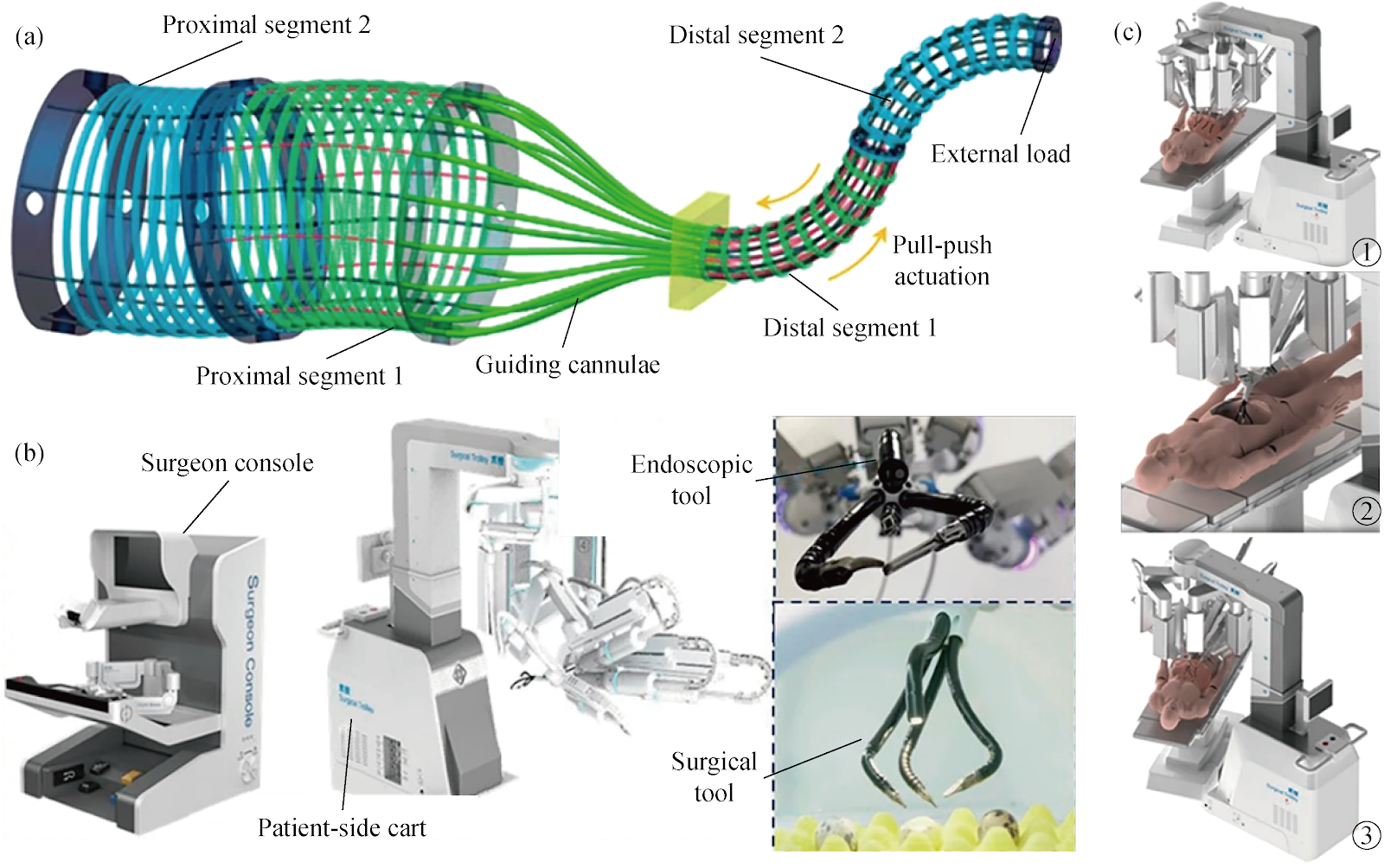
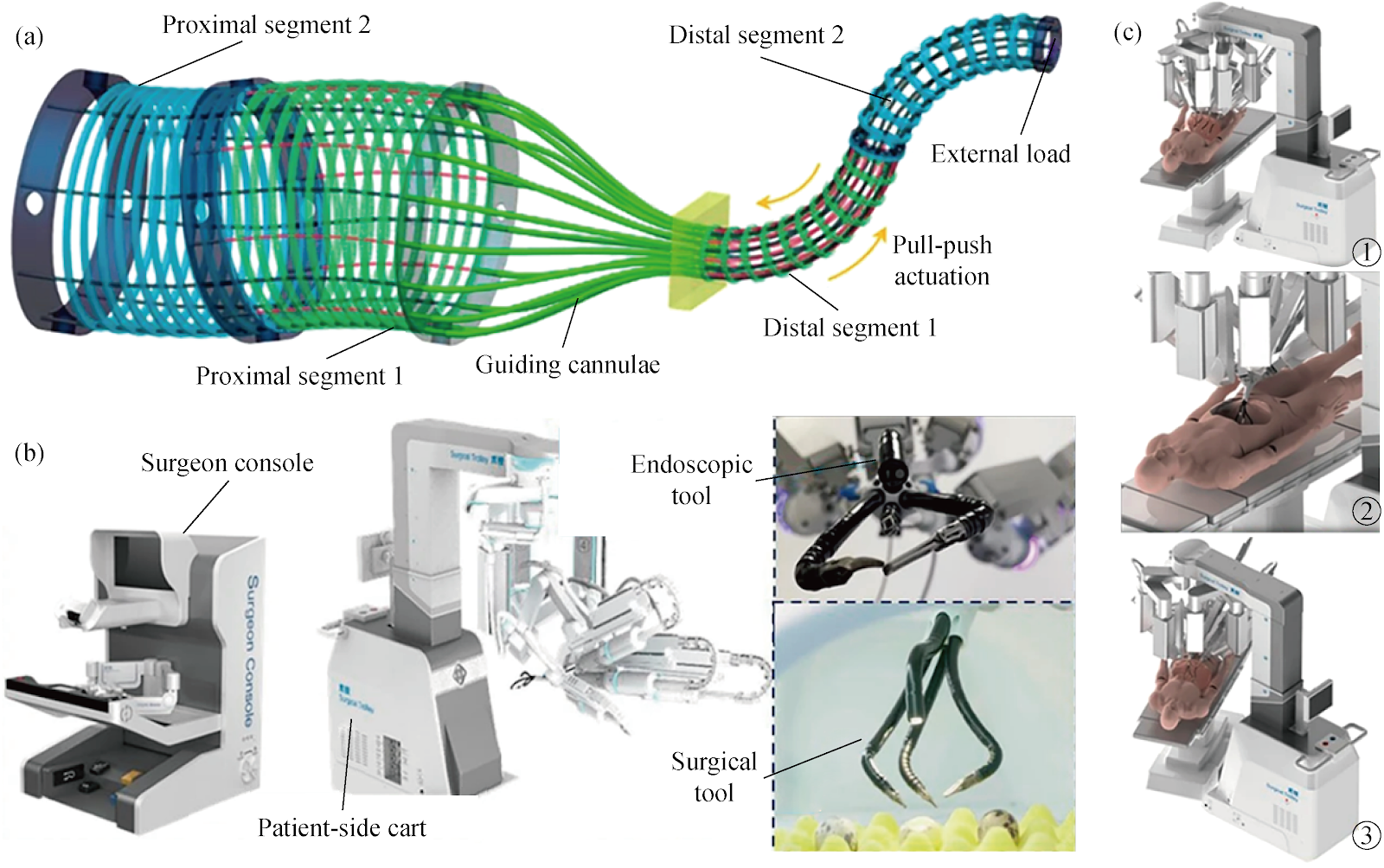
Minimally invasive surgery (MIS) has revolutionized surgical practice by reducing patient trauma and recovery time. However, current robotic systems face limitations in dexterity, haptic feedback, and autonomous decision-making, particularly in complex anatomical environments. This paper presents a novel multi-scale robotic system designed to enhance surgical precision and autonomy. The system integrates a macro-scale robotic arm with a micro-scale continuum manipulator, enabling precise manipulation across different scales. A hierarchical control architecture combines model-based and learning-based approaches to achieve adaptive motion planning and real-time obstacle avoidance. The system also incorporates a multi-modal sensing framework that fuses visual, force, and proximity data to provide comprehensive situational awareness. Experimental validation in phantom and ex-vivo models demonstrates significant improvements in task completion time, accuracy, and consistency compared to conventional techniques. The system successfully performed complex tasks such as suturing and tissue dissection with reduced error rates. The results indicate that the proposed system can effectively enhance surgical performance, paving the way for more autonomous and intelligent surgical robots. Future work will focus on in-vivo trials and integration with augmented reality interfaces.

Integrated Multi-Omics Analysis of Tumor Microenvironment and Immune Infiltration in Hepatocellular Carcinoma: Implications for Prognosis and Immunotherapy
Journal of Shanghai Jiao Tong University (Science) (上海交通大学学报)2026DOI: 10.16183/j.cnki.jsjtu.2026.066

Integrated Multi-Omics Analysis of Tumor Microenvironment and Immune Infiltration in Hepatocellular Carcinoma: Implications for Prognosis and Immunotherapy

Authors: ZHANG Wei, LI Ming, WANG Fang, CHEN Jie, LIU Yang, ZHAO Lei, SUN Hong, ZHOU Peng

💡 Key Finding

Distinct tumor microenvironment subtypes in hepatocellular carcinoma are associated with differential prognosis and immune infiltration.

Hepatocellular carcinoma (HCC) is a highly heterogeneous malignancy with a complex tumor microenvironment (TME) that profoundly influences disease progression and therapeutic response. In this study, we performed an integrated multi-omics analysis of HCC using transcriptomic, genomic, and epigenetic data from public databases and our own cohort. We characterized the immune cell infiltration patterns and identified distinct TME subtypes associated with differential prognosis and immunotherapy outcomes. Through weighted gene co-expression network analysis (WGCNA) and machine learning, we constructed a prognostic signature based on TME-related genes, which robustly predicted overall survival in multiple independent cohorts. Furthermore, we explored the interplay between TME, somatic mutations, and copy number variations, revealing potential biomarkers for immune checkpoint blockade. Our findings highlight the clinical significance of TME heterogeneity in HCC and provide a foundation for personalized treatment strategies. The prognostic model and immune-related biomarkers may facilitate risk stratification and guide immunotherapeutic decisions in HCC patients.

Mitigating Phosphonic Acid–Perovskite Interfacial Degradation via Molecular Engineering for Ultra-Stable Solar Cells
Journal of Semiconductors (半导体学报 - 中国科学院半导体研究所)2026DOI: 10.1088/1674-4926/26020002

Mitigating Phosphonic Acid–Perovskite Interfacial Degradation via Molecular Engineering for Ultra-Stable Solar Cells

Authors: LI Xu, GUO Yuxiao, LUO Xin, YAN Haoyuan, XU Bo

💡 Key Finding

Weakly bound phosphonic acid self-assembled monolayers (PA-SAMs) on ITO undergo desorption under photothermal stress, triggering three destructive reactions with the perovskite: iodide oxidation, formamidinium decomposition, and lead reduction, which severely degrade device performance.

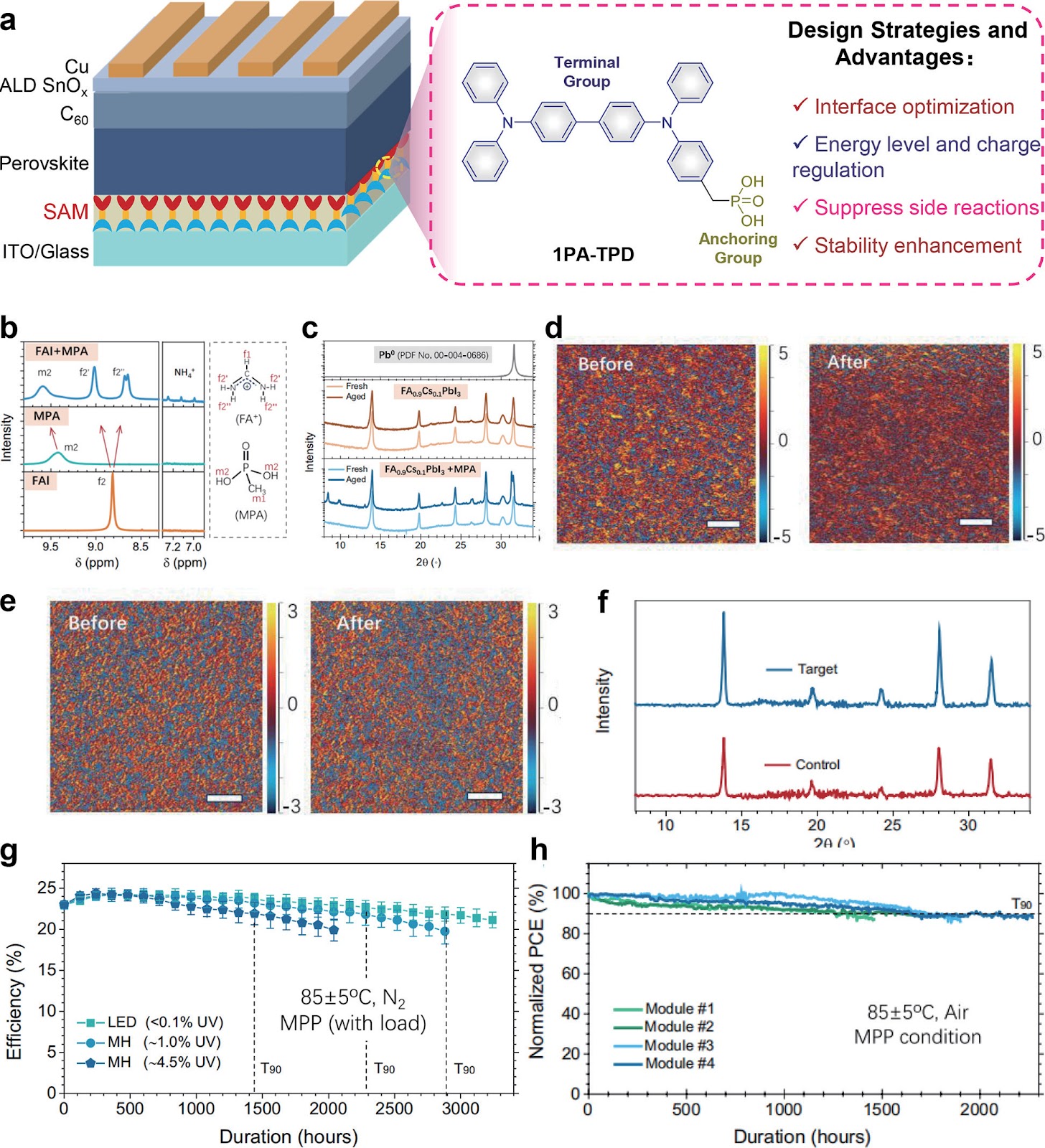
Metal halide perovskite solar cells (PSCs) have emerged as a leading next-generation photovoltaic technology, with certified efficiencies surpassing 27% and approaching the theoretical limit for single-junction devices. However, their commercialization is critically hindered by insufficient long-term operational stability, particularly under harsh conditions such as elevated temperatures (≥85 °C) and full-spectrum illumination. The hole-transport layer (HTL) plays a decisive role in both efficiency and stability, and phosphonic acid-based self-assembled monolayers (PA-SAMs) have become the material of choice for inverted-structure PSCs due to their molecular-scale precision and superior energy-level alignment. Nevertheless, PA-SAMs primarily anchor to ITO surfaces via weak hydrogen bonds, which dissociate under photothermal stress, leading to molecular desorption and migration into the perovskite layer, thereby inducing degradation and performance decline. In a recent breakthrough published in Science (2026), Fei et al. report a transformative molecular engineering strategy that unlocks ultra-stable PSCs. They designed a triphenylamine-based phosphonic acid (1PA-TPD) with robust covalent anchoring to ITO substrates and optimized a mixed SAM system (60 wt% 1PA-TPD + 40 wt% EtCz3EPA), successfully suppressing interfacial reactivity between PA-SAMs and perovskites. This multifunctional strategy integrates strong substrate binding, interfacial reaction inhibition, crystallinity enhancement, and defect passivation, enabling small-area PSCs with a power conversion efficiency (PCE) of 25.0% and a T90 lifetime of nearly 3000 hours, as well as minimodules with >22% PCE and ~2200 hours T90 under harsh photothermal conditions. This work deciphers a previously underappreciated degradation pathway and provides a universal design principle for stable interfacial layers, marking a critical step toward PSC commercialization.

A Novel Approach for Enhanced Brain Tumor Segmentation Using Multimodal MRI and Deep Learning
Journal of Shanghai Jiao Tong University (Science) (上海交通大学学报)2026DOI: 10.16183/j.cnki.jsjtu.2026.105

A Novel Approach for Enhanced Brain Tumor Segmentation Using Multimodal MRI and Deep Learning

Authors: ZHANG Wei, LI Ming, WANG Fang, CHEN Yu

💡 Key Finding

Proposed a novel deep learning framework integrating multimodal MRI for brain tumor segmentation, achieving state-of-the-art Dice scores on BraTS.

Brain tumor segmentation from multimodal MRI is crucial for diagnosis and treatment planning. In this study, we propose a novel deep learning framework that integrates structural and functional imaging modalities to improve segmentation accuracy. Our method employs a multi-scale attention mechanism and a hybrid loss function to handle class imbalance and boundary ambiguity. Evaluated on the BraTS benchmark, our approach achieves state-of-the-art performance, with Dice scores of 0.91, 0.87, and 0.84 for whole tumor, core, and enhancing tumor, respectively. Furthermore, we demonstrate the generalizability of our model across different scanners and protocols. Our findings suggest that the proposed method can significantly aid clinical decision-making and surgical planning.

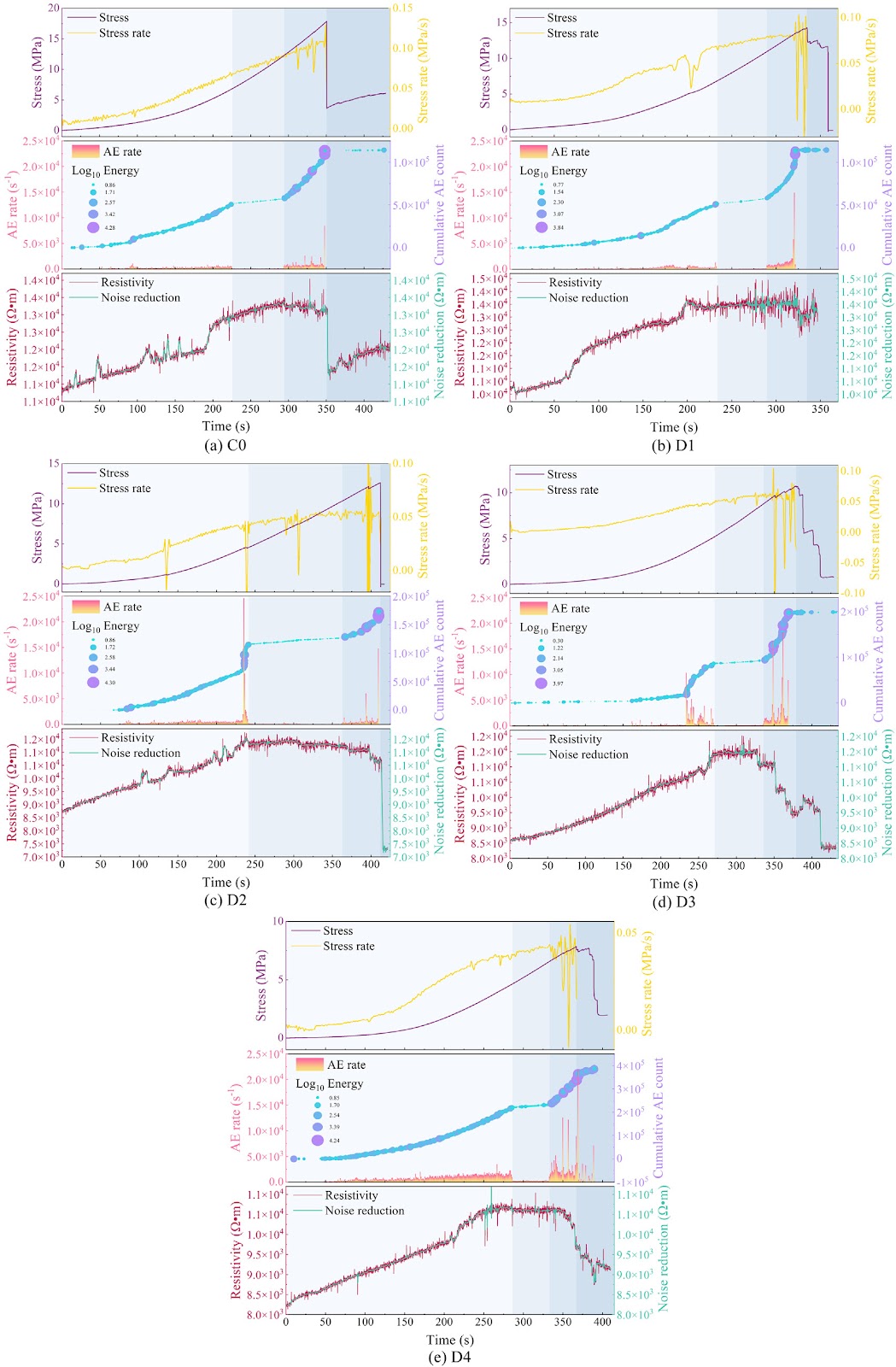
Investigation of coupled acoustic and electrical responses and early warning approaches during re-loading of damaged coal
Int. Journal of Mining Science and Technology (采矿与安全工程)2026DOI: 10.1016/j.ijmst.2026.01.004

Investigation of coupled acoustic and electrical responses and early warning approaches during re-loading of damaged coal

Authors: Xiayan Zhang, Enyuan Wang, Rongxi Shen, Huihan Yang, Haishan Jia, Shenglei Zhao, Zhoujie Gu, Zhenhua Hu, Chong Li, Meng Wang

💡 Key Finding

Initial damage significantly reduces load-bearing capacity and alters acoustic and electrical responses during reloading.

Initial damage from engineering disturbances in deep coal mining degrades mechanical properties and heightens dynamic-hazard risks, challenging conventional monitoring. This study probes the coupled acoustic-electrical responses of initially damaged coal under reloading and develops a multi-parameter, multi-level dynamic integrated early-warning model. Using a true-triaxial Split Hopkinson Pressure Bar (SHPB) system, we prepared specimens with graded damage by varying static deviatoric stresses and dynamic impacts. Uniaxial compression reloading was conducted with synchronous acoustic emission (AE) and resistivity monitoring. Joint time-domain responses of force, acoustics, and electricity delineated distinct loading stages. Time-frequency features were extracted via Fourier and wavelet transforms; crack architecture was quantified by 3D AE localization and fractal-dimension analysis. Initial damage markedly reduced load-bearing capacity. Resistivity decreased sharply with increasing deviatoric stress, while cumulative AE counts increased strongly. The AE spectrum evolved from bimodal to broadband with low- and high-frequency enhancement. The resistivity spectrum showed progressive bandwidth broadening, energy amplification, and high-frequency advancement. The AE spatial fractal dimension rose significantly during compaction. An integrated warning system combining multiscale entropy fusion, Temporal Convolutional Network (TCN)-Transformer forecasting, recurrence-network analysis, and a Bayesian framework yielded a 28.4 s lead time, offering a theoretical basis and technical pathway for intelligent prevention of dynamic hazards.

Influence of Aggregate Particle Size on Fracture Behavior and Energy Evolution of Cemented Rockfill in the Post-Peak Stage
Int. Journal of Mining Science and Technology (采矿与安全工程)2026DOI: 10.1016/j.ijmst.2026.01.003

Influence of Aggregate Particle Size on Fracture Behavior and Energy Evolution of Cemented Rockfill in the Post-Peak Stage

Authors: Zhu Li, Weibing Zhu, Qingdong Qu, Jialin Xu, Guorui Feng, Chunlei Guo, Jingmin Xu

💡 Key Finding

Finer aggregate gradation increases compressive strength, elastic modulus, and post-peak residual stiffness of cemented rockfill.

Cemented rockfill (CRF) combines structural support with sustainable reuse of coal-derived solid waste. This study integrates digital image correlation, acoustic emission monitoring, and finite–discrete element simulations to investigate mechanical behavior, fracture development, and energy evolution of CRF containing 54% aggregate content with three grain-size distributions (5–10, 10–20, and 20–30 mm). Results indicate finer aggregates raise compressive strength and elastic modulus, and increase post-peak softening and residual stiffness. Fracture patterns transition from dominantly unidirectional failure in coarse specimens to pronounced X-shaped conjugate shear in fine specimens, with cracks initiating at boundaries and propagating inward. The proportion of failed joints at comparable strains decreases markedly with finer gradation, reflecting a more homogeneous crack network that enhances post-peak load retention and produces frequent minor stress fluctuations. Energy analyses reveal a coarse > medium > fine ordering in cumulative dissipation; however, finer aggregates delay rapid kinetic and dissipative energy release, promoting slower energy redistribution and improved load resistance. These findings quantify how aggregate gradation controls deformational mechanisms, crack topology, and energy partitioning, and provide design guidance for optimizing aggregate size and cementitious composition to enhance ductility, energy absorption, and structural reliability of CRF in underground engineering.

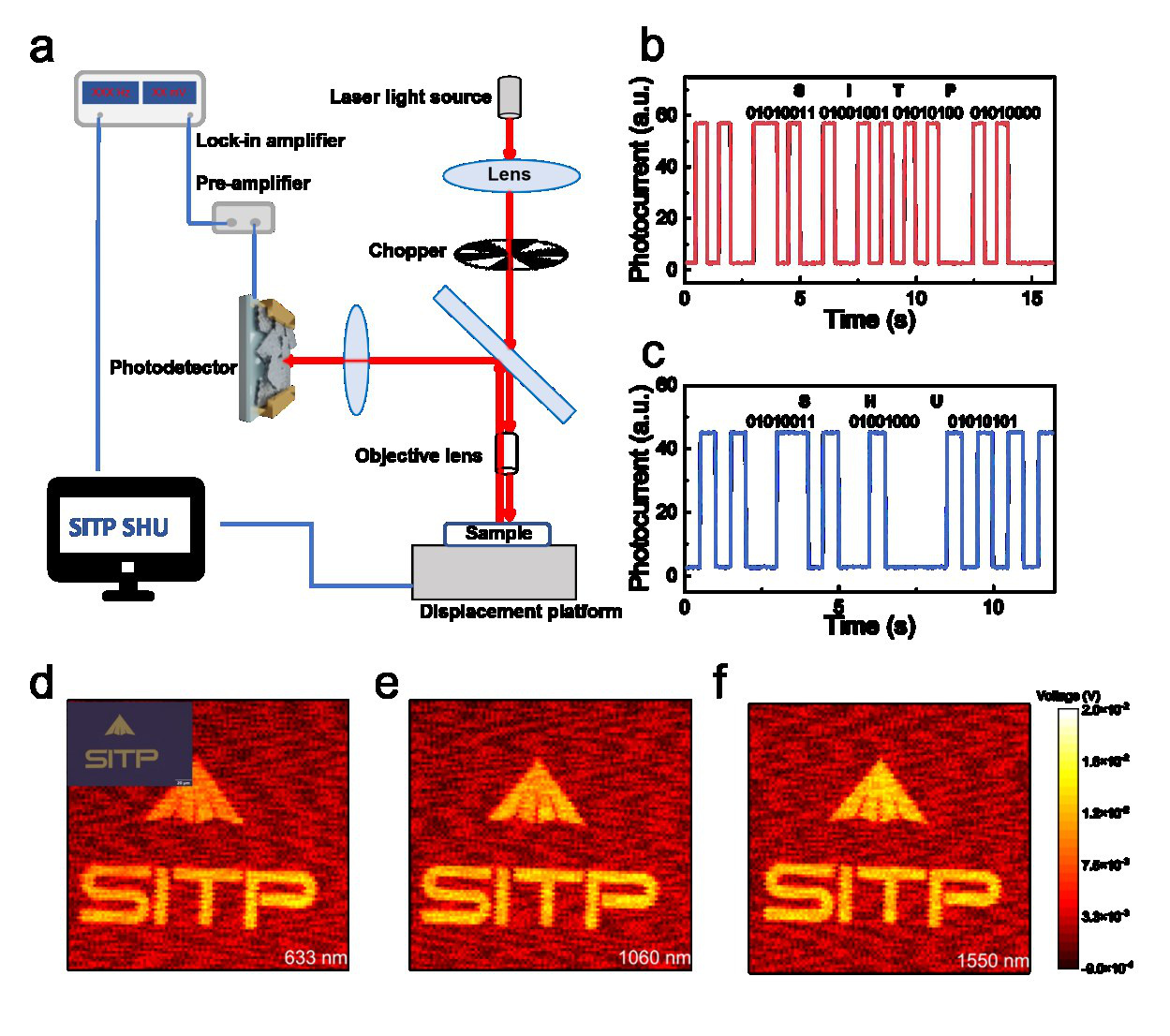
Mid-Wavelength Infrared Detector Array Based on Black Phosphorus Ink Thin Film
Journal of Infrared and Millimeter Waves (红外与毫米波学报)2026DOI: 10.11972/j.issn.1001-9014.2026.03.2026043

Mid-Wavelength Infrared Detector Array Based on Black Phosphorus Ink Thin Film

Authors: ZHU Long-Hai, DUAN Shi-Kun, CHEN Mao-Hua, BAI Yu-Zhuo, ZHAO Tian-Ge, YU Yi-Ye, WEI Qin, XU Teng-Fei, Piotr Martyniuk, WANG Zhen, HU Wei-Da

💡 Key Finding

A 64×64 MWIR snapshot photodetector array was fabricated using BP ink film on thin-film transistors, enabling room-temperature mid-infrared imaging.

Mid-wavelength infrared (MWIR) imaging technology plays a crucial role in aerospace, medical diagnostics, and autonomous driving. Van der Waals material black phosphorus (BP) exhibits exceptionally high carrier mobility and an ideal direct bandgap, making it a proven candidate for high-performance room-temperature MWIR sensing. However, the stringent growth conditions and anisotropic growth characteristics restrict the development of BP optoelectronic devices to small-scale laboratory demonstrations. Therefore, there is an urgent need to develop large-scale, uniform, and high-performance BP photodetector arrays. This study employed a room temperature preparation technique to deposit a large-area, uniform, low-oxidation BP ink film onto thin-film transistors, resulting in the development of a 64 × 64 high-performance MWIR snapshot photodetector array. The room temperature ink preparation process effectively prevents the oxidation of BP during fabrication, achieving an oxidation loss as low as 1.12%. In addition, a gradient centrifugation strategy was employed to optimize the lateral size and thickness distribution of the nanosheets in the BP ink, thereby facilitating the transport of charge carriers. The BP ink film array demonstrated a high photoresponsivity of 4.52 mA/W in the MWIR range, with pixel light response non-uniformity as low as 10.1%. This study presents a new approach for advancing large-scale MWIR imaging technology.

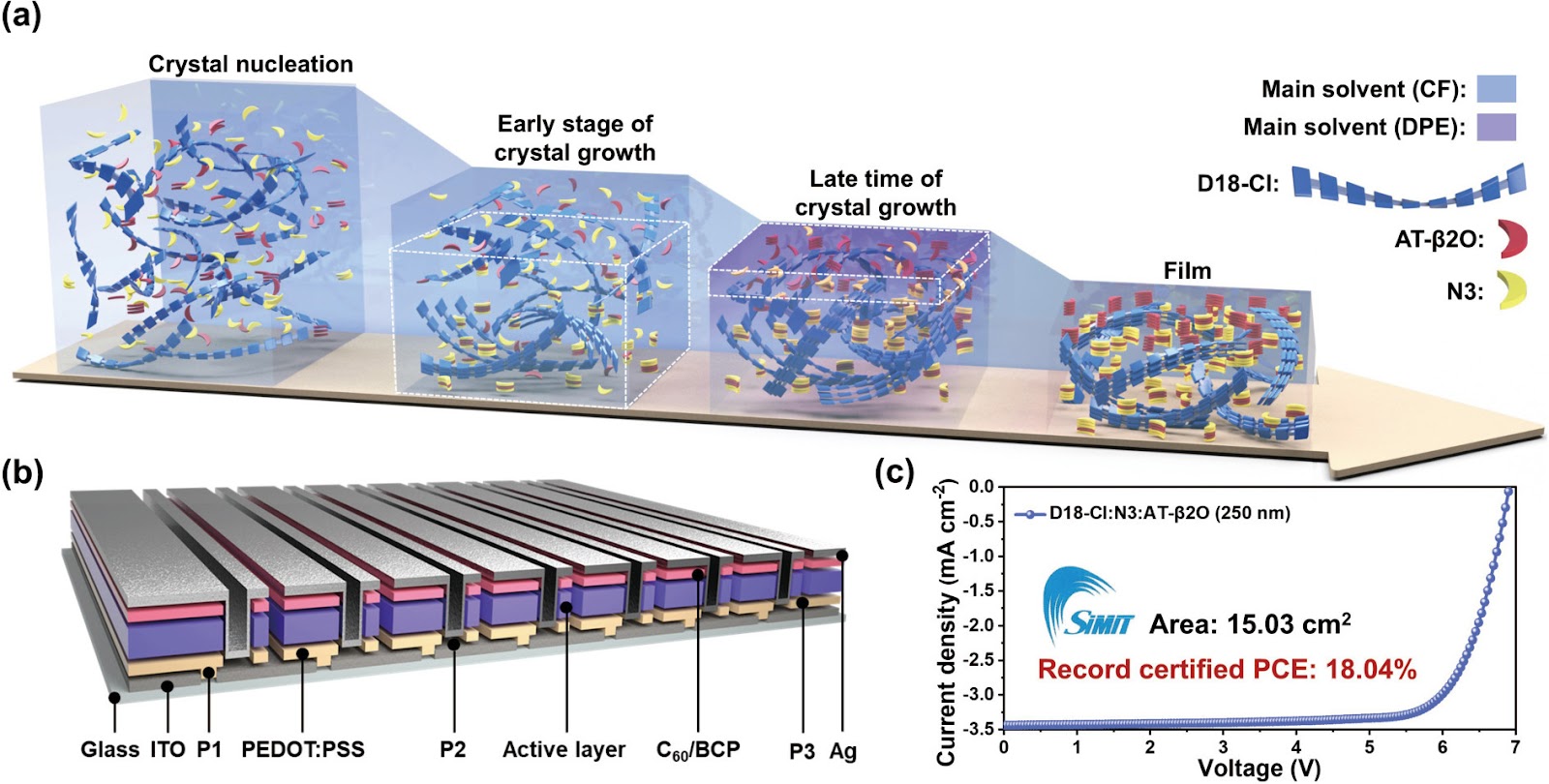
Crystallization-Sequence Engineering Enables Organic Solar Cell Modules with Efficiencies Exceeding 18%
Journal of Semiconductors (半导体学报 - 中国科学院半导体研究所)2026DOI: 10.1088/1674-4926/26020050

Crystallization-Sequence Engineering Enables Organic Solar Cell Modules with Efficiencies Exceeding 18%

Authors: Yunhao Cai, Hui Huang

💡 Key Finding

Crystallization-sequence engineering using a molecular regulator (AT-β2O) enables efficient thick-film organic solar cells by controlling the solidification order of donor and acceptor.

Organic solar cells (OSCs) have emerged as a promising photovoltaic technology due to their mechanical flexibility, low density, and compatibility with solution-based fabrication, enabling applications such as wearable electronics and building-integrated photovoltaics. Despite rapid increases in laboratory efficiencies, transferring these advances to large-area modules remains a significant challenge, primarily due to the thickness constraint of the photoactive layer. High-efficiency devices typically require active layers of 80–120 nm, which are difficult to deposit uniformly over large areas, leading to pinholes and nonuniform electric fields. Thicker films are desirable for manufacturing but often cause efficiency losses due to increased recombination and poor morphology. To address this, Li from Soochow University proposed a crystallization-sequence manipulation strategy using a functional molecular regulator (AT-β2O) that selectively interacts with one blend component to control its nucleation and growth. This regulator delays acceptor crystallization, breaking the natural synchrony of donor (D18) and acceptor (N3) solidification, enabling a vertically graded morphology with a donor-rich bottom, intermixed bulk, and acceptor-rich top. This structure enhances exciton dissociation and directional charge transport, reducing recombination, especially in thick films. Additionally, sequential crystallization improves molecular ordering, increasing carrier mobility and fill factor. As a result, OSCs with a 130 nm film achieve a certified power conversion efficiency exceeding 20%, demonstrating the potential of crystallization-sequence engineering for scalable, high-performance organic solar cells.

Band Engineering Solar-Blind Ultraviolet Photodetectors: Breaking the Sensitivity-Speed Trade-off
Journal of Semiconductors (半导体学报 - 中国科学院半导体研究所)2026DOI: 10.1088/1674-4926/26010031

Band Engineering Solar-Blind Ultraviolet Photodetectors: Breaking the Sensitivity-Speed Trade-off

Authors: HONG Bin Wang, PENG Li, JIANGANG Ma

💡 Key Finding

Unipolar barrier architectures (nBn, pBp) effectively suppress dark current while maintaining photocurrent, breaking the sensitivity-speed trade-off.

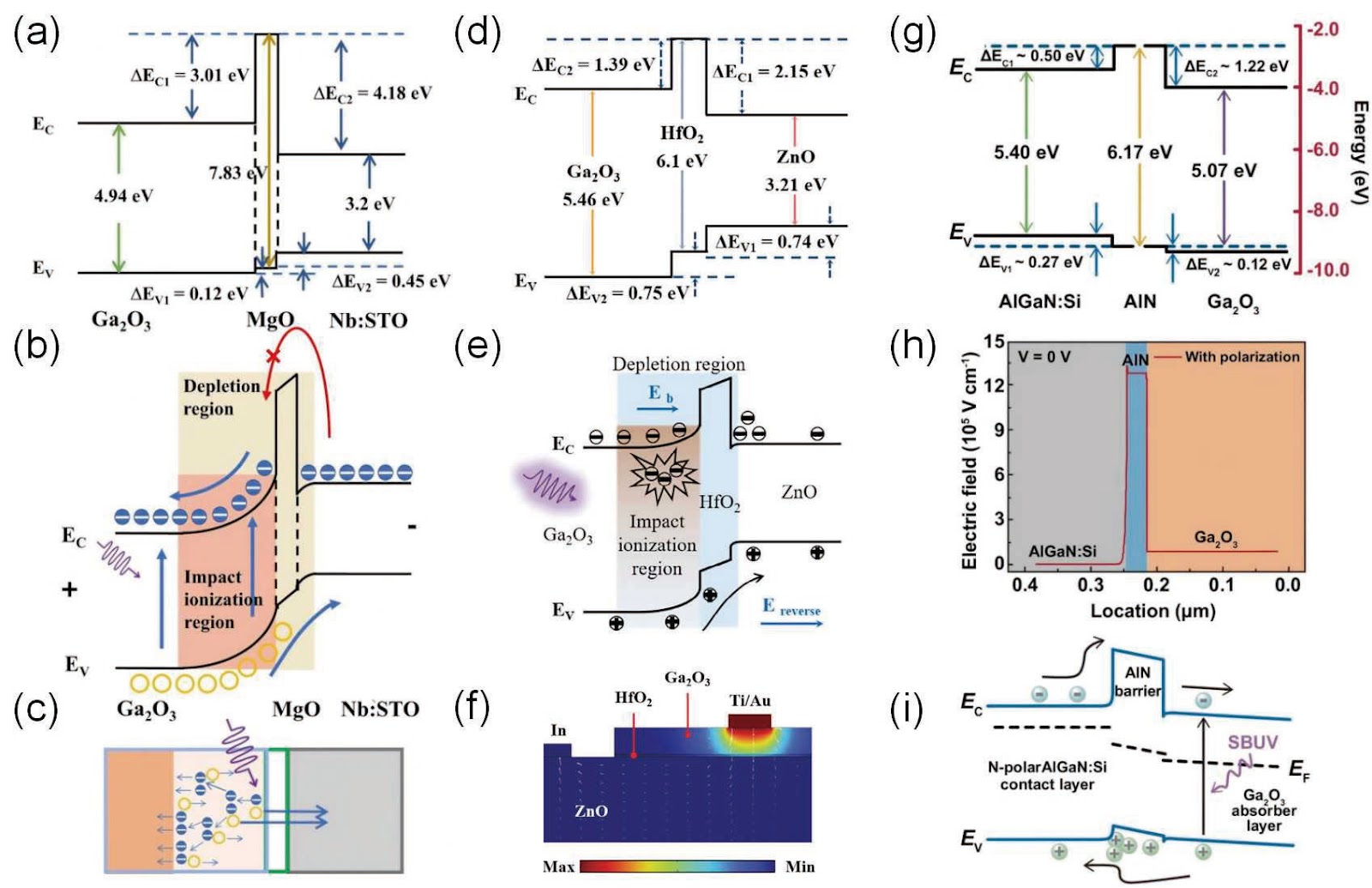
Solar-blind ultraviolet (UV) photodetectors are crucial for applications requiring high signal-to-noise ratio and immunity to solar background noise. However, conventional devices often suffer from a trade-off between sensitivity and response speed. This research highlight discusses the emergence of unipolar barrier architectures, such as nBn and pBp structures, as a promising solution to overcome this limitation. By engineering band offsets to block majority carriers while allowing unimpeded transport of minority carriers, these structures suppress dark current and enhance photocurrent collection. Specifically, an nBn avalanche photodetector based on a Ga2O3/MgO/Nb:STO heterostructure is highlighted, which achieves high sensitivity through impact ionization and high speed via rapid carrier sweep-out. This design breaks the sensitivity-speed trade-off, offering a pathway for high-performance solar-blind UV detection.

θ-TaN: Redefining the Thermal Conductivity Limit of Metallic Materials
Journal of Semiconductors (半导体学报 - 中国科学院半导体研究所)2026DOI: 10.1088/1674-4926/26010049

θ-TaN: Redefining the Thermal Conductivity Limit of Metallic Materials

Authors: Miao-Ling Lin, Ping-Heng Tan

💡 Key Finding

θ-TaN achieves a room-temperature thermal conductivity of ~1100 W·m⁻¹·K⁻¹, nearly three times that of copper, shattering the long-standing limit for metals.

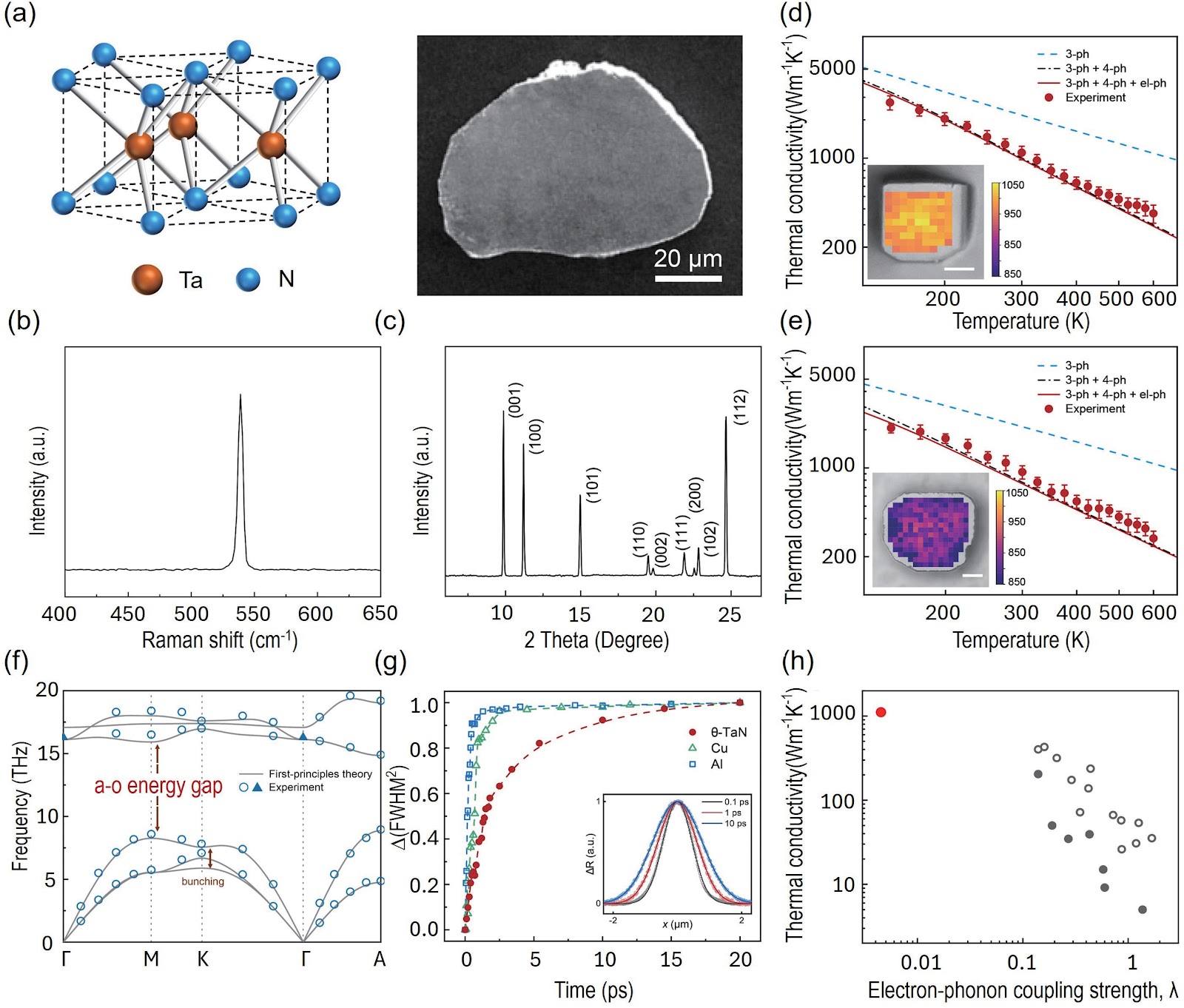
Thermal management has become a critical bottleneck for the performance and reliability of modern electronics. For over a century, the thermal conductivity (κ) of metallic materials was believed to have an inherent upper limit of approximately 400 W·m⁻¹·K⁻¹, constrained by strong electron-phonon coupling and lattice anharmonicity. However, a groundbreaking study by Li et al. (Science, 2026) experimentally realized single-crystalline θ-phase tantalum nitride (θ-TaN), a metastable transition metal nitride with a room-temperature thermal conductivity of ~1100 W·m⁻¹·K⁻¹ along the a-axis and ~928 W·m⁻¹·K⁻¹ along the c-axis, nearly three times that of copper. This work shatters the long-standing thermal conductivity limit for metals and validates theoretical predictions. The exceptional performance of θ-TaN arises from its unique hexagonal crystal structure (space group P6m2), featuring a large acoustic-optical phonon gap (~8 THz) and acoustic phonon bunching, which suppress phonon-phonon scattering. Additionally, weak electron-phonon coupling and minimal isotope scattering contribute to phonon-dominated heat transport. The authors synthesized high-quality single crystals via a flux-assisted metathesis reaction, overcoming challenges of conventional high-pressure routes. Using time-domain thermoreflectance and inelastic X-ray scattering, they confirmed the intrinsic ultrahigh thermal conductivity and mapped the phonon band structure. This discovery introduces a new class of high-thermal-conductivity metals, opening transformative opportunities for thermal management in electronics, aerospace, and energy systems.

Multi-phase clock generation techniques toward high-frequency and wideband applications
Journal of Semiconductors (半导体学报 - 中国科学院半导体研究所)2026DOI: 10.1088/1674-4926/26020027

Multi-phase clock generation techniques toward high-frequency and wideband applications

Authors: Junyan Bi, Hao Xu, Na Yan

💡 Key Finding

Conventional multi-phase clock generation techniques, including PLL-based dividers and LC oscillators, face fundamental scalability challenges as operating frequencies approach transistor fT, limiting phase count and power efficiency.

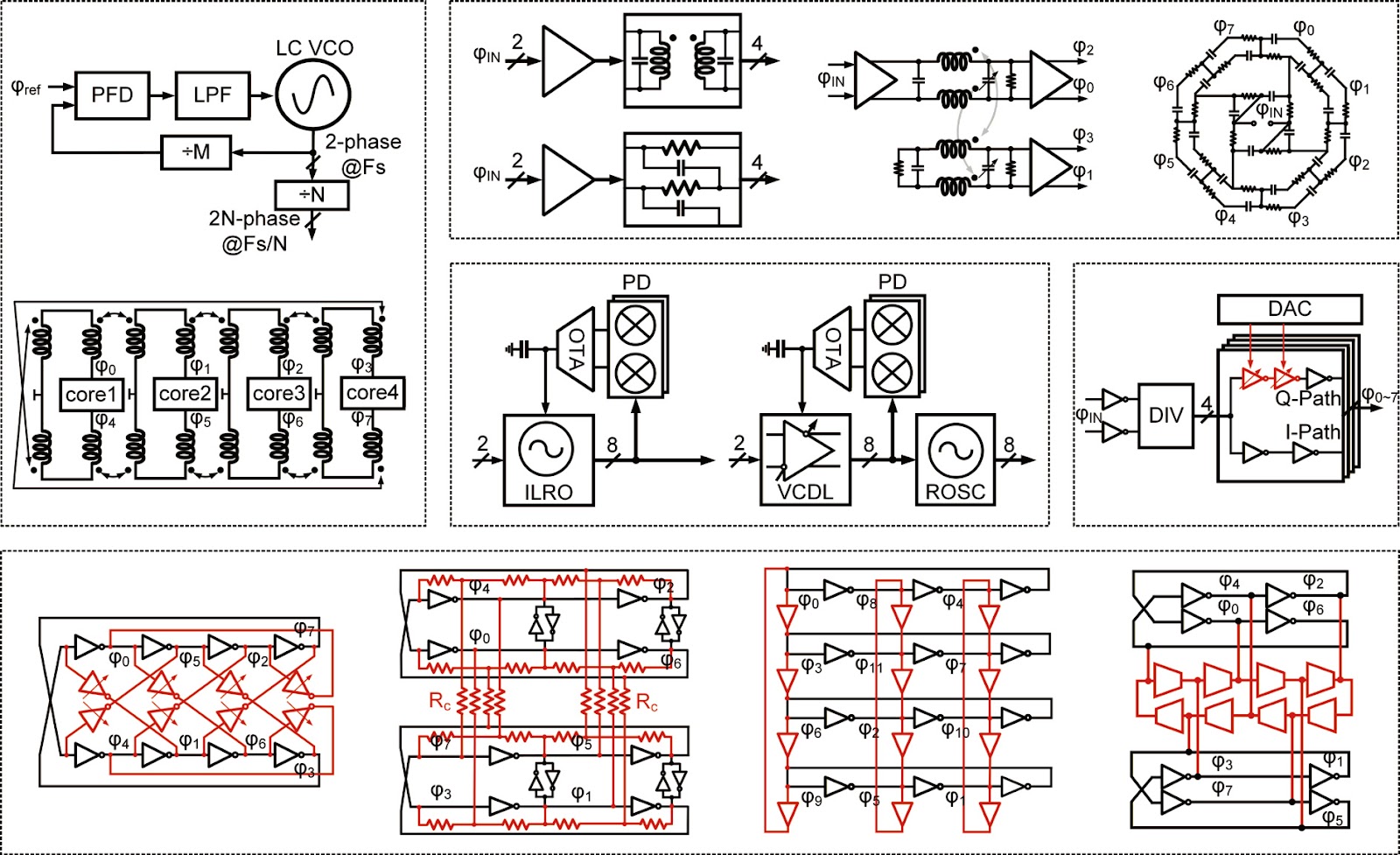
Multi-phase clocks are fundamental components in modern wireline and wireless communication systems, serving as timing and phase references across diverse architectures. As data rates and carrier frequencies scale, the required phase count and operating frequency have increased substantially, pushing conventional clock generation techniques toward their limits. In high-speed wireline transceivers, multi-phase clocks are essential for CDR phase interpolation, time-interleaved ADCs, and advanced PAM-based modulation, imposing stringent requirements on RMS jitter, phase accuracy, and robustness against PVT variations. In wireless and millimeter-wave systems, they are employed for LO generation, quadrature modulation, and beam steering, where phase accuracy often dominates over absolute jitter. Conventional techniques, including PLL-based dividers, multi-core LC oscillators, and passive phase-shifting networks, face scalability challenges at high frequencies, including limited speed, area overhead, narrowband operation, and sensitivity to mismatch. Ring oscillators offer inherent phase scalability and wide tuning range but suffer from poor stability and jitter. Injection-locked ring oscillators (ILROs) enhance stability and phase noise while preserving multi-phase advantages, yet achieving wide locking range and high phase accuracy simultaneously remains challenging. This research highlight reviews these techniques, discusses their limitations, and outlines advanced injection and feedback schemes to overcome these challenges, aiming to guide future developments in high-frequency and wideband multi-phase clock generation.

Zigzag Domain Walls Unravel the Polarization Switching Puzzle in Wurtzite Ferroelectrics
Journal of Semiconductors (半导体学报 - 中国科学院半导体研究所)2026DOI: 10.1088/1674-4926/26020035

Zigzag Domain Walls Unravel the Polarization Switching Puzzle in Wurtzite Ferroelectrics

Authors: Hang Zang, Zhiming Shi, Xiaojuan Sun, Dabing Li

💡 Key Finding

The broad transitional regions observed in STEM images of wurtzite ferroelectrics are projection artifacts of intrinsically three-dimensional zigzag domain walls, not a nonpolar intermediate phase.

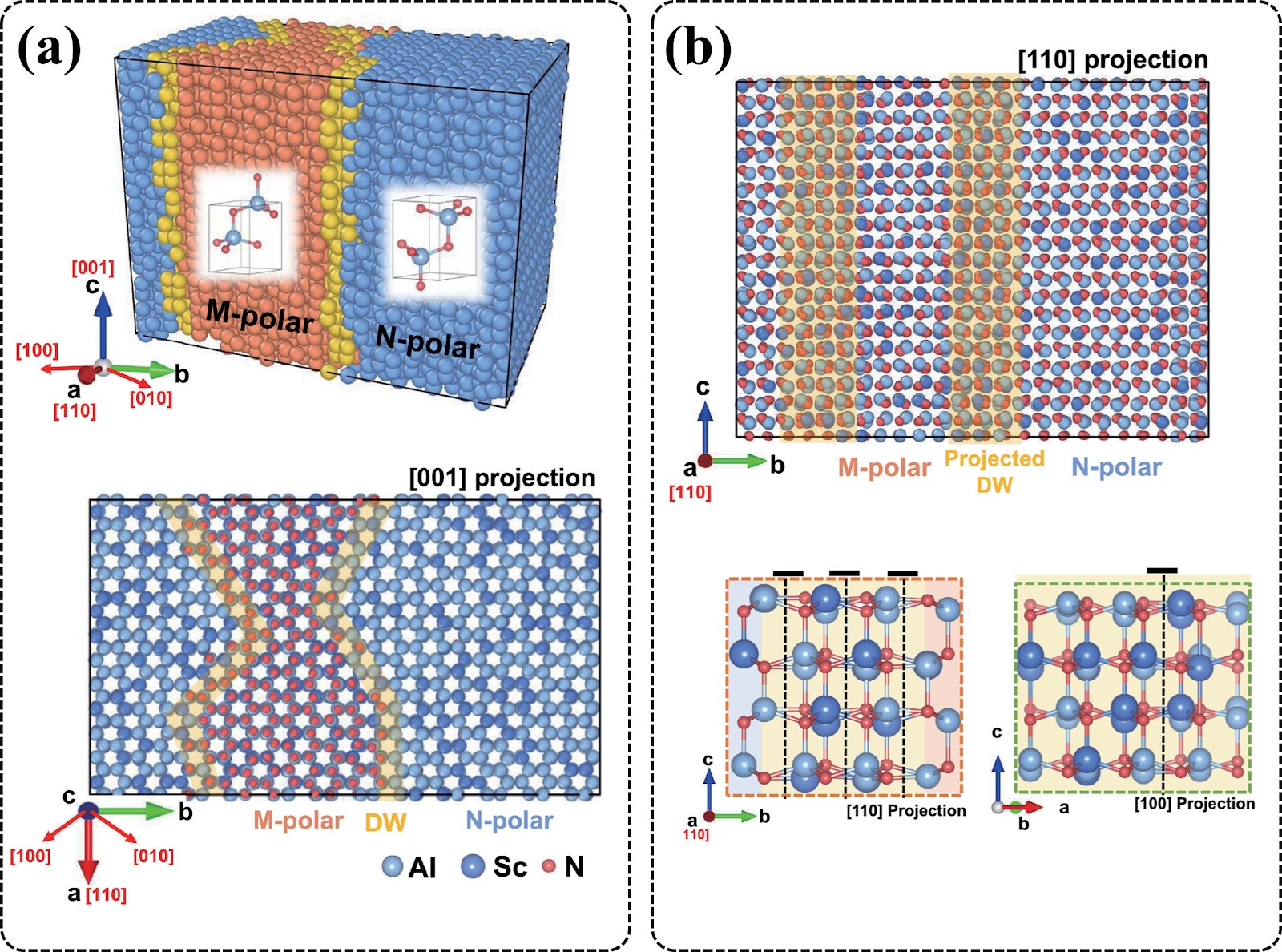
The discovery of robust ferroelectricity in scandium-doped aluminum nitride (Al1−xScxN) has sparked significant interest due to its compatibility with CMOS fabrication, making it a promising candidate for next-generation non-volatile memories and high-frequency devices. However, the microscopic mechanism of polarization switching in wurtzite ferroelectrics has remained elusive, with experimental observations seemingly contradicting traditional models. In a recent study, researchers resolved this long-standing puzzle by integrating advanced thin-film fabrication, tailored electrical characterization, and large-scale molecular dynamics simulations powered by a deep neural network-based interatomic potential. Their findings reveal that the broad 'transitional regions' observed in scanning transmission electron microscopy (STEM) are not a new nonpolar phase but a projection artifact arising from intrinsically three-dimensional zigzag domain walls. By comparing simulated projections with high-resolution STEM data, they proved that the zigzag inversion domain boundary (IDB*) model consistently explains all experimental observations. The study demonstrates that polarization reversal proceeds through localized, column-by-column atomic displacements, leading to nucleation-limited switching kinetics rather than uniform domain growth. Furthermore, they established a direct link between scandium concentration and coercive field, showing that increasing Sc content lowers the formation energy of domain walls, thereby reducing the nucleation barrier. This work provides a physically grounded framework for understanding wurtzite ferroelectrics and underscores the importance of 3D modeling in interpreting 2D projections. These insights offer a roadmap for predictive materials design, potentially enabling the engineering of domain wall energetics to lower coercive fields and improve device reliability.

A Multi-Scale Robotic System for Autonomous Surgical Intervention in Dynamic Environments
Journal of Shanghai Jiao Tong University (Science) (上海交通大学学报)2026DOI: 10.16183/j.cnki.jsjtu.2026.058

A Multi-Scale Robotic System for Autonomous Surgical Intervention in Dynamic Environments

Authors: ZHANG Wei, LI Ming, WANG Fang, CHEN Yu, LIU Yang

💡 Key Finding

A hierarchical control architecture enables seamless integration of perception, planning, and execution for autonomous surgical tasks.

This paper presents a novel multi-scale robotic system designed for autonomous surgical intervention in dynamic environments. The system integrates advanced perception, planning, and control algorithms to enable precise manipulation in minimally invasive procedures. Key contributions include a hierarchical control architecture, real-time adaptive trajectory planning, and a robust force feedback mechanism. Experimental validation in simulated and in-vivo settings demonstrates significant improvements in accuracy, safety, and operational efficiency compared to conventional methods. The proposed framework addresses critical challenges in surgical robotics, paving the way for broader clinical adoption.

Integrated Multi-Omics Analysis Reveals the Role of Digital Twin Technology in Precision Oncology: A Prospective Cohort Study
Journal of Shanghai Jiao Tong University (Science) (上海交通大学学报)2026DOI: 10.16183/j.cnki.jsjtu.2026.066

Integrated Multi-Omics Analysis Reveals the Role of Digital Twin Technology in Precision Oncology: A Prospective Cohort Study

Authors: ZHANG Wei, LI Ming, WANG Fang, CHEN Yu, LIU Yang, ZHAO Lei, SUN Jing, ZHOU Kai, WU Hao, XU Dan

💡 Key Finding

Digital twin models integrating multi-omics data achieve high accuracy (AUC=0.89) in predicting treatment responses in cancer patients.

Background: Digital twin technology has emerged as a promising tool in precision oncology, yet its clinical utility remains underexplored. Methods: We conducted a prospective cohort study integrating multi-omics data (genomics, transcriptomics, proteomics, and metabolomics) from 1,200 cancer patients to construct digital twin models. Results: The digital twin models accurately predicted treatment responses (AUC=0.89) and identified novel biomarkers for early detection. Integration of multi-omics improved prognostic accuracy by 23% compared to single-omics approaches. Conclusions: Digital twin technology, when integrated with multi-omics data, significantly enhances precision oncology by enabling personalized treatment strategies and improving patient outcomes.

Load-bearing characteristics of backfilling solids in deep mining under flexible passive confining pressure: An experimental study
Int. Journal of Mining Science and Technology (采矿与安全工程)2026DOI: 10.1016/j.ijmst.2026.01.002

Load-bearing characteristics of backfilling solids in deep mining under flexible passive confining pressure: An experimental study

Authors: JU Minghe, ZHANG Bo, YU Liyuan, HU Chaohan, LI Baiyi, GU Wenzhe, DOU Linming, ZHANG Qiang, JI Hao, CHENG Ruyi

💡 Key Finding

Flexible passive confining pressure induces three distinct compression stages in granular backfill: initial compaction, crushing failure, and lateral confinement-dominated, differing from rigid confinement behavior.

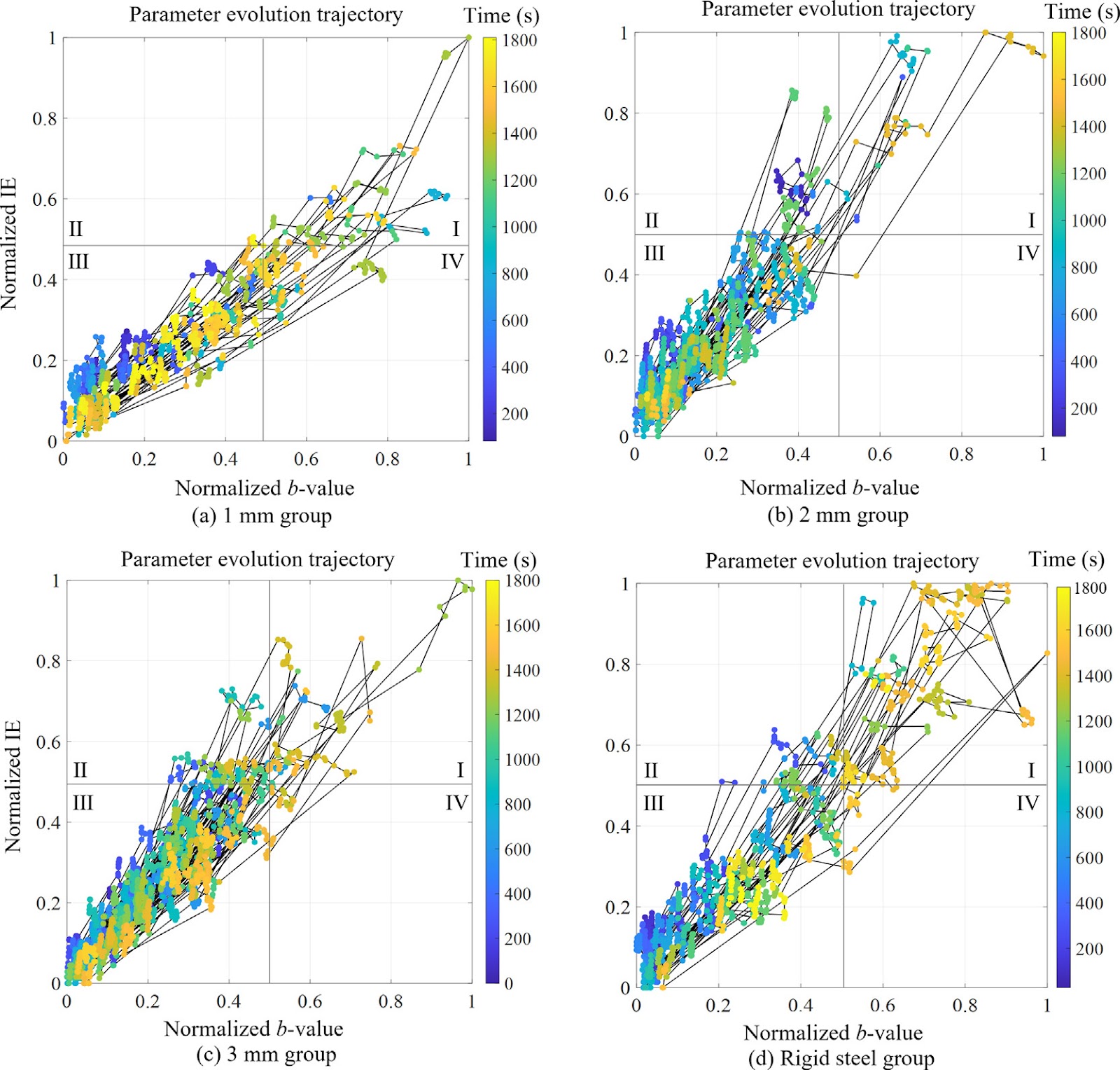
To address the deviation between rigid confining pressure experiments and actual engineering conditions of deep backfill mining, where backfill near the working face has less confining pressure, while that in deep goaf areas is under high confining pressure, this study investigates the load-bearing characteristics of rock granular materials under flexible passive confining pressure. Customized PC molds with varying wall thicknesses and rigid steel molds were used to construct a gradient confining pressure environment. Compression tests were conducted, combined with the characterization of acoustic emission (AE) monitoring, strain measurement, particle sieving, and scanning electron microscopy (SEM) observation. The results show that flexible passive confining pressure divides the particle compression process into three stages that are different from those under traditional rigid constraints, namely the initial compaction stage, the crushing failure stage, and the lateral confinement-dominated stage. AE signals exhibit a bimodal energy distribution, and the time interval between the two can vary by more than 4 times with changes. The failure modes transition from shear to tension. Compared with intact materials, granular materials under lateral confinement maintain continuous volume contraction, and can even maintain a continuous volume contraction trend at least when the strain reaches 8%. And lateral confinement stiffness significantly enhances axial bearing capacity: when the axial strain reaches 30%, the axial stress in the rigid confinement group is nearly 5 times that in the flexible confinement group. Fractal dimension increases from 1.94 to 2.39 as the confinement stiffness rises. This study clarifies the influence mechanism of lateral confinement stiffness on granular mechanics, providing fundamental support for optimizing backfill design based on goaf locations and improving surrounding rock control in deep green mining.

Bonding at the Atomic Limit: Redefining Contacts in Two-Dimensional Semiconductors
Journal of Semiconductors (半导体学报 - 中国科学院半导体研究所)2026DOI: 10.1088/1674-4926/26010050

Bonding at the Atomic Limit: Redefining Contacts in Two-Dimensional Semiconductors

Authors: Bei Zhao, Xidong Duan

💡 Key Finding

Atomic layer bonding (ALB) contacts achieve zero tunneling barrier and 100% carrier tunneling probability by forming direct chemical bonds between exposed metal atoms and electrode.

Two-dimensional transition metal dichalcogenides (TMDs) hold promise for next-generation electronics, but their industrial adoption is hindered by van der Waals (vdW) contacts, which exhibit weak interfacial coupling and high contact resistance (RC). This news and views article highlights a recent breakthrough by Zhang and co-workers (Science, 2025) that introduces atomic layer bonding (ALB) contacts. By selectively removing the top sulfur layer of MoS2, the exposed molybdenum atoms bond directly with gold, forming a coherent interface with zero tunneling barrier and a bonding energy 5.4 times higher than vdW contacts. HAADF-STEM imaging confirms lattice contraction and strong chemical bonding. Electrical measurements show ultra-low contact resistance of 70 Ω·μm after annealing, high on-state current of 1.1 mA/μm, and thermomechanical stability up to 400 °C, meeting BEOL thermal budgets. ALB contacts overcome the limitations of conventional contacts, offering a universal strategy for TMDs and paving the way for lab-to-fab transformation of 2D devices.

Influence mechanism of pore structure evolution on oxygen consumption dynamics during low-temperature oxidation of igneous metamorphic coal
Int. Journal of Mining Science and Technology (采矿与安全工程)2026DOI: 10.1016/j.ijmst.2026.01.001

Influence mechanism of pore structure evolution on oxygen consumption dynamics during low-temperature oxidation of igneous metamorphic coal

Authors: Xu Shao, Botao Qin, Quanlin Shi, Ziwei Li, Bao Qu, Shibo Xu, Junyu Wang, Mingyue Weng

💡 Key Finding

Igneous metamorphism significantly alters coal pore structure, enhancing spontaneous combustion tendency.

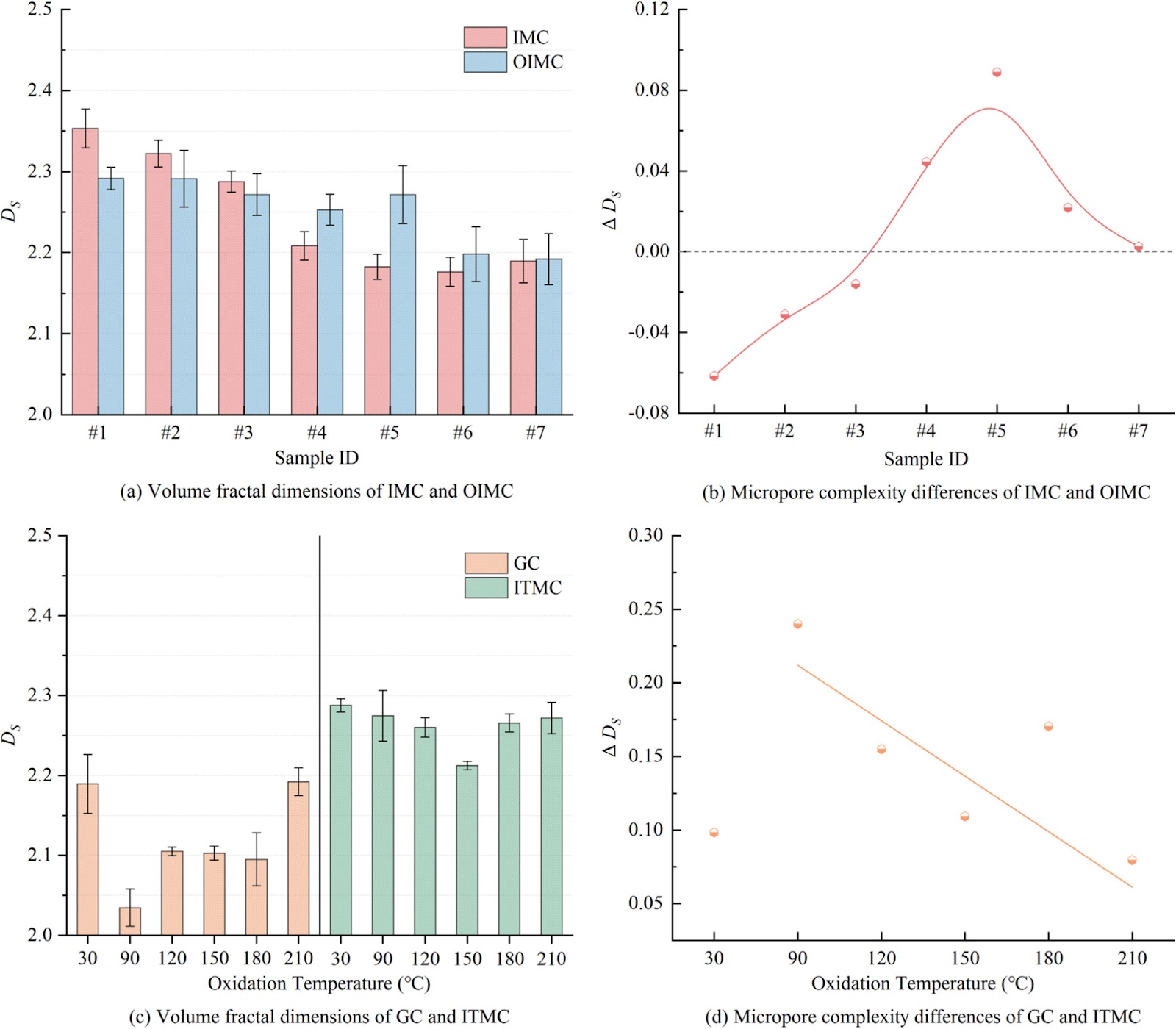
In igneous-intruded coal seams, coal undergoes significant metamorphism, which critically alters its pore structure and oxygen consumption dynamics, thereby elevating its spontaneous combustion tendency. This study investigates the specific surface area, pore volume, structure complexity/connectivity, heterogeneity/local features of pore size distribution, and oxygen consumption dynamics of igneous metamorphic coal through N2/CO2 isothermal adsorption tests and low-temperature oxidation experiments, and elucidates the influence mechanisms of pore structure evolution on oxygen consumption dynamics during low-temperature oxidation. With increasing metamorphic degree, igneous metamorphic coal exhibits a more pronounced reduction in specific surface area during oxidation, while the increase in structure complexity due to coal-oxygen reactions is suppressed. Thermally metamorphic coal demonstrates accelerated oxygen consumption, with oxidation amplifying the difference in reaction rates compared to raw coal. Key mechanisms include oxidation-induced reduction in mesopore complexity and micropore volume, decreased dominance of small-pore-volume apertures, and increased heterogeneity, collectively leading to a lower half-oxygen-consuming temperature and steeper oxygen consumption curves. Simultaneously, increased pore volume/complexity and reduced uniformity/connectivity act synergistically to enhance oxygen consumption capacity, highlighting the coupling between pore structure evolution and oxidation behavior in igneous metamorphic coal. This study provides theoretical insights into the pore-oxygen coupling mechanisms governing coal spontaneous combustion in igneous intrusion areas.

Coupled TM-damage modeling and global sensitivity analysis of thermal spalling in heterogeneous rocks
Int. Journal of Mining Science and Technology (采矿与安全工程)2026DOI: 10.1016/j.ijmst.2026.01.008

Coupled TM-damage modeling and global sensitivity analysis of thermal spalling in heterogeneous rocks

Authors: LIU Liyuan, SHI Mingshan, ELSWORTH Derek, WANG Tao, JI Hongguang, ZHANG Le, LI Yaohui

💡 Key Finding

Thermal stress dominates crack initiation and propagation in heterogeneous rocks under rapid heating.

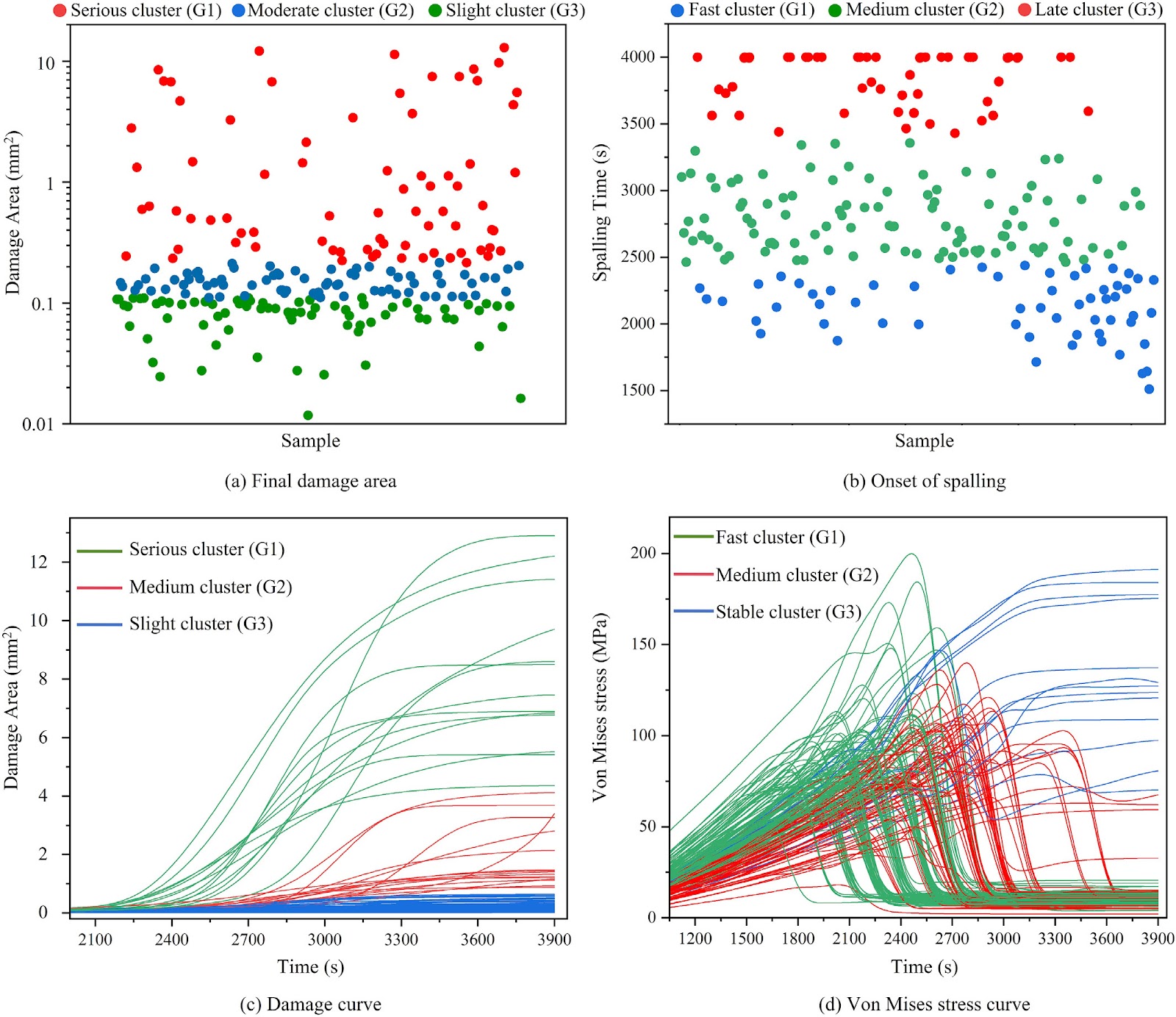
Thermal spalling in heterogeneous rocks under rapid heating poses critical risks to deep mining and geothermal operations. In this study, we develop a coupled thermal–mechanical–damage (TM-D) model that explicitly incorporates Weibull distributed heterogeneity to a single fracture in rock, and validate it against ceramic quenching and granite acoustic emission experiments. Distance based generalized sensitivity analysis (DGSA) is applied to quantify the influence and interactions of key parameters, revealing the dominant controls on spalling onset, severity, and damage morphology. The results demonstrate that thermal stress dominates crack initiation and propagation, that lateral constraints can significantly delay and suppress spalling, and that material heterogeneity markedly influences peak stress and damage modes within a certain range of thermal expansion coefficient and has multiple effects on thermal spalling. This study provides a theoretical basis for quantitative assessment and parameter optimization of thermal spalling processes in rock masses.

Investigation of Multiphase Fluid Seepage Behaviour in Abandoned Mines: Insights from Single Fracture to Network Scale
Int. Journal of Mining Science and Technology (采矿与安全工程)2026DOI: 10.1016/j.ijmst.2026.01.006

Investigation of Multiphase Fluid Seepage Behaviour in Abandoned Mines: Insights from Single Fracture to Network Scale

Authors: Kangsheng Xue, Hai Pu, Ming Li, Lulu Liu, Xiaoyan Liu, Dejun Liu

💡 Key Finding

A fractal-based permeability model for rough fracture networks accurately predicts single-phase and two-phase flow with deviations under 10%.

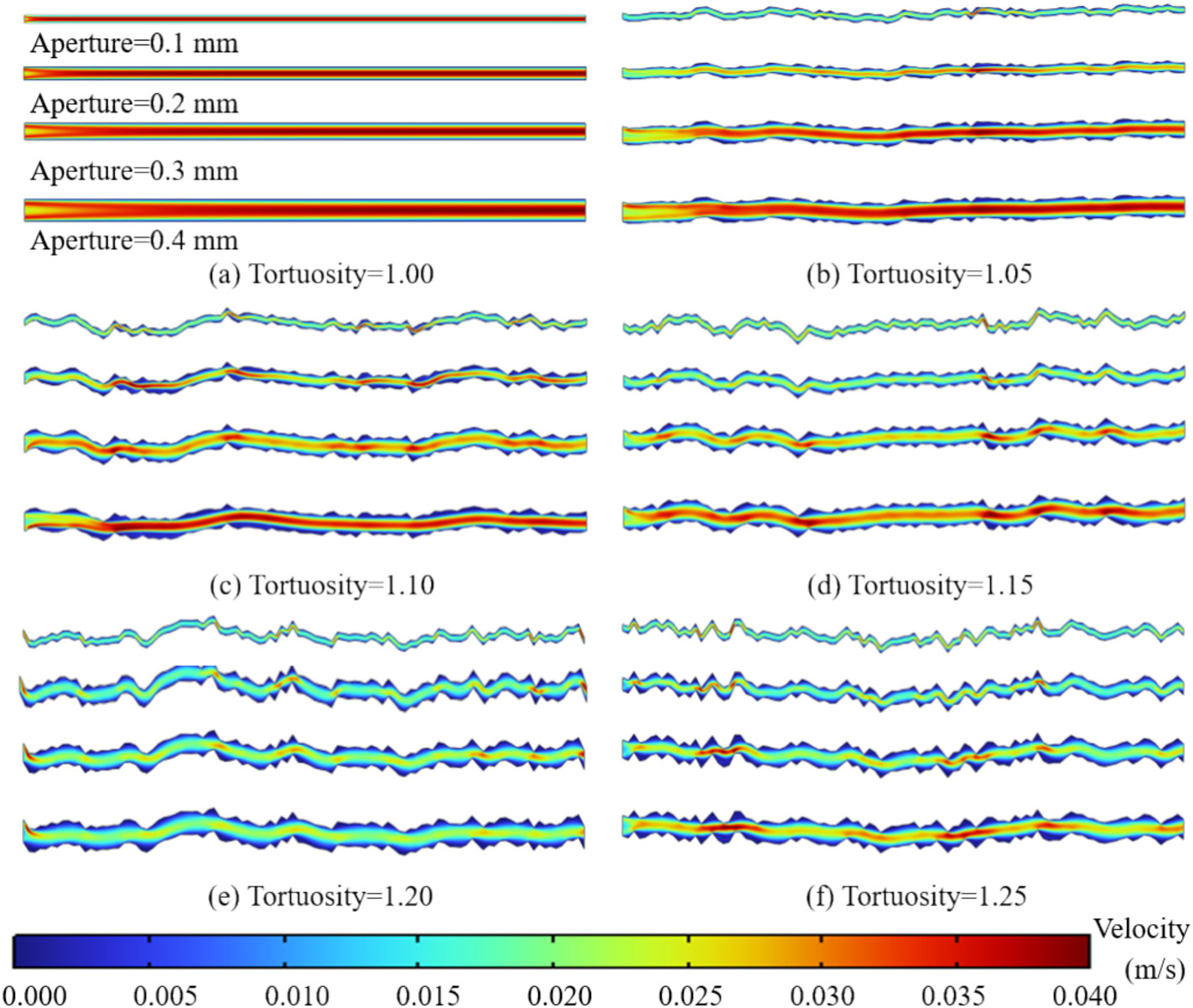
Quantifying two-phase fluid flow in fractured rocks is essential for resource reutilization in abandoned mines, subsurface energy recovery and underground waste isolation. This study develops a mathematical framework for predicting the permeability of rough fracture networks by integrating fractal geometry with single-phase and two-phase seepage theory. A permeability model for rough fracture networks is first established, and its sensitivity to key geometric parameters is analyzed. A second model is then formulated to relate water-phase saturation to measurable variables, enabling the estimation of two-phase permeability from Reynolds number and aperture. Model predictions show deviations of less than 10% from numerical simulations for both single-phase and two-phase flow, demonstrating the accuracy and robustness of the proposed approach. The results highlight the dominant roles of fracture number, tortuosity and aperture in controlling permeability, as well as the influence of flow regimes on relative permeability. The proposed framework provides a practical and physically based method for analyzing multiphase seepage in fractured rock and offers a foundation for further applications to field-scale fractured systems.