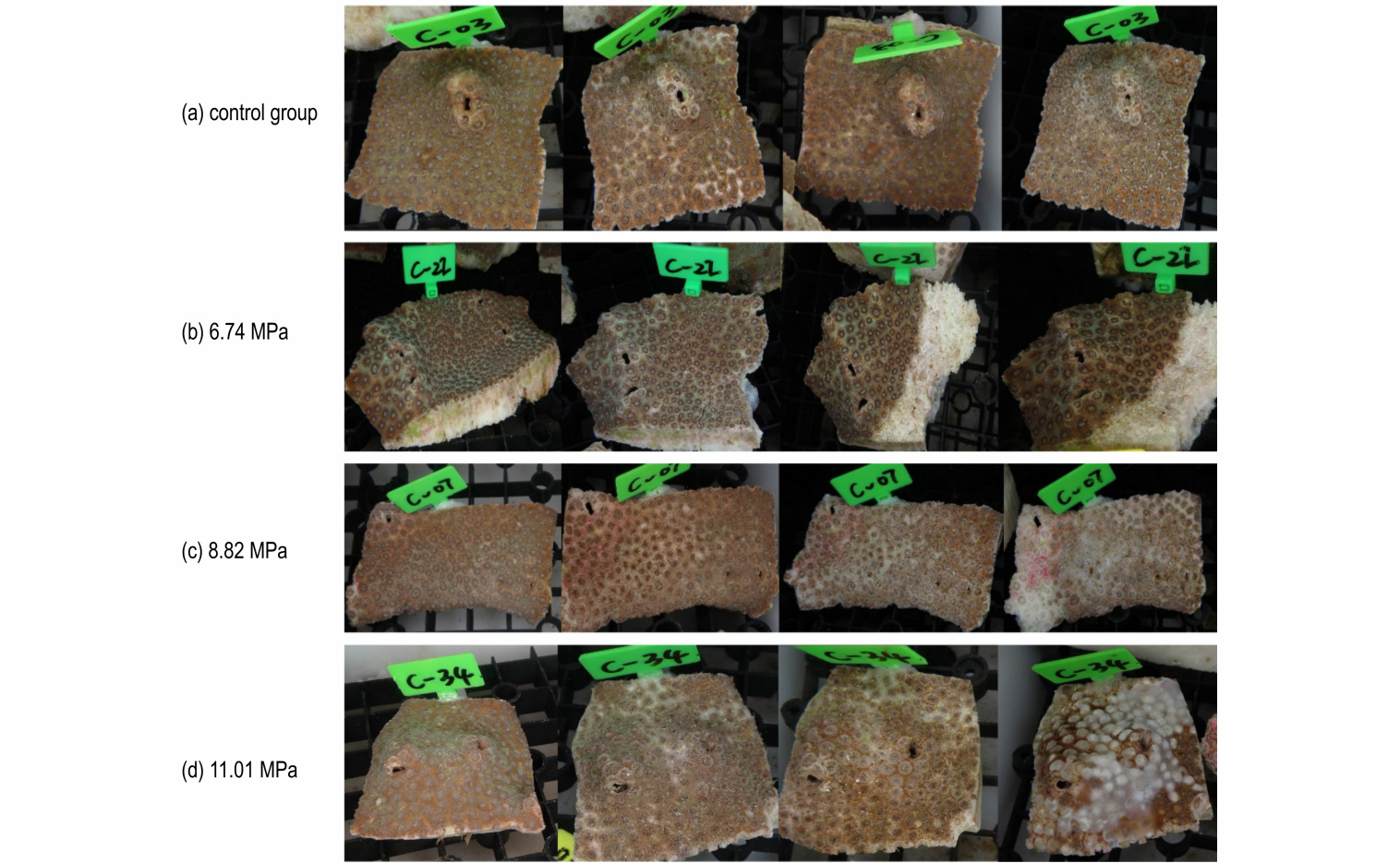
Key Takeaways & Executive Findings
- •• • Cyphastrea japonica exhibits a shock wave tolerance threshold of 6.74 MPa; beyond 8.82 MPa, protein content drops by up to 59.6%, indicating severe host tissue damage. • • At 11.01 MPa, zooxanthellae density decreases by 87% and photosynthetic rate by 49%, directly linking shock wave intensity to coral bleaching. • • Antioxidant enzyme activities (superoxide dismutase and catalase) significantly decline with increasing shock wave pressure, compromising the coral's defense against oxidative stress. • • Shock wave exposure increases microbial community diversity at the phylum level and complexity at the genus level, potentially destabilizing the holobiont's symbiotic balance.
Abstract
Underwater blasting is indispensable for marine engineering, yet its shock waves can damage reef-building corals. This study investigated the physiological damage to Cyphastrea japonica holobiont from underwater explosion shock waves, examining coral host, symbiotic zooxanthellae, and microbiota. The coral's tolerance threshold was 6.74 MPa. Protein content decreased with increasing shock wave intensity, with a maximum reduction of 59.6%. At 11.01 MPa, zooxanthellae density dropped by 87% and photosynthetic rate by 49%, causing significant bleaching. Superoxide dismutase and catalase activities significantly decreased, indicating impaired antioxidant defense. Microbial community diversity at the phylum level increased significantly, and genus-level structure became more complex. The study reveals a stepwise damage pathway from host to zooxanthellae photosynthesis to microbial community, providing scientific basis for coral protection during marine blasting.
1. Introduction
Underwater blasting remains essential for marine construction, yet its shock waves pose a significant threat to sessile reef-building corals, which cannot evade disturbances. Previous research on blast effects has focused on fish, sea turtles, and mammals, but the impact on coral holobionts—comprising the host, symbiotic zooxanthellae, and associated microbiota—has been largely unexplored. This study addresses the gap by systematically quantifying physiological responses of Cyphastrea japonica to controlled underwater explosions.
Existing studies on coral stress have centered on climate change, ocean acidification, and pollution, but none have established dose-response relationships for shock wave pressure. By employing a controlled experimental setup with varying explosive charges, this research provides precise thresholds for protein loss, zooxanthellae mortality, and enzymatic dysfunction, offering critical data for environmental risk assessment in marine blasting operations.
Loading authentic research manuscript (Pages 1–5)...
TAO Chen, LI Huiyu, WANG Xin, TANG Dan, SU Changwang, QIU Zhangsheng, TANG Tao, LIN Mingqing (2026). Physiological Damage Effects of Underwater Explosion Shock Waves on Cyphastrea japonica. Chinese Journal of Energetic Materials (含能材料). https://doi.org/10.11943/CJEM2026125
Research & Educational Purpose Only:The translations, structured abstracts, analytical annotations, and data reports provided by SinoTechIntel are intended exclusively for academic research, internal corporate R&D, and educational benchmarking. They do not constitute formal engineering, chemical safety, legal, or professional advice.
Copyright & Intellectual Property Notice: Original copyright of the underlying source articles and experimental data remains with the respective authors, institutions, and original publishing journals. SinoTechIntel claims intellectual property only over its proprietary translations, analytical syntheses, and AEO structured enhancements in accordance with international fair use and academic citation principles.
Frequently Asked Questions
What is the exact pressure threshold at which Cyphastrea japonica begins to show physiological damage?
The tolerance threshold is 6.74 MPa. Below this, no significant protein loss or enzyme activity changes were observed. Above 8.82 MPa, protein content drops sharply, with a maximum reduction of 59.6%.
How does shock wave intensity affect zooxanthellae density and photosynthetic efficiency?
At 11.01 MPa, zooxanthellae density decreases by 87% and photosynthetic rate by 49%, indicating severe damage to the symbiotic algae and leading to coral bleaching.
What is the impact of shock waves on the coral's antioxidant defense system?
Superoxide dismutase and catalase activities significantly decrease with increasing shock wave pressure, indicating impaired antioxidant capacity and increased oxidative stress.
How does the microbial community respond to shock wave exposure?
Shock wave exposure increases microbial diversity at the phylum level and complexity at the genus level, suggesting a shift in community structure that may affect coral health.
Are there any visible skeletal damages at the highest tested pressure?
At 11.01 MPa, no macroscopic skeletal fractures were observed, but physiological indicators were severely compromised, suggesting that skeletal tissue may have a higher tolerance than soft tissues.
Related Technical Papers & Translations
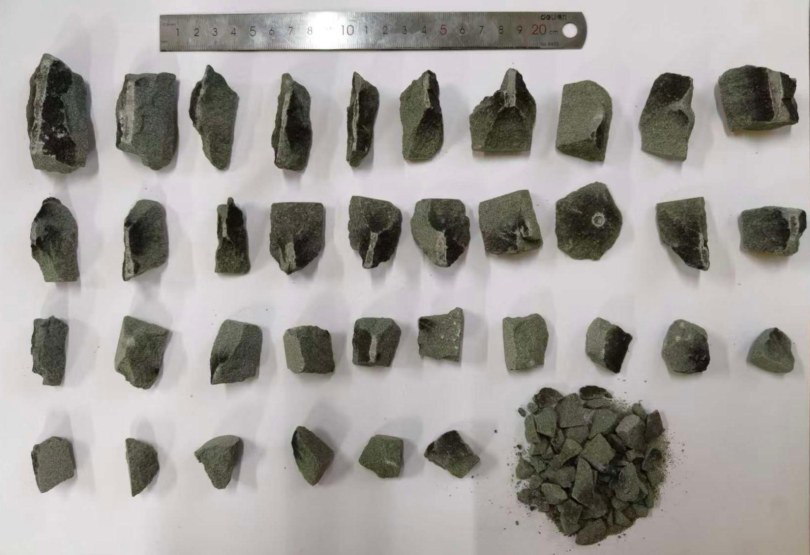
Blasting Failure Characteristics of Rock Specimens under In-Hole Layered Column Charge
To improve rock fragmentation in open-pit deep-hole blasting, an in-hole layered column charge configuration was designed. Small-scale blasting tests on sandstone specimens were conducted under continuous and layered column charges to capture the failure process and final fragmentation. DEM-PBM coupled simulations visualized the dynamic fracture evolution and validated the experimental observations. Results show that under continuous charge, the top quarter of the specimen developed only a single blast-induced crack, splitting it into two parts, with horizontal fragment velocity of 2.0 m·s⁻¹ and a maximum block size of 9.0 cm. In contrast, layered charge produced multiple cracks in the top quarter, fragmenting it into smaller pieces, increasing horizontal velocity to 7.0 m·s⁻¹, and eliminating blocks larger than 5.0 cm. Simulations confirmed these trends, with maximum block size reduced from 8.8 cm to below 5.0 cm and velocity reaching 6.8 m·s⁻¹, closely matching experiments. Field trials in an open-pit coal mine overburden blasting demonstrated that layered charge reduced the boulder yield from 48.1% to 5.6%, significantly improving fragmentation. The findings confirm the practical effectiveness of in-hole layered column charge in enhancing rock breakage in deep-hole bench blasting.
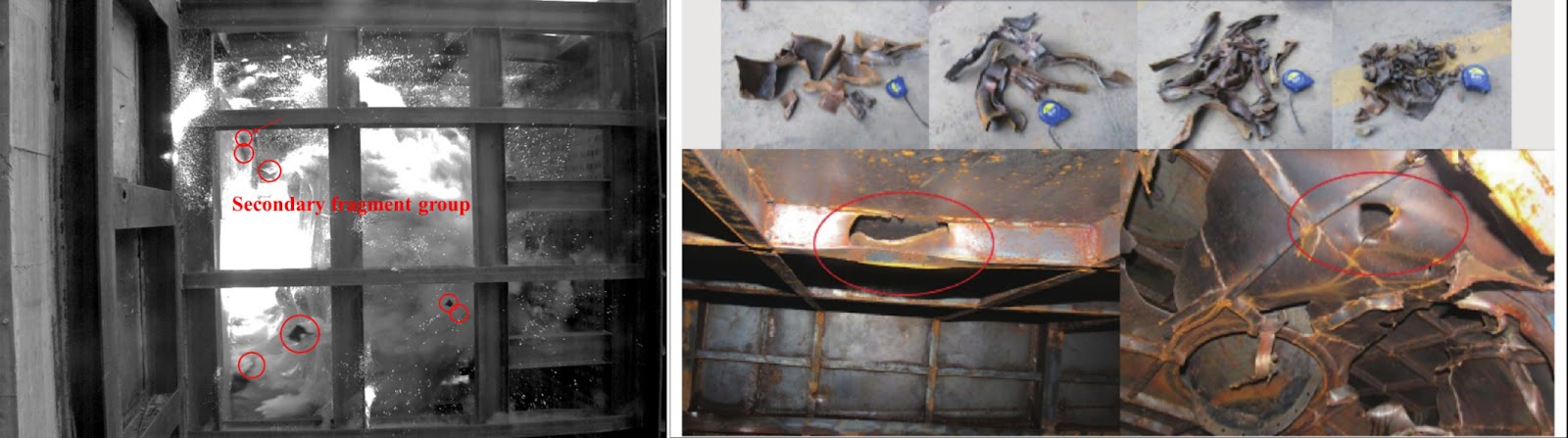
Review on Ship Structural Damage and Protection Subjected to Underwater Contact Explosions
Underwater contact explosions from torpedoes and mines pose severe threats to ship survivability. The coupled effects of shock waves, bubbles, and secondary fragments induce complex structural damage. This review first analyzes the load characteristics of underwater contact explosions, detailing the spatial-temporal evolution of shock waves, bubbles, and secondary fragments. Subsequently, it examines protective mechanisms from two perspectives: multi-cabin structural protection and composite structure/material protection, focusing on damage suppression and energy dissipation. Finally, key technical challenges are summarized to guide future research. The review highlights that shock waves cause initial indentation and perforation of the outer plate, while bubble pulsation and collapse jets dominate subsequent large deformation and tearing of bulkheads. Experimental studies show that stiffened plates exhibit significant strain growth during bubble pulsation, potentially exceeding shock wave effects. Multi-cabin designs, such as liquid-filled compartments, effectively mitigate damage through energy absorption and impedance mismatch. Composite materials offer enhanced blast resistance but face scalability issues. The paper underscores the need for high-fidelity numerical methods and experimental validation to resolve controversies regarding dominant damage mechanisms. This work provides a comprehensive reference for advancing ship structural protection against underwater contact explosions.
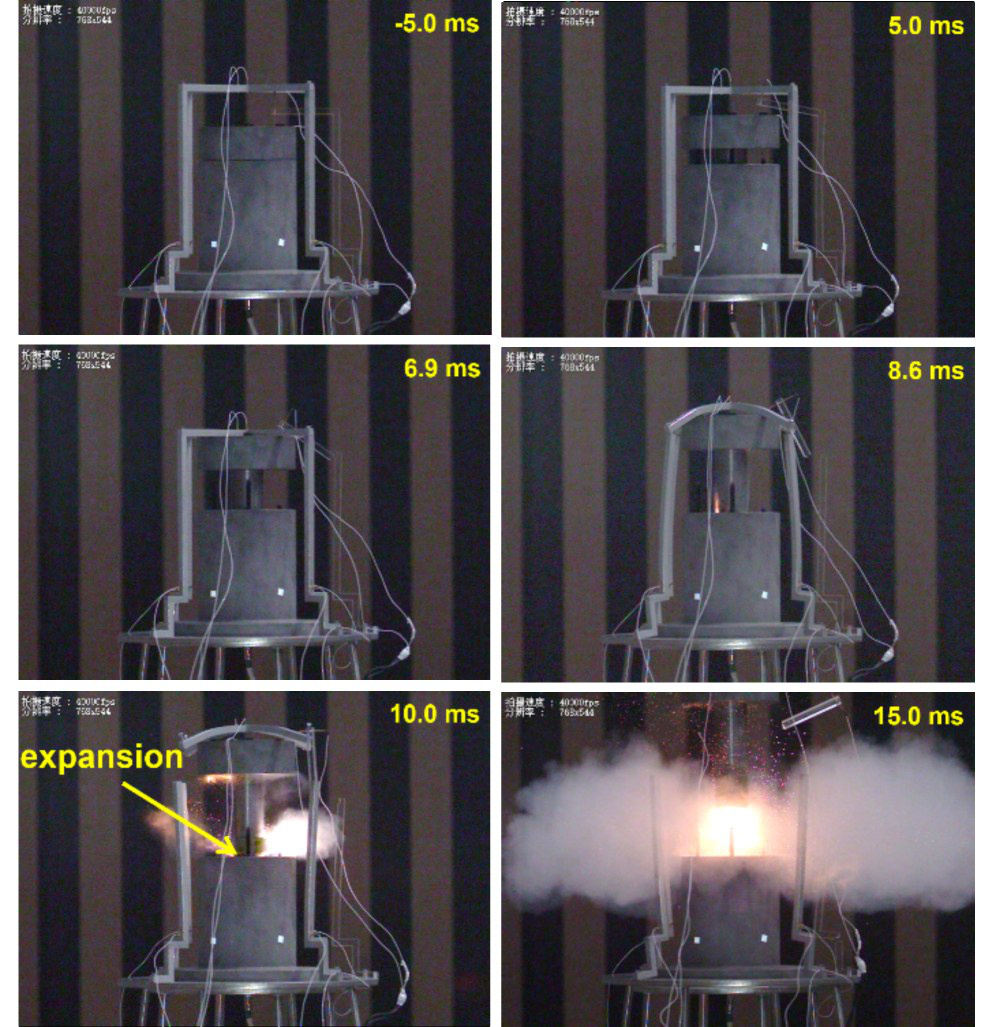
Reaction-Growth Behavior of Energetic Materials under Mass-Inertial Confinement
To investigate the reaction-growth behavior of propellants and polymer-bonded explosives (PBX) after non-shock ignition under mass-inertial confinement, a thick-walled cylinder experimental setup was constructed. The setup provided strong radial structural confinement and incorporated a large mass block with a mass ratio exceeding 45:1 relative to the energetic material. Laser ignition (250 W) was used to initiate reactions, and multiple photonic Doppler velocimetry (PDV) probes simultaneously measured radial expansion velocity of the cylinder and axial velocity of the mass block top. High-speed photography and recovered debris analysis were employed to compare reaction evolution processes. Results show that mass-inertial confinement enhances pressure buildup during the early reaction phase, but the type of energetic material determines reaction-growth characteristics and violence under identical confinement. For the composite propellant (containing AP, aluminum, RDX, and energetic binder), mass-inertial confinement dominated early pressurization; the system exhibited axial mass block acceleration without yielding of the thick-walled cylinder. Maximum reaction pressure was below 50 MPa, reaction fraction was less than 1%, and nearly all propellant was recovered, indicating a burning reaction. For the PBX (containing HMX and CL-20), early pressurization was jointly influenced by mass-inertial and structural confinement; the cylinder underwent yielding and radial expansion, and the mass block showed local upsetting deformation. Maximum reaction pressure reached 2 GPa, reaction fraction exceeded 50%, and no explosive was recovered, indicating a violent explosion. These findings provide insights into non-shock ignition reaction-growth mechanisms and safety design of structural charges.