Key Takeaways & Executive Findings
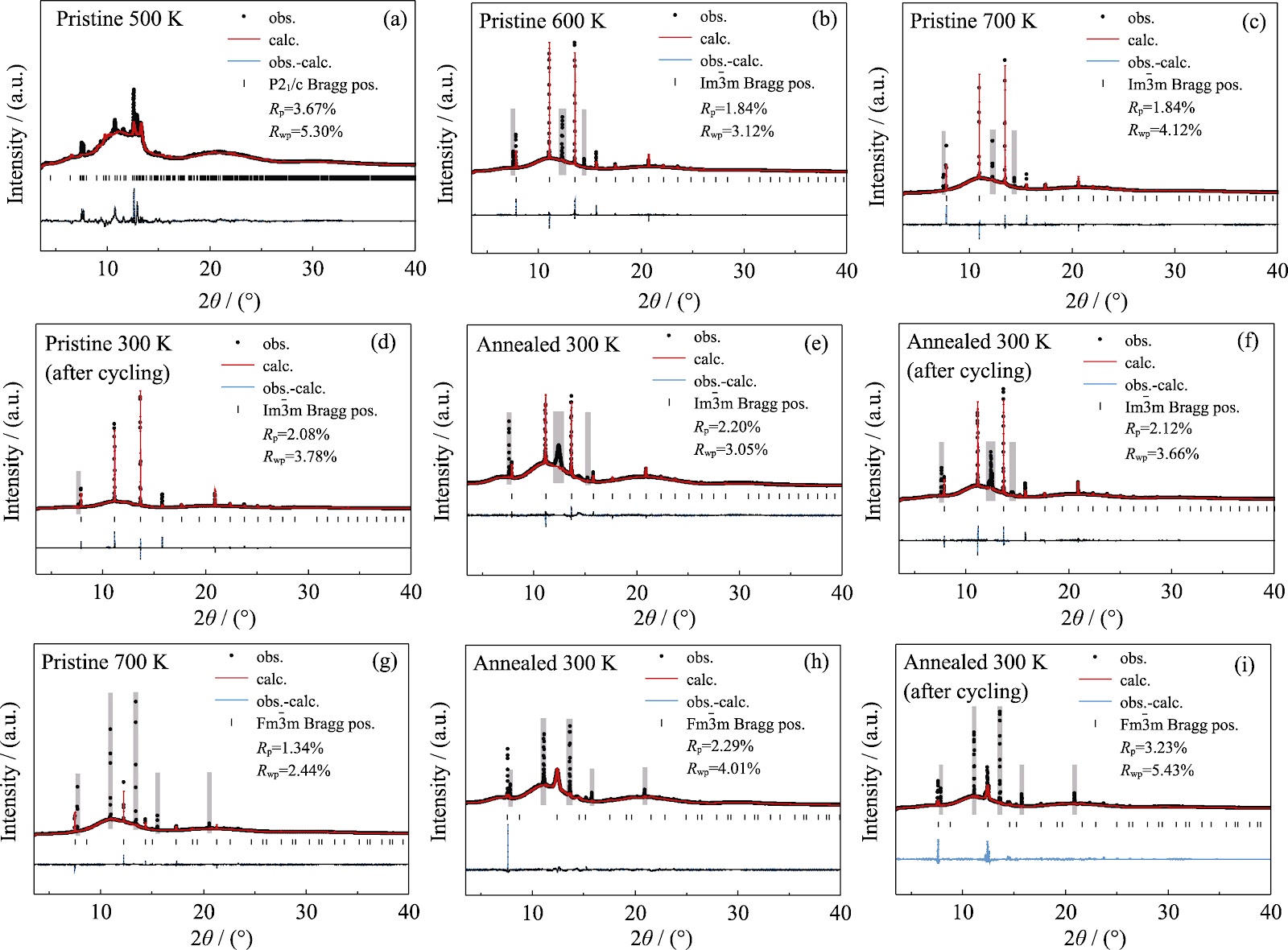
- •• • Annealing transforms the as-prepared Ag2S0.4Te0.6 powder from a predominantly amorphous state (with only trace poorly crystalline monoclinic phase) into a mixed cubic crystalline/amorphous state at room temperature, eliminating observable phase transitions upon subsequent heating from 110 K to 700 K. • • In situ synchrotron radiation powder X-ray diffraction (SPXRD) reveals that unannealed powder undergoes a crystallization sequence: amorphous → monoclinic → mixed bcc+fcc phases upon heating, whereas annealed powder remains stable in the mixed cubic/amorphous state across the entire temperature range. • • High-resolution transmission electron microscopy (HRTEM) confirms the coexistence of cubic crystallites and amorphous matrix in annealed powder, providing direct microstructural evidence for the enhanced ductility. • • Annealing does not degrade the thermoelectric performance of bulk Ag2S0.4Te0.6, as the Seebeck coefficient, electrical conductivity, and thermal conductivity remain largely unchanged, ensuring that the ductility improvement is achieved without compromising functional properties.
Abstract
Ag2S0.4Te0.6 is an inorganic semiconductor with favorable ductility and thermoelectric performance, showing potential for applications in wearable electronics. Recent studies have indicated that optimization of preparation processes, such as annealing, can significantly enhance the ductility of the material, which is closely related to its phase composition and crystal structure. In this work, high-resolution synchrotron radiation powder X-ray diffraction data of the Ag2S0.4Te0.6 powder sample before and after annealing were collected over a temperature range of 110–700 K. By combining Rietveld structural refinement, high-resolution transmission electron microscopy, and atomic pair distribution function analysis, the influence of the annealing process on the phase composition and structural evolution behavior of the powder samples was investigated in detail. The results show that the pristine Ag2S0.4Te0.6 powder is predominantly amorphous, containing only a small amount of poorly crystalline monoclinic phase. During heating, the material gradually crystallizes, first forming a monoclinic phase, which subsequently transforms into mixed body-centered cubic (bcc) and face-centered cubic (fcc) phases. After cooling back to room temperature, the sample remains in a mixed state of bcc-dominated cubic crystallinity and amorphous phase. In contrast, the annealed powder sample already exhibits a mixed cubic crystalline/amorphous state at room temperature, and no obvious phase transition behavior is observed during heating. Moreover, the thermoelectric properties of Ag2S0.4Te0.6 bulk sample remain largely unaffected by the annealing process. This study provides structural insights for further understanding the annealing-induced improvement in ductility.
1. Introduction
Ag2S0.4Te0.6 has emerged as a promising ductile thermoelectric material for wearable electronics, yet its practical deployment is hindered by brittleness in the as-prepared state. Conventional thermoelectric materials like Bi2Te3 and PbTe exhibit high efficiency but are inherently brittle, limiting their use in flexible devices. The challenge lies in achieving both mechanical flexibility and thermoelectric performance, which often trade off. Recent reports indicate that annealing can significantly enhance ductility, but the underlying structural mechanisms remain unclear, impeding process optimization.
This study addresses the bottleneck by employing high-resolution synchrotron radiation powder X-ray diffraction (SPXRD) combined with Rietveld refinement, high-resolution transmission electron microscopy (HRTEM), and atomic pair distribution function (PDF) analysis to track phase evolution from 110 K to 700 K. The results reveal that annealing induces a stable mixed cubic/amorphous structure at room temperature, which suppresses detrimental phase transitions during operation. This structural insight provides a direct pathway to tailor processing conditions for improved mechanical robustness without sacrificing thermoelectric efficiency, thereby accelerating the adoption of ductile thermoelectrics in flexible energy harvesting systems.
Loading authentic research manuscript (Pages 1–5)...
LIU Jinxiao, LIU Zhenhan, CHEN Xingyu, ZHOU Zhengyang, QIU Pengfei, ZHANG Jiawei, SHI Xun (2026). Influence of Preparation Processes on the Structure and Properties of the Ductile Thermoelectric Material Ag2S0.4Te0.6. Journal of Inorganic Materials (无机材料学报). https://doi.org/10.15541/jim20260018
Research & Educational Purpose Only:The translations, structured abstracts, analytical annotations, and data reports provided by SinoTechIntel are intended exclusively for academic research, internal corporate R&D, and educational benchmarking. They do not constitute formal engineering, chemical safety, legal, or professional advice.
Copyright & Intellectual Property Notice: Original copyright of the underlying source articles and experimental data remains with the respective authors, institutions, and original publishing journals. SinoTechIntel claims intellectual property only over its proprietary translations, analytical syntheses, and AEO structured enhancements in accordance with international fair use and academic citation principles.
Frequently Asked Questions
What is the exact phase composition of Ag2S0.4Te0.6 after annealing at room temperature, and how does it affect mechanical ductility?
After annealing, the powder exhibits a mixed state of cubic crystalline (predominantly bcc) and amorphous phases at room temperature, as confirmed by SPXRD and HRTEM. This mixed structure is believed to enhance ductility by allowing amorphous regions to accommodate strain, preventing crack propagation. The absence of phase transitions upon heating further stabilizes the material, ensuring consistent mechanical performance.
How does the annealing process influence the thermoelectric performance of bulk Ag2S0.4Te0.6?
Annealing does not significantly alter the thermoelectric properties of bulk Ag2S0.4Te0.6. The Seebeck coefficient, electrical conductivity, and thermal conductivity remain largely unchanged, indicating that the ductility improvement is achieved without compromising the material's thermoelectric efficiency. This is critical for practical applications where both mechanical flexibility and high zT are required.
What is the temperature range over which the structural evolution was studied, and what are the key phase transitions observed in unannealed samples?
The structural evolution was studied from 110 K to 700 K using in-situ SPXRD. Unannealed powder initially shows an amorphous state with trace monoclinic phase. Upon heating, it crystallizes into a monoclinic phase, which then transforms into a mixed bcc+fcc structure. Upon cooling to room temperature, the sample retains a bcc-dominated cubic/amorphous mixture. In contrast, annealed powder shows no such transitions, remaining stable in the mixed cubic/amorphous state.
What are the implications of the phase stability for the practical application of Ag2S0.4Te0.6 in wearable devices?
The phase stability of annealed Ag2S0.4Te0.6 ensures that the material maintains its structural integrity and mechanical flexibility over a wide temperature range (110–700 K), which is essential for wearable devices that may experience varying environmental conditions. The absence of phase transitions prevents volume changes and internal stresses that could lead to cracking, thereby enhancing reliability and lifetime.
What characterization techniques were employed to confirm the structural findings, and how do they complement each other?
The study employed high-resolution synchrotron radiation powder X-ray diffraction (SPXRD) with Rietveld refinement for quantitative phase analysis, high-resolution transmission electron microscopy (HRTEM) for direct imaging of the microstructure, and atomic pair distribution function (PDF) analysis to probe local atomic ordering. These techniques together provide a comprehensive picture: SPXRD gives long-range order, HRTEM reveals nanoscale phase distribution, and PDF captures short-range order in amorphous regions, enabling a complete understanding of the annealing-induced structural changes.
Related Technical Papers & Translations
Blasting Failure Characteristics of Rock Specimens under In-Hole Layered Column Charge
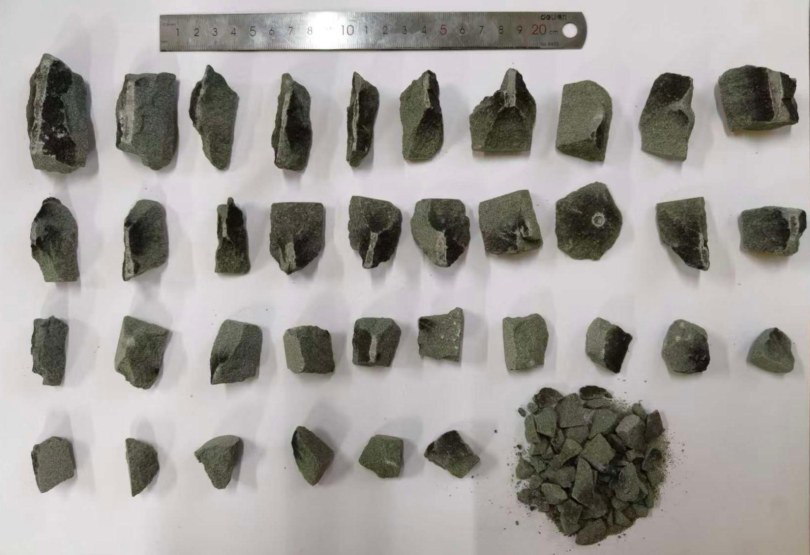
To improve rock fragmentation in open-pit deep-hole blasting, an in-hole layered column charge configuration was designed. Small-scale blasting tests on sandstone specimens were conducted under continuous and layered column charges to capture the failure process and final fragmentation. DEM-PBM coupled simulations visualized the dynamic fracture evolution and validated the experimental observations. Results show that under continuous charge, the top quarter of the specimen developed only a single blast-induced crack, splitting it into two parts, with horizontal fragment velocity of 2.0 m·s⁻¹ and a maximum block size of 9.0 cm. In contrast, layered charge produced multiple cracks in the top quarter, fragmenting it into smaller pieces, increasing horizontal velocity to 7.0 m·s⁻¹, and eliminating blocks larger than 5.0 cm. Simulations confirmed these trends, with maximum block size reduced from 8.8 cm to below 5.0 cm and velocity reaching 6.8 m·s⁻¹, closely matching experiments. Field trials in an open-pit coal mine overburden blasting demonstrated that layered charge reduced the boulder yield from 48.1% to 5.6%, significantly improving fragmentation. The findings confirm the practical effectiveness of in-hole layered column charge in enhancing rock breakage in deep-hole bench blasting.
Review on Ship Structural Damage and Protection Subjected to Underwater Contact Explosions
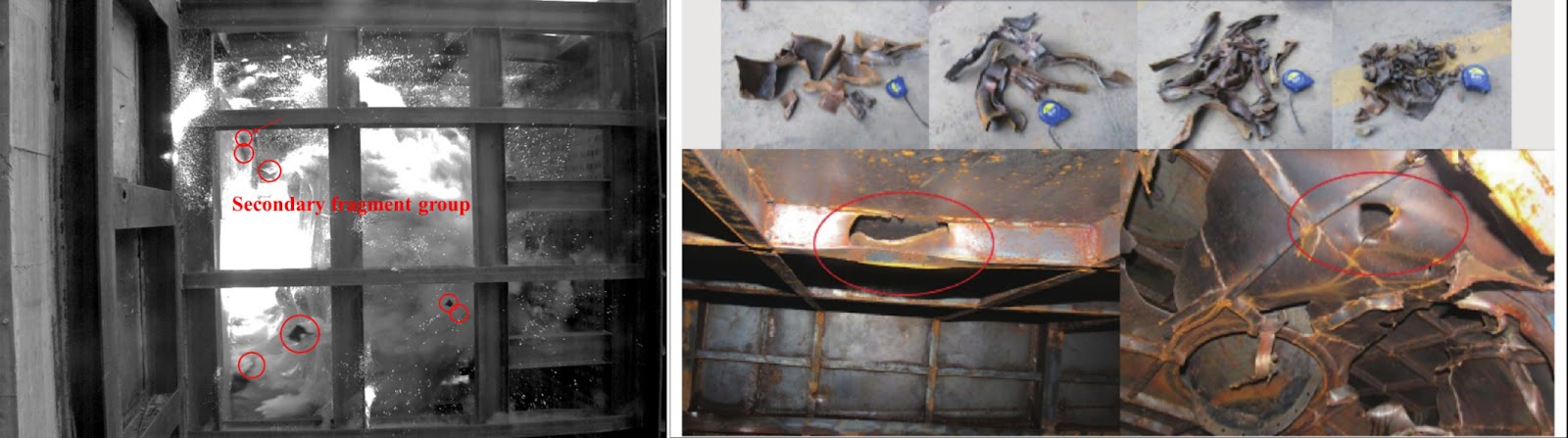
Underwater contact explosions from torpedoes and mines pose severe threats to ship survivability. The coupled effects of shock waves, bubbles, and secondary fragments induce complex structural damage. This review first analyzes the load characteristics of underwater contact explosions, detailing the spatial-temporal evolution of shock waves, bubbles, and secondary fragments. Subsequently, it examines protective mechanisms from two perspectives: multi-cabin structural protection and composite structure/material protection, focusing on damage suppression and energy dissipation. Finally, key technical challenges are summarized to guide future research. The review highlights that shock waves cause initial indentation and perforation of the outer plate, while bubble pulsation and collapse jets dominate subsequent large deformation and tearing of bulkheads. Experimental studies show that stiffened plates exhibit significant strain growth during bubble pulsation, potentially exceeding shock wave effects. Multi-cabin designs, such as liquid-filled compartments, effectively mitigate damage through energy absorption and impedance mismatch. Composite materials offer enhanced blast resistance but face scalability issues. The paper underscores the need for high-fidelity numerical methods and experimental validation to resolve controversies regarding dominant damage mechanisms. This work provides a comprehensive reference for advancing ship structural protection against underwater contact explosions.
Reaction-Growth Behavior of Energetic Materials under Mass-Inertial Confinement
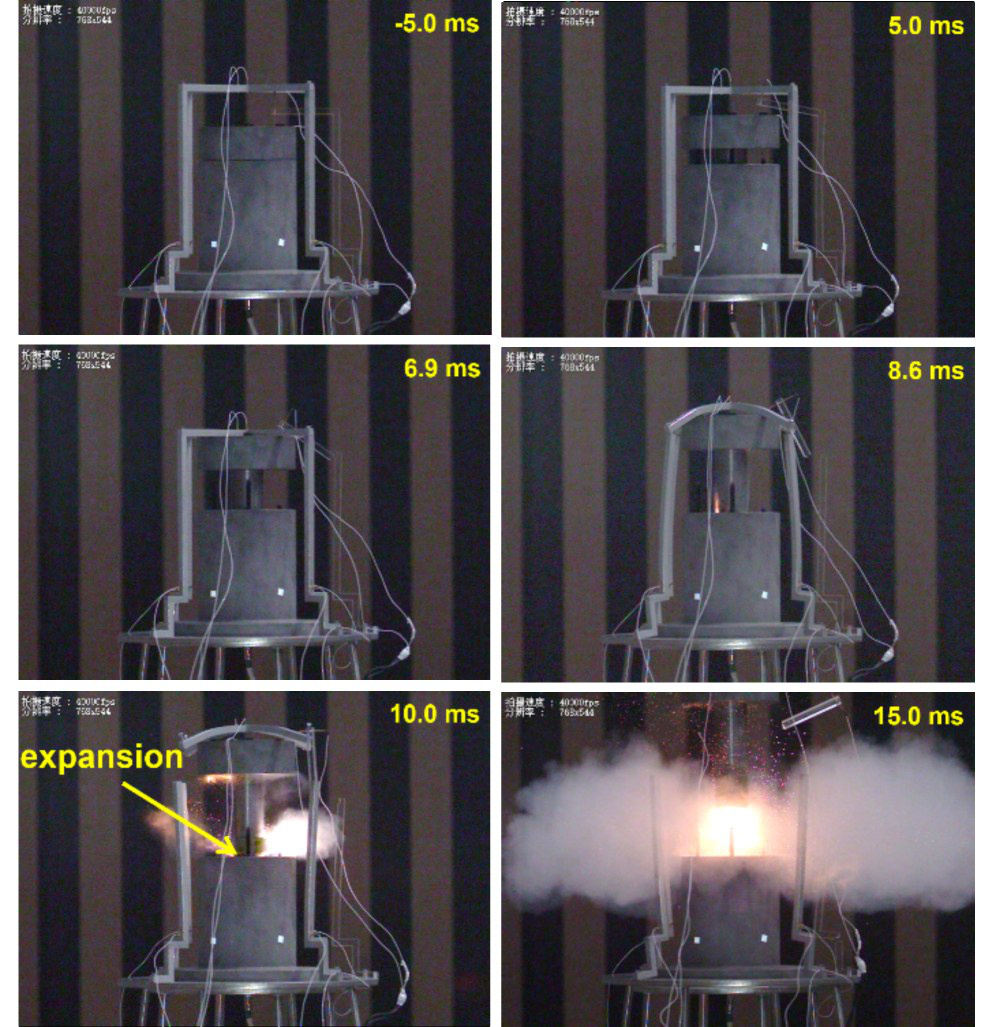
To investigate the reaction-growth behavior of propellants and polymer-bonded explosives (PBX) after non-shock ignition under mass-inertial confinement, a thick-walled cylinder experimental setup was constructed. The setup provided strong radial structural confinement and incorporated a large mass block with a mass ratio exceeding 45:1 relative to the energetic material. Laser ignition (250 W) was used to initiate reactions, and multiple photonic Doppler velocimetry (PDV) probes simultaneously measured radial expansion velocity of the cylinder and axial velocity of the mass block top. High-speed photography and recovered debris analysis were employed to compare reaction evolution processes. Results show that mass-inertial confinement enhances pressure buildup during the early reaction phase, but the type of energetic material determines reaction-growth characteristics and violence under identical confinement. For the composite propellant (containing AP, aluminum, RDX, and energetic binder), mass-inertial confinement dominated early pressurization; the system exhibited axial mass block acceleration without yielding of the thick-walled cylinder. Maximum reaction pressure was below 50 MPa, reaction fraction was less than 1%, and nearly all propellant was recovered, indicating a burning reaction. For the PBX (containing HMX and CL-20), early pressurization was jointly influenced by mass-inertial and structural confinement; the cylinder underwent yielding and radial expansion, and the mass block showed local upsetting deformation. Maximum reaction pressure reached 2 GPa, reaction fraction exceeded 50%, and no explosive was recovered, indicating a violent explosion. These findings provide insights into non-shock ignition reaction-growth mechanisms and safety design of structural charges.