Key Takeaways & Executive Findings
- •• • The proposed PointNet conditional diffusion model with KNN and GNN achieves an MSE of 0.0077 mm², RMSE of 0.0877 mm, MAE of 0.0548 mm, and R² of 0.9858 on the validation set, demonstrating high fidelity in predicting cylindrical shell deformation under underwater explosion. • • Ablation studies show that adding KNN reduces MSE from 0.2753 mm² to 0.0227 mm² (a 91.8% reduction), and further adding GNN reduces MSE to 0.0077 mm² (a 97.2% reduction from baseline), highlighting the critical role of local neighborhood and residual correction in enhancing spatial continuity and prediction accuracy. • • The model accurately predicts center-point deformation displacements on the blast-facing surface across different charge masses (5–1200 g) and standoff distances (80–1000 mm), with errors ranging from 2.33% to 8.12%, confirming its robustness across a wide range of loading conditions. • • The integration of spatial interpolation enables reconstruction of the complete cylindrical surface deformation from sparse observation points, providing a practical tool for visualizing deformation history and final damage patterns, which is essential for underwater platform vulnerability assessment.
Abstract
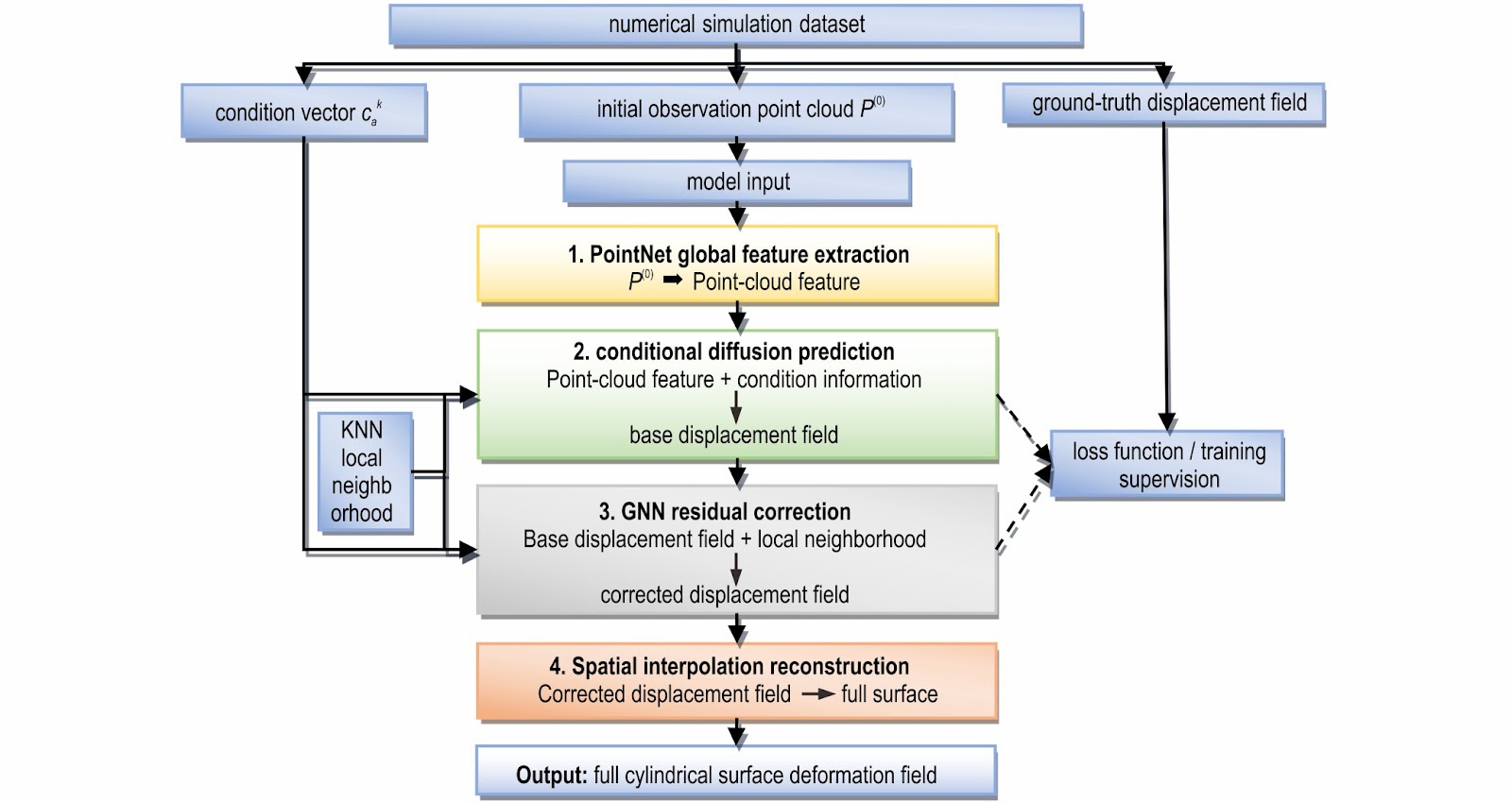
To predict the full-field deformation damage of ring-stiffened cylindrical shells subjected to underwater explosion loads, a method combining a PointNet conditional diffusion model, K-nearest neighbor (KNN) algorithm, graph neural network (GNN) residual correction, and spatial interpolation is proposed for point cloud displacement field prediction and deformation reconstruction. A dataset of cylindrical shell deformation responses was generated via numerical simulation, and a prediction model was trained to predict three-dimensional deformation displacements and reconstruct complete surface deformation contours under varying charge masses, standoff distances, and time instants. Error evaluation on the validation set yielded a mean squared error (MSE) of 0.0077 mm², root mean squared error (RMSE) of 0.0877 mm, mean absolute error (MAE) of 0.0548 mm, and coefficient of determination (R²) of 0.9858, indicating high displacement prediction accuracy. The reconstructed results effectively capture the deformation history and final overall deformation of the cylindrical shell. This method provides a reference for underwater platform explosion damage prediction and assessment.
1. Introduction
Underwater explosion-induced damage to cylindrical structures, such as submarine hulls and torpedo casings, is a critical concern for naval platform survivability. Traditional prediction methods rely on empirical formulas derived from limited experimental data, which often fail to capture the complex nonlinear relationships inherent in such dynamic events. While machine learning approaches like decision trees and random forests have been applied, they typically output only scalar quantities (e.g., maximum displacement), lacking the spatial resolution needed to characterize full-field deformation. This limitation hinders comprehensive damage assessment and the development of effective protective measures.
Recent advances in 3D point cloud learning and diffusion models offer a new paradigm for spatial response prediction. PointNet provides a unified framework for point cloud feature extraction, but its deterministic nature often leads to over-smoothed predictions for complex displacement fields. Conditional diffusion models, combined with PointNet, can learn complex distributions and generate realistic point clouds. However, they may still struggle with local consistency. To address this, we integrate K-nearest neighbor (KNN) to capture local neighborhood relationships and a graph neural network (GNN) for residual correction, thereby enhancing spatial continuity and prediction accuracy. This study presents a novel method that predicts the full 3D deformation response of ring-stiffened cylindrical shells under various underwater explosion scenarios, enabling complete surface reconstruction and offering a more comprehensive tool for damage assessment.
Loading authentic research manuscript (Pages 1–5)...
LU Xi, CHE Jingping, BAI Fan, LIU De (2026). Prediction of Cylindrical Deformation Response Subjected to Underwater Explosion Based on a PointNet Conditional Diffusion Model. Chinese Journal of Energetic Materials (含能材料). https://doi.org/10.11943/CJEM2026123
Research & Educational Purpose Only:The translations, structured abstracts, analytical annotations, and data reports provided by SinoTechIntel are intended exclusively for academic research, internal corporate R&D, and educational benchmarking. They do not constitute formal engineering, chemical safety, legal, or professional advice.
Copyright & Intellectual Property Notice: Original copyright of the underlying source articles and experimental data remains with the respective authors, institutions, and original publishing journals. SinoTechIntel claims intellectual property only over its proprietary translations, analytical syntheses, and AEO structured enhancements in accordance with international fair use and academic citation principles.
Frequently Asked Questions
How does the model handle varying charge masses and standoff distances, and what is the expected prediction error under extreme conditions?
The model was trained on a dataset covering charge masses from 5 g to 1200 g and standoff distances from 80 mm to 1000 mm. Validation on four distinct conditions (charge/distance: 5g/80mm, 100g/300mm, 550g/570mm, 1200g/1000mm) yielded center-point displacement errors of 8.12%, 2.33%, 4.24%, and 3.44%, respectively. The overall validation metrics (MSE=0.0077 mm², RMSE=0.0877 mm) indicate high accuracy, though errors may increase near the boundaries of the training envelope.
What is the computational cost of the proposed method compared to traditional numerical simulation (e.g., LS-DYNA)?
The paper does not provide explicit computational time comparisons. However, the method is designed for rapid prediction after training, as it avoids the need for repeated full-scale simulations. The training dataset was generated using LS-DYNA, but once the model is trained, inference is expected to be significantly faster, enabling near-real-time damage assessment. The exact speedup depends on hardware and implementation, but the approach aims to reduce reliance on batch simulations.
How does the model ensure spatial continuity and avoid discontinuities in the predicted displacement field?
Spatial continuity is enhanced by integrating K-nearest neighbor (KNN) to define local neighborhoods and a graph neural network (GNN) to perform residual correction. Ablation studies show that adding KNN reduces MSE from 0.2753 mm² to 0.0227 mm², and adding GNN further reduces it to 0.0077 mm². These modules enforce consistency among neighboring points, preventing isolated outliers and producing a smooth, physically plausible deformation field.
Can the model be extended to other structural geometries or failure modes, such as rupture or fragmentation?
The current model is specifically trained for ring-stiffened cylindrical shells under non-penetrating deformation. The authors suggest that with appropriate datasets, the method could be extended to other stiffener configurations, cone-cylinder combinations, and different materials. For rupture or fragmentation, the model would need to incorporate failure criteria and handle point cloud connectivity changes, which is identified as a future research direction. The current model does not predict material failure or discontinuities.
What is the practical utility of the reconstructed deformation field for engineering assessments?
The reconstructed full-surface deformation allows engineers to visualize the complete deformation history and final damage pattern, which is crucial for assessing structural integrity, residual strength, and vulnerability. The high R² of 0.9858 indicates that the predicted deformation closely matches simulation results, providing confidence in using the model for rapid damage assessment in underwater platform design and protection studies.
Related Technical Papers & Translations
Blasting Failure Characteristics of Rock Specimens under In-Hole Layered Column Charge
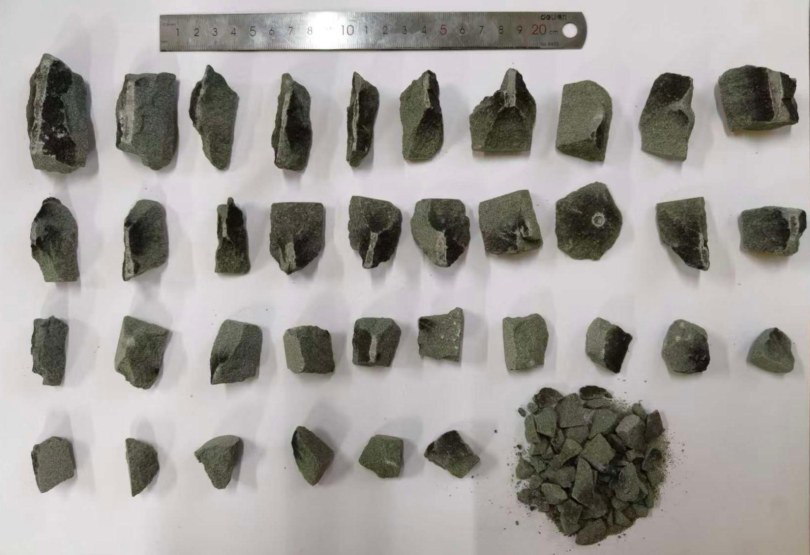
To improve rock fragmentation in open-pit deep-hole blasting, an in-hole layered column charge configuration was designed. Small-scale blasting tests on sandstone specimens were conducted under continuous and layered column charges to capture the failure process and final fragmentation. DEM-PBM coupled simulations visualized the dynamic fracture evolution and validated the experimental observations. Results show that under continuous charge, the top quarter of the specimen developed only a single blast-induced crack, splitting it into two parts, with horizontal fragment velocity of 2.0 m·s⁻¹ and a maximum block size of 9.0 cm. In contrast, layered charge produced multiple cracks in the top quarter, fragmenting it into smaller pieces, increasing horizontal velocity to 7.0 m·s⁻¹, and eliminating blocks larger than 5.0 cm. Simulations confirmed these trends, with maximum block size reduced from 8.8 cm to below 5.0 cm and velocity reaching 6.8 m·s⁻¹, closely matching experiments. Field trials in an open-pit coal mine overburden blasting demonstrated that layered charge reduced the boulder yield from 48.1% to 5.6%, significantly improving fragmentation. The findings confirm the practical effectiveness of in-hole layered column charge in enhancing rock breakage in deep-hole bench blasting.
Review on Ship Structural Damage and Protection Subjected to Underwater Contact Explosions
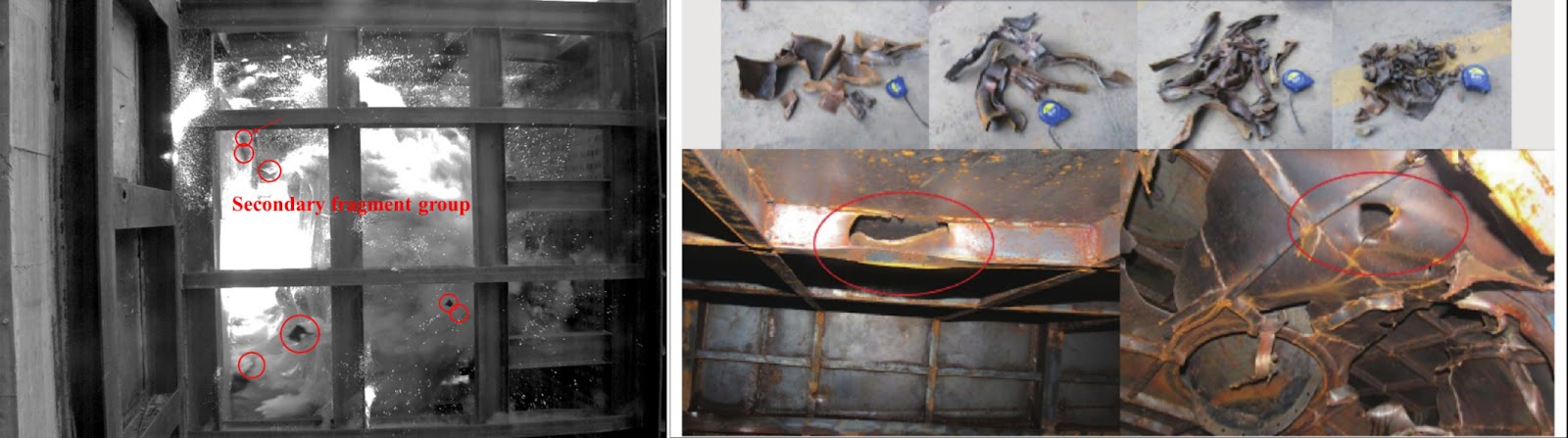
Underwater contact explosions from torpedoes and mines pose severe threats to ship survivability. The coupled effects of shock waves, bubbles, and secondary fragments induce complex structural damage. This review first analyzes the load characteristics of underwater contact explosions, detailing the spatial-temporal evolution of shock waves, bubbles, and secondary fragments. Subsequently, it examines protective mechanisms from two perspectives: multi-cabin structural protection and composite structure/material protection, focusing on damage suppression and energy dissipation. Finally, key technical challenges are summarized to guide future research. The review highlights that shock waves cause initial indentation and perforation of the outer plate, while bubble pulsation and collapse jets dominate subsequent large deformation and tearing of bulkheads. Experimental studies show that stiffened plates exhibit significant strain growth during bubble pulsation, potentially exceeding shock wave effects. Multi-cabin designs, such as liquid-filled compartments, effectively mitigate damage through energy absorption and impedance mismatch. Composite materials offer enhanced blast resistance but face scalability issues. The paper underscores the need for high-fidelity numerical methods and experimental validation to resolve controversies regarding dominant damage mechanisms. This work provides a comprehensive reference for advancing ship structural protection against underwater contact explosions.
Reaction-Growth Behavior of Energetic Materials under Mass-Inertial Confinement
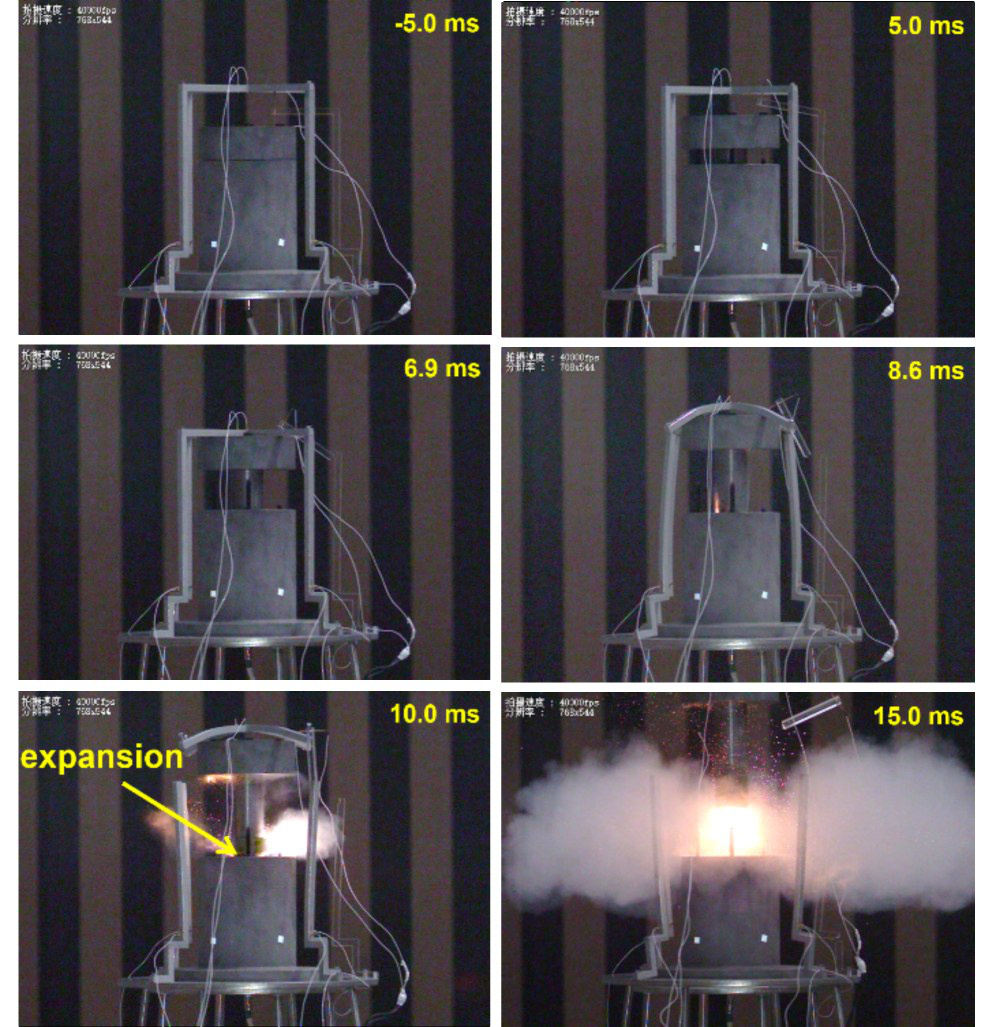
To investigate the reaction-growth behavior of propellants and polymer-bonded explosives (PBX) after non-shock ignition under mass-inertial confinement, a thick-walled cylinder experimental setup was constructed. The setup provided strong radial structural confinement and incorporated a large mass block with a mass ratio exceeding 45:1 relative to the energetic material. Laser ignition (250 W) was used to initiate reactions, and multiple photonic Doppler velocimetry (PDV) probes simultaneously measured radial expansion velocity of the cylinder and axial velocity of the mass block top. High-speed photography and recovered debris analysis were employed to compare reaction evolution processes. Results show that mass-inertial confinement enhances pressure buildup during the early reaction phase, but the type of energetic material determines reaction-growth characteristics and violence under identical confinement. For the composite propellant (containing AP, aluminum, RDX, and energetic binder), mass-inertial confinement dominated early pressurization; the system exhibited axial mass block acceleration without yielding of the thick-walled cylinder. Maximum reaction pressure was below 50 MPa, reaction fraction was less than 1%, and nearly all propellant was recovered, indicating a burning reaction. For the PBX (containing HMX and CL-20), early pressurization was jointly influenced by mass-inertial and structural confinement; the cylinder underwent yielding and radial expansion, and the mass block showed local upsetting deformation. Maximum reaction pressure reached 2 GPa, reaction fraction exceeded 50%, and no explosive was recovered, indicating a violent explosion. These findings provide insights into non-shock ignition reaction-growth mechanisms and safety design of structural charges.