SinoTechIntel Academic Portal
🏛️ Indexed Academic JournalImpact Factor: 2.7 (Q2 - Springer)Original: 信息与电子工程前沿 (英文版)

Frontiers of Information Technology & Electronic Engineering

2.7 (Q2 - Springer)

Total Research Papers: 153
Access: 100% Free Open Access
Browse by Publication Year & VolumeReset All Filters ✕

Published Research PapersFiltered: Year 2025 • Vol. 32 • Issue 1

Showing 13 of 153 peer-reviewed papers with full Graphical Abstracts.

Original ResearchVol. 32, Issue 1 • pp. 336-348DOI: 10.1631/FITEE_2400081Jan 25, 2025

Single-layer chiral metasurface for circularly polarized light detection

Authors: Xinjie SUN, Xin HE, Zixin CAI, Xiang HAO

Circular polarizers based on the metasurface suffer from a trade-off between the structural complexity and the polarization extinction ratio (ER). Herein, we present a single-layer chiral metasurface with strong circular dichroism. The structure turns a circularly polarized incident beam into a linearly polarized beam, achieving a high circular polarization ER. The operating wavelength of the proposed metasurface is tunable by changing the geometric parameters. The metasurface’s localized surfac
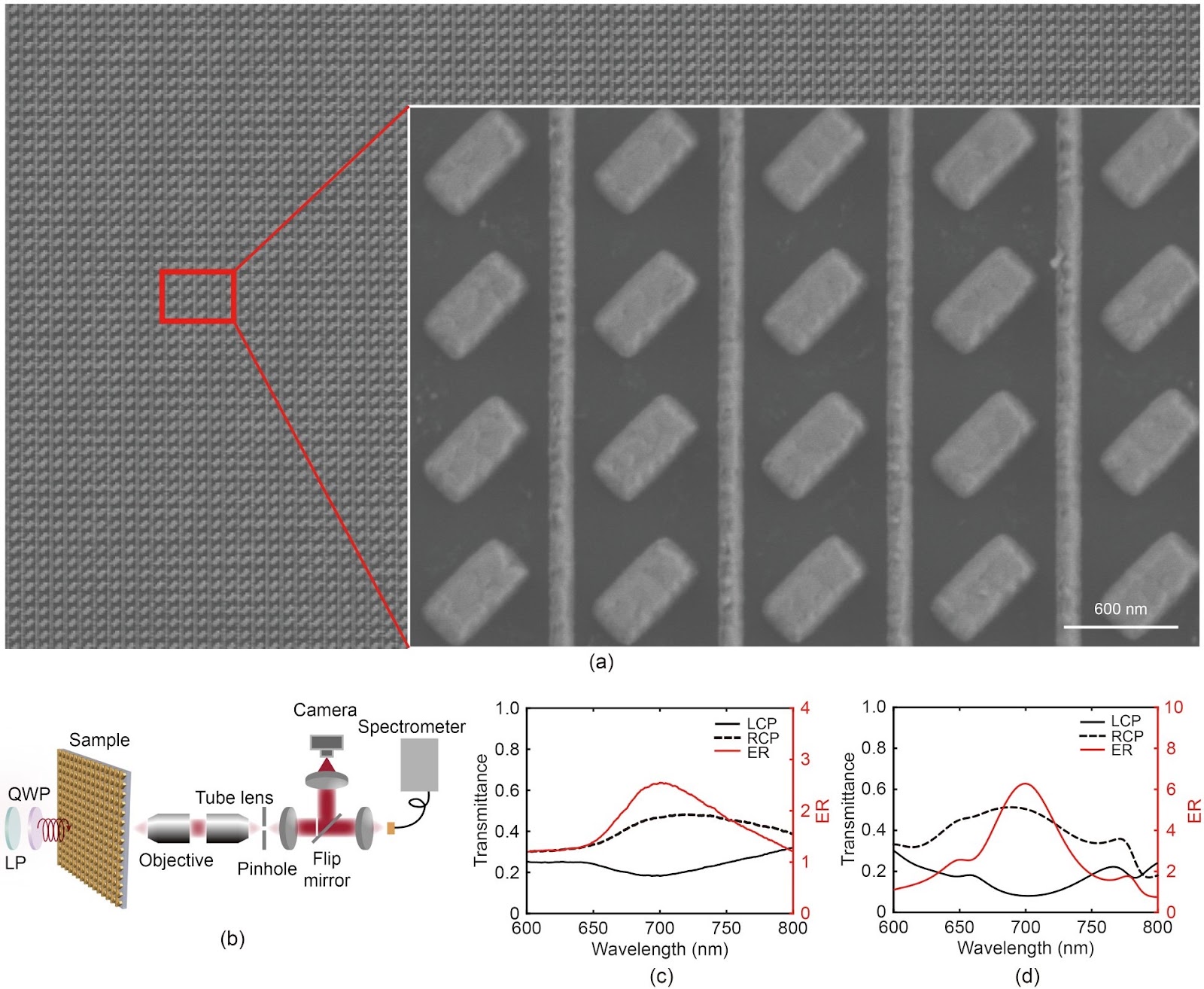
Single-layer chiral metasurface for circularly polarized light detection
Graphical Abstract
Original ResearchVol. 32, Issue 1 • pp. 572-584DOI: 10.1631/FITEE_2400766Jan 24, 2025

Q-space-coordinate-guided neural networks for high-fidelity diffusion tensor estimation from minimal diffusion-weighted images

Authors: Maokun Zheng, Zhi Li, Long Zheng, Weidong Wang, Dandan Li, Guomei Wang

Diffusion tensor imaging (DTI) is a widely used imaging technique for mapping living human brain tissue's microstructure and structural connectivity. Recently, deep learning methods have been proposed to rapidly estimate diffusion tensors (DTs) using only a small quantity of diffusion-weighted (DW) images. However, these methods typically use the DW images obtained with fixed q-space sampling schemes as the training data, limiting the application scenarios of such methods. To address this issue,

Q-space-coordinate-guided neural networks for high-fidelity diffusion tensor estimation from minimal diffusion-weighted images
Graphical Abstract
Original ResearchVol. 32, Issue 1 • pp. 508-520DOI: 10.1631/ENG_ITEE_2025_0177Jan 23, 2025

An attention mechanism-based multi-domain feature fusion approach for active sonar target recognition

Authors: Tongjing Sun, Haoran Xu, Shishuo Ren, Denghui Zhang

Due to the complex and changeable marine environment, the active sonar target recognition problem has always been difficult in the field of underwater acoustics. Deep learning-based fusion recognition technology provides an effective way to solve this problem, but relying on simple concatenation strategies to fuse multi-domain features can cause information redundancy, and it is not easy to effectively mine correlation information between domains. Therefore, this paper proposes an attention mech

An attention mechanism-based multi-domain feature fusion approach for active sonar target recognition
Graphical Abstract
Original ResearchVol. 32, Issue 1 • pp. 744-756DOI: 10.1631/FITEE_2500038Jan 22, 2025

Large language model-enhanced probabilistic modeling for effective static analysis alarms

Authors: Xinlong PAN, Jianhua LI, Zhihong ZHOU, Gaolei LI, Xiuzhen CHEN, Jin MA, Jun WU, Quanhai ZHANG

Static analysis presents significant challenges in alarm handling, where probabilistic models and alarm prioritization are essential methods for addressing these issues. These models prioritize alarms based on user feedback, thereby alleviating the burden on users to manually inspect alarms. However, they often encounter limitations related to efficiency and issues such as false generalization. While learning-based approaches have demonstrated promise, they typically incur high training costs an

Large language model-enhanced probabilistic modeling for effective static analysis alarms
Graphical Abstract
Original ResearchVol. 32, Issue 1 • pp. 116-128DOI: 10.1631/FITEE_2400184Jan 20, 2025

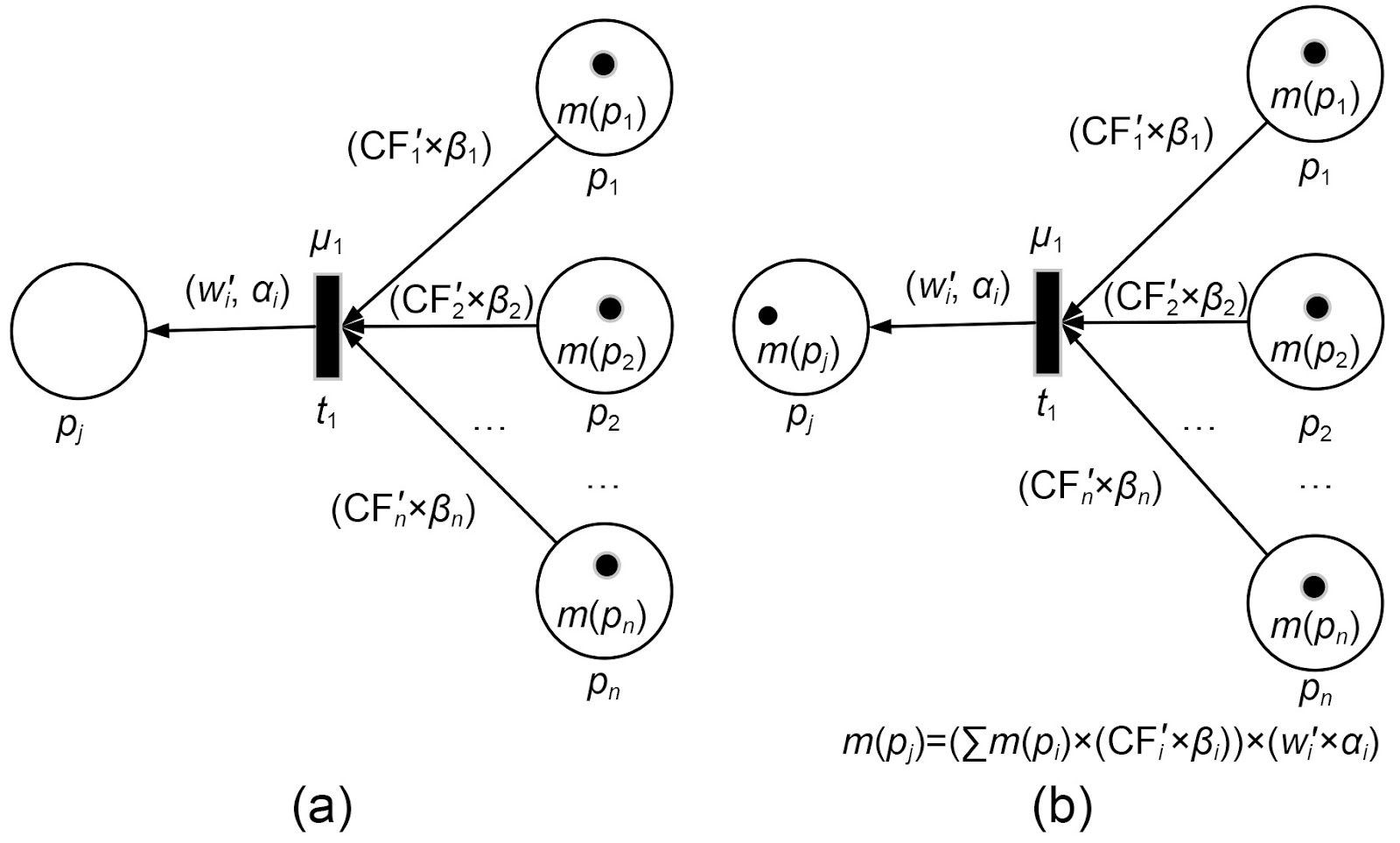
Parallel fault diagnosis using hierarchical fuzzy Petri net by reversible and dynamic decomposition mechanism

Authors: Yinhong XIANG, Kaiqing ZHOU, Arezoo SARKHEYLI-HÄGELE, Yusliza YUSOFF, Diwen KANG, Azlan Mohd ZAIN

The state space explosion, a challenge analogous to that encountered in a Petri net (PN), has constrained the extensive study of fuzzy Petri nets (FPNs). Current reasoning algorithms employing FPNs, which operate through forward, backward, and bidirectional mechanisms, are examined. These algorithms streamline the inference process by eliminating irrelevant components of the FPN. However, as the scale of the FPN grows, the complexity of these algorithms escalates sharply, posing a significant ch

Parallel fault diagnosis using hierarchical fuzzy Petri net by reversible and dynamic decomposition mechanism
Graphical Abstract
Original ResearchVol. 32, Issue 1 • pp. 352-364DOI: 10.1631/FITEE_2400487Jan 19, 2025

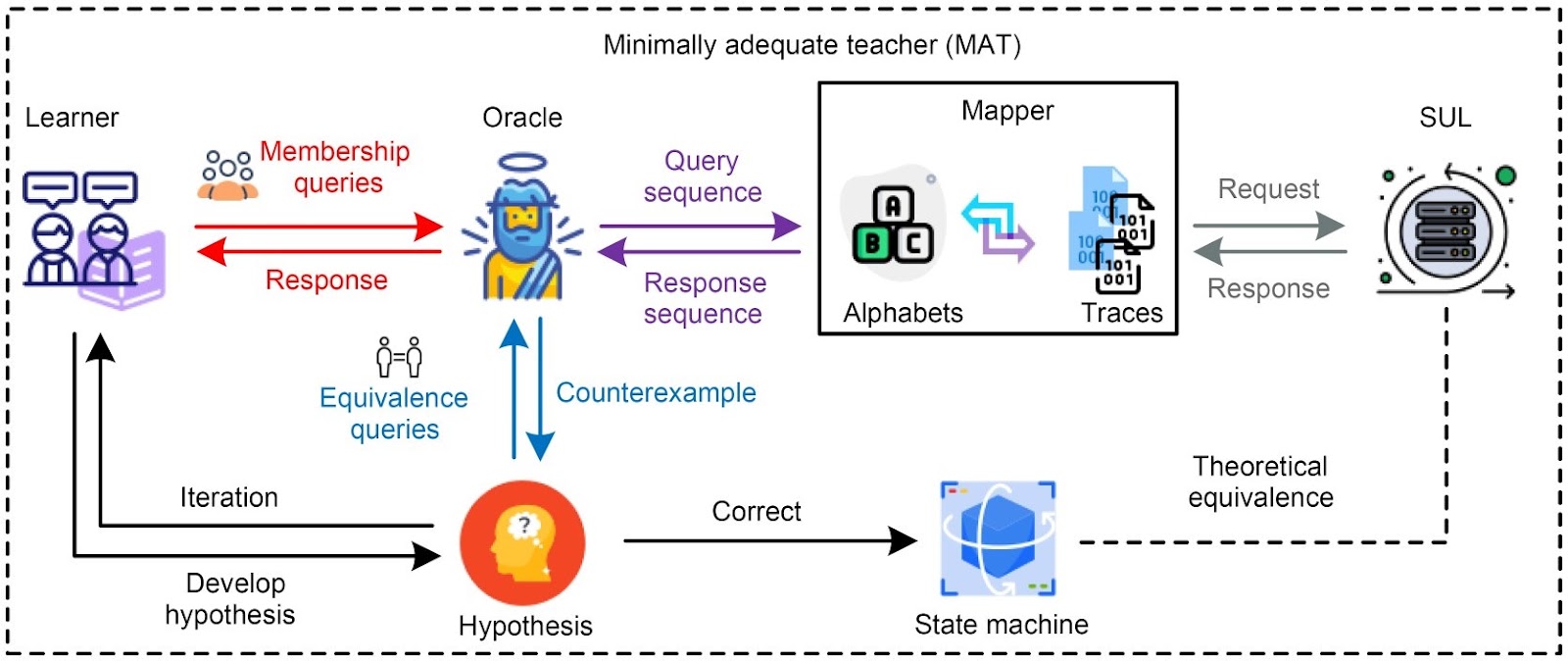
Active inference of protocol state machines from incomplete message domains

Authors: Maohua GUO, Yuefei ZHU, Jinlong FEI

Inferring protocol state machines from observable information presents a significant challenge in protocol reverse engineering (PRE), especially when passively collected traffic suffers from message loss, resulting in an incomplete protocol state space. This paper introduces an innovative method for actively inferring protocol state machines using the minimally adequate teacher (MAT) framework. By incorporating session completion and deterministic mutation techniques, this method broadens the ra

Active inference of protocol state machines from incomplete message domains
Graphical Abstract
Original ResearchVol. 32, Issue 1 • pp. 524-536DOI: 10.1631/FITEE_2400344Jan 17, 2025

Neural mesh refinement

Authors: Zhiwei ZHU, Xiang GAO, Lu YU, Yiyi LIAO

Subdivision is a widely used technique for mesh refinement. Classic methods rely on fixed manually defined weighting rules and struggle to generate a finer mesh with appropriate details, while advanced neural subdivision methods achieve data-driven nonlinear subdivision but lack robustness, suffering from limited subdivision levels and artifacts on novel shapes. To address these issues, this paper introduces a neural mesh refinement (NMR) method that uses the geometric structural priors learned

Neural mesh refinement
Graphical Abstract
Original ResearchVol. 32, Issue 1 • pp. 132-144DOI: 10.1631/FITEE_2400696Jan 14, 2025

Data-driven intermittent connection fault diagnosis for complex topology DeviceNet based on Bayesian inference

Authors: Longkai WANG, Yong LEI

As the topology of DeviceNet in industrial automation systems grows more complex and the reliability requirement for industrial equipment and processes becomes more stringent, the importance of network troubleshooting is increasingly evident. Intermittent connection (IC) faults frequently occur in DeviceNet systems, impairing production performance and even operational safety. However, existing IC troubleshooting methods for DeviceNet, especially those with complex topologies, cannot directly ha

Data-driven intermittent connection fault diagnosis for complex topology DeviceNet based on Bayesian inference
Graphical Abstract
Original ResearchVol. 32, Issue 1 • pp. 540-552DOI: 10.1631/FITEE_2400867Jan 11, 2025

SAPER-AI accelerator: a systolic array-based power-efficient reconfigurable AI accelerator

Authors: Fahad Bin Muslim, Kashif Inayat, Muhammad Zain Siddiqi, Safiullah Khan, Tayyeb Mahmood, Ihtesham ul Islam

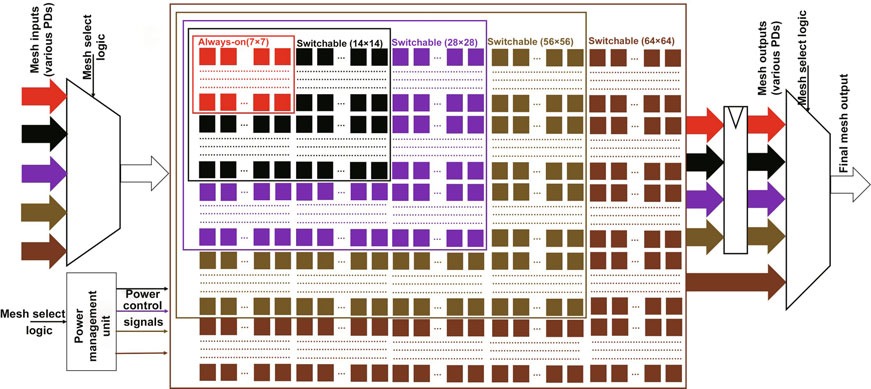
Deep learning (DL) accelerators are critical for handling the growing computational demands of modern neural networks. Systolic array (SA)-based accelerators consist of a 2D mesh of processing elements (PEs) working cooperatively to accelerate matrix multiplication. The power efficiency of such accelerators is of primary importance, especially considering the edge AI regime. This work presents the SAPER-AI accelerator, an SA accelerator with power intent specified via a unified power format repr

SAPER-AI accelerator: a systolic array-based power-efficient reconfigurable AI accelerator
Graphical Abstract
Original ResearchVol. 32, Issue 1 • pp. 712-724DOI: 10.1631/ENG_ITEE_2025_0063Jan 9, 2025

From software-defined interconnect to software-defined system-on-wafer: a computing architecture revolution in the post-Moore era

Authors: Ping LV, Qinrang LIU, Jiangxing WU, Jianliang SHEN, Mengke LIAN, Rui CAO, Shuai WEI, Zhichao LI, Peijie LI, Wei GUO, Wenjian ZHANG, Hong YU, Yanzhao GAO

As Moore’s law approaches its fundamental physical and economic limits, the semiconductor industry faces unprecedented challenges in maintaining performance growth. This study presents the revolutionary evolution from software-defined interconnect (SDI) to software-defined system-on-wafer (SDSoW), a paradigm-shifting architectural approach that transcends traditional scaling constraints through wafer-level heterogeneous integration. Our proposed SDSoW enables dynamic reconfiguration of thousands

From software-defined interconnect to software-defined system-on-wafer: a computing architecture revolution in the post-Moore era
Graphical Abstract
Original ResearchVol. 32, Issue 1 • pp. 148-160DOI: 10.1631/FITEE_2500348Jan 8, 2025

E2MN: human-inspired end-to-end mapless navigation with oscillation suppression and short-term memory

Authors: Yinan Yang, Zhiye Wang, Xuan Kong, Peng Zhi, Dapeng Zhang, Rui Zhou, Qingguo Zhou

Robotic navigation in unknown environments is challenging due to the lack of high-definition maps. Building maps in real time requires significant computational resources. Nevertheless, sensor data can provide sufficient environmental context for robots’ navigation. This paper presents an interpretable and mapless navigation method using only two-dimensional (2D) light detection and ranging (LiDAR), mimicking human strategies to escape from dead ends. Unlike traditional planners, which depend on

E2MN: human-inspired end-to-end mapless navigation with oscillation suppression and short-term memory
Graphical Abstract
Original ResearchVol. 32, Issue 1 • pp. 320-332DOI: 10.1631/FITEE_2400259Jan 6, 2025

Optimization methods in fully cooperative scenarios: a review of multiagent reinforcement learning

Authors: Tao Yang, Xinhao Shi, Qinghan Zeng, Yulin Yang, Cheng Xu, Hongzhe Liu

Multiagent reinforcement learning (MARL) has become a dazzling new star in the field of reinforcement learning in recent years, demonstrating its immense potential across many application scenarios. The reward function directs agents to explore their environments and make optimal decisions within them by establishing evaluation criteria and feedback mechanisms. Concurrently, cooperative objectives at the macro level provide a trajectory for agents’ learning, ensuring alignment between individual

Optimization methods in fully cooperative scenarios: a review of multiagent reinforcement learning
Graphical Abstract
Original ResearchVol. 32, Issue 1 • pp. 728-740DOI: 10.1631/FITEE_2400383Jan 3, 2025

Prototype-guided cross-task knowledge distillation

Authors: Deng LI, Peng LI, Aming WU, Yahong HAN

Recently, large-scale pretrained models have revealed their benefits in various tasks. However, due to the enormous computation complexity and storage demands, it is challenging to apply large-scale models to real scenarios. Existing knowledge distillation methods require mainly the teacher model and the student model to share the same label space, which restricts their application in real scenarios. To alleviate the constraint of different label spaces, we propose a prototype-guided cross-task

Prototype-guided cross-task knowledge distillation
Graphical Abstract