SinoTechIntel Academic Portal
🏛️ Indexed Academic JournalImpact Factor: 3.7 (Q2 - Elsevier)Original: 新型炭材料

New Carbon Materials

3.7 (Q2 - Elsevier)

Total Research Papers: 47
Access: 100% Free Open Access
Browse by Publication Year & VolumeReset All Filters ✕

Published Research PapersFiltered: Year 2024 • 39

Showing 6 of 47 peer-reviewed papers with full Graphical Abstracts.

Original ResearchVol. 39, Issue 4 • pp. 668-680DOI: 10.1016/S1872-5805_NJan 15, 2024

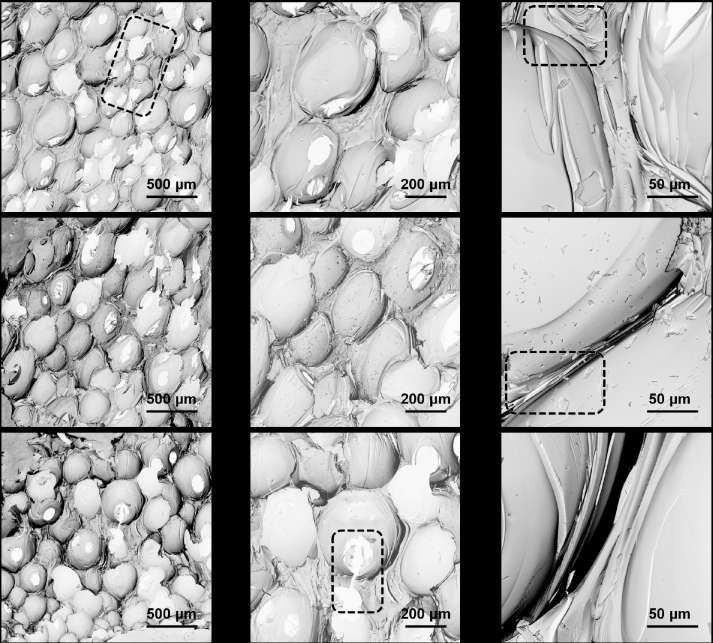
Semi-quantitative analysis of the structural evolution of mesophase pitch-based carbon foams by Raman and FTIR spectroscopy

Authors: LIU Yue, CHANG Sheng-kai, SU Zhan-peng, HUANG Zu-jian, QIN Ji, YANG Jian-xiao

Graphitized carbon foams (GFms) were prepared using mesophase pitch (MP) as a raw material by foaming (450 °C), pre-oxidation (320 °C), carbonization (1 000 °C) and graphitization (2 800 °C). The differences in structure and properties of GFms prepared from different MP precursors pretreated by ball milling or liquid phase extraction were investigated and compared, and semi-quantitative calculations were conducted on the Raman and FTIR spectra of samples at each preparation stage. Semi-quantitative spectroscopic analysis provided detailed information on the structure and chemical composition changes of the MP and GFm derived from it. Combined with microscopic observations, the change from precursor to GFm was analyzed. The results showed that ball milling concentrated the distribution of aromatic molecules in the pitch, which contributed to uniform foaming to give a GFm with a uniform pore distribution and good properties. Liquid phase extraction helped remove light components while retaining large aromatics to form graphitic planes with the largest average size during post-treatment to produce a GFm with the highest degree of graphitization and the fewest open pores, giving the best compression resistance (2.47 MPa), the highest thermal conductivity (64.47 W/(m·K)) and the lowest electrical resistance (13.02 μΩ·m). Characterization combining semi-quantitative spectroscopic analysis with microscopic observations allowed us to control the preparation of the MP-derived GFms.
Semi-quantitative analysis of the structural evolution of mesophase pitch-based carbon foams by Raman and FTIR spectroscopy
Graphical Abstract
Original ResearchVol. 39, Issue 4 • pp. 611-632DOI: 10.1016/S1872-5805_NJan 15, 2024

Research progress on carbon materials derived from low-rank coal

Authors: Wenge Song, Hongjiu Zeng, Bin Wang, Xianhong Huang, Xiaoming Li, Guohua Sun

Low-rank coal is considered a high-quality precursor for carbon materials due to its abundant reserves, rich polycyclic aromatic hydrocarbons, high carbon content, and low cost. However, differences in ash content, microstructure, and interface among different low-rank coals lead to difficulties in effectively controlling the structure and performance of coal-based carbon materials. In recent years, researchers have proposed effective methods for regulating the microstructure and surface/interface of low-rank coal-based carbon materials. This review focuses on the differentiated strategies for preparing activated carbon, capacitive carbon, hard carbon, graphite, and nanocarbon materials from low-rank coal. It further discusses the effects of coal type and process on the microstructure, interface characteristics, and functional group types of coal-based carbon materials. Additionally, the applications of coal-based carbon materials in adsorption, supercapacitors, and alkali metal batteries are introduced. Finally, future research directions and challenges for low-rank coal-based carbon materials are prospected.

Research progress on carbon materials derived from low-rank coal
Graphical Abstract
Original ResearchVol. 39, Issue 3 • pp. 439-458DOI: 10.1016/S1872-5805_NJan 15, 2024

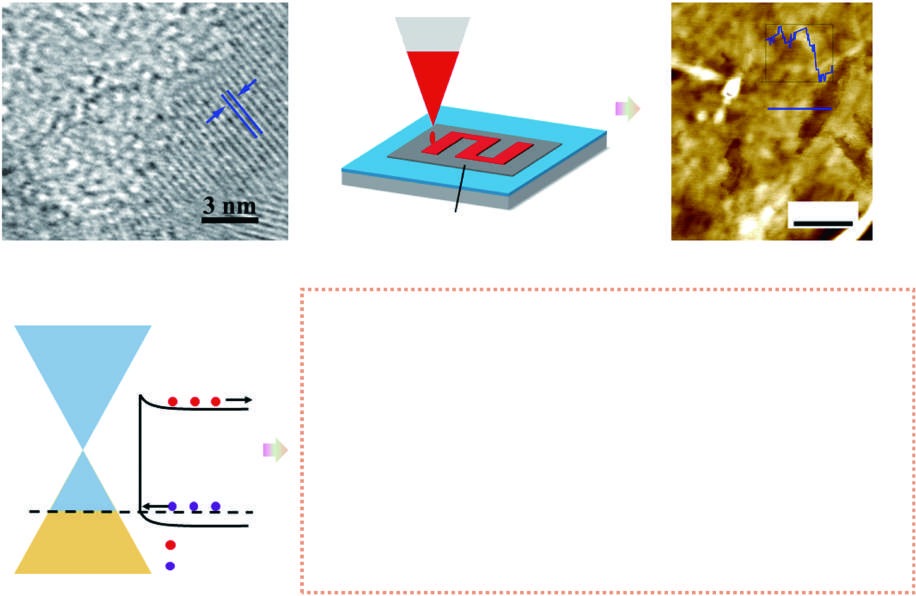
Advances in graphene/molybdenum dichalcogenide-based van der Waals heterostructure photodetectors

Authors: ZHANG Xin-hua, LIU Wei-di, GONG You-pin, LIU Qing-feng, CHEN Zhi-gang

Graphene is widely used in photodetection because of its high carrier mobility and wide spectral absorption range. However, its high dark current caused by its low light absorption severely limits its performance. Molybdenum dihalide (MoX2, X=S, Se and Te) has a high absorption coefficient, which can compensate for the high dark current in graphene-based photodetectors and result in outstanding photoelectronic properties of those based on a graphene/MoX2 van der Waals heterostructure (vdWH). In this review, we firstly review working principles, performance indicators, and structures of photodetectors. After that, the significance of graphene/MoX2 vdWH photodetectors is highlighted from the fundamental perspective. Preparation methodologies and performance enhancement strategies of graphene/MoX2 vdWH photodetectors are correspondingly summarized. In the end, we highlight the current challenges and future directions of the graphene/MoX2 vdWH photodetectors. This review will guide the design of high-performance vdWH photodetectors.

Advances in graphene/molybdenum dichalcogenide-based van der Waals heterostructure photodetectors
Graphical Abstract
Original ResearchVol. 39, Issue 1 • pp. 142-151DOI: 10.1016/S1872-5805_NJan 15, 2024

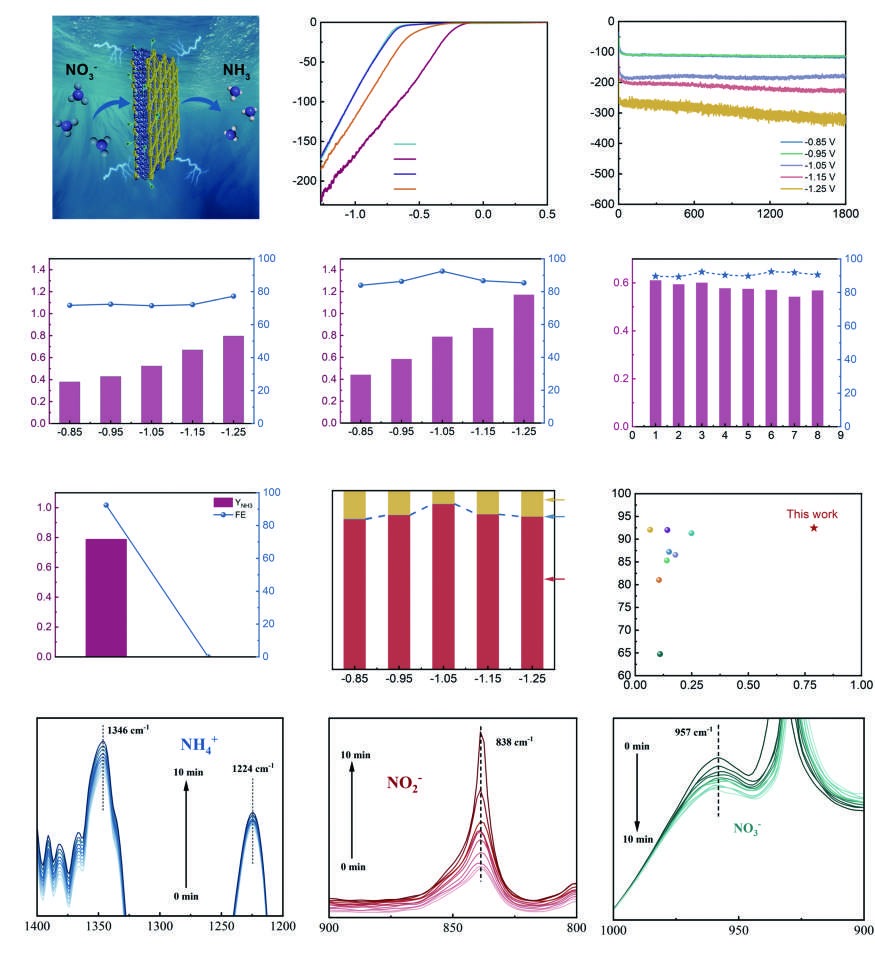
A Co3O4/graphdiyne heterointerface for efficient ammonia production from nitrates

Authors: CHEN Zhao-yang, ZHAO Shu-ya, LUAN Xiao-yu, ZHENG Zhi-qiang, YAN Jia-yu, XUE Yu-rui

The nitrate reduction reaction (NtRR) has been demonstrated to be a promising way for obtaining ammonia (NH3) by converting NO3− to NH3. Here we report the controlled synthesis of cobalt tetroxide/graphdiyne heterostructured nanowires (Co3O4/GDY NWs) by a simple two-step process including the synthesis of Co3O4 NWs and the following growth of GDY using hexaethynylbenzene as the precursor at 110 °C for 10 h. Detailed scanning electron microscopy, high resolution transmission electron microscopy, X-ray photoelectron spectroscopy, and Raman characterization confirmed the synthesis of a Co3O4/GDY heterointerface with the formation of sp-C―Co bonds at the interface and incomplete charge transfer between GDY and Co, which provide a continuous supply of electrons for the catalytic reaction and ensure a rapid NtRR. Because of these advantages, Co3O4/GDY NWs had an excellent NtRR performance with a high NH3 yield rate (YNH3) of 0.78 mmol h−1 cm−2 and a Faraday efficiency (FE) of 92.45% at −1.05 V (vs. RHE). This work provides a general approach for synthesizing heterostructures that can drive high-performance ammonia production from wastewater under ambient conditions.

A Co3O4/graphdiyne heterointerface for efficient ammonia production from nitrates
Graphical Abstract
Original ResearchVol. 39, Issue 1 • pp. 131-141DOI: 10.1016/S1872-5805_NJan 15, 2024

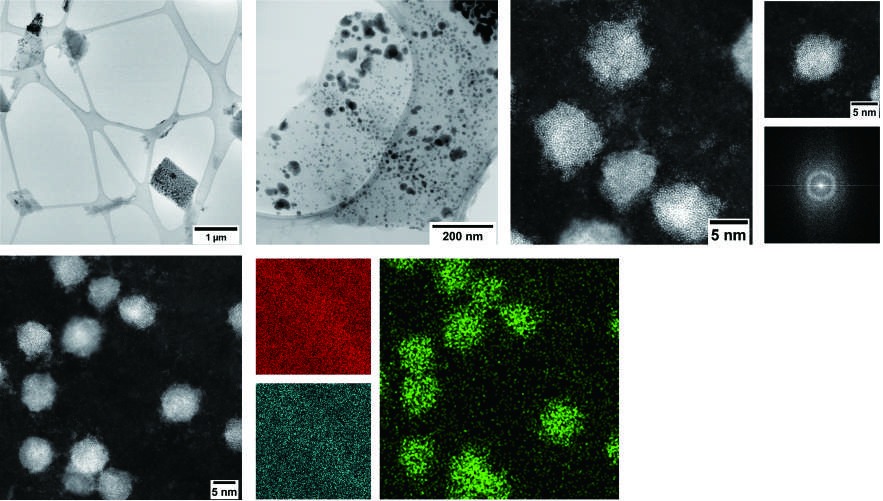
Bismuth nanoparticles anchored on N-doped graphite felts to give stable and efficient iron-chromium redox flow batteries

Authors: CHE Hang-xin, GAO Yu-fei, YANG Jia-hui, HONG Song, HAO Lei-duan, XU Liang, Sana Taimoor, Alex W. Robertson, SUN Zhen-yu

Iron-chromium redox flow batteries (ICRFBs) use abundant and inexpensive chromium and iron as the active substances in the electrolyte and have great potential as a cost-effective and large-scale energy storage system. However, they are still plagued by several issues, such as the low electrochemical activity of Cr3+/Cr2+ and the occurrence of the undesired hydrogen evolution reaction (HER). We report the synthesis of amorphous bismuth (Bi) nanoparticles (NPs) immobilized on N-doped graphite felts (GFs) by a combined self-polymerization and wet-chemistry reduction strategy followed by annealing, which are used as the negative electrodes for ICRFBs. The resulting Bi NPs react with H+ to form intermediates and greatly inhibit the parasitic HER. In addition, the combined effect of Bi and N dopants on the surface of GF dramatically increases the electrochemical activity of Fe2+/Fe3+ and Cr3+/Cr2+, reduces the charge transfer resistance, and increases the mass transfer rate compared to plain GF. At the optimum Bi/N ratio of 2, a high coulombic efficiency of up to 97.7% is maintained even for 25 cycles at different current densities, the energy efficiency reaches 85.8% at 60.0 mA cm−2, exceeding many other reported materials, and the capacity reaches 862.7 mAh L−1 after 100 cycles, which is about 5.3 times that of bare GF.

Bismuth nanoparticles anchored on N-doped graphite felts to give stable and efficient iron-chromium redox flow batteries
Graphical Abstract
Original ResearchVol. 39, Issue 1 • pp. 64-77DOI: 10.1016/S1872-5805_NJan 15, 2024

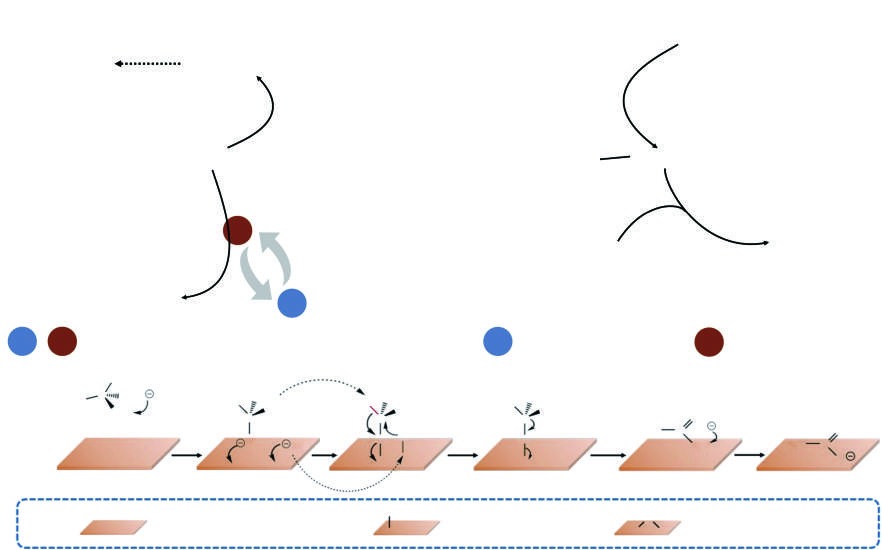
A review of carbon-based catalysts and catalyst supports for simultaneous organic electro-oxidation and hydrogen evolution reactions

Authors: WANG Zhi-dong, XIA Tian, LI Zhen-hua, SHAO Ming-fei

Producing organic electro-oxidation and hydrogen evolution reactions (HER) simultaneously in an electrolytic cell is an appealing method for generating valuable chemicals at the anode while also producing H2 at the cathode. Within this framework, the task of designing energy-saving electrocatalysts with high selectivity and stability is a considerable challenge. Carbon-based catalysts, along with their supports, have emerged as promising candidates due to their diverse sources, large specific surface area, high porosity and multidimensional characteristics. This review summarizes progress from 2012 to 2022, in the use of carbon-based catalysts and their supports for organic electrooxidation and HER. It delves into outer-sphere electrooxidation mechanisms involving molecule-mediated oxidation and oxidative radical coupling reactions, as well as inner-sphere electrooxidation mechanisms, encompassing both acidic and alkaline electrolytes. The review also explores prospective research directions within this domain, addressing various aspects such as the design of electrocatalytic materials, the study of the relationship between the structure and properties of electrocatalysts, as well as examining their potential industrial applications.

A review of carbon-based catalysts and catalyst supports for simultaneous organic electro-oxidation and hydrogen evolution reactions
Graphical Abstract