Key Takeaways & Executive Findings
- •• Amorphous Bi nanoparticles anchored on N-doped graphite felts significantly enhance the electrochemical activity of Cr3+/Cr2+ and Fe2+/Fe3+ while suppressing the hydrogen evolution reaction. • The optimized Bi/N ratio of 2 yields a high coulombic efficiency of 97.7% and an energy efficiency of 85.8% at 60 mA cm−2, outperforming many reported materials. • The modified electrode achieves a capacity of 862.7 mAh L−1 after 100 cycles, about 5.3 times that of bare graphite felt, demonstrating excellent stability. • The combined self-polymerization and wet-chemistry reduction strategy provides a scalable route for fabricating high-performance negative electrodes for iron-chromium redox flow batteries.
Abstract
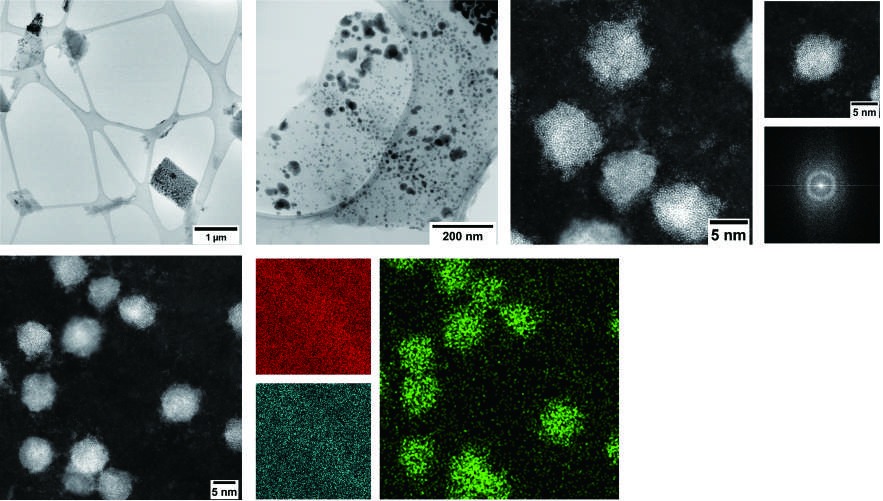
Iron-chromium redox flow batteries (ICRFBs) use abundant and inexpensive chromium and iron as the active substances in the electrolyte and have great potential as a cost-effective and large-scale energy storage system. However, they are still plagued by several issues, such as the low electrochemical activity of Cr3+/Cr2+ and the occurrence of the undesired hydrogen evolution reaction (HER). We report the synthesis of amorphous bismuth (Bi) nanoparticles (NPs) immobilized on N-doped graphite felts (GFs) by a combined self-polymerization and wet-chemistry reduction strategy followed by annealing, which are used as the negative electrodes for ICRFBs. The resulting Bi NPs react with H+ to form intermediates and greatly inhibit the parasitic HER. In addition, the combined effect of Bi and N dopants on the surface of GF dramatically increases the electrochemical activity of Fe2+/Fe3+ and Cr3+/Cr2+, reduces the charge transfer resistance, and increases the mass transfer rate compared to plain GF. At the optimum Bi/N ratio of 2, a high coulombic efficiency of up to 97.7% is maintained even for 25 cycles at different current densities, the energy efficiency reaches 85.8% at 60.0 mA cm−2, exceeding many other reported materials, and the capacity reaches 862.7 mAh L−1 after 100 cycles, which is about 5.3 times that of bare GF.
1. Introduction
The development of clean energy sources is a current international priority. Renewable powers based on wind and solar generation are now becoming primary energy sources for powering our societies. However, the inherent intermittency of renewable energy sources brings about serious challenges for ensuring a consistent supply of power to the grid. Energy storage technology is an effective tool for achieving efficient renewable energy utilization and stable power system operation[1–2]. Compared with physical energy storage technology such as pumped storage, chemical energy storage technology offers greater flexibility in terms of scale and location. Among the various chemical energy storage methods, redox flow batteries (RFBs) have become a large-scale battery energy storage technology with great potential owing to their long life, good safety, and high energy efficiency[3].
RFBs are considered as one of the best choices for megawatt-level power storage, and megawatt demonstration systems have been installed, for example, in China, the United States and Australia. The charge and discharge of the RFBs are realized mainly by the change in the redox state of the active substance in the solution on both sides of the positive and negative electrodes. An RFB consists of two electrodes, two electrolyte tanks, and an ion exchange membrane. The electrolyte is usually stored in an external tank and pumped into the reactor. The redox reaction is carried out on the electrode surface, and the active substance after the reaction flows back to the external storage tank with the electrolyte[4]. Since the 1960s, a variety of RFBs have been developed, including all-vanadium flow batteries (VRFBs), vanadium-iron RFBs, zinc-bromine RFBs, and iron-chromium flow batteries (ICRFBs)[5]. Among them, ICRFBs are the first real sense of flow battery in history. It uses cheap and abundant chromium and iron as the active substances in the electrolyte and is therefore a very cost-effective energy storage system compared with other kinds of flow batteries[6].
However, practical implementation of ICRFBs must address the problems of slow Cr3+/Cr2+ kinetics and suppress the competing HER. Graphite felt (GF) is typically the first choice of ICRFB electrode materials owing to its favorable conductivity, stability, high specific surface area, porosity, and corrosion resistance[7–9]. However, GF also has drawbacks such as poor hydrophilicity, insufficient electrochemical activity, and low reversibility. The surfaces of GF electrodes have been modified in an attempt to circumvent these issues and thus improve the ICRFB performance. For example, indium ions[10] have been demonstrated to inhibit the HER and accelerate Cr3+/Cr2+ kinetics.
Loading authentic research manuscript (Pages 1–5)...
CHE Hang-xin, GAO Yu-fei, YANG Jia-hui, HONG Song, HAO Lei-duan, XU Liang, Sana Taimoor, Alex W. Robertson, SUN Zhen-yu (2024). Bismuth nanoparticles anchored on N-doped graphite felts to give stable and efficient iron-chromium redox flow batteries. New Carbon Materials. https://doi.org/10.1016/S1872-5805_N
Research & Educational Purpose Only:The translations, structured abstracts, analytical annotations, and data reports provided by SinoTechIntel are intended exclusively for academic research, internal corporate R&D, and educational benchmarking. They do not constitute formal engineering, chemical safety, legal, or professional advice.
Copyright & Intellectual Property Notice: Original copyright of the underlying source articles and experimental data remains with the respective authors, institutions, and original publishing journals. SinoTechIntel claims intellectual property only over its proprietary translations, analytical syntheses, and AEO structured enhancements in accordance with international fair use and academic citation principles.
Frequently Asked Questions
What is the main challenge in iron-chromium redox flow batteries?
The main challenges are the low electrochemical activity of Cr3+/Cr2+ and the undesired hydrogen evolution reaction (HER), which reduce efficiency and stability.
How does bismuth nanoparticle modification improve the electrode performance?
Bismuth nanoparticles react with H+ to form intermediates that inhibit HER, while the combined effect with N-doping enhances the electrochemical activity of Fe2+/Fe3+ and Cr3+/Cr2+, reduces charge transfer resistance, and increases mass transfer rate.
What is the optimal Bi/N ratio and what performance is achieved?
The optimal Bi/N ratio is 2, achieving a coulombic efficiency of 97.7%, an energy efficiency of 85.8% at 60 mA cm−2, and a capacity of 862.7 mAh L−1 after 100 cycles.
How does the modified electrode compare to bare graphite felt?
The modified electrode achieves about 5.3 times higher capacity than bare graphite felt, demonstrating significantly improved performance.
What is the synthesis method for the Bi/N-doped graphite felt electrode?
The electrode is synthesized by a combined self-polymerization and wet-chemistry reduction strategy followed by annealing, which immobilizes amorphous bismuth nanoparticles on N-doped graphite felts.
Related Technical Papers & Translations

Design and optimization of a high-efficiency distillation process for cellulosic fuel ethanol integrated with thermal coupling and molecular sieve adsorption
To address the challenges of high energy consumption and prominent costs in the traditional three-columns distillation process for cellulosic fuel ethanol, a distillation—molecular sieve coupling separation process is proposed. This process integrates a three-column (crude distillation column, first distillation column, second distillation column) system with a 3A molecular sieve adsorption deep dehydration unit. A thermal coupling network is constructed via differential pressure design (steam from medium/high-pressure columns as mutual heat sources, reboiler liquid waste heat for feed preheating), and molecular sieve adsorption conditions are optimized. The study first performs a thermodynamic consistency test on the ethanol—water system, determines optimal non-random two-liquid (NRTL) model binary interaction parameters via experimental data regression for Aspen Plus simulation. Aiming at minimum total annual cost (TAC), Aspen Plus is used to optimize process parameters (theoretical tray number, feed location, reflux ratio, side-draw position, etc.). Economic analysis shows this process reduces CO2 emission costs by 27.56%, TAC by 15.58% (to 5.123 × 10⁶ USD·a-1), and increases ethanol purity to >99.6%, providing an effective solution for green, efficient separation.

A cohesion loss model for determining residual strength of deep bedded sandstone
Rock residual strength, as an important input parameter, plays an indispensable role in proposing the reasonable and scientific scheme about stope design, underground tunnel excavation and stability evaluation of deep chambers. Therefore, previous residual strength models of rocks established were reviewed. And corresponding related problems were stated. Subsequently, starting from the effects of bedding and whole life-cycle evolution process, series of triaxial mechanical tests of deep bedded s

Federated model with contrastive learning and adaptive control variates for human activity recognition
Recent attention to privacy issues demands a communication-safe method for training human activity recognition (HAR) models on client activity data. Federated learning (FL) has become a compelling technique to facilitate model training between the server and clients while preserving data privacy. However, classical FL methods often assume independent and identically distributed (IID) data among clients. This assumption does not hold true in practical scenarios. Human activity in real-world scena