Key Takeaways & Executive Findings
- •• Carbon-based catalysts and supports enable simultaneous organic electro-oxidation and HER, offering a sustainable route for valuable chemical production and clean hydrogen generation. • The review covers both outer-sphere and inner-sphere electrooxidation mechanisms, providing a mechanistic understanding for catalyst design in acidic and alkaline media. • Heteroatom-doped carbons and carbon-supported precious metals are highlighted as promising electrocatalysts with enhanced activity and stability compared to conventional Pt/Pd catalysts. • Future research directions include optimizing electrocatalyst structure-property relationships and scaling up for industrial applications.
Abstract
Producing organic electro-oxidation and hydrogen evolution reactions (HER) simultaneously in an electrolytic cell is an appealing method for generating valuable chemicals at the anode while also producing H2 at the cathode. Within this framework, the task of designing energy-saving electrocatalysts with high selectivity and stability is a considerable challenge. Carbon-based catalysts, along with their supports, have emerged as promising candidates due to their diverse sources, large specific surface area, high porosity and multidimensional characteristics. This review summarizes progress from 2012 to 2022, in the use of carbon-based catalysts and their supports for organic electrooxidation and HER. It delves into outer-sphere electrooxidation mechanisms involving molecule-mediated oxidation and oxidative radical coupling reactions, as well as inner-sphere electrooxidation mechanisms, encompassing both acidic and alkaline electrolytes. The review also explores prospective research directions within this domain, addressing various aspects such as the design of electrocatalytic materials, the study of the relationship between the structure and properties of electrocatalysts, as well as examining their potential industrial applications.
1. Introduction
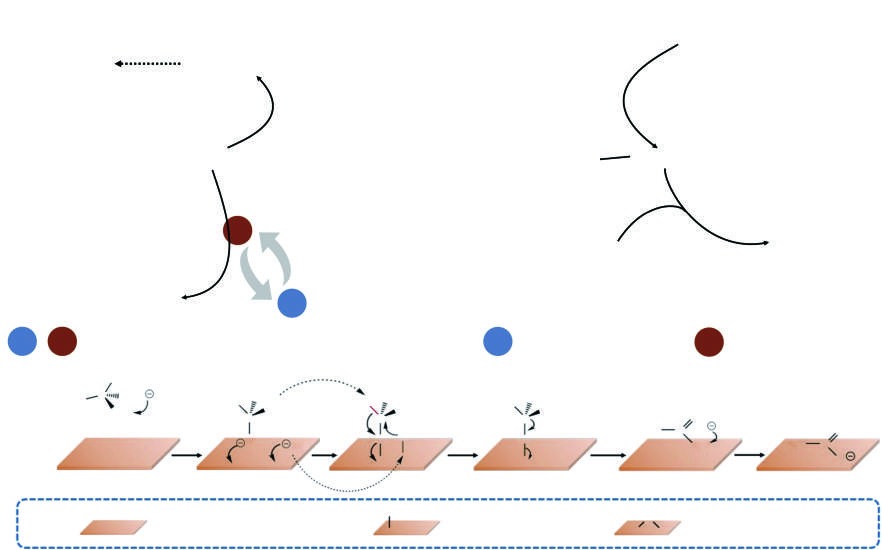
Hydrogen (H2) has diverse sources, possesses a high calorific value (1.4×10⁸ J kg−1), and generates zero emissions. Consequently, it is regarded as the “ultimate energy” to mitigate the current environmental problems and energy crises[1–4]. The electrochemical conversion of water to H2 driven by clean energy (e.g., solar, wind) is one of the most promising green pathways for decarbonization[5–6]. However, this process exhibits high overpotential between the anode and cathode (>1.50 V at 10 mA cm−2)[7–10]. Traditional electrochemical water splitting involves hydrogen evolution reaction (HER) and oxygen evolution reactions (OER), as shown below (Fig. 1a):
In an acidic or neutral medium: OER: 2H2O−4e−→4H+ +O2 (1); HER: 4H+ +4e →2H2 (2). In an alkaline medium: OER: 4OH−+4e →2H2O+O2 (3); HER: 4H2O+4e−→2H2 +4OH− (4). The HER involves a two-electron transfer, whereas the OER involves a four-electron transfer. The main bottleneck of H2 production via water splitting is the sluggish OER, where the generated O2 is not valuable and this might lead to the mixing of H2 and O2[11–13].
The addition of the oxygen atoms of H2O to organic molecules instead of their evolution as O2 is a more atom-economical approach to upgrading the anode for H2 production, which is thermodynamically more favorable than OER[14–19](Fig. 1b, c). Electrochemical alcohol oxidation reactions (AORs) involving methanol, ethanol, glycerol, glucose, 5-hydroxymethylfurfural and aryl alcohols are used in liquid fuel cells or for generating high-value fine chemicals (e.g., acids, ketones or aldehydes) along with H2 production[20–22]. Despite remarkable advancements in this field, the ongoing challenge lies in enhancing the efficiency and stability of the corresponding electrocatalysts. For instance, Pt- and Pd-based catalysts exhibit excellent catalytic activity in both organic electrooxidation and HER, but have limited availability and are expensive in nature[23]. In addition, their stability is unsatisfactory[24]. In this context, carbon-based materials are promising catalysts for organic electrooxidation and HER due to their diverse sources, large specific surface area, high porosity, and multidimensional structure[25–28].
Loading authentic research manuscript (Pages 1–5)...
WANG Zhi-dong, XIA Tian, LI Zhen-hua, SHAO Ming-fei (2024). A review of carbon-based catalysts and catalyst supports for simultaneous organic electro-oxidation and hydrogen evolution reactions. New Carbon Materials. https://doi.org/10.1016/S1872-5805_N
Research & Educational Purpose Only:The translations, structured abstracts, analytical annotations, and data reports provided by SinoTechIntel are intended exclusively for academic research, internal corporate R&D, and educational benchmarking. They do not constitute formal engineering, chemical safety, legal, or professional advice.
Copyright & Intellectual Property Notice: Original copyright of the underlying source articles and experimental data remains with the respective authors, institutions, and original publishing journals. SinoTechIntel claims intellectual property only over its proprietary translations, analytical syntheses, and AEO structured enhancements in accordance with international fair use and academic citation principles.
Frequently Asked Questions
What is the main advantage of coupling organic electro-oxidation with hydrogen evolution?
Coupling organic electro-oxidation with HER allows for the simultaneous production of valuable chemicals at the anode and hydrogen at the cathode, while reducing the overall cell voltage compared to traditional water splitting, thus improving energy efficiency.
Why are carbon-based materials promising for these reactions?
Carbon-based materials offer diverse sources, large specific surface area, high porosity, and multidimensional structures, which enhance catalyst dispersion and electron transfer. They can also be doped with heteroatoms to create active sites, making them cost-effective alternatives to precious metals.
What are the two main electrooxidation mechanisms discussed?
The review discusses outer-sphere electrooxidation mechanisms, which involve molecule-mediated oxidation and oxidative radical coupling, and inner-sphere electrooxidation mechanisms, which occur directly on the catalyst surface in acidic or alkaline electrolytes.
What is the scope of the review in terms of time and materials?
The review covers progress from 2012 to 2022 on carbon-based catalysts and supports for organic electrooxidation and HER, including various substrates like methanol, ethanol, glycerol, benzyl alcohol, and 5-hydroxymethylfurfural.
What are the future research directions highlighted?
Future directions include designing advanced electrocatalytic materials, understanding structure-property relationships, and exploring industrial applications to scale up the technology.
Related Technical Papers & Translations
Design and optimization of a high-efficiency distillation process for cellulosic fuel ethanol integrated with thermal coupling and molecular sieve adsorption
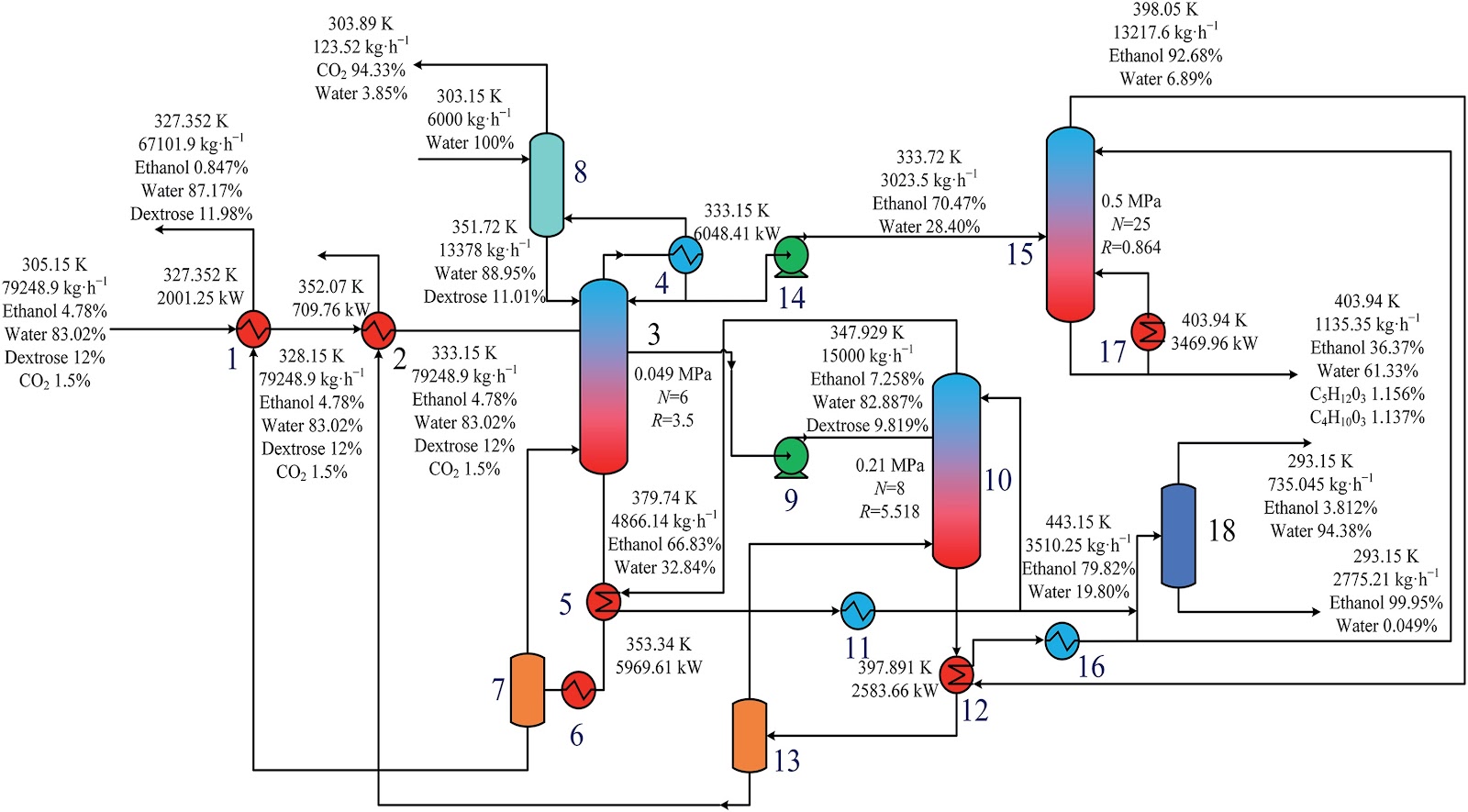
To address the challenges of high energy consumption and prominent costs in the traditional three-columns distillation process for cellulosic fuel ethanol, a distillation—molecular sieve coupling separation process is proposed. This process integrates a three-column (crude distillation column, first distillation column, second distillation column) system with a 3A molecular sieve adsorption deep dehydration unit. A thermal coupling network is constructed via differential pressure design (steam from medium/high-pressure columns as mutual heat sources, reboiler liquid waste heat for feed preheating), and molecular sieve adsorption conditions are optimized. The study first performs a thermodynamic consistency test on the ethanol—water system, determines optimal non-random two-liquid (NRTL) model binary interaction parameters via experimental data regression for Aspen Plus simulation. Aiming at minimum total annual cost (TAC), Aspen Plus is used to optimize process parameters (theoretical tray number, feed location, reflux ratio, side-draw position, etc.). Economic analysis shows this process reduces CO2 emission costs by 27.56%, TAC by 15.58% (to 5.123 × 10⁶ USD·a-1), and increases ethanol purity to >99.6%, providing an effective solution for green, efficient separation.
A cohesion loss model for determining residual strength of deep bedded sandstone
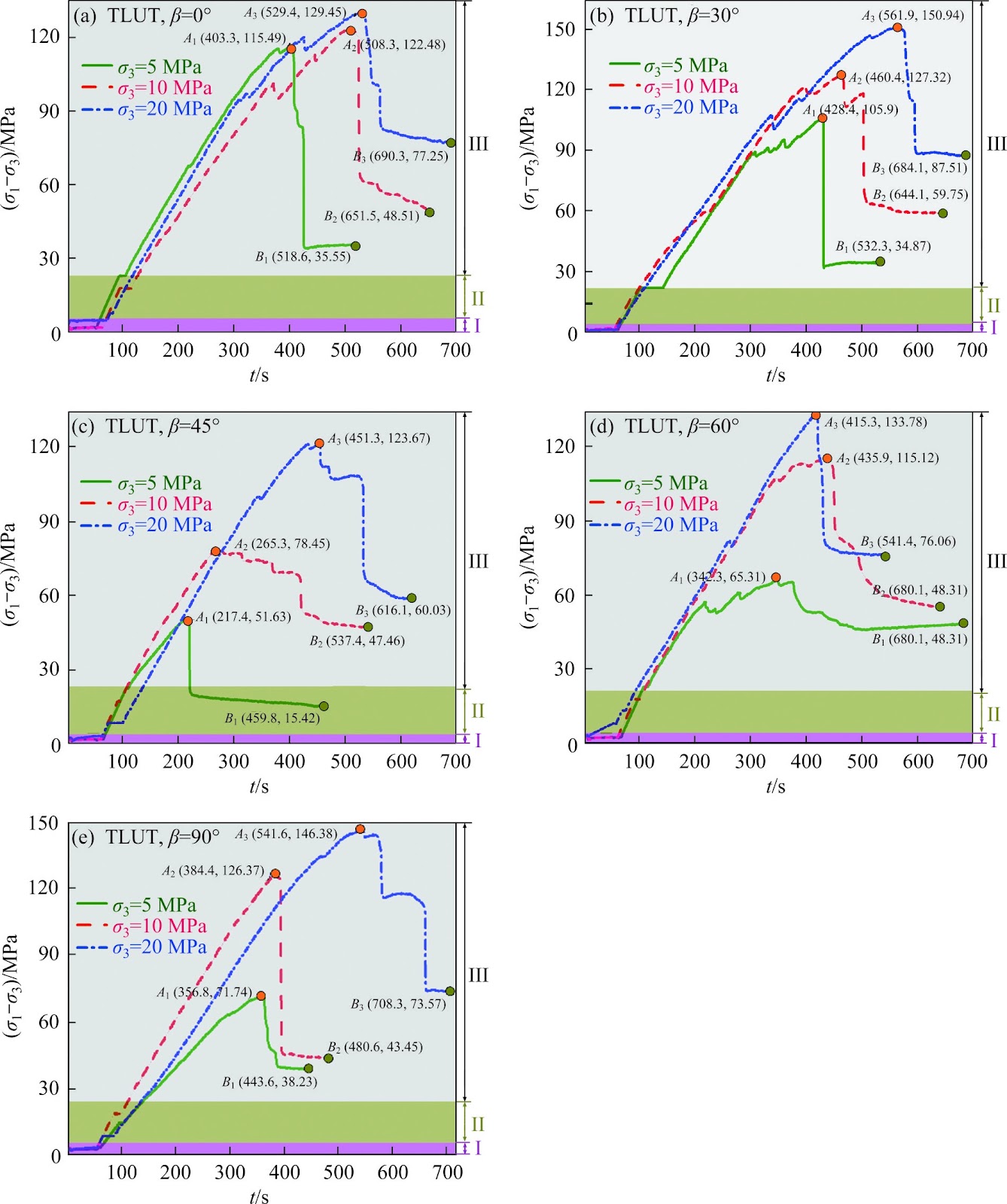
Rock residual strength, as an important input parameter, plays an indispensable role in proposing the reasonable and scientific scheme about stope design, underground tunnel excavation and stability evaluation of deep chambers. Therefore, previous residual strength models of rocks established were reviewed. And corresponding related problems were stated. Subsequently, starting from the effects of bedding and whole life-cycle evolution process, series of triaxial mechanical tests of deep bedded s
Federated model with contrastive learning and adaptive control variates for human activity recognition
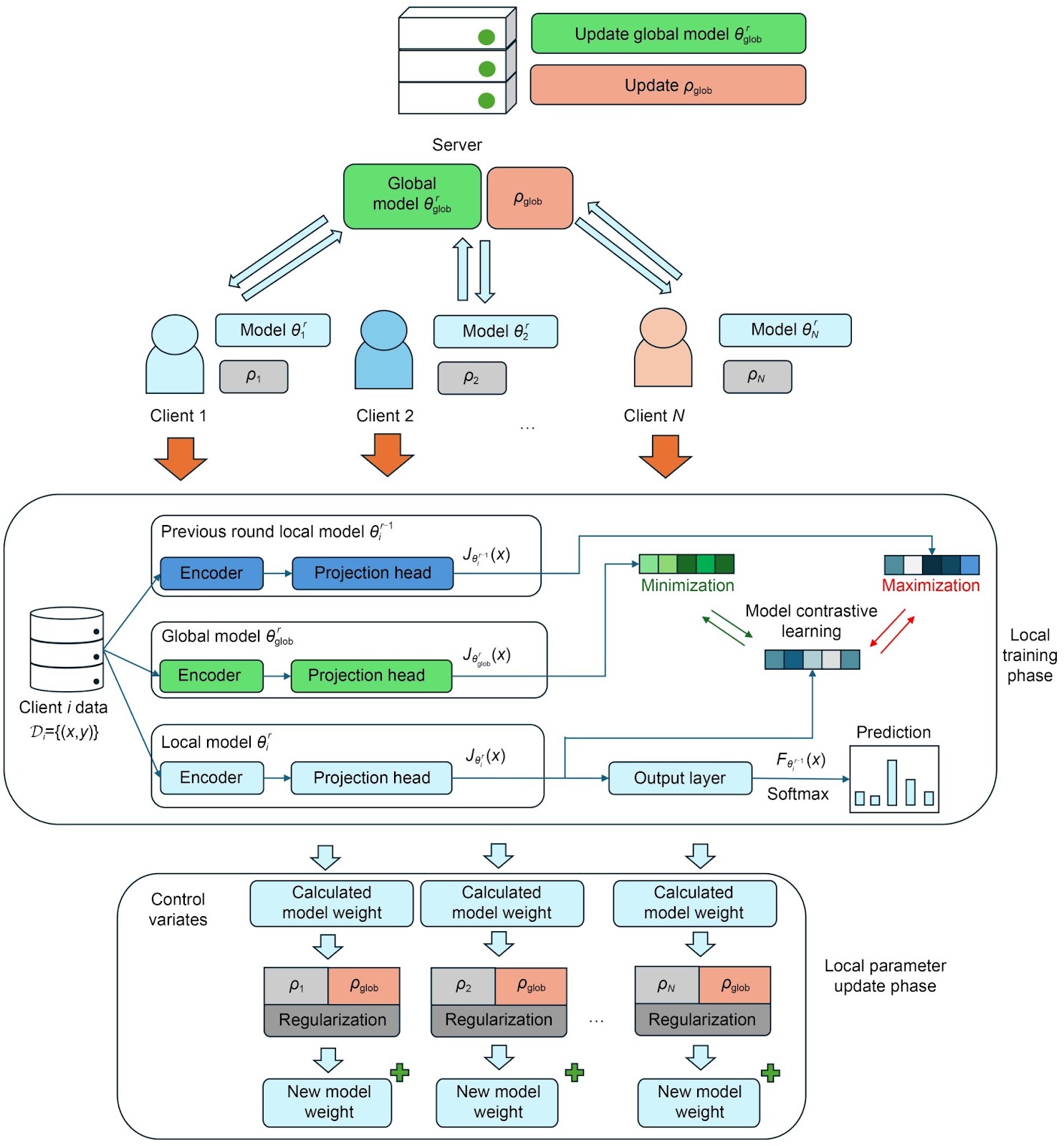
Recent attention to privacy issues demands a communication-safe method for training human activity recognition (HAR) models on client activity data. Federated learning (FL) has become a compelling technique to facilitate model training between the server and clients while preserving data privacy. However, classical FL methods often assume independent and identically distributed (IID) data among clients. This assumption does not hold true in practical scenarios. Human activity in real-world scena