SinoTechIntel Academic Portal
🏛️ Indexed Academic JournalImpact Factor: 3.7 (Q2 - Elsevier)Original: 新型炭材料

New Carbon Materials

3.7 (Q2 - Elsevier)

Total Research Papers: 47
Access: 100% Free Open Access
Browse by Publication Year & VolumeReset All Filters ✕

Published Research PapersFiltered: Year 2024 • Vol. 39 • Issue 2

Showing 10 of 47 peer-reviewed papers with full Graphical Abstracts.

Original ResearchVol. 39, Issue 2 • pp. 354-366DOI: 10.1016/S1872-5805_NJan 15, 2024

The oxidation reaction mechanism and its kinetics for a carbonaceous precursor prepared from ethylene tar for use as an anode material for lithium-ion batteries

Authors: GUO Tian-rui, CHEN Rong-qi, GAO Wei, WANG Yan-li, ZHAN Liang

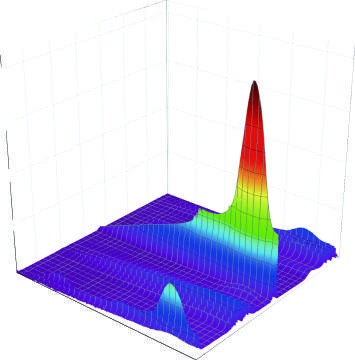
The oxidation reaction mechanism and its kinetics for ethylene tar were investigated in order to obtain a suitable anode material for Li-ion batteries. The oxidation of ethylene tar was divided into 3 stages (350–550, 550–700 and 700–900 K) according to the thermogravimetric curve. To reveal the oxidation reaction mechanism, the components of the gases evolved at different stages were analyzed by mass spectrometry and infrared technology. Based on these results the reaction was divided into 4 stages (323–400, 400–605, 605–750 and 750–860 K) to perform simulation calculations of the kinetics. Using the iso-conversion method (Coats-Redfern) to analyze the linear regression rates (R2) between 17 common reaction kinetics models and experimental data, an optimum reaction kinetics model for expressing the oxidation of ethylene tar was determined and the results were as follows. (1) During oxidation, the side chains of aromatic compounds first react with oxygen to form alcohols and aldehydes, leaving peroxy-radicals on aromatic rings. Subsequently, the aromatic compounds with peroxy-radicals undergo polymerization/condensation reactions to form larger molecules. (2) A fourth-order reaction model was used to describe the first 3 stages in the oxidation process, and the activation energies are 47.33, 18.69 and 9.00 kJ·mol−1 at 323–400, 400–605, 605–750 K, respectively. A three-dimensional diffusion model was applied to the fourth stage of the oxidation process, and the activation energy is 88.37 kJ·mol−1 at 750–860 K. A high softening point pitch was also produced for use as a coating of the graphite anode, and after it had been applied the capacity retention after 300 cycles increased from 51.54% to 79.07%.
The oxidation reaction mechanism and its kinetics for a carbonaceous precursor prepared from ethylene tar for use as an anode material for lithium-ion batteries
Graphical Abstract
Original ResearchVol. 39, Issue 2 • pp. 345-353DOI: 10.1016/S1872-5805_NJan 15, 2024

Flexible multifunctional Fe2O3/CC cathode host enables efficient adsorption and catalysis of polysulfides for lithium-sulfur batteries

Authors: Zhen Tian, Leilei Xue, Hongyuan Ding

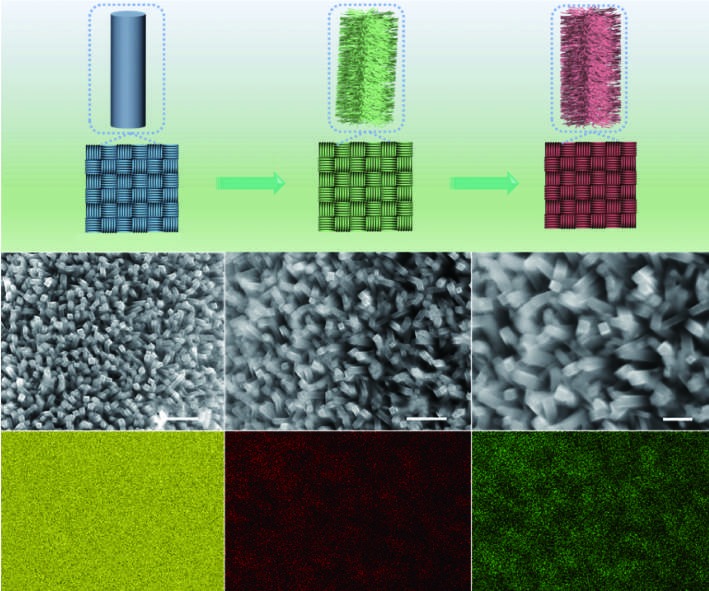
Lithium-sulfur batteries are among the most promising electrochemical energy storage devices due to their high energy density and low cost. However, the shuttle effect of polysulfides and the low conductivity of sulfur are major challenges for their commercialization. In this work, using Fe(NO3)3·9H2O as the iron source and NH4F as a surfactant, a flexible Fe2O3/CC composite was prepared by a simple hydrothermal and calcination process, in which Fe2O3 nanorods were decorated on carbon cloth (CC). The presence of mesopores in Fe2O3 facilitates electrolyte penetration and lithium-ion transport and diffusion during charge/discharge, while the abundant active sites exposed by the dense array enable efficient adsorption and rapid conversion of polysulfides, reducing the shuttle effect. Electrochemical analysis shows that the Fe2O3/CC cathode delivers a high discharge specific capacity of 1250 mAh g−1 at 0.1 C (1 C = 1672 mA g−1), and retains 789 mAh g−1 after 100 cycles. At 2 C, it still achieves a discharge capacity of 576 mAh g−1 after 1000 cycles with a capacity retention of 70%, significantly outperforming the control sample. Therefore, Fe2O3/CC effectively suppresses polysulfide shuttling and improves the rate performance and cycling stability of lithium-sulfur batteries.

Flexible multifunctional Fe2O3/CC cathode host enables efficient adsorption and catalysis of polysulfides for lithium-sulfur batteries
Graphical Abstract
Original ResearchVol. 39, Issue 2 • pp. 334-344DOI: 10.1016/S1872-5805_NJan 15, 2024

Improving the mechanical properties and thermal conductivity of mesophase-pitch-based carbon fibers by controlling the temperature in industrial spinning equipment

Authors: YE Gao-ming, SHI Kui, WU Huang, HUANG Dong, YE Chong, OUYANG Ting, ZHU Shi-peng, FAN Zhen, LIU Hong-bo, LIU Jin-shui

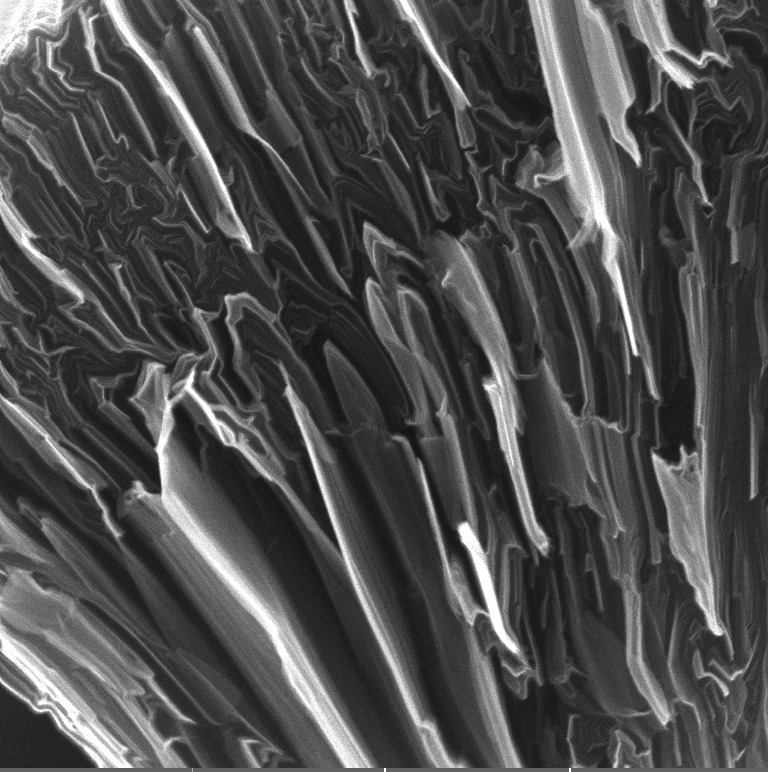
Mesophase-pitch-based carbon fibers (MPCFs) were prepared using industrial equipment with a constant extrusion rate of pitch while controlling the spinning temperature. The influence of spinning temperature on their microstructures, mechanical properties and thermal conductivities was investigated. SEM images of the fractured surface of MPCFs show that the graphite layers have a radiating structure at all spinning temperatures, but change from the fine-and-folded to the large-and-flat morphology when increasing the spinning temperature from 309 to 320 oC. At the same time the thermal conductivity and tensile strength of the MPCFs respectively increase from 704 W·m−1·K−1 and 2.16 GPa at 309 oC to 1 078 W·m−1·K−1 and 3.23 GPa at 320 oC. The lower viscosity and the weaker die-swell effect of mesophase pitch at the outlets of the spinnerets at the higher spinning temperature contribute to the improved orientation of mesophase pitch molecules in the pitch fibers, which improves the crystallite size and orientation of the MPCFs.

Improving the mechanical properties and thermal conductivity of mesophase-pitch-based carbon fibers by controlling the temperature in industrial spinning equipment
Graphical Abstract
Original ResearchVol. 39, Issue 2 • pp. 321-333DOI: 10.1016/S1872-5805_NJan 15, 2024

N-doped hollow carbon nanospheres embedded in N-doped graphene loaded with palladium nanoparticles as an efficient electrocatalyst for formic acid oxidation

Authors: FANG Yue, YANG Fu-kai, QU Wei-li, DENG Chao, WANG Zhen-bo

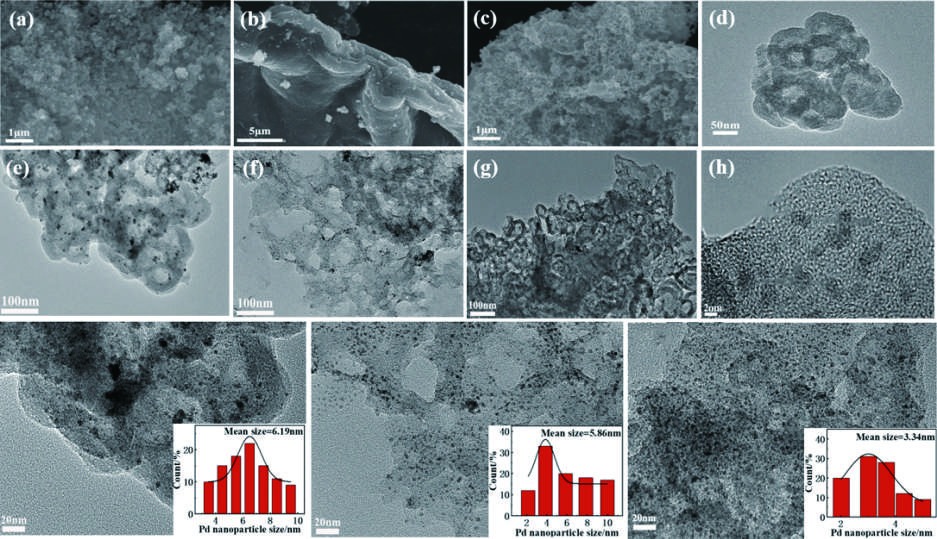
Efficient electrocatalysts with a low cost, high activity and good durability play a crucial role in the use of direct formic acid fuel cells. Pd nanoparticles supported on N-doped hollow carbon nanospheres (NHCNs) embedded in an assembly of N-doped graphene (NG) with a three-dimensional (3D) porous structure by a simple and economical method were investigated as direct formic acid fuel cell catalysts. Because of the unique porous configuration of interconnected layers doped with nitrogen atoms, the Pd/NHCN@NG catalyst with Pd nanoparticles has a large catalytic active surface area, superior electrocatalytic activity, a high steady-state current density, and a strong resistance to CO poisoning, far surpassing those of conventional Pd/C, Pd/NG, and Pd/NHCN catalysts for formic acid electrooxidation. When the HCN/GO mass ratio was 1∶1, the Pd/NHCN@NG catalyst had an outstanding performance in the catalytic oxidation of formic acid, with an activity 4.21 times that of Pd/C. This work indicates a way to produce superior carbon-based support materials for electrocatalysts, which will be beneficial for the development of fuel cells.

N-doped hollow carbon nanospheres embedded in N-doped graphene loaded with palladium nanoparticles as an efficient electrocatalyst for formic acid oxidation
Graphical Abstract
Original ResearchVol. 39, Issue 2 • pp. 297-307DOI: 10.1016/S1872-5805_NJan 15, 2024

N, S co-doped coal-based hard carbon prepared by two-step carbonization and a molten salt template method for sodium storage

Authors: NIU Hui-zhu, WANG Hai-hua, SUN Li-yu, YANG Chen-rong, WANG Yu, CAO Rui, YANG Cun-guo, WANG Jie, SHU Ke-wei

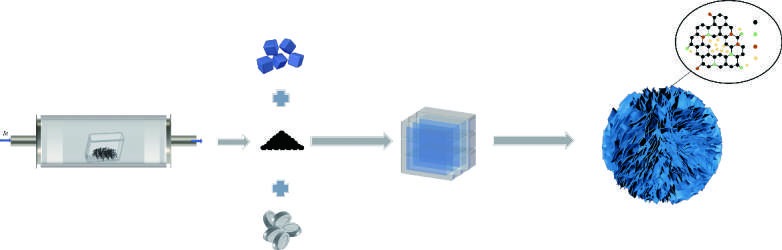
Hard carbon, known for its abundant resources, stable structure and high safety, has emerged as the most popular anode material for sodium-ion batteries (SIBs). Among various sources, coal-derived hard carbon has attracted extensive attention. In this work, N and S co-doped coal-based carbon material (NSPC1200) was synthesized through a combination of two-step carbonization process and heteroatom doping using long-flame coal as a carbon source, thiourea as a nitrogen and sulfur source, and NaCl as a template. The two-step carbonization process played a crucial role in adjusting the structure of carbon microcrystals and expanding the interlayer spacing. The N and S co-doping regulated the electronic structure of carbon materials, endowing more active sites. Additionally, the introduction of NaCl as a template contributed to the construction of pore structure, which facilitates better contact between electrodes and electrolytes, enabling more efficient transport of Na+ and electrons. Under the synergistic effect, NSPC1200 exhibited exceptional sodium storage capacity, reaching 314.2 mAh g−1 at 20 mA g−1. Furthermore, NSPC1200 demonstrated commendable cycling stability, maintaining a capacity of 224.4 mAh g−1 even after 200 cycles. This work successfully achieves the strategic tuning of the microstructure of coal-based carbon materials, ultimately obtaining hard carbon anode with excellent electrochemical performance.

N, S co-doped coal-based hard carbon prepared by two-step carbonization and a molten salt template method for sodium storage
Graphical Abstract
Original ResearchVol. 39, Issue 2 • pp. 283-296DOI: 10.1016/S1872-5805_NJan 15, 2024

The production of electrodes for microsupercapacitors based on MoS2-modified reduced graphene oxide aerogels by 3D printing

Authors: WANG Meng-ya, LI Shi-you, GAO Can-kun, FAN Xiao-qi, QUAN Yin, LI Xiao-hua, LI Chun-lei, ZHANG Ning-shuang

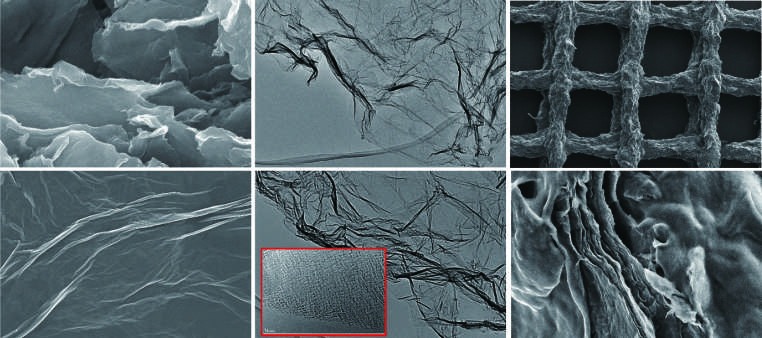
Micro-supercapacitors (MSCs) are of interest because of their high power density and excellent cycling performance, offering a broad array of potential applications. However, preparing electrodes for the MSCs with an extremely high areal capacitance and energy density remains a challenge. We constructed MSC electrodes with an ultra-high area capacitance and a high energy density, using reduced graphene oxide aerogel (GA) and MoS2 as the active materials, combined with 3D printing and surface modification. Using 3D printing, we obtained electrodes with a stable macrostructure and a GA-crosslinked micropore structure. We also used a solution method to load the surface of the printed electrode with molybdenum disulfide nanosheets, further improving the electrochemical performance. The surface capacitance of the electrode reached 3.99 F cm−2, the power density was 194 μW cm−2, and the energy density was 1 997 mWh cm−2, confirming its excellent electrochemical performance and cycling stability. This work provides a simple and efficient method for preparing MSC electrodes with a high areal capacitance and energy density, making them ideal for portable electronic devices.

The production of electrodes for microsupercapacitors based on MoS2-modified reduced graphene oxide aerogels by 3D printing
Graphical Abstract
Original ResearchVol. 39, Issue 2 • pp. 271-282DOI: 10.1016/S1872-5805_NJan 15, 2024

Polyimide-assisted fabrication of highly oriented graphene-based all-carbon foams for increasing the thermal conductivity of polymer composites

Authors: XIONG Ke, SUN Zhi-peng, HU Ji-chen, MA Cheng, WANG Ji-tong, GE Xiang, QIAO Wen-ming, LING Li-cheng

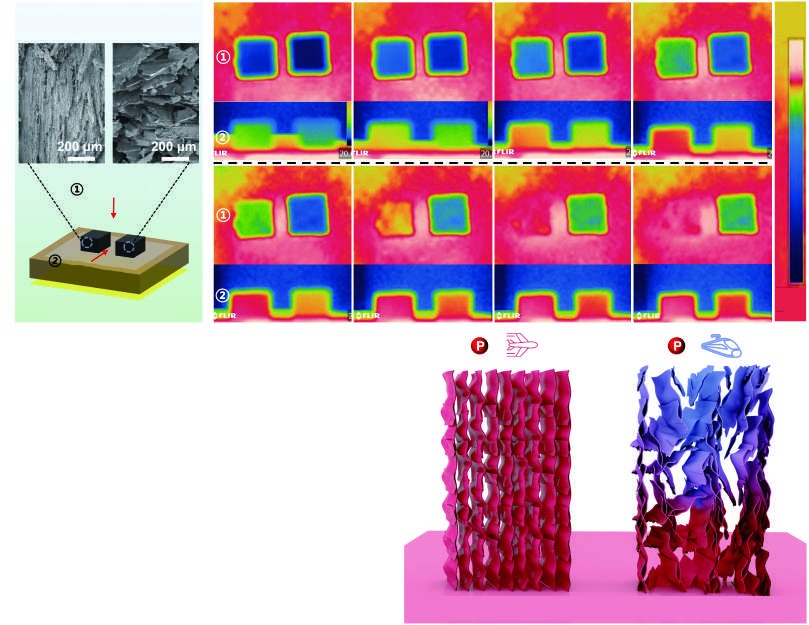
Graphene and its derivatives are often preferentially oriented horizontally during processing because of their two-dimensional (2D) layer structure. As a result, thermal interface materials (TIMs) composed of a polymer matrix and graphene-derived fillers often have a high in-plane (IP) thermal conductivity (K), however, the low through-plane (TP) K makes them unsuitable for practical use. We report the development of high-quality polyimide/graphite nanosheets (PG) perpendicular to the plane using a directional freezing technique that increase the TP K of polymer-based composites. Graphene-derived nanosheets (GNs) were obtained by the crushing of scraps of highly thermally conductive graphene films. A water-soluble polyamic acid salt solution was used to disperse the hydrophobic GNs filler to achieve directional freezing. The polyimide, which facilitated the directional alignment of the GNs, was then graphitized. The introduction of the GNs increases the order and density of the PG, thus improving the strength and heat transfer performance of its polydimethylsiloxane (PDMS) composite. The obtained PG/PDMS composite (21.1% PG, mass fraction) has an impressive TP K of 14.56 W·m−1·K−1, 81 times that of pure PDMS. This simple polyimide-assisted 2D hydrophobic fillers alignment method provides ideas for the widespread fabrication of anisotropic TIMs and enables the reuse of scraps of graphene films.

Polyimide-assisted fabrication of highly oriented graphene-based all-carbon foams for increasing the thermal conductivity of polymer composites
Graphical Abstract
Original ResearchVol. 39, Issue 2 • pp. 254-270DOI: 10.1016/S1872-5805_NJan 15, 2024

Carbon electrodes for the electrocatalytic synthesis of hydrogen peroxide: A review

Authors: HUANG Xian-huai, YANG Xin-ke, GUI Ling, LIU Shao-gen, WANG Kun, RONG Hong-wei, WEI Wei

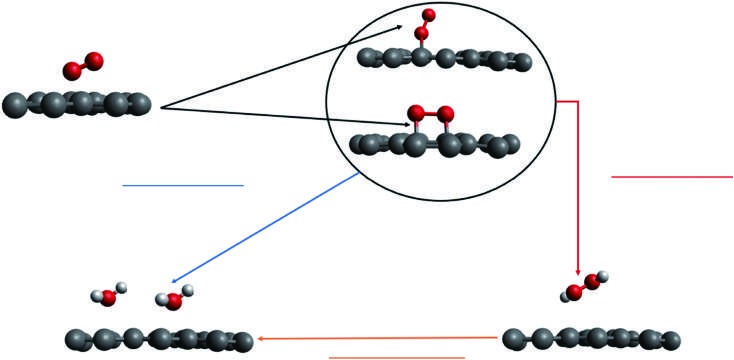
Electrocatalytic oxygen reduction by a 2e− pathway enables the instantaneous synthesis of H2O2, a process that is far superior to the conventional anthraquinone process. In recent years, the electrocatalytic synthesis of H2O2 using carbon electrodes has attracted more and more attention because of its excellent catalytic performance and superior stability. The relationship between material modification, wettability and the rate of H2O2 synthesis and service life is considered together with the three-phase interface. The structure of the carbon electrodes and the principles of electrocatalytic H2O2 synthesis are first introduced, and four major catalysts are reviewed, namely, monolithic carbon materials, metal-free catalysts, noble metal catalysts and non-precious metal catalysts. The effects of the metal anode and the electrolyte on the three-phase interface are described. The relationship between carbon electrode wettability and the three-phase interface is described, pointing out that modification focusing on improving the selectivity of the 2e− pathway can also impact electrode wettability. In addition, the relationship between the design of the components in the electrochemical system and their effect on the efficiency of H2O2 synthesis is discussed for carbon electrodes. Finally, we present our analysis of the current problems in the electrocatalytic synthesis of H2O2 for carbon electrodes and future research directions.

Carbon electrodes for the electrocatalytic synthesis of hydrogen peroxide: A review
Graphical Abstract
Original ResearchVol. 39, Issue 2 • pp. 240-253DOI: 10.1016/S1872-5805_NJan 15, 2024

Research progress on three-dimensional monolithic carbon-based photothermal conversion materials for solar-driven interfacial water evaporation

Authors: Yue Han, Peng Zhang, Xiaoming Zhao

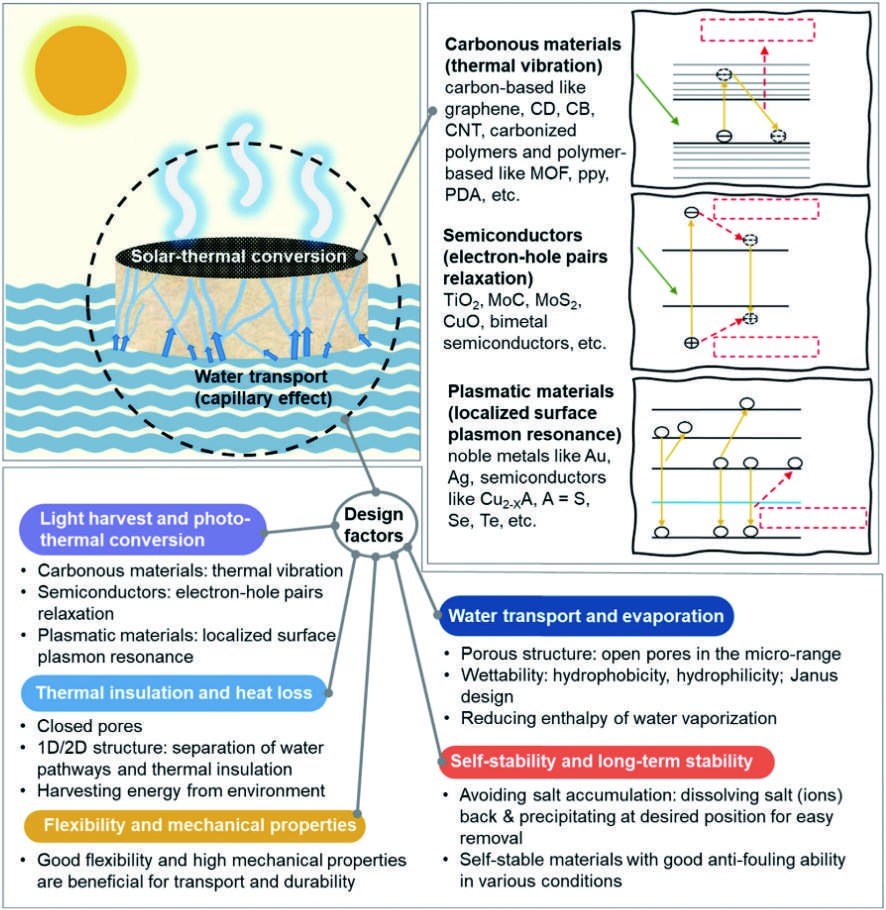
Photothermal-driven seawater desalination is considered one of the most promising methods to solve the global shortage of freshwater resources. Among them, solar-driven interfacial water evaporation (SVG) is the core process of desalination efficiency and is key to ensuring that photothermal desalination technology has high energy conversion efficiency, simple equipment, and cost-effectiveness. Among all efficient SVG candidate materials, three-dimensional monolithic carbon-based photothermal conversion materials have advantages such as low cost, high light absorption efficiency, good structural tunability, high water evaporation rate, and no secondary pollution. This review first briefly describes the basic principles of SVG, and based on this, introduces the working mechanisms and design principles of efficient SVG materials. Finally, it systematically summarizes and outlines the research progress of four different types of three-dimensional monolithic carbon-based photothermal conversion materials. This review provides a theoretical basis and research guidance for the future construction of three-dimensional monolithic carbon-based photothermal conversion materials and their application in the SVG field.

Research progress on three-dimensional monolithic carbon-based photothermal conversion materials for solar-driven interfacial water evaporation
Graphical Abstract
Original ResearchVol. 39, Issue 2 • pp. 173-200DOI: 10.1016/S1872-5805_NJan 15, 2024

A review of graphdiyne: A new material for synthesizing effective adsorbents for aqueous contaminants

Authors: Gaurav Sharma, Yaksha Verma, Amit Kumar, Pooja Dhiman, WANG Tong-tong, Florian J. Stadler

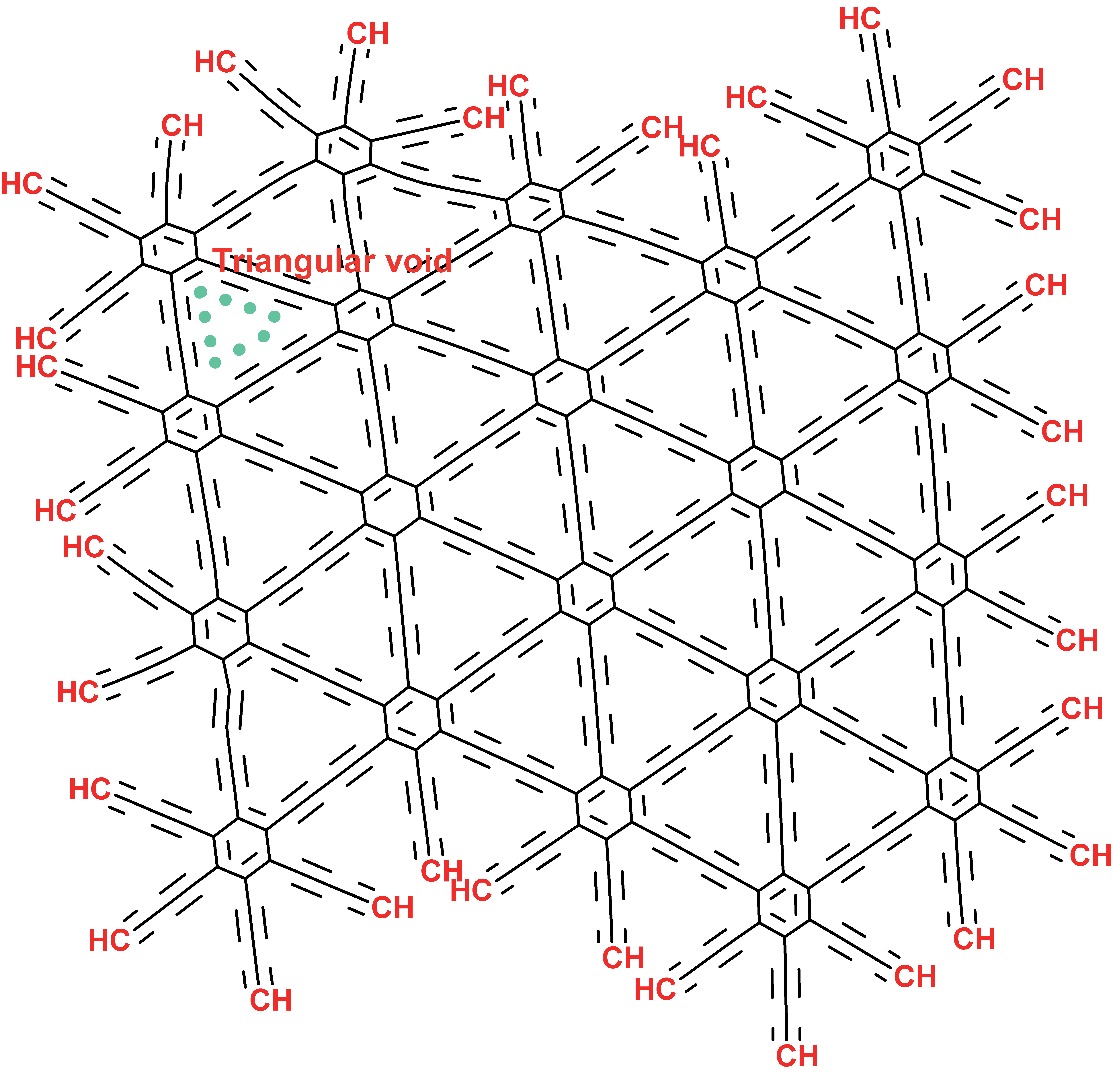
Graphdiyne (GDY), a new two-dimensional (2D) carbon molecule, is expected to have applications in the removal of contaminants from aqueous media. It has superior conjugation, unusual and varied electronic properties, and exceptional chemical and thermal stability because of its framework of sp and sp2 hybridized carbon bonds that are combined to produce benzene rings and diacetylenic bonds in a two-dimensional symmetrical network. Its molecular chemistry is the result of it having carbon-carbon triple bonds, with a regular distribution of triangular pores in its structure, which provide reaction sites and various reaction pathways. GDY is an adsorbent with an excellent efficiency for the removal of oil, organic pollutants, dyes, and metals from contaminated water, but there is limited evidence of it being used as an adsorbent in the literature. This review discusses its synthesis and its use as an adsorbent together with its prospects for pollutant removal.

A review of graphdiyne: A new material for synthesizing effective adsorbents for aqueous contaminants
Graphical Abstract