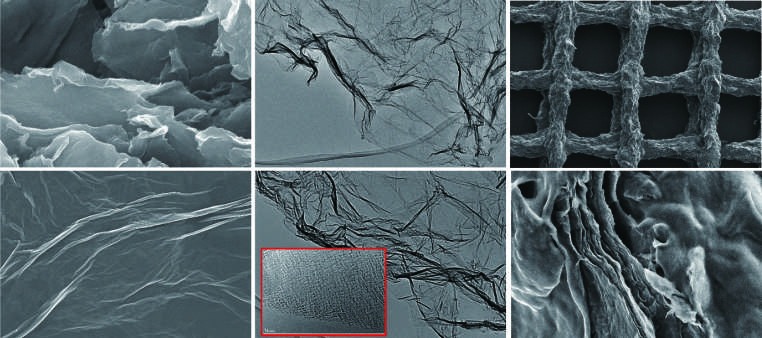
Key Takeaways & Executive Findings
- •• 3D printing enables fabrication of microsupercapacitor electrodes with stable macrostructure and GA-crosslinked micropore structure, achieving ultra-high areal capacitance of 3.99 F cm−2. • Surface modification with MoS2 nanosheets significantly enhances electrochemical performance, yielding high energy density of 1,997 mWh cm−2 and power density of 194 μW cm−2. • The interleaved grid structure and high mass loading of active material promote rapid ion and electron transport, addressing limitations of traditional 2D thin-film electrodes. • This simple and efficient method offers a promising route for producing high-performance MSC electrodes suitable for portable electronic devices.
Abstract
Micro-supercapacitors (MSCs) are of interest because of their high power density and excellent cycling performance, offering a broad array of potential applications. However, preparing electrodes for the MSCs with an extremely high areal capacitance and energy density remains a challenge. We constructed MSC electrodes with an ultra-high area capacitance and a high energy density, using reduced graphene oxide aerogel (GA) and MoS2 as the active materials, combined with 3D printing and surface modification. Using 3D printing, we obtained electrodes with a stable macrostructure and a GA-crosslinked micropore structure. We also used a solution method to load the surface of the printed electrode with molybdenum disulfide nanosheets, further improving the electrochemical performance. The surface capacitance of the electrode reached 3.99 F cm−2, the power density was 194 μW cm−2, and the energy density was 1 997 mWh cm−2, confirming its excellent electrochemical performance and cycling stability. This work provides a simple and efficient method for preparing MSC electrodes with a high areal capacitance and energy density, making them ideal for portable electronic devices.
1. Introduction
Supercapacitors, a circuit component with fast charge/discharge property, hold great potential for powering future portable energy-storage devices due to their outstanding cycling performance, excellent operational safety, and high power density, compared with lithium-ion batteries, sodium-ion batteries, and the conventional capacitors[1]. Compared with traditional energy storage devices with large volume, low mass loading and poor toughness, micro-supercapacitors (MSCs) are the ideal choice for portable energy storage devices[2]. Nevertheless, the decreased volume poses a challenge as the areal capacitance, energy density, and power density fall short of the requirements. As for the current preparation methods of common MSCs electrodes, the traditional coating technology with low efficiency has strict requirements regarding the flatness of the substrate. In addition, the low load mass of traditional 2D thin film electrode limits its core competitiveness in large-scale applications[3]. These are the prominent problems hindering the preparation of MSCs electrodes.
Customizing the shape of electrodes and enhancing utilization of the loaded mass and volume are clearly effective strategies for enhancing the performance of MSCs[4]. Among them, the interleaved grid structure is an ideal structure. For the MSC electrodes high mass loading of active material per unit area and short distance between electrode lines can greatly promote the rapid transport of ions and electrons[5].
The 3D reduced graphene oxide aerogel (GA) is constructed from graphene sheets in 3D space. Graphene retains its properties while possessing the traits of aerogel, including ultra-low density and high specific surface area. The wide range of applications in energy storage, adsorption, catalysis and other areas make GA highly promising. MoS2 exhibits pseudocapacitive behavior and possesses a characteristic 2D-layered structure similar to graphene. Additionally, it features a sandwich structure composed of S-Mo-S atoms, which are bonded by weak van der Waals forces. Therefore, it has good mechanical properties, excellent optical, and electrical properties as an electrode material for energy storage. It is a normal method to combine electrical double-layer capacitor (EDLC) material with pseudocapacitance material to construct MSCs with high energy.
3D printing technology, in contrast to conventional approaches, enables the direct fabrication of 3D structural devices containing large pores using a layer-by-layer technique[6–7]. Furthermore, it can precisely regulate both the electrode thickness and the active material mass, thereby enhancing the overall surface capacity of the electrode[8]. Therefore, we choose direct ink writing 3D printing technology to construct an interleaved grid structure for improving the mass loading of MSC electrodes significantly, resulting in an enhanced energy and power density. The surface of 3D printed electrode (3DPE) was modified...
Loading authentic research manuscript (Pages 1–5)...
WANG Meng-ya, LI Shi-you, GAO Can-kun, FAN Xiao-qi, QUAN Yin, LI Xiao-hua, LI Chun-lei, ZHANG Ning-shuang (2024). The production of electrodes for microsupercapacitors based on MoS2-modified reduced graphene oxide aerogels by 3D printing. New Carbon Materials. https://doi.org/10.1016/S1872-5805_N
Research & Educational Purpose Only:The translations, structured abstracts, analytical annotations, and data reports provided by SinoTechIntel are intended exclusively for academic research, internal corporate R&D, and educational benchmarking. They do not constitute formal engineering, chemical safety, legal, or professional advice.
Copyright & Intellectual Property Notice: Original copyright of the underlying source articles and experimental data remains with the respective authors, institutions, and original publishing journals. SinoTechIntel claims intellectual property only over its proprietary translations, analytical syntheses, and AEO structured enhancements in accordance with international fair use and academic citation principles.
Frequently Asked Questions
What is the main achievement of this study?
The study successfully fabricated micro-supercapacitor electrodes with ultra-high areal capacitance (3.99 F cm−2) and high energy density (1,997 mWh cm−2) using 3D printing and surface modification with MoS2.
How were the electrodes fabricated?
The electrodes were fabricated using direct ink writing 3D printing to create an interleaved grid structure from reduced graphene oxide aerogel, followed by surface loading of MoS2 nanosheets via a solution method.
What are the key advantages of using 3D printing for MSC electrodes?
3D printing allows precise control over electrode thickness and active material mass, enabling high mass loading and improved ion/electron transport, which enhances areal capacitance and energy density.
What is the significance of MoS2 modification?
MoS2 modification introduces pseudocapacitive behavior, increasing the electrode's energy storage capacity and overall electrochemical performance.
What are the potential applications of these electrodes?
These electrodes are ideal for portable electronic devices due to their high areal capacitance, energy density, and cycling stability.
Related Technical Papers & Translations

Design and optimization of a high-efficiency distillation process for cellulosic fuel ethanol integrated with thermal coupling and molecular sieve adsorption
To address the challenges of high energy consumption and prominent costs in the traditional three-columns distillation process for cellulosic fuel ethanol, a distillation—molecular sieve coupling separation process is proposed. This process integrates a three-column (crude distillation column, first distillation column, second distillation column) system with a 3A molecular sieve adsorption deep dehydration unit. A thermal coupling network is constructed via differential pressure design (steam from medium/high-pressure columns as mutual heat sources, reboiler liquid waste heat for feed preheating), and molecular sieve adsorption conditions are optimized. The study first performs a thermodynamic consistency test on the ethanol—water system, determines optimal non-random two-liquid (NRTL) model binary interaction parameters via experimental data regression for Aspen Plus simulation. Aiming at minimum total annual cost (TAC), Aspen Plus is used to optimize process parameters (theoretical tray number, feed location, reflux ratio, side-draw position, etc.). Economic analysis shows this process reduces CO2 emission costs by 27.56%, TAC by 15.58% (to 5.123 × 10⁶ USD·a-1), and increases ethanol purity to >99.6%, providing an effective solution for green, efficient separation.

A cohesion loss model for determining residual strength of deep bedded sandstone
Rock residual strength, as an important input parameter, plays an indispensable role in proposing the reasonable and scientific scheme about stope design, underground tunnel excavation and stability evaluation of deep chambers. Therefore, previous residual strength models of rocks established were reviewed. And corresponding related problems were stated. Subsequently, starting from the effects of bedding and whole life-cycle evolution process, series of triaxial mechanical tests of deep bedded s

Federated model with contrastive learning and adaptive control variates for human activity recognition
Recent attention to privacy issues demands a communication-safe method for training human activity recognition (HAR) models on client activity data. Federated learning (FL) has become a compelling technique to facilitate model training between the server and clients while preserving data privacy. However, classical FL methods often assume independent and identically distributed (IID) data among clients. This assumption does not hold true in practical scenarios. Human activity in real-world scena