Key Takeaways & Executive Findings
- •• Fe2O3 nanorod arrays on carbon cloth provide abundant active sites for efficient polysulfide adsorption and catalytic conversion, mitigating the shuttle effect. • The Fe2O3/CC cathode achieves a high initial discharge capacity of 1250 mAh g−1 at 0.1 C and retains 789 mAh g−1 after 100 cycles. • At 2 C, the cathode maintains 576 mAh g−1 after 1000 cycles with 70% capacity retention, demonstrating excellent long-term stability. • The mesoporous structure of Fe2O3 enhances electrolyte penetration and lithium-ion diffusion, improving electrochemical kinetics and sulfur utilization.
Abstract
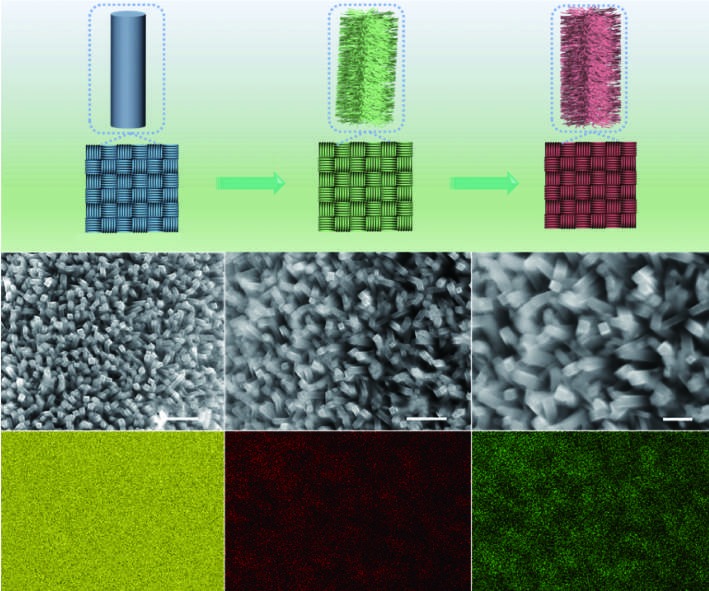
Lithium-sulfur batteries are among the most promising electrochemical energy storage devices due to their high energy density and low cost. However, the shuttle effect of polysulfides and the low conductivity of sulfur are major challenges for their commercialization. In this work, using Fe(NO3)3·9H2O as the iron source and NH4F as a surfactant, a flexible Fe2O3/CC composite was prepared by a simple hydrothermal and calcination process, in which Fe2O3 nanorods were decorated on carbon cloth (CC). The presence of mesopores in Fe2O3 facilitates electrolyte penetration and lithium-ion transport and diffusion during charge/discharge, while the abundant active sites exposed by the dense array enable efficient adsorption and rapid conversion of polysulfides, reducing the shuttle effect. Electrochemical analysis shows that the Fe2O3/CC cathode delivers a high discharge specific capacity of 1250 mAh g−1 at 0.1 C (1 C = 1672 mA g−1), and retains 789 mAh g−1 after 100 cycles. At 2 C, it still achieves a discharge capacity of 576 mAh g−1 after 1000 cycles with a capacity retention of 70%, significantly outperforming the control sample. Therefore, Fe2O3/CC effectively suppresses polysulfide shuttling and improves the rate performance and cycling stability of lithium-sulfur batteries.
1. Introduction
With the rise of the energy internet ecosystem and the power Internet of Things, the layout of the new energy industry chain has further accelerated. Under the background of 'dual carbon', the key position of energy storage technology in China's energy conversion and storage system construction has become increasingly prominent. In this situation, commercial lithium-ion batteries will not be able to meet all market demands [1]. Lithium-sulfur batteries, with their high theoretical energy density (2600 Wh kg−1), low cost, and eco-friendliness, have rapidly developed into a promising emerging secondary battery [2–3]. However, the low conductivity of elemental sulfur (5×10⁻³⁰ S cm−1) and its discharge products (Li2S and Li2S2), as well as the 'shuttle effect' of soluble intermediate polysulfides (LiPSs), lead to low Coulombic efficiency and rapid capacity decay, greatly limiting the industrial application of lithium-sulfur battery cathodes [4–6].
To address these issues, researchers have proposed using carbon materials (carbon nanotubes, graphene, carbon cloth, etc.) as sulfur hosts, employing physical confinement to suppress the shuttle effect. However, due to the non-polar nature of C–C bonds, carbon materials are difficult to form strong chemical bonds with sulfur atoms, and cannot effectively anchor polar polysulfides, resulting in capacity fading during cycling [7]. To develop more effective sulfur immobilization strategies, researchers have focused on transition metal oxides. Among them, Fe2O3 has attracted much attention due to its low cost, environmental friendliness, high catalytic activity, and ideal theoretical capacity [8–9]. In addition, Fe ions have empty d orbitals that can accept lone pairs of electrons, acting as Lewis acids to form coordination bonds with sulfur atoms, chemically adsorbing LiPSs, reducing their accumulation and diffusion in the electrolyte, and lowering the shuttle effect [10]. For example, Li et al. designed defect-engineered SA-Fe2O3(Ov) porous microspheres rich in oxygen vacancies, which increased active sites and enhanced electron transfer rates, resulting in excellent electrochemical performance as lithium-sulfur battery cathodes [11]. Xu et al. reported spherical α-Fe2O3 as a cathode material, effectively promoting LiPSs conversion, delivering a high specific capacity of 1417 mAh g−1 at 0.1 C and maintaining 683 mAh g−1 after 300 cycles at 1 C [12]. However, due to the low electron transfer rate of α-Fe2O3, it exhibits low sulfur utilization and poor rate performance. Therefore, it is necessary to optimize the microstructure and electronic structure to construct novel sulfur host materials with more chemical anchoring sites and rapid electron transfer to improve sulfur utilization and conversion.
In summary, this work designs nanorod-like Fe2O3/CC as an efficient sulfur-loading composite material. The carbon-based material ensures good electrical conductivity to improve electrochemical kinetics; the interconnected Fe2O3 nanorod arrays enable efficient adsorption and rapid conversion of polysulfides, thereby reducing the shuttle effect. Furthermore, the electrochemical performance and ion diffusion kinetics of Fe2O3/CC electrode materials are studied, and the electrochemical performance of lithium-sulfur batteries with Fe2O3/CC as the cathode is evaluated, providing ideas for constructing high-performance lithium-sulfur battery cathode materials.
Loading authentic research manuscript (Pages 1–5)...
Zhen Tian, Leilei Xue, Hongyuan Ding (2024). Flexible multifunctional Fe2O3/CC cathode host enables efficient adsorption and catalysis of polysulfides for lithium-sulfur batteries. New Carbon Materials. https://doi.org/10.1016/S1872-5805_N
Research & Educational Purpose Only:The translations, structured abstracts, analytical annotations, and data reports provided by SinoTechIntel are intended exclusively for academic research, internal corporate R&D, and educational benchmarking. They do not constitute formal engineering, chemical safety, legal, or professional advice.
Copyright & Intellectual Property Notice: Original copyright of the underlying source articles and experimental data remains with the respective authors, institutions, and original publishing journals. SinoTechIntel claims intellectual property only over its proprietary translations, analytical syntheses, and AEO structured enhancements in accordance with international fair use and academic citation principles.
Frequently Asked Questions
What is the main challenge in lithium-sulfur batteries addressed in this paper?
The main challenges are the shuttle effect of polysulfides and the low conductivity of sulfur, which lead to poor cycling stability and rate performance.
How does the Fe2O3/CC composite improve battery performance?
The Fe2O3 nanorods on carbon cloth provide abundant active sites for chemical adsorption and catalytic conversion of polysulfides, while the carbon cloth ensures high electrical conductivity. The mesoporous structure facilitates electrolyte penetration and lithium-ion diffusion, enhancing sulfur utilization and reaction kinetics.
What are the key electrochemical results of the Fe2O3/CC cathode?
The Fe2O3/CC cathode delivers a high discharge capacity of 1250 mAh g−1 at 0.1 C and retains 789 mAh g−1 after 100 cycles. At 2 C, it maintains 576 mAh g−1 after 1000 cycles with 70% capacity retention.
What is the significance of the mesoporous structure in Fe2O3?
The mesopores in Fe2O3 allow better electrolyte penetration and provide channels for lithium-ion transport, which improves the electrochemical kinetics and utilization of the active material.
How was the Fe2O3/CC composite synthesized?
The composite was synthesized via a hydrothermal method using Fe(NO3)3·9H2O, NH4F, and urea, followed by calcination at 350°C in air to convert FeOOH to Fe2O3 on carbon cloth.
Related Technical Papers & Translations

Design and optimization of a high-efficiency distillation process for cellulosic fuel ethanol integrated with thermal coupling and molecular sieve adsorption
To address the challenges of high energy consumption and prominent costs in the traditional three-columns distillation process for cellulosic fuel ethanol, a distillation—molecular sieve coupling separation process is proposed. This process integrates a three-column (crude distillation column, first distillation column, second distillation column) system with a 3A molecular sieve adsorption deep dehydration unit. A thermal coupling network is constructed via differential pressure design (steam from medium/high-pressure columns as mutual heat sources, reboiler liquid waste heat for feed preheating), and molecular sieve adsorption conditions are optimized. The study first performs a thermodynamic consistency test on the ethanol—water system, determines optimal non-random two-liquid (NRTL) model binary interaction parameters via experimental data regression for Aspen Plus simulation. Aiming at minimum total annual cost (TAC), Aspen Plus is used to optimize process parameters (theoretical tray number, feed location, reflux ratio, side-draw position, etc.). Economic analysis shows this process reduces CO2 emission costs by 27.56%, TAC by 15.58% (to 5.123 × 10⁶ USD·a-1), and increases ethanol purity to >99.6%, providing an effective solution for green, efficient separation.

A cohesion loss model for determining residual strength of deep bedded sandstone
Rock residual strength, as an important input parameter, plays an indispensable role in proposing the reasonable and scientific scheme about stope design, underground tunnel excavation and stability evaluation of deep chambers. Therefore, previous residual strength models of rocks established were reviewed. And corresponding related problems were stated. Subsequently, starting from the effects of bedding and whole life-cycle evolution process, series of triaxial mechanical tests of deep bedded s

Federated model with contrastive learning and adaptive control variates for human activity recognition
Recent attention to privacy issues demands a communication-safe method for training human activity recognition (HAR) models on client activity data. Federated learning (FL) has become a compelling technique to facilitate model training between the server and clients while preserving data privacy. However, classical FL methods often assume independent and identically distributed (IID) data among clients. This assumption does not hold true in practical scenarios. Human activity in real-world scena