SinoTechIntel Academic Portal
🏛️ Indexed Academic JournalImpact Factor: 3.5 (Q2 - USTB)Original: 矿物冶金与材料学报 (英文版)

INTERNATIONAL JOURNAL OF Minerals, Metallurgy and Materials

4.8 (Q1 - Springer)

Total Research Papers: 111
Access: 100% Free Open Access
Browse by Publication Year & VolumeReset All Filters ✕

Published Research PapersFiltered: Year 2025 • Vol. 32 • Issue 8

Showing 7 of 111 peer-reviewed papers with full Graphical Abstracts.

Original ResearchVol. 32, Issue 8 • pp. 691-703DOI: 10.1007/s12613-025-3303-7Aug 20, 2025

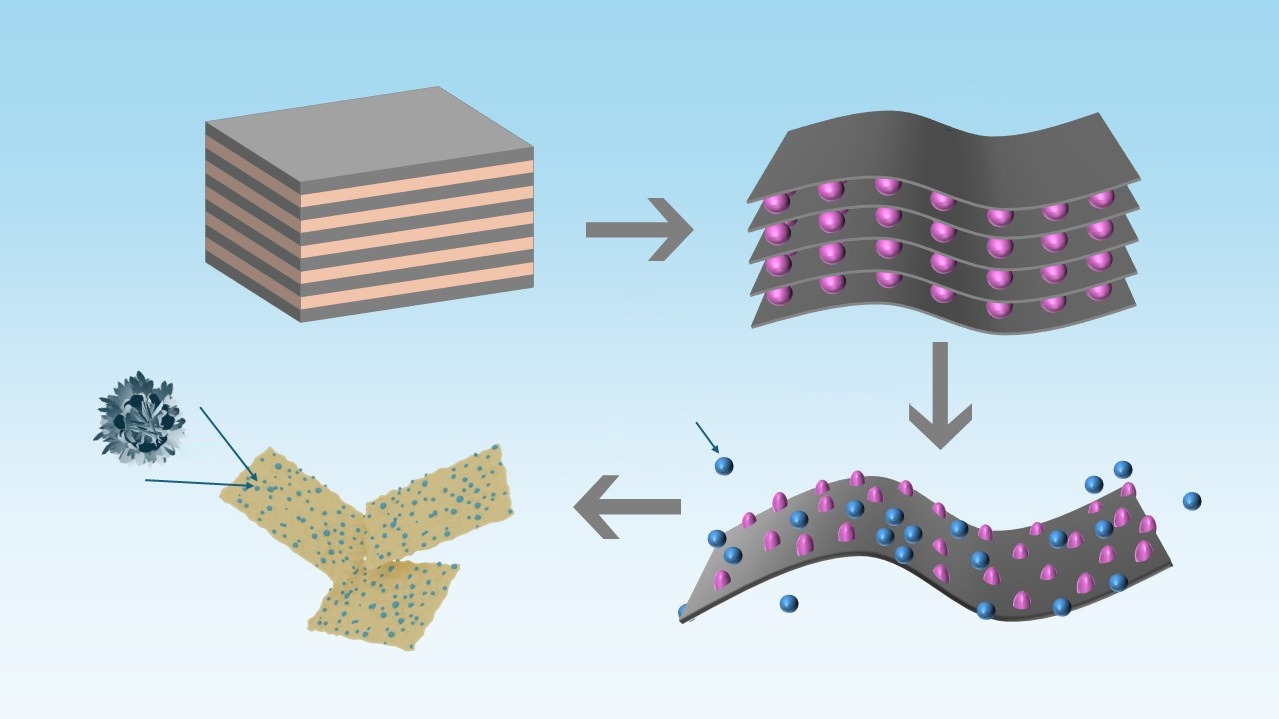
Surface reconstruction via rapid solution quenching to enhance structural stability of lithium-rich layered cathodes

Authors: Hailiang Chu, Jiaxiao Meng, Longde Duan, Shujun Qiu, Errui Wang, Fen Xu, and Lixian Sun

Lithium-rich layered oxides are prospective materials for future-generation cathodes attributable to their high specific capacity. However, significant surface instability, particularly under high-voltage operating conditions, leads to substantial voltage decay and dramatic capacity degradation during long-term cycling, severely limiting their widespread application. In this study, we developed a universal brine quenching strategy to construct a stabilized composite surface structure for lithium
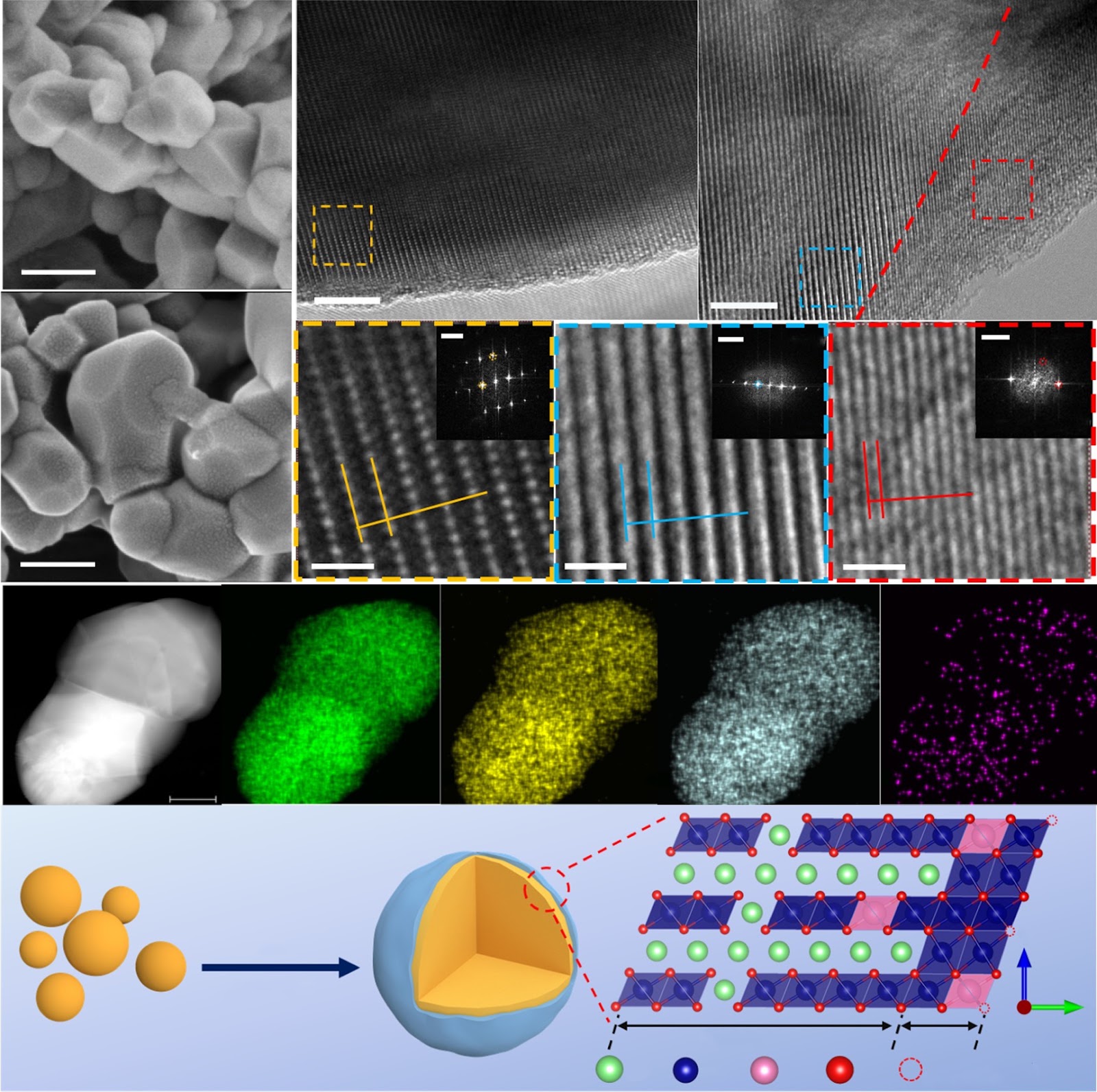
Surface reconstruction via rapid solution quenching to enhance structural stability of lithium-rich layered cathodes
Graphical Abstract
Original ResearchVol. 32, Issue 8 • pp. 299-311DOI: 10.1007/s12613-025-3367-xAug 17, 2025

Extraction of Nb, Ta, Zr and Hf from tin slags originating from cassiterite beneficiation

Authors: D. Michell et al.

The extraction of refractory metals such as Nb, Ta, Zr, and Hf from secondary resources like tin slags typically requires aggressive fluoride-based reagents, leading to environmental and operational challenges. This study proposes a fluoride-free pyro-hydrometallurgical route involving thermal treatment with sulfuric acid followed by aqueous/oxidative leaching. Thermodynamic simulations are integrated to optimize the formation of soluble sulfate complexes and enhance metal recovery. The process

Extraction of Nb, Ta, Zr and Hf from tin slags originating from cassiterite beneficiation
Graphical Abstract
Original ResearchVol. 32, Issue 8 • pp. 879-891DOI: 10.1007/s12613-025-3253-0Aug 12, 2025

Electrochemical properties of sandwich-structured solid electrolyte for all-solid-state Li battery

Authors: Jiayao Lu, Ying Li, Xiaocong Zhu, Jinzhou Li, Kui Li, Shoujiang Guan, Yushi Ding, Wenlong Huang

To improve the solid–solid interface performance of all solid-state lithium batteries (ASSLBs), a novel sandwich-structured solid electrolyte (SSE, total thickness of 0.7 mm) was investigated. It comprises a central layer of perovskite-type Li0.37Sr0.44Zr0.25Ta0.75O3 (LSZT) electrolyte (thickness of 0.5 mm) sandwiched between two layers of composite solid polymer electrolyte (CSPE, each with a thickness of 0.1 mm). The thin CSPE interlayer not only effectively reduces interfacial resistance betw

Electrochemical properties of sandwich-structured solid electrolyte for all-solid-state Li battery
Graphical Abstract
Original ResearchVol. 32, Issue 8 • pp. 487-499DOI: 10.1007/s12613-025-3347-8Aug 9, 2025

NiS2–MXene hybrid composite: Facile synthesis and improved hydrogen storage properties of magnesium hydride

Authors: Ruolin Zhao, Jun Li, Sizhi Ding, Yi Fan, Haizhen Liu, Jin Guo, Zhiqiang Lan

We employed a one-step hydrothermal method to in situ grow spherical NiS2 nanoparticles on the surface of MXene, successfully constructing a NiS2–MXene hybrid composite. This study demonstrates that the integration of a NiS2–MXene hybrid composite into MgH2 substantially improves its hydrogen storage performance. Specifically, the composite reduces the initial dehydrogenation temperature of MgH2 by 118°C, lowering it from 310°C (pure MgH2) to 192°C. At 300°C, it can release 5.87wt% of hydrogen w

NiS2–MXene hybrid composite: Facile synthesis and improved hydrogen storage properties of magnesium hydride
Graphical Abstract
Original ResearchVol. 32, Issue 8 • pp. 895-907DOI: 10.1007/s12613-025-3357-6Aug 6, 2025

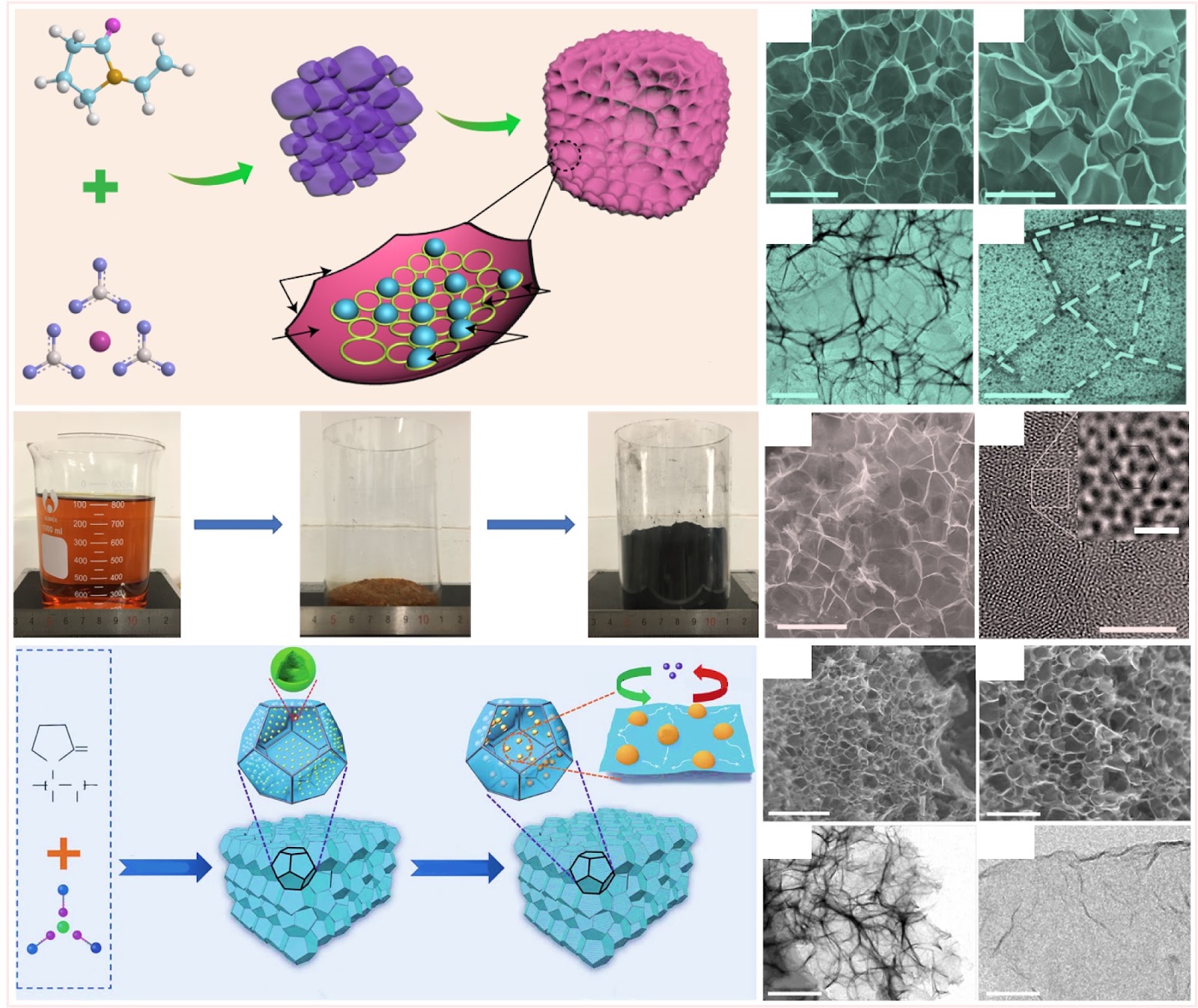
Chemical blowing strategy for three-dimensional graphene materials: Overcoming graphene restacking and integrating macro/microstructural construction

Authors: Kun Han, Jianfei Liu, Qigao Cao, Wan Rong, Zhiwei Liu, Ping Li

Carbon materials, characterized by diverse allotropes, have played critical roles in the advancement of human civilization and industrial manufacturing. As a prominent allotrope, two-dimensional (2D) graphene materials have attracted increasing attention since their discovery owing to their exceptional properties; however, they suffer from the fundamental challenges of restacking and agglomeration, which diminish their performance in practical applications. The design of three-dimensional (3D) f

Chemical blowing strategy for three-dimensional graphene materials: Overcoming graphene restacking and integrating macro/microstructural construction
Graphical Abstract
Original ResearchVol. 32, Issue 8 • pp. 503-515DOI: 10.1007/s12613-026-3448-zAug 3, 2025

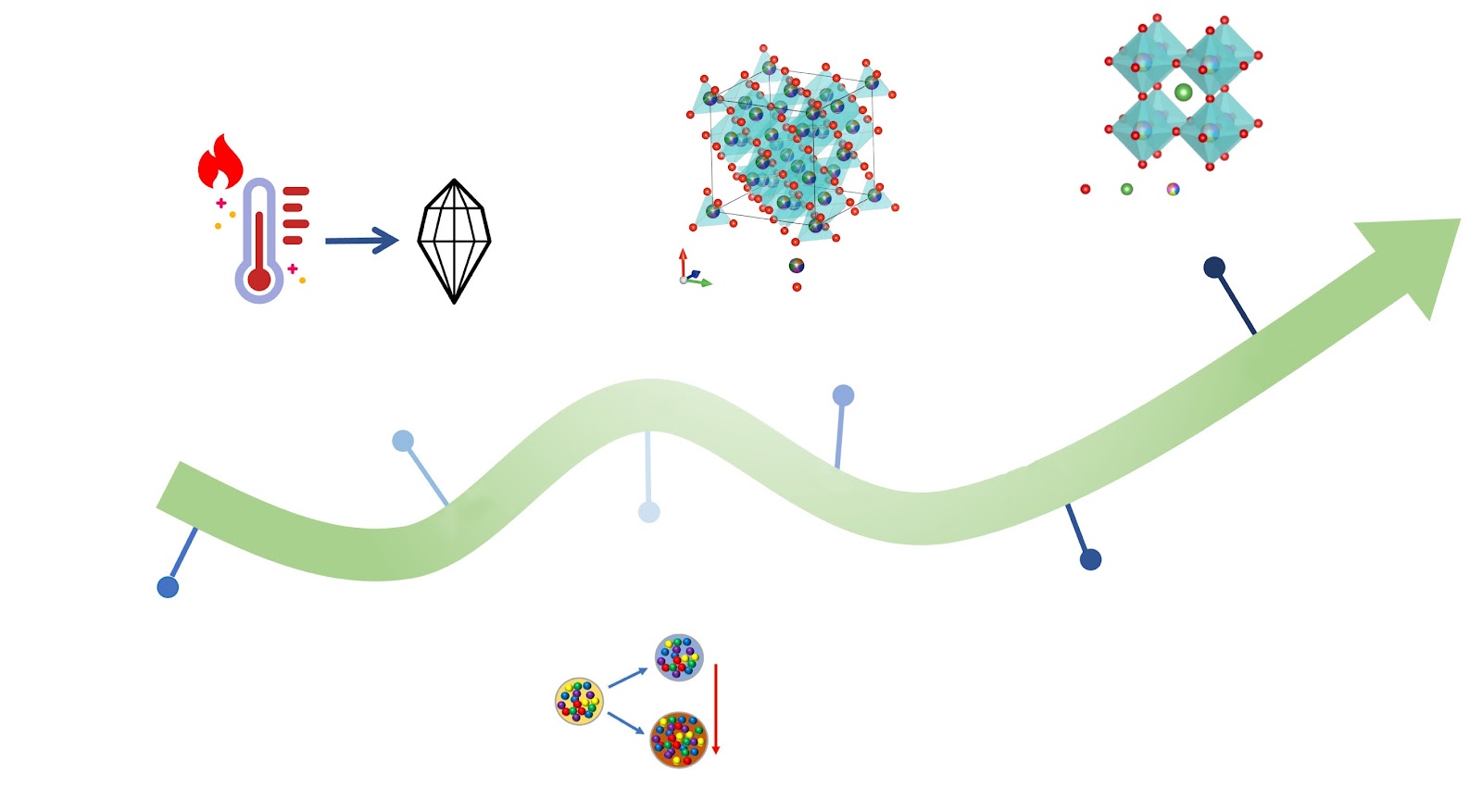
Fe-containing high-entropy oxides: An advanced material system for lithium-ion battery anodes

Authors: Ziyu Dong, Nuo Xu, Jiayi Ma, Pengfei Wang, Yuhang Zhang, Liyan Tian, Lina Zhao, Xuecheng Chen, Fanian Shi

The rapid development of the mobile communication and electric vehicle markets is driving a growing demand for next-generation lithium-ion battery (LIB) technology. Key electrochemical properties of LIBs, including energy density, rate performance, and cycling stability, are largely determined by the performance of the anode material. High-entropy oxides (HEOs), with unique multi-component systems and entropy-stabilized frameworks, exhibit tailorable physicochemical properties and outstanding st

Fe-containing high-entropy oxides: An advanced material system for lithium-ion battery anodes
Graphical Abstract
Original ResearchVol. 32, Issue 8 • pp. 675-687DOI: 10.1007/s12613-025-3134-6Aug 1, 2025

Synergistic enhancement of strength and ductility of Ti2AlC/TiAl through Mn solid solution and interface manipulation

Authors: Yuanzheng Wei, Yilu Li, Shili Shu, Hongyu Yang, Feng Qiu, Qichuan Jiang

Introducing Ti2AlC particles into TiAl alloys can effectively improve their strength, but this can also lead to stress concentration at the interface, resulting in the reduction of ductility. Therefore, Mn is adopted to synergistically improve the strength and ductility of the Ti2AlC/TiAl composite through solid solution and interface manipulation. The first-principles calculation shows the Ti–Mn bonds are formed at the Ti2AlC/TiAl interface after Mn doping, characterized primarily by metallic b

Synergistic enhancement of strength and ductility of Ti2AlC/TiAl through Mn solid solution and interface manipulation
Graphical Abstract
INTERNATIONAL JOURNAL OF Minerals, Metallurgy and Materials | SinoTechIntel Research Archive | SinoTechIntel