Key Takeaways & Executive Findings
- •• Introduces a fluoride-free process for extracting Nb, Ta, Zr, and Hf from tin slags using sulfuric acid thermal treatment and leaching. • Thermodynamic simulations predict optimal conditions for sulfate complex formation, enhancing metal recovery and reducing energy consumption. • The proposed pyro-hydrometallurgical route avoids hazardous hydrofluoric acid, mitigating environmental impacts. • The generated PLS is enriched with target metals, suitable for downstream purification via solvent extraction.
Abstract
The extraction of refractory metals such as Nb, Ta, Zr, and Hf from secondary resources like tin slags typically requires aggressive fluoride-based reagents, leading to environmental and operational challenges. This study proposes a fluoride-free pyro-hydrometallurgical route involving thermal treatment with sulfuric acid followed by aqueous/oxidative leaching. Thermodynamic simulations are integrated to optimize the formation of soluble sulfate complexes and enhance metal recovery. The process aims to generate a pregnant leach solution (PLS) rich in target metals, suitable for downstream solvent extraction. The approach reduces volatilization losses and energy consumption compared to conventional high-temperature processes.
1. Introduction
Extraction of refractory metals from tin slags requires multiple sequential pyrometallurgical and hydrometallurgical processes. A common practice in the commercial extraction of these metals involves the use of hydrofluoric acid and disaggregates with sulfuric acid mixtures through hydrometallurgical routes, leading to strong complexation interactions with hard donors (fluoride and sulfate ions) and generating Pregnant Leach Solution (PLS) with high acidity levels (pH < 1) [14–19]. However, operational practices in the presence of fluoride ions remain a challenge in conventional metallurgy due to the impacts generated during and after the process [9].
An economical fluoride-free method for the reprocessing of these metals from secondary resources involves the use of sulfate-based routes at temperatures above 300°C [9]. Sulfuric acid is the most preferred reagent in the metallurgical industry due to its effectiveness as a solvent and its hygroscopic activity toward refractory materials, being capable of overcoming the energy barrier of Nb5+/Ta5+/Zr+4/Hf+4–O2− molecules [20–21]. The action mechanism of the oxoanions is based on the acid attack of the M(metal)–O2− ligands (<13012 kJ·mol−1), which are more chemically susceptible compared to the Si–O bonds (>13012 kJ·mol−1) of complex matrices [22]. This attack allows the metallic cations to be released and bound together with oxygen from the environment (air or moisture) or from the matrix, forming soluble salts on the outer surface rim of the material and soluble sulfates in an acidic medium [23], as shown in Fig. 1.
Its application in leaching processes, as well as in sequential thermal treatment–leaching processes, has demonstrated PLS with acceptable extraction levels [15,24–30]. After leaching, the solubilized species are commercially recovered and separated downstream by solvent extraction [31–32]. The challenge of extractive metallurgy within non-ferrous metal value chains involves avoiding the use of fluoride ions and the generation of large amounts of residual material after processing. Thermal treatment followed by aqueous/acid leaching could offer a viable alternative for the extraction of refractory metals through pyro-hydrometallurgical routes from secondary resources. To date, the literature has discussed thermal processing approaches using concentrated H2SO4, which may limit their large-scale applicability for this type of secondary residue. However, a comprehensive and systematic approach to modeling and analyzing the behavior of chemical species under optimal conditions is still lacking. The integration of thermodynamic simulations into these processes enables an understanding of sulfate complex formation and offers advantages such as reduced volatilization losses, lower energy consumption compared to the higher temperatures reported in the literature, and the optimization of valuable metal recovery processes.
In this context, the present study focuses on a prospective process aimed at maximizing metal extraction from tin slags. The process involves, as a first step, thermal treatment with sulfuric acid, previously simulated thermodynamically, followed by aqueous/oxidative leaching as promoters of the extraction of the target metals, with the goal of generating a PLS enriched with the desired metals, suitable for purification in subsequent stages.
Loading authentic research manuscript (Pages 1–5)...
D. Michell et al. (2025). Extraction of Nb, Ta, Zr and Hf from tin slags originating from cassiterite beneficiation. Journal of Mineral Metallurgy and Materials Science. https://doi.org/10.1007/s12613-025-3367-x
Research & Educational Purpose Only:The translations, structured abstracts, analytical annotations, and data reports provided by SinoTechIntel are intended exclusively for academic research, internal corporate R&D, and educational benchmarking. They do not constitute formal engineering, chemical safety, legal, or professional advice.
Copyright & Intellectual Property Notice: Original copyright of the underlying source articles and experimental data remains with the respective authors, institutions, and original publishing journals. SinoTechIntel claims intellectual property only over its proprietary translations, analytical syntheses, and AEO structured enhancements in accordance with international fair use and academic citation principles.
Frequently Asked Questions
What are the advantages of using sulfuric acid instead of hydrofluoric acid for tin slag processing?
Using sulfuric acid eliminates the use of hazardous fluoride ions, reducing environmental impact and operational challenges. It also enables effective breakdown of refractory M–O bonds at temperatures above 300°C, facilitating the extraction of Nb, Ta, Zr, and Hf.
How does thermodynamic simulation improve the extraction process?
Thermodynamic simulation allows for the prediction of optimal conditions for sulfate complex formation, minimizing volatilization losses, lowering energy consumption, and maximizing metal recovery from tin slags.
What is the significance of the pyro-hydrometallurgical route?
The combined thermal treatment and leaching process provides a fluoride-free alternative for extracting refractory metals from secondary resources, producing a pregnant leach solution suitable for downstream solvent extraction.
What target metals are recovered from tin slags in this study?
The process targets niobium (Nb), tantalum (Ta), zirconium (Zr), and hafnium (Hf), which are critical metals with high economic value.
How does the proposed method compare to conventional extraction techniques?
The proposed method reduces the reliance on aggressive fluoride chemistry, mitigates environmental hazards, and offers improved energy efficiency through thermodynamic optimization.
Related Technical Papers & Translations
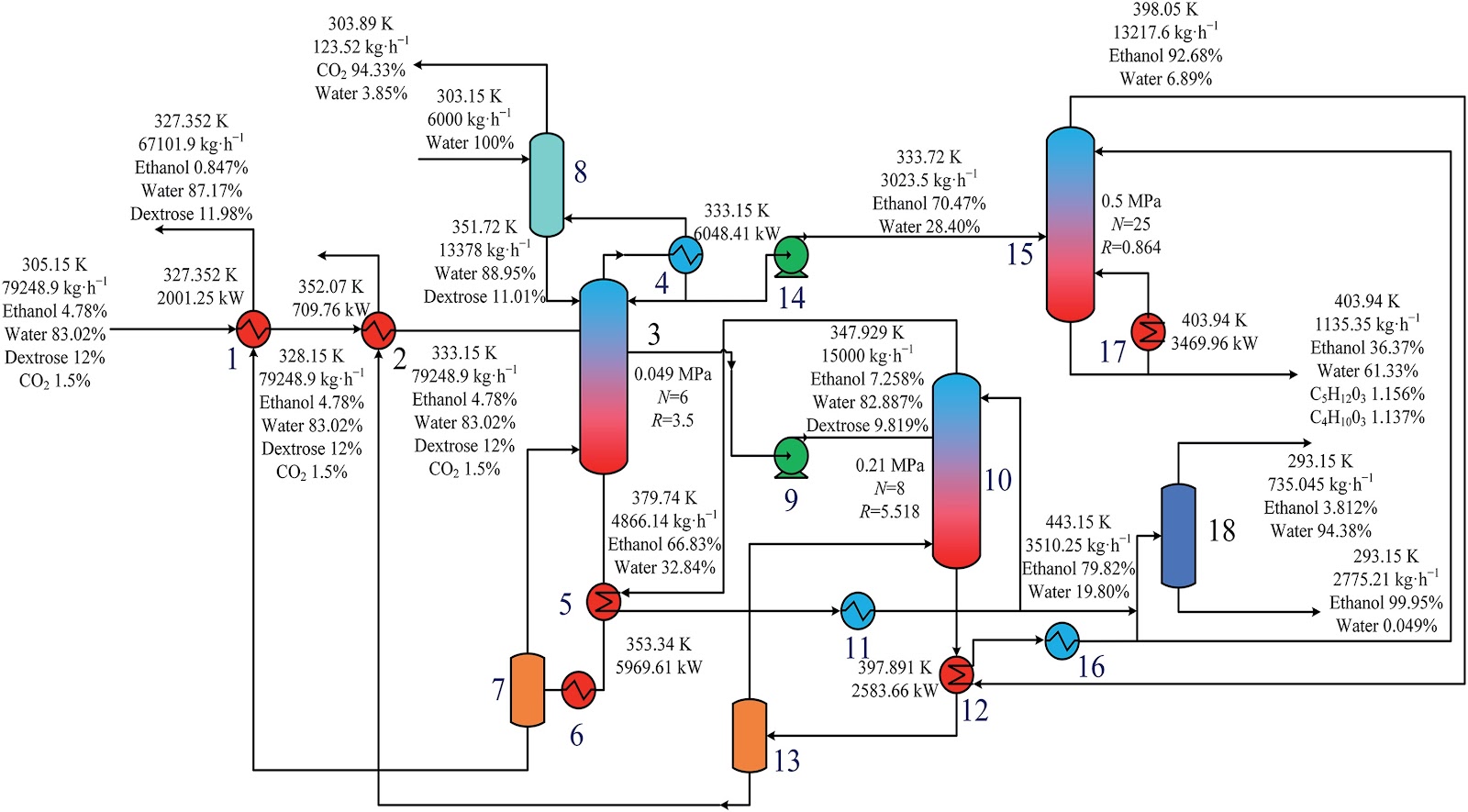
Design and optimization of a high-efficiency distillation process for cellulosic fuel ethanol integrated with thermal coupling and molecular sieve adsorption
To address the challenges of high energy consumption and prominent costs in the traditional three-columns distillation process for cellulosic fuel ethanol, a distillation—molecular sieve coupling separation process is proposed. This process integrates a three-column (crude distillation column, first distillation column, second distillation column) system with a 3A molecular sieve adsorption deep dehydration unit. A thermal coupling network is constructed via differential pressure design (steam from medium/high-pressure columns as mutual heat sources, reboiler liquid waste heat for feed preheating), and molecular sieve adsorption conditions are optimized. The study first performs a thermodynamic consistency test on the ethanol—water system, determines optimal non-random two-liquid (NRTL) model binary interaction parameters via experimental data regression for Aspen Plus simulation. Aiming at minimum total annual cost (TAC), Aspen Plus is used to optimize process parameters (theoretical tray number, feed location, reflux ratio, side-draw position, etc.). Economic analysis shows this process reduces CO2 emission costs by 27.56%, TAC by 15.58% (to 5.123 × 10⁶ USD·a-1), and increases ethanol purity to >99.6%, providing an effective solution for green, efficient separation.
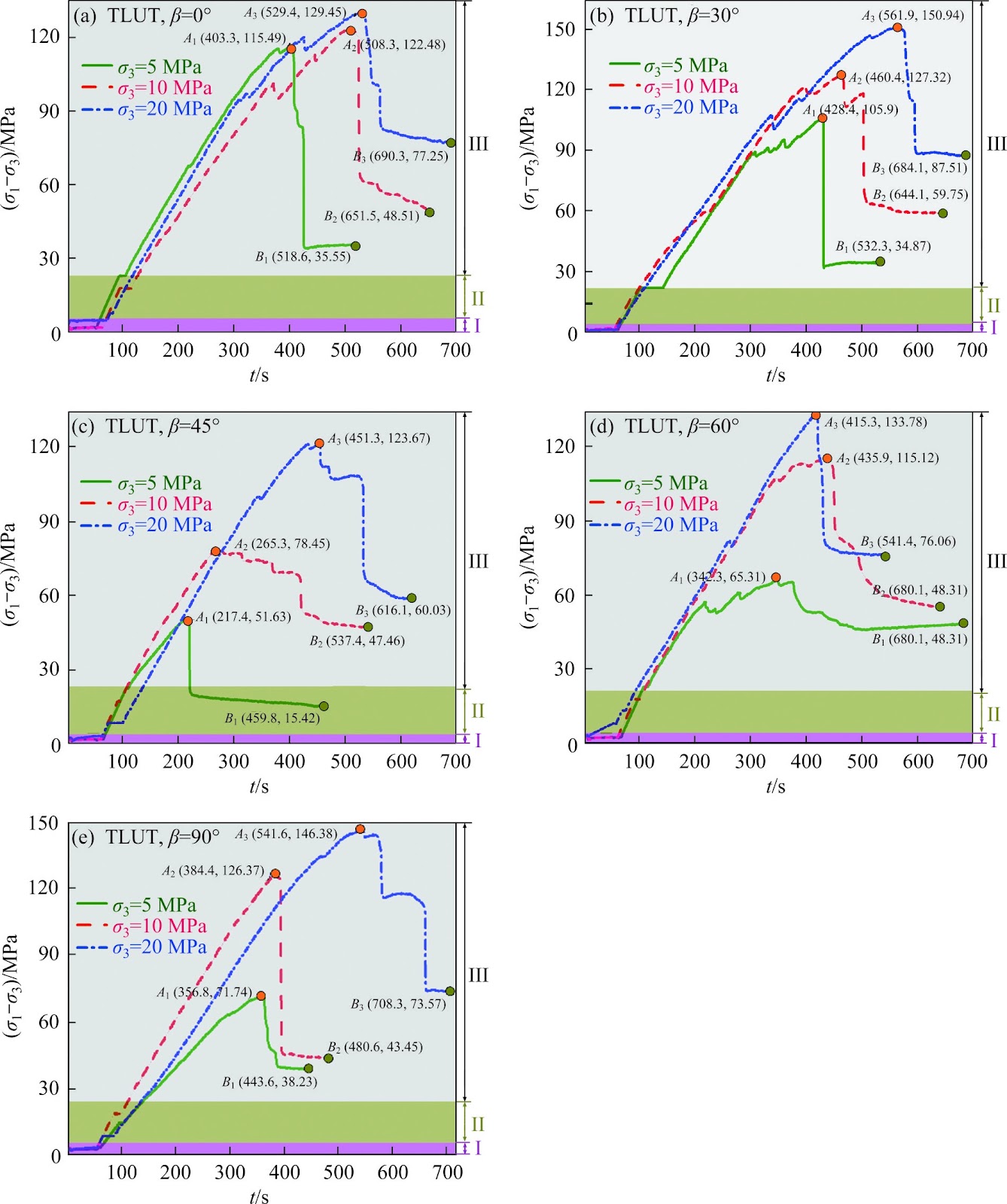
A cohesion loss model for determining residual strength of deep bedded sandstone
Rock residual strength, as an important input parameter, plays an indispensable role in proposing the reasonable and scientific scheme about stope design, underground tunnel excavation and stability evaluation of deep chambers. Therefore, previous residual strength models of rocks established were reviewed. And corresponding related problems were stated. Subsequently, starting from the effects of bedding and whole life-cycle evolution process, series of triaxial mechanical tests of deep bedded s
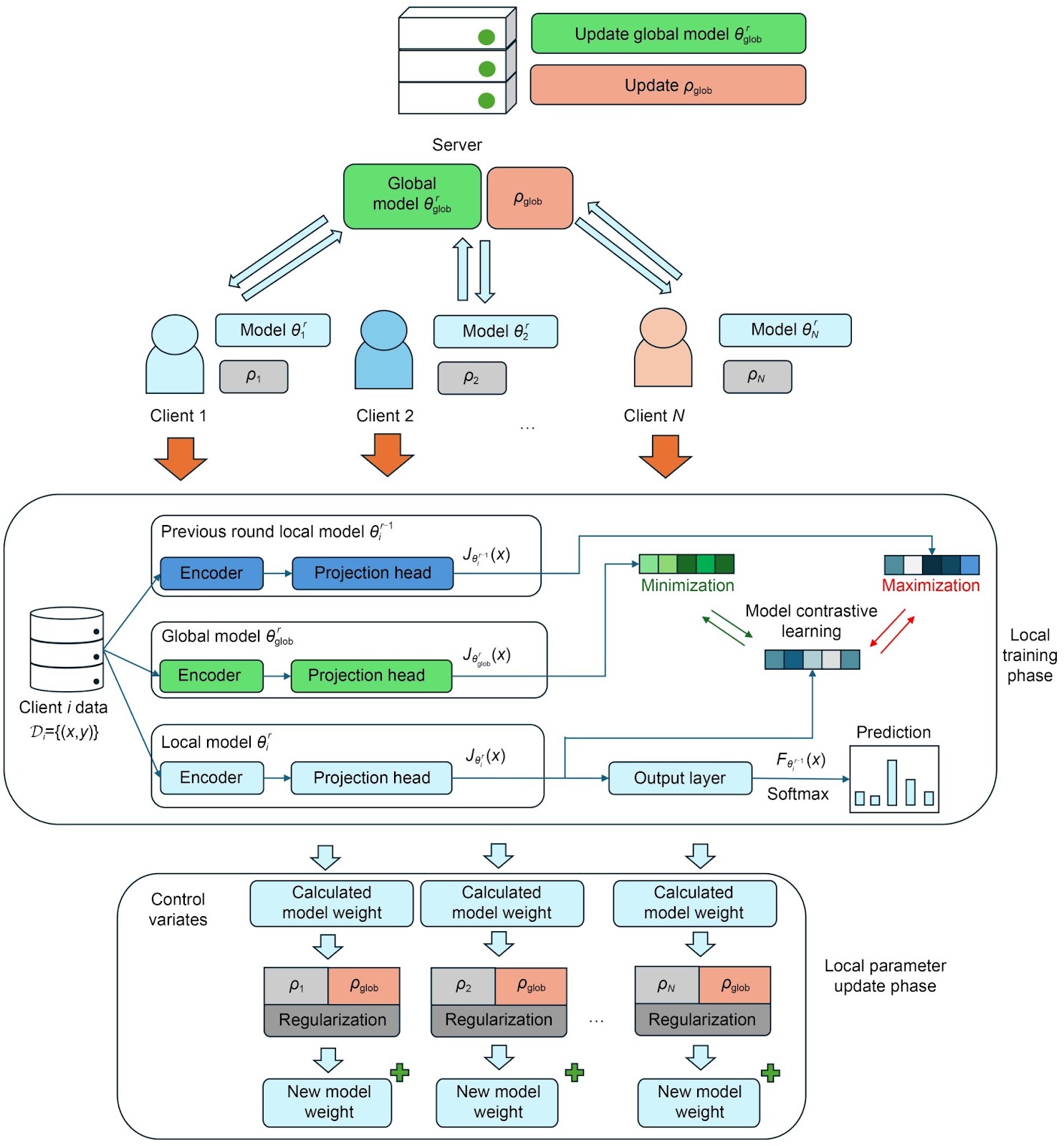
Federated model with contrastive learning and adaptive control variates for human activity recognition
Recent attention to privacy issues demands a communication-safe method for training human activity recognition (HAR) models on client activity data. Federated learning (FL) has become a compelling technique to facilitate model training between the server and clients while preserving data privacy. However, classical FL methods often assume independent and identically distributed (IID) data among clients. This assumption does not hold true in practical scenarios. Human activity in real-world scena