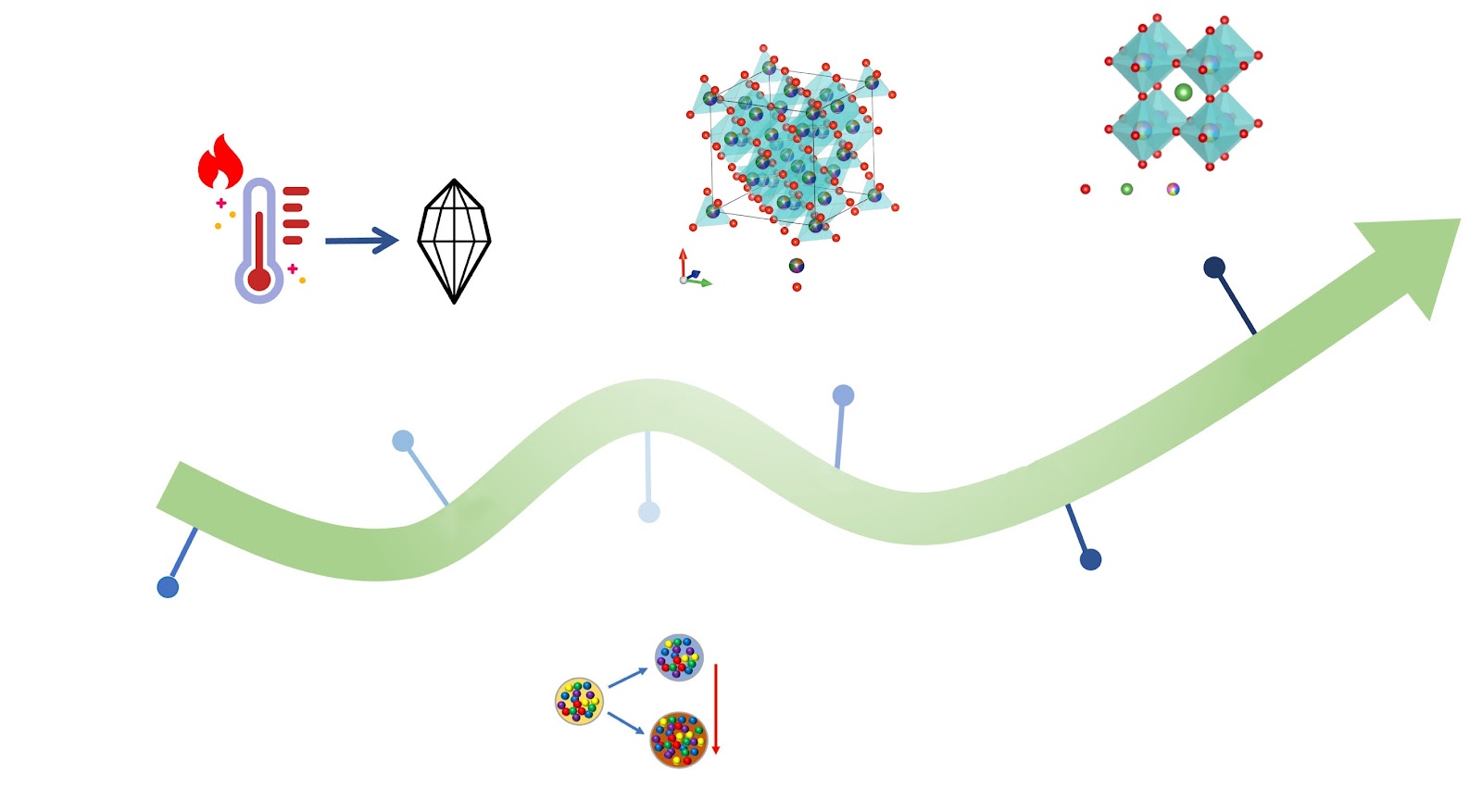
Key Takeaways & Executive Findings
- •• Fe-containing high-entropy oxides (Fe-HEOs) leverage entropy-stabilized multi-cation frameworks to overcome the capacity degradation caused by volume changes in conventional transition-metal oxide anodes. • The synergistic interaction between electrochemically active Fe and inert stabilizers (Mg, Cr) or transport modulators (Zn, Cu) enables high reversible capacity and durable cyclability, with representative systems retaining >80% capacity after 300 cycles. • Versatile solid-state, liquid-phase, and gas-phase synthesis routes provide scalable pathways for designing Fe-HEO anodes with tailored composition, morphology, and electrochemical performance. • Advanced characterization techniques are essential for unraveling composition–structure–performance relationships and guiding the development of low-cost, high-performance Fe-HEO anode materials for next-generation lithium-ion batteries.
Abstract
The rapid development of the mobile communication and electric vehicle markets is driving a growing demand for next-generation lithium-ion battery (LIB) technology. Key electrochemical properties of LIBs, including energy density, rate performance, and cycling stability, are largely determined by the performance of the anode material. High-entropy oxides (HEOs), with unique multi-component systems and entropy-stabilized frameworks, exhibit tailorable physicochemical properties and outstanding structural stability, making them promising candidate anode materials for next-generation LIBs. Among these systems, Fe-containing HEOs (Fe-HEOs) exhibit abundant iron sites, low production costs, and impressive electrochemical activity. Additionally, the incorporation of Fe with other metallic elements can effectively increase the energy-storage capacity and lifespan of LIBs. This review systematically summarizes the latest advancements in Fe-HEOs as anode materials for LIBs. The discussion centers on the rational design principles, synthetic strategies (solid-state, liquid-phase, and gas-phase routes), and performance optimization mechanisms for Fe-HEOs. In addition, the vital roles of advanced characterization techniques in elucidating the composition and structure of Fe-HEOs, and providing mechanistic insights to promote electrochemical property improvements, are discussed. Finally, the current bottlenecks and prospective research directions are analyzed to provide theoretical guidance and practical references for the design of high-performance, low-cost Fe-HEO anode materials.
1. Introduction
Lithium-ion batteries (LIBs) are eco-friendly, rechargeable energy-storage devices that have been widely adopted owing to their excellent energy density and safe operation. The escalating demand for high-capacity energy storage has pushed conventional graphite anodes to their theoretical limit (372 mAh·g−1). While transition-metal oxides (TMOs) such as Fe2O3/Fe3O4 and Co3O4 offer superior capacity, their practical use is severely hindered by catastrophic volume changes during conversion reactions, leading to structural pulverization and rapid capacity decay. Among anode candidates, Fe-based materials are highly promising owing to their multiple redox characteristics and proven electrochemical activity. However, bridging the gap between high capacity and structural durability remains a formidable challenge.
The “high entropy” concept, originally proposed for alloys in 2004, was extended to oxides in 2015, creating a distinct class of entropy-stabilized materials. Unlike high-entropy alloys (HEAs), high-entropy oxides (HEOs) leverage strong ionic bonds and a robust oxide skeleton to provide superior structural stability and volume-buffering capabilities. Recently, various derivatives, including carbides, sulfides, and borides, have been developed; however, HEOs remain preeminent for anodes owing to their stable solid-electrolyte interphase (SEI) formation and mature synthesis pathways, including ball-milling, calcination, and simple co-precipitation.
The unique performance of Fe-containing HEOs (Fe-HEOs) stems from a complex synergistic interaction between cations. In these systems, Fe serves as the primary electrochemically active center and is indispensable for capacity enhancement. Meanwhile, electrochemically inert elements like Mg and Cr act as structural stabilizers to inhibit the aggregation of active grains, maintaining structural integrity. In contrast, Zn and Cu fine-tune the rate of ion transport and help prevent damage to the crystal lattice during repeated charge–discharge cycles. The main active role of Fe arises from its multiple oxidation states, which facilitate multi-electron transfer processes, enhancing the reversible capacity. This active role is further stabilized by the surrounding high-entropy lattice, which prevents the rapid aggregation of Fe metallic clusters during conversion reactions. For instance, (CrMnFeCoNiZn)3O4 exhibits significant capacity retention (>80% after 300 cycles) compared to Fe-free samples. This review deconstructs the Fe-HEO landscape and summarizes the relevant structural properties, synthesis methods, and advanced characterization techniques, providing a strategic roadmap for the design of next-generation Fe-containing high-entropy anode materials.
Loading authentic research manuscript (Pages 1–5)...
Ziyu Dong, Nuo Xu, Jiayi Ma, Pengfei Wang, Yuhang Zhang, Liyan Tian, Lina Zhao, Xuecheng Chen, Fanian Shi (2025). Fe-containing high-entropy oxides: An advanced material system for lithium-ion battery anodes. Journal of Mineral Metallurgy and Materials Science. https://doi.org/10.1007/s12613-026-3448-z
Research & Educational Purpose Only:The translations, structured abstracts, analytical annotations, and data reports provided by SinoTechIntel are intended exclusively for academic research, internal corporate R&D, and educational benchmarking. They do not constitute formal engineering, chemical safety, legal, or professional advice.
Copyright & Intellectual Property Notice: Original copyright of the underlying source articles and experimental data remains with the respective authors, institutions, and original publishing journals. SinoTechIntel claims intellectual property only over its proprietary translations, analytical syntheses, and AEO structured enhancements in accordance with international fair use and academic citation principles.
Frequently Asked Questions
What are Fe-containing high-entropy oxides (Fe-HEOs)?
Fe-containing high-entropy oxides are multi-component oxide materials that incorporate iron together with other metallic cations in an entropy-stabilized single-phase structure. This unique configuration provides both high electrochemical activity and robust structural stability, making them attractive for advanced lithium-ion battery anodes.
Why are Fe-HEOs considered promising anode materials for lithium-ion batteries?
Fe-HEOs combine abundant iron sites, low production costs, and multiple redox states that enable multi-electron transfer. The high-entropy lattice buffers volume changes and prevents aggregation of active species during cycling, resulting in high reversible capacity, superior rate performance, and long-term cycle life.
What synthesis methods are commonly used to prepare Fe-HEO anodes?
Fe-HEOs are typically synthesized via solid-state routes (e.g., ball-milling and calcination), liquid-phase methods (e.g., co-precipitation), and gas-phase approaches. Each route offers distinct advantages in controlling phase purity, particle size, and elemental distribution, which are critical for optimizing electrochemical performance.
How does the high-entropy structure enhance cycling stability?
The high-entropy structure features multiple cations that are uniformly distributed and strongly bonded, creating a stable oxide skeleton. This framework inhibits grain aggregation, accommodates volume changes during conversion reactions, and maintains electrode integrity, thereby minimizing capacity fading over repeated charge–discharge cycles.
Which characterization techniques are critical for Fe-HEO research?
Advanced characterization techniques such as X-ray diffraction, transmission electron microscopy, and X-ray photoelectron spectroscopy are essential for determining crystal structure, morphology, elemental distribution, and oxidation states. These insights allow researchers to correlate composition and structure with electrochemical performance, guiding rational design of high-performance Fe-HEO anodes.
Related Technical Papers & Translations
Design and optimization of a high-efficiency distillation process for cellulosic fuel ethanol integrated with thermal coupling and molecular sieve adsorption
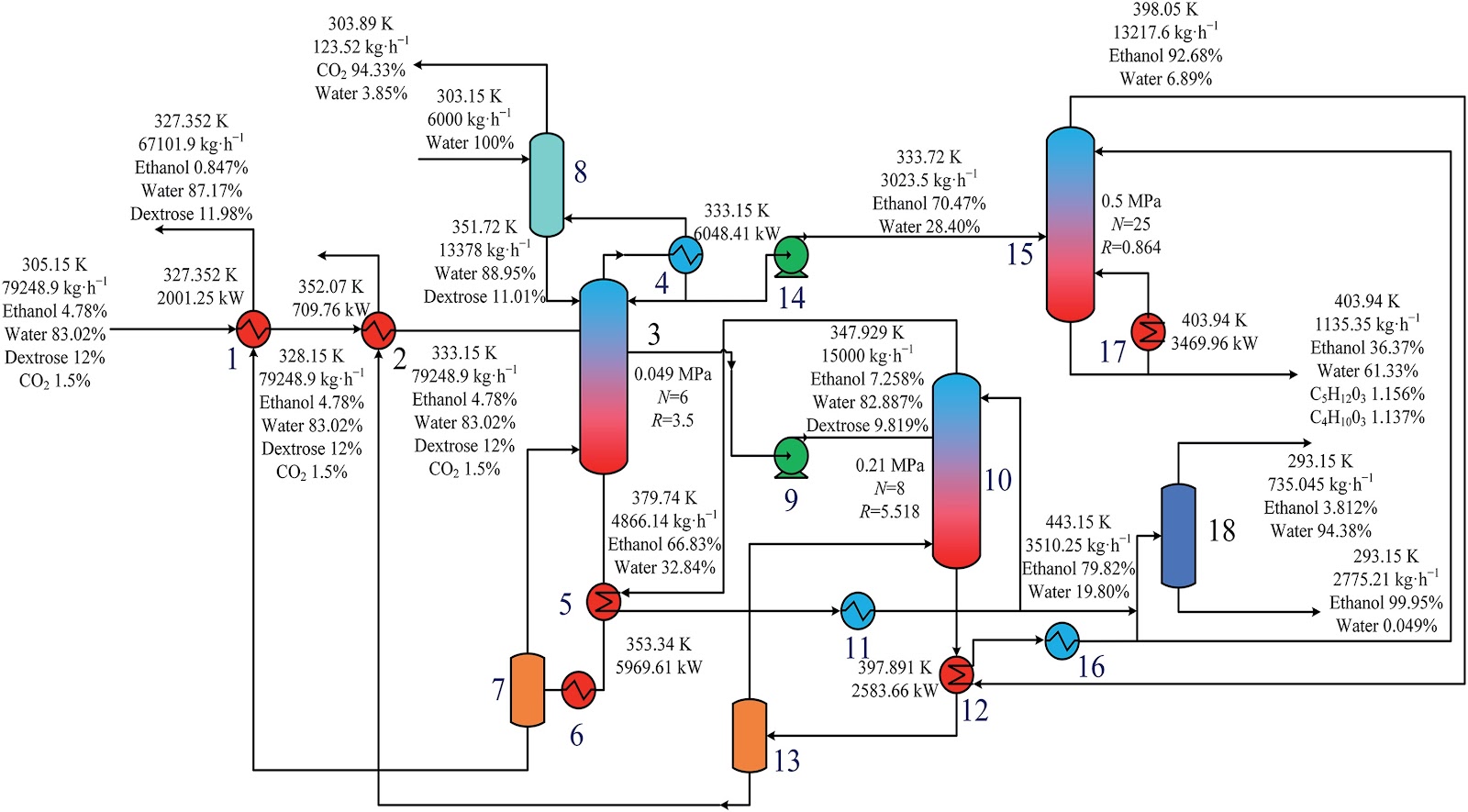
To address the challenges of high energy consumption and prominent costs in the traditional three-columns distillation process for cellulosic fuel ethanol, a distillation—molecular sieve coupling separation process is proposed. This process integrates a three-column (crude distillation column, first distillation column, second distillation column) system with a 3A molecular sieve adsorption deep dehydration unit. A thermal coupling network is constructed via differential pressure design (steam from medium/high-pressure columns as mutual heat sources, reboiler liquid waste heat for feed preheating), and molecular sieve adsorption conditions are optimized. The study first performs a thermodynamic consistency test on the ethanol—water system, determines optimal non-random two-liquid (NRTL) model binary interaction parameters via experimental data regression for Aspen Plus simulation. Aiming at minimum total annual cost (TAC), Aspen Plus is used to optimize process parameters (theoretical tray number, feed location, reflux ratio, side-draw position, etc.). Economic analysis shows this process reduces CO2 emission costs by 27.56%, TAC by 15.58% (to 5.123 × 10⁶ USD·a-1), and increases ethanol purity to >99.6%, providing an effective solution for green, efficient separation.
A cohesion loss model for determining residual strength of deep bedded sandstone
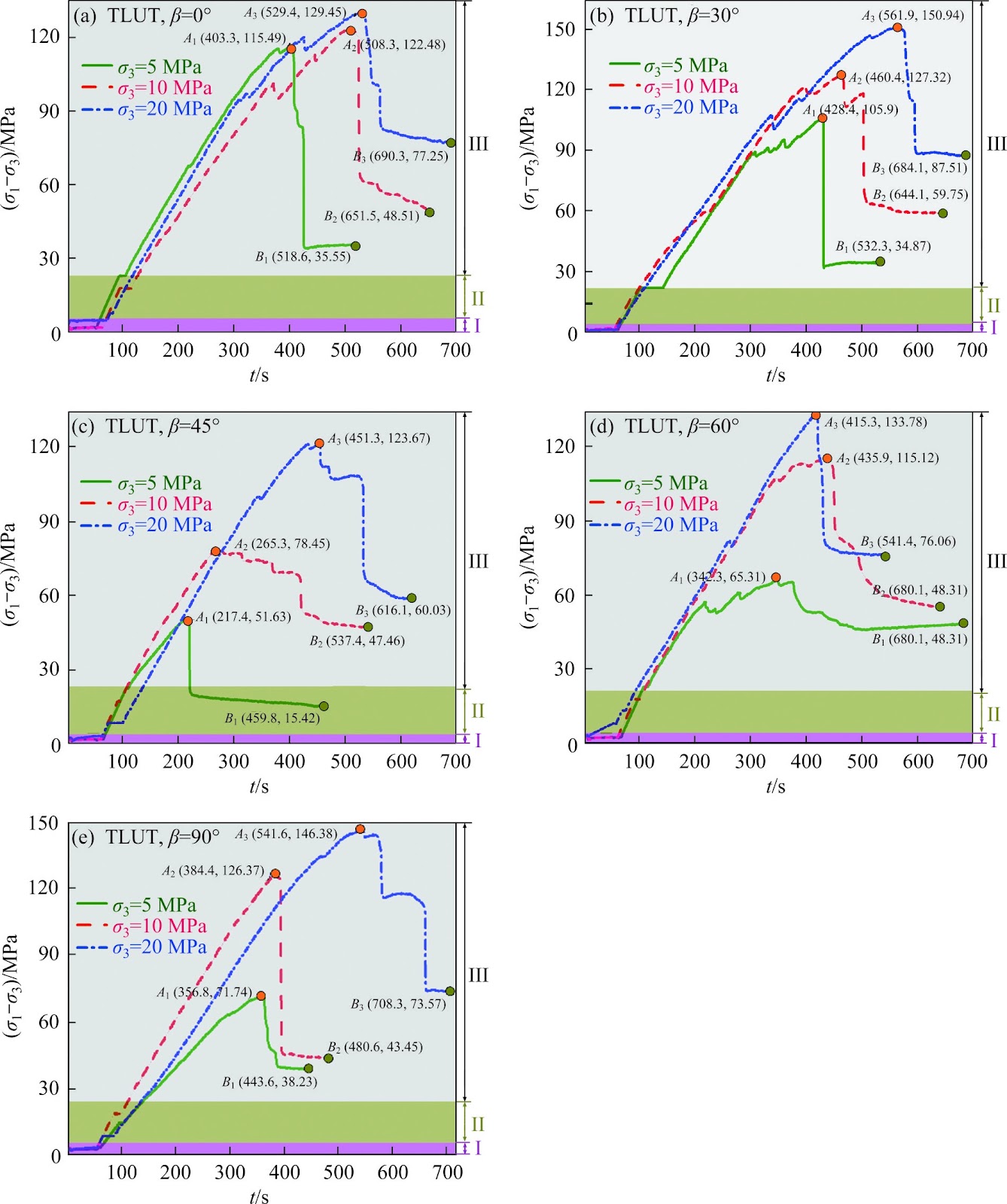
Rock residual strength, as an important input parameter, plays an indispensable role in proposing the reasonable and scientific scheme about stope design, underground tunnel excavation and stability evaluation of deep chambers. Therefore, previous residual strength models of rocks established were reviewed. And corresponding related problems were stated. Subsequently, starting from the effects of bedding and whole life-cycle evolution process, series of triaxial mechanical tests of deep bedded s
Federated model with contrastive learning and adaptive control variates for human activity recognition
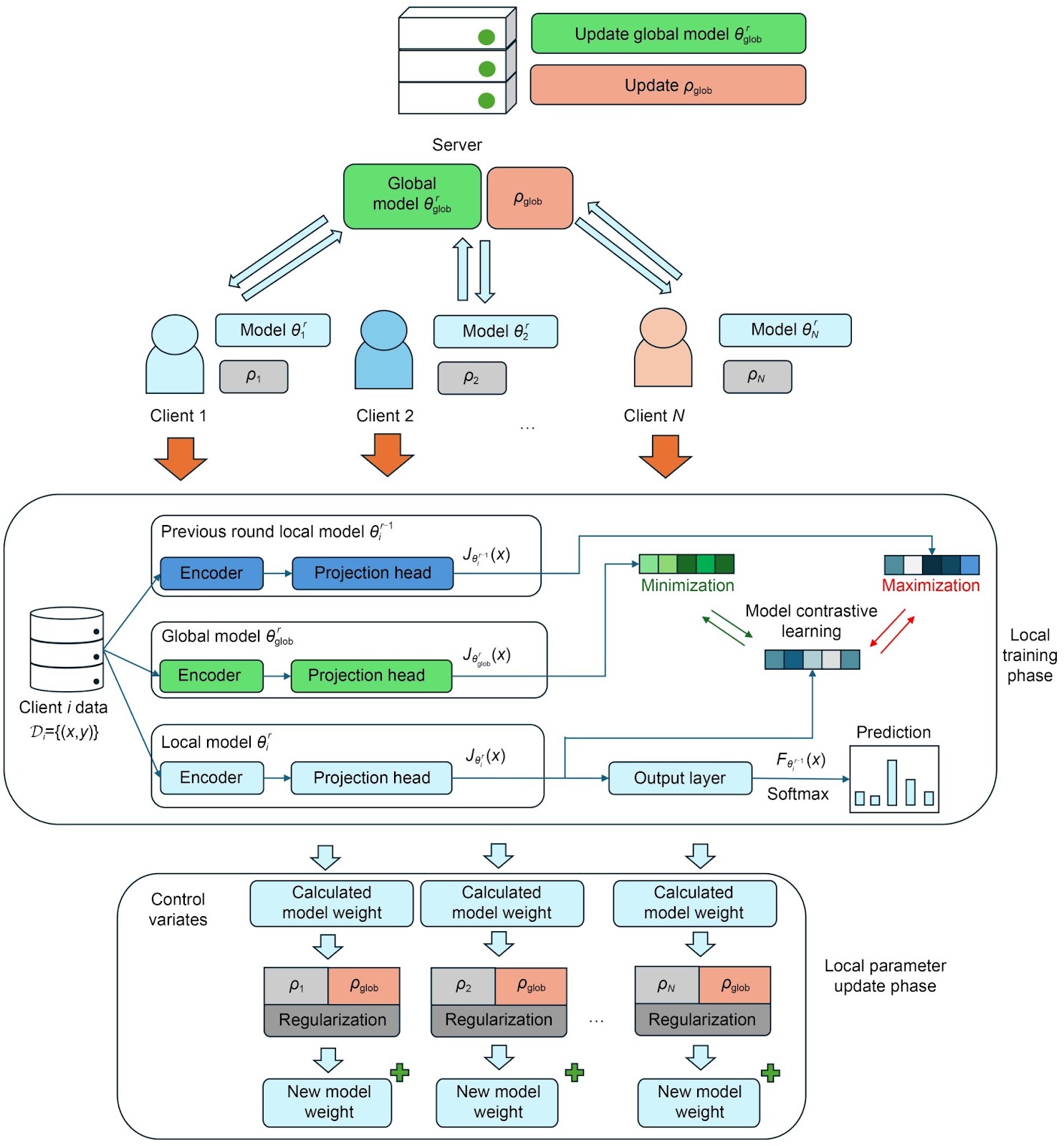
Recent attention to privacy issues demands a communication-safe method for training human activity recognition (HAR) models on client activity data. Federated learning (FL) has become a compelling technique to facilitate model training between the server and clients while preserving data privacy. However, classical FL methods often assume independent and identically distributed (IID) data among clients. This assumption does not hold true in practical scenarios. Human activity in real-world scena