
Key Takeaways & Executive Findings
- •• Mn doping forms Ti–Mn bonds at the Ti2AlC/TiAl interface with mixed metallic/covalent bonding, preserving strength while enhancing ductility. • Mn addition refines the lamellar colony size by 25.1% and lamellar thickness by 27.4%, with uniformly distributed 1.6 μm Ti2AlC particles. • Compared with Ti2AlC/TiAl, the composite achieves 5.5% higher yield stress, 11.5% higher ultimate compressive stress, 10.4% higher fracture strain, and 23.0% higher strength-plasticity product. • Strength improvement arises from grain refinement, solid solution of Mn, and twinning strengthening, while grain refinement and twins relieve stress concentration to improve ductility.
Abstract
Introducing Ti2AlC particles into TiAl alloys can effectively improve their strength, but this can also lead to stress concentration at the interface, resulting in the reduction of ductility. Therefore, Mn is adopted to synergistically improve the strength and ductility of the Ti2AlC/TiAl composite through solid solution and interface manipulation. The first-principles calculation shows the Ti–Mn bonds are formed at the Ti2AlC/TiAl interface after Mn doping, characterized primarily by metallic bonds with some covalent bonding. This combination preserves strength while enhancing ductility. Then, Ti2AlC/TiAl–Mn composite is prepared. The Ti2AlC, with an average size of 1.6 μm, is uniformly distributed within the TiAl matrix. Mn doping reduces the lamellar colony size and lamellar thickness by 25.1% and 27.4%, respectively. A small quantity of Mn accumulates at the boundaries of the lamellar colonies. The Mn content must be controlled to avoid segregation, which may negatively impact performance. The yield stress, ultimate compressive stress, fracture strain, and product of strength and plasticity of the Ti2AlC/TiAl–Mn composite have been increased by 5.5%, 11.5%, 10.4%, and 23.0%, respectively, compared to those of the Ti2AlC/TiAl composite. The enhancement in strength is due to the combined effects of grain refinement, solid solution of Mn, and twinning strengthening. Grain refinement and twin strengthening also can reduce stress concentration and improve ductility. In addition, at the electronic level, the Ti–Mn bond formed at the interface is contributed to the improvement of ductility.
1. Introduction
With the rapid development of aerospace and related fields, the requirements for high-temperature structural materials are constantly increasing. TiAl alloys, recognized for their low density, superior specific strength, and exceptional resistance to oxidation and creep, have attracted extensive attention [1–5]. At present, TiAl alloys have been successfully utilized in the low-pressure turbine blades of aerospace engines [6–8]. Nonetheless, due to the limited ductility of TiAl alloys at room temperature and insufficient strength at high temperatures, their application scope is significantly limited. Therefore, further research and development are necessary to overcome these limitations [9–10].
The mechanical properties of TiAl alloys can be effectively enhanced through solid solution of alloying elements [11–14]. TiAl alloys reinforced with Nb and Mo were prepared by Feng et al. [14], resulting in improvements in microhardness, compressive strength, and fracture strain. Solid solution strengthening played a significant role in these enhancements. Pan et al. [11] prepared TiAl alloys with excellent mechanical properties by adding Sn. Due to the optimized microstructure and the solid solution of Sn, the compressive strength and yield strength improved by 5.6% and 15.1%, respectively. Moreover, reinforcing TiAl alloys with ceramic particles is also an effective method for fabricating high-performance TiAl composites. This approach merges the benefits of both the ceramic particle reinforcements and the TiAl matrix. Currently, TiAl composites reinforced with ceramic particles, including TiB2 [15], Ti2AlC [16], and Ti5Si3 [17], have been successfully fabricated. Notably, the reinforcement of Ti2AlC with the ternary layered structure not only exhibits the exceptional properties of both metal and ceramic, but also its density and thermal expansion coefficient match well with the TiAl matrix [18]. In research conducted by Zhou et al. [19], graphene was introduced into the Ti–47Al–2Cr–4Nb–0.3W alloy, resulting in the in-situ formation of Ti2AlC particles and a notable refinement of the grain structure. Upon incorporating 0.8at% graphene, a marked enhancement in mechanical properties of the TiAl alloy was observed. Specifically, the yield strength and fracture strength were elevated from 478 and 2001 to 772 MPa and 2347 MPa, respectively. In the pursuit of improving the mechanical properties of TiAl alloys, Wang et al. [20] employed a pre-alloyed powder of Ti–48Al–2Nb–2Cr and multi-walled carbon nanotubes (CNTs) to fabricate Ti2AlC/TiAl composite reinforced with dual-scale Ti2AlC particles. The TiAl composite exhibited exceptional comprehensive mechanical performance. However, due to a deformation mismatch between ceramic particles and the TiAl matrix at the interface during the deformation process, stress concentration is prone to occur, which consequently reduces the ductility of composites [21]. Therefore, gaining a comprehensive insight into the interfacial structure between ceramic particles and TiAl matrix is of great importance for the fabrication of TiAl composite with excellent strength and ductility.
Loading authentic research manuscript (Pages 1–5)...
Yuanzheng Wei, Yilu Li, Shili Shu, Hongyu Yang, Feng Qiu, Qichuan Jiang (2025). Synergistic enhancement of strength and ductility of Ti2AlC/TiAl through Mn solid solution and interface manipulation. Journal of Mineral Metallurgy and Materials Science. https://doi.org/10.1007/s12613-025-3134-6
Research & Educational Purpose Only:The translations, structured abstracts, analytical annotations, and data reports provided by SinoTechIntel are intended exclusively for academic research, internal corporate R&D, and educational benchmarking. They do not constitute formal engineering, chemical safety, legal, or professional advice.
Copyright & Intellectual Property Notice: Original copyright of the underlying source articles and experimental data remains with the respective authors, institutions, and original publishing journals. SinoTechIntel claims intellectual property only over its proprietary translations, analytical syntheses, and AEO structured enhancements in accordance with international fair use and academic citation principles.
Frequently Asked Questions
What is the purpose of adding Mn to Ti2AlC/TiAl composites?
Mn is added to synergistically improve strength and ductility via solid-solution strengthening and interface manipulation. First-principles calculations show that Mn forms Ti–Mn bonds at the Ti2AlC/TiAl interface, which are primarily metallic with some covalent character, preserving strength while enhancing ductility.
How does Mn doping affect the microstructure of the Ti2AlC/TiAl composite?
Mn doping reduces the lamellar colony size by 25.1% and lamellar thickness by 27.4%, while Ti2AlC particles with an average size of 1.6 μm are uniformly distributed in the TiAl matrix. A small amount of Mn segregates at lamellar colony boundaries, so Mn content must be controlled to avoid harmful segregation.
What mechanical property improvements were achieved in the Ti2AlC/TiAl–Mn composite?
Compared with the Ti2AlC/TiAl composite, the yield stress increased by 5.5%, ultimate compressive stress by 11.5%, fracture strain by 10.4%, and the product of strength and plasticity by 23.0%.
What are the main strengthening and toughening mechanisms?
Strength enhancement is attributed to grain refinement, solid-solution strengthening from Mn, and twinning strengthening. Grain refinement and twin strengthening reduce stress concentration at interfaces, thereby improving ductility. At the electronic level, Ti–Mn bonds at the interface also contribute to better ductility.
Why does adding Mn improve ductility without sacrificing strength?
The Mn-doped interface forms Ti–Mn bonds with mixed metallic/covalent bonding, which preserves interfacial cohesion. Simultaneously, grain refinement and twinning relieve stress concentration, allowing the composite to accommodate more deformation before fracture.
Related Technical Papers & Translations
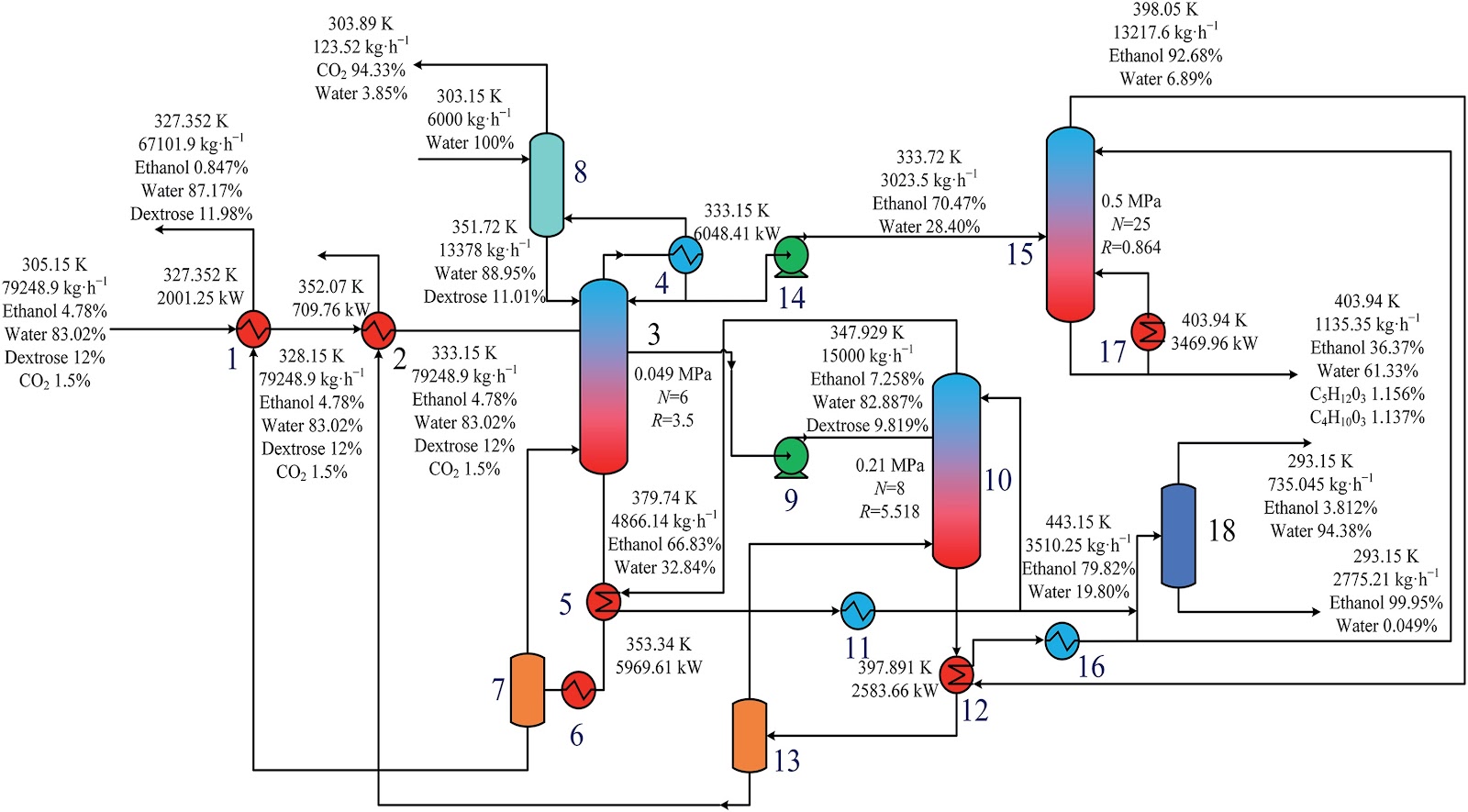
Design and optimization of a high-efficiency distillation process for cellulosic fuel ethanol integrated with thermal coupling and molecular sieve adsorption
To address the challenges of high energy consumption and prominent costs in the traditional three-columns distillation process for cellulosic fuel ethanol, a distillation—molecular sieve coupling separation process is proposed. This process integrates a three-column (crude distillation column, first distillation column, second distillation column) system with a 3A molecular sieve adsorption deep dehydration unit. A thermal coupling network is constructed via differential pressure design (steam from medium/high-pressure columns as mutual heat sources, reboiler liquid waste heat for feed preheating), and molecular sieve adsorption conditions are optimized. The study first performs a thermodynamic consistency test on the ethanol—water system, determines optimal non-random two-liquid (NRTL) model binary interaction parameters via experimental data regression for Aspen Plus simulation. Aiming at minimum total annual cost (TAC), Aspen Plus is used to optimize process parameters (theoretical tray number, feed location, reflux ratio, side-draw position, etc.). Economic analysis shows this process reduces CO2 emission costs by 27.56%, TAC by 15.58% (to 5.123 × 10⁶ USD·a-1), and increases ethanol purity to >99.6%, providing an effective solution for green, efficient separation.
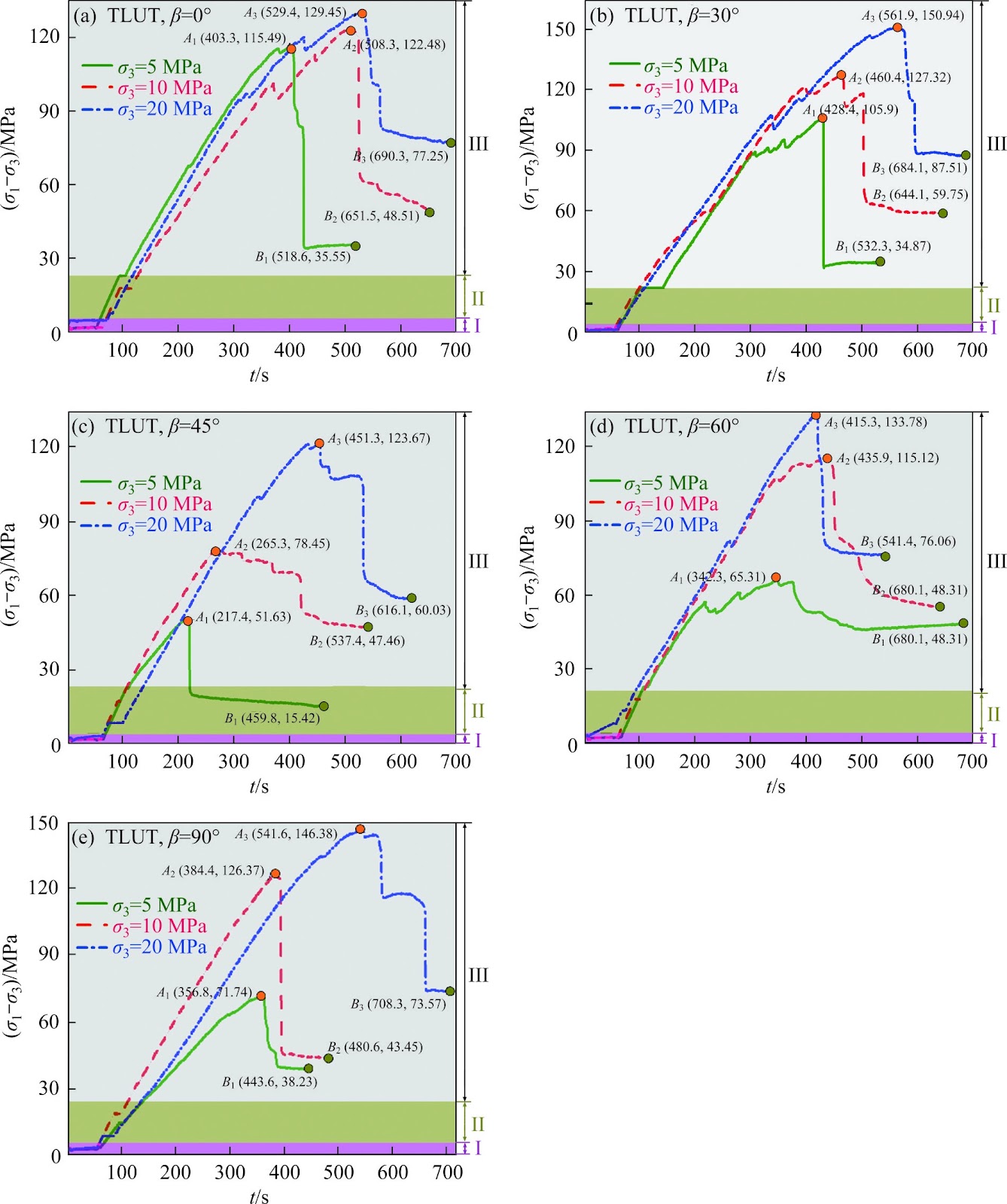
A cohesion loss model for determining residual strength of deep bedded sandstone
Rock residual strength, as an important input parameter, plays an indispensable role in proposing the reasonable and scientific scheme about stope design, underground tunnel excavation and stability evaluation of deep chambers. Therefore, previous residual strength models of rocks established were reviewed. And corresponding related problems were stated. Subsequently, starting from the effects of bedding and whole life-cycle evolution process, series of triaxial mechanical tests of deep bedded s
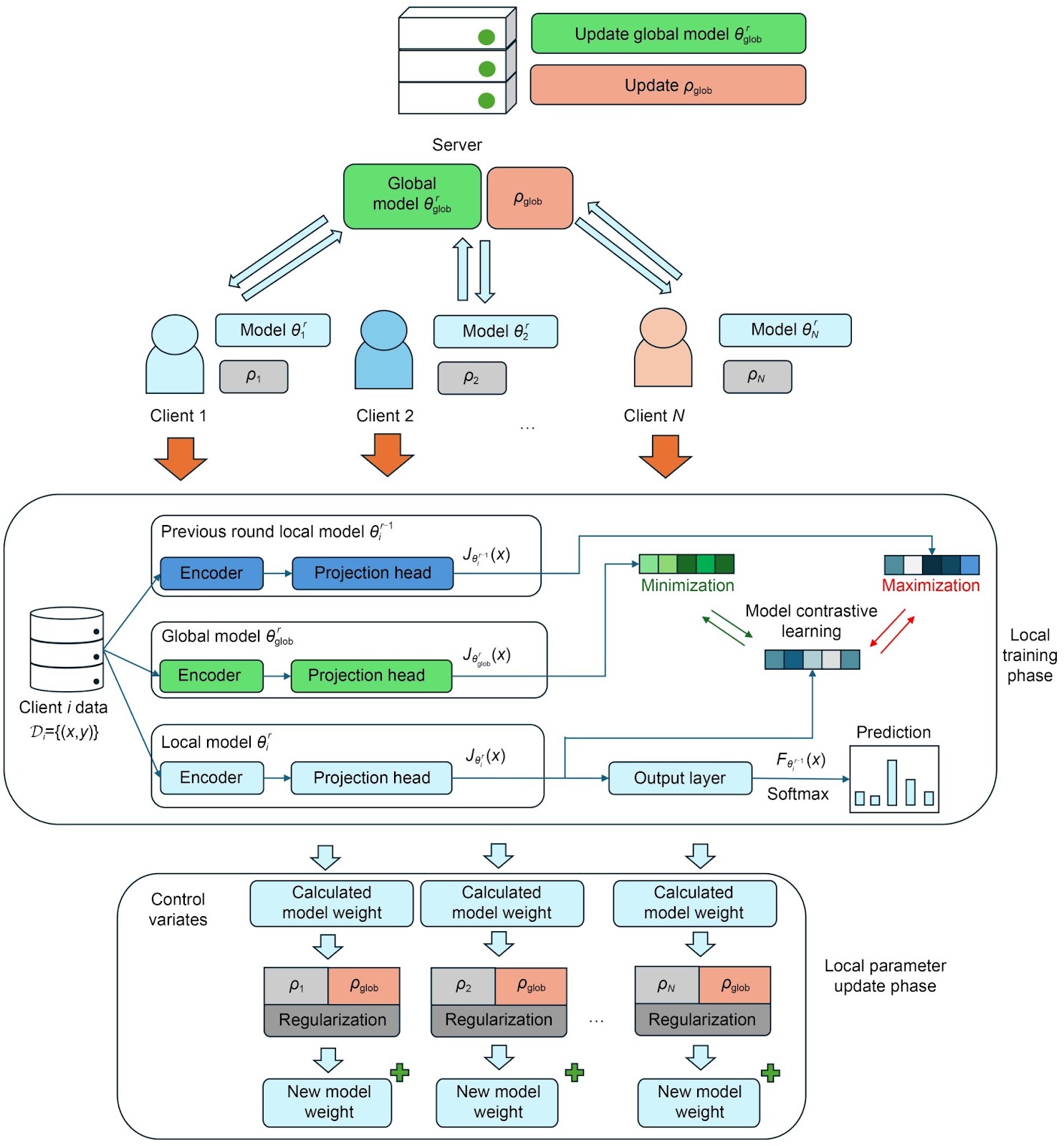
Federated model with contrastive learning and adaptive control variates for human activity recognition
Recent attention to privacy issues demands a communication-safe method for training human activity recognition (HAR) models on client activity data. Federated learning (FL) has become a compelling technique to facilitate model training between the server and clients while preserving data privacy. However, classical FL methods often assume independent and identically distributed (IID) data among clients. This assumption does not hold true in practical scenarios. Human activity in real-world scena