SinoTechIntel Academic Portal
🏛️ Indexed Academic JournalImpact Factor: 2.7 (Q2 - Springer)

Engineering Information Technology and Electronic Engineering

2.7 (Q2 - Springer)

Total Research Papers: 153
Access: 100% Free Open Access
Browse by Publication Year & VolumeReset All Filters âś•

Published Research PapersFiltered: Year 2025 • Vol. 32 • Issue 12

Showing 12 of 153 peer-reviewed papers with full Graphical Abstracts.

Original ResearchVol. 32, Issue 12 • pp. 711-723DOI: 10.1631/FITEE_2400797• Dec 25, 2025

Federated model with contrastive learning and adaptive control variates for human activity recognition

Authors: Ignatius IWAN, Bernardo Nugroho YAHYA, Seok-Lyong LEE

Recent attention to privacy issues demands a communication-safe method for training human activity recognition (HAR) models on client activity data. Federated learning (FL) has become a compelling technique to facilitate model training between the server and clients while preserving data privacy. However, classical FL methods often assume independent and identically distributed (IID) data among clients. This assumption does not hold true in practical scenarios. Human activity in real-world scena

Federated model with contrastive learning and adaptive control variates for human activity recognition
Graphical Abstract
Original ResearchVol. 32, Issue 12 • pp. 319-331DOI: 10.1631/FITEE_2400799• Dec 22, 2025

Reconfigurable intelligent surface-aided secret key generation using an autoencoder and K-means quantization

Authors: Zhenling Li, Panpan Xu, Qiangqiang Gao, Chunguo Li, Weijie Tan

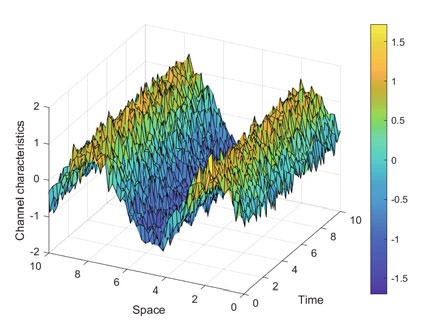
In quasi-static wireless channel scenarios, the generation of physical layer keys faces the challenge of invariant spatial and temporal channel characteristics, resulting in a high key disagreement rate (KDR) and low key generation rate (KGR). To address these issues, we propose a novel reconfigurable intelligent surface (RIS)-aided secret key generation approach using an autoencoder and K-means quantization algorithm. The proposed method uses channel state information (CSI) for channel estimati

Reconfigurable intelligent surface-aided secret key generation using an autoencoder and K-means quantization
Graphical Abstract
Original ResearchVol. 32, Issue 12 • pp. 555-567DOI: 10.1631/FITEE_2500164• Dec 21, 2025

Temporal fidelity enhancement for video action recognition

Authors: Shaowu XU, Xibin JIA, Qianmei SUN, Jing CHANG

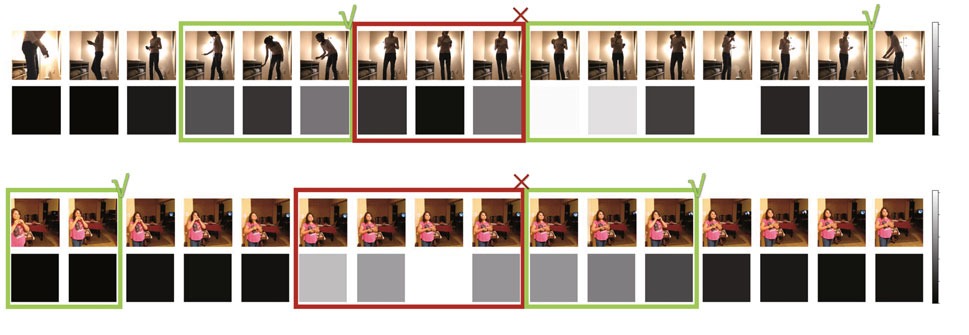
Temporal attention mechanisms are essential for video action recognition, enabling models to focus on semantically informative moments. However, these models frequently exhibit temporal infidelity—misaligned attention weights caused by limited training diversity and the absence of fine-grained temporal supervision. While video-level labels provide coarse-grained action guidance, the lack of detailed constraints allows attention noise to persist, especially in complex scenarios with distracting s

Temporal fidelity enhancement for video action recognition
Graphical Abstract
Original ResearchVol. 32, Issue 12 • pp. 491-503DOI: 10.1631/ENG_ITEE_2025_0111• Dec 20, 2025

CdualTAL: multi-domain tool wear prediction using a dual-channel Transformer and cross-attention network

Authors: Na Li, Zhendong Liu, Xiao Wang, Jiamin Jiang, Yanjie Wei

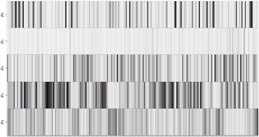
Accurate tool wear prediction is crucial for manufacturing efficiency, yet effectively using multi-domain sensor features is difficult due to redundant noise. There is a critical need to strategically leverage highly predictive strong features and potentially informative weak features. To address this issue, we propose CdualTAL, an improved Transformer-based encoder–attention–decoder algorithm. Its name represents the model’s key components: a correlation-adaptive feature selection algorithm mod

CdualTAL: multi-domain tool wear prediction using a dual-channel Transformer and cross-attention network
Graphical Abstract
Original ResearchVol. 32, Issue 12 • pp. 727-739DOI: 10.1631/FITEE_2500608• Dec 19, 2025

MENTOR: a multi-agent framework for event and narrative trend prediction with optimized reasoning

Authors: Liyuan Chen, Gaoguo Jia, Dongsheng Gu, Jiangpeng Yan, Yuhang Jiang, Xiu Li, Xiaojun Zeng

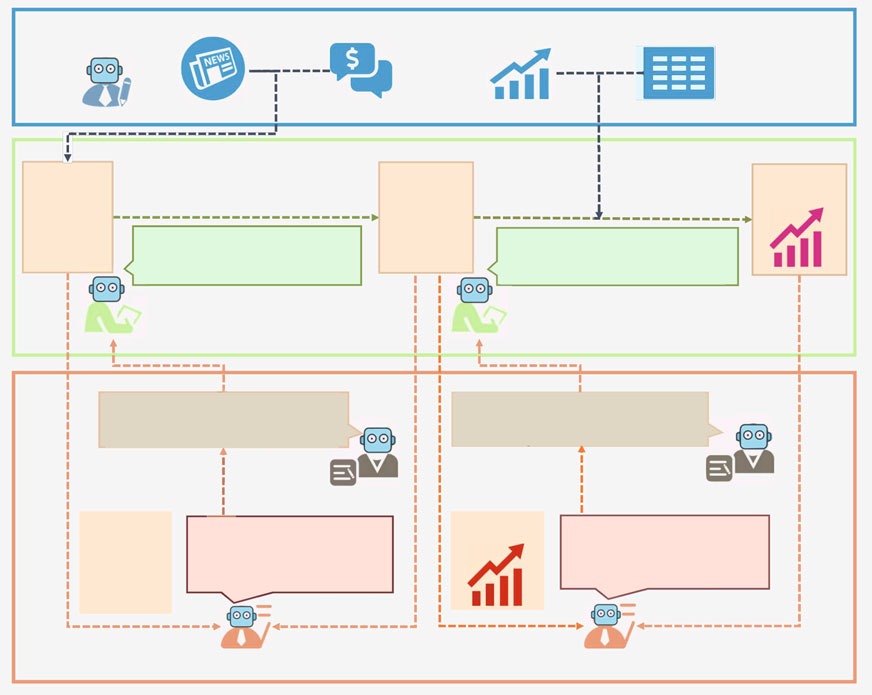
Narrative economics suggests that financial markets are strongly influenced by evolving narratives, creating opportunities for forecasting emerging events and their economic impacts. However, existing large language model (LLM)-based approaches are inadequate in terms of systematic task decomposition and alignment with financial applications. We propose MENTOR, a multi-agent framework for event and narrative trend prediction that integrates teacher–student iterative reasoning with progressive su

MENTOR: a multi-agent framework for event and narrative trend prediction with optimized reasoning
Graphical Abstract
Original ResearchVol. 32, Issue 12 • pp. 899-911DOI: 10.1631/FITEE_2300571• Dec 17, 2025

Transfer learning with a spatiotemporal graph convolution network for city flow prediction

Authors: Binkun Liu, Yu Kang, Yang Cao, Yunbo Zhao, Zhenyi Xu

Recently, deep learning based city flow prediction has been extensively used in the establishment of smart cities. These methods are data-hungry, making them unscalable to areas lacking data. Although transfer learning can use data-rich source domains to assist target domain cities in city flow prediction, the performance of existing methods cannot meet the needs of actual use, because the long-distance road network connectivity is ignored. To solve this problem, we propose a transfer learning m

Transfer learning with a spatiotemporal graph convolution network for city flow prediction
Graphical Abstract
Original ResearchVol. 32, Issue 12 • pp. 335-347DOI: 10.1631/FITEE_2401063• Dec 16, 2025

DRL-EnVar: an adaptive hybrid ensemble–variational data assimilation method based on deep reinforcement learning

Authors: Lilan HUANG, Hongze LENG, Junqiang SONG, Dongzi WANG, Wuxin WANG, Ruisheng HU, Hang CAO

Accurate estimation of the background error covariance matrix denoted as B remains a critical challenge in numerical weather prediction (NWP), directly influencing data assimilation (DA) performance and forecast accuracy. Although hybrid ensemble–variational (EnVar) methods combine static and flow-dependent matrices to improve assimilation, their effectiveness is constrained by empirically fixed weights. To address this limitation, we propose DRL-EnVar, an adaptive hybrid EnVar DA method enhance

DRL-EnVar: an adaptive hybrid ensemble–variational data assimilation method based on deep reinforcement learning
Graphical Abstract
Original ResearchVol. 32, Issue 12 • pp. 115-127DOI: 10.1631/FITEE_2400366• Dec 11, 2025

A dynamic K-nearest neighbor method based on strong access point credibility for indoor positioning

Authors: Yuting Yang, Tao Zhang, Wu Huang

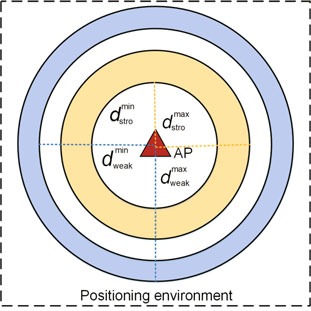
High-precision indoor positioning offers valuable information support for various services such as patient monitoring, equipment scheduling management, and laboratory safety. A traditional indoor positioning technology, fingerprint indoor positioning, often employs the K-nearest neighbor (KNN) algorithm to identify the closest K reference points (RPs) via the received signal strength (RSS) for location prediction. However, RSS is susceptible to environmental interference, leading to the selectio

A dynamic K-nearest neighbor method based on strong access point credibility for indoor positioning
Graphical Abstract
Original ResearchVol. 32, Issue 12 • pp. 523-535DOI: 10.1631/FITEE_2400709• Dec 8, 2025

Three-dimensional-printed low-sidelobe dual-band dual-polarized antenna array for Ku-band satellite communications

Authors: Yuqi Xia, Xiuping Li, Genqiang Kou, Wenyu Zhao, Jie Zhang, Muhammad Ishfaq, Zihang Qi

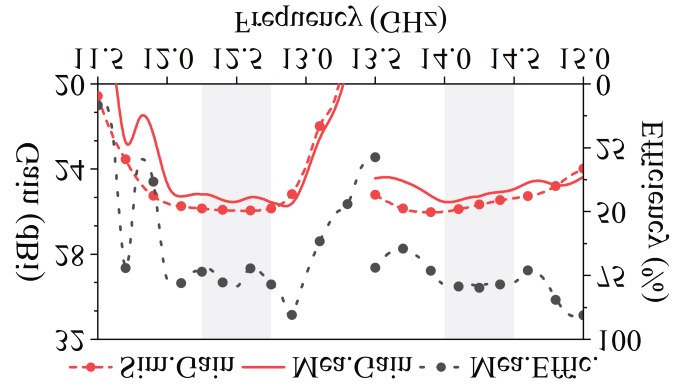
A 3D-printed dual-band dual-polarization gap waveguide (GWG) slot antenna array is presented for Ku-band satellite communications (SATCOMs) in this paper. Two stacked GWGs excite the quasi-TE420 and quasi-TE240 modes in the cavity separately through orthogonal slots. An unequal power divider with a large power division ratio is proposed based on a ridge gap waveguide (RGW). Two power tapering distribution networks are realized for dual polarizations, and the sidelobe level (SLL) is suppressed. T

Three-dimensional-printed low-sidelobe dual-band dual-polarized antenna array for Ku-band satellite communications
Graphical Abstract
Original ResearchVol. 32, Issue 12 • pp. 695-707DOI: 10.1631/ENG_ITEE_2025_0104• Dec 6, 2025

RetryTrigger: intelligent inference duplication for enhancing LLM resilience to hardware transient faults

Authors: Jiajia JIAO, Yixu YU

Large language models (LLMs) have exhibited outstanding performance across a wide range of natural language processing (NLP) tasks. However, the rising prevalence of hardware transient faults has made silent data corruptions (SDCs) in LLMs increasingly problematic, severely degrading output quality and user experience. State-of-the-art protection schemes primarily rely on hardware-assisted algorithm-based fault tolerance (ABFT) or boundary-setting-driven online fault tolerance (FT2) for selectiv

RetryTrigger: intelligent inference duplication for enhancing LLM resilience to hardware transient faults
Graphical Abstract
Original ResearchVol. 32, Issue 12 • pp. 131-143DOI: 10.1631/FITEE_2500412• Dec 5, 2025

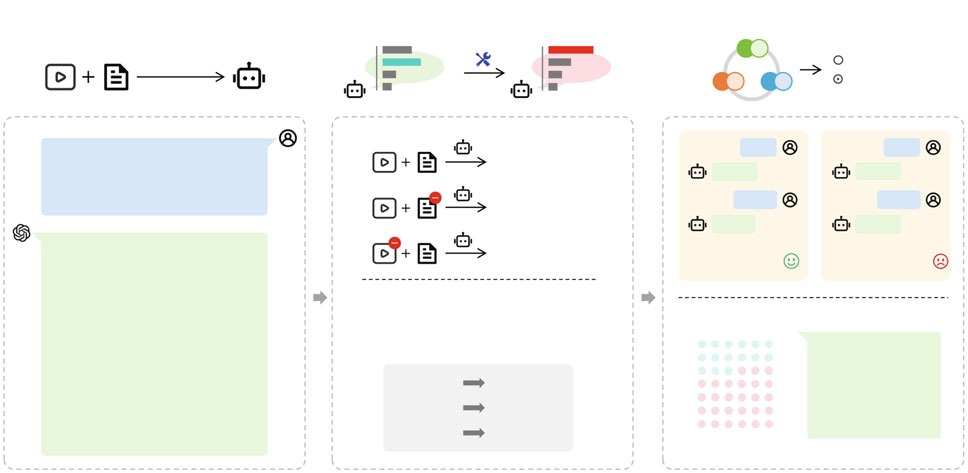
TimeJudge: empowering video-LLMs as zero-shot judges for temporal consistency in video captions

Authors: Yangliu HU, Zikai SONG, Junqing YU, Yiping Phoebe CHEN, Wei YANG

Video large language models (video-LLMs) have demonstrated impressive capabilities in multimodal understanding, but their potential as zero-shot evaluators for temporal consistency in video captions remains underexplored. Existing methods notably underperform in detecting critical temporal errors, such as missing, hallucinated, or misordered actions. To address this gap, we introduce two key contributions. (1) TimeJudge: a novel zero-shot framework that recasts temporal error detection as answer

TimeJudge: empowering video-LLMs as zero-shot judges for temporal consistency in video captions
Graphical Abstract
Original ResearchVol. 32, Issue 12 • pp. 303-315DOI: 10.1631/FITEE_2300767• Dec 3, 2025

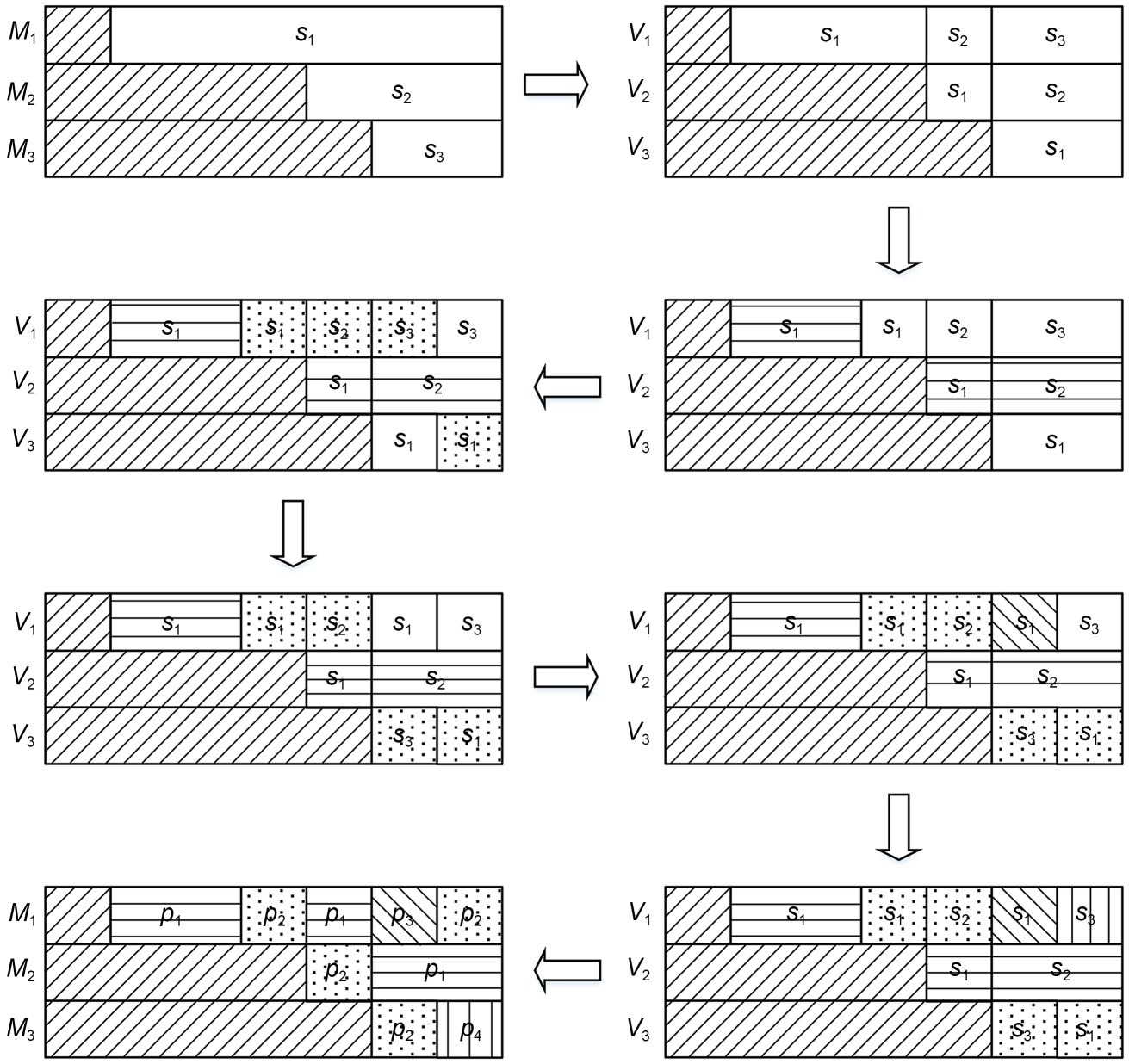
An optimal algorithm for preemptive scheduling on non-simultaneously available uniform machines

Authors: Hao Zhou, Liping Cao, Qi Wei, Zhenyu Shu, Yiwei Jiang

We study preemptive scheduling on m uniform machines with non-simultaneous available times to minimize the makespan. Each machine has a different speed and a different available time. We first provide a lower bound on the optimal makespan of the problem by converting the real machines to virtual machines that guarantee a machine with an earlier available time having a greater speed at any time. Then, we provide an algorithm with time complexity of O(nm+m^2) to find an optimal schedule with, at m

An optimal algorithm for preemptive scheduling on non-simultaneously available uniform machines
Graphical Abstract