SinoTechIntel Academic Portal
🏛️ Indexed Academic JournalImpact Factor: 3.7 (Q2 - Elsevier)Original: 新型炭材料

New Carbon Materials

3.7 (Q2 - Elsevier)

Total Research Papers: 47
Access: 100% Free Open Access
Browse by Publication Year & VolumeReset All Filters ✕

Published Research PapersFiltered: Year 2024 • Vol. 39 • Issue 3

Showing 7 of 47 peer-reviewed papers with full Graphical Abstracts.

Original ResearchVol. 39, Issue 3 • pp. 573-582DOI: 10.1016/S1872-5805_NJan 15, 2024

Electrochemical impurity removal from spent ternary lithium battery graphite anodes and their performance study

Authors: Rui Zhang, Yong Tian, Weili Zhang, Jiayin Song, Jie Min, Bo Pang, Jianjun Chen

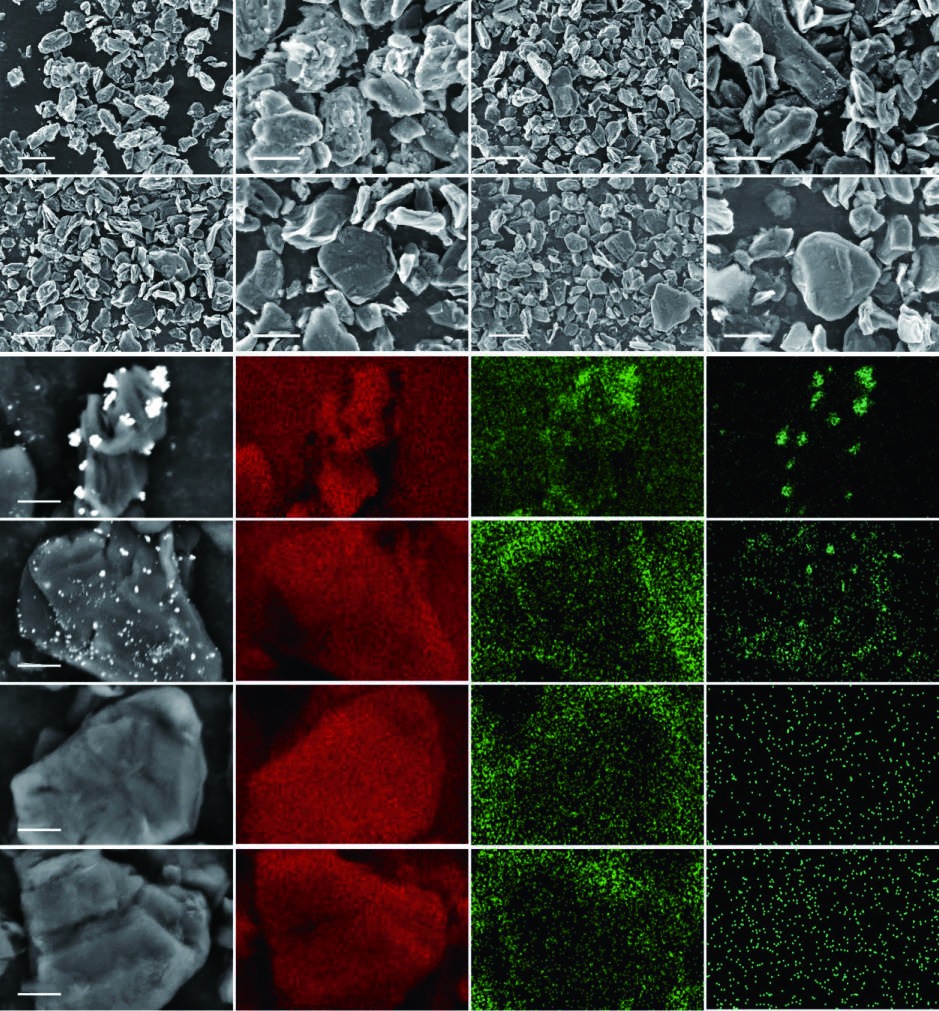
With the rapid development of new energy vehicles, power lithium-ion batteries are increasingly widely used, and a large number of lithium batteries are also ushering in a peak period of retirement. The comprehensive recycling and utilization of spent lithium batteries has attracted high attention from various countries. The layered structure of the graphite anode in spent lithium batteries is basically unchanged, so high-temperature graphitization is not required during recycling, and only the removal of internal impurities needs to be considered. In this paper, the spent graphite anode was treated by heat treatment, ultrasonic separation, and acid leaching, and then an innovative electrochemical treatment was adopted to deeply remove internal metal impurities. Comparing graphite at different recycling stages, it was found that the presence of organic impurities in graphite seriously affects various electrochemical properties, while trace amounts of inorganic impurities such as Cu and Fe have little effect on the initial discharge specific capacity but reduce the cycling stability of graphite. The final recovered graphite had internal major metal impurity content below 20 mg/kg, with a discharge specific capacity of 358.7 mAh/g at 0.1 C rate, and a capacity retention rate of 95.85% after 150 cycles. Compared with reported spent graphite recycling methods, this method can deeply remove impurities inside the graphite anode, solving the problems of large acid-base consumption, incomplete impurity removal, and high energy consumption. The recovered regenerated graphite anode has good electrochemical performance, providing a new recycling and regeneration path for spent lithium battery graphite anodes.
Electrochemical impurity removal from spent ternary lithium battery graphite anodes and their performance study
Graphical Abstract
Original ResearchVol. 39, Issue 3 • pp. 561-572DOI: 10.1016/S1872-5805_NJan 15, 2024

Plasma-assisted preparation of carbon cloth-supported NiCoAl-LDHs with large interlayer spacing for electrochemical deionization

Authors: Qiutong Jiang, Guoqing Wang, Yi Li, Hongwei Huang, Qian Li, Jian Yang

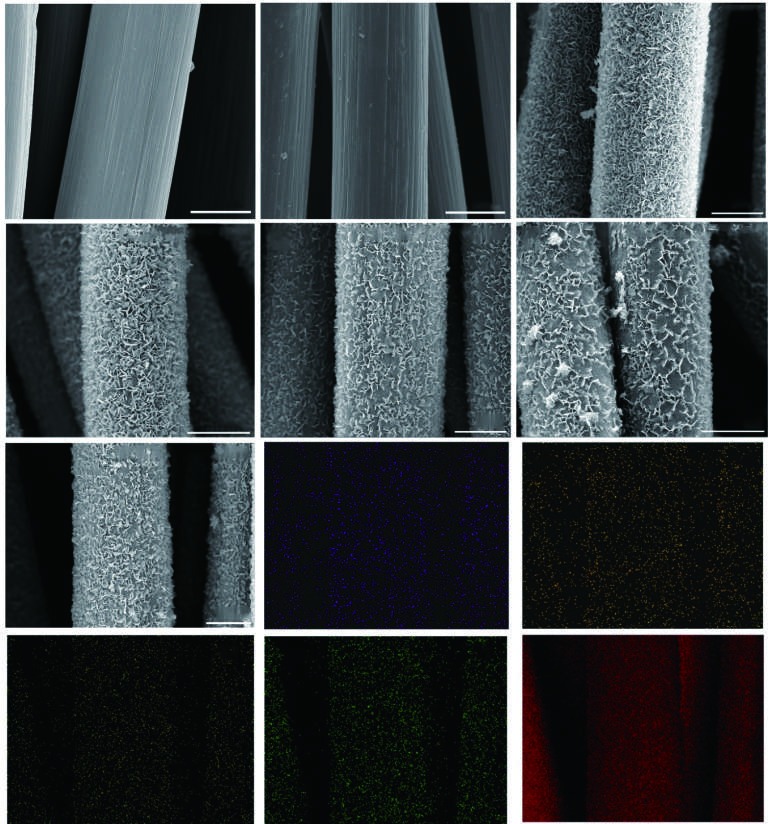
Capacitive deionization (CDI) has been regarded as an emerging desalination technology in recent years, especially for brackish water, due to its economic and energy-saving advantages. However, research on chloride removal electrodes is limited, and slow desalination kinetics also restrict their development. In this work, NiCoAl-LDHs nanosheet arrays were grown in situ on flexible carbon cloth (ACC) after surface acid treatment and then subjected to Ar plasma treatment, producing Ar-NiCoAl-LDHs@ACC with enlarged interlayer spacing. The carbon cloth substrate inhibited the agglomeration of NiCoAl-LDHs nanosheets and improved electrical conductivity, while Ar plasma treatment further expanded the interlayer spacing and enhanced hydrophilicity, providing fast chloride ion diffusion channels and releasing more interlayer active sites, achieving high desalination kinetics. Ar-NiCoAl-LDHs@ACC was used as the chloride removal electrode and assembled with activated carbon into a hybrid capacitive deionization (HCDI) device. In 1000 mg L−1 NaCl solution at 1.2 V, the salt removal capacity reached 93.26 mg g−1, the salt removal rate reached 0.27 mg g−1 s−1, and the charge efficiency was as high as 0.97. In 300 mg L−1 NaCl solution at 0.8 V, the capacity retention remained above 85% after 100 cycles. This work provides a new strategy for the controllable preparation of two-dimensional metal hydroxide materials with large interlayer spacing and the design of high-performance electrochemical chloride removal electrodes.

Plasma-assisted preparation of carbon cloth-supported NiCoAl-LDHs with large interlayer spacing for electrochemical deionization
Graphical Abstract
Original ResearchVol. 39, Issue 3 • pp. 549-560DOI: 10.1016/S1872-5805_NJan 15, 2024

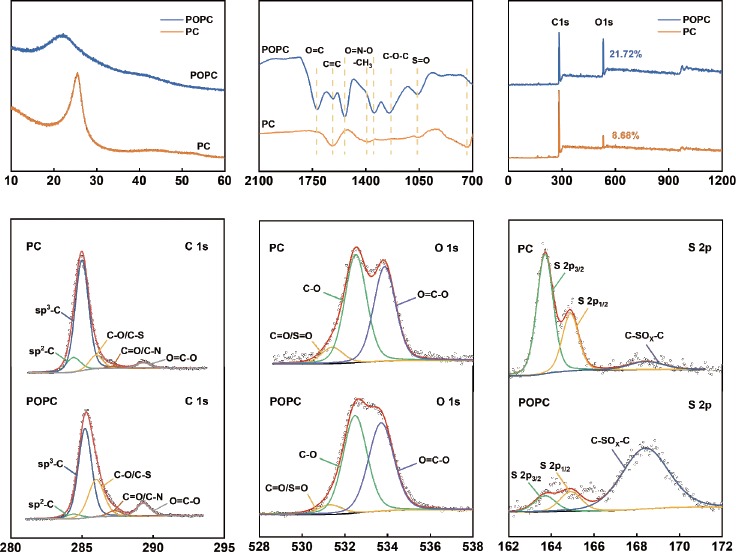
Increasing the interlayer spacing and generating closed pores to produce petroleum coke-based carbon materials for sodium ion storage

Authors: ZHUANG Hong-kun, LI Wen-cui, HE Bin, LV Jia-he, WANG Jing-song, SHEN Ming-yuan, LU An-hui

Petroleum coke (PC) is a valuable precursor for sodium-ion battery (SIB) anodes due to its high carbon content and low cost. The regulation of the microcrystalline state and pore structure of the easily-graphitized PC-based carbon is crucial for creating abundant Na+ storage sites. Here we used a precursor transformation strategy to increase the carbon interlayer spacing and generate abundant closed pores in PC-based carbon, significantly increasing its Na+ storage capacity in the plateau region. This was achieved by introducing a large number of oxygen functional groups through mixed acid treatment and then using high-temperature carbonization to decompose the oxygen functional groups and rearrange the carbon microcrystallites, resulting in a transition from open to closed pores. The optimized samples provide a large reversible capacity of 356.0 mAh g−1 at 0.02 A g−1, of which approximately 93% is below 1.0 V. Galvanostatic intermittent titration (GITT) and in-situ X-ray diffraction (XRD) analysis indicate that the sodium storage capacity in the low voltage plateau region involves a joint contribution of interlayer insertion and closed pore filling processes. This study presents a comprehensive method for the development of high-performance carbon anodes using low-cost and highly aromatic precursors.

Increasing the interlayer spacing and generating closed pores to produce petroleum coke-based carbon materials for sodium ion storage
Graphical Abstract
Original ResearchVol. 39, Issue 3 • pp. 538-548DOI: 10.1016/S1872-5805_NJan 15, 2024

Sulfonyl chloride-intensified metal chloride intercalation of graphite for efficient sodium storage

Authors: LAN Shu-qin, REN Wei-cheng, WANG Zhao, YU Chang, YU Jin-he, LIU Ying-bin, XIE Yuan-yang, ZHANG Xiu-bo, WANG Jian-jian, QIU Jie-shan

Metal chloride-intercalated graphite with excellent conductivity and a large interlayer spacing is highly desired for use in sodium ion batteries. However, halogen vapor is usually indispensable in initiating the intercalation process, which makes equipment design and experiments challenging. In this work, SO2Cl2 was used as a chlorine generator to intensify the intercalation of BiCl3 into graphite (BiCl3-GICs), which avoided the potential risks, such as Cl2 leakage, in traditional methods. The operational efficiency in the experiment was also improved. After the reaction of SO2Cl2, BiCl3, and graphite at 200 °C for 20 h, the synthesized BiCl3-GICs had a large interlayer spacing (1.26 nm) and a high amount of BiCl3 intercalation (42%), which gave SIBs a high specific capacity of 213 mAh g−1 at 1 A g−1 and an excellent rate performance (170 mAh g−1 at 5 A g−1). In-situ Raman spectra revealed that the electronic interaction between graphite and intercalated BiCl3 is weakened during the first discharge, which is favorable for sodium storage. This work broadly enables the increased intercalation of other metal chloride-intercalated graphites, offering possibilities for developing advanced energy storage devices.

Sulfonyl chloride-intensified metal chloride intercalation of graphite for efficient sodium storage
Graphical Abstract
Original ResearchVol. 39, Issue 3 • pp. 458-482DOI: 10.1016/S1872-5805_NJan 15, 2024

A review of carbon material-based Z-scheme and S-scheme heterojunctions for photocatalytic clean energy generation

Authors: Sahil Rana, Amit Kumar, Wang Tong-tong, Gaurav Sharma, Pooja Dhiman, Alberto García-Peñas

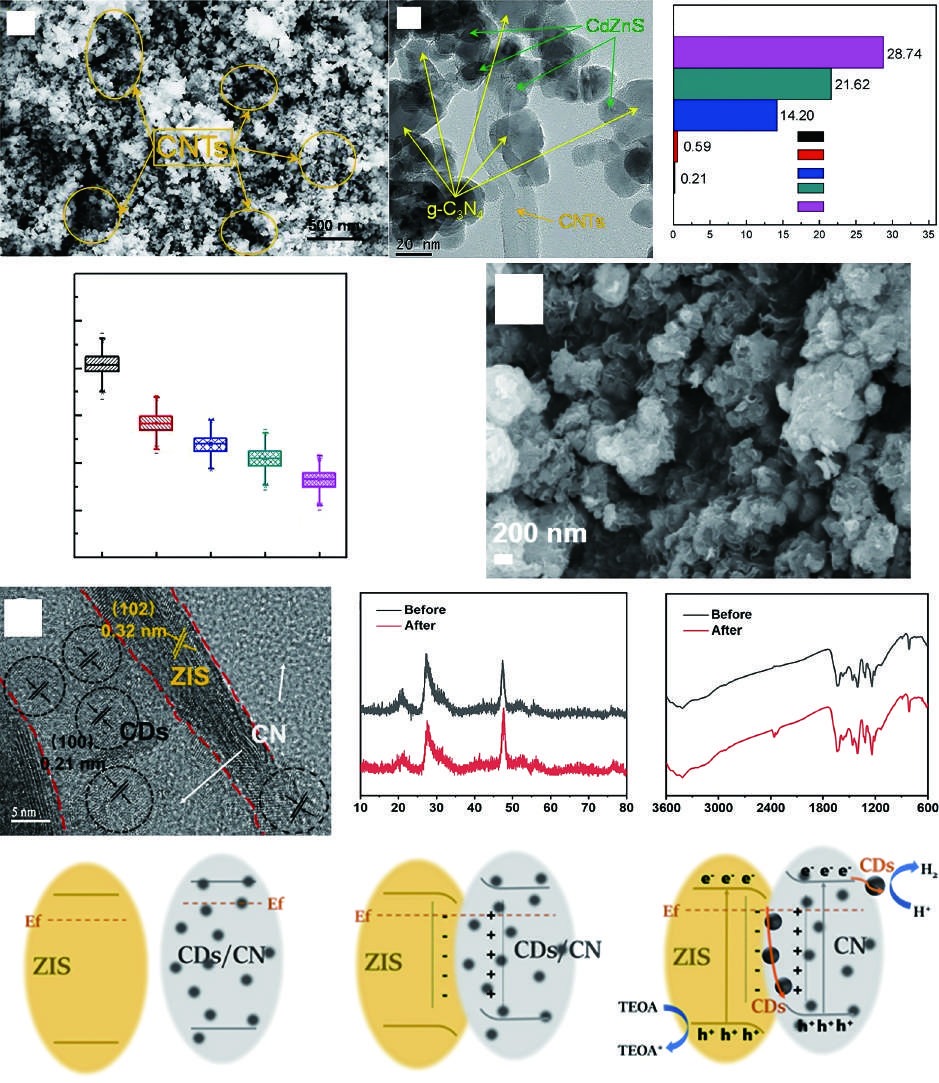
Carbon materials, including carbon nanotubes/nanofibers, graphene, graphene oxide, reduced graphene oxide, graphyne, graphdiyne, carbon quantum dots and fullerenes, have received considerable attention in recent years because of their unique properties such as high conductivity, excellent stability and biocompatibility. The integration of these materials into Z-scheme and S-scheme heterojunctions has emerged as a transformative strategy to increase their photocatalytic efficiency for energy conversion applications. We first consider the fundamental principles of clean energy generation such as photocatalytic H2 generation and CO2 reduction, elucidating their respective mechanisms and advantages. Various types of carbon materials, their synthesis and construction of Z-scheme and S-scheme heterojunctions are then discussed, emphasizing their role in promoting charge separation, reducing recombination losses and extending the spectral response range. With a focus on solar energy production, recent advances in carbon-based Z-scheme and S-scheme heterojunctions are discussed and summarized for photocatalytic H2 generation and CO2 reduction. Lastly, the current problems in the field of carbon-based photocatalysts are discussed with insights for the future development of this field.

A review of carbon material-based Z-scheme and S-scheme heterojunctions for photocatalytic clean energy generation
Graphical Abstract
Original ResearchVol. 39, Issue 3 • pp. 388-406DOI: 10.1016/S1872-5805_NJan 15, 2024

Research progress of graphdiyne in aqueous ion batteries

Authors: Xu Xianmin, Feng Wencong, Ren Jingke, Luo Wen

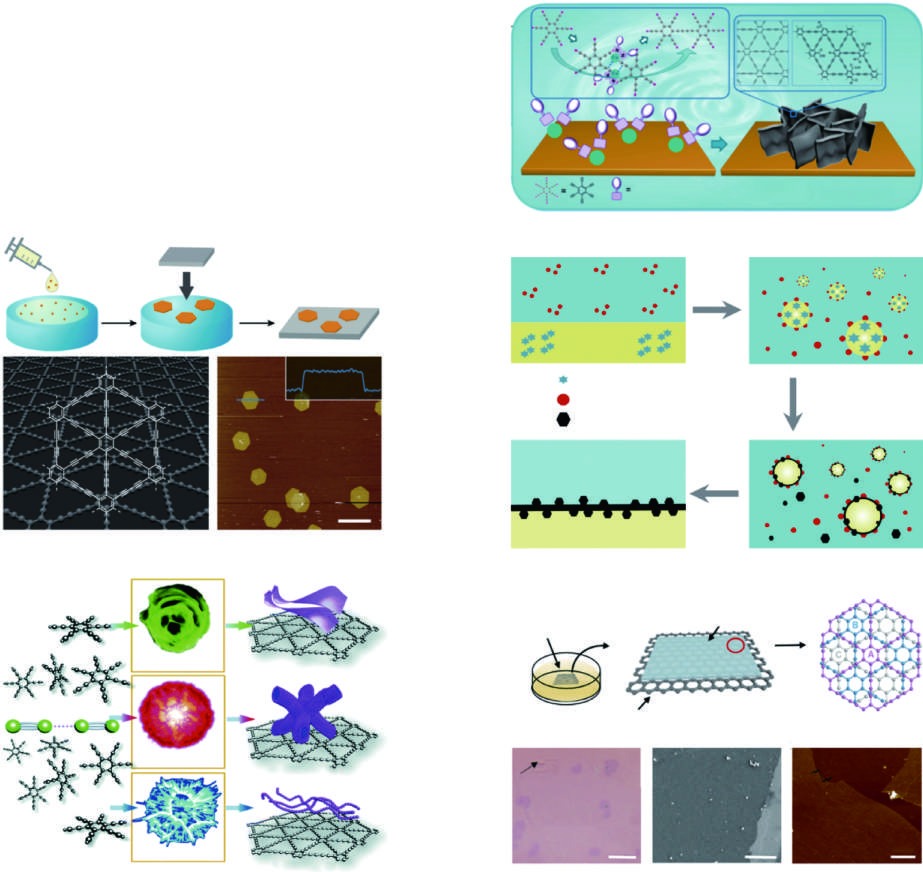
Graphdiyne (GDY) is a new carbon material with special carbon hybridization arrangement, unique chemical and electronic structure, and unique pore structure, which has good application prospects in the field of electrochemical energy storage. Emerging aqueous ion batteries have the advantages of low cost and high safety. However, the development of high-performance electrode materials, the design of new separator systems, and strategies for stable interfaces are still major challenges for aqueous ion batteries. Graphdiyne can improve ion transport and interface deposition behavior, electrolyte instability, etc. in terms of anode protection, cathode coating, separator design, and stabilizing interface pH. In particular, the bottom-up molecular structure design strategy of graphdiyne makes it easy to modify and dope, and modified graphdiyne analogs have more excellent performance, broadening its application in aqueous ion batteries. This paper systematically reviews the structure, properties, and synthesis methods of graphdiyne, and especially summarizes the research of graphdiyne in aqueous ion batteries. In addition, the existing problems and challenges in the application of graphdiyne in aqueous ion batteries are discussed, and the development of graphdiyne in aqueous ion batteries is prospected.

Research progress of graphdiyne in aqueous ion batteries
Graphical Abstract
Original ResearchVol. 39, Issue 3 • pp. 100-112DOI: 10.1016/S1872-5805_NJan 15, 2024

A review of the synthesis, characterization, and mechanism of bimetallic catalysts for electrocatalytic CO2 reduction

Authors: LIAO Yin-li, HUANG Heng-bo, ZOU Ru-yu, SHEN Shu-ling, LIU Xin-juan, TANG Zhi-hong

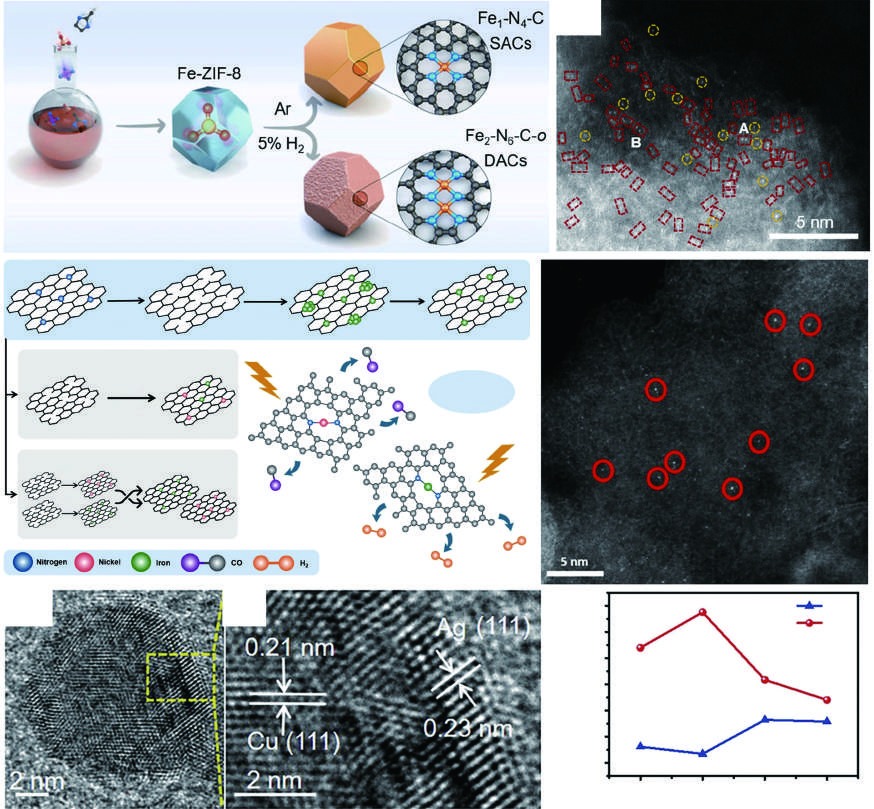
The electrocatalytic CO2 reduction reaction (CO2RR) is an environmentally friendly way to convert CO2 into valuable chemicals. However, CO2 conversion is a complex process, which contains 2, 4, 6, 8, and 12 electron transfer processes. It is very important to develop efficient catalysts to precisely control the number of electron transfers for the chemicals required. Single-metal catalysts have some deficiencies, including slow reaction kinetics, low product selectivity and inadequate stability. In response to these challenges, bimetallic catalysts have received significant attention owing to their unique structure and improved performance. The introduction of secondary metals alters the catalyst’s electronic structure, and creates novel active sites, as well as optimizing their interaction with the intermediates. This review provides a comprehensive account of atomically distributed bimetals based on carbon materials and non-atomic distributed bimetals such as alloys and heterostructures, including their synthesis methods, characterization, and the outcomes of different catalysts. Catalytic mechanisms of different bimetallic catalysts are proposed and challenges encountered in the CO2RR are considered.

A review of the synthesis, characterization, and mechanism of bimetallic catalysts for electrocatalytic CO2 reduction
Graphical Abstract