Key Takeaways & Executive Findings
- •• An innovative electrochemical treatment after mild acid leaching achieves deep removal of metal impurities from spent graphite anodes, reducing major metal content below 20 mg/kg. • The recovered graphite exhibits excellent electrochemical performance: 358.7 mAh/g discharge capacity at 0.1 C and 95.85% capacity retention after 150 cycles. • Organic impurities are found to severely degrade electrochemical performance, while trace inorganic impurities mainly affect cycling stability. • The method offers a low-acid, reagent-free, and energy-efficient alternative to conventional recycling, addressing key challenges in spent graphite recovery.
Abstract
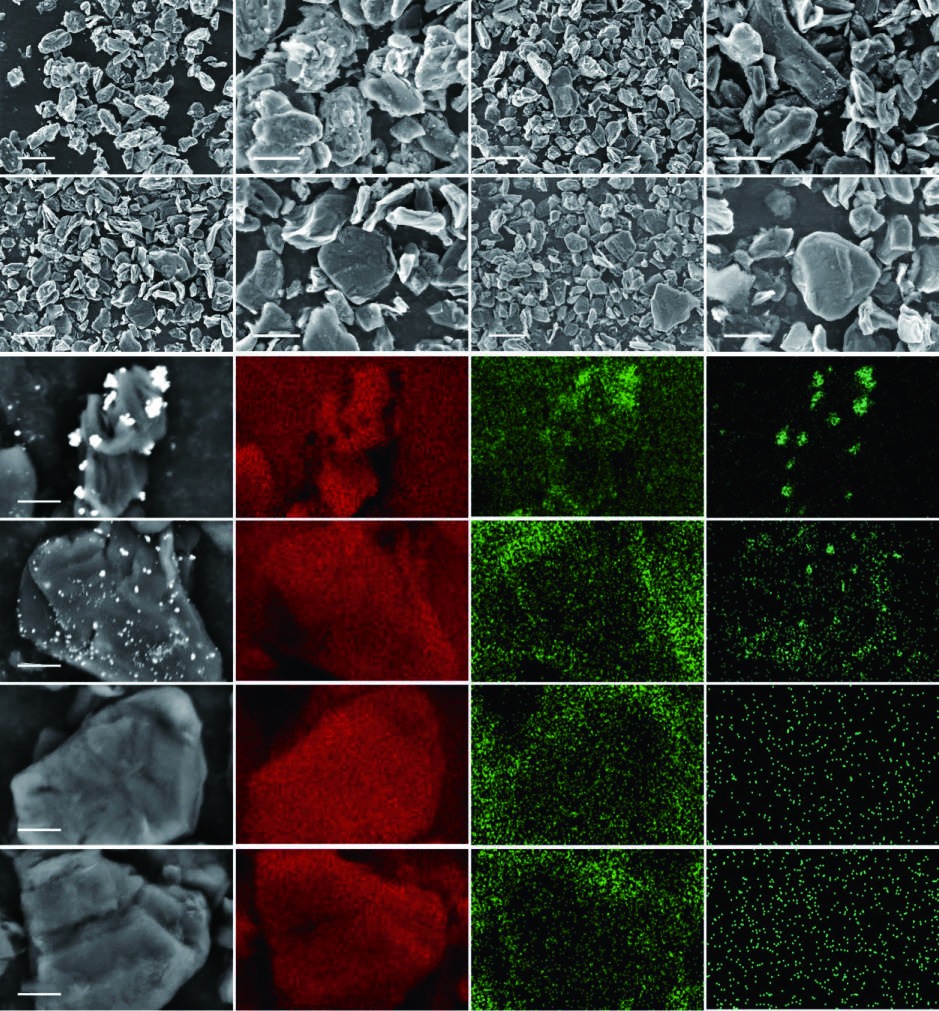
With the rapid development of new energy vehicles, power lithium-ion batteries are increasingly widely used, and a large number of lithium batteries are also ushering in a peak period of retirement. The comprehensive recycling and utilization of spent lithium batteries has attracted high attention from various countries. The layered structure of the graphite anode in spent lithium batteries is basically unchanged, so high-temperature graphitization is not required during recycling, and only the removal of internal impurities needs to be considered. In this paper, the spent graphite anode was treated by heat treatment, ultrasonic separation, and acid leaching, and then an innovative electrochemical treatment was adopted to deeply remove internal metal impurities. Comparing graphite at different recycling stages, it was found that the presence of organic impurities in graphite seriously affects various electrochemical properties, while trace amounts of inorganic impurities such as Cu and Fe have little effect on the initial discharge specific capacity but reduce the cycling stability of graphite. The final recovered graphite had internal major metal impurity content below 20 mg/kg, with a discharge specific capacity of 358.7 mAh/g at 0.1 C rate, and a capacity retention rate of 95.85% after 150 cycles. Compared with reported spent graphite recycling methods, this method can deeply remove impurities inside the graphite anode, solving the problems of large acid-base consumption, incomplete impurity removal, and high energy consumption. The recovered regenerated graphite anode has good electrochemical performance, providing a new recycling and regeneration path for spent lithium battery graphite anodes.
1. Introduction
With the rapid development of technology and industry, the demand for power lithium-ion batteries for new energy vehicles is increasing. Lithium-ion batteries have advantages such as easy availability of raw materials, rechargeability, long battery life, high capacity, and good electrochemical performance, and are widely used in national defense, aerospace, marine, and daily life fields [1]. In recent years, multiple national ministries have issued policies to strongly support the new energy industry, leading to a yearly increase in the use of lithium-ion batteries [2]. Typically, the lifespan of power lithium-ion batteries for new energy vehicles is about 5 years. After prolonged use, battery performance degrades, and when capacity decays to below 80%, the battery faces retirement [3–8]. It is predicted that by 2030, the retirement volume of spent lithium batteries in China will reach 3.9×10^9 kg, and globally it will exceed 1.0×10^10 kg [9]. Therefore, the recycling of spent lithium-ion batteries is urgent.
In recent years, spent lithium battery recycling has attracted widespread attention. Since cathodes contain valuable metal elements such as Li, Co, Ni, and Mn, previous research has focused on recovering high-value metals from this 'urban mine', while studies on recycling the lower-value anode graphite are relatively scarce. Since battery failure is generally due to structural changes in cathode materials [10] and continuous growth of the SEI film on the graphite anode surface [11], the graphite structure itself is not destroyed. Therefore, recycling anode graphite only requires removal of internal impurities, omitting the high-temperature graphitization step. Compared to discarding or incinerating graphite, recycling spent graphite after impurity removal not only reduces environmental pollution but also has good economic benefits.
There are many methods to recover graphite from spent lithium batteries, which can be classified into three categories: mechanical separation, pyrometallurgy, and hydrometallurgy. Mechanical separation involves no heating or acid-base treatment, only mechanical crushing, sieving, and other methods to complete separation [12]. In the laboratory, mechanical separation typically involves manually breaking the discharged battery shell, separating components, and scraping off the graphite from the anode sheet; in factories, it generally involves large crushing devices to break the discharged battery, followed by air separation and gravity separation to separate cathode and anode powders and metal powders. Pyrometallurgy involves heat treatment of graphite at high temperatures in air or inert gas environments to remove impurities and improve graphite performance [13–14]. Hydrometallurgy removes impurities from graphite using acid or alkali solutions [15–16]. Each method has its advantages and disadvantages, and appropriate selection is needed to achieve the goal of graphite recovery. Yang et al. [17] heat-treated spent battery anode sheets under different atmospheres, then acid-leached in 1 mol/L hydrochloric acid and 4% H2O2, obtaining recovered graphite that exhibited good electrochemical performance when assembled into coin cells. Zhang et al. [18] used a H2SO4+H2O2 system for acid leaching to remove impurities, followed by heat treatment to remove organic impurities, and finally coated with phenolic resin to improve graphite performance, achieving first-cycle Coulombic efficiency and discharge specific capacity meeting mid-end graphite requirements. The above studies successfully recovered anode graphite with good electrochemical performance, but high concentrations of acid-base solutions and oxidants were used in the hydrometallurgical processes. Additionally, lithium batteries have high requirements for metal impurity content in anode graphite; small amounts of metals can cause side reactions in the battery, reducing capacity, and even piercing the separator leading to thermal runaway. Therefore, further research is needed on impurity removal and recycling of spent graphite.
Loading authentic research manuscript (Pages 1–5)...
Rui Zhang, Yong Tian, Weili Zhang, Jiayin Song, Jie Min, Bo Pang, Jianjun Chen (2024). Electrochemical impurity removal from spent ternary lithium battery graphite anodes and their performance study. New Carbon Materials. https://doi.org/10.1016/S1872-5805_N
Research & Educational Purpose Only:The translations, structured abstracts, analytical annotations, and data reports provided by SinoTechIntel are intended exclusively for academic research, internal corporate R&D, and educational benchmarking. They do not constitute formal engineering, chemical safety, legal, or professional advice.
Copyright & Intellectual Property Notice: Original copyright of the underlying source articles and experimental data remains with the respective authors, institutions, and original publishing journals. SinoTechIntel claims intellectual property only over its proprietary translations, analytical syntheses, and AEO structured enhancements in accordance with international fair use and academic citation principles.
Frequently Asked Questions
What is the main innovation of this study?
The main innovation is the use of an electrochemical treatment after mild acid leaching to deeply remove metal impurities from spent graphite anodes, achieving high purity and good electrochemical performance with low acid consumption and no additional reagents.
How does the electrochemical purification method work?
The method involves applying a DC voltage across two activated carbon electrodes immersed in a suspension of acid-leached graphite. The electric field drives metal ions out of the graphite structure, effectively removing impurities.
What are the key performance metrics of the recovered graphite?
The recovered graphite has a discharge specific capacity of 358.7 mAh/g at 0.1 C, with a capacity retention of 95.85% after 150 cycles, and major metal impurity content below 20 mg/kg.
How does this method compare to traditional recycling methods?
Compared to traditional methods, this approach uses lower acid concentrations, avoids additional reagents, reduces energy consumption, and achieves more thorough impurity removal, resulting in better electrochemical performance.
What is the significance of this research for the battery recycling industry?
This research provides a new, efficient, and environmentally friendly pathway for recycling spent graphite anodes, contributing to sustainable resource management and reducing environmental pollution from spent lithium batteries.
Related Technical Papers & Translations
Design and optimization of a high-efficiency distillation process for cellulosic fuel ethanol integrated with thermal coupling and molecular sieve adsorption
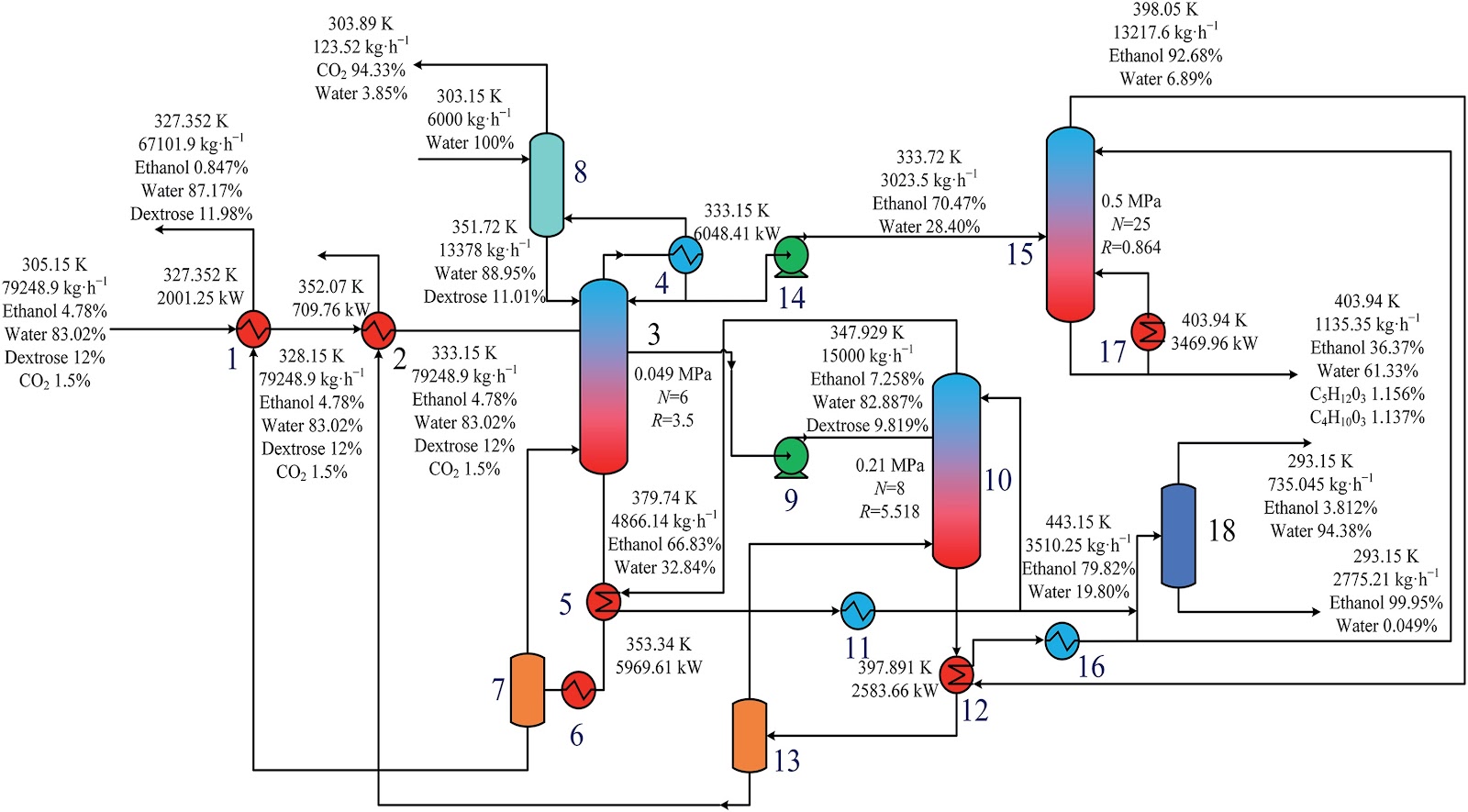
To address the challenges of high energy consumption and prominent costs in the traditional three-columns distillation process for cellulosic fuel ethanol, a distillation—molecular sieve coupling separation process is proposed. This process integrates a three-column (crude distillation column, first distillation column, second distillation column) system with a 3A molecular sieve adsorption deep dehydration unit. A thermal coupling network is constructed via differential pressure design (steam from medium/high-pressure columns as mutual heat sources, reboiler liquid waste heat for feed preheating), and molecular sieve adsorption conditions are optimized. The study first performs a thermodynamic consistency test on the ethanol—water system, determines optimal non-random two-liquid (NRTL) model binary interaction parameters via experimental data regression for Aspen Plus simulation. Aiming at minimum total annual cost (TAC), Aspen Plus is used to optimize process parameters (theoretical tray number, feed location, reflux ratio, side-draw position, etc.). Economic analysis shows this process reduces CO2 emission costs by 27.56%, TAC by 15.58% (to 5.123 × 10⁶ USD·a-1), and increases ethanol purity to >99.6%, providing an effective solution for green, efficient separation.
A cohesion loss model for determining residual strength of deep bedded sandstone
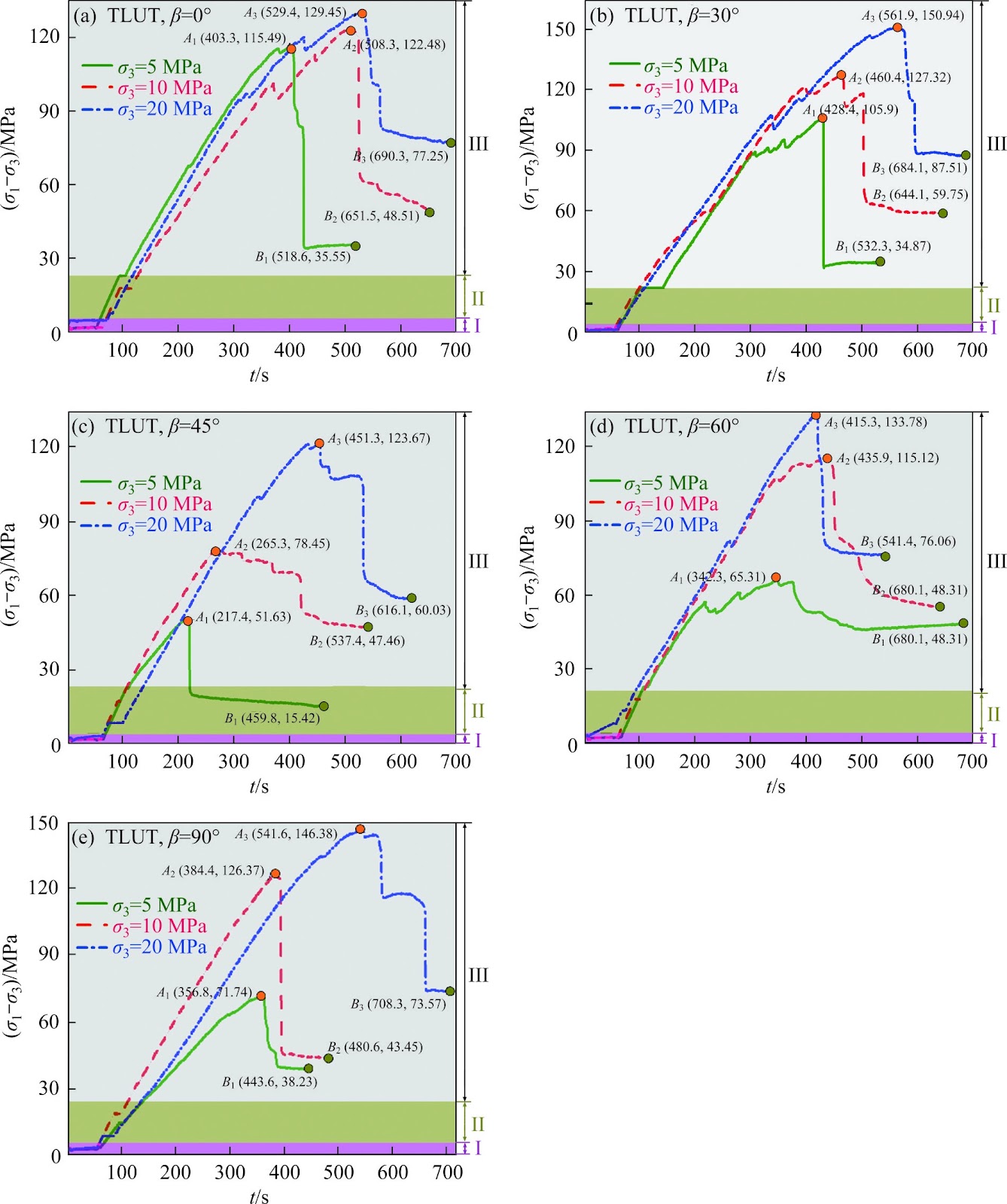
Rock residual strength, as an important input parameter, plays an indispensable role in proposing the reasonable and scientific scheme about stope design, underground tunnel excavation and stability evaluation of deep chambers. Therefore, previous residual strength models of rocks established were reviewed. And corresponding related problems were stated. Subsequently, starting from the effects of bedding and whole life-cycle evolution process, series of triaxial mechanical tests of deep bedded s
Federated model with contrastive learning and adaptive control variates for human activity recognition
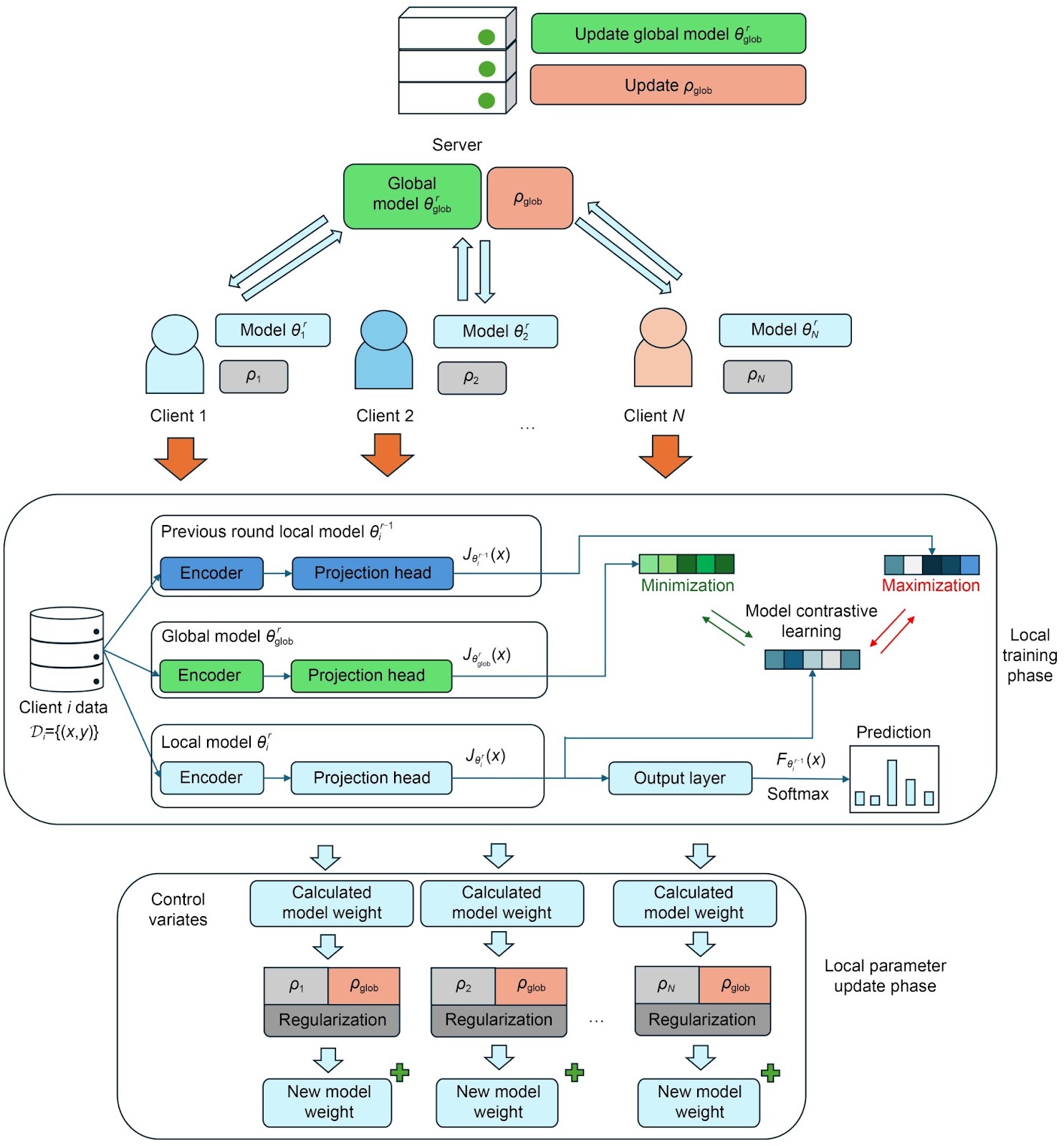
Recent attention to privacy issues demands a communication-safe method for training human activity recognition (HAR) models on client activity data. Federated learning (FL) has become a compelling technique to facilitate model training between the server and clients while preserving data privacy. However, classical FL methods often assume independent and identically distributed (IID) data among clients. This assumption does not hold true in practical scenarios. Human activity in real-world scena