SinoTechIntel Academic Portal
🏛️ Indexed Academic JournalImpact Factor: 3.7 (Q2 - Elsevier)Original: 新型炭材料

New Carbon Materials

3.7 (Q2 - Elsevier)

Total Research Papers: 47
Access: 100% Free Open Access
Browse by Publication Year & VolumeReset All Filters ✕

Published Research PapersFiltered: Year 2024 • Vol. 39 • Issue 4

Showing 6 of 47 peer-reviewed papers with full Graphical Abstracts.

Original ResearchVol. 39, Issue 4 • pp. 715-728DOI: 10.1016/S1872-5805_NJan 15, 2024

Increasing the toughness while reducing the viscosity of carbon nanotube/polyether imide/polyether ether ketone nanocomposites

Authors: SONG Jiu-peng, ZHAO Yan, LI Xue-kuan, XIONG Shu, LI Shuang, WANG Kai

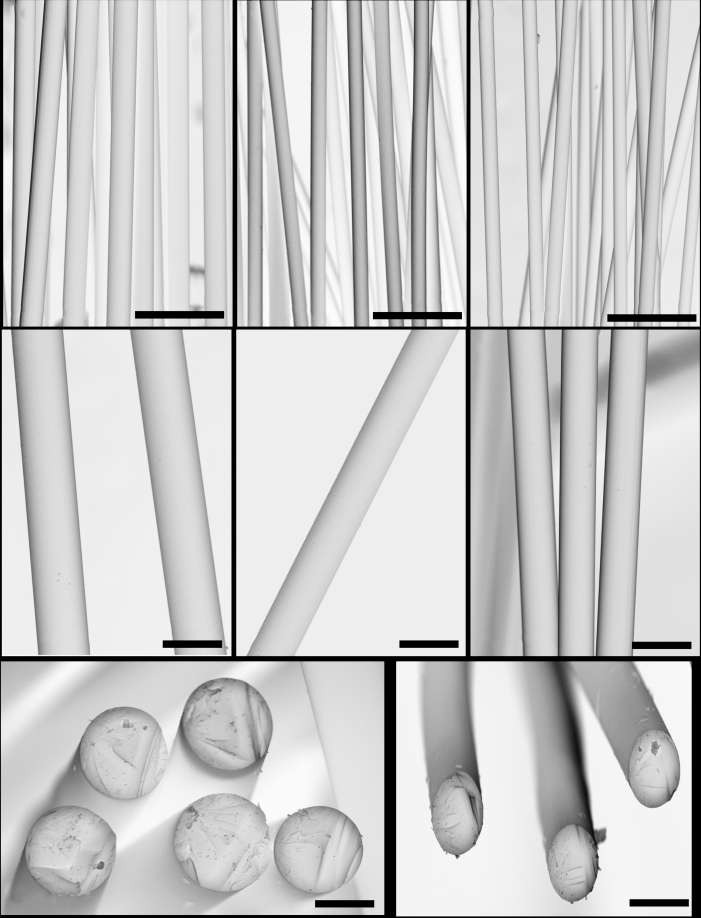
Polyether ether ketone (PEEK) has good mechanical properties. However, its high viscosity when molten limits its use because it is hard to process. PEEK nanocomposites containing both carbon nanotubes (CNTs) and polyether imide (PEI) were prepared by a direct wet powder blending method using a vertical injection molding machine. The addition of an optimum amount of PEI lowered the viscosity of the molten PEEK by approximately 50% while producing an increase in the toughness of the nanocomposites, whose strain to failure increased by 129%, and fracture energy increased by 97%. The uniformly dispersed CNT/PEI powder reduced the processing difficulty of PEEK nanocomposites without affecting the thermal resistance. This improvement of the strength and viscosity of PEEK facilitate its use in the preparation of thermoplastic composites.
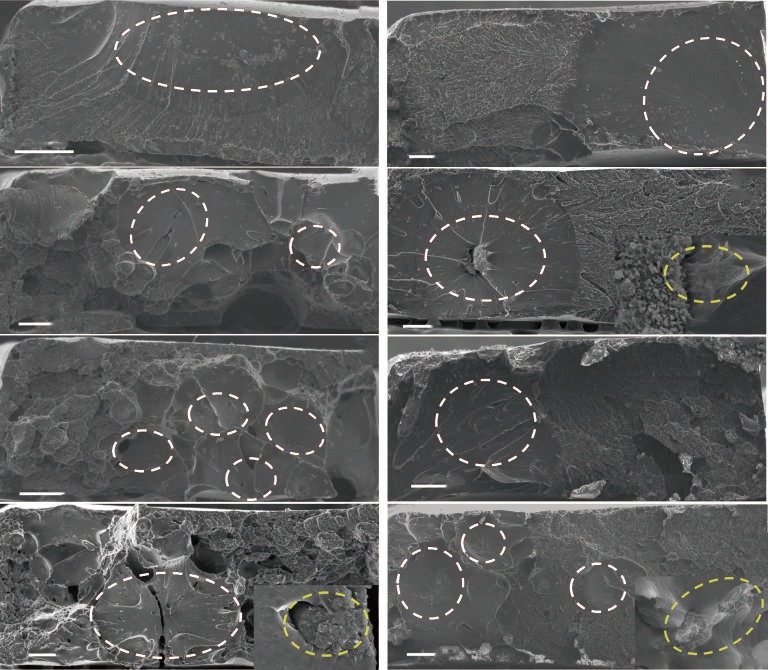
Increasing the toughness while reducing the viscosity of carbon nanotube/polyether imide/polyether ether ketone nanocomposites
Graphical Abstract
Original ResearchVol. 39, Issue 4 • pp. 681-691DOI: 10.1016/S1872-5805_NJan 15, 2024

Cardo poly (ether sulfone) toughened E51/DETDA epoxy resin and its carbon fiber composites

Authors: WU Rong-peng, ZHANG Xing-hua, WEI Xing-hai, JING De-qi, SU Wei-guo, ZHANG Shou-chun

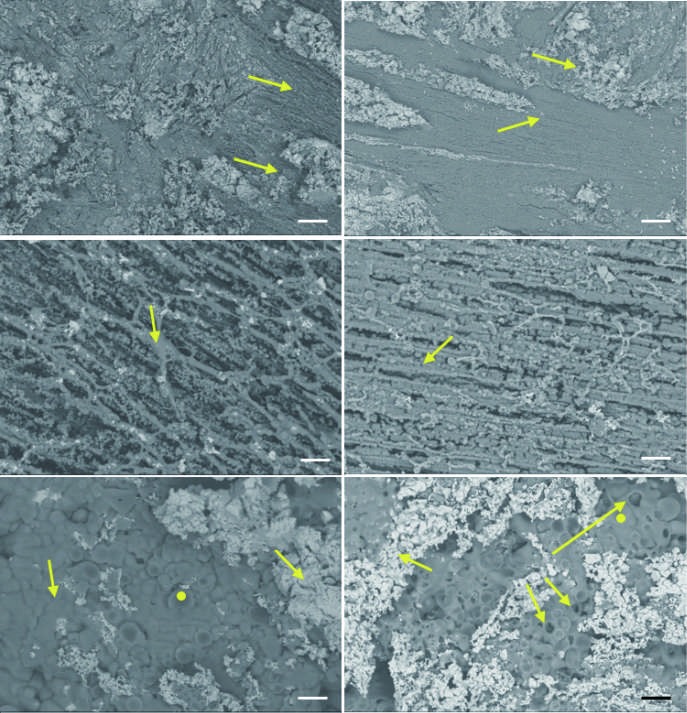
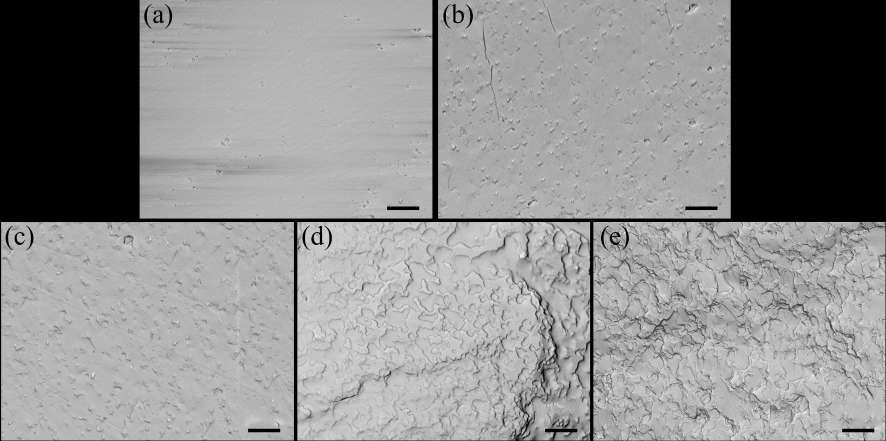
A toughener that can effectively improve the interlaminar toughness in carbon fiber composites is crucial for various applications. We investigated, the toughening effects of phenolphthalein-based cardo poly (ether sulfone) (PES-C) on E51/ DETDA epoxy and its carbon fiber composites (CFCs). Scanning electron microscopy showed that the phase structures of PES-C/epoxy blends change from island (of dispersed phase) structures to bi-continuous structures (of the matrix) as the PES-C content increased, which is associated with reaction-induced phase separation. After adding 15 phr PES-C, the glass transition temperature (Tg) of the blends increased by 51.5 °C, and the flexural strength, impact strength and fracture toughness of the blends were improved by 41.1%, 186.2% and 42.7%, respectively. These improvements could be attributed to the phase separation structure of the PES-C/epoxy system. A PES-C film was used to improve the mode-II fracture toughness (GIIC) of CFCs. The GIIC value of the 7 μm PES-C film toughened laminate was improved by 80.3% compared to that of the control laminate. The increase in GIIC was attributed to cohesive failure and plastic deformation in the interleaving region.

Cardo poly (ether sulfone) toughened E51/DETDA epoxy resin and its carbon fiber composites
Graphical Abstract
Original ResearchVol. 39, Issue 4 • pp. 655-667DOI: 10.1016/S1872-5805_NJan 15, 2024

Preparation of a high-performance synthetic pitch from aromatic hydrocarbons containing N/Cl

Authors: ZHANG Yu-kun, LIN Xiong-chao, GAO Hong-feng, XI Wen-shuai, WANG Cai-hong, WANG Yong-gang

The preparation of a synthetic pitch from aromatic monomers could easily regulate structure orientation at the molecular level, which would be useful in fabrication. An isotropic synthetic pitch was prepared by a chlorine- and/or nitrogen-induced substitution polymerization reaction method using aromatic hydrocarbon precursors containing Cl and N, which for this study were chloromethyl naphthalene and quinoline. This method was verified by investigating the structural changes under different synthesis conditions, and the synthesis mechanism induced by aromatics containing Cl was also probed. The result shows that the pyridinic N in quinoline contains a lone pair of electrons, and is an effective active site to induce the polymerization reaction by coupling with aromatic hydrocarbons containing Cl. The reaction between such free radicals causes strong homopolymerization and oligomerization. A higher reaction temperature and longer reaction time significantly increased the degree of polymerization and thus increased the softening point of the pitch. A linear molecular structure was formed by the Cl substitution reaction, which produced a highly spinnable pitch with a softening point of 258.6 °C, and carbon fibers with a tensile strength of 1 163.82 MPa were obtained. This study provides a relatively simple and safe method for the preparation of high-quality spinnable pitch.

Preparation of a high-performance synthetic pitch from aromatic hydrocarbons containing N/Cl
Graphical Abstract
Original ResearchVol. 39, Issue 4 • pp. 645-654DOI: 10.1016/S1872-5805_NJan 15, 2024

Formation of mesophase microbeads from bulk mesophase pitch induced by fullerene

Authors: CHEN Wen-sheng, LIU Lan-tao, WANG Zheng, DUAN Chun-feng, ZHANG Xing-wei, MA Zhao-kun, CHEN Xiao-hong, SONG Huai-he

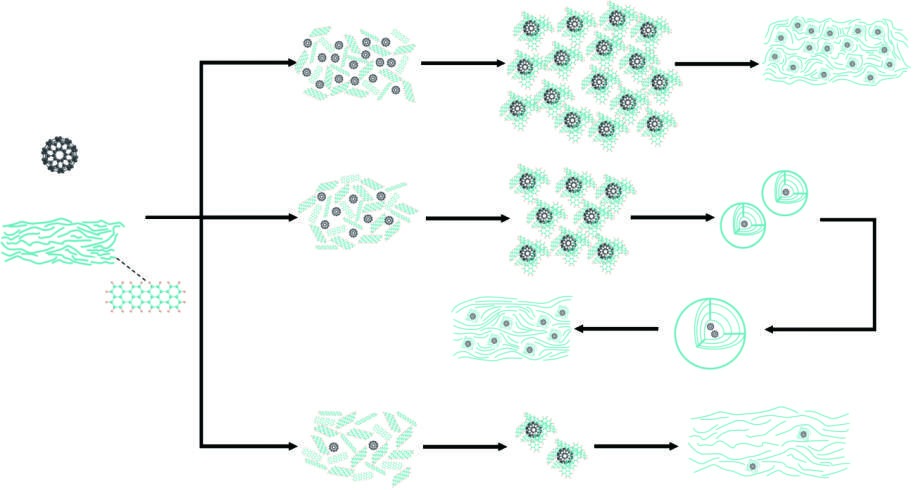
A transformation of naphthalene-based coalescenced mesophase pitch (NMP) to mesophase microbeads was achieved by heating a mixture of NMP and fullerene (C60). This is different from the conventional process of the liquid-phase carbonization of isotropic pitch to the emergence of carbon microbeads in the matrix and finally their growth to form a 100% anisotropic bulk mesophase, but rather a reverse transformation. The effects of C60 loading and reaction temperature on the morphological transformation of mesophase were investigated by polarizing optical and scanning electron microscopies. The physical changes in the NMP induced by C60 were characterized by thermogravimetric analysis, Fourier transform infrared spectroscopy, X-ray diffractometry and Raman spectroscopy. The results show that the coalesced NMP can be converted to a spherical type at 300–320 °C with the addition of 5% C60, and the size of the mesophase microbeads increases with increasing temperature. Furthermore, a model is established to explain the unique induction effect of C60 in the transformation process. This work makes the morphological transformation of MP controllable, and provides a new idea for the understanding and research of mesophase pitch.

Formation of mesophase microbeads from bulk mesophase pitch induced by fullerene
Graphical Abstract
Original ResearchVol. 39, Issue 4 • pp. 633-644DOI: 10.1016/S1872-5805_NJan 15, 2024

Ablation behaviour and mechanical performance of ZrB2-ZrC-SiC modified carbon/carbon composites prepared by vacuum infiltration combined with reactive melt infiltration

Authors: ZHANG Jia-ping, SU Xiao-xuan, LI Xin-gang, WANG Run-ning, FU Qian-gang

The development of advanced aircraft relies on high performance thermal-structural materials, and carbon/carbon composites (C/C) composited with ultrahigh-temperature ceramics are ideal candidates. However, the traditional routes of compositing are either inefficient and expensive or lead to a non-uniform distribution of ceramics in the matrix. Compared with the traditional C/C-ZrC-SiC composites prepared by the reactive melt infiltration of ZrSi2, C/C-ZrB2-ZrC-SiC composites prepared by the vacuum infiltration of ZrB2 combined with reactive melt infiltration have the higher content and more uniform distribution of the introduced ceramic phases. The mass and linear ablation rates of the C/C-ZrB2-ZrC-SiC composites were respectively 68.9% and 29.7% lower than those of C/C-ZrC-SiC composites prepared by reactive melt infiltration. The ablation performance was improved because the volatilization of B2O3, removes some of the heat, and the more uniformly distributed ZrO2, that helps produce a ZrO2-SiO2 continuous protective layer, hinders oxygen infiltration and decreases ablation.

Ablation behaviour and mechanical performance of ZrB2-ZrC-SiC modified carbon/carbon composites prepared by vacuum infiltration combined with reactive melt infiltration
Graphical Abstract
Original ResearchVol. 39, Issue 4 • pp. 583-610DOI: 10.1016/S1872-5805_NJan 15, 2024

A review of the catalytic preparation of mesophase pitch

Authors: MA Zi-hui, YANG Tao, SONG Yan, CHEN Wen-sheng, DUAN Chun-feng, SONG Huai-he, TIAN Xiao-dong, GONG Xiang-jie, LIU Zheng-yang, LIU Zhan-jun

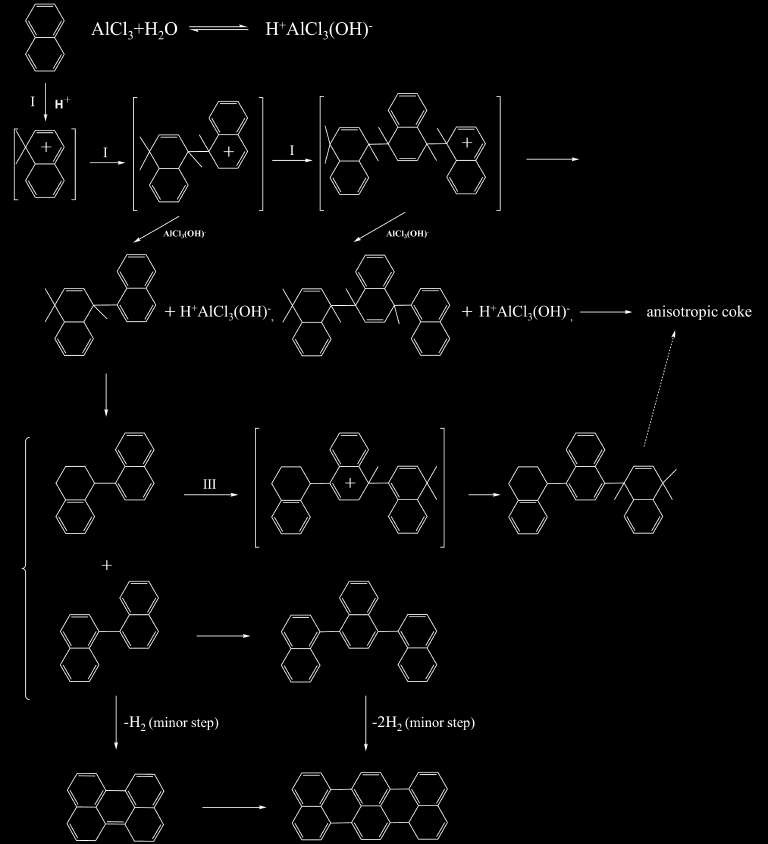
Because of its high purity and excellent orientation, mesophase pitch is a superior precursor for high-performance carbon materials. However, the preparation of top-notch mesophase pitch faces challenges. Catalytic polycondensation at low temperatures is more favorable for synthesizing mesophase pitch, because it circumvents the high-temperature free radical reaction of other thermal polycondensation approaches. The reaction is gentle and can be easily controlled. It has the potential to significantly improve the yield of mesophase pitch and easily introduce naphthenic characteristics into the molecules, catalytic polycondensation is therefore a preferred method of synthesizing highly spinnable mesophase pitch. This review provides a synopsis of the selective pretreatment of the raw materials to prepare different mesophase pitches, and explains the reaction mechanism and associated research advances for different catalytic systems in recent years. Finally, how to manufacture high-quality mesophase pitch by using a catalyst-promoter system is summarized and proposed, which may provide a theoretical basis for the future design of high-quality pitch molecules.

A review of the catalytic preparation of mesophase pitch
Graphical Abstract