SinoTechIntel Academic Portal
🏛️ Indexed Academic JournalImpact Factor: 2.7 (Q2 - Springer)

Information Technology & Electronic Engineering

2.7 (Q2 - Springer)

Total Research Papers: 153
Access: 100% Free Open Access
Browse by Publication Year & VolumeReset All Filters âś•

Published Research PapersFiltered: Year 2025 • Vol. 32 • Issue 2

Showing 13 of 153 peer-reviewed papers with full Graphical Abstracts.

Original ResearchVol. 32, Issue 2 • pp. 761-773DOI: 10.1631/FITEE_2500287• Feb 25, 2025

Jiu fusion artificial intelligence (JFA): a two-stage reinforcement learning model with hierarchical neural networks and human knowledge for Tibetan Jiu chess

Authors: Xiali LI, Xiaoyu FAN, Junzhi YU, Zhicheng DONG, Xianmu CAIRANG, Ping LAN

Tibetan Jiu chess, recognized as a national intangible cultural heritage, is a complex game comprising two distinct phases: the layout phase and the battle phase. Improving the performance of deep reinforcement learning (DRL) models for Tibetan Jiu chess is challenging, especially given the constraints of hardware resources. To address this, we propose a two-stage model called JFA, which incorporates hierarchical neural networks and knowledge-guided techniques. The model includes sub-models: str
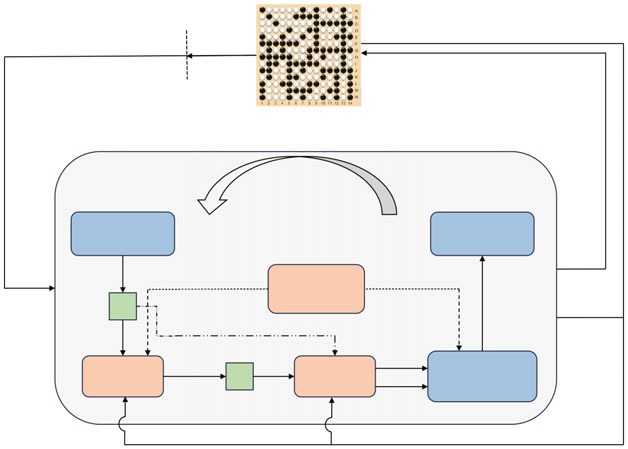
Jiu fusion artificial intelligence (JFA): a two-stage reinforcement learning model with hierarchical neural networks and human knowledge for Tibetan Jiu chess
Graphical Abstract
Original ResearchVol. 32, Issue 2 • pp. 133-145DOI: 10.1631/FITEE_2300684• Feb 23, 2025

Automatic parallelism strategy generation with minimal memory redundancy

Authors: Yanqi SHI, Peng LIANG, Hao ZHENG, Linbo QIAO, Dongsheng LI

Large-scale deep learning models are trained distributedly due to memory and computing resource limitations. Few existing strategy generation approaches take optimal memory minimization as the objective. To fill in this gap, we propose a novel algorithm that generates optimal parallelism strategies with the constraint of minimal memory redundancy. We propose a novel redundant memory cost model to calculate the memory overhead of each operator in a given parallel strategy. To generate the optimal

Automatic parallelism strategy generation with minimal memory redundancy
Graphical Abstract
Original ResearchVol. 32, Issue 2 • pp. 369-381DOI: 10.1631/FITEE_2500429• Feb 22, 2025

GMCoT: a graph-augmented multimodal chain-of-thought reasoning framework for multi-label zero-shot learning

Authors: Xiang Wen, Haobo Wang, Ke Chen, Tianlei Hu, Gang Chen

In recent years, multi-label zero-shot learning (ML-ZSL) has garnered increasing attention because of its wide range of potential applications, such as image annotation, text classification, and bioinformatics. The central challenge in ML-ZSL lies in predicting multiple labels for unseen classes without requiring any labeled training data, which contrasts with conventional supervised learning paradigms. However, existing methods face several significant challenges. These include the substantial

GMCoT: a graph-augmented multimodal chain-of-thought reasoning framework for multi-label zero-shot learning
Graphical Abstract
Original ResearchVol. 32, Issue 2 • pp. 541-553DOI: 10.1631/FITEE_2400594• Feb 20, 2025

S3Det: a fast object detector for remote sensing images based on artificial to spiking neural network conversion

Authors: Li Chen, Fan Zhang, Guangwei Xie, Yanzhao Gao, Xiaofeng Qi, Mingqian Sun

Artificial neural networks (ANNs) have made great strides in the field of remote sensing image object detection. However, low detection efficiency and high power consumption have always been significant bottlenecks in remote sensing. Spiking neural networks (SNNs) process information in the form of sparse spikes, creating the advantage of high energy efficiency for computer vision tasks. However, most studies have focused on simple classification tasks, and only a few researchers have applied SN

S3Det: a fast object detector for remote sensing images based on artificial to spiking neural network conversion
Graphical Abstract
Original ResearchVol. 32, Issue 2 • pp. 149-161DOI: 10.1631/FITEE_2400975• Feb 17, 2025

AOI-OPEN: federated operation and control for DAO-based trustworthy and intelligent AOI ecology

Authors: Yansong CAO, Yutong WANG, Jing YANG, Yonglin TIAN, Jiangong WANG, Fei-Yue WANG

Isolated data islands are prevalent in intelligent automated optical inspection (AOI) systems, limiting the full utilization of data resources and impeding the potential of AOI systems. Establishing a collaborative ecology involving software providers, hardware manufacturers, and factories offers an encouraging solution to build a closed-loop data flow and achieve optimal data resource utilization. However, concerns about privacy issues, rights infringement, and threats from other participants p

AOI-OPEN: federated operation and control for DAO-based trustworthy and intelligent AOI ecology
Graphical Abstract
Original ResearchVol. 32, Issue 2 • pp. 557-569DOI: 10.1631/FITEE_2401000• Feb 14, 2025

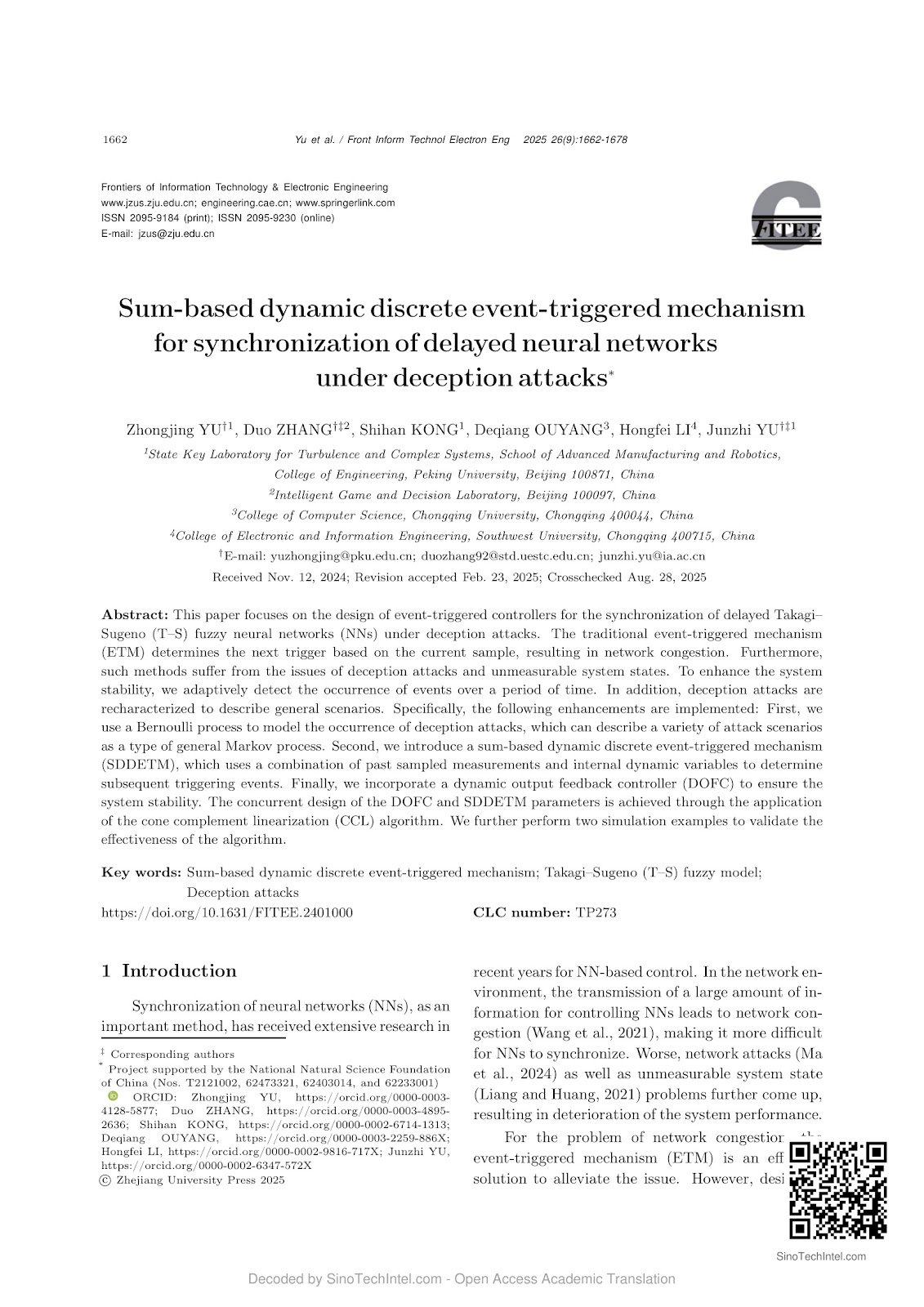
Sum-based dynamic discrete event-triggered mechanism for synchronization of delayed neural networks under deception attacks

Authors: Zhongjing YU, Duo ZHANG, Shihan KONG, Deqiang OUYANG, Hongfei LI, Junzhi YU

This paper focuses on the design of event-triggered controllers for the synchronization of delayed Takagi–Sugeno (T–S) fuzzy neural networks (NNs) under deception attacks. The traditional event-triggered mechanism (ETM) determines the next trigger based on the current sample, resulting in network congestion. Furthermore, such methods suffer from the issues of deception attacks and unmeasurable system states. To enhance the system stability, we adaptively detect the occurrence of events over a pe

Sum-based dynamic discrete event-triggered mechanism for synchronization of delayed neural networks under deception attacks
Graphical Abstract
Original ResearchVol. 32, Issue 2 • pp. 729-741DOI: 10.1631/ENG_ITEE_2026_0005• Feb 12, 2025

High-precision temperature prediction for atmospheric refractivity correction using Kalman spatiotemporal data fusion

Authors: Ziru LI, Zhaobin XU, Tao ZHANG, Xinbo YUAN, Zhonghe JIN

In absolute distance measurement and positioning applications, atmospheric refraction error is a critical factor limiting measurement accuracy. Temperature plays a dominant role in computing the atmospheric refractive index. However, accurately acquiring the temperature field along the ranging path in complex and dynamic outdoor environments remains challenging due to limited sensor deployment and environmental nonstationarity. We propose a spatiotemporal temperature data fusion method for atmos

High-precision temperature prediction for atmospheric refractivity correction using Kalman spatiotemporal data fusion
Graphical Abstract
Original ResearchVol. 32, Issue 2 • pp. 165-177DOI: 10.1631/FITEE_2500280• Feb 11, 2025

QuantBench: benchmarking AI methods for quantitative investment from a full pipeline perspective

Authors: Saizhuo WANG, Hao KONG, Jiadong GUO, Fengrui HUA, Yiyan QI, Wanyun ZHOU, Jiahao ZHENG, Xinyu WANG, Lionel M. NI, Jian GUO

The field of artificial intelligence (AI) in quantitative investment has seen significant advancements, yet it lacks a standardized benchmark aligned with industry practices. This gap hinders research progress and limits the practical application of academic innovations. We present QuantBench, an industrial-grade benchmark platform designed to address this critical need. QuantBench offers three key strengths: (1) standardization that aligns with quantitative investment industry practices; (2) fl

QuantBench: benchmarking AI methods for quantitative investment from a full pipeline perspective
Graphical Abstract
Original ResearchVol. 32, Issue 2 • pp. 337-349DOI: 10.1631/FITEE_2300867• Feb 9, 2025

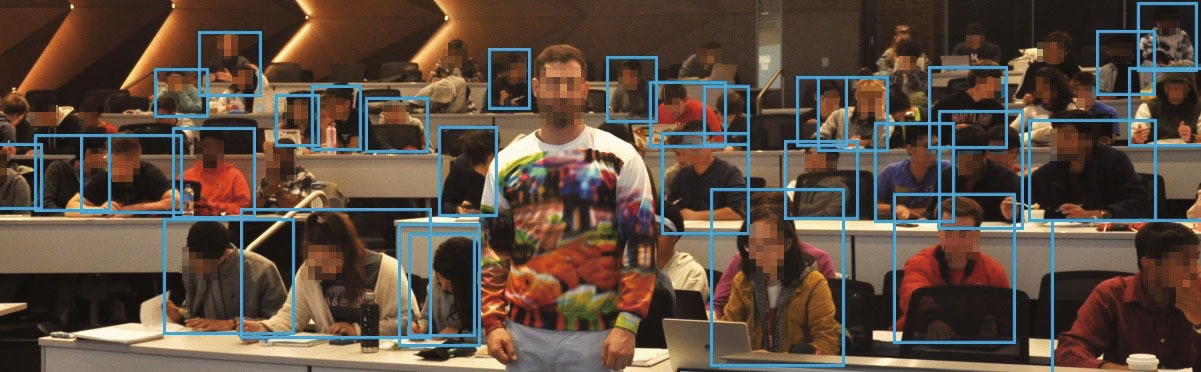
A comprehensive survey of physical adversarial vulnerabilities in autonomous driving systems

Authors: Shuai ZHAO, Boyuan ZHANG, Yucheng SHI, Yang ZHAI, Yahong HAN, Qinghua HU

Autonomous driving systems (ADSs) have attracted wide attention in the machine learning communities. With the help of deep neural networks (DNNs), ADSs have shown both satisfactory performance under significant uncertainties in the environment and the ability to compensate for system failures without external intervention. However, the vulnerability of ADSs has raised concerns since DNNs have been proven vulnerable to adversarial attacks. In this paper, we present a comprehensive survey of curre

A comprehensive survey of physical adversarial vulnerabilities in autonomous driving systems
Graphical Abstract
Original ResearchVol. 32, Issue 2 • pp. 745-757DOI: 10.1631/FITEE_2400033• Feb 6, 2025

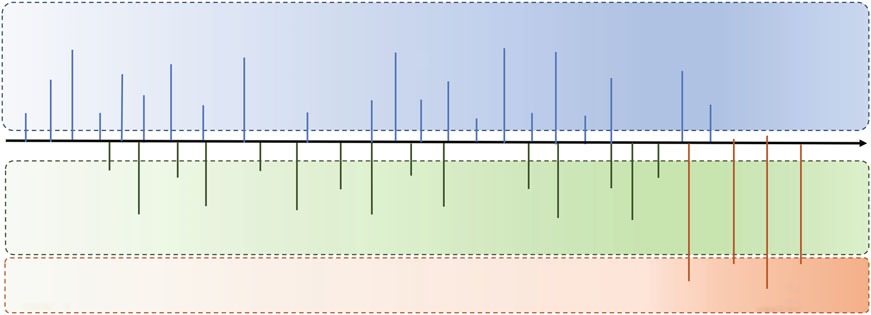
A novel frequency-protection interval adjustment method based on Doppler frequency offset pre-compensation for space-based Internet of Things

Authors: Qingquan Liu, Lihu Chen, Songting Li, Yiran Xiang, Baokang Zhao

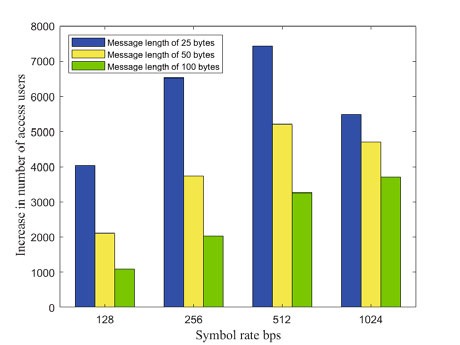
To meet the access demands of massive terminal users, the space-based Internet of Things (IoT) requires sufficient frequency resources for allocation. However, the frequency resources that are currently available have already been allocated to a great extent. Furthermore, the utilization rate of the allocated frequency resources is low. To support massive user access under restricted frequency resources, this work proposes a scheme based on Doppler frequency offset (DFO) pre-compensation to enha

A novel frequency-protection interval adjustment method based on Doppler frequency offset pre-compensation for space-based Internet of Things
Graphical Abstract
Original ResearchVol. 32, Issue 2 • pp. 353-365DOI: 10.1631/FITEE_2500162• Feb 3, 2025

E-CGL: an efficient continual graph learner

Authors: Jianhao Guo, Zixuan Ni, Yun Zhu, Siliang Tang

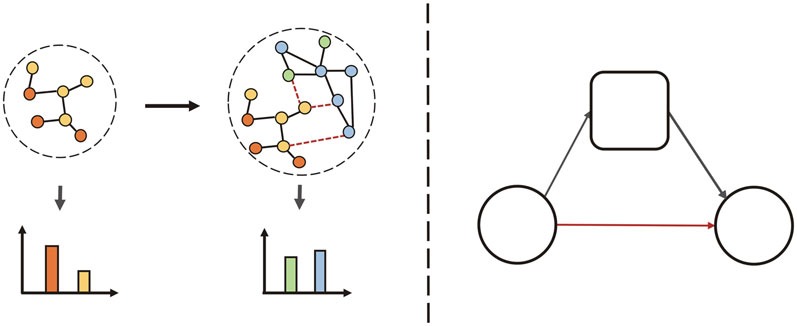
Continual learning (CL) has emerged as a crucial paradigm for learning from sequential data while retaining previous knowledge. Continual graph learning (CGL), characterized by dynamically evolving graphs from streaming data, presents distinct challenges that demand efficient algorithms to prevent catastrophic forgetting. The first challenge stems from the interdependencies between different graph data, in which previous graphs influence new data distributions. The second challenge is handling l

E-CGL: an efficient continual graph learner
Graphical Abstract
Original ResearchVol. 32, Issue 2 • pp. 589-601DOI: 10.1631/FITEE_2400492• Feb 2, 2025

Enhanced hippopotamus optimization algorithm for tuning proportional–integral–derivative controllers

Authors: Kailong MOU, Mengjian ZHANG, Deguang WANG, Ming YANG, Chengbin LIANG

Effectively tuning the parameters of proportional–integral–derivative (PID) controllers has persistently posed a challenge in control engineering. This study proposes enhanced hippopotamus optimization (EHO) to address this challenge. Latin hypercube sampling and adaptive lens reverse learning are used to initialize the population to improve population diversity and enhance global search. Additionally, an adaptive perturbation mechanism is introduced into the position update in the exploration p

Enhanced hippopotamus optimization algorithm for tuning proportional–integral–derivative controllers
Graphical Abstract
Original ResearchVol. 32, Issue 2 • pp. 525-537DOI: 10.1631/ENG_ITEE_2025_0149• Feb 1, 2025

A dual-band filtering push‒pull power amplifier with a large frequency ratio employing a hybrid-mode bandpass response balun

Authors: Jiyang CHU, Xiang WANG, Tianxiang CHEN, Jindong ZHANG, Jun HU, Huangyan LI, Boyu SIMA, Wen WU

A dual-band filtering push‒pull power amplifier (PA) with a large frequency ratio is presented in this paper. The proposed filtering power dividing/combining network is based on a hybrid-mode filtering balun using microstrip line (MSL) and substrate integrated waveguide (SIW). The MSL filtering balun operates in the S-band, with a frequency range of 2.6‒2.86 GHz. Meanwhile, the SIW filtering balun is designed for Ku-band operation, covering a frequency range of 13‒13.65 GHz. Under these conditio

A dual-band filtering push‒pull power amplifier with a large frequency ratio employing a hybrid-mode bandpass response balun
Graphical Abstract