SinoTechIntel Academic Portal
🏛️ Indexed Academic JournalImpact Factor: 3.7 (Q2 - Elsevier)Original: 新型炭材料

New Carbon Materials

3.7 (Q2 - Elsevier)

Total Research Papers: 47
Access: 100% Free Open Access
Browse by Publication Year & VolumeReset All Filters ✕

Published Research PapersFiltered: Year 2024 • Vol. 39 • Issue 1

Showing 5 of 47 peer-reviewed papers with full Graphical Abstracts.

Original ResearchVol. 39, Issue 1 • pp. 152-163DOI: 10.1016/S1872-5805_NJan 15, 2024

Cactus-like NC/CoxP electrode enables efficient and stable hydrogen evolution for saline water splitting

Authors: CHEN Xu, ZHAO Jin-yu, ZHANG Wen-sheng, WANG Xiao-min

Designing efficient and robust catalysts for hydrogen evolution reaction (HER) is imperative for saline water electrolysis technology. A catalyst composed of CoxP nanowires array with N-doped carbon nanosheets (NC) was fabricated on Ni foam (NF) by an in-situ growth strategy. The material is designated as NC/CoxP@NF. In the preparation process, Co(OH)2 nanowires were transformed into a metal organic framework of cobalt (ZIF-67) on NF by the dissolution-coordination of endogenous Co2+ and 2-methylimidazole. The resulting cactus-like microstructure gives NC/CoxP@NF abundant exposed active sites and ion transport channels, which improve the HER catalytic reaction kinetics. Furthermore, the interconnected alternating nanowires and free-standing nanosheets in NC/CoxP@NF improve its structural stability, and the formation of surface polyanions (phosphate) and a NC nanosheet protective layer improve the anti-corrosive properties of catalysts. Thus, the NC/CoxP@NF has an excellent performance, requiring overpotentials of 107 and 133 mV for HER to achieve 10 mA cm−2 in 1.0 mol L−1 KOH and 1.0 mol L−1 KOH + 0.5 mol L−1 NaCl, respectively. This in-situ transformation strategy is a new way of constructing highly-efficient HER catalysts for saline water electrolysis.
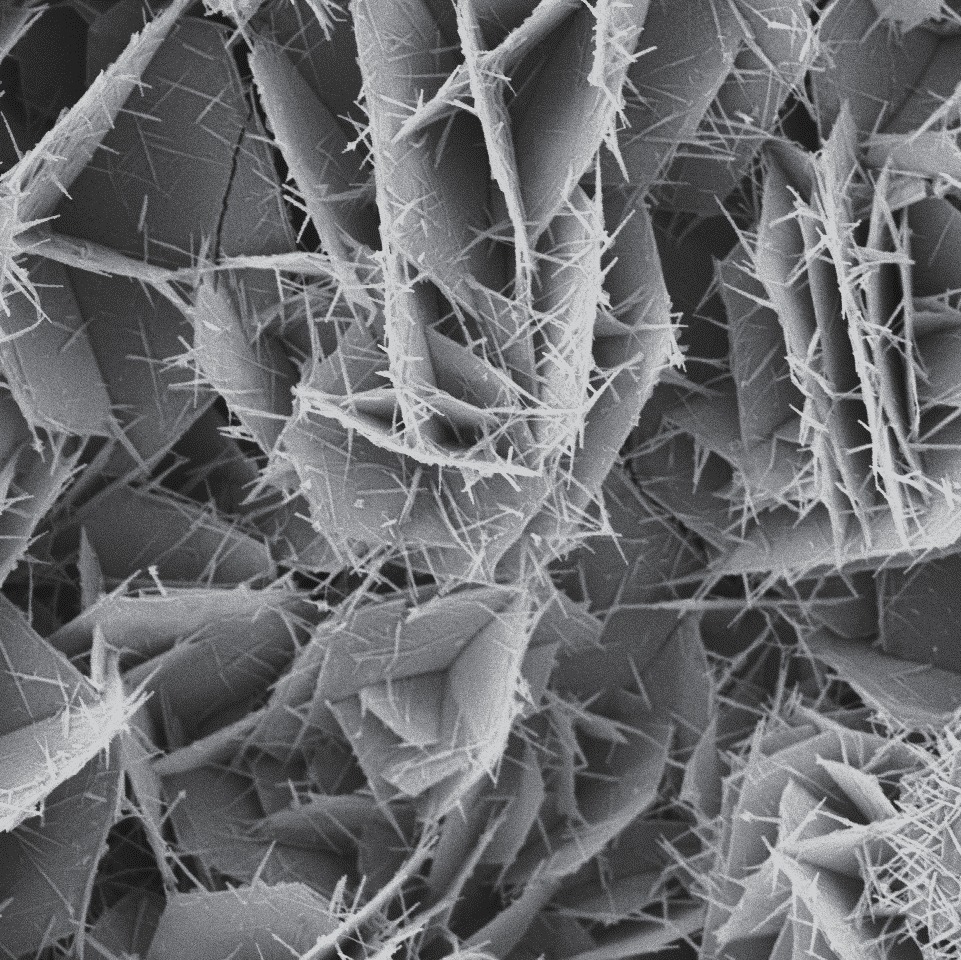
Cactus-like NC/CoxP electrode enables efficient and stable hydrogen evolution for saline water splitting
Graphical Abstract
Original ResearchVol. 39, Issue 1 • pp. 100-130DOI: 10.1016/S1872-5805_NJan 15, 2024

Research progress on graphene-based electrocatalytic materials for carbon dioxide reduction

Authors: Zelin Wu, Congwei Wang, Xiaoxiang Zhang, Quangui Guo, Junying Wang

Electrochemical reduction of carbon dioxide (CO2) to produce fuels and high-value chemicals is an effective strategy to mitigate global warming and address energy and environmental challenges. Due to the stable molecular structure of CO2, designing highly selective, energy-efficient, and low-cost electrocatalysts is crucial. Graphene and its derivatives, with their unique and excellent physical, mechanical, and electrical properties, and relatively low cost, are competitive for CO2 electroreduction. Moreover, the surface of graphene-based materials can be modified through various methods, including doping, defect engineering, constructing composite structures, and coating shapes. This review first summarizes the fundamental concepts, evaluation criteria, and catalytic principles and processes of electrochemical CO2 reduction. Then, it briefly introduces the preparation methods of graphene-based catalysts and summarizes recent research progress according to the categories of catalytic sites. Finally, future directions for CO2 electroreduction technology are discussed and prospected.

Research progress on graphene-based electrocatalytic materials for carbon dioxide reduction
Graphical Abstract
Original ResearchVol. 39, Issue 1 • pp. 78-99DOI: 10.1016/S1872-5805_NJan 15, 2024

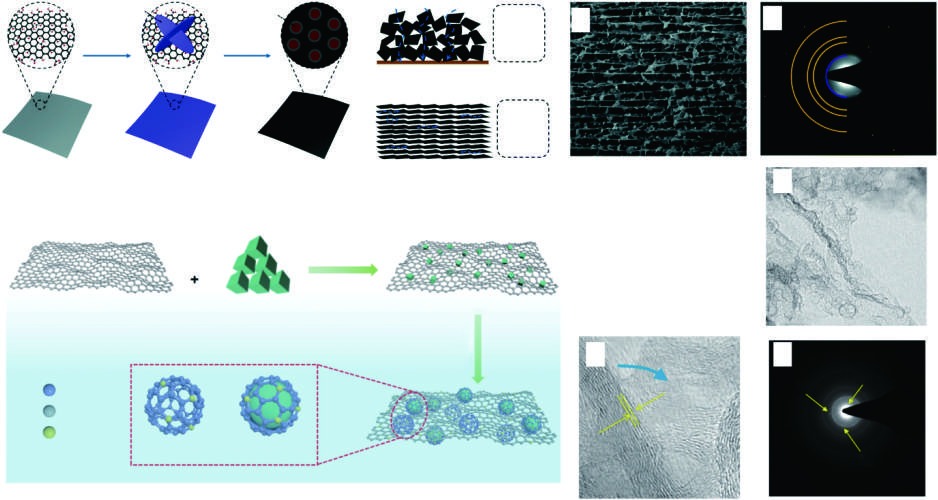
MOF-derived nanocarbon materials for electrochemical catalysis and their advanced characterization

Authors: CHEN Xi, LI Ming-xuan, Yan Jin-lun, Zhang Long-li

Because of the demand for clean and sustainable energy sources, nanocarbons, modified carbons and their composite materials derived from metal-organic frameworks (MOFs) are emerging as distinct catalysts for electrocatalytic energy conversion. These materials not only inherit the advantages of MOFs, like customizable dopants and structural diversity, but also effectively prevent the aggregation of nanoparticles of metals and metal oxides during pyrolysis. Consequently, they increase the electrocatalytic efficiency, improve electrical conductivity, and may play a pivotal role in green energy technologies such as fuel cells and metal-air batteries. This review first explores the carbonization mechanism of the MOF-derived carbon-based materials, and then considers 3 key aspects: intrinsic carbon defects, metal and non-metal atom doping, and the synthesis strategies for these materials. We also provide a comprehensive introduction to advanced characterization techniques to better understand the basic electrochemical catalysis processes, including mapping techniques for detecting localized active sites on electrocatalyst surfaces at the micro- to nano-scale and in-situ spectroscopy. Finally, we offer insights into future research concerning their use as electrocatalysts. Our primary objective is to provide a clearer perspective on the current status of MOF-derived carbon-based electrocatalysts and encourage the development of more efficient materials.

MOF-derived nanocarbon materials for electrochemical catalysis and their advanced characterization
Graphical Abstract
Original ResearchVol. 39, Issue 1 • pp. 17-41DOI: 10.1016/S1872-5805_NJan 15, 2024

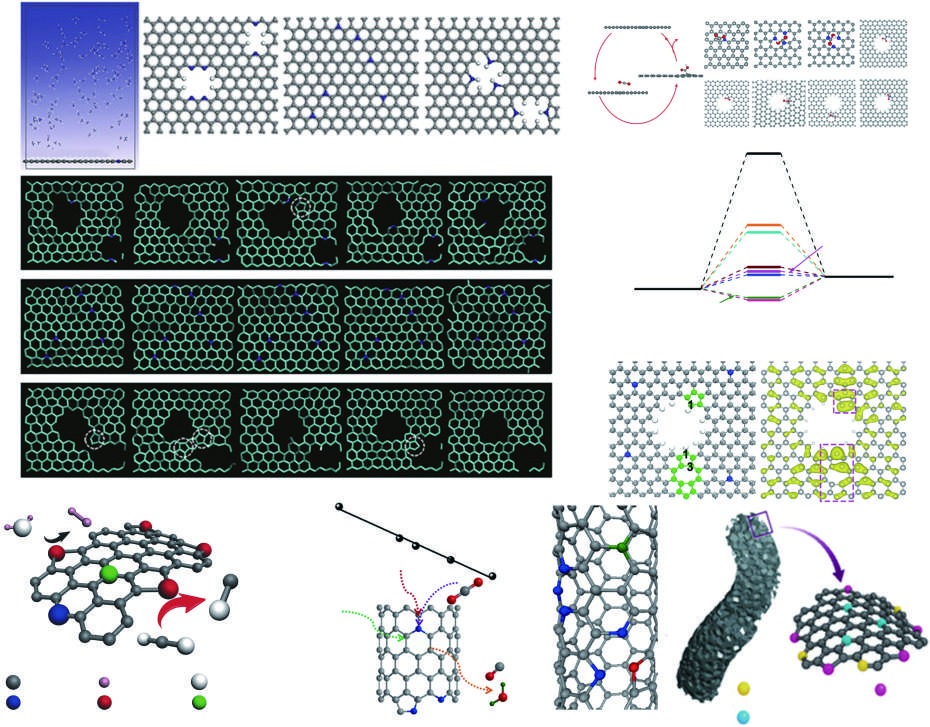
Defect engineering of carbon-based electrocatalysts for the CO2 reduction reaction: A review

Authors: LU Yan-kun, CHENG Bai-xue, ZHAN Hao-yu, ZHOU Peng

Electrocatalytic carbon dioxide (CO2) reduction is an important way to achieve carbon neutrality by converting CO2 into high-value-added chemicals using electric energy. Carbon-based materials are widely used in various electrochemical reactions, including electrocatalytic CO2 reduction, due to their low cost and high activity. In recent years, defect engineering has attracted wide attention by constructing asymmetric defect centers in the materials, which can optimize the physicochemical properties of the material and improve its electrocatalytic activity. This review summarizes the types, methods of formation and defect characterization techniques of defective carbon-based materials. The advantages of defect engineering and the advantages and disadvantages of various defect formation methods and characterization techniques are also evaluated. Finally, the challenges of using defective carbon-based materials in electrocatalytic CO2 reduction are investigated and opportunities for their use are discussed. It is believed that this review will provide suggestions and guidance for developing defective carbon-based materials for CO2 reduction.

Defect engineering of carbon-based electrocatalysts for the CO2 reduction reaction: A review
Graphical Abstract
Original ResearchVol. 39, Issue 1 • pp. 1-16DOI: 10.1016/S1872-5805_NJan 15, 2024

Carbon-based electrocatalysts for water splitting at high-current-densities: A review

Authors: CHEN Yu-xiang, ZHAO Xiu-hui, DONG Peng, ZHANG Ying-jie, ZOU Yu-qin, WANG Shuang-yin

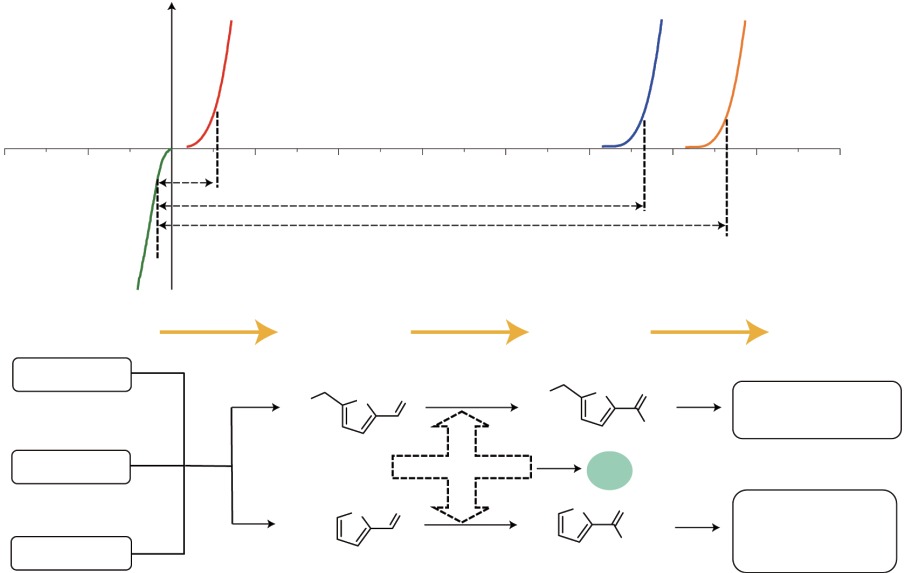
Electrocatalytic water splitting is a promising strategy to generate hydrogen using renewable energy under mild conditions. Carbon-based materials have attracted attention in electrocatalytic water splitting because of their distinctive features such as high specific area, high electron mobility and abundant natural resources. Hydrogen produced by industrial electrocatalytic water splitting in a large quantity requires electrocatalysis at a low overpotential at a large current density. Substantial efforts focused on fundamental research have been made, while much less attention has been paid to the high-current-density test. There are many distinct differences in electrocatalysis to split water using low and high current densities such as the bubble phenomenon, local environment around active sites, and stability. Recent research progress on carbon-based electrocatalysts for water splitting at low and high current densities is summarized, significant challenges and prospects for carbon-based electrocatalysts are discussed, and promising strategies are proposed.

Carbon-based electrocatalysts for water splitting at high-current-densities: A review
Graphical Abstract