Key Takeaways & Executive Findings
- •• Graphene-based materials are promising electrocatalysts for CO2 reduction due to their high surface area, tunable surface chemistry, and excellent electrical conductivity. • The review systematically covers the fundamental thermodynamics and kinetics of CO2 electroreduction, including key performance metrics like overpotential, Faradaic efficiency, and Tafel slope. • Various modification strategies (doping, defect engineering, composite formation) enhance the catalytic activity and selectivity of graphene-based catalysts for CO2 reduction. • The article highlights the potential of graphene-based catalysts to convert CO2 into valuable C1, C2, and C3 products, contributing to sustainable energy and carbon neutrality.
Abstract
Electrochemical reduction of carbon dioxide (CO2) to produce fuels and high-value chemicals is an effective strategy to mitigate global warming and address energy and environmental challenges. Due to the stable molecular structure of CO2, designing highly selective, energy-efficient, and low-cost electrocatalysts is crucial. Graphene and its derivatives, with their unique and excellent physical, mechanical, and electrical properties, and relatively low cost, are competitive for CO2 electroreduction. Moreover, the surface of graphene-based materials can be modified through various methods, including doping, defect engineering, constructing composite structures, and coating shapes. This review first summarizes the fundamental concepts, evaluation criteria, and catalytic principles and processes of electrochemical CO2 reduction. Then, it briefly introduces the preparation methods of graphene-based catalysts and summarizes recent research progress according to the categories of catalytic sites. Finally, future directions for CO2 electroreduction technology are discussed and prospected.
1. Introduction
The progress of human society and the development of industrial economy have led to increased energy consumption. Due to the over-exploitation and use of traditional fossil fuels such as coal, oil, and natural gas, the concentration of carbon dioxide (CO2) in the atmosphere has significantly increased [1]. Excessive CO2 emissions have caused serious problems in many fields of environment and climate, such as ocean acidification and sea level rise [2–4]. As a cheap and easily available carbon resource, CO2 has broad application prospects in converting it into fuels or high-value chemicals through biochemical, photocatalytic, and electrocatalytic methods [5]. Traditional technical routes for CO2 utilization usually require harsh conditions such as high temperature and high pressure, which implies many problems in safety, efficiency, energy saving, and environmental protection [6]. Therefore, new materials and technologies for CO2 conversion and utilization have great practical significance and social benefits for ecological environment protection and sustainable utilization of resources [7–9]. Electrocatalytic CO2 reduction reaction (CO2RR) is regarded as an important method to solve the above problems due to its mild conditions, controllable process, low energy consumption, and easy scalability [10]. Meanwhile, as renewable energy technologies (including solar, tidal, wind, and geothermal energy) become more mature and cost-effective, the task of storing electricity from intermittent renewable sources is increasingly heavy [11–13]. From the strategic perspective of resource utilization and energy development, using low-grade renewable electricity to efficiently convert CO2 into high-value chemicals or fuels can not only "turn waste into treasure" and reduce CO2 emissions, but also reduce human dependence on fossil fuels, achieving a transition from a "fossil fuel economy" to a sustainable "CO2 economy", thereby realizing efficient clean energy utilization [14–16].
Electrocatalytic CO2RR can be conducted under mild conditions to produce different products, such as C1 (CO, CH4, CH3OH, HCOOH/formate, etc.), C2 (C2H6, C2H4, C2H6O, CH3COOH, etc.), and C3 (C3H6, C3H8O, CH3COCH3, etc.) [17–19]. However, electrochemical CO2 reduction technology faces a series of problems and challenges. First, CO2 has a stable thermodynamic molecular structure, and the dissociation of its C=O double bond requires overcoming a relatively high energy barrier [20]. Second, during the electrochemical reduction of CO2, multi-proton coupled and electron transfer processes usually generate a large number of intermediates, leading to low product selectivity. Finally, in aqueous electrolytes, the inevitable hydrogen evolution side reaction also reduces the selectivity of CO2RR [21]. Therefore, in-depth exploration of the reaction mechanism of CO2 reduction, and rational design and construction of highly active electrocatalysts with low cost, high selectivity, and good stability are the keys to solving these problems.
Loading authentic research manuscript (Pages 1–5)...
Zelin Wu, Congwei Wang, Xiaoxiang Zhang, Quangui Guo, Junying Wang (2024). Research progress on graphene-based electrocatalytic materials for carbon dioxide reduction. New Carbon Materials. https://doi.org/10.1016/S1872-5805_N
Research & Educational Purpose Only:The translations, structured abstracts, analytical annotations, and data reports provided by SinoTechIntel are intended exclusively for academic research, internal corporate R&D, and educational benchmarking. They do not constitute formal engineering, chemical safety, legal, or professional advice.
Copyright & Intellectual Property Notice: Original copyright of the underlying source articles and experimental data remains with the respective authors, institutions, and original publishing journals. SinoTechIntel claims intellectual property only over its proprietary translations, analytical syntheses, and AEO structured enhancements in accordance with international fair use and academic citation principles.
Frequently Asked Questions
What are the main challenges in electrochemical CO2 reduction?
The main challenges include the high stability of CO2 molecules requiring high energy to break C=O bonds, the complexity of multi-step proton-coupled electron transfer leading to low selectivity, and the competing hydrogen evolution reaction in aqueous electrolytes.
Why are graphene-based materials promising for CO2 reduction electrocatalysis?
Graphene-based materials offer high specific surface area, excellent electrical conductivity, tunable surface chemistry, and the ability to anchor various catalytic species, making them highly competitive for CO2 electroreduction.
What are the key performance metrics for evaluating CO2 reduction electrocatalysts?
Key metrics include onset potential, overpotential, current density, partial current density, Faradaic efficiency, Tafel slope, and turnover frequency (TOF).
What products can be obtained from CO2 electroreduction?
CO2 electroreduction can yield C1 products (CO, CH4, CH3OH, HCOOH), C2 products (C2H4, C2H6, C2H5OH), and C3 products (C3H6, C3H7OH), among others.
How can graphene-based catalysts be modified to improve their performance?
Graphene-based catalysts can be modified through doping with heteroatoms, engineering defects, constructing composite structures with metals or metal oxides, and coating shapes to enhance catalytic activity and selectivity.
Related Technical Papers & Translations
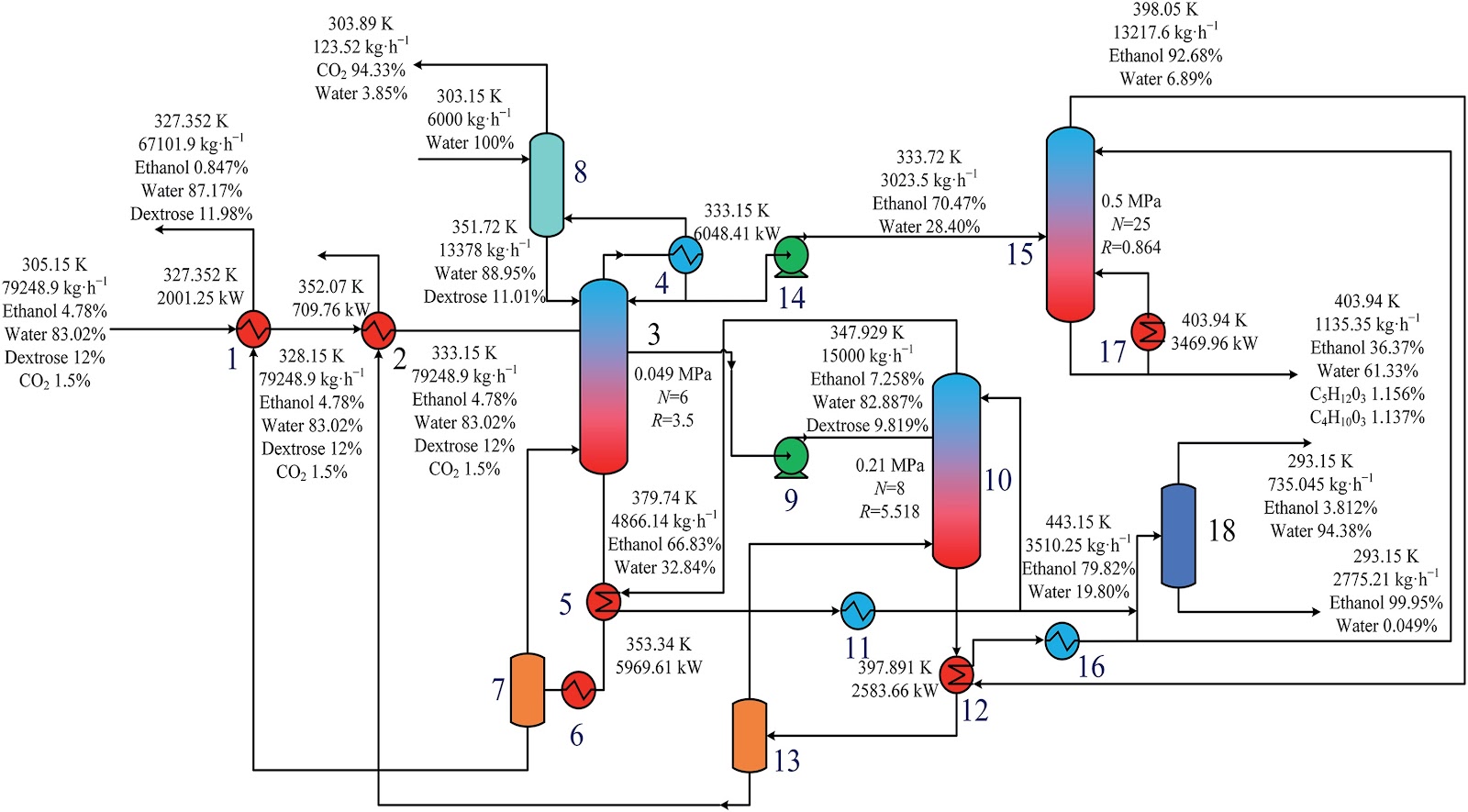
Design and optimization of a high-efficiency distillation process for cellulosic fuel ethanol integrated with thermal coupling and molecular sieve adsorption
To address the challenges of high energy consumption and prominent costs in the traditional three-columns distillation process for cellulosic fuel ethanol, a distillation—molecular sieve coupling separation process is proposed. This process integrates a three-column (crude distillation column, first distillation column, second distillation column) system with a 3A molecular sieve adsorption deep dehydration unit. A thermal coupling network is constructed via differential pressure design (steam from medium/high-pressure columns as mutual heat sources, reboiler liquid waste heat for feed preheating), and molecular sieve adsorption conditions are optimized. The study first performs a thermodynamic consistency test on the ethanol—water system, determines optimal non-random two-liquid (NRTL) model binary interaction parameters via experimental data regression for Aspen Plus simulation. Aiming at minimum total annual cost (TAC), Aspen Plus is used to optimize process parameters (theoretical tray number, feed location, reflux ratio, side-draw position, etc.). Economic analysis shows this process reduces CO2 emission costs by 27.56%, TAC by 15.58% (to 5.123 × 10⁶ USD·a-1), and increases ethanol purity to >99.6%, providing an effective solution for green, efficient separation.
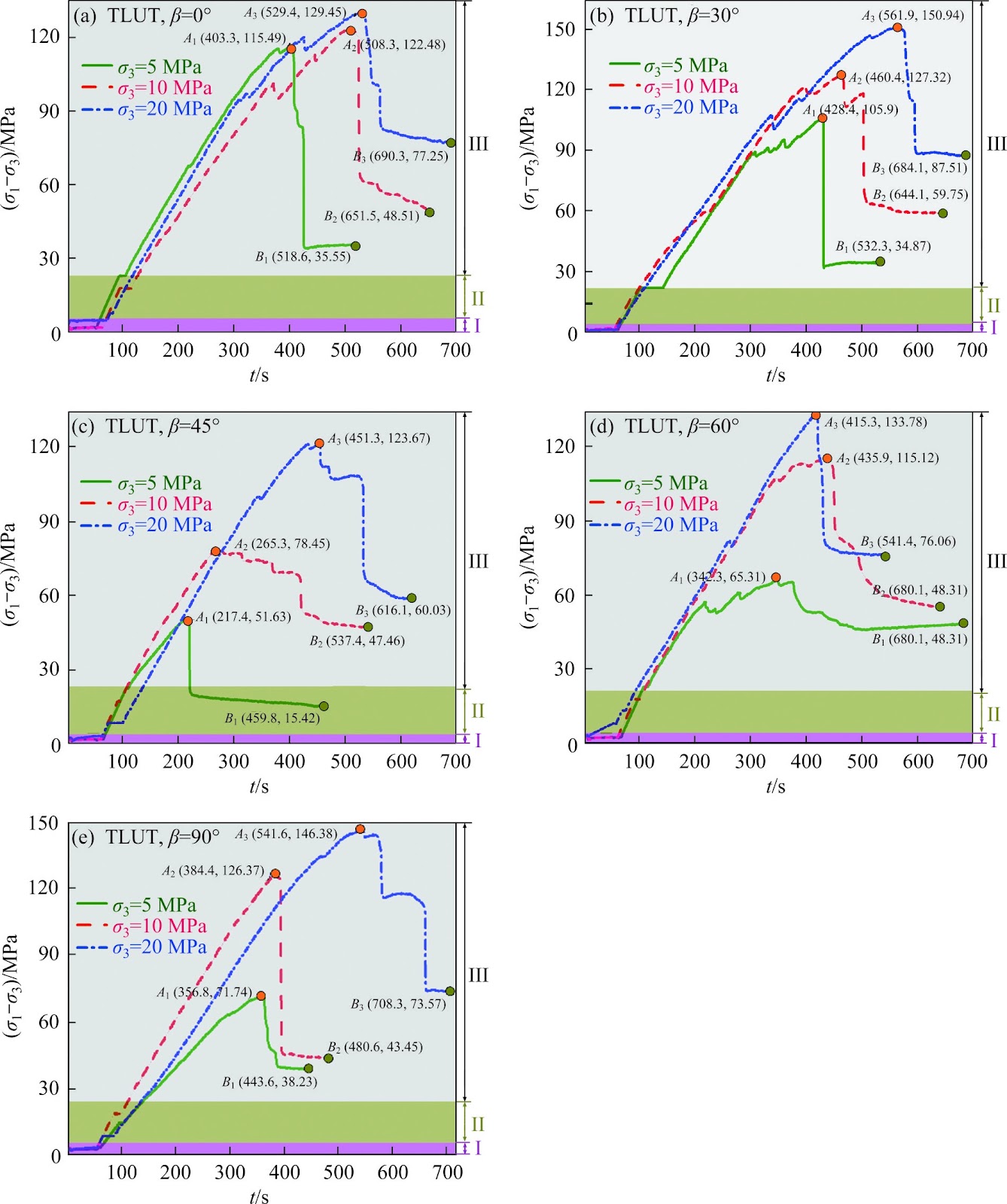
A cohesion loss model for determining residual strength of deep bedded sandstone
Rock residual strength, as an important input parameter, plays an indispensable role in proposing the reasonable and scientific scheme about stope design, underground tunnel excavation and stability evaluation of deep chambers. Therefore, previous residual strength models of rocks established were reviewed. And corresponding related problems were stated. Subsequently, starting from the effects of bedding and whole life-cycle evolution process, series of triaxial mechanical tests of deep bedded s
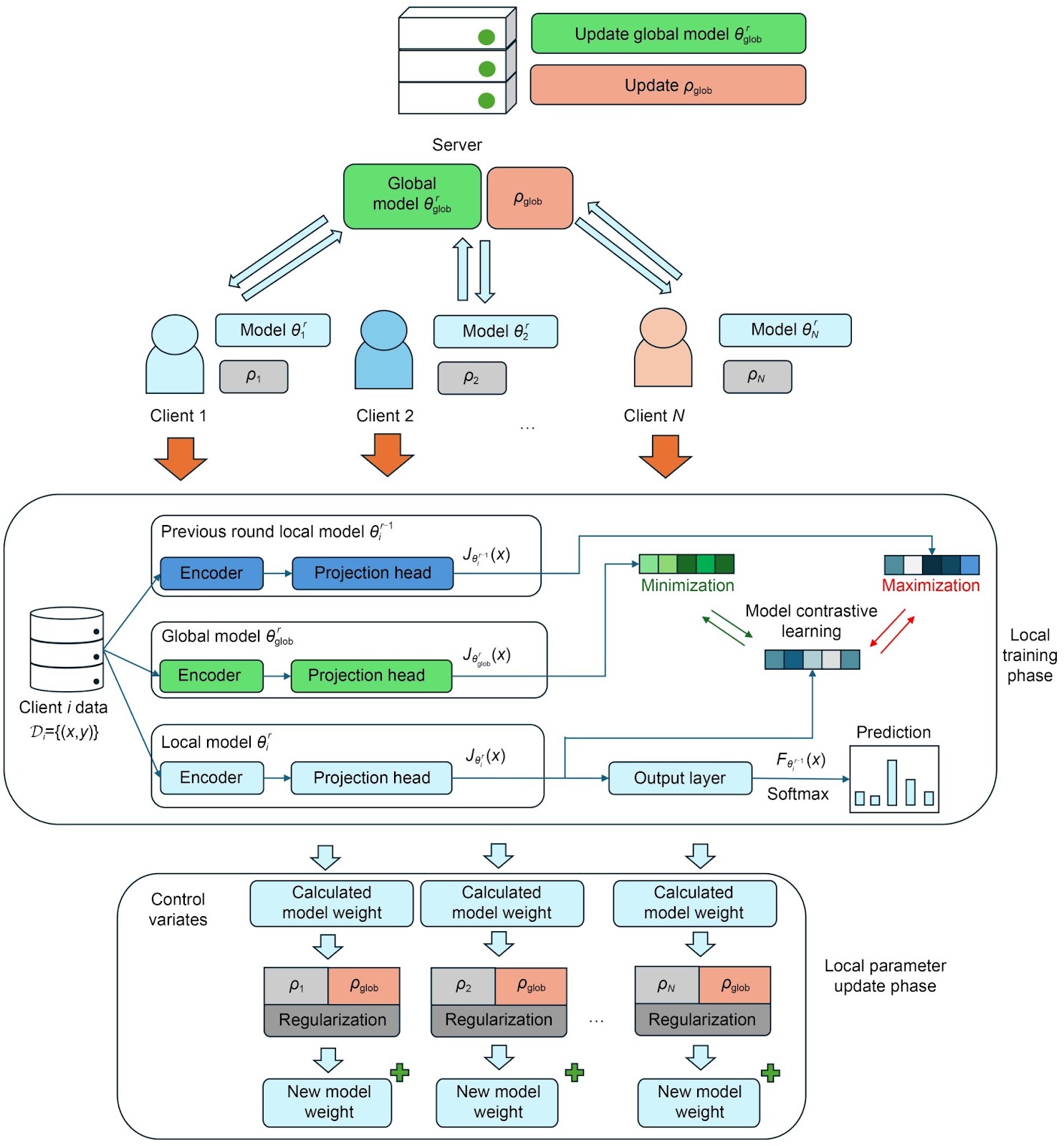
Federated model with contrastive learning and adaptive control variates for human activity recognition
Recent attention to privacy issues demands a communication-safe method for training human activity recognition (HAR) models on client activity data. Federated learning (FL) has become a compelling technique to facilitate model training between the server and clients while preserving data privacy. However, classical FL methods often assume independent and identically distributed (IID) data among clients. This assumption does not hold true in practical scenarios. Human activity in real-world scena