SinoTechIntel Academic Portal
🏛️ Indexed Academic Journal

Journal of Advanced Ceramics

Access authentic peer-reviewed engineering methodologies, experimental datasets, and scientific literature published in this journal on SinoTechIntel.

Total Research Papers: 9
Access: 100% Free Open Access
Browse by Publication Year & VolumeReset All Filters ✕
Select Specific Issue:

Published Research PapersFiltered: Year 2026 • Vol 15

Showing 9 of 9 peer-reviewed papers with full Graphical Abstracts.

Original ResearchVol 15, Issue 8 • pp. 100-112DOI: 10.26599/JAC.2026.9221348Jan 15, 2026

Homogenizing energy landscapes and microstructure enabling a linear and stable thermal sensing response in high-entropy niobates

Authors: SUN Hao, XU Jianan, JIA Xuemei, DENG Hanao, CHEN Jia, XIE Congwei, LI Wenyuan, LIU Yafei, WU Ruifeng, CHANG Aimin, ZHANG Bo

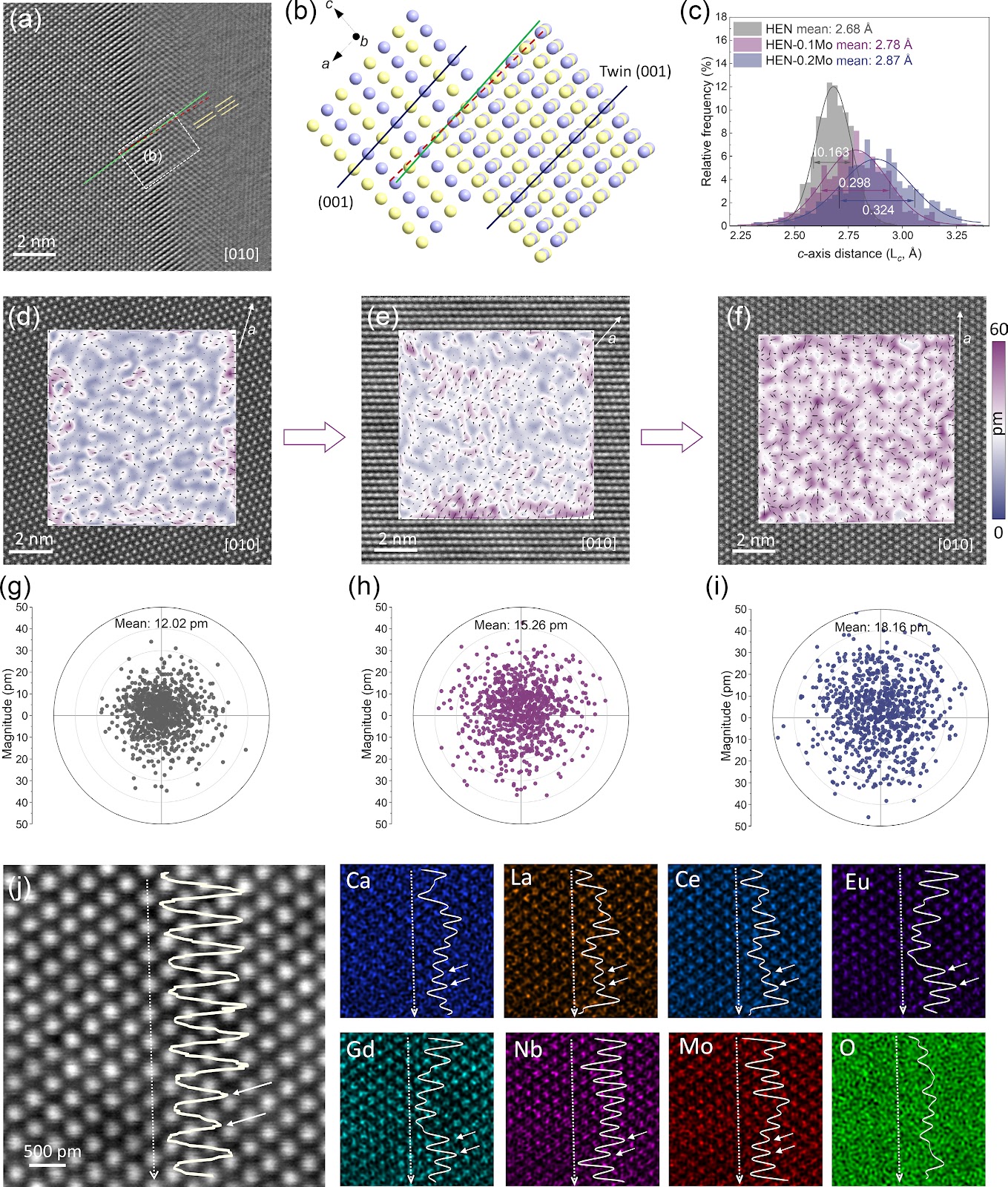
Advanced temperature-sensitive materials are critical for hypersonic propulsion and next-generation energy systems, yet long-term stability above 1000 °C remains a formidable barrier. Conventional transition-metal spinel oxides (e.g., Ni–Mn–Co–O) suffer phase decomposition and cation migration above 300 °C, causing exponential resistance drift. This work develops a Mo-regulated high-entropy ferroelastic niobate strategy for ultrawide-temperature negative-temperature-coefficient (NTC) thermosensitive ceramics. Density functional theory calculations reveal that A-site high-entropy facilitates Mo doping in (Ca0.2La0.2Ce0.2Eu0.2Gd0.2)NbO4. Mo doping broadens local atomic configurations, modulates ferroelastic domain structures, and increases atomic-scale displacement disorder, redistributing Hall transport contributions and reducing grain/grain-boundary transport barrier mismatch. The optimized HEN-0.2Mo ceramic exhibits highly linear Arrhenius behavior (R² = 0.99907) from −50 to 1250 °C with a B-value fluctuation of only 4.44%. High-temperature impedance analysis confirms closely matched grain and grain-boundary activation energies (Eg = 1.209 eV, Egb = 1.218 eV; ΔEa ≈ 0.009 eV). During 1250 °C aging, postdensification and strain redistribution yield a stabilized-stage resistance drift of only 1.09% after 1000 h. These findings demonstrate that entropy-stabilized defect engineering decouples sensitivity from degradation in functional ceramics under thermal stress.
Homogenizing energy landscapes and microstructure enabling a linear and stable thermal sensing response in high-entropy niobates
Graphical Abstract
Original ResearchVol 15, Issue 8 • pp. 100-112DOI: 10.26599/JAC.2026.9221338Jan 15, 2026

Revealing the influence of composition and interface on the mechanical and dielectric properties of Si3N4 fiber-reinforced ceramic composites

Authors: ZHANG Yingpeng, TIAN Zhilin, LI Bin

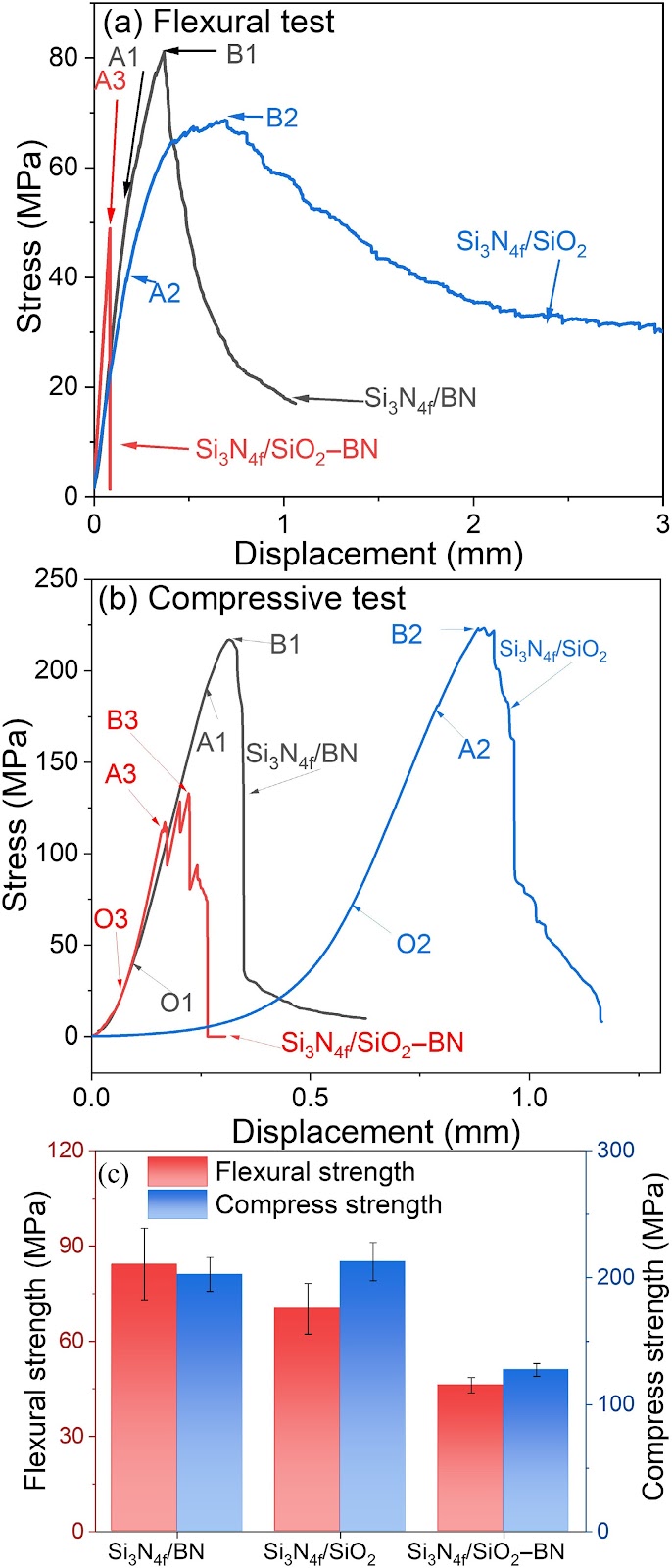
Si3N4 fiber-reinforced ceramic composites are candidate materials for high-temperature wave-transparent applications, yet the relationships among composition, interfacial characteristics, and mechanical performance remain inadequately understood. This study designs three composites—Si3N4f/BN, Si3N4f/SiO2, and Si3N4f/SiO2–BN—and systematically investigates their performances. The reaction between BN precursors and silanol groups in the SiO2 matrix during fabrication of Si3N4f/SiO2–BN enhances chemical compatibility between fiber and matrix, promoting elemental interdiffusion and forming a thicker interfacial diffusion region. Consequently, the interfacial shear strength of Si3N4f/SiO2–BN is 1.86 and 2.35 times that of Si3N4f/BN and Si3N4f/SiO2, respectively. The stronger fiber-matrix bonding in Si3N4f/SiO2–BN suppresses fiber pull-out, whereas weaker bonding in the other two composites permits it. Si3N4f/BN primarily exhibits fiber bundle pull-out, whereas Si3N4f/SiO2 shows long single-fiber pull-out, indicating improved damage tolerance. In contrast, Si3N4f/SiO2–BN displays typical brittle fracture behavior with minimal fiber pull-out and degraded mechanical properties. Excessive interfacial bonding, together with thermal residual stress arising from thermal expansion mismatch between the Si3N4 fiber and the matrix, degrades flexural and compressive strengths. Moreover, this excessive bonding restricts interfacial debonding and fiber pull-out, leading to a brittle fracture mode. Despite differences in interfacial microstructure, all three composites exhibit good dielectric properties. The use of SiO2 and BN matrices effectively reduces both the dielectric constant and the dielectric loss tangent of Si3N4 fiber-reinforced ceramic composites. These findings provide valuable insights into the design of high-temperature wave-transparent composites operated in extreme environments.

Revealing the influence of composition and interface on the mechanical and dielectric properties of Si3N4 fiber-reinforced ceramic composites
Graphical Abstract
Original ResearchVol 15, Issue 8 • pp. 100-112DOI: 10.26599/JAC.2026.9221340Jan 15, 2026

Cation-Driven Charge Modulation and In-Situ Exsolved Nanoparticles Enable a Self-Assembled Cathode for Proton Ceramic Solid Oxide Cells

Authors: SHAO Mengen, ZHAO Xinyu, TANG Chaowei, YUAN Yuling, YANG Guangming, CHEN Yan, MILEWSKI Jaroslaw, HONG Tao, LIU Yu, LIU Zuoqing, GUO Youmin

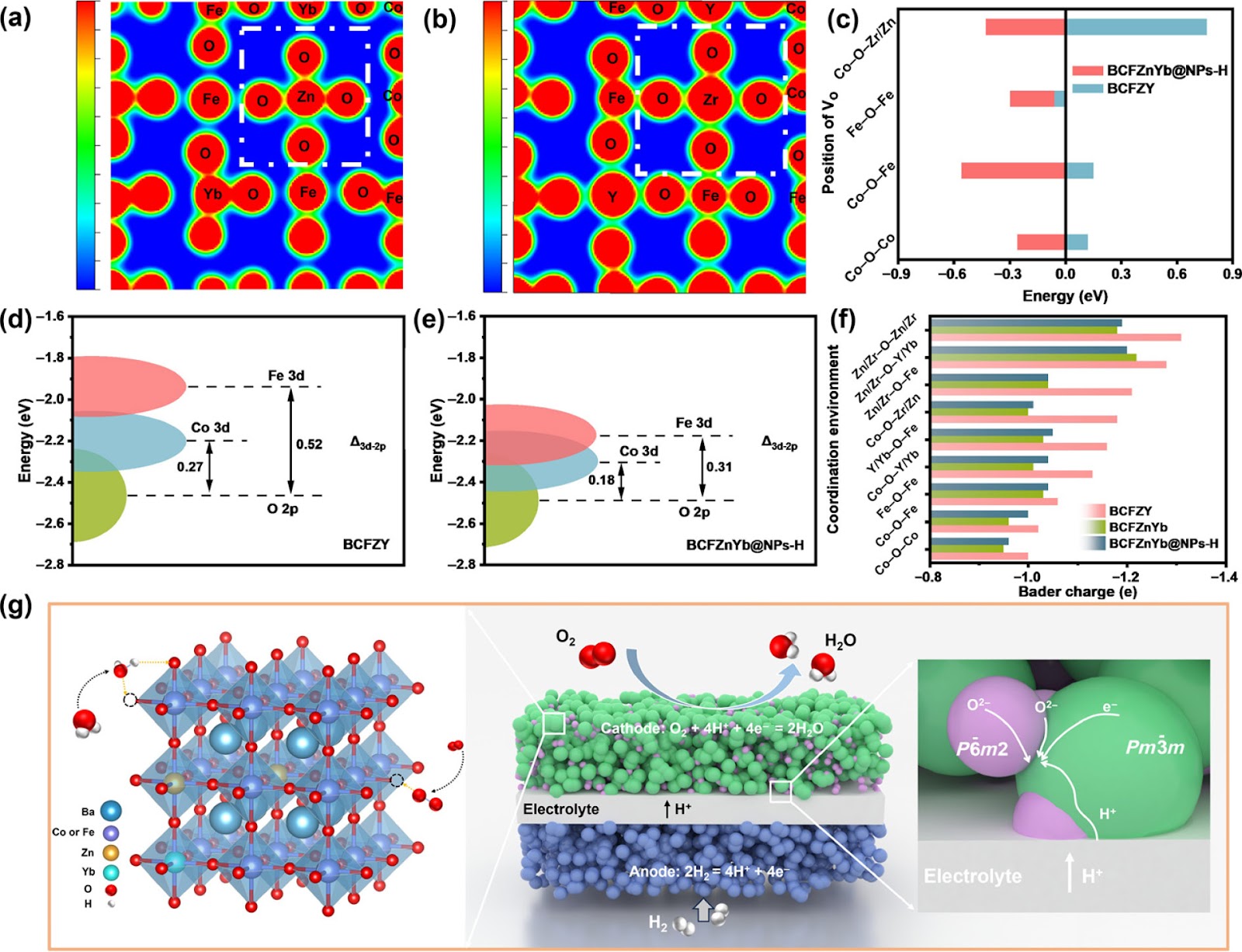
Protonic ceramic fuel cells (PCFCs) offer efficient intermediate-temperature energy conversion but are constrained by the trade-off between insufficient electrode activity and limited operational durability. This work develops a Zn/Yb B-site codoping strategy combined with temperature-induced nanoparticle exsolution to construct a triple-conducting cathode. Cation-driven charge modulation enhances ionic diffusion and electronic conduction, while the exsolved secondary BaCoO3−δ phase increases active site density, optimizes interfacial charge transfer, and promotes oxygen reduction reaction (ORR) kinetics. Zn/Yb codoping redistributes local charge density, weakens metal–oxygen bonds, and reduces oxygen vacancy formation energy, promoting oxygen vacancy generation. The increased oxygen vacancy concentration facilitates surface oxygen activation and lattice hydration, enhancing oxygen-ion and proton transport. Enhanced d–p orbital hybridization improves electronic conductivity and accelerates charge transfer kinetics. Optimized alkaline–earth sites suppress carbonate formation, imparting excellent CO2 tolerance. The optimized cathode delivers a peak power density of 0.99 W·cm−2 at 600 °C and stable operation over 100 h, with a polarization resistance of 0.110 Ω·cm2 under 20% H2O-air. This work provides a novel strategy for optimizing activity, conductivity, and stability in PCFC cathodes.

Cation-Driven Charge Modulation and In-Situ Exsolved Nanoparticles Enable a Self-Assembled Cathode for Proton Ceramic Solid Oxide Cells
Graphical Abstract
Original ResearchVol 15, Issue 8 • pp. 100-112DOI: 10.26599/JAC.2026.9221334Jan 15, 2026

Exceptional Long-Duration Ablation Tolerance over 2500 °C of C/ZrC–SiC–Cu3Si–Cu Interpenetrating Composites

Authors: JIN Guoliang, LIANG Bin, ZHAO Rida, BAO Keye, PANG Shengyang, HU Chenglong, LI Jian, YAN Meng, TANG Sufang

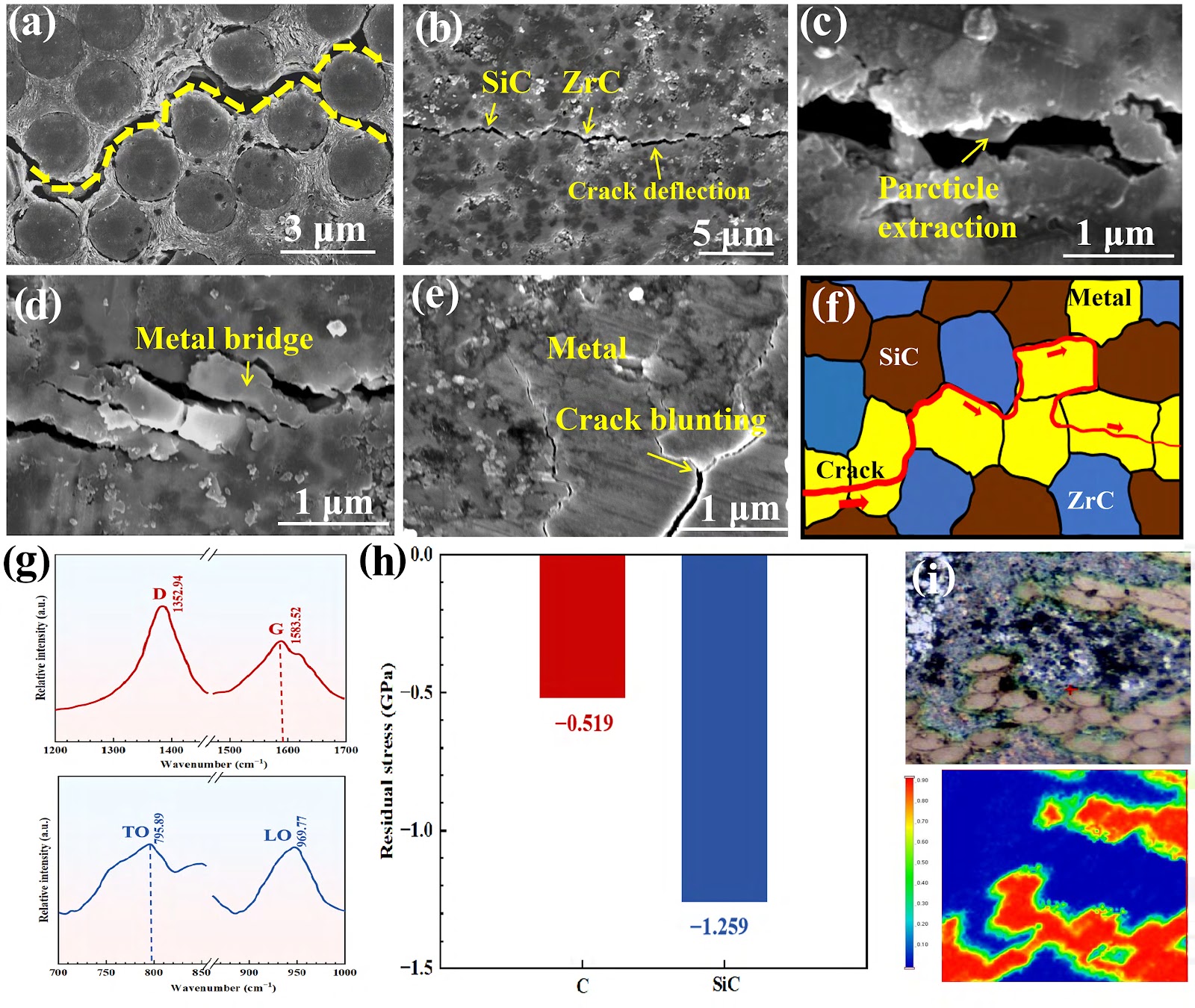
Carbon fiber-reinforced ultrahigh-temperature ceramic composites (C/UHTCs) based on ZrC–SiC are limited by rapid ablation above 2500 °C under prolonged oxidizing exposure. This study reports C/ZrC–SiC–Cu3Si–Cu interpenetrating composites fabricated by infiltrating a Zr–Si–Cu ternary melt into carbon fiber-reinforced carbon aerogel (C/CA) preforms. The process yields a uniform metal-ceramic matrix via ceramization of the carbon aerogel and in situ precipitation of Cu-containing phases. During oxyacetylene ablation at a surface temperature of 2557–2600 °C for 1200 s, the composite exhibits mass and linear ablation rates of 0.0604 mg·cm−2·s−1 and 0.1808 μm·s−1, respectively, surpassing conventional C/ZrC–SiC and other reported ceramic and ceramic-metal matrix composites under similar conditions. The ablation resistance arises from transpiration cooling via continuous evaporation of dispersed Cu-containing phases, which maintains a surface temperature of approximately 2300 °C under a heat flux of 3.18 MW·m−2, combined with a protective Zr–Si–O glassy layer that inhibits oxygen diffusion and resists mechanical denudation. The composite also demonstrates a flexural strength of 194±7 MPa, a fracture toughness of 11.8±1.2 MPa·m1/2, and a work of fracture of 5315±1232 J·m−2, exceeding most reaction-melt-infiltration-derived C/ZrC–SiC. These properties are attributed to the highly reactive carbon aerogel matrix, a protective PyC interface, optimized interfacial debonding, crack deflection mechanisms, and compressive residual stresses. The combination of active-passive cooling and robust mechanical performance positions this composite as a candidate for structural applications in extreme thermal-mechanical environments.

Exceptional Long-Duration Ablation Tolerance over 2500 °C of C/ZrC–SiC–Cu3Si–Cu Interpenetrating Composites
Graphical Abstract
Original ResearchVol 15, Issue 8 • pp. 100-112DOI: 10.26599/JAC.2026.9221335Jan 15, 2026

Breaking the strain–symmetry trade-off via electrostriction-mediated reversible phase transition in B-site-engineered BNKT-based ceramics

Authors: Pichitchai Butnoi, Supalak Manotham, Kamonporn Saenkam, Waraporn Boontakam, Chatchai Kruea-In, Thapanee Srichumpong, Kamonpan Pengpat, Chamnan Randorn, Thanatep Phatungthane, Gobwute Rujijanagul

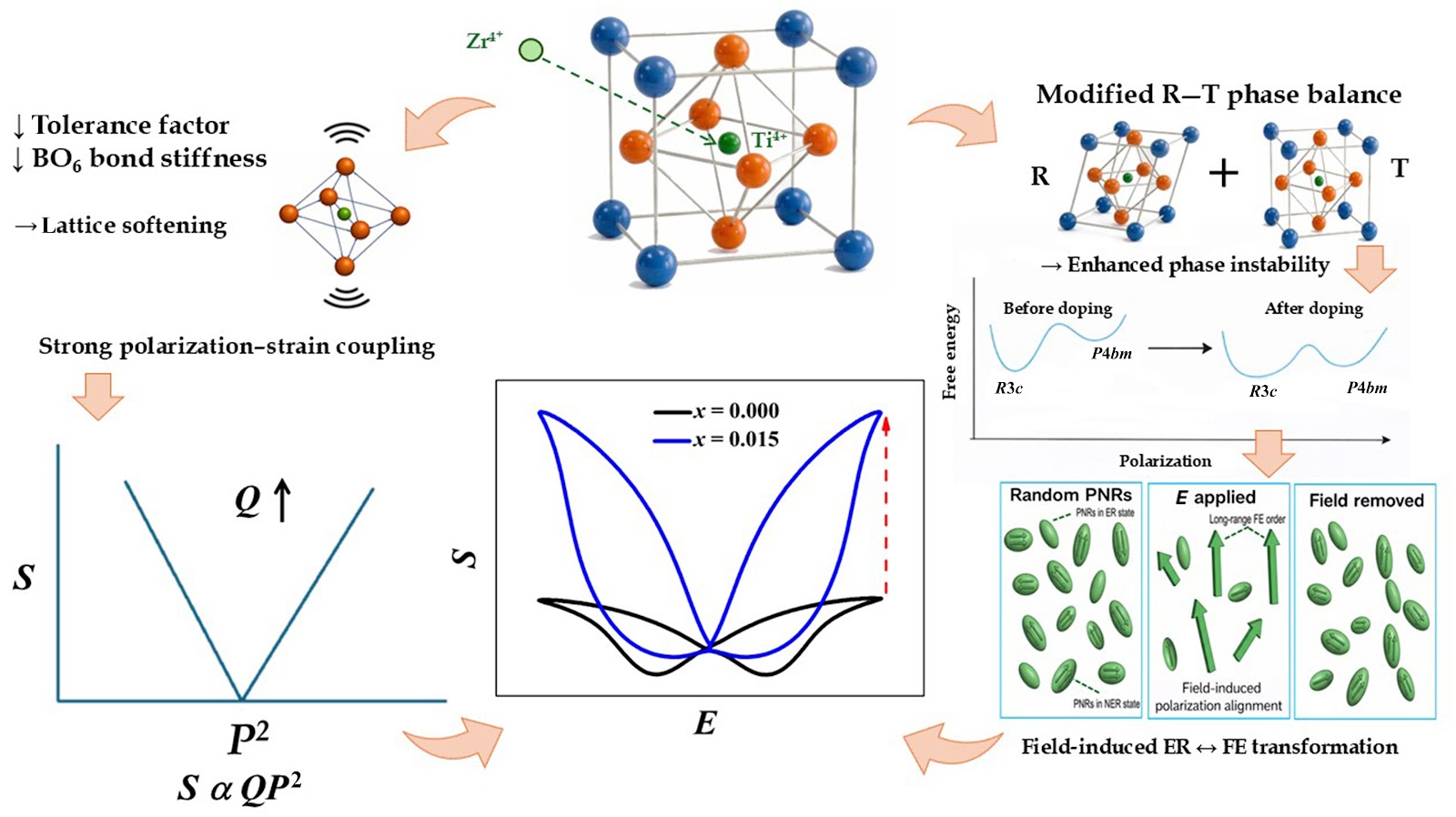
Lead-free piezoceramics face a persistent strain–symmetry trade-off: large electrostrain typically arises from irreversible polarization processes that degrade bipolar strain reversibility. This study investigates B-site Zr engineering in Bi0.495La0.005Na0.400K0.100Ti1−xZrxO3 (x = 0.000–0.025) to decouple strain magnitude from symmetry. The optimized composition (x = 0.015) achieves a large electrostrain of ~0.52% with a nearly symmetric bipolar S–E response and a normalized strain coefficient d*33 ≈ 867 pm/V. At x = 0.025, the electrostrictive coefficient reaches ~0.055 m4/C2, indicating strengthened electrostriction-dominated behavior. Structural analysis attributes the enhanced electromechanical response to Zr-induced lattice softening and R3c–P4bm phase coexistence, which flatten the free-energy landscape and promote reversible field-driven polarization dynamics. Reduced remanent polarization and coercive field suppress irreversible domain-wall motion, favoring electrostriction-governed strain generation. The electromechanically optimized composition also exhibits noncytotoxic behavior and preliminary surface mineral deposition after immersion in simulated body fluid (SBF), suggesting biofunctional potential. These findings establish B-site lattice engineering as an effective strategy for achieving large, nearly symmetric bipolar strain through electrostriction-dominated mechanisms in lead-free piezoceramics, with implications for actuator and biomedical applications.

Breaking the strain–symmetry trade-off via electrostriction-mediated reversible phase transition in B-site-engineered BNKT-based ceramics
Graphical Abstract
Original ResearchVol 15, Issue 8 • pp. 100-112DOI: 10.26599/JAC.2026.9221343Jan 15, 2026

Transparent Ferroelectric Ceramics: From Fundamental Material Design to Multifunctional Optoelectronic Device Integration

Authors: Not explicitly listed in the provided text

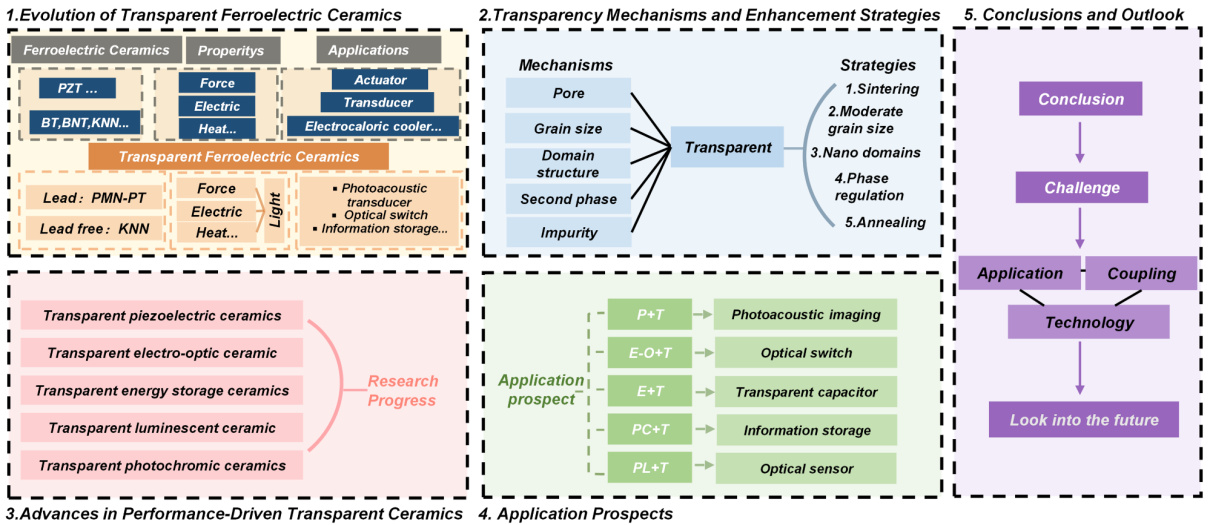
The convergence of optics and electronics, driven by intelligent systems and wearable technologies, demands materials that seamlessly integrate optical transparency with robust electrical and mechanical functionalities. Transparent ferroelectric ceramics (TFCs) have emerged as a pivotal platform in this endeavor, uniquely bridging high optical transmittance with strong ferroelectric, piezoelectric, and electro-optic responses. This review comprehensively charts the evolution of TFCs, from fundamental material design to cutting-edge device applications. We systematically analyze the core strategies for achieving transparency in two representative transparent ferroelectric ceramic systems, namely lead-based (Pb(Mg1/3Nb2/3)O3–PbTiO3, abbreviated as PMN–PT) and lead-free ((K,Na)NbO3, abbreviated as KNN) systems, while also discussing other important systems such as (Pb,La)(Zr,Ti)O3 (PLZT), BaTiO3 (BTO), and (Bi0.5Na0.5)TiO3 (BNT) where appropriate for comparison. Critical mechanisms such as grain and domain engineering, refractive-index matching, phase-structure tuning, and defect control are examined. Representative functionalities—including transparent piezoelectricity, electro-optic modulation, energy storage, photoluminescence, and photochromism—are highlighted, with their potential applications evaluated across photoacoustic imaging, adaptive optics, transparent robotics, smart windows, and optical communication. Finally, we identify key challenges and future opportunities, such as high Curie temperature (Tc) design, texture engineering, and multifunctional co-integration. Overall, this review aims to provide theoretical insights and material-design foundations for next-generation multifunctional transparent ferroelectric devices, accelerating their adoption in intelligent sensing, integrated photonics, and transparent optoelectronic systems.

Transparent Ferroelectric Ceramics: From Fundamental Material Design to Multifunctional Optoelectronic Device Integration
Graphical Abstract
Original ResearchVol 15, Issue 8 • pp. 100-112DOI: 10.26599/JAC.2026.9221339Jan 15, 2026

Spent coffee grounds as multifunctional modifiers for triple-synergistic enhancement of Li4SiO4 ceramic sorbents in high-temperature CO2 capture

Authors: TANG Leiqing, JIANG Haoyu, ZHANG Hongping, HUANG Zhangyi, WANG Haomin, WANG Qingyuan, QI Jianqi, CHEN Ruichong

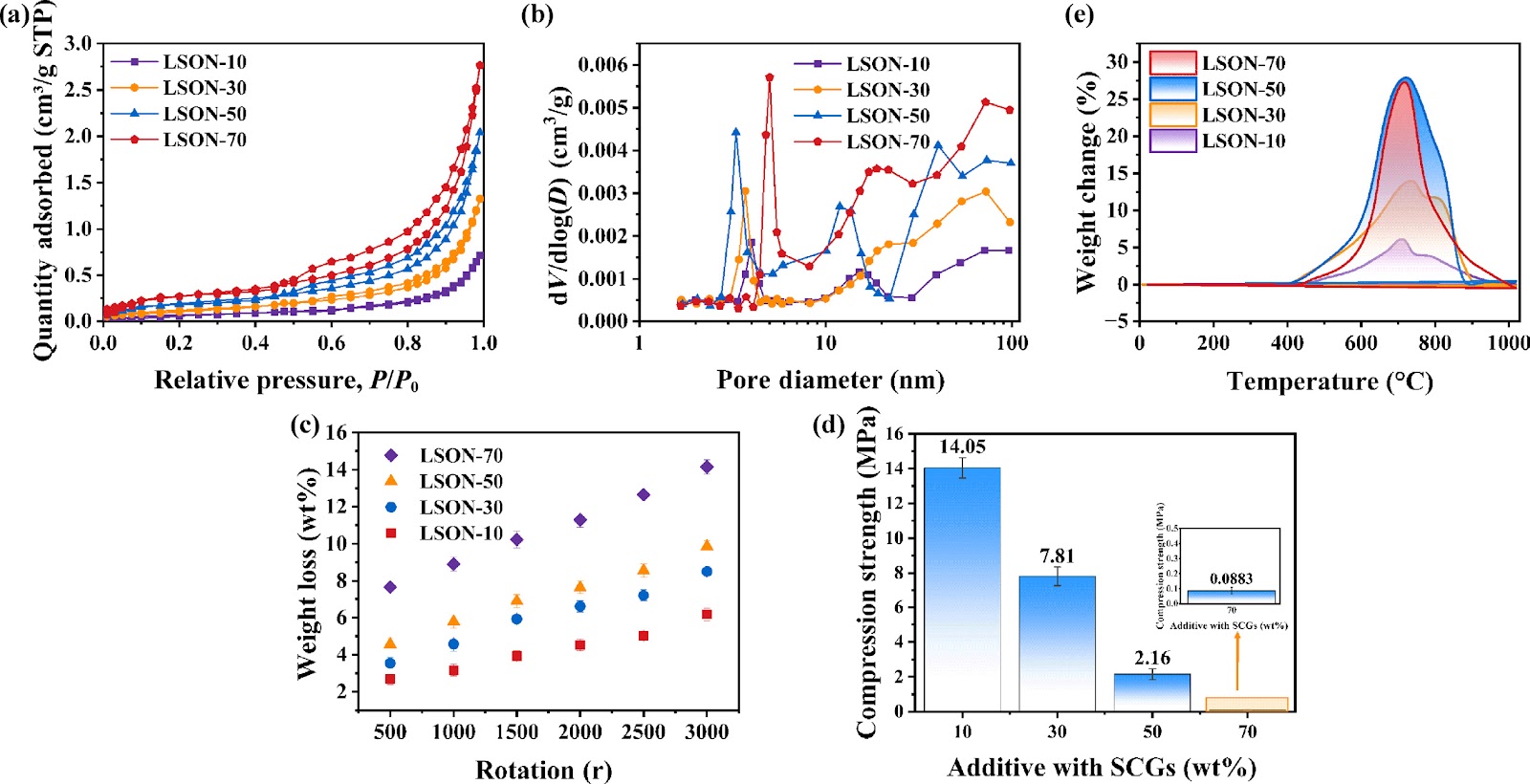
Practical deployment of Li4SiO4 as a high-temperature CO2 sorbent requires pelletization, which inevitably densifies the microstructure and imposes severe CO2 diffusion limitations. Conventional sacrificial pore-forming agents address this issue but remain single-purpose, serving solely as structural templates without conferring chemical benefits. Here, we demonstrate that spent coffee grounds (SCGs), an abundant food-industry waste, can serve as a single-source modifier that achieves three colocalized enhancements in Li4SiO4 pellets: hierarchical pore engineering, in situ K-doping, and oxygen vacancy generation. The thermal decomposition of SCG creates an interconnected hierarchical macroporous network that effectively reduces intraparticle CO2 diffusion resistance. Meanwhile, the mineral-rich SCG ash provides in situ potassium doping, generating a localized eutectic molten carbonate phase that accelerates liquid-phase ion transport. Crucially, the transient reducing atmosphere during biomass combustion introduces oxygen vacancies into the silicate lattice; density functional theory (DFT) calculations reveal that these vacancies serve as highly active CO2 adsorption sites with a strongly exothermic adsorption energy of −0.914 eV. Benefiting from this triple-synergistic enhancement, the SCG-modified sorbent (LSO-50) achieves a CO2 adsorption capacity of 0.275 g/g at 650 °C under 15 vol% CO2, representing a more than fourfold improvement over unmodified pellets. When further combined with Na2CO3 codoping to promote additional eutectic formation, the optimized sorbent (LSON-50) reaches 0.330 g/g, retains 0.284 g/g after 50 adsorption–desorption cycles, and exhibits robust mechanical stability (< 10% attrition loss). By colocating structural, chemical, and defect features within a single biomass-derived modifier, this work establishes a scalable waste-valorization route for high-performance, eco-friendly CO2 capture.

Spent coffee grounds as multifunctional modifiers for triple-synergistic enhancement of Li4SiO4 ceramic sorbents in high-temperature CO2 capture
Graphical Abstract
Original ResearchVol 15, Issue 8 • pp. 100-112DOI: 10.26599/JAC.2026.9221346Jan 15, 2026

Intrinsic Surface Prestressing via Oxygen-Vacancy Regulation Enables High-Strength ZTA Ceramics

Authors: CHEN Shile, FAN Wenkai, CHAI Liping, XIA Jing, LI Honghua, LI Jiangtao

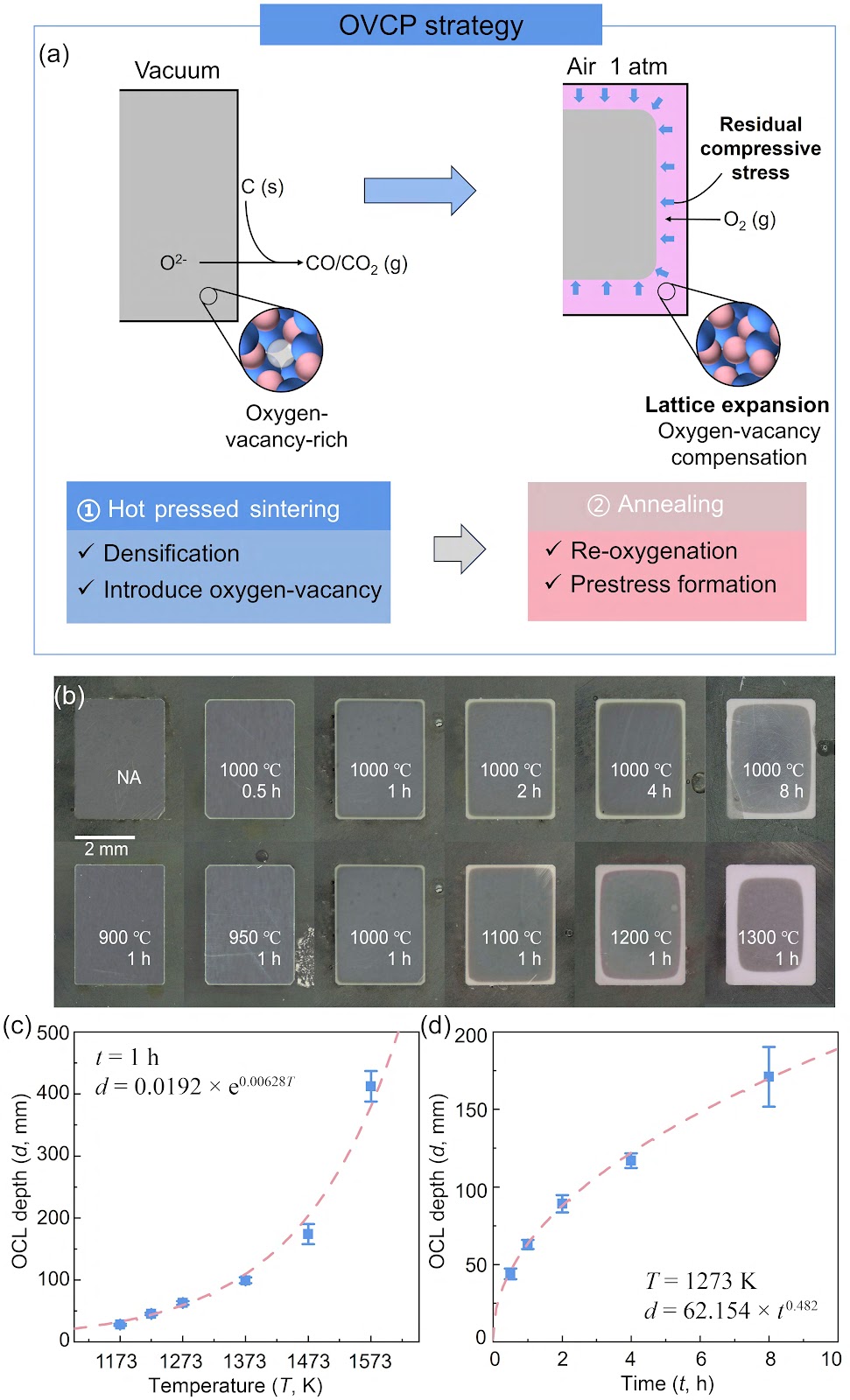
Achieving intrinsic surface compressive stress in monolithic oxide ceramics without heterogeneous interfaces remains a persistent challenge. This study introduces oxygen-vacancy compensation prestressing (OVCP), a defect-engineering strategy that generates in situ surface prestressing in zirconia-toughened alumina (ZTA). Oxygen vacancy-rich ZTA was first produced by vacuum hot pressing, followed by air annealing to induce surface reoxygenation and form an oxygen-charged layer (OCL). The optimized treatment increased flexural strength to (1679±78) MPa, a 31% improvement over the unannealed state. Mechanistically, oxygen-vacancy compensation during annealing induces lattice expansion in the near-surface region. Constrained by the less-oxidized interior, this expansion converts into a residual compressive stress field that suppresses bending-induced failure. A simplified bilayer model quantitatively supports the experimentally observed strengthening behavior. These findings establish oxygen vacancy-regulated lattice expansion as an effective mechanism for intrinsic surface prestressing, providing a simple, interface-free route for strengthening oxide ceramics. The approach circumvents delamination and interfacial debonding inherent to conventional coating or laminated architectures, offering a scalable pathway for high-performance structural oxide ceramics.

Intrinsic Surface Prestressing via Oxygen-Vacancy Regulation Enables High-Strength ZTA Ceramics
Graphical Abstract
Original ResearchVol 15, Issue 8 • pp. 100-112DOI: 10.26599/JAC.2026.9221320Jan 15, 2026

Microwave Dielectric Ceramics for 5G/6G Wireless Communication: Characterization, Theoretical Modeling, Cold Sintering, Device Integration, and Machine Learning Prediction

Authors: Not specified in the provided text

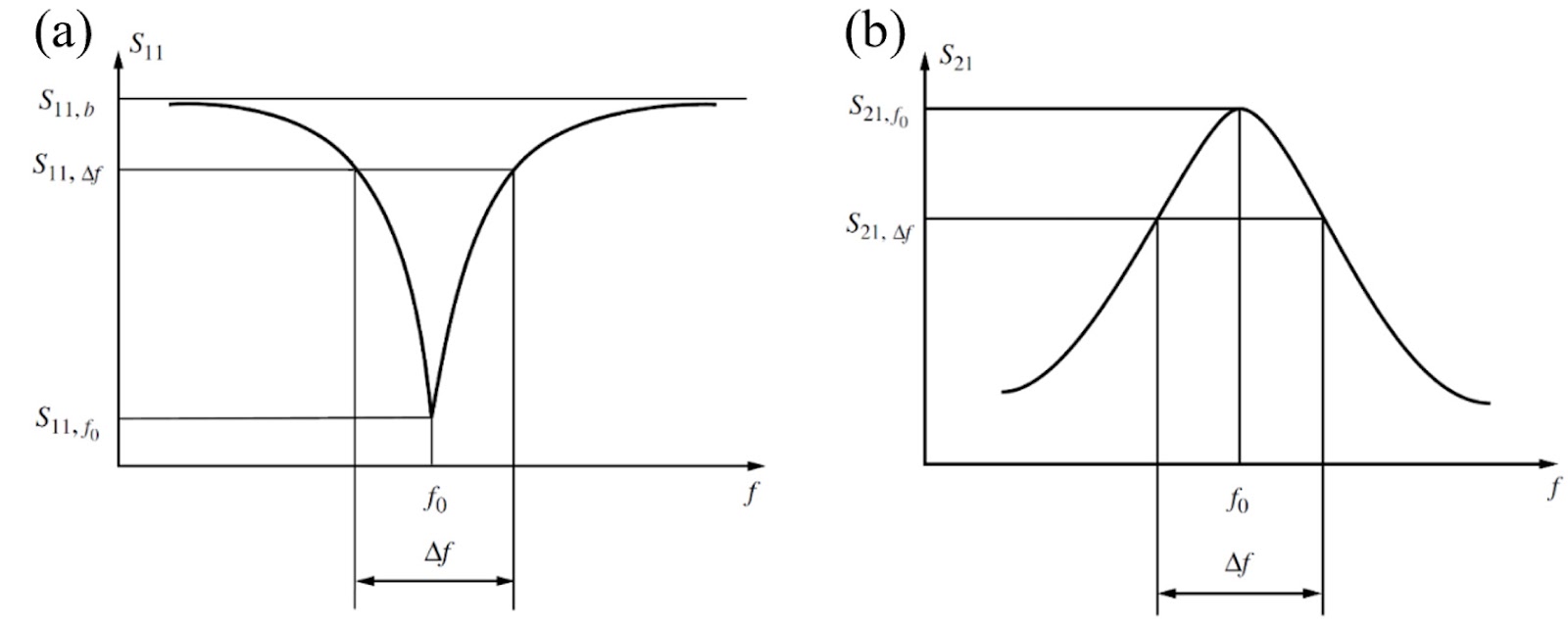
Microwave dielectric ceramics (MWDCs) are indispensable for modern wireless communication systems, with performance governed by relative dielectric constant (εr), quality factor (Q×f), and temperature coefficient of resonant frequency (τf). This review systematically examines recent progress across five interrelated domains. Standardized resonant methods achieve εr measurement errors below 1% and a tanδ detection limit of 10^-5. Theoretical frameworks, from complex crystal chemistry to the cation rattling effect, enable quantitative interpretation of dielectric behavior. Cold sintering achieves ceramic densification below 300 °C, reducing energy consumption by over 97% compared to conventional sintering. These materials are deployed in high-performance substrates, resonators, and filters for 5G/6G communications, with device insertion loss maintained below 1 dB. Data-driven approaches, particularly machine learning, predict key dielectric properties with a coefficient of determination (R²) higher than 0.9, accelerating discovery of novel MWDCs. Despite these advances, critical gaps persist: accurate measurement of ultra-low dielectric loss (tanδ < 10^-5) remains challenging due to conductor loss and spurious mode interference; the temperature dependence of τf is often neglected; the role of multiscale defects in anharmonic lattice vibrations is not fully quantified; and the cation rattling effect has not been integrated into classical dielectric theory. Conventional high-temperature sintering (>1000 °C) causes severe energy consumption, volatilization of active elements, and incompatibility with low-melting-point electrodes, hindering co-firing integration for miniaturized devices. This review integrates these perspectives to provide a systematic insight into the state-of-the-art and future directions of MWDC research.

Microwave Dielectric Ceramics for 5G/6G Wireless Communication: Characterization, Theoretical Modeling, Cold Sintering, Device Integration, and Machine Learning Prediction
Graphical Abstract