SinoTechIntel Academic Portal
🏛️ Indexed Academic JournalImpact Factor: 2.7 (Q2 - Springer)

Information Technology and Electronic Engineering

2.7 (Q2 - Springer)

Total Research Papers: 153
Access: 100% Free Open Access
Browse by Publication Year & VolumeReset All Filters ✕

Published Research PapersFiltered: Year 2025 • Vol. 32 • Issue 10

Showing 11 of 153 peer-reviewed papers with full Graphical Abstracts.

Original ResearchVol. 32, Issue 10 • pp. 661-673DOI: 10.1631/ENG_ITEE_2025_0138Oct 25, 2025

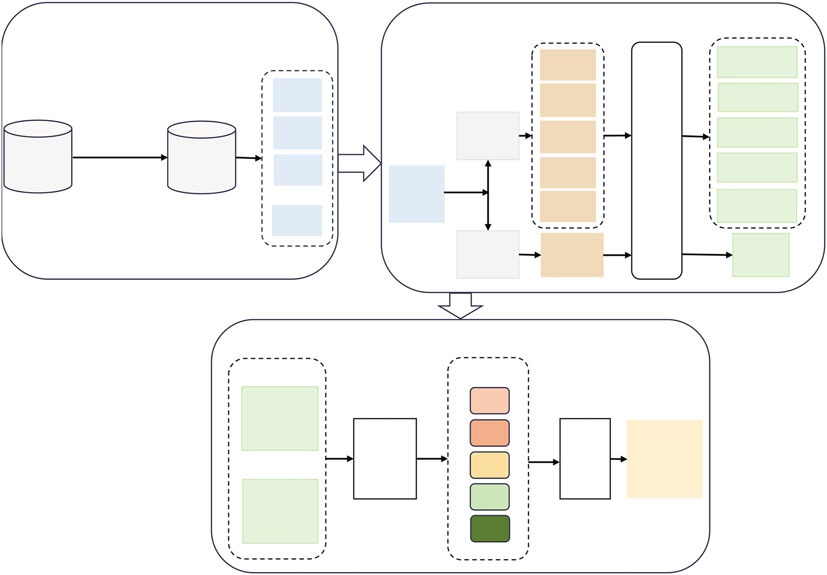
Reversible data hiding in encrypted domain based on NTRU and Chinese remainder theorem

Authors: Xinyue Zhang, Kunyi Lai, Xin Tang

Reversible data hiding in the encrypted domain (RDH-ED) based on homomorphic encryption provides a promising approach for privacy-preserving data sharing, yet existing methods based on the N th-degree truncated polynomial ring unit (NTRU) face a fundamental conflict between embedding capacity and reversibility, often requiring preprocessing of plaintext, which in turn compromises randomness of the ciphertext obtained. To address these issues, a novel RDH-ED scheme integrating the Chinese remaind
Reversible data hiding in encrypted domain based on NTRU and Chinese remainder theorem
Graphical Abstract
Original ResearchVol. 32, Issue 10 • pp. 897-909DOI: 10.1631/FITEE_2500419Oct 24, 2025

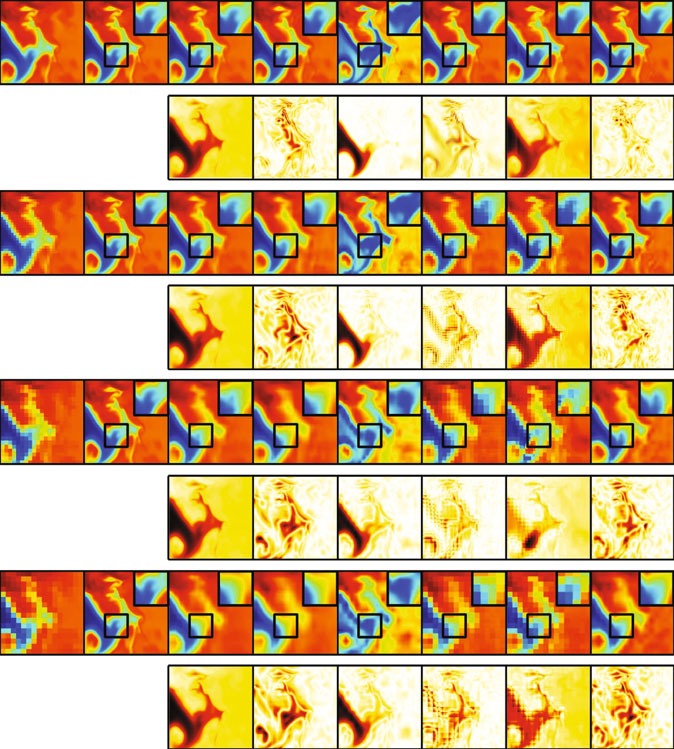
HADF: a hash-adaptive dual fusion implicit network for super-resolution of turbulent flows

Authors: Yunfei LIU, Xinhai CHEN, Gen ZHANG, Qingyang ZHANG, Qinglin WANG, Jie LIU

Turbulence, a complex multi-scale phenomenon inherent in fluid flow systems, presents critical challenges and opportunities for understanding physical mechanisms across scientific and engineering domains. Although high-resolution (HR) turbulence data remain indispensable for advancing both theoretical insights and engineering solutions, their acquisition is severely limited by prohibitively high computational costs. While deep learning architectures show transformative potential in reconstructin

HADF: a hash-adaptive dual fusion implicit network for super-resolution of turbulent flows
Graphical Abstract
Original ResearchVol. 32, Issue 10 • pp. 269-281DOI: 10.1631/FITEE_2300796Oct 22, 2025

An error-based observer improved by the repetitive control strategy for electro-optical tracking systems

Authors: Mai TANG, Wenqiang XIA, Jiuqiang DENG, Yao MAO

Electro-optical tracking systems have been widely used in the cutting-edge domains of free space environment detection and communication owing to their exceptional performance. However, external disturbances often significantly impact the working accuracy of these systems. As their scope of application continues to broaden, increasingly complex operating conditions introduce more intricate environments and disturbances. This paper introduces a composite control structure of an enhanced error-bas

An error-based observer improved by the repetitive control strategy for electro-optical tracking systems
Graphical Abstract
Original ResearchVol. 32, Issue 10 • pp. 677-689DOI: 10.1631/FITEE_2400556Oct 19, 2025

A subspace-based few-shot intrusion detection system for the Internet of Things

Authors: Zhihui LI, Congyuan XU, Kun DENG, Chunyuan LIU

Deep learning-based intrusion detection systems rely on numerous training samples to achieve satisfactory detection rates. However, in the real-world Internet of Things (IoT) environments, the diversity of IoT devices and the subsequent fragmentation of attack types result in a limited number of training samples, which urgently requires researchers to develop few-shot intrusion detection systems. In this study, we propose a subspace-based approach for few-shot IoT intrusion detection systems to

A subspace-based few-shot intrusion detection system for the Internet of Things
Graphical Abstract
Original ResearchVol. 32, Issue 10 • pp. 285-297DOI: 10.1631/FITEE_2400960Oct 16, 2025

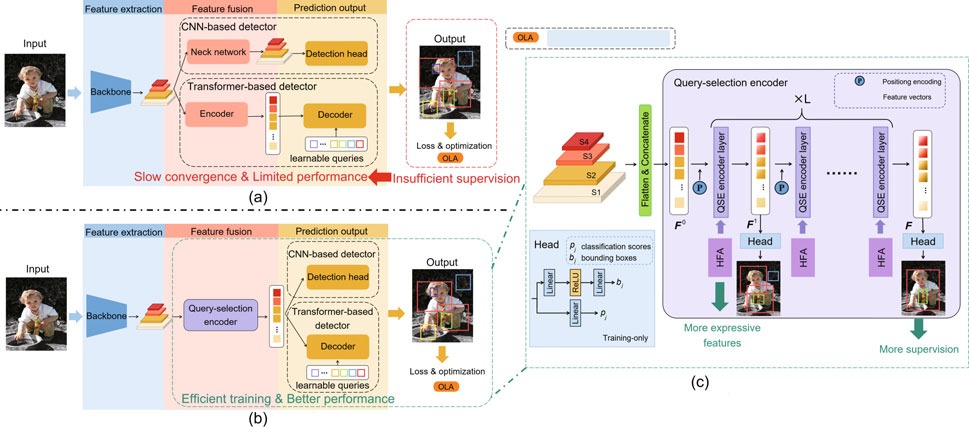
End-to-end object detection using a query-selection encoder with hierarchical feature-aware attention

Authors: Zuyi WANG, Zhimeng ZHENG, Jun MENG, Li XU

End-to-end object detection methods have attracted extensive interest recently since they alleviate the need for complicated human-designed components and simplify the detection pipeline. However, these methods suffer from slower training convergence and inferior detection performance compared to conventional detectors, as their feature fusion and selection processes are constrained by insufficient positive supervision. To address this issue, we introduce a novel query-selection encoder (QSE) de

End-to-end object detection using a query-selection encoder with hierarchical feature-aware attention
Graphical Abstract
Original ResearchVol. 32, Issue 10 • pp. 457-469DOI: 10.1631/ENG_ITEE_2025_0034Oct 14, 2025

FastCheck: fast checkpointing and recovery for DNN training via parallel transmission and compression

Authors: Yun TENG, Dawei SUN, Shipeng HU, Zhiyue LI, Guangyan ZHANG, Haidong TIAN, Rui CHANG

Training large-scale deep neural networks (DNNs) is prone to software and hardware failures, with critical failures often requiring full-machine reboots that substantially prolong training. Existing checkpoint–recovery solutions either cannot tolerate such critical failures or suffer from slow checkpointing and recovery due to constrained input/output bandwidth. In this paper, we propose FastCheck, a checkpoint–recovery framework that accelerates checkpointing and recovery through parallel trans

FastCheck: fast checkpointing and recovery for DNN training via parallel transmission and compression
Graphical Abstract
Original ResearchVol. 32, Issue 10 • pp. 693-705DOI: 10.1631/FITEE_2500282Oct 13, 2025

Knowledge distillation for financial large language models: a systematic review of strategies, applications, and evaluation

Authors: Jiaqi SHI, Xulong ZHANG, Xiaoyang QU, Junfei XIE, Jianzong WANG

Financial large language models (FinLLMs) offer immense potential for financial applications. While excessive deployment expenditures and considerable inference latency constitute major obstacles, as a prominent compression methodology, knowledge distillation (KD) offers an effective solution to these difficulties. A comprehensive survey is conducted in this work on how KD interacts with FinLLMs, covering three core aspects: strategy, application, and evaluation. At the strategy level, this revi

Knowledge distillation for financial large language models: a systematic review of strategies, applications, and evaluation
Graphical Abstract
Original ResearchVol. 32, Issue 10 • pp. 865-877DOI: 10.1631/FITEE_2400279Oct 11, 2025

Fairness-guided federated training for generalization and personalization in cross-silo federated learning

Authors: Ruipeng ZHANG, Ziqing FAN, Jiangchao YAO, Ya ZHANG, Yanfeng WANG

Abstract: Cross-silo federated learning (FL), which benefits from relatively abundant data and rich computing power, is drawing increasing focus due to the significant transformations that foundation models (FMs) are instigating in the artificial intelligence field. The intensified data heterogeneity issue of this area, unlike that in cross-device FL, is caused mainly by substantial data volumes and distribution shifts across clients, which requires algorithms to comprehensively consider the per

Fairness-guided federated training for generalization and personalization in cross-silo federated learning
Graphical Abstract
Original ResearchVol. 32, Issue 10 • pp. 301-313DOI: 10.1631/FITEE_2500100Oct 10, 2025

Mind the Gap: towards generalizable autonomous penetration testing via domain randomization and meta-reinforcement learning

Authors: Shicheng Zhou, Jingju Liu, Yuliang Lu, Jiahai Yang, Yue Zhang, Jie Chen

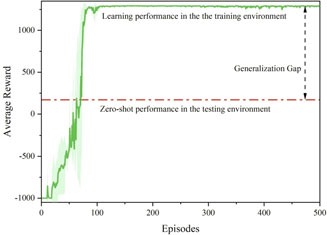
With the increasing number of vulnerabilities exposed on the Internet, autonomous penetration testing (pentesting) has emerged as a promising research area. Reinforcement learning (RL) is a natural fit for studying this topic. However, two key challenges limit the applicability of RL-based autonomous pentesting in real-world scenarios: the training environment dilemma—training agents in simulated environments is sample-efficient while ensuring that their realism remains challenging; poor general

Mind the Gap: towards generalizable autonomous penetration testing via domain randomization and meta-reinforcement learning
Graphical Abstract
Original ResearchVol. 32, Issue 10 • pp. 881-893DOI: 10.1631/FITEE_2400904Oct 5, 2025

Image generation evaluation: a comprehensive survey of human and automatic evaluations

Authors: Qi LIU, Shuanglin YANG, Zejian LI, Lefan HOU, Chenye MENG, Ying ZHANG, Lingyun SUN

Image generation models have made remarkable progress, and image evaluation is crucial for explaining and driving the development of these models. Previous studies have extensively explored human and automatic evaluations of image generation. Herein, these studies are comprehensively surveyed, specifically for two main parts: evaluation protocols and evaluation methods. First, 10 image generation tasks are summarized with focus on their differences in evaluation aspects. Based on this, a novel p

Image generation evaluation: a comprehensive survey of human and automatic evaluations
Graphical Abstract
Original ResearchVol. 32, Issue 10 • pp. 489-501DOI: 10.1631/FITEE_2400486Oct 2, 2025

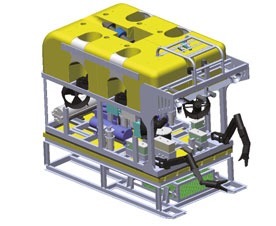
A digital simulation platform with human-interactive immersive design for navigation, motion, and teleoperated manipulation of work-class remotely operated vehicle

Authors: Fanghao Huang, Xiao Yang, Xuanlin Chen, Deqing Mei, Zheng Chen

Digital simulation of the full operation of a remotely operated vehicle (ROV) is an economically feasible way for algorithm pretesting and operator training prior to the actual underwater tasks, due to the huge difficulties encountered during the underwater test, high equipment cost, and the time-consuming nature of the process. In this paper, a human-interactive digital simulation platform is established for the navigation, motion, and teleoperated manipulation of work-class ROVs, and provides

A digital simulation platform with human-interactive immersive design for navigation, motion, and teleoperated manipulation of work-class remotely operated vehicle
Graphical Abstract