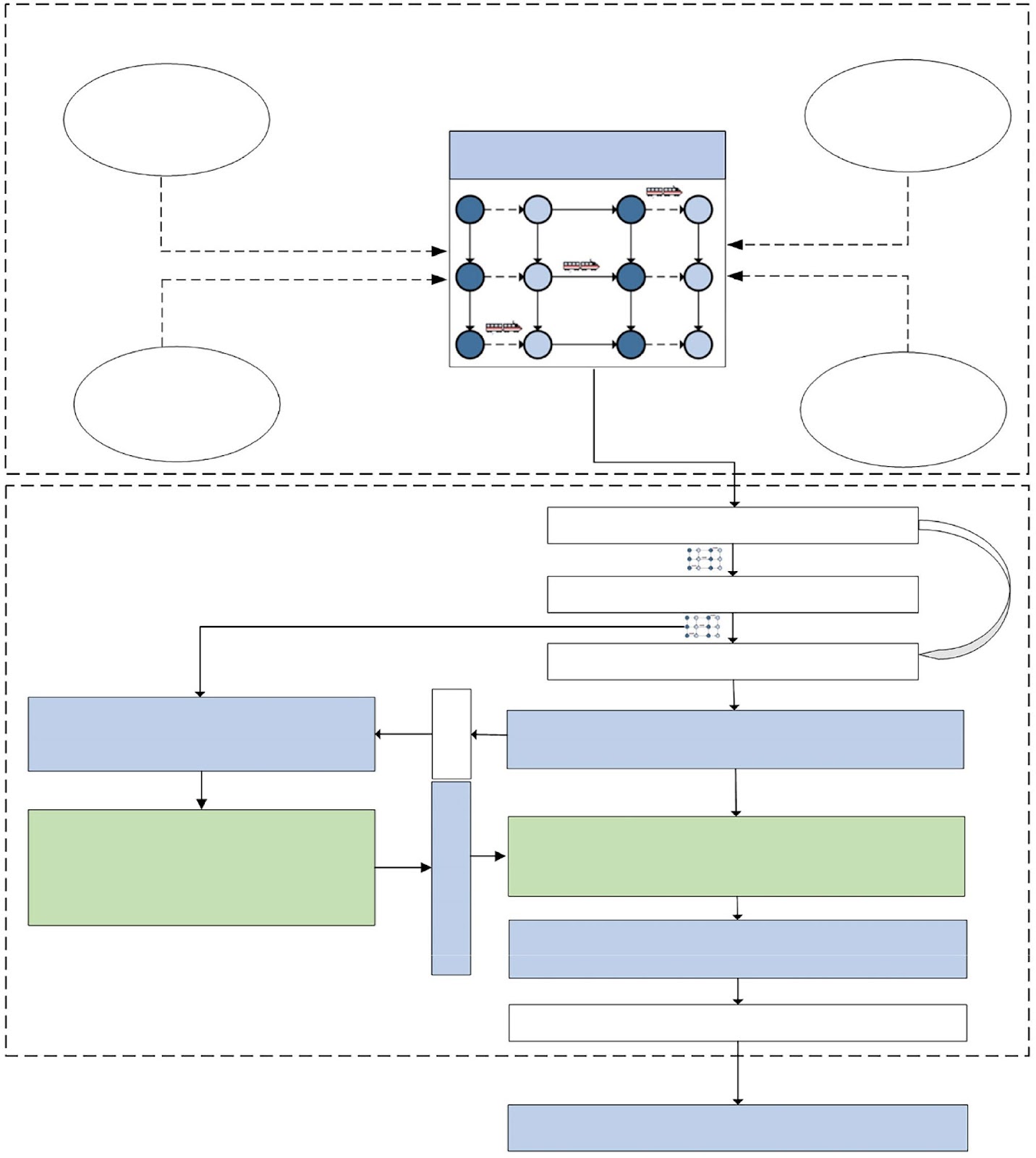
Key Takeaways & Executive Findings
- •• • The GNN-based approach predicts train dwelling and running times with satisfactory accuracy, enabling precise rescheduling decisions under delay scenarios. • • The proposed method reduces train delays by up to 20% compared to three rule-based benchmarks in disturbed train groups, demonstrating operational superiority. • • The model achieves high computational efficiency, with inference times under 1 second for real-time rescheduling scenarios, supporting practical deployment. • • The Overtaking Identification Algorithm (OIA) effectively identifies train overtaking events, enhancing the interpretability of rescheduling actions.
Abstract
This study addresses the train timetable rescheduling (TTR) problem from a novel perspective, focusing on the actions of train traffic controllers: adjusting dwelling times, running times, and train orders. To enhance interpretability, we propose a graph neural network (GNN) approach that maps train timetable data into evolution graphs, aligning with the operational paradigm of train processes. Two experiments are conducted: node-level prediction of dwelling and running times, and edge-level overtaking identification using the proposed Overtaking Identification Algorithm (OIA). The integrated GNN-OIA framework, combined with train operation constraints, generates rescheduling solutions. Experimental results demonstrate satisfactory predictive performance. Under diverse delay scenarios, the proposed method outperforms three standard rule-based benchmarks in reducing train delays for disturbed train groups. Additionally, the model exhibits high computational efficiency across three rescheduling scenarios, indicating its applicability for real-time train dispatching. The study underscores the potential of data-driven approaches in capturing dynamic interactions and cascading effects, offering a promising alternative to traditional mathematical programming and simulation methods.
1. Introduction
Train operations are frequently disrupted by external interruptions and internal factors, leading to delays that negatively impact management and passenger service. Traditional rescheduling approaches, including mathematical programming and simulation, rely on prescriptive parameters and simplifying assumptions, failing to capture the dynamic interactions and cascading effects inherent in train operations. This limitation hampers their ability to uncover actual operational patterns and adapt to real-time disturbances.
To address this bottleneck, we introduce a graph neural network (GNN) framework that learns directly from historical train operation data, mapping timetables into evolution graphs that reflect the sequential and relational nature of train movements. By predicting dwelling and running times at the node level and identifying overtaking events at the edge level, our model integrates data-driven insights with operational constraints, offering a more adaptive and interpretable solution for real-time timetable rescheduling.
Loading authentic research manuscript (Pages 1–5)...
Ping Huang, Zihuan Peng, Zhongcan Li, Qiyuan Peng (2026). Solving the Railway Timetable Rescheduling Problem with Graph Neural Networks. Railway Engineering Science (铁道工程科学). https://doi.org/10.1007/s40534-025-00383-7
Research & Educational Purpose Only:The translations, structured abstracts, analytical annotations, and data reports provided by SinoTechIntel are intended exclusively for academic research, internal corporate R&D, and educational benchmarking. They do not constitute formal engineering, chemical safety, legal, or professional advice.
Copyright & Intellectual Property Notice: Original copyright of the underlying source articles and experimental data remains with the respective authors, institutions, and original publishing journals. SinoTechIntel claims intellectual property only over its proprietary translations, analytical syntheses, and AEO structured enhancements in accordance with international fair use and academic citation principles.
Frequently Asked Questions
How does the GNN model handle the cascading effects of rescheduling actions compared to traditional methods?
The GNN model captures cascading effects by learning from evolution graphs that represent train interactions and dependencies. Unlike traditional methods that rely on static assumptions, the GNN processes dynamic information, allowing it to predict the consequences of actions such as dwelling time adjustments on subsequent train movements, thereby improving delay mitigation.
What is the computational overhead of the proposed method for real-time deployment?
The model demonstrates high efficiency, with inference times sufficiently low for real-time dispatching. In the tested scenarios, the method produced rescheduling solutions within seconds, making it suitable for operational use where rapid decision-making is critical.
How does the model's performance vary under different delay durations and disturbance magnitudes?
The model was tested under delay scenarios with a maximum disturbance duration of 45 minutes. Across these scenarios, it consistently outperformed rule-based benchmarks in reducing delays for disturbed train groups, indicating robustness to varying disturbance intensities.
What are the limitations of the data-driven approach in terms of generalization to larger networks?
The current model was validated on a single railway line. Its scalability to larger, network-level rescheduling problems remains untested. Future work aims to extend the framework to handle more complex, multi-line scenarios, which may require additional architectural modifications to manage increased graph complexity.
How does the model ensure interpretability of its rescheduling decisions?
Interpretability is achieved through the explicit modeling of rescheduling actions (dwelling time, running time, and train order) and the use of evolution graphs. The Overtaking Identification Algorithm (OIA) provides clear identification of overtaking events, allowing controllers to understand the rationale behind suggested actions.
Related Technical Papers & Translations
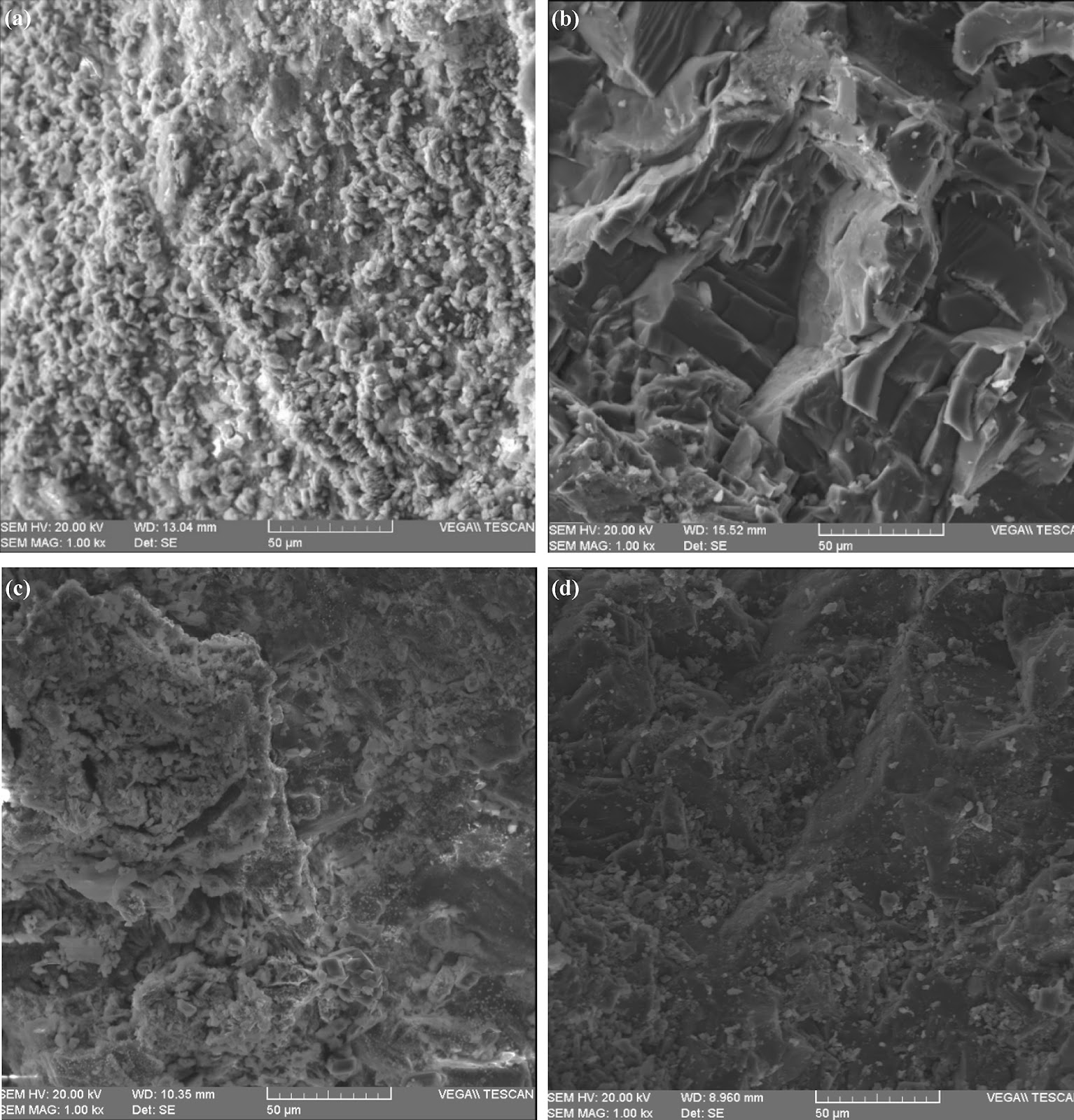
Thermal–environmental effects on degradation of railway ballast aggregates: a climate change perspective
Climate change imposes multifaceted stresses on railway infrastructure, particularly ballasted tracks, where ballast degradation drives maintenance costs. This study quantifies the durability of ballast aggregates under simulated thermal and environmental conditions representative of climate change scenarios. Laboratory tests subjected aggregates to temperature extremes from −20°C to +100°C, freeze–thaw cycles, and sulfate attacks. Durability was assessed via Los Angeles abrasion, micro-Deval wear, crushing resistance, impact performance, and breakage potential. Results demonstrate that sulfate attacks, freeze–thaw cycles, extreme cold, and extreme warm conditions degrade durability by averages of 50%, 20%, 40%, and 35%, respectively. Empirical formulations were derived to estimate degradation indices as functions of thermal and environmental stressors. These findings underscore the critical influence of climate-driven conditions on ballast longevity and provide a basis for climate-adaptive railway design and maintenance planning.
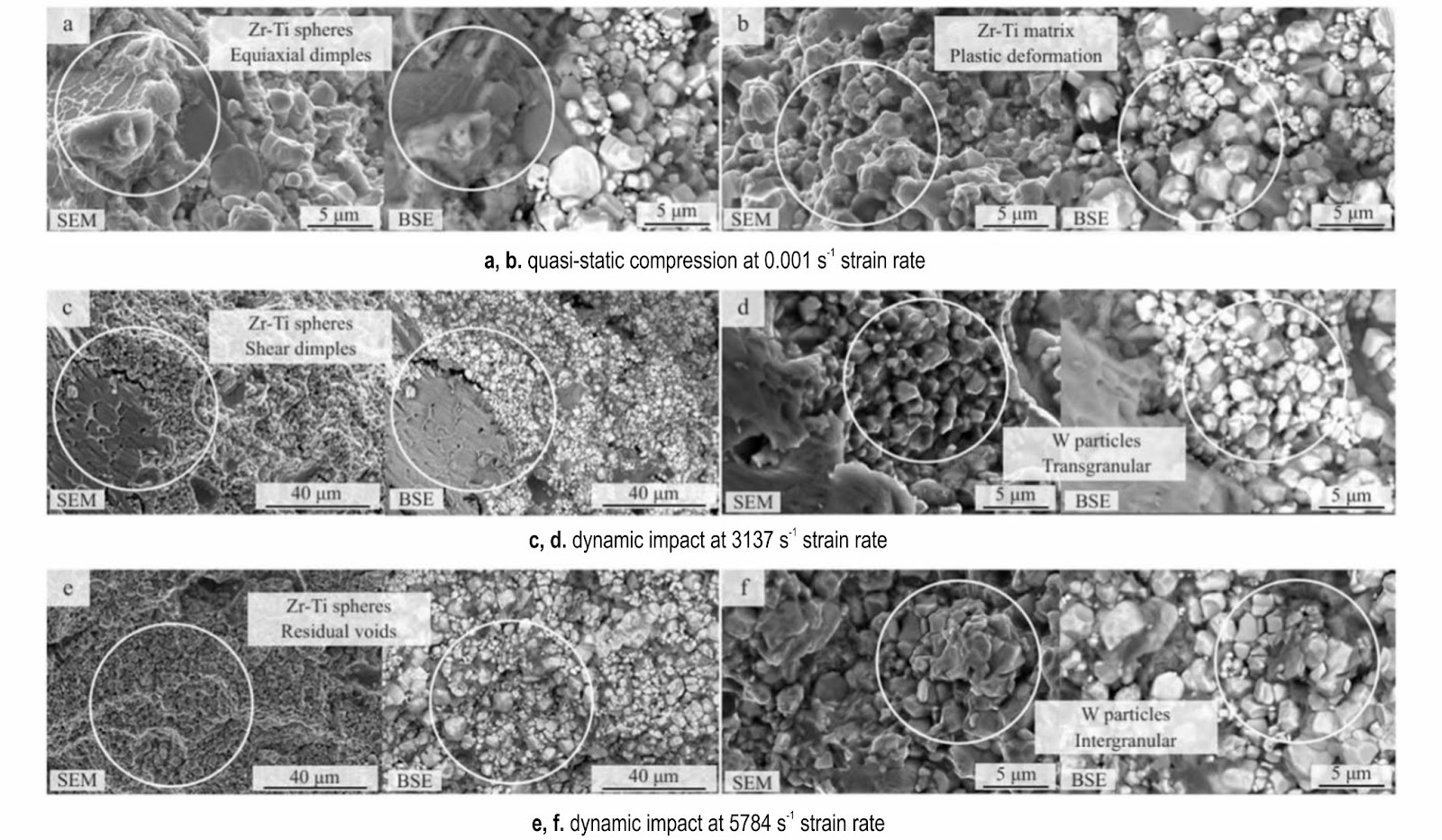
Research Progress on Design, Fabrication, Mechanical Properties, and Shock-Induced Energy Release Characteristics of Reactive Tungsten Alloys
Reactive tungsten alloys (RTAs) are a class of metallic energetic structural materials that combine a high-density tungsten skeleton with reactive elements such as Zr and Ti, offering synergistic capabilities of high-strength load bearing, kinetic penetration, and shock-induced energy release. This review systematically examines the composition design and fabrication methods of RTAs, detailing their typical microstructural characteristics and the structure–mechanical property relationships. It summarizes penetration behavior and energy release characterization under high-velocity impact, and outlines future directions including machine-learning-assisted multi-objective design, development of large-scale component forming technologies, and establishment of multi-scale constitutive models to elucidate penetration and energy release mechanisms. The review highlights that RTAs can achieve dynamic compressive strengths exceeding 2 GPa and densities above 10 g·cm−3, while the addition of elements such as Ti and Nb suppresses the formation of brittle W2Zr intermetallics, improving ductility. Challenges remain in balancing strength, energy release, and processability, particularly in solid-state sintering above 1500 °C. The paper provides a comprehensive foundation for the design and engineering application of high-density reactive tungsten alloys.
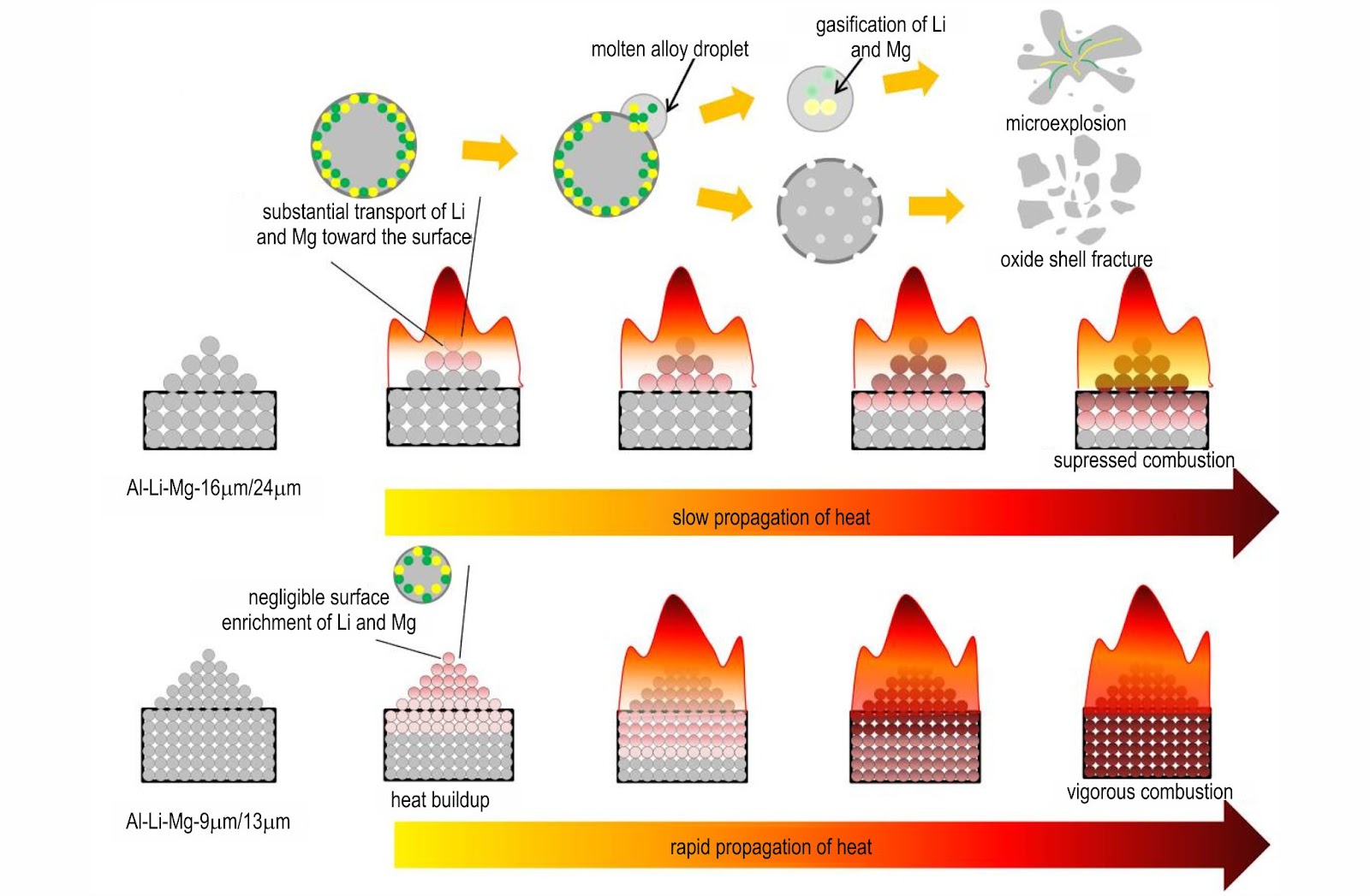
Effect of Particle Size on Ignition and Combustion Performance of Al-Li-Mg Alloys
To elucidate the influence mechanism of particle size on the ignition and combustion behavior of Al-Li-Mg alloys, four alloy powders with median diameters of 9, 13, 16, and 24 μm were systematically investigated. Physicochemical properties were characterized by laser diffraction, scanning electron microscopy, X-ray diffraction, simultaneous thermal analysis, and oxygen bomb calorimetry. Ignition and combustion behaviors were assessed using a laser ignition test bench equipped with high-speed photography and fiber-optic spectrometry. Results show that with increasing particle size, ignition delay time first decreases sharply then stabilizes, dropping from 135 ms (9 μm) to 51 ms (13 μm), then to 15 ms (16 μm) and 18 ms (24 μm). Combustion intensity, indicated by maximum spectral intensity, decreases from 7300.4 (9 μm) to 1721.6 (24 μm). Combustion duration initially extends slightly then stabilizes, from 857 ms (9 μm) to 928 ms (13 μm) and approximately 920 ms for larger sizes. Notably, the 13 μm alloy achieves an optimal balance among ignition delay (51 ms), combustion duration (928 ms), and combustion intensity (6041.8). The study reveals a critical size effect: between 13 and 16 μm, ignition delay drops by 71% while combustion intensity decreases by 54%, indicating a transition from surface-diffusion-controlled to micro-explosion-dominated combustion. This mechanism arises from competition between heat conduction and elemental diffusion: larger particles restrict heat transfer, promoting Li and Mg surface enrichment and temperature gradients that induce micro-explosions, thereby shortening ignition delay but reducing combustion efficiency and intensity.