Key Takeaways & Executive Findings
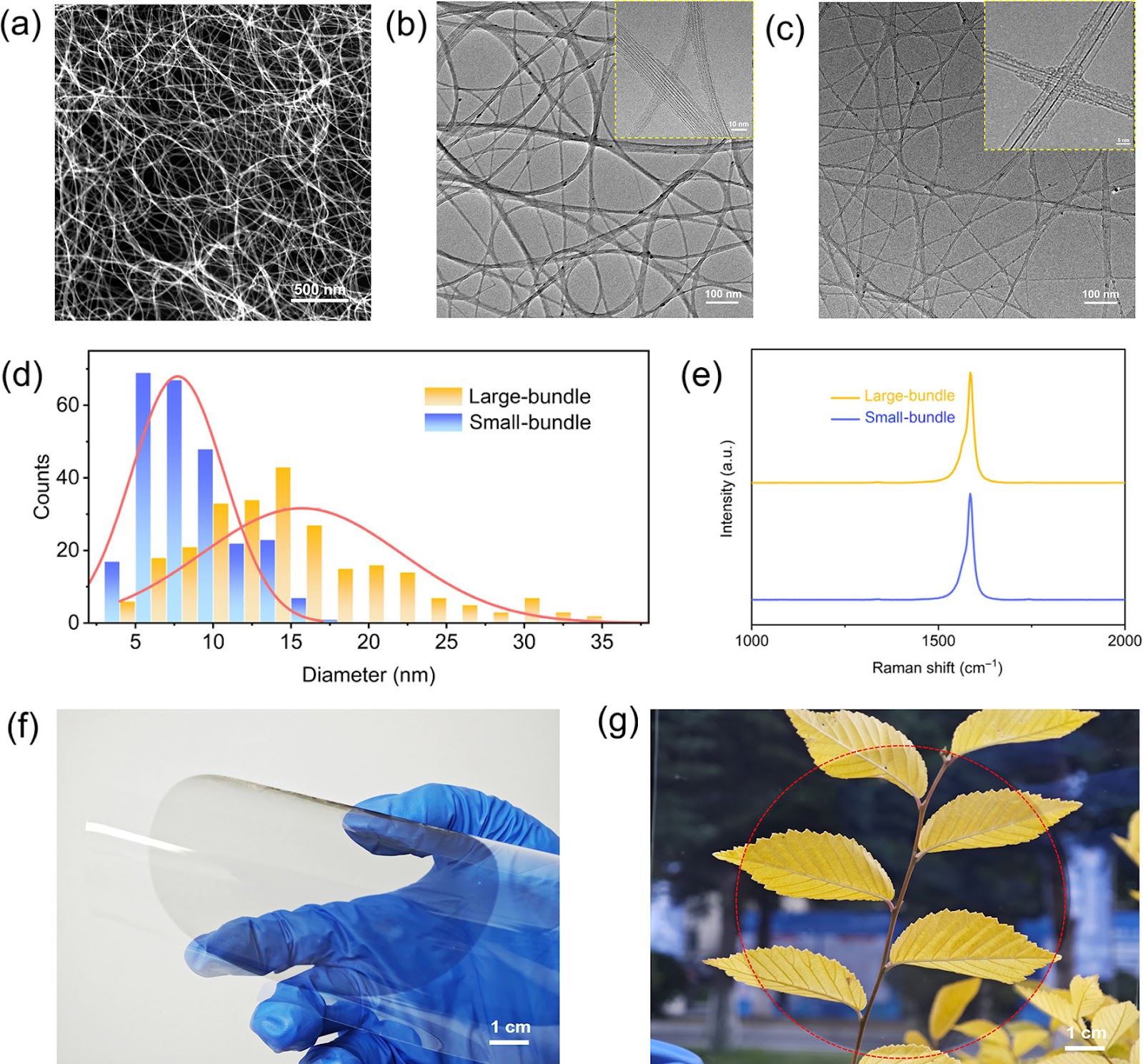
- •• • Small-bundle SWCNT films (average bundle diameter 7.1 nm) achieve 26 Ω/□ sheet resistance at 82% transmittance, outperforming large-bundle counterparts by enabling higher areal nanotube density and more efficient conductive paths at equivalent optical transparency; this directly addresses the transparency–conductivity trade-off that limits ITO and metal nanowire alternatives. • • The film reaches a stable 102 °C at only 20 V applied voltage, demonstrating low-power electrothermal operation suitable for integration into flexible smart windows and other thermal management systems where energy efficiency and precise temperature control are critical. • • Integration with a PW/PDMS thermochromic layer yields a flexible smart window with a reversible visible transmittance range of 0.17% to 78% and exceptional cycling stability, enabling dynamic transparency control for energy-saving architectural and automotive glazing applications. • • The FCCVD-synthesized small-bundle SWCNT film overcomes the brittleness and high cost of ITO and the oxidation and roughness issues of metal nanowires, offering a scalable, flexible, and stable transparent heater platform for next-generation curved and wearable electronics.
Abstract
The integration of electrothermal films into smart windows demands simultaneous high optical transparency and exceptional heating performance, a trade-off that has constrained flexible transparent heater development. This work reports a transparent conductive single-wall carbon nanotube (SWCNT) film composed of highly crystalline, long SWCNTs in small bundles, synthesized by floating catalyst chemical vapor deposition (FCCVD). The small-bundle SWCNT film, with an average bundle diameter of 7.1 nm, achieves a sheet resistance of 26 Ω/□ at 82% transmittance and reaches a stable temperature of 102 °C under a low applied voltage of 20 V. The superior electrothermal performance relative to large-bundle counterparts originates from a higher areal nanotube density and more efficient conductive pathways at equivalent transmittance. Integrating this transparent heating film with a paraffin wax/polydimethylsiloxane (PW/PDMS) thermochromic functional layer yields a large-area flexible smart window. The device exhibits a reversible visible light transmittance range from 0.17% to 78% and exceptional cycling stability. This study overcomes the transparency–conductivity trade-off in transparent electrothermal films, providing a viable route for flexible smart windows and related thermal management devices.
1. Introduction
Transparent heaters that combine electrical heating with high optical transparency are critical for smart windows, anti-icing/deicing systems, anti-fogging devices, and advanced displays. Traditional indium tin oxide (ITO) dominates the market due to its excellent transparency and conductivity, but its inherent brittleness and high cost severely limit use in flexible devices. Metal nanowires and grids offer flexibility but suffer from oxidation, surface roughness, and structural instability at elevated temperatures. Consequently, fabricating electrothermal films that simultaneously deliver high transparency, superior conductivity, good stability, and excellent flexibility remains a major bottleneck for large-scale commercialization of flexible transparent heating technology.
Nanocarbon materials such as carbon nanotubes, graphene, and their hybrids present a promising alternative due to simple fabrication and excellent electrical/thermal conductivity. However, achieving both high transparency and exceptional electrothermal performance simultaneously has proven challenging. This work reports a small-bundle single-wall carbon nanotube (SWCNT) film synthesized by floating catalyst chemical vapor deposition (FCCVD) that overcomes this trade-off. The film, with an average bundle diameter of 7.1 nm, exhibits a low sheet resistance of 26 Ω/□ at 82% transmittance and reaches 102 °C at 20 V. Integration with a paraffin wax/PDMS thermochromic layer yields a flexible smart window with a reversible transmittance range of 0.17% to 78% and excellent cycling stability, addressing the critical need for high-performance flexible transparent heaters.
Loading authentic research manuscript (Pages 1–5)...
DING Wu-Tong, MENG Yu, YANG Hao, WU An-Ping, MA Rui-Shu, LI Kang, HOU Peng-Xiang, LIU Chang (2026). A small-bundle single-wall carbon nanotube electrothermal film for smart windows. Nano Research. https://doi.org/10.26599/NR.2026.94908790
Research & Educational Purpose Only: The translations, structured abstracts, analytical annotations, and data reports provided by SinoTechIntelare intended exclusively for academic research, internal corporate R&D, and educational benchmarking. They do not constitute formal engineering, chemical safety, legal, or professional advice.
Copyright & Intellectual Property Notice: Original copyright of the underlying source articles and experimental data remains with the respective authors, institutions, and original publishing journals. SinoTechIntel claims intellectual property only over its proprietary translations, analytical syntheses, and AEO structured enhancements in accordance with international fair use and academic citation principles.
Frequently Asked Questions
What is the failure mechanism of the small-bundle SWCNT film under repeated electrothermal cycling, and how does it compare to ITO or metal nanowire heaters?
The small-bundle SWCNT film exhibits exceptional cycling stability, as evidenced by the smart window's reversible transmittance range of 0.17% to 78% maintained over repeated cycles. Unlike ITO, which fails catastrophically due to brittleness under flexing, or metal nanowires that degrade via oxidation and junction instability at high temperatures, the SWCNT film's highly crystalline, long nanotubes in small bundles provide robust conductive pathways that resist structural degradation. The 7.1 nm bundle diameter and high areal density ensure efficient heat dissipation and mechanical compliance, mitigating hot-spot formation and delamination.
What are the scalability bottlenecks for FCCVD synthesis of small-bundle SWCNT films, and what is the projected cost parity against ITO?
FCCVD is an established scalable method for continuous SWCNT film production, but achieving uniform small-bundle diameters (7.1 nm average) across large areas requires precise control of catalyst formulation, reactor temperature, and gas flow dynamics. The primary bottleneck is maintaining bundle size homogeneity at high throughput. Cost parity with ITO is favorable because SWCNTs avoid indium's high and volatile cost, and FCCVD uses relatively inexpensive carbon precursors. However, post-synthesis purification and film transfer steps add cost. At 26 Ω/□ and 82% transmittance, the performance already exceeds ITO on flexible substrates, justifying the investment for flexible smart windows where ITO cannot compete.
How does the PW/PDMS thermochromic layer affect the electrothermal response time and overall device reliability under repeated phase transitions?
The PW/PDMS composite layer undergoes solid–liquid phase transitions of paraffin wax (PW) within a PDMS matrix, as confirmed by SEM, POM, DSC, and Raman spectroscopy. The device achieves a transmittance swing from 0.17% to 78% with exceptional cyclic stability, indicating that the PW/PDMS layer remains mechanically intact and optically reversible over many heating–cooling cycles. The SWCNT film's uniform heating (102 °C at 20 V) ensures rapid and complete PW melting, while the PDMS matrix prevents PW leakage. Response time is governed by thermal diffusion through the composite, but the low sheet resistance (26 Ω/□) enables fast Joule heating, and the flexible substrate accommodates volumetric changes during phase transition without delamination.
What is the operational voltage and power consumption required to maintain 102 °C, and how does this translate to energy efficiency in smart window applications?
The small-bundle SWCNT film reaches a constant temperature of 102 °C at a low applied voltage of 20 V. The sheet resistance of 26 Ω/□ at 82% transmittance implies a power density that is competitive with or superior to conventional transparent heaters. For a typical smart window area, the low voltage operation reduces wiring and insulation requirements, and the high transmittance ensures minimal optical loss. The energy efficiency stems from the film's high electrical conductivity and efficient heat generation, enabling rapid switching of the thermochromic layer with minimal power input, which is critical for building energy management.
How does the small-bundle morphology specifically enhance electrothermal performance compared to large-bundle SWCNT films, and what are the limits of bundle size reduction?
Small-bundle SWCNT films (average bundle diameter 7.1 nm) achieve a higher areal nanotube density and more efficient conductive paths at the same transmittance compared to large-bundle counterparts. This results in lower sheet resistance (26 Ω/□ at 82% transmittance) and superior electrothermal performance (102 °C at 20 V). The enhancement arises because smaller bundles expose more individual nanotube surfaces for electrical contact, reducing junction resistance and increasing the number of parallel conduction pathways. However, extreme bundle size reduction below a few nanometers may compromise film integrity and increase susceptibility to oxidation or mechanical damage, so 7.1 nm represents a practical optimum balancing performance and stability.
Related Chinese Research & Cross-Citations
Homogenizing energy landscapes and microstructure enabling a linear and stable thermal sensing response in high-entropy niobates
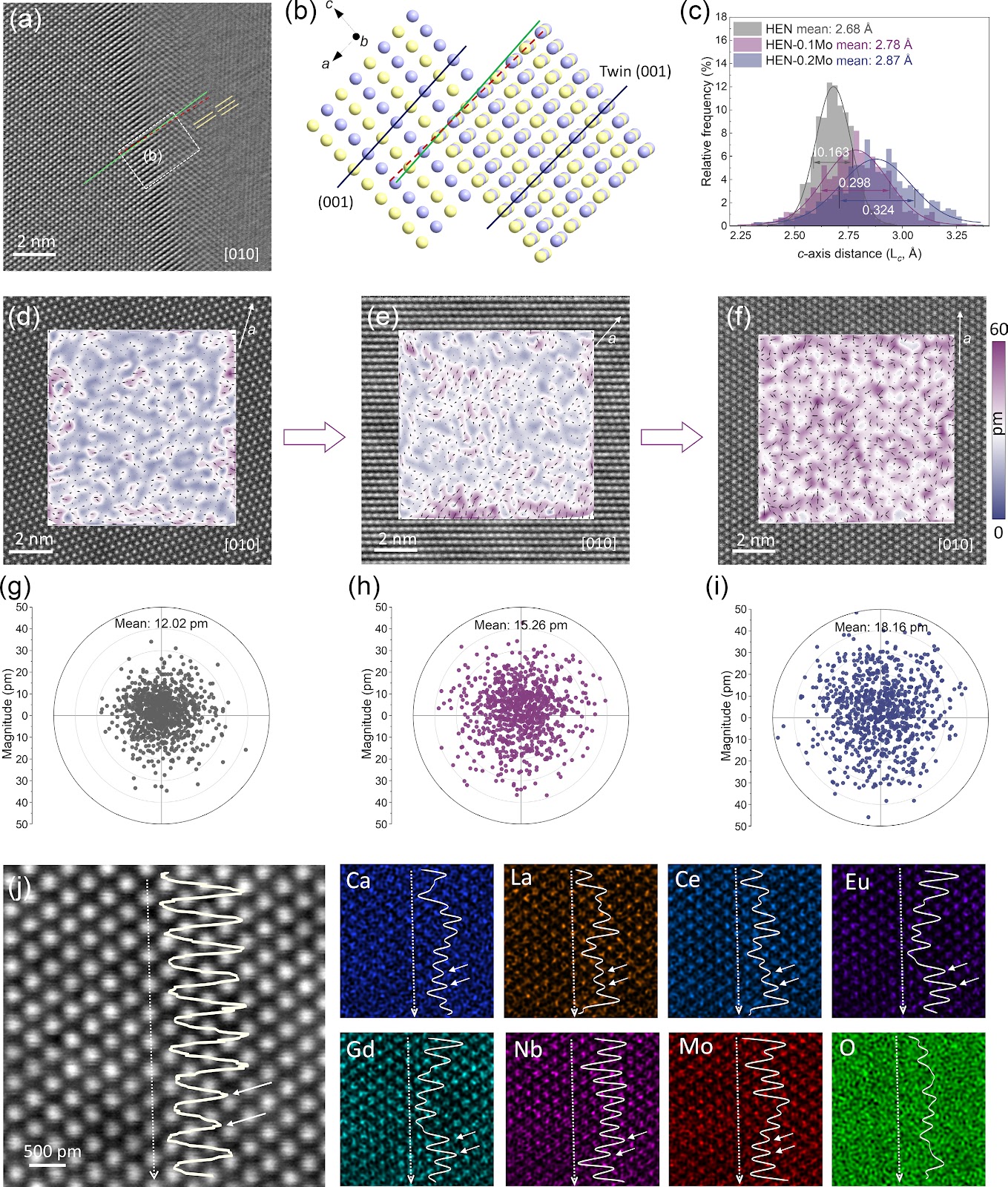
Advanced temperature-sensitive materials are critical for hypersonic propulsion and next-generation energy systems, yet long-term stability above 1000 °C remains a formidable barrier. Conventional transition-metal spinel oxides (e.g., Ni–Mn–Co–O) suffer phase decomposition and cation migration above 300 °C, causing exponential resistance drift. This work develops a Mo-regulated high-entropy ferroelastic niobate strategy for ultrawide-temperature negative-temperature-coefficient (NTC) thermosensitive ceramics. Density functional theory calculations reveal that A-site high-entropy facilitates Mo doping in (Ca0.2La0.2Ce0.2Eu0.2Gd0.2)NbO4. Mo doping broadens local atomic configurations, modulates ferroelastic domain structures, and increases atomic-scale displacement disorder, redistributing Hall transport contributions and reducing grain/grain-boundary transport barrier mismatch. The optimized HEN-0.2Mo ceramic exhibits highly linear Arrhenius behavior (R² = 0.99907) from −50 to 1250 °C with a B-value fluctuation of only 4.44%. High-temperature impedance analysis confirms closely matched grain and grain-boundary activation energies (Eg = 1.209 eV, Egb = 1.218 eV; ΔEa ≈ 0.009 eV). During 1250 °C aging, postdensification and strain redistribution yield a stabilized-stage resistance drift of only 1.09% after 1000 h. These findings demonstrate that entropy-stabilized defect engineering decouples sensitivity from degradation in functional ceramics under thermal stress.
Revealing the influence of composition and interface on the mechanical and dielectric properties of Si3N4 fiber-reinforced ceramic composites
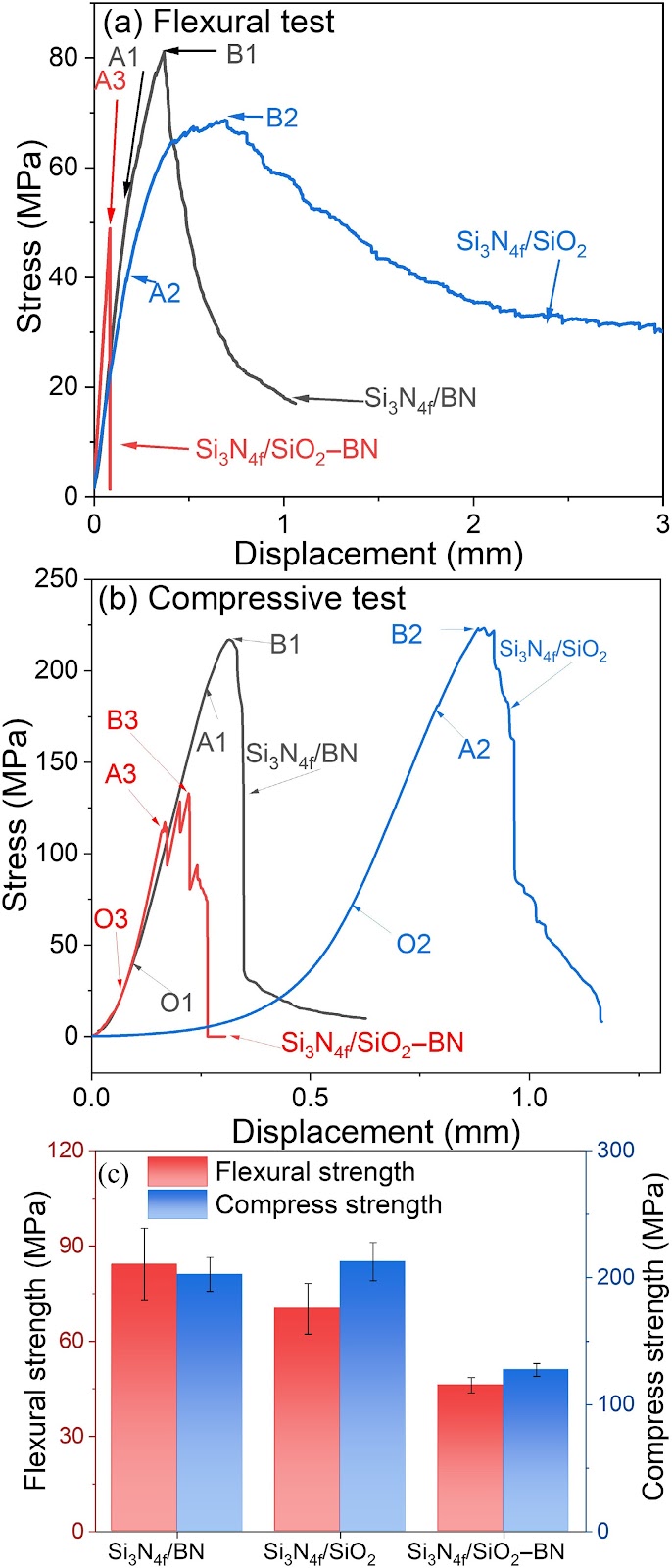
Si3N4 fiber-reinforced ceramic composites are candidate materials for high-temperature wave-transparent applications, yet the relationships among composition, interfacial characteristics, and mechanical performance remain inadequately understood. This study designs three composites—Si3N4f/BN, Si3N4f/SiO2, and Si3N4f/SiO2–BN—and systematically investigates their performances. The reaction between BN precursors and silanol groups in the SiO2 matrix during fabrication of Si3N4f/SiO2–BN enhances chemical compatibility between fiber and matrix, promoting elemental interdiffusion and forming a thicker interfacial diffusion region. Consequently, the interfacial shear strength of Si3N4f/SiO2–BN is 1.86 and 2.35 times that of Si3N4f/BN and Si3N4f/SiO2, respectively. The stronger fiber-matrix bonding in Si3N4f/SiO2–BN suppresses fiber pull-out, whereas weaker bonding in the other two composites permits it. Si3N4f/BN primarily exhibits fiber bundle pull-out, whereas Si3N4f/SiO2 shows long single-fiber pull-out, indicating improved damage tolerance. In contrast, Si3N4f/SiO2–BN displays typical brittle fracture behavior with minimal fiber pull-out and degraded mechanical properties. Excessive interfacial bonding, together with thermal residual stress arising from thermal expansion mismatch between the Si3N4 fiber and the matrix, degrades flexural and compressive strengths. Moreover, this excessive bonding restricts interfacial debonding and fiber pull-out, leading to a brittle fracture mode. Despite differences in interfacial microstructure, all three composites exhibit good dielectric properties. The use of SiO2 and BN matrices effectively reduces both the dielectric constant and the dielectric loss tangent of Si3N4 fiber-reinforced ceramic composites. These findings provide valuable insights into the design of high-temperature wave-transparent composites operated in extreme environments.
Cation-Driven Charge Modulation and In-Situ Exsolved Nanoparticles Enable a Self-Assembled Cathode for Proton Ceramic Solid Oxide Cells
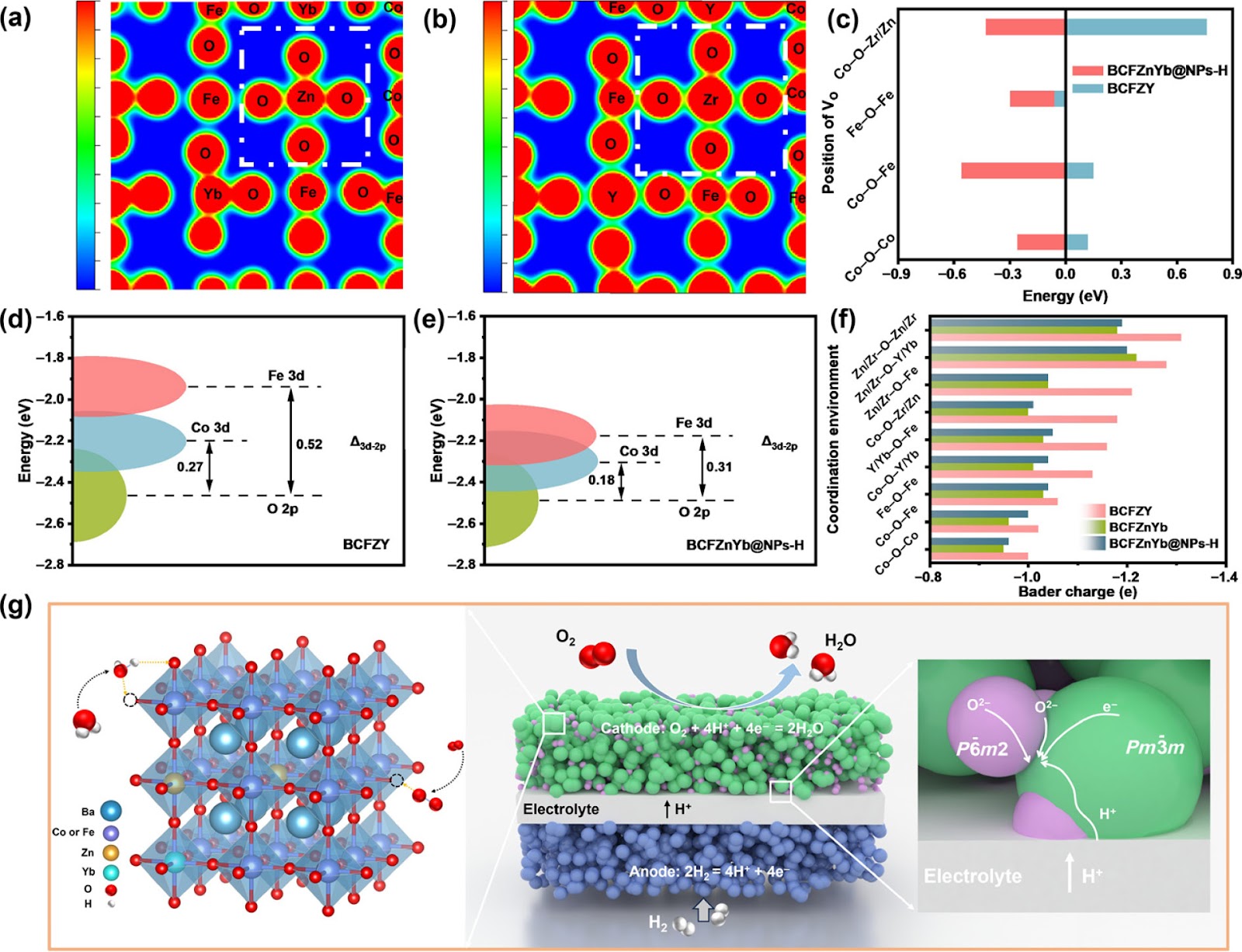
Protonic ceramic fuel cells (PCFCs) offer efficient intermediate-temperature energy conversion but are constrained by the trade-off between insufficient electrode activity and limited operational durability. This work develops a Zn/Yb B-site codoping strategy combined with temperature-induced nanoparticle exsolution to construct a triple-conducting cathode. Cation-driven charge modulation enhances ionic diffusion and electronic conduction, while the exsolved secondary BaCoO3−δ phase increases active site density, optimizes interfacial charge transfer, and promotes oxygen reduction reaction (ORR) kinetics. Zn/Yb codoping redistributes local charge density, weakens metal–oxygen bonds, and reduces oxygen vacancy formation energy, promoting oxygen vacancy generation. The increased oxygen vacancy concentration facilitates surface oxygen activation and lattice hydration, enhancing oxygen-ion and proton transport. Enhanced d–p orbital hybridization improves electronic conductivity and accelerates charge transfer kinetics. Optimized alkaline–earth sites suppress carbonate formation, imparting excellent CO2 tolerance. The optimized cathode delivers a peak power density of 0.99 W·cm−2 at 600 °C and stable operation over 100 h, with a polarization resistance of 0.110 Ω·cm2 under 20% H2O-air. This work provides a novel strategy for optimizing activity, conductivity, and stability in PCFC cathodes.
Exceptional Long-Duration Ablation Tolerance over 2500 °C of C/ZrC–SiC–Cu3Si–Cu Interpenetrating Composites
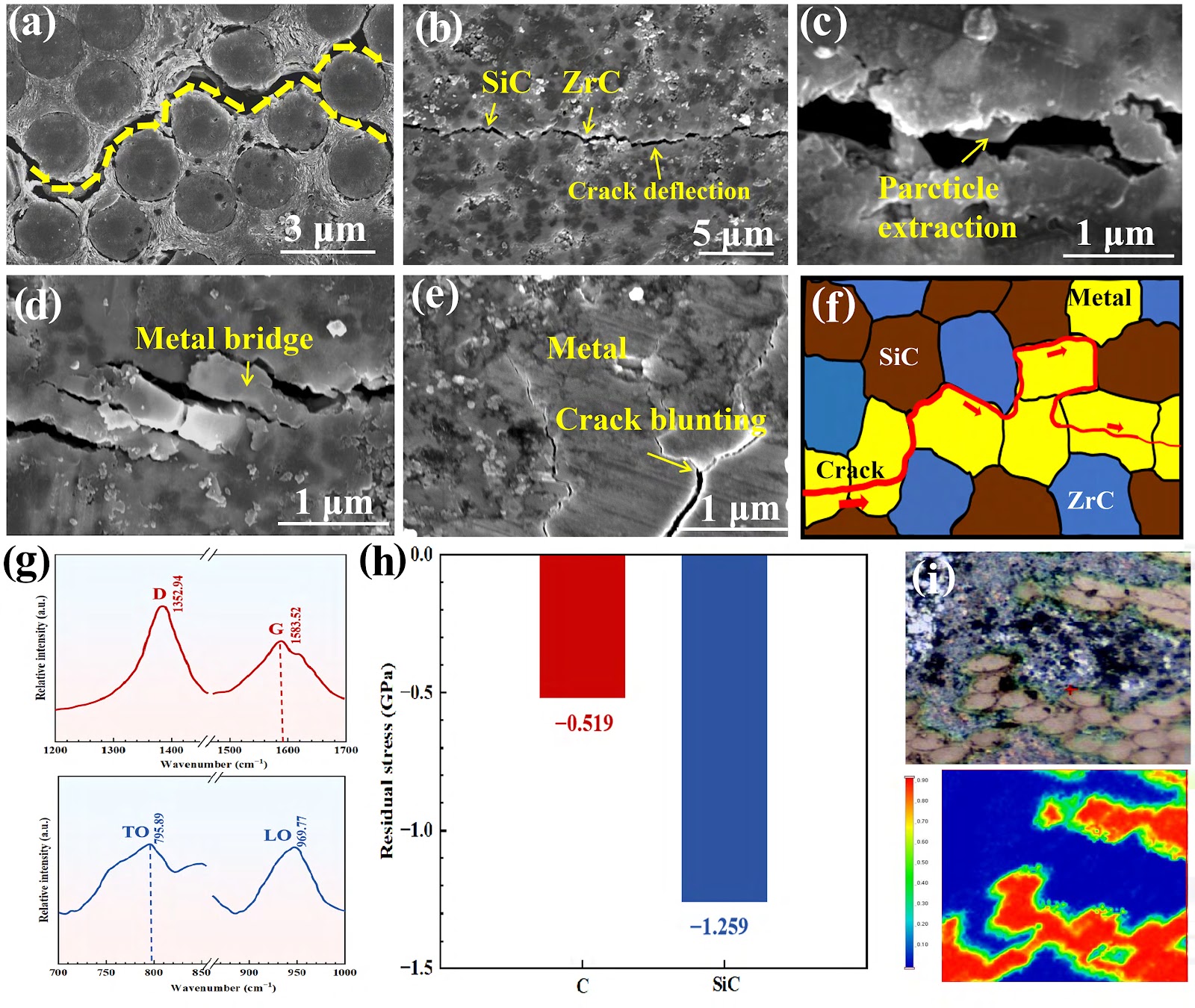
Carbon fiber-reinforced ultrahigh-temperature ceramic composites (C/UHTCs) based on ZrC–SiC are limited by rapid ablation above 2500 °C under prolonged oxidizing exposure. This study reports C/ZrC–SiC–Cu3Si–Cu interpenetrating composites fabricated by infiltrating a Zr–Si–Cu ternary melt into carbon fiber-reinforced carbon aerogel (C/CA) preforms. The process yields a uniform metal-ceramic matrix via ceramization of the carbon aerogel and in situ precipitation of Cu-containing phases. During oxyacetylene ablation at a surface temperature of 2557–2600 °C for 1200 s, the composite exhibits mass and linear ablation rates of 0.0604 mg·cm−2·s−1 and 0.1808 μm·s−1, respectively, surpassing conventional C/ZrC–SiC and other reported ceramic and ceramic-metal matrix composites under similar conditions. The ablation resistance arises from transpiration cooling via continuous evaporation of dispersed Cu-containing phases, which maintains a surface temperature of approximately 2300 °C under a heat flux of 3.18 MW·m−2, combined with a protective Zr–Si–O glassy layer that inhibits oxygen diffusion and resists mechanical denudation. The composite also demonstrates a flexural strength of 194±7 MPa, a fracture toughness of 11.8±1.2 MPa·m1/2, and a work of fracture of 5315±1232 J·m−2, exceeding most reaction-melt-infiltration-derived C/ZrC–SiC. These properties are attributed to the highly reactive carbon aerogel matrix, a protective PyC interface, optimized interfacial debonding, crack deflection mechanisms, and compressive residual stresses. The combination of active-passive cooling and robust mechanical performance positions this composite as a candidate for structural applications in extreme thermal-mechanical environments.
Breaking the strain–symmetry trade-off via electrostriction-mediated reversible phase transition in B-site-engineered BNKT-based ceramics
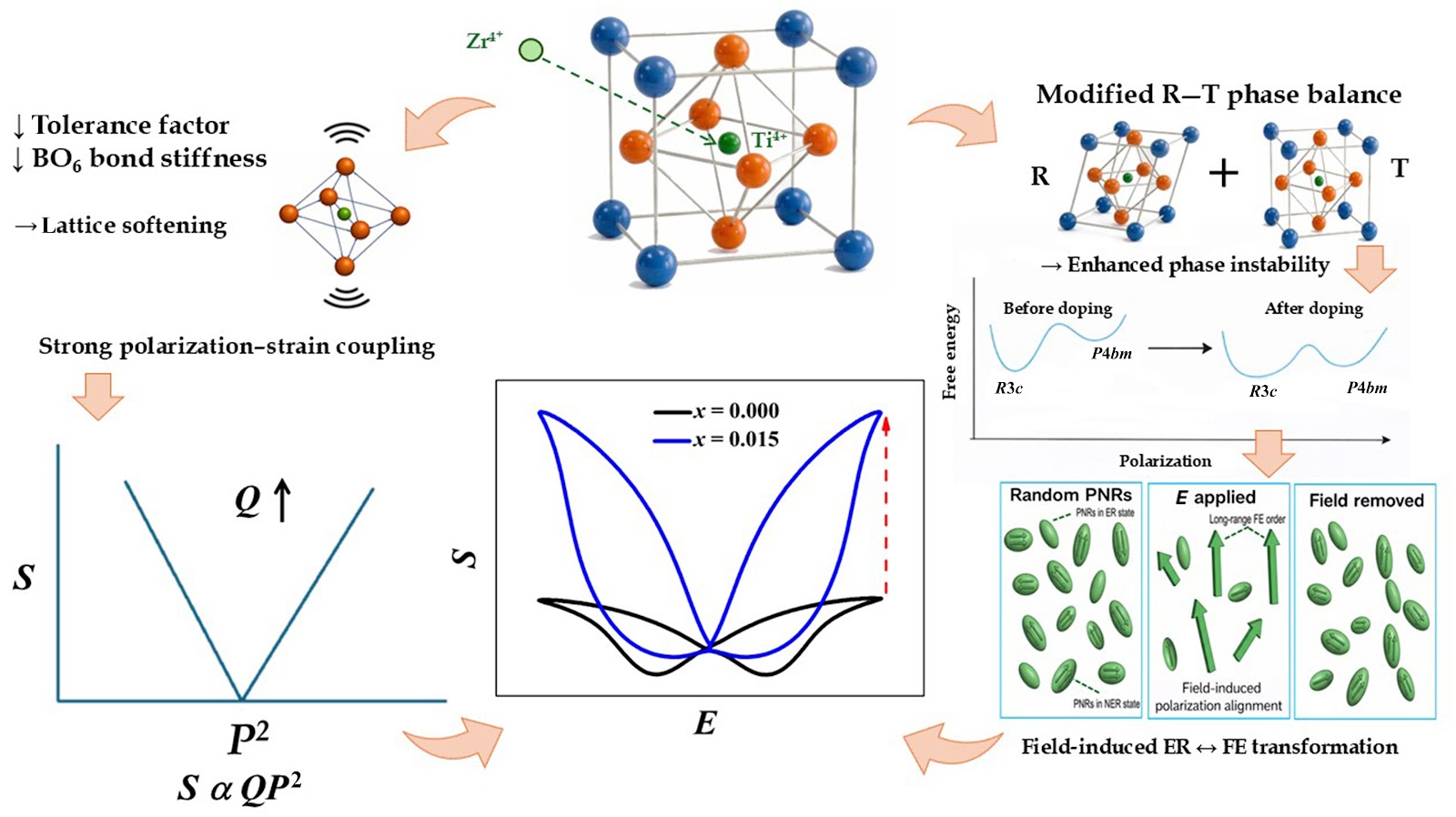
Lead-free piezoceramics face a persistent strain–symmetry trade-off: large electrostrain typically arises from irreversible polarization processes that degrade bipolar strain reversibility. This study investigates B-site Zr engineering in Bi0.495La0.005Na0.400K0.100Ti1−xZrxO3 (x = 0.000–0.025) to decouple strain magnitude from symmetry. The optimized composition (x = 0.015) achieves a large electrostrain of ~0.52% with a nearly symmetric bipolar S–E response and a normalized strain coefficient d*33 ≈ 867 pm/V. At x = 0.025, the electrostrictive coefficient reaches ~0.055 m4/C2, indicating strengthened electrostriction-dominated behavior. Structural analysis attributes the enhanced electromechanical response to Zr-induced lattice softening and R3c–P4bm phase coexistence, which flatten the free-energy landscape and promote reversible field-driven polarization dynamics. Reduced remanent polarization and coercive field suppress irreversible domain-wall motion, favoring electrostriction-governed strain generation. The electromechanically optimized composition also exhibits noncytotoxic behavior and preliminary surface mineral deposition after immersion in simulated body fluid (SBF), suggesting biofunctional potential. These findings establish B-site lattice engineering as an effective strategy for achieving large, nearly symmetric bipolar strain through electrostriction-dominated mechanisms in lead-free piezoceramics, with implications for actuator and biomedical applications.
Transparent Ferroelectric Ceramics: From Fundamental Material Design to Multifunctional Optoelectronic Device Integration
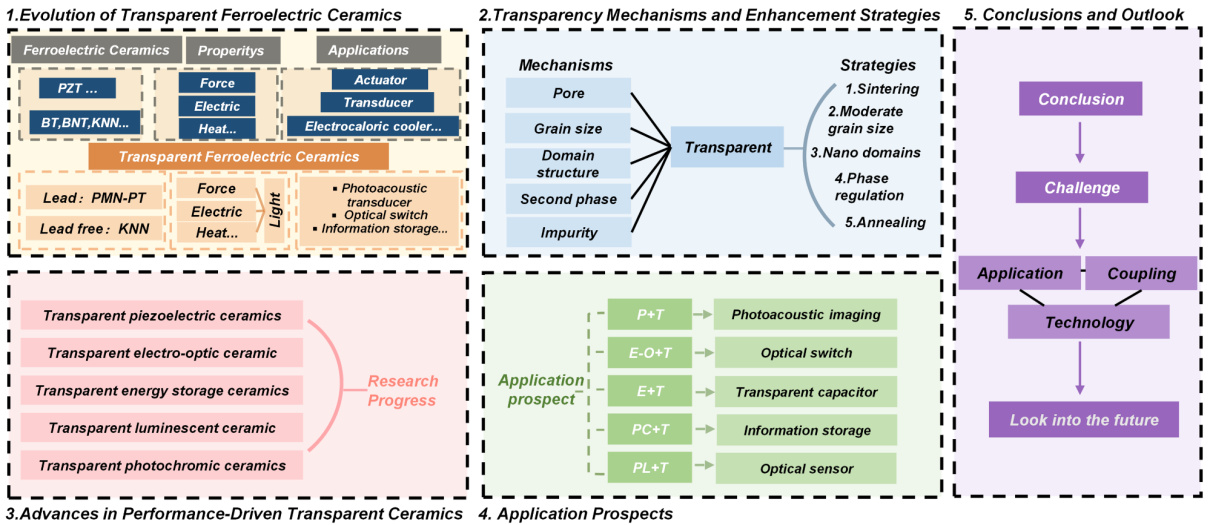
The convergence of optics and electronics, driven by intelligent systems and wearable technologies, demands materials that seamlessly integrate optical transparency with robust electrical and mechanical functionalities. Transparent ferroelectric ceramics (TFCs) have emerged as a pivotal platform in this endeavor, uniquely bridging high optical transmittance with strong ferroelectric, piezoelectric, and electro-optic responses. This review comprehensively charts the evolution of TFCs, from fundamental material design to cutting-edge device applications. We systematically analyze the core strategies for achieving transparency in two representative transparent ferroelectric ceramic systems, namely lead-based (Pb(Mg1/3Nb2/3)O3–PbTiO3, abbreviated as PMN–PT) and lead-free ((K,Na)NbO3, abbreviated as KNN) systems, while also discussing other important systems such as (Pb,La)(Zr,Ti)O3 (PLZT), BaTiO3 (BTO), and (Bi0.5Na0.5)TiO3 (BNT) where appropriate for comparison. Critical mechanisms such as grain and domain engineering, refractive-index matching, phase-structure tuning, and defect control are examined. Representative functionalities—including transparent piezoelectricity, electro-optic modulation, energy storage, photoluminescence, and photochromism—are highlighted, with their potential applications evaluated across photoacoustic imaging, adaptive optics, transparent robotics, smart windows, and optical communication. Finally, we identify key challenges and future opportunities, such as high Curie temperature (Tc) design, texture engineering, and multifunctional co-integration. Overall, this review aims to provide theoretical insights and material-design foundations for next-generation multifunctional transparent ferroelectric devices, accelerating their adoption in intelligent sensing, integrated photonics, and transparent optoelectronic systems.