SinoTechIntel Academic Portal
🏛️ Indexed Academic JournalImpact Factor: 3.7 (Q2 - Elsevier)Original: 新型炭材料

New Carbon Materials

3.7 (Q2 - Elsevier)

Total Research Papers: 47
Access: 100% Free Open Access
Browse by Publication Year & VolumeReset All Filters ✕

Published Research PapersFiltered: Year 2024 • 39 • 1

Showing 3 of 47 peer-reviewed papers with full Graphical Abstracts.

Original ResearchVol. 39, Issue 1 • pp. 142-151DOI: 10.1016/S1872-5805_NJan 15, 2024

A Co3O4/graphdiyne heterointerface for efficient ammonia production from nitrates

Authors: CHEN Zhao-yang, ZHAO Shu-ya, LUAN Xiao-yu, ZHENG Zhi-qiang, YAN Jia-yu, XUE Yu-rui

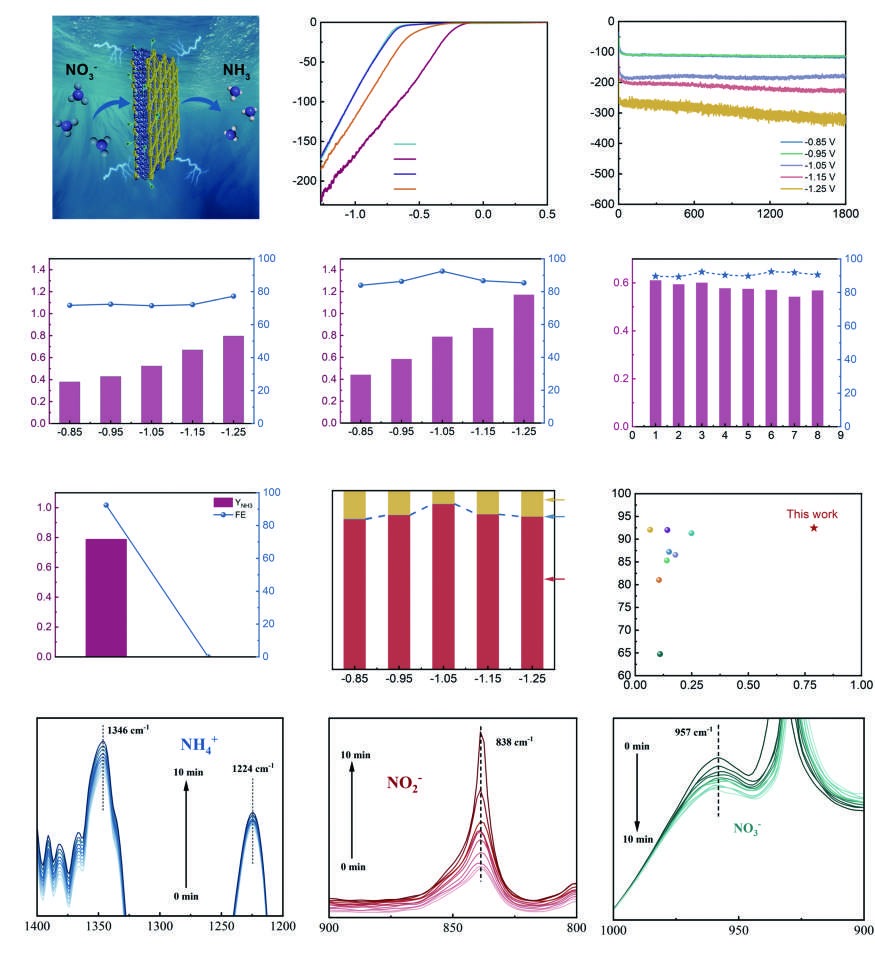
The nitrate reduction reaction (NtRR) has been demonstrated to be a promising way for obtaining ammonia (NH3) by converting NO3− to NH3. Here we report the controlled synthesis of cobalt tetroxide/graphdiyne heterostructured nanowires (Co3O4/GDY NWs) by a simple two-step process including the synthesis of Co3O4 NWs and the following growth of GDY using hexaethynylbenzene as the precursor at 110 °C for 10 h. Detailed scanning electron microscopy, high resolution transmission electron microscopy, X-ray photoelectron spectroscopy, and Raman characterization confirmed the synthesis of a Co3O4/GDY heterointerface with the formation of sp-C―Co bonds at the interface and incomplete charge transfer between GDY and Co, which provide a continuous supply of electrons for the catalytic reaction and ensure a rapid NtRR. Because of these advantages, Co3O4/GDY NWs had an excellent NtRR performance with a high NH3 yield rate (YNH3) of 0.78 mmol h−1 cm−2 and a Faraday efficiency (FE) of 92.45% at −1.05 V (vs. RHE). This work provides a general approach for synthesizing heterostructures that can drive high-performance ammonia production from wastewater under ambient conditions.
A Co3O4/graphdiyne heterointerface for efficient ammonia production from nitrates
Graphical Abstract
Original ResearchVol. 39, Issue 1 • pp. 131-141DOI: 10.1016/S1872-5805_NJan 15, 2024

Bismuth nanoparticles anchored on N-doped graphite felts to give stable and efficient iron-chromium redox flow batteries

Authors: CHE Hang-xin, GAO Yu-fei, YANG Jia-hui, HONG Song, HAO Lei-duan, XU Liang, Sana Taimoor, Alex W. Robertson, SUN Zhen-yu

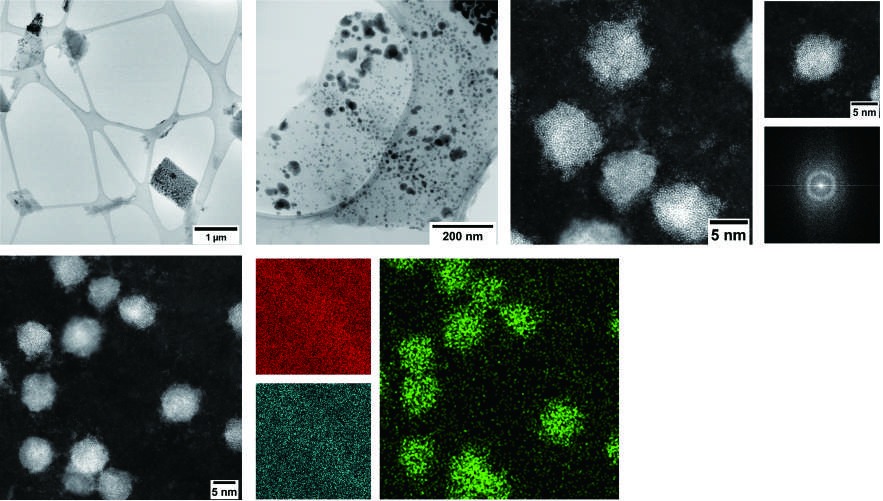
Iron-chromium redox flow batteries (ICRFBs) use abundant and inexpensive chromium and iron as the active substances in the electrolyte and have great potential as a cost-effective and large-scale energy storage system. However, they are still plagued by several issues, such as the low electrochemical activity of Cr3+/Cr2+ and the occurrence of the undesired hydrogen evolution reaction (HER). We report the synthesis of amorphous bismuth (Bi) nanoparticles (NPs) immobilized on N-doped graphite felts (GFs) by a combined self-polymerization and wet-chemistry reduction strategy followed by annealing, which are used as the negative electrodes for ICRFBs. The resulting Bi NPs react with H+ to form intermediates and greatly inhibit the parasitic HER. In addition, the combined effect of Bi and N dopants on the surface of GF dramatically increases the electrochemical activity of Fe2+/Fe3+ and Cr3+/Cr2+, reduces the charge transfer resistance, and increases the mass transfer rate compared to plain GF. At the optimum Bi/N ratio of 2, a high coulombic efficiency of up to 97.7% is maintained even for 25 cycles at different current densities, the energy efficiency reaches 85.8% at 60.0 mA cm−2, exceeding many other reported materials, and the capacity reaches 862.7 mAh L−1 after 100 cycles, which is about 5.3 times that of bare GF.

Bismuth nanoparticles anchored on N-doped graphite felts to give stable and efficient iron-chromium redox flow batteries
Graphical Abstract
Original ResearchVol. 39, Issue 1 • pp. 64-77DOI: 10.1016/S1872-5805_NJan 15, 2024

A review of carbon-based catalysts and catalyst supports for simultaneous organic electro-oxidation and hydrogen evolution reactions

Authors: WANG Zhi-dong, XIA Tian, LI Zhen-hua, SHAO Ming-fei

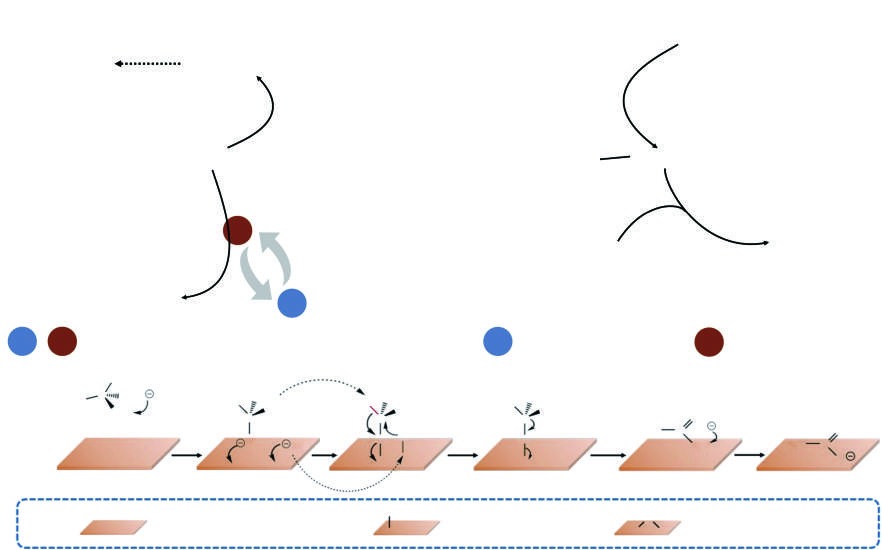
Producing organic electro-oxidation and hydrogen evolution reactions (HER) simultaneously in an electrolytic cell is an appealing method for generating valuable chemicals at the anode while also producing H2 at the cathode. Within this framework, the task of designing energy-saving electrocatalysts with high selectivity and stability is a considerable challenge. Carbon-based catalysts, along with their supports, have emerged as promising candidates due to their diverse sources, large specific surface area, high porosity and multidimensional characteristics. This review summarizes progress from 2012 to 2022, in the use of carbon-based catalysts and their supports for organic electrooxidation and HER. It delves into outer-sphere electrooxidation mechanisms involving molecule-mediated oxidation and oxidative radical coupling reactions, as well as inner-sphere electrooxidation mechanisms, encompassing both acidic and alkaline electrolytes. The review also explores prospective research directions within this domain, addressing various aspects such as the design of electrocatalytic materials, the study of the relationship between the structure and properties of electrocatalysts, as well as examining their potential industrial applications.

A review of carbon-based catalysts and catalyst supports for simultaneous organic electro-oxidation and hydrogen evolution reactions
Graphical Abstract