SinoTechIntel Academic Portal
🏛️ Indexed Academic JournalImpact Factor: 3.8 (Q1 - Elsevier)Original: 中国化学工程学报 (英文版)

Chinese Journal of Chemical Engineering

Access authentic peer-reviewed engineering methodologies, experimental datasets, and scientific literature published in this journal on SinoTechIntel.

Total Research Papers: 98
Access: 100% Free Open Access
Browse by Publication Year & VolumeReset All Filters ✕

Published Research PapersFiltered: Year 2024 • 68 • Issue 1

Showing 3 of 98 peer-reviewed papers with full Graphical Abstracts.

Original ResearchVol. 68, Issue 1 • pp. 156-164DOI: 10.1016/j_cjche_1448Jan 26, 2024

Porous nanofibrous dressing enables mesenchymal stem cell spheroid formation and delivery to promote diabetic wound healing

Authors: Kexin Zhang, Wenmin Zhang, Heng An, Zhe Huang, Yanzhen Wen, Xiangyu Jiao, Yongqiang Wen

Delayed and nonhealing of diabetic wounds imposes substantial economic burdens and physical pain on patients. Mesenchymal stem cells (MSCs) promote diabetic wound healing. Particularly when MSCs aggregate into multicellular spheroids, their therapeutic effect is enhanced. However, traditional culture platforms are inadequate for the efficient preparation and delivery of MSC spheroids, resulting in inefficiencies and inconveniences in MSC spheroid therapy. In this study, a three-dimensional porous nanofibrous dressing (NFD) is prepared using a combination of electrospinning and homogeneous freeze-drying. Using thermal crosslinking, the NFD not only achieves satisfactory elasticity but also maintains notable cytocompatibility. Through the design of its structure and chemical composition, the NFD allows MSCs to spontaneously form MSC spheroids with controllable sizes, serving as MSC spheroid delivery systems for diabetic wound sites. Most importantly, MSC spheroids cultured on the NFD exhibit improved secretion of vascular endothelial growth factor, basic fibroblast growth factor, and hepatocyte growth factor, thereby accelerating diabetic wound healing. The NFD provides a competitive strategy for MSC spheroid formation and delivery to promote diabetic wound healing.
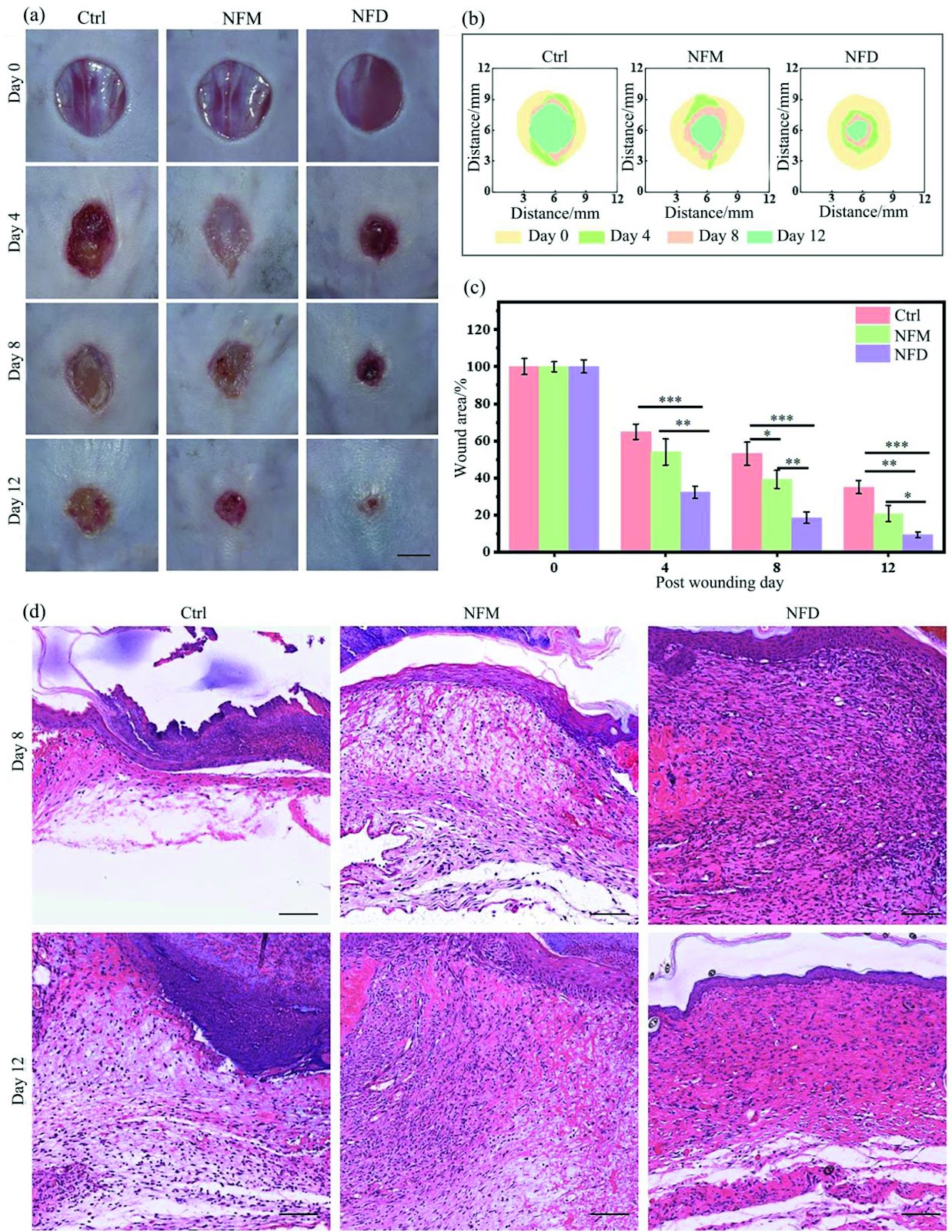
Porous nanofibrous dressing enables mesenchymal stem cell spheroid formation and delivery to promote diabetic wound healing
Graphical Abstract
Original ResearchVol. 68, Issue 1 • pp. 76-82DOI: 10.1016/j_cjche_1448Jan 11, 2024

Enhancement of liquid–liquid micromixing performance in curved capillary microreactor by generation of Dean vortices

Authors: Shaoyun Wu, Zhuang Ma, Zichi Yang, Suying Zhao, Caijin Zhou, Huidong Zheng

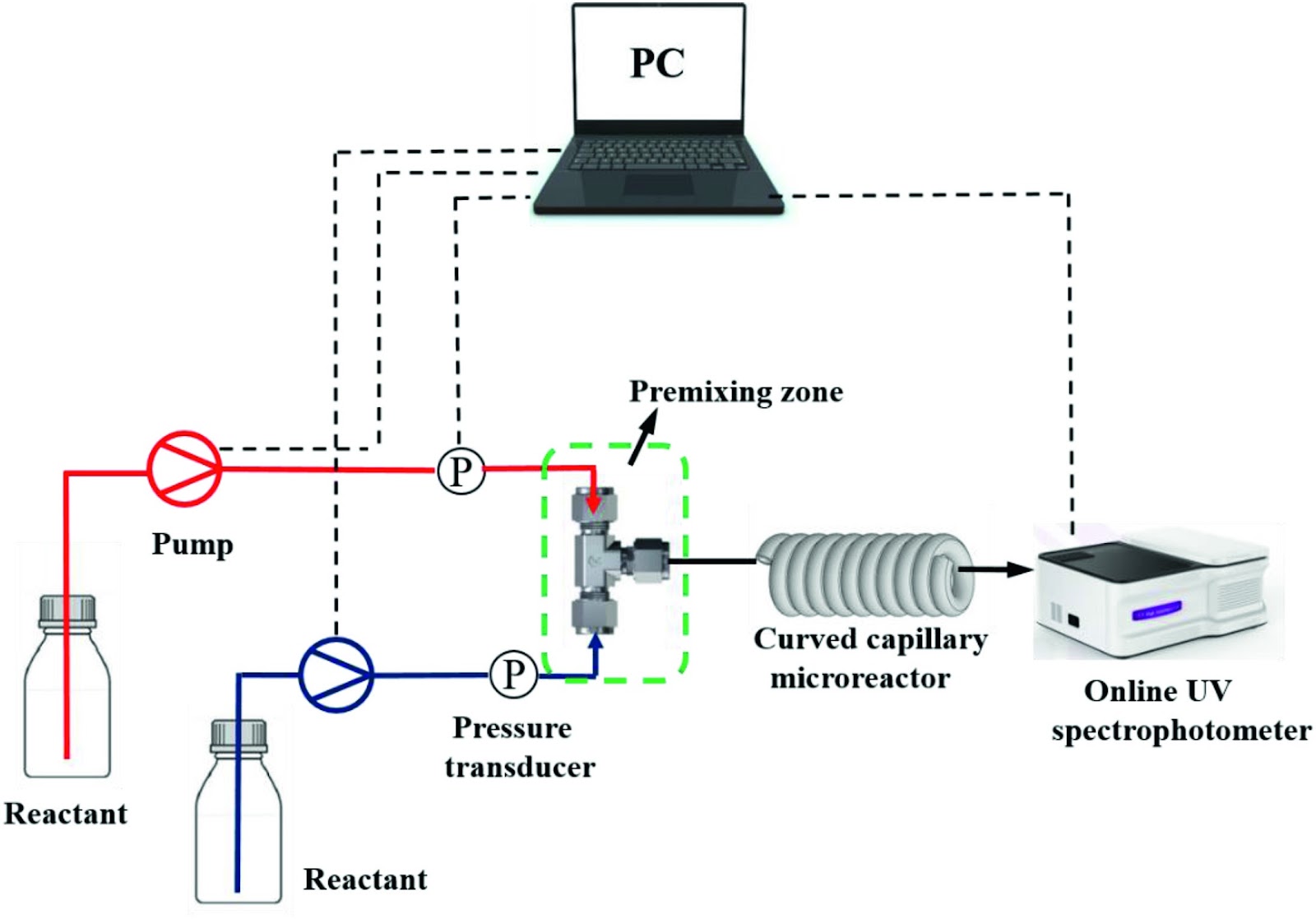
Micromixing efficiency is an important parameter for evaluating the multiphase mass transfer performance and reaction efficiency of microreactors. In this work, the novel curved capillary reactor with different shapes was designed to generate Dean flow, which was used to enhance the liquid–liquid micromixing performance. The Villermaux–Dushman probe reaction was employed to characterize the micromixing performance in different curved capillary microreactors. The effects of experiment parameters such as liquid flow rate, inner diameter, tube length, and curve diameter on micromixing performance were systematically investigated. Under the optimal conditions, the minimum value of the segmentation factor XS was 0.008. It was worth noting that at the low Reynolds number (Re < 30), the change of curved shape on the capillary microreactor can significantly improve the micromixing performance with XS reduced by 37.5%. Further, the correlations of segment index XS with dimensionless factor such as Reynolds number or Dean number were developed, which can be used to predict the liquid–liquid micromixing performance in capillary microreactors.

Enhancement of liquid–liquid micromixing performance in curved capillary microreactor by generation of Dean vortices
Graphical Abstract
Original ResearchVol. 68, Issue 1 • pp. 193-202DOI: 10.1016/j_cjche_1448Jan 10, 2024

Design method of extractant for liquideliquid extraction based on elements and chemical bonds

Authors: Yuwen Wei, Chunling Zhang, Yue Zhang, Lili Wang, Li Xia, Xiaoyan Sun, Shuguang Xiang

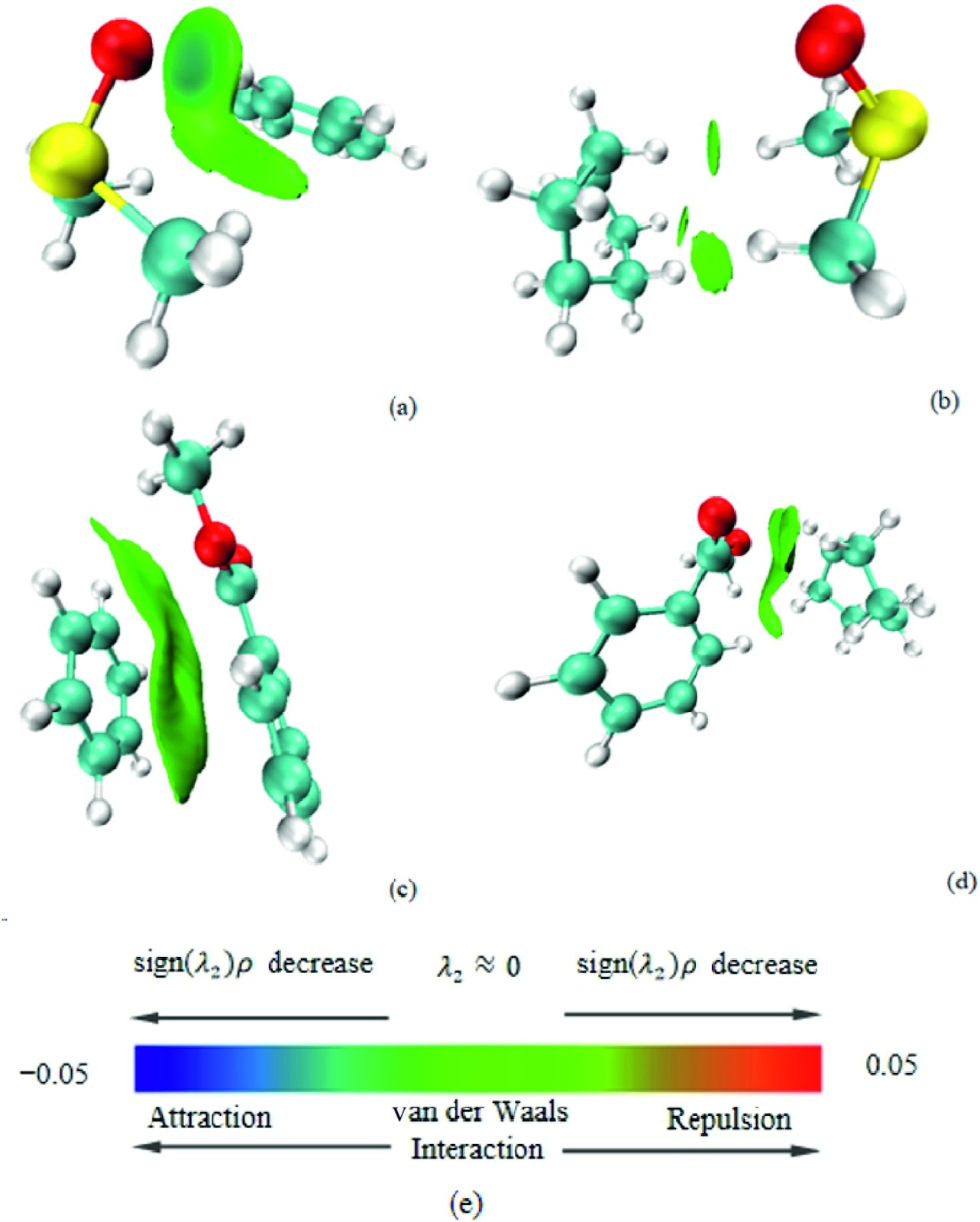
In the petrochemical industry process, the relative volatility between the components to be separated is close to one or the azeotrope that systems are difficult to separate. Liquideliquid extraction is a common and effective separation method, and selecting an extraction agent is the key to extraction technology research. In this paper, a design method of extractants based on elements and chemical bonds was proposed. A knowledge-based molecular design method was adopted to pre-select elements and chemical bond groups. The molecules were automatically synthesized according to specific combination rules to avoid the problem of “combination explosion” of molecules. The target properties of the extractant were set, and the extractant meeting the requirements was selected by predicting the correlation physical properties of the generated molecules. Based on the separation performance of the extractant in liquideliquid extraction and the relative importance of each index, the fuzzy comprehensive evaluation membership function was established, the analytic hierarchy process determined the mass ratio of each index, and the consistency test results were passed. The results of case study based on quantum chemical analysis demonstrated that effective determination of extractants for the analysis of benzeneecyclohexane systems. The results unanimously prove that the method has important theoretical significance and application value.

Design method of extractant for liquideliquid extraction based on elements and chemical bonds
Graphical Abstract