Key Takeaways & Executive Findings
- •• A novel extractant design method based on elements and chemical bonds is proposed, integrating knowledge-based molecular design to avoid combinatorial explosion. • The method combines fuzzy comprehensive evaluation and analytic hierarchy process to rank extractant candidates based on multiple performance indices. • Case study on benzene-cyclohexane separation demonstrates the method's effectiveness in identifying suitable extractants via quantum chemical analysis. • The approach offers a systematic, efficient alternative to experimental screening and property constraint methods, with potential for industrial application.
Abstract
In the petrochemical industry process, the relative volatility between the components to be separated is close to one or the azeotrope that systems are difficult to separate. Liquideliquid extraction is a common and effective separation method, and selecting an extraction agent is the key to extraction technology research. In this paper, a design method of extractants based on elements and chemical bonds was proposed. A knowledge-based molecular design method was adopted to pre-select elements and chemical bond groups. The molecules were automatically synthesized according to specific combination rules to avoid the problem of “combination explosion” of molecules. The target properties of the extractant were set, and the extractant meeting the requirements was selected by predicting the correlation physical properties of the generated molecules. Based on the separation performance of the extractant in liquideliquid extraction and the relative importance of each index, the fuzzy comprehensive evaluation membership function was established, the analytic hierarchy process determined the mass ratio of each index, and the consistency test results were passed. The results of case study based on quantum chemical analysis demonstrated that effective determination of extractants for the analysis of benzeneecyclohexane systems. The results unanimously prove that the method has important theoretical significance and application value.
1. Introduction
In order to achieve high purity and low energy recovery of azeotropes such as alkanes and aromatic hydrocarbons in industry, extractive distillation [1e3], azeotropic distillation [4], variable pressure distillation [5,6], and liquideliquid extraction [7e9] are standard methods to separate azeotropes. The key to achieving green and high-end extraction lies in selecting efficient and environmentally friendly extractants. A good extractant can not only improve the separation efficiency in the extraction process but also meet the environmental requirements of emission reduction. However, the selection of suitable solvents in chemical separation processes is usually a difficult task due to the need to consider many factors such as solvent properties (melting point, boiling point, flash point, viscosity, toxicity, safety and environmental impact, etc.) and process properties (vapore liquid equilibrium, liquideliquid equilibrium, solideliquid equilibrium, etc.) [10,11].
At present, there are three methods to select extractants, which are experimental screening method, property constraint method, and computer-aided molecular design (CAMD) method. The researchers screened the extractants by directly measuring the liquid-liquid phase equilibrium data, infinite dilution activity coefficients, and other experimental data of the system. This approach is called the experimental screening method, screening method to obtain the experiment data is true and accurate. However, under the experimental conditions and the limitation of raw material, it is impossible to screen all the molecules or comprehensively measure the data under different conditions of the same system [12].
The property constraint method is also a more commonly used extraction screening method, which is mainly divided into two kinds: empirical screening method and activity coefficient method. Although the property constraint method saves time and effort compared with the experimental screening method, it is still not perfect. For example, it is not suitable for the prediction of related parameters of isomers. For products with complex molecular structures or special components, the model method cannot be used for screening due to the lack of physical property data and models, and its search range is limited, so optimal global results cannot be obtained [13].
Loading authentic research manuscript (Pages 1–5)...
Yuwen Wei, Chunling Zhang, Yue Zhang, Lili Wang, Li Xia, Xiaoyan Sun, Shuguang Xiang (2024). Design method of extractant for liquideliquid extraction based on elements and chemical bonds. Chinese Journal of Chemical Engineering. https://doi.org/10.1016/j_cjche_1448
Research & Educational Purpose Only:The translations, structured abstracts, analytical annotations, and data reports provided by SinoTechIntel are intended exclusively for academic research, internal corporate R&D, and educational benchmarking. They do not constitute formal engineering, chemical safety, legal, or professional advice.
Copyright & Intellectual Property Notice: Original copyright of the underlying source articles and experimental data remains with the respective authors, institutions, and original publishing journals. SinoTechIntel claims intellectual property only over its proprietary translations, analytical syntheses, and AEO structured enhancements in accordance with international fair use and academic citation principles.
Frequently Asked Questions
What is the main contribution of this paper?
The paper proposes a novel extractant design method based on elements and chemical bonds, which integrates knowledge-based molecular design to avoid combinatorial explosion and uses fuzzy comprehensive evaluation and analytic hierarchy process to select optimal extractants.
How does the proposed method differ from traditional extractant screening methods?
Unlike experimental screening and property constraint methods, the proposed method uses a systematic computer-aided approach that generates molecules from preselected elements and chemical bonds, predicts their properties, and evaluates them using multi-criteria decision-making, thus overcoming limitations such as limited search range and inability to handle complex molecules.
What case study was used to validate the method?
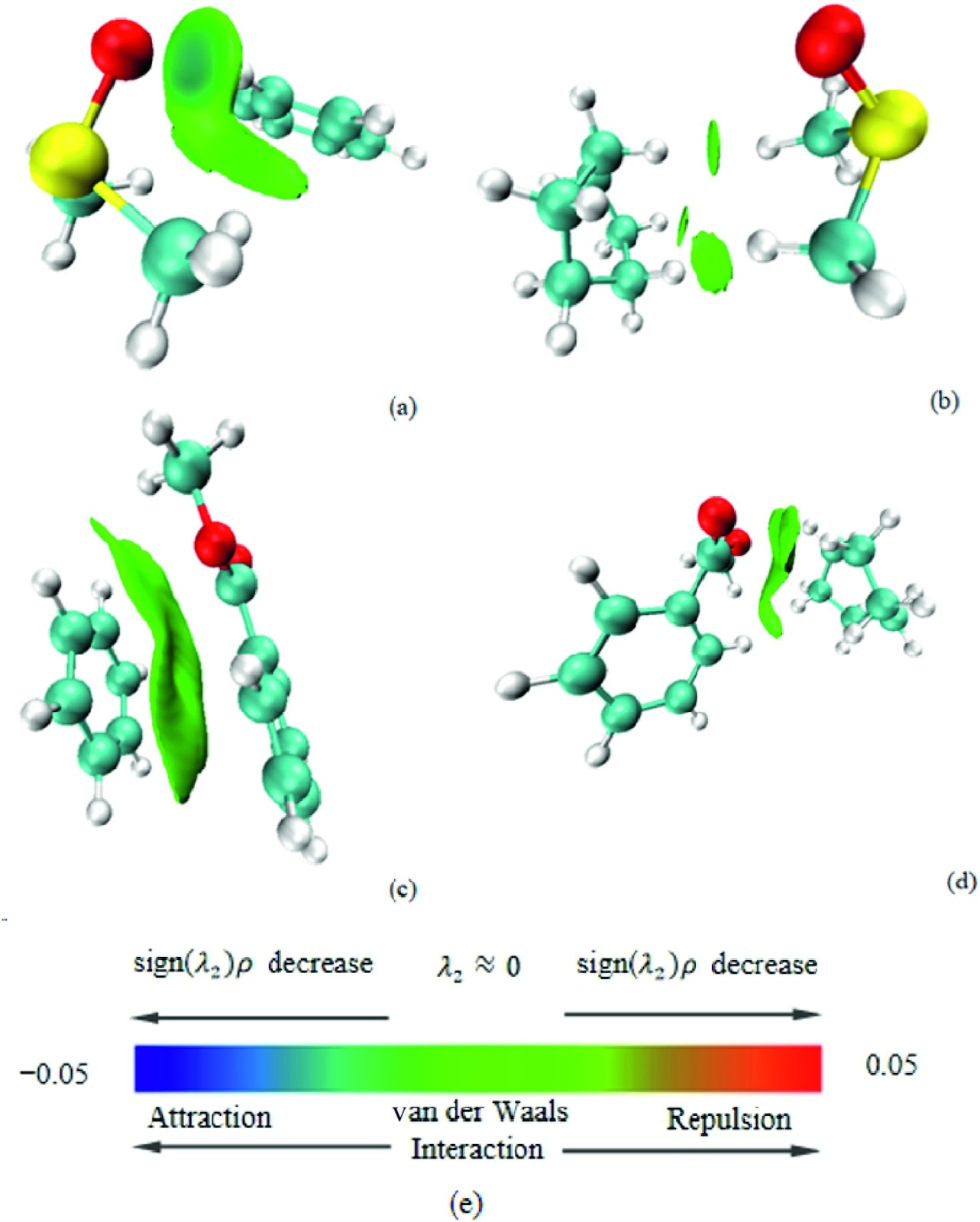
The method was validated on the separation of benzene-cyclohexane systems, a common azeotropic mixture in petrochemical industry, using quantum chemical analysis to confirm the effectiveness of the selected extractants.
What are the key advantages of the proposed method?
The method provides a systematic and efficient way to design extractants, avoids the combinatorial explosion of molecular generation, and incorporates multiple performance criteria through fuzzy evaluation and analytic hierarchy process, leading to more reliable and optimal solvent selection.
What is the significance of using elements and chemical bonds in molecular design?
By focusing on elements and chemical bonds, the method reduces the search space and allows for the generation of diverse molecular structures that meet specific property requirements, making it more practical and computationally feasible than exhaustive enumeration.
Related Technical Papers & Translations

Design and optimization of a high-efficiency distillation process for cellulosic fuel ethanol integrated with thermal coupling and molecular sieve adsorption
To address the challenges of high energy consumption and prominent costs in the traditional three-columns distillation process for cellulosic fuel ethanol, a distillation—molecular sieve coupling separation process is proposed. This process integrates a three-column (crude distillation column, first distillation column, second distillation column) system with a 3A molecular sieve adsorption deep dehydration unit. A thermal coupling network is constructed via differential pressure design (steam from medium/high-pressure columns as mutual heat sources, reboiler liquid waste heat for feed preheating), and molecular sieve adsorption conditions are optimized. The study first performs a thermodynamic consistency test on the ethanol—water system, determines optimal non-random two-liquid (NRTL) model binary interaction parameters via experimental data regression for Aspen Plus simulation. Aiming at minimum total annual cost (TAC), Aspen Plus is used to optimize process parameters (theoretical tray number, feed location, reflux ratio, side-draw position, etc.). Economic analysis shows this process reduces CO2 emission costs by 27.56%, TAC by 15.58% (to 5.123 × 10⁶ USD·a-1), and increases ethanol purity to >99.6%, providing an effective solution for green, efficient separation.

A cohesion loss model for determining residual strength of deep bedded sandstone
Rock residual strength, as an important input parameter, plays an indispensable role in proposing the reasonable and scientific scheme about stope design, underground tunnel excavation and stability evaluation of deep chambers. Therefore, previous residual strength models of rocks established were reviewed. And corresponding related problems were stated. Subsequently, starting from the effects of bedding and whole life-cycle evolution process, series of triaxial mechanical tests of deep bedded s

Federated model with contrastive learning and adaptive control variates for human activity recognition
Recent attention to privacy issues demands a communication-safe method for training human activity recognition (HAR) models on client activity data. Federated learning (FL) has become a compelling technique to facilitate model training between the server and clients while preserving data privacy. However, classical FL methods often assume independent and identically distributed (IID) data among clients. This assumption does not hold true in practical scenarios. Human activity in real-world scena